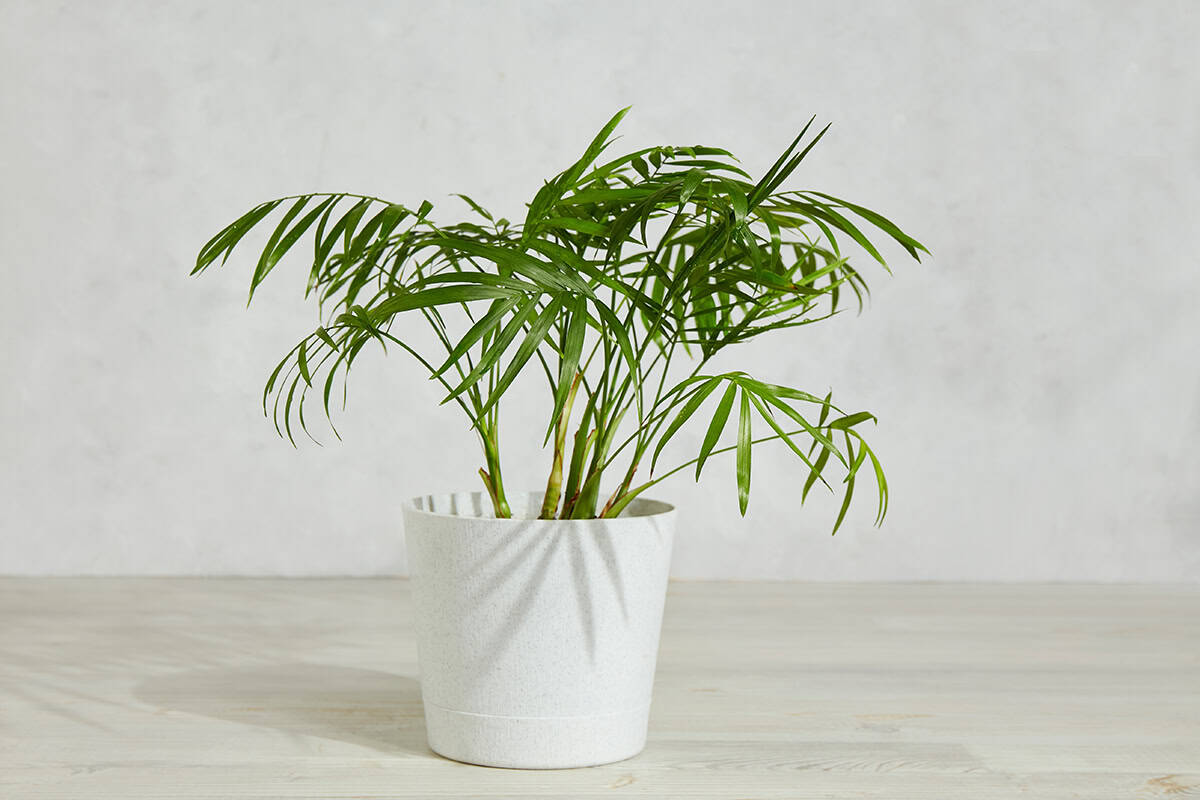
Indoor palms lend a room height and soft, curved fronds, and several species thrive for decades in a pot. Parlor, kentia and lady palms tolerate modest light, and areca and majesty palms need a bright window.
Watering only after the top inch dries prevents the root rot that kills most potted palms. Brown frond tips puzzle plenty of palm owners, and the cause in many homes comes straight out of the kitchen tap.
Table of Contents
Light
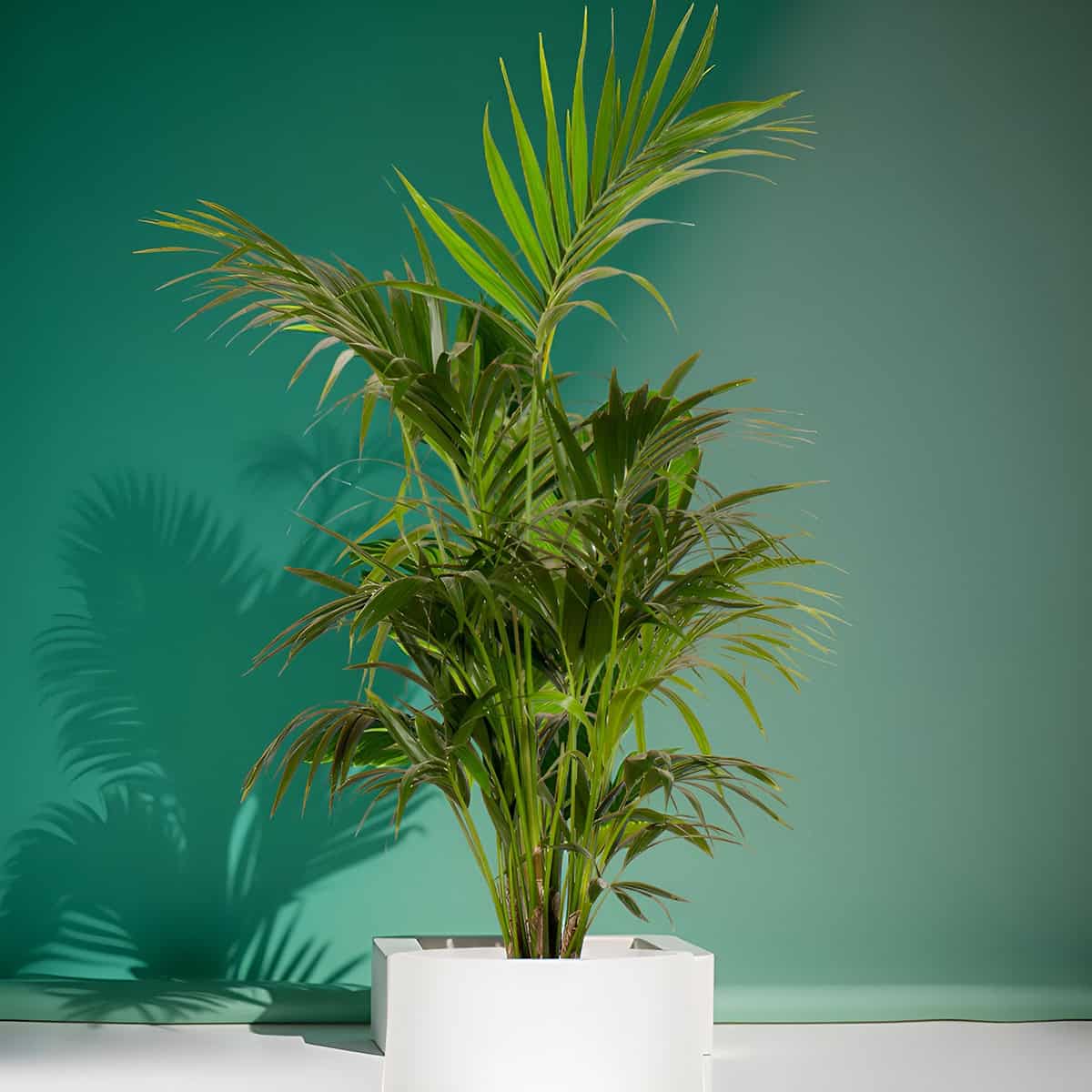
Most indoor palms prefer bright, indirect light. Place the plant near a south-, east- or west-facing window with filtered sunlight.
Direct midday sun burns the fronds, and sheer curtains soften strong light. In a dim space, a grow light supplements natural light.
A few species tolerate lower light, with slower growth. Avoid dark corners for long periods, and rotate the pot every few weeks for even light on all sides.
Natural light drops in winter. Move the palm closer to a bright window or add artificial light, with a target of about 12 to 14 hours of total light a day.
Watch the fronds for signs of light stress. Pale or yellowing leaves point to too little light, and scorched patches to too much direct sun.
Soil
Palms need soil that drains well and holds a little moisture. A mix designed for palms or tropical plants fits best, with a light, airy structure that prevents root rot.
Choose a medium with a balance of organic matter and coarse material. Peat or coco coir holds moisture, and perlite or sand improves drainage and prevents waterlogged roots.
Aim for slightly acidic to neutral soil, around pH 6.0 to 7.0, which supports nutrient uptake. Avoid heavy garden soil, since it compacts and limits root growth.
Replace or refresh the soil every two to three years at repotting time. Nutrients deplete and the structure breaks down over time, and fresh soil supports healthy fronds and steady growth.
Check that the container has drainage holes so excess water escapes easily, which prevents fungal problems. Good soil and proper drainage together protect the roots.
Water
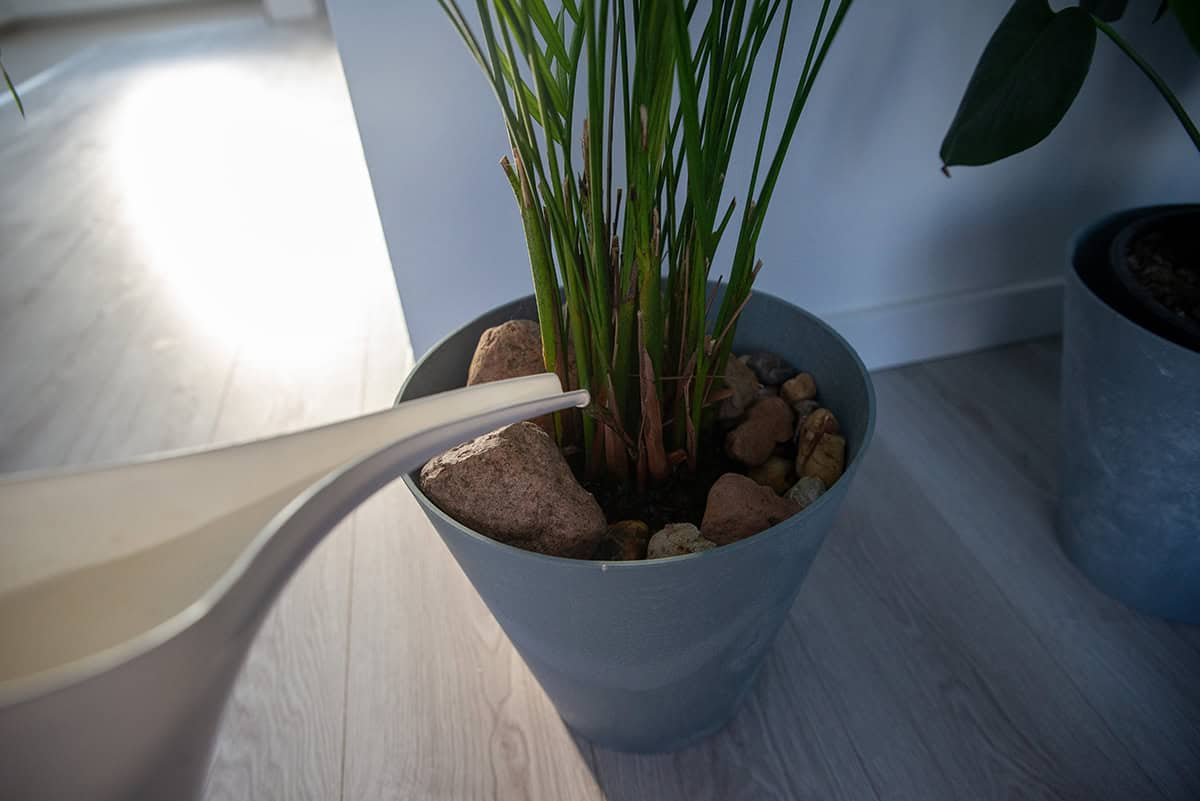
Most indoor palms like evenly moist soil. Let the top inch dry before watering again to prevent root rot.
Use room-temperature water to avoid stress. Palms react strongly to fluoride, chlorine and salts in tap water, which burn the frond tips. Filtered, distilled or rainwater fits best.
Water more in warm months during active growth, and less in cooler months when growth slows. Adjust to your home’s temperature and humidity.
Use a pot with drainage holes, since standing water harms roots quickly, and empty any saucer after watering.
Press a finger into the soil to check moisture, and water once the soil an inch down is dry. A fixed schedule leads to guesswork.
Temperature and Humidity
Indoor palms grow best in stable, warm conditions. Aim for daytime temperatures of 65°F to 75°F, with nights a little cooler and never below 55°F.
Sudden temperature changes stress palms. Avoid spots near heating vents, air conditioners or drafty windows, since steady conditions prevent leaf damage and stalled growth.
Most palms come from tropical regions and need higher humidity than many homes provide. Aim for 40 to 60 percent relative humidity for healthy foliage.
A humidifier in the room raises humidity most reliably. A pebble tray with water helps too, with the pot base set above the waterline.
Dry air browns the leaf tips. Check the humidity when that happens. Misting helps a little, though a humidifier makes a far bigger difference.
Place the palm away from blasts of hot or cold air, since even short exposure to extremes yellows the fronds or causes early drop.
Fertilizer
Indoor palms need steady nutrients for healthy green fronds. A balanced, slow-release palm fertilizer fits the active growing months, ideally one with magnesium and micronutrients to prevent yellowing.
Fertilize only in spring and summer, when the plant grows most, every two to three months or as the product directs. Skip feeding in fall and winter, when growth slows.
A palm formula close to 8-2-12 plus 4 percent magnesium produces strong leaf color and steady growth, and indoor plants need only a fraction of the outdoor rate. Read the label to confirm the nutrient content.
Water the soil before feeding to protect the roots. Spread the product evenly over the surface, away from the trunk base, and follow the recommended amount to avoid nutrient burn.
Watch for signs of nutrient trouble, such as pale leaves or weak growth, and adjust the schedule or product as needed. Consistent care produces a healthy palm year-round.
Propagation
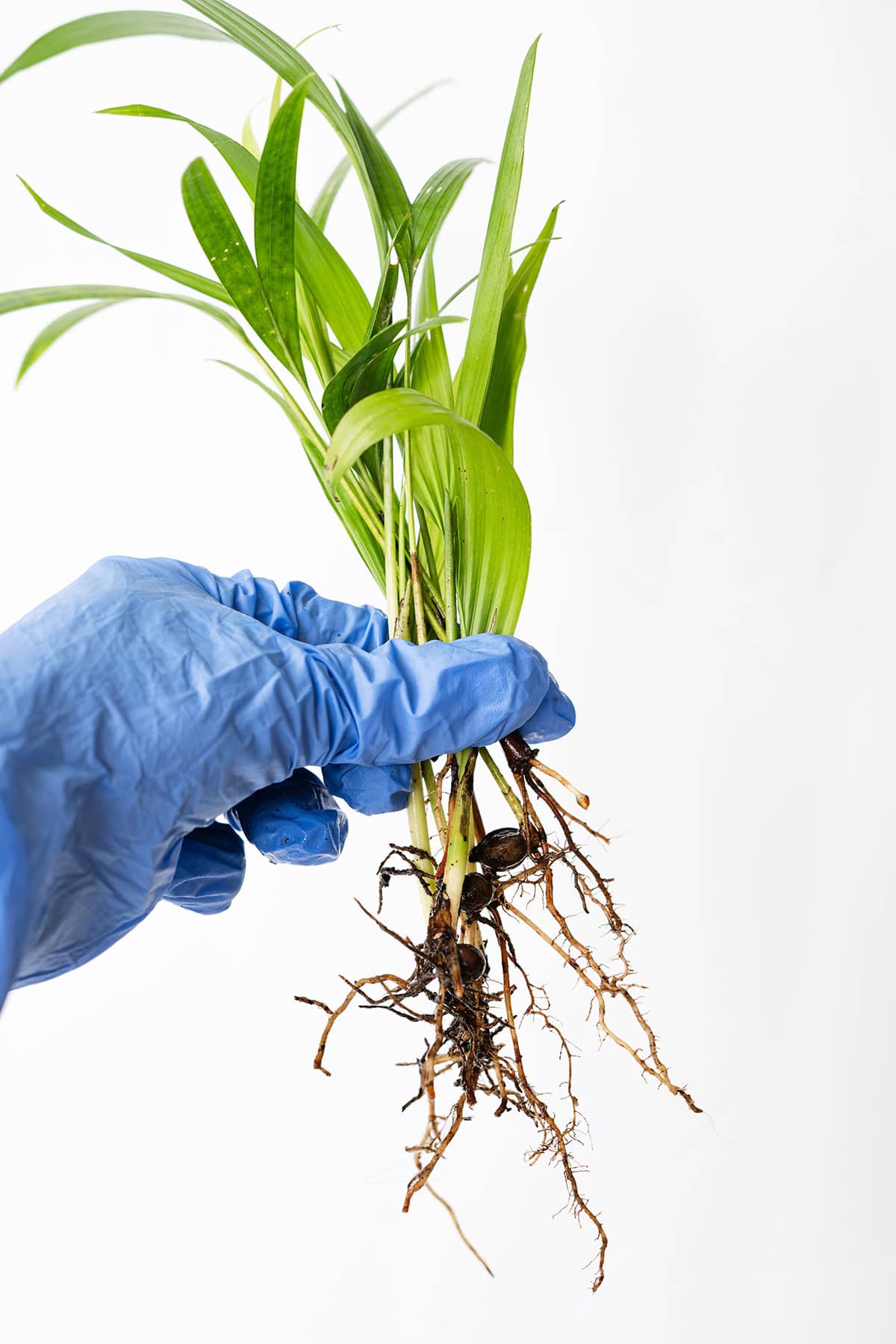
Single-trunk palms, such as kentia and majesty palms, grow only from seed, since they produce no side shoots. Clumping types, such as areca, lady and bamboo palms, also divide at repotting, with roots and stems on each section.
Fresh seeds produce the best results, since old seeds lose viability. Several species take months to germinate, and germination rates run low.
Clean the seeds before planting by removing any fruit pulp, then soak them in water for one to two days to soften the seed coat and speed germination.
Sow the seeds in a moist, well-draining potting mix, evenly damp and never soggy. Warmth and bright, indirect light help them sprout, and bottom heat around 80°F to 85°F speeds things up.
Patience matters. Certain species germinate within weeks, and others take over 100 days. Monitor moisture and prevent the seeds from drying out.
Pruning
Prune indoor palms only to remove dead or damaged fronds. Healthy green leaves power photosynthesis, and the loss of too many weakens the plant and slows its growth.
Focus on fronds that are brown, dry or broken. Cut them close to the trunk, short of the stem tissue, which reduces the risk of pests and disease.
Leave healthy green fronds in place, even older ones. Palms produce new leaves only from the top growing point, and a removed frond never regrows from that spot.
Partly yellow fronds still feed the plant as it reabsorbs their nutrients. Wait until they brown fully.
Remove flower or fruit stalks as they appear to prevent mess and direct energy toward leaf growth.
Prune during active growth for faster recovery, with clean, sharp tools that make precise cuts and avoid tearing.
Potting and Repotting
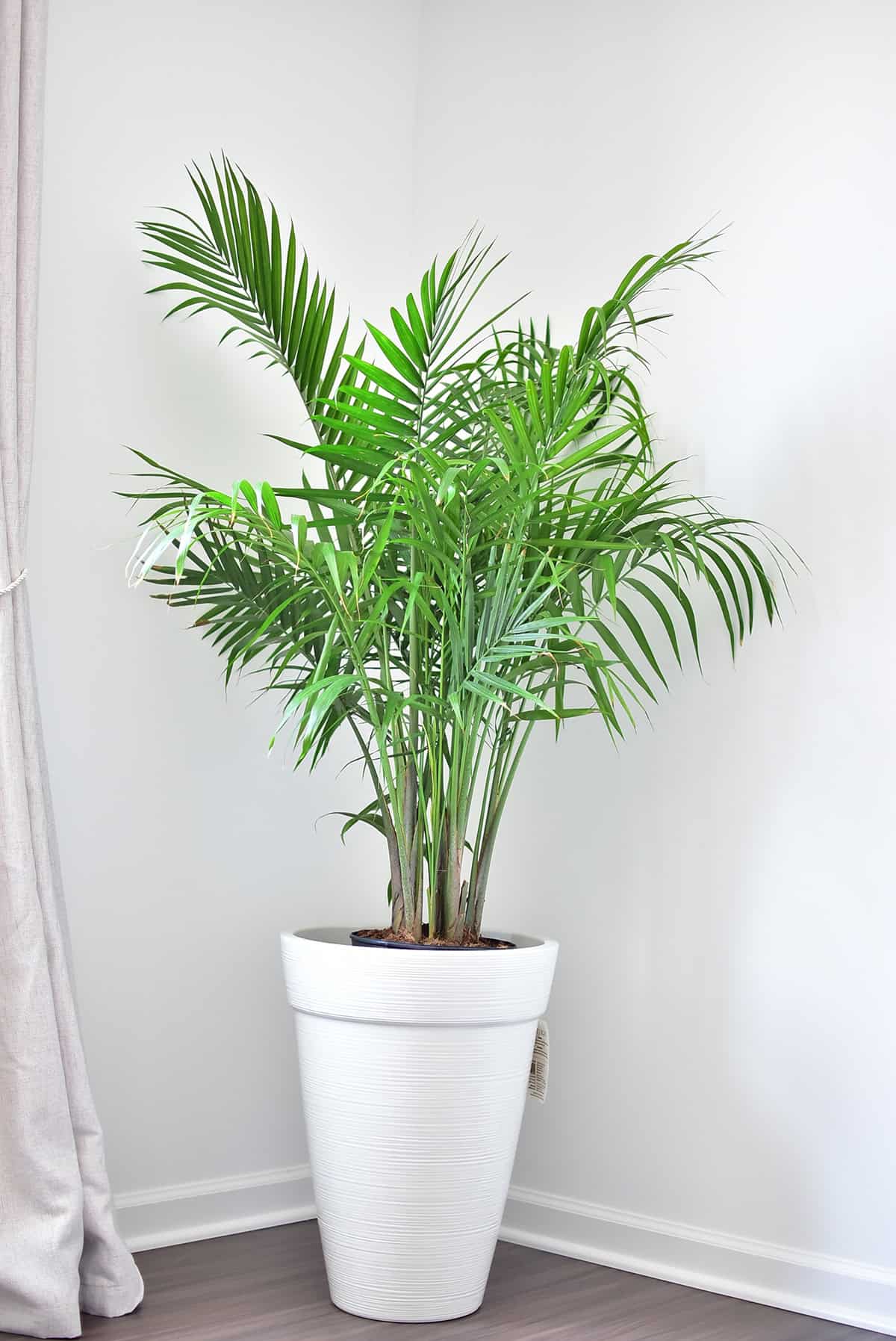
Choose a container with drainage holes to prevent water buildup, and fill it with a well-draining mix made for palms or indoor tropical plants. Avoid garden soil, which compacts and suffocates roots.
When moving a palm to a larger pot, go only one or two sizes bigger, since an oversized pot holds excess moisture and leads to root rot and slow growth.
Repot only when roots fill the container or grow out of the drainage holes, every two to three years for most indoor palms. Spring or early summer fits best, during active growth.
Handle the root ball gently, since palm roots dislike disturbance. Set the palm at the same depth as in its old pot, since deep planting suffocates roots and yellows the leaves.
For a palm at its desired size, replace the top layer of soil once a year in place of repotting. This refreshes nutrients with minimal stress.
Common Problems & Troubleshooting
Improper watering causes most indoor palm problems. Overwatering leads to root rot, and too little water dries and browns the leaf tips. Let the soil partially dry between waterings.
Nutrient deficiencies show as yellow leaves or poor growth. A balanced palm fertilizer during the growing season helps, though excess fertilizer damages roots and burns leaves.
Low humidity browns the leaf edges. A pebble tray with water raises humidity, with the container set above the waterline to prevent soggy soil.
Spider mites, scale and mealybugs damage fronds. Check the leaf undersides for small spots or fine webs, and treat infestations early with insecticidal soap or horticultural oil.
Poor light weakens a palm. Too little slows growth, and direct sun scorches the leaves, and bright, indirect light produces the best results.
Plant Varieties
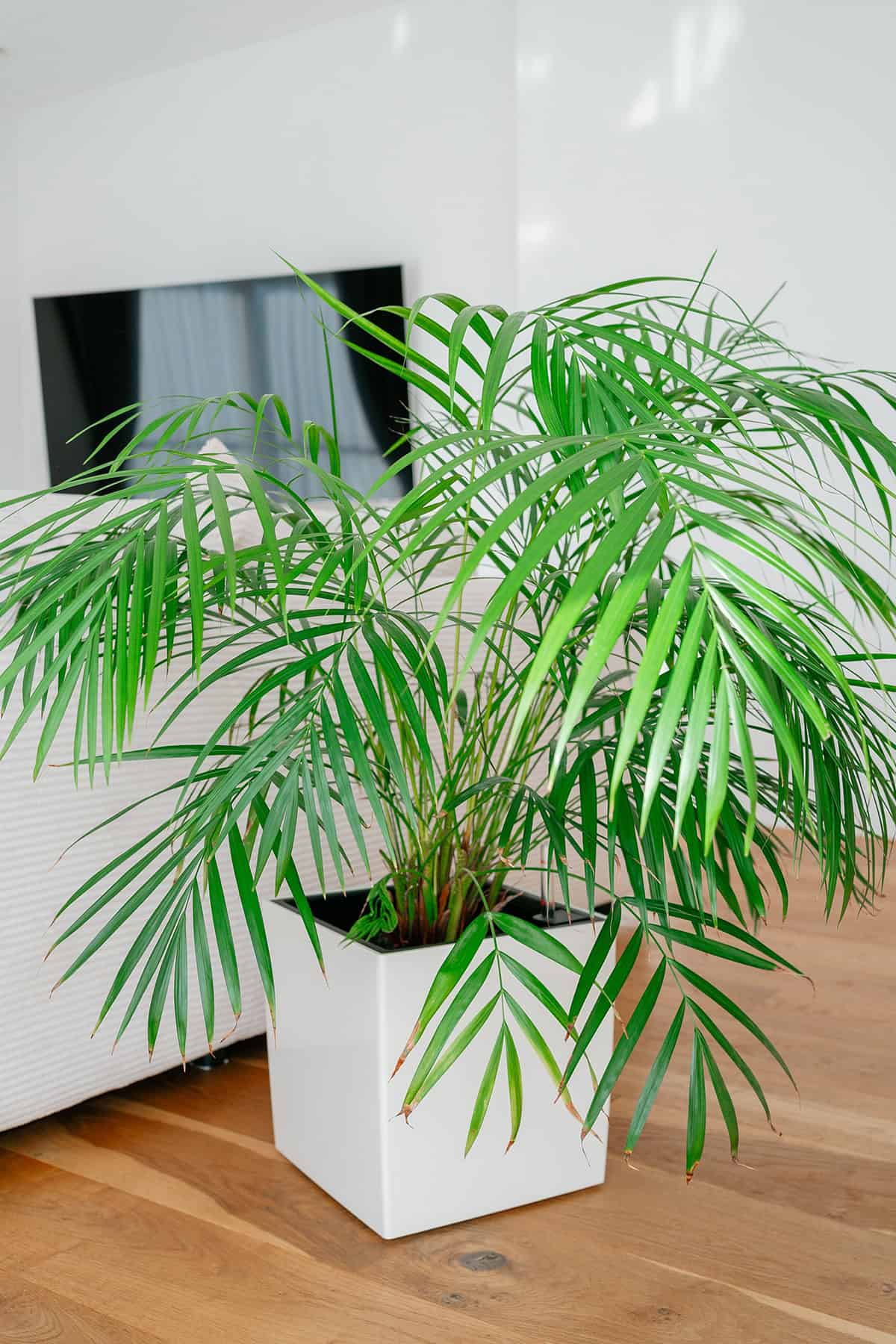
Many palm species grow well indoors. A few grow compact, and others reach impressive heights over time. Light, space and care preferences guide the choice.
The parlor palm (Chamaedorea elegans) ranks as a popular low-light choice, with slow growth that fits small rooms. The kentia palm (Howea forsteriana) tolerates lower light and reaches 6 to 10 feet indoors over many years.
For a fuller, bushy look, choose the areca palm (Dypsis lutescens), with feathery fronds and a preference for bright, indirect light. The lady palm (Rhapis excelsa) handles cooler indoor conditions and has fan-shaped leaves.
For a tropical look, the majesty palm (Ravenea rivularis) carries long, gracefully curved fronds, though it needs bright light, high humidity and consistent watering to thrive indoors. The bamboo palm (Chamaedorea seifrizii) grows well in filtered light.
The Mediterranean fan palm (Chamaerops humilis) grows slowly in a pot and needs a sunny window, and it rewards you with stiff, fan-shaped leaves. For a small space, the pygmy date palm (Phoenix roebelenii) forms a compact crown of fine, feathery fronds.