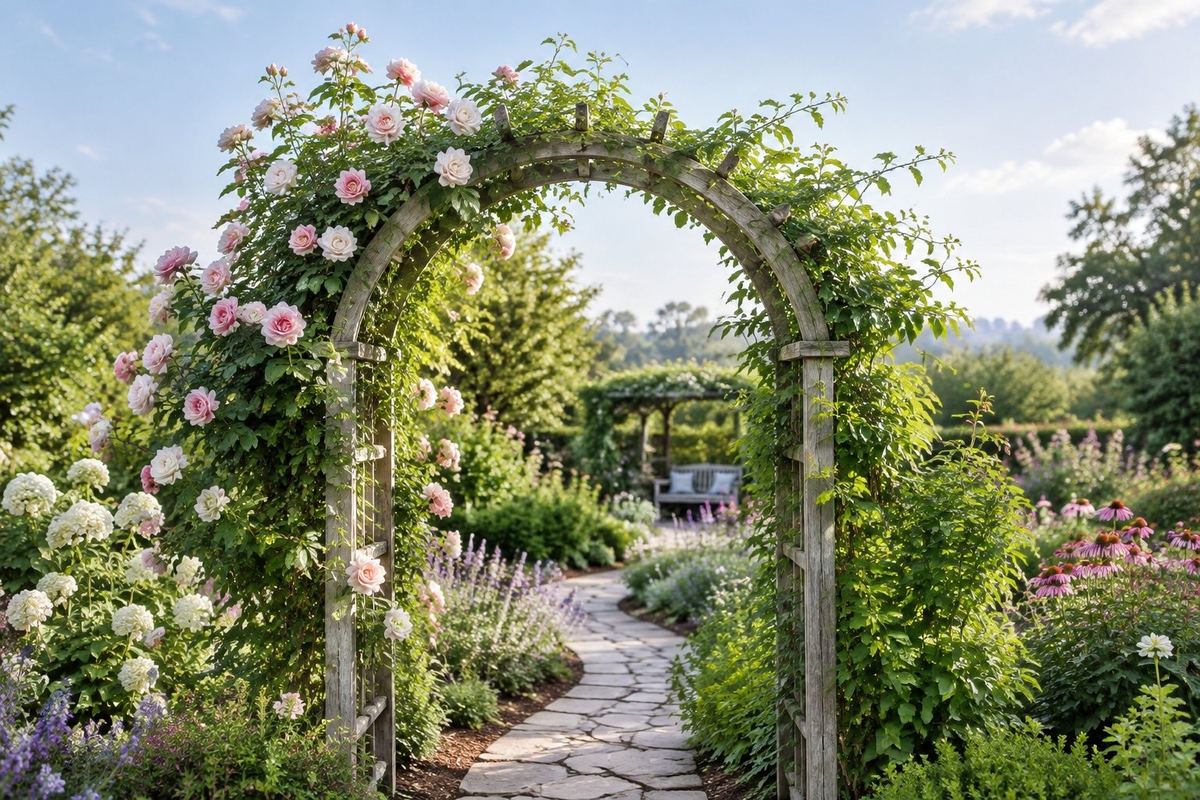
Garden arches frame paths and entrances, support climbing plants, and mark transitions between outdoor spaces. A rose-covered opening gives a walkway a focal point, even in a modest yard. The structure beneath the flowers matters just as much: its width governs passage, and its material shapes the view through it.
The details of each arch become clearer once its setting comes into focus.
Table of Contents
- Climbing Rose Garden Arch
- Rustic Wooden Garden Arch
- Wisteria-Covered Garden Arch
- Minimal Black Metal Arch
- Clematis Tunnel Arch
- Reclaimed Branch Garden Arch
- White Painted Cottage Arch
- Arched Entry With Grapevines
- Vegetable Garden Arch With Beans
- Cucumber Arch Over Raised Beds
- Arched Gate With Climbing Roses
- Brick Garden Archway
- Stone Garden Arch Ruin
- Arched Arbor With Built-In Bench
- Wide Arch Over a Garden Path
- Narrow Arch for a Side Yard
- Cedar Arch With Hanging Lanterns
- Rose Arch Over a Gravel Walkway
- Japanese-Inspired Timber Arch
- Garden Arch With Star Jasmine
- Hydrangea Vine Garden Arch
- Espalier Fruit Tree Arch
- Living Willow Garden Arch
- Bamboo Garden Arch
- Copper Pipe Garden Arch
- Rose and Clematis Combination Arch
- Archway Into a Secret Garden
- Rustic Arch With Hanging Flower Baskets
- Arch With Climbing Hydrangea Over a Gate
- Vegetable Arch With Gourds
- Pumpkin Vine Garden Arch
- Arch Framed by Ornamental Grasses
- Moon Gate Garden Arch
- Double Arch Garden Entrance
- Garden Arch With String Lights
Climbing Rose Garden Arch
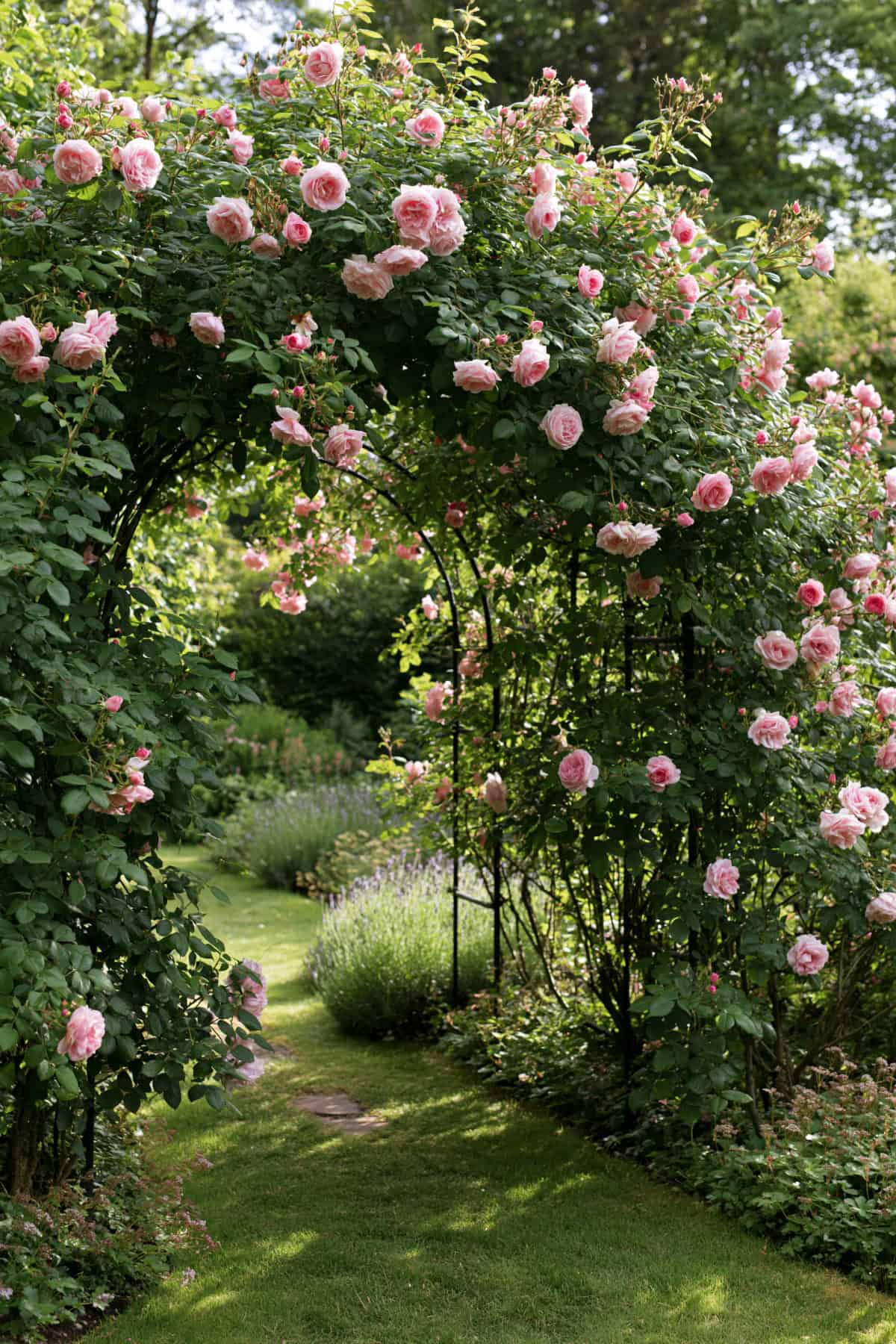
A rose-covered arch gives a sunny path a defined entrance and puts flowers at eye level. Sturdy steel or well-anchored timber supports the weight of mature stems, especially after rain. Two plants, one at each base, provide coverage without crowding the roots.
Climbing roses need guidance: their stems are tied loosely to the sides and curved across the top as they lengthen. Training long stems near horizontal encourages flowering shoots along their length. A clear opening beneath the lowest branches keeps passing shoulders away from thorns.
Rustic Wooden Garden Arch
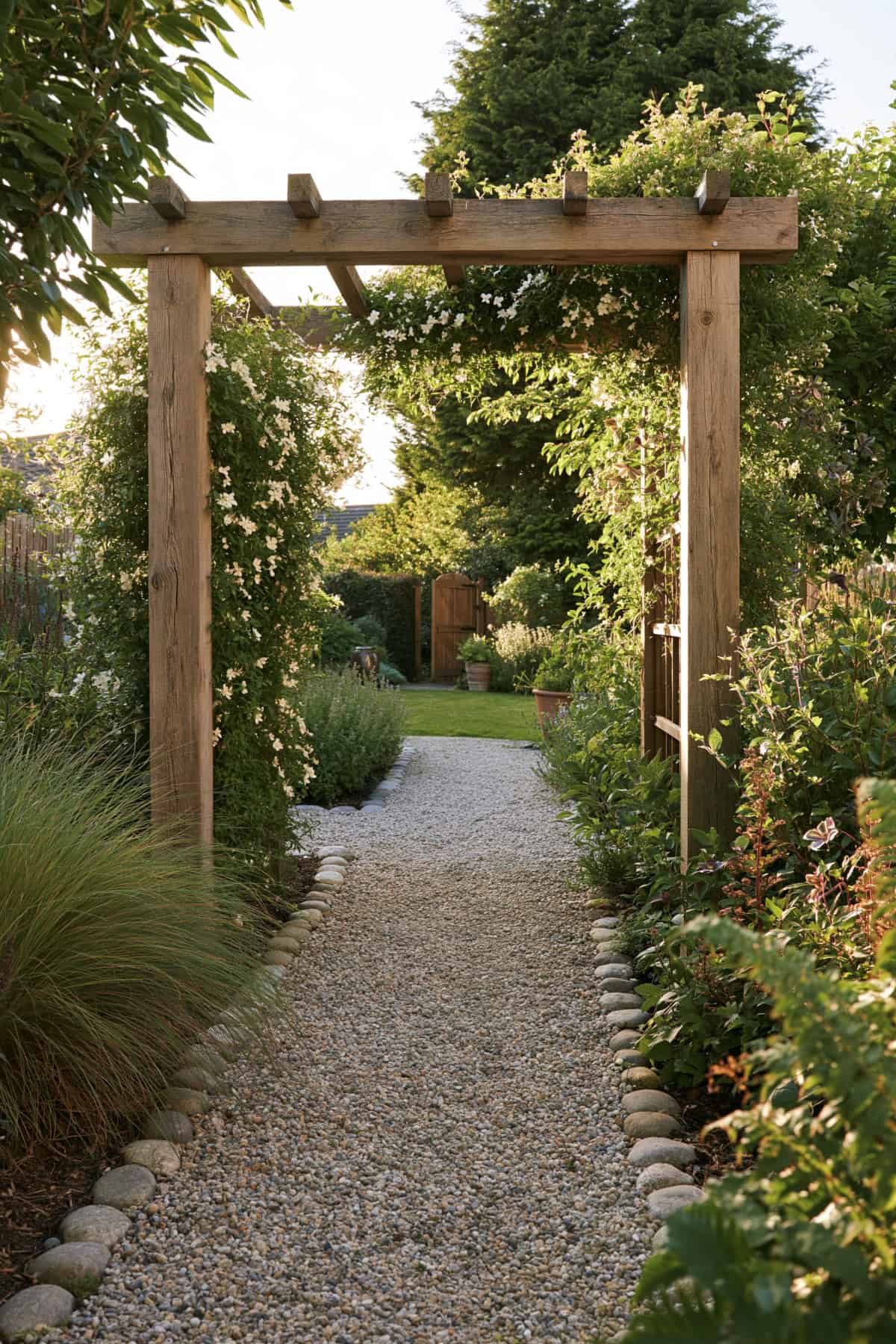
Weathered timber gives a garden path a substantial frame even before vines take hold. Rough-sawn posts and a gently curved top belong comfortably beside informal beds, gravel paths, and split-rail fencing.
Ground contact determines how long the structure lasts. Rot-resistant wood such as cedar, properly rated posts, or metal post bases protect the legs at their most vulnerable point. Leave the grain visible beneath an exterior stain, and choose broad crosspieces if a vigorous climber will eventually cover the roof.
Wisteria-Covered Garden Arch
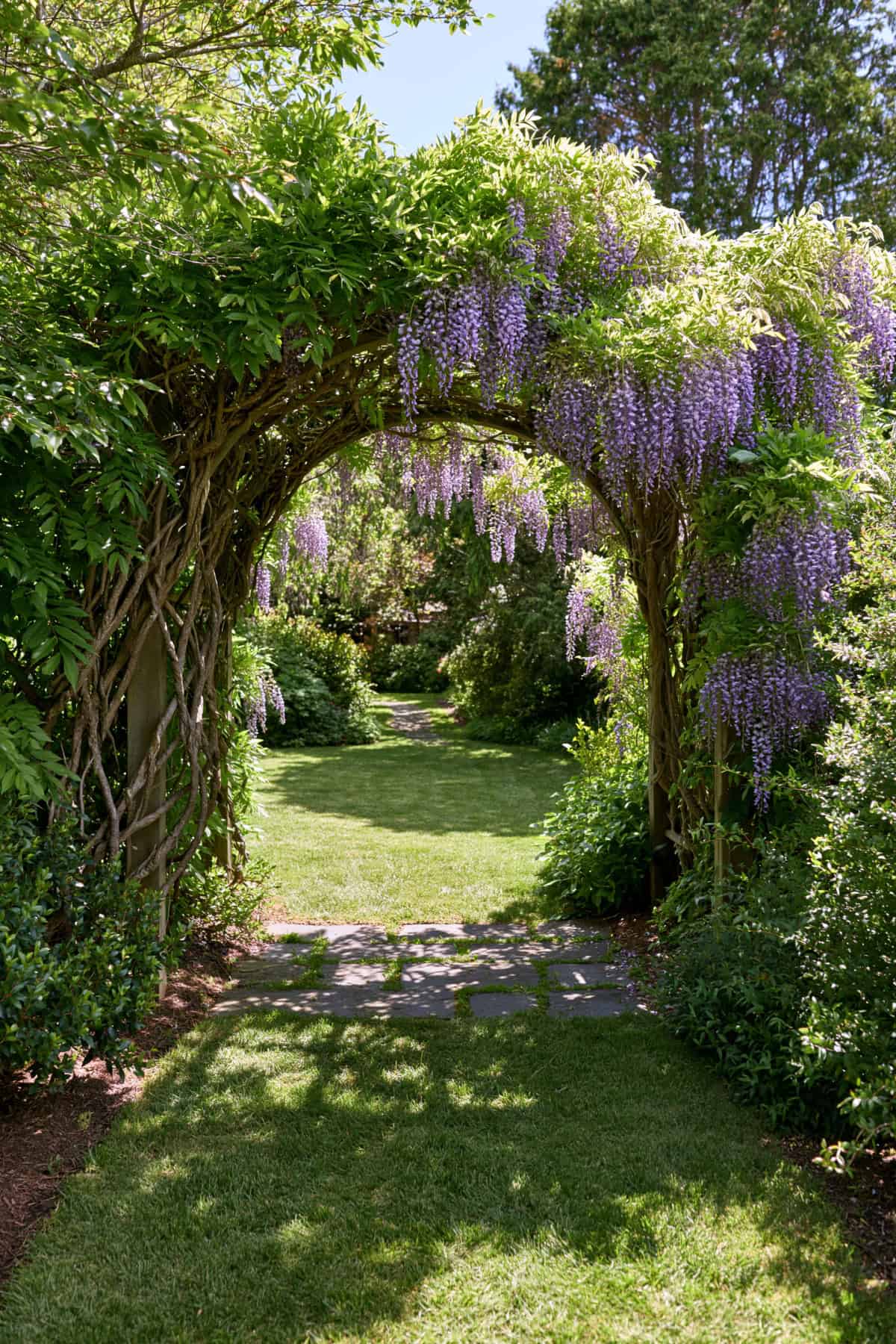
Spring flower clusters hang most dramatically from a tall, heavily built arbor. Wisteria develops thick, woody stems that demand deep-set posts and strong overhead members; a lightweight decorative arch will buckle under its mature weight.
American wisteria is a useful choice where a less aggressive vine is preferred. Give the hanging blooms ample headroom above the path and prune shoots regularly to keep the opening clear. Planting beside a seating area also places its brief flowering display where it receives attention.
Minimal Black Metal Arch
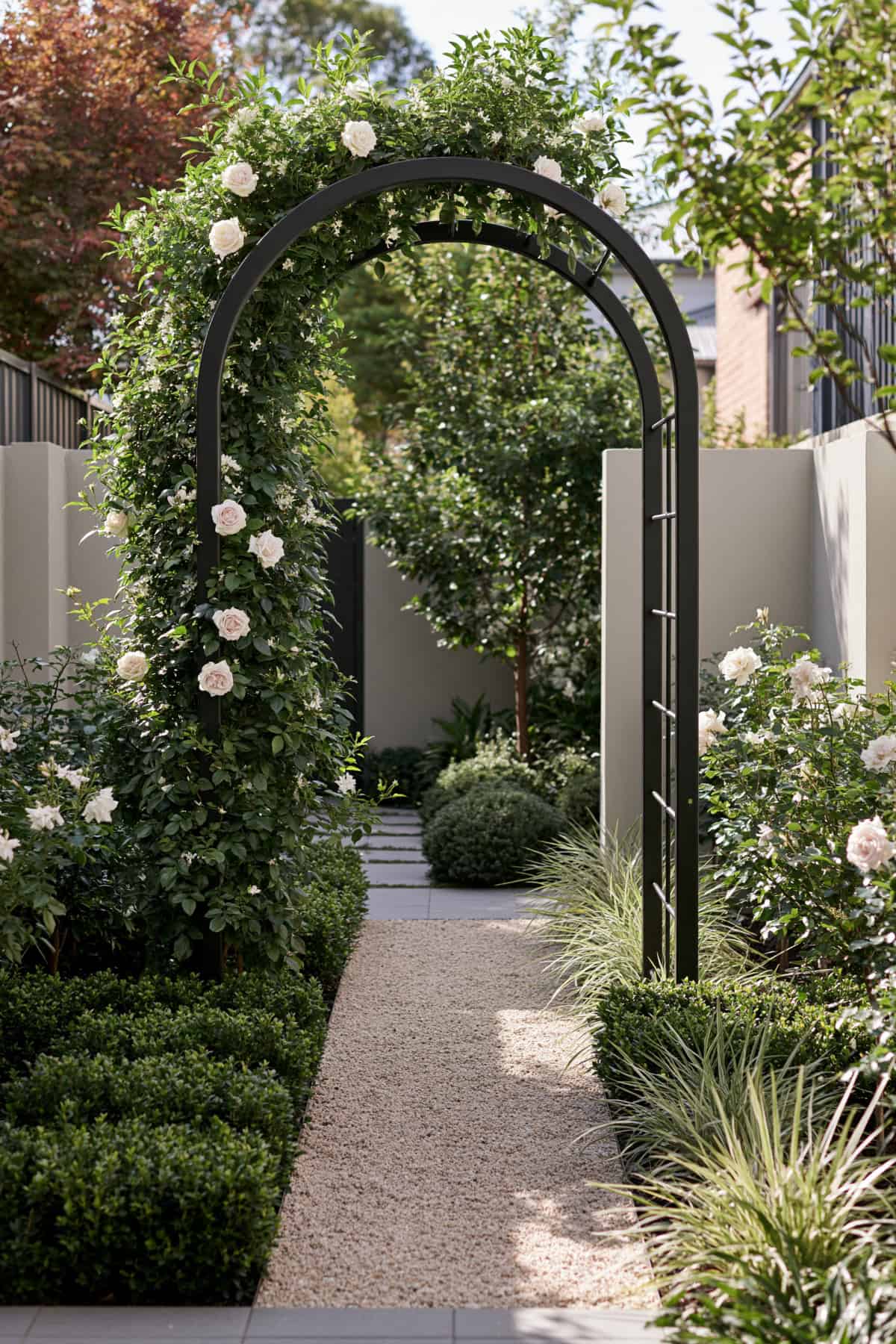
A slim black outline gives an open garden a crisp focal point without blocking the view beyond it. Powder-coated steel holds that line through winter, when deciduous planting has receded.
Position the arch at the end of a straight path or between two clipped beds, where its geometry remains visible. Sparse climbing plants preserve the silhouette; a heavily leafed vine eventually hides it. Check the manufacturer’s anchoring requirements, since narrow metal legs need secure footing in exposed sites.
Clematis Tunnel Arch
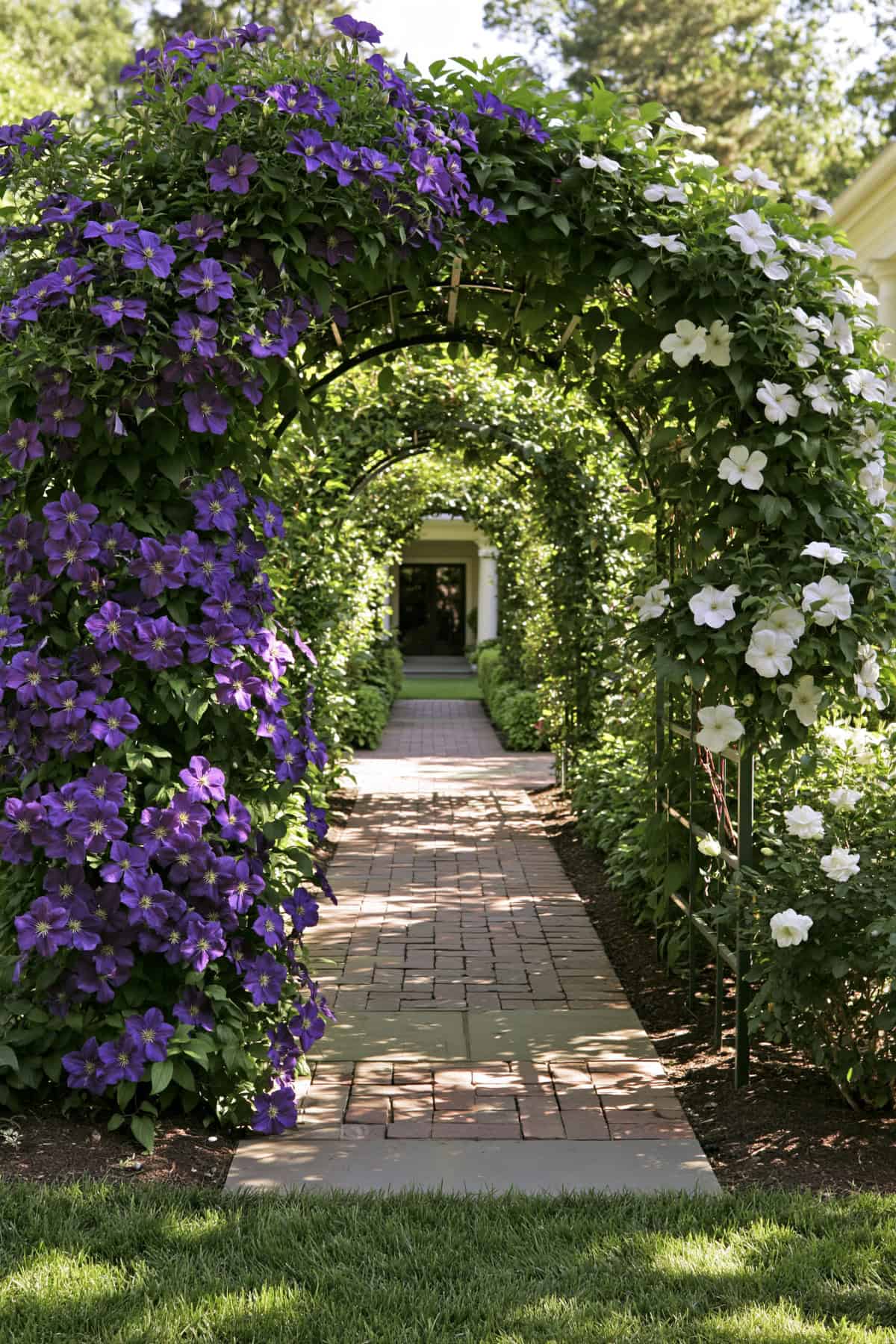
Several arches spaced along a path turn individual clematis plants into a flowering passage. Consistent spacing makes the sequence read as a tunnel, even before vines meet overhead.
Choose varieties with compatible pruning needs and place their roots in cool, mulched ground. Clematis climbs by twisting leaf stalks around thin supports, so broad posts need wire or narrow trellis strips. Keep the overhead framework high enough to accommodate hanging growth without forcing pedestrians to duck beneath it.
Reclaimed Branch Garden Arch
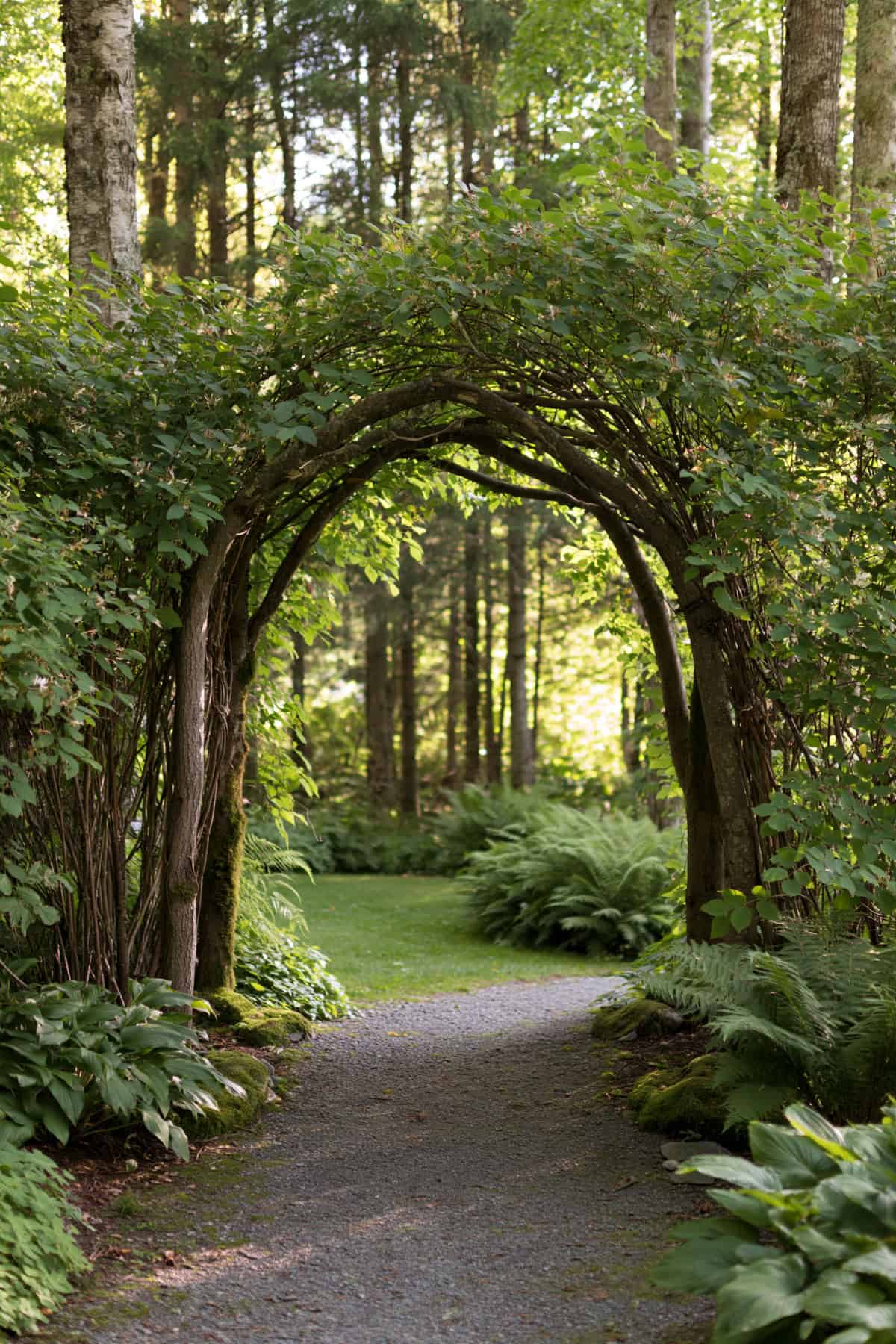
Irregular branches give a woodland path a frame that echoes the trees around it. Straight, substantial pieces form the uprights; smaller limbs cross overhead, where their bends make the arch distinctive.
Select sound wood rather than brittle fallen pieces, and secure each joint with exterior-rated fasteners. Branch ends should sit beyond the walking opening, away from hands and clothing. Because untreated wood weathers and decays, this arch belongs in a spot where individual pieces remain accessible for replacement.
White Painted Cottage Arch
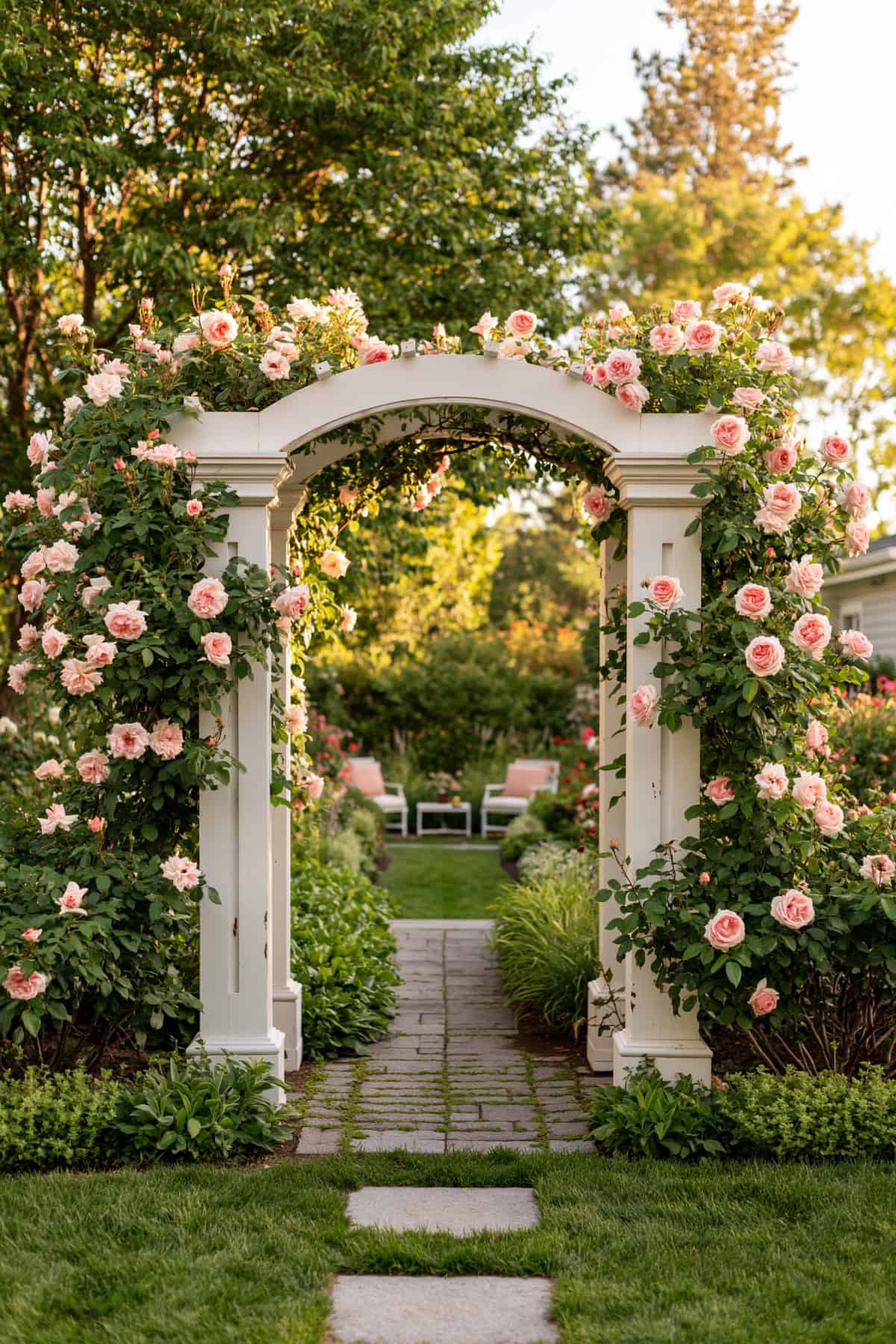
White paint makes a garden entrance visible against deep green hedges and densely planted borders. A latticed side panel gives sweet peas or a restrained climbing rose plenty of narrow points for attachment.
An exterior primer and paint protect the wood, particularly at cut ends and joints where water collects. Leave room around the base for inspection and repainting. Beside a picket gate, the arch forms a clear threshold without requiring a continuous fence along the entire bed.
Arched Entry With Grapevines
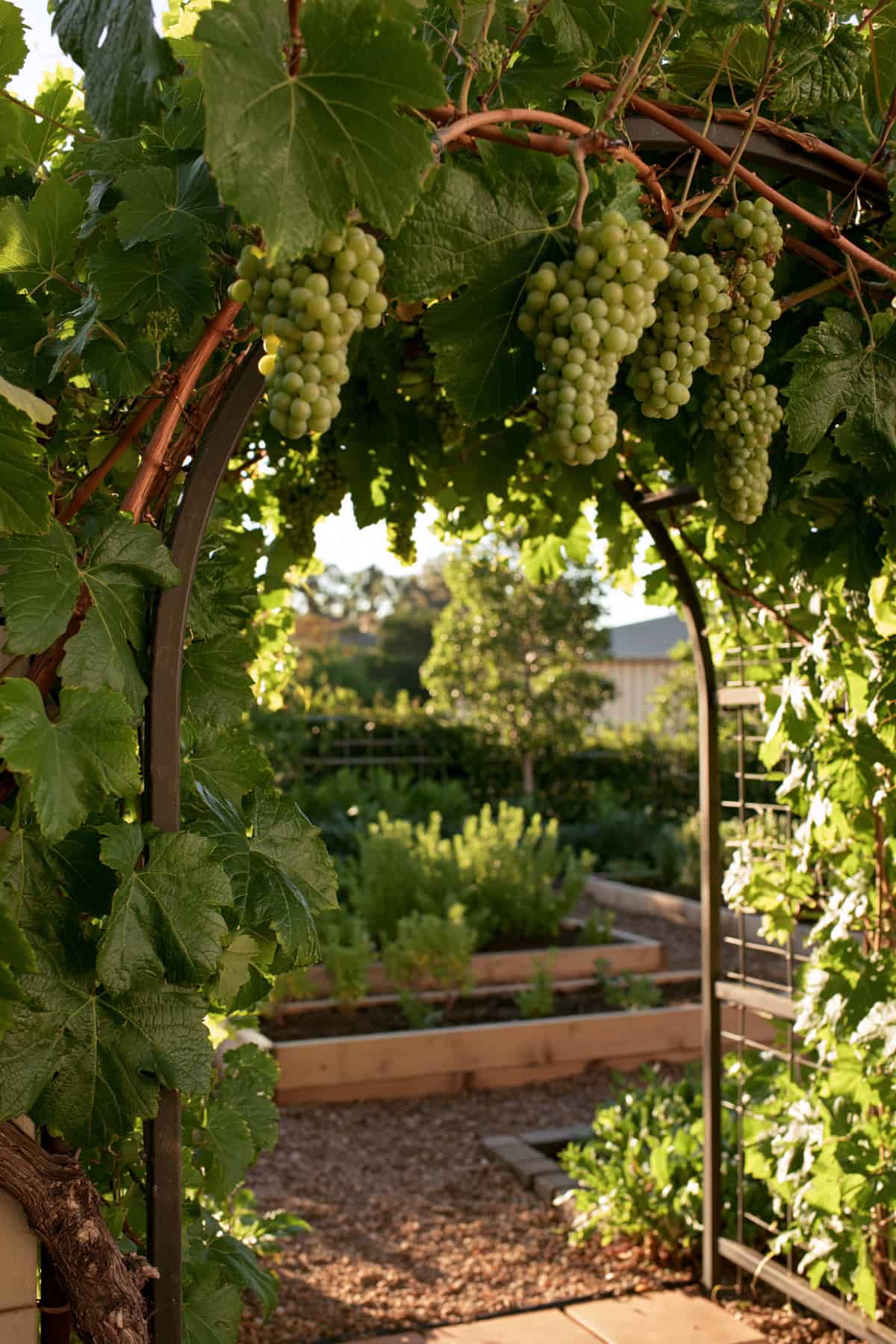
Broad leaves shade a garden entry in summer, and the vine’s bare stems reveal the structure in winter. Grapes need strong overhead support and a sunny site with enough air movement to keep foliage dry.
Train a main stem up each side, then direct fruiting growth along the top. Seasonal pruning keeps the canopy manageable and helps sunlight reach the grapes. A wide opening allows access for harvest and keeps fruit clusters away from the center of the path.
Vegetable Garden Arch With Beans
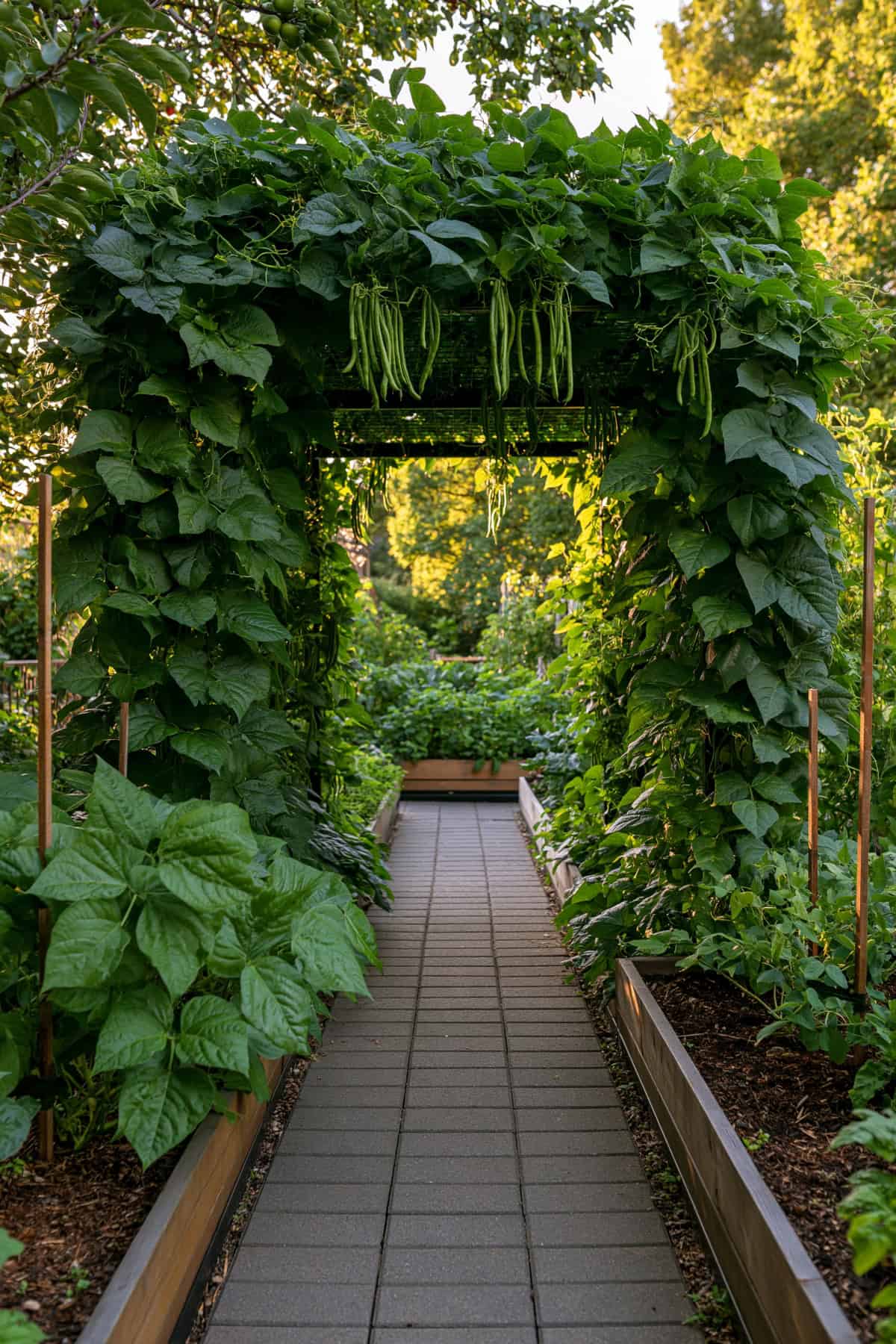
Pole beans turn a pathway between vegetable beds into productive growing space. A rigid wire panel, firmly attached to posts on both sides, gives their twining stems continuous support over the curve.
Plant seeds after the soil has warmed, following the spacing on the seed packet. As vines rise, guide stray tips back toward the mesh and harvest pods frequently to encourage continued production. The open path beneath the leaves provides access to the plants on both sides.
Cucumber Arch Over Raised Beds
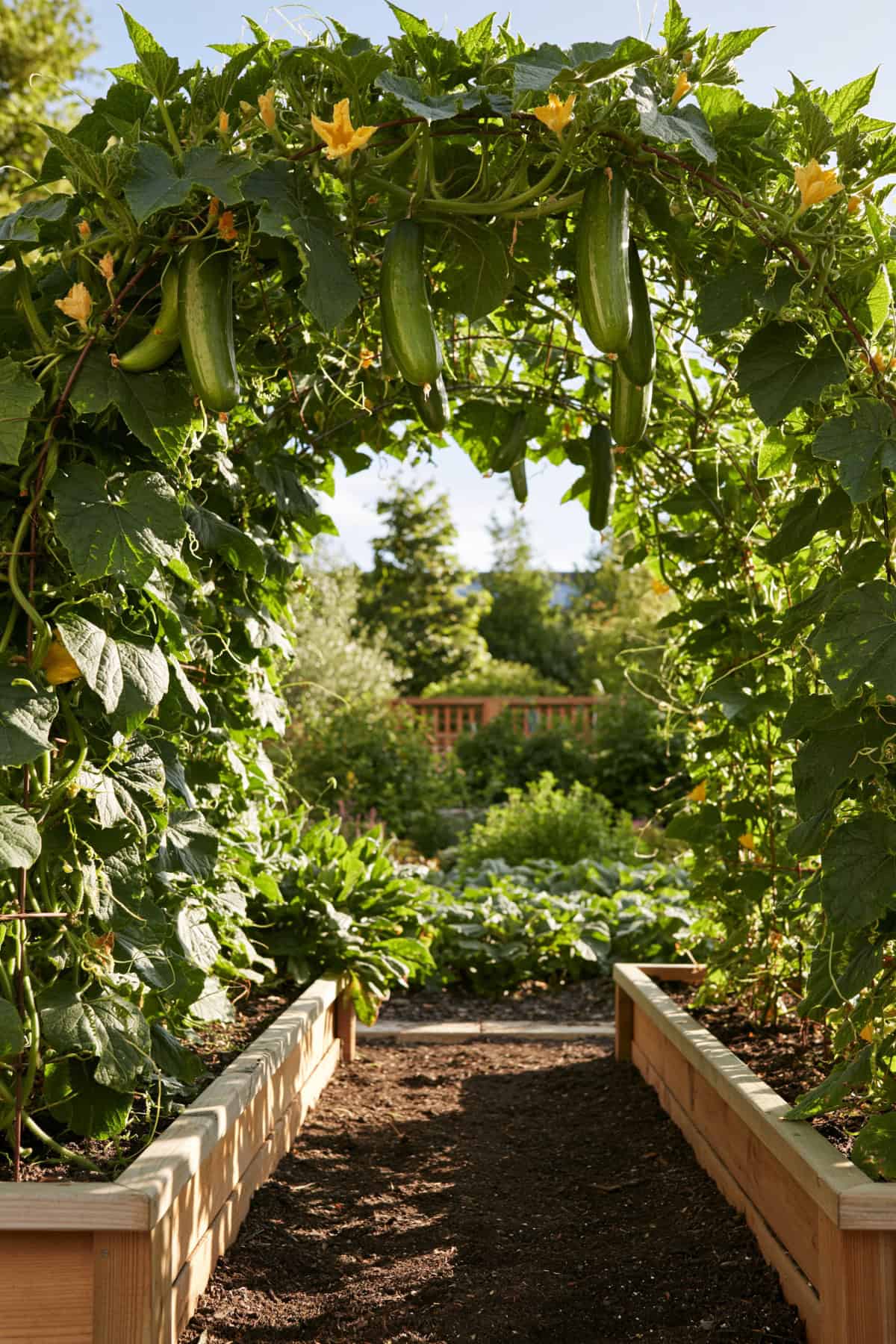
A cattle-panel arch spanning two raised beds keeps cucumber vines off the soil and their fruit within reach. Fasten the panel securely at each end before planting, since mature foliage and a heavy crop put considerable strain on the curve.
Place seedlings near the outer edges of the beds and guide their first tendrils into the mesh. Developing cucumbers hang beneath the leaves, where they are easier to spot at harvest. Leave enough distance between beds for a comfortable path through the arch.
Arched Gate With Climbing Roses
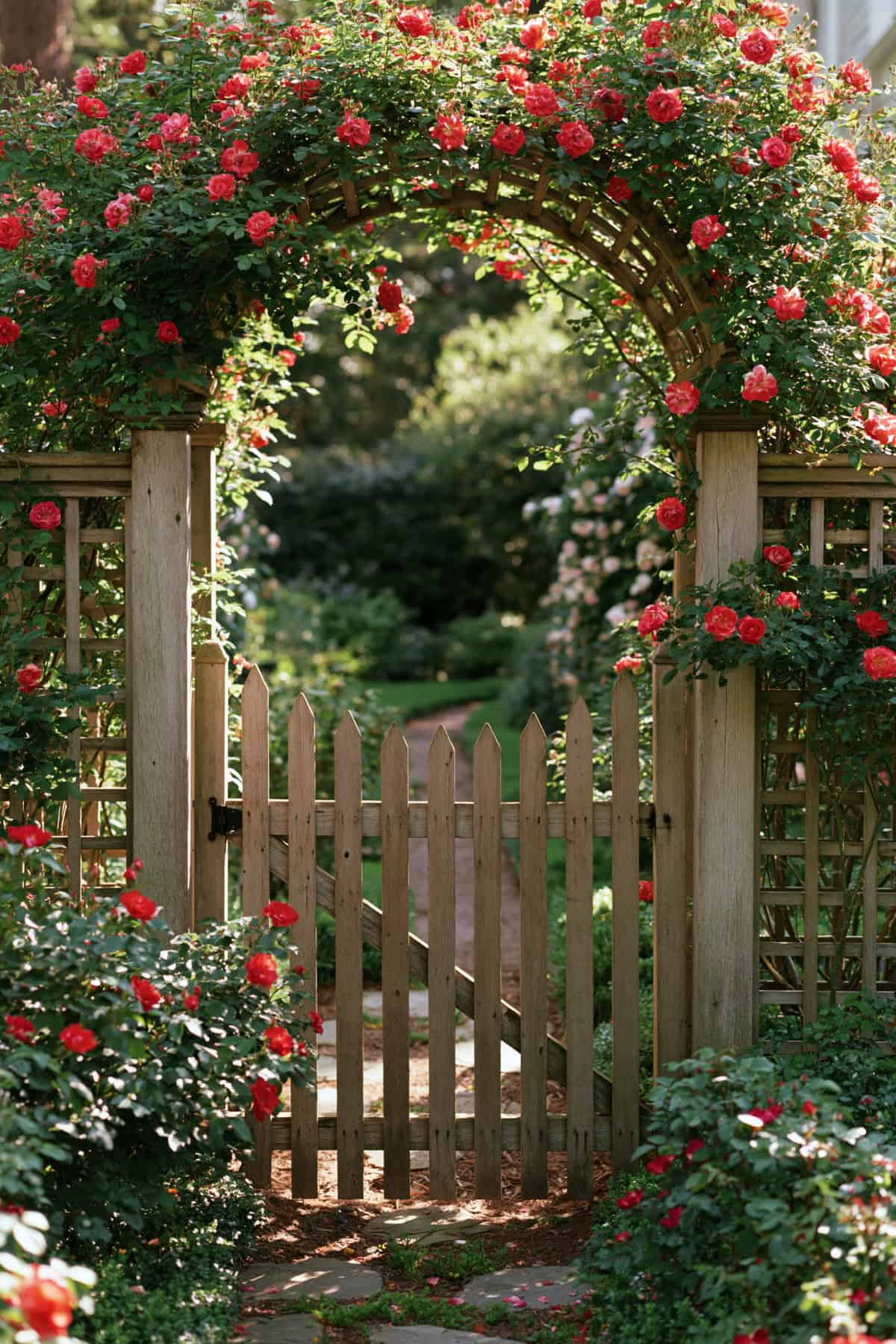
A rose-covered gate gives a garden boundary a clear point of entry. Set the arch posts independently of the swinging gate so the weight of mature rose stems stays off the hinges.
Choose a gate that opens freely through its full arc, then plant roses outside that clearance. Tie thorny stems back from the latch and train growth over the upper frame. The arrangement keeps the gate usable as the roses mature and leaves room to tend both plants.
Brick Garden Archway
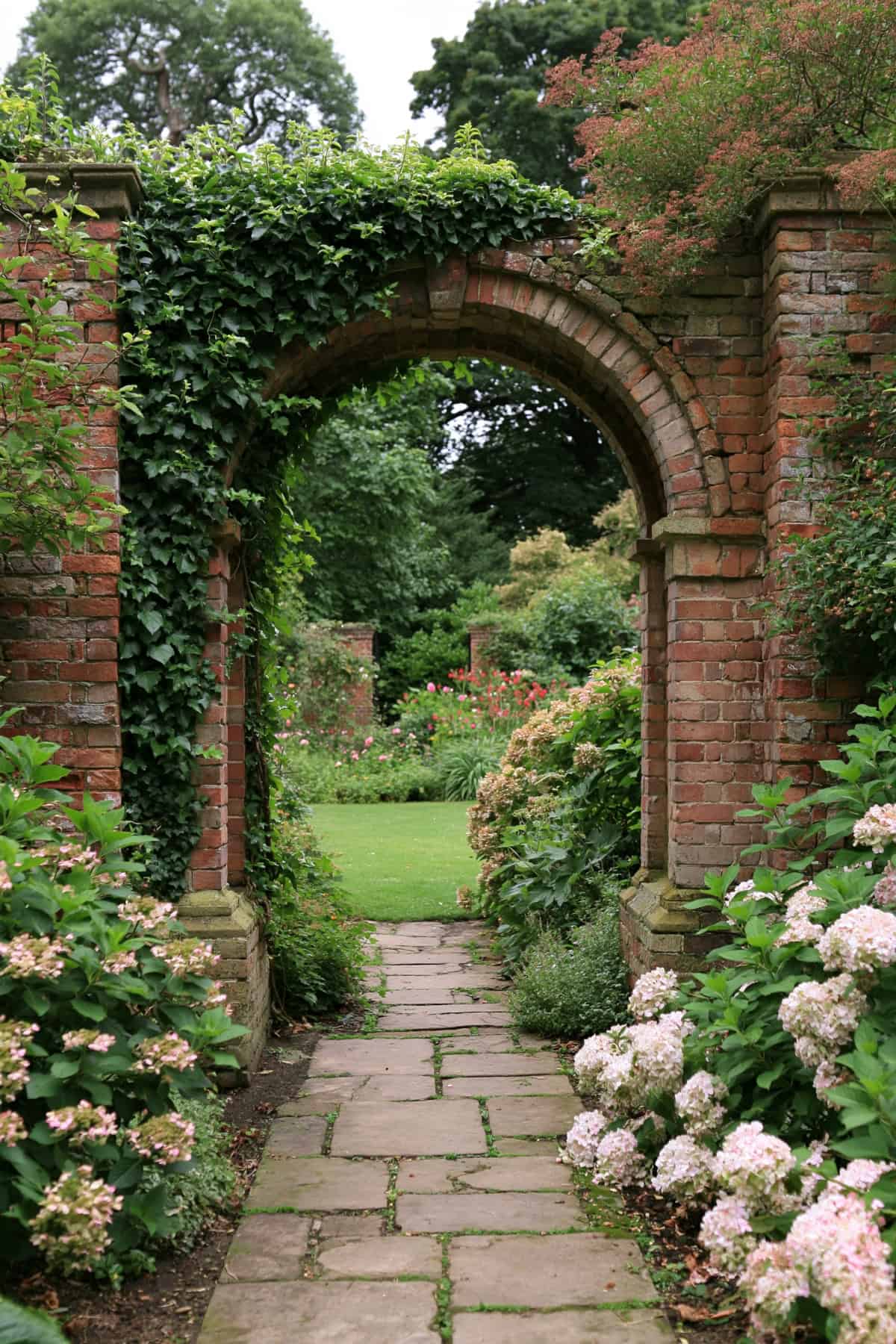
Brick gives a garden passage the presence of a permanent wall, even when the opening stands between short sections of masonry. Matching the house brick or a nearby garden wall establishes a consistent material language.
A true brick arch requires a sound foundation and properly designed support beneath its curved span. Mortar joints and drainage deserve attention in regions with freeze-thaw cycles. Once built, the opening frames a path without relying on planting to define its shape.
Stone Garden Arch Ruin
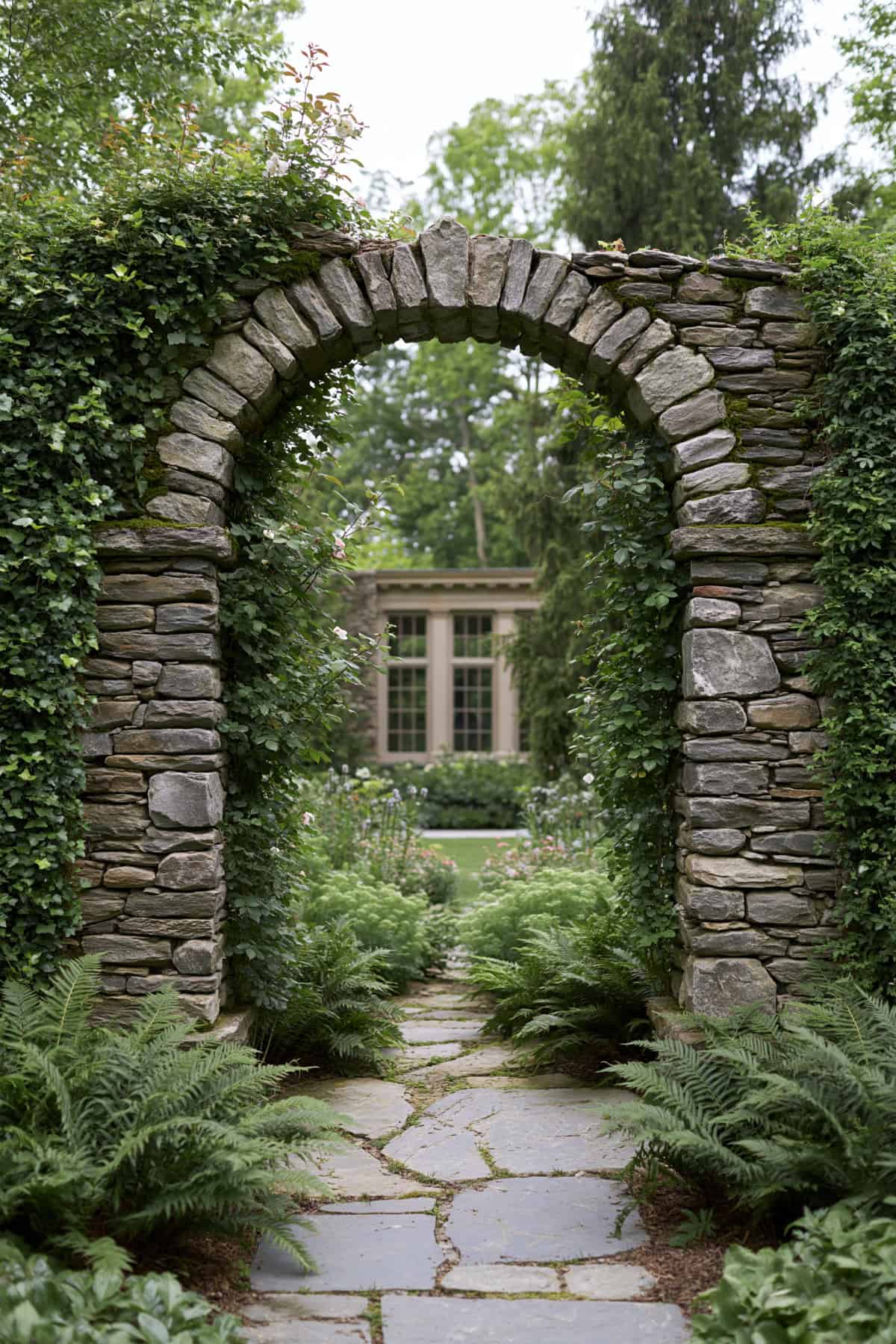
A partial stone wall with an arched opening lends a garden the quiet atmosphere of an old passage. Uneven edges and low adjoining walls keep the structure visually grounded among ferns or spreading perennials.
Despite the ruined appearance, the masonry needs stable footings and a structurally sound arch. Loose-looking stones above a walkway present a safety hazard. Set the opening where it reveals a tree, bench, or change in planting; the view gives visitors a reason to pass through.
Arched Arbor With Built-In Bench
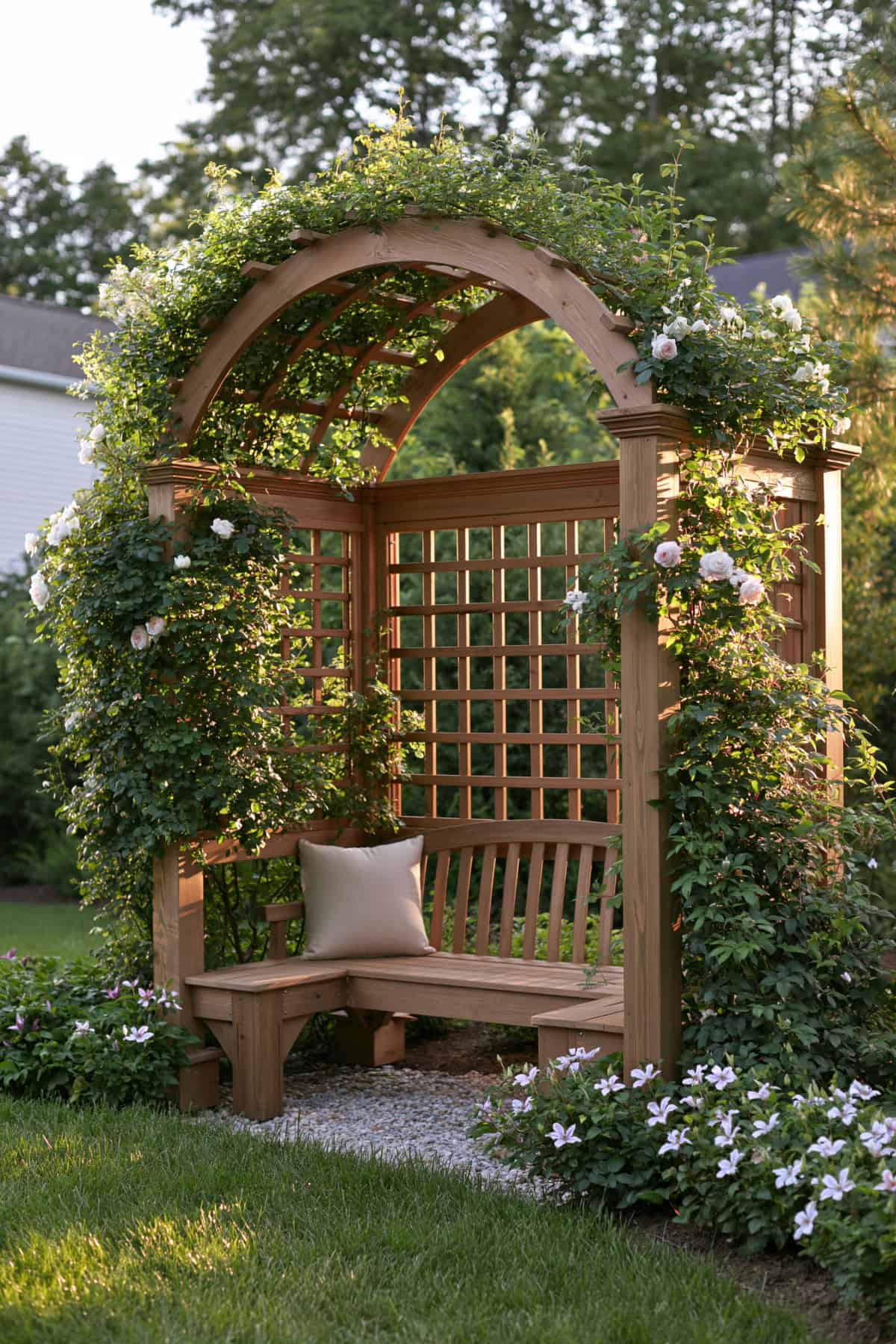
A bench beneath an arbor makes the arch a destination rather than a passage. Placed at the end of a path, its curved roof frames the seated view and provides space for a climbing plant overhead.
Allow enough depth for a comfortable seat and enough height that vines stay clear of heads. Slatted seating sheds rain, and an open back preserves airflow. If afternoon shade is the goal, check the site’s sun exposure before fixing the arbor in place.
Wide Arch Over a Garden Path
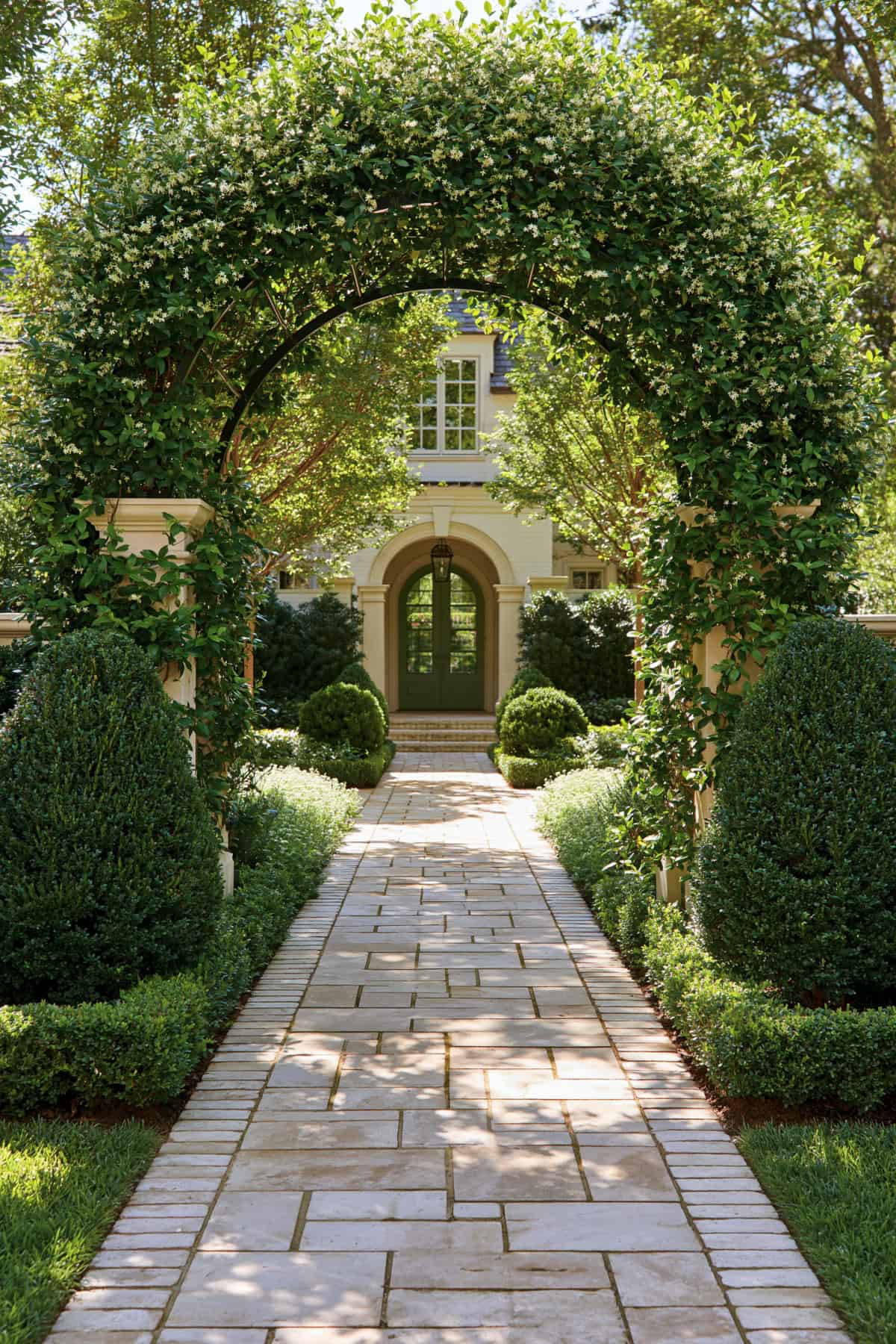
A broad opening preserves the relaxed pace of a generous garden walkway. Measure the path’s usable width first, then place the posts beyond its edges so planting and structural legs do not narrow the passage.
Wide spans need suitably sized crosspieces and firm foundations, particularly where vines will grow across the top. Repeating the path material beneath the arch keeps the route visually continuous. The extra clearance also accommodates a garden cart without brushing against stems.
Narrow Arch for a Side Yard
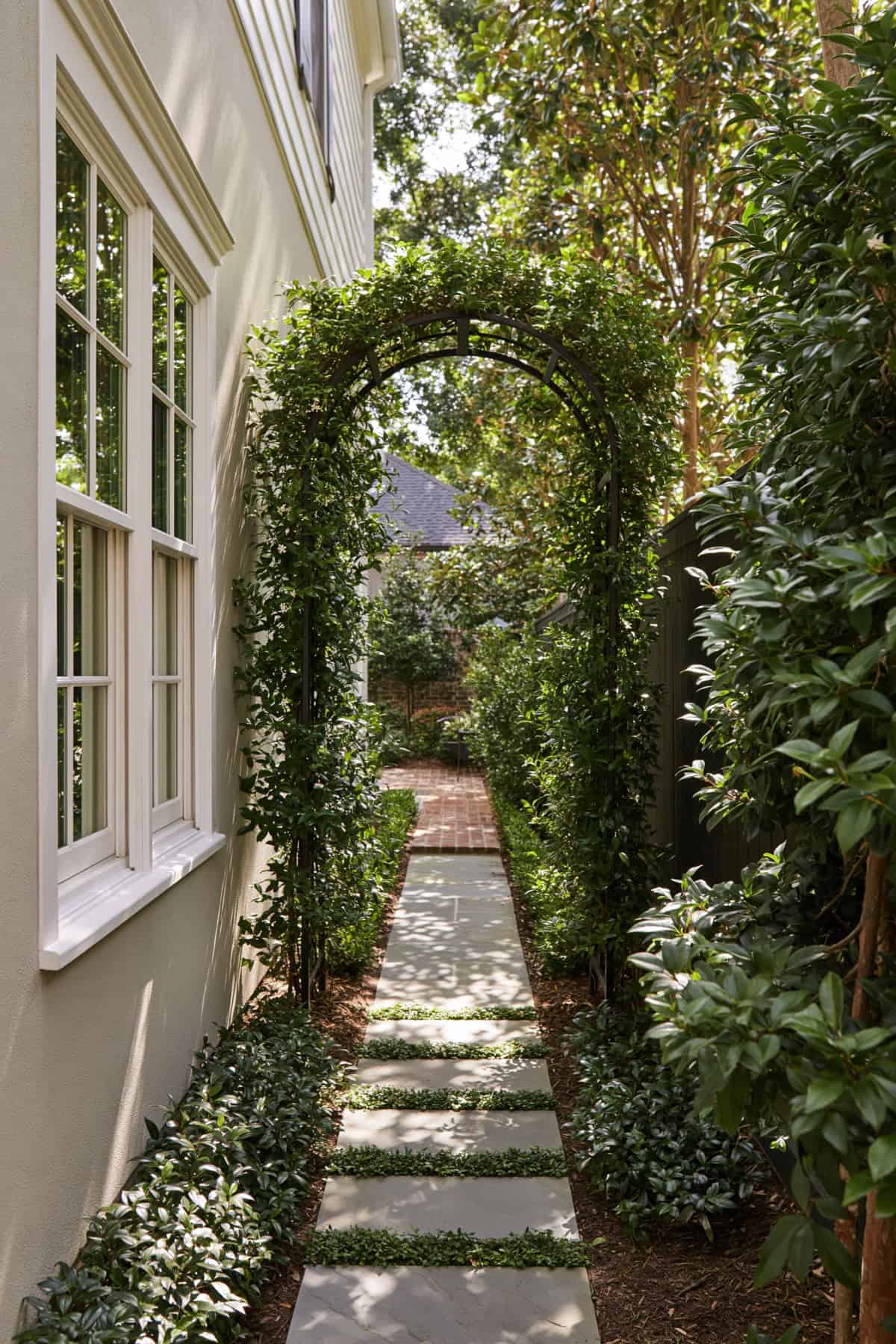
Limited width calls for a shallow, firmly anchored arch that leaves the side-yard route unobstructed. Its uprights belong tight to the planting edge, with no projecting feet across the path.
A slim metal frame preserves precious inches and casts less shade onto nearby plants. Choose a restrained climber and prune outward growth before it reaches a wall or gate. Clearance is especially important along this route if it serves as access to trash bins, utilities, or the backyard.
Cedar Arch With Hanging Lanterns
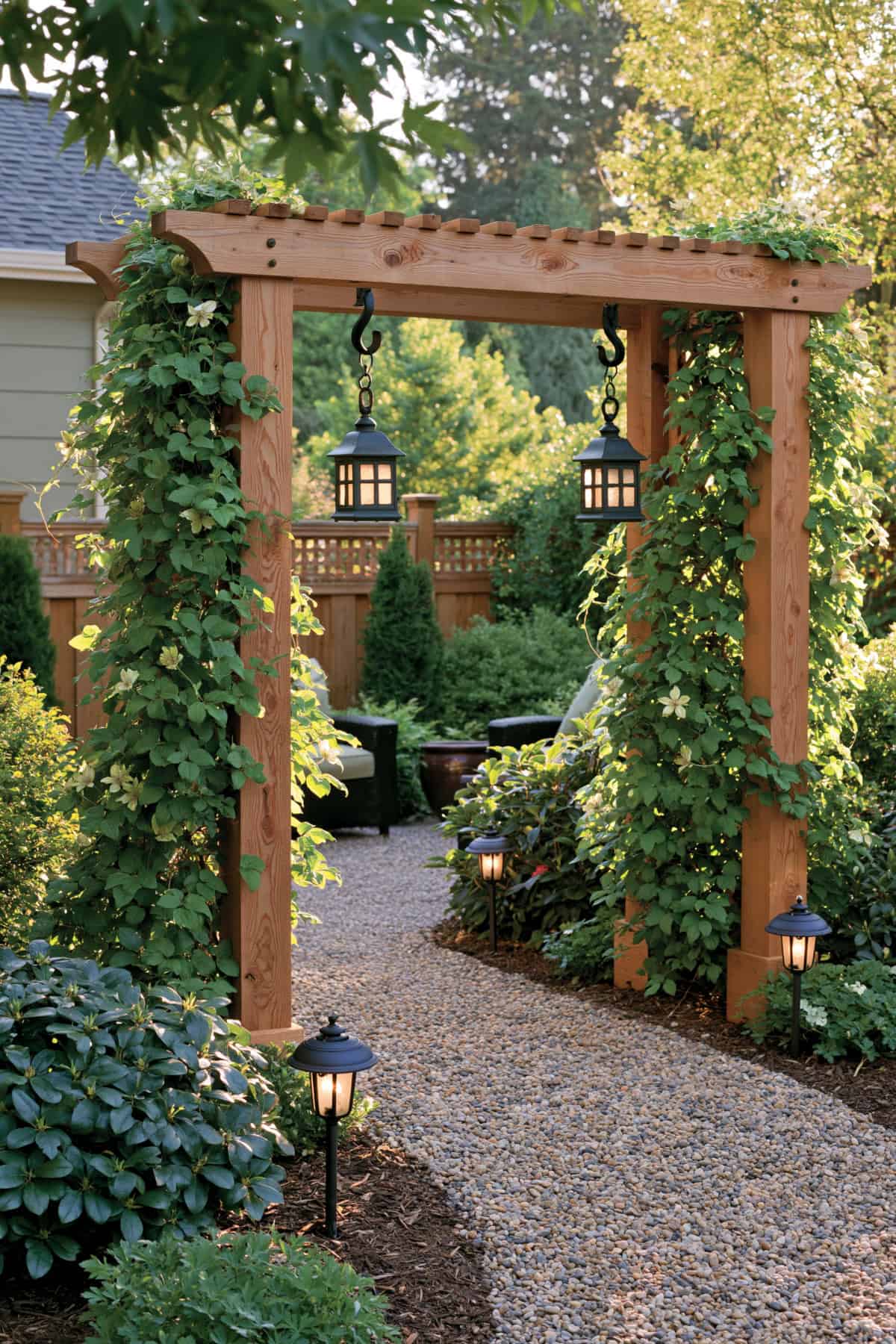
Lanterns suspended from a cedar arch give an evening path a distinct pool of light. The timber’s warm color remains visible during the day, particularly beneath a clear exterior finish.
Use outdoor-rated fixtures and hardware, and attach each lantern to a structural crosspiece. Keep hanging lights above head height and away from climbing foliage. Solar lanterns simplify placement in a remote garden, though their charging panels need dependable daylight; hardwired lighting requires electrical installation appropriate for outdoor use.
Rose Arch Over a Gravel Walkway
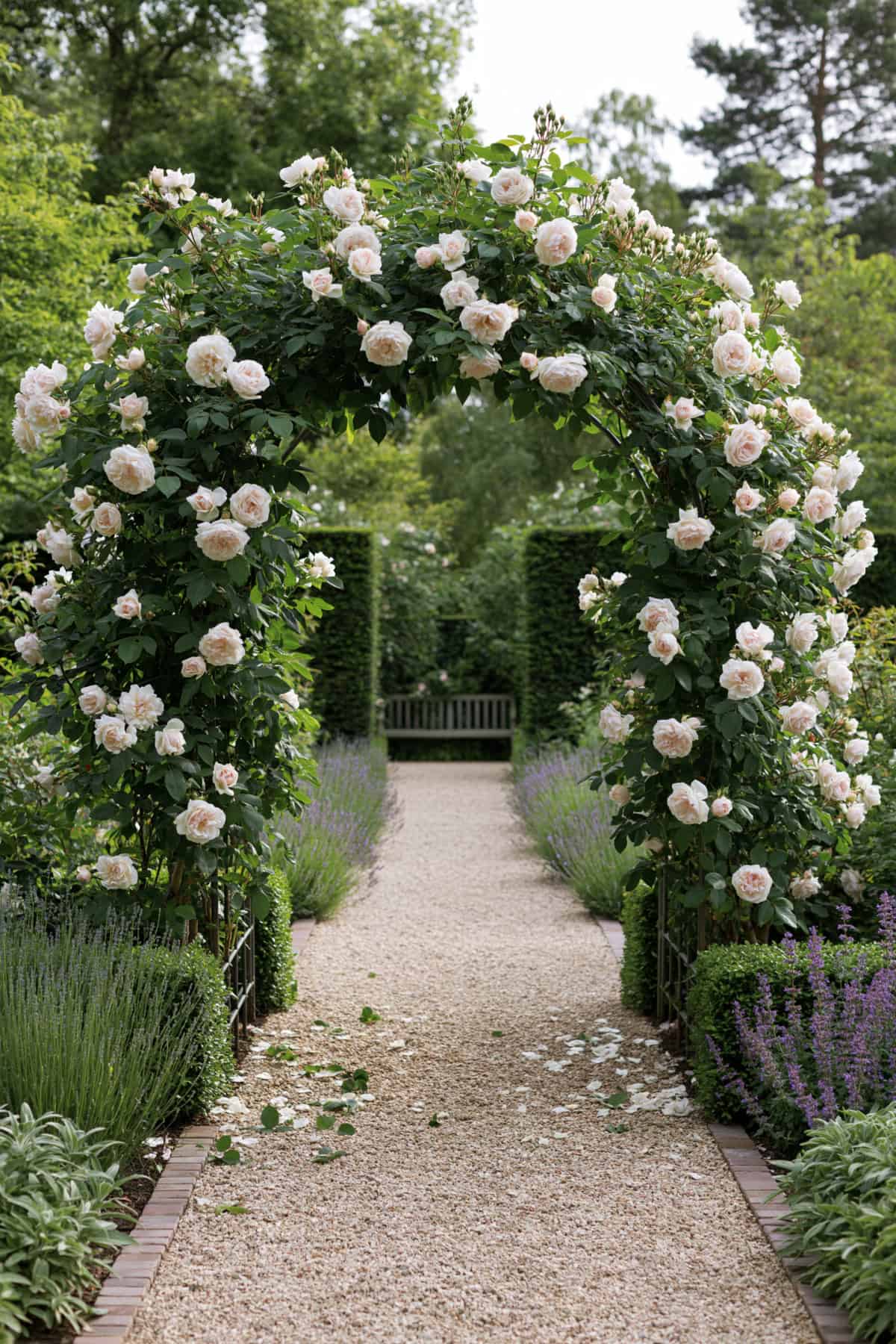
Loose gravel gives a rose-framed passage a quiet crunch underfoot and a permeable surface beneath the blooms. Edging holds the stone in place, keeping it away from the rose crowns at either side.
Choose a stable gravel size that stays comfortable underfoot, and give the path enough width for passing without touching thorny stems. Fallen petals show clearly against pale stone during flowering. Regular raking returns displaced gravel to the center and lifts spent blossoms before they collect around the plants.
Japanese-Inspired Timber Arch
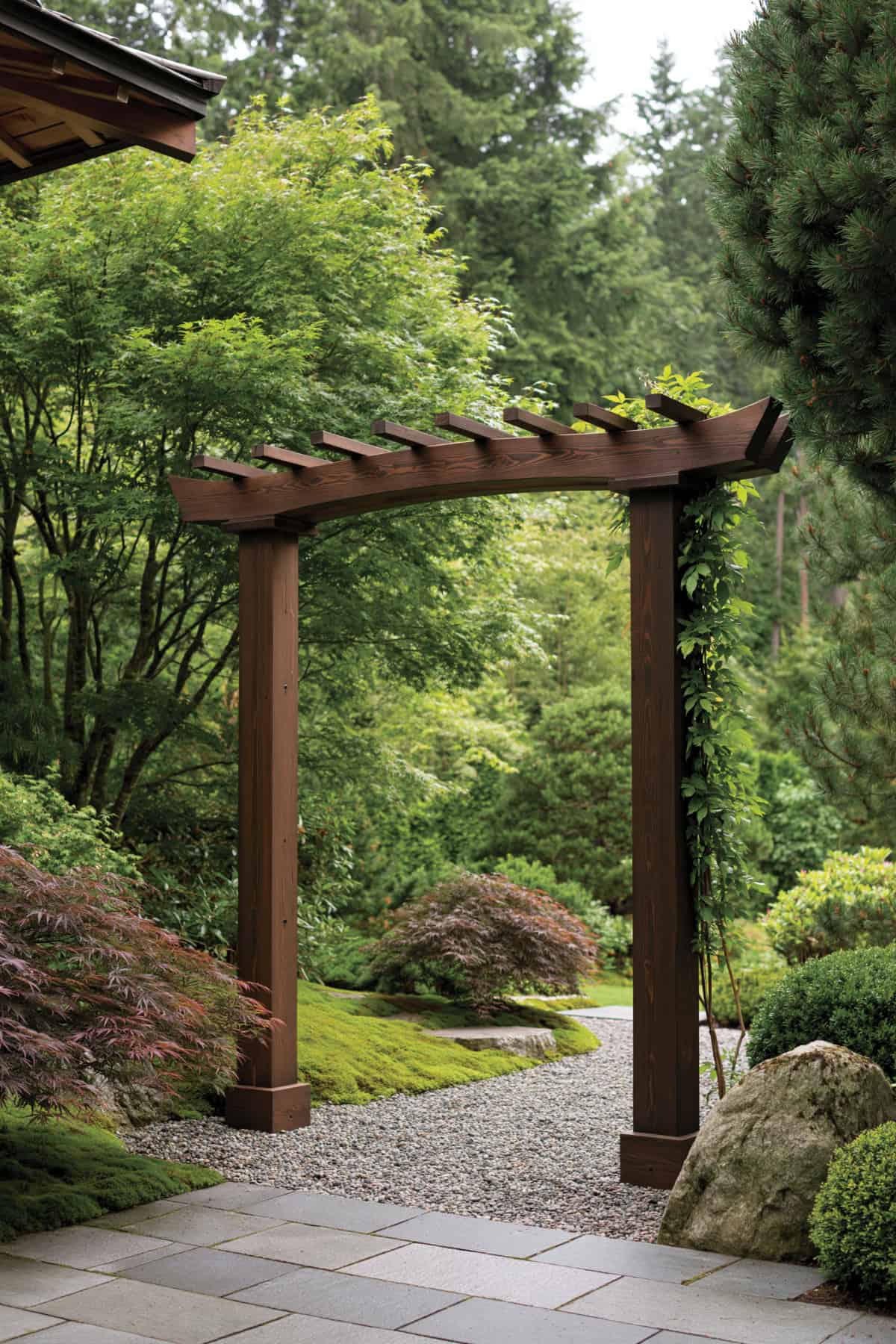
Clean joinery and a restrained planting scheme give a timber arch a calm presence near a stepping-stone path. A gently curved top or subtly raised crosspiece provides the defining shape without elaborate ornament.
Dark-stained wood stands out against moss and evergreen foliage. Keep the opening clear enough to frame the garden beyond it, allowing the structure’s proportions to remain visible. Careful spacing around the posts gives both the timber and nearby planting room to be seen.
Garden Arch With Star Jasmine
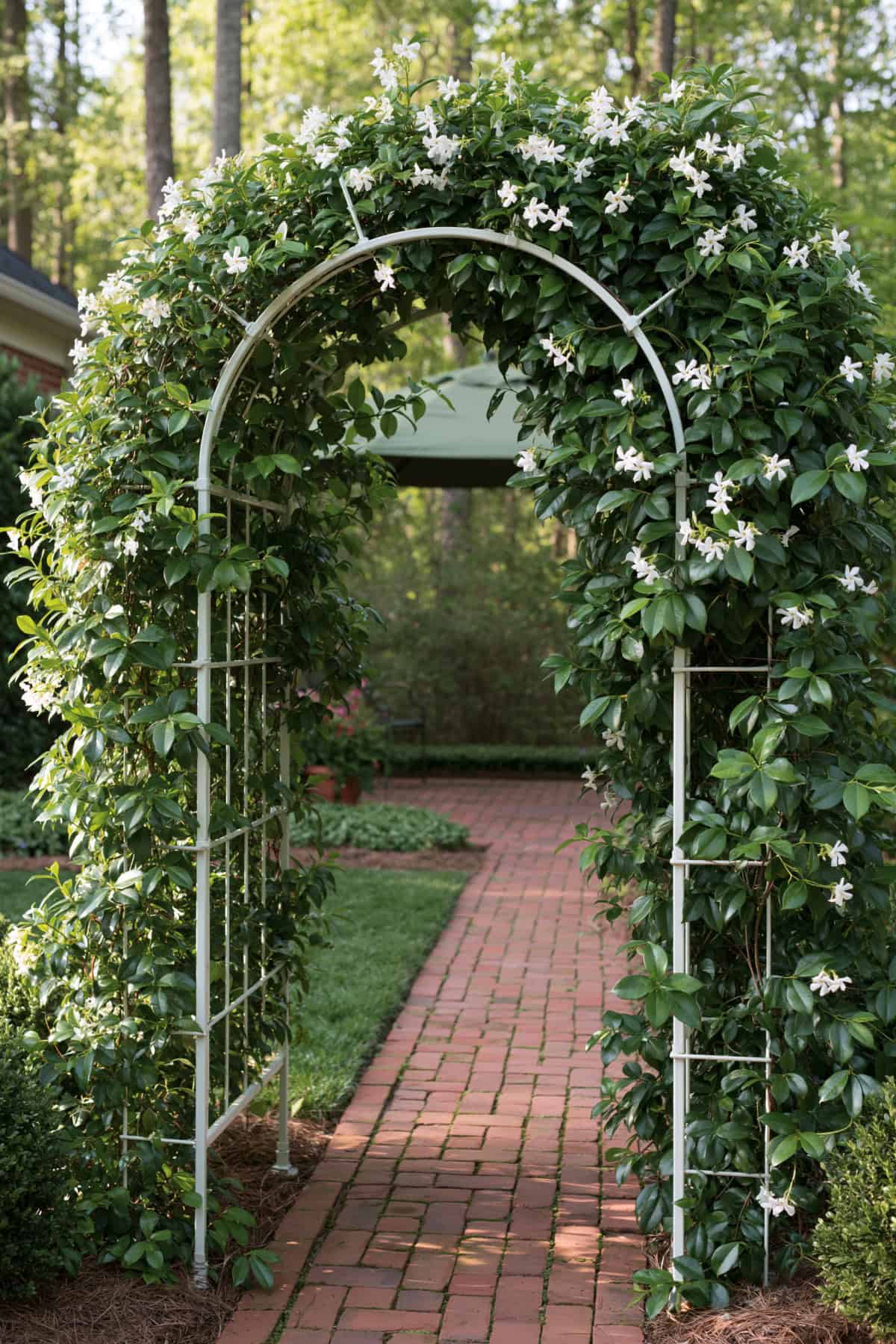
Star jasmine covers a sunny arch with glossy foliage and fragrant white flowers. It is a strong option in climates where it survives outdoors year-round; gardeners in colder regions need to check local hardiness before planting.
The vine twines as it grows, though young stems benefit from loose ties to the frame. Position the arch near a frequently used walk to enjoy its late-spring scent. Pruning after flowering keeps vigorous growth clear of the passage and within the support’s capacity.
Hydrangea Vine Garden Arch
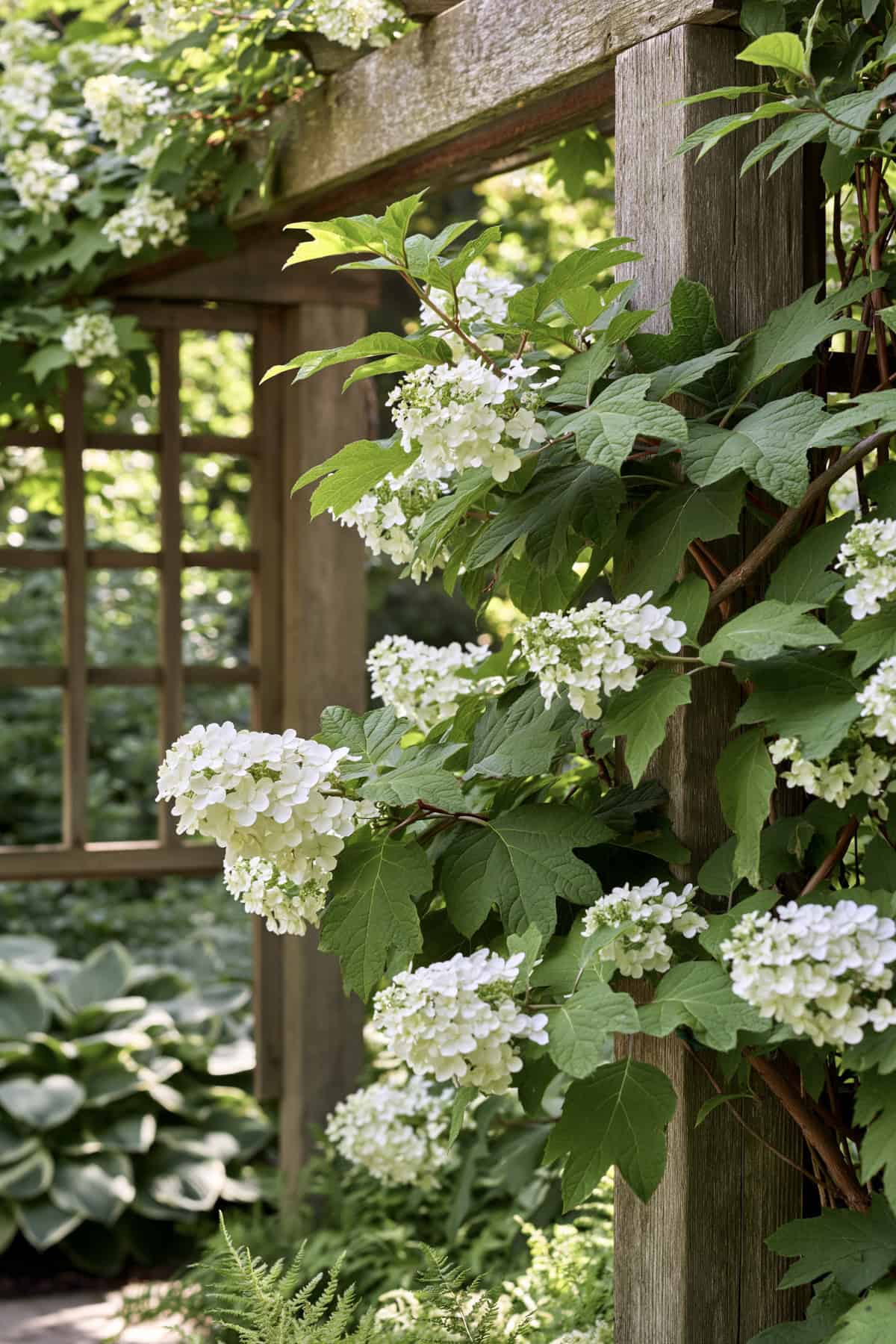
A climbing hydrangea gives a shaded garden arch broad green leaves and clusters of white flowers. Its mature stems become woody and heavy, calling for a robust structure with ample space around it.
The plant attaches by aerial rootlets, though new growth may need initial guidance onto the support. Establishment is gradual, and the arch’s framework remains visible during the early years. Site it where the vine receives the light and moisture appropriate to the chosen species, with access for pruning later.
Espalier Fruit Tree Arch
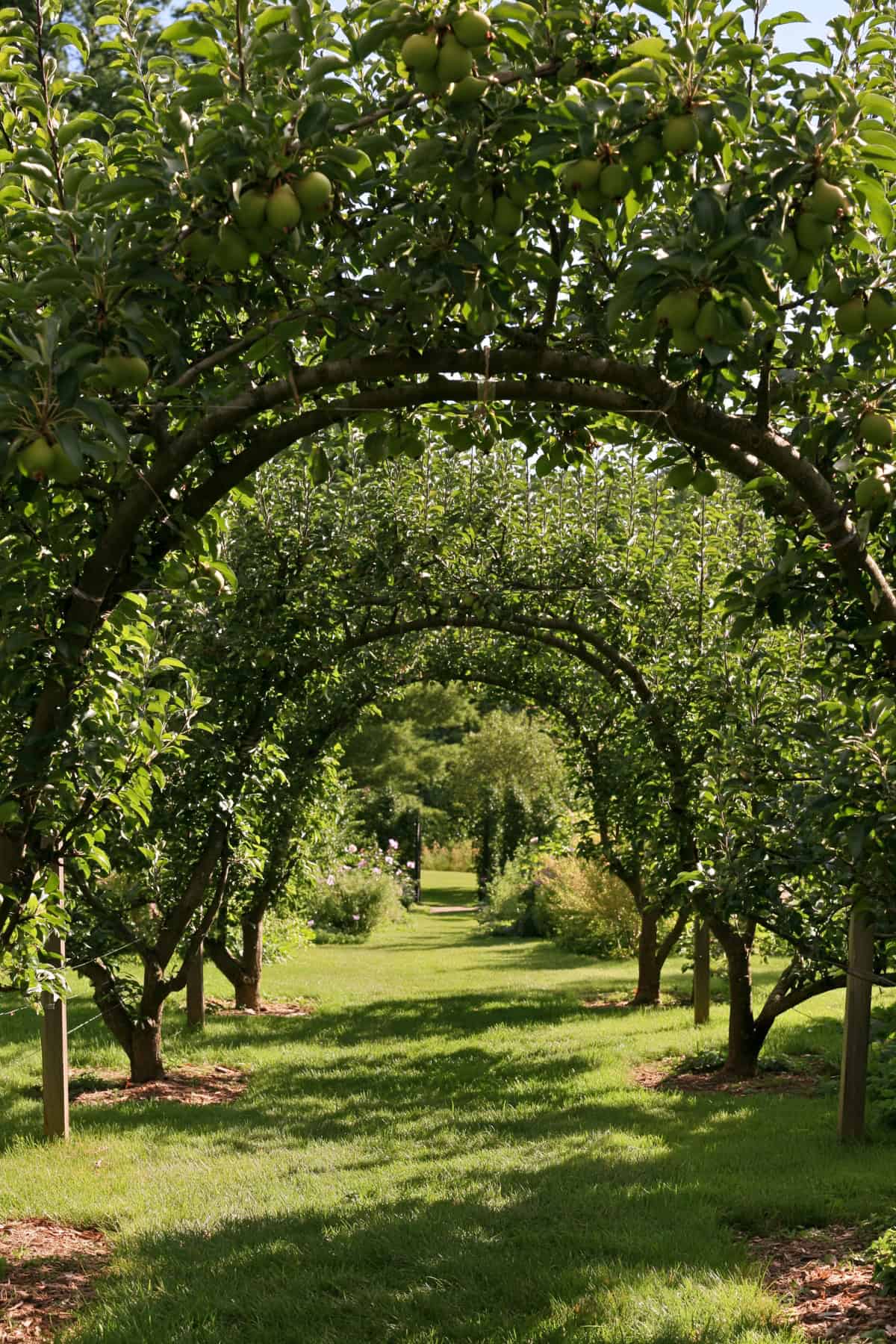
Trained fruit trees turn an arch into a precise framework of branches, blossom, and seasonal harvest. Two compatible trees planted on opposite sides are guided upward, then along the overhead support.
This arrangement requires years of training and regular pruning to preserve its form. Strong posts and horizontal wires guide young branches without tying them too tightly. Select varieties suitable for the local climate and check pollination requirements before planting; fruit production depends on both the trees and the site.
Living Willow Garden Arch
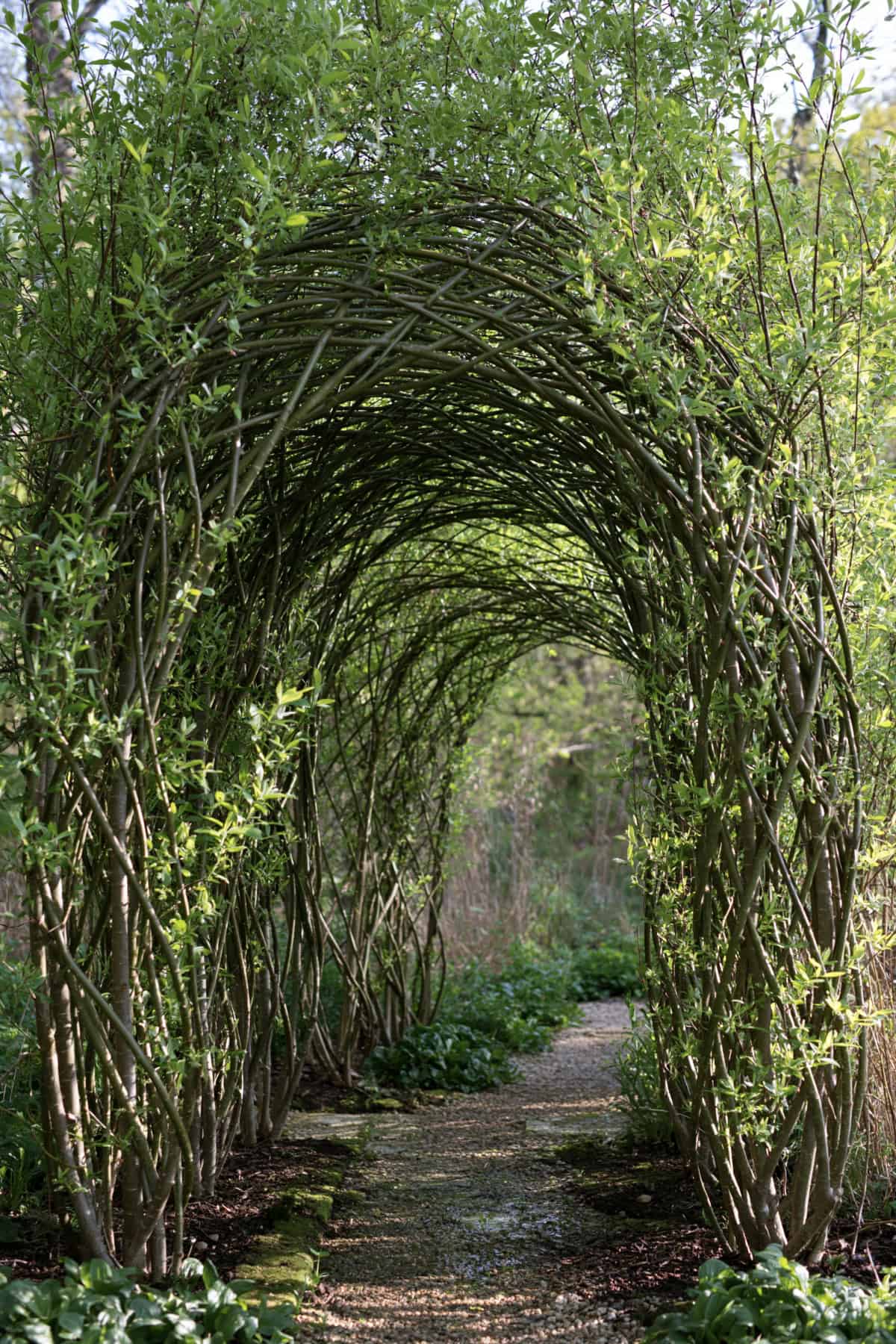
Fresh willow rods planted in moist ground form an arch that roots and leafs out as it grows. Flexible stems bend overhead and cross at the crown, where ties hold the shape during establishment.
Living willow needs consistent moisture and regular trimming to maintain a clear opening. New shoots emerge along the rods each growing season, gradually thickening the outline. Place the arch well away from drains and underground pipes, since willow roots seek water beyond the planting site.
Bamboo Garden Arch
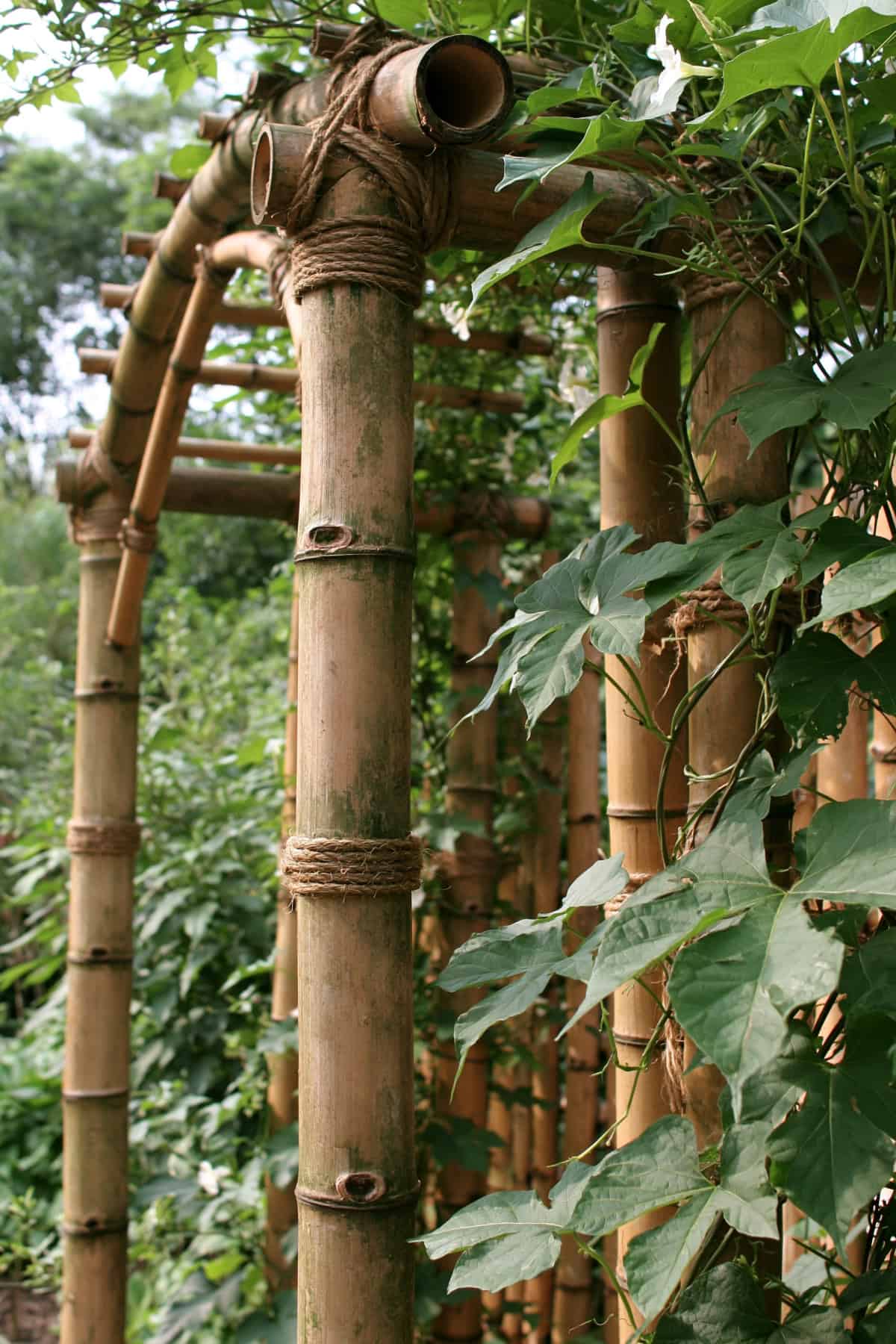
Bamboo poles give a lightweight arch strong vertical lines and clearly visible joints. Whole poles tied or fastened into a curved frame fit naturally beside a gravel path or a compact vegetable garden.
Use sturdy poles for the uprights and secure them to ground stakes or post supports. Outdoor lashings need periodic inspection as weather loosens fibers and ages the bamboo. Climbing annuals keep the load manageable and leave the structure accessible for repairs at the end of the season.
Copper Pipe Garden Arch
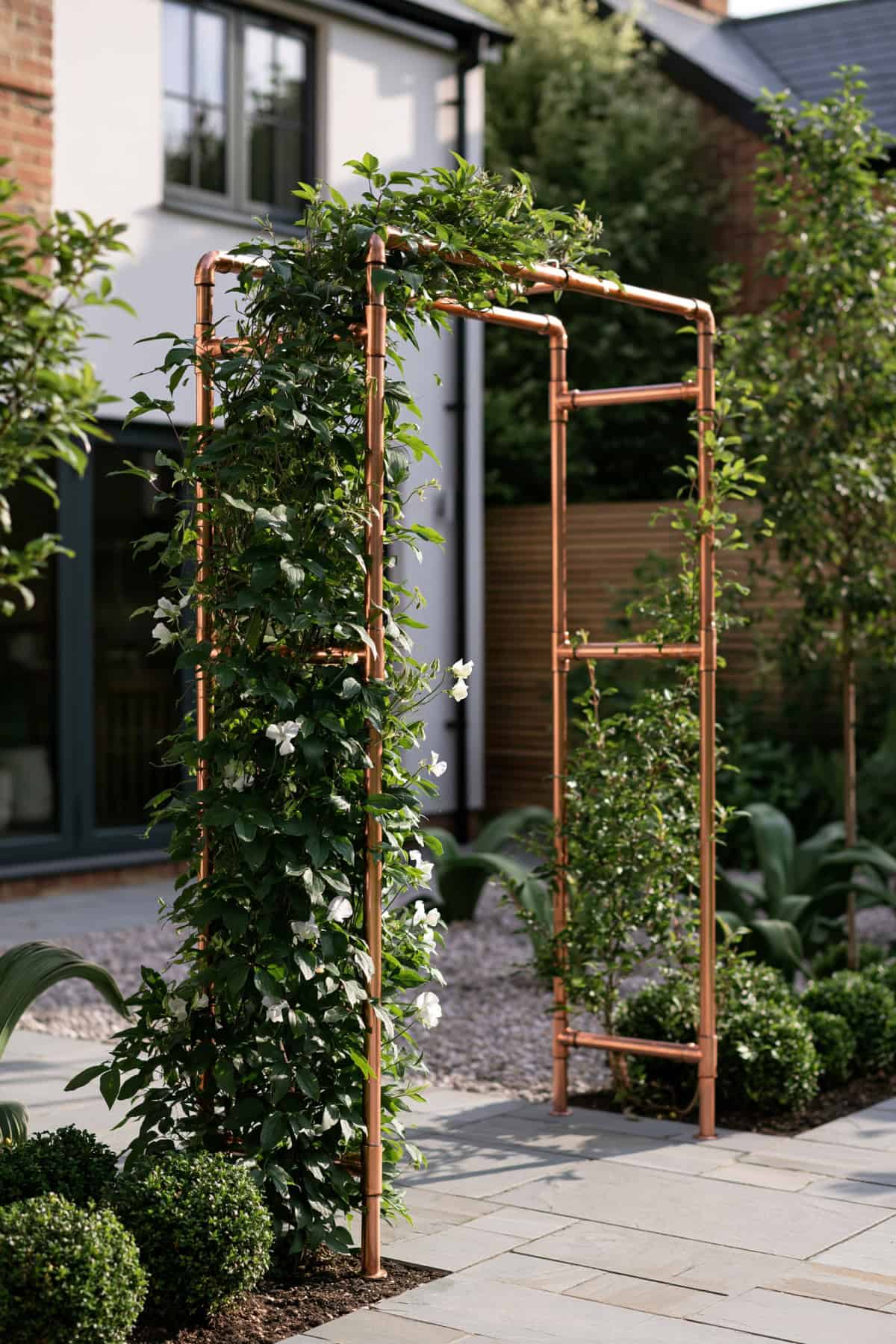
Copper catches low sunlight along an arch’s exposed curves, then develops a muted patina outdoors. Its slender profile fits a path bordered by fine-leaved planting.
Pipe diameter, joint construction, and anchoring must match the intended span and plant load. Secure connections are essential, especially where the curved top meets the uprights. A light vine keeps the metal visible through the growing season; larger, woody climbers call for a structure designed for their eventual weight.
Rose and Clematis Combination Arch
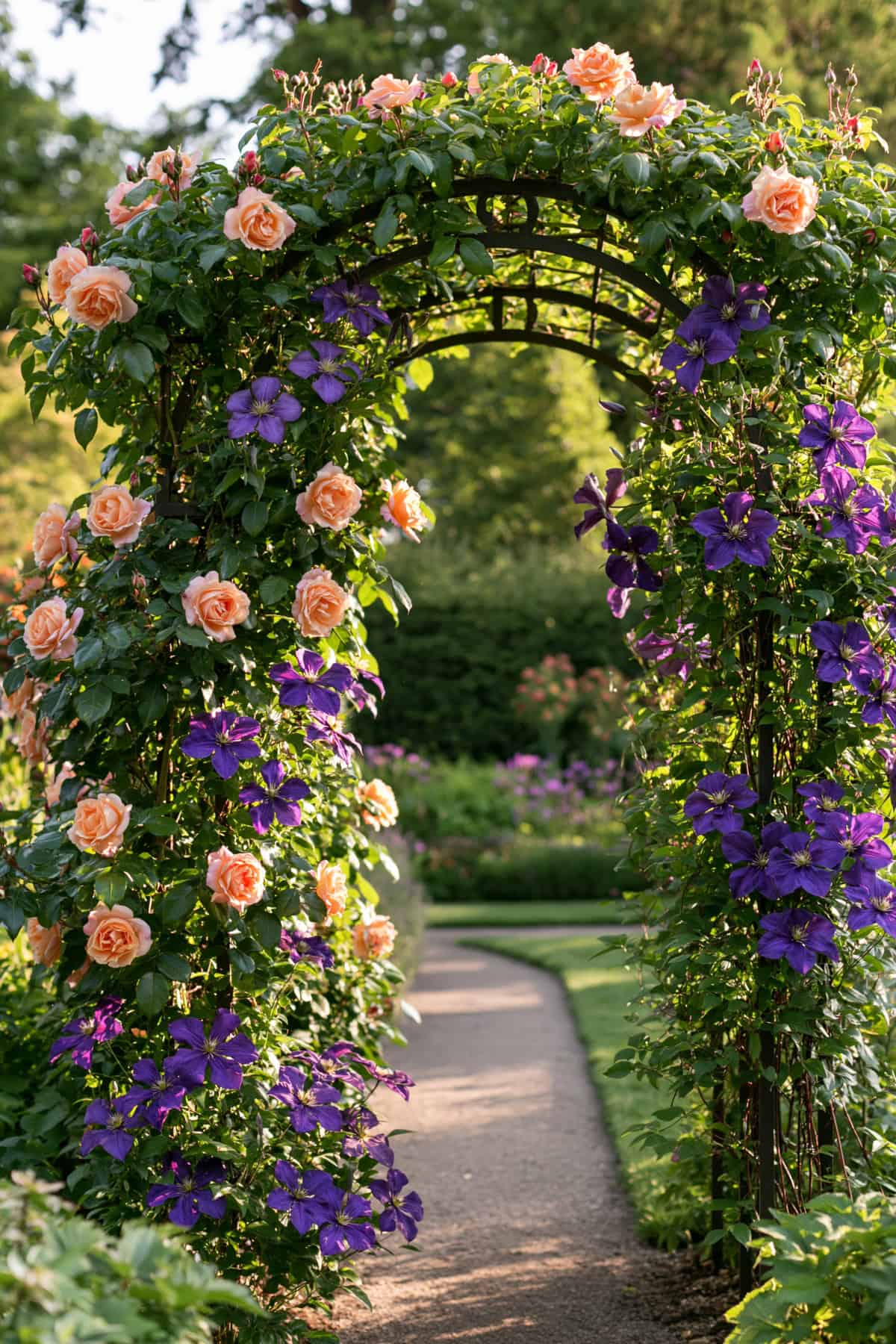
Pairing clematis with a climbing rose extends the flowering interest across the same arch. The rose supplies the permanent framework of stems, and clematis threads its finer growth through open spaces.
Choose varieties with compatible light needs and flowering periods that complement each other. Give each plant its own planting space and guide young clematis stems toward narrow supports. Pruning follows the needs of each variety, so clearly labeled plants make seasonal care less confusing.
Archway Into a Secret Garden
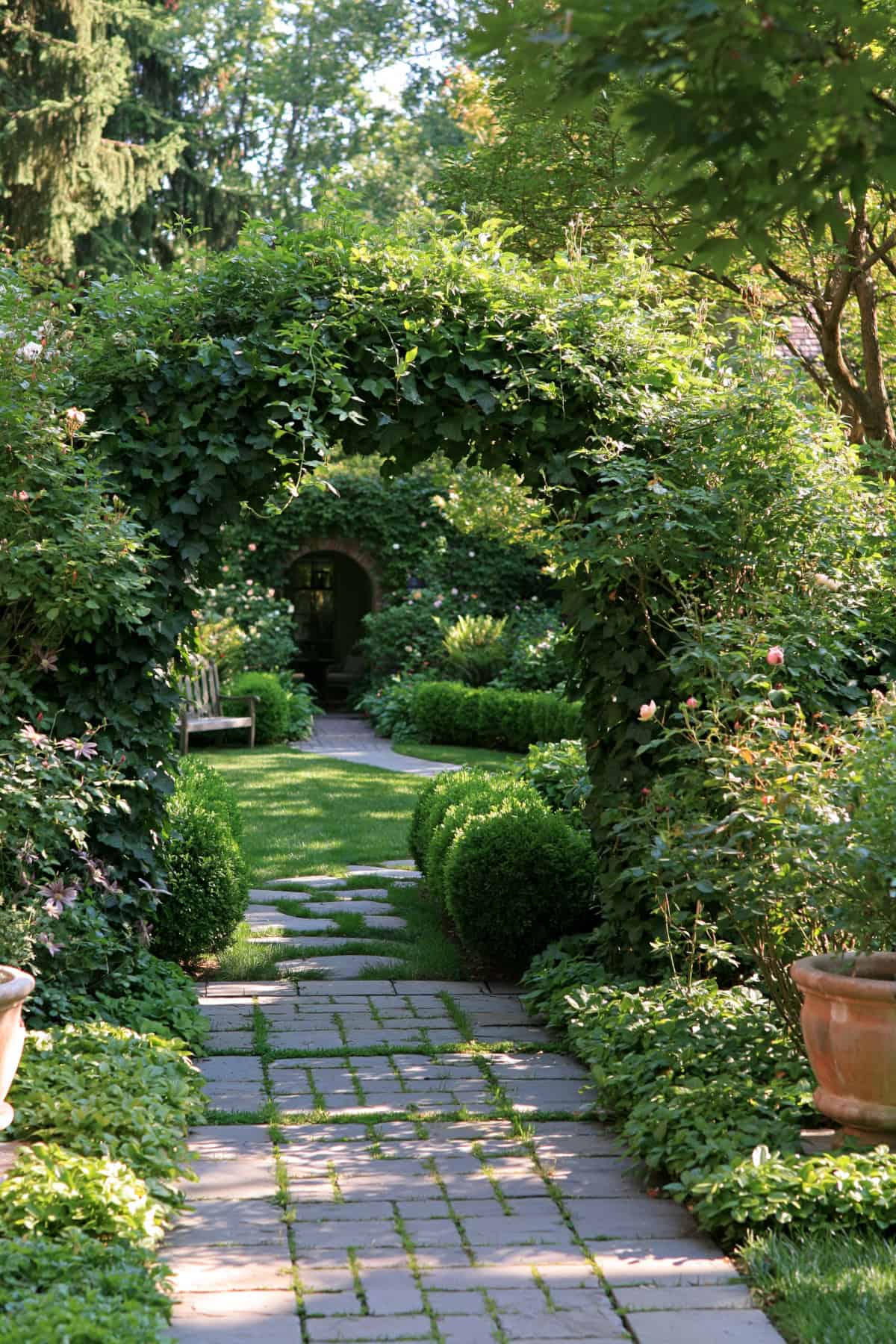
An arch placed in a hedge turns a concealed garden room into a deliberate destination. The opening reveals only part of the space beyond, particularly when the path curves out of sight.
Keep the arch aligned with a clear, walkable route, even if the view remains partly screened. Dense planting around its sides strengthens the enclosure without narrowing the threshold. A change in paving just beyond the opening quietly marks the shift into the sheltered area.
Rustic Arch With Hanging Flower Baskets
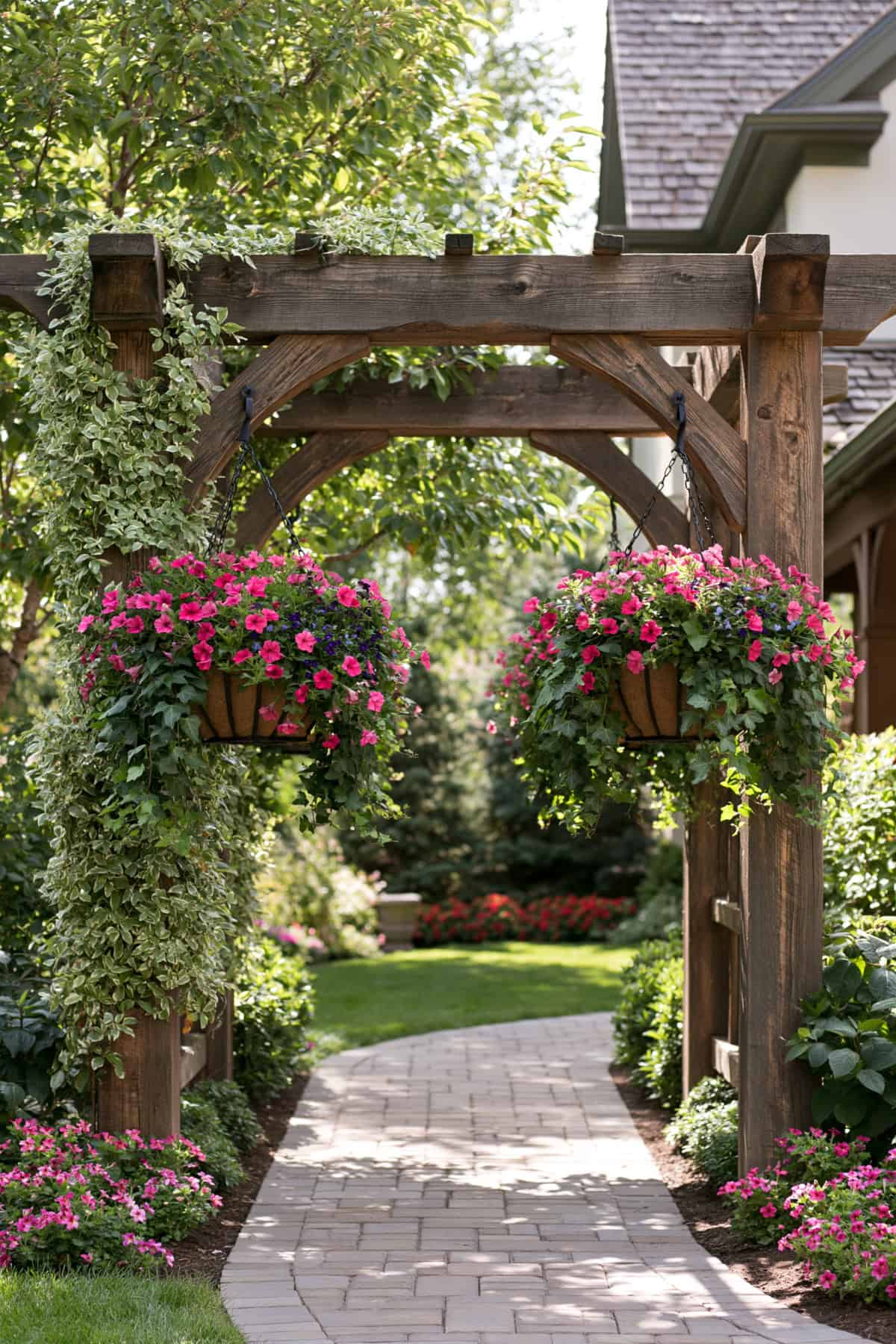
Hanging baskets put seasonal color on a rustic arch before climbing plants reach its top. A substantial crossbeam provides secure attachment points and leaves the sides open.
Basket placement needs careful measurement: mature trailing stems should stay above heads and away from the walking line. Check the beam’s capacity against the weight of fully watered containers, then fasten hooks into solid timber. Nearby access to water makes frequent summer watering practical, particularly for baskets exposed to afternoon sun.
Arch With Climbing Hydrangea Over a Gate
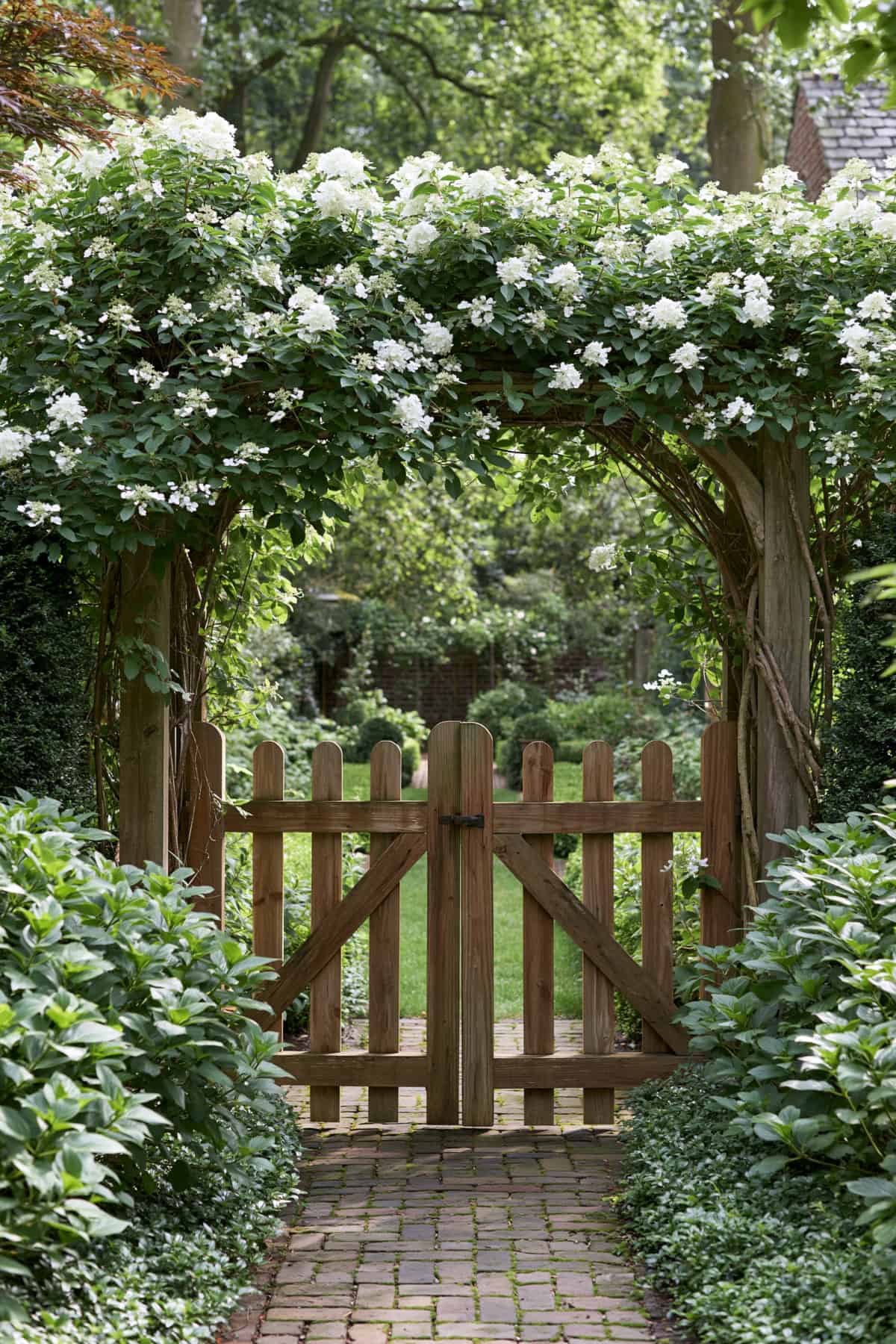
A climbing hydrangea softens a garden gate with leafy growth and lace-like flower clusters. The vine belongs on an independent, heavy-duty arch so its mature weight never rests on the moving gate.
Keep stems clear of hinges, latch, and gate swing throughout the growing season. In a shaded boundary, the foliage gives the entrance definition even between flowering periods. Allow room beside the posts for the plant’s base to expand without crowding the path.
Vegetable Arch With Gourds
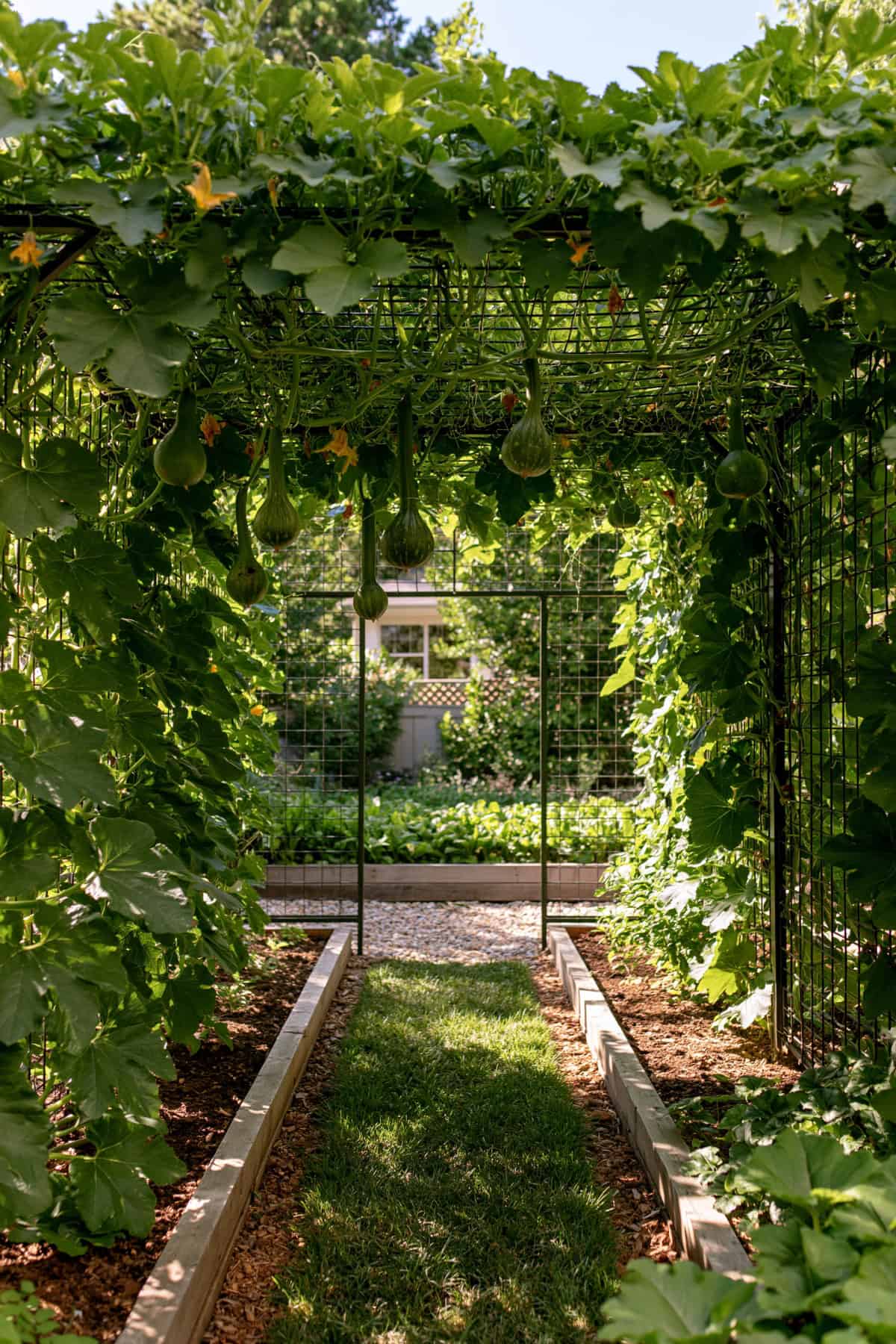
Gourds hanging beneath a leafy arch turn a vegetable path into a seasonal display. A strong metal panel or reinforced timber frame supports the vines as their fruit develops overhead.
Match the structure to the mature weight of the chosen gourd variety. Large fruits may need individual slings, and the path requires enough height for people to pass beneath them. Harvest timing depends on the variety and its intended use, particularly for ornamental gourds left to dry.
Pumpkin Vine Garden Arch
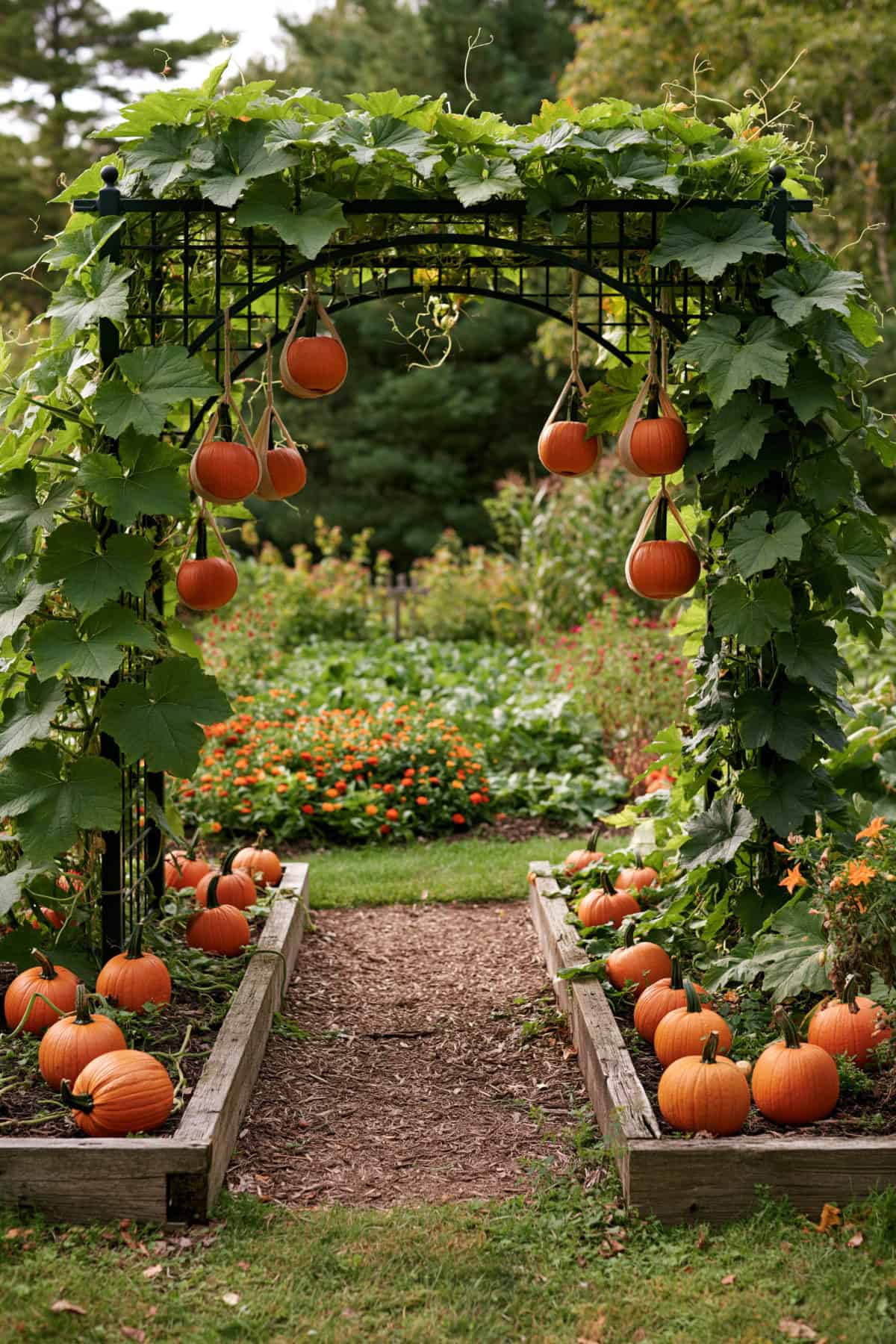
Small-fruited pumpkin varieties give a strong arch a striking autumn canopy. Their broad leaves spread quickly, and the developing fruit hangs where its size and color remain visible.
Choose varieties bred for compact fruit, since heavy pumpkins place significant strain on overhead supports. Secure the arch deeply, then guide young vines across the top and support fruit where needed. An unobstructed path beneath the canopy makes inspection easier as the crop ripens.
Arch Framed by Ornamental Grasses
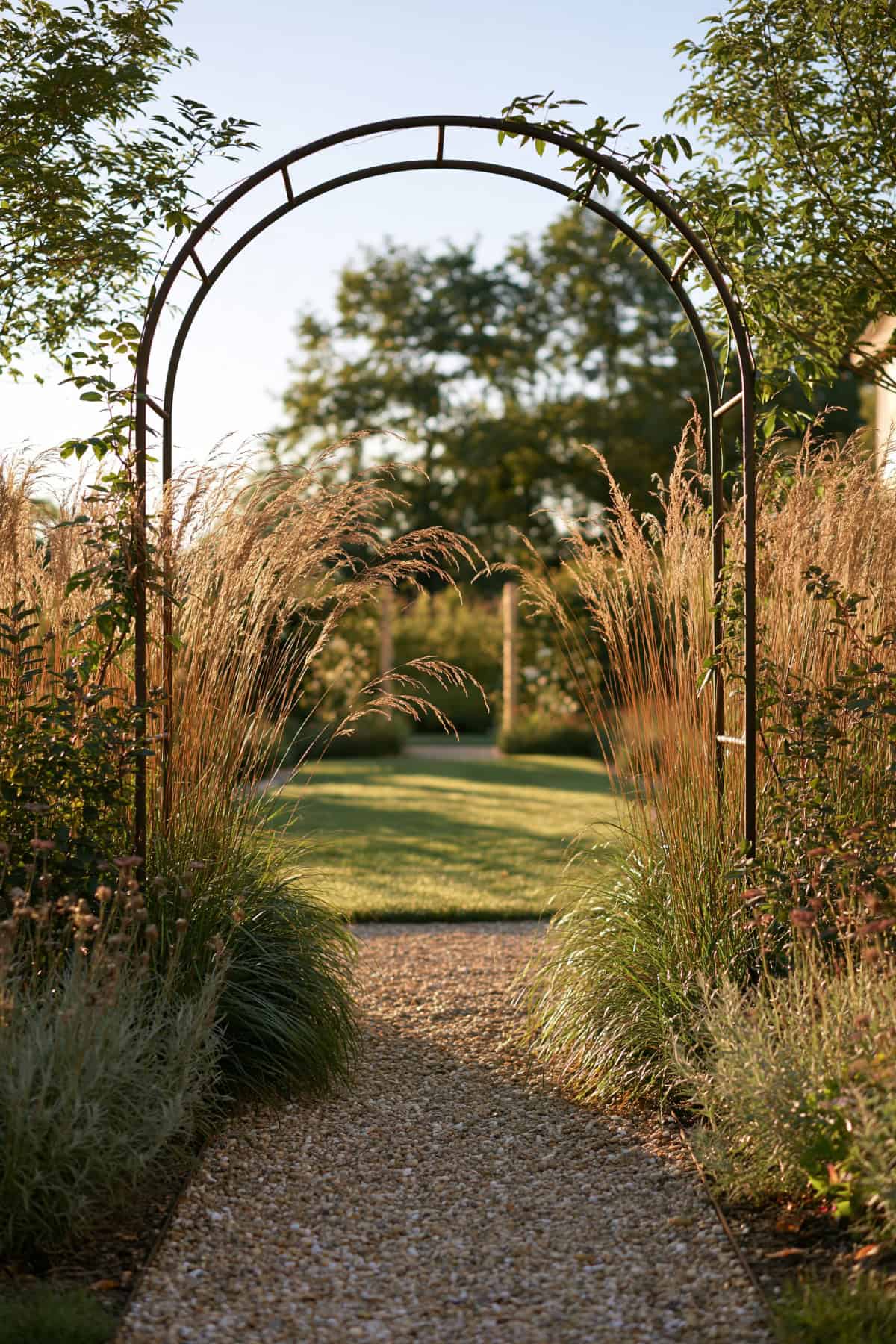
Tall grasses at the base of an arch soften its posts without covering the opening. Their upright blades draw the eye toward the curve, and seed heads remain visible well into fall.
Plant grasses far enough from the walkway to account for their mature spread. A plain metal or timber frame provides a clear outline against the moving foliage. In winter, standing stems continue to frame the entrance until they are cut back ahead of spring growth.
Moon Gate Garden Arch
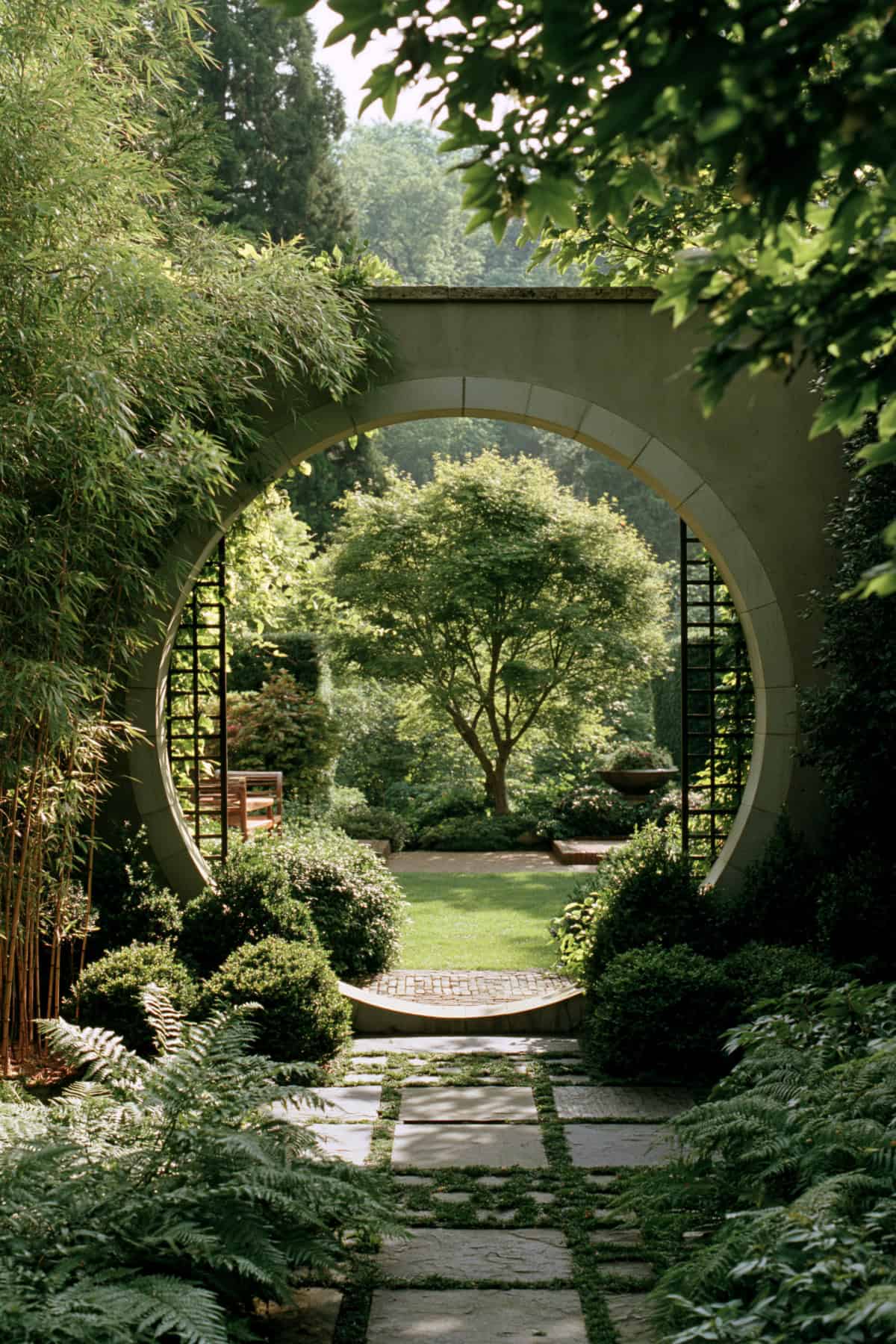
A circular moon gate turns a garden wall into a striking frame for the view beyond it. Its complete ring draws attention to a tree, sculpture, or stretch of path centered in the opening.
Masonry versions require professional structural design and sound foundations; lighter freestanding designs need secure anchoring. Keep planting around the circle restrained enough to preserve its outline. The path through it should remain level and generous where the lower curve meets the ground.
Double Arch Garden Entrance
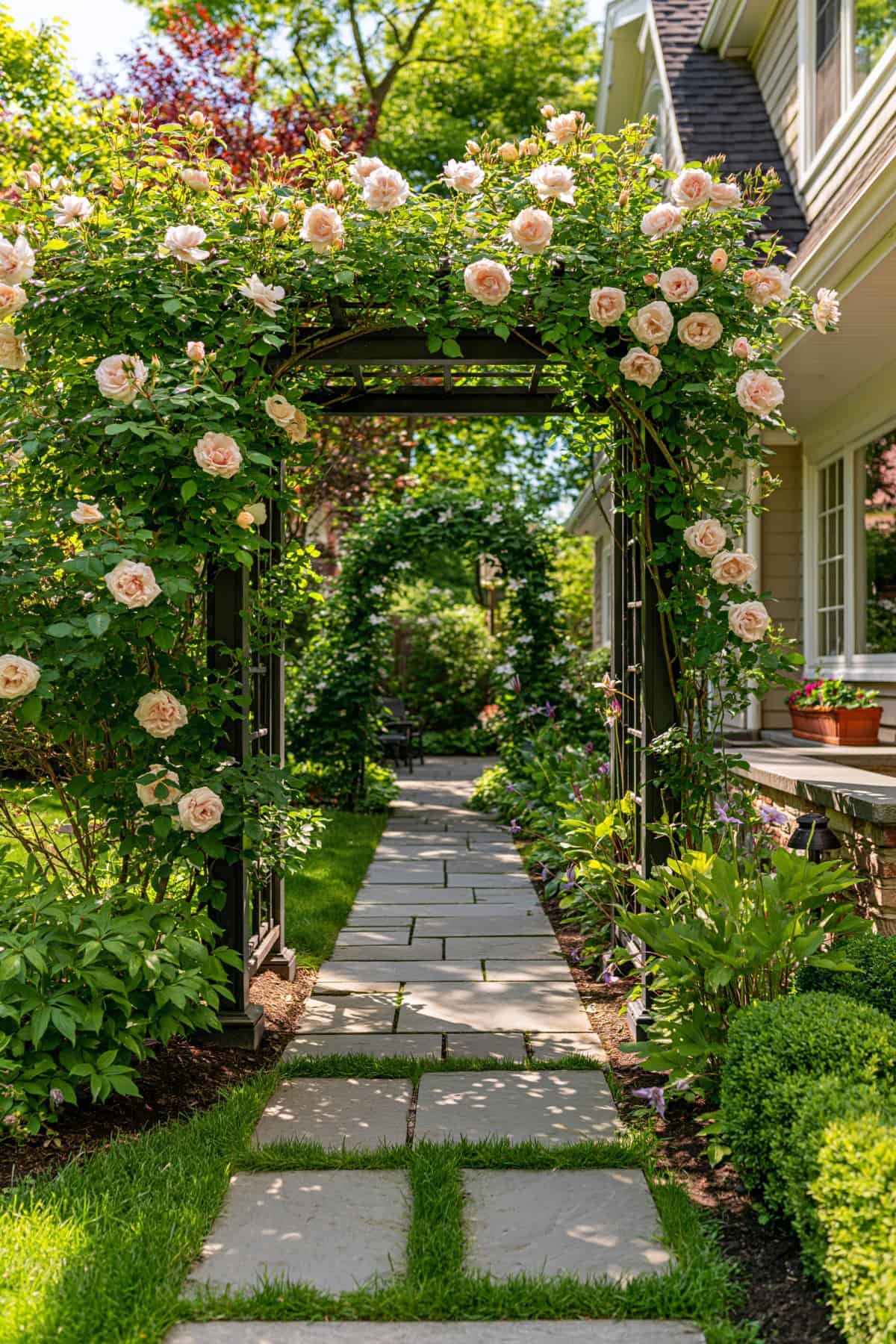
Two arches placed in sequence give a garden entrance depth. A short path between them establishes a distinct transition, particularly where a fence or hedge defines the outer boundary.
Keep both openings aligned for a clear walking route, and repeat a material or finish to connect them visually. Vines may cover the outer arch, leaving the inner frame visible farther into the garden. Sufficient spacing between the structures lets each retain its own shape.
Garden Arch With String Lights
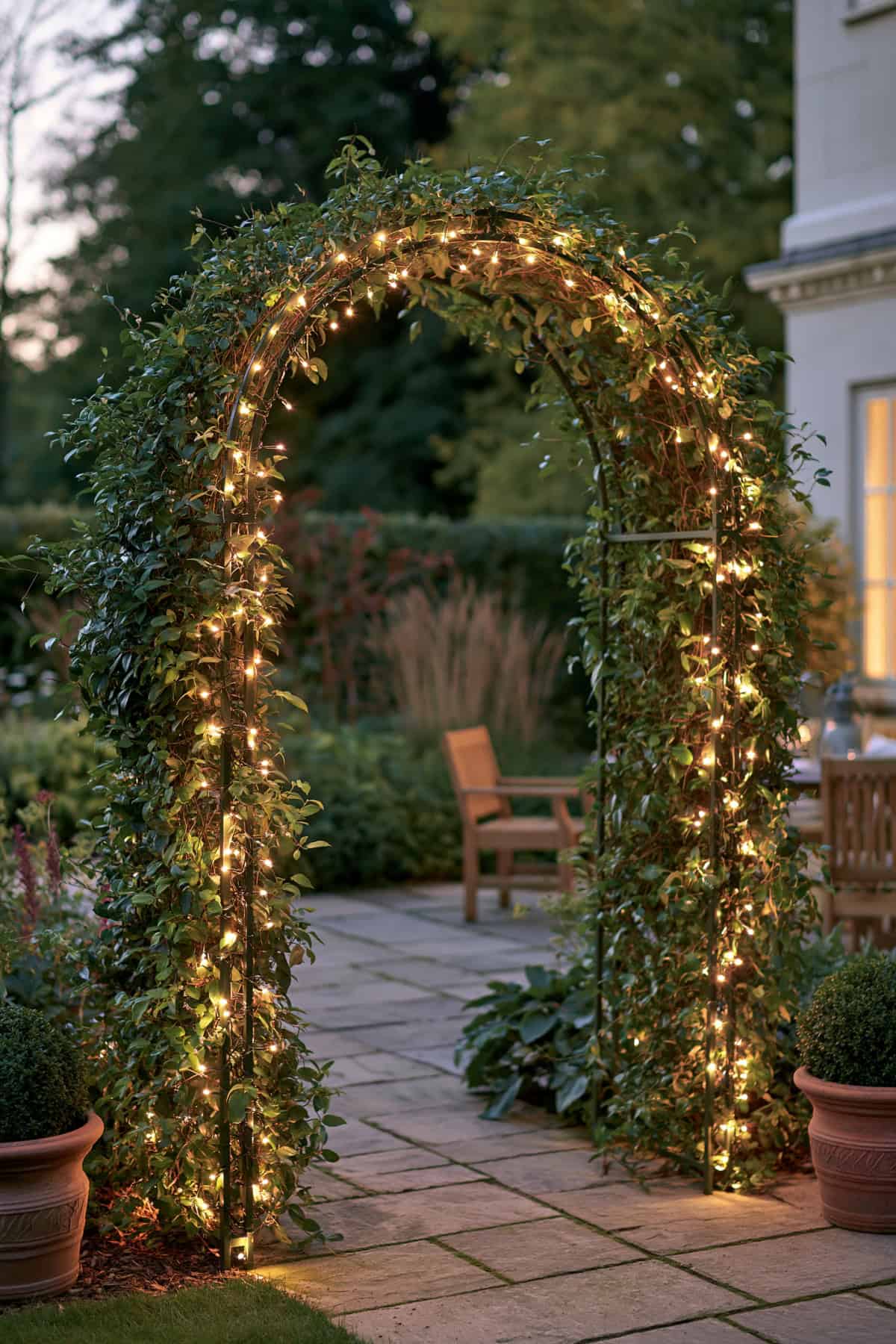
A strand of outdoor lights traces an arch after dusk and makes a garden path visible during evening use. Small, evenly spaced bulbs follow the curve without overwhelming the structure.
Choose lighting rated for outdoor conditions and attach it with clips that will not damage the frame or vine stems. Keep cords clear of the walking opening and follow electrical safety requirements for the installation. On a planted arch, accessible clips allow lights to be repositioned as branches grow.