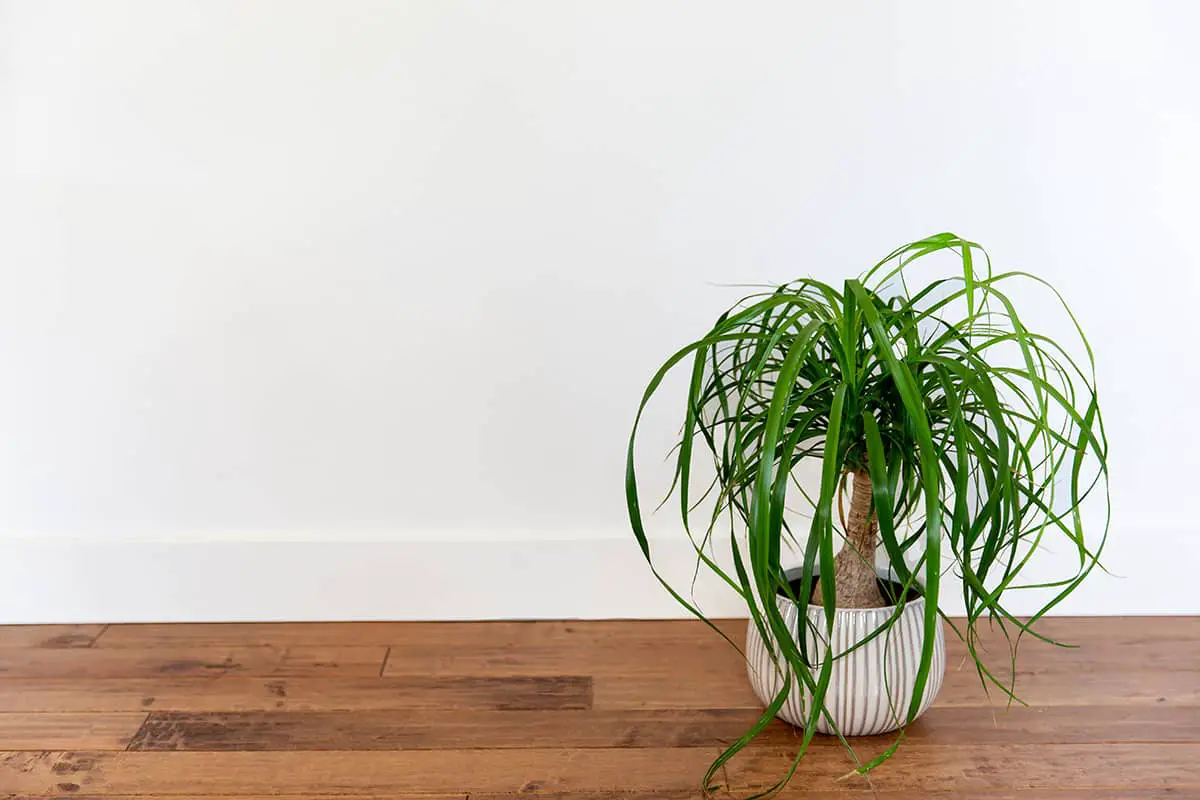
Palm trees are synonymous with tropical landscapes and exotic, laidback vibes, so they can bring a lot of style to home decor, as well as help to create a fun environment in a backyard. There are over 2600 different species of palm trees, so you won’t be short of options when shopping for palms, but it’s important to find one that works well for your situation.
Many tropical palms require full sun and a generous amount of water, so these may not be ideal if your local climate doesn’t support this. However, there are also many low-maintenance species of palm that are easy to care for or those which will adapt well to a range of conditions. Here we take a look at some of the best low-maintenance palms for growing both indoors and outdoors.
Table of Contents
- Easy to Grow Palm Trees
- Parlor Palm
- Kentia Palm
- Ponytail Palm
- Chinese Fan Palm
- Bamboo Palm
- Foxtail Palm (Wodyetia bifurcata)
- Sago Palm (Cycas revoluta)
- European Fan Palm (Chamaerops humilis)
- Windmill Palm (Trachycarpus fortunei)
- Pygmy Date Palm (Phoenix roebelenii)
- Lady Palm (Rhapis excelsa)
- Areca Palm (Dypsis lutescens)
- Cat Palm (Chamaedorea cataractarum)
- Majesty Palm (Ravenea rivularis)
Easy to Grow Palm Trees
Palms that are easy to care for have several things in common, including adaptability to light exposure and uncomplicated watering requirements.
Parlor Palm
- Botanical name: Chamaedorea elegans
- Light: Bright indirect light to partial shade
- Water: Medium watering needs
- Humidity: High to moderate humidity
- USDA hardiness zones: 10- 12
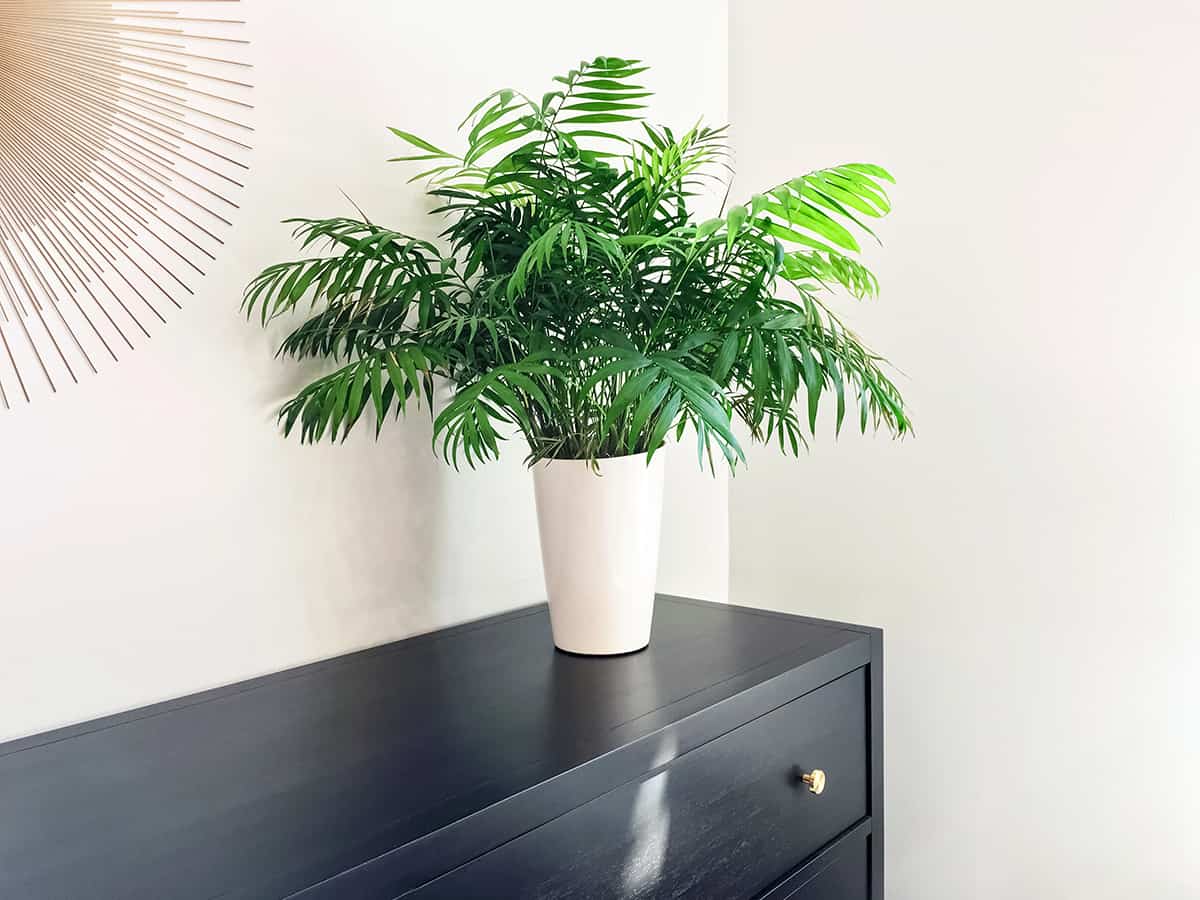
This is one of the easiest care palms you can get, and it is widely sold as a houseplant because it fares so well in a range of conditions. If you are a newcomer to caring for plants, or this is your first type of palm, then the Parlor Palm is an ideal choice. It is tolerant to various lighting aspects, and it will even adapt to regular household humidity.
It also requires less water than your average palm, so it’s suitable for those among us who might forget to water often enough. You can position this palm in bright indirect light if you want it to thrive, but it will also perform well in a partially shaded area. The soil should be kept moist but not wet, and the top few inches can be allowed to dry out between waterings.
In terms of looks, the Parlor Palm is a typically tropical style palm with beautiful green arching fronds that elicit an exotic vibe in an indoor space. The Parlor Palm can also be grown outdoors if you live in an appropriate climate. When kept outside, you can expect this plant to reach heights of up to 16 feet, whereas as a houseplant, it will not exceed 6 feet.
It is a notoriously slow-growing plant which further adds to its low maintenance quality because it won’t need to be repotted very often, and you won’t need to relocate it due to outgrowing its current position.
Kentia Palm
- Botanical name: Howea forsteriana
- Light: Partial shade
- Water: Medium watering needs
- Humidity: Average humidity
- USDA hardiness zones: 9- 11
The Kentia Palm is renowned for being one of the most low maintenance houseplants, making it a great option if you are looking for a palm that’s easy to care for. It hails from a tropical island in Australia, where it is accustomed to warm temperatures and moderate rainfall. When kept as a houseplant, the Kentia Palm fares best in partial shade or dark corners of the home.
It can tolerate bright indirect light once mature but should be kept out of these conditions when young to avoid the leaves getting scorched. This is a very slow-growing plant, and it doesn’t respond well to having its roots disturbed, so it will rarely if ever, need repotting. This further adds to its low maintenance quality. Kentia Palm trees are also low maintenance with regard to watering and humidity.
While they thrive in moist but not wet soil, they can also tolerate short periods of drought. They perform well in average household humidity, so you don’t need to work to increase humidity levels in the home. However, they can appreciate an occasional light misting from a water spray bottle.
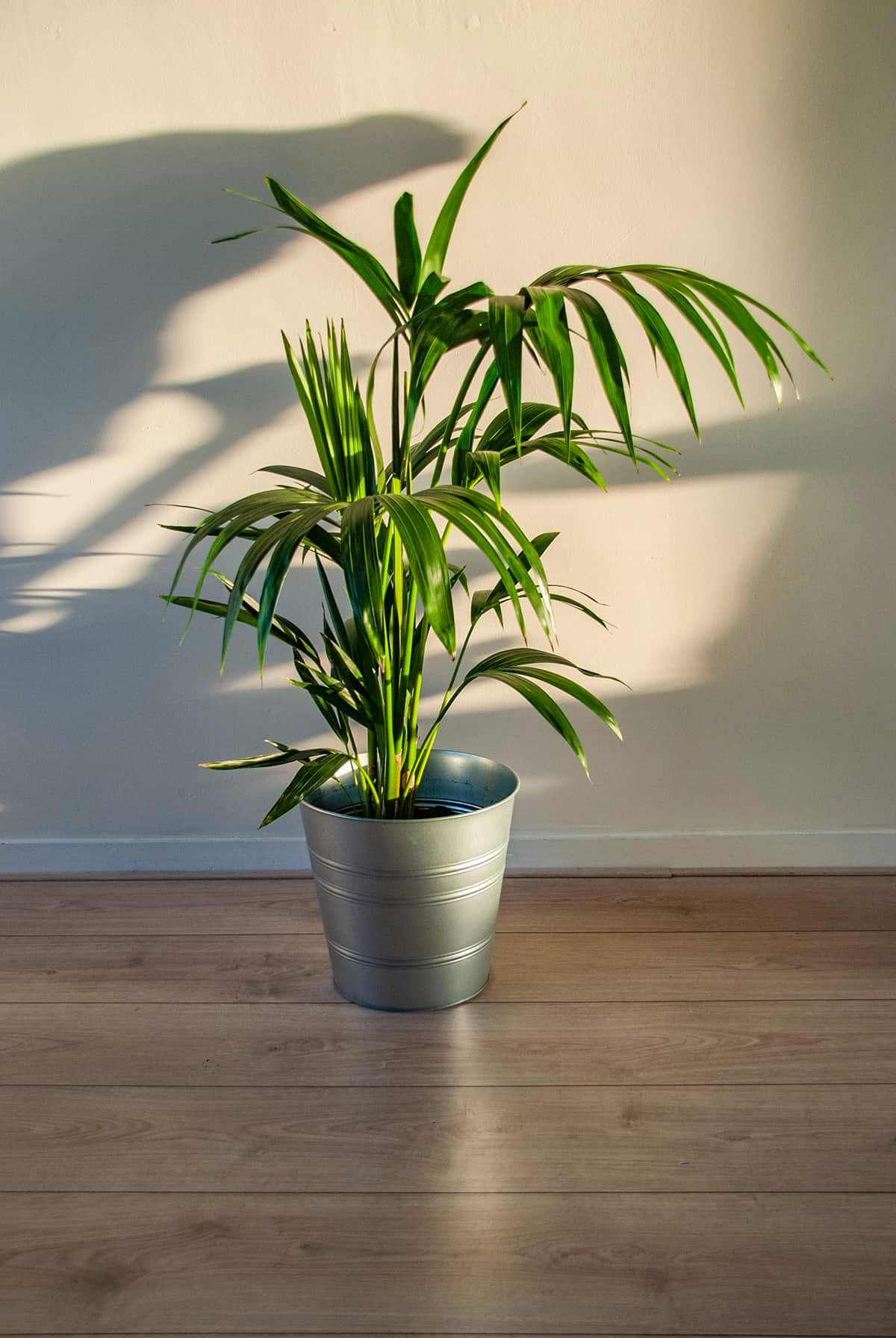
The Kentia Palm produces large dark green fronds which fan out and create a gently arching shape. They add a quintessentially tropical look to any interior and can also be grown outside in suitable conditions. When kept as a houseplant, the Kentia Palm rarely exceeds 8 feet, though as an outdoor tree, it can reach heights of 40 feet. It is exceptionally slow growing, so it will take a long time to reach its potential height, typically gaining just one new frond each year.
Ponytail Palm
- Botanical name: Beaucarnea recurvata
- Light: Full sun to bright indirect light
- Water: Low water needs
- Humidity: Average humidity
- USDA hardiness zones: 9- 12
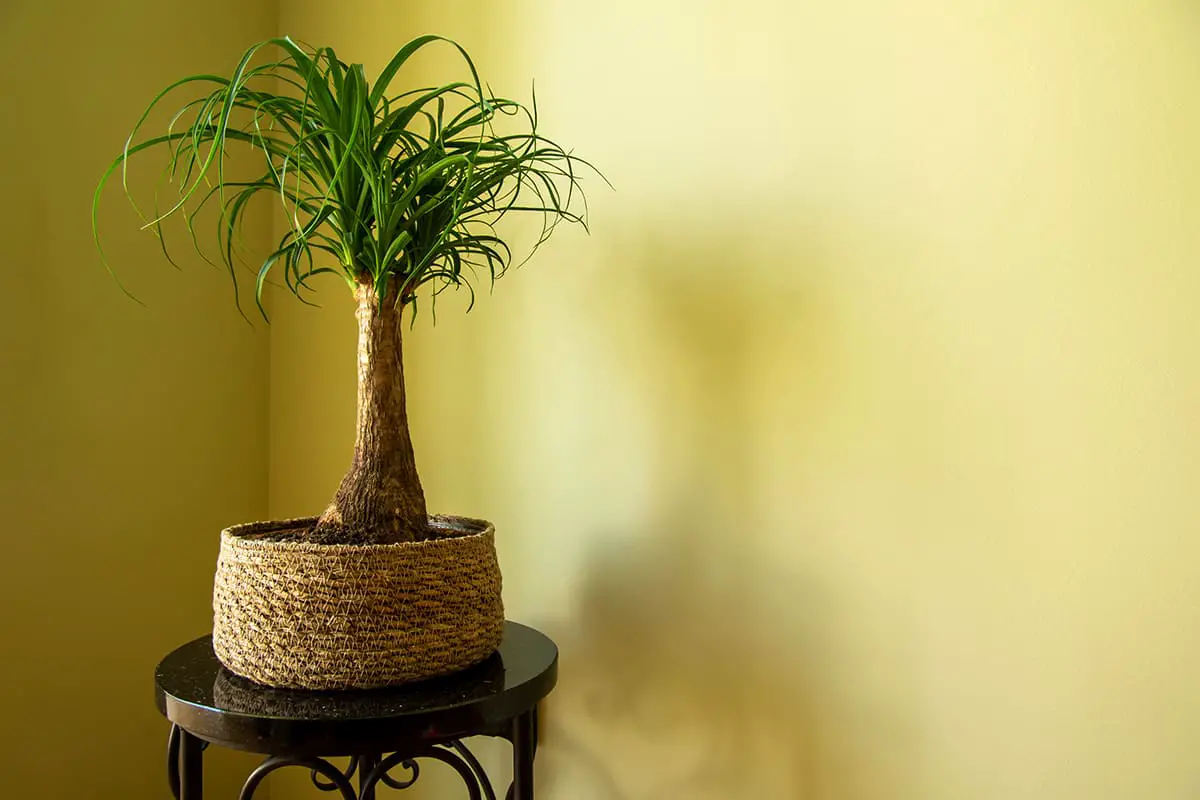
This plant is actually not a true palm at all, as it belongs to the Asparagaceae family rather than the Arecaceae family. It is widely mistaken for a palm, and its common name labels it as a palm because of its visual similarities with palm trees. It has a single trunk which is bulbous at the base, and it has a spray of fan-like foliage sprouting from the top.
The Ponytail Palm is native to Mexico, and it is actually a type of succulent. If you want a plant that gives you the look of a palm without any of the typical care requirements, then the Ponytail Palm is a great option. It is exceptionally easy to care for and actually thrives on neglect.
This plant thrives in full sun or bright indirect light, but it is also very adaptable and will tolerate a partially shaded position. The bulbous base of the trunk is where the plant stores its water reserves, so it doesn’t need to be watered very often at all. The soil should be allowed to dry out between each watering, and periods of drought can be tolerated. The Ponytail Palm is accustomed to growing in dry climates, so it doesn’t need high levels of humidity, and it works well as a houseplant because regular household humidity is ideal.
Chinese Fan Palm
- Botanical name: Livistona chinensis
- Light: Full sun to partial shade
- Water: Medium water needs
- Humidity: Average to high humidity
- USDA hardiness zones: 9- 11
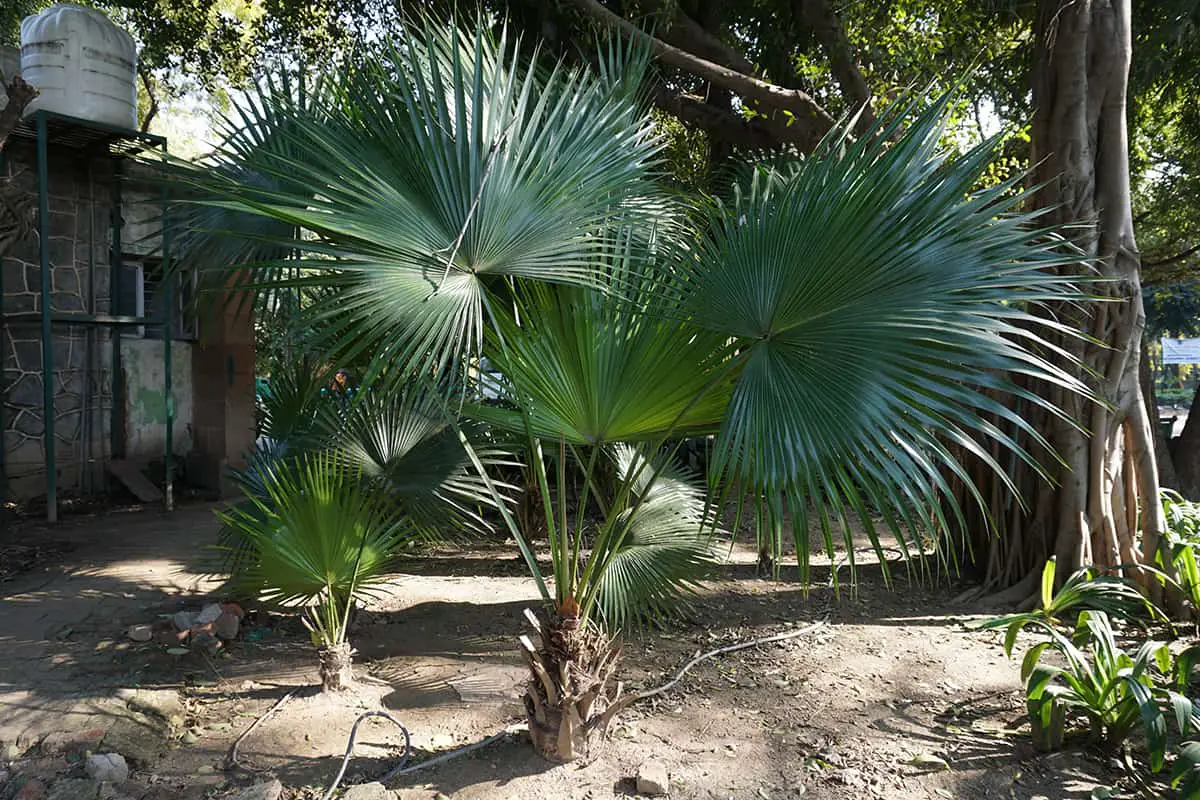
The Chinese Fan Palm, also commonly known as the Fountain Palm, is a great first palm if you are looking at growing palm trees in your garden. This is because they are very tolerant of a range of conditions, and they don’t need a lot of attention.
This makes them a low-maintenance palm tree and also means they are more likely to survive under the care of new gardeners. The Chinese Fan Palm is native to Asia and is colder tolerant than many other popular palm species. This means it can survive cold snaps without damage and is suitable for growing in hardiness zones 9 through 11.
It requires less water than tropical palms and thrives in soil that is kept slightly moist but not wet. It can survive through short periods of drought and should not be allowed to sit in waterlogged or soggy soil. The Chinese Fan Palm enjoys high levels of humidity, and its foliage will look its best when grown in moist conditions. If you grow this plant indoors, you can mist the leaves to improve humidity levels in your home or keep it in a humid room such as a bathroom or kitchen.
The Chinese Fan Palm is popular not only because it is low maintenance but also because it is a treat for the eyes. This visually striking palm produces almost star-shaped fronds that spread out in an open fan shape, with stiff leaves.
Bamboo Palm
- Botanical name: Chamaedorea seifrizii
- Light: Partial shade
- Water: Medium water needs
- Humidity: Average to high humidity
- USDA hardiness zones: 10- 11
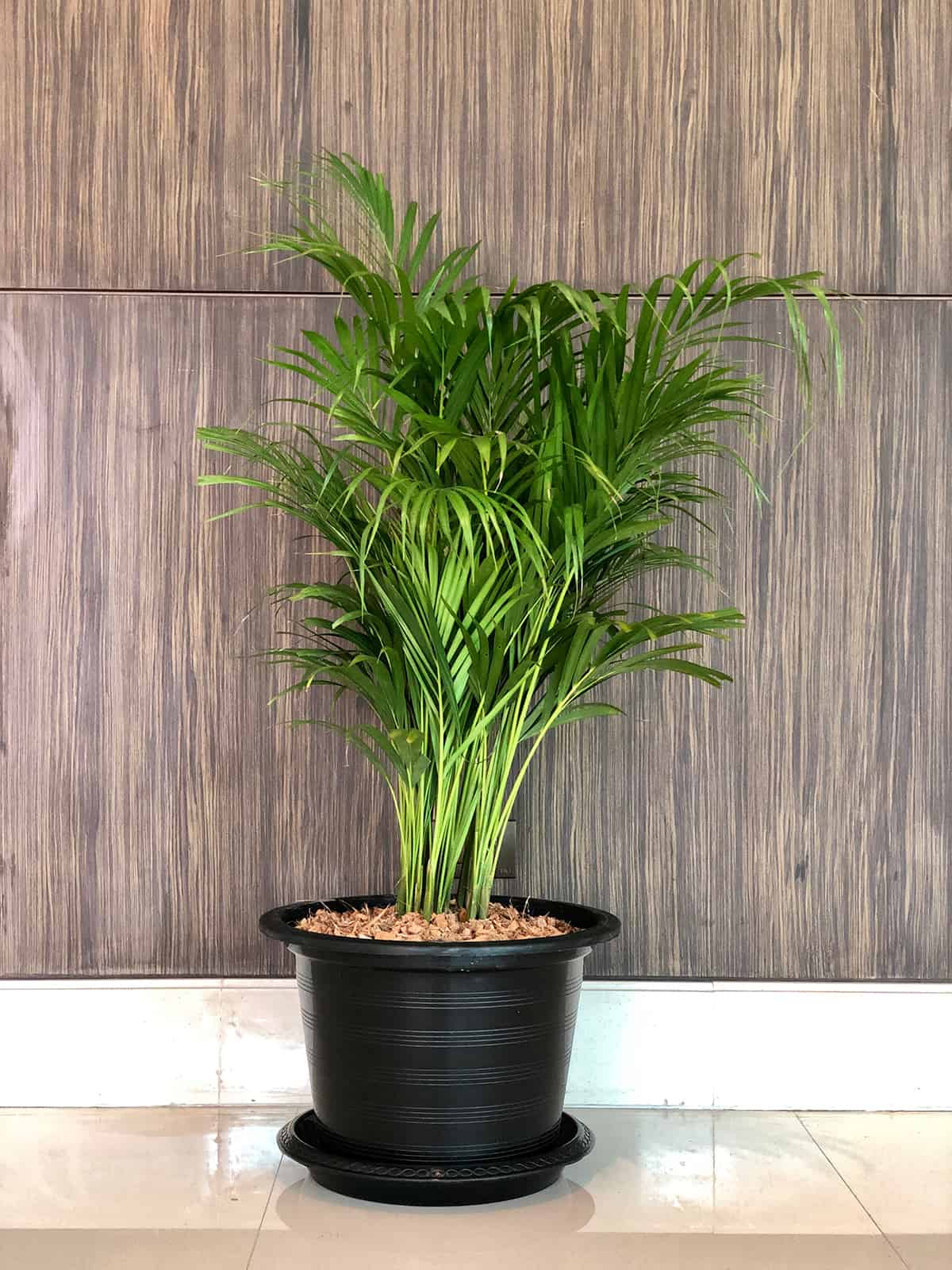
Bamboo palms are a true type of palm and are not a species of bamboo. However, they do resemble the look of bamboo plants which is where their common name comes from. These palms are native to Africa, growing in the understory of forests beneath the canopy of taller trees. As a result, they are tolerant of various lighting aspects, from shade to bright indirect light.
Avoid allowing direct sunlight to reach the Bamboo palm because this will cause the leaves to scorch. In terms of watering, this plant likes for its soil to be kept evenly moist. Its watering needs are the most tricky thing to get right, but even this is not difficult. They do not like to be overwatered or underwatered, so avoid making the soil soggy and waterlogged or allowing it to dry out.
Bamboo Palm plants thrive in high humidity, but they are also very forgiving when it comes to humidity levels, so the average humidity found in households will be fine if the palm is being grown as a houseplant.
The Bamboo Palm has a similar look to bamboo grass, with cane-like stems which produce sprays of fan-like fronds at the ends. As well as adding a tropical look to an area, this plant is also known to be excellent at filtering toxins from the air, as described in the NASA Clean Air Study.
Foxtail Palm (Wodyetia bifurcata)
Light: Full sun to bright indirect light
Water: Moderate; allow top soil to dry slightly between watering
Humidity: Moderate to high preferred
USDA hardiness zones: 10 – 11
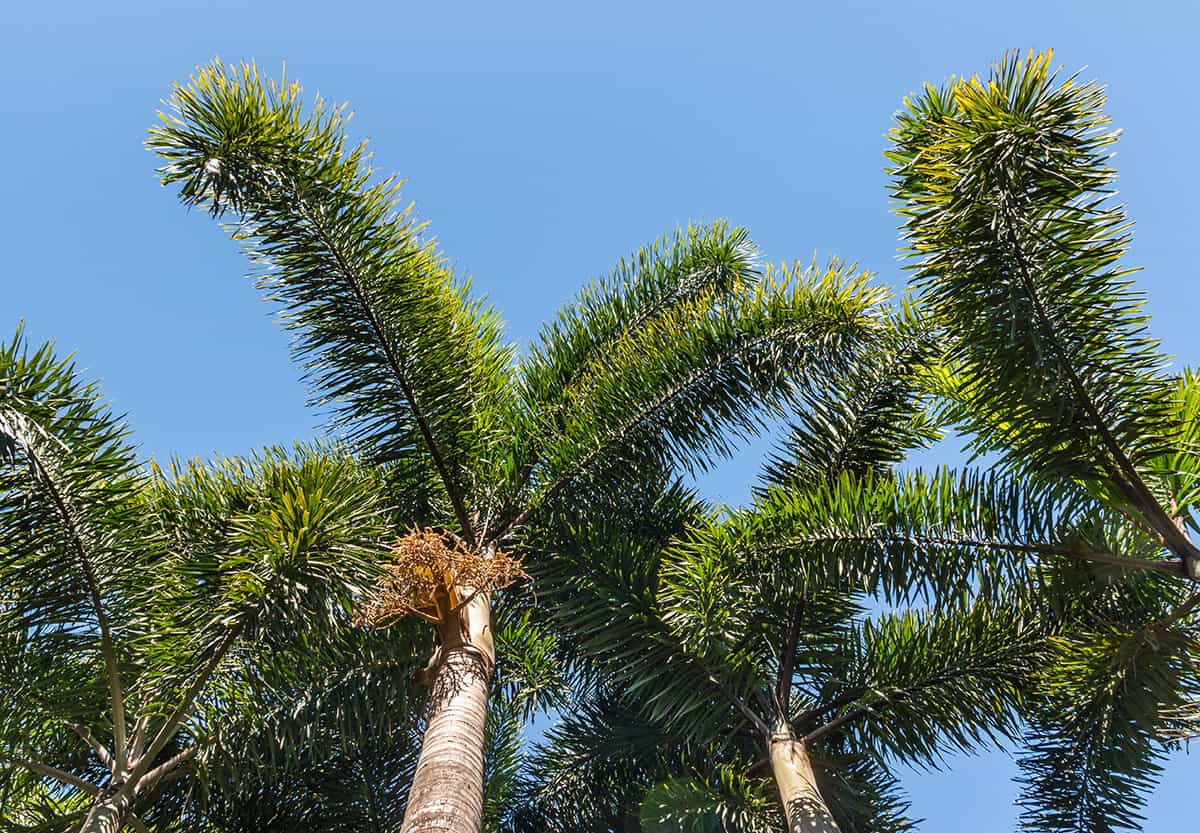
In warm climates with plenty of sun, this palm really stands out. Its smooth gray trunk and bushy, fox tail-like fronds have a sculptural vibe, especially when planted near patios or driveways. Height tops out around 30 feet, so it’s substantial but not overwhelming.
After the roots settle in, maintenance feels pretty minimal. Deep watering during dry spells works best—just skip the soggy soil. Only prune away dead fronds; too much cutting makes it sulk. Toss on some balanced palm fertilizer a couple times a year and you’re set.
Sago Palm (Cycas revoluta)
Light: Bright indirect light to full sun
Water: Low; drought tolerant, allow soil to dry out
Humidity: Low to average
USDA hardiness zones: 9 – 11
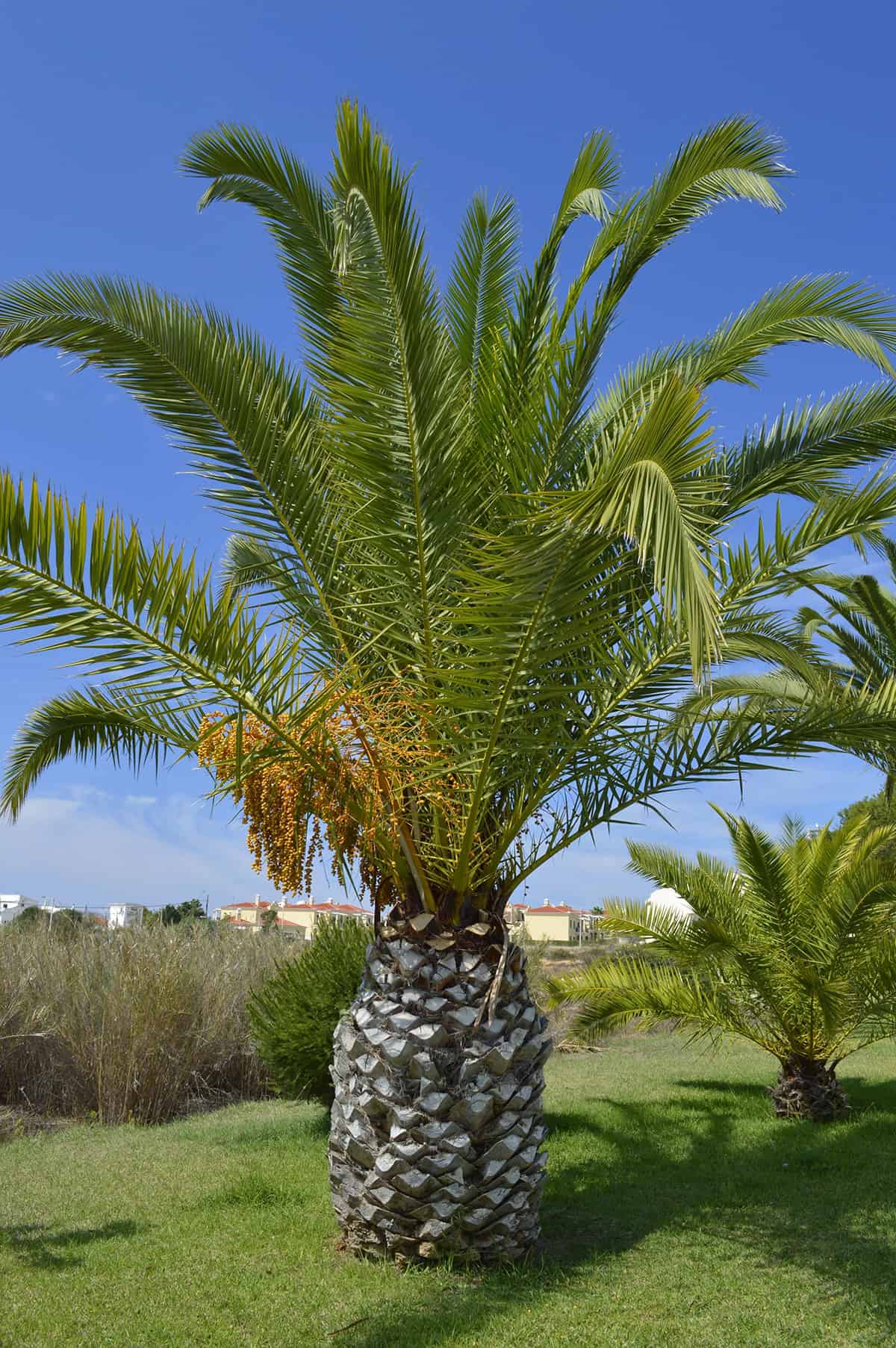
Despite the name, this one’s technically a cycad, not a palm, but it pulls off the look. Outdoors in frost-free spots or indoors with strong light, it forms a stubby trunk with stiff, dark green fronds radiating outward. Mature plants range from 3 to 10 feet tall—compact, but dramatic.
Once it’s established, drought rarely fazes it. Water only when the soil dries out, or risk root rot. Only snip off yellow or dead fronds to keep it tidy. Heads up: every part is toxic, so keep curious pets and kids at a distance.
European Fan Palm (Chamaerops humilis)
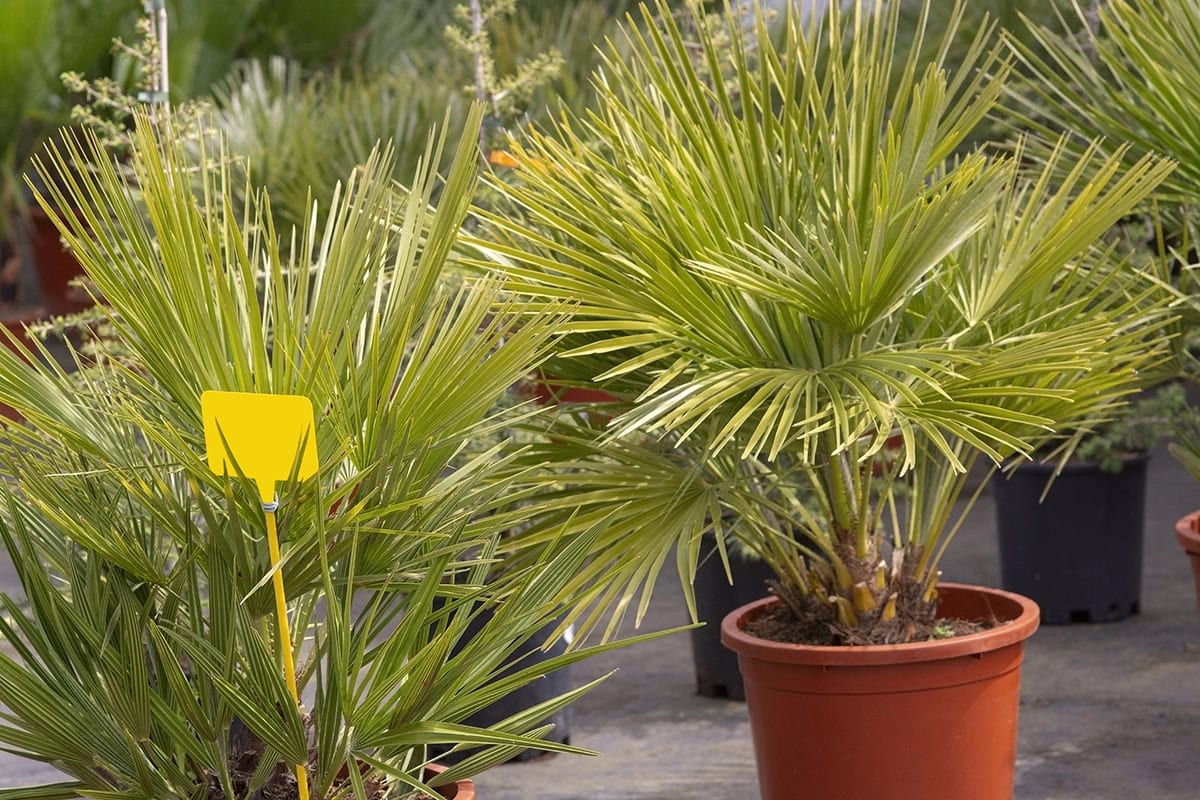
Light: Full sun to partial shade
Water: Low to moderate; drought tolerant once established
Humidity: Low to average
USDA hardiness zones: 8 – 11
Heat, wind, and brief cold snaps don’t rattle this tough, compact palm. It’s got a cluster of trunks and bold, fan-shaped leaves with a deep green or blue cast. Heights vary, but usually stay between 6 and 15 feet—ideal for small spaces or poolside planting.
Once it’s settled, dry spells are hardly an issue. Full sun or partial shade both work. Dead fronds should be trimmed close to the base, but leave healthy ones alone. A little fertilizer once or twice a year keeps it looking sharp.
Windmill Palm (Trachycarpus fortunei)
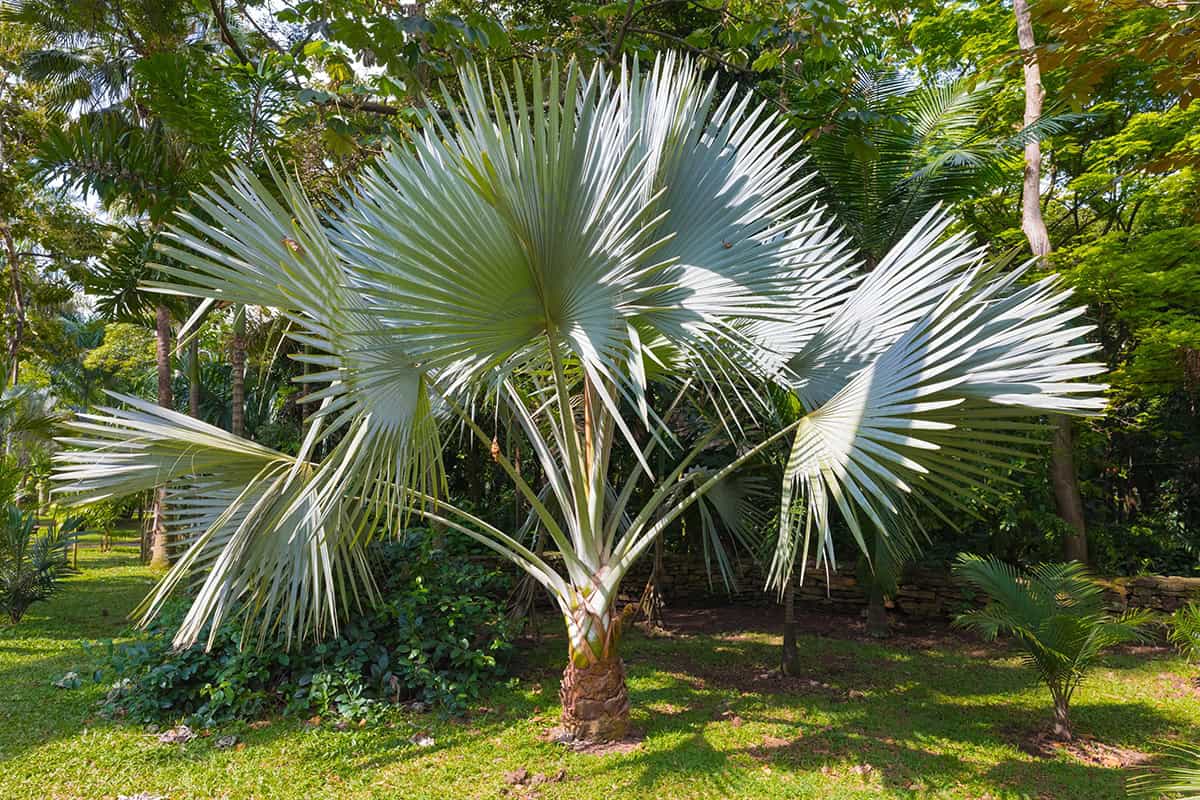
Light: Full sun to partial shade
Water: Moderate; prefers evenly moist soil
Humidity: Average
USDA hardiness zones: 7 – 11
For folks in colder zones, this palm’s a bit of a surprise. Mature, it handles temps down to 10°F if shielded from harsh wind. The trunk is slender and wrapped in fibrous material, topped with broad fan leaves. Most reach between 20 and 40 feet, but never look bulky.
Partial shade or sun—either’s fine. Soil should drain well, and steady moisture during dry months helps. Only remove brown fronds; the rest should stay. Fertilizer in spring is enough to keep growth on track.
Pygmy Date Palm (Phoenix roebelenii)
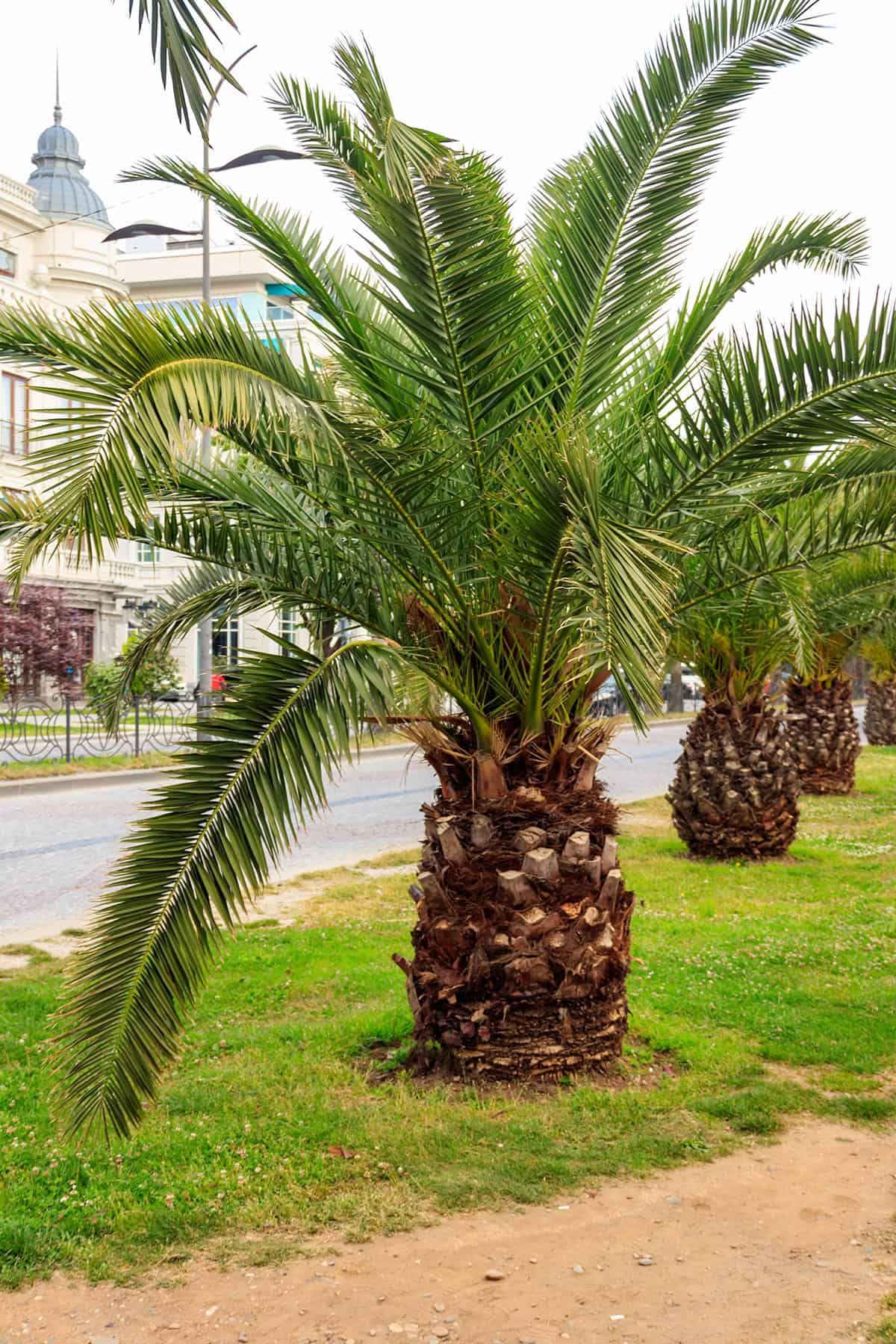
Light: Bright indirect light to partial sun
Water: Moderate; keep soil lightly moist
Humidity: Moderate preferred
USDA hardiness zones: 9 – 11
Small yards and containers benefit from this petite palm. It maxes out at 6 to 12 feet, with a slim trunk and arching, feathered fronds. Entryways and patios are common spots. Compared to other date palms, it’s more tolerant of light shade.
Regular moisture keeps it looking lush, though it can handle the odd dry spell. The soil should drain well to avoid root issues. Be careful trimming dead fronds—those trunk spines are no joke. Feed it with palm fertilizer during the warmer months.
Lady Palm (Rhapis excelsa)
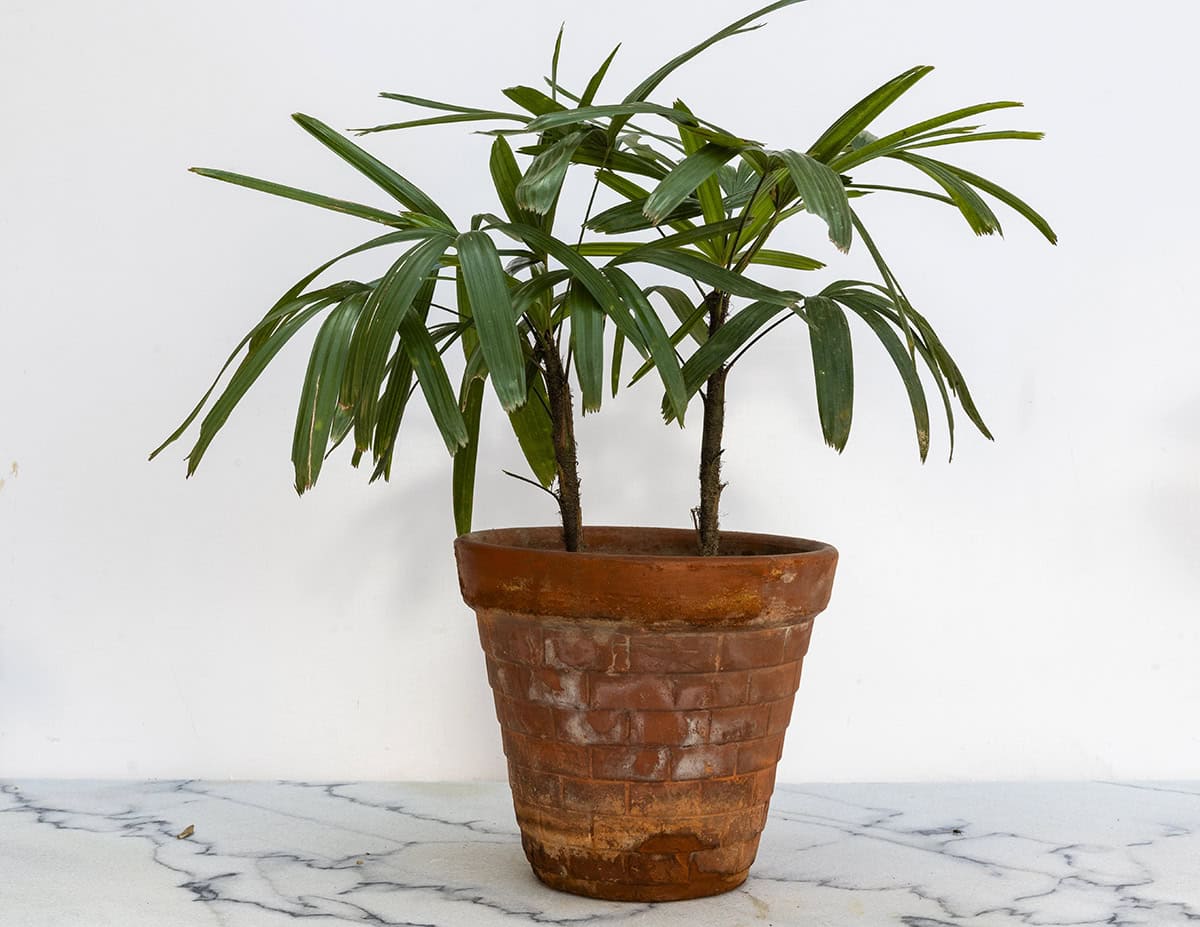
Light: Low to bright indirect light
Water: Moderate; allow top soil to dry slightly
Humidity: Average to high
USDA hardiness zones: 9 – 11
Shade-loving and slow-growing, this palm fits nicely indoors. Multiple thin stems support wide, fan-shaped leaves. It typically stays between 6 and 14 feet inside, making it a favorite for living rooms or as a green screen in offices.
Direct sun is a no-go, but low light won’t bother it. Keep the soil just barely moist—never soggy. Dust off the leaves now and then, and check for pests. A touch of fertilizer in spring and summer is all it needs.
Areca Palm (Dypsis lutescens)
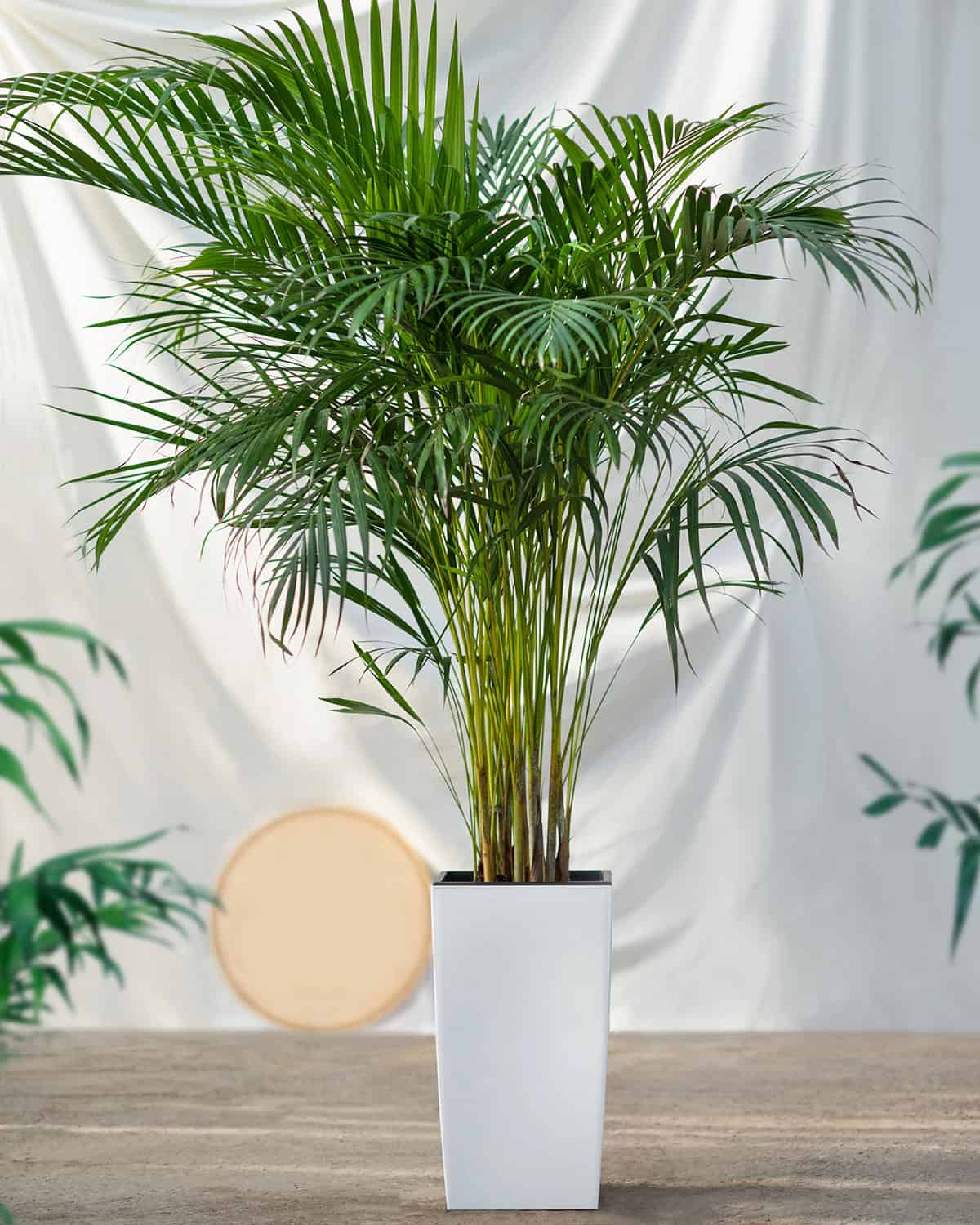
Light: Bright indirect light
Water: Moderate; keep soil slightly moist
Humidity: Moderate to high
USDA hardiness zones: 10 – 11
Privacy screens often feature this palm thanks to its golden canes and soft, arching fronds. Outdoors, it can reach 20 to 30 feet, but it stays much smaller indoors. The look is lush and tropical without being overbearing.
Bright, indirect light is ideal for dense growth. Water when the top inch of soil dries out. Only brown fronds should go—don’t over-prune. Use a palm fertilizer with micronutrients to keep leaves vibrant.
Cat Palm (Chamaedorea cataractarum)
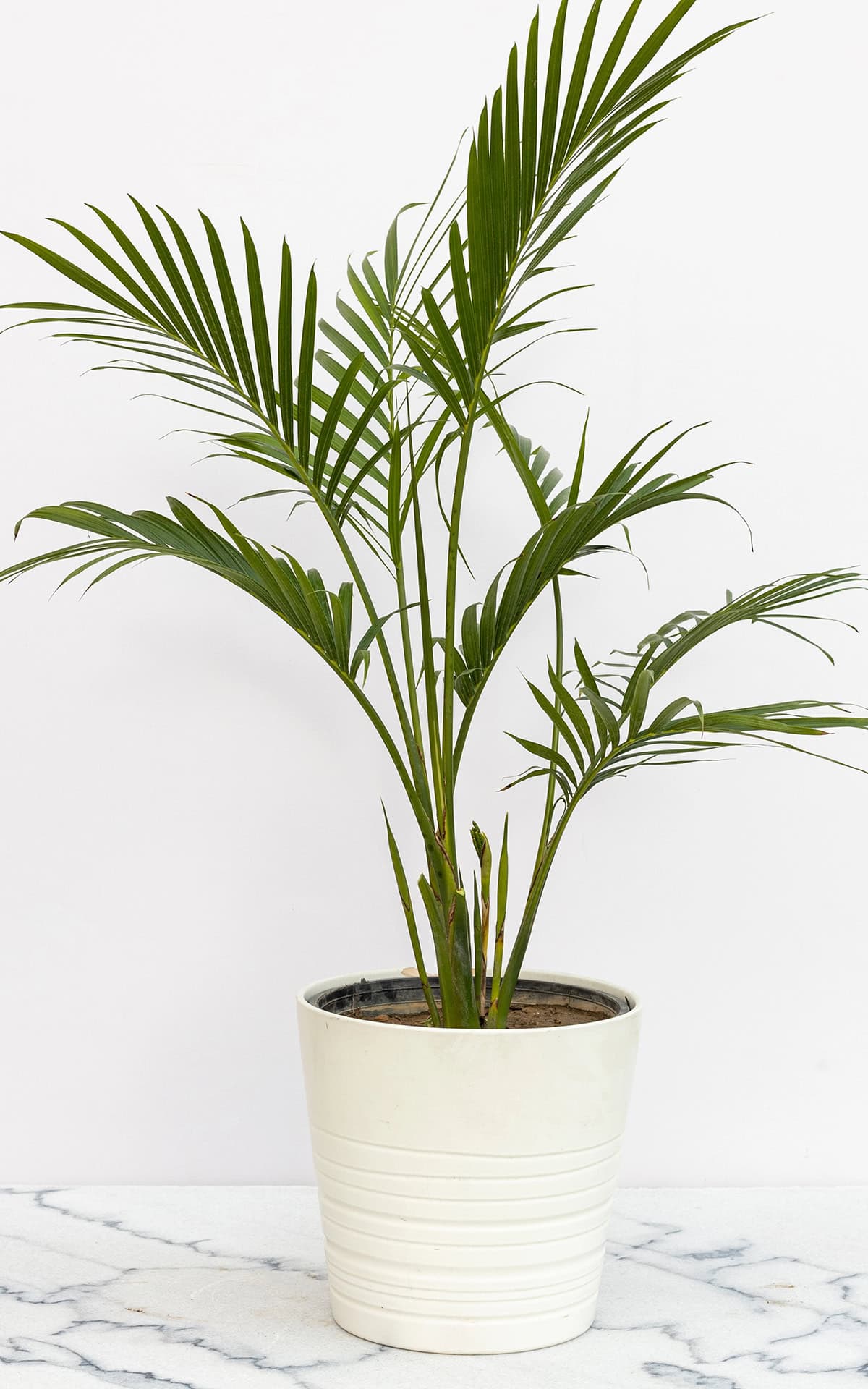
Light: Bright indirect light
Water: Moderate to high; keep soil consistently moist
Humidity: High preferred
USDA hardiness zones: 9 – 11
Dense clumps of rich green fronds give this palm a full, bushy look, usually under 6 feet tall. It’s a go-to for small gardens, patios, or even as a border. Shade or filtered light is best—full sun can be a bit much.
Unlike some palms, this one needs steady moisture. Letting the root zone dry out completely is a mistake. Good drainage is a must to prevent root rot. Fertilize a few times during warm months for the healthiest foliage.
Majesty Palm (Ravenea rivularis)
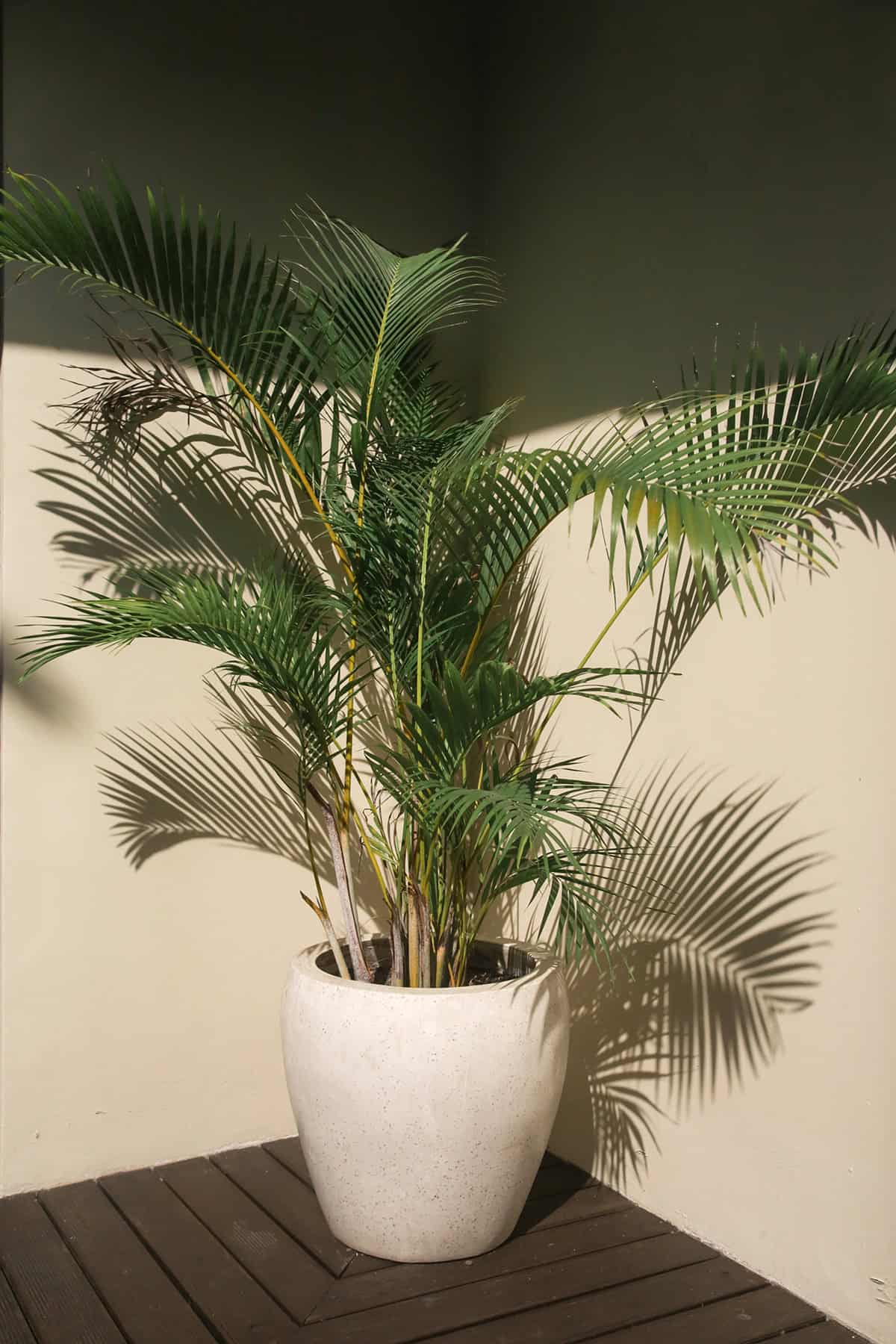
Light: Bright indirect light to full sun
Water: High; prefers consistently moist soil
Humidity: High
USDA hardiness zones: 10 – 11
Positioning close to a bright window keeps the foliage looking lush. Soil should stay consistently damp (but not soggy). If you spot brown tips, chances are the air’s too dry—upping the humidity can help. During the growing season, a balanced palm fertilizer keeps things on track.