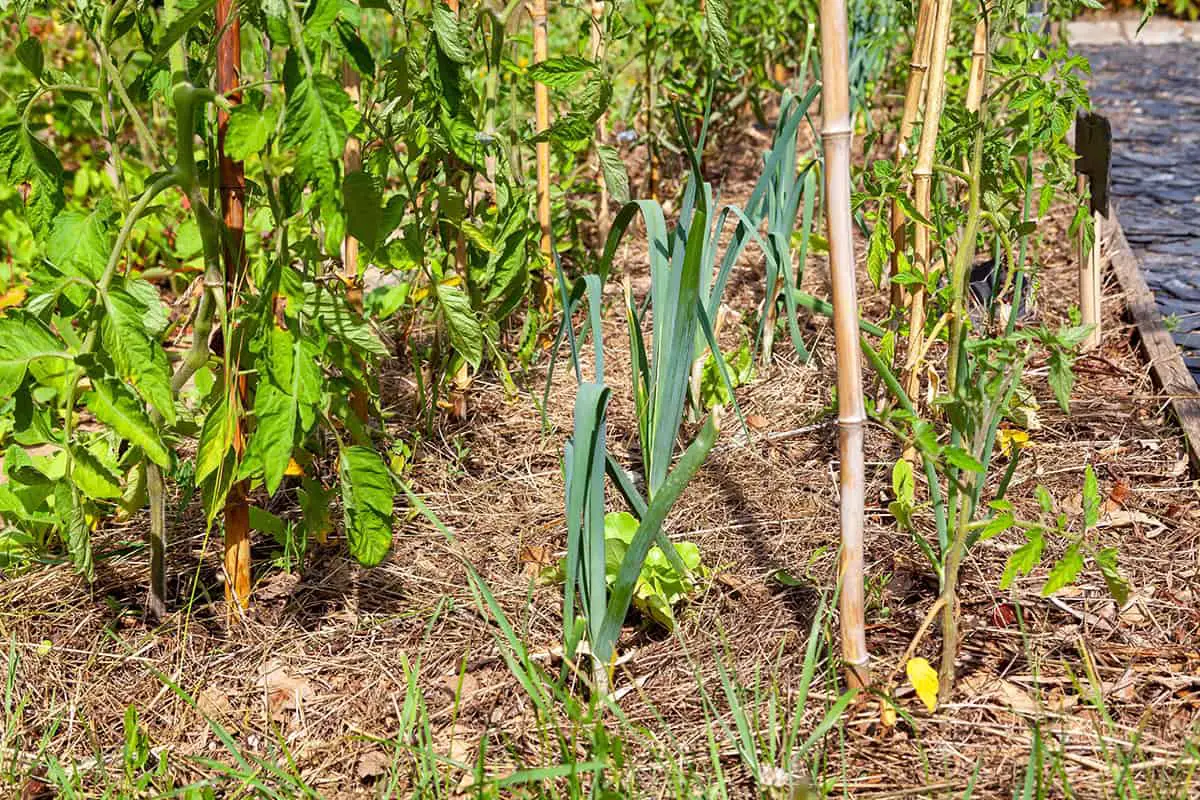
A tomato bed holds plenty of unused room. The soil beneath the plants, the shade under the leaves and the gaps between cages all have space for a second crop.
Herbs like basil draw beneficial insects, quick greens grow in the summer shade and onions slip in along the edges. Basil heads the list as the classic partner, and the notes on peppers and cabbage flag where caution pays off.
Table of Contents
What Is Intercropping?
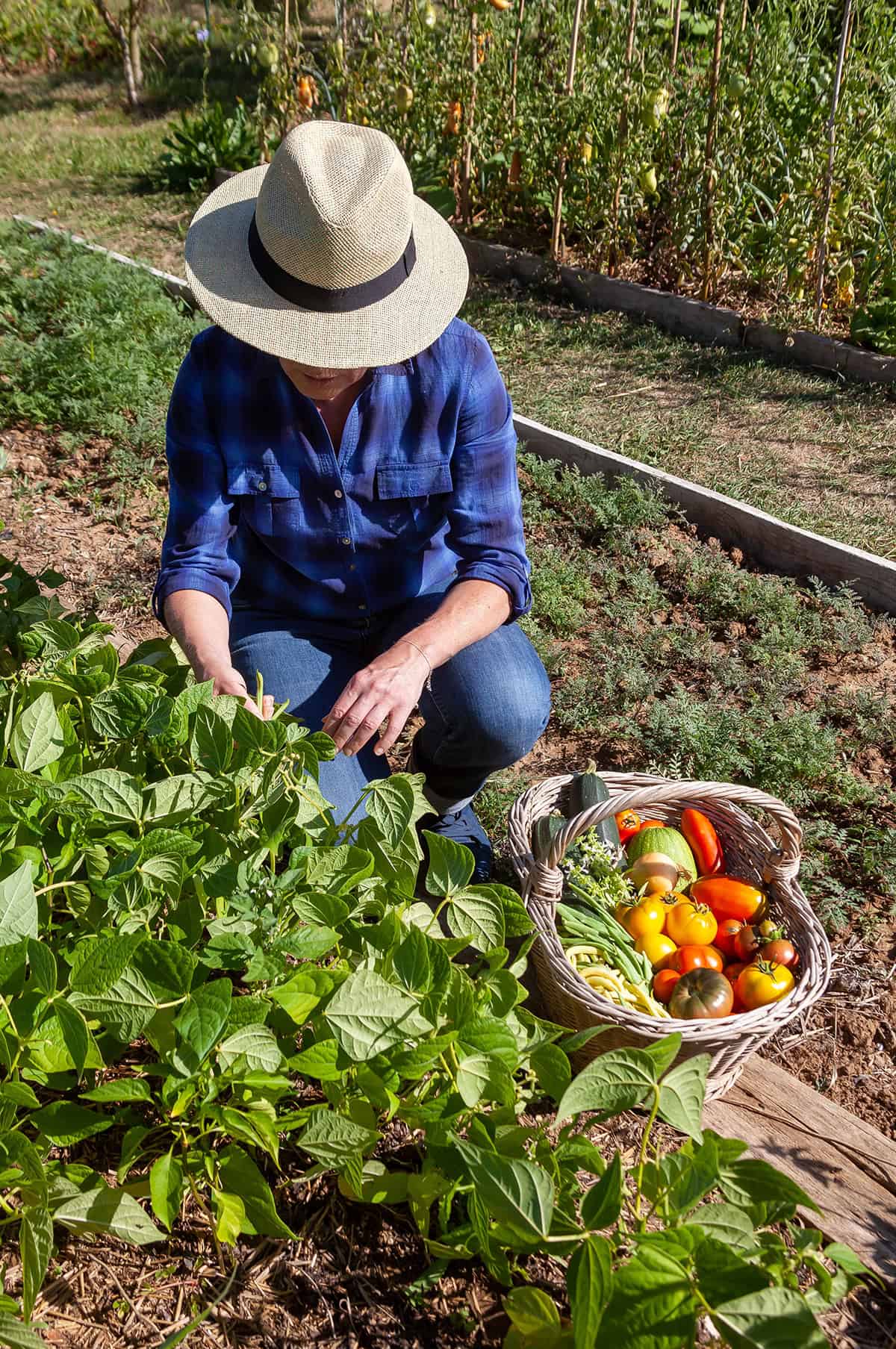
Intercropping means growing two or more crops in the same space at the same time. Done well, it controls pests, makes better use of soil and light and produces more food from a small garden.
Gardeners use a few layouts. Mixed intercropping scatters crops together, row intercropping alternates rows, and strip intercropping groups crops in bands wide enough to limit competition.
Good pairings match plants with different root depths, heights or timing, so they share water, nutrients and light and avoid crowding each other.
A diverse bed also supports more beneficial insects, which reduces the need for pesticides.
Plants That Intercrop With Tomatoes
Each partner here helps tomatoes in its own way, through pest control, shade use or shared space.
Basil
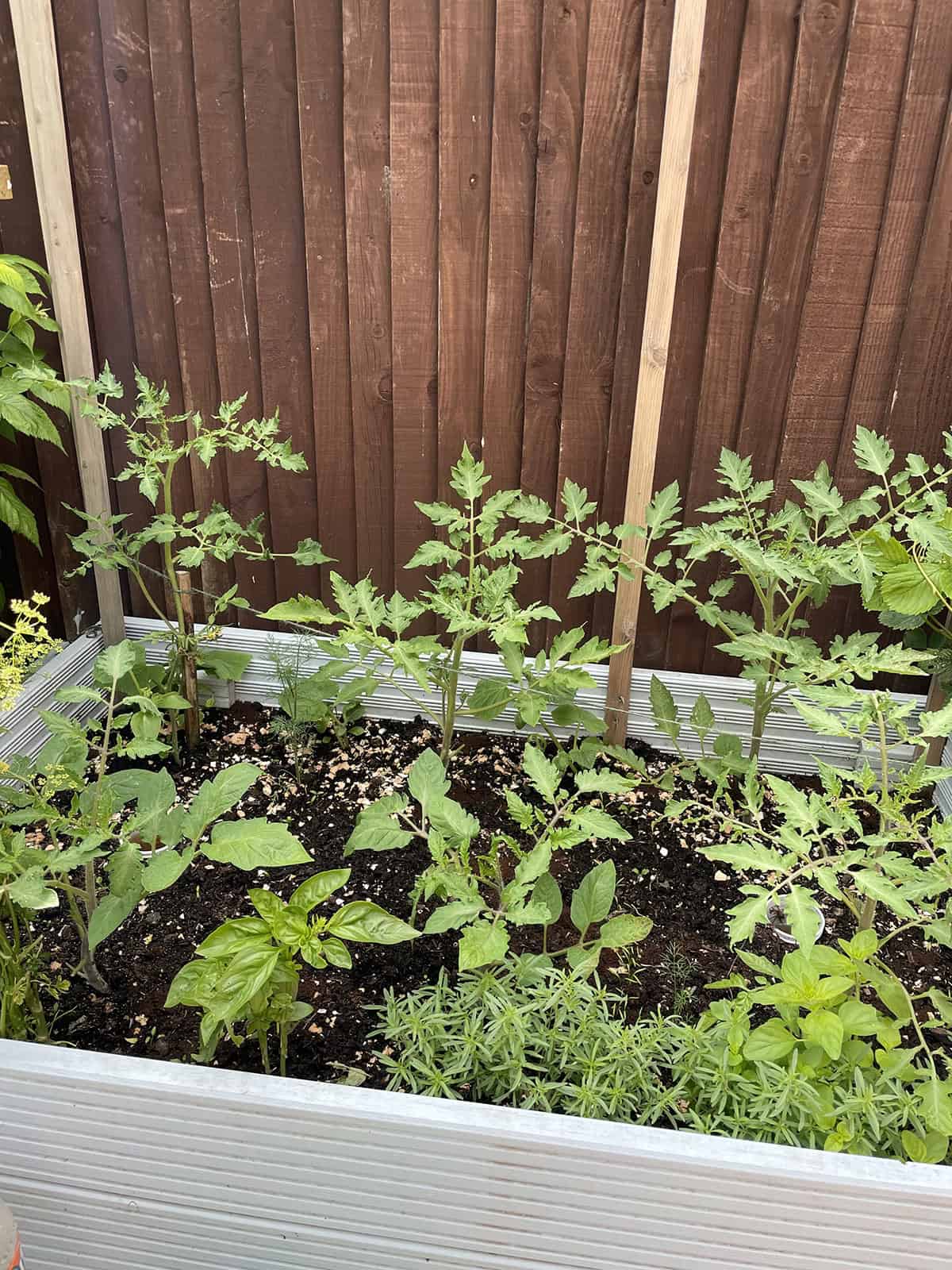
Basil and tomatoes share the same sun and water needs, which makes them an easy pairing. Flowering basil draws bees and other beneficial insects, and many gardeners swear the tomatoes taste better grown alongside it. Research also suggests basil helps confuse thrips and whiteflies.
Marigolds
French marigolds release compounds from their roots that suppress root-knot nematodes, especially when grown densely for a full season. Their flowers also attract ladybugs, hoverflies and other predators of tomato pests.
Garlic
Garlic’s strong scent helps deter aphids and spider mites. Tuck cloves around the edges of the tomato bed in fall, and harvest the bulbs in early summer as the tomatoes fill in.
Carrots
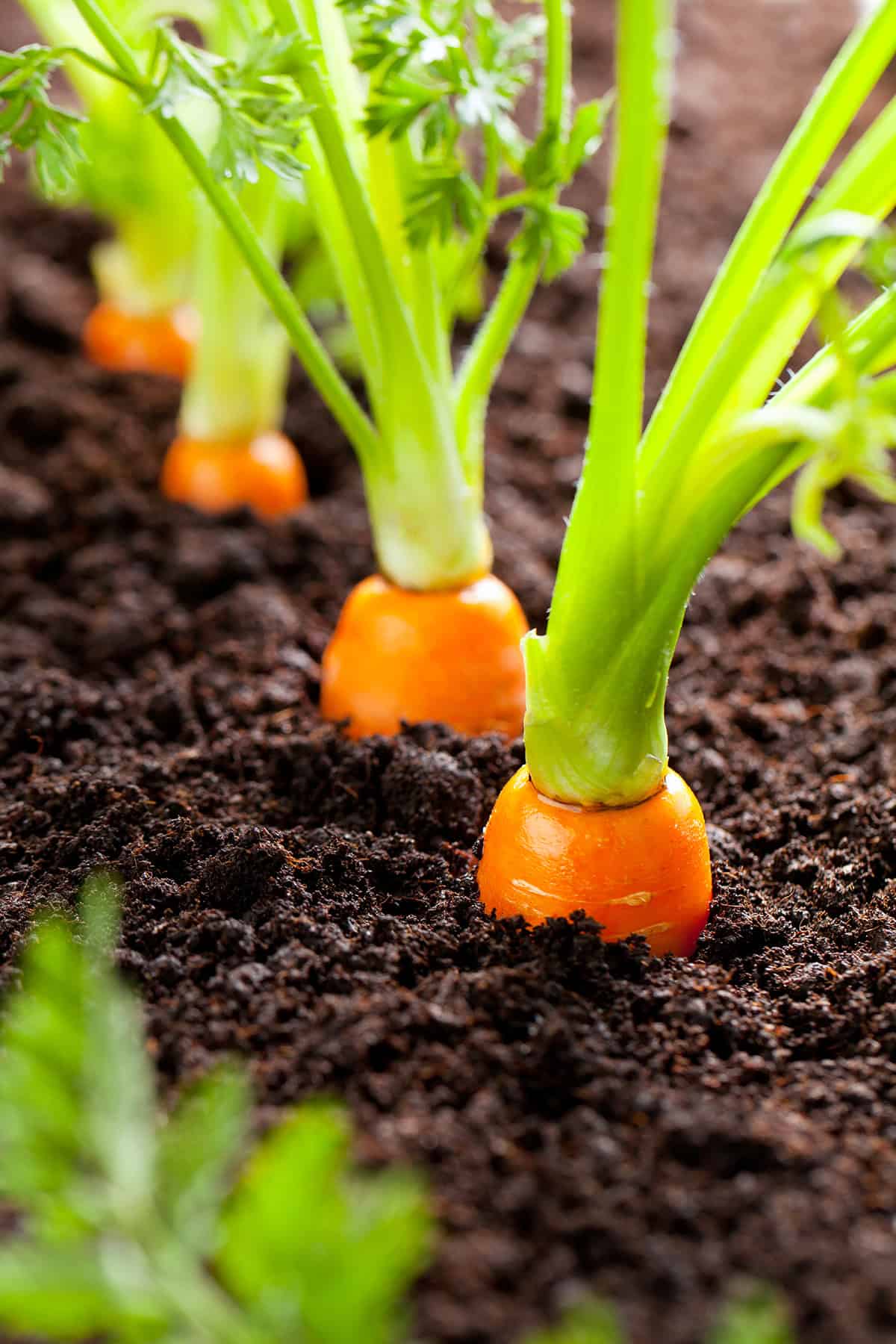
Carrots root deep and tomatoes spread wide, which lets them share a bed with little competition. Sow carrots around young tomatoes, where the developing canopy shades the soil and slows weeds. Harvest before the tomatoes grow too large, since heavy shade stunts the roots.
Lettuce
Lettuce fills the space under tomatoes while the plants are small, and later it benefits from their afternoon shade, which slows bolting in summer heat. Pick it young and resow every few weeks.
Chives
Chives take up little room and help deter aphids. Their purple flowers draw bees, and the clumps return every year at the edge of the bed.
Onions
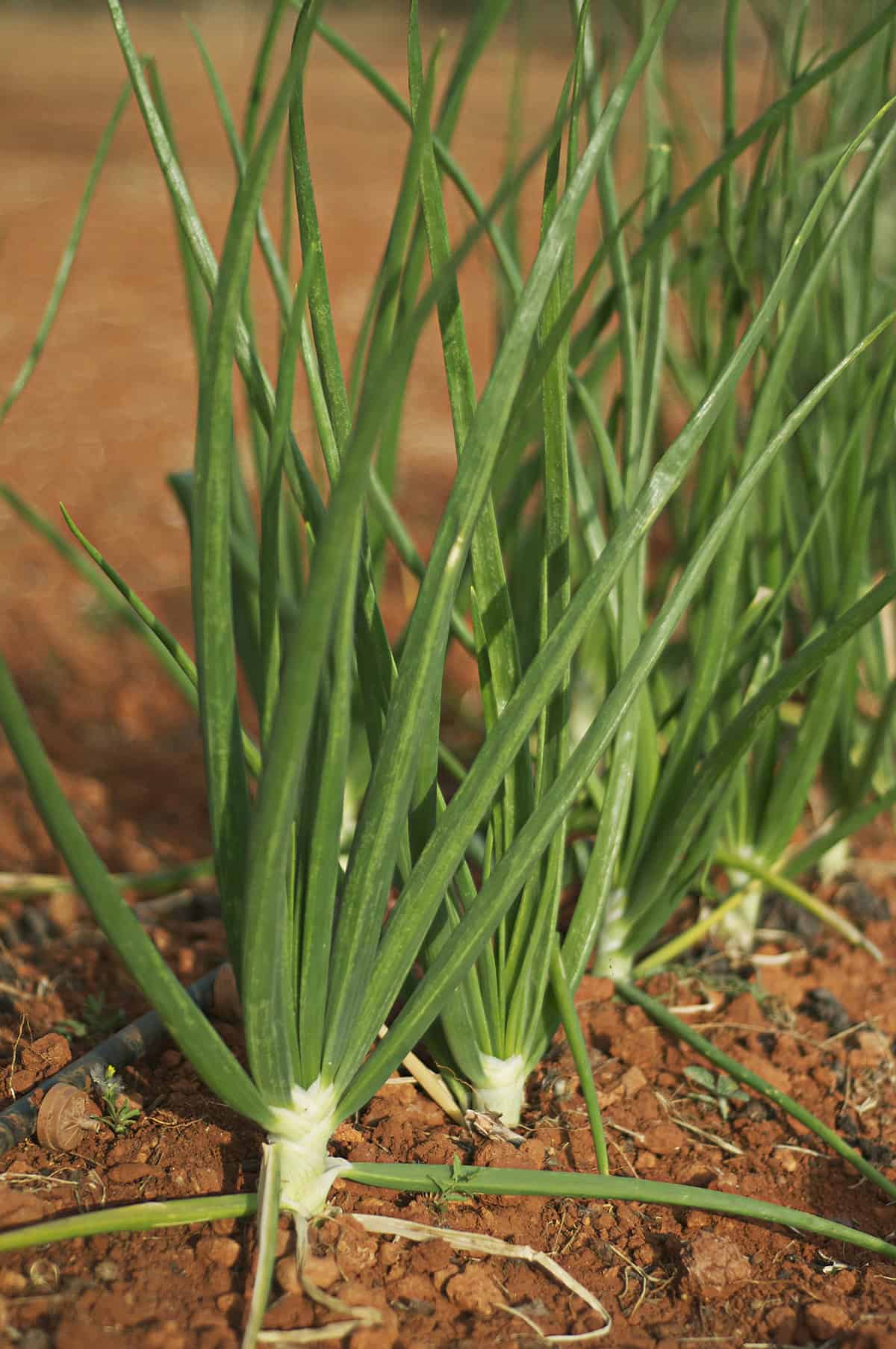
Onions help repel aphids and other pests with their strong smell, and their shallow roots compete little with tomatoes. Plant them along the edges, and harvest them by midsummer to free up space.
Parsley
Parsley flowers attract hoverflies and parasitic wasps, which prey on aphids and hornworm caterpillars. Let a plant or two bloom in its second year for the biggest benefit.
Spinach
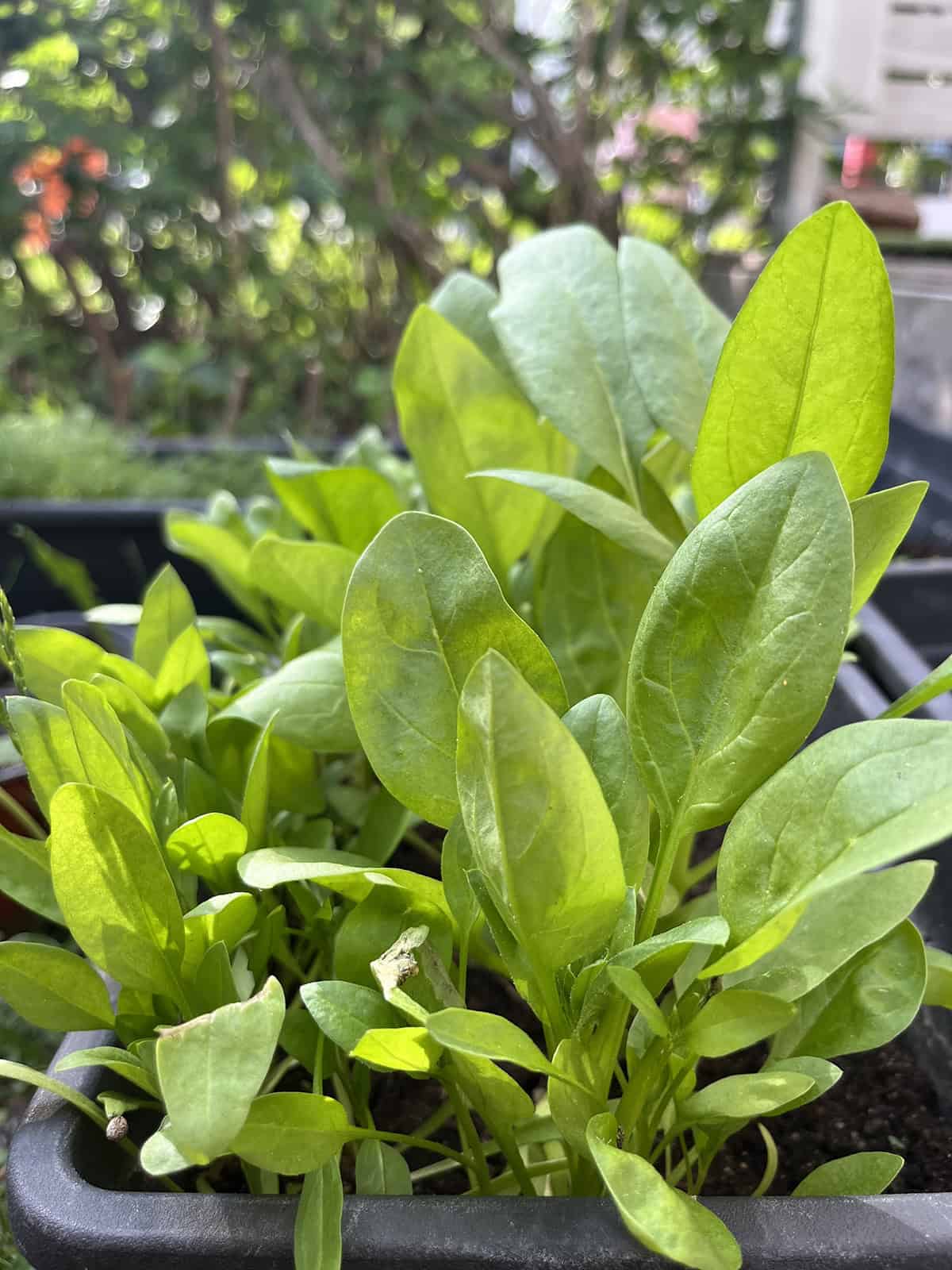
Spinach grows quickly in cool spring weather and fills bare soil around tomato transplants. The leaves shade the ground, hold moisture and crowd out weeds until the tomatoes take over.
Borage
Borage’s blue flowers draw bees and other pollinators to the tomato bed. Gardeners credit it with fewer hornworms and better tomato flavor, though the evidence is mostly anecdotal. It self-seeds freely.
Mint
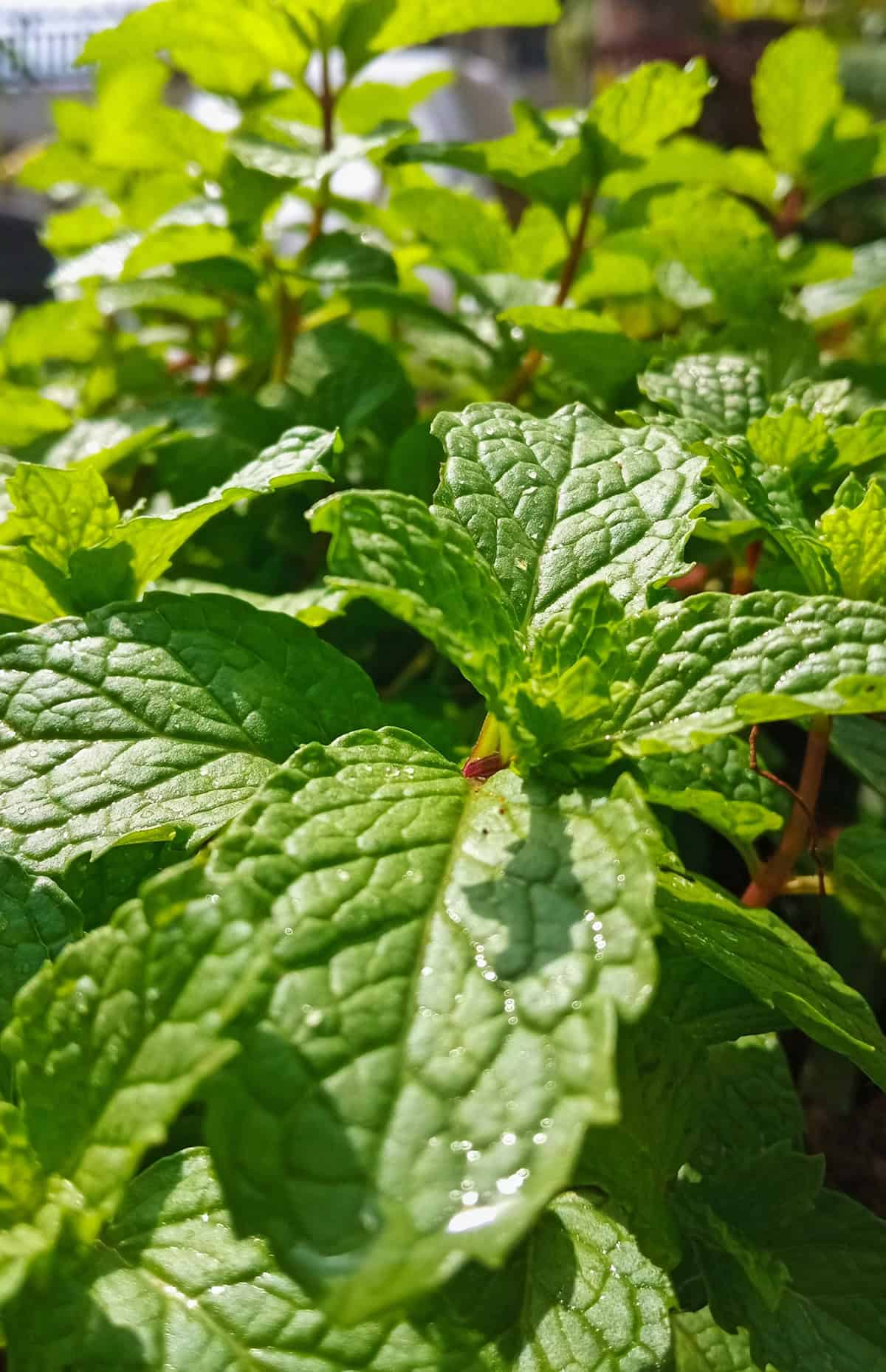
Mint’s strong scent helps confuse aphids and whiteflies. It spreads aggressively, so grow it in a pot set near the tomatoes.
Nasturtiums
Nasturtiums serve as a trap crop that lures aphids and whiteflies away from tomatoes. Their flowers also attract predatory insects, and trailing types cover bare soil around the plants.
Peppers
Peppers share the same sun, soil and water needs as tomatoes and grow well side by side. They also share many pests and diseases, so check both crops regularly and rotate the whole bed to a new spot each year.
Cucumbers
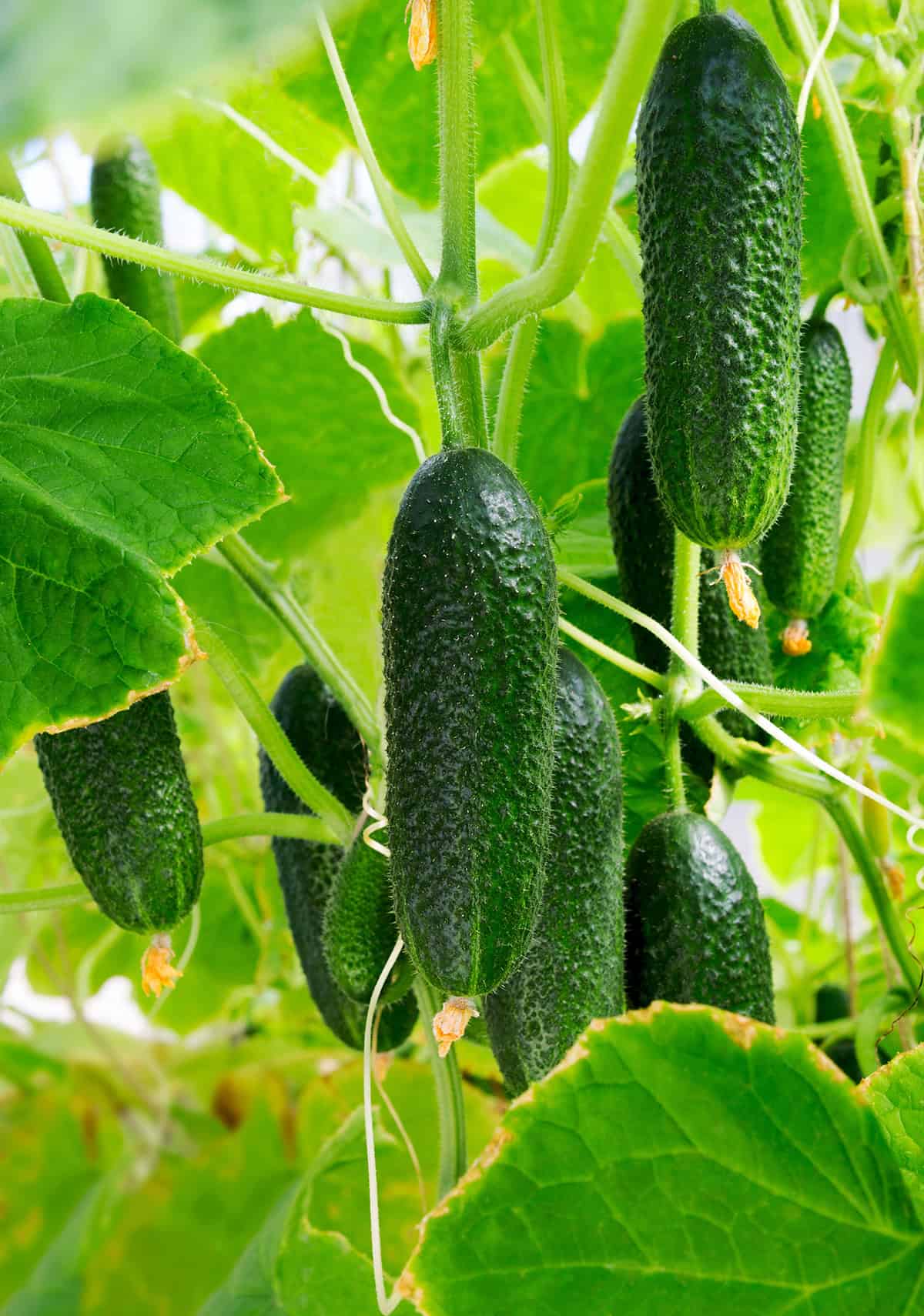
Cucumbers grow alongside tomatoes when both have room and support. Trellis the vines to save space and improve air flow, and water both crops consistently, since they’re thirsty in summer.
Asparagus
Asparagus and tomatoes form a traditional pairing. Tomatoes are said to deter asparagus beetles, and asparagus may help against certain nematodes. Plant tomatoes along the edges of an established asparagus bed after the spring harvest.
Beans
Beans form nitrogen-fixing nodules on their roots, and their leftover roots enrich the soil for later crops. Bush beans cover the ground and limit weeds, and pole beans use vertical space nearby.
Cilantro
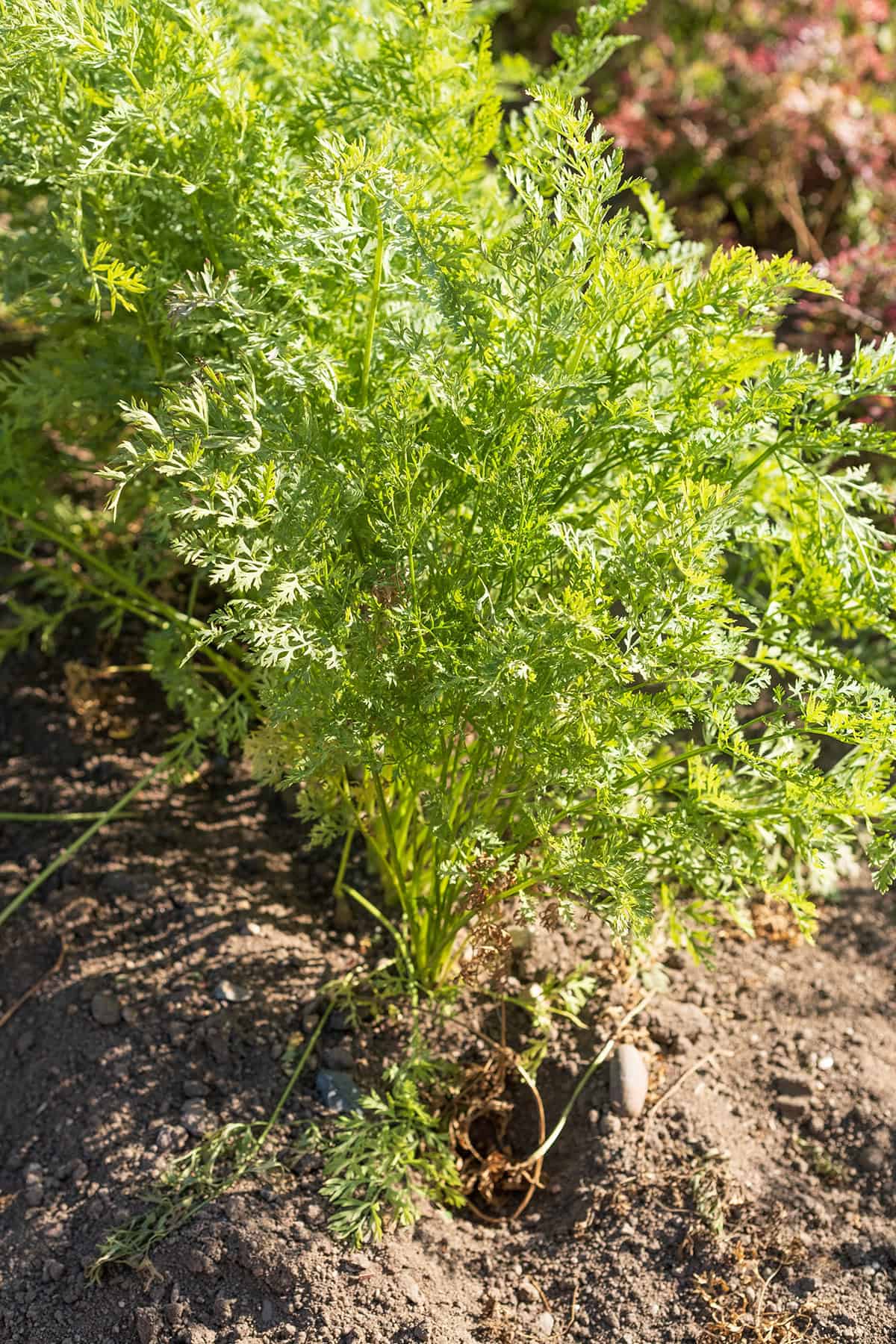
Cilantro flowers attract hoverflies and parasitic wasps that prey on tomato pests. It’s a short-lived annual that bolts in heat, so sow it every few weeks or let a few plants flower.
Celery
Celery’s scent helps deter whiteflies and aphids. Both plants need steady moisture, which makes them easy to water together.
Dill
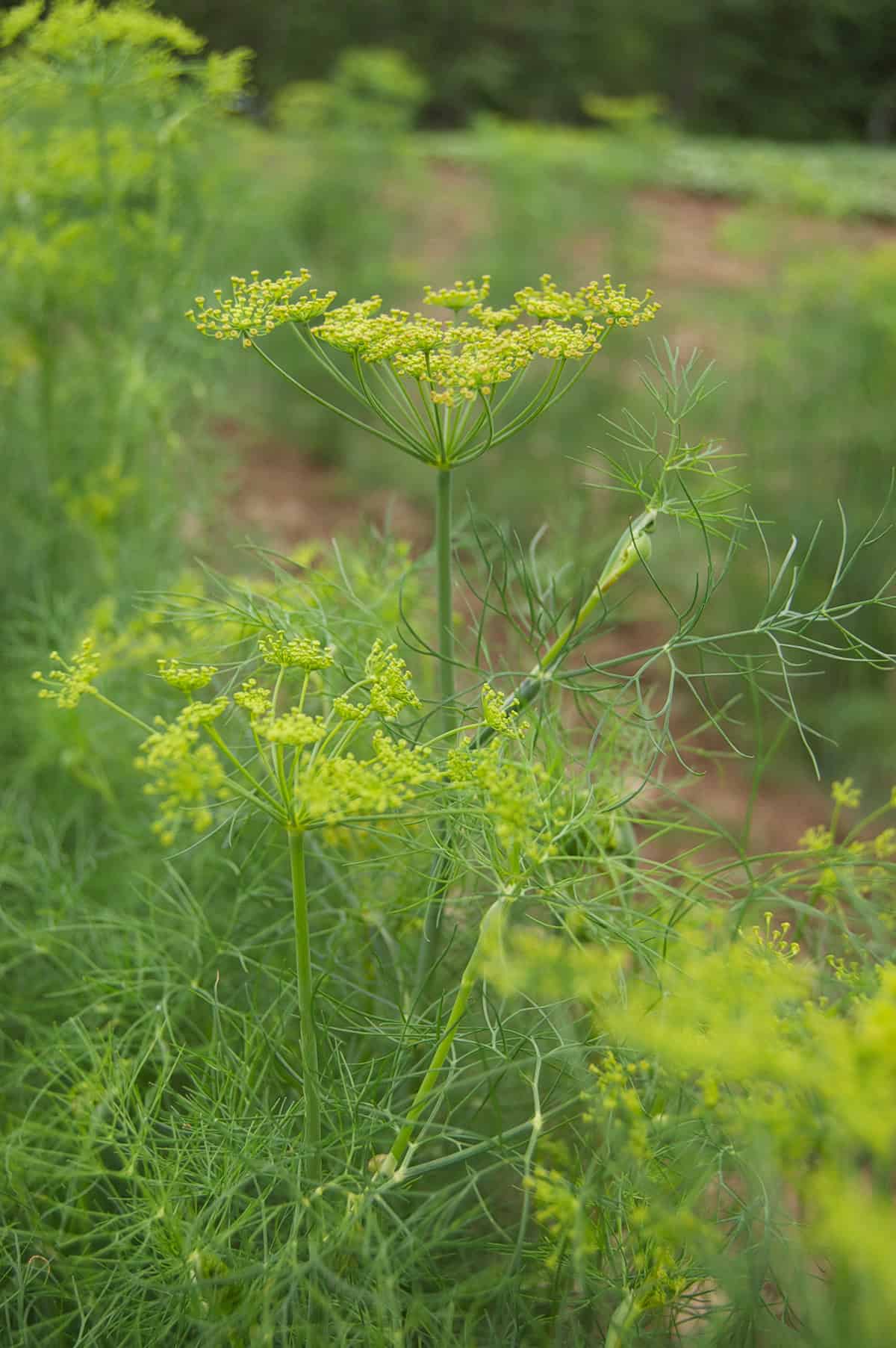
Young dill attracts ladybugs, lacewings and parasitic wasps that control aphids and hornworms. Gardeners commonly advise harvesting it or moving it before it matures fully, since large flowering dill plants are thought to slow tomato growth.
Cabbage
Cabbage and tomatoes have a mixed reputation as neighbors. Both are heavy feeders, and large cabbages compete for nutrients and space. If you pair them, space them generously and feed the soil well.