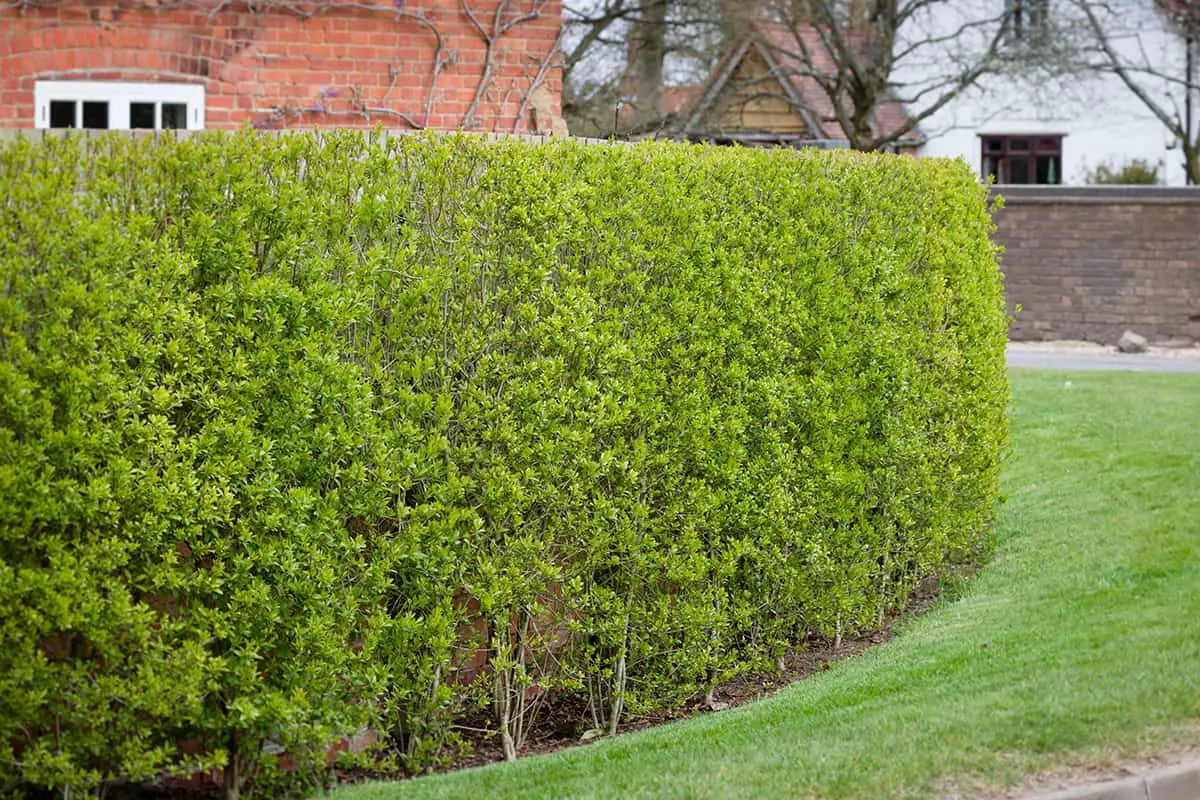
If you want to create privacy screening around the perimeter of your home, then your options are likely limited to erecting a fence or wall or growing a screening or hedge made from plants. Fences and walls have the obvious benefit of being pretty much instant, but they can look harsh against the landscape and make your garden feel like a prison. Neighbors might also be offended that you want to block them out.
A hedge or screening has a much more aesthetically pleasing look, which will blend into the landscape because, of course, it is made from entirely natural plants. The drawback of using plants for privacy screening is the fact that they can take many years to reach a height that actually works as a screen.
If you want a shrub screen but don’t want to wait a decade for it to mature, consider fast-growing species that will gain height more quickly. Here we look at a range of fast-growing evergreen shrubs that can be used for screening.
Table of Contents
- What is Shrub Privacy?
- Evergreen of Deciduous Shrubs for Privacy?
- Mexican Orange Blossom
- Firethorn
- Escallonia
- Murray Cypress
- Green Giant Arborvitae
- Cherry Laurel
- Portuguese Laurel
- Schip Laurel
- Wax Myrtle
- Japanese Privet
- Ligustrum ovalifolium
- Elaeagnus × ebbingei
- Photinia ‘Red Robin’
- Viburnum ‘Chindo’
- Sweet Viburnum
- Pittosporum tenuifolium
- Japanese Pittosporum
- Hopseed Bush
- Oleander
- Carolina Cherry Laurel
- Nellie Stevens Holly
- Podocarpus macrophyllus
- Leyland Cypress
- Griselinia littoralis
- Feijoa sellowiana
What is Shrub Privacy?
Shrub privacy, also known as privacy screening, is a type of hedge. While hedges are considered to be quite formal since they are usually neatly pruned to maintain a certain shape, screening has a more casual look because the plants are allowed to grow in their natural shape.
A shrub screening is created by planting a row of shrubs close together, typically a few feet apart, depending on the expected spread of the mature shrub.
For example, if you are using a shrub with an expected mature spread of 3 feet, you should plant the shrubs with a distance of 2 feet between the center of each shrub, allowing them to spread and merge together with no gaps in between.
Shrub screening can be used around the entire perimeter of a garden, or you can use it in the middle of a garden to cordon off a space, for example, to create a more intimate outdoor dining area.
Evergreen of Deciduous Shrubs for Privacy?
Evergreen shrubs hold onto their foliage through every season of the year, whereas deciduous shrubs shed their leaves, usually in fall or winter. This means the branches of a deciduous shrub remain bare throughout winter, typically until spring the following year when new leaves emerge on the plant.
You might expect that this means evergreen shrubs are the only types of shrubs that can remain attractive all year round; however, this isn’t the case.
Many deciduous shrubs have an appealing silhouette when their branches are bare, or they might have an unusual color of bark which is revealed when the leaves are no longer hiding the branches. In these instances, deciduous trees are able to retain interest throughout the winter garden.
However, deciduous shrubs can be a problem when it comes to using your plants as screening. When you have created a row of plants for privacy screening or hedging, you have intentionally positioned them in a way that prevents outsiders from seeing into your home and garden, or you may have positioned this way to block out an unappealing view so you can’t see it from your home windows.
Unfortunately, since deciduous plants do not have any leaves throughout winter, this will mean that a screening made from deciduous shrubs will no longer offer the privacy it did during the summer months. Even deciduous shrubs which are densely branched will still have gaps during winter which would previously have been hidden by leaves.
This means that if it is important to know that your screening remains fully intact and functional through every month of the year, you’ll need to choose an evergreen species. Evergreen shrubs with dense foliage make the best choice since they will entirely block out the view between your home and the street.
Mexican Orange Blossom
- Botanical name: Choisya ternata
- Family: Rutaceae
- USDA hardiness zones: 7- 10
- Mature height: 6 to 8 feet
- Mature spread: 6 to 8 feet
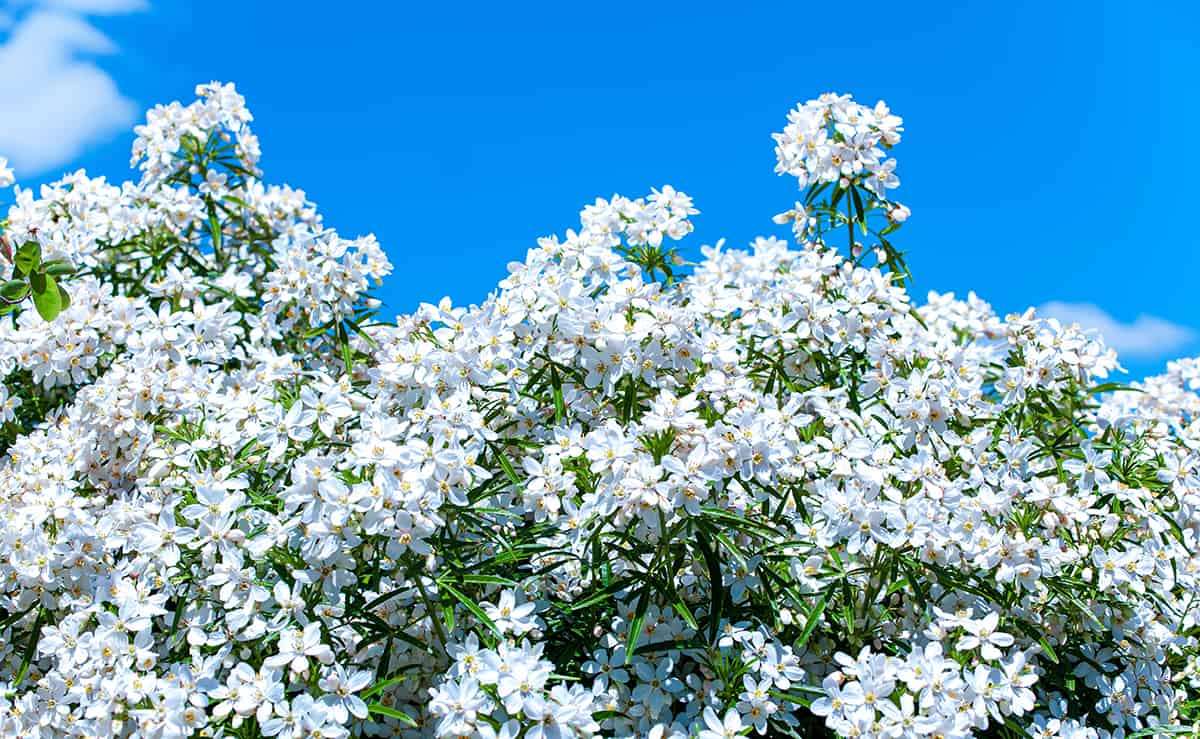
This is an evergreen shrub that grows natively in both the southern United States and in Mexico. It grows at a typical speed of 2 feet per year, which means you could have a 6-foot-tall privacy screening in the space of just 3 years.
After 4 years, the screening would have reached the plant’s mature height of between 6 and 8 feet, which is taller than most domestic garden fences. The Mexican Orange Blossom will create an attractive screening since it produces pretty flowers in white and glossy green leaves.
Both the leaves and flowers will release a sweet orange scent when they are crushed. The typical spread of this plant is 8 feet in width, so to create a screening, you should position the center of each plant at a distance of 7 feet from the next. Mexican Cherry Blossom thrives in full sun and prefers soils that are rich in organic content and drain well.
Firethorn
- Botanical name: Pyracantha
- Family: Rosaceae
- USDA hardiness zones: 5- 9
- Mature height: 4 to 12 feet
- Mature spread: 3 to 10 feet
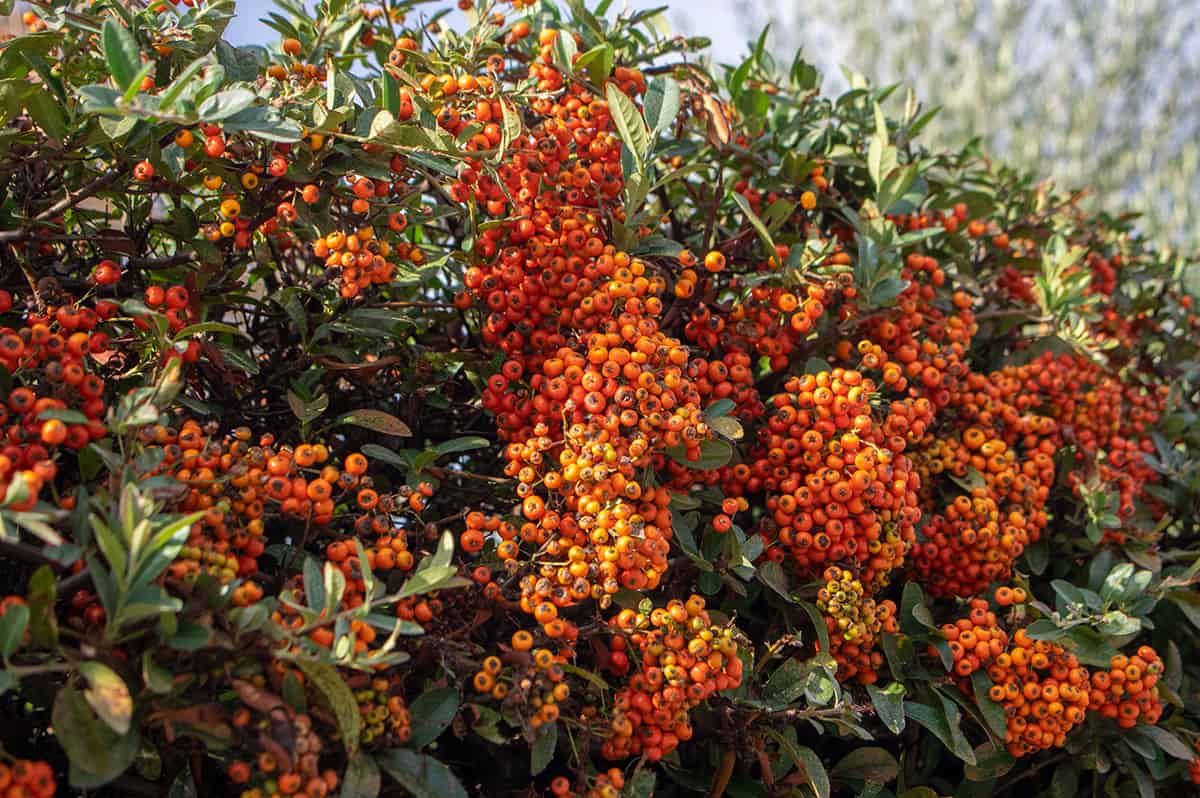
Pyracantha, more commonly known as Firethorns, are a genus of evergreen shrubs. These are known to be moderate to fast growers, but the variety which is most famed for its speed of growth is the Pyracantha coccinea ‘Red Column’.
This variety can grow to a maximum height of 12 feet, gaining approximately 2 feet in height each year. Another Firethorn with a similarly fast rate of growth is the Pyracantha koidzumii ‘Victory’, which has a slightly smaller mature height of around 8 feet. With an expected growth rate of 2 feet per year, this variety of Firethorn will typically have reached its maximum size in just four year, creating a dense evergreen screening in a remarkable space of time.
Firethorns are known for their showy berries, which follow small white flowers. The berries hang in dense clusters of glossy fruits and can be orange, red, or yellow. These plants thrive in positions of full sun and can tolerate drought once well established.
They are an excellent choice for privacy screening because of their dense growth habit, their fast-growing nature, and the fact that they remain evergreen and, therefore, will function as privacy screening throughout every month of the year. If you prefer a more pruned look, this plant will need to be trimmed annually, but it tolerates pruning well.
Escallonia
- Botanical name: Escallonia sp.
- Family: Escalloniaceae
- USDA hardiness zones: 8- 10
- Mature height: Up to 15 feet
- Mature spread: Up to 15 feet
Escallonia is a genus of plants that are renowned for their ability to grow quickly and thrive with very little care. You can expect a typical rate of growth of between 1 and 2 feet per year, which means that in order to reach a height of 6 feet, your screening would take anywhere from 3 to 6 years to grow.
Many Escallonia shrubs can grow to heights of up to 15 feet, and this mature height would be reached in anywhere from 7 and a half to 15 years. Although Escallonia is by no means the fastest-growing evergreen shrub, it is still considered very fast compared with the average speed of growth amongst evergreen shrubs, and Escallonias are exceptionally attractive, which makes them ideal for screening.
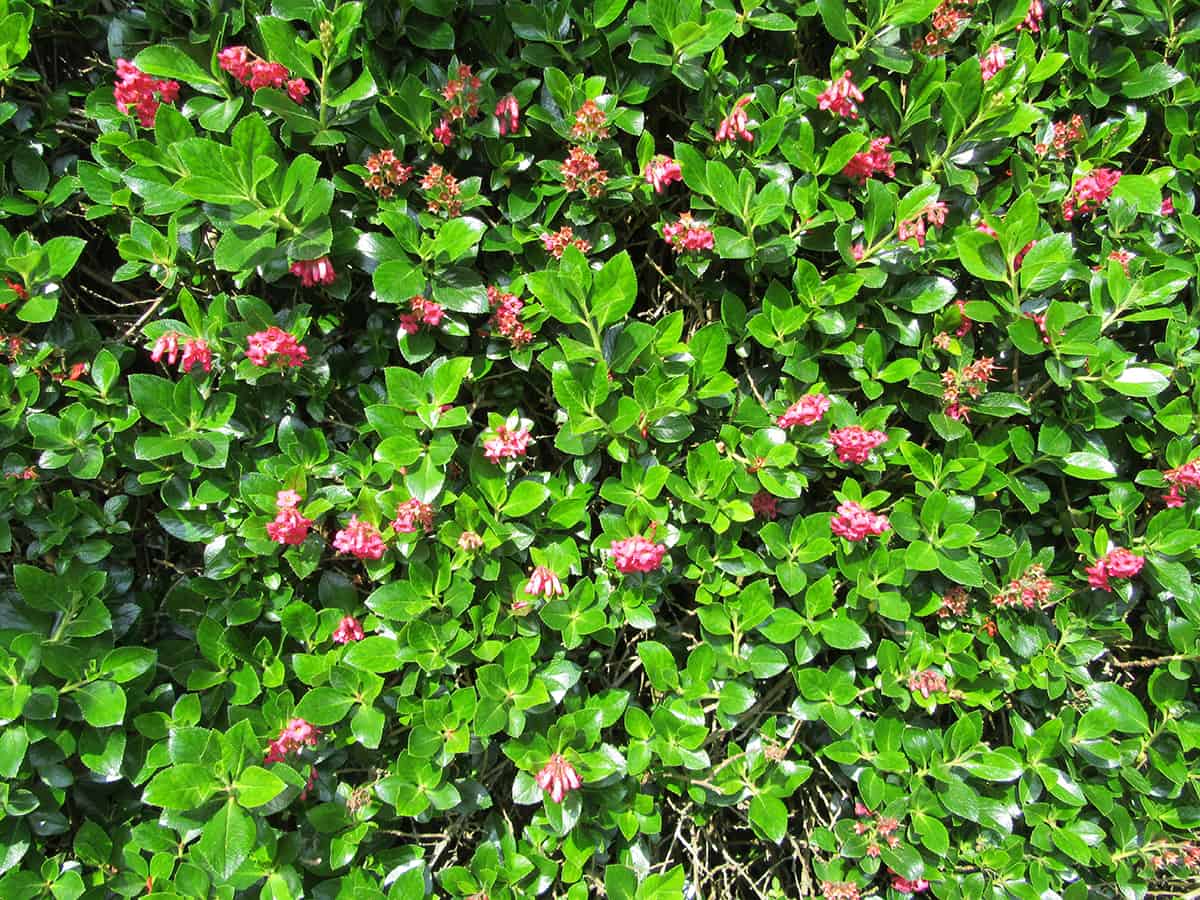
They produce flowers that can be white, pink, or red, and these appear on heavy panicles during summer, with some varieties able to continue blooming right through to fall. The foliage of the shrub is also appealing, which means the screening will retain its pleasing look through every season.
The leaves have a glossy finish and are a medium-green shade. Escallonia shrubs grow easily in full sun and well-draining soils. Watch out for fungal disease on Escallonia leaves since these plants are particularly susceptible to this issue. Ensuring good airflow between the branches will help to decrease the likelihood of this problem occurring, especially during summer months when the air can be quite humid. You can do this by thinning the branches out with selective pruning.
Murray Cypress
- Botanical name: X Cupressocyparis leylandii ‘Murray’
- Family: Cupressaceae
- USDA hardiness zones: 6 – 10
- Mature height: 30 to 40 feet
- Mature spread: 6 to 10 feet
The Murray Cypress is a type of evergreen conifer that takes the shape of an enormous shrub. It is believed to be the result of a hybridization, and has become hugely popular as an extremely fast-growing solution for creating hedging and privacy screening. The rate of growth on this impressive tree is an unbelievable 4 feet per year.
This means that in the space of just two years, you could have an 8-foot screening surrounding the perimeter of your garden. In 3 years, the screening will have reached a whopping 12 feet, and this will continue until the shrub reaches its ultimate height of between 30 and 40 feet.
If you would prefer not to have such a tall screening since it will create a lot of shade in the garden, you can prune it back annually to maintain a more manageable height. The Murray Cypress should be planted at a distance of 3 or 4 feet between each plant if you want a dense privacy hedge, or this can be relaxed to a distance of 6 to 7 feet between each plant for a more casual screening.
The shrub is very tolerant of harsh winds, so it is also an excellent choice to use as a windbreak. It will tolerate salt, which means it can also be put to good use in coastal regions. This is an exceptionally easy to grow tree, which thrives in both full sun or partial shade, and will adapt to any type of soil. It prefers a moderately moist soil, but it can also sustain itself in periods of drought once established, and it will also tolerate wet soils.
Green Giant Arborvitae
- Botanical name: Thuja standishii x plicata ‘Green Giant’
- Family: Cupressaceae
- USDA hardiness zones: 5 – 7
- Mature height: 50 to 60 feet
- Mature spread: 12 to 20 feet
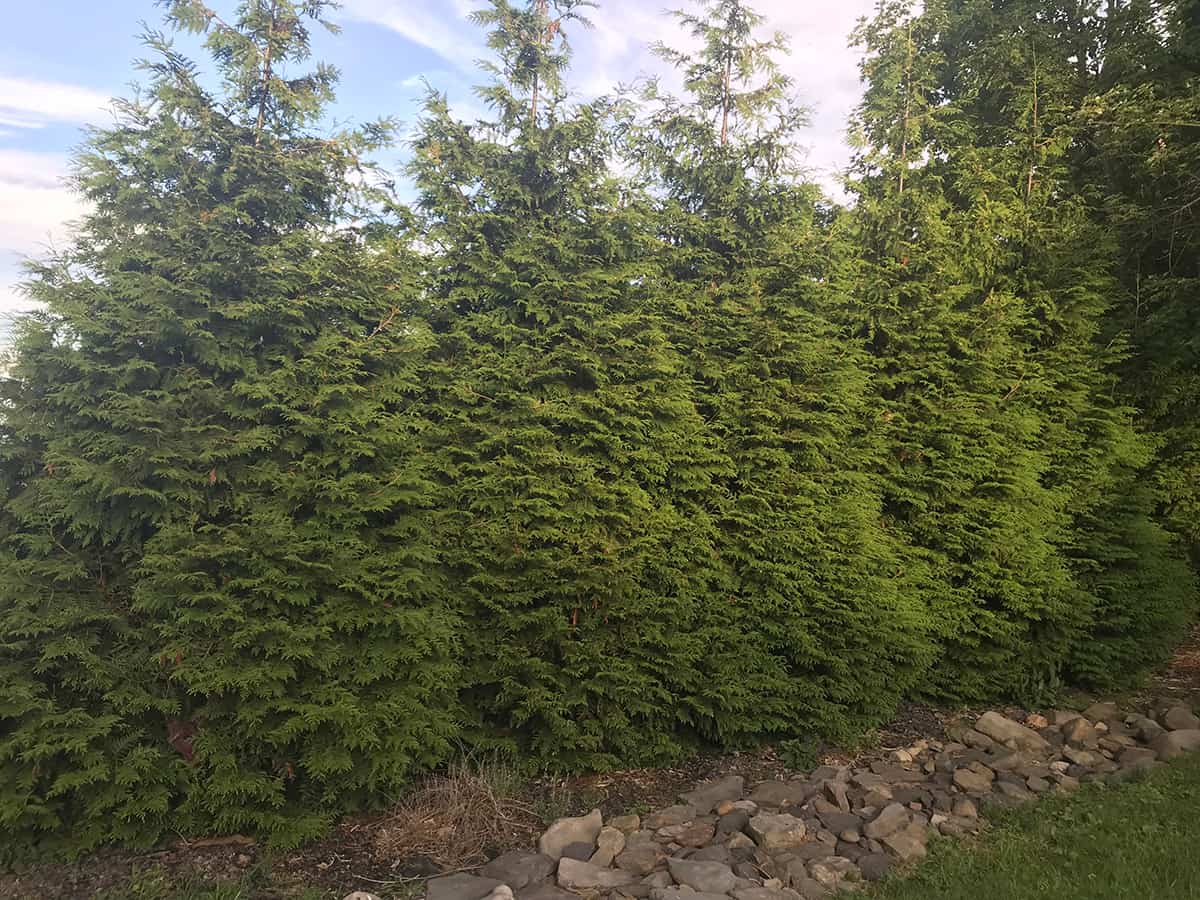
This coniferous evergreen shrub is known for its huge height and slender shape, but it is also very popular thanks to its exceptional speed of growth. This plant will typically grow at a rate of 3 feet per year and has even been known to gain as much as 5 feet in height in a single year.
On average, you can expect to have a 12-foot screening in just 4 years if you plant a Green Giant Arborvitae in your garden. When planting this species to form a screening or hedge, it should be positioned in rows with a distance of 5 to 6 feet between each plant. This is an award-winning plant that received the Pennsylvania Horticultural Society Gold Medal Plant Award in 1998.
It features scale-like flattened leaves in a glossy green color, and these are arranged in tightly packed, overlapping rows, helping to create a dense shrub that will help to block out light, sound, and wind when used as a screening. The plant is a result of a hybridization performed in Denmark, and from this, an individual plant was sent to the U.S. National Arboretum in 1967.
From here, the plant was propagated and widely distributed. It is now one of the most popular varieties of Arborvitae, and is considered as the best replacement for the Leyland Cypress (Cupressus × leylandii), which is highly susceptible to pests and disease. By comparison, the Green Giant Arborvitae has no known serious issues with disease or pest infestations. It is easy to grow and thrives in a range of conditions. Grow this plant in full sun or partial shade.
It will adapt well to almost any type of soil, though wet soils should be avoided. The plant is sensitive to salt, so it is not suitable for planting in coastal regions. It does not need to be pruned but tolerates pruning well.
Cherry Laurel
- Botanical name: Prunus laurocerasus
- Family: Rosaceae
- USDA hardiness zones: 6 – 8
- Mature height: 10 to 20 feet
- Mature spread: 6 to 10 feet
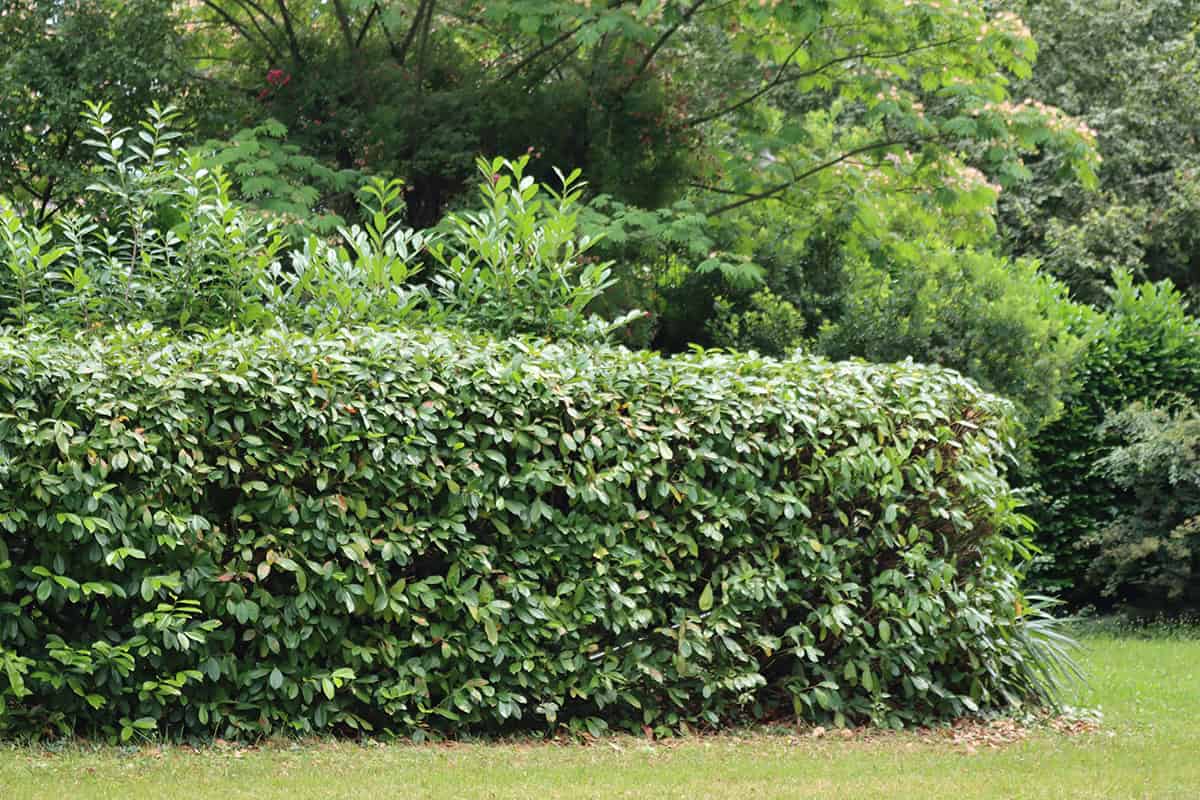
Thick, glossy leaves pile up to create a lush, living wall. In decent soil, you might see two feet of new growth each year—sometimes more if the weather’s on your side.
Sun or partial shade both work, and this shrub isn’t picky about soil. Left alone, it’ll stretch toward 30 feet, but you can keep it much shorter with a bit of trimming.
Once or twice a year with the pruners keeps it under control. Urban smog doesn’t faze it, and it’s at home in Zones 6 to 9.
Portuguese Laurel
- Botanical name: Prunus lusitanica
- Family: Rosaceae
- USDA hardiness zones: 6 – 9
- Mature height: 10 to 20 feet
- Mature spread: 8 to 15 feet
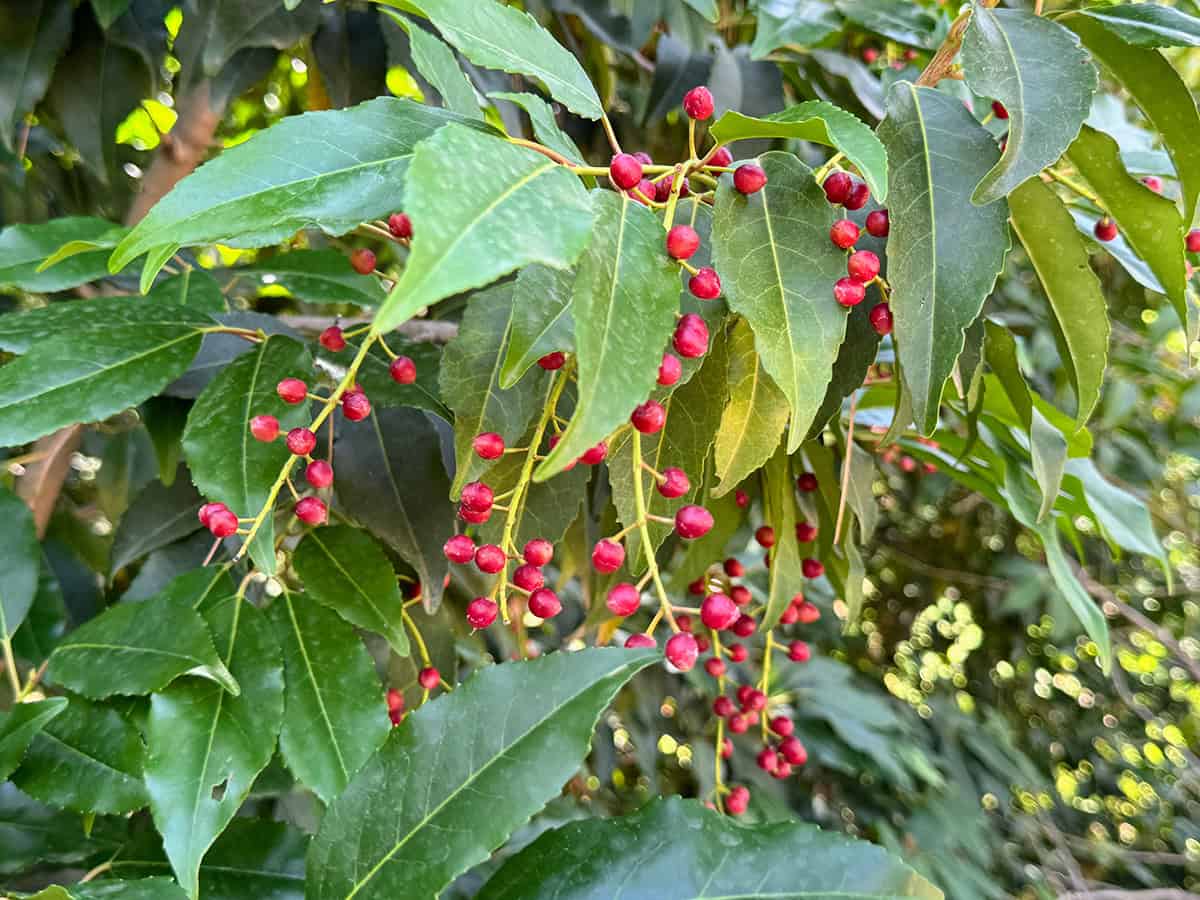
With its smaller leaves and burgundy stems, this one’s got a touch of elegance. Growth is steady, and the branching stays tight, so you won’t end up with gaps.
Partial shade or full sun, either way, it likes soil that drains well. Expect it to top out between 10 and 20 feet.
Late spring brings on white flower spikes—a nice bonus. The neat outline makes it a favorite for more formal hedges.
Schip Laurel
- Botanical name: Prunus laurocerasus ‘Schipkaensis’
- Family: Rosaceae
- USDA hardiness zones: 6 – 9
- Mature height: 10 to 15 feet
- Mature spread: 5 to 7 feet
Neat and compact, this cherry laurel cousin fits where space is tight. Ten to fifteen feet tall is typical, but it doesn’t sprawl out like some others.
Set plants four or five feet apart and you’ll have a solid green barrier in no time. Cold snaps aren’t a big deal for this one.
Leaves stay tidy and deep green, even when the weather turns. Smaller yards benefit from its slim profile.
Wax Myrtle
- Botanical name: Morella cerifera
- Family: Myricaceae
- USDA hardiness zones: 7 – 10
- Mature height: 10 to 20 feet
- Mature spread: 8 to 10 feet
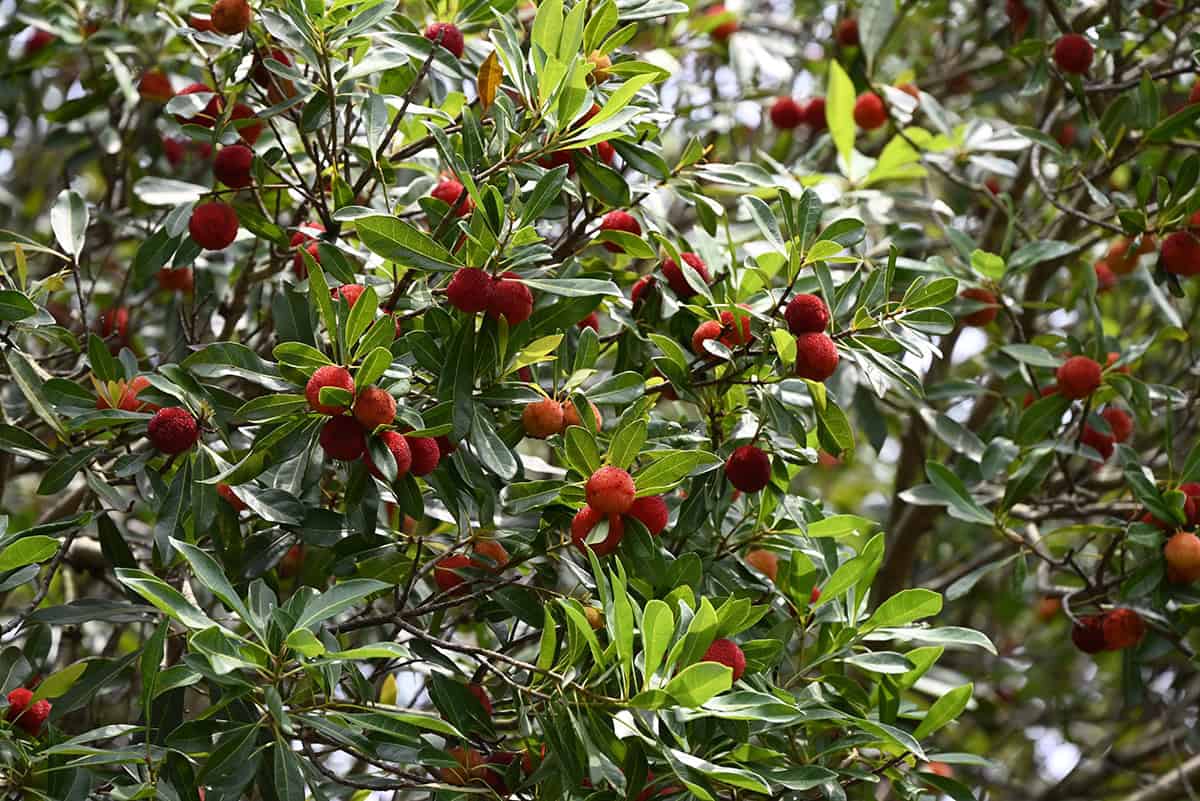
In warm zones, this native shrub can shoot up fast, often hitting 8 to 15 feet. Sandy soil? No problem.
Salt, wind, even the occasional storm—this one’s tough. If branches snap, it bounces back quickly.
Let it grow wild for a natural screen, or shape it if you’re after something tidier. Best for Zones 7 to 10.
Japanese Privet
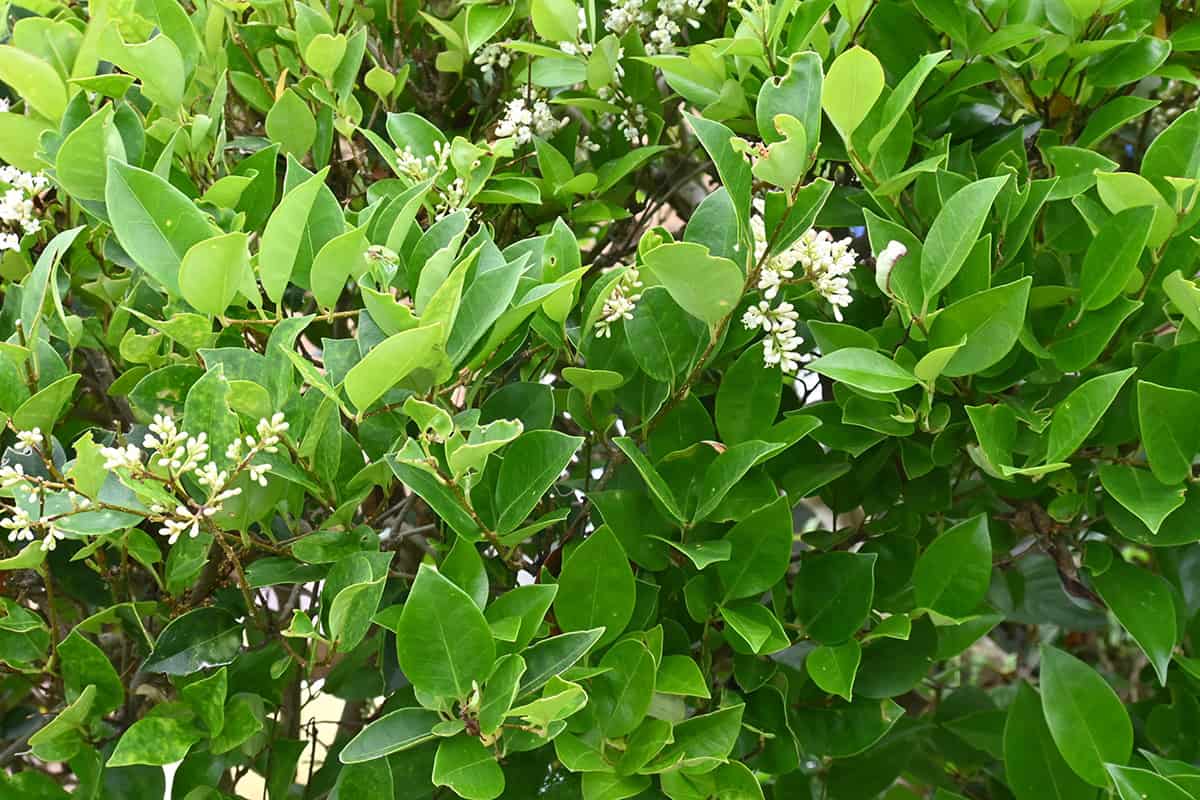
- Botanical name: Ligustrum japonicum
- Family: Oleaceae
- USDA hardiness zones: 7 – 10
- Mature height: 8 to 12 feet
- Mature spread: 6 to 8 feet
Shiny leaves and a knack for growing fast make this a go-to for quick privacy. With some trimming, 10 to 12 feet is easy.
Come late spring, clusters of fragrant white flowers pop up. Birds love the seeds, so you might find a few volunteers nearby.
Heat and city air don’t bother it. If you want dense growth, give it plenty of sun.
Ligustrum ovalifolium
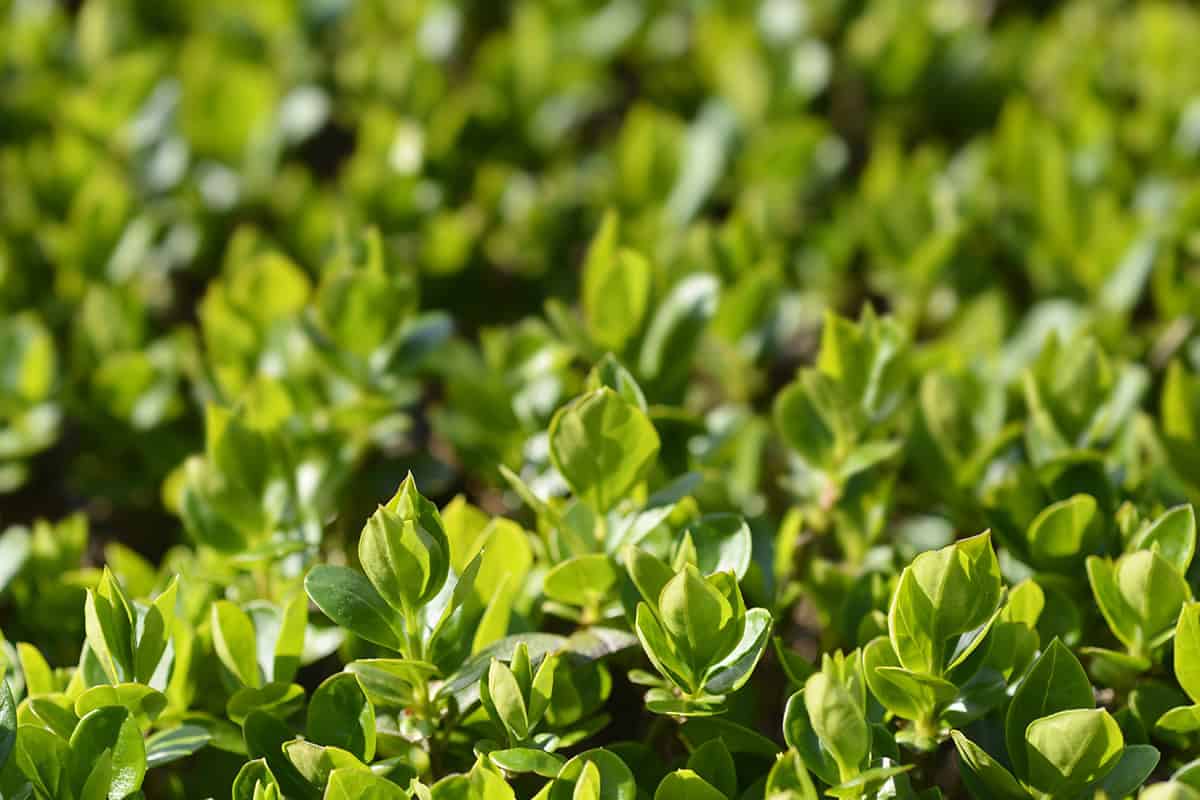
- Botanical name: Ligustrum ovalifolium
- Family: Oleaceae
- USDA hardiness zones: 5 – 8
- Mature height: 10 to 15 feet
- Mature spread: 5 to 8 feet
California privet, as it’s sometimes called, fills out fast and thick. Left alone, it can reach 10 to 15 feet.
Shear it tight for a crisp look, or let it go a bit wild. It’s not fussy about soil and handles partial shade.
In warmer spots, it stays green all year. Colder climates might see some leaf drop in winter.
Elaeagnus × ebbingei
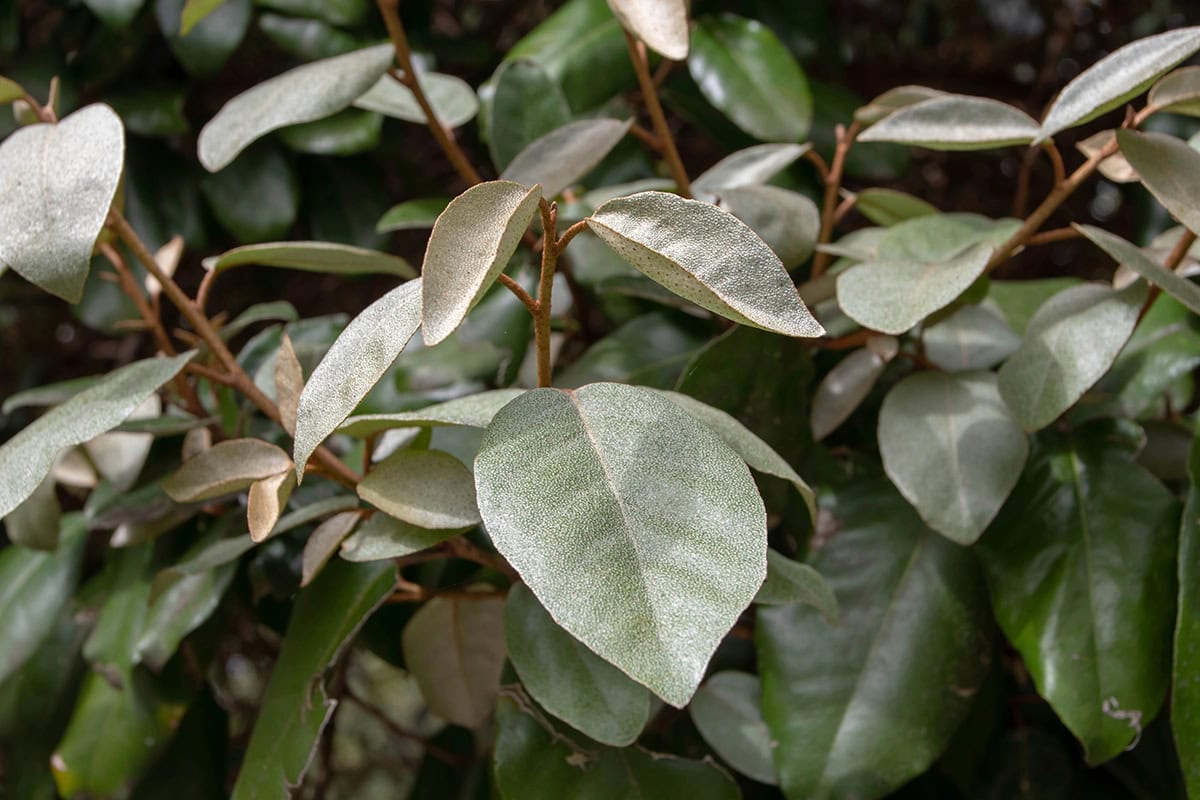
- Botanical name: Elaeagnus × ebbingei
- Family: Elaeagnaceae
- USDA hardiness zones: 7 – 9
- Mature height: 8 to 12 feet
- Mature spread: 8 to 12 feet
Leaves with silvery undersides give this shrub a muted, almost shimmery appearance. It’s no slouch in the growth department, often topping 10 feet in a hurry.
Wind, salt spray, poor soil—this one shrugs it all off. Come fall, you’ll catch a whiff of its fragrant blooms.
Great along coastal properties. Thorny branches aren’t exactly inviting to trespassers.
Photinia ‘Red Robin’
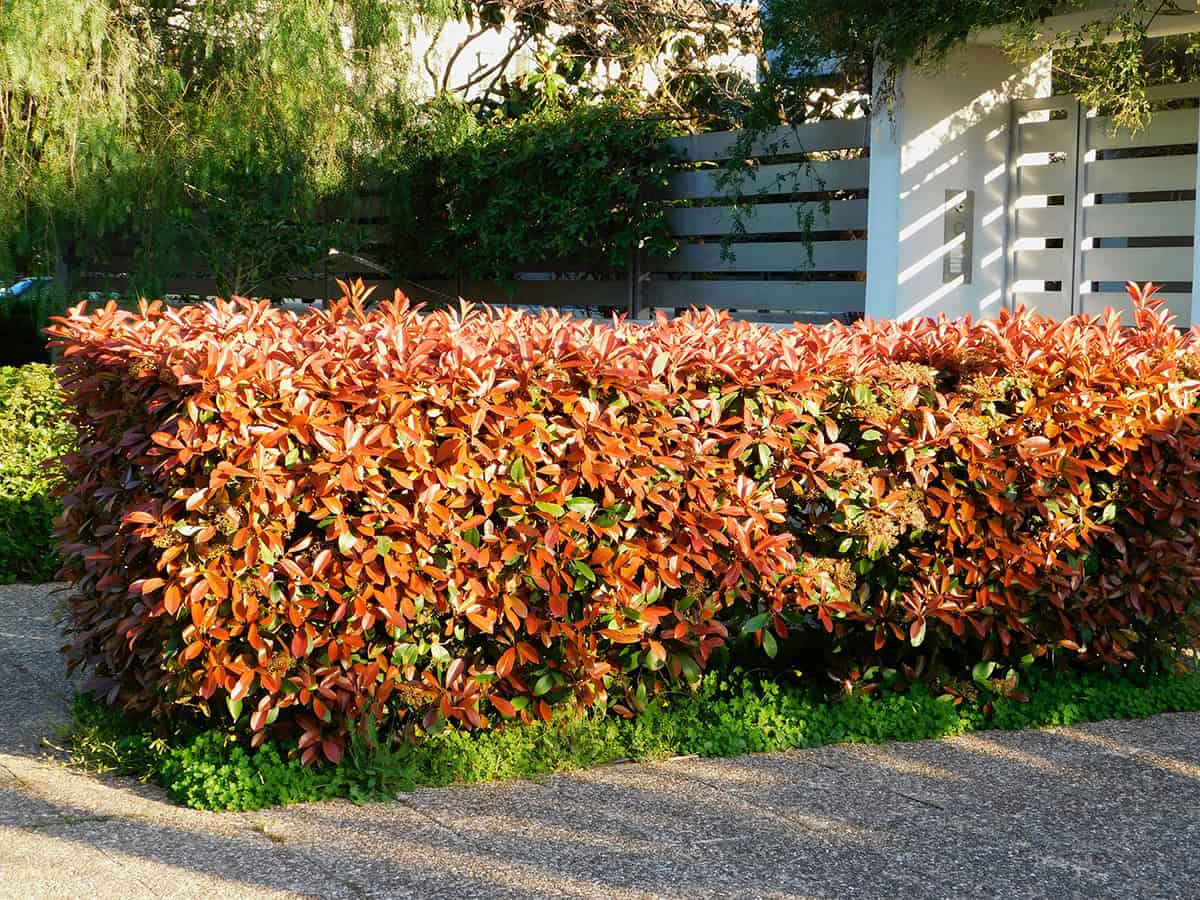
- Botanical name: Photinia × fraseri ‘Red Robin’
- Family: Rosaceae
- USDA hardiness zones: 7 – 9
- Mature height: 10 to 15 feet
- Mature spread: 8 to 10 feet
Spring brings a flush of vivid red leaves that practically shout for attention. Heights of 10 to 15 feet are common.
Strong sunlight brings out the best color and thickest growth. White flower clusters show up in spring, too.
Prune regularly if you want that fresh red look to keep cycling in. Good air circulation helps keep leaf spot in check.
Viburnum ‘Chindo’
- Botanical name: Viburnum awabuki ‘Chindo’
- Family: Viburnaceae
- USDA hardiness zones: 7 – 9
- Mature height: 10 to 12 feet
- Mature spread: 6 to 8 feet
Big, glossy leaves give this viburnum a bold, almost tropical vibe. In warmer zones, 12 to 20 feet isn’t unusual.
Spring brings on fragrant white flowers, followed by red berries that draw in birds.
It’s adaptable to sun or partial shade, and fits right in from Zones 7 to 9.
Sweet Viburnum
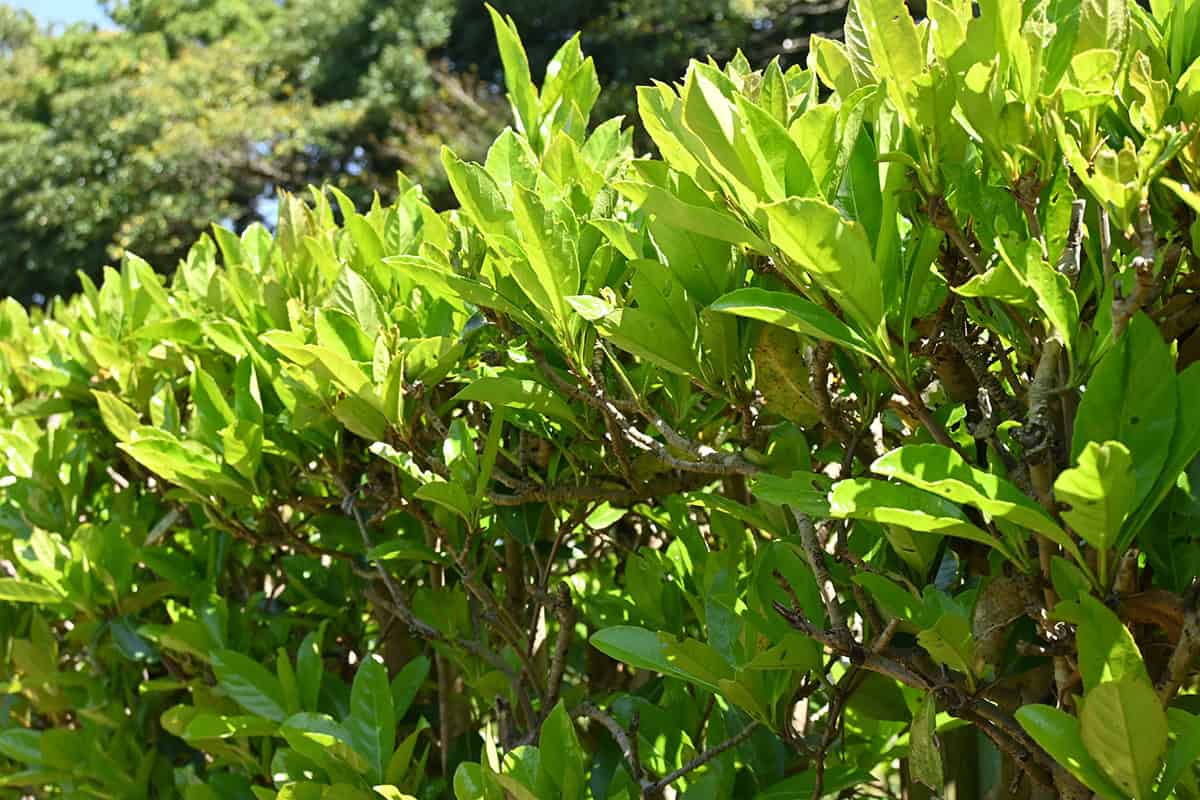
- Botanical name: Viburnum odoratissimum
- Family: Viburnaceae
- USDA hardiness zones: 8 – 10
- Mature height: 10 to 20 feet
- Mature spread: 10 to 15 feet
In frost-free areas, this one can shoot up to 20 feet or more. Leaves keep their shine year-round.
Whether you want a tall hedge or a small tree, it’s flexible. Colder weather slows it down a bit.
Spring flowers have a sweet scent, and it’s not picky about soil—as long as it gets some sun.
Pittosporum tenuifolium
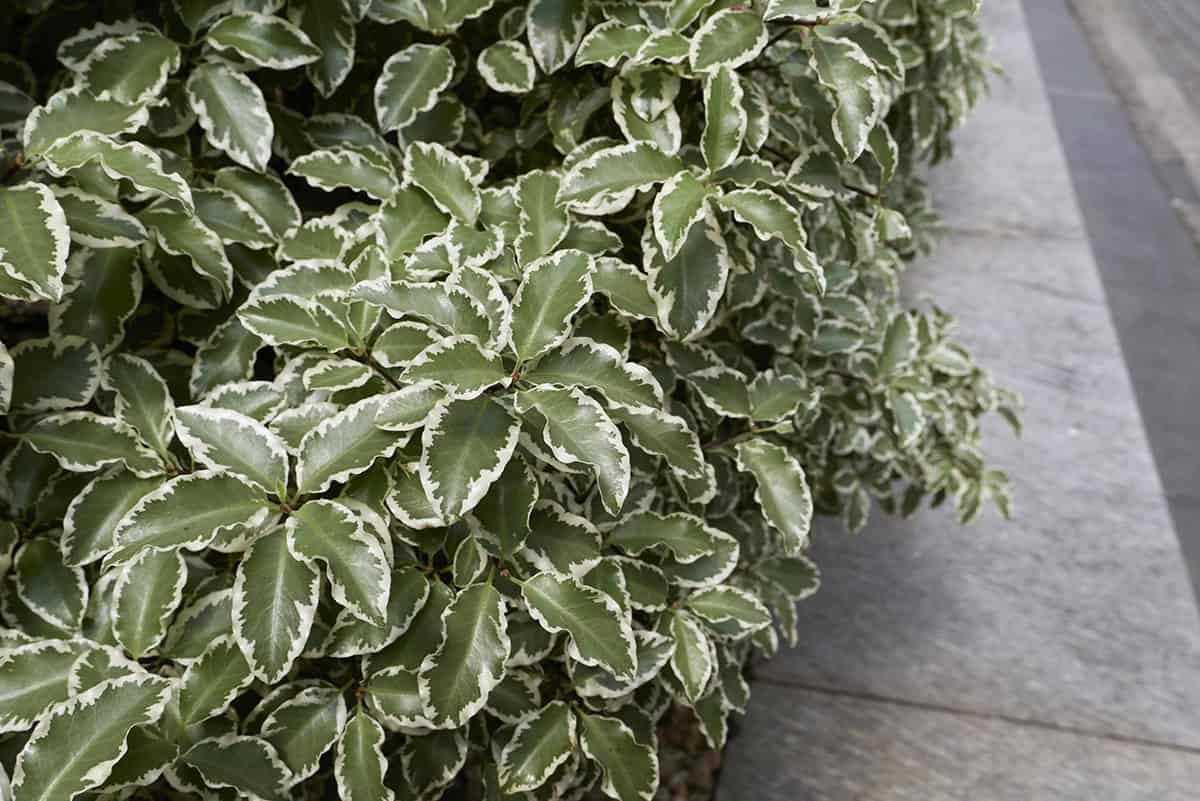
- Botanical name: Pittosporum tenuifolium
- Family: Pittosporaceae
- USDA hardiness zones: 8 – 10
- Mature height: 10 to 15 feet
- Mature spread: 6 to 8 feet
Wavy, small leaves give this shrub a fine, airy texture. Heights range from 8 to 15 feet.
Prefers soil that drains well, and doesn’t mind a bit of coastal wind or a mild frost.
Dark stems set off the lighter foliage, making for a subtle contrast. Works nicely for informal screens in Zones 8 through 10.
Japanese Pittosporum
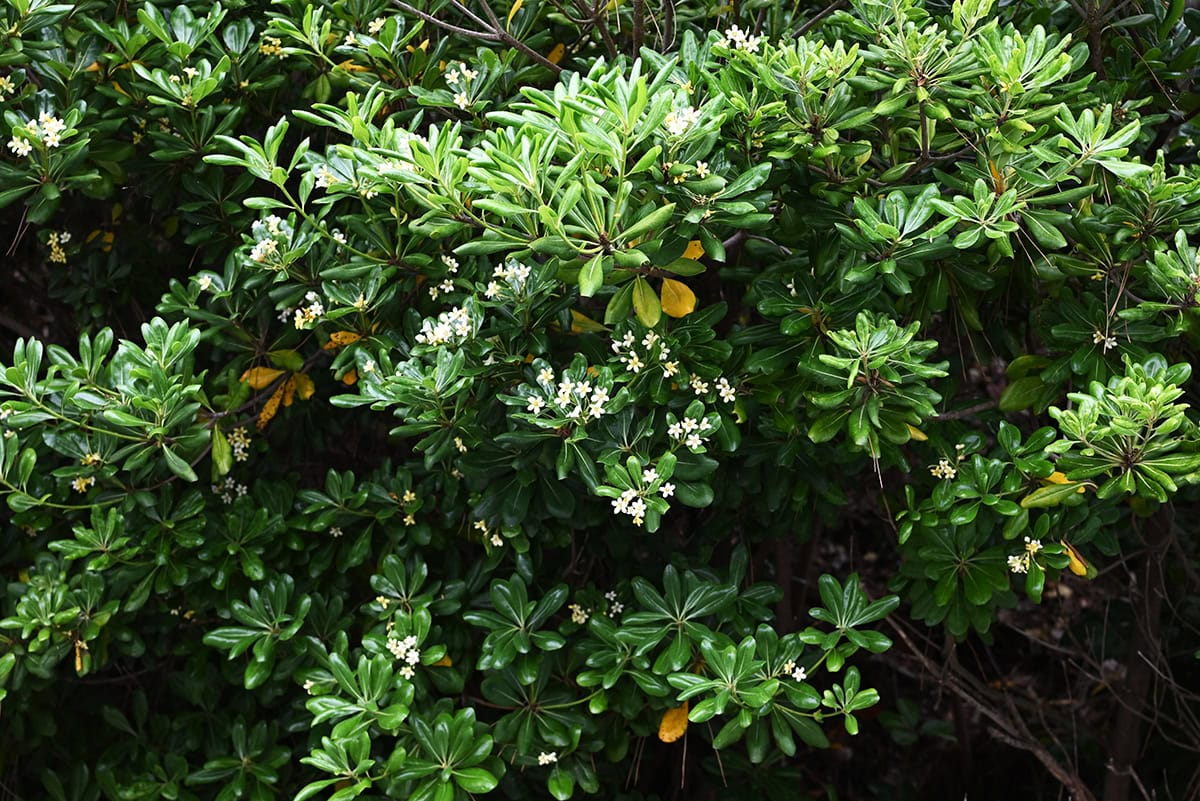
- Botanical name: Pittosporum tobira
- Family: Pittosporaceae
- USDA hardiness zones: 8 – 10
- Mature height: 10 to 15 feet
- Mature spread: 10 to 15 feet
Sometimes called mock orange, this plant forms a dense, rounded mass. Expect 8 to 12 feet in height.
Thick, leathery leaves shrug off salt and dry spells. Spring brings small, fragrant blooms.
Easy to shape into a hedge if that’s your style. Loves a warm, coastal spot.
Hopseed Bush
- Botanical name: Dodonaea viscosa
- Family: Sapindaceae
- USDA hardiness zones: 9 – 11
- Mature height: 8 to 15 feet
- Mature spread: 6 to 10 feet
Upright stems and narrow leaves shoot skyward, making for a fast, tall screen. Twelve to fifteen feet is typical.
Heat, drought, wind—none of it seems to slow this one down. Purple seed pods add a bit of offbeat color.
Sun is key for thick growth. Especially handy in dry, tough climates.
Oleander
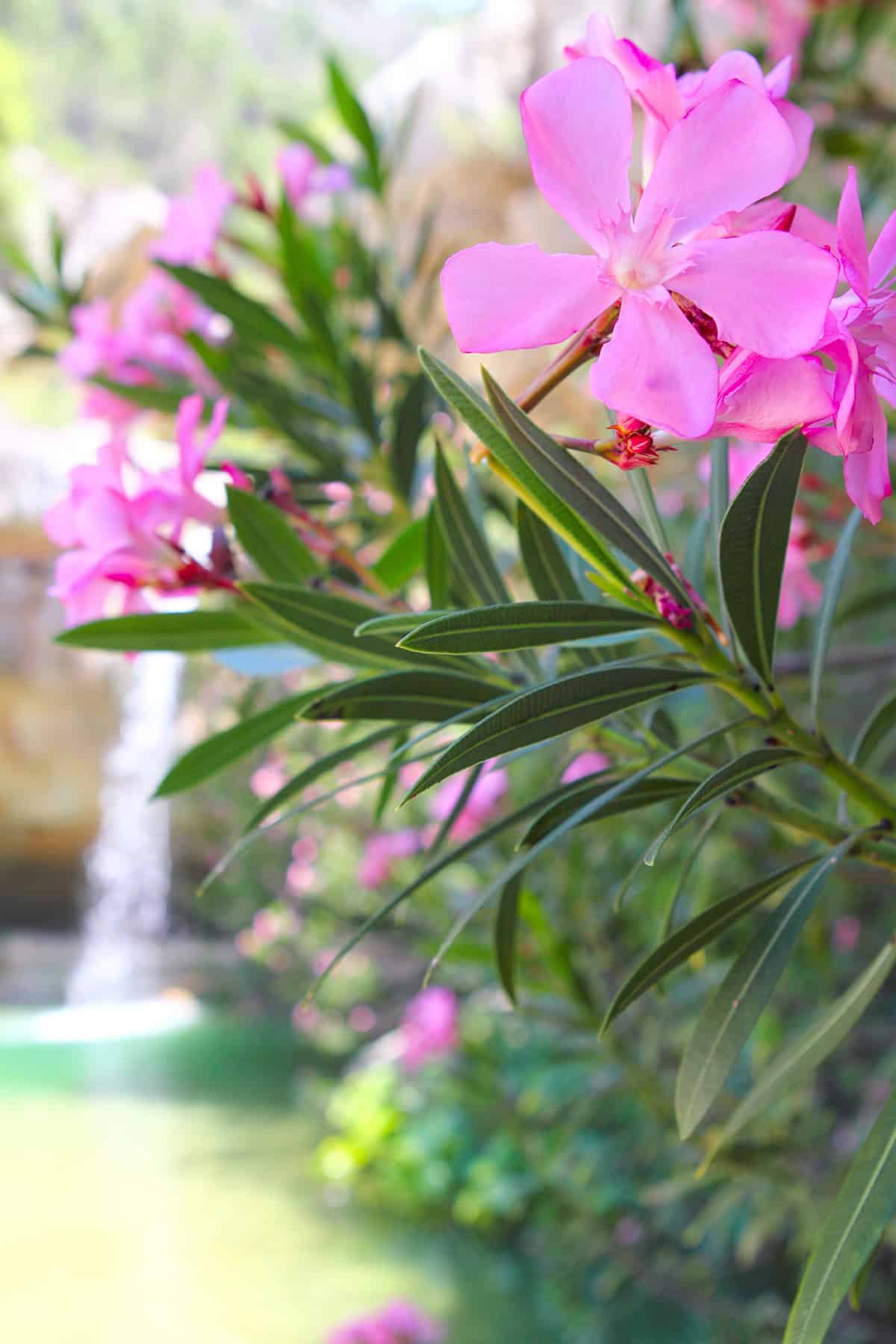
- Botanical name: Nerium oleander
- Family: Apocynaceae
- USDA hardiness zones: 8 – 10
- Mature height: 8 to 12 feet
- Mature spread: 6 to 10 feet
This one’s a speed demon, climbing to 15 or even 20 feet. The long, slender leaves stay green where winters are mild.
Big, bold flowers show up in a range of colors—white, pink, red, even yellow. Worth noting: every part of this plant is toxic.
Needs sun and can handle drought or salty air. Popular for tough, exposed spots.
Carolina Cherry Laurel
- Botanical name: Prunus caroliniana
- Family: Rosaceae
- USDA hardiness zones: 7 – 10
- Mature height: 15 to 35 feet
- Mature spread: 10 to 20 feet
A native option that builds a dense barrier up to 25 feet tall. Leaves are glossy and deep green, holding their color well.
Not fussy about light or soil—sun or shade, moist or dry, it adapts. Spring brings small white flowers.
Trim it for a formal hedge or let it take a more natural shape. Reliable from Zones 7 to 10.
Nellie Stevens Holly
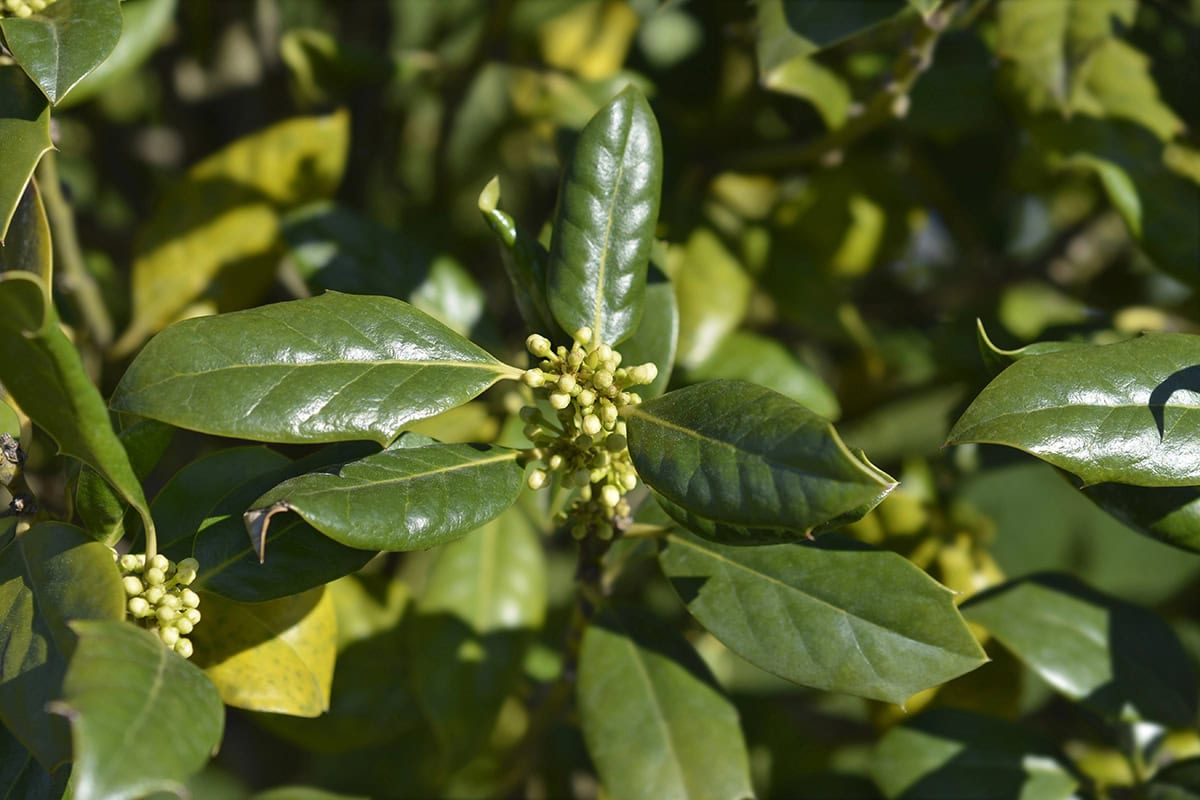
- Botanical name: Ilex × ‘Nellie R. Stevens’
- Family: Aquifoliaceae
- USDA hardiness zones: 6 – 9
- Mature height: 15 to 30 feet
- Mature spread: 8 to 25 feet
This hybrid holly stands tall with a classic pyramidal outline, reaching up to 25 feet. Dark, spiny leaves hold their color through the seasons.
Female plants produce bright red berries even without a partner nearby. Growth rates hover around 1 to 2 feet per year.
Full sun or partial shade both work, and it doesn’t wilt in heat or humidity.
Podocarpus macrophyllus
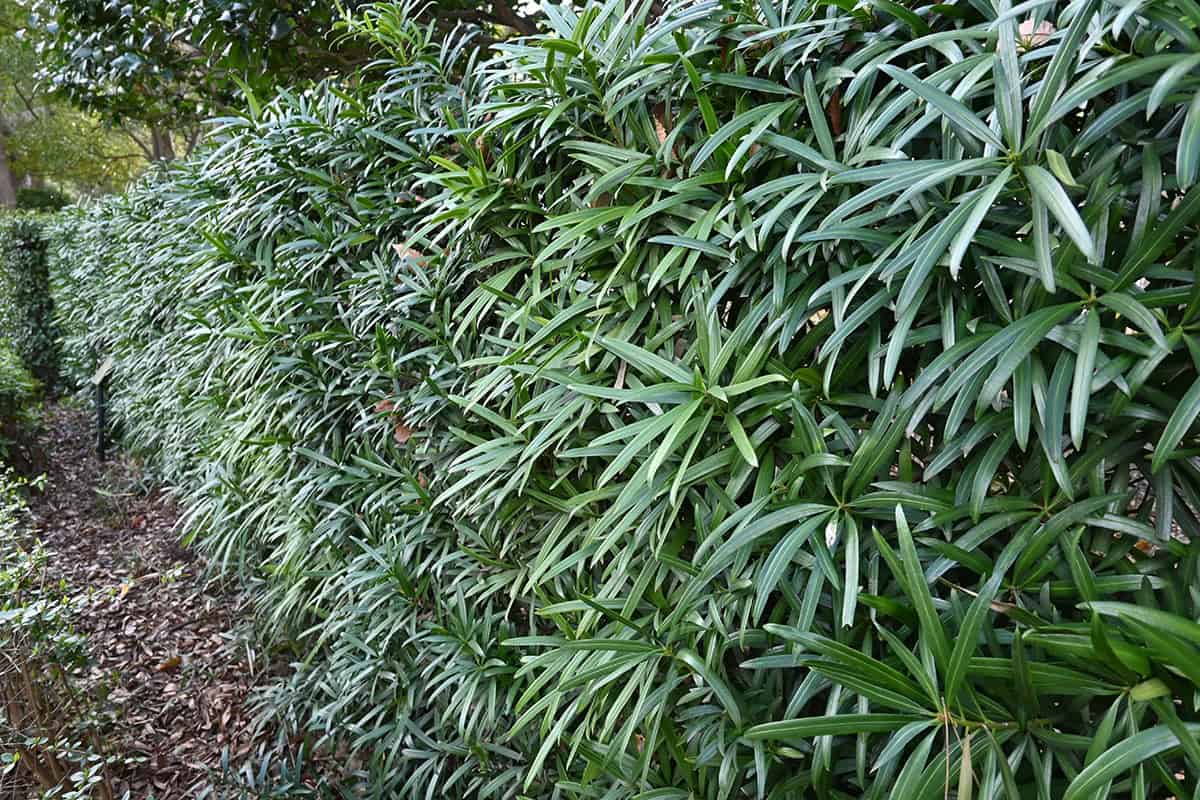
- Botanical name: Podocarpus macrophyllus
- Family: Podocarpaceae
- USDA hardiness zones: 7 – 11
- Mature height: 10 to 20 feet
- Mature spread: 6 to 10 feet
Japanese yew, as it’s often known, grows upright and dense—ideal for tidy screens. Heights of 15 to 20 feet are common.
Narrow, dark green leaves give it a crisp, clean look. Pruning isn’t a problem if you want columns or hedges.
Performs well in Zones 7 through 10.
Leyland Cypress
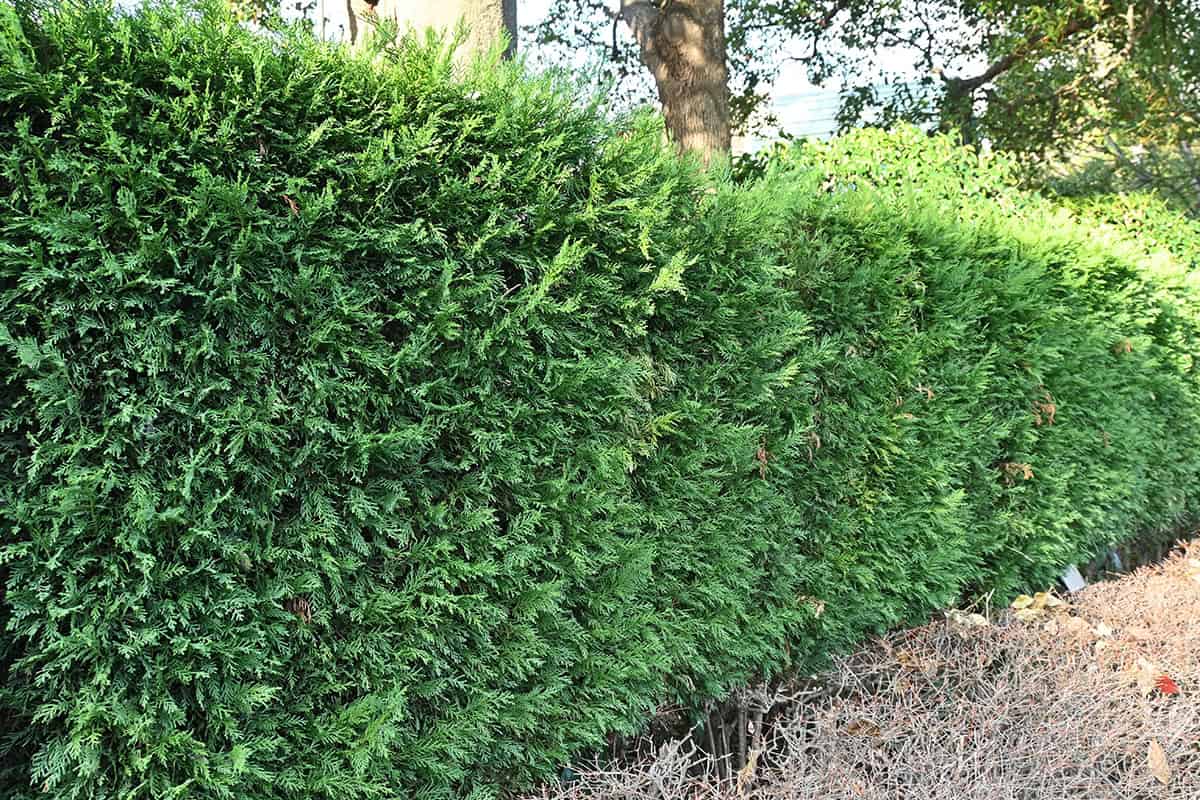
- Botanical name: × Cuprocyparis leylandii
- Family: Cupressaceae
- USDA hardiness zones: 6 – 10
- Mature height: 40 to 60 feet
- Mature spread: 15 to 25 feet
This conifer rockets upward, forming a towering green wall. In the right spot, you might see more than two feet of new growth each year.
Columnar form and dense branches make for serious privacy. Left unchecked, it can soar past 40 feet.
Full sun and decent air movement help keep it healthy. Give each plant room to breathe to avoid disease.
Griselinia littoralis
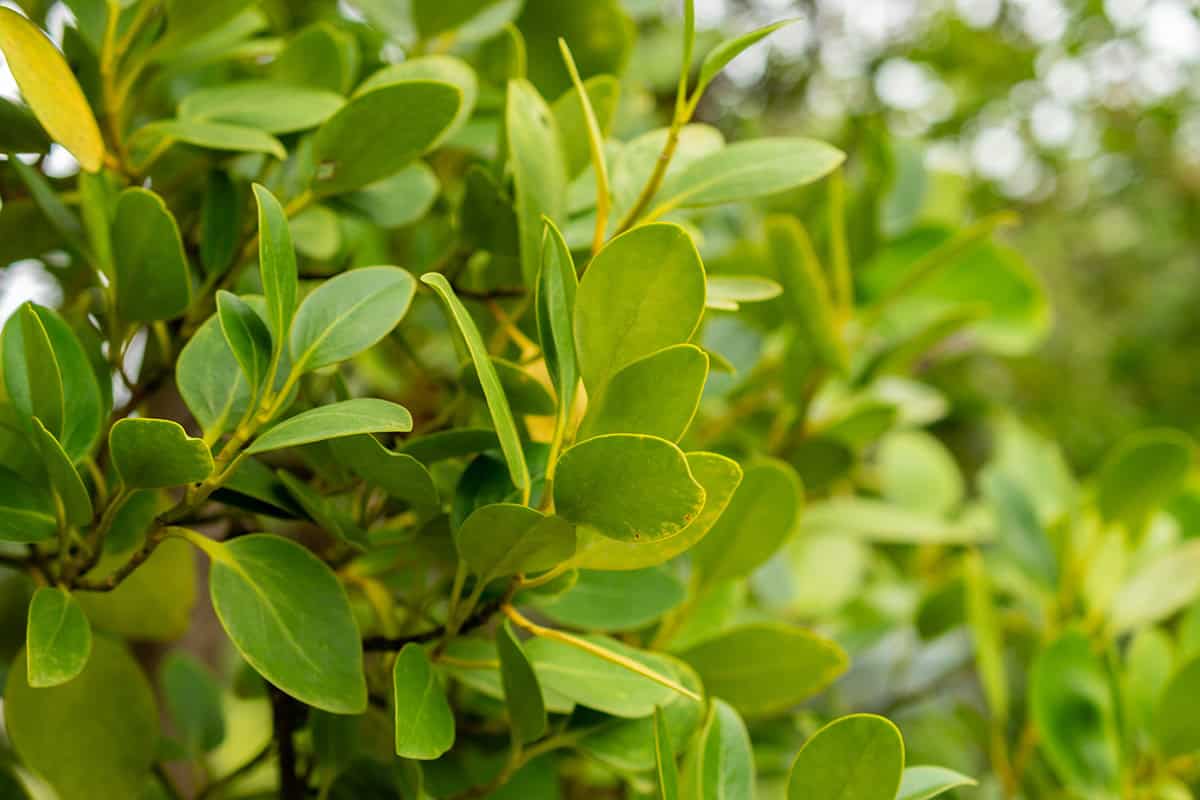
- Botanical name: Griselinia littoralis
- Family: Griseliniaceae
- USDA hardiness zones: 8 – 10
- Mature height: 10 to 20 feet
- Mature spread: 8 to 12 feet
Apple-green leaves brighten up coastal gardens, standing out with a fresh, lively look. Ten to fifteen feet is typical in milder climates.
Likes its soil well-drained and shrugs off salt and wind.
Thick branching fills in for a tight hedge. Best in Zones 8 to 10.
Feijoa sellowiana
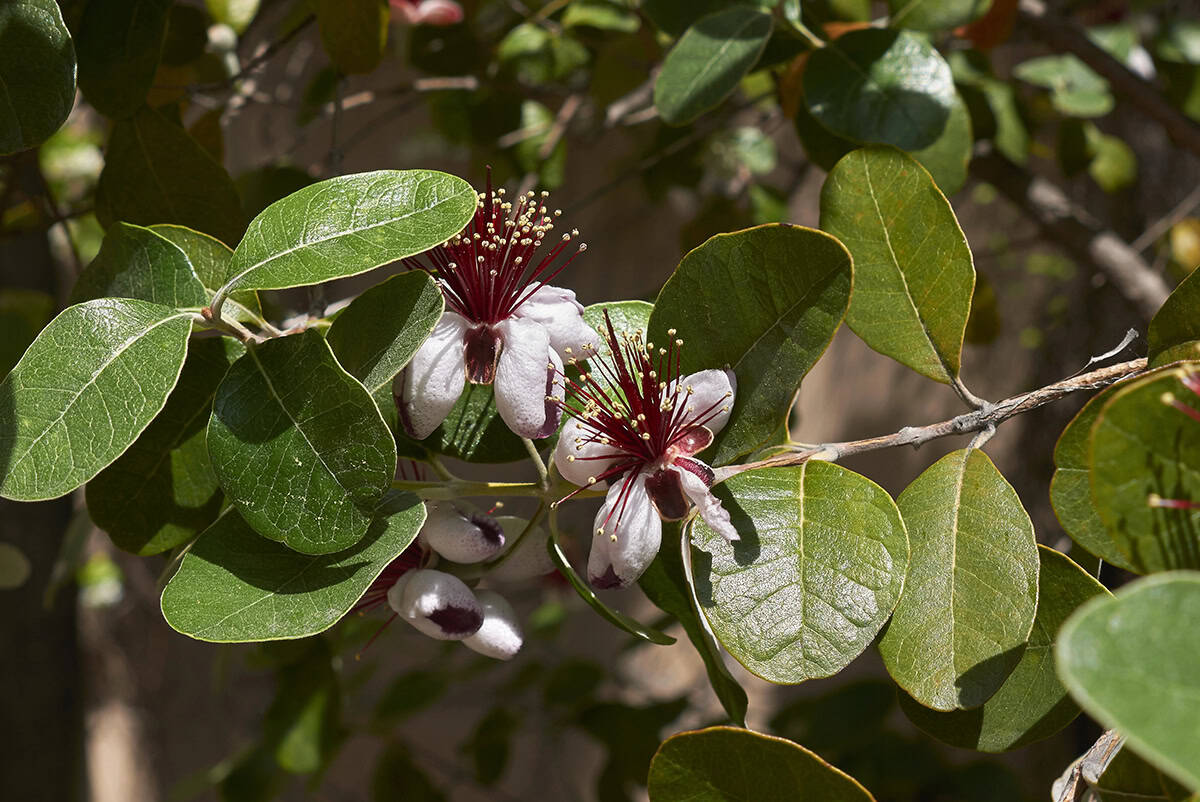
- Botanical name: Feijoa sellowiana
- Family: Myrtaceae
- USDA hardiness zones: 8 – 11
- Mature height: 10 to 15 feet
- Mature spread: 8 to 15 feet
Those thick gray-green leaves stick around all year, giving the shrub a sturdy look—never really bare, even in winter. Heights shoot up to 10 or 15 feet, but it doesn’t feel overwhelming.
Late spring brings a burst of white flowers, pretty showoffs, sometimes leading to edible fruit if the weather’s right and warm.
Full sun and well-drained soil seem to keep it happiest. Once it settles in, you won’t need to fuss much over watering—it’s surprisingly tough.