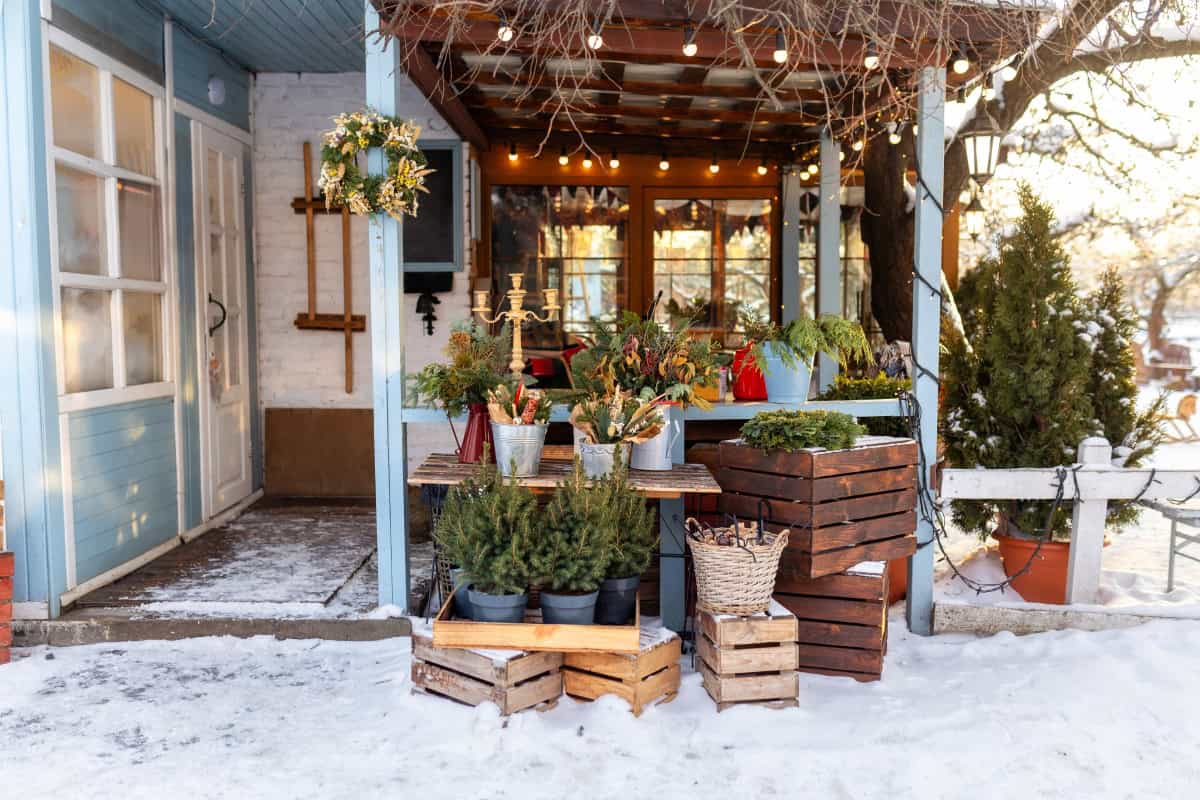
Dwarf spruce, holly and red-twig dogwood rank among the toughest plants for Christmas porch pots, and each one holds its color through freezing weather. Container roots sit above ground, exposed to the same icy air as the branches.
A plant hardy to two USDA zones below your own is the safer pick for any pot left outside all winter. Poinsettias are the exception on this list, a short holiday guest for a covered porch. Scroll through all 26 plants to find the ones that match your winters.
Table of Contents
- Dwarf Alberta Spruce
- Boxwood
- Emerald Green Arborvitae
- Blue Point Juniper
- Blue Star Juniper
- Mugo Pine
- Dwarf White Pine
- Norway Spruce
- Colorado Blue Spruce
- Hinoki Cypress
- False Cypress
- Inkberry Holly
- Winterberry Holly
- American Holly
- Japanese Holly
- Skimmia
- Wintergreen
- Hellebore
- Heuchera
- Ornamental Kale
- Ornamental Cabbage
- Evergreen Sedge
- Red-Twig Dogwood
- Yellow-Twig Dogwood
- Paperwhite Narcissus
- Poinsettia
Dwarf Alberta Spruce
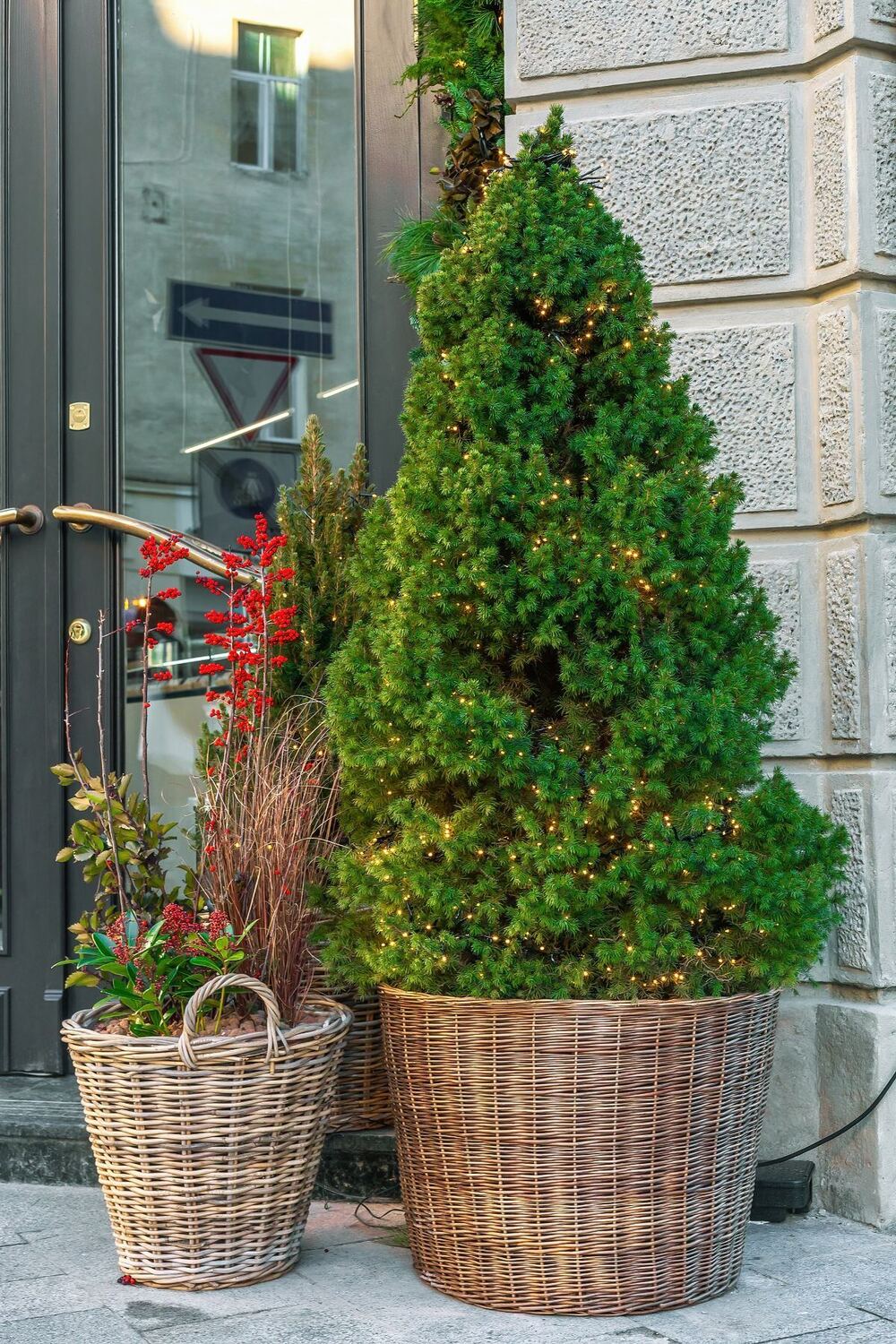
A neat, narrow silhouette gives Dwarf Alberta spruce the proportions of a miniature Christmas tree. Its dense green needles hold ornaments and lightweight outdoor lights without requiring a second plant to fill the center of the pot.
Set the root ball in a container with drainage holes, leaving room around it for seasonal greenery. The slow-growing tree prefers sun and evenly moist soil; a sheltered position helps limit winter windburn. Once the holidays pass, it remains a living specimen rather than a temporary decoration.
Boxwood
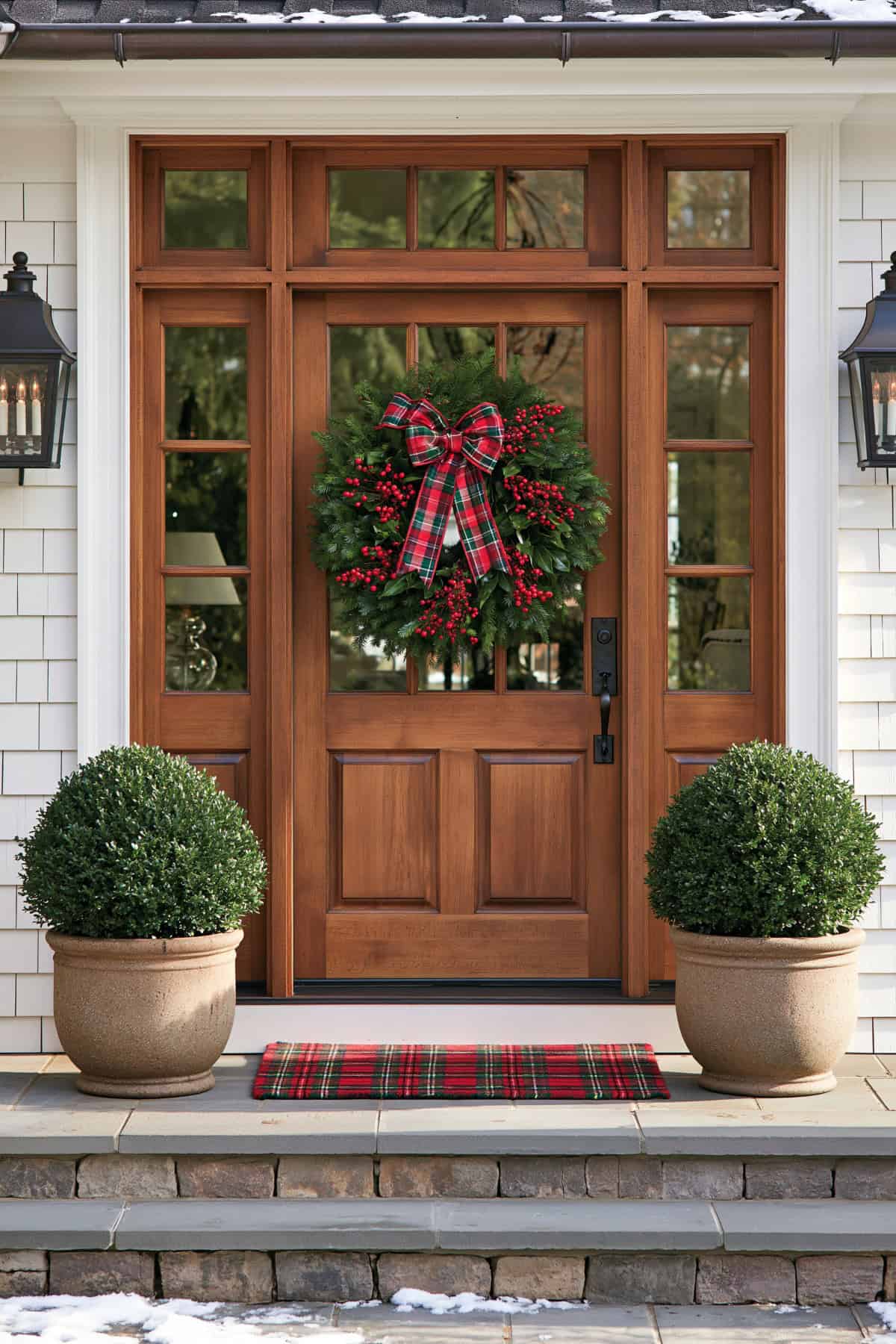
At a front door framed by matching containers, clipped boxwood gives each side a clear, rounded shape. Its small evergreen leaves also support a restrained display: a ribbon or a few berry stems stand out against the dark foliage.
Choose a compact cultivar and a pot large enough to protect its roots. Boxwood needs drainage and protection from drying winter wind, particularly while the soil is frozen. Water thoroughly before a hard freeze if the potting mix is dry.
Emerald Green Arborvitae
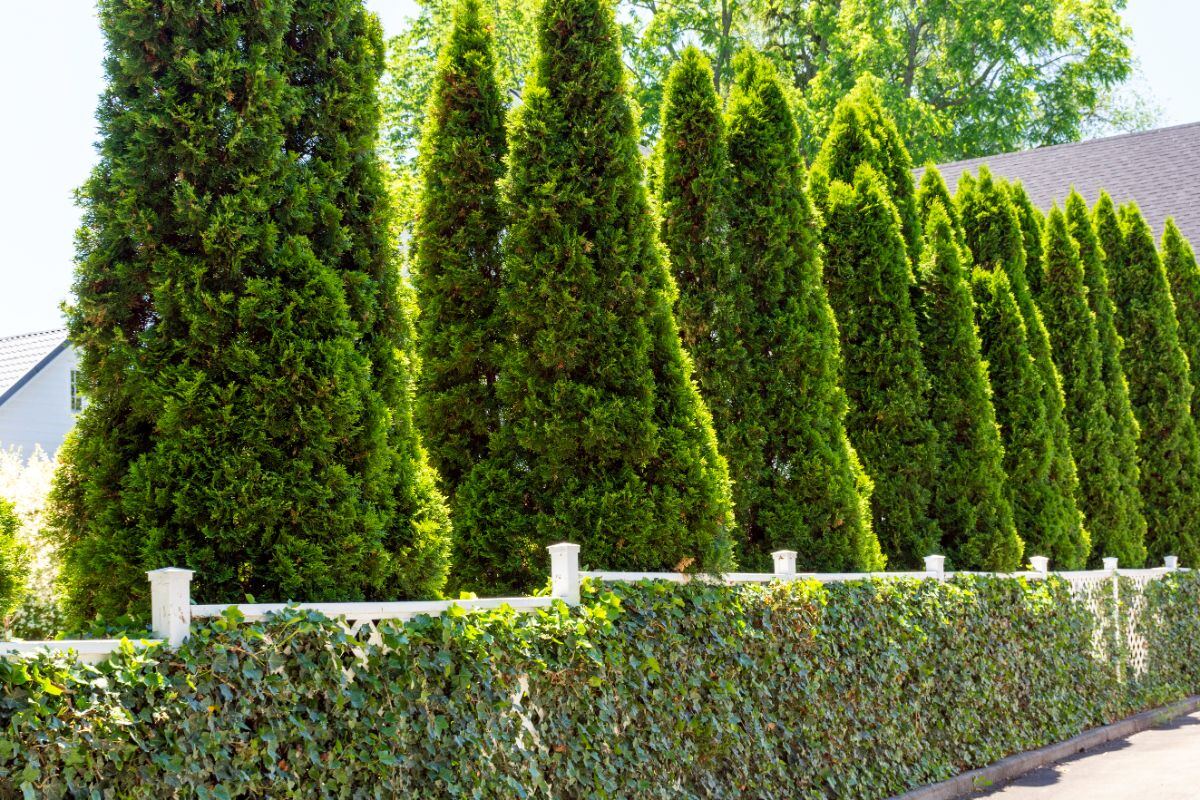
Tall, slim growth fills vertical space beside a doorway without spreading far across the walking area. Emerald Green arborvitae keeps its rich color through much of winter and provides a living backdrop for low plants at the rim.
This arborvitae eventually grows well beyond porch-pot scale, so its container should be treated as a temporary home or sized for future growth. Give it sun to partial shade, steady moisture before the ground freezes, and shelter from harsh wind.
Blue Point Juniper
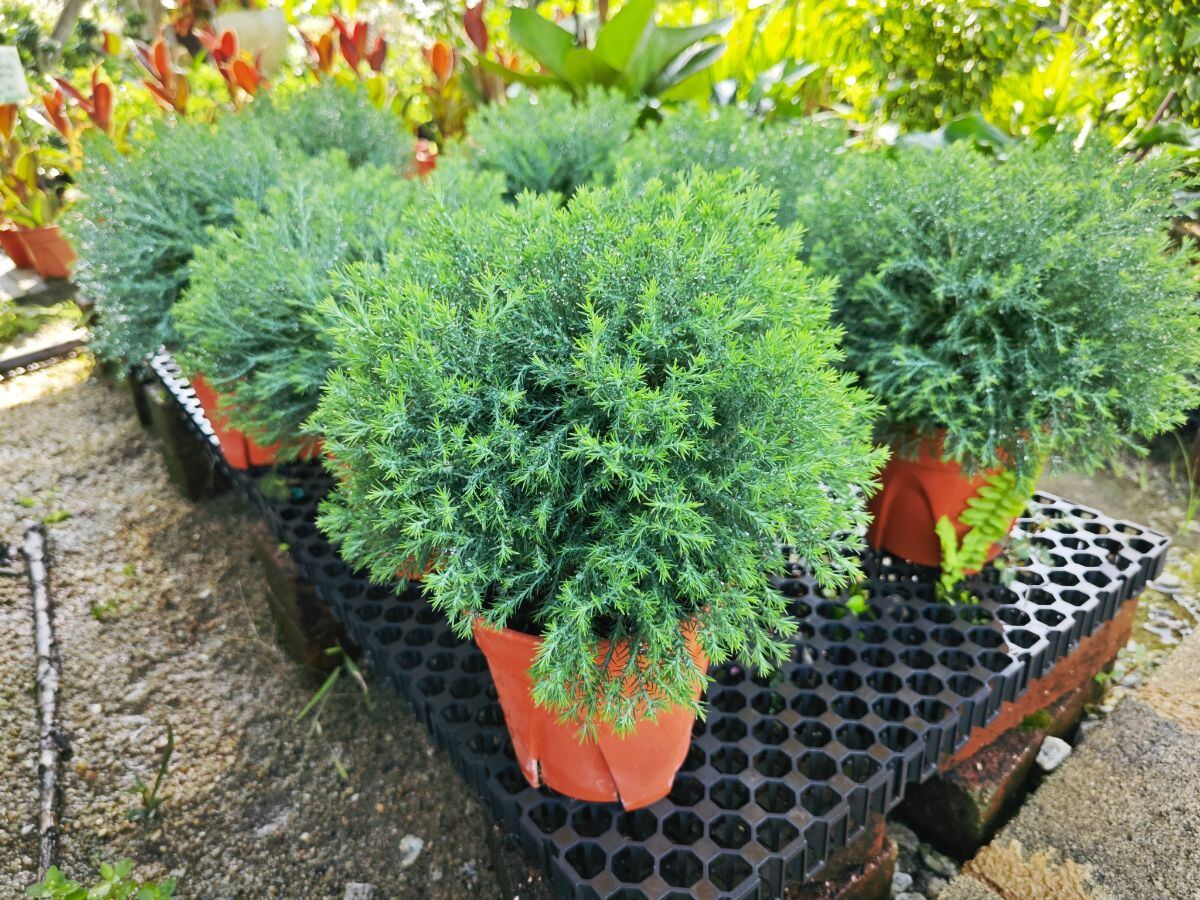
For a porch pot with a crisp, upright outline, Blue Point juniper supplies blue-green needles and a naturally pyramidal form. Its cool color stands apart from red ribbon and warm-toned brick, even at a distance.
Full sun preserves the dense growth, while a freely draining potting mix protects the roots during wet winter weather. The cultivar grows into a substantial shrub, so a young plant fits a large seasonal container best. Leave room for its branches when placing ornaments; juniper foliage is prickly.
Blue Star Juniper
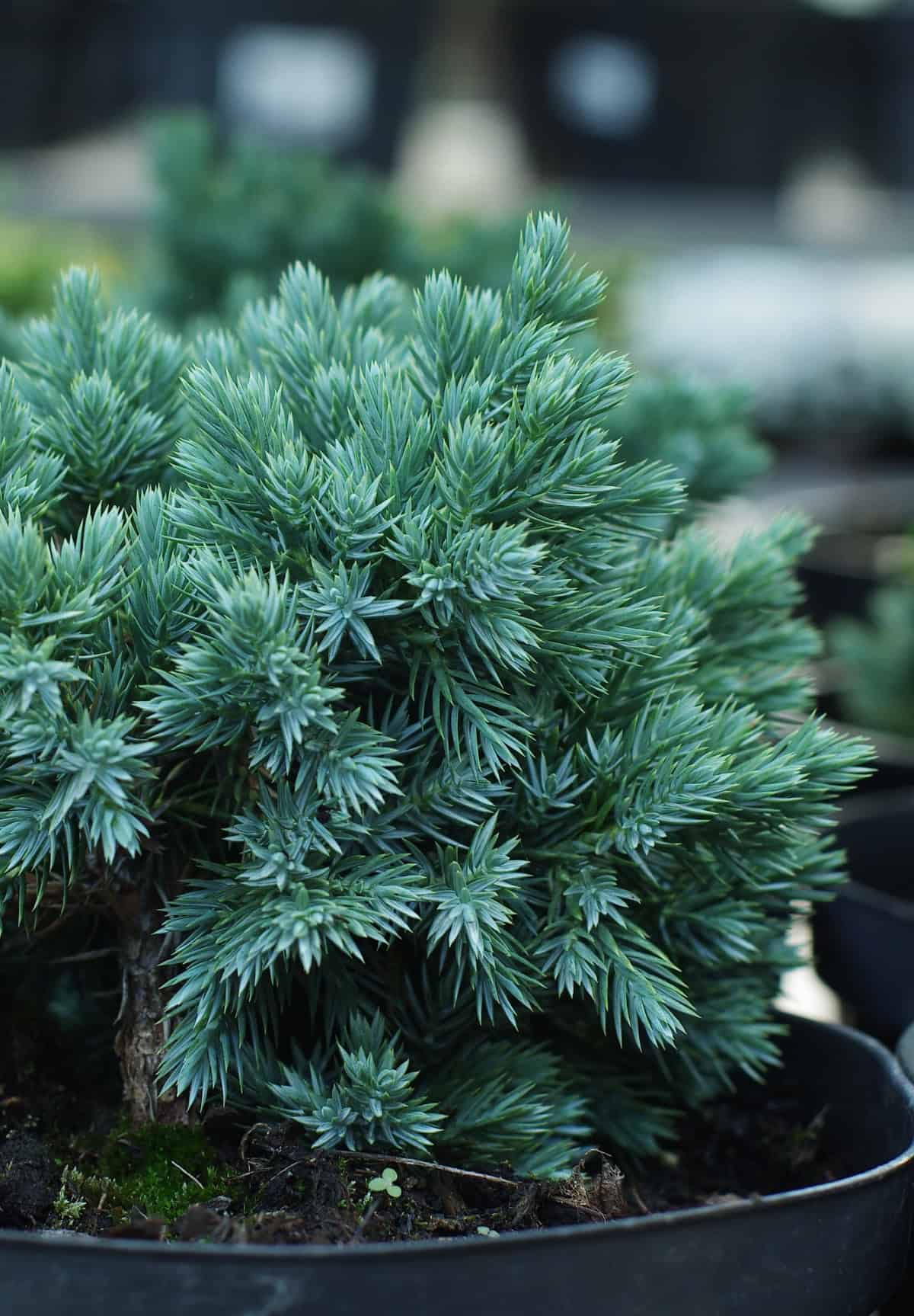
Along the lip of a wide planter, Blue Star juniper forms a low mound of silvery-blue foliage. Its small scale gives a taller evergreen room to rise behind it without hiding the juniper from view.
The plant grows slowly and favors full sun and sharp drainage. Its needles retain a distinct blue cast through the cold months, making it useful when a container already has plenty of traditional green. Position it where its mature width will not crowd neighboring plants.
Mugo Pine
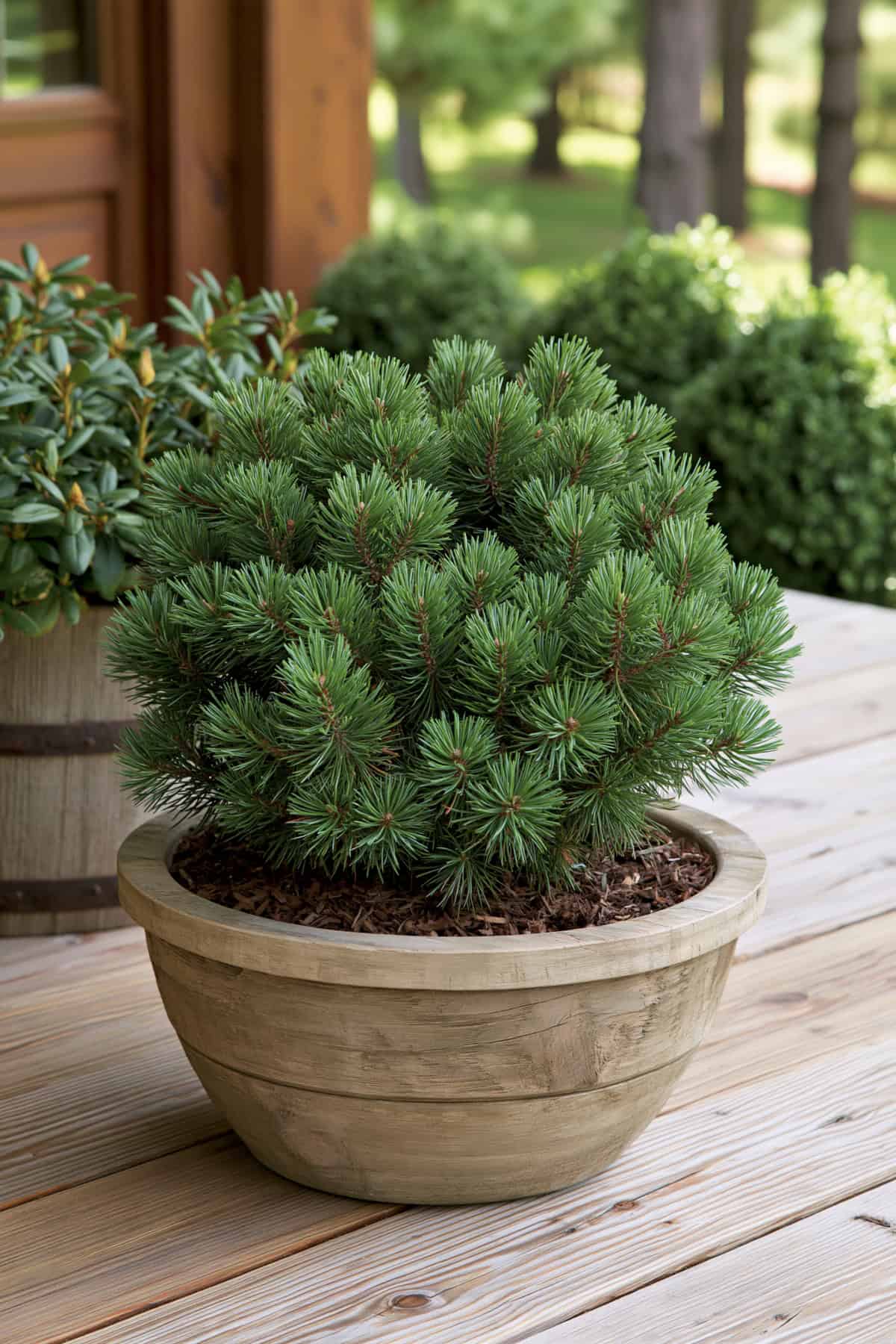
Short, sturdy branches give a dwarf mugo pine a grounded shape in a broad porch pot. The dark needles and squat form pair particularly well with taller bare stems, which rise above the pine without competing for the same space.
Check the cultivar label: mugo pines vary greatly in mature size. A dwarf selection needs full sun and well-drained soil, with enough room for its roots as it grows. Heavy, waterlogged potting mix poses a greater risk than a brief winter dry spell.
Dwarf White Pine
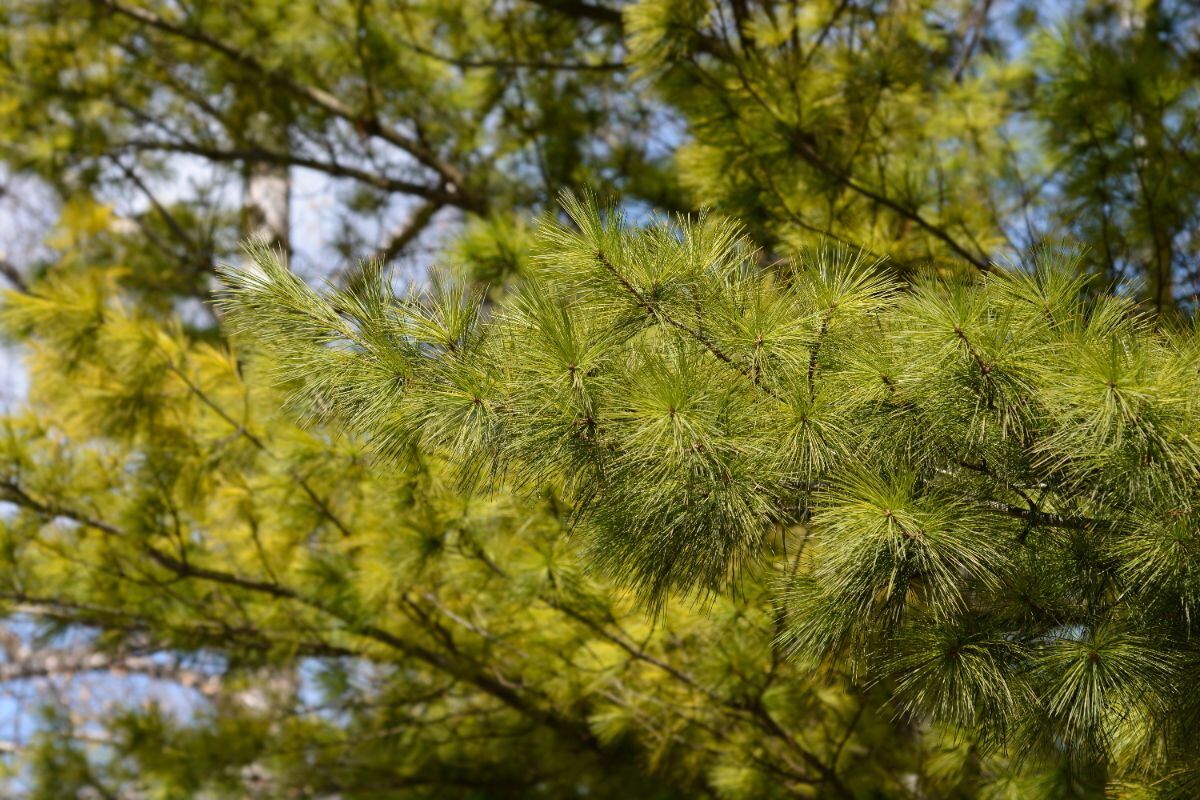
Soft, long needles give dwarf white pine a loose outline compared with tightly clipped evergreens. In a sheltered container, those fine green sprays soften the edge of a porch display without obscuring its central plant.
Choose a named dwarf cultivar, since growth rates and mature shapes differ. White pines favor moist, well-drained soil and protection from drying winds. Their needles are delicate enough that ornaments should hang from sturdier branches elsewhere in the arrangement.
Norway Spruce
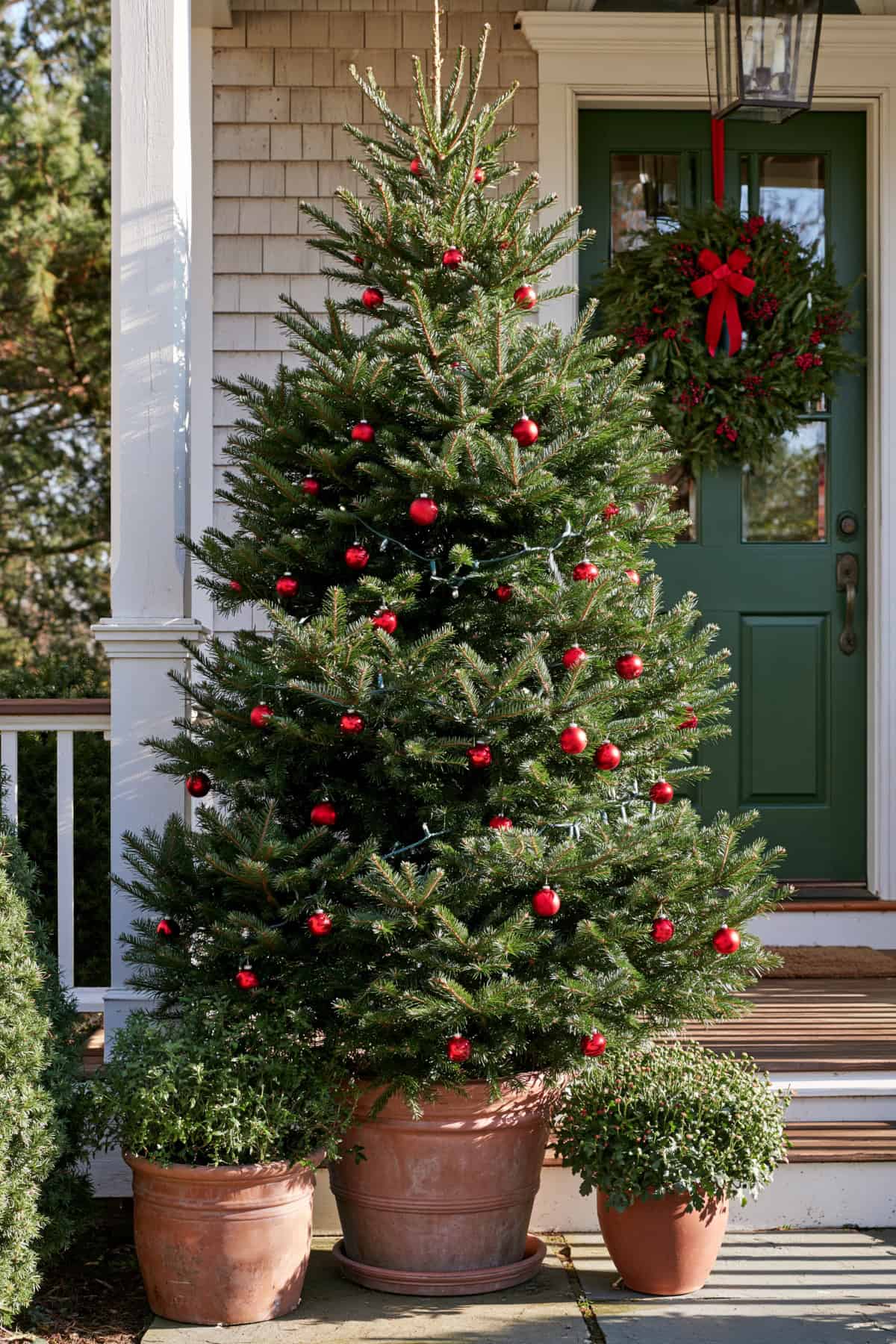
A young Norway spruce gives a roomy container the recognizable profile of a traditional Christmas tree. Its dark green needles and tiered branches leave visible spaces for small ornaments or a strand of outdoor-rated lights.
Full sun and consistent moisture help a living spruce remain healthy through winter. Select a dwarf cultivar for a longer stay in a pot; an ordinary seedling will eventually need open ground. Keep the root ball below the pot’s rim so watering reaches the soil rather than spilling over.
Colorado Blue Spruce
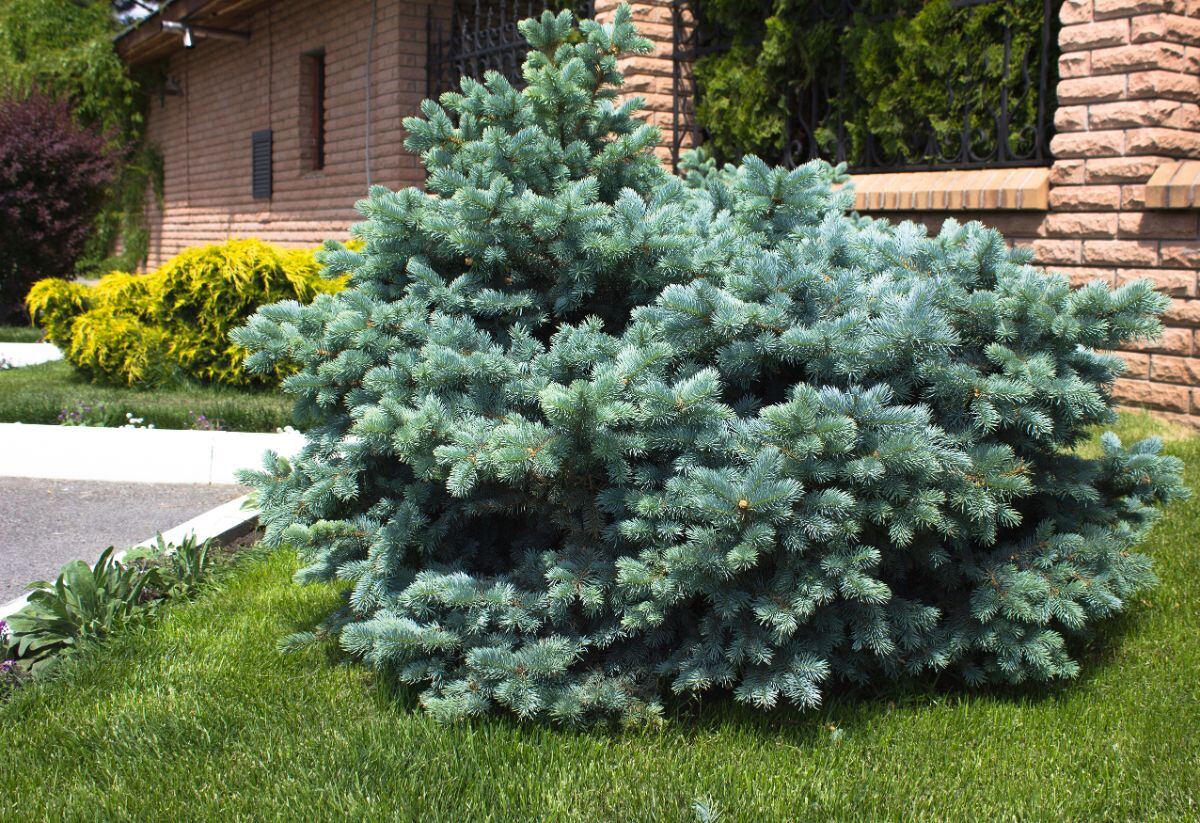
Silver-blue needles provide strong color even on a porch decorated entirely in white and green. A compact Colorado blue spruce also holds a firm, symmetrical outline that stands up visually against snow.
Look for a dwarf selection if the tree will remain in its container beyond one season. It needs full sun, excellent drainage, and room for air to move through its branches. Handle it with gloves when planting or adjusting decorations; the needles are stiff and sharp.
Hinoki Cypress
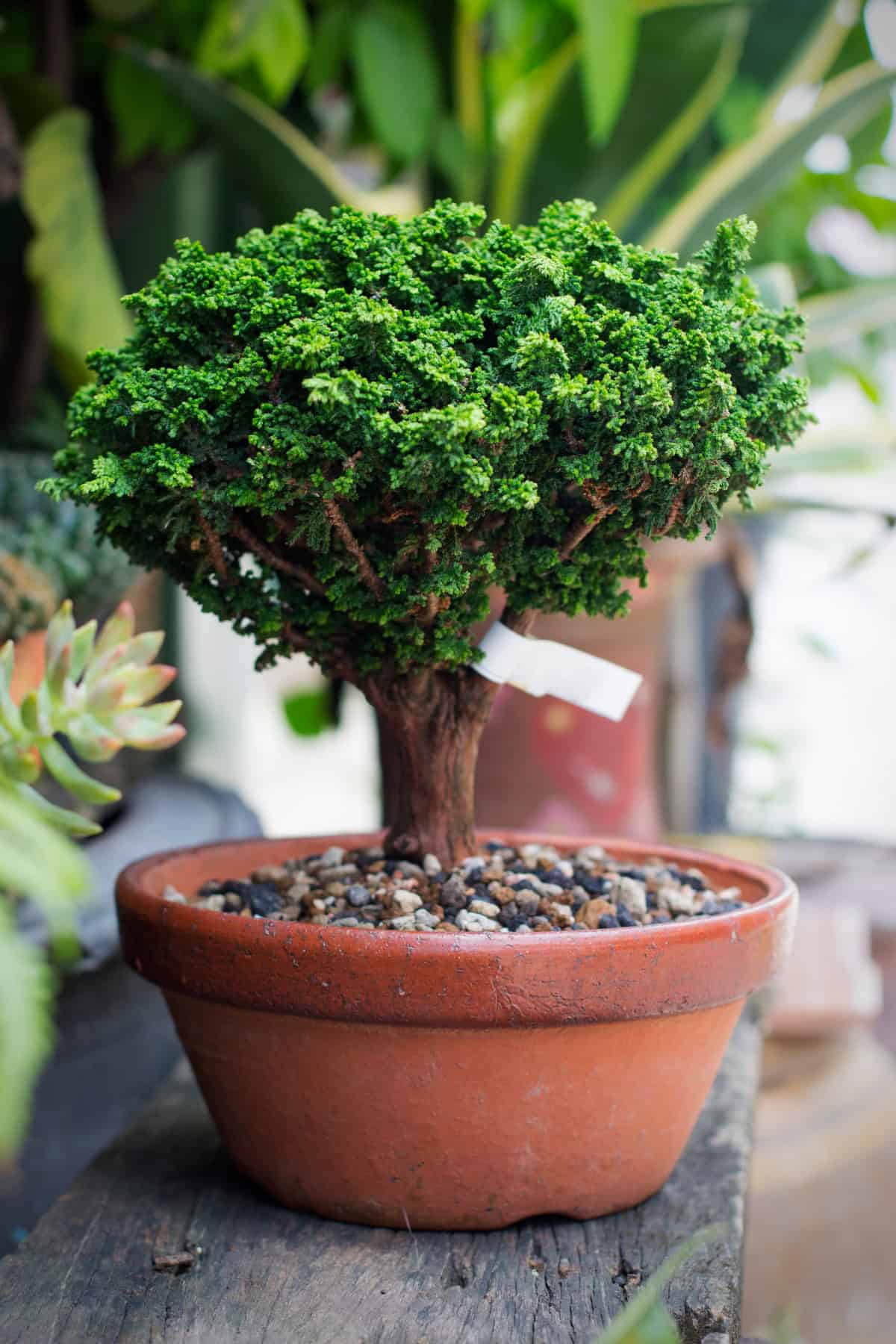
Layered sprays of foliage give a dwarf Hinoki cypress an irregular, sculptural outline. That branching deserves space, particularly in a pot viewed close to the front door.
Cultivars range from compact mounds to narrow upright forms, so the plant tag is essential when choosing one. Hinoki cypress prefers moist, well-drained soil and a position sheltered from severe winter wind. A simple planting at its base leaves the distinctive branches visible.
False Cypress
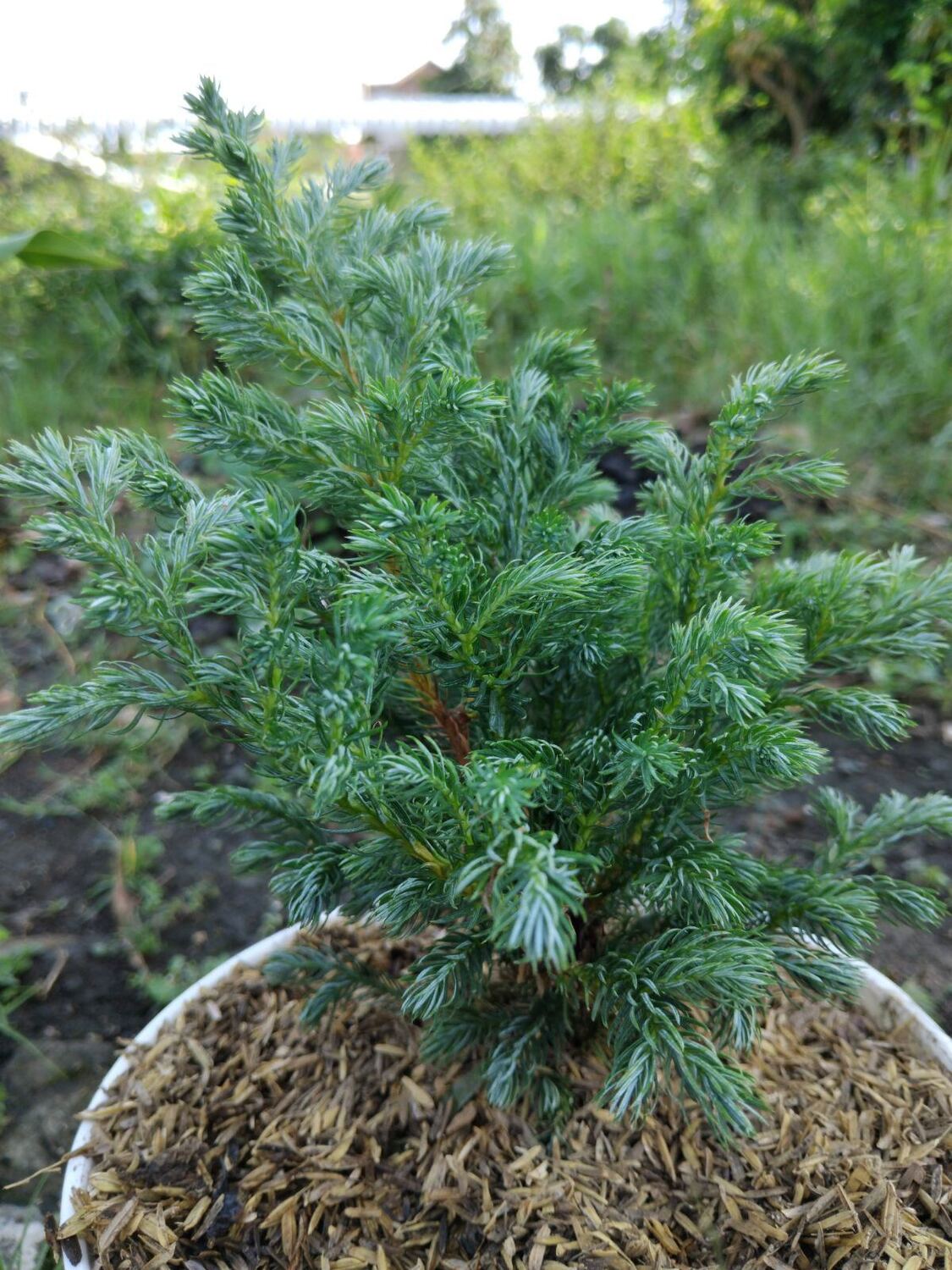
Golden false cypress cultivars brighten a shaded-looking entry even when the sky stays gray. Other selections carry blue-green foliage or fine, threadlike sprays, giving this group several distinct roles in winter containers.
Select a compact cultivar by its listed mature size, then match its light requirements to the porch. Most prefer good drainage and protection from drying wind. Golden foliage shows best where it receives adequate light; a deeply recessed doorway may leave it looking muted.
Inkberry Holly
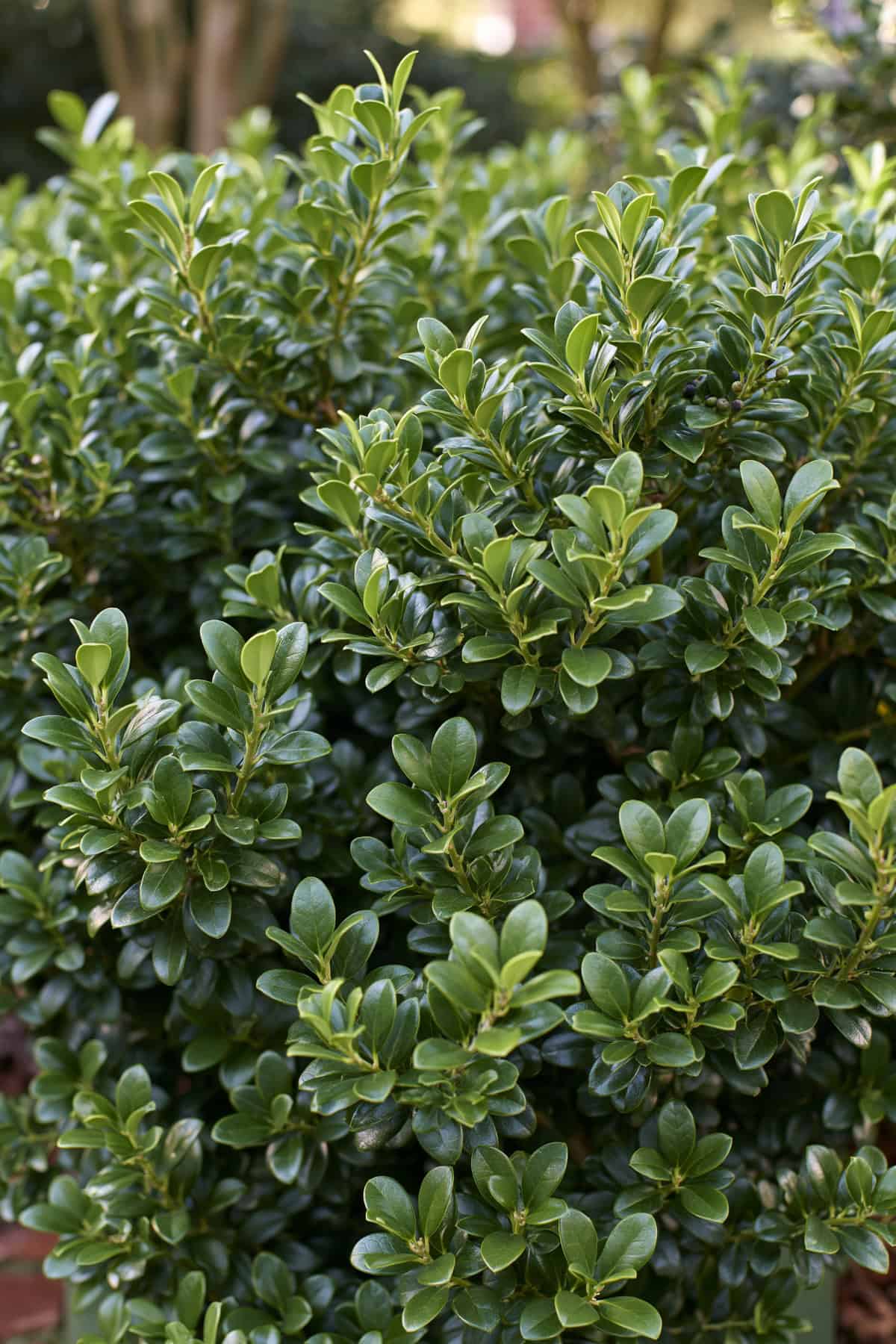
Small, smooth leaves give inkberry holly a tidy evergreen surface without the spines associated with many other hollies. A compact cultivar forms a rounded mass that sits comfortably beneath taller branches in a large pot.
This native shrub prefers acidic soil and steady moisture, though drainage remains essential in a container. Its berries are black and discreet, so the foliage supplies most of the winter display. Check the cultivar’s mature height before placing it near a narrow entrance.
Winterberry Holly
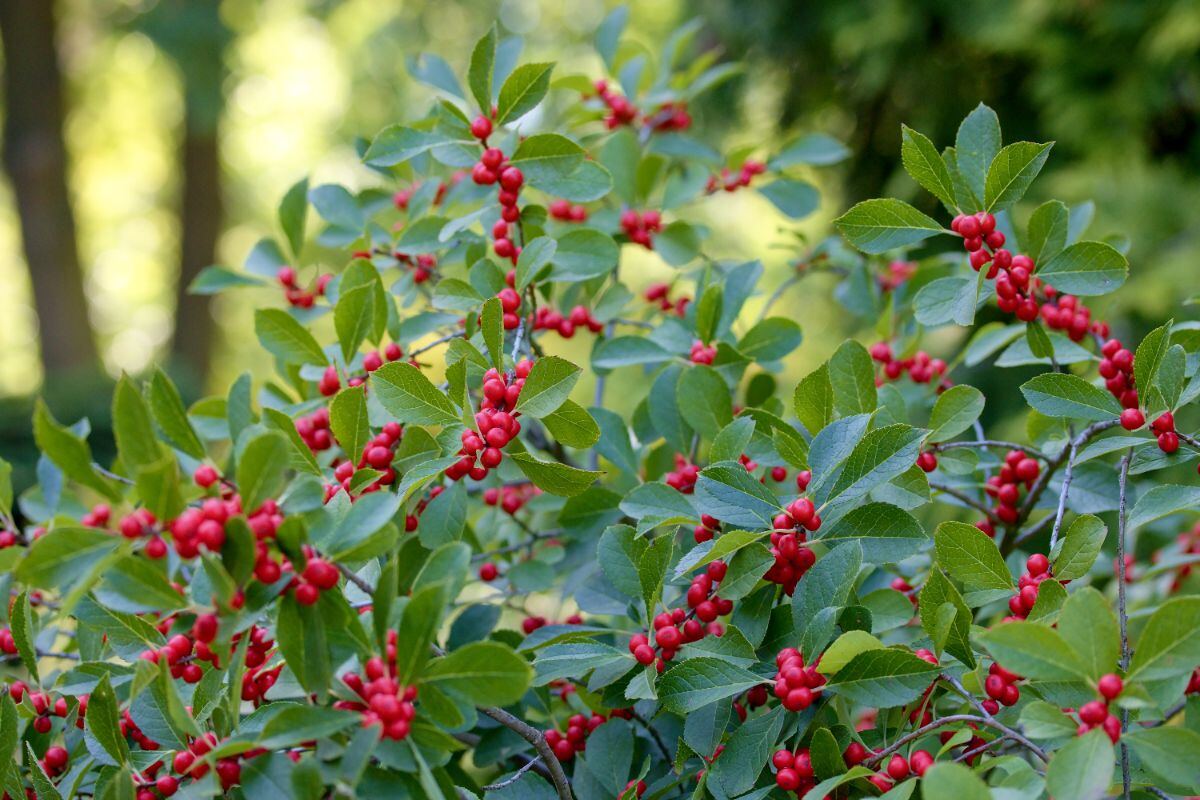
After its leaves drop, winterberry holly displays red berries along bare stems. That exposed color gives a porch container a festive accent without covering the branches in decorations.
Berry production requires a female plant and a compatible male pollinator nearby. For a temporary display, cut berry-laden stems may be inserted into a pot of evergreens; birds may strip them as winter progresses. A living winterberry needs a generously sized container and consistently moist, acidic soil.
American Holly
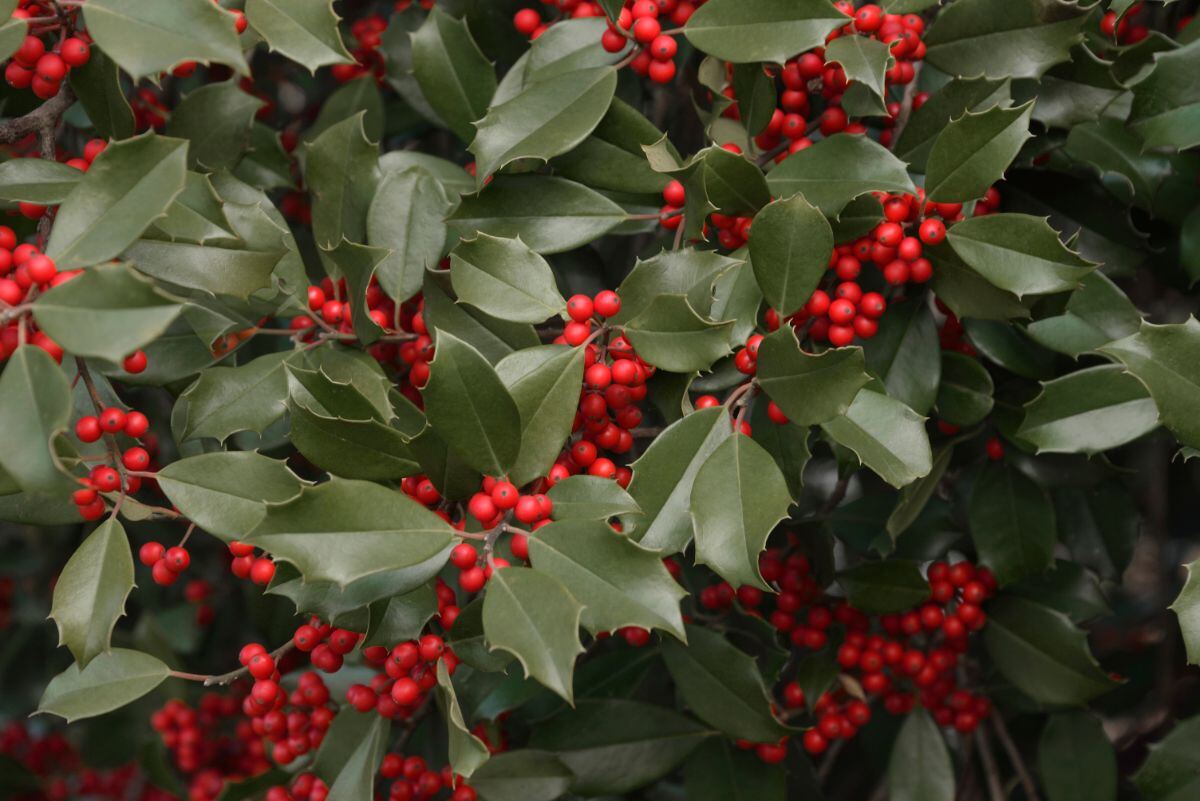
Glossy leaves with pointed edges and bright red berries give American holly its familiar Christmas appearance. A berry-bearing female plant stands out in a spacious porch pot, particularly against pale siding.
American holly grows into a tree, so a young specimen needs a plan for planting out or moving into a larger container. Berries require pollination from a male holly of the same species. Give the plant well-drained, acidic soil and shelter from cold, drying wind.
Japanese Holly
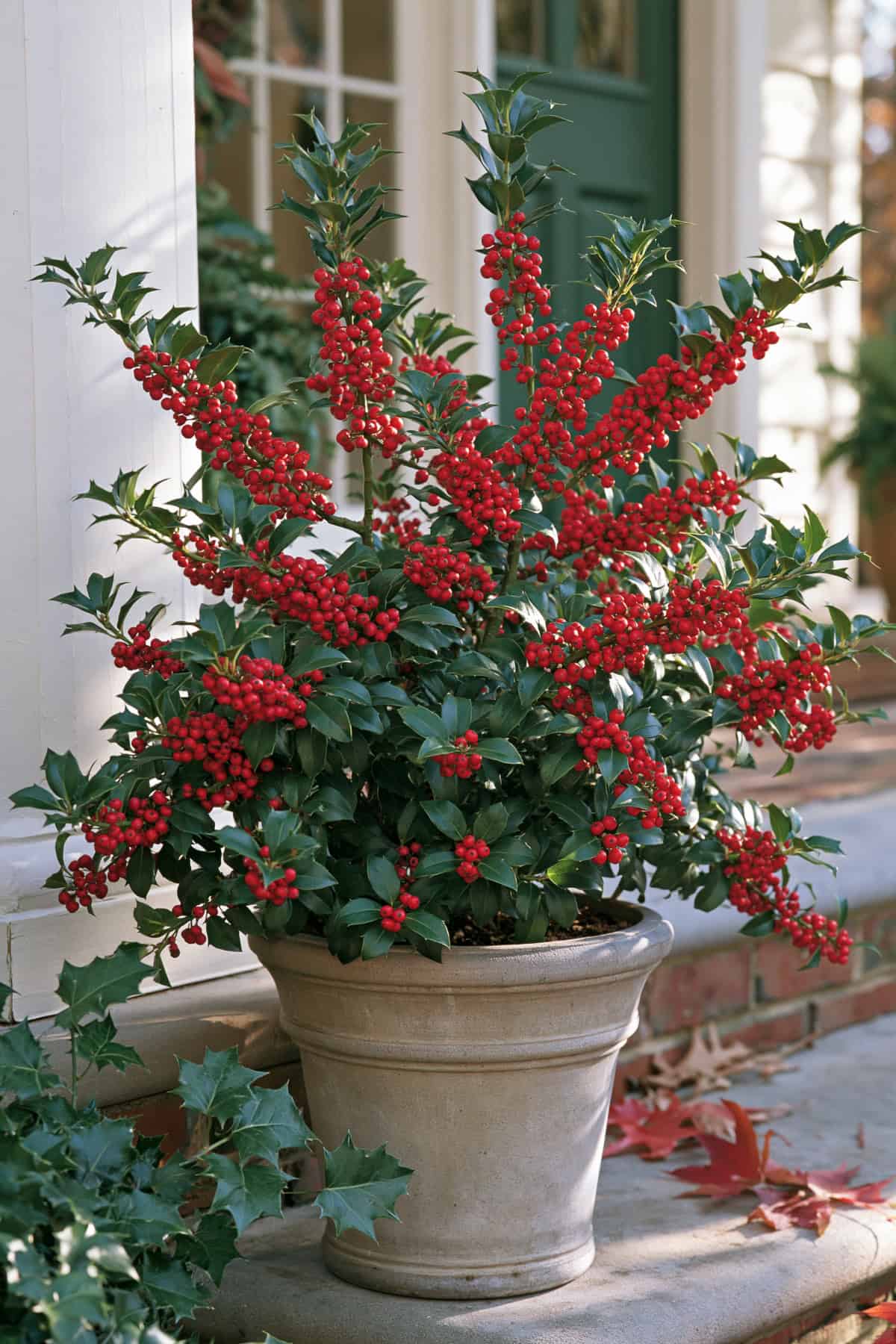
Where a low, clipped shape is needed, Japanese holly provides tiny leaves and a dense branching habit. Its foliage resembles boxwood at a glance, while its compact cultivars fit the smaller pots commonly placed on porch steps.
Japanese holly prefers acidic, well-drained soil and dislikes prolonged waterlogging. Check local cold-hardiness ratings carefully: exposed roots face harsher conditions than roots planted in the ground. A sheltered porch and an insulated container improve its prospects through freezing weather.
Skimmia
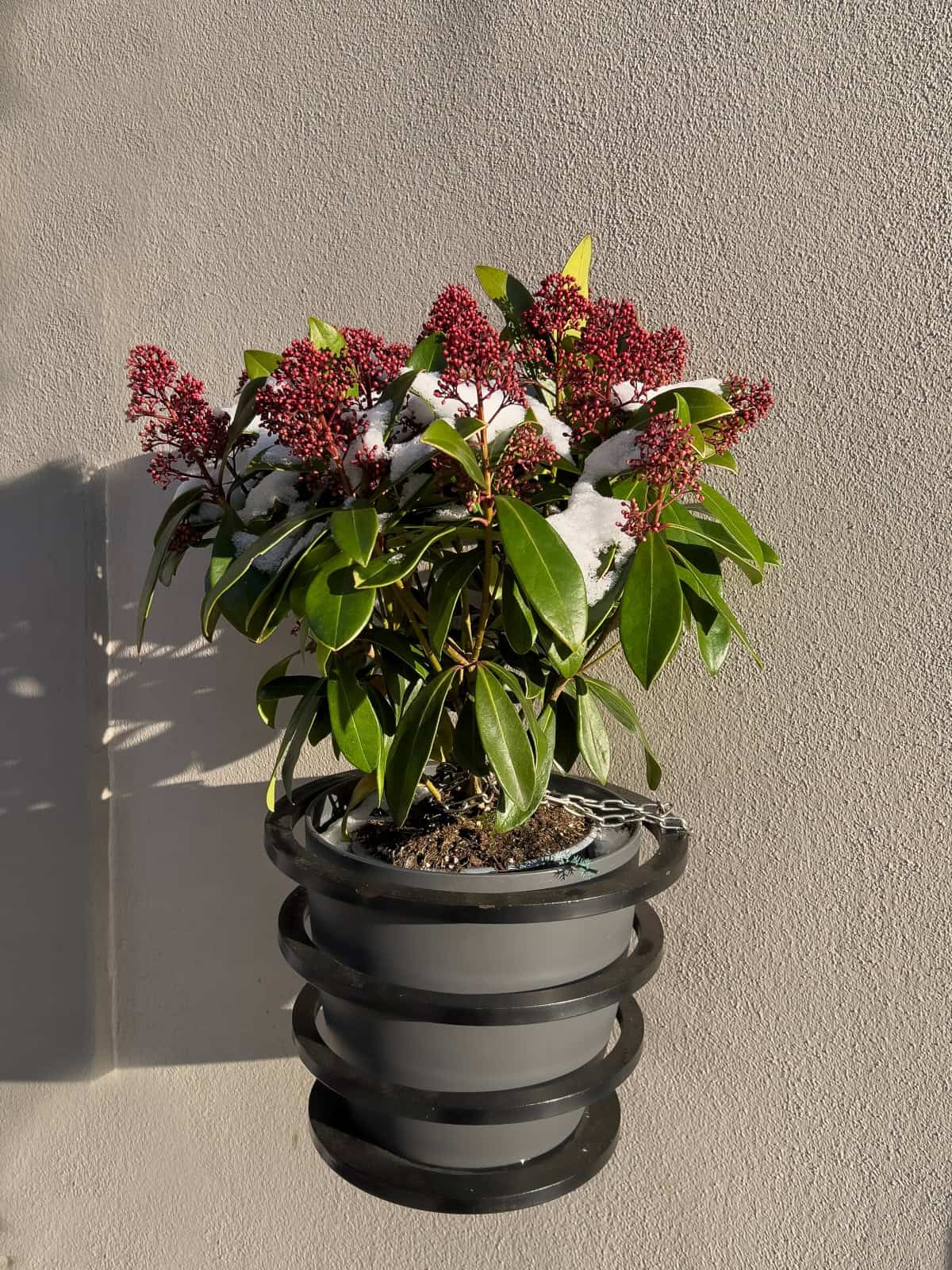
Clusters of red flower buds sit above glossy green leaves on male Japanese skimmia through winter. Their color is subtle from the street and striking beside the door, where the buds are seen up close.
Skimmia prefers shade or gentle morning light, acidic soil, and protection from bitter wind. It is best reserved for milder winter regions or a porch where the container receives adequate cold protection. Female plants produce red berries when a suitable male plant provides pollen.
Wintergreen
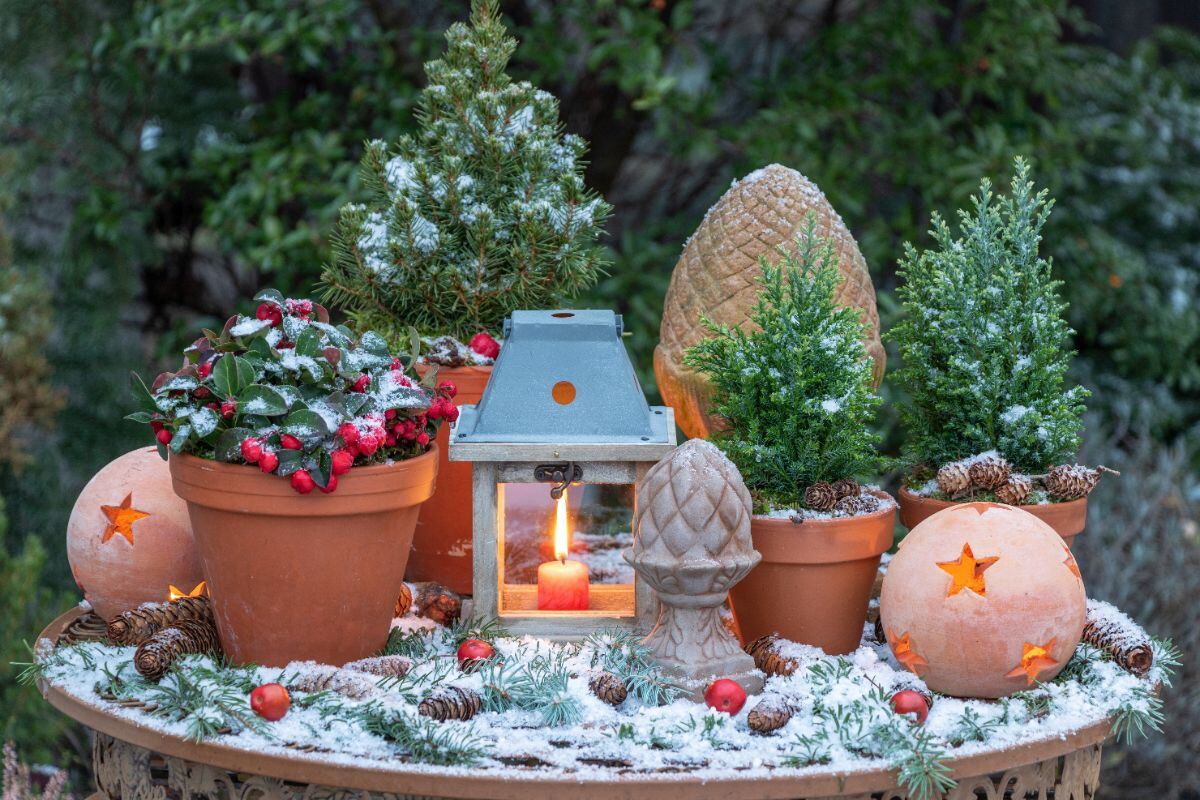
Close to the pot’s rim, wintergreen forms a low carpet of glossy leaves dotted with red berries. It gives a taller evergreen a finished base while keeping the berries near eye level on a raised step.
Wintergreen prefers acidic, evenly moist soil and partial shade. Its shallow roots make dry container soil a particular concern during winter thaws. Red foliage tones may develop in cold weather, adding another layer of color beneath the berries.
Hellebore
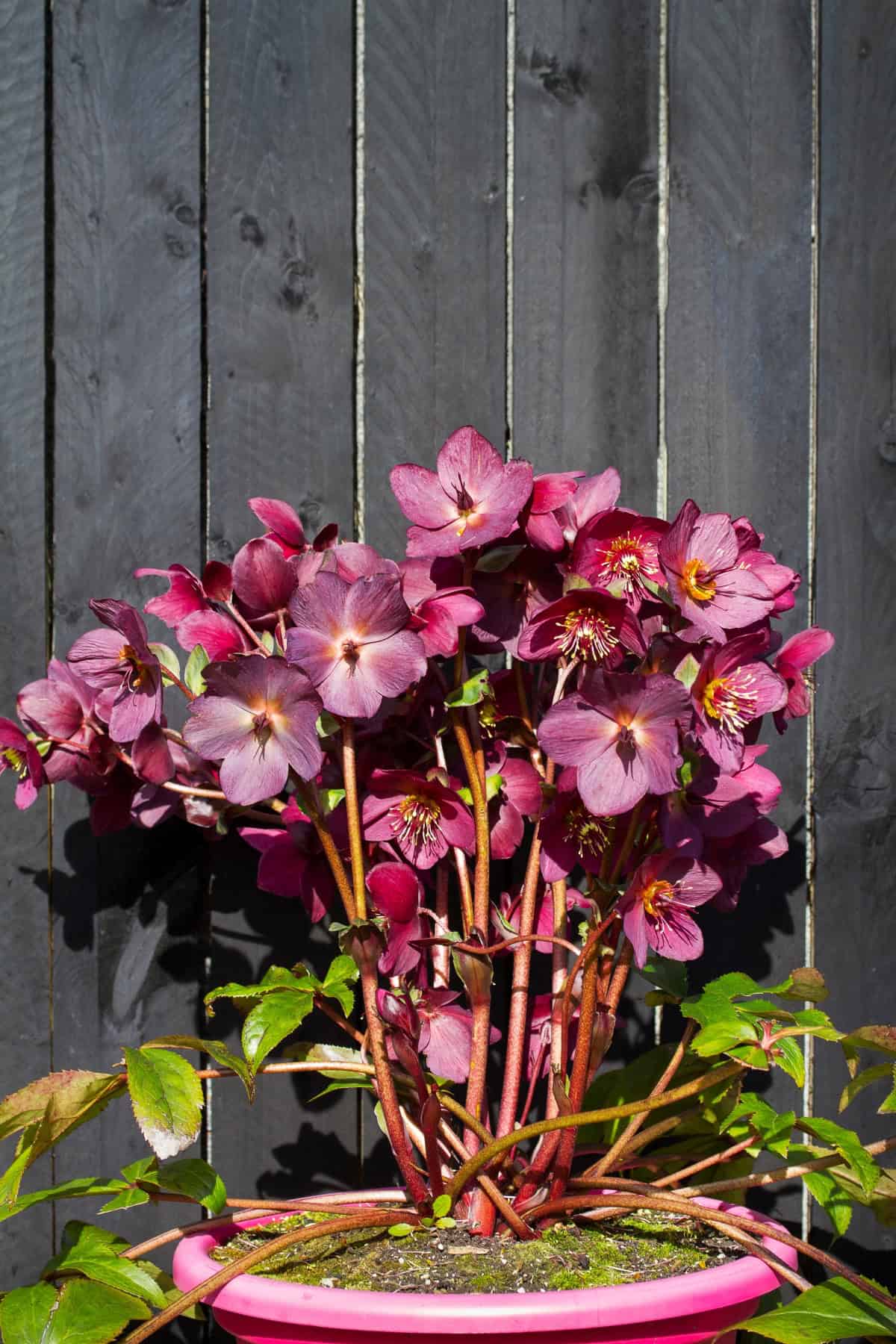
Winter flowers are possible outdoors where the climate and cultivar align. Hellebores hold nodding blooms above leathery foliage, with shades ranging from white and blush to deep burgundy.
Place the pot where visitors see the flowers from slightly below or beside the plant; their faces tend to tilt downward. Hellebores prefer partial shade, good drainage, and a container deep enough for their roots. Bloom timing varies by species and region, so plants already in bud provide the clearest holiday display.
Heuchera
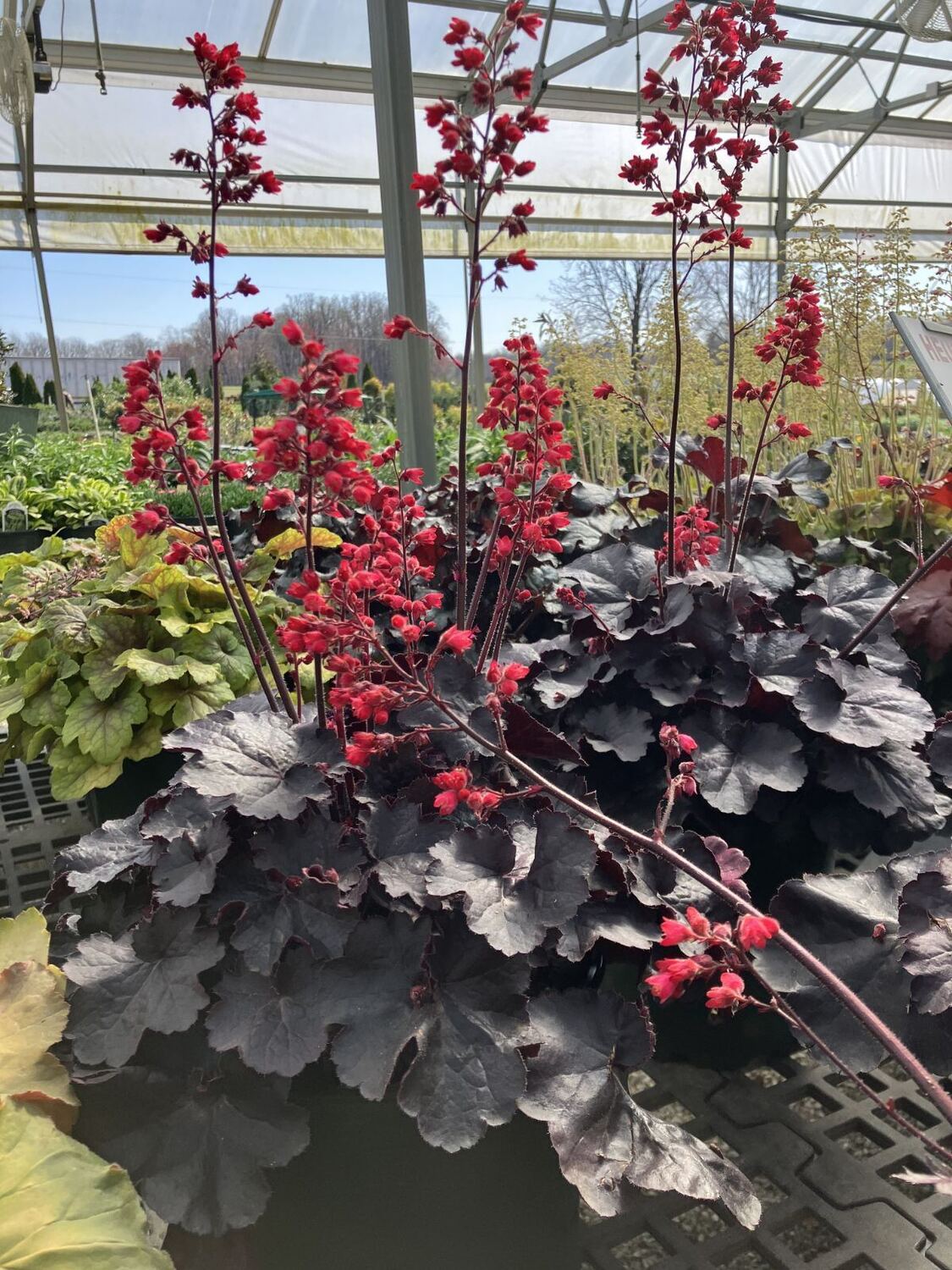
Foliage color carries heuchera through the season: burgundy, copper, lime, and nearly black cultivars all contrast with evergreen branches. Its low clumps fill gaps near the front of a mixed container.
Cold tolerance varies by cultivar, and leaves may look tired after repeated freezes. Keep the crown above soggy soil, remove damaged leaves as needed, and give the pot drainage. A sheltered position helps preserve the foliage that makes heuchera valuable in the first place.
Ornamental Kale
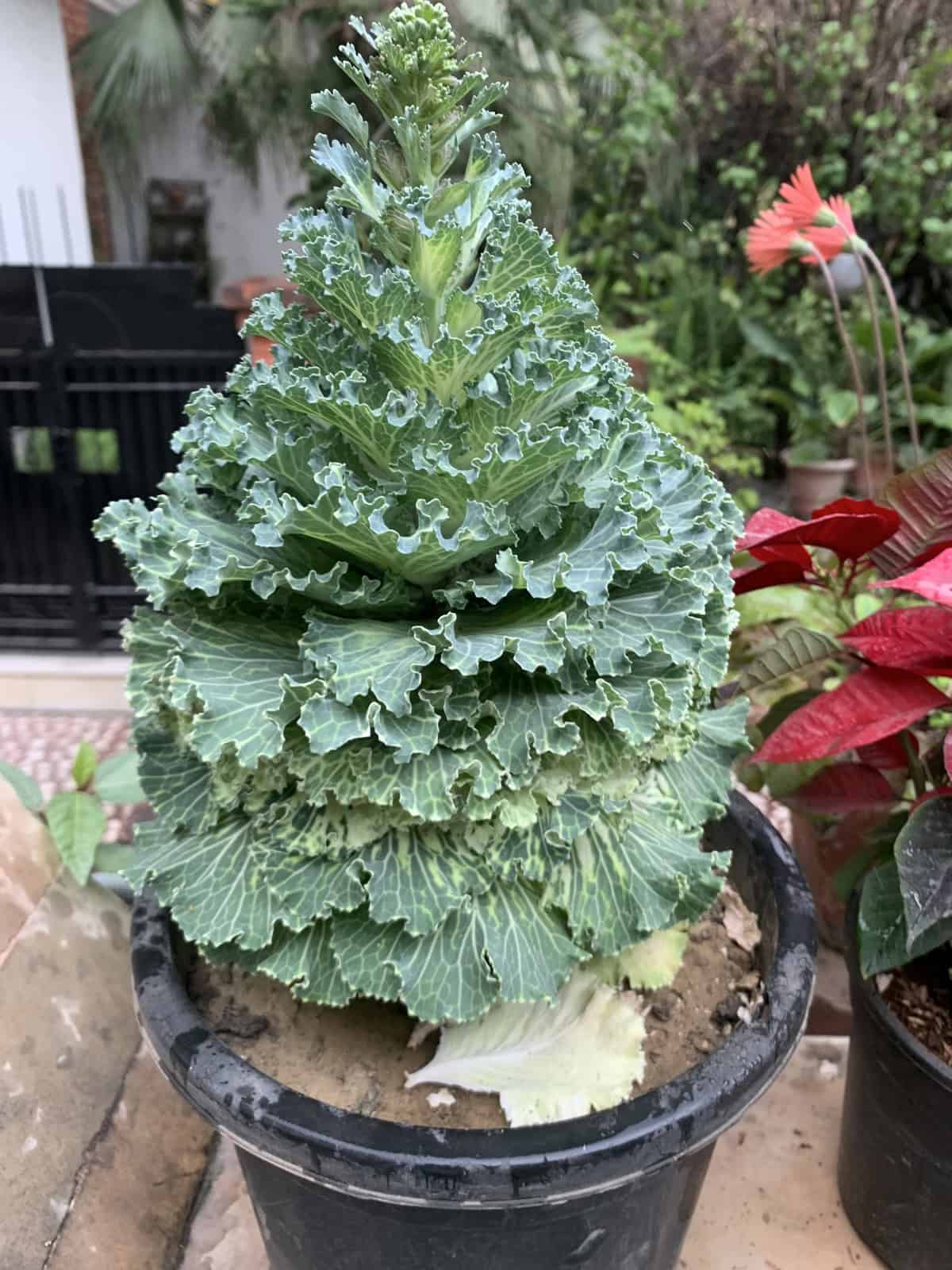
Frilled leaves turn a planting into a broad rosette of green, purple, cream, or pink. Cool weather deepens the central color, so ornamental kale reaches its strongest display as many flowering plants fade.
It needs sun, drainage, and enough space for its leaves to spread. Cold temperatures are welcome, though a prolonged hard freeze may damage the foliage in an exposed pot. Set the crown level with the soil surface and remove yellowing outer leaves to keep the rosette clear.
Ornamental Cabbage
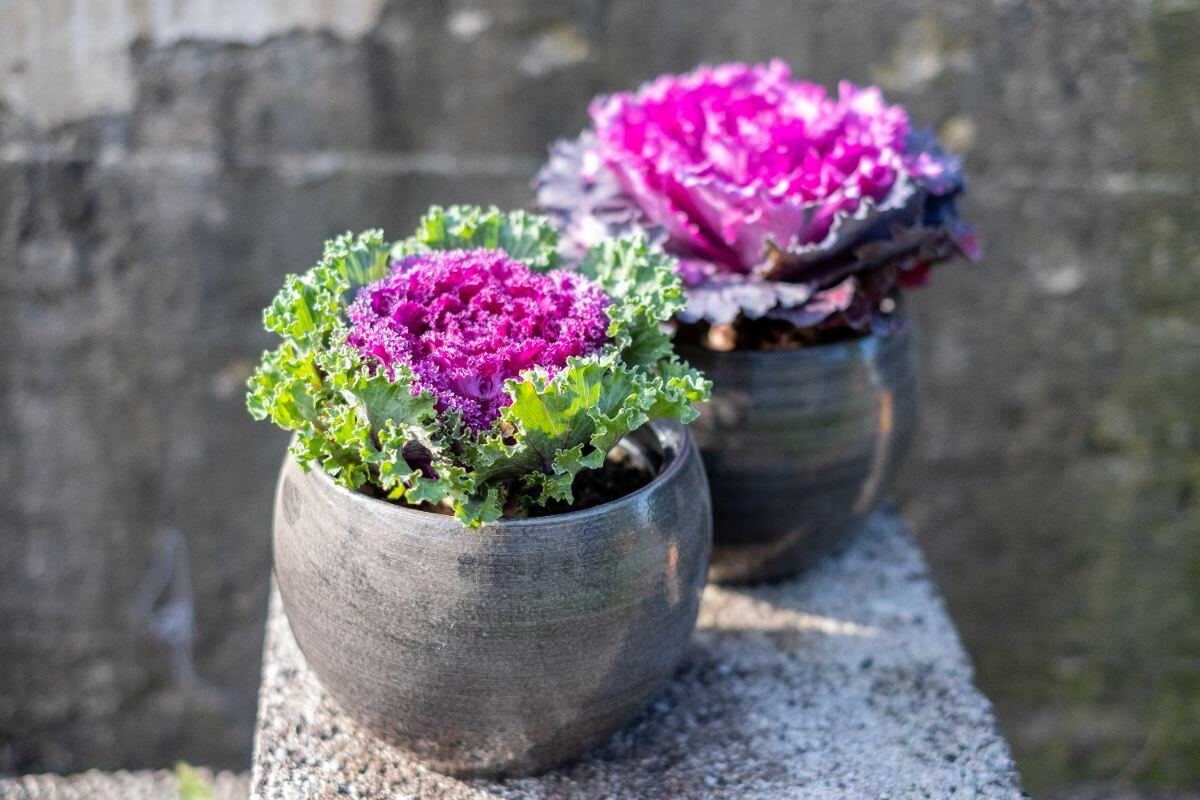
A smooth, rounded rosette gives ornamental cabbage a compact shape at the base of a tall conifer. Its closely layered leaves create a bold circle of color that reads clearly from the sidewalk.
Choose plants with firm centers and healthy outer leaves. Full sun and cool temperatures support strong coloration, while persistently wet soil invites decline. Like ornamental kale, cabbage is a seasonal planting in regions with sustained deep freezes; its display lasts longest when the container drains freely.
Evergreen Sedge
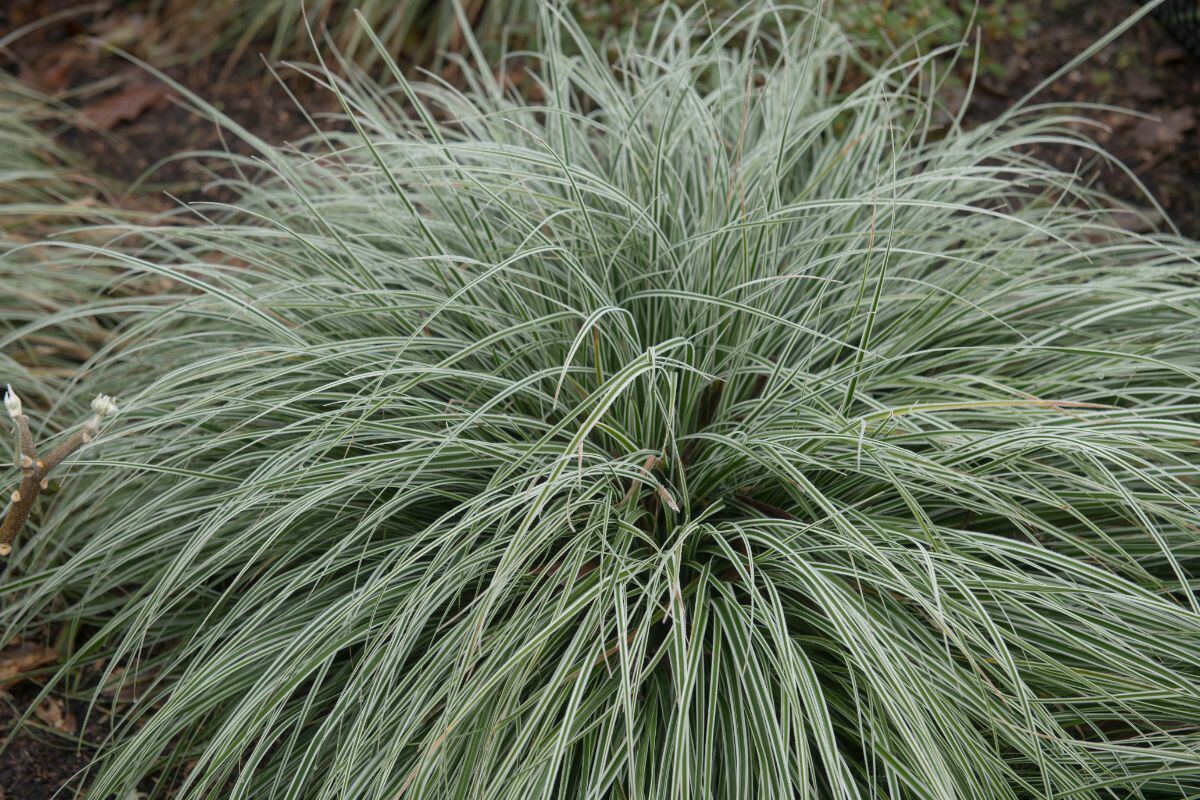
Narrow, arching leaves spill over a pot’s edge without covering the plant at its center. Evergreen sedges such as compact Carex cultivars give winter containers movement and a softer outline than clipped shrubs alone.
Check the specific cultivar for cold hardiness and light needs, since sedges vary. Many appreciate evenly moist soil, though standing water in a freezing pot remains a problem. Trim browned leaf tips in late winter while leaving healthy foliage in place.
Red-Twig Dogwood
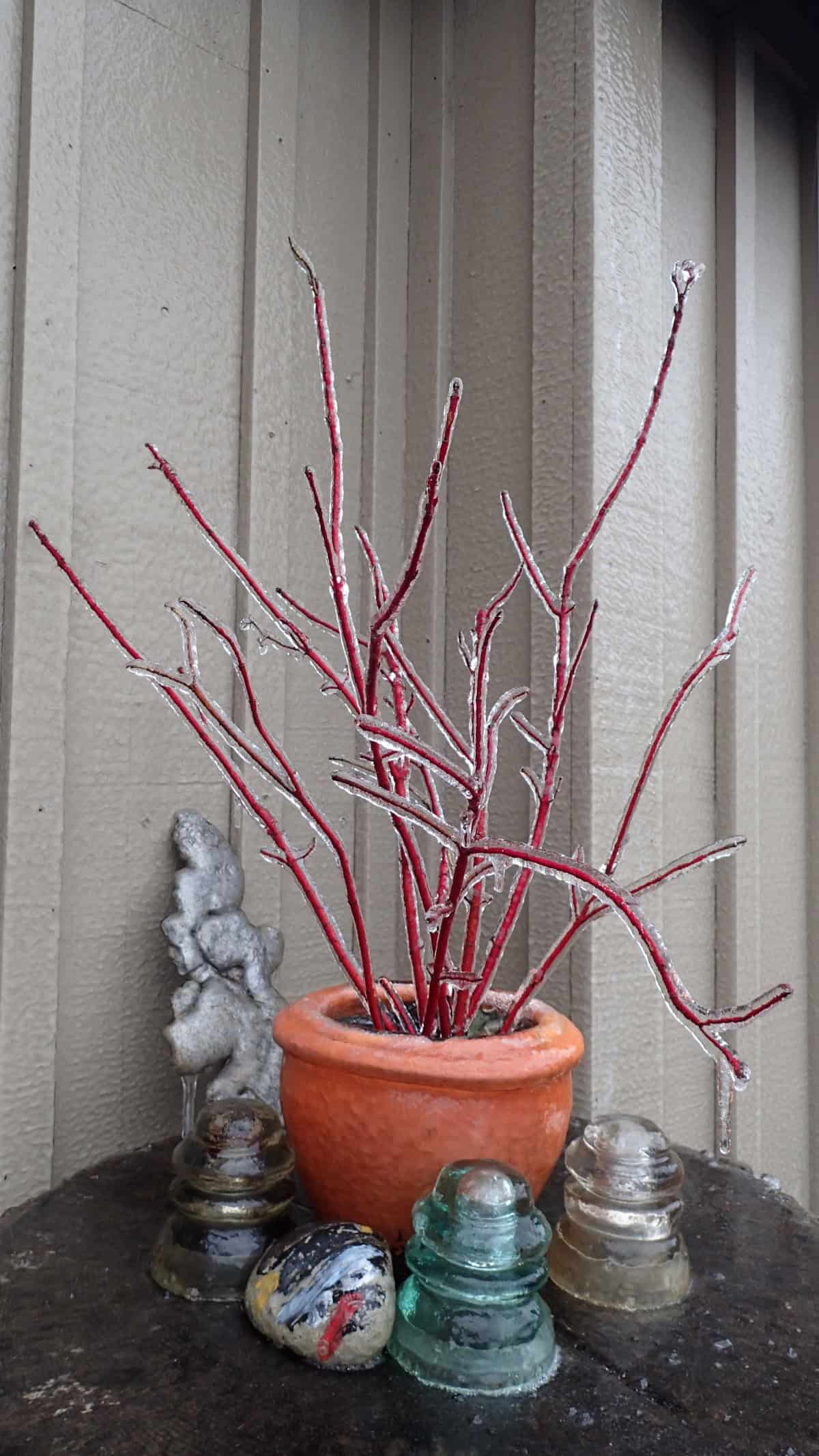
Bare red stems draw the eye upward through a winter container. Their strongest color comes from young growth, which makes recently cut branches especially useful among dense evergreen boughs.
For a planted shrub, allow substantial root space and plan for its eventual spread. Cut stems provide the same seasonal color in a smaller pot without crowding its living plants. Insert them securely into the potting mix or a firm base so winter wind does not shift the arrangement.
Yellow-Twig Dogwood
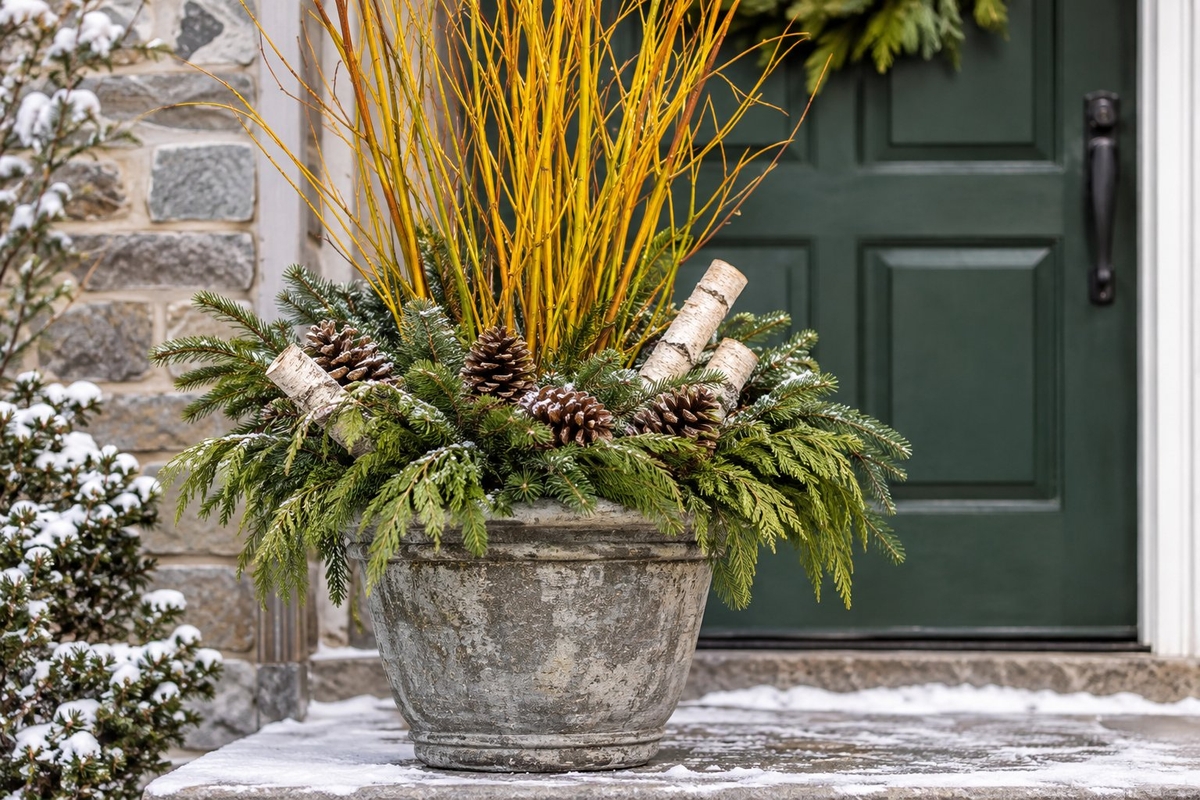
Against dark evergreen needles, yellow-twig dogwood reads as a band of gold even on an overcast day. Its upright stems give a low, wide planter height without the weight of another conifer.
Fresh young stems show the clearest color. Cut branches fit easily into a seasonal arrangement, while a living shrub requires a large container and regular moisture. Keep the stems gathered loosely enough that their individual lines remain visible above the foliage.
Paperwhite Narcissus
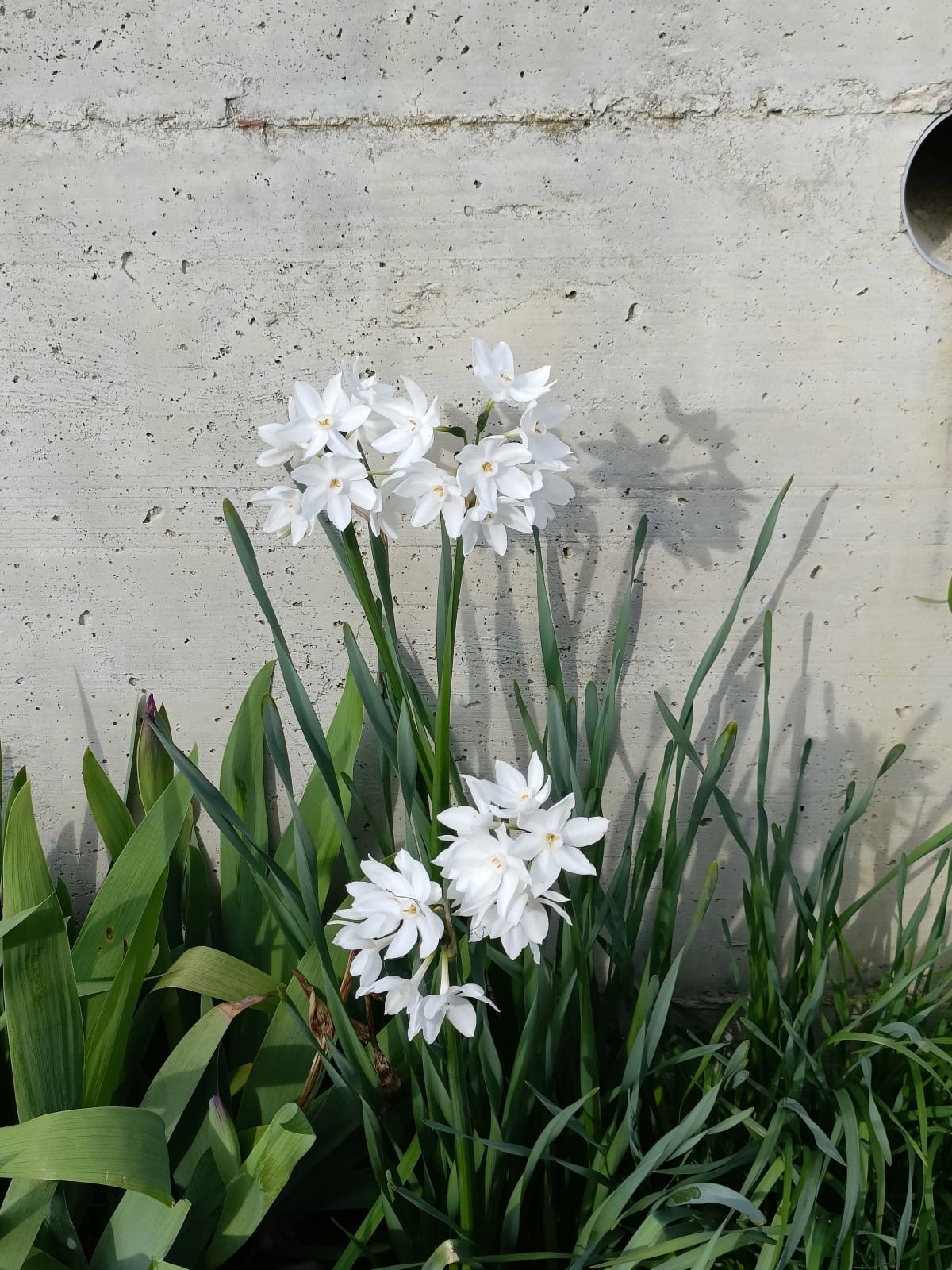
Fragrant white flowers make paperwhites appealing for a holiday porch protected from cold. The bulbs bloom indoors without a chilling period, which lets growers time a flowering pot for December.
Paperwhites are tender: frost damages their flowers and foliage. Display them outdoors only during mild weather, then move the pot inside before temperatures drop toward freezing. A weighted container or discreet support helps hold the tall flower stalks upright near a busy doorway.
Poinsettia
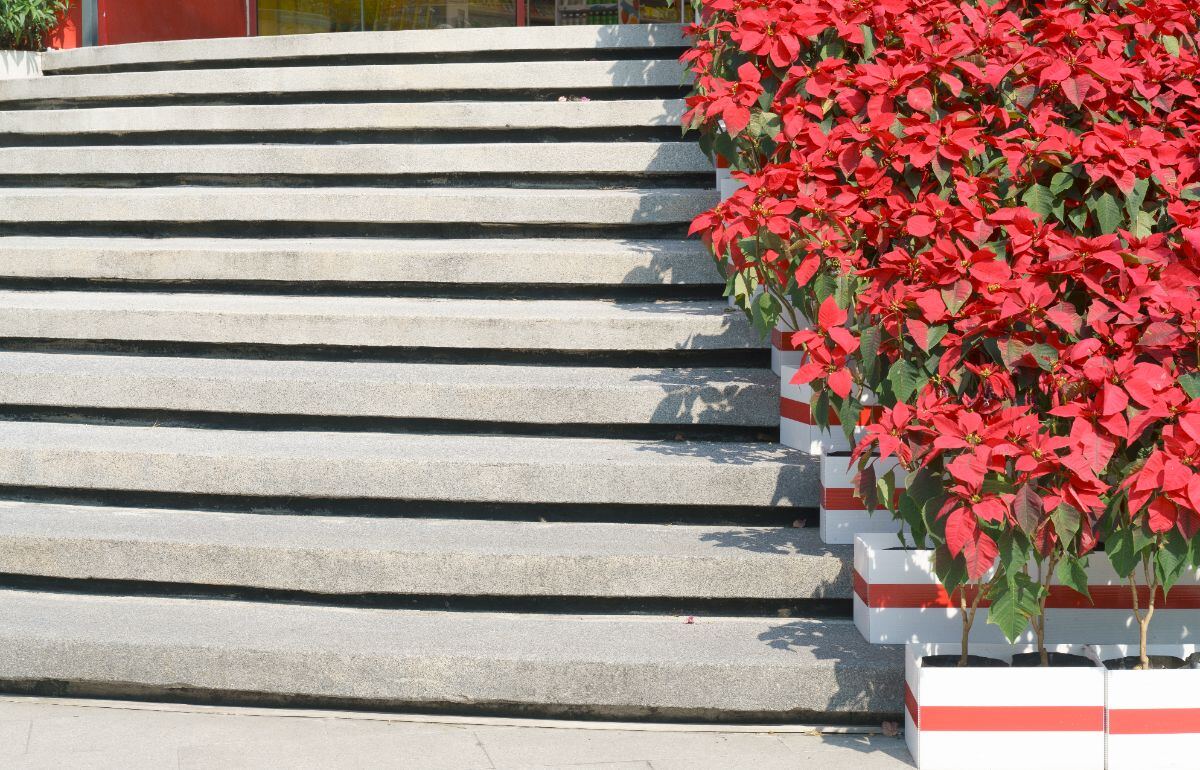
Brilliant red, pink, cream, or white bracts give a covered porch an immediate holiday focal point in mild weather. The plant’s tropical origins set a firm limit on that placement.
Poinsettias are sensitive to cold and should stay indoors when temperatures approach 50°F. In warm regions, a sheltered porch with bright indirect light and good drainage is appropriate. Elsewhere, a brief outdoor display is safest during a mild spell, with the plant returned indoors before the evening temperature falls.