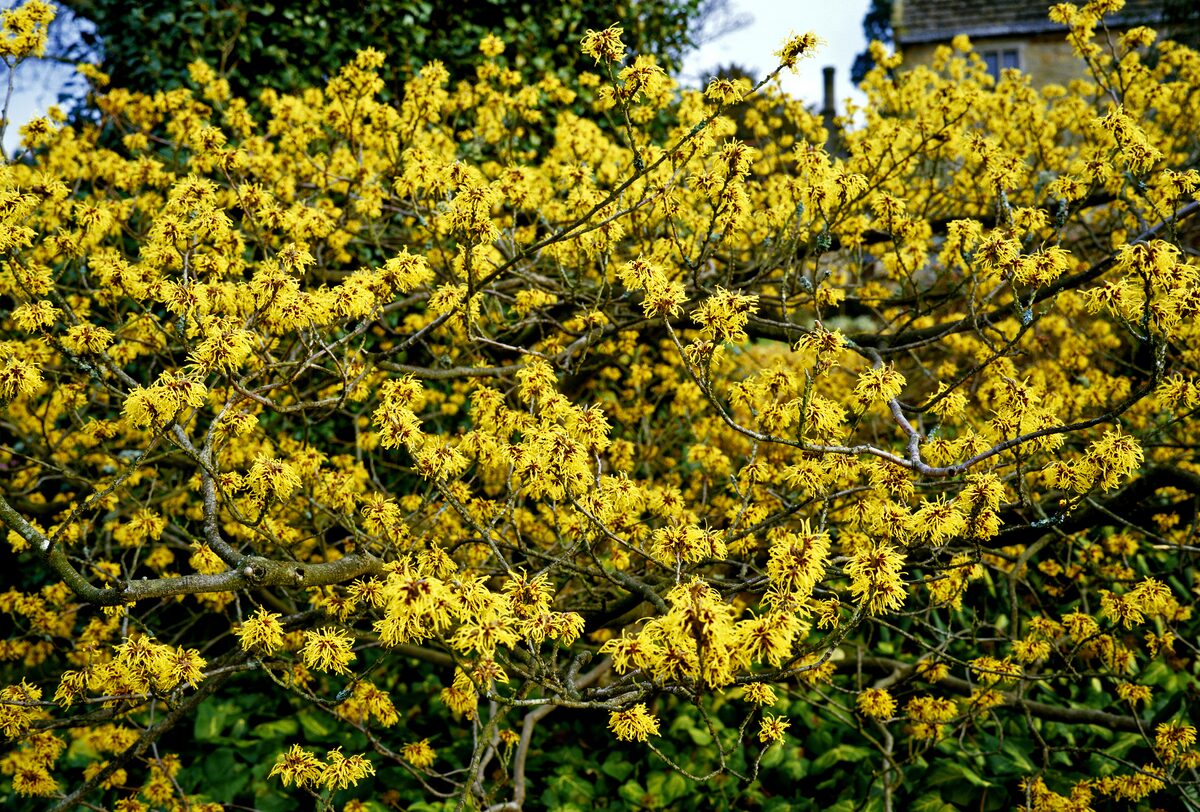
Winter gardens look bare for months, yet a handful of shrubs bloom right through the cold. Witch hazel, camellias, wintersweet, and paperbush open flowers on chilly days, and several of them carry a scent you notice before you spot the blooms.
Timing depends on where you live. In mild regions a few start in December, while gardens in zones 5 and 6 wait for February and March.
The 15 shrubs below list bloom time, size, hardiness zones, and the best spot to plant each one near a door or path. Read on for the full list.
Table of Contents
Witch Hazel
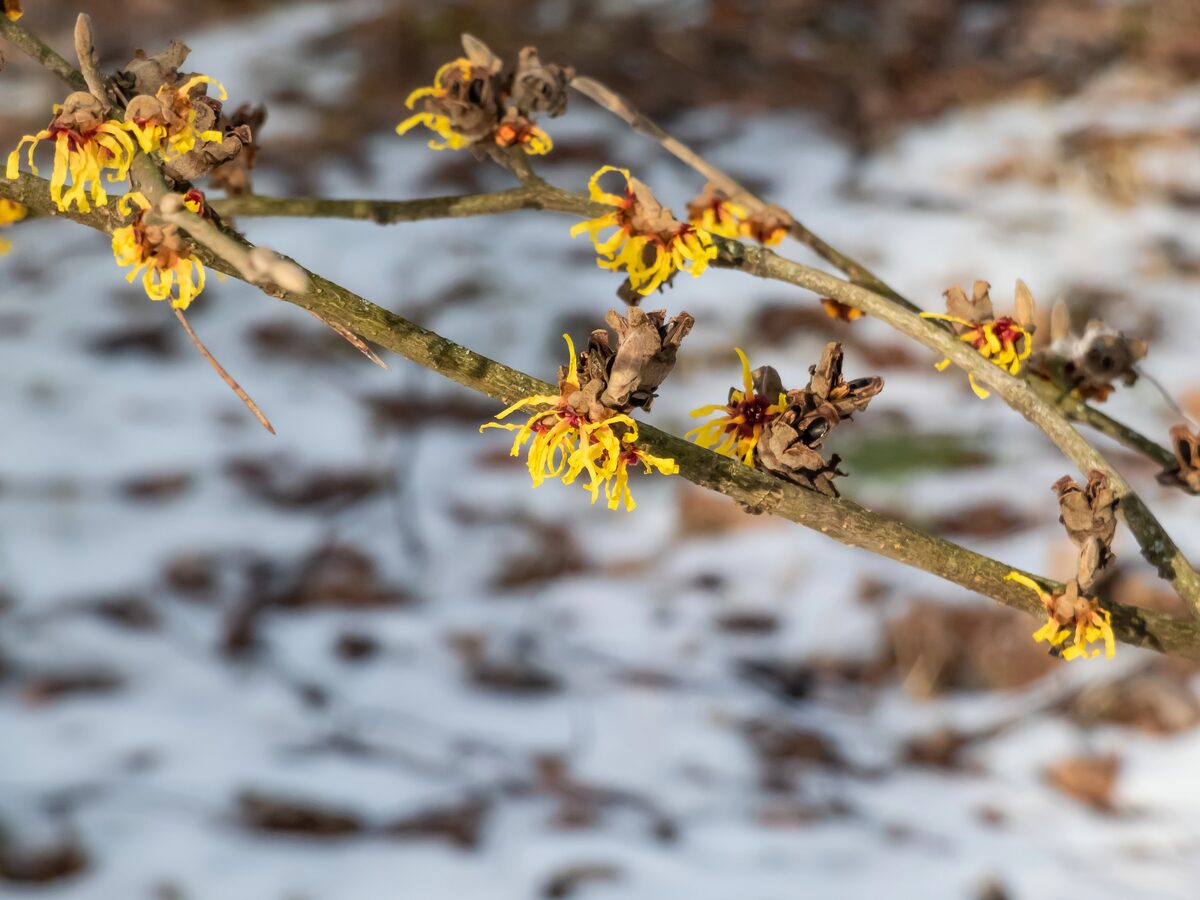
Because it blooms through hard frost when almost every other shrub sits bare, witch hazel opens the list. Come January in zones 5 to 8, witch hazel (Hamamelis × intermedia) unfurls crinkled, ribbon-like petals in yellow, copper, or red along bare stems. Many cultivars carry a spicy-sweet scent that drifts across the yard on a mild afternoon.
Expect a vase-shaped shrub 10 to 15 feet tall and nearly as wide. It likes sun or light shade and moist, slightly acidic soil. Mulch the root zone each fall, since the shallow roots resent drying out.
Plant it beside a front path or driveway where visitors pass in February. A dark evergreen backdrop makes the yellow and orange flowers easier to spot from a window.
Camellia
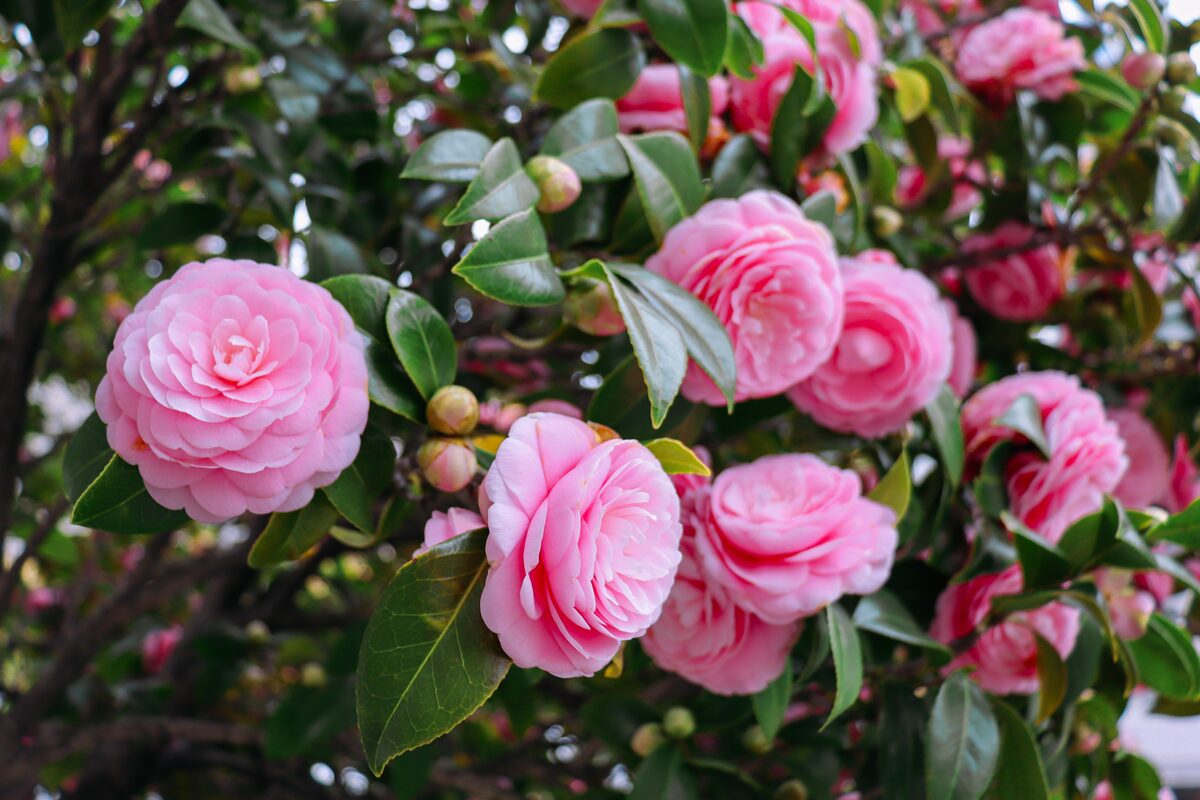
Will a camellia bloom in the middle of winter? Camellia japonica does. It opens from midwinter into spring in zones 7 to 9, with the first flowers in December where winters are mild.
The blooms look like small roses, single, semi-double, or fully double, in white, pink, or red, with little scent. Plants reach 6 to 12 feet, with glossy evergreen leaves, and grow best in dappled shade and acidic, humus-rich soil.
Morning sun after a frost browns the frozen petals, so a north- or west-facing spot is safer than an east wall. Set the root ball at or slightly above grade, because buried crowns sulk.
Sasanqua Camellia
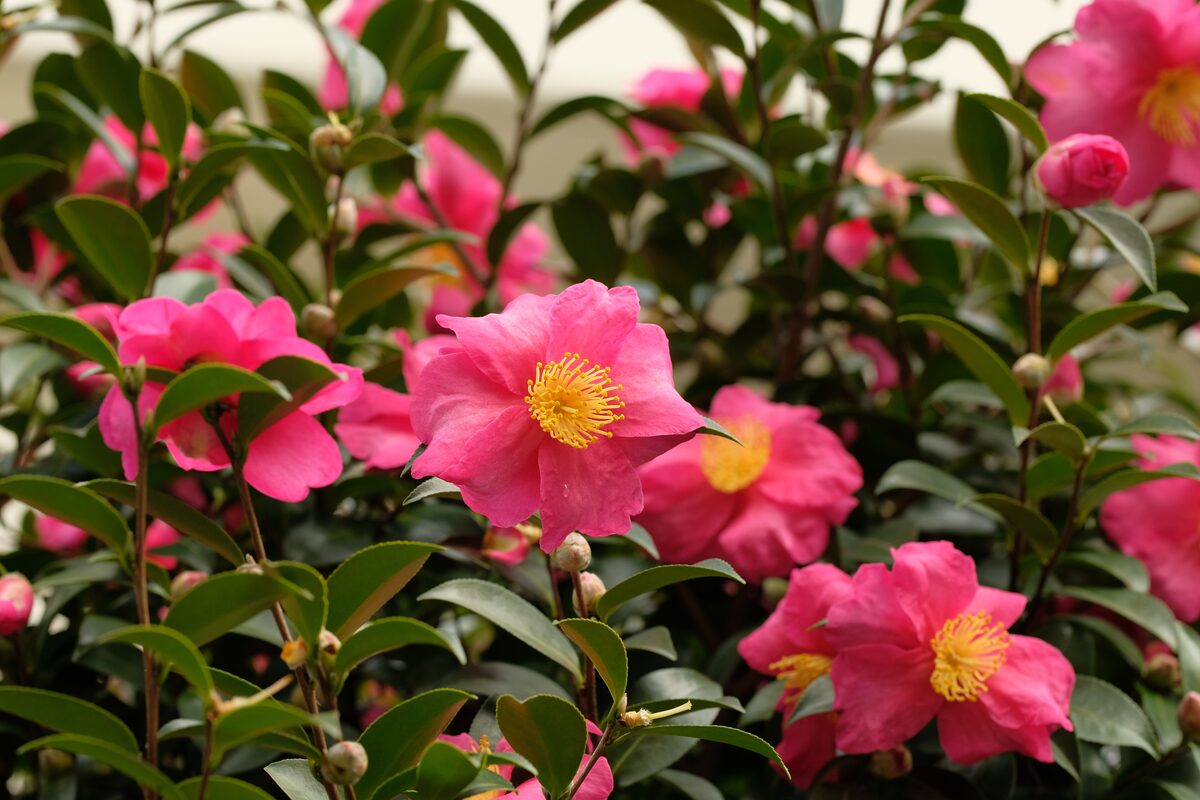
When October arrives in zones 7 to 9, sasanqua camellia (Camellia sasanqua) starts a bloom season that runs into early winter, weeks ahead of its cousin. The petals drop like confetti, and the show fills the gap before japonica opens.
Flowers are smaller, in white, pink, or rose, and a few carry a light fragrance. This species handles more sun than japonica and grows 6 to 10 feet tall in acidic soil that drains freely.
Trim it soon after the last flowers fade, since next year’s buds form over summer. The dense, upright habit fits a clipped screen or an espalier on a sunny wall close to a window.
Winter Jasmine
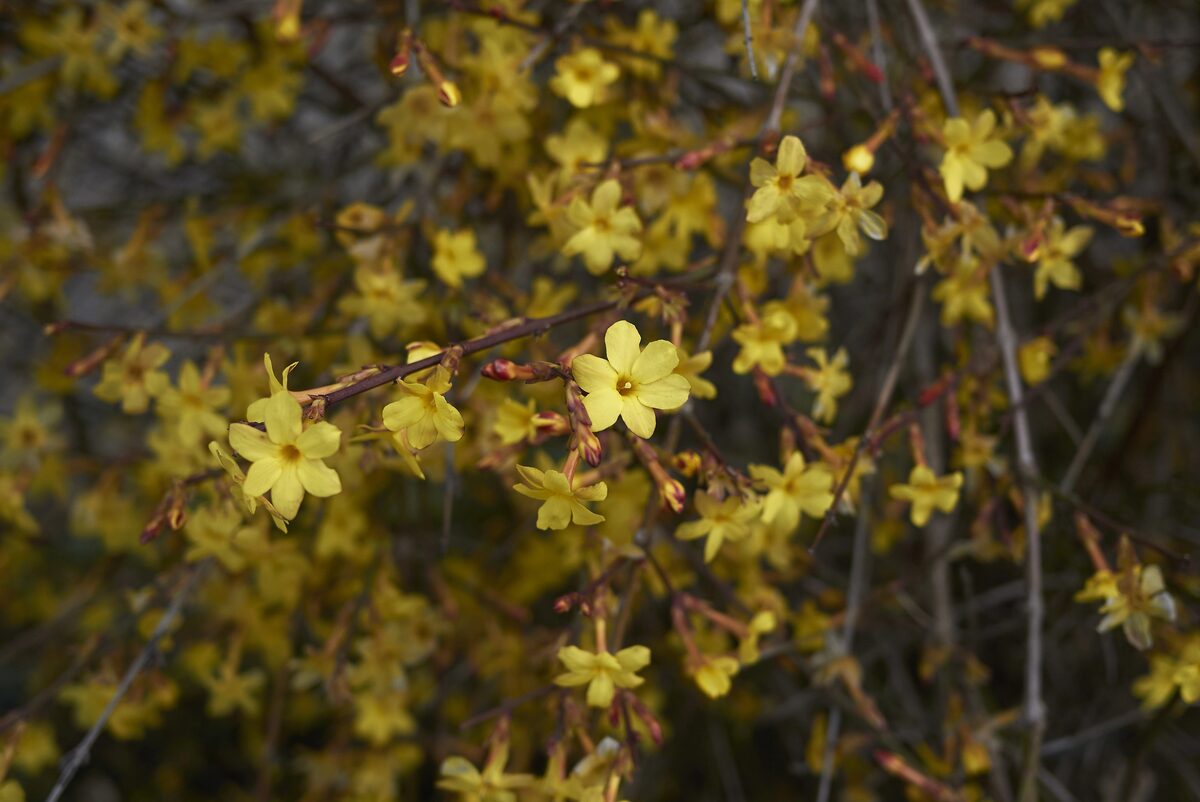
Plant winter jasmine (Jasminum nudiflorum) where its arching green stems spill over a wall or bank. Bright yellow blooms open on bare stems from midwinter into spring in zones 6 to 10, though cold-zone gardeners should expect March rather than December. The blooms have no scent.
It forms a loose mound 3 to 4 feet tall and sprawls wider, in sun or half shade and almost any soil that drains. Stems root wherever they touch the ground, so a patch spreads on its own.
Cut it back as soon as blooming ends for a tidier shape. Along a retaining wall or beside steps, the yellow shows up well against bare stone.
Mahonia
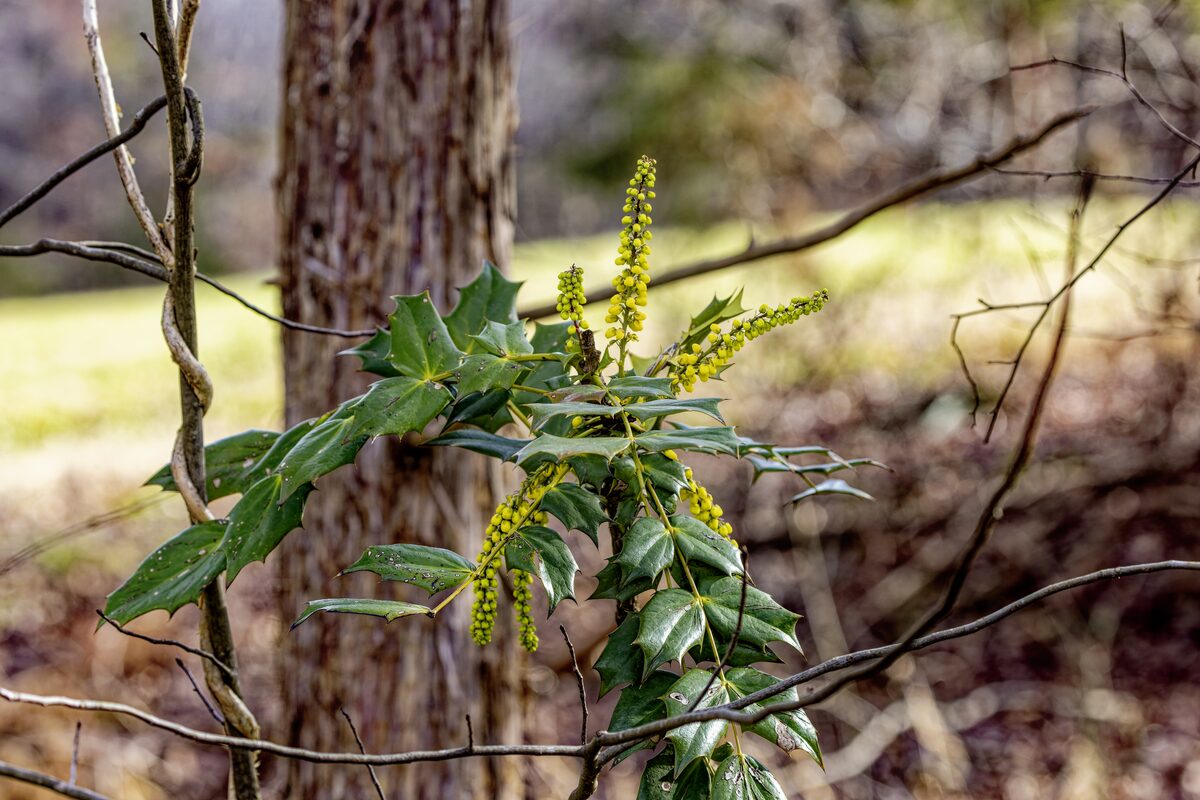
At the back of a shady border, Mahonia × media ‘Charity’ (listed under Berberis in newer references) holds upright spikes of yellow flowers above spiny, hollylike evergreen leaves. Bloom runs from late fall through winter in zones 7 to 9, and the flowers smell like lily of the valley.
Plants grow 6 to 10 feet tall in partial shade and humus-rich soil, and they handle dry shade once rooted in. Blue-black berries follow the flowers and feed birds.
Remove the oldest stems at the base after bloom to prevent a leggy look. A spot near a woodland path lets passersby catch the fragrance.
Wintersweet
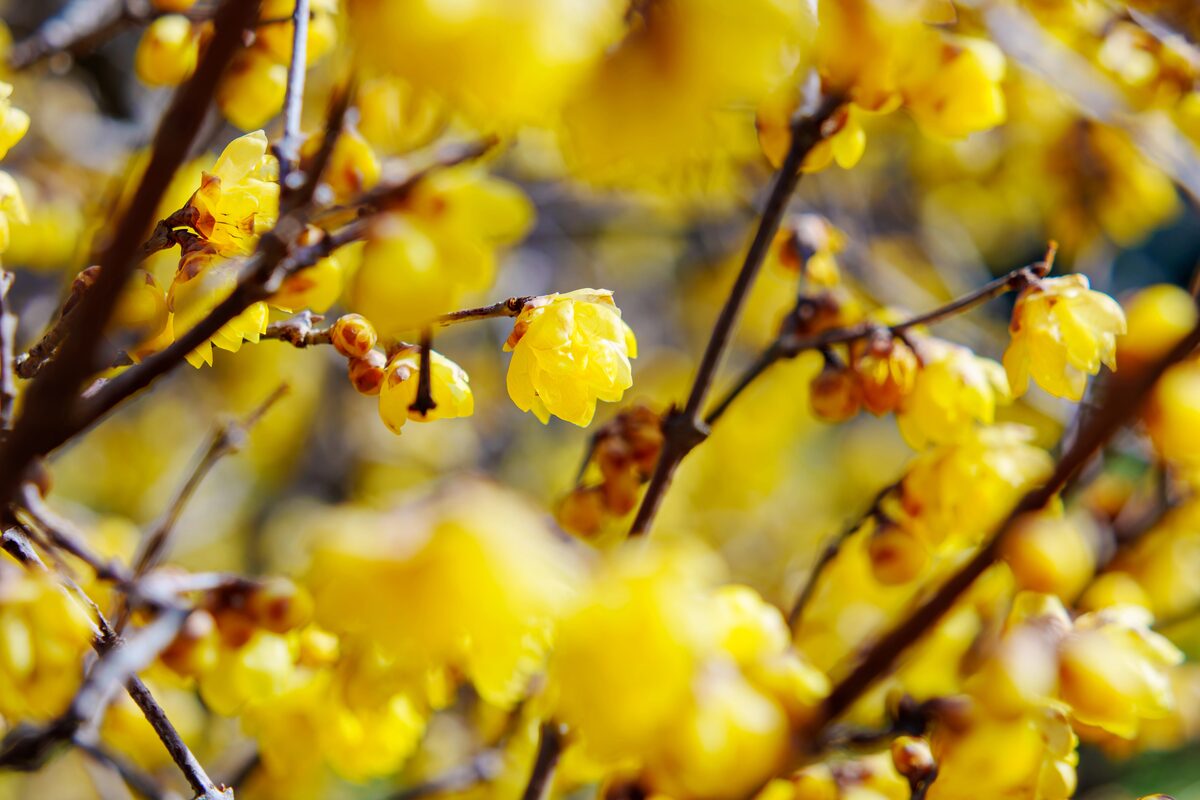
From here, scent counts as much as color, and wintersweet has the strongest of the season. Because wintersweet (Chimonanthus praecox) blooms on bare wood in midwinter, a place beside a door or path pays off. The waxy, pale yellow blossoms with purple-brown centers carry a strong, spicy fragrance in zones 7 to 9.
Young plants take several years to start flowering, so patience helps. The shrub grows 8 to 12 feet tall in sun to light shade and fertile soil with good drainage.
Prune only after the flowers finish, and thin crowded stems at the same time. A sunny wall ripens the wood and shields the blooms from frost. In summer the leafy shrub looks plain, so pair it with perennials nearby.
Winter Daphne
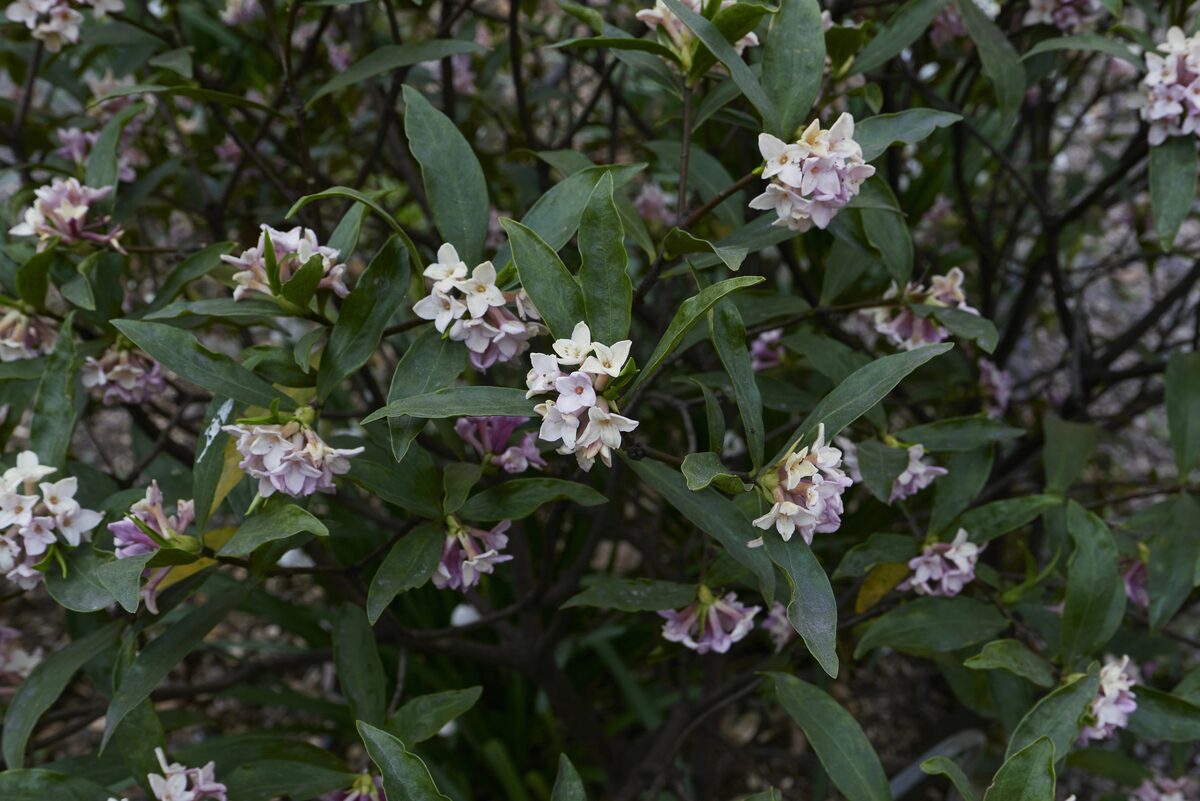
Which winter shrub has the richest scent? Winter daphne (Daphne odora) is a strong contender, with pink-and-white flower clusters and an almost citrusy perfume from February into spring in zones 7 to 9. Gardens at the cold end of that range see later blooms.
This compact evergreen reaches 3 to 4 feet tall and wide, with glossy leaves, and grows best with sun until noon, shade after that, and very sharp drainage. Plants resent wet roots and transplanting, so choose the site once.
All parts are toxic if eaten. A raised bed or a planter by an entry puts the scent at nose level, and light pruning is safest, since the shrub recovers slowly.
Sweet Box
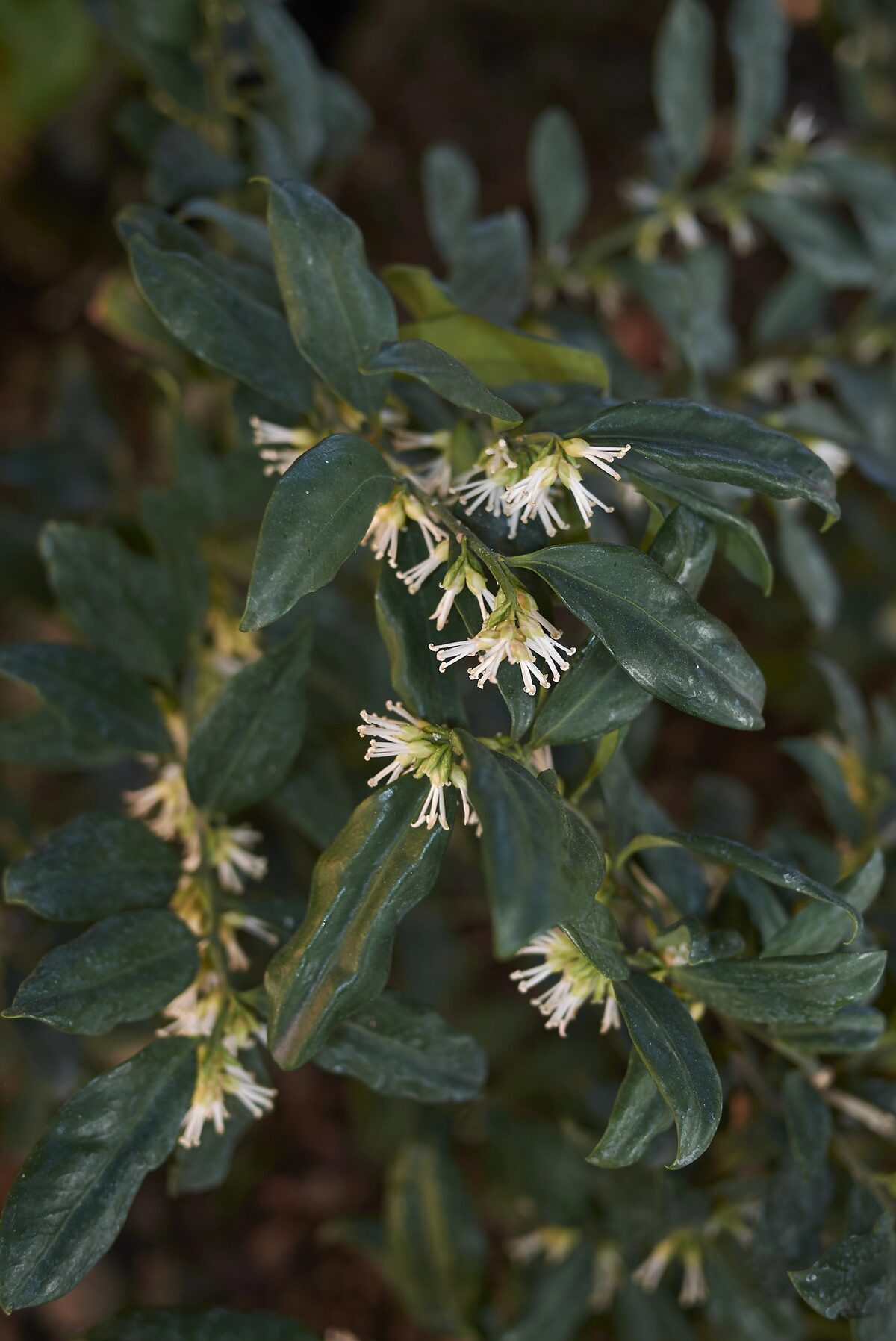
Under tall trees and along shady north walls, sweet box (Sarcococca hookeriana var. humilis) releases a honeyed fragrance from tiny white flowers in winter. It grows in zones 6 to 9.
The evergreen shrub reaches 1 to 2 feet tall and spreads by suckers into a neat, glossy groundcover. Black berries follow the flowers. Plants thrive in deep shade and moist soil rich in leaf mold.
Pruning is rarely needed. Plant it beside a shaded entry or steps, because the blooms are small and easy to miss until the scent reaches you.
Edgeworthia
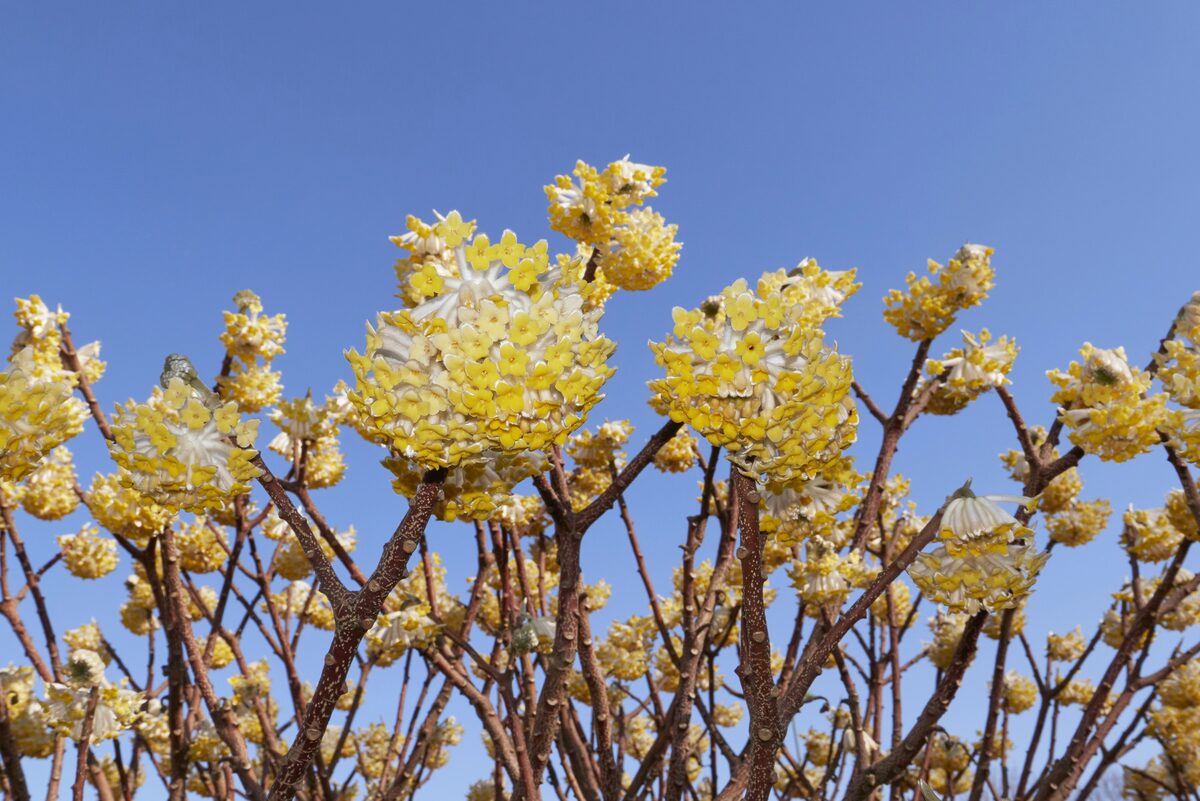
Plant paperbush (Edgeworthia chrysantha) for its silvery flower buds, which hang all winter and open into clusters of fragrant yellow tubes from about February in zones 7 to 9. The smooth tan stems branch in threes, and the large leaves drop in fall.
Plants reach 5 or 6 feet tall and wide in partial shade and rich, moist soil. Hot afternoon sun scorches the leaves, and cold wind damages the buds, so a sheltered corner helps.
Place it where the bare branches show from a window. The hanging buds are the main display for weeks before the flowers open.
Viburnum ‘Dawn’
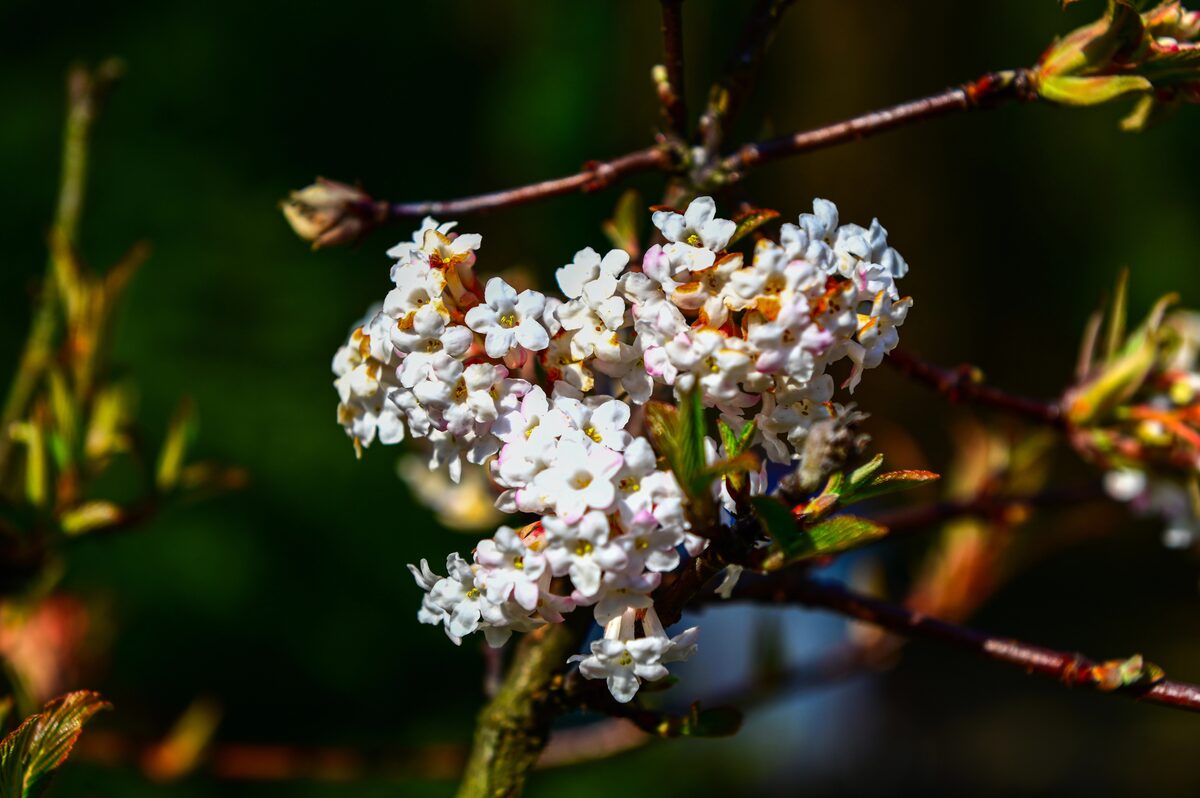
In November, Viburnum × bodnantense ‘Dawn’ starts a bloom season of rounded pink flower heads that lasts through winter in zones 5 to 7. Mild spells push the buds open and hard freezes pause them, so bloom arrives in waves.
The fragrance is sweet and clove-like. This upright shrub reaches 8 to 10 feet tall and about 6 feet wide in sun or a little afternoon shade and average soil.
Right after the flowers fade, cut a few of the oldest stems to the ground. Near a front door or along a drive, the scent carries on mild days.
Winter Heath
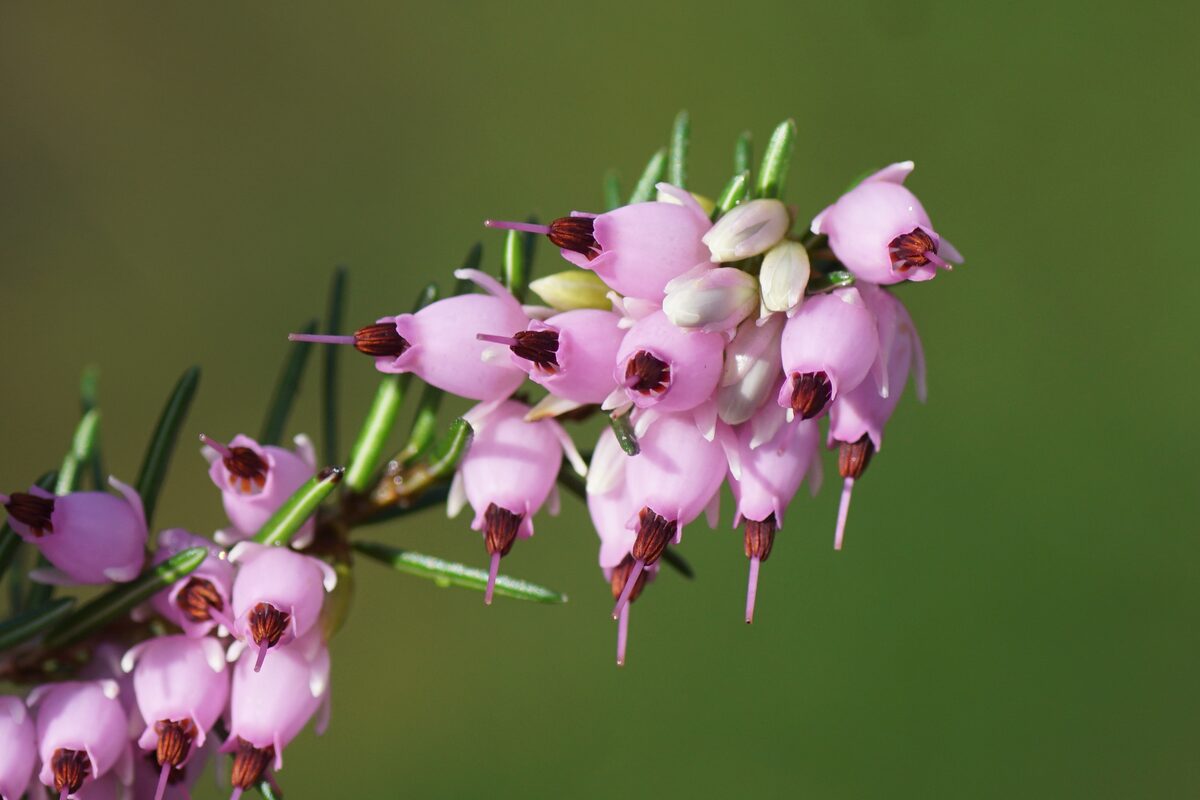
Plant winter heath (Erica carnea) in drifts of three or more along a sunny slope or path edge. The low carpet of pink, rose, or white bells opens from late winter into spring in zones 5 to 7, and as early as January in mild areas.
This evergreen groundcover grows 6 to 12 inches tall and spreads to 2 feet. Unlike most heaths it tolerates a little lime, and it prefers full sun and acidic to neutral soil.
Shear lightly once flowering ends for a dense mound. The needle-like foliage looks tidy below taller shrubs or around a stone step.
Cornelian Cherry
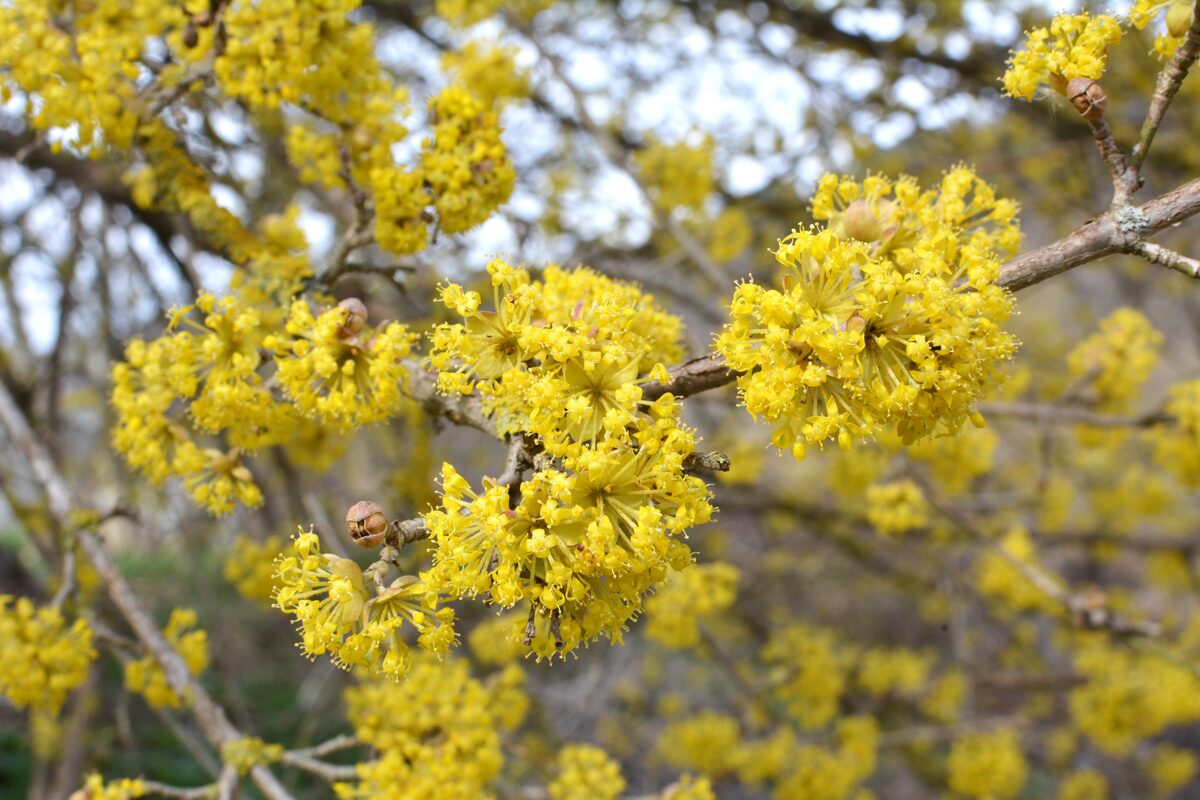
Because it is hardy to zone 4, cornelian cherry (Cornus mas) is one of the most reliable choices for cold gardens, and it grows as far south as zone 8. Clusters of small yellow flowers cover the bare branches in late winter, before any leaves appear.
This large shrub or small tree reaches 15 to 25 feet tall in sun or high, open shade and average soil. Red edible fruit follows in summer, and older trunks show flaking bark.
Allow plenty of room for it as a specimen near a patio or entry. Up close, the flowers and bark both reward a second look.
Flowering Quince
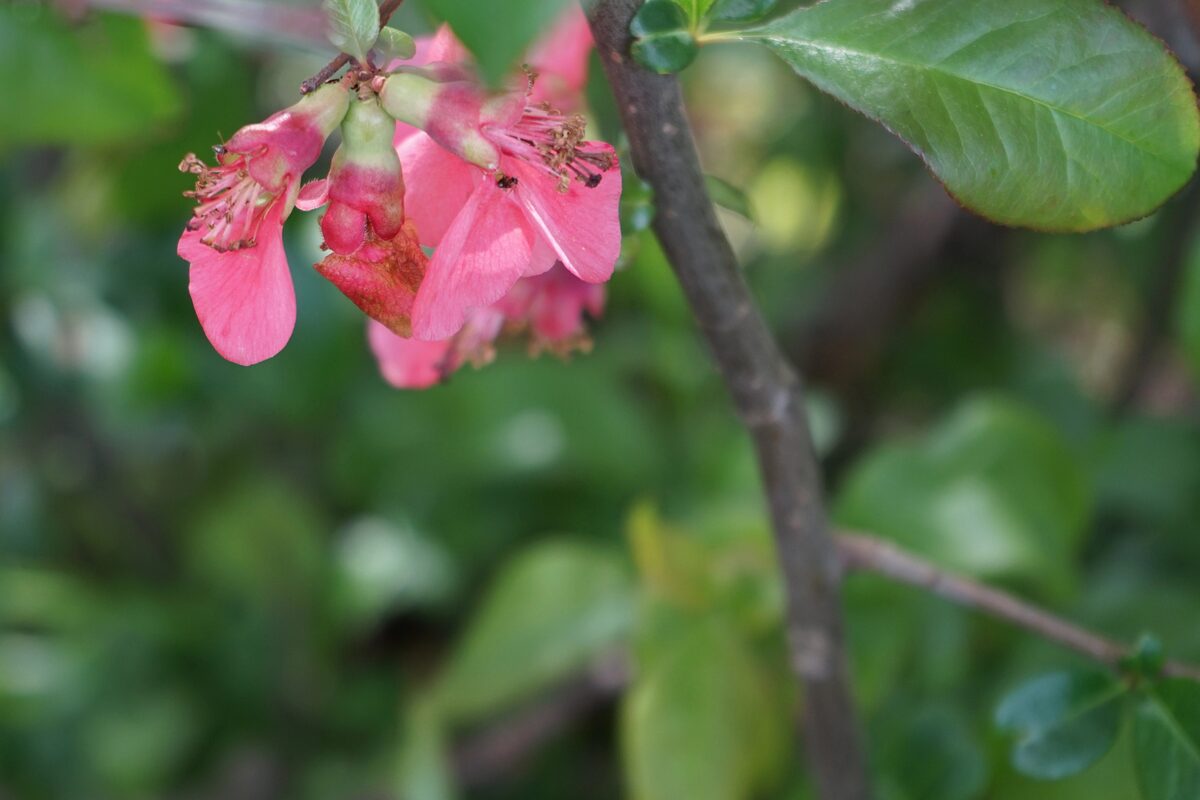
Toward the end of winter, the last three shrubs carry the color into early spring. Along a fence line, the thorny stems of flowering quince (Chaenomeles speciosa) carry clusters of red, orange, pink, or white blooms from February into spring in zones 5 to 9. In cold regions the flowers wait for April.
The tough, dense shrub grows 6 to 10 feet tall in full sun and almost any soil. Fragrant yellow-green fruit follows in fall.
After bloom, remove a few older stems for renewal. The thorns make it a useful barrier hedge, and branches cut in February and brought indoors open within two weeks or so.
White Forsythia
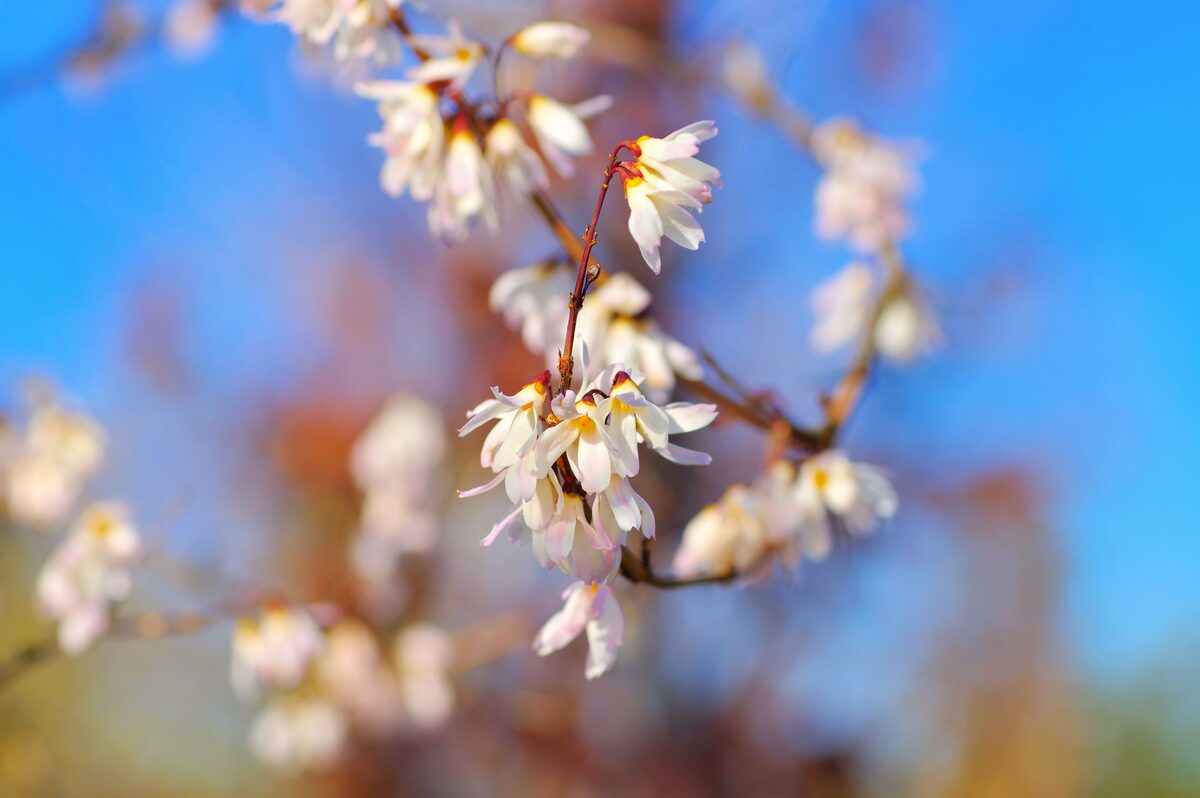
In February and March, white forsythia (Abeliophyllum distichum) opens almond-scented white flowers, frequently blushed pink, along arching, leafless branches. It grows in zones 5 to 8, and cold-zone plants bloom a little later.
It forms a rounded shrub 3 to 5 feet in height and spread in sun or dappled shade. Spring frosts nip open flowers, so choose a spot that morning sun misses on frosty days.
Trim it as soon as the petals drop. Against a dark fence or near a doorway, the white flowers read clearly and the scent drifts on mild days.
Silk Tassel Bush
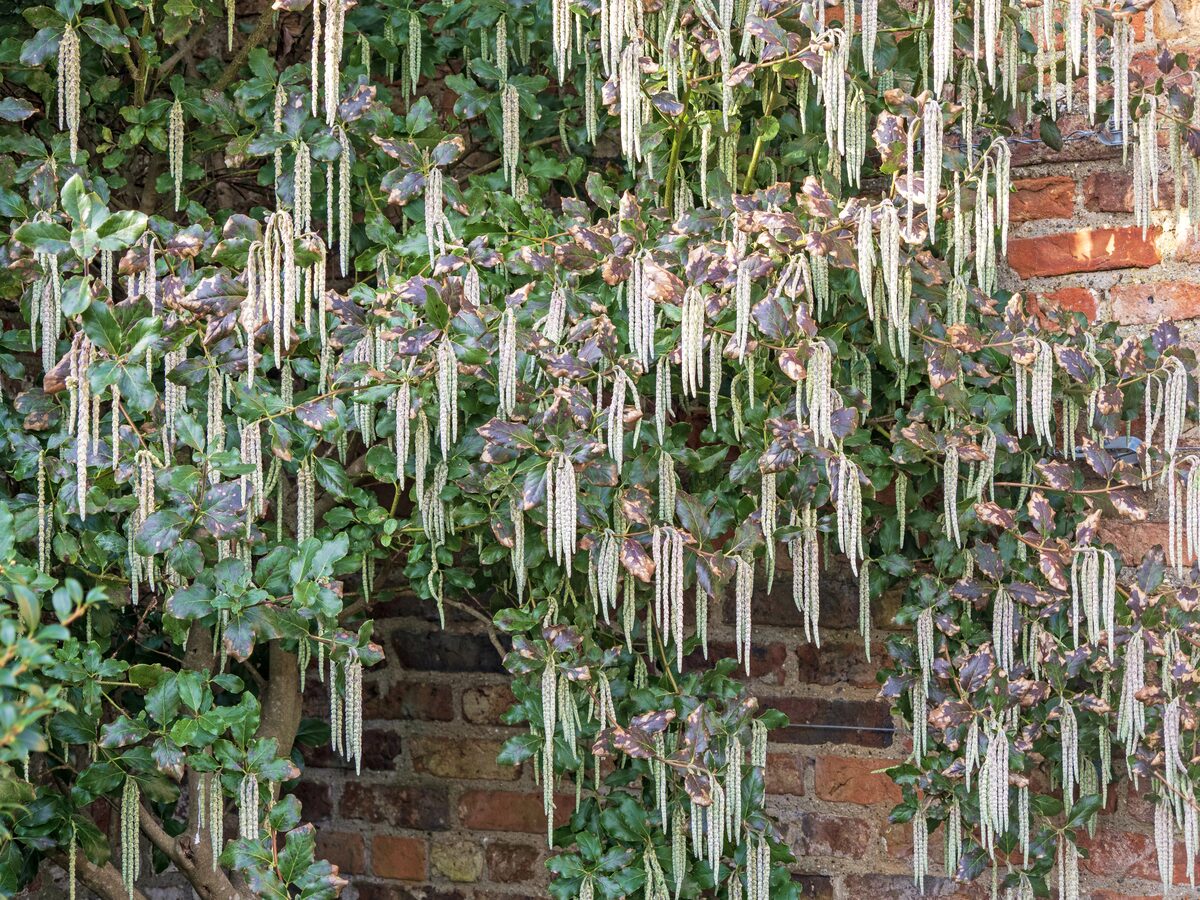
On the Pacific coast, silk tassel bush (Garrya elliptica) puts on its best display from winter into spring, draped in gray-green catkins up to 10 inches long. It grows in zones 8 to 10.
Expect an evergreen 8 to 12 feet tall, with leathery, wavy-edged leaves, in sun or filtered shade and gritty, fast-draining ground. Male plants carry the longest tassels, so look for a named male such as ‘James Roof’.
Mature plants handle drought. Train it against a wall or use it as a screen, where the catkins hang at eye level beside a path.