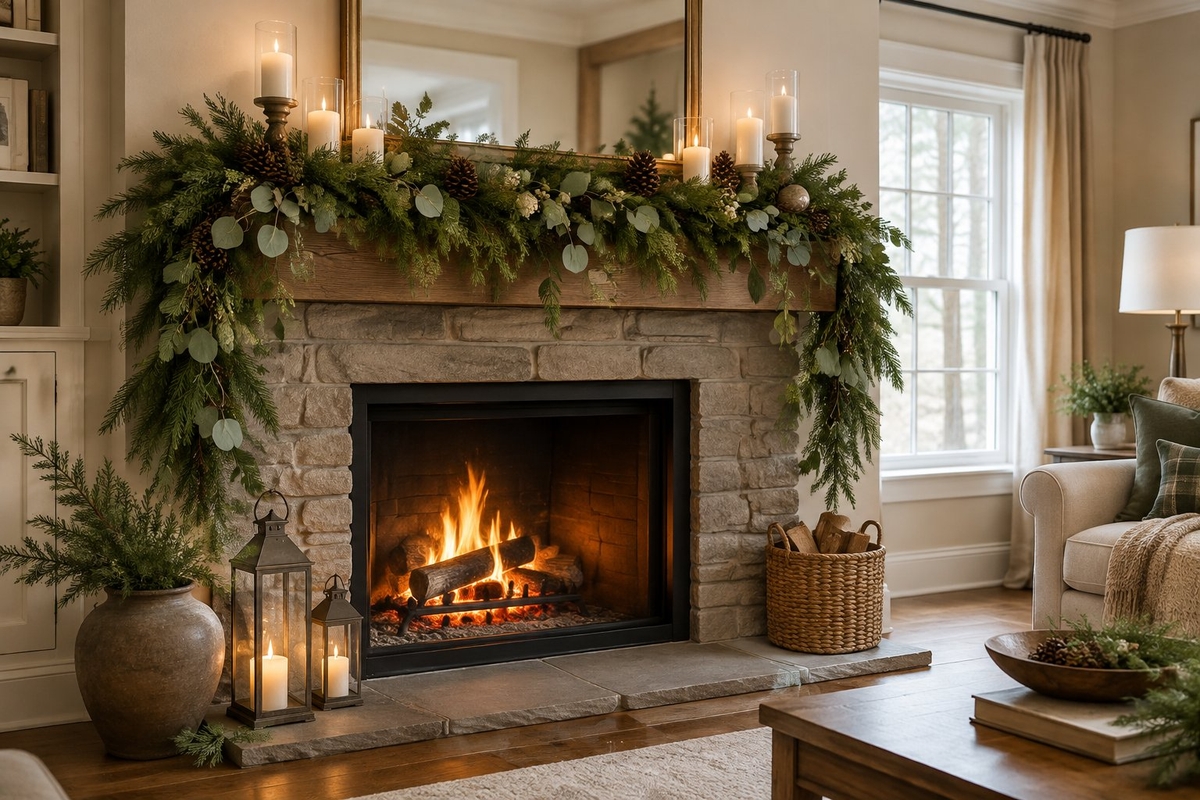
Christmas mantel decor with plants and greenery looks most cohesive when a single leafy shape anchors the display and living plants provide the focal points. Cedar draped across the shelf gives paperwhites a low, fragrant backdrop; upright branches call for a different arrangement. The depth of the mantel, the height above the firebox, and the light reaching each plant shape the display as much as color does. Those details become especially useful once delicate blooms and trailing stems enter the mix.
Table of Contents
- Layered Cedar Garland With Potted Paperwhites
- Magnolia Leaf Garland With Amaryllis Blooms
- Asymmetrical Pine Garland With Potted Rosemary Trees
- Fresh Eucalyptus And Fir Mantel With Cyclamen
- Trailing Ivy Mantel With Miniature Spruce Trees
- Woodland Fern And Evergreen Mantel
- Red Poinsettias Among Fresh Cedar Greenery
- White Poinsettia And Blue Spruce Mantel
- Hanging Cedar Garland With Potted Hellebores
- Rosemary And Bay Leaf Mantel Garden
- Paperwhite Narcissus In Antique Brass Pots
- Cascading Eucalyptus Mantel With Red Berries
- Mini Conifer Forest Across The Mantel
- Mossy Mantel With Cyclamen And Pine
- Norfolk Pine And Cedar Mantel Display
- Greenery Garland With Succulents Tucked Throughout
- Juniper Berry Mantel With White Hellebores
- Boxwood Topiaries Framed By Cedar Garland
- Trailing Pothos Mixed With Holiday Greenery
- Amaryllis And Pinecone Woodland Mantel
- White Orchid Christmas Mantel With Evergreen Foliage
- Fern-Filled Garland With Long Pine Branches
- Winterberry Branches Rising Above Mixed Greenery
- Hanging Ivy And Cedar Mantel Over A Brick Fireplace
- Potted Ferns With Blue Spruce Garland
- Herb Garden Mantel With Evergreen Cuttings
- Trailing Greenery Around An Arched Mirror
- Green And White Mantel With Paperwhites And Hellebores
Layered Cedar Garland With Potted Paperwhites
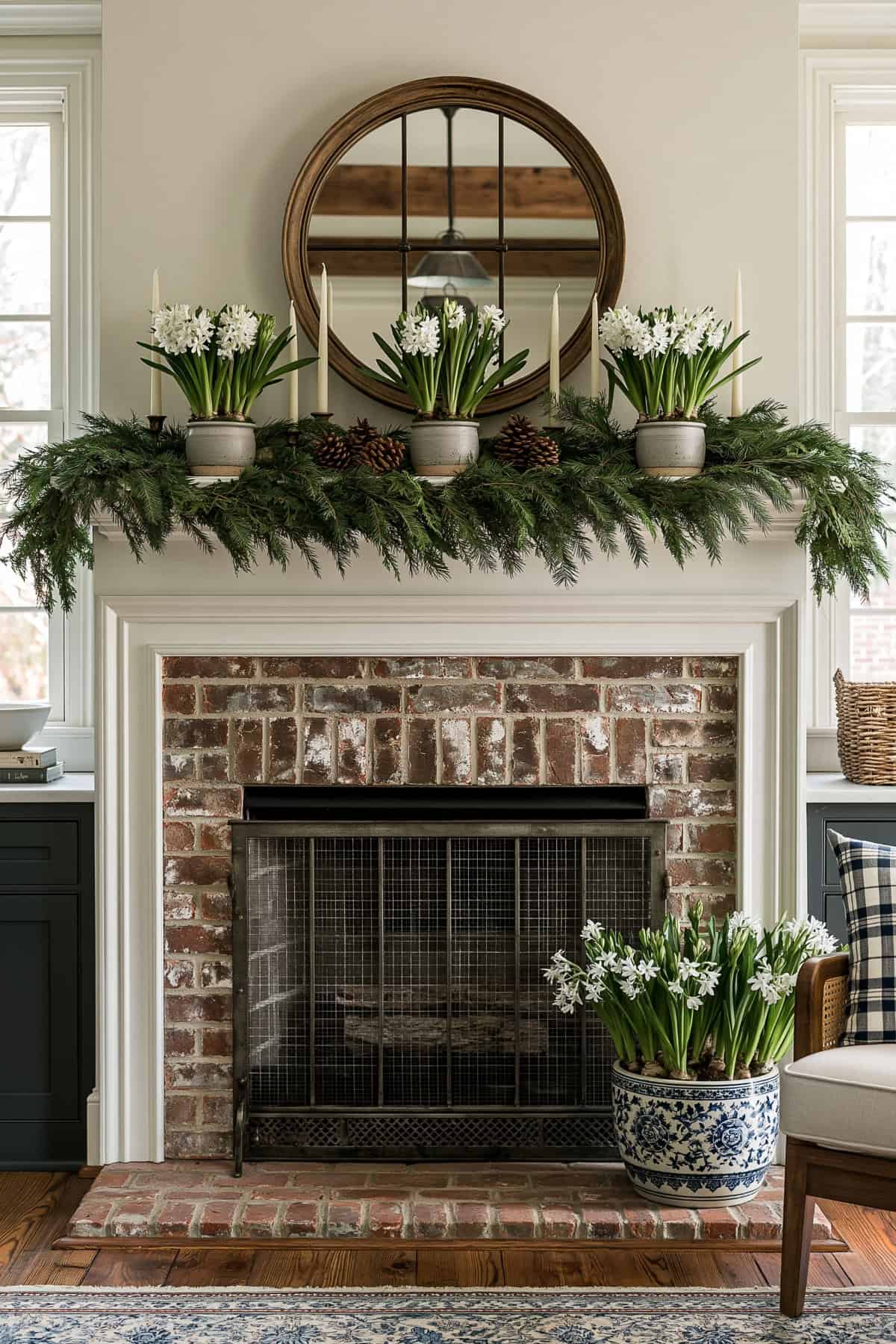
For a mantel with room to spare, two loosely layered cedar garlands provide a generous base for upright paperwhites. Let the lower garland dip gently at the center, then lay the second along the back of the shelf. The overlapping sprays give the greenery depth without hiding the flower stems.
Place paperwhite pots near each end, with their rims visible above the cedar. Pebbles on the soil help steady tall stems, and a narrow ribbon around each pot picks up the white blooms. Check the garland for dry, brittle tips if the fireplace is used.
Magnolia Leaf Garland With Amaryllis Blooms
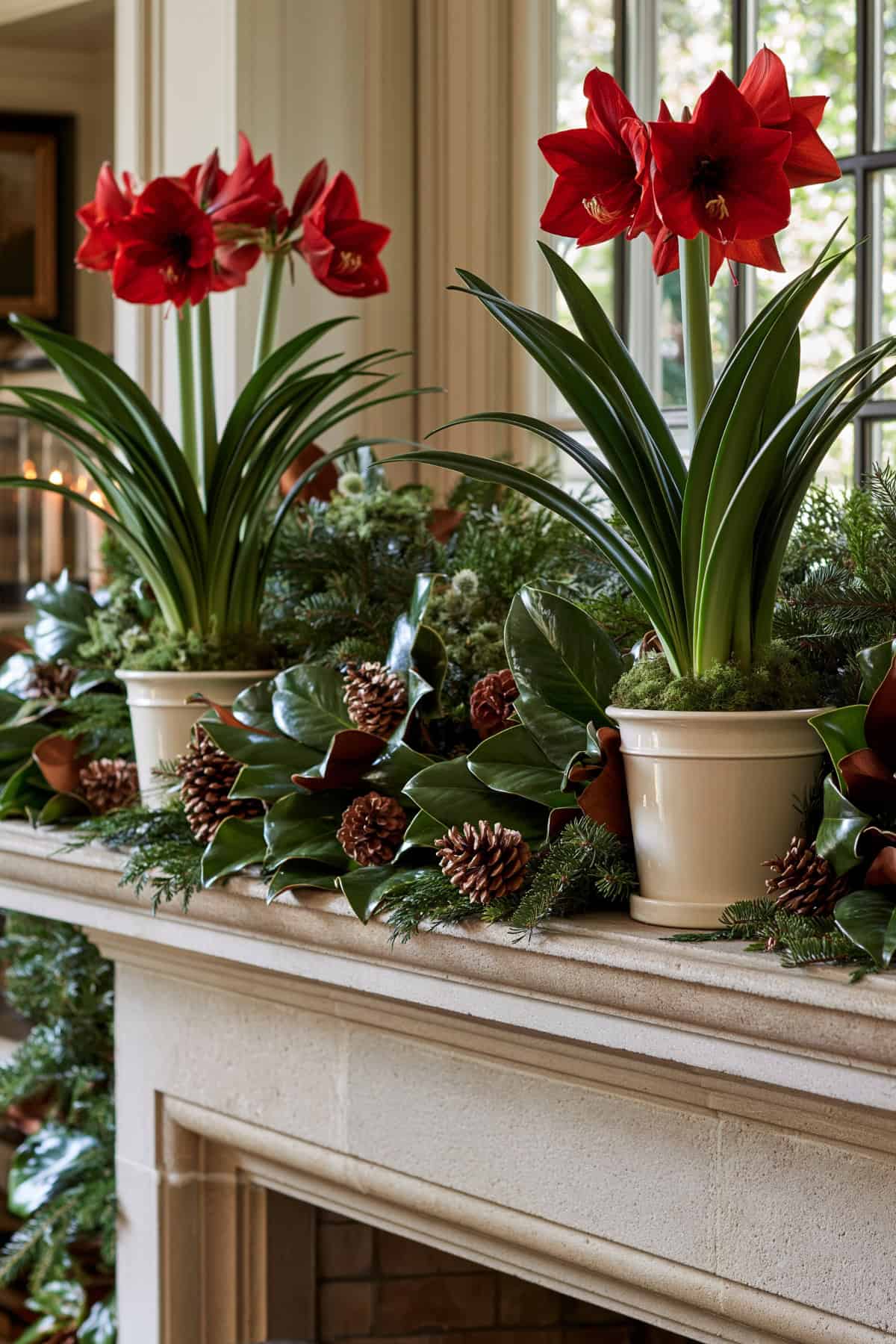
Glossy magnolia leaves give amaryllis blooms a broad, dark backdrop that shows off their color. Run the garland along the rear edge of the mantel, turning several leaves to reveal their brown undersides. That small shift in color keeps the arrangement rich without additional ornaments.
A single potted amaryllis near one end leaves its large flowers room to open. Choose a sturdy container and turn the pot periodically if daylight reaches it from one side. Keep the stems clear of any wreath or mirror above the shelf.
Asymmetrical Pine Garland With Potted Rosemary Trees
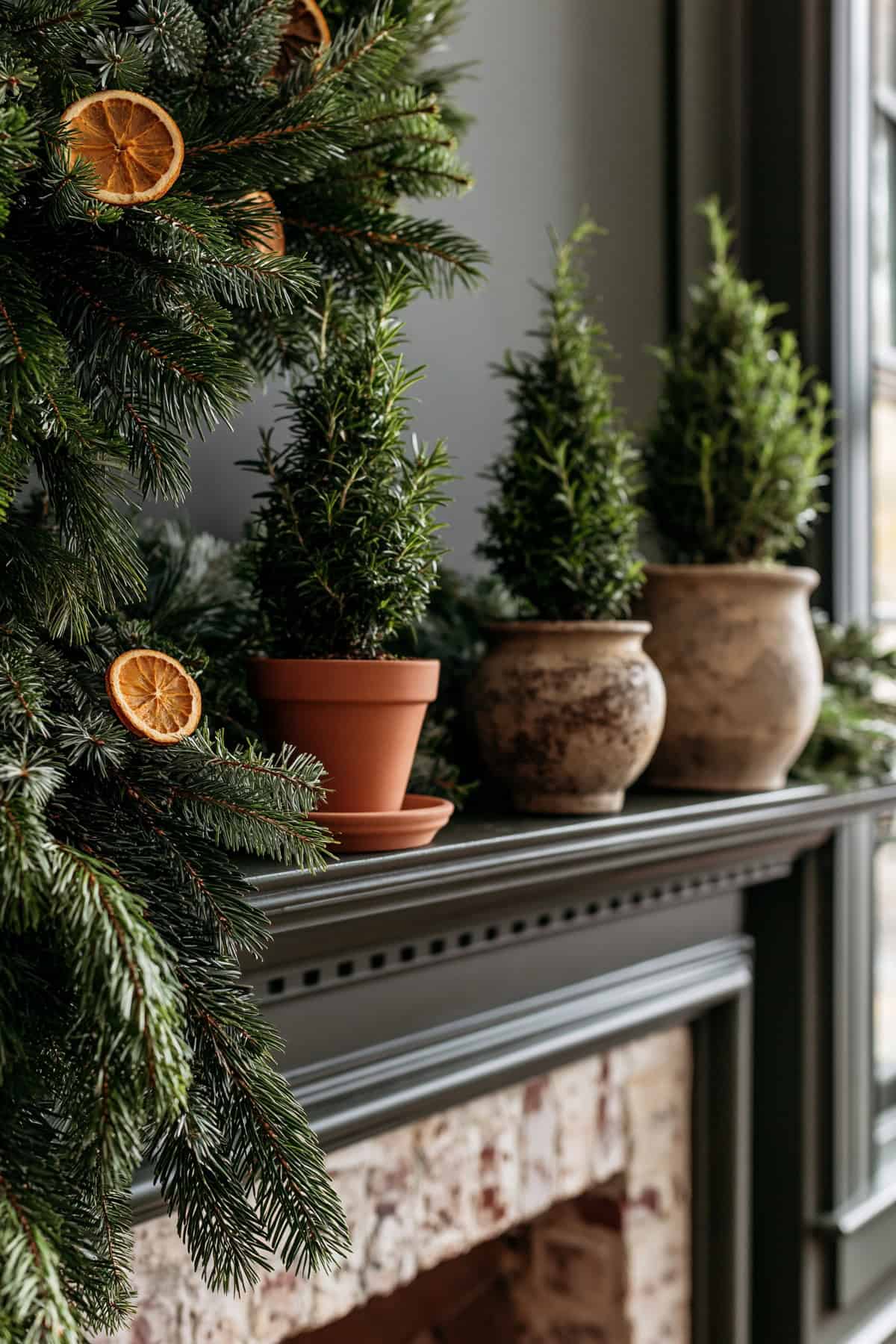
An off-center pine garland gives a narrow mantel movement without covering its entire length. Anchor the fullest portion at one corner and let a short length fall down the side. A rosemary tree at the opposite end balances the greenery through height and shape.
Use a saucer beneath the rosemary pot, even if a decorative cachepot hides it. Rosemary needs bright light and evenly moist, well-drained soil indoors; a dark mantel limits how long the tree should stay there. The pine should sit well beyond the reach of open flames.
Fresh Eucalyptus And Fir Mantel With Cyclamen
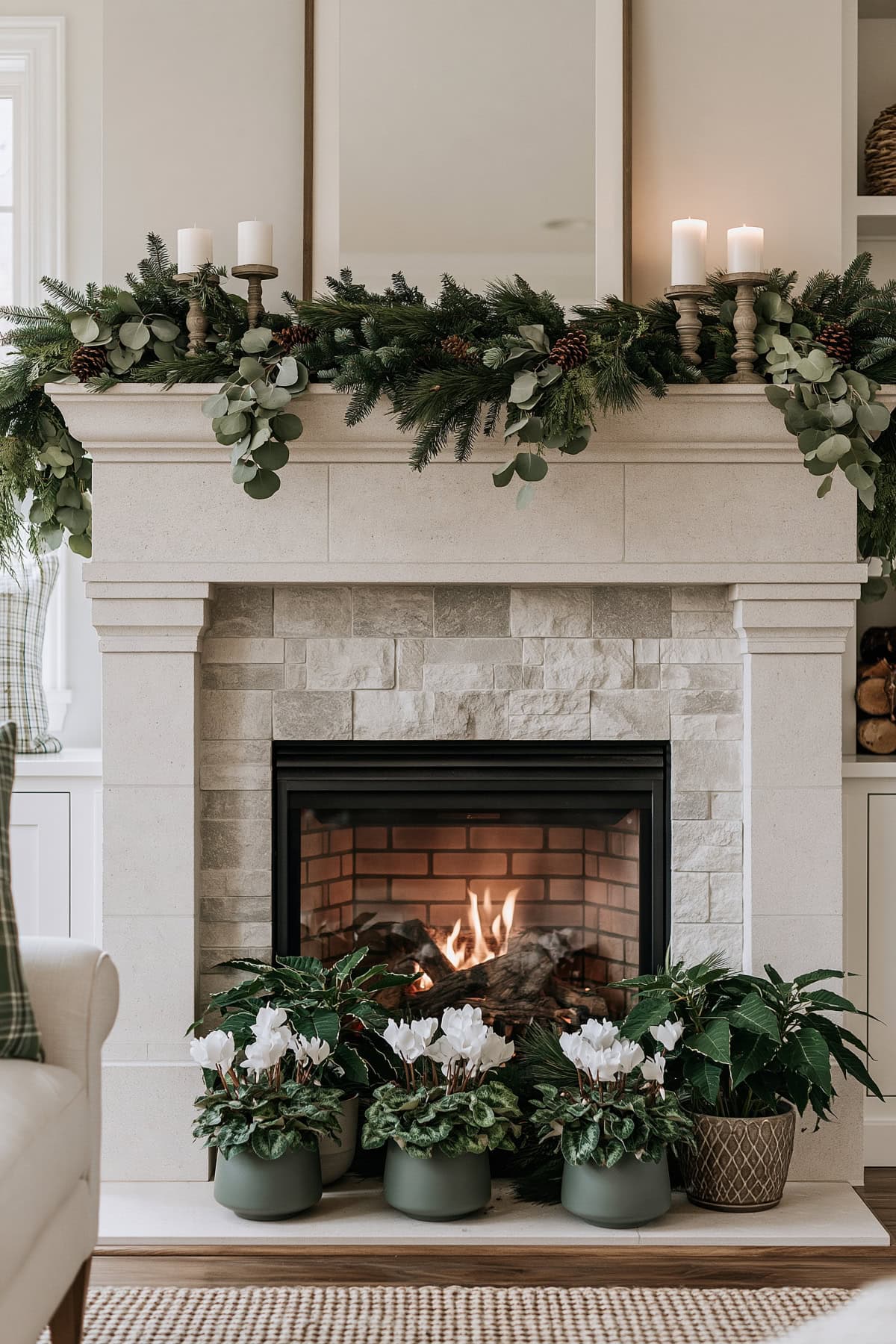
Silvery eucalyptus softens a fir garland, leaving room for cyclamen’s vivid, swept-back flowers to stand out. Thread short eucalyptus stems through the fir near the ends, where their rounded leaves remain visible. A low pot of cyclamen near the center supplies color without interrupting the garland’s line.
Cyclamen prefers cool conditions and indirect light, making a frequently heated fireplace a poor spot for long-term display. Lift its nursery pot from the decorative vessel for watering, then let excess water drain before returning it.
Trailing Ivy Mantel With Miniature Spruce Trees
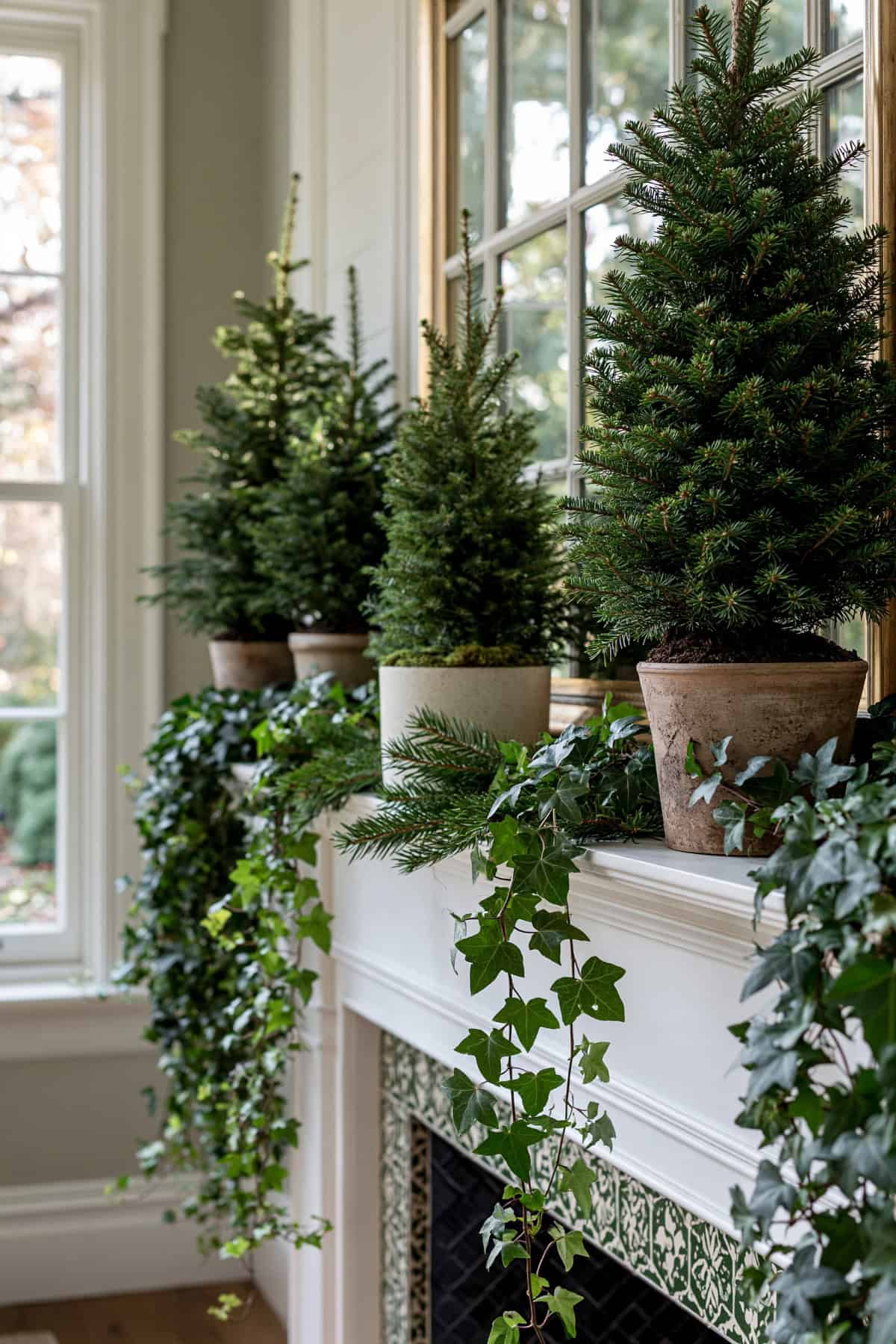
A row of miniature spruce trees gives trailing ivy a clear vertical rhythm. Space the trees unevenly across the shelf, allowing ivy to fall between their pots in separate strands. The bare gaps keep the arrangement legible, particularly on a shallow mantel.
Set each spruce on a watertight saucer before concealing the containers with fabric or paper wraps. Potted spruce needs bright light and cool indoor conditions; prolonged exposure to fireplace heat dries its needles. Guide ivy stems away from candles and the firebox opening.
Woodland Fern And Evergreen Mantel
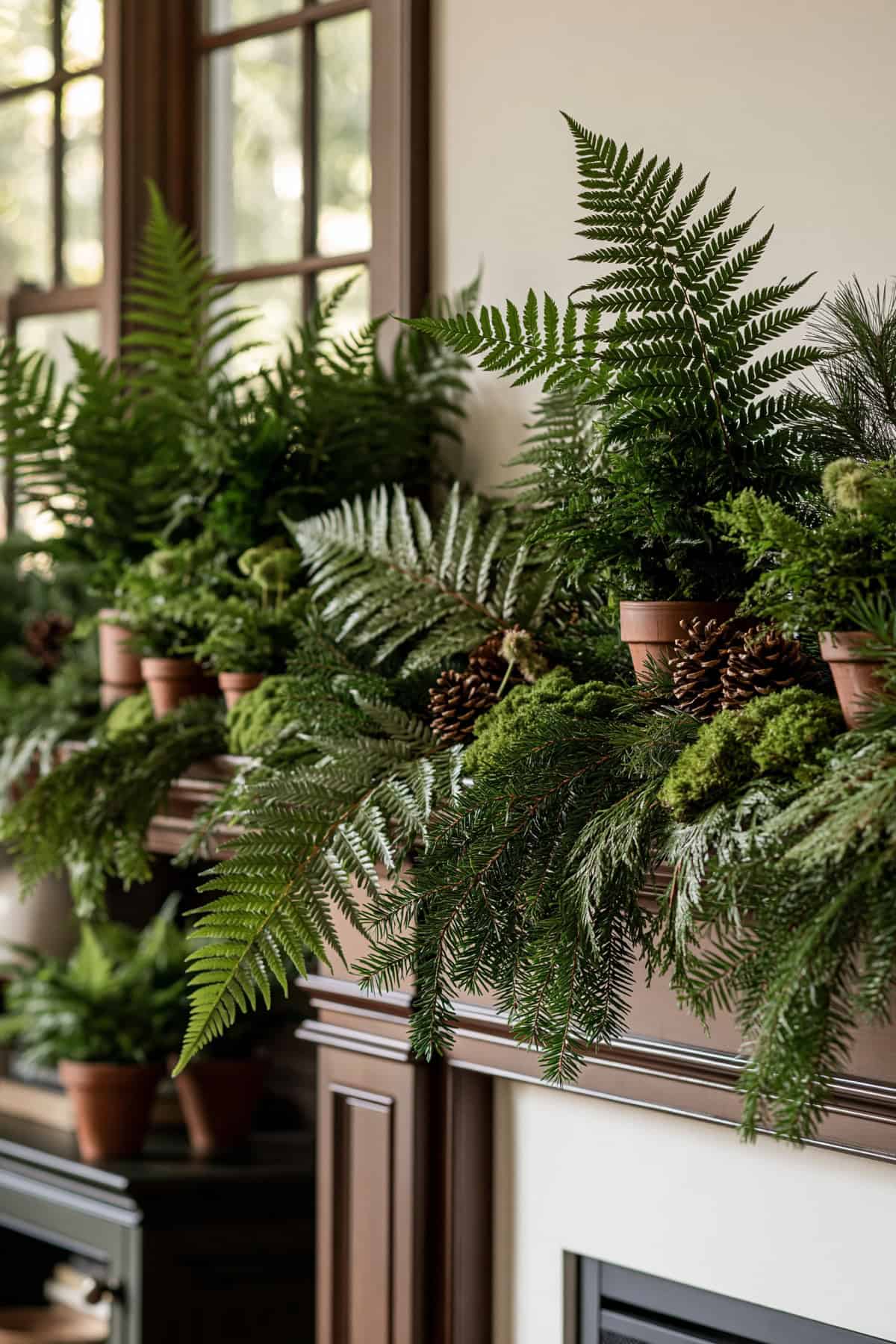
Fern fronds rising through low evergreen cuttings give this mantel the irregular outline of a forest floor. Tuck cut branches into a secured garland base, then place small potted ferns behind it where their fronds remain visible. A few fallen pinecones belong near the pots, clear of the shelf’s front edge.
Ferns need a damp root ball and protection from hot, dry air. A waterproof tray beneath the greenery catches stray needles and watering drips, particularly on wood or painted stone.
Red Poinsettias Among Fresh Cedar Greenery
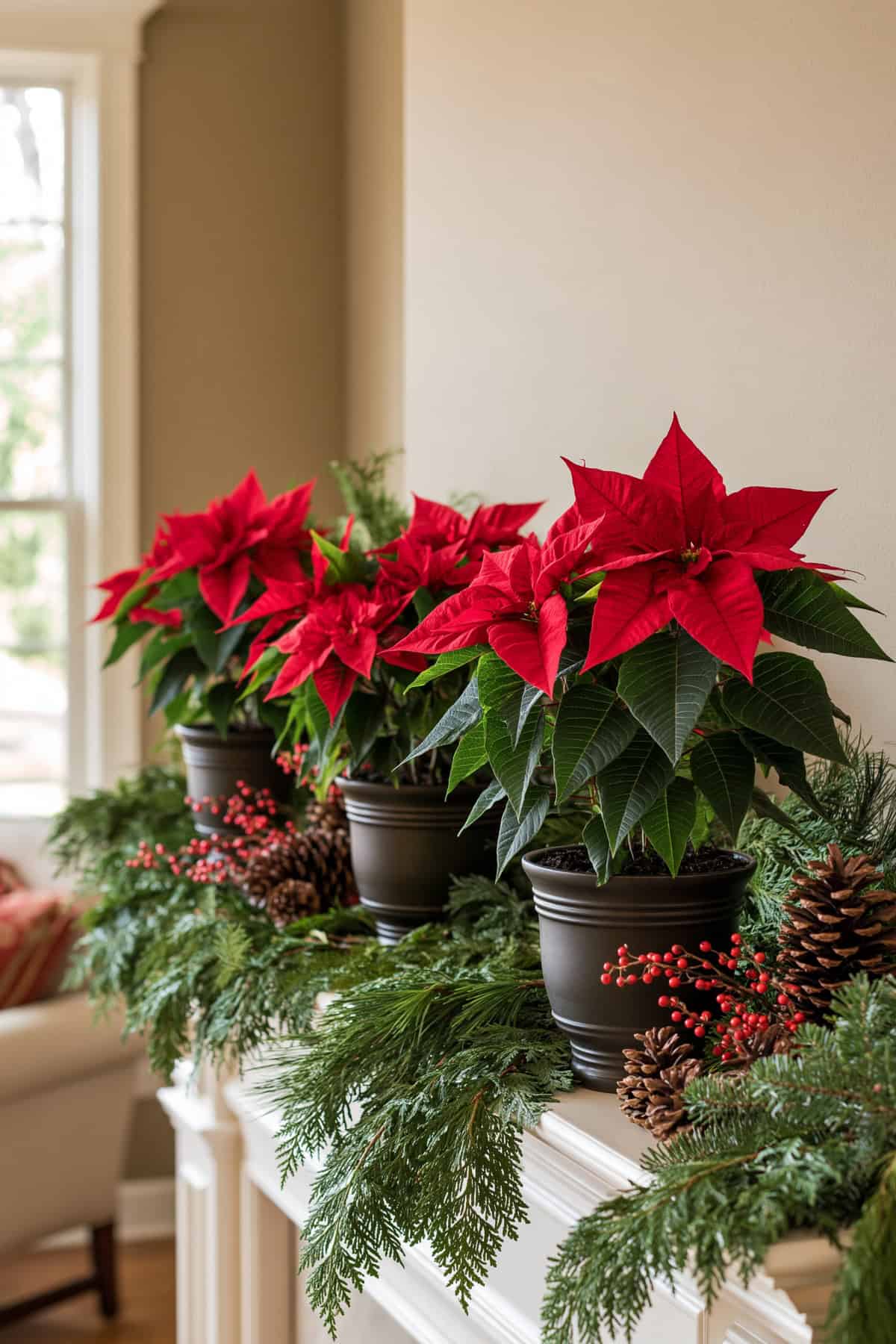
Red poinsettias look especially vivid when their pots sit just behind a loose sweep of cedar. Use two plants of different heights near one end of the mantel, allowing the red bracts to rise above the greenery. The other end remains open for the cedar’s natural taper.
Leave the poinsettias in their nursery pots inside watertight containers. Their roots suffer in standing water, so empty the outer vessels after watering. Set the plants beyond direct heat and protect them from cold drafts near exterior doors.
White Poinsettia And Blue Spruce Mantel
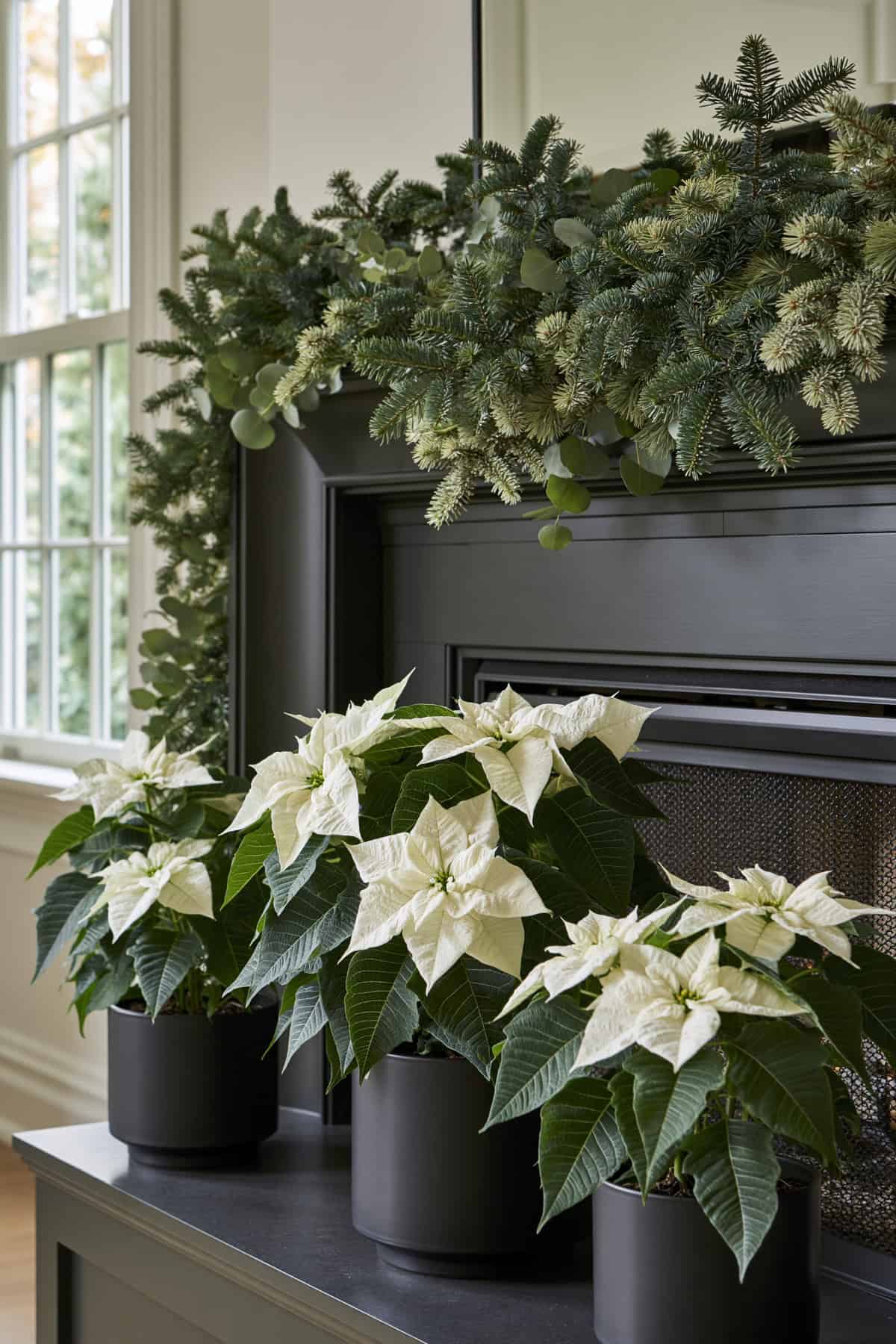
Cool-toned blue spruce gives white poinsettias a crisp outline against a mantel. Arrange short spruce branches along the shelf in a shallow, secured bundle, with the needle tips facing outward. Two white poinsettias placed behind the branches read as part of the greenery without disappearing into it.
Blue spruce needles are sharp, so position the branches away from frequently handled stockings. A pale ceramic pot keeps the focus on the creamy bracts, which may have a faint green or pink cast.
Hanging Cedar Garland With Potted Hellebores
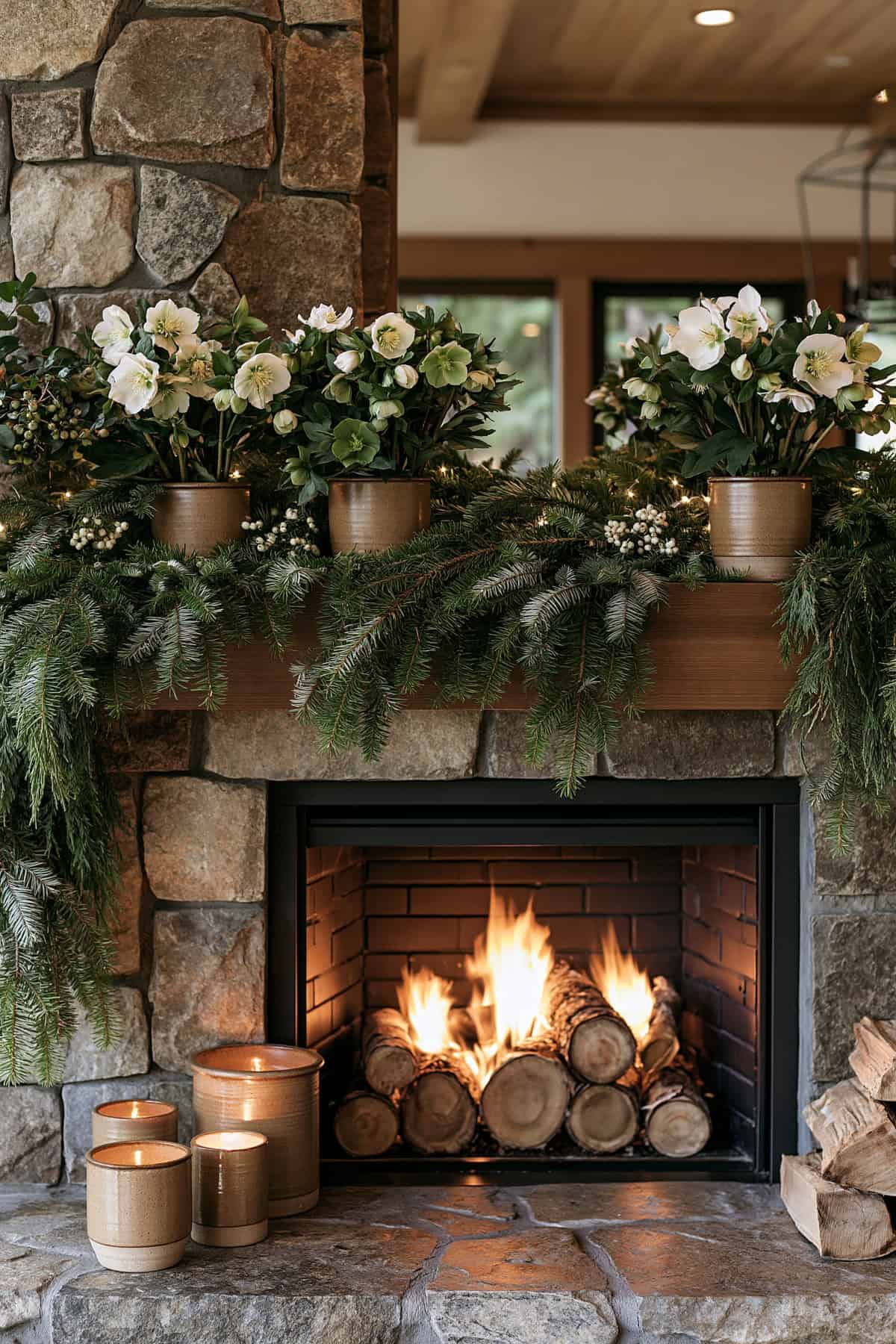
A cedar garland hung beneath the mantel shelf leaves the top clear for potted hellebores. Secure the garland to suitable mantel hooks or removable supports rated for its weight, giving it a shallow swag. Its lowest point should remain well clear of the firebox and any flame.
Hellebores have downward-facing blooms; a slightly raised pot helps show their flower interiors. Keep the plants in a cool, bright location and check the soil beneath the foliage, where dryness is easy to miss.
Rosemary And Bay Leaf Mantel Garden
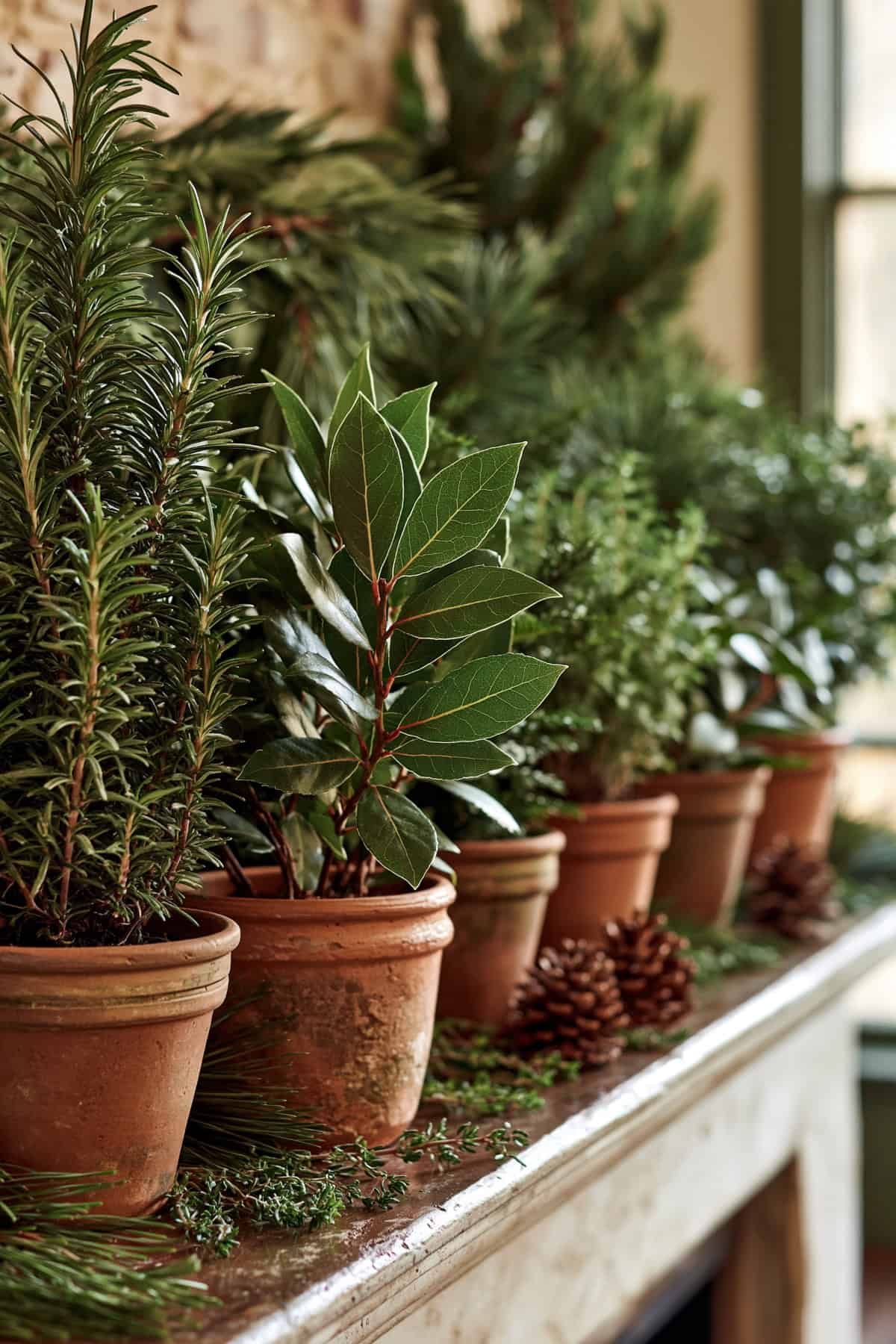
Small herb pots turn the mantel into a fragrant holiday garden with a practical afterlife. Arrange rosemary beside a compact bay plant, then repeat their leaf shapes with short, secured cuttings across the shelf. Simple clay pots keep the planting legible.
Bright daylight is important for both herbs, and each pot needs drainage beneath its decorative cover. Rotate the plants if they lean toward a nearby window. Any culinary leaves should come from plants grown and maintained for that purpose, away from decorative sprays and treatments.
Paperwhite Narcissus In Antique Brass Pots
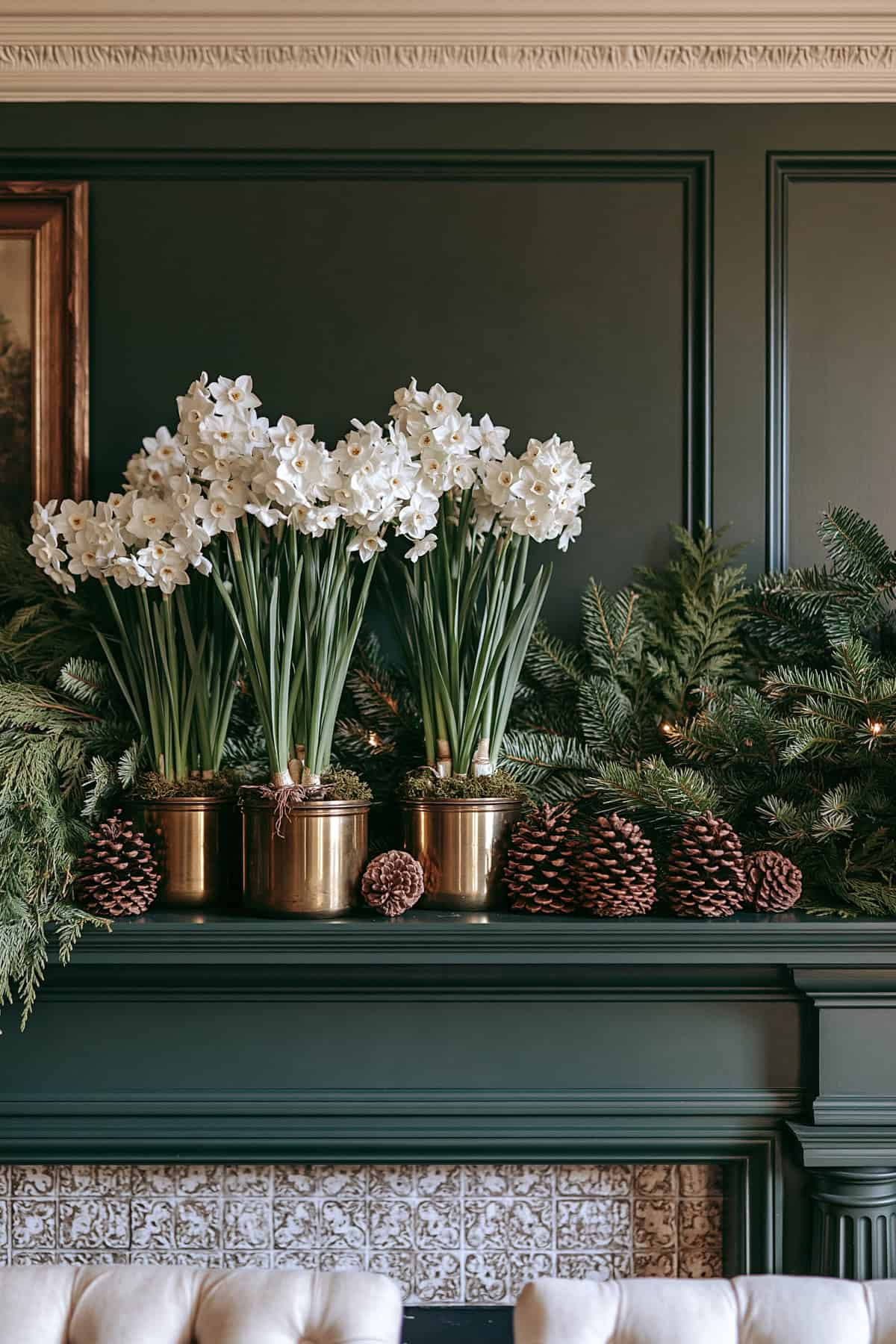
Antique brass pots give paperwhite narcissus a warm base for their slender green stems and white flower clusters. Group three vessels at varied heights along one side of the mantel, keeping the bulbs visible where the containers allow it. The open space beside them emphasizes the flowers’ airy shape.
Brass vessels need a watertight liner if they lack drainage protection. Paperwhite stems grow toward light and may need discreet support as the blooms open. Their strong fragrance is worth considering in a small room.
Cascading Eucalyptus Mantel With Red Berries
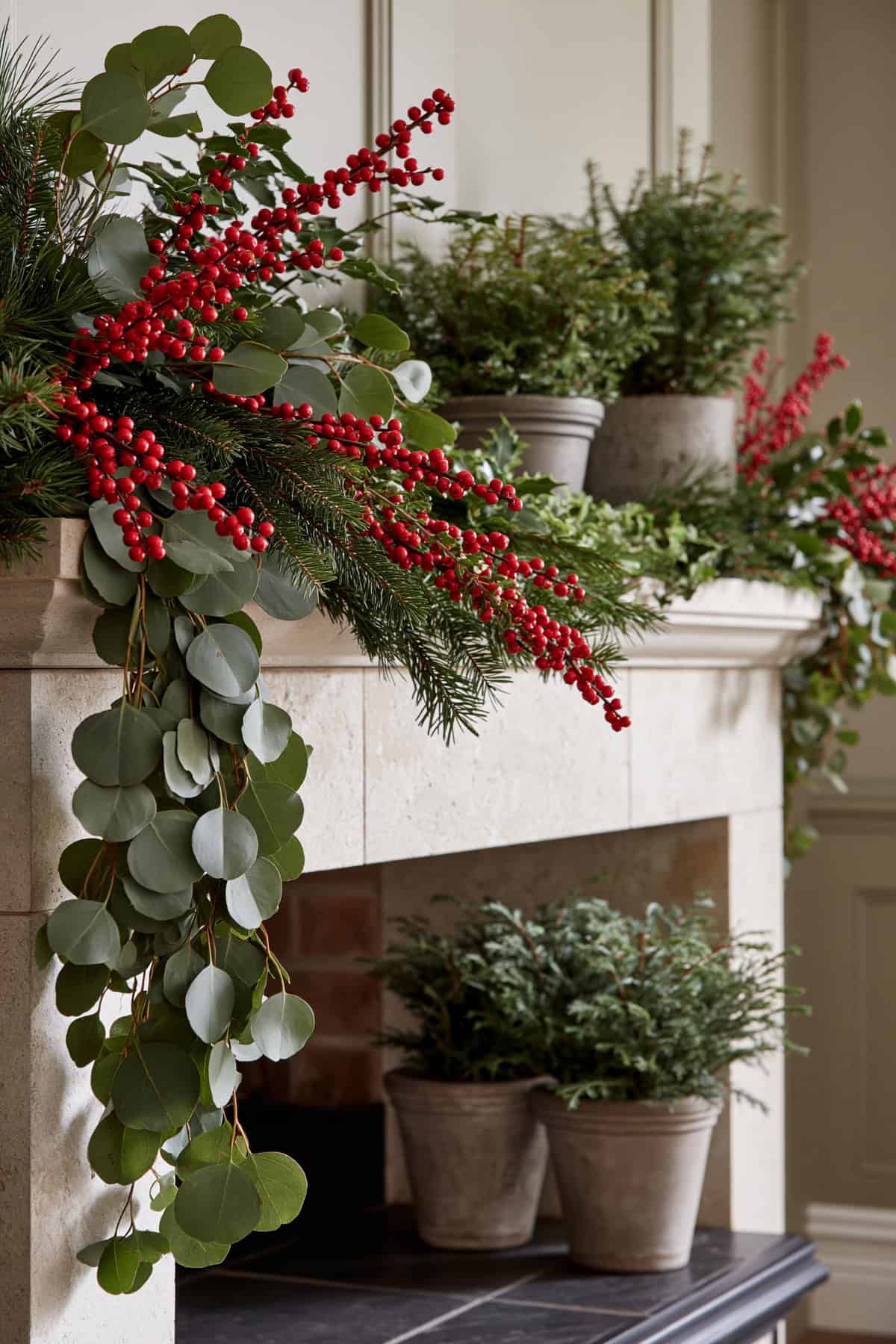
A long fall of eucalyptus at one mantel corner puts red berries at eye level. Secure the greenery along the shelf before tucking berry stems into the upper section, where their clusters remain visible. Choose berries from a florist and keep unidentified or toxic varieties away from children and pets.
Eucalyptus dries as it ages, changing both its shape and fire risk. Display it away from heat, inspect the stems regularly, and remove brittle material promptly. A few berries placed high in the cascade carry the color without weighing down the leaves.
Mini Conifer Forest Across The Mantel
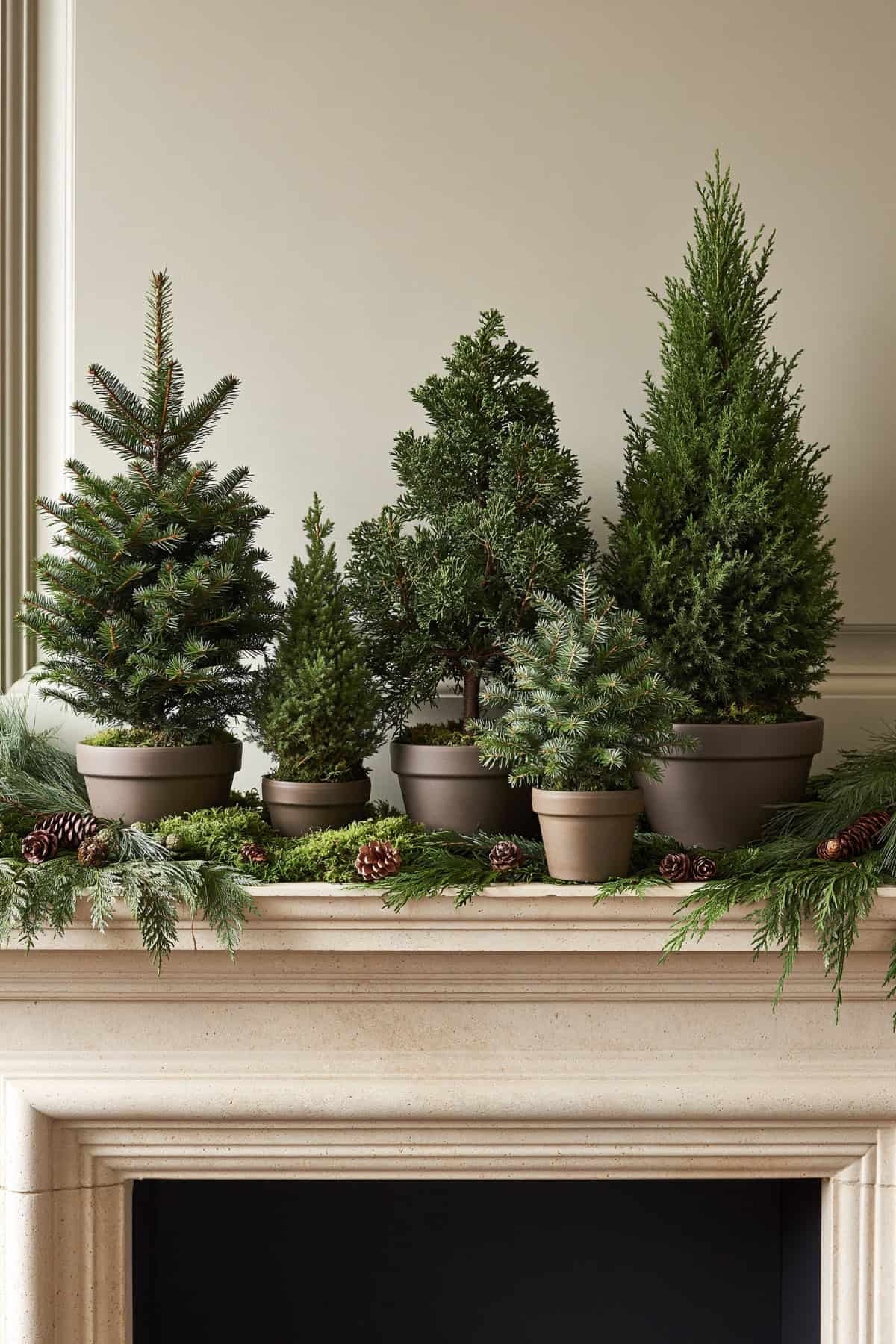
Different heights of miniature conifers turn a wide mantel into a compact winter landscape. Cluster the tallest trees near one side and allow shorter pots to step down across the shelf. Leave enough space between branches for each outline to remain distinct.
Matching pot covers give varied conifers a common base, though each living tree still needs its own saucer and drainage. Check plant labels for care: a Norfolk Island pine and a potted outdoor spruce have different indoor needs. Keep both away from a working fire.
Mossy Mantel With Cyclamen And Pine
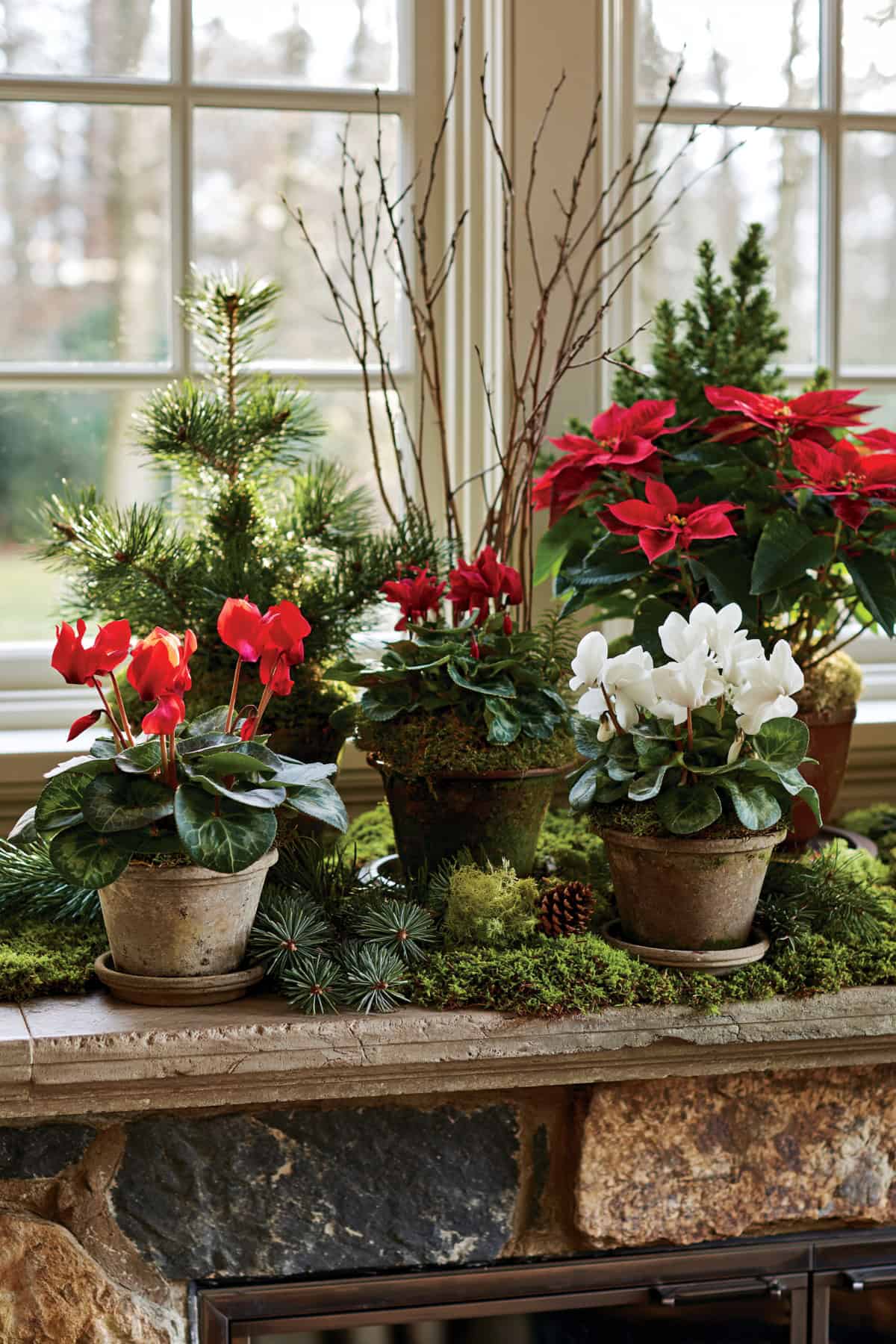
A low moss-covered tray gives cyclamen and pine a woodland setting without placing damp material directly on the mantel. Set potted cyclamen into the tray, then arrange short pine cuttings around their containers. The flowers rise above the moss, where their curved stems remain visible.
Preserved moss and live moss require different care, so keep watering directed into the plant pots. Lift the tray occasionally to check beneath it for trapped moisture. A few exposed patches of tray edge prevent the planting from appearing overcrowded.
Norfolk Pine And Cedar Mantel Display
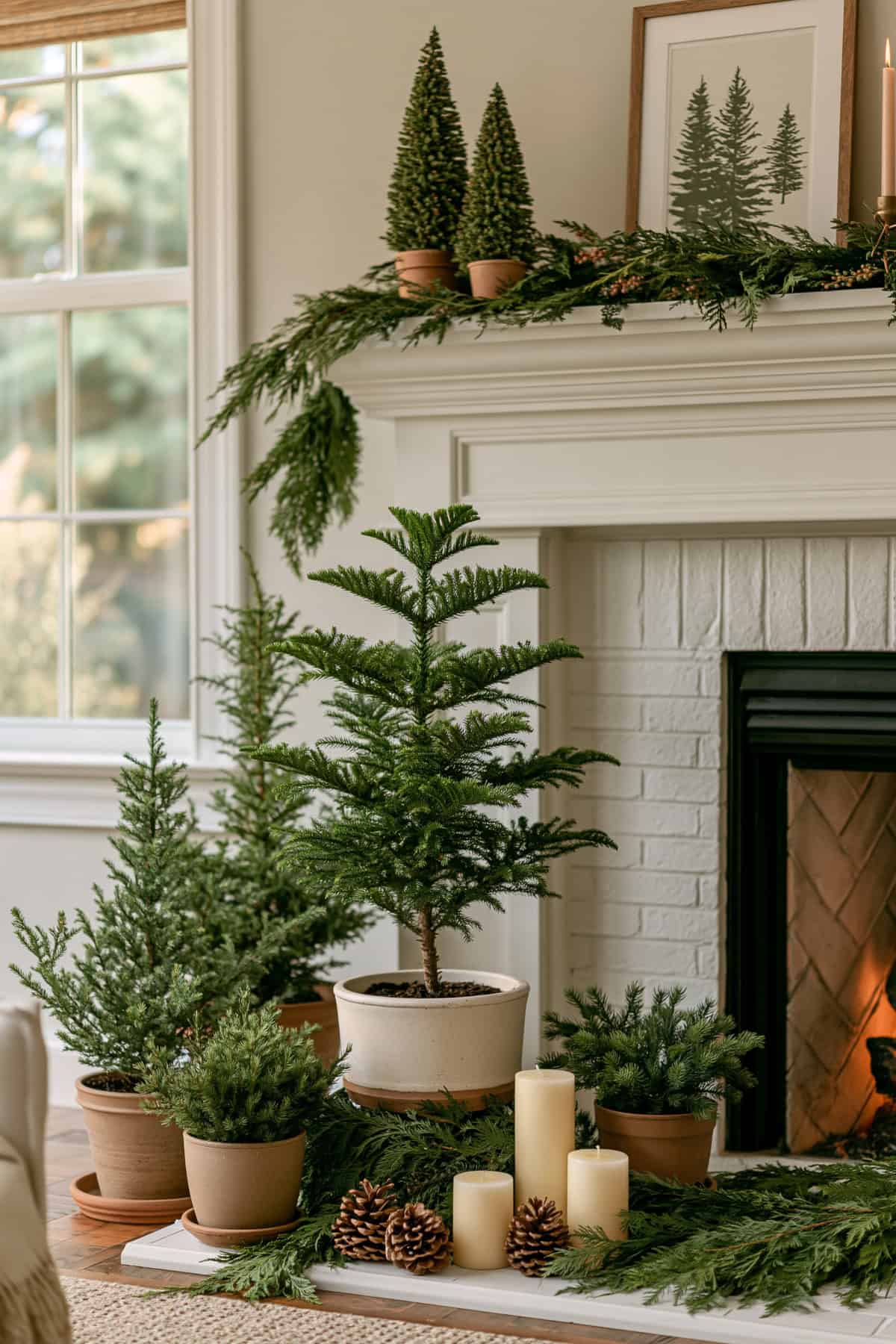
The tiered branches of a Norfolk Island pine make a strong centerpiece above a low cedar garland. Place one appropriately sized plant toward the back of a deep mantel, then let the cedar follow the shelf edge without crossing its lower branches. Small ornaments on the garland echo the holiday setting without burdening the tree.
Norfolk Island pines need bright, indirect light and protection from dry heat. Give the pot a stable base, especially if branches extend past the shelf. Rotate it periodically to maintain even growth.
Greenery Garland With Succulents Tucked Throughout
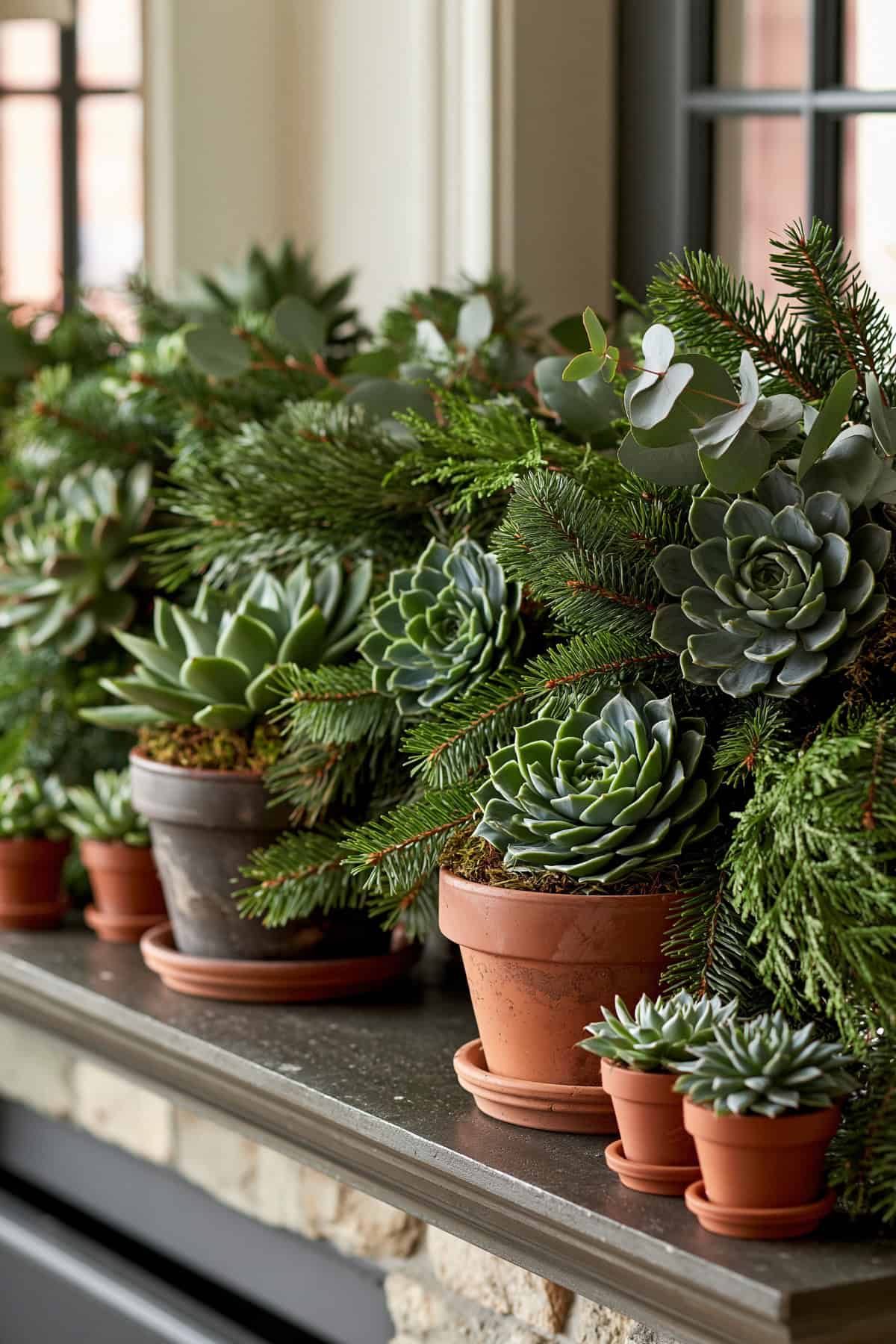
Succulent rosettes give a greenery garland distinct focal points at close range. Nestle small potted plants behind the garland, parting the branches to reveal their leaves. Pots are easier to remove for watering than bare-root plants wired into the foliage.
Choose firm, compact specimens that remain clear of the mantel edge. Succulents need bright light, restrained watering, and protection from fireplace heat; their pots should be lifted out of a dim display regularly for proper care. Evergreen cuttings frame the rosettes without covering their centers.
Juniper Berry Mantel With White Hellebores
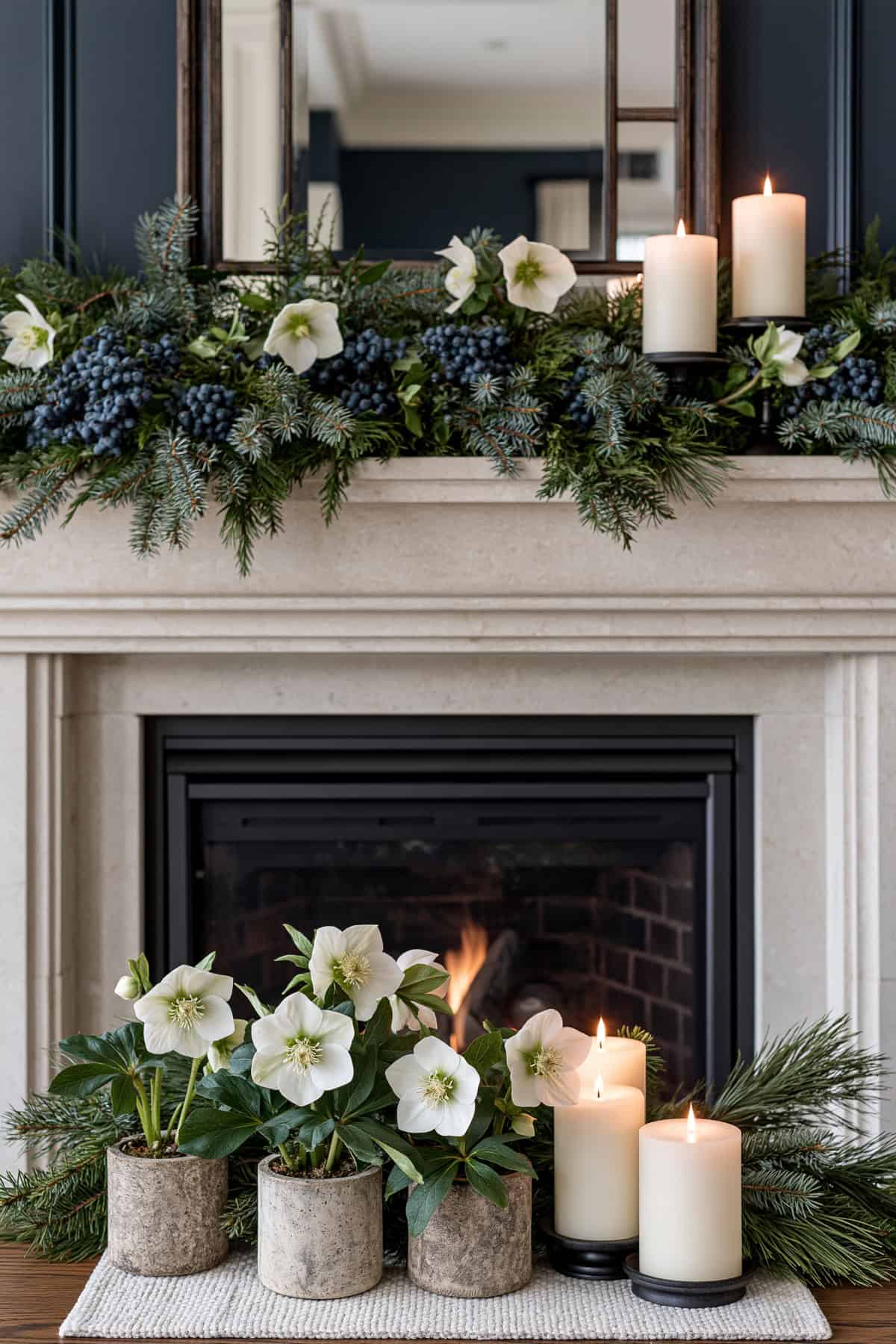
Dusky juniper berries deepen the green around white hellebore blooms. Lay berried juniper branches along the back of the shelf and position potted hellebores slightly forward, where their nodding flowers show against the darker foliage. A pale stone container keeps the palette quiet.
Handle cut juniper with care, since its foliage may be prickly. Decorative berries should remain out of reach of children and pets and should never be treated as edible. Check beneath the hellebore leaves when watering; dense growth hides the soil surface.
Boxwood Topiaries Framed By Cedar Garland
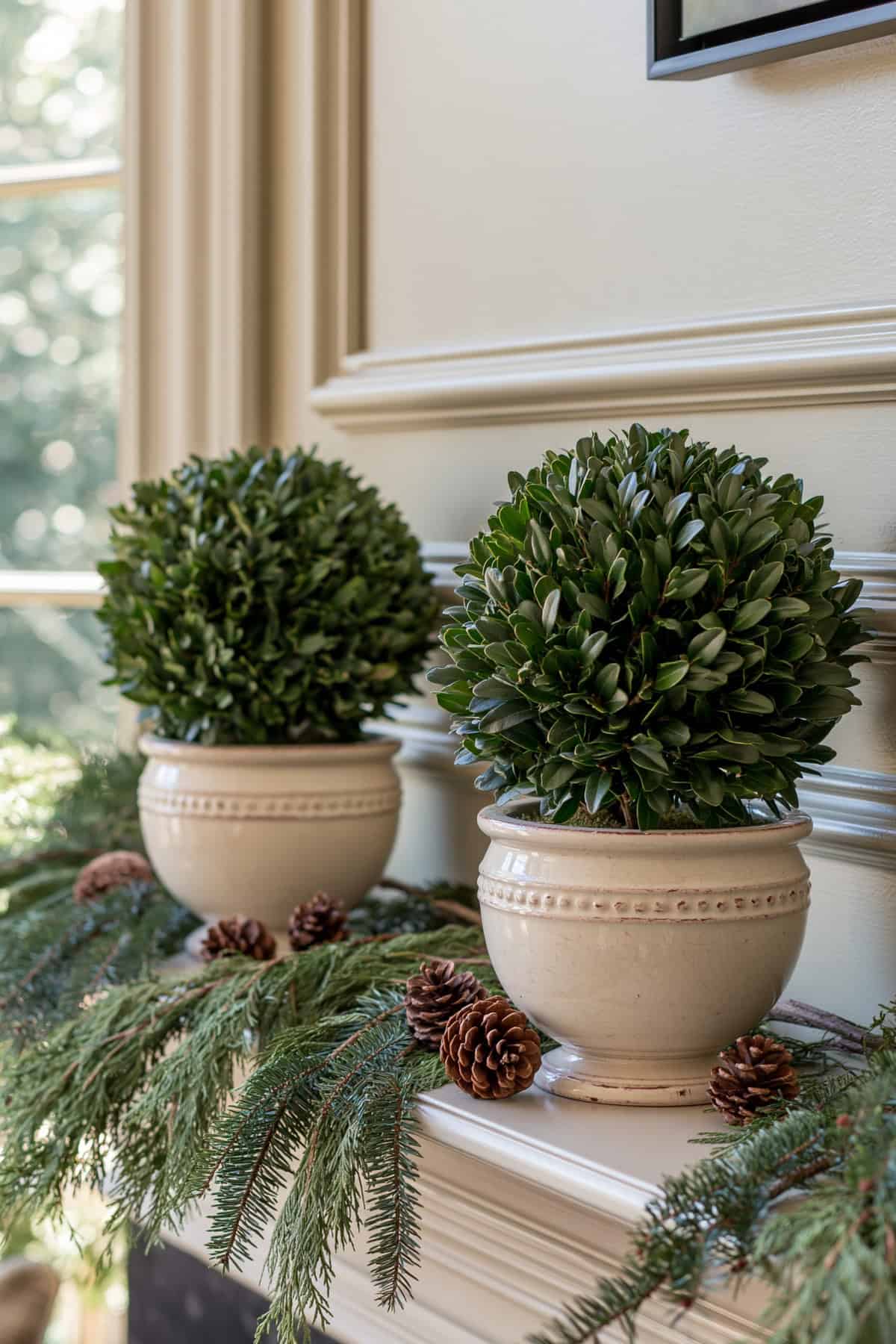
A pair of boxwood topiaries gives a formal mantel a clear frame. Stand one at each end, then run cedar along the shelf between their pots. The topiaries’ clipped outlines hold their shape against cedar’s loose sprays, leaving the center available for a mirror or a single ornament.
Choose containers with enough weight to steady the plants, and protect the mantel with saucers. Indoor boxwood needs light and regular checks for dry soil. Keep the cedar low enough that it does not obscure the topiary trunks.
Trailing Pothos Mixed With Holiday Greenery
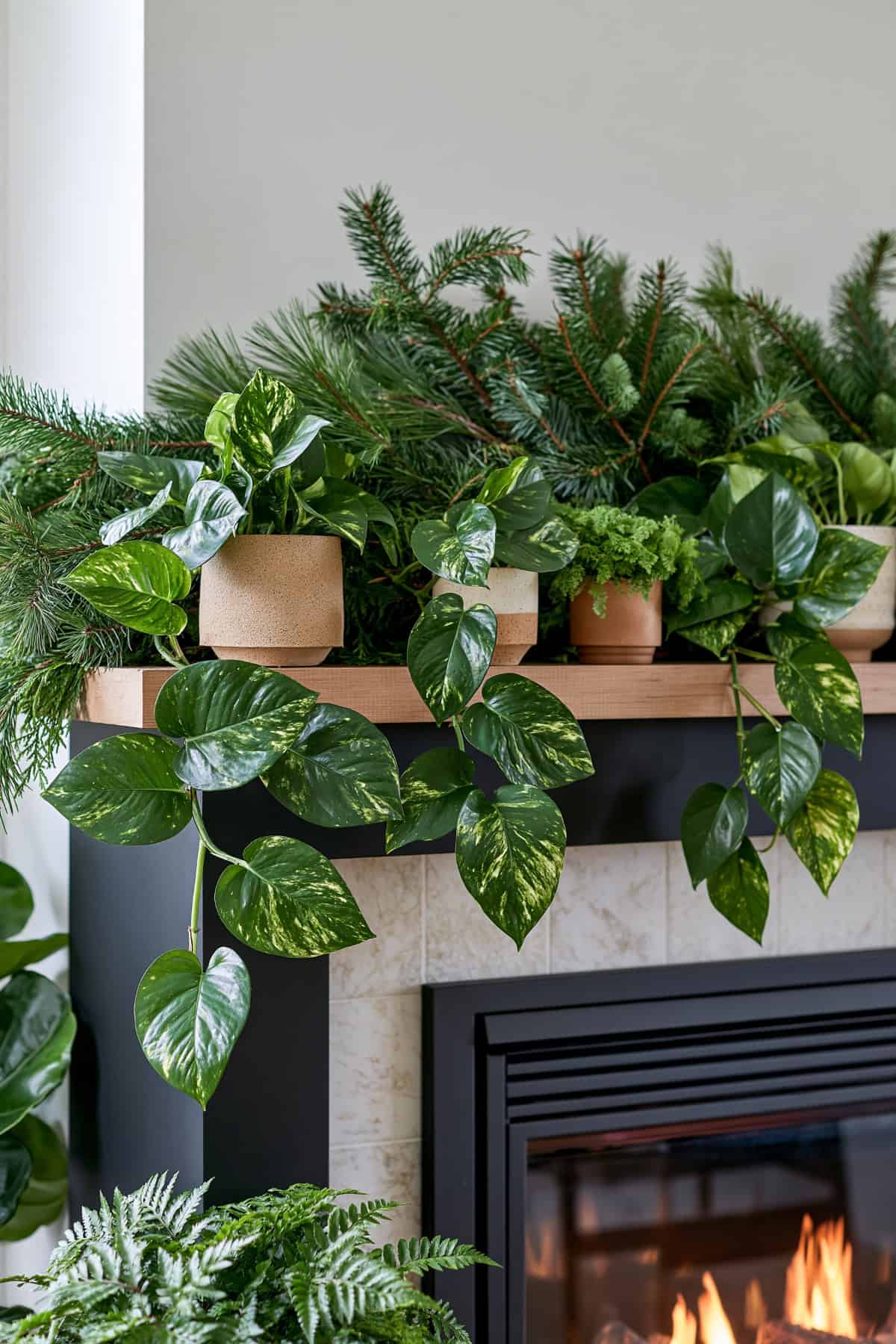
A pothos already growing indoors lends its long vines to a holiday mantel without demanding a new plant. Set its pot at one end and thread the stems loosely above a short cedar garland. Let a single vine trail down the outer side, away from the firebox.
Pothos needs its customary light and watering routine through the holiday display. Avoid pinning stems tightly to cut greenery, which dries and shifts over time. The plant is toxic if ingested, making its hanging vines unsuitable for areas accessible to pets or young children.
Amaryllis And Pinecone Woodland Mantel
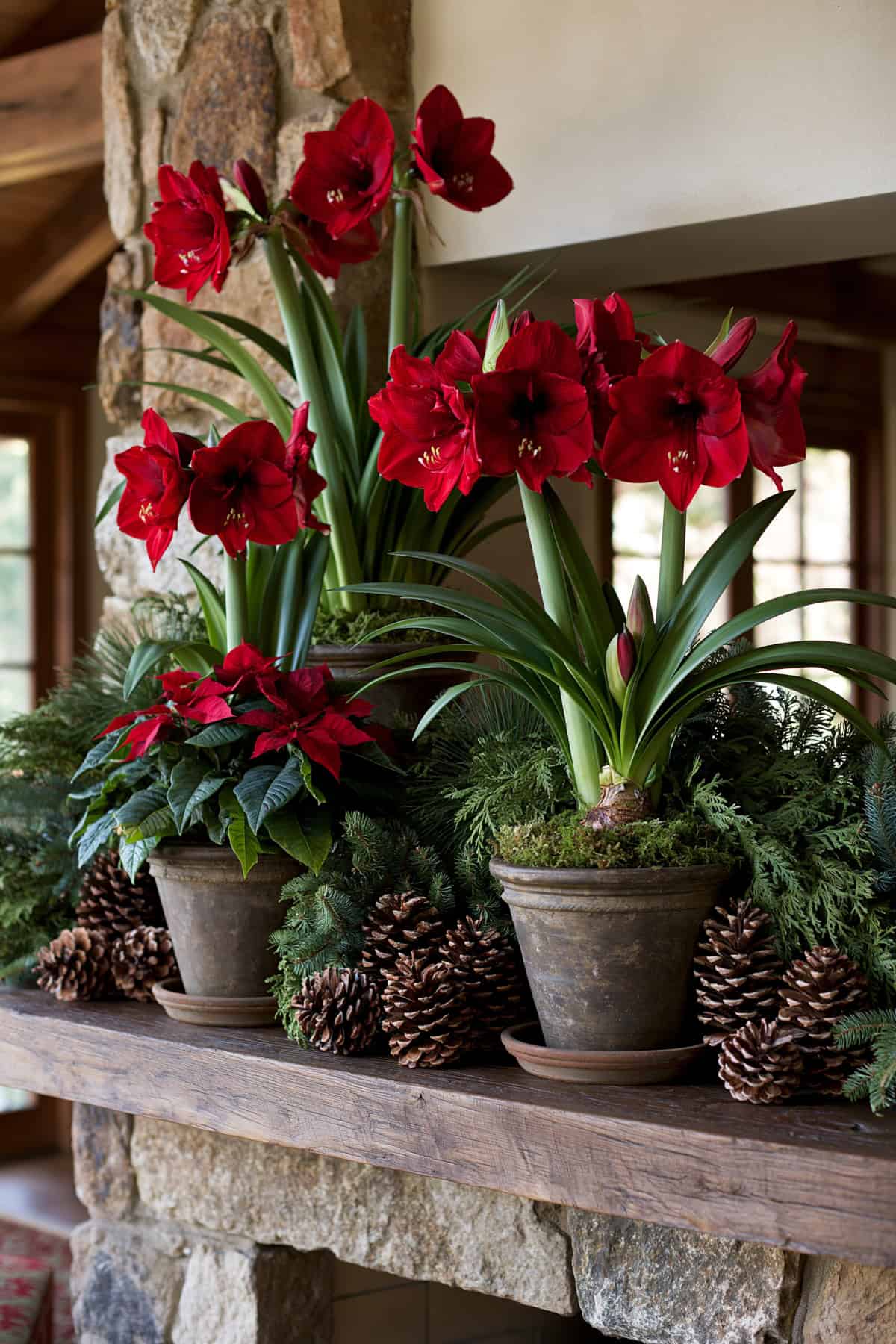
A tall amaryllis gives a pinecone arrangement the height needed to register above the mantel. Place the potted bulb near the center, then scatter pinecones across a secured bed of evergreen cuttings, concentrating them near the base of the pot. Their natural brown color grounds a red or white bloom.
Use a heavy vessel for the amaryllis as its flower stalk develops. Pinecones and dry evergreen material need ample distance from flames and hot surfaces. Leave space around the stalk for its buds to open fully.
White Orchid Christmas Mantel With Evergreen Foliage
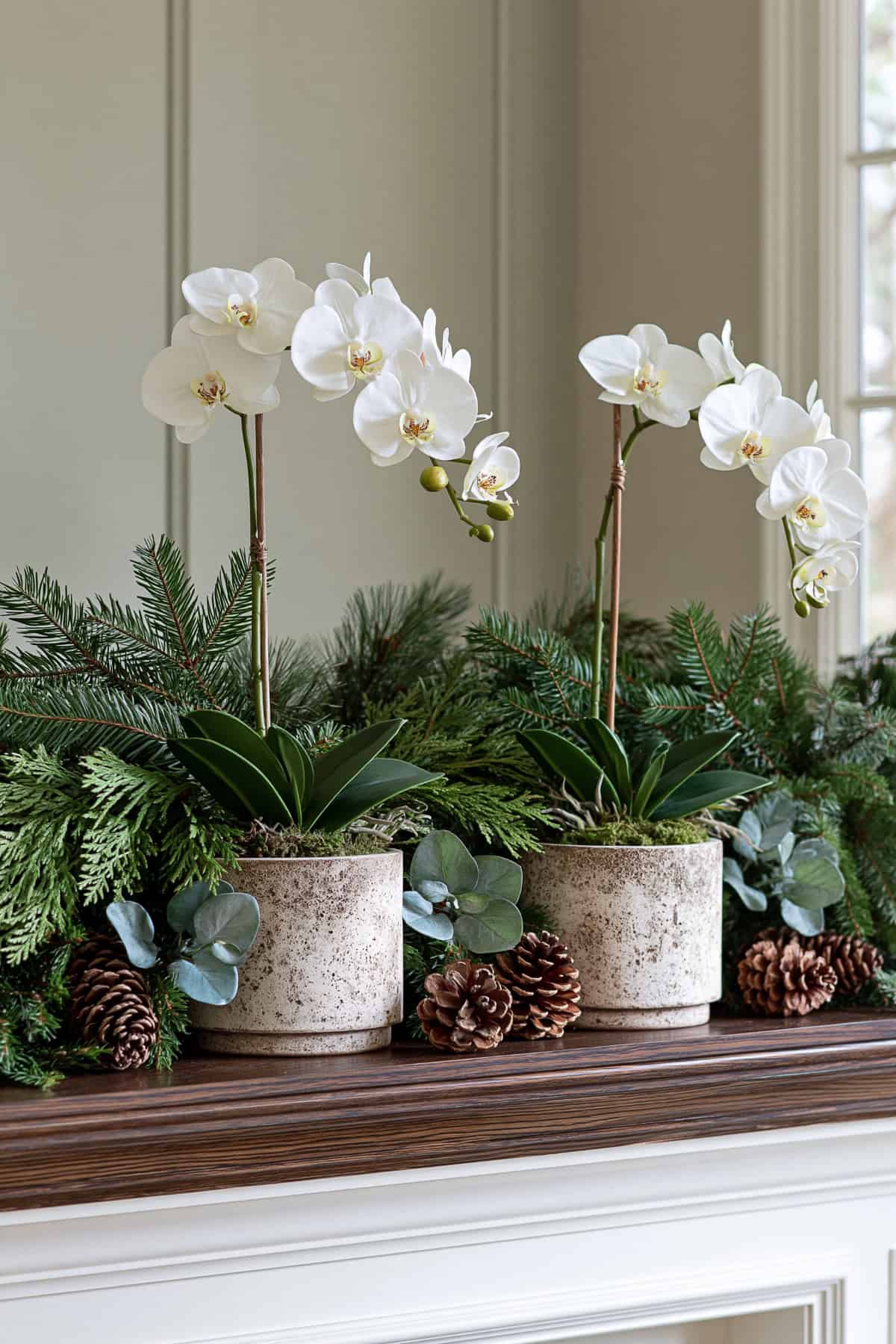
A white orchid gives a restrained evergreen mantel a graceful focal point. Set the orchid slightly off-center, then arrange short fir or cedar cuttings along the shelf beneath its flowers. Keep the branches below the pot rim, preserving the open line of the flower stems.
A watertight outer pot protects the mantel, though the orchid’s inner pot must drain freely after watering. Place it where the flowers receive bright, indirect light and no hot draft from the fireplace. Avoid fastening decorations to its delicate stems.
Fern-Filled Garland With Long Pine Branches
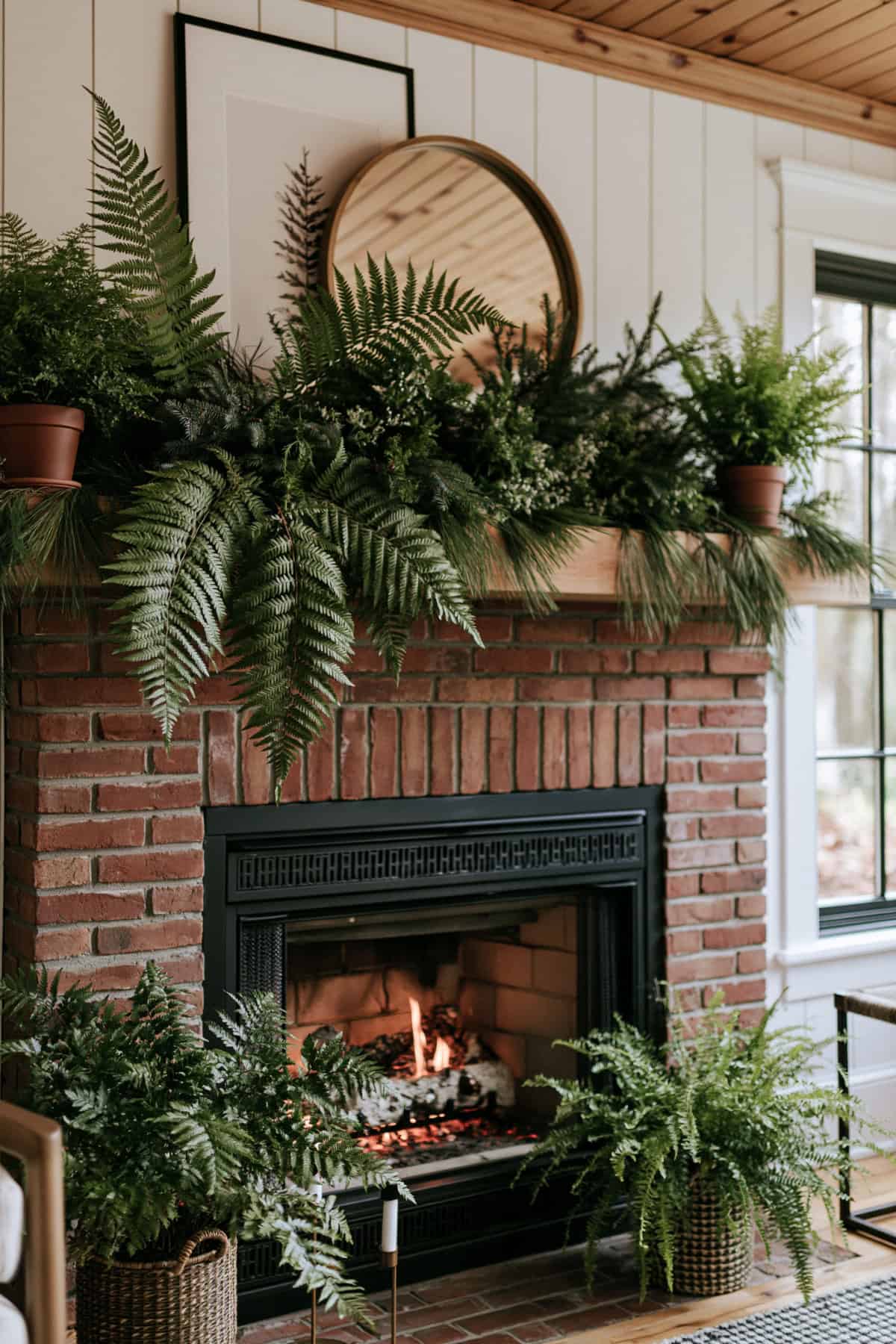
Long pine branches extend the line of a fern-filled garland past the center of the mantel. Secure pine along the back first, angling its tips outward, then tuck fern fronds into the garland where their fine leaflets remain visible. The broad pine sweep keeps the ferns from appearing scattered.
Fresh cut ferns wilt in dry rooms, making this display particularly well timed for a gathering. Potted ferns placed behind the garland last longer and lift out easily for watering. Watch for needles beneath the pine as it dries.
Winterberry Branches Rising Above Mixed Greenery
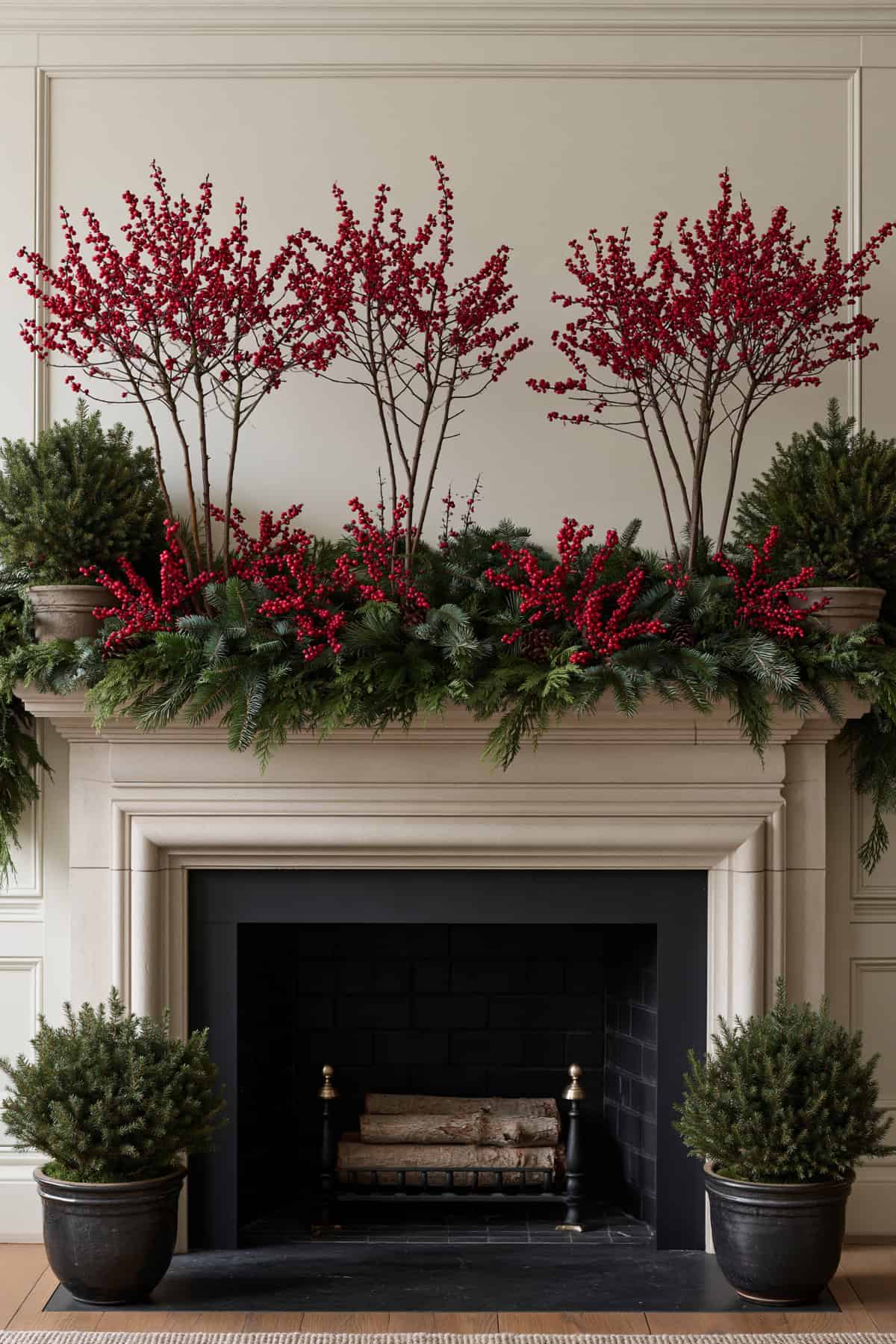
Upright winterberry branches draw the eye above a low mix of cedar and fir. Place the berry stems in a stable, water-filled vessel hidden behind the greenery; their branching shape needs open wall space to read clearly. Trim surrounding foliage below the lowest berry clusters.
Winterberry is decorative and toxic if eaten, so keep fallen berries away from children and pets. Check the vessel’s water level and remove dropped fruit promptly. Against a pale wall, the red stems and berries remain striking without additional ornaments.
Hanging Ivy And Cedar Mantel Over A Brick Fireplace

Brick gives hanging ivy and cedar a richly colored backdrop, especially when the greenery crosses the mantel’s front edge. Run cedar along the shelf and let ivy descend at the outer corners, leaving the center of the brick surround visible.
Secure each trailing stem independently so its weight does not pull at the garland. A working fireplace requires generous clearance between all greenery and the firebox. Dry cedar and ivy should be removed as soon as their leaves become brittle. Protect porous brick and the mantel surface from watering drips.
Potted Ferns With Blue Spruce Garland
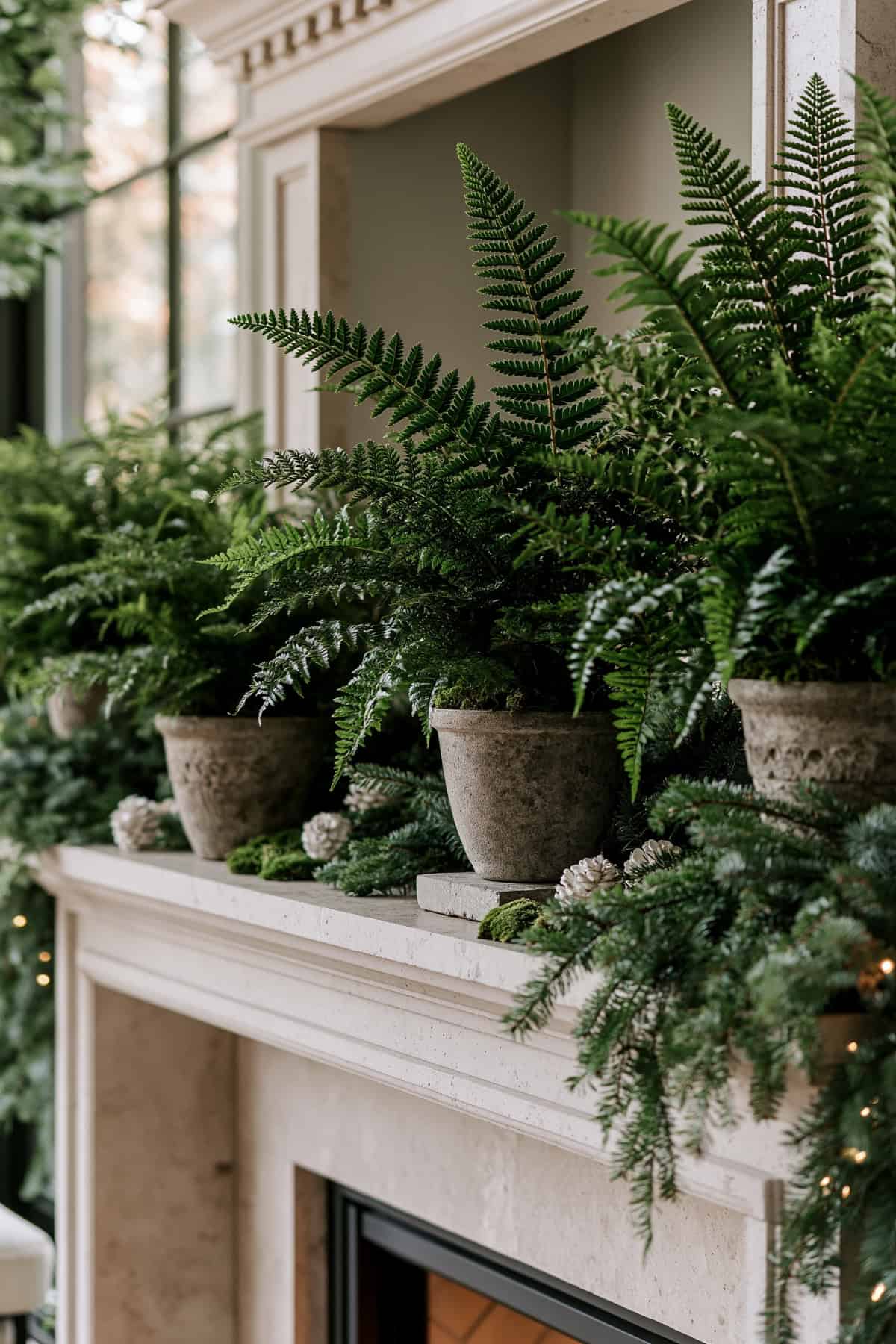
Soft fern fronds rising behind blue spruce make the mantel’s green shades distinct. Place the fern pots near the ends, then secure a narrow spruce garland across the front of the shelf.
The fern leaves need open space above them; densely packed branches below provide the stronger horizontal line. Blue spruce drops sharp needles as it dries, particularly near heat. Keep a tray or protective layer beneath the garland and clear loose needles during the display. Water the ferns at a sink before returning their pots to the mantel.
Herb Garden Mantel With Evergreen Cuttings
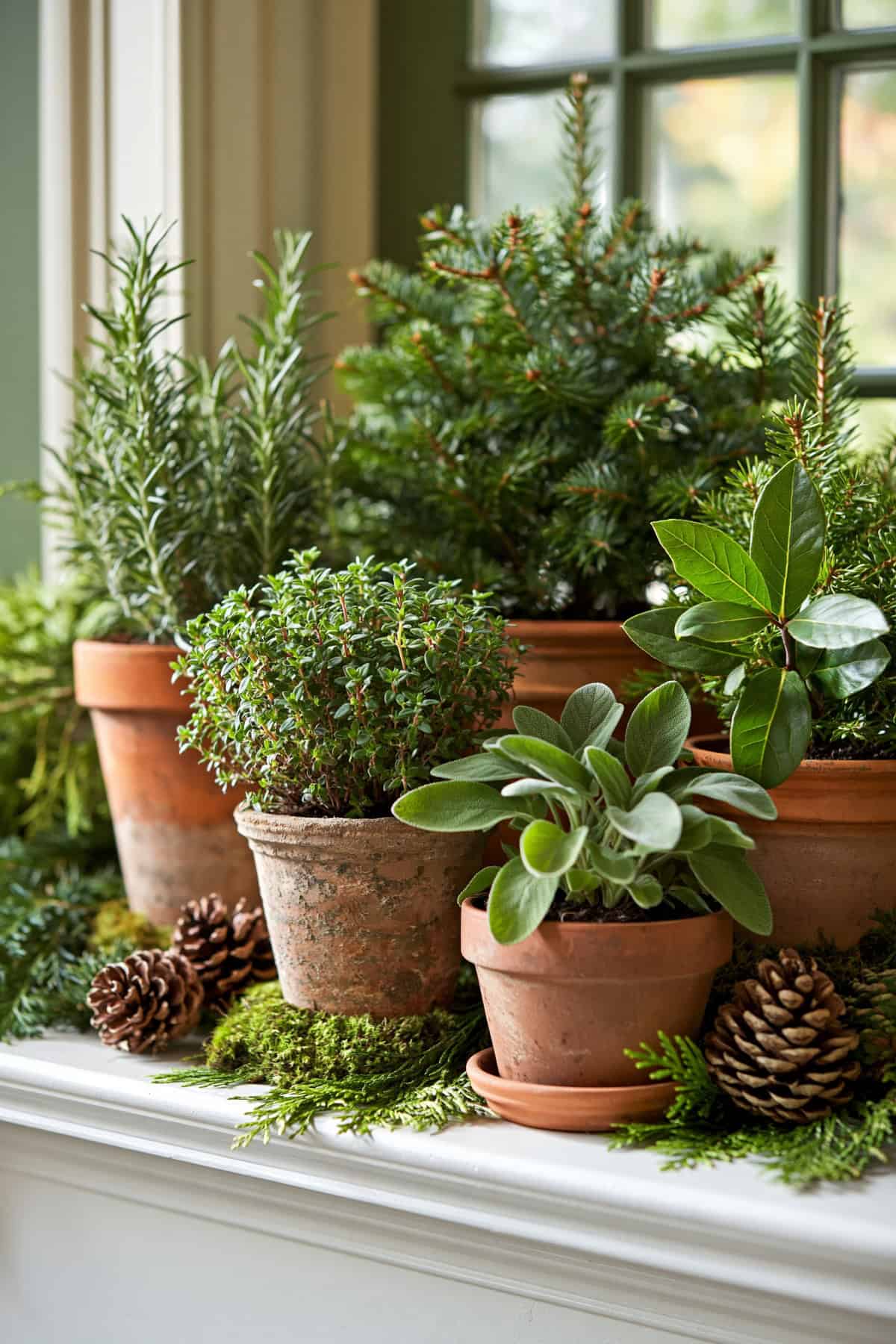
A line of potted herbs gives evergreen cuttings a living, useful setting. Choose compact rosemary, thyme, and sage plants with similar light needs, spacing their pots far enough apart for air to reach the foliage.
Tuck short cedar sprigs between the containers, secured separately from the plants. Herbs stay healthier with bright window light and pots that drain. If the mantel is dim, the display is best kept brief before the plants return to a brighter position. Label any cut greenery clearly so it is never mistaken for a culinary herb.
Trailing Greenery Around An Arched Mirror
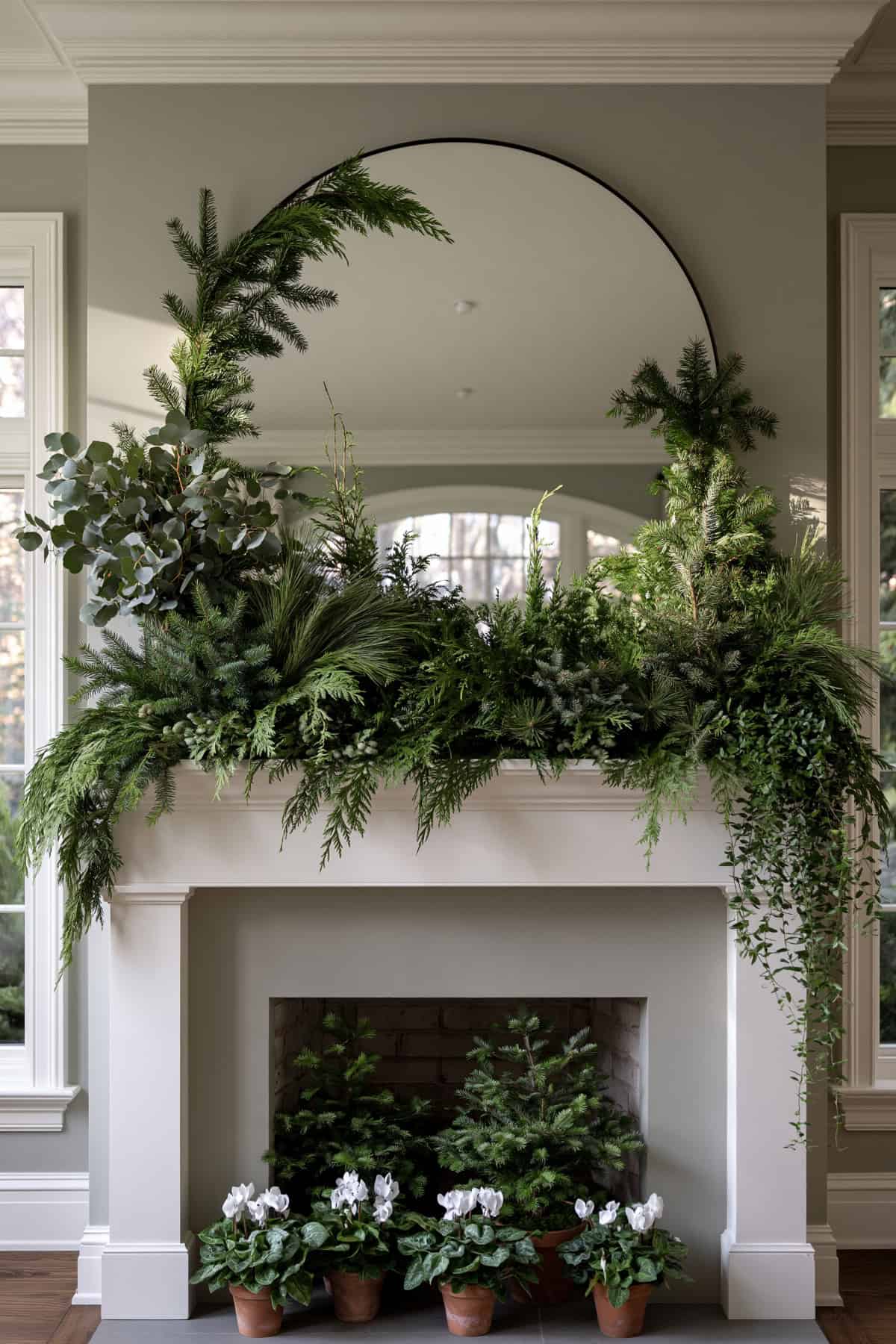
The curve of an arched mirror gives trailing greenery a natural path above the mantel. Fasten a lightweight garland to suitable supports around the mirror’s upper edge, then let its ends descend toward the shelf.
Keep the reflective surface largely open, allowing it to catch the greenery and nearby lights. Check that the supports suit the mirror frame and wall finish; adhesive on delicate surfaces may leave damage. Set a small potted plant at the base of one descending strand, with a saucer beneath it and leaves clear of any candle flame.
Green And White Mantel With Paperwhites And Hellebores
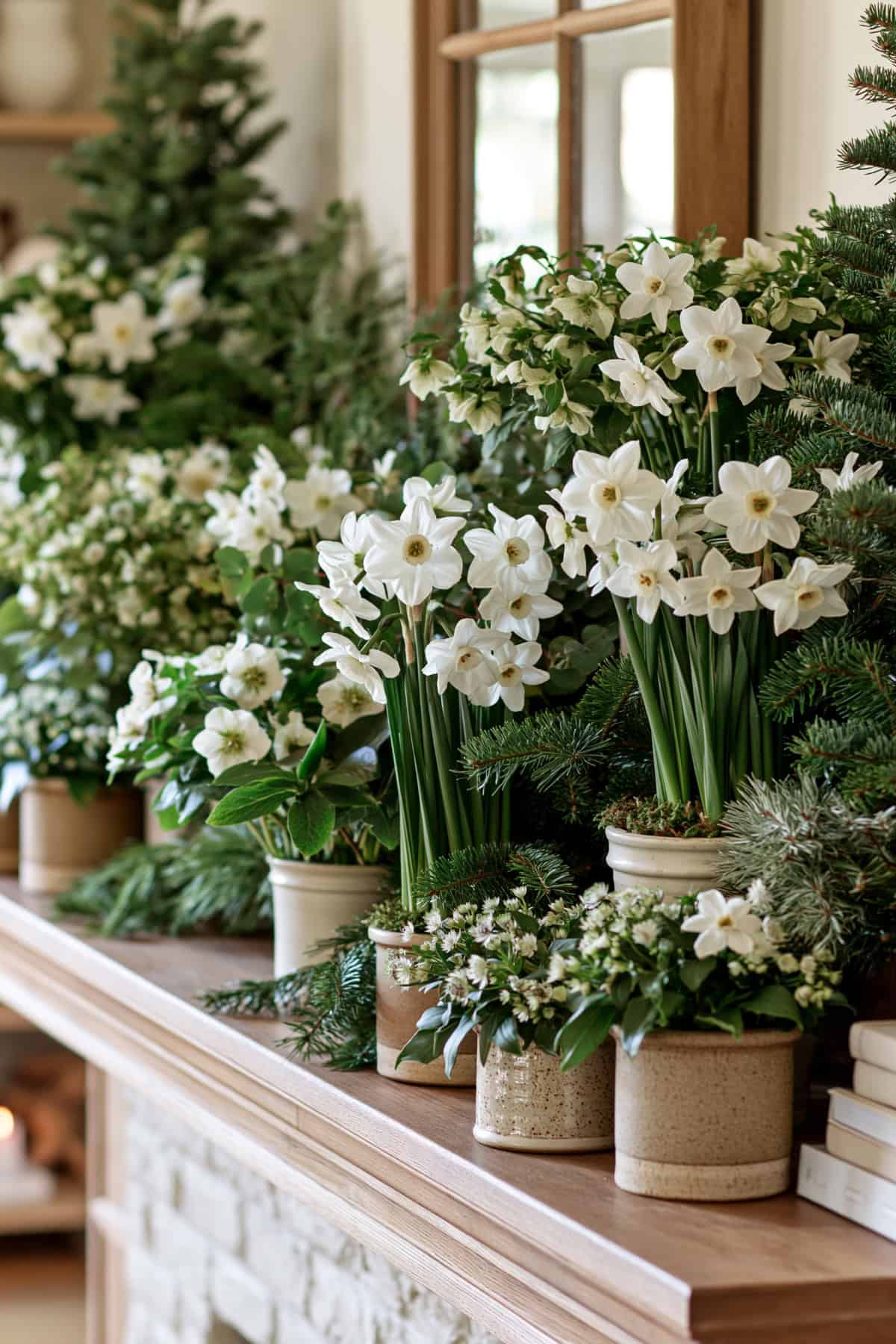
Paperwhites provide height, and hellebores fill the lower space beneath them for a green-and-white mantel. Group the paperwhites at the back of the shelf and place hellebores toward the front, where their downward-facing blooms remain visible.
A short run of cedar links the pots without swallowing their foliage. The plants prefer different watering rhythms, so retain separate nursery pots inside their decorative containers. Check that tall paperwhite stems remain steady as flowers open.
After the holiday display, move both plants to locations that meet their individual light and temperature needs.