
Evergreen greenery is one of the loveliest things to put around a front door at Christmas, but the way it hangs matters. A full garland can hide beautiful trim, and a wreath that looks substantial in your hands may appear surprisingly small once it’s on the door. Before reaching for ribbon or ornaments, look at the shape of the entrance and where the branches will sit.
Cedar drapes, fir holds its shape, and magnolia catches the daylight on its broad leaves. Choosing where each branch belongs is part of the fun. The door still has to open easily, even after a week of wind or drying needles. Those practical details run through the thirty arrangements below.
Table of Contents
- Classic Cedar And Pine Front Door Swag
- Full Greenery Garland Wrapped Around The Doorframe
- Asymmetrical Evergreen Door Garland
- Oversized Mixed Greenery Christmas Wreath
- Cedar Garland With Burgundy Velvet Bows
- Wild Woodland Greenery Front Door
- Greenery Wreath With Long Plaid Ribbon Tails
- Minimal Scandinavian Greenery Door Decor
- Magnolia And Evergreen Christmas Door Wreath
- Cascading Greenery Above A Red Front Door
- Greenery Door Basket Instead Of A Wreath
- Evergreen Door Swag With Brass Bells
- Greenery Garland With Dried Orange Accents
- Fresh Pine And Eucalyptus Door Garland
- Deep Green Door With Layered Greenery Wreaths
- Greenery Garland With White Berry Branches
- Snow-Dusted Evergreen Front Door Decor
- Long Cedar Swags On Both Sides Of The Door
- Evergreen Garland With Small Brass Bells
- Greenery And Red Berry Arch Around The Front Door
- Loose Greenery Wreath With Trailing Cedar
- Evergreen Garland Around An Arched Front Door
- Greenery Garland With Oversized Forest-Green Bow
- Rustic Pinecone And Greenery Door Frame
- Modern Black Door With Sculptural Greenery
- Juniper Berry And Cedar Christmas Door Wreath
- Double Front Doors With Matching Greenery Wreaths
- Natural Greenery Garland With Bare Branch Accents
- Greenery Wreath With Long Red Velvet Ribbon
- Fresh Greenery Draped Above A Glass Front Door
Classic Cedar And Pine Front Door Swag
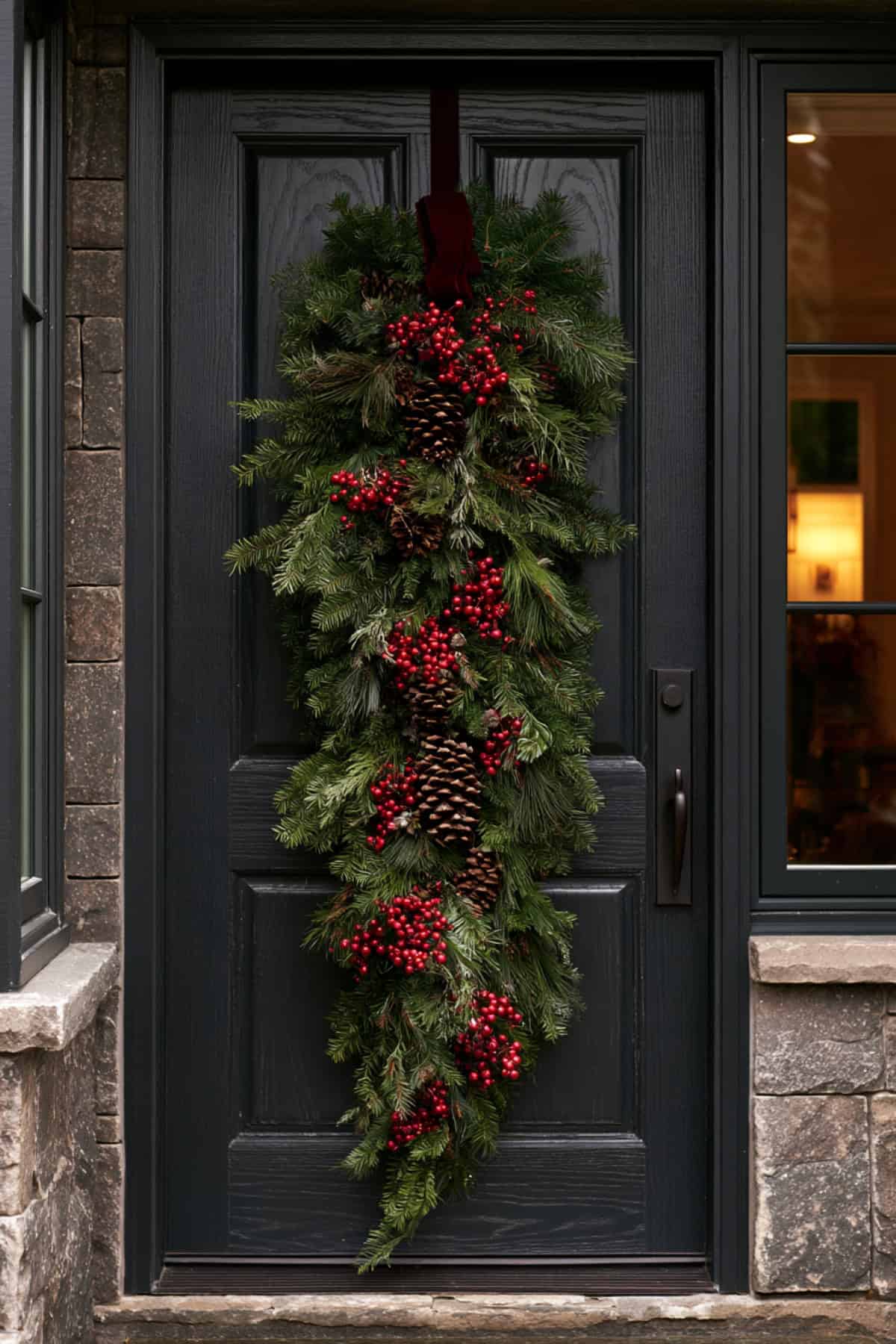
Gather cedar and pine into a loose bundle, with the flatter cedar at the back and the fuller pine toward the front. The mix has enough texture to decorate a paneled door without hiding the woodwork. Bind the stems with florist wire and cover the join with a generous ribbon, keeping the tips long and free. Hang it above the handle where the cuttings can drape naturally; a sheltered entrance will help the needles last through December.
Full Greenery Garland Wrapped Around The Doorframe
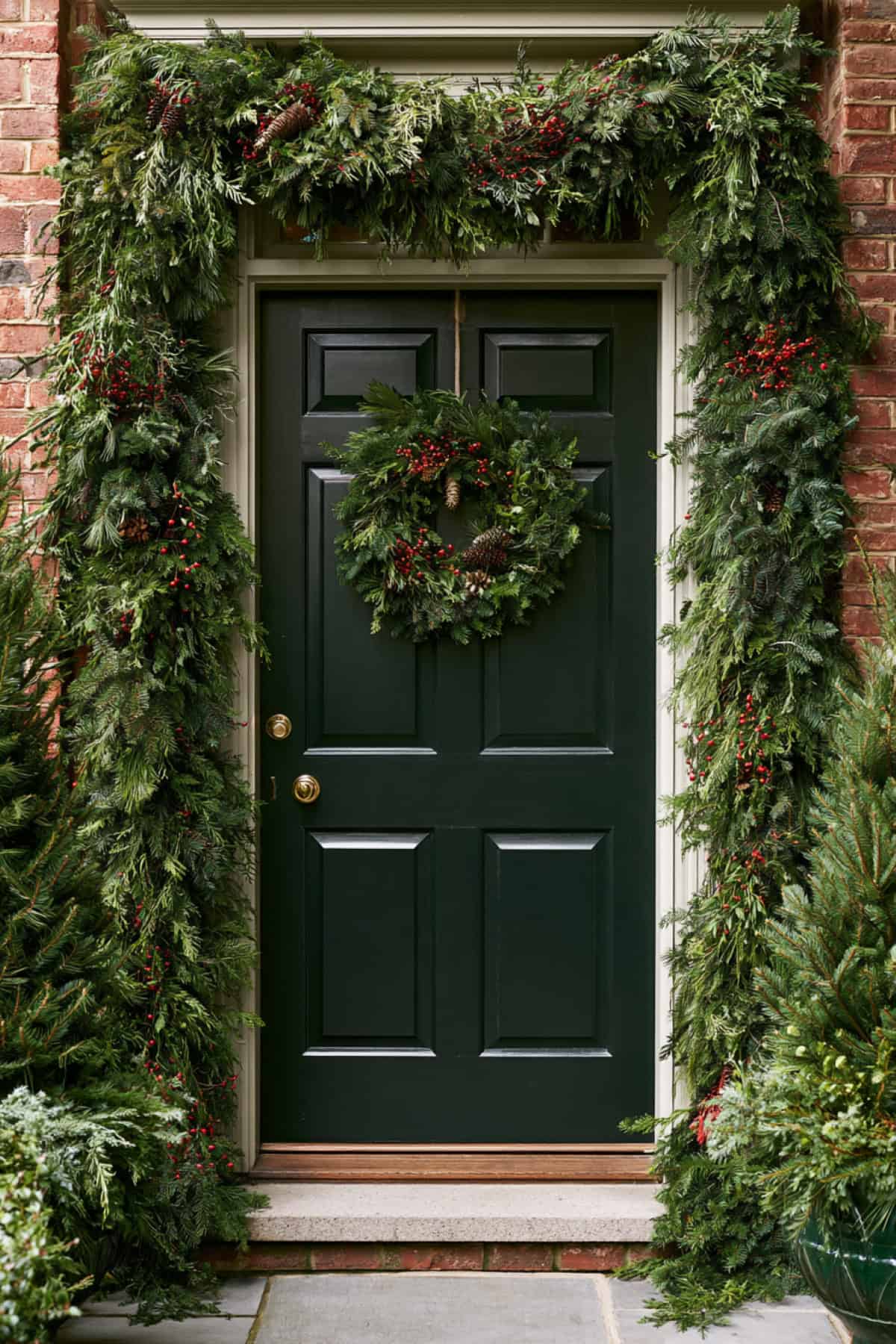
Measure the entire doorframe before ordering a garland, including any extra length you want across the top. On a wide entry, a full run of greenery looks particularly handsome when it follows the trim all the way down both sides. Use a sturdy evergreen rope as the base and tuck cedar sprays into thinner patches. The attachments matter as much as the foliage: secure the weight to fixed trim with appropriate outdoor hooks, well clear of the hinges and latch.
Asymmetrical Evergreen Door Garland
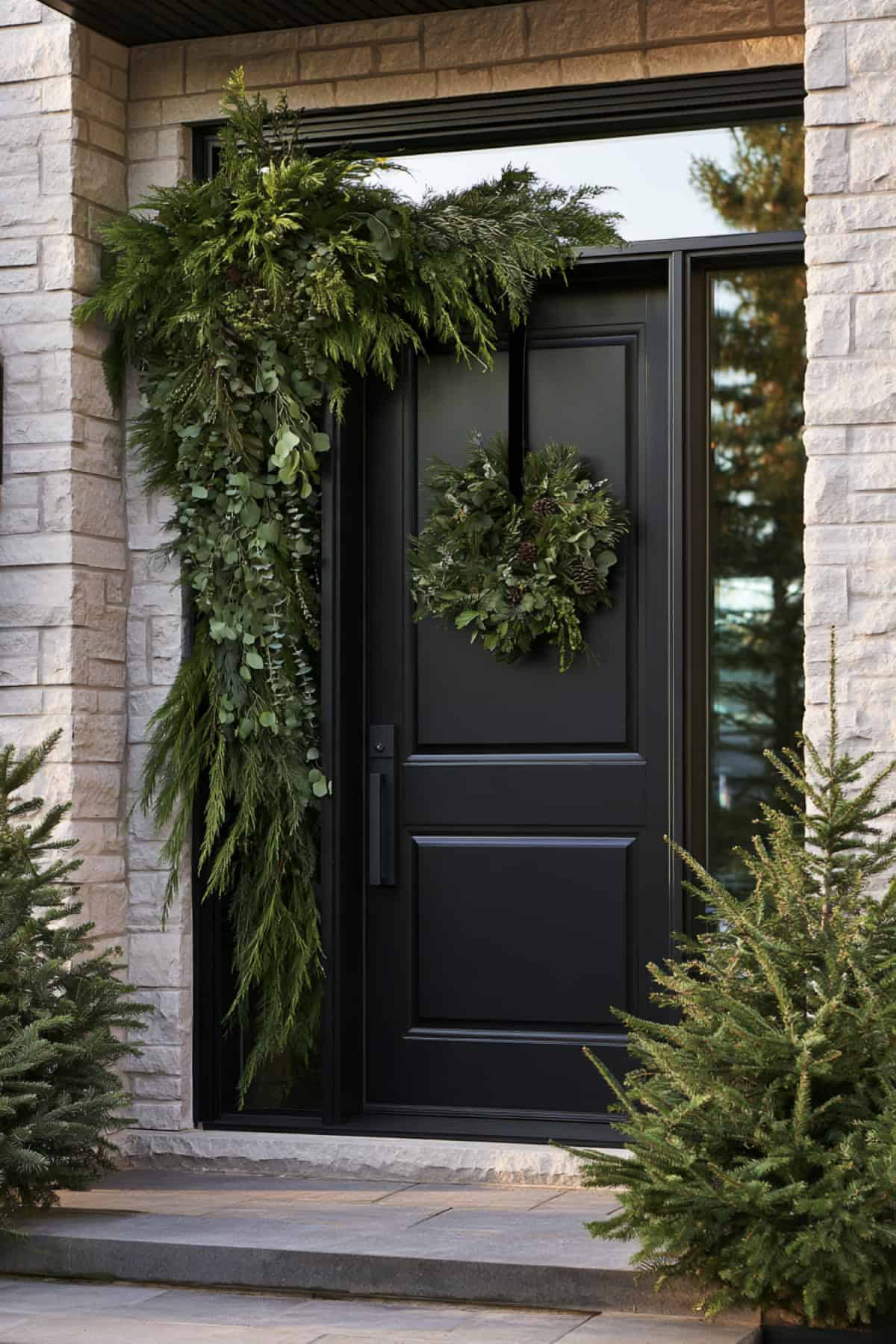
Symmetry isn’t compulsory at Christmas. Let a garland sweep across the top of the entrance and travel down one side, leaving the opposite jamb almost bare. Gather the thickest fir branches near the upper corner, then taper the greenery with longer cedar tips. That uneven outline should look deliberate, not like half the decoration has slipped. A bow tucked into the fullest section is enough. Step back onto the path to judge the balance before fastening everything in place.
Oversized Mixed Greenery Christmas Wreath
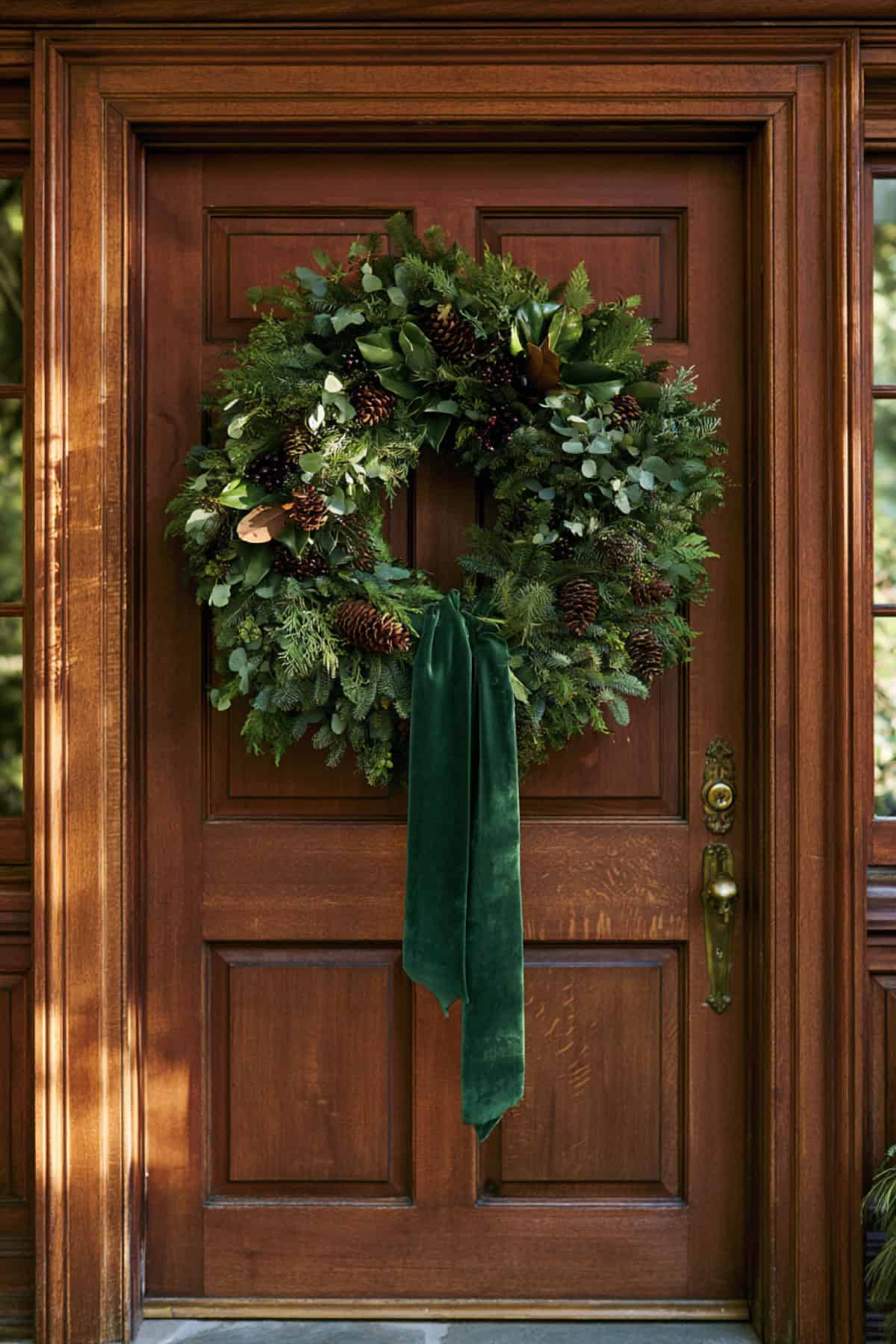
Broad front doors can swallow an ordinary-sized wreath. Choose a larger ring that still leaves a clear margin around the door panels, then layer firm fir branches with soft cedar and a handful of projecting pine tips. Rotate the wreath as you build it; empty patches are surprisingly noticeable once it hangs upright. A heavy mixed-greenery wreath needs a substantial hanger, particularly outdoors, where fresh branches absorb rain and become heavier.
Cedar Garland With Burgundy Velvet Bows
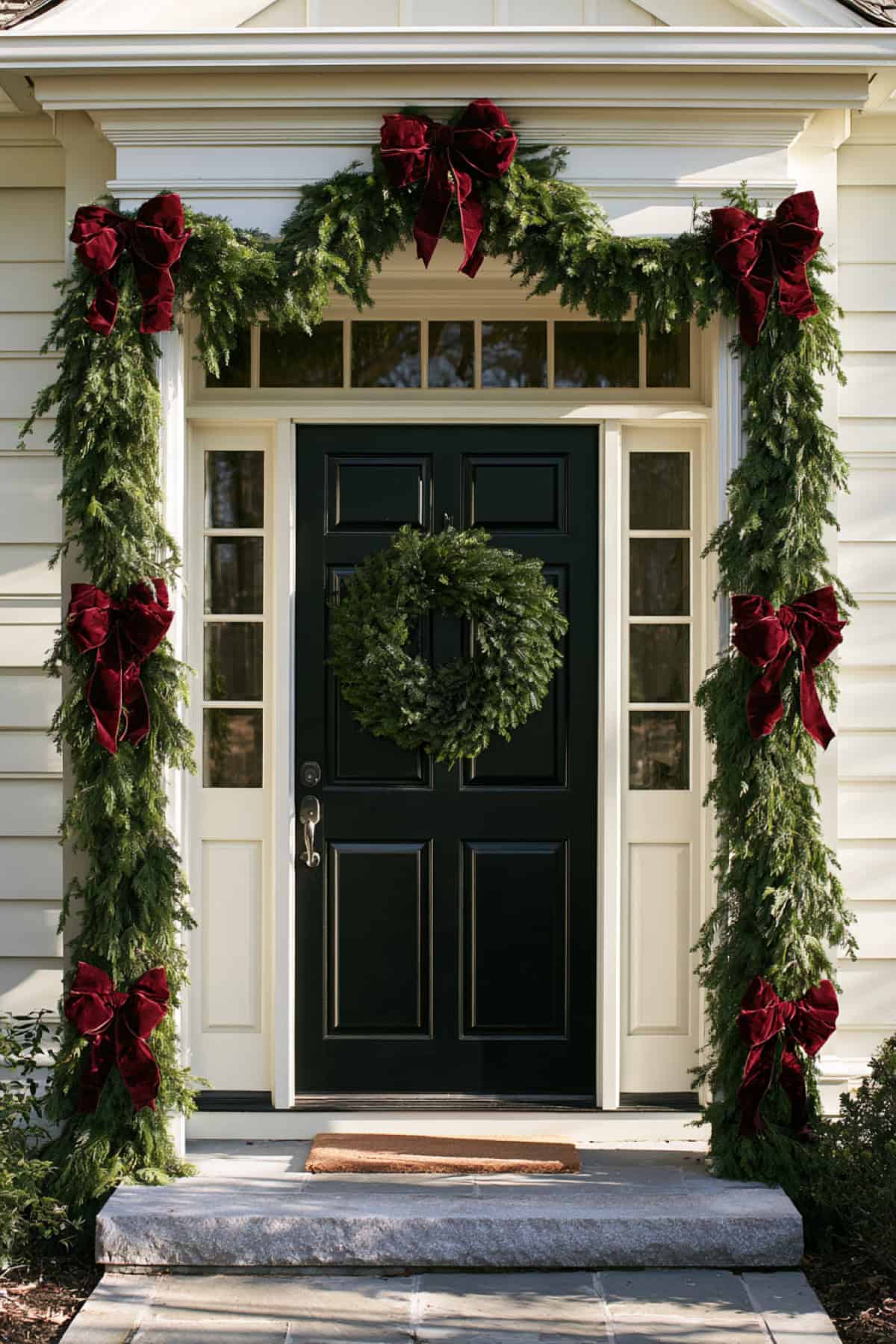
Burgundy velvet against feathery cedar has a beautiful richness, especially on a pale entrance. Run the garland across the upper trim and allow a shallow curve between its fastening points. Place the bows at the corners, where the greenery changes direction, and shape the loops with wired ribbon. Keep the tails short near door hardware; on an exposed porch, an outdoor ribbon with a velvet-like texture handles damp weather far better than real velvet.
Wild Woodland Greenery Front Door
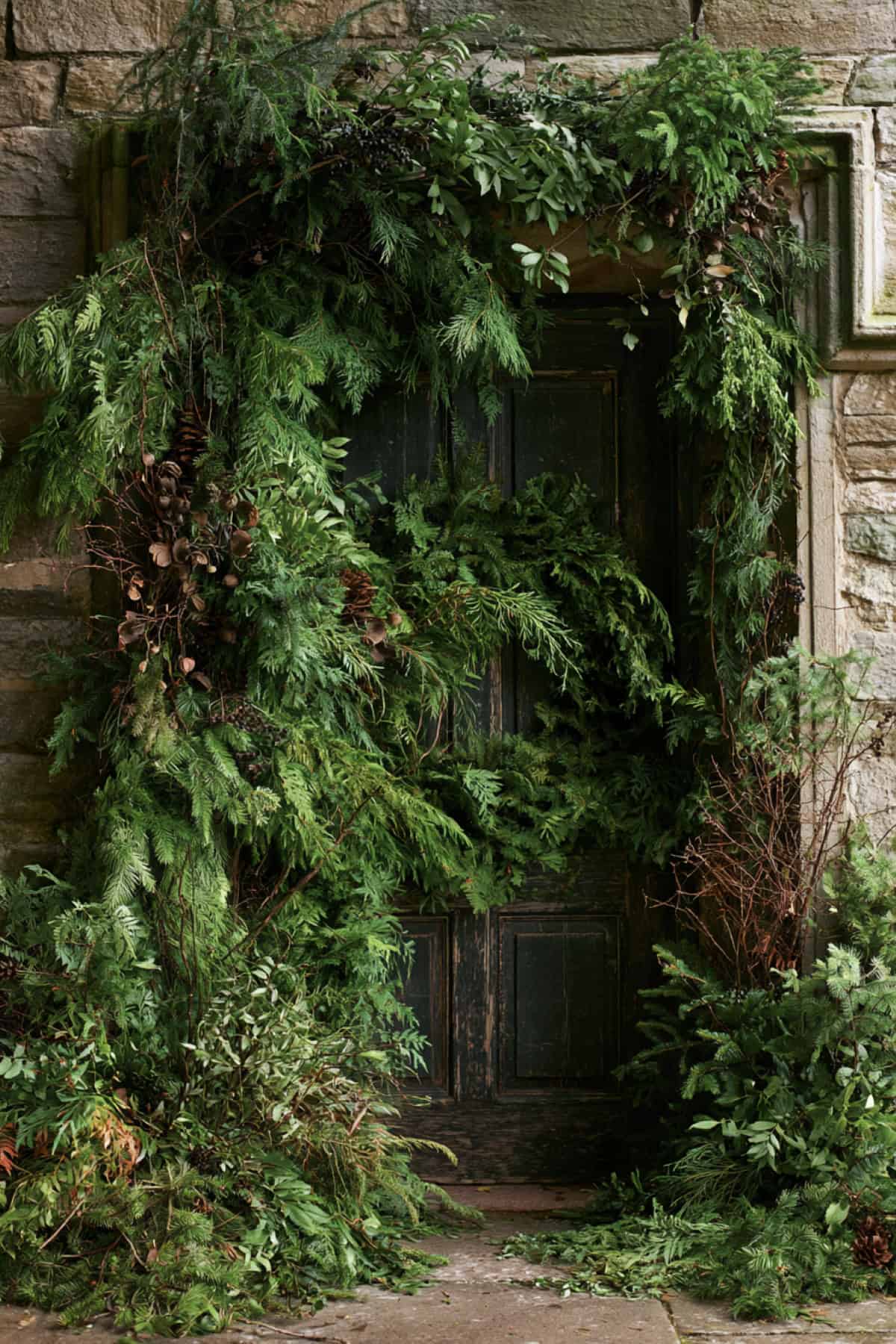
A woodland arrangement should have the lively outline of freshly gathered branches. Begin with an evergreen wreath or swag, then weave in twiggy stems and longer cedar sprays at irregular angles. Pinecones can sit deep among the needles, almost as though they landed there naturally. Resist trimming every projecting tip to the same length. If there’s room beside the entrance, repeat a little of the foliage in a sturdy planter and leave the walkway clear of fallen debris.
Greenery Wreath With Long Plaid Ribbon Tails
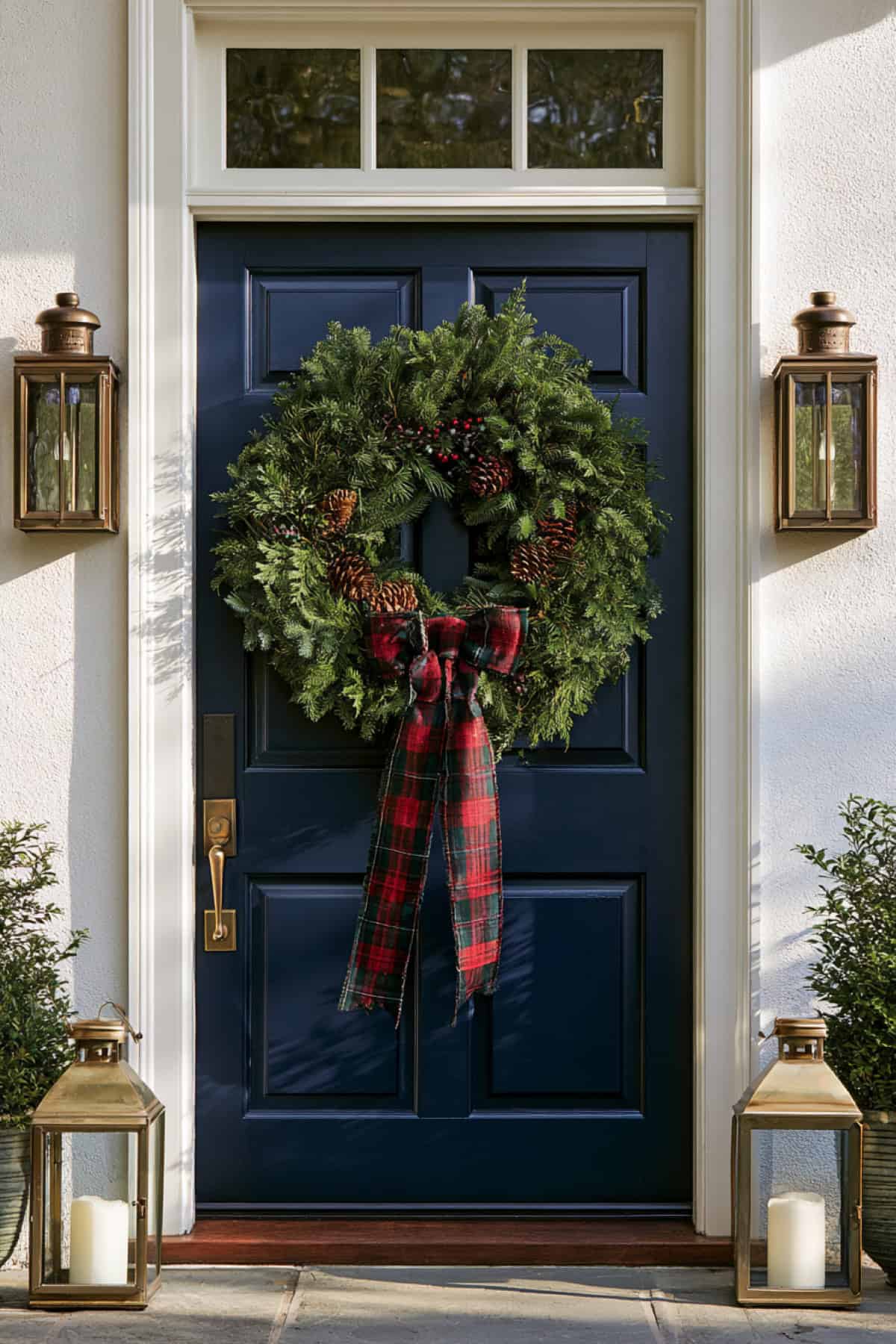
Let the plaid ribbon take charge of this wreath: tie a broad bow high on the evergreen ring and trail the ends down the door, past the lower edge of the foliage. Woven red-and-green plaid holds its own against dark needles, and an angled cut keeps the tails neat without extra ornaments. Try the wreath on the door before finalizing the length—fabric brushing the handle or swinging against the knocker gets annoying quickly.
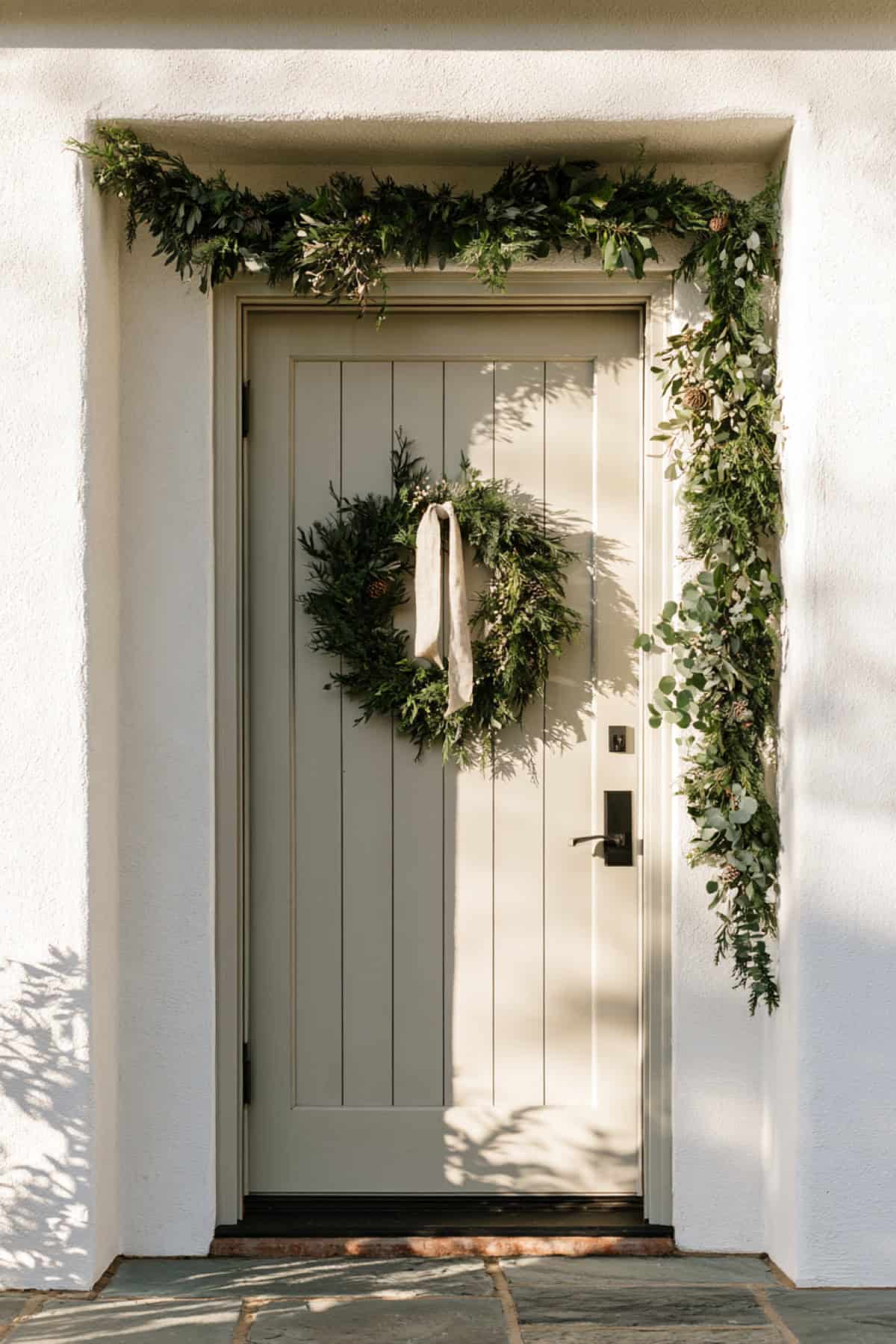
Leave part of a simple wooden or metal hoop exposed for a restrained Scandinavian-inspired wreath. Wire short pine or fir sprigs along one section, following the circle loosely and letting several tips stray beyond it. The open portion matters, particularly on a door with attractive molding. Hang the hoop with plain cord or narrow linen ribbon against a light-colored door, where deep green needles provide all the contrast it needs.
Magnolia And Evergreen Christmas Door Wreath
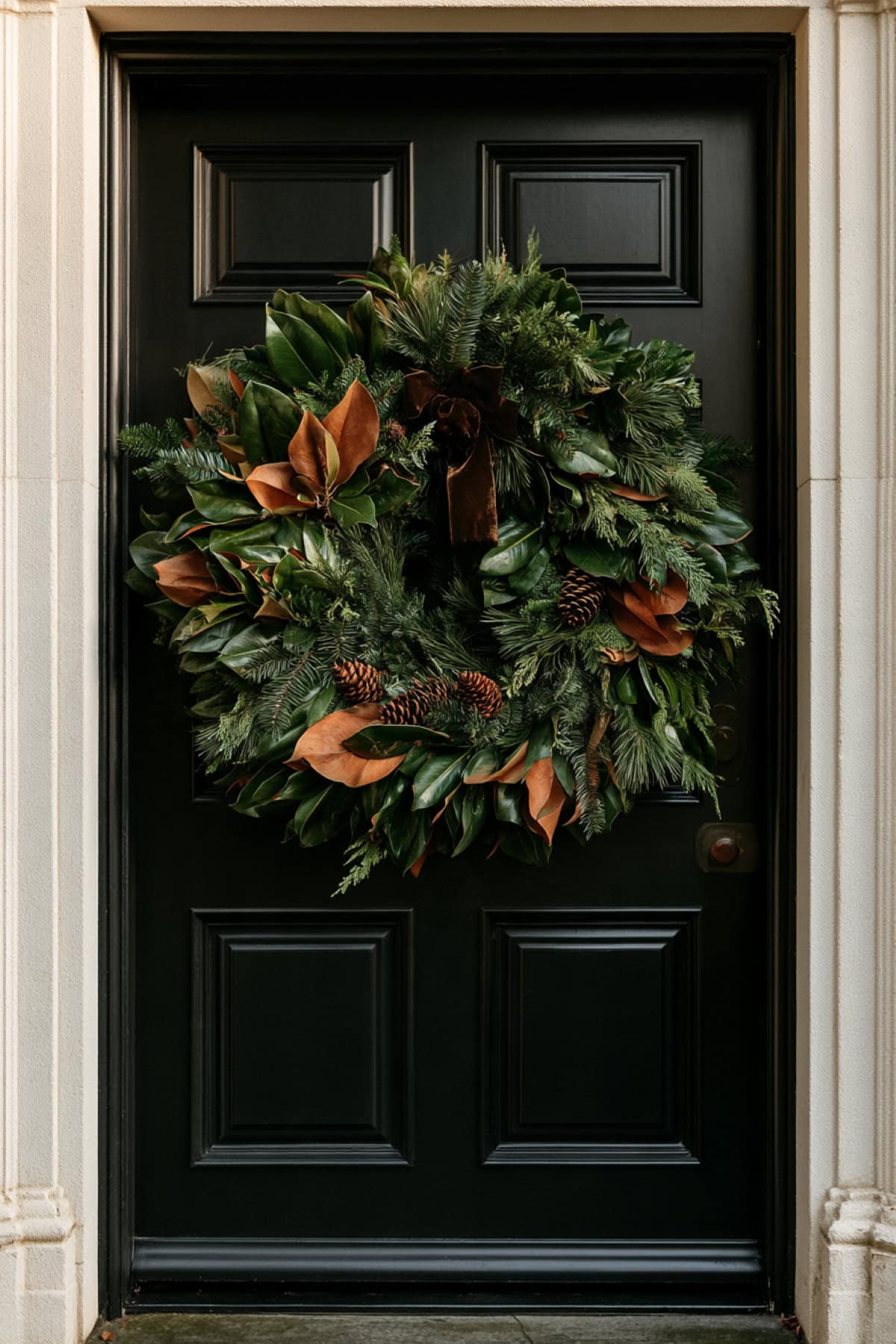
The broad, glossy leaves of magnolia sit beautifully among the fine needles of fir and cedar. Tuck short stems into the wreath in overlapping clusters, turning selected leaves to reveal their cinnamon-brown undersides. Don’t space each cluster too precisely; a little variation keeps the ring from looking manufactured. A narrow dark ribbon is plenty here. Fresh magnolia may curl as it dries, which makes a covered porch a sensible place for this arrangement.
Cascading Greenery Above A Red Front Door
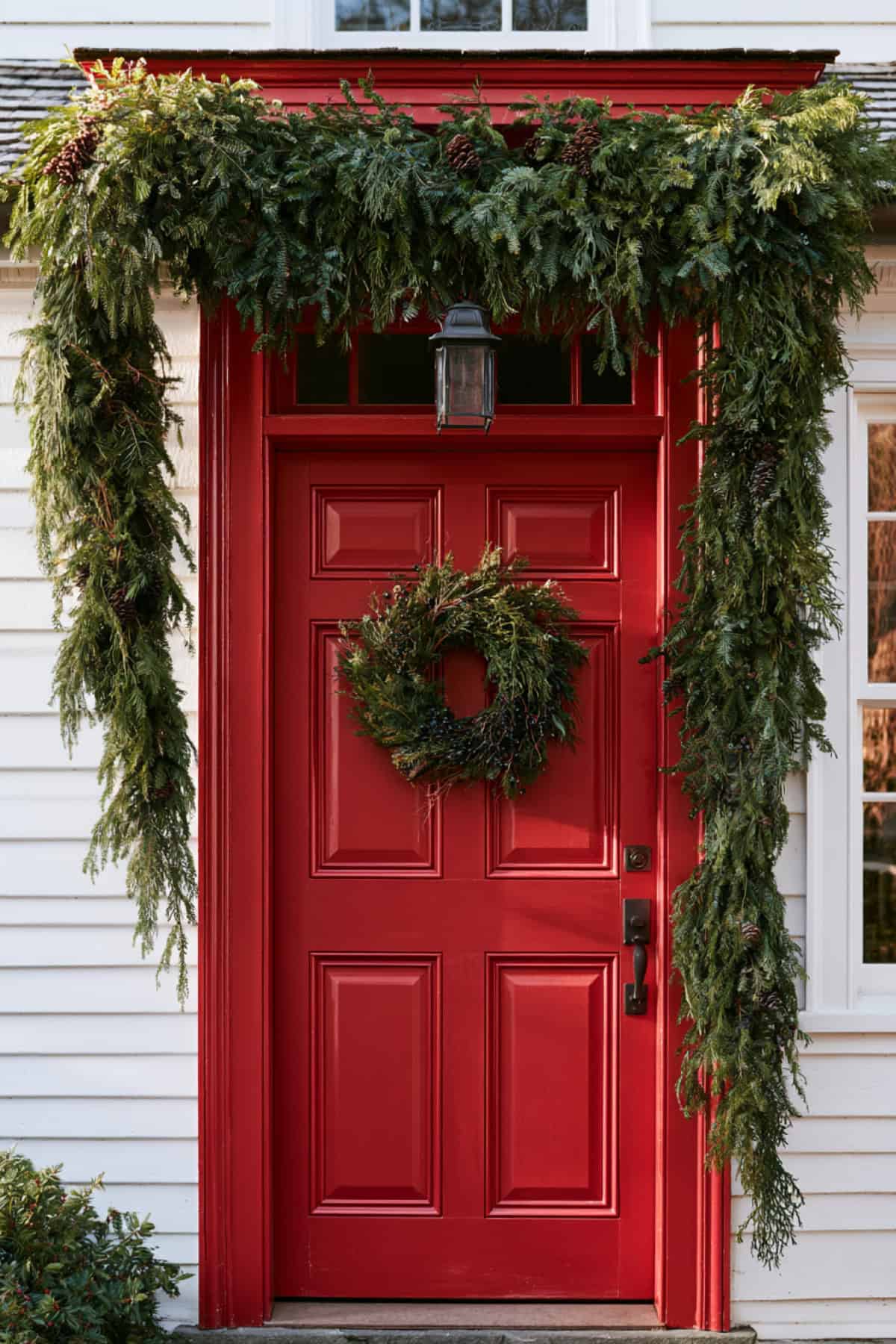
A red front door already carries plenty of Christmas color. Concentrate the foliage overhead, where a sweep of cedar traces the top of the frame and drops gently from its corners. Let one side fall a touch lower for a natural shape, but keep the middle snug to the trim, especially around a transom. Warm-white lights threaded inside the branches pick out their texture after sunset, leaving the red panels beautifully clear.
Greenery Door Basket Instead Of A Wreath
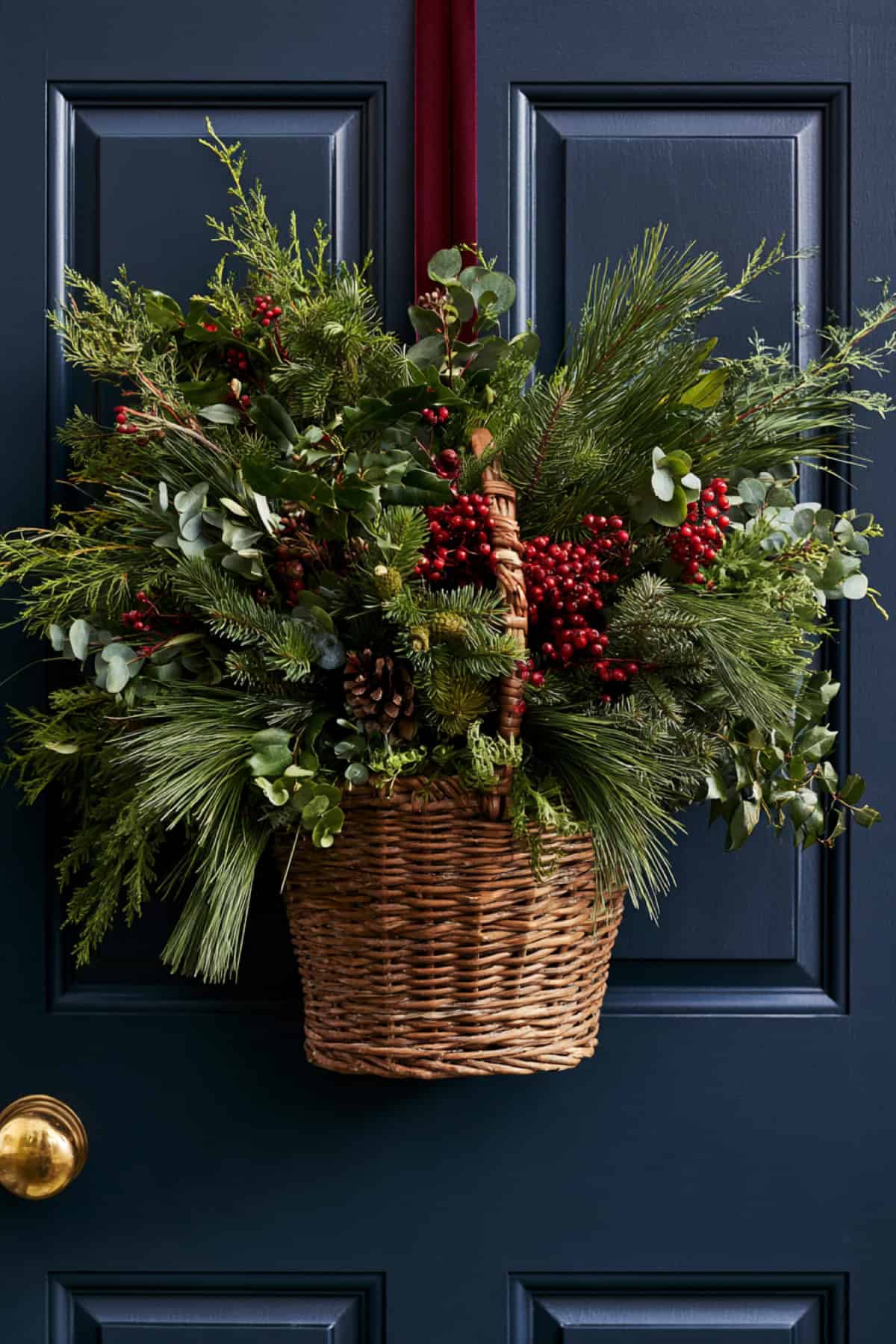
A shallow door basket makes a charming change from the familiar circular wreath. Choose one with a flat back, then arrange upright pine cuttings behind cedar that drapes over the rim. Place the heavier stems close to the door and use a liner to protect the basket from moisture. A secure hook should carry the weight through windy weather. If the basket taps the panel, fit a discreet felt pad behind its base. That tiny precaution prevents scuffed paint.
Evergreen Door Swag With Brass Bells
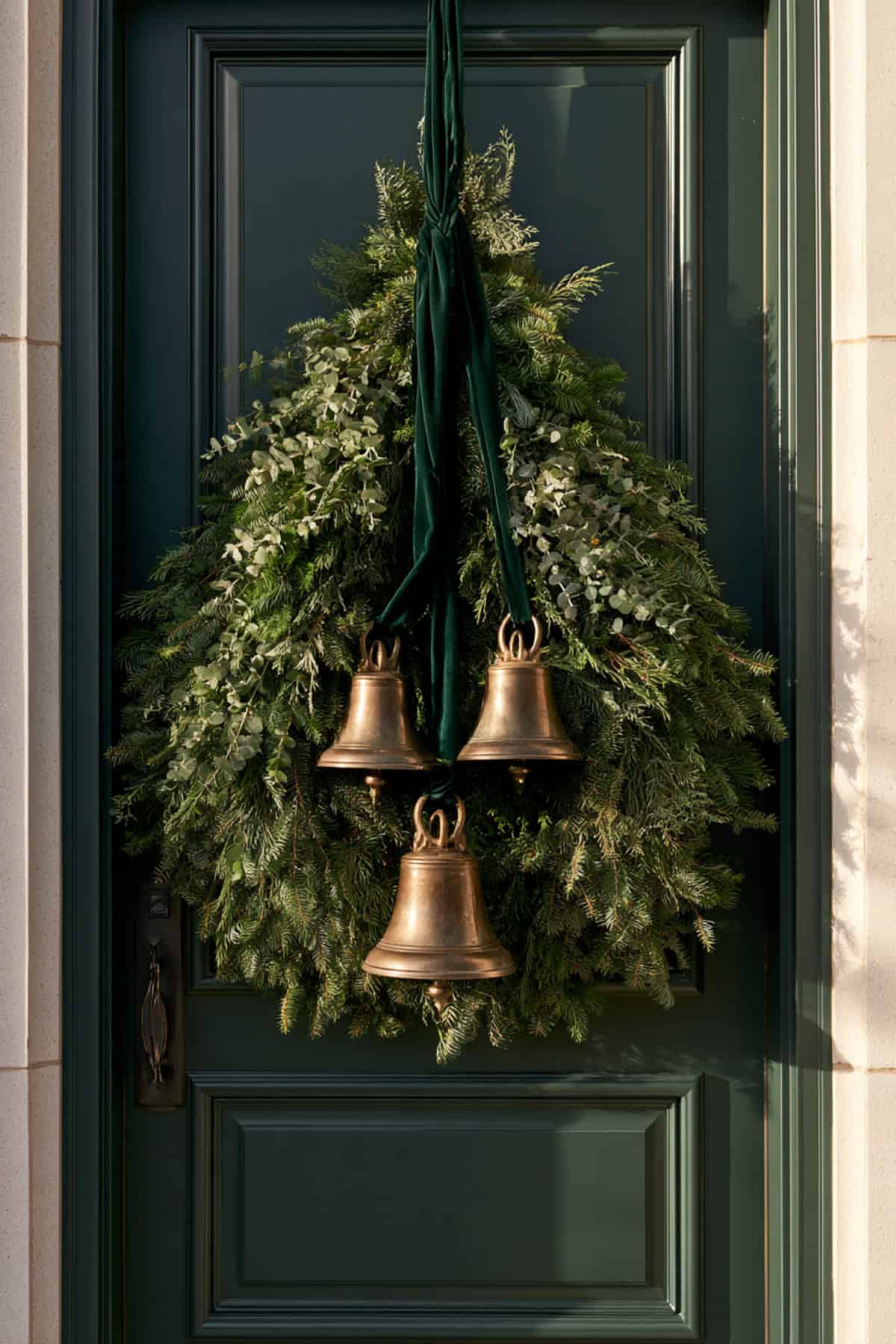
The bells should hang beneath the greenery where you can actually see them. Bind a short bundle of fir and pine into a tapered swag, covering the stems with ribbon, then attach the brass bells to the main hanger using a separate strong cord. Hanging their weight from a loose branch invites trouble. On a frequently used dark-painted door, keep the bells close to the swag and clear of glass; the brass will still catch the light beautifully.
Greenery Garland With Dried Orange Accents
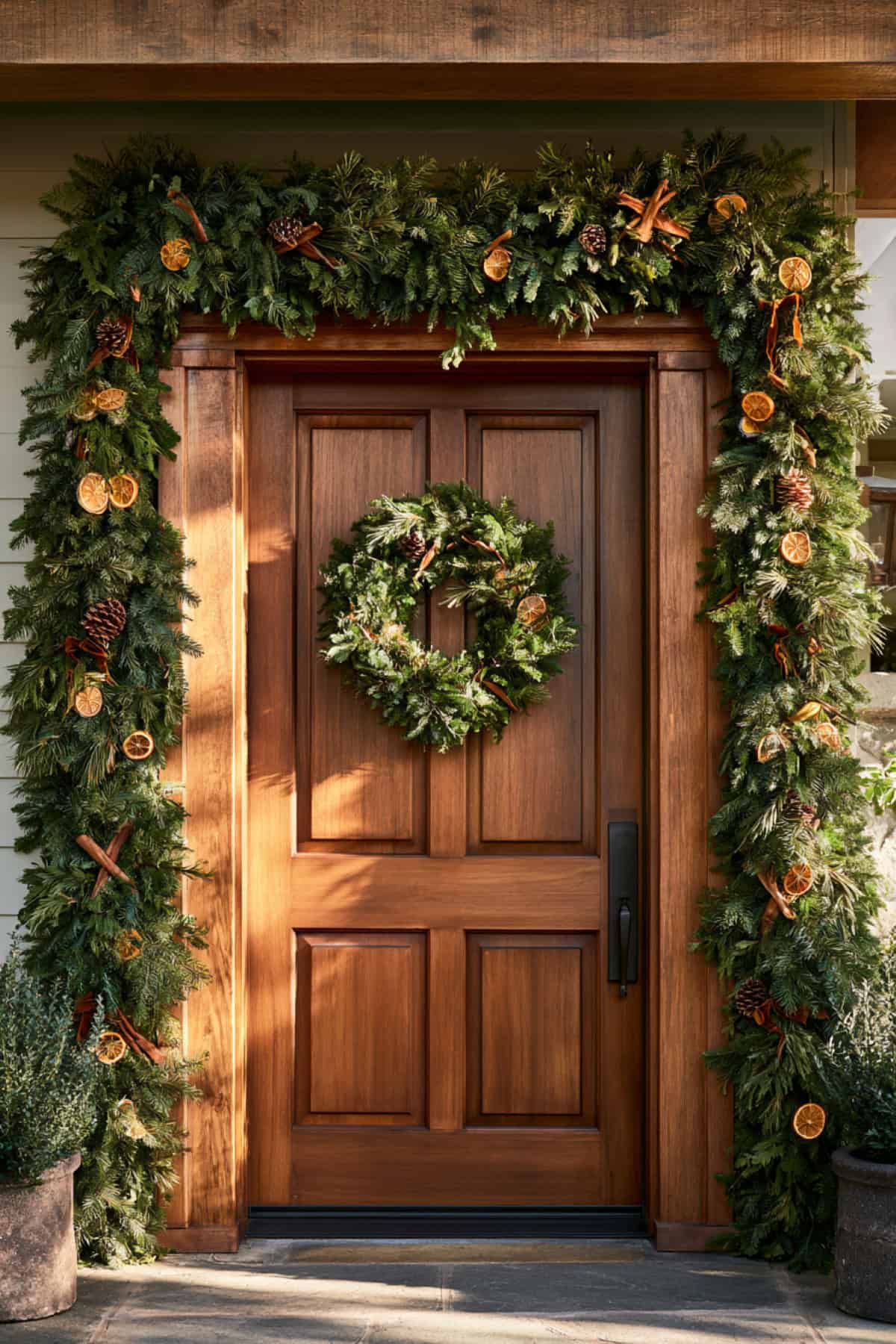
Hold a dried orange slice up to the light and you’ll see why citrus looks appealing in a dark evergreen garland. Thread florist wire through thoroughly dried slices, fastening them in loose clusters among pine and cedar. Leave the fruit edges visible instead of burying them beneath needles. This decoration belongs under cover: repeated rain can soften the slices and encourage mold. Check their condition during the season and remove any that become damp.
Fresh Pine And Eucalyptus Door Garland
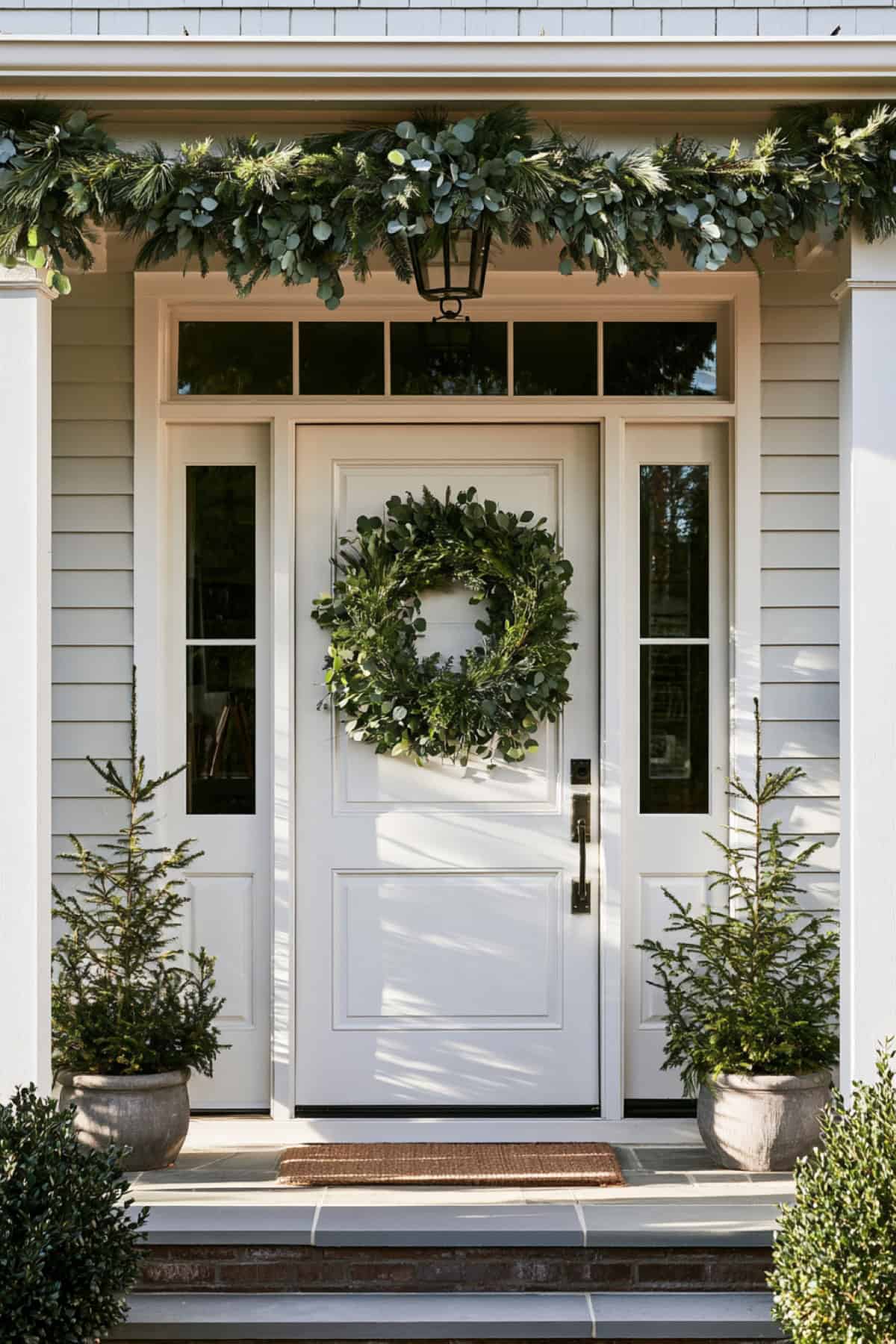
Eucalyptus changes the rhythm of a pine garland with its rounded, silver-green leaves. Tuck short leafy stems into a full pine base, especially near the top corners of the doorway where their shape is easy to notice. Wire the stems separately; eucalyptus contracts as it dries and may slip out of a loose arrangement. Leave space between the pale leaves, bearing in mind that their distinctive scent may linger at a sheltered, frequently opened entrance.
Deep Green Door With Layered Greenery Wreaths
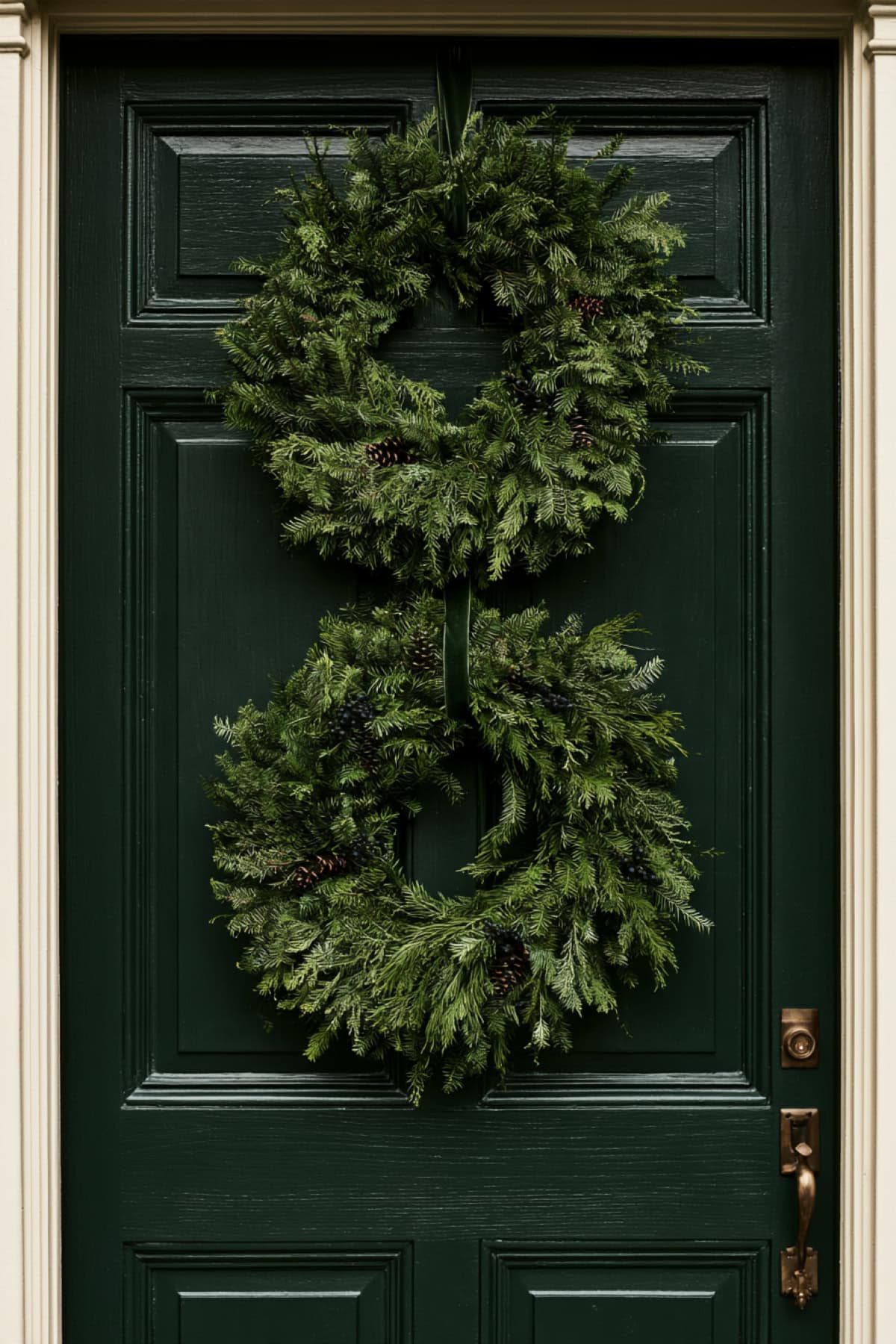
Deep green paint asks for greenery with contrasting shapes. Try hanging a dense fir wreath against the door and layering a smaller, looser cedar ring over the front. The cedar tips cross the fir needles at different angles, making the two circles visible even though their colors are close. Secure both pieces to a hanger rated for the combined weight. Before settling on the depth, check that any storm door closes without pressing against the branches.
Greenery Garland With White Berry Branches
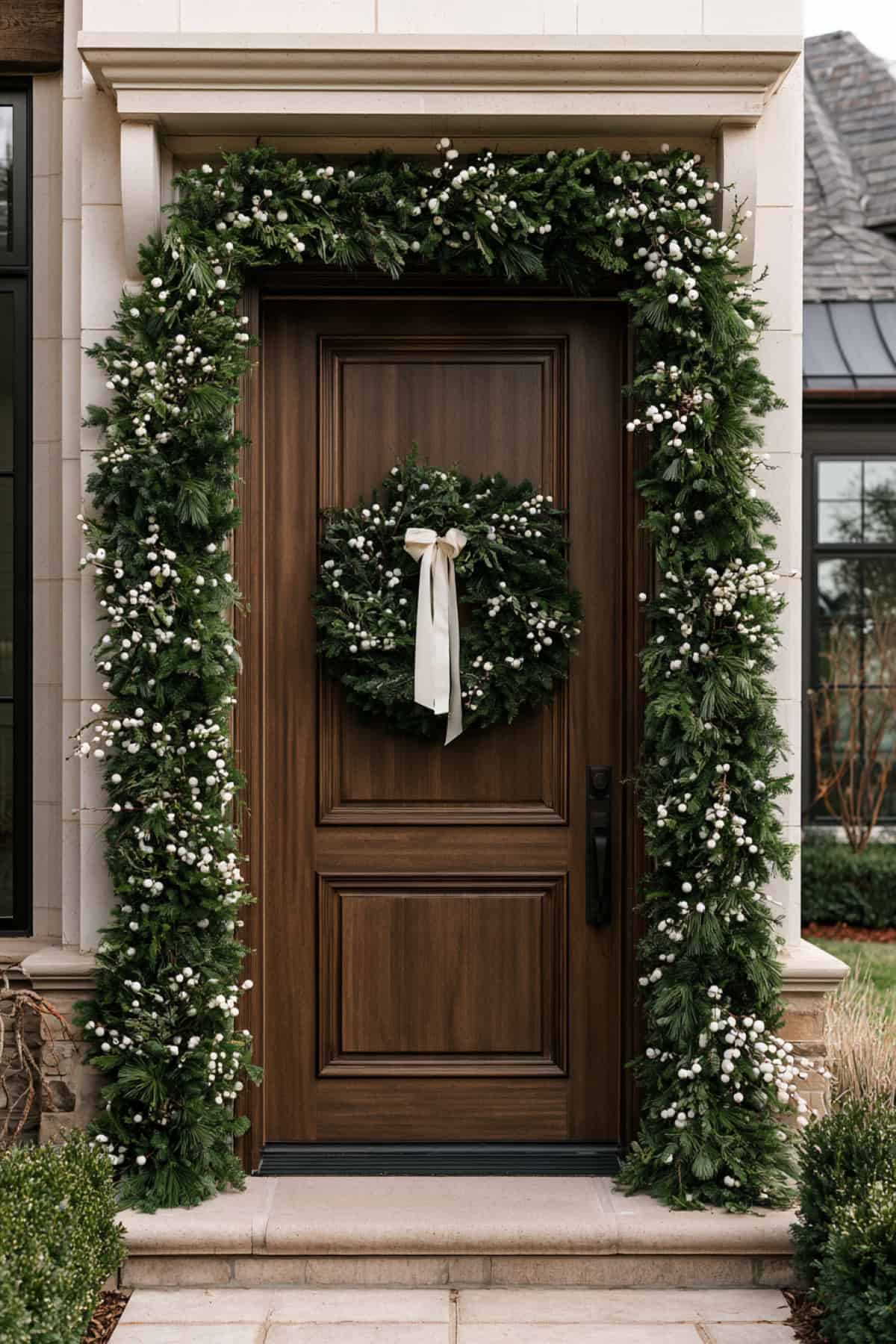
White berries stand out crisply among dark fir branches, especially in the shadowed corners of a doorframe. Press wired picks out through the needles in loose clusters, leaving green sections exposed; artificial berries will hold up better at an uncovered entrance and are easier to secure than fresh fruit. Check that every stem is fastened to the garland’s core, where fallen pieces won’t scatter across the threshold.
Snow-Dusted Evergreen Front Door Decor
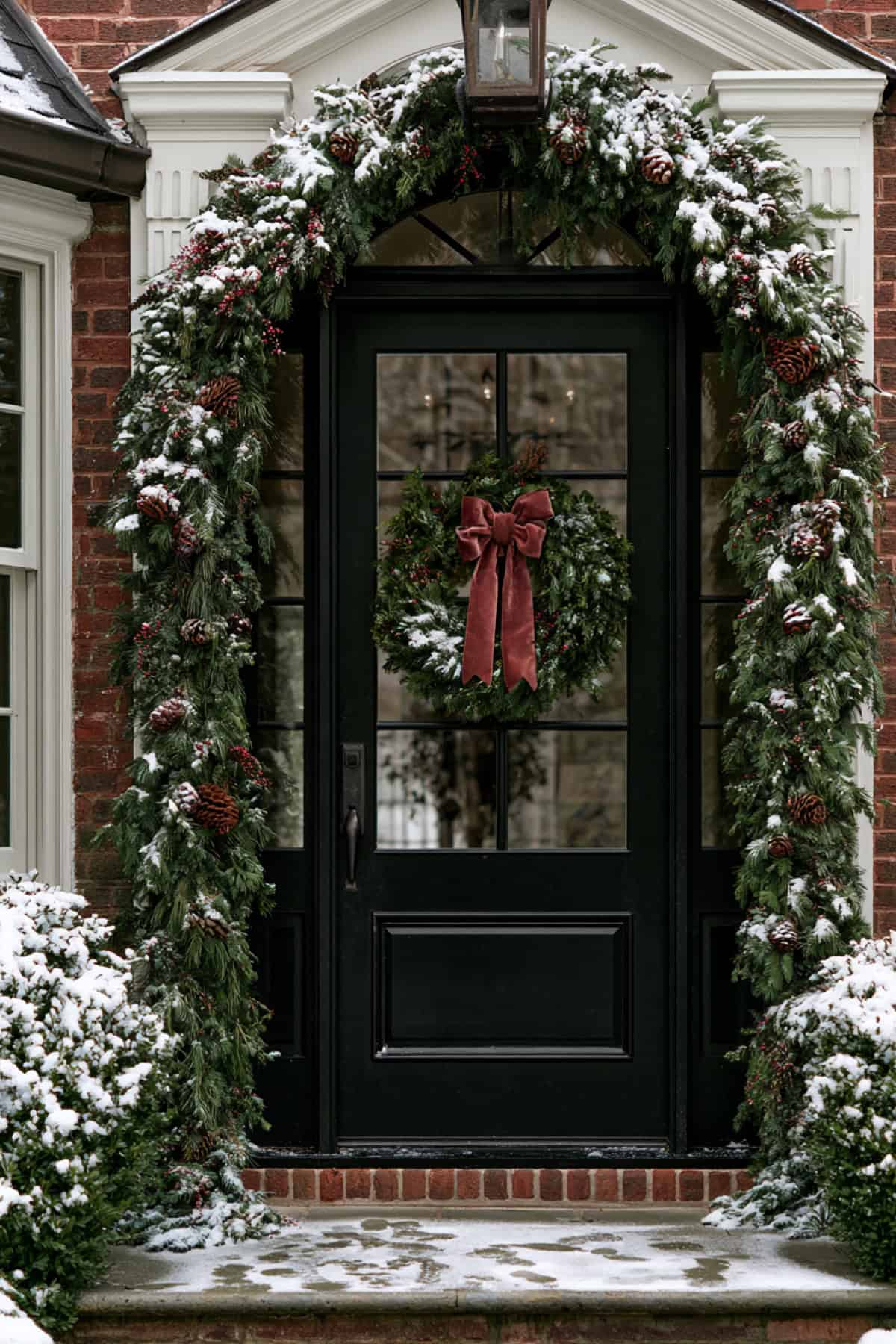
Flocked greenery looks most convincing when the white settles lightly on the needle tips. Choose a wreath with plenty of green showing through, and match it with a garland only if the surrounding frame has room. A restrained application of artificial snow allows the natural branch shapes to remain visible. Mount the decoration clear of the moving door, where rubbing would loosen the flocking, and check its outdoor rating before exposing it to rain.
Long Cedar Swags On Both Sides Of The Door
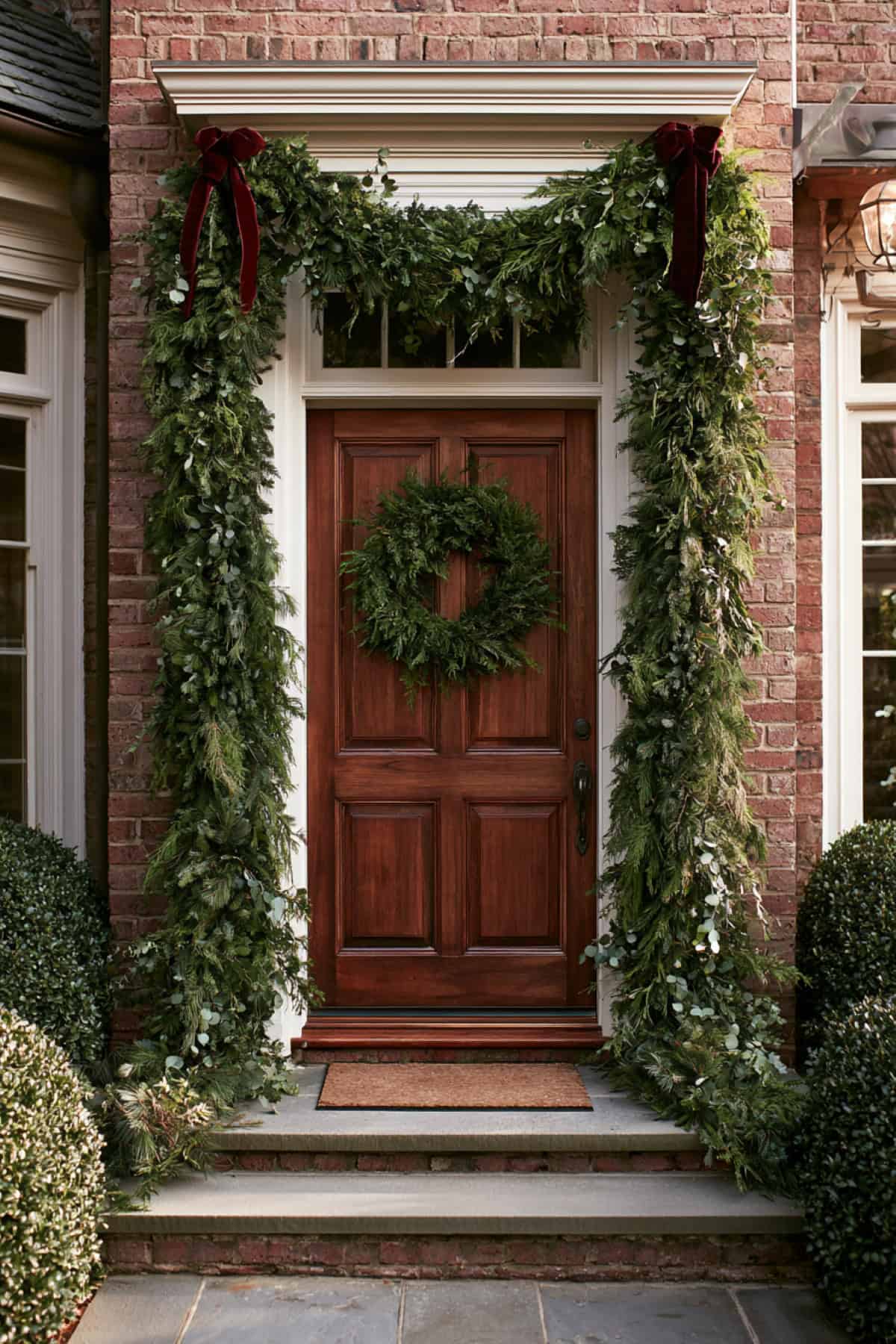
Tall front entrances look especially graceful with cedar hanging vertically on either side. Make two long swags of comparable length and attach them to the surrounding trim, cut ends at the top and leafy tips pointing downward. Their narrow shape emphasizes the height of the opening without covering the actual door. Anchor each bundle at a second point to stop it turning in the wind, leaving room at the bottom for sweeping and foot traffic.
Evergreen Garland With Small Brass Bells
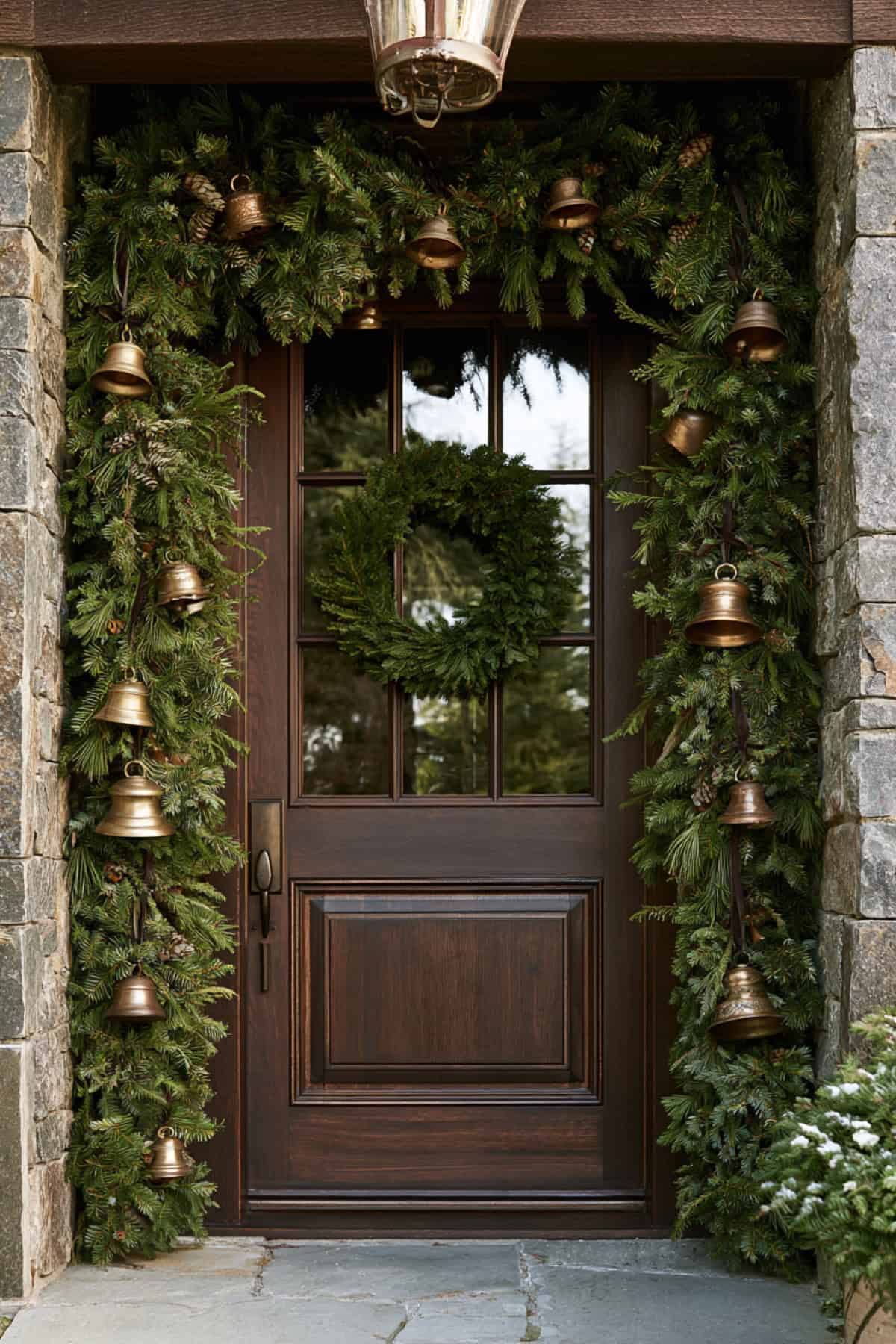
A tiny brass bell catches the porch light in a way that isn’t obvious from the sidewalk. Scatter several through an evergreen garland, fastening each one to its inner rope or wire rather than to a delicate branch tip. Space them loosely along the header and down the sides; a neat, repeated interval would look too mechanical. Reserve the lightest bells for the moving lower ends, where their metallic glints will become especially noticeable after dusk.
Greenery And Red Berry Arch Around The Front Door
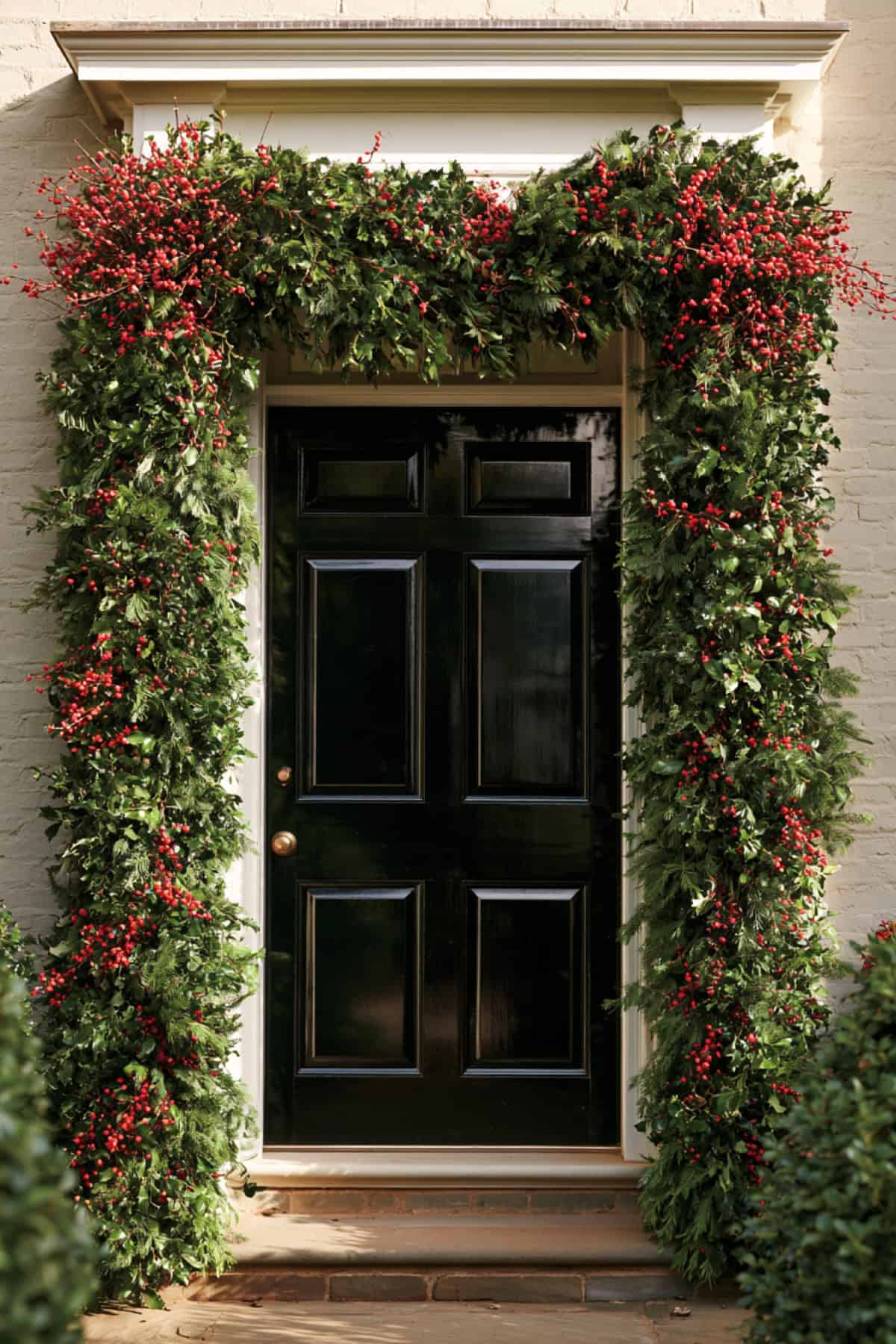
It takes a flexible garland to turn a rectangular doorway into a rounded Christmas arch. Secure the greenery at the top center first and gradually shape the curve toward each side. Once you’re happy with the outline, tuck red berry sprays near the upper bends and at scattered points below. Don’t cover every inch with berries; open stretches of evergreen make the sweep of the arch easier to appreciate. Stand back from the entrance before adjusting the final curve.
Loose Greenery Wreath With Trailing Cedar
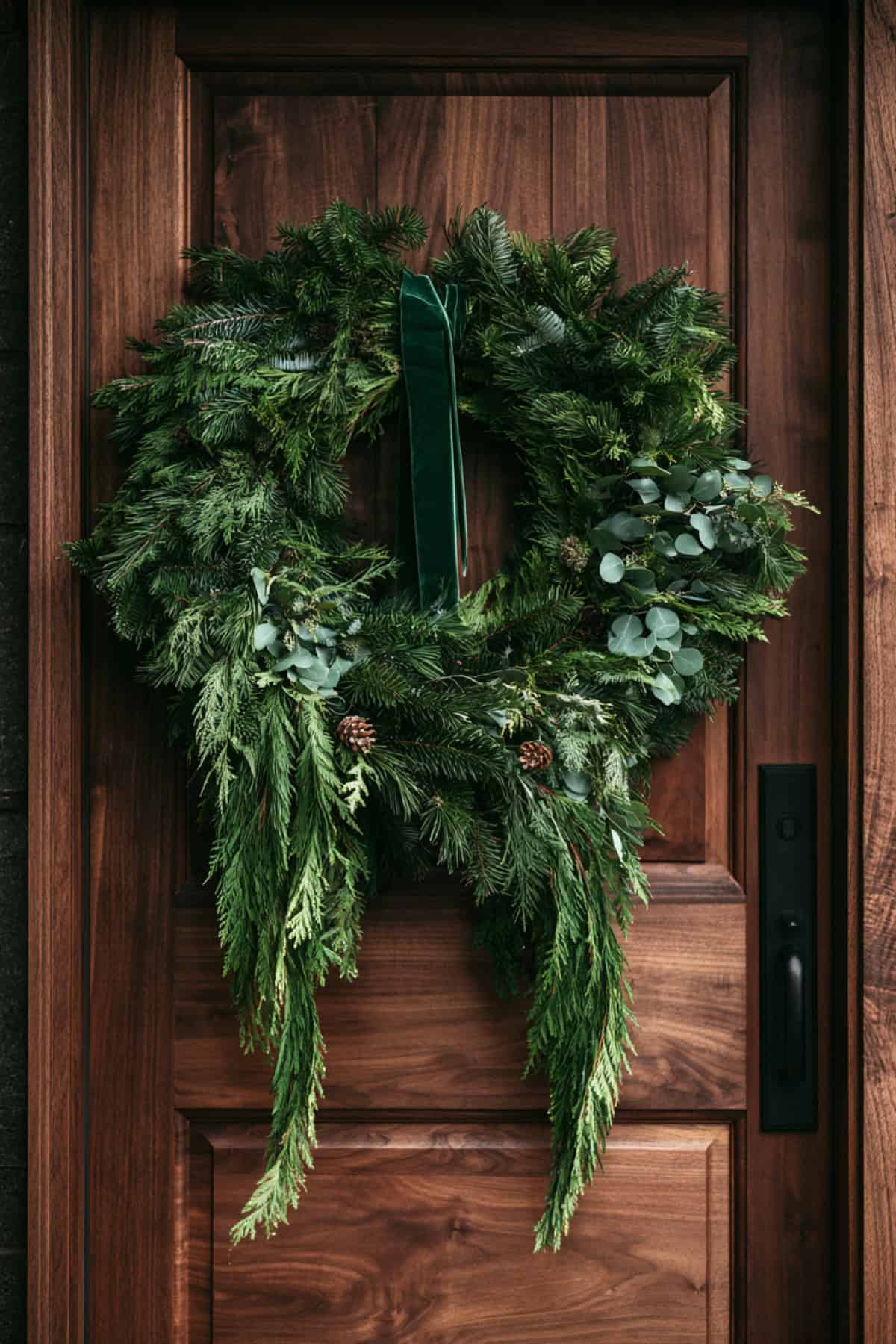
Cedar naturally falls in soft, downward sprays, which makes it a lovely choice for a loose wreath. Build the main ring with fir or pine and slip several longer cedar stems into its lower quarter. Vary their lengths, allowing the tips to hang beneath the wreath in a relaxed fringe, and resist filling every gap in the circle. Mount it high enough that the longest branch stays away from the lock and handle, even on windy days.
Evergreen Garland Around An Arched Front Door
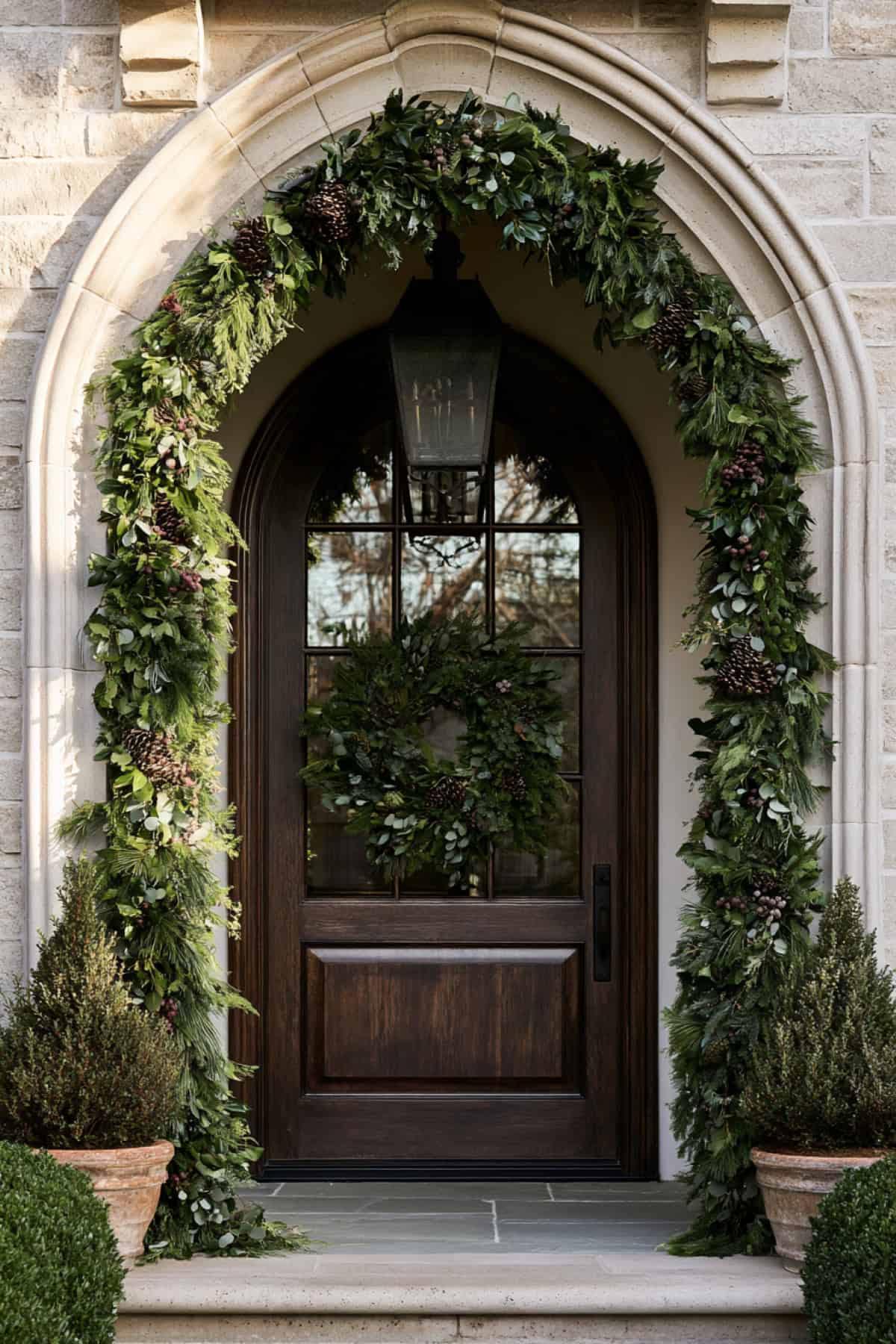
The curve of an arched front door is already beautiful; follow it closely with a flexible evergreen garland. Fix the strand at the crown of the arch and continue down both sides, adjusting it in short sections to avoid awkward straight stretches. Short fir or cedar pieces will hide gaps where the garland bends. Check the inner edge carefully: branches projecting into the opening are likely to brush the door every time someone comes home.
Greenery Garland With Oversized Forest-Green Bow
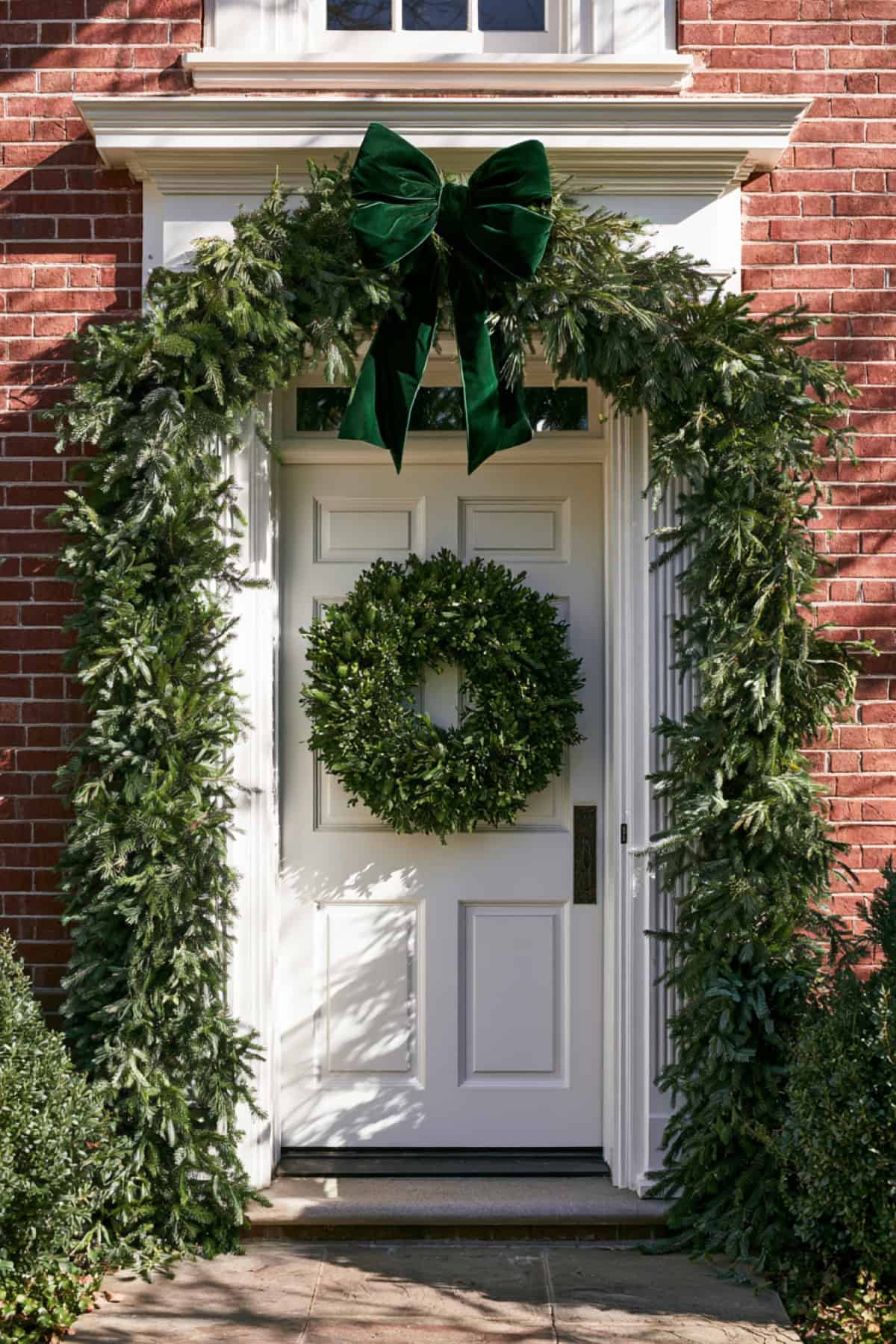
Forest-green ribbon is understated in color but dramatic in scale. An oversized bow near the top corner of the frame sits beautifully against a fir garland, especially if the fabric has a matte or velvet-like surface. Shape the loops generously and fasten the center to the structural support behind the greenery. Leave the bow slightly forward of the needles, where its outline stays visible, and cut any tails that would cross into the doorway.
Rustic Pinecone And Greenery Door Frame
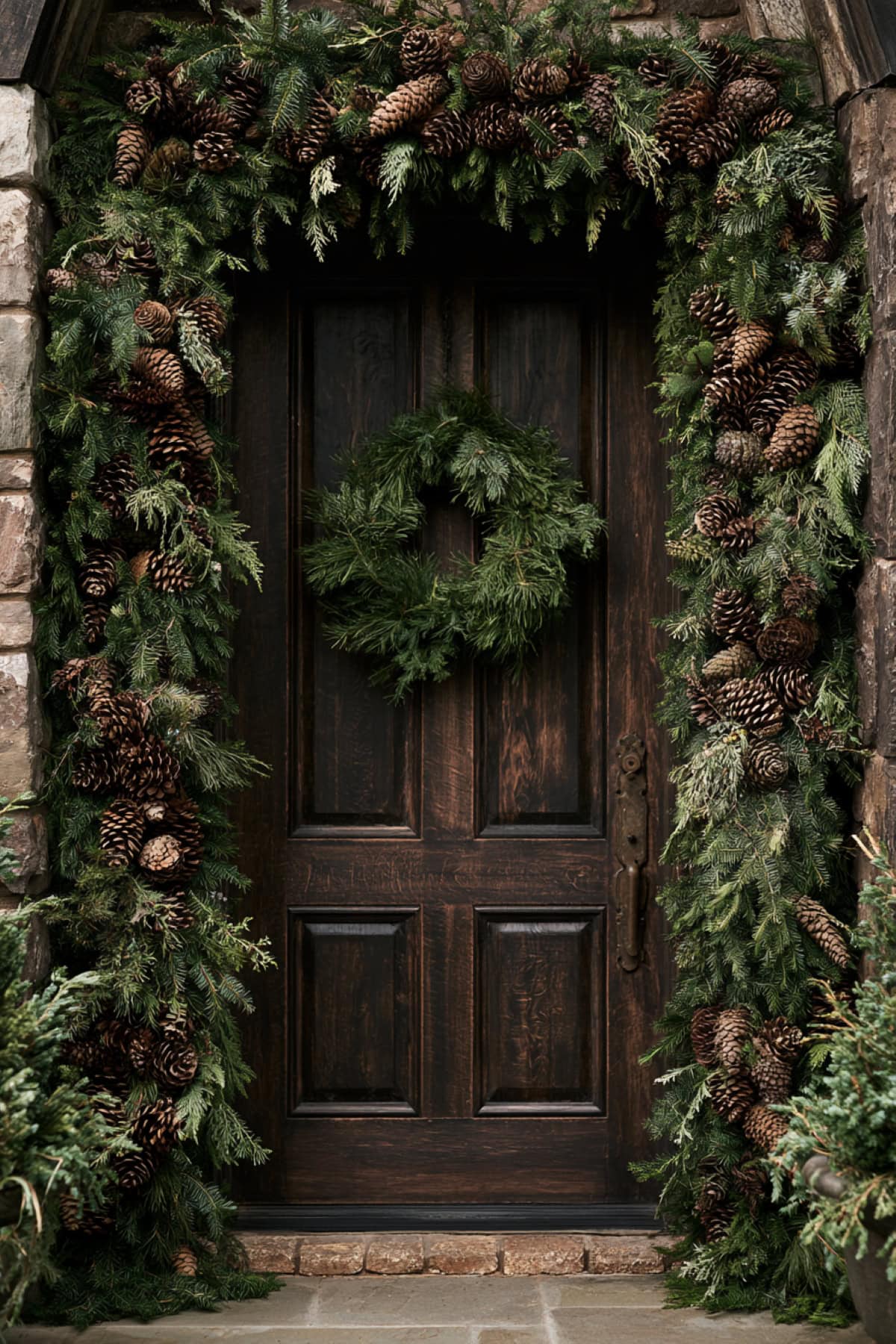
Those large, knobbly pinecones scattered under evergreens are just right for a rustic doorframe. Collect several sizes, wiring the biggest ones near the top corners of a sturdy garland. Continue with smaller cones down the sides, leaving plenty of green between them. Conceal each wire around the cone’s base so the fastening doesn’t show. Natural cones look beautiful against blue-green fir; after windy weather, check the doorstep for anything that may have fallen loose.
Modern Black Door With Sculptural Greenery
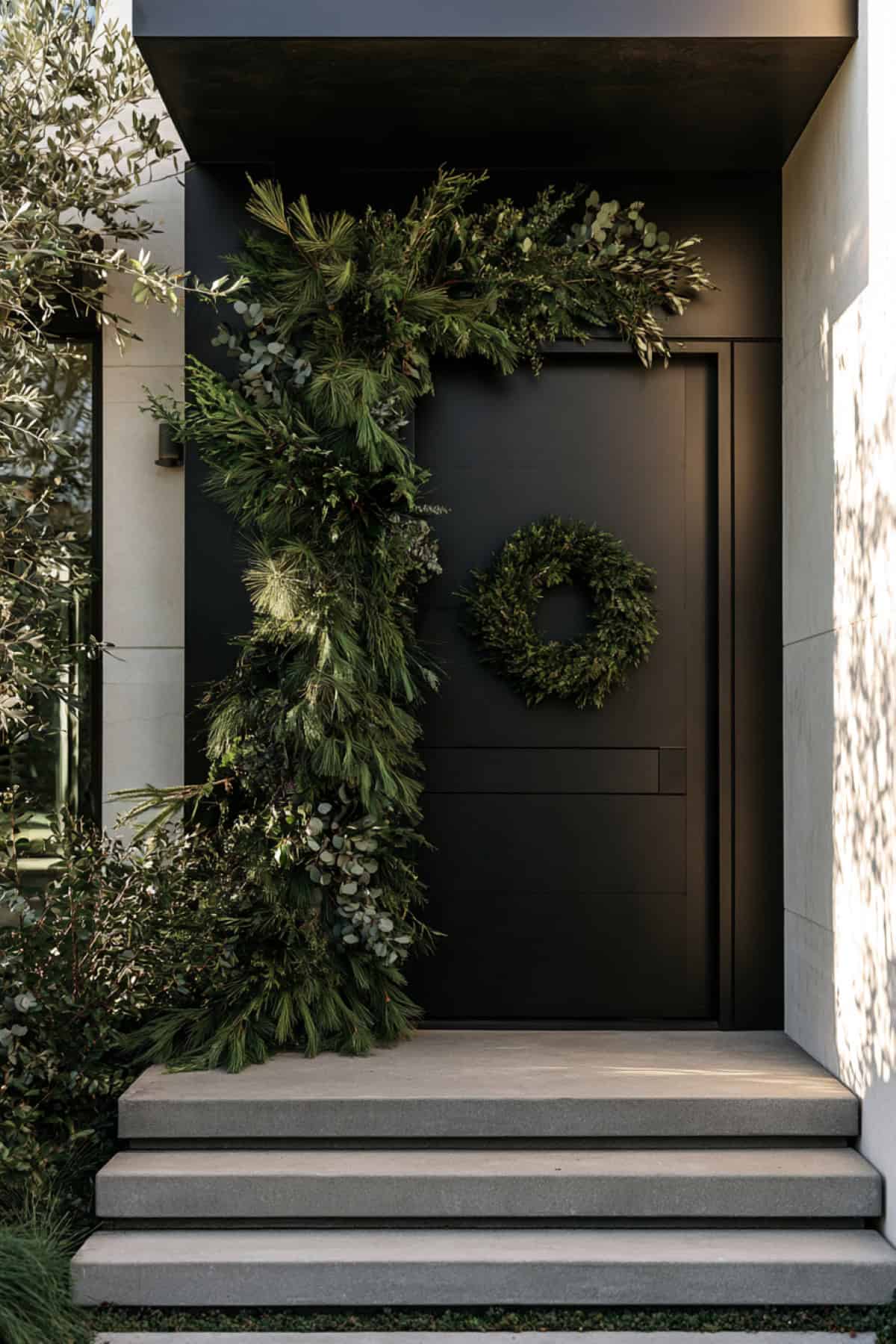
A black door is a striking backdrop for sculptural greenery. Attach curved juniper or cedar stems to one side of a thin metal hoop, allowing their ends to project across its outline. Leave much of the ring visible; a dense bundle would hide the shape that makes this arrangement interesting. Position it near eye level, protecting the paint with small felt pads behind the metal and keeping the surrounding hardware unobstructed.
Juniper Berry And Cedar Christmas Door Wreath
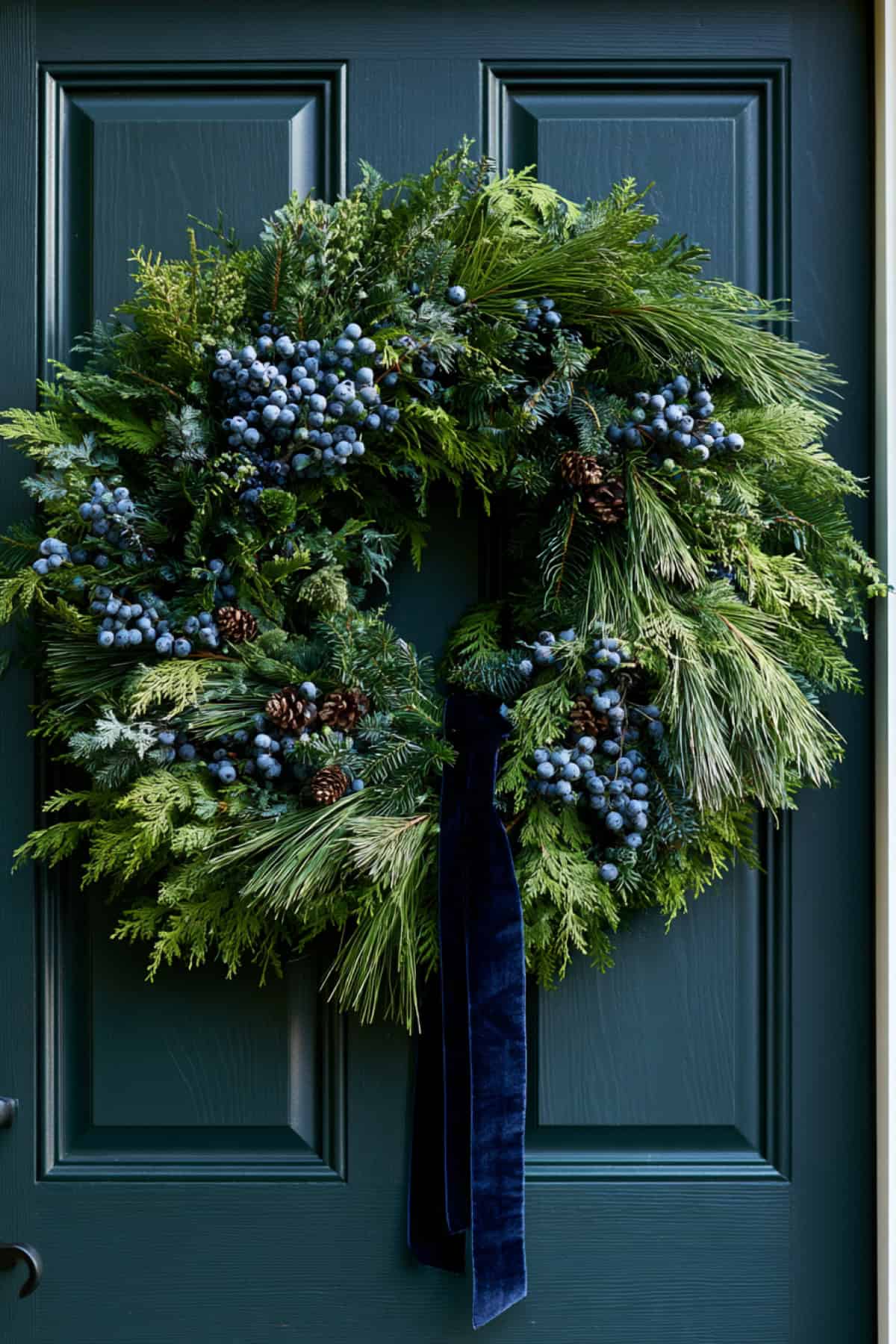
Juniper berries are smoky blue against a background of cedar, a detail worth keeping visible when arranging the wreath. Gather berried sprigs in uneven clusters, aim them outward, and wire each stem firmly into a generous cedar base; gloves help with the prickly tips. Hang the wreath on a natural wood door if you have one, ideally beneath an overhang that shields the fresh foliage from prolonged rain.
Double Front Doors With Matching Greenery Wreaths
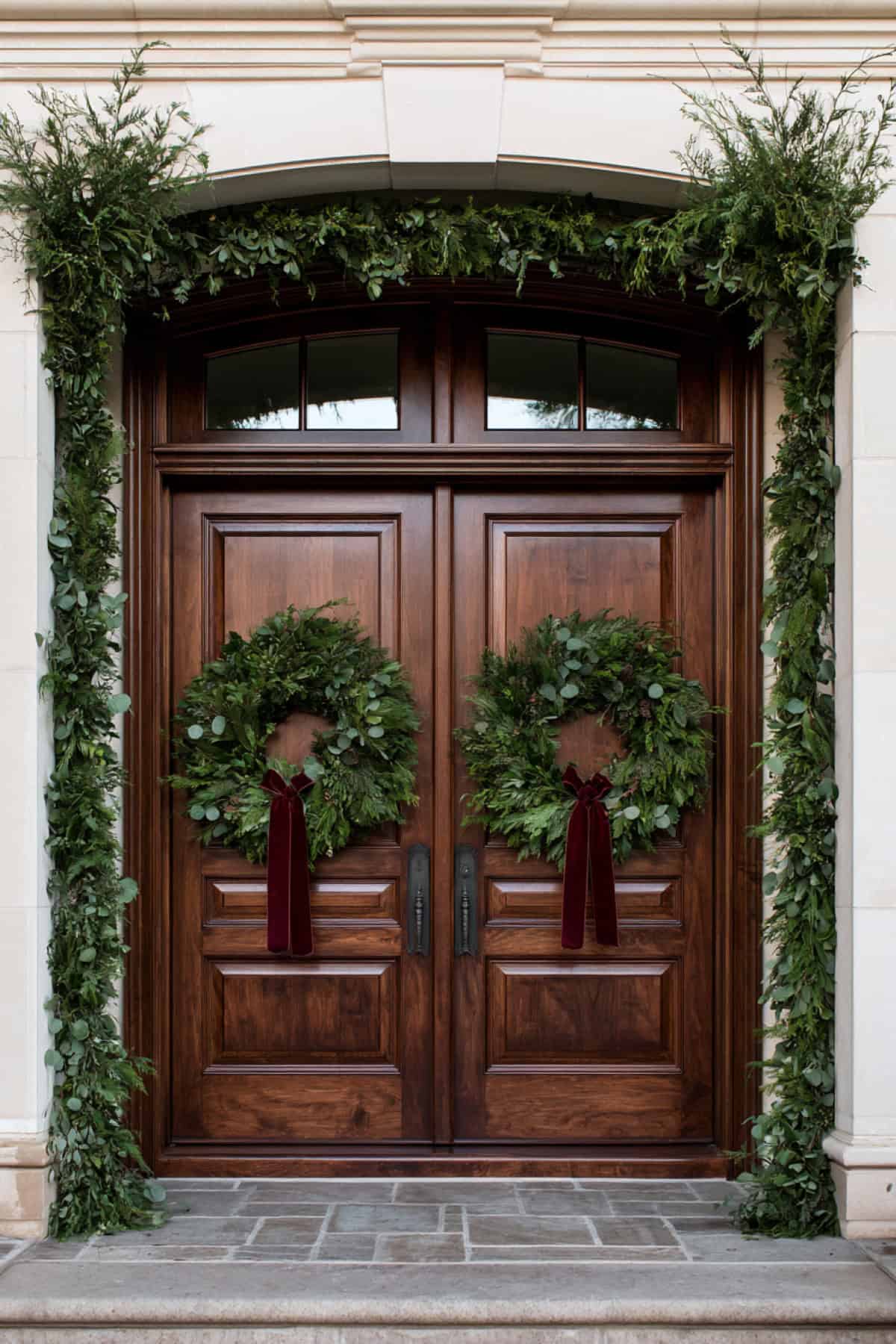
Double doors make every small difference in wreath placement obvious. Before attaching anything, measure down from the top of each panel and mark equal hanging heights. Matching wreaths with the same foliage and ribbon width establish a pleasing rhythm across the entrance. Step outside and check the pair from the path, allowing room at the center seam for both doors to open without catching the greenery.
Natural Greenery Garland With Bare Branch Accents
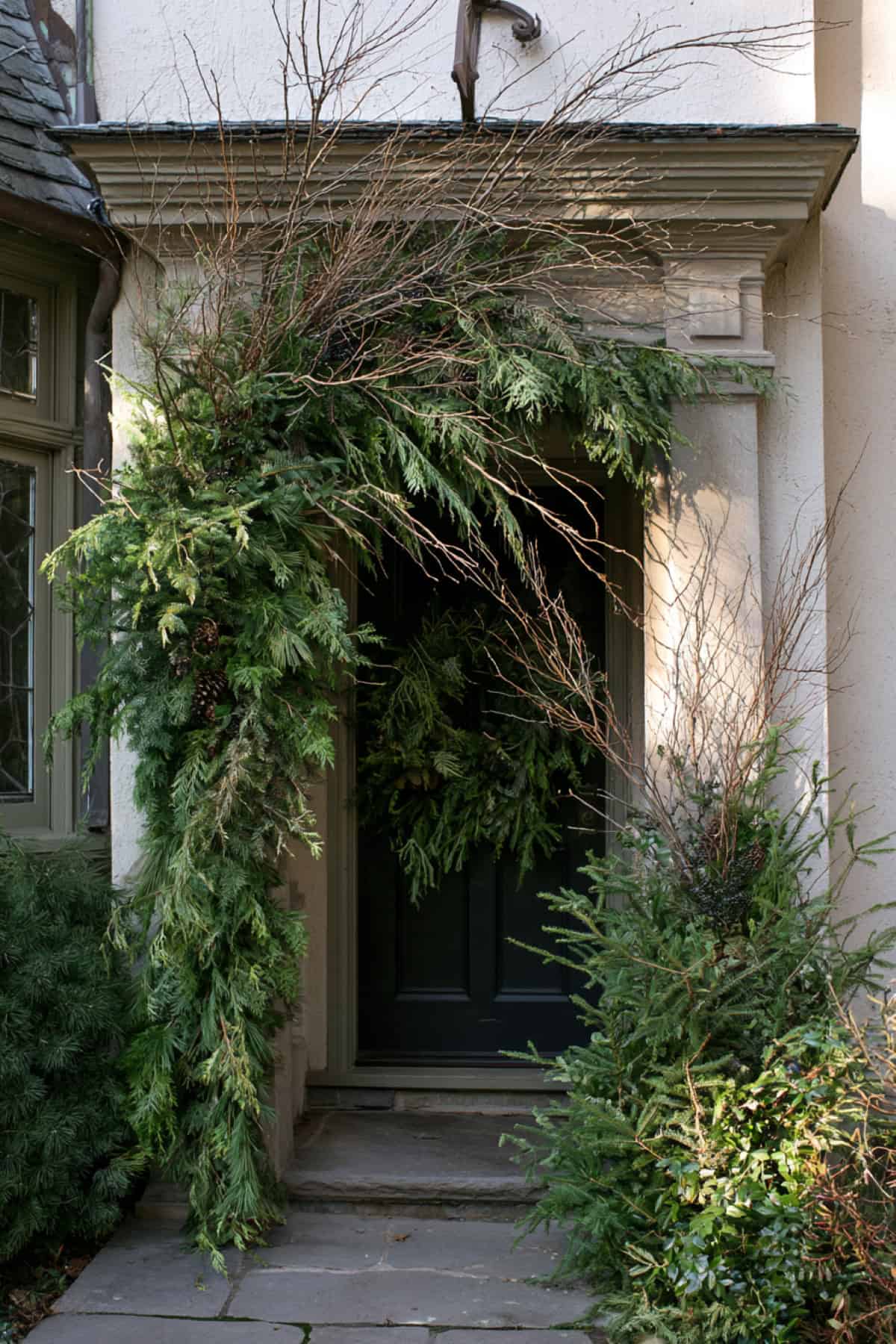
Against a thick evergreen garland, bare winter branches introduce a different sort of texture. Thin willow stems arc naturally, and birch twigs stand out with their pale bark. Push their lower ends deep into the fir and wire each stem firmly to the garland’s core. Let the branches reach upward across the top of the doorway, where their shapes remain clear. Trim any sharp ends near shoulder height or the door opening before visitors arrive.
Greenery Wreath With Long Red Velvet Ribbon
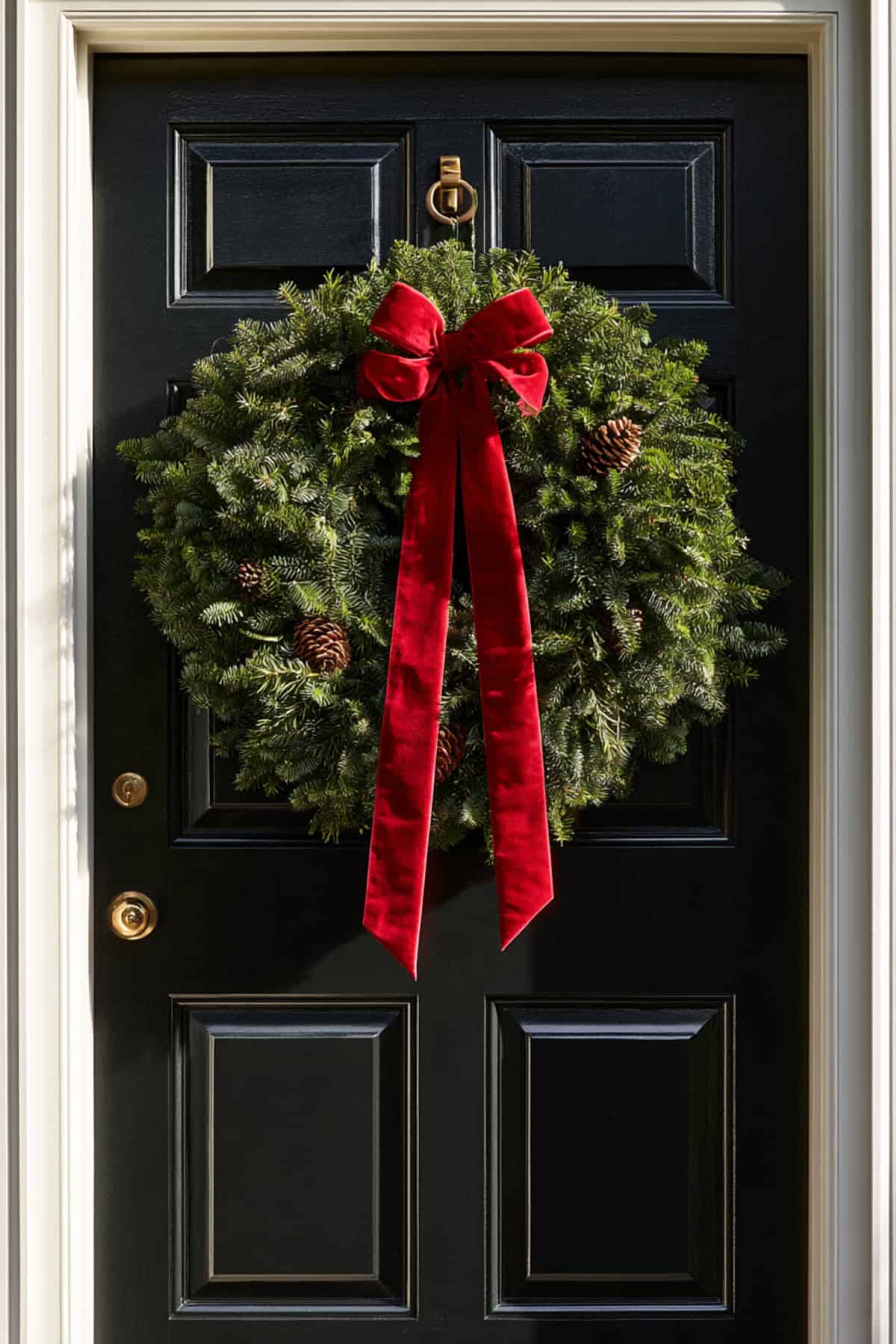
Red velvet ribbon has an unmistakable Christmas presence on a plain front door. Tie it at the top of a full fir wreath and let the long tails fall below the greenery, ending at slightly different heights. Generous loops are easier to appreciate from the street. For an exposed entrance, use outdoor ribbon with a velvet-like finish and position the wreath where neither tail can reach the lockset or knocker.
Fresh Greenery Draped Above A Glass Front Door
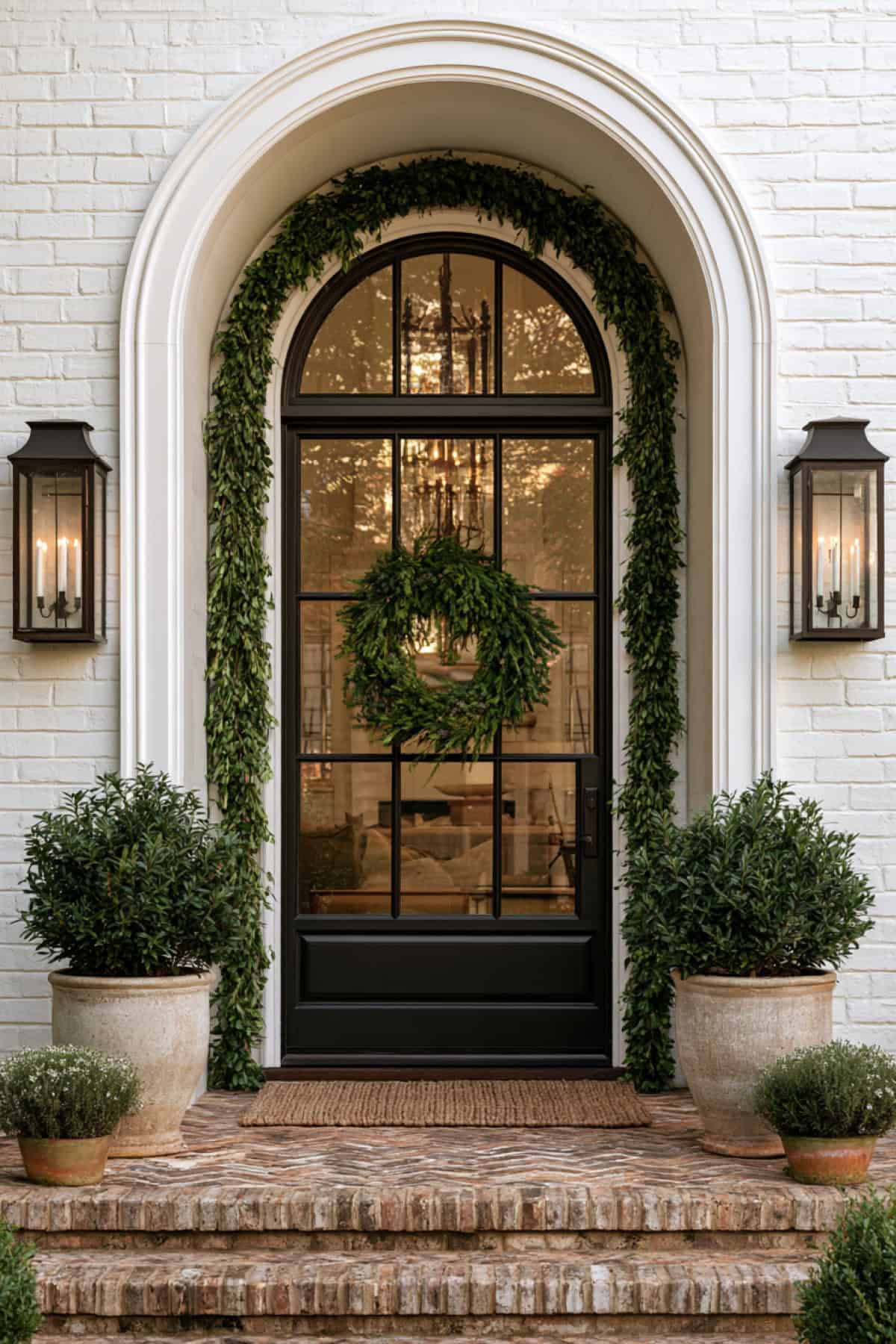
Glass doors are lovely places for Christmas greenery, provided the panes stay visible. Drape fresh cedar along the header and let short, uneven ends fall beside the frame. Attach the greenery to solid trim, not directly to the glass, and support its weight at several points. From indoors, the branches form a delicate border around the view outside. After a week or two, inspect the ties as the cut stems dry and settle into place.