
Fraser fir and noble fir provide dense, lasting greenery for Christmas wreaths and garlands. Their clipped boughs hold a wreath’s circular shape, and their needles give the greenery a full appearance. A strand across a mantel invites a looser line, such as the drape of cedar or white pine.
Needle length, stem weight, and drying behavior make each cutting worth a closer look.
Table of Contents
- Fraser Fir
- Noble Fir
- Balsam Fir
- Douglas Fir
- White Pine
- Scots Pine
- Eastern Red Cedar
- Western Red Cedar
- Incense Cedar
- Arborvitae
- Leyland Cypress
- Hinoki Cypress
- False Cypress
- Arizona Cypress
- Juniper
- Blue Spruce
- Norway Spruce
- Yew
- Boxwood
- American Holly
- English Holly
- Magnolia Leaves
- Seeded Eucalyptus
- Silver Dollar Eucalyptus
- Bay Laurel
- Rosemary
Fraser Fir
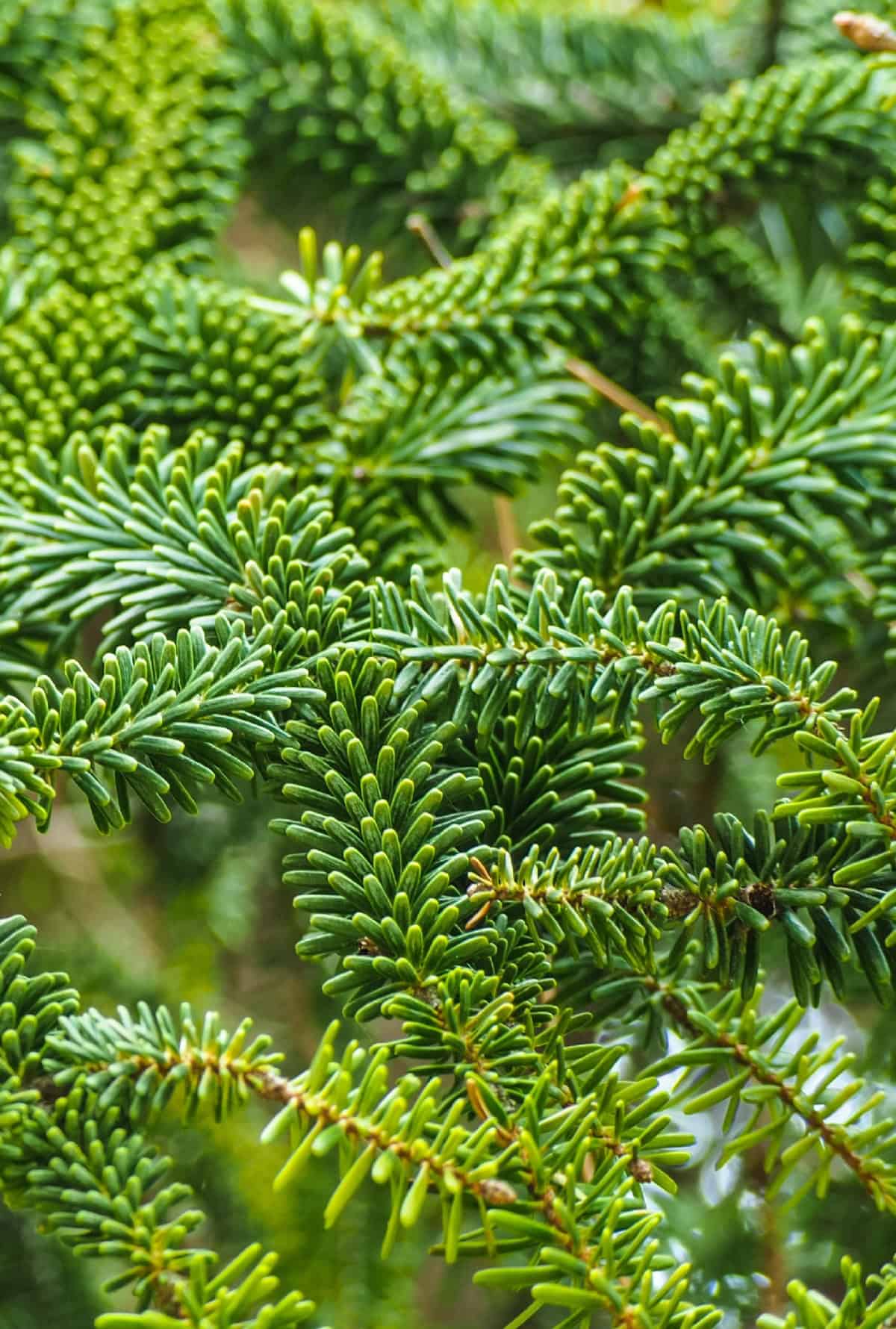
Dense branches g ive Fraser fir wreaths a full, even outline. Its short, flat needles are dark green above and silvery beneath, a detail that shows when a branch turns at the edge of a wreath.
The stems have enough structure for a substantial base, and the needles hold well indoors when the cuttings stay cool before assembly. Its crisp evergreen scent becomes noticeable as the branches are clipped and wired. Small bunches overlap neatly, leaving space for ribbon or other accents.
Noble Fir
For a wreath with a pronounced, layered shape, noble fir supplies broad branches that keep their form. Blue-green needles curve upward along sturdy stems, exposing their pale undersides without much arranging. Its open branching also leaves visible spaces for cones.
Garland makers prize its needle retention. A long piece has considerable weight, though, particularly once decorated; a secure wire base and well-anchored hanging points deserve attention before it goes above a doorway.
Balsam Fir
The unmistakable scent of a fresh Christmas wreath frequently comes from balsam fir. Crushing a needle releases its rich resinous fragrance, making this species especially appealing near an entry or in a cool room.
Its flat, deep-green needles sit along flexible twigs that tuck readily into a wreath base. Balsam dries faster in heated spaces than its appearance initially suggests. Keeping cut branches cool until assembly helps preserve their color and fragrance through the decorating period.
Douglas Fir
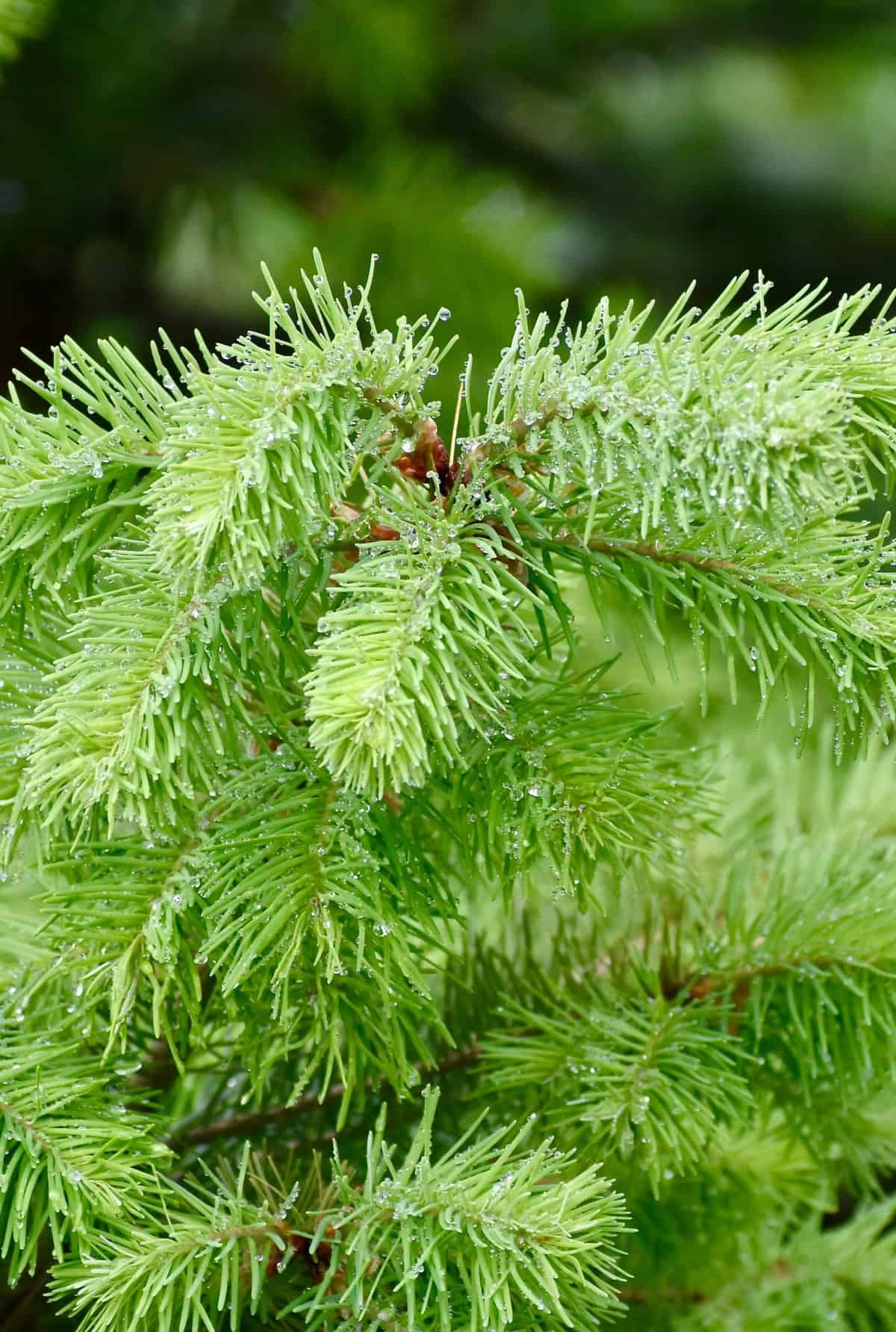
Soft needles make Douglas fir comfortable to handle during a long garland-making session. They radiate around the twig, giving each cutting a rounded, bushy profile that fills gaps quickly. A crushed needle has a sweet, citrus-tinged evergreen scent.
The branches bend readily along a stair rail or curved mantel. Douglas fir is botanically distinct from true firs, though florists and growers group it with familiar Christmas greenery. Fresh cuttings maintain their fullness best away from heating vents.
White Pine
Long, fine needles give white pine garlands a flowing edge. The needles grow in bundles of five and have a soft, blue-green cast that stands out against darker evergreens. On a mantel, the branch tips settle into graceful arcs.
Those pliant stems are easy to wind into a loose wreath, though the fine needles leave limited support for heavy ornaments. A firm backing of wire or sturdier boughs keeps the circle defined; white pine supplies the movement at its outer edge.
Scots Pine
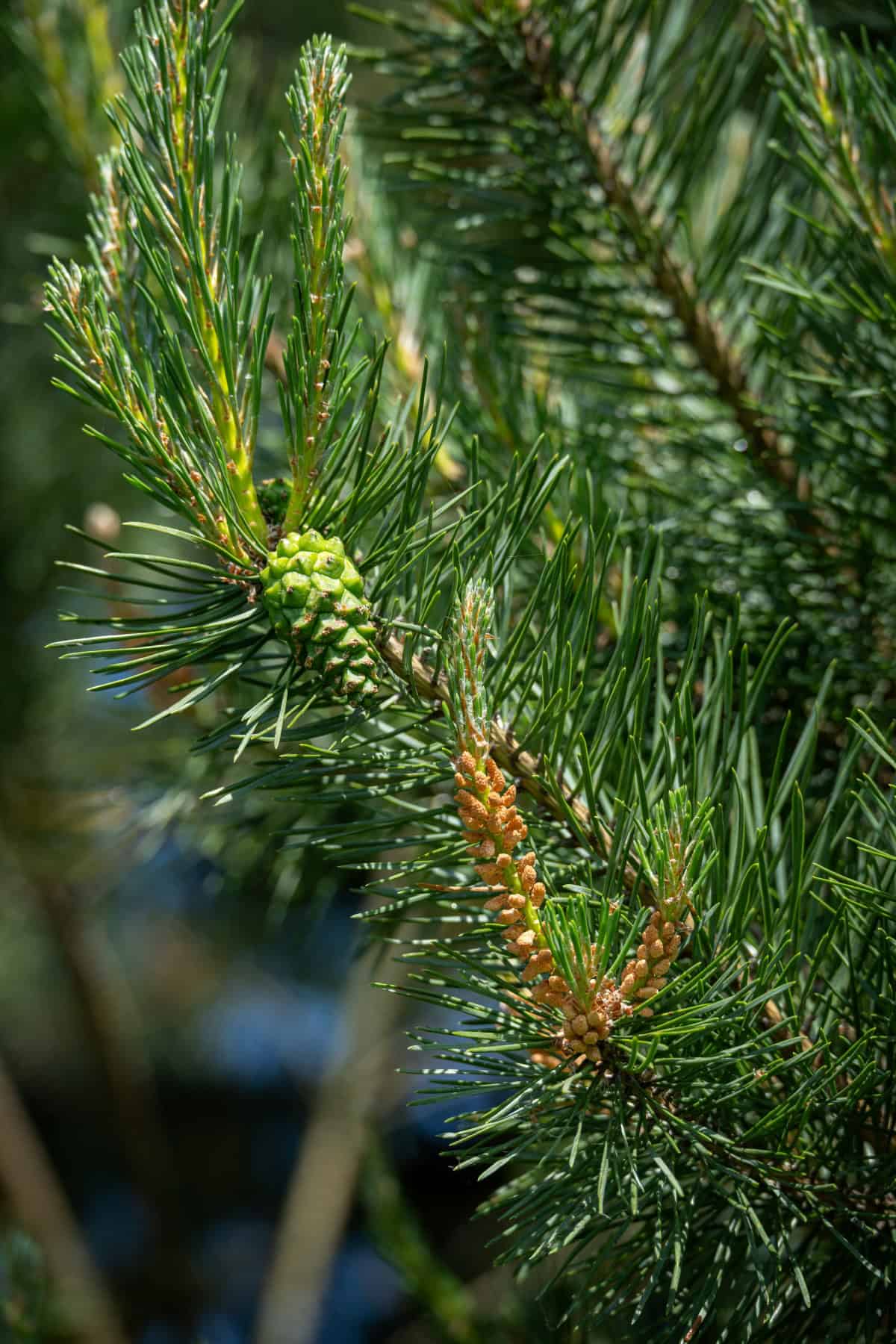
For a wreath that needs a crisp silhouette, Scots pine has the necessary stiffness. Its short, twisted needles grow in pairs, forming dense tufts along branches that retain their shape under wire. The green needles and orange-brown bark give cut stems a distinctive woodland look.
Its sturdy tips hold small cones and ribbon without drooping. Pine resin is sticky during trimming, so gloves protect hands and keep the ribbon clean. Scots pine holds its needles well after cutting.
Eastern Red Cedar
Clusters of dusty blue, berry-like cones make female Eastern red cedar branches especially striking in a wreath. The evergreen itself is a juniper, despite its common name, and its scale-like foliage ranges from deep green to blue-green.
Its slender branches bend around a frame and release a sharp, woody scent when handled. Dense bunches give a wreath a slightly wild edge. Check cuttings closely before bringing them indoors, since the close-set sprays give insects places to shelter.
Western Red Cedar
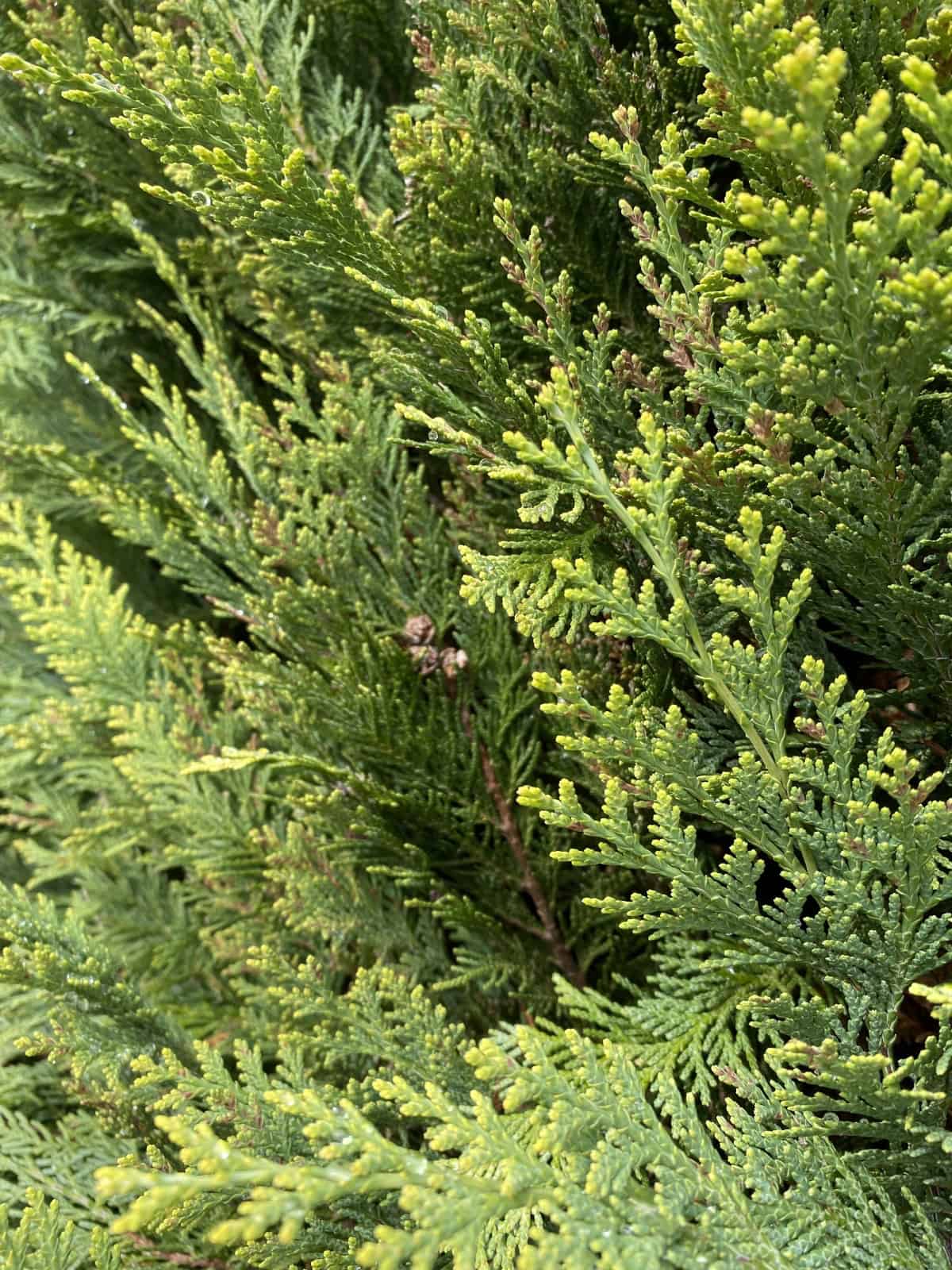
Over a doorway, Western red cedar falls in broad, flat sprays with a natural downward sweep. Its scale-like foliage reads as a continuous green surface, especially in a long garland.
The flexible branches are useful where greenery needs to follow a curve, though their length adds weight. Secure larger cuttings at several points along a stair rail or mantel. Western red cedar has a warm, woody scent; its sprays retain their shape best when kept away from direct heat.
Incense Cedar
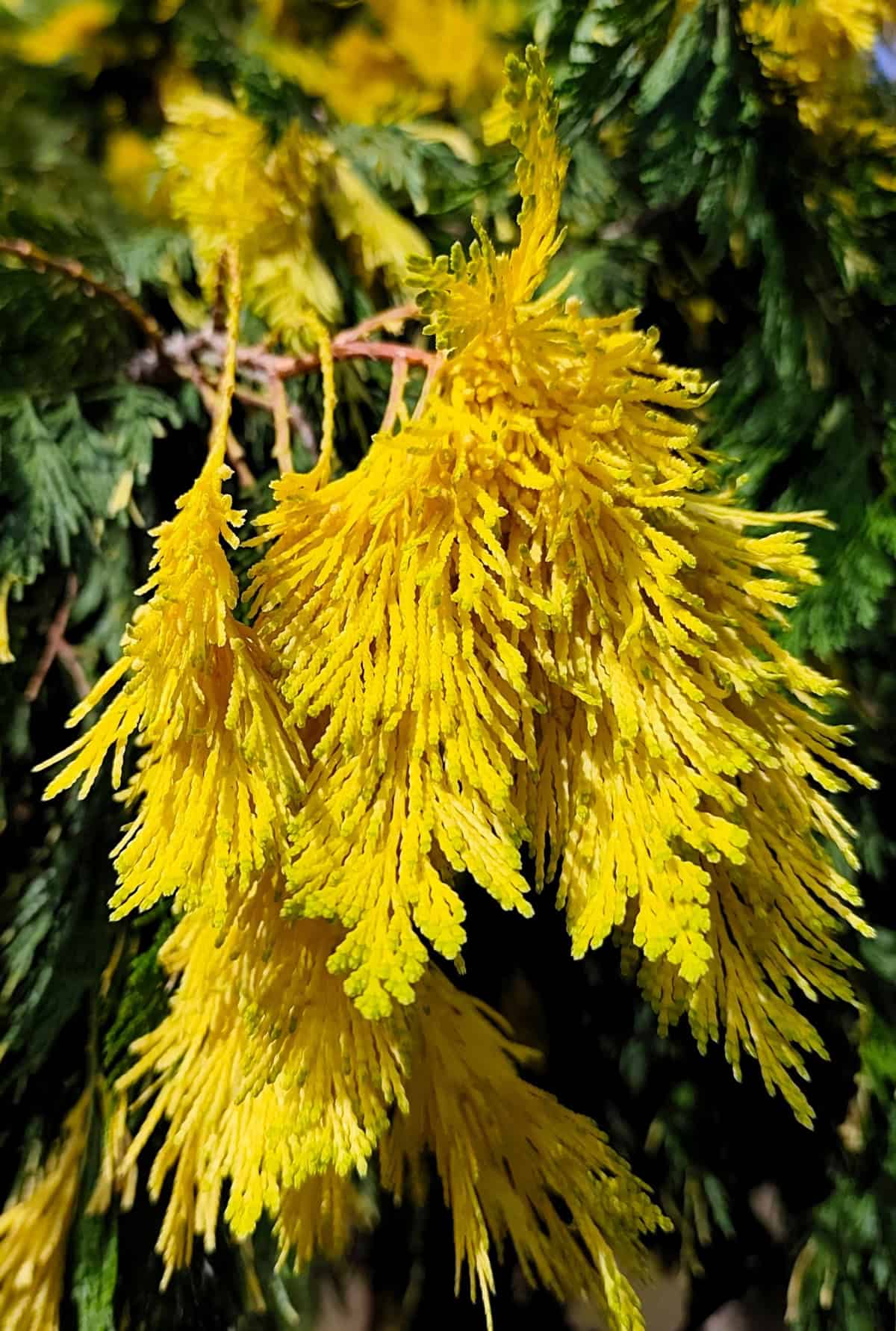
Narrow, flattened sprays give incense cedar a tidy outline without making a wreath look rigid. Its scale-like leaves carry a rich green color, and bruised foliage releases the warm scent behind its name.
The branch tips fit between broader fir boughs, where their distinct form remains visible. Incense cedar also has enough length for small swags. Its woody stems take firm wire well; placing the wire at a branch fork keeps each spray facing outward.
Arborvitae
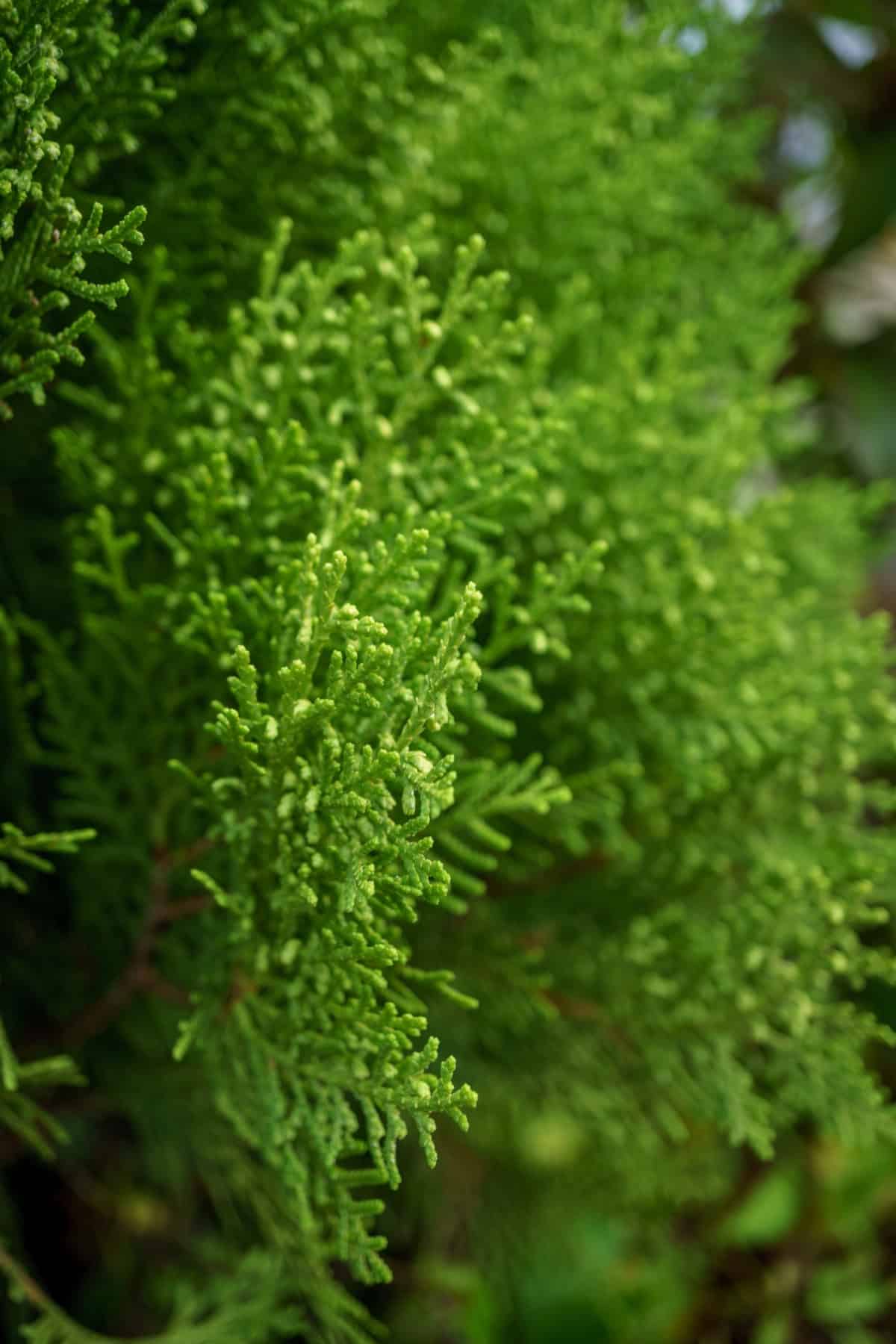
A flat fan of arborvitae fills a visible gap in a wreath with a single cutting. Closely packed scales form bright green sprays that lie neatly against a wire base, particularly on compact wreaths.
Freshness matters with this foliage. Branch tips left near a heat source may dry and turn brown, so cuttings are best stored in a cool place before assembly. Short lengths are easier to place than large branches, which may leave thick stems exposed.
Leyland Cypress
Fine, feathery sprays give Leyland cypress a light edge along a garland. Its flexible branchlets thread through denser greenery and soften the outline without adding substantial weight.
This cypress has relatively little fragrance, a useful detail where strongly scented boughs would be distracting. It is also commonly grown as a landscape hedge, making trimmed branches a familiar holiday material in many parts of the United States. Fresh tips keep their fine shape longest in cool indoor spots.
Hinoki Cypress
Small, layered fans are the defining detail of Hinoki cypress in a wreath. Their curved edges resemble tiny shells, giving even a short cutting enough presence to stand apart from fir needles. The underside of the foliage shows pale markings when a spray turns.
Garden specimens grow slowly, so modest cuttings preserve the plant’s shape. Tuck the branch ends under neighboring greenery and leave the distinctive fans visible across the wreath’s face.
False Cypress
Threadleaf false cypress gives a garland fine, trailing strands that fall past its main line. The name covers several Chamaecyparis species and cultivars, so the foliage varies; threadleaf selections are particularly distinctive, with slender, cordlike sprays.
A small amount makes a clear visual difference near the end of a mantel garland. Wire the stems close to their thicker bases, leaving the delicate tips free. Check the plant label before cutting, since growth habits differ markedly among varieties.
Arizona Cypress
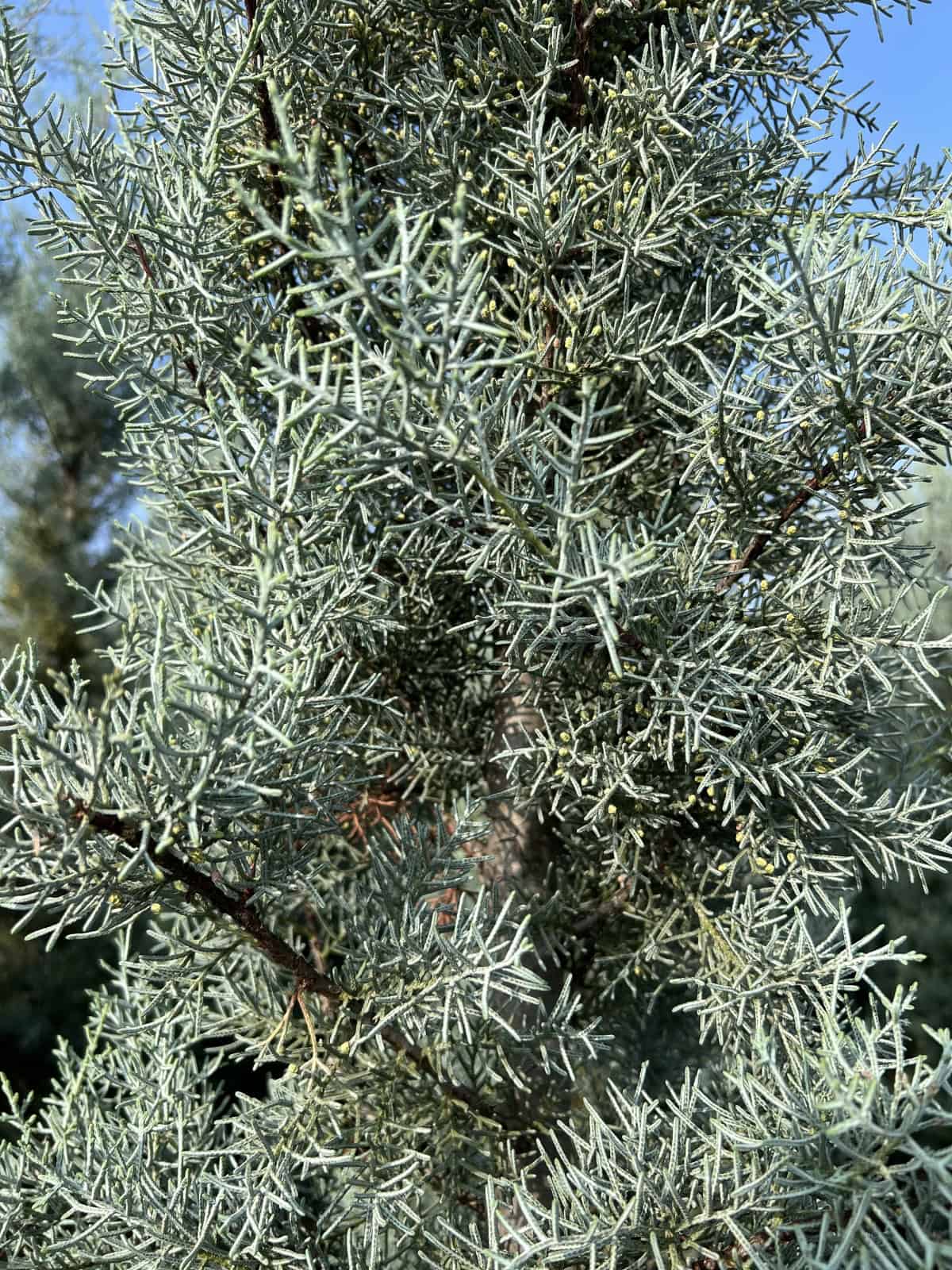
Silvery blue foliage makes Arizona cypress visible even against a pale front door. Its fine, scale-covered twigs form airy branches, and freshly cut greenery has a clean, resinous scent.
The cool color is especially striking in a wreath anchored by dark fir. Use short branches where their blue tips remain visible; burying the stems deep in a dense base obscures their strongest feature. Cuttings stored in a cool spot retain their color longer than branches left beside a warm window.
Juniper
Berries are the attraction on fruiting juniper branches, where blue cones punctuate the evergreen foliage. Growth varies widely across species and cultivars: a cutting may have soft scales or sharp, needle-like leaves.
Gloves are wise when handling prickly varieties. In a wreath, short pieces keep the berries visible and prevent stiff stems from jutting out. Only female plants that have been pollinated bear the berry-like cones, so a green juniper hedge does not guarantee fruiting branches.
Blue Spruce
Blue spruce gives a wreath a sharp outline and a distinctly frosted color. Its stiff needles project around the twig, creating strong definition beside softer fir or pine.
Those needles prick bare hands, so gloves make wiring easier. The rigid branches are best cut into short sections and secured firmly to a wreath frame; long pieces resist tight curves. Indoors, spruce needles shed as they dry, particularly near heat, making a cool entry a practical placement.
Norway Spruce
Long, sweeping branchlets make Norway spruce a natural fit for a loose outdoor garland. Its deep-green needles and slender, hanging tips have the familiar silhouette of a traditional Christmas tree.
Freshness is especially important here: cut Norway spruce may shed needles quickly in a heated room. An outdoor railing or sheltered doorway gives it a cooler setting. For a wreath, wire short branch pieces tightly at the base and leave their drooping ends free.
Yew

Deep green, flat needles give yew a dense, finely detailed surface in a wreath. Its supple branches bend around a frame, making a compact circle with little trimming.
Every part of yew except the fleshy red portion of its berry-like aril is poisonous, and the seed inside that red covering is highly toxic. Keep yew decorations away from children and pets, and wear gloves when clipping branches. Discard trimmings where animals will not reach them.
Boxwood
Small, rounded leaves make boxwood wreaths look tightly packed even without a thick base of conifer boughs. Its short stems are well matched to modest wreath forms, where each leafy sprig remains visible.
A boxwood garland takes many cuttings and careful overlapping to conceal its support wire. The foliage may develop an earthy odor indoors, especially in warm rooms. Cool placement and fresh branches help preserve the leaves’ green color.
American Holly
Bright red berries draw the eye to fruiting branches of American holly. Its leaves have a comparatively matte finish, with stiff, pointed edges that hold their shape in a wreath.
The berries appear on female plants that have been pollinated. Wire berry-bearing stems near the front of an arrangement so their color stays visible. Holly berries are harmful if eaten, and the spiny leaves also call for care where children or pets might reach a hanging garland.
English Holly
Glossy, dark leaves give English holly a vivid surface under holiday lights. Their sharp points and the red berries on fruiting female branches produce the familiar Christmas holly appearance.
Short sprigs tuck securely into fir wreaths, with their glossy leaves standing above the needles. Gloves help during clipping and wiring. English holly is invasive in parts of the United States, particularly the Pacific Northwest; locally sourced cultivated cuttings avoid gathering branches from wild populations.
Magnolia Leaves
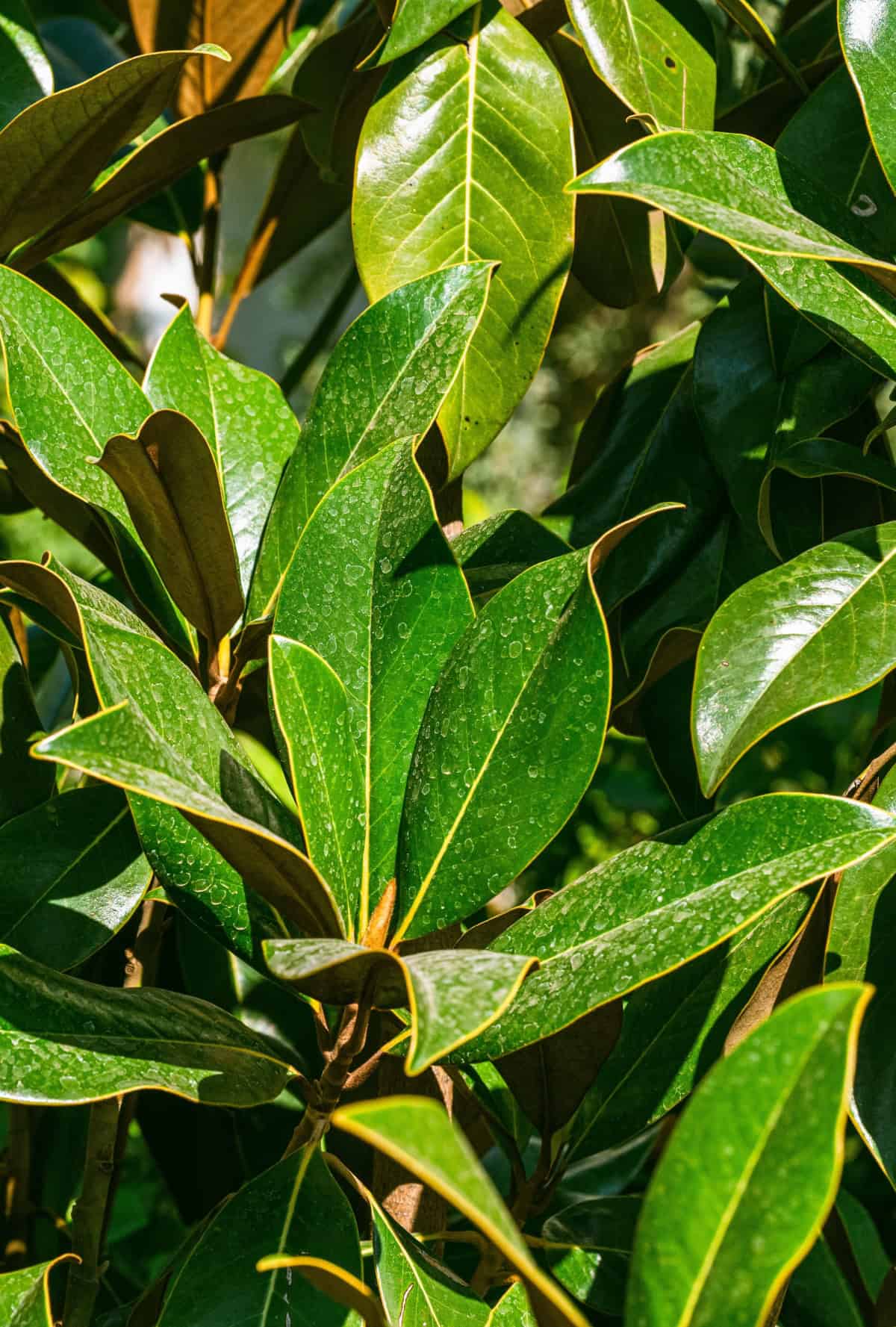
A magnolia wreath gains much of its color from the backs of the leaves. Southern magnolia has glossy green upper surfaces and velvety, rust-brown undersides, both visible as leaves turn around the frame.
The broad leaves cover wire quickly and give the wreath a substantial profile. Their stiff stems need firm attachment, especially in a garland that hangs vertically. As cut leaves dry, they may curl and deepen in color, making their changing appearance part of the arrangement.
Seeded Eucalyptus
Tiny seed capsules give seeded eucalyptus an intricate outline among larger evergreen boughs. Its slender stems extend beyond a wreath’s edge, where the capsules remain distinct against the background.
The gray-green foliage carries a strong herbal scent. A handful of short stems is sufficient for visible detail, particularly around a ribbon attachment or at the end of a garland. Eucalyptus is toxic to pets if eaten, so keep loose pieces and hanging strands beyond their reach.
Silver Dollar Eucalyptus
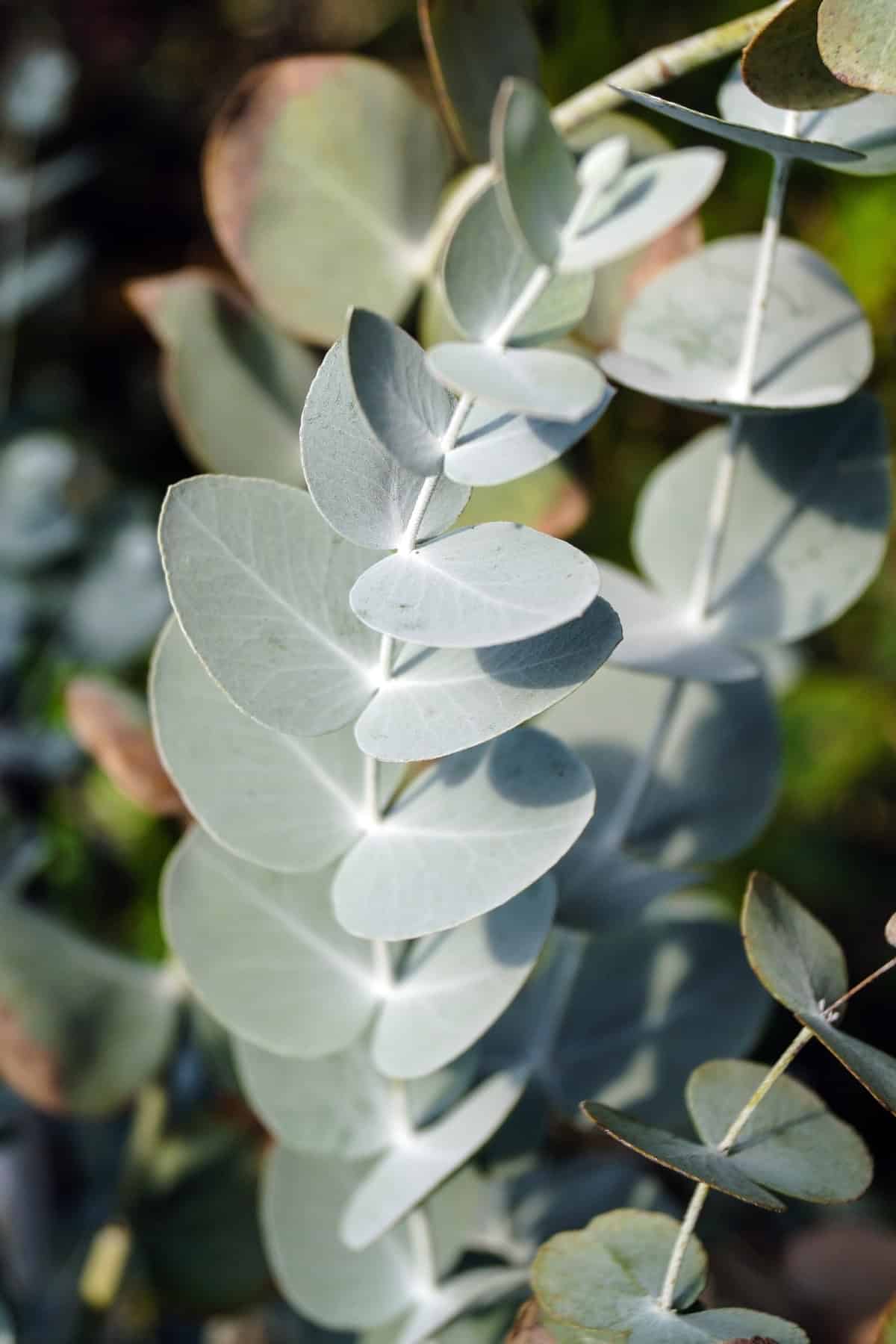
Round, silvery leaves interrupt a line of narrow conifer needles with broad, pale shapes. Silver dollar eucalyptus has flexible stems that slip along a garland, leaving the coin-shaped leaves visible at intervals.
Its color softens as the stems dry, and the leaves may curl. Wiring a few fresh branches into a wreath shortly before display preserves their rounded shape. The aromatic foliage belongs out of reach of pets, particularly where leaves might drop onto the floor.
Bay Laurel
Smooth, pointed leaves give bay laurel garlands a clean line along a mantel or doorway. Their dark green surface catches light gently, and a bruised leaf releases the familiar scent of bay.
The stems are sturdy enough for small wreaths, though the leaves look best when each branch is wired in the same direction. Florist greenery should remain decorative: cut branches intended for display may have received treatments unsuitable for food, even when the plant is an edible herb.
Rosemary
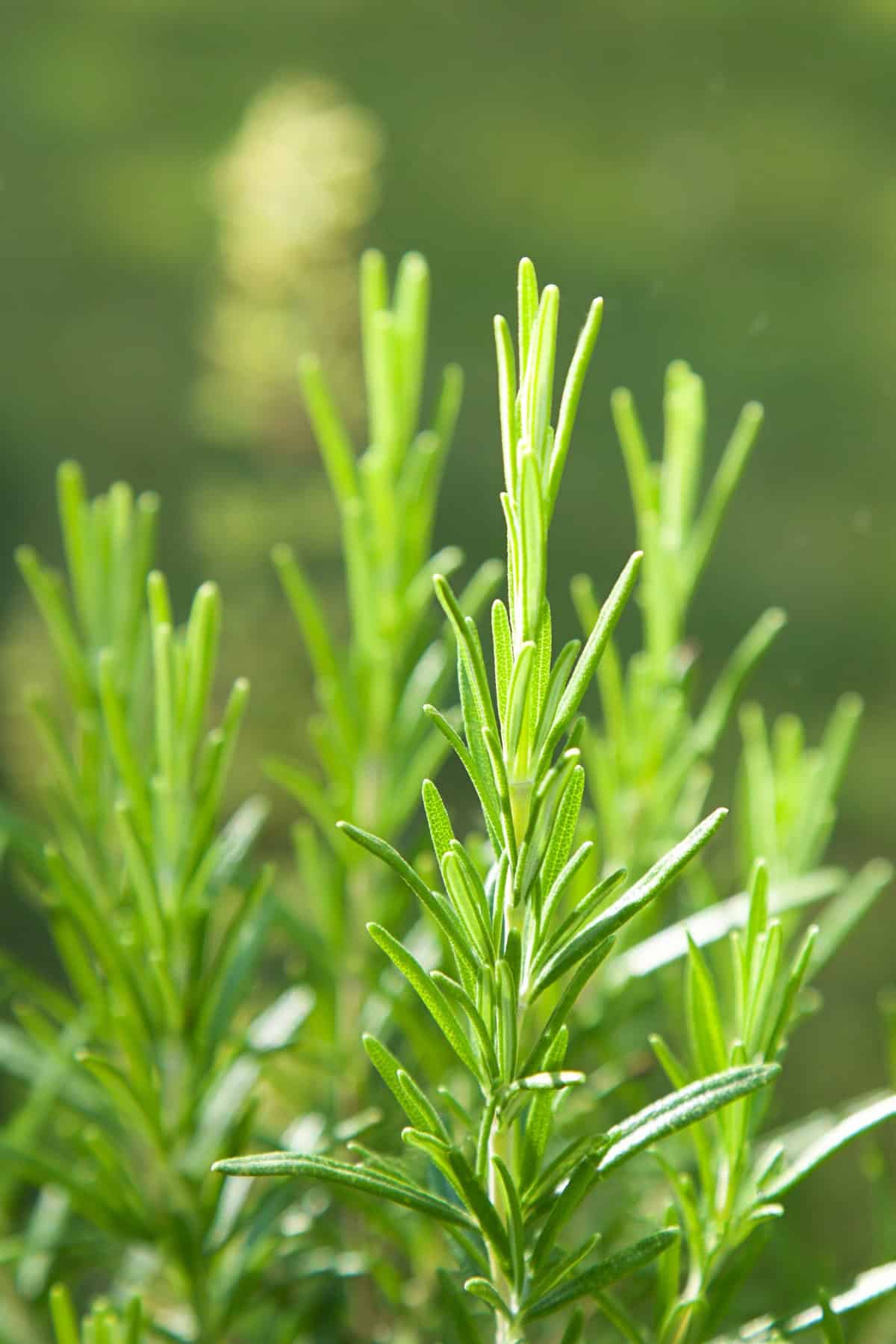
Short rosemary sprigs make a fragrant accent near the front of a Christmas wreath. Their narrow leaves resemble tiny evergreen needles, but a touch releases a distinctly herbal scent.
The woody lower stems wire securely into a fir base, leaving fresh tips visible. Rosemary dries fairly quickly in warm rooms, so compact wreaths in a cool spot preserve its appearance longest.
If the cuttings came from a garden plant, avoiding long bare cuts also protects its shape after the holidays.