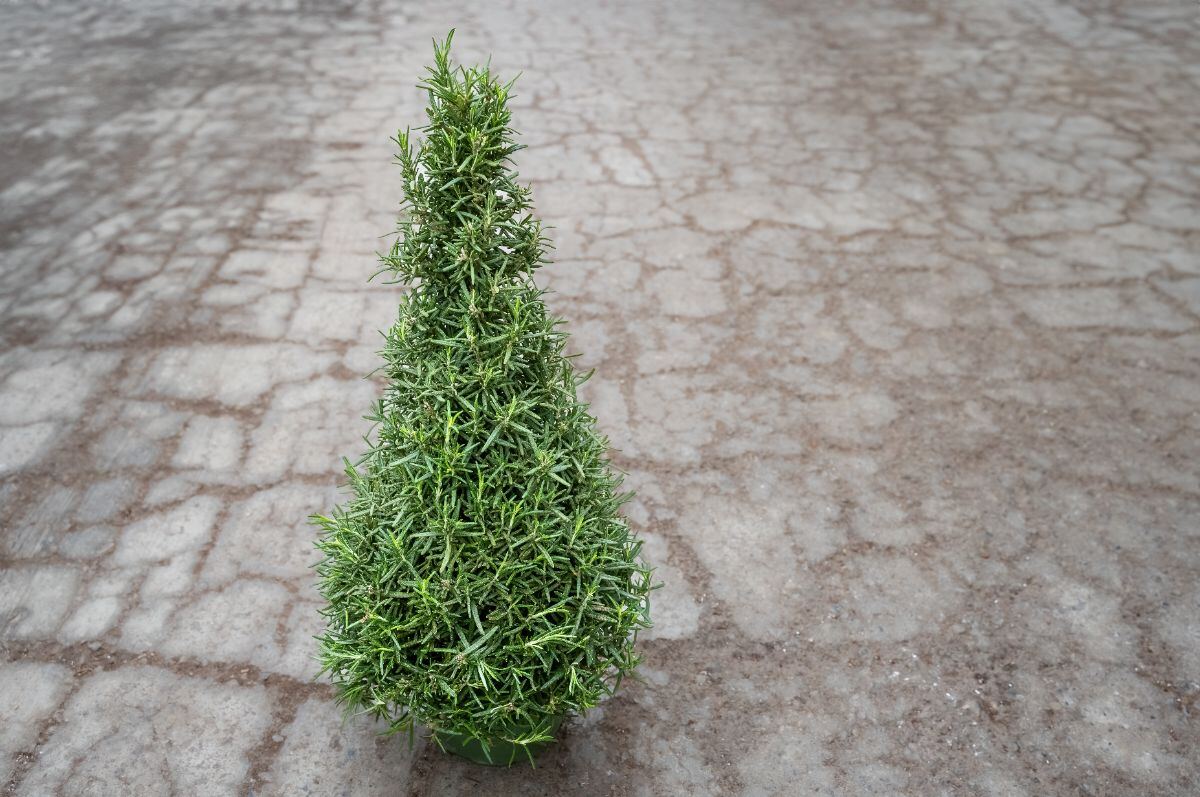
A rosemary Christmas tree needs a sunny window, a pot with drainage holes, water once the top inch of soil dries, and a cool spot away from heating vents. Underneath the cone shape is an ordinary Mediterranean herb with roots that rot quickly in soggy soil.
Many holiday trees arrive in tight nursery pots tucked inside a foil sleeve that traps water. Keep going for the full routine, including how to trim it back into shape and move it outdoors when spring arrives.
Table of Contents
- What a Rosemary Christmas Tree Actually Is
- Quick Care Summary
- What to Look for When Buying One
- First Steps After Bringing It Home
- Light
- Water: The Most Common Way People Kill It
- Soil and Drainage
- Humidity and Air Circulation
- Temperature and Where to Place It in Your Home
- Feeding
- Should You Remove the Foil Wrap and Decorations?
- Repotting Into a Better Container
- Pruning and Keeping the Cone Shape
- Harvesting and Using the Leaves in the Kitchen
- What to Do After the Holidays
- Moving It Outdoors in Spring
- Overwintering in Cold Climates
- Propagation from Cuttings
- Common Problems and Troubleshooting: Browning, Dropping Needles, Powdery Mildew, Root Rot
- Is It Safe for Pets?
- Frequently Asked Questions
What a Rosemary Christmas Tree Actually Is
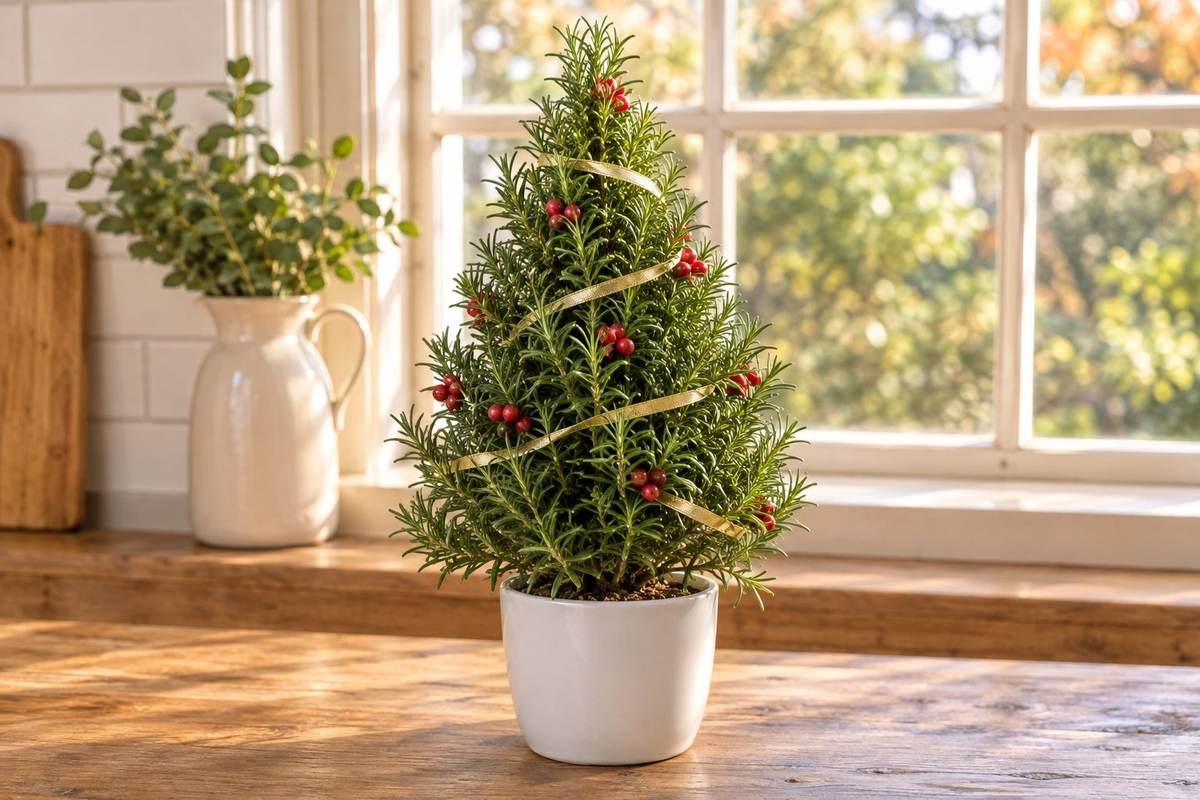
The familiar holiday tree is a living rosemary shrub trimmed into a cone, with its woody stems supporting narrow, fragrant leaves. It is sold in a small nursery pot, sometimes hidden inside a decorative sleeve. The cone shape comes from pruning; new growth needs occasional trimming to keep that outline.
Rosemary is a Mediterranean herb that grows best in strong light and freely draining soil. A topiary kept indoors through winter needs closer attention than rosemary planted outdoors in suitable conditions. Its compact root ball has little reserve when soil dries out, while crowded stems make it harder to spot browning near the center.
Quick Care Summary
A rosemary topiary does best when its light, drainage, and watering are checked together. The soil surface alone is a poor guide to moisture deeper in a tightly rooted pot.
– Light: At least 6 hours of direct sun; supplement weak winter light with a grow light.
– Soil: Fast-draining potting mix with added perlite or coarse sand.
– Watering: Water thoroughly when the upper inch dries; empty the saucer.
– Temperature: Aim for a bright, cool room around 55–70°F.
– Humidity: Average indoor humidity; provide open air around the foliage.
– Fertilizer: Feed lightly during active spring and summer growth.
– Growth Time: A perennial shrub; new shoots develop during the growing season.
– Blooming Season: Late winter through spring, depending on conditions.
– Propagation: Root soft stem cuttings in spring or early summer.
What to Look for When Buying One
A healthy topiary has pliable stems and foliage that stays attached when a branch is gently brushed. Look inside the cone as well as along its outer edge. Extensive brown patches, bare inner stems, or a pile of fallen leaves beneath the pot suggest stress that pruning will not reverse.
Check that the nursery pot has drainage holes and lift it to assess its weight. An exceptionally light pot with soil pulling away from the sides may be severely dry; a sodden pot standing in water presents a different risk. Choose an unsprayed plant if its leaves are intended for cooking, and confirm that any glitter or decorative coating is absent.
First Steps After Bringing It Home
The first task at home is to expose the nursery pot and check moisture beneath the soil surface. Remove any sleeve covering its drainage holes. If the upper inch is dry, water slowly until moisture flows from the bottom, then let the pot drain fully before returning it to a dry saucer.
Place the plant in the brightest suitable window and inspect it every day for the first week. Retail conditions and a warm home differ, so that early check helps establish how quickly the small pot dries. Keep ornaments light and leave space around the branches for air movement.
Light
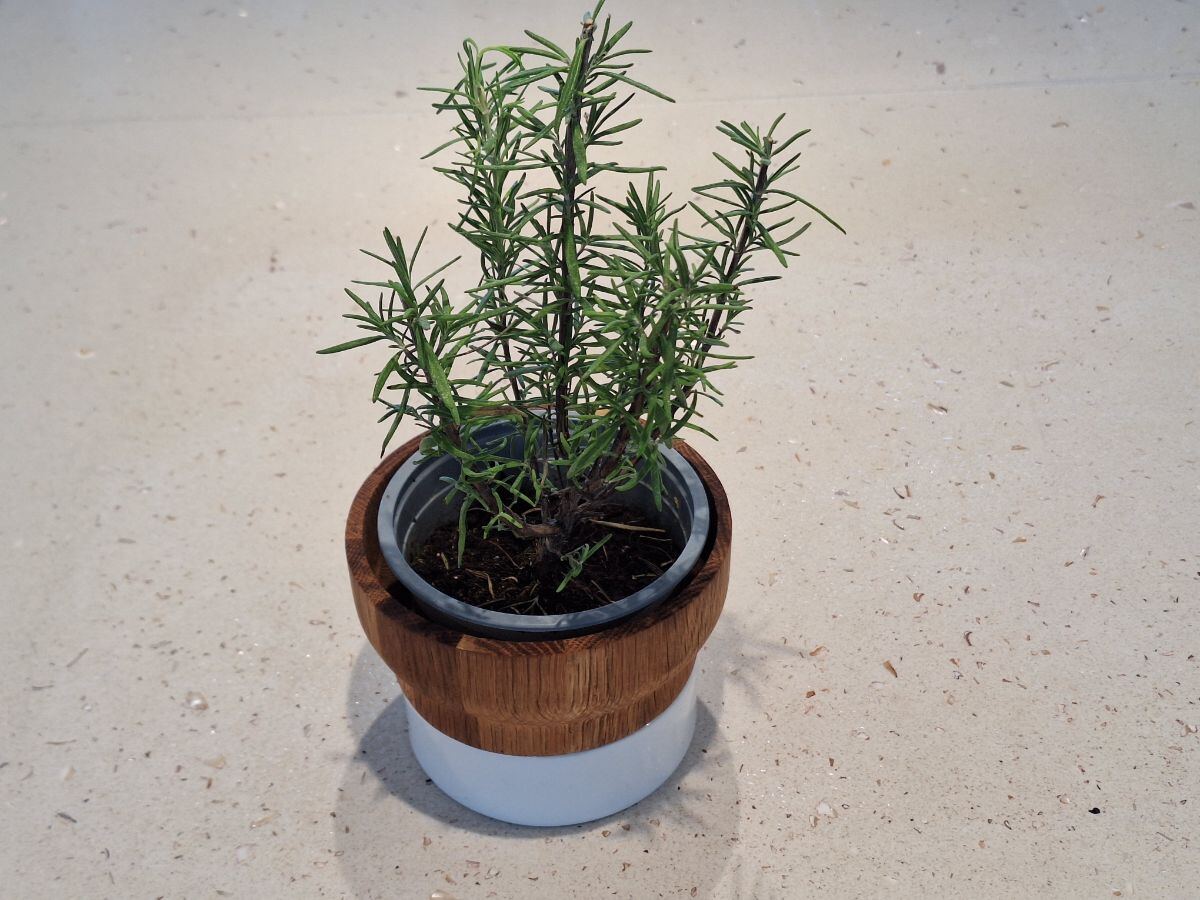
Strong direct light keeps rosemary’s new growth compact and its stems well covered. A south-facing window is the best indoor position in many U.S. homes; a bright west-facing window is another option. Set the pot close to the glass while keeping leaves clear of cold panes.
Short winter days and shaded windows reduce the light reaching the inner branches. Where sunlight falls short of roughly six hours, a full-spectrum grow light positioned according to its manufacturer’s directions helps maintain growth. Turn the pot a quarter turn every few days for even exposure. Pale, stretched shoots signal that the plant needs a brighter position.
Water: The Most Common Way People Kill It
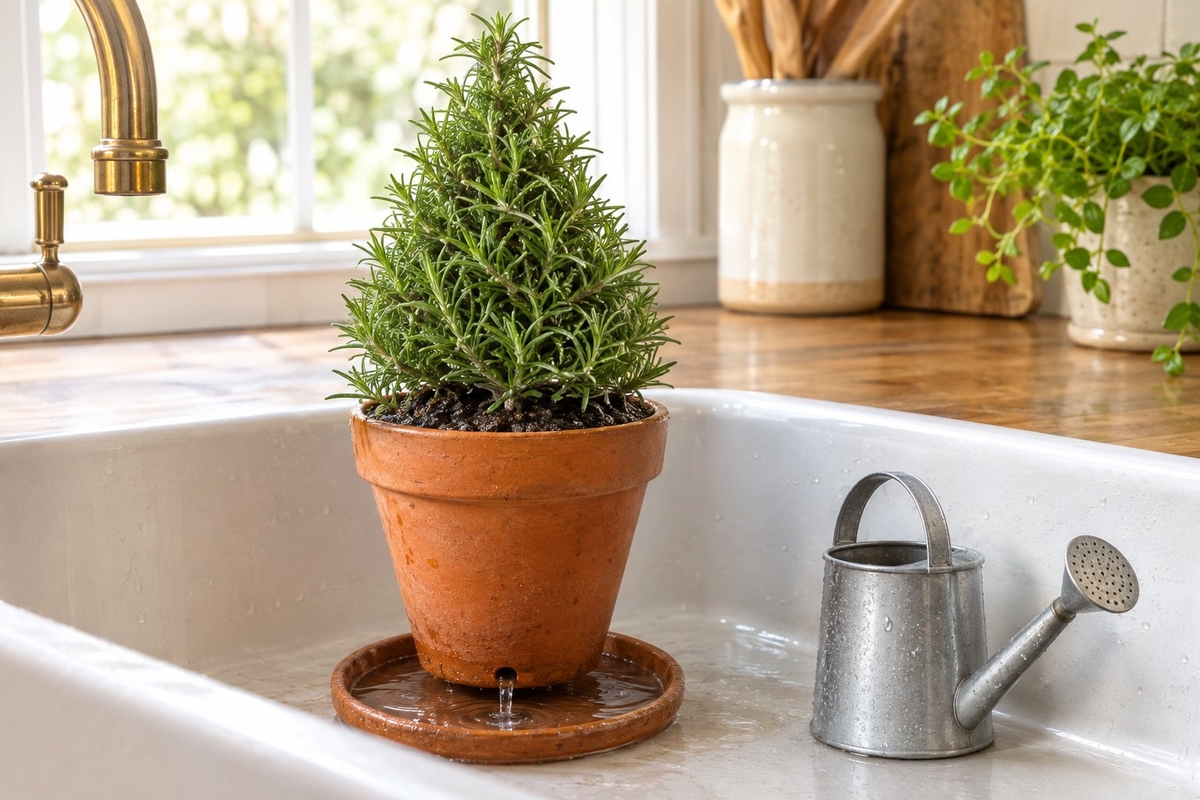
Watering by the calendar leaves a small rosemary pot vulnerable to both prolonged dryness and saturated roots. Check the upper inch of mix with a finger, then assess the pot’s weight. Once that layer dries, water the entire root ball slowly until excess runs through the holes.
If water immediately streams down the sides of a very dry root ball, set the nursery pot in shallow water for about 15 minutes. Remove it, check that the mix has absorbed moisture, and drain it thoroughly. Never leave the base submerged.
When the top remains damp for several days, inspect the drainage and wait before watering again.
Soil and Drainage
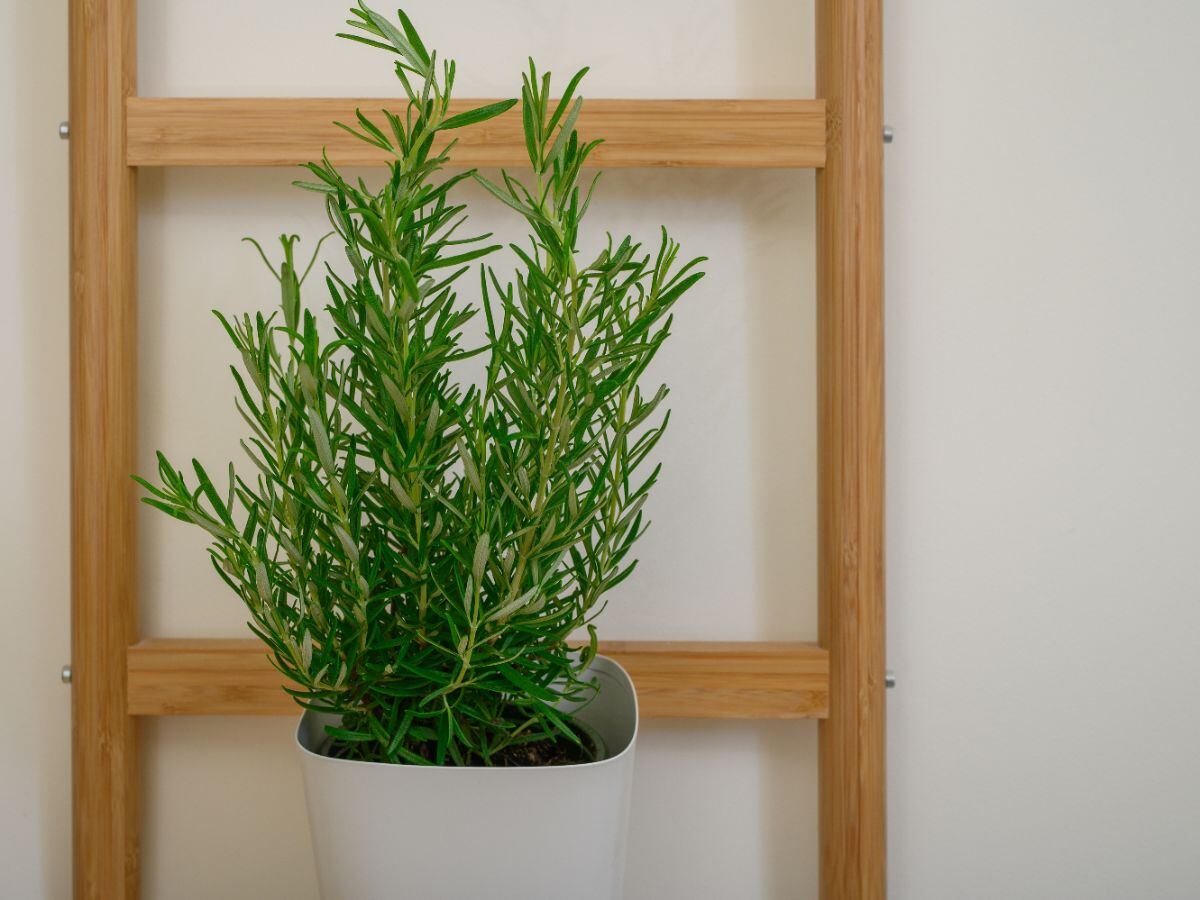
A fast-draining mix and an open drainage hole protect rosemary’s roots from standing water. For repotting, use a quality potting mix amended with perlite or coarse horticultural sand. The blend should accept water evenly and release the excess promptly.
A decorative cachepot is suitable only when the nursery pot comes out for watering and drains before being returned. Stones at the bottom of a pot without a hole do not provide an exit for water. Dense, persistently wet soil deserves attention, particularly when leaves brown despite regular watering. Keep the crown at its existing soil level when changing containers; burying woody stems encourages decay.
Humidity and Air Circulation
Rosemary benefits from open air around its foliage, especially when grown as a dense cone. Leave a few inches between the branches and nearby plants or walls, and avoid enclosed display cases. Good circulation helps the inner growth dry after incidental splashes and reduces conditions favorable to powdery mildew.
Dry heated air also increases water loss from the pot. Place the topiary away from forced-air vents, then check its soil more frequently during cold spells when the heat runs longer. Routine misting is unnecessary and leaves water sitting among crowded stems. A clean pot and timely removal of fallen leaves make changes at the plant’s base easier to spot.
Temperature and Where to Place It in Your Home
A bright, cool room around 55–70°F is a good indoor position for a rosemary topiary. A sunny window in a lightly heated room suits it better than a mantel above a fireplace. Protect the branches from contact with freezing window glass, and move the pot away from drafts during bitter weather.
Warm air blowing directly across the cone dries foliage and soil quickly. Check the path of nearby heat vents before settling on a display spot. If the brightest window is in a warmer room, prioritize that light while monitoring the pot’s moisture closely. Avoid abrupt moves between a hot room and an unheated porch.
Feeding
Fertilizer is unnecessary during the first weeks after a holiday rosemary arrives home. Winter light is limited, and feeding a stressed or slow-growing plant does little to solve poor drainage or inadequate sun. Concentrated fertilizer also raises the risk of salt buildup in a small pot.
When fresh shoots appear in spring, apply a balanced liquid fertilizer at half the label strength about once a month through summer. Water the soil first if it is dry, and follow the product’s directions. Stop feeding as growth slows in fall. If a white crust develops on the soil or pot rim, flush the mix thoroughly with plain water and let it drain.
Should You Remove the Foil Wrap and Decorations?

Foil wrapping should come off whenever the plant is watered so the pot drains freely. A sleeve left tightly around the base traps runoff and hides standing water. If the foil stays on for display, open its bottom and set the nursery pot on a saucer that is checked and emptied after watering.
Remove heavy ornaments that bend stems or crowd the inner foliage. Loose ties are less damaging than wire wrapped firmly around a branch. Keep decorative sprays and artificial snow off any leaves intended for cooking. Battery-powered lights also need enough space around the stems to avoid snagging new growth during removal.
Repotting Into a Better Container
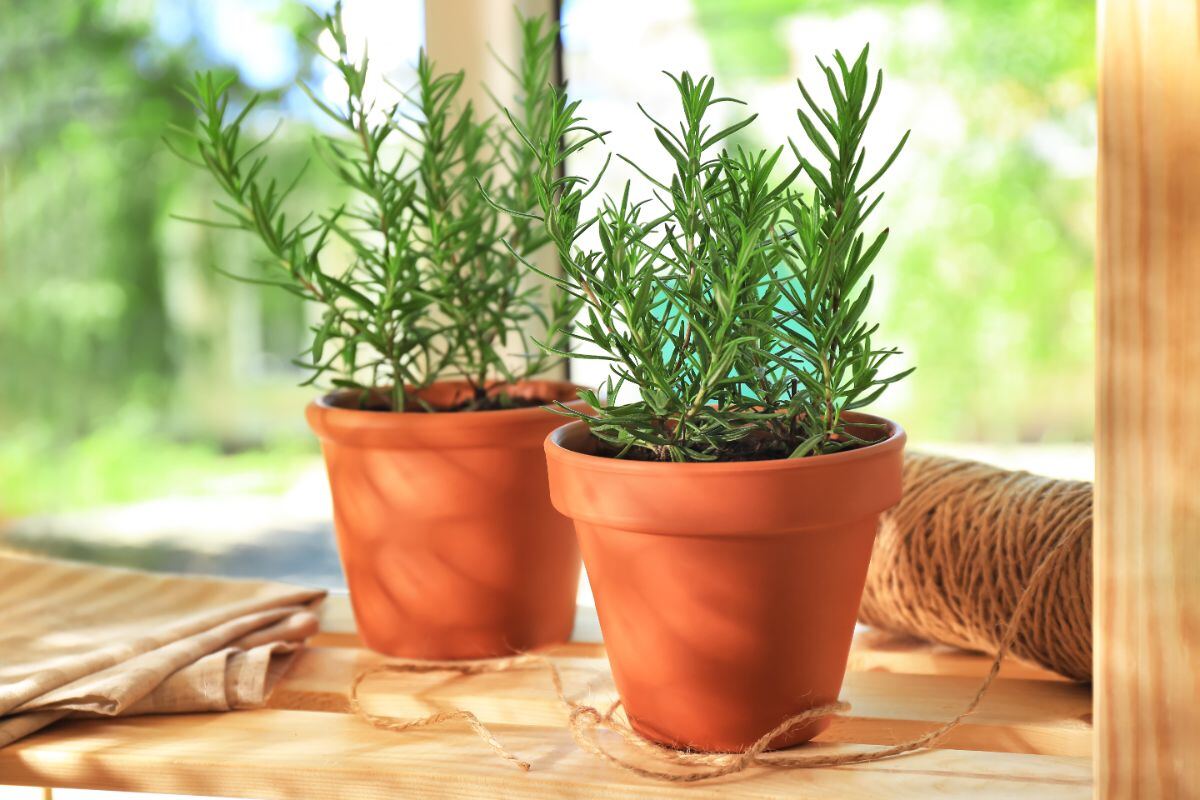
Repot rosemary when roots crowd the nursery pot or the existing mix stays wet too long. If the plant is healthy through the holidays, spring is a convenient time for the change. A plant sitting in sour, saturated soil needs a drainage correction sooner.
Choose a container with a drainage hole about 1–2 inches wider than the root ball. Loosen circling roots gently, transfer the plant at its previous depth, and fill around it with fast-draining mix. Water once to settle the soil, then let the excess run out. An oversized pot holds a large volume of wet mix beyond the roots, so increase container size gradually.
Pruning and Keeping the Cone Shape
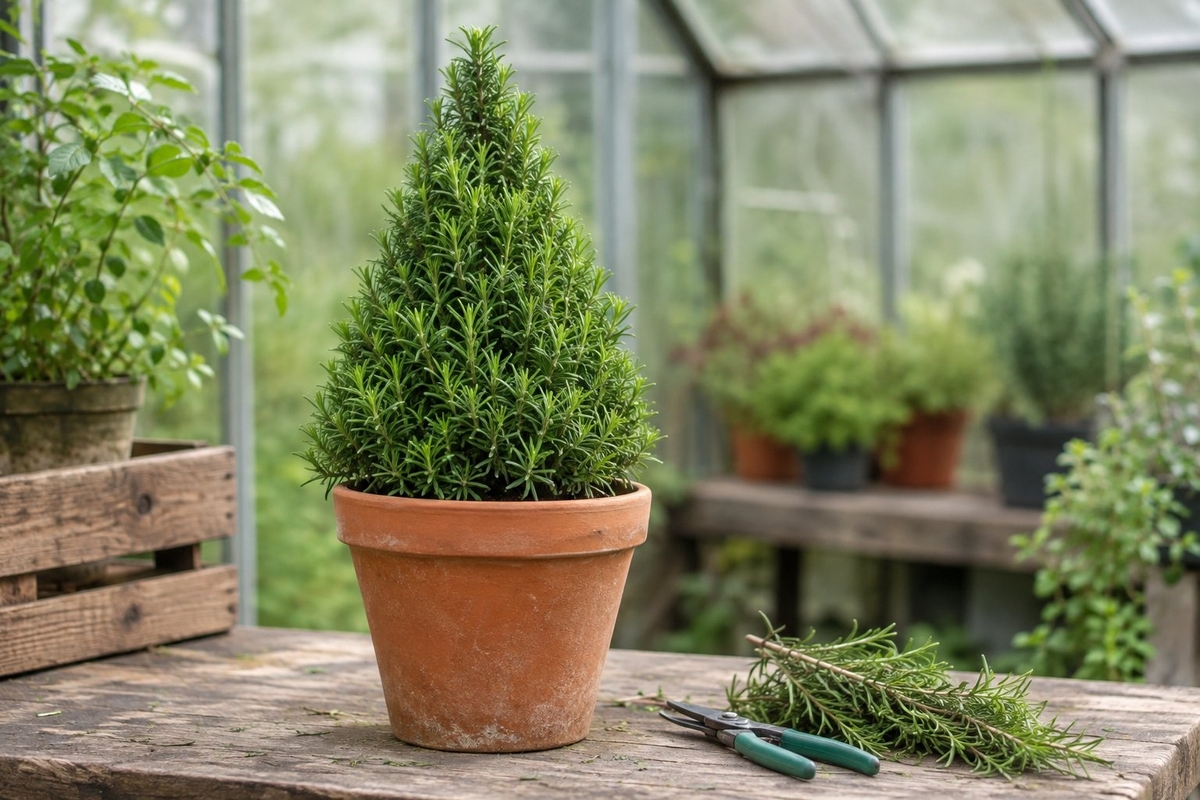
Light, repeated trimming preserves the cone without stripping its older stems. During active growth, use clean scissors to shorten shoots that extend beyond the outline. Cut into green, leafy growth, leaving foliage below each cut to support fresh branching.
Rotate the pot before trimming so one side does not gradually become flat. Limit a single pruning session to a modest amount of growth, particularly on a newly purchased plant. Rosemary’s bare, mature wood is slow to produce new shoots, and a deep cut may leave a permanent gap. Save suitable untreated sprigs for the kitchen or propagation once the plant is growing strongly.
Harvesting and Using the Leaves in the Kitchen
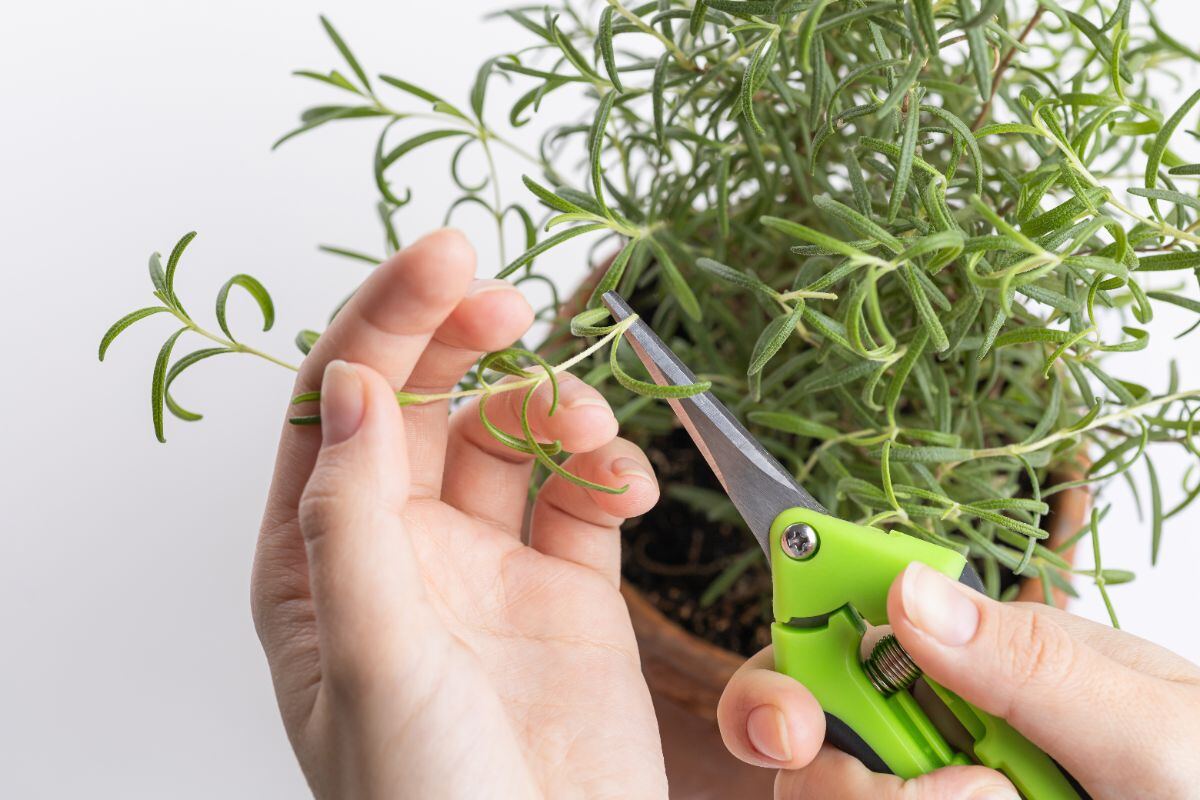
Fresh sprigs are suitable for cooking when the plant has not been treated with decorative sprays or pesticides unsuitable for edible herbs. Snip short green tips with clean scissors and rinse them before use. Small harvests spread around the cone preserve its shape and leave enough foliage for growth.
Rosemary pairs well with roasted potatoes, beans, and poultry. Its leaves are firm, so they benefit from chopping finely or cooking on a whole sprig that is removed before serving. Avoid taking large handfuls from a recently stressed topiary. If the plant’s treatment history is unclear, keep it ornamental and use rosemary sold specifically for culinary use.
What to Do After the Holidays
After decorations come down, keep the rosemary in its brightest indoor position and continue checking soil moisture. The plant remains a perennial shrub through winter; its watering needs change as daylight and room temperature change. Remove fallen leaves from the soil and inspect the center of the cone for browning.
Early spring brings a chance to correct a cramped pot and resume light feeding once new growth starts. Longer shoots also provide material for careful shaping. If the plant spent the holidays far from a window, move it to stronger light in stages over several days. Maintain indoor care until outdoor conditions are suitable for a gradual transition.
Moving It Outdoors in Spring
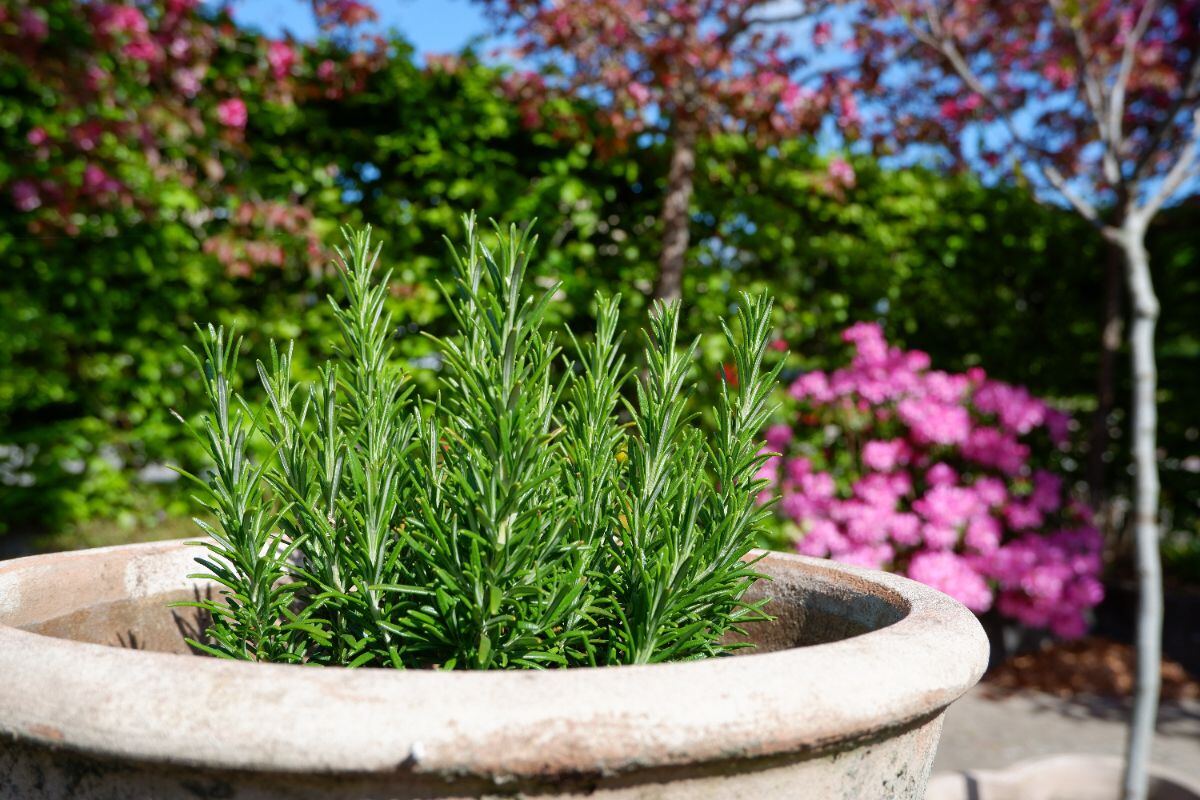
Move indoor rosemary outside after the danger of frost has passed and nights stay reliably above about 45°F. Begin in a sheltered spot with morning sun for a few hours a day. Over seven to ten days, increase its time outdoors and its exposure to direct light.
An abrupt move from a winter window to full midday sun may scorch tender growth. Keep the pot off persistently wet ground and check moisture more frequently as wind and sun speed drying. In a suitable climate, the shrub may remain in a container or go into well-drained garden soil. Check the variety’s cold tolerance before choosing a permanent outdoor planting site.
Overwintering in Cold Climates
In regions with sustained freezing winters, container-grown rosemary is safest in a bright, cool protected space. Bring the plant in before hard frost, after checking its stems and leaf undersides for pests. A sunny indoor window or a frost-free sunroom provides light without the drying blast of household heat.
Roots in a pot face colder temperatures than roots insulated by the ground. An unheated garage is suitable only if it remains above freezing and receives enough light. During winter, water when the upper layer dries, then drain the pot completely. Avoid fertilizing until active growth resumes and inspect foliage regularly for mildew or leaf drop.
Propagation from Cuttings
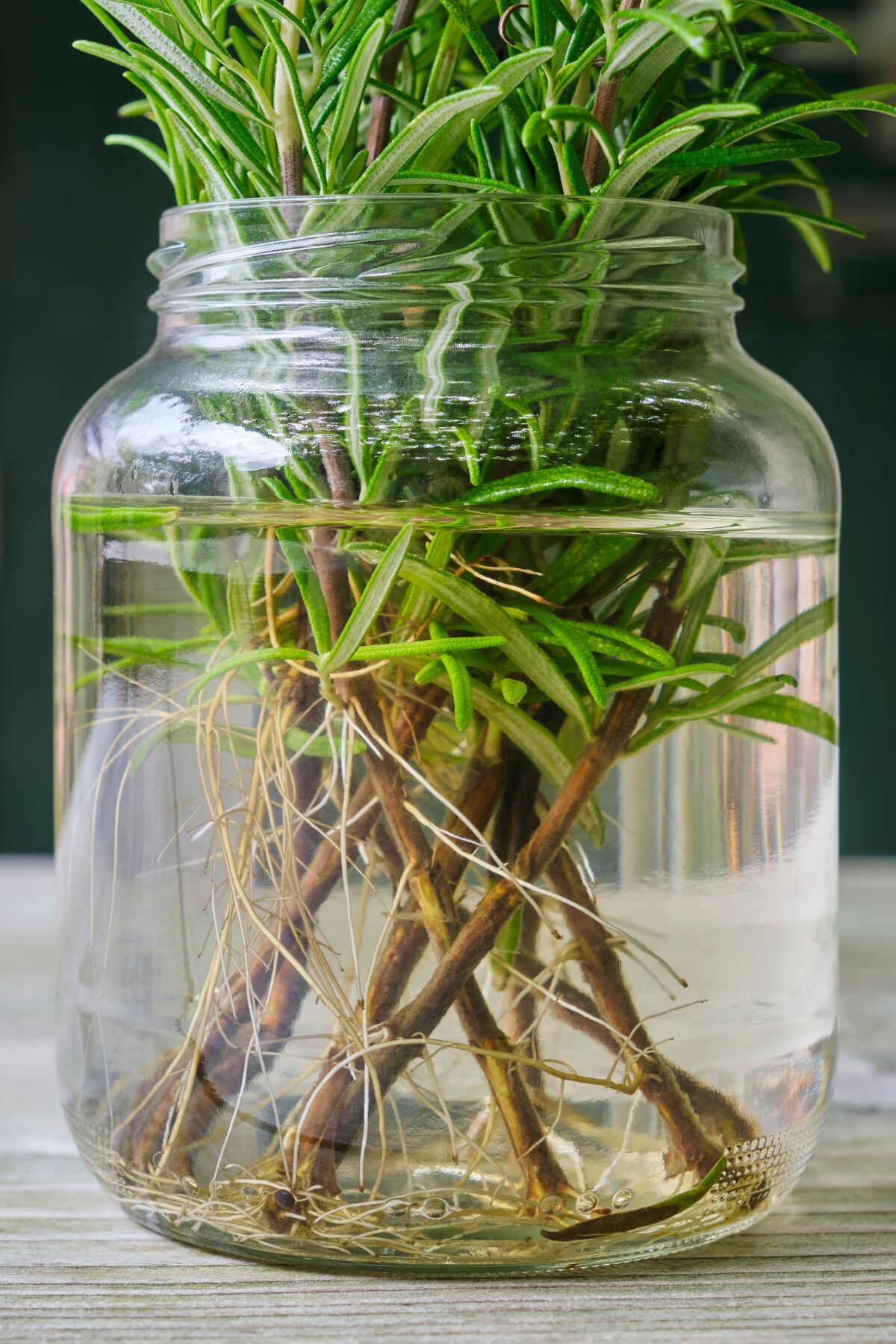
Soft stem cuttings taken in spring or early summer are a practical way to start another rosemary plant. Select healthy, nonflowering shoots about 4–6 inches long. Cut below a leaf node, strip leaves from the lower half, and place the bare stems in moistened, free-draining propagation mix.
Set the cuttings in bright indirect light and keep the mix lightly moist without leaving it saturated. A clear cover helps retain moisture if it is vented daily and kept off the leaves. Gentle resistance to a tug after several weeks suggests roots are forming. Once roots hold the mix together, transfer each cutting to a small pot with drainage and introduce stronger light gradually.
Common Problems and Troubleshooting: Browning, Dropping Needles, Powdery Mildew, Root Rot
Browning and leaf drop call for an immediate check of the root ball, drainage, and nearby heat sources. Dry soil that has pulled from the pot’s edge needs thorough rewetting. Damp soil paired with worsening brown foliage points toward damaged roots; inspect for soft, dark roots and replace saturated mix if necessary.
A white, powdery coating on leaves signals powdery mildew. Remove affected growth, improve spacing and airflow, and keep water off the foliage. Root rot is more serious: trim decayed roots, repot into fresh draining mix, and reduce watering frequency. Brown, bare woody sections rarely fill back in, so judge recovery by healthy new growth.
Is It Safe for Pets?
Rosemary is listed as non-toxic to cats and dogs by the ASPCA. A pet that eats a large amount of any plant may still develop stomach upset, so place the pot where repeated grazing is unlikely.
Decorations introduce separate hazards. Loose wire, small ornaments, and light cords should remain beyond a pet’s reach. Fertilizer, pesticide residues, and treated decorative foliage also change the safety of chewing on the plant. If a pet develops persistent vomiting or other symptoms after eating rosemary or its decorations, contact a veterinarian and identify everything the animal might have swallowed.
Frequently Asked Questions
How long does a rosemary Christmas tree live? Rosemary is a perennial shrub that lives for years under suitable conditions. The clipped cone needs continued care and light pruning as it grows.
Why is the plant brown in the middle? Dense outer growth shades inner leaves, and older interior foliage may die back. Check for spreading browning and examine soil moisture before pruning away dead material.
Will a dried-out tree recover? Green, pliable stems may produce new growth after the root ball is thoroughly rehydrated. Brittle brown stems with no living foliage are unlikely to recover.