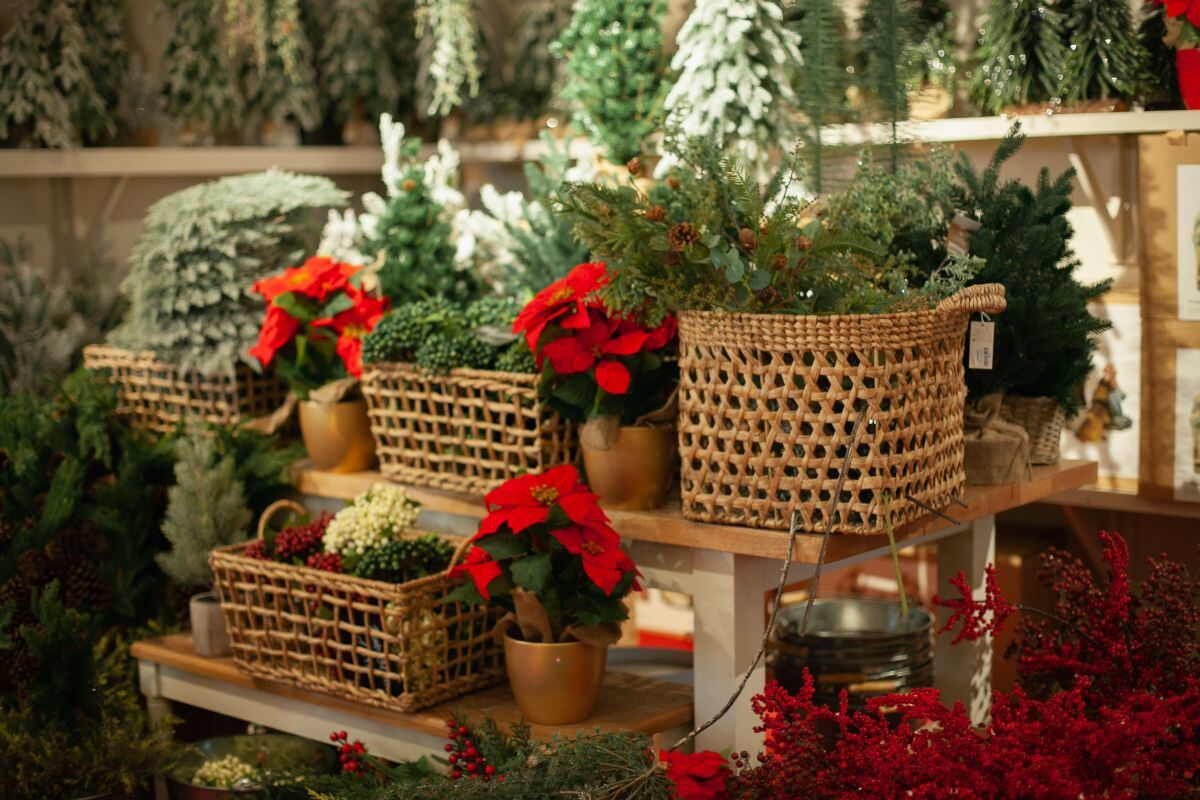
Most Christmas plants stand for eternal life, hope or rebirth, meanings rooted in religious stories and old winter customs. Holly’s spiny leaves and red berries came to represent Christ’s crown of thorns.
The poinsettia owes its holiday fame to a Mexican legend about a humble gift laid at a church altar, and evergreens earned their place by keeping their color through the darkest weeks of the year. The stories behind all 26 plants make a lovely conversation starter at the holiday table, beginning with the poinsettia just below.
Table of Contents
Poinsettia
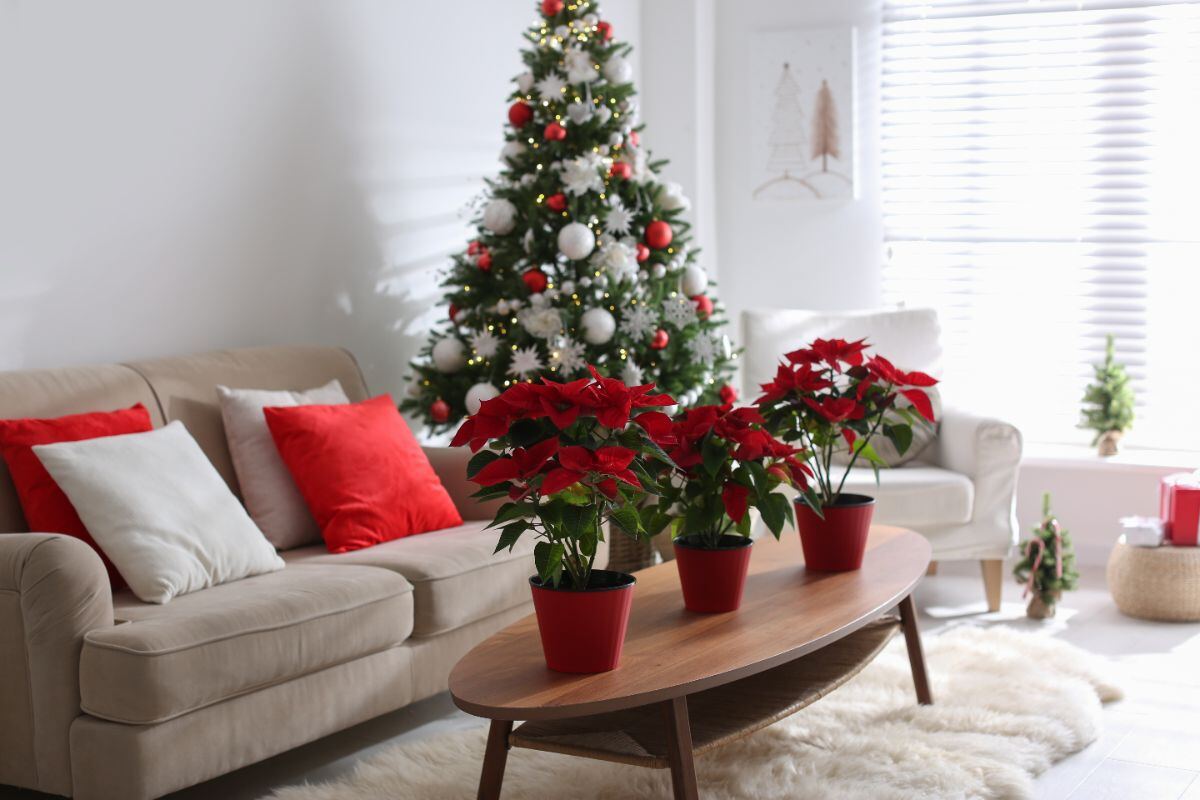
Bright red bracts have made poinsettias an emblem of Christmas celebration and goodwill. The bracts are modified leaves surrounding tiny yellow flowers, a distinction easily missed on a plant in full color.
A Mexican Christmas legend links the plant to a humble gift that blossomed at a church altar. Today, red remains its most familiar holiday shade, though cream and pink varieties have their own following. A spot away from cold drafts helps the bracts stay vivid through the season.
Holly
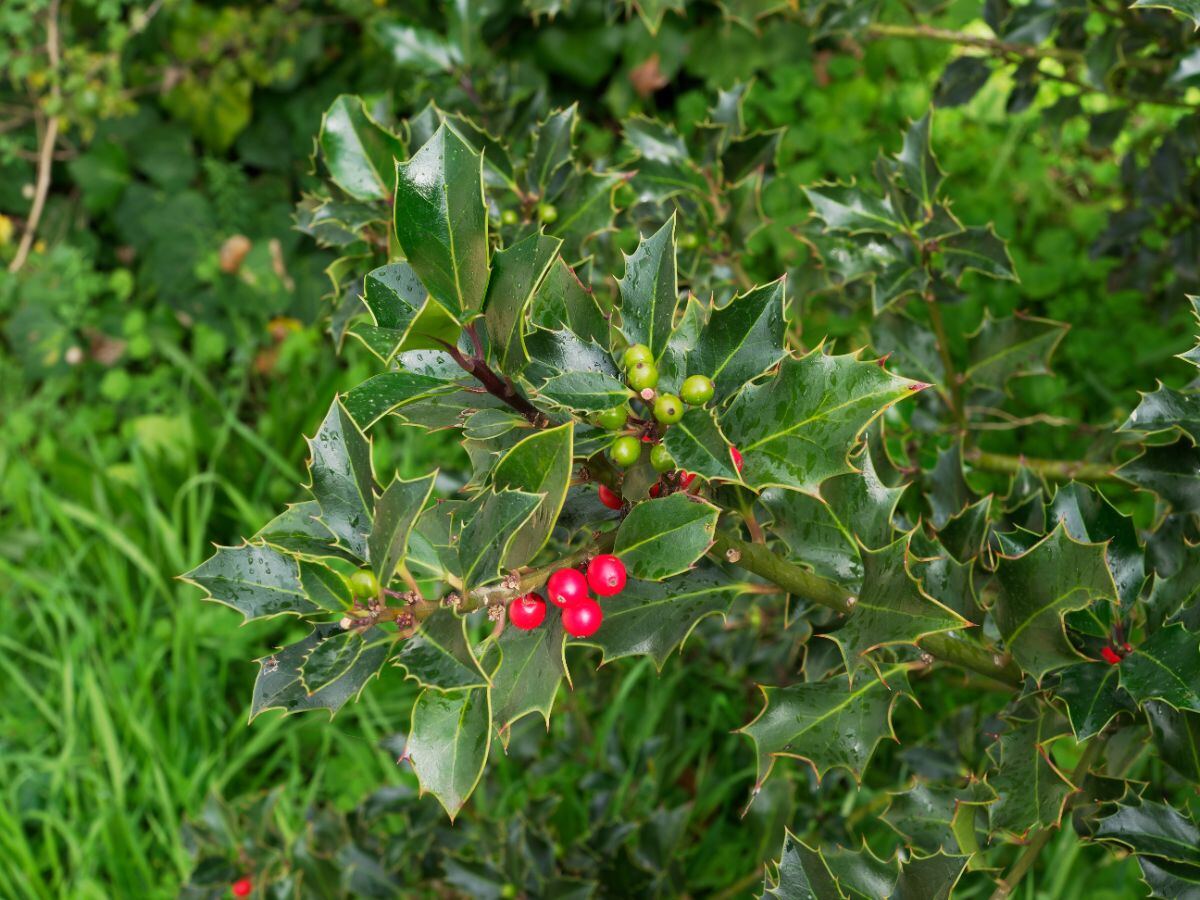
Its sharp leaves and red berries give holly a long-standing association with protection and enduring life. In Christian symbolism, the leaves have been linked to the crown of thorns and the berries to Christ’s blood.
Holly also has a practical role in holiday wreaths: its sturdy, glossy foliage holds its shape through winter. Berry-covered branches generally come from female plants, which require pollen from a compatible male holly. The berries are decorative, not food for people or pets.
Mistletoe

A sprig above a doorway signifies affection and, through the Christmas kissing custom, romance. Mistletoe’s older European folklore also connected it with peace, making that doorway placement especially fitting.
The plant grows attached to tree branches and retains its greenery during winter. Its pale berries look delicate against the leaves, yet mistletoe should remain out of reach of children and pets because ingestion is hazardous. The familiar holiday custom belongs to a plant with a far older history.
Ivy
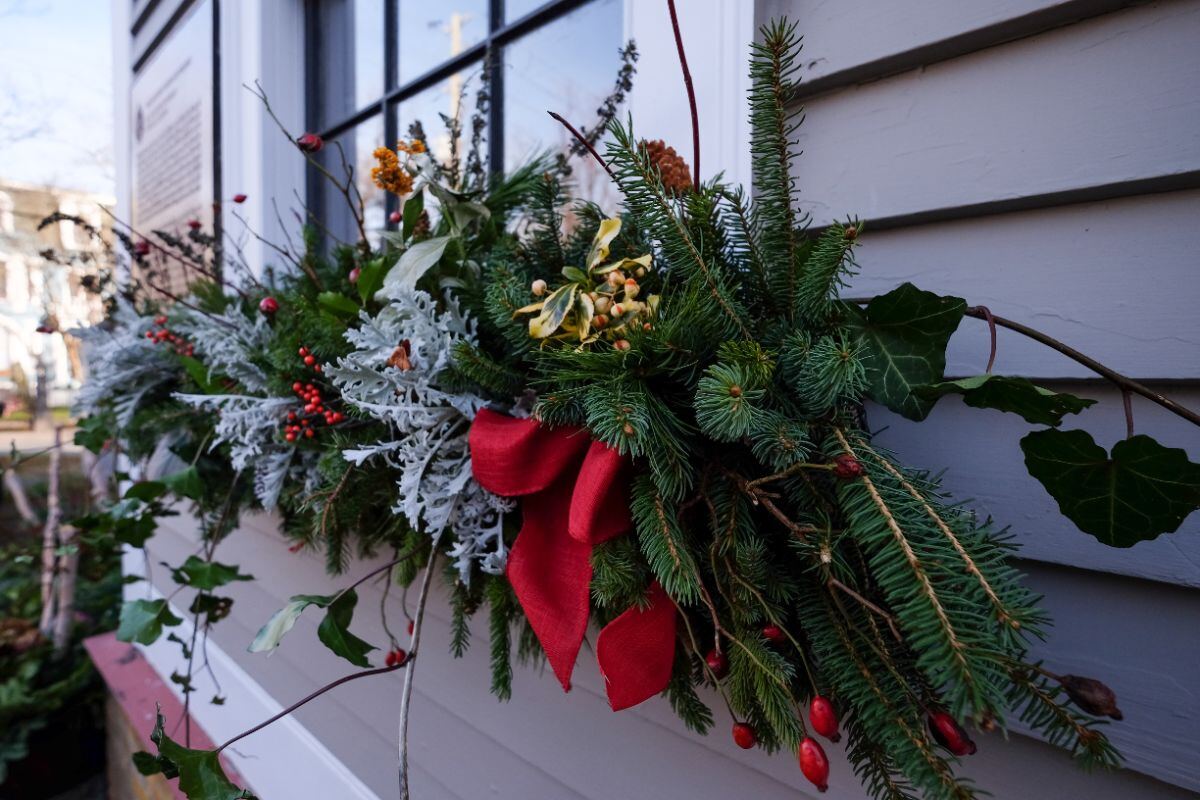
Clinging vines have made ivy a symbol of fidelity and lasting attachment. Its evergreen leaves retain their color through winter, reinforcing the idea of constancy that appears in older holiday greenery traditions.
Trailing stems give ivy a different role in decorations than upright evergreen boughs. They drape along a mantel or weave through a wreath, filling gaps without hiding the main arrangement. English ivy is toxic if eaten, and cut stems should remain away from curious pets.
Christmas Cactus
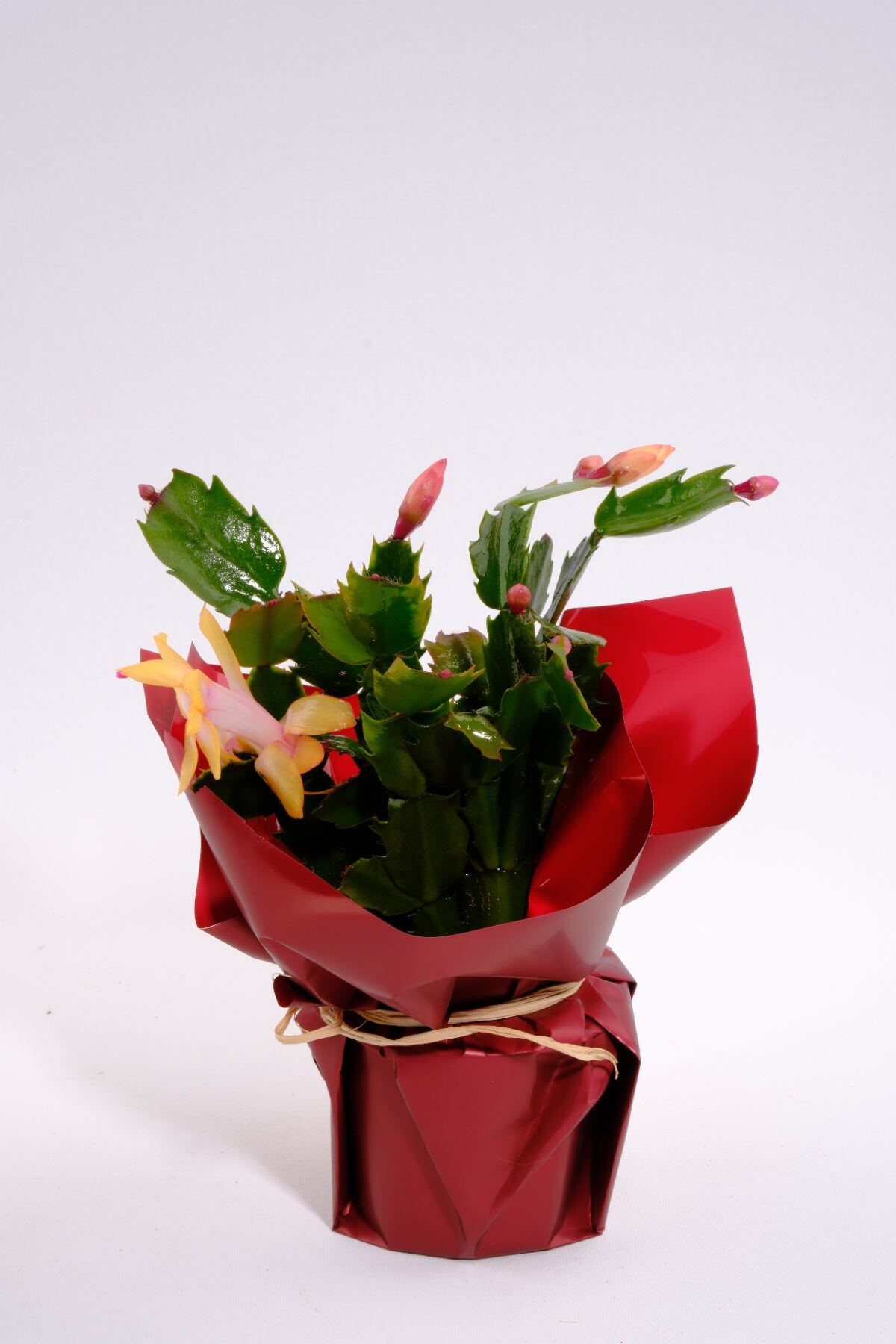
A Christmas cactus in bloom represents loyalty and the pleasure of traditions carried across generations. Long-lived plants are passed between relatives as cuttings, giving that meaning a tangible history.
Its arching stems bear flowers in pink, red, white, or purple near the holidays, though bloom timing varies by plant and growing conditions. Despite its name, this tropical cactus prefers brighter indirect light and steadier moisture than desert cacti.
A plant kept for decades becomes part of the family’s Christmas calendar.
Amaryllis
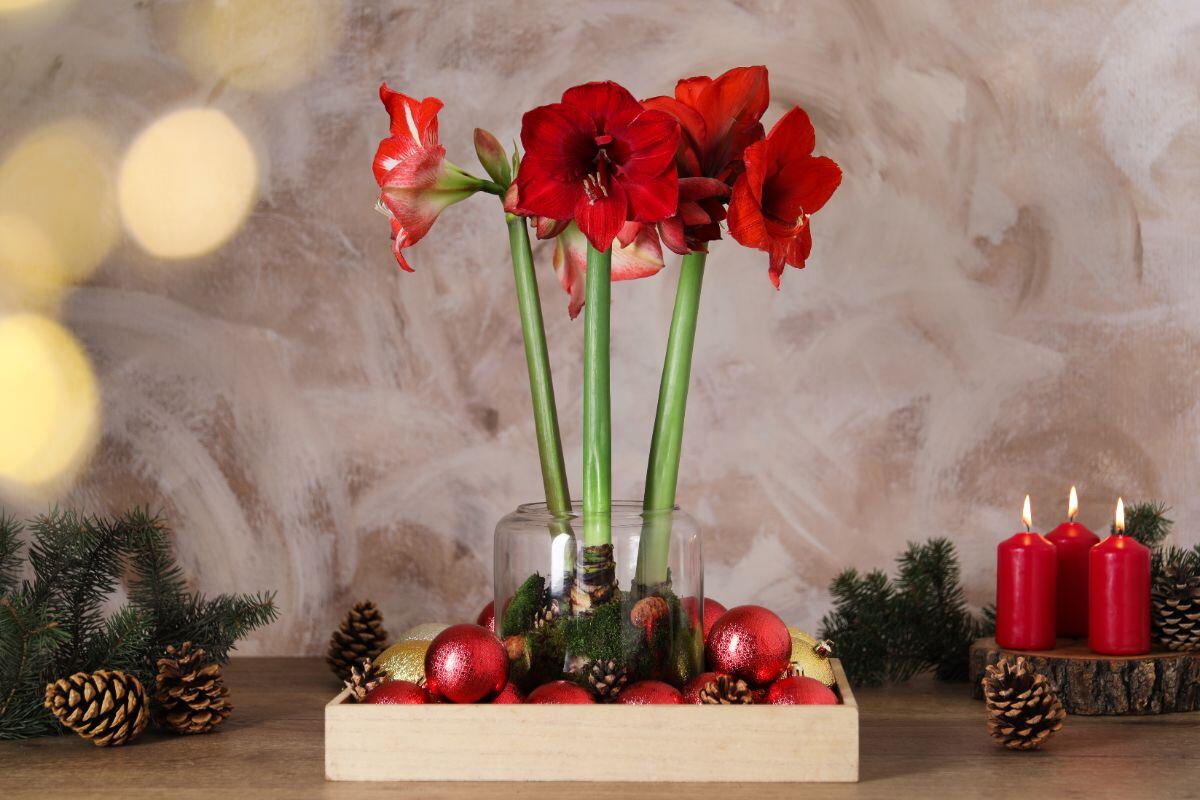
Tall stems topped with broad, trumpet-shaped flowers symbolize pride, strength, and splendid beauty. Their dramatic growth is part of the holiday appeal: a bulb planted indoors sends up a stalk before opening into a prominent winter bloom.
Red amaryllis aligns naturally with Christmas colors, while white flowers carry associations with purity. Bulbs need bright light and a pot with drainage, and the flowering stalk may need support as its buds open. Amaryllis is toxic to pets, particularly the bulb.
Paperwhite Narcissus
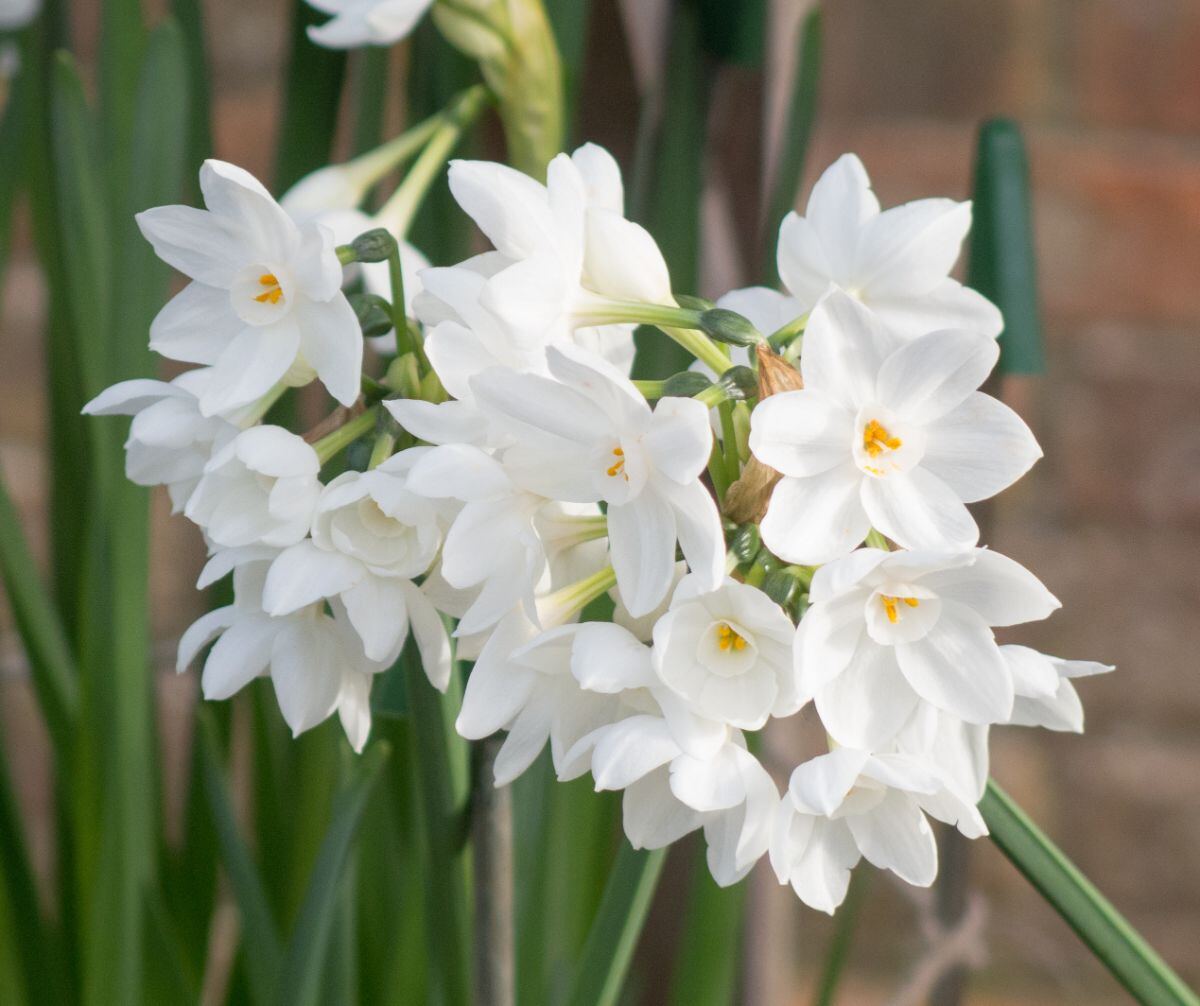
Small white flowers rising from a bare bulb make paperwhites a fitting symbol of renewal and hope. They bloom indoors during winter without a cold treatment, which gives their appearance near Christmas a striking immediacy.
Clusters of blossoms carry a strong fragrance that fills a room quickly. Paperwhites grow in a shallow container with pebbles and water kept below the bulbs’ bases. Their narrow stems lean toward light, so regular rotation keeps the display upright.
Christmas Rose
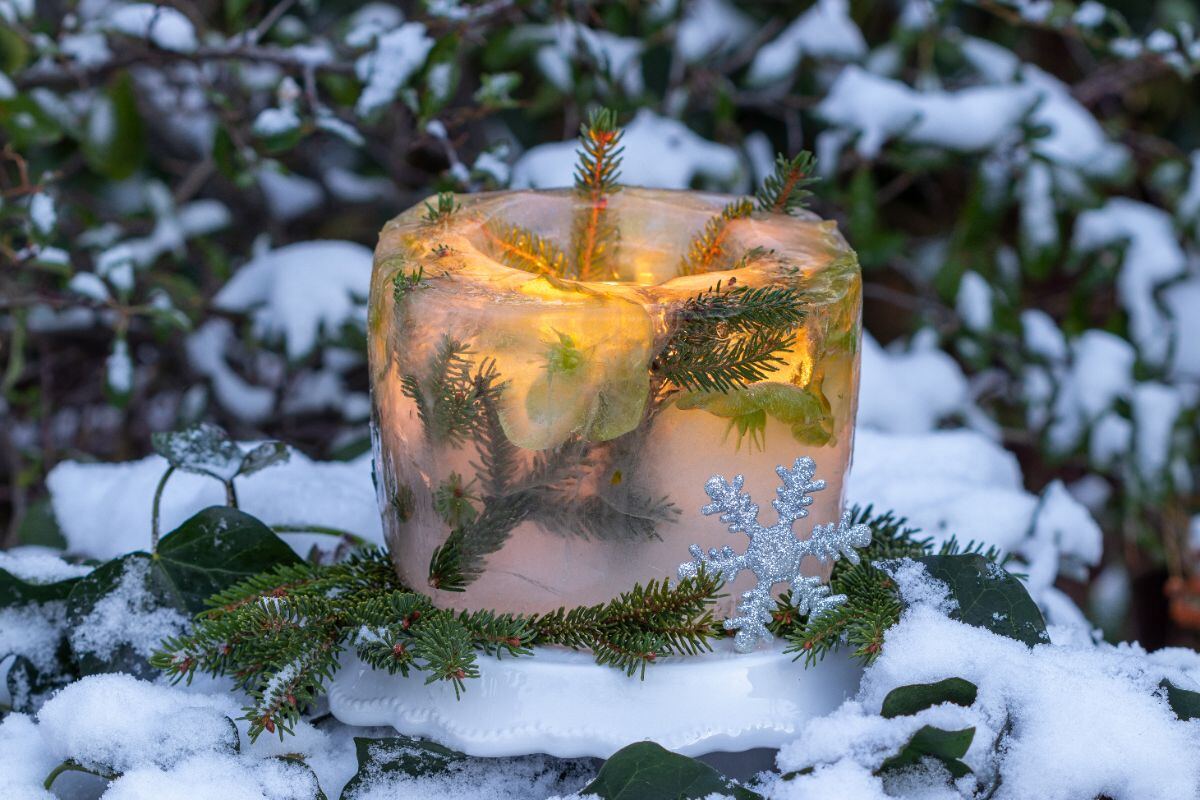
Winter blossoms lend the Christmas rose its association with hope during a dormant season. Despite the name, Helleborus niger is a hellebore, not a rose; its white flowers may take on pink or green tones as they age.
A European Christmas legend tells of flowers appearing where a child’s tears fell in the snow. Actual bloom dates depend on climate, and many garden plants flower later in winter. Hellebores contain compounds harmful if ingested, making garden placement worth considering around pets.
Cyclamen
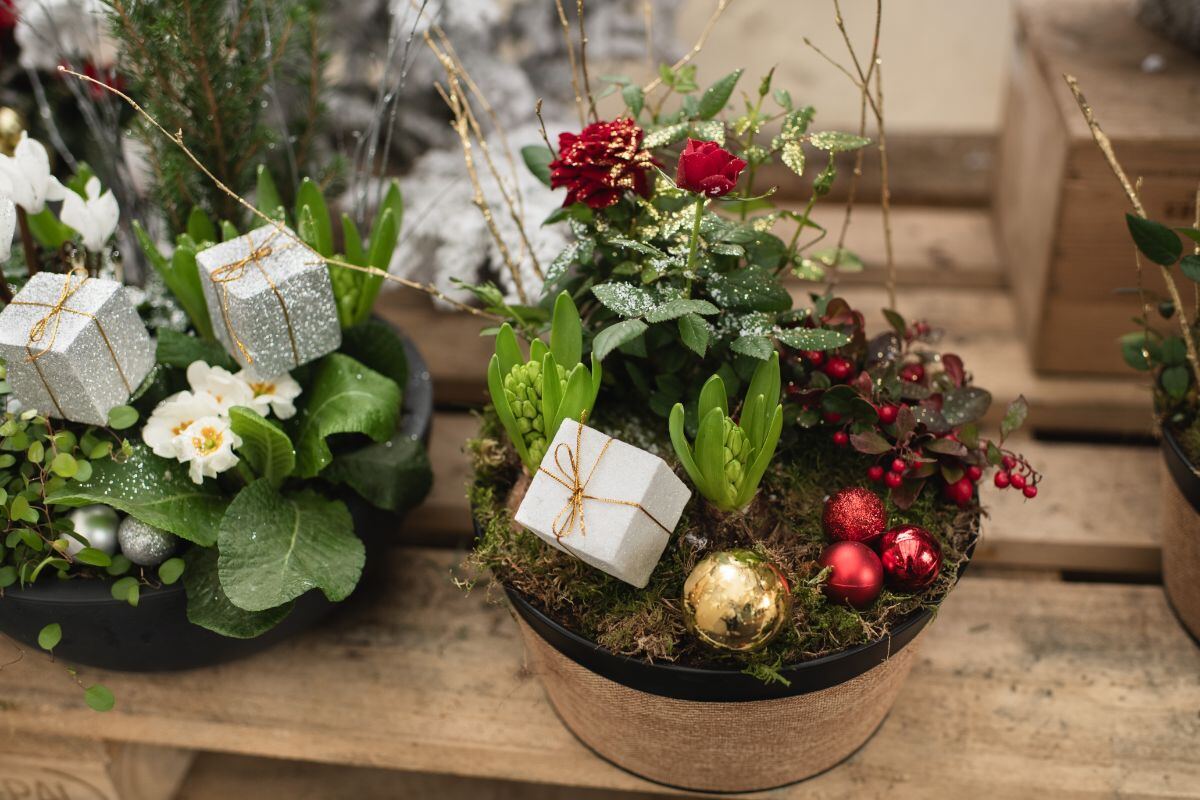
Back-swept petals rising above heart-shaped leaves have given cyclamen associations with sincere affection and devotion. Its compact habit makes each flower distinct, especially when a plant carries blooms in deep red or white during the holidays.
Florist’s cyclamen prefers cool indoor temperatures and bright, indirect light. Water directed at the soil edge helps keep its central crown dry. The plant enters dormancy after flowering, a normal stage in the life of its tuber.
Rosemary
Its enduring fragrance has made rosemary a symbol of remembrance. That meaning lends particular weight to a holiday table, where a small potted rosemary or a clipped sprig connects the meal with people and occasions remembered.
Christmas folklore also links rosemary with Mary, though the stories vary by tradition. Rosemary plants sold as miniature trees need bright light, drainage, and soil that dries slightly between waterings. Indoors, dry heat near a vent quickly takes a toll on their slender leaves.
Bay Laurel
A wreath of bay leaves carries the ancient meaning of victory and honor into Christmas greenery. Bay laurel’s association with achievement comes from Greek and Roman traditions, where its branches crowned celebrated figures.
Its smooth, aromatic leaves give a holiday wreath a restrained look and have a familiar place in winter cooking. Culinary bay laurel is Laurus nobilis; plants sold under similar common names are not necessarily edible. A potted bay benefits from bright light and protection from hard freezes.
Fir
An evergreen fir represents enduring life through the darkest part of the year. Its upright form and dense branches explain its place at the center of the Christmas tree tradition.
Fraser fir and balsam fir are familiar choices in the United States, valued in part for their fragrance and needle retention. A cut tree remains fresher when its stand holds water throughout the season. That daily detail preserves the greenery behind the tradition as well as the ornaments upon it.
Spruce
Stiff, pointed needles give spruce an association with resilience in winter. Its branches stand firm in cold climates, and the tree’s clear conical outline has long made it recognizable as holiday greenery.
Blue spruce contributes a silvery cast to outdoor decorations, though its sharp needles require care during handling. Cut spruce may shed needles sooner in a warm room, depending on freshness and watering. In the landscape, a living spruce provides the same winter silhouette year after year.
Pine
Long needles and persistent green branches make pine a symbol of longevity. Pinecones deepen that meaning: they hold the seeds for a future tree and have become familiar emblems of renewal in winter decorations.
White pine’s soft needles fall in loose clusters, lending a gentle line to garlands. Fresh boughs dry near heat and open flames, so their placement needs care. Pinecones gathered outdoors also deserve a check for insects before they enter the house.
Cedar
Fragrant cedar greenery has associations with protection and steadfastness across several traditions. Its scent is especially noticeable in fresh branches used around an entry, where the foliage frames a doorway without flowers or berries.
The word “cedar” covers different trees in holiday trade. Eastern red cedar, for example, is a juniper, while true cedars belong to the genus Cedrus. Those distinctions matter for identification, even when the evergreen branches share a place in Christmas arrangements.
Juniper
Blue, berry-like cones tucked among green needles give juniper a traditional association with protection. Folklore in parts of Europe treated its branches as a guard against misfortune, a meaning that fits winter wreaths and doorway greenery.
Many junipers also keep their color in exposed landscapes throughout the cold season. The blue “berries” are technically fleshy cones, and ornamental species differ from the juniper used to flavor gin. Decorative branches are best left out of food and drinks.
Yew
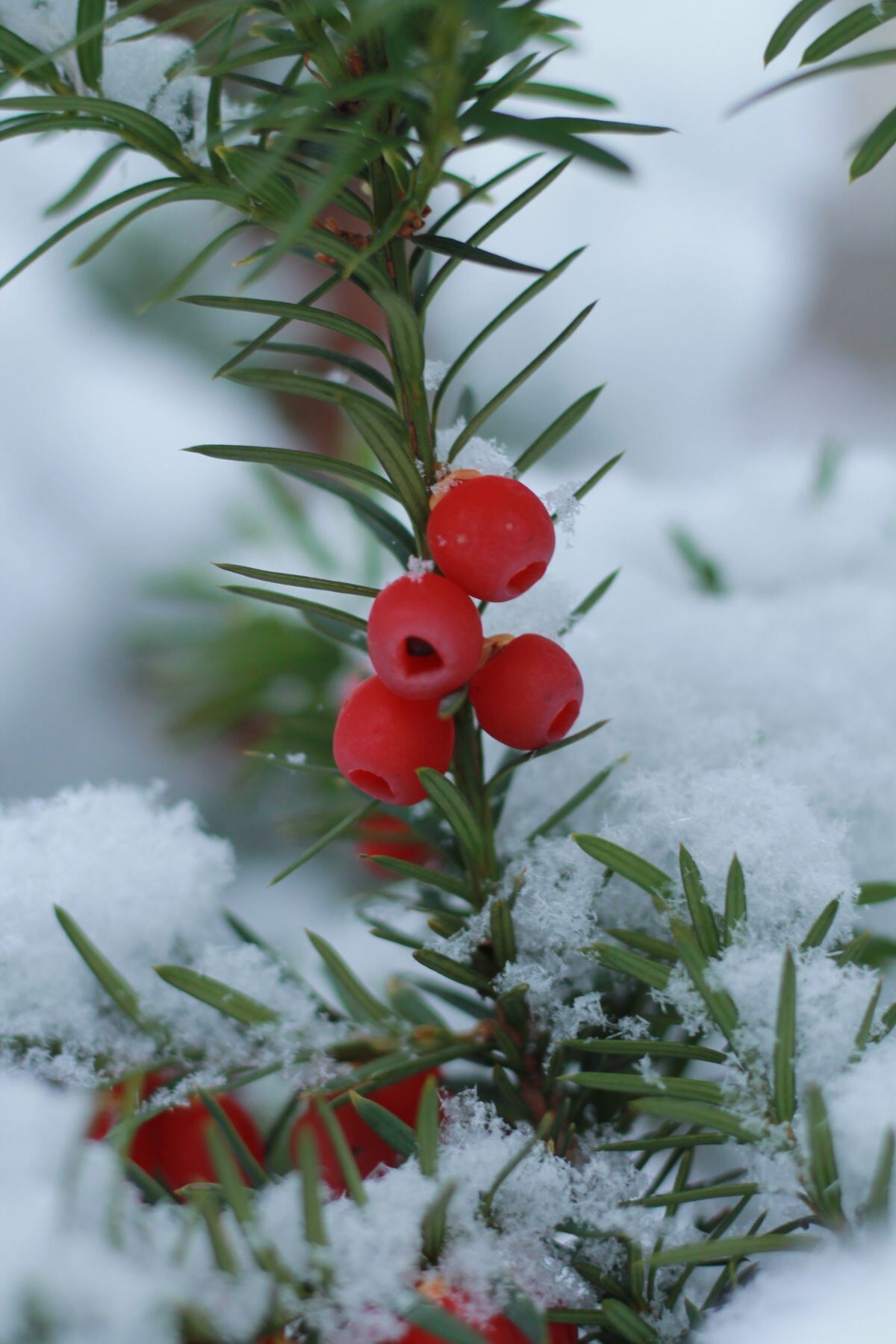
Deep green needles and remarkable longevity link yew with endurance and remembrance. Its presence in churchyards helped shape those associations, which give the evergreen a reflective place among Christmas plants.
Red, cup-shaped coverings surround its seeds and stand out against the dark foliage. Yew is highly toxic if eaten, including its needles and seeds, so cut branches require particular caution in households with children or pets. Its symbolic history is best appreciated without placing it within their reach.
Boxwood
The close-set leaves of boxwood represent constancy, an association strengthened by the shrub’s year-round green color. Its dense growth also holds a clipped shape, making it a familiar material for compact wreaths and tabletop trees.
Fresh boxwood has a distinctive scent that becomes noticeable indoors, particularly in a warm room. A boxwood arrangement kept away from direct heat retains its leaves longer. The small scale of those leaves gives even a narrow wreath a full, continuous outline.
Norfolk Island Pine
Soft tiers of branches make a Norfolk Island pine a symbol of lasting life in a living holiday display. Sold as a small indoor tree, it retains its greenery after Christmas when given suitable care.
Despite its common name, it is not a true pine. It needs bright light and evenly moist, well-drained soil, and it dislikes cold drafts. Lightweight ornaments belong on its flexible branches; heavy decorations bend the tiers that give the tree its distinctive shape.
Wintergreen
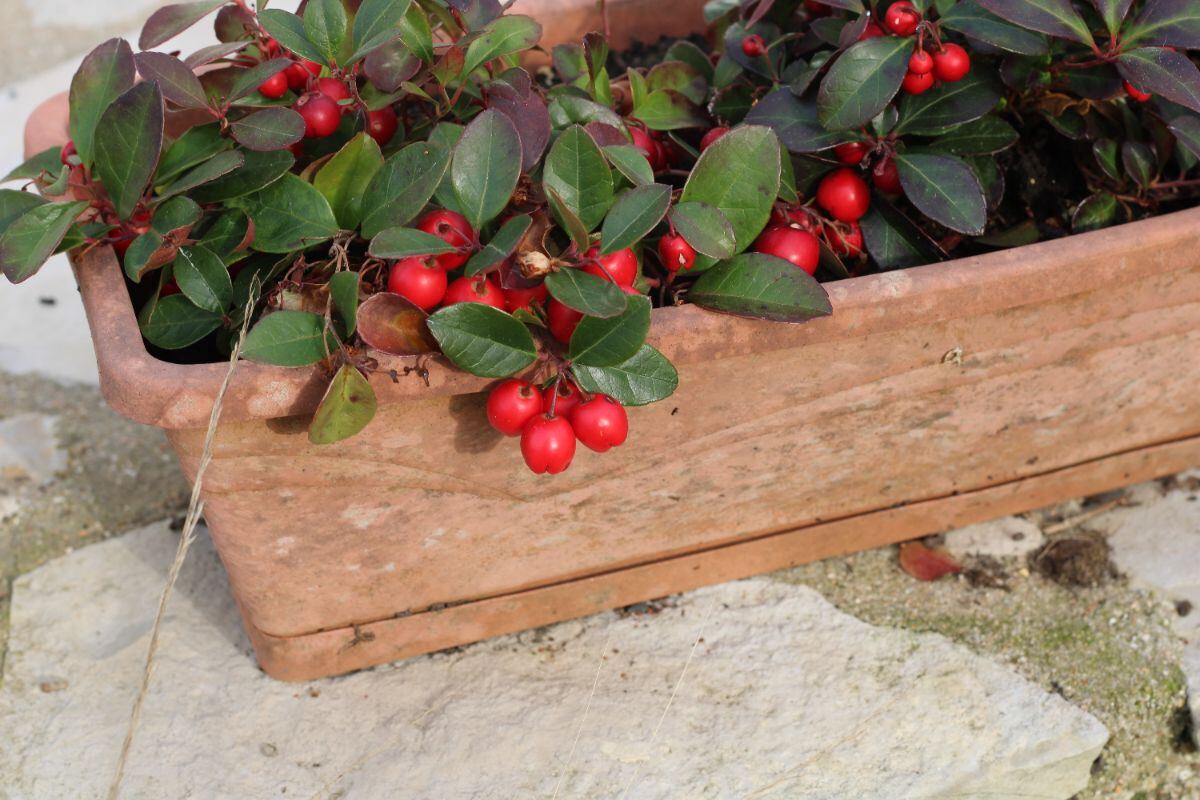
Glossy leaves and red berries give wintergreen an association with vitality that persists through cold weather. The low-growing plant stays close to the ground, where its berries provide a small but vivid holiday accent.
True wintergreen, Gaultheria procumbens, has leaves with the familiar minty scent when crushed. Potted plants prefer acidic soil and steady moisture, conditions that deserve attention indoors. Its decorative berries should not be treated as a casual snack, particularly in a household with children.
Snowdrop
A small white bloom emerging near the end of winter has made the snowdrop a symbol of hope. Its place in Christmas imagery reflects that promise, even though outdoor snowdrops in much of the United States bloom after December.
The nodding flowers grow from fall-planted bulbs and appear close to the ground. In milder areas, their season arrives earlier. Their timing gives the plant a specific meaning: the first visible sign that the dormant garden is beginning to stir.
Yuletide Camellia
Red flowers with bright yellow centers give ‘Yuletide’ camellia a direct link to Christmas color and an association with joy. This Camellia sasanqua cultivar flowers in late fall and winter, with timing shaped by local weather.
Its glossy evergreen leaves keep the shrub attractive beyond its flowering period. In suitable, relatively mild U.S. climates, it grows outdoors in acidic, well-drained soil and partial shade. Buds and open flowers may be damaged by hard freezes, a practical limit on its holiday display.
Azalea
A flowering azalea symbolizes care and affection, especially when its buds open during the winter holidays. Florist’s azaleas are grown to bloom indoors, placing their dense clusters of pink, white, or red flowers amid Christmas greenery.
They favor cool temperatures, bright indirect light, and soil kept consistently moist. Dry roots shorten the flowering period quickly. Azaleas are toxic to pets, so a low table or floor display carries a risk that their cheerful blooms do not suggest.
Gardenia
White gardenia flowers have long signified purity and quiet affection. Against dark, glossy leaves, their blooms fit the restrained palette of winter decorating, and their rich fragrance remains noticeable well beyond the plant.
Holiday gardenias need bright light and consistent moisture, along with protection from dry indoor air and temperature swings. Bud drop is a common response to abrupt changes in conditions. An open flower is short-lived, making a plant with several buds especially distinctive over the course of the season.
Paper Birch
Pale bark against a winter landscape has made paper birch a fitting symbol of renewal. Its bright trunk remains visually prominent after the leaves fall, giving holiday branches and birch logs their familiar snowy appearance.
The tree grows in cooler parts of North America and sheds its bark in thin, curling layers. Decorative birch logs are best kept clear of candles and fireplaces unless intended and handled as firewood. On a living tree, peeling bark should be left in place.
Winterberry Holly
Bare stems crowded with red berries symbolize persistence through winter. Winterberry holly sheds its leaves in fall, exposing the fruit and distinguishing it from the glossy evergreen holly used in many Christmas wreaths.
This North American native is Ilex verticillata. Female plants produce berries when a compatible male plant flowers nearby, and birds rely on the fruit during colder months. Cut stems hold their color in seasonal arrangements, though the berries should remain out of reach of children and pets.