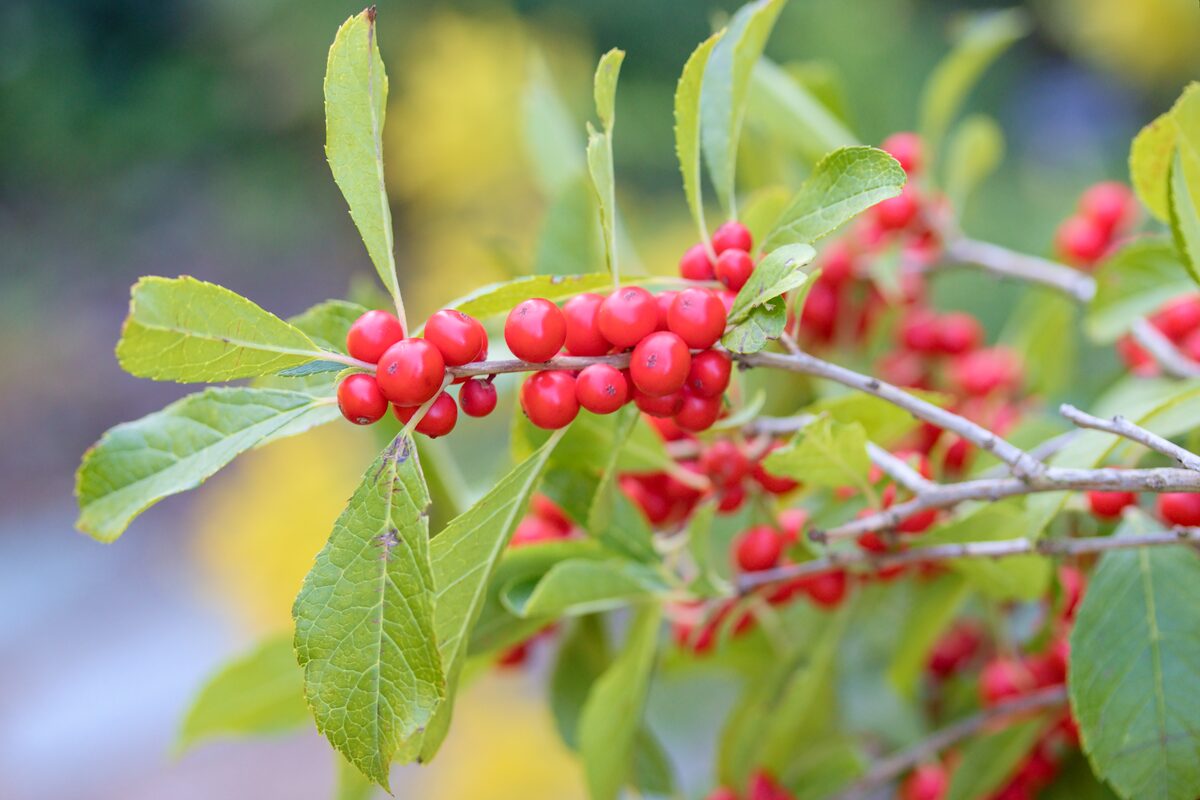
Red, purple, white, and orange berries hold color on bare branches long after the flowers are gone. A good berry shrub lights up a gray yard in January and feeds birds at the same time.
Many of these shrubs need a male plant nearby before the females set fruit, and that detail decides how big the crop gets.
Each of the 15 shrubs below has its berry color, how long the fruit lasts, size, zones, and one growing tip. Start with winterberry holly and scroll down for the rest.
Table of Contents
Winterberry Holly
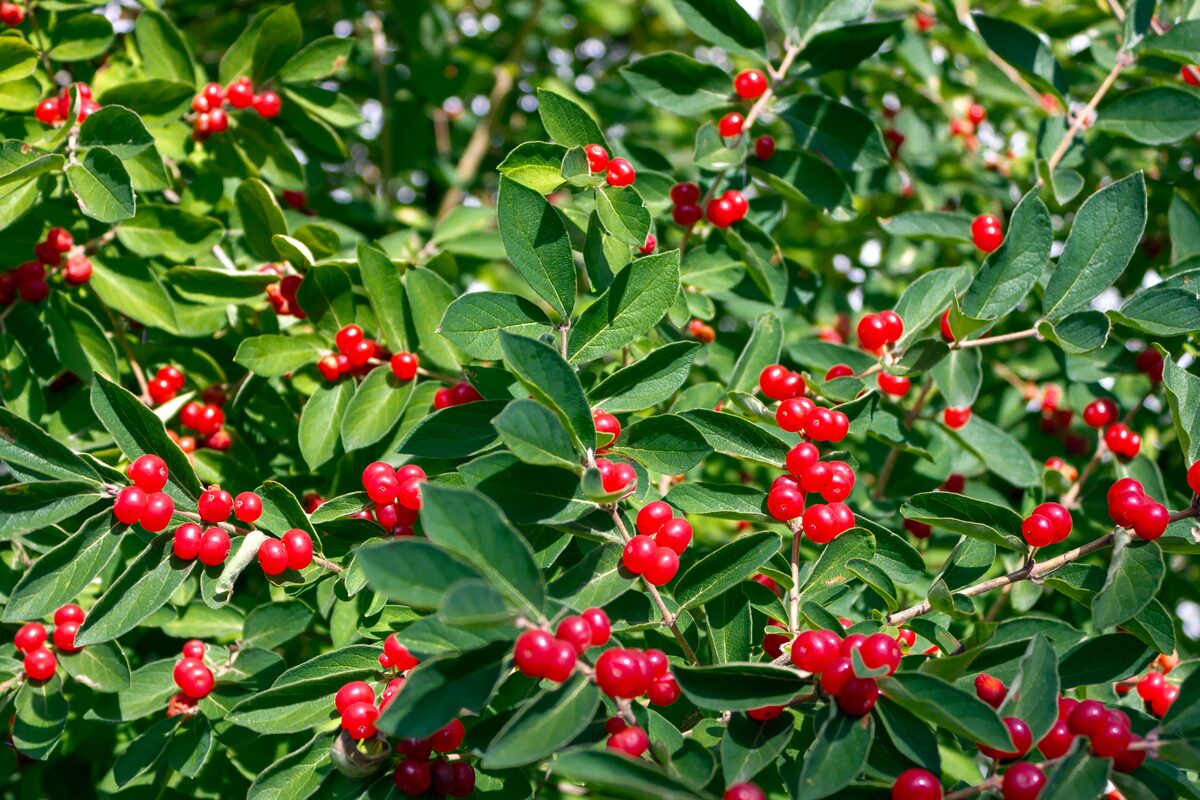
Because no shrub shows red berries more boldly against snow, winterberry leads the list. Once the leaves drop in fall, winterberry (Ilex verticillata) shows bright red berries lining its bare stems like beads. The fruit holds from October into February in much of the country before birds strip it.
This deciduous holly grows 6 to 10 feet tall in zones 3 to 9 and handles wet, acidic soil better than most hollies. Full sun produces the heaviest crop.
Only female plants fruit, so a male pollinator should grow within about 50 feet. Pair ‘Winter Red’ with the male ‘Southern Gentleman’. The berries are toxic to people and pets if swallowed.
American Holly
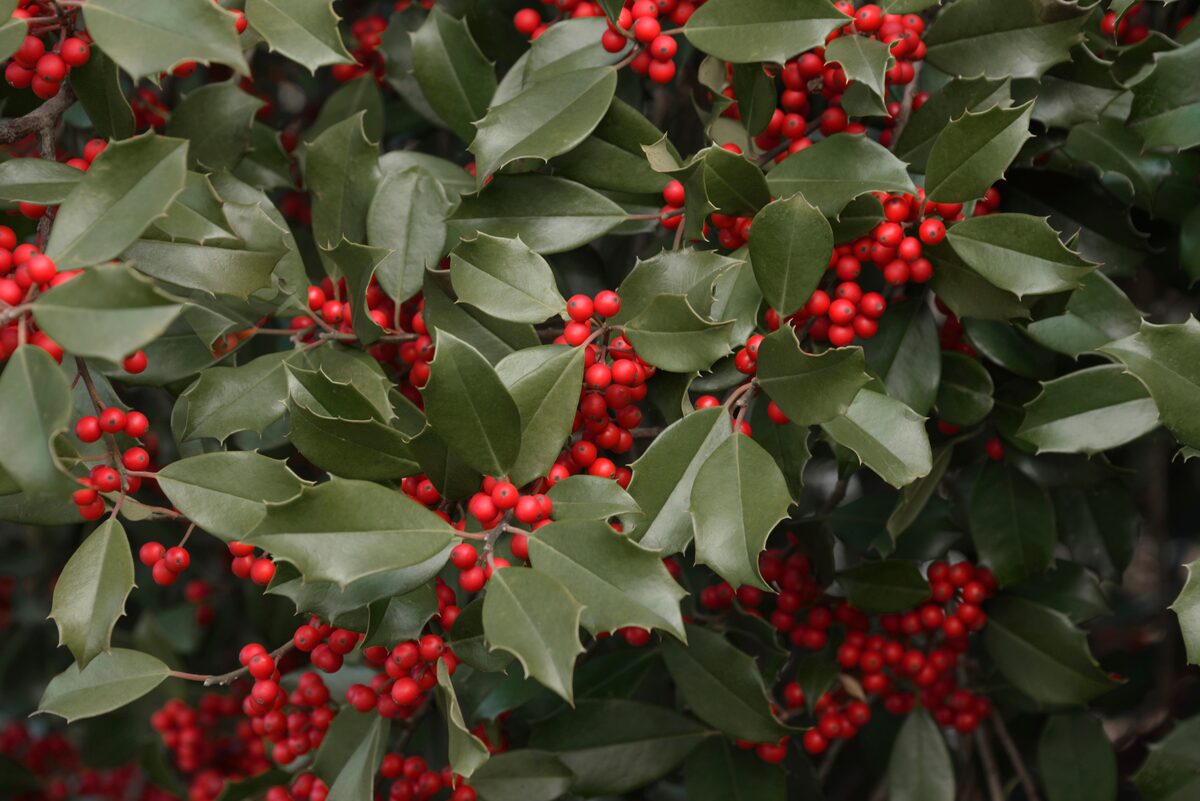
Spiny evergreen leaves and a dense pyramid shape make American holly (Ilex opaca) a fixture of eastern woodland edges and old hedgerows. Females carry dull to glossy scarlet fruit through much of winter.
Expect 15 to 30 feet at maturity in zones 5 to 9, so this native needs real room. It grows best in sun or partial shade and moist, acidic ground, and young plants appreciate a layer of mulch.
A male holly nearby is required for fruit set. Use it as a screen or specimen where the dark leaves back the berries, and remember the fruit is poisonous if eaten.
Possumhaw
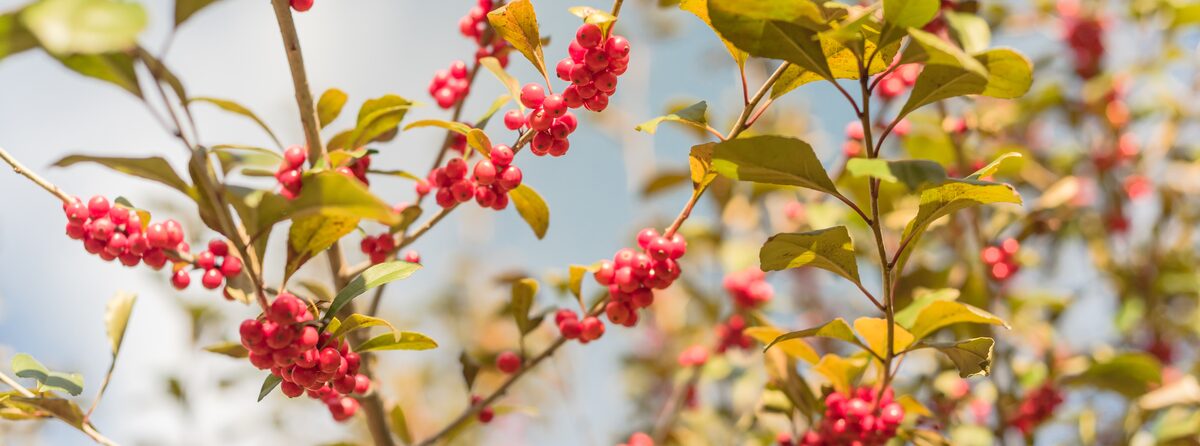
After the first hard freeze, possumhaw (Ilex decidua) drops every leaf and reveals branches studded with orange-red fruit that lasts into late winter. This native holly grows 7 to 15 feet tall in zones 5 to 9.
Clay, wet spots, and short dry spells cause little trouble. Sun yields the most fruit, and ‘Warren’s Red’ is a widely sold female selection.
Plants are either male or female, so site a pollinator within range. Prune lightly at the end of winter, since fruit forms on older wood. At the back of a border or beside a rain garden, birds find the crop by midwinter.
Yaupon Holly
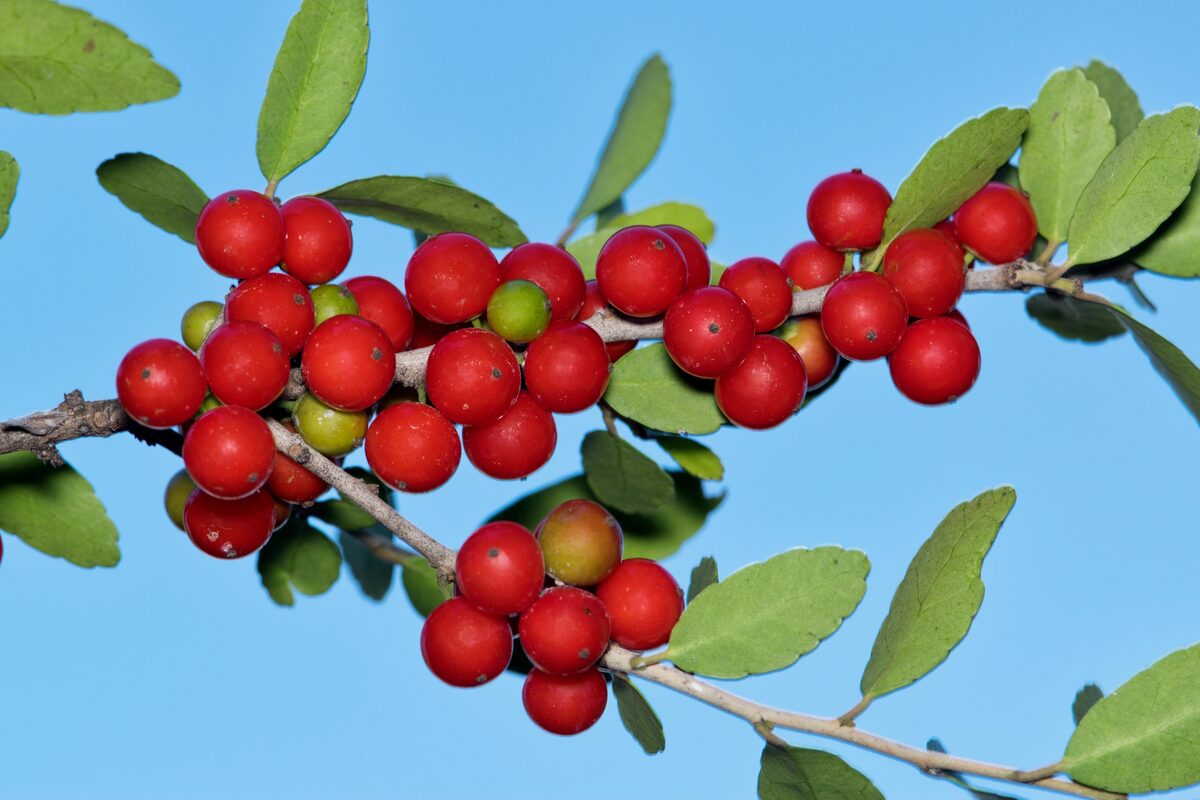
Along the Gulf and Atlantic coasts, yaupon holly (Ilex vomitoria) thrives in heat, salt spray, and poor soil. Females carry glossy red fruit among fine evergreen leaves from fall until spring.
Full-size plants reach 10 to 20 feet in zones 7 to 10. Dwarf forms such as ‘Nana’ hold near 3 to 5 feet and rarely fruit, so choose a named female such as weeping ‘Pendula’ for a heavy crop.
A male plant nearby handles pollination. Almost any soil short of waterlogged will do. Shear hedges before spring growth starts, and treat the berries as harmful to children and pets.
American Beautyberry
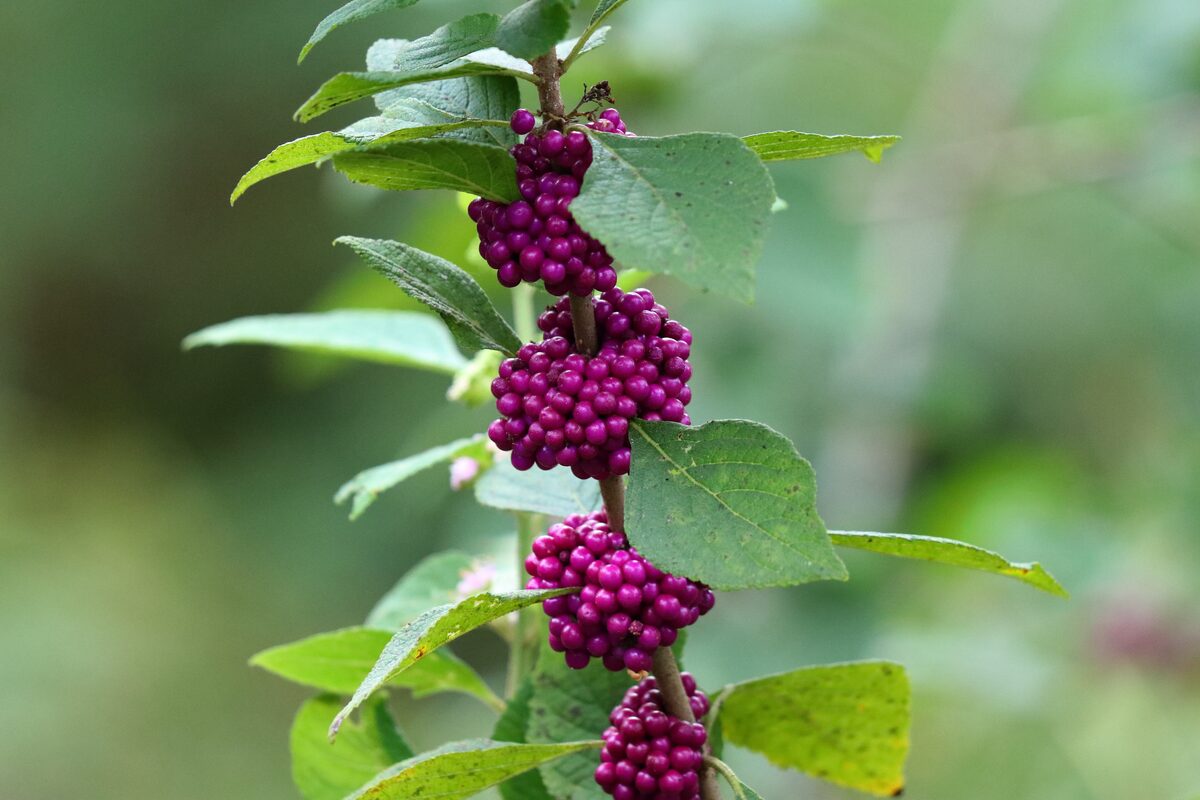
After four hollies, the color shifts to purple. Plant American beautyberry (Callicarpa americana) where its clusters of metallic purple fruit catch the eye from a window. The berries ripen in September and hang on after the leaves fall.
This native reaches 3 to 6 feet tall and about as wide in zones 6 to 10. Sun or light shade and average soil are all it asks.
Birds finish the fruit by early winter, so the display ends sooner than a holly’s. Cut stems back hard each February, because flowers and fruit form on new growth. White-fruited ‘Lactea’ is another choice for a woodland border.
Red Chokeberry
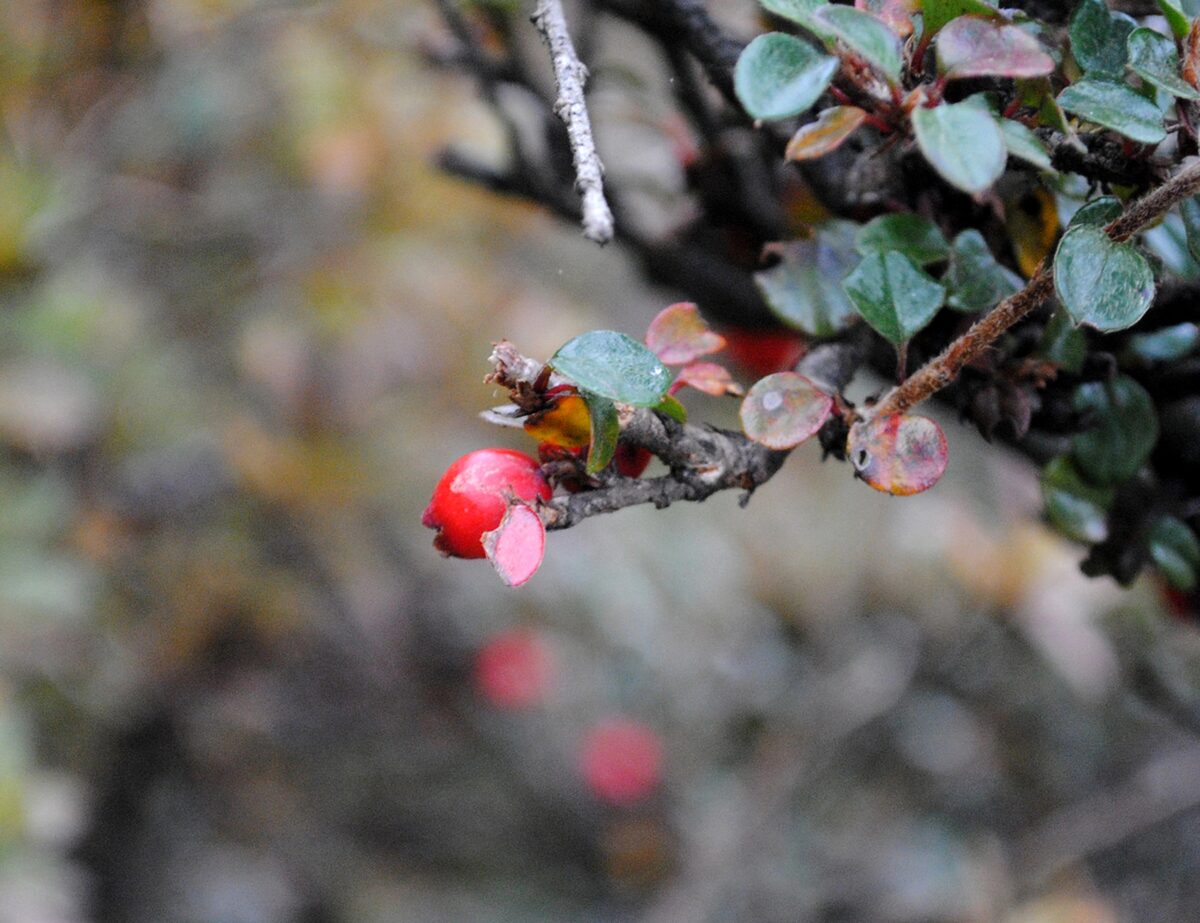
Along a wet ditch bank or the edge of a rain garden, red chokeberry (Aronia arbutifolia) shines in two seasons. Brilliant fall foliage comes first, then scarlet fruit that clings into winter.
This native grows 6 to 10 feet tall in zones 4 to 9. Moist to wet soil is best, though it tolerates drier ground once rooted, and sun deepens the color.
Birds find the bitter fruit unappealing until late in the season, which is why it lasts. ‘Brilliantissima’ is the standard cultivar for heavy crops. Clumps spread by suckers, so thin older stems each spring to hold clumps in bounds.
Coralberry
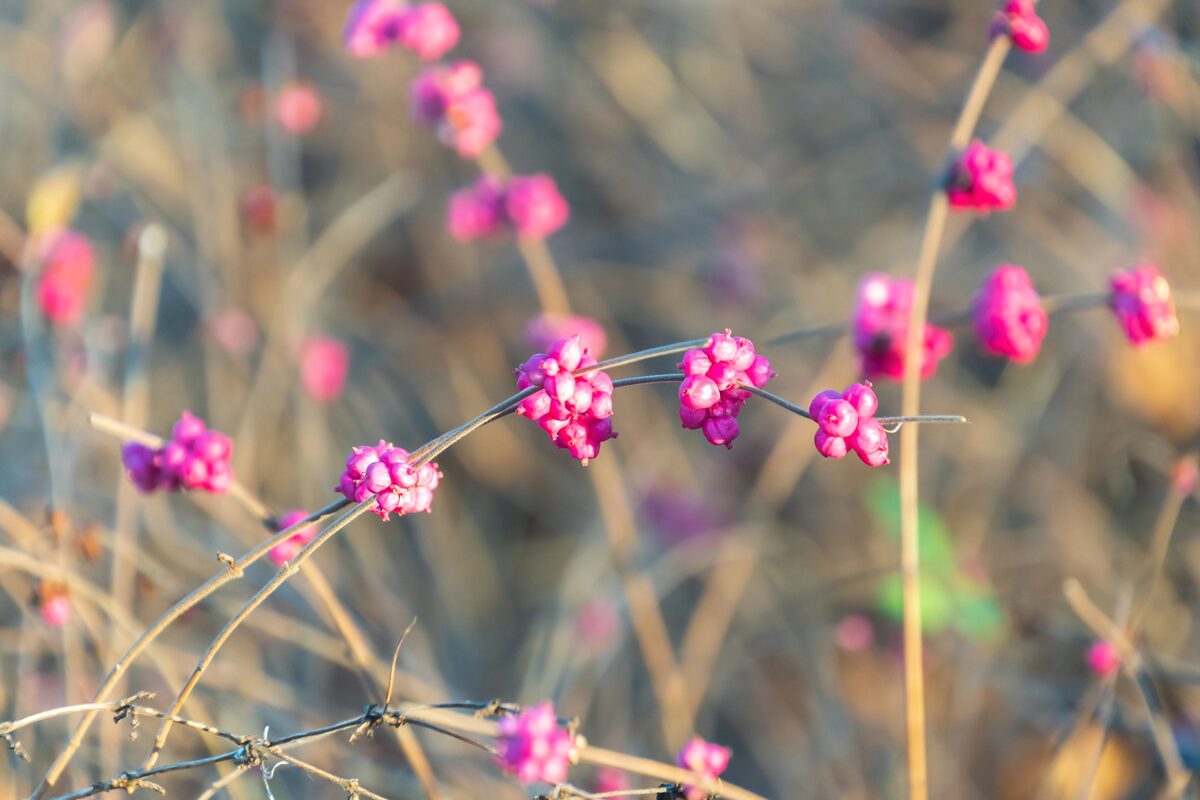
Is there a shrub for a hard, dry slope? Coralberry (Symphoricarpos orbiculatus) fills that role, with small clusters of coral-pink to purplish berries on arching stems well into winter.
It grows 2 to 5 feet tall in zones 2 to 7 and tolerates drought, shade, and thin soil. Fruiting is heaviest in sun.
Suckers spread it into a mass that holds banks and covers ground under trees. Cut ragged plants back hard before spring, since regrowth is quick. Eaten in quantity, the berries are mildly toxic.
Snowberry
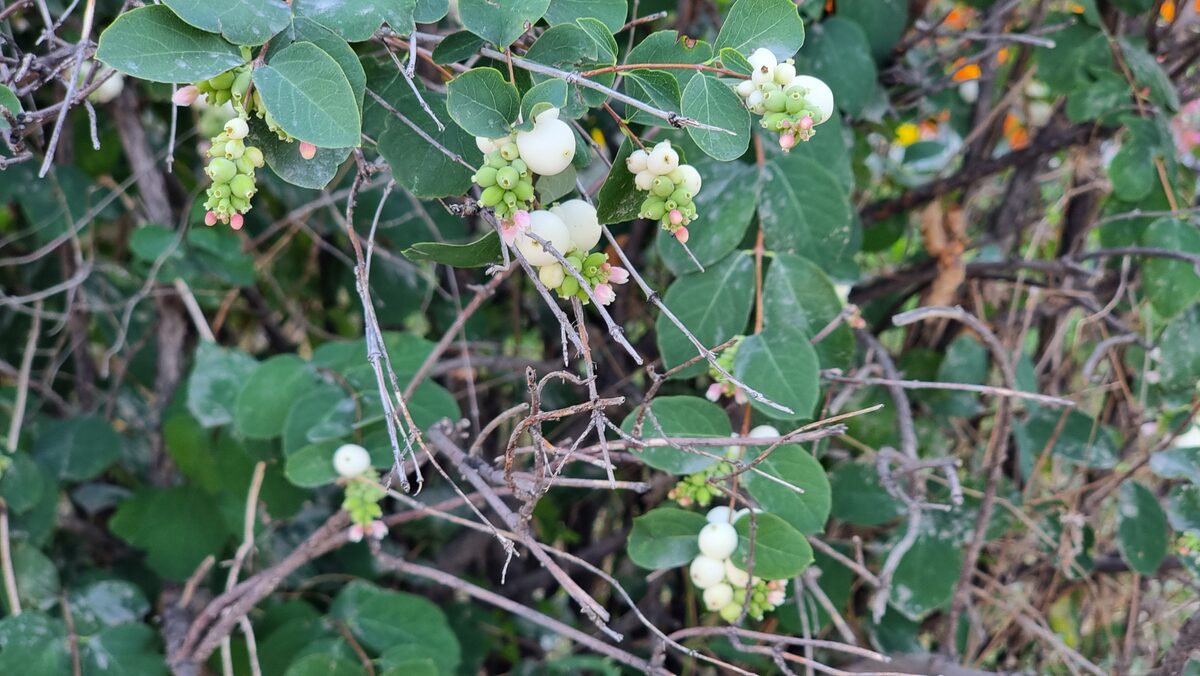
At 3 to 6 feet tall and wide, snowberry (Symphoricarpos albus) is a tough native covered in marble-sized white berries. The fruit hangs on bare stems through the coldest months.
Snowberry grows in zones 3 to 7 and accepts sun to fairly deep shade and most soils, dry and rocky ground among them. White fruit glows against evergreens and snow.
New shoots pop up freely, so choose a slope or woodland edge where spreading is welcome. Prune old stems to the ground before new growth begins. Young children should leave the fruit alone, since it upsets stomachs.
American Cranberrybush
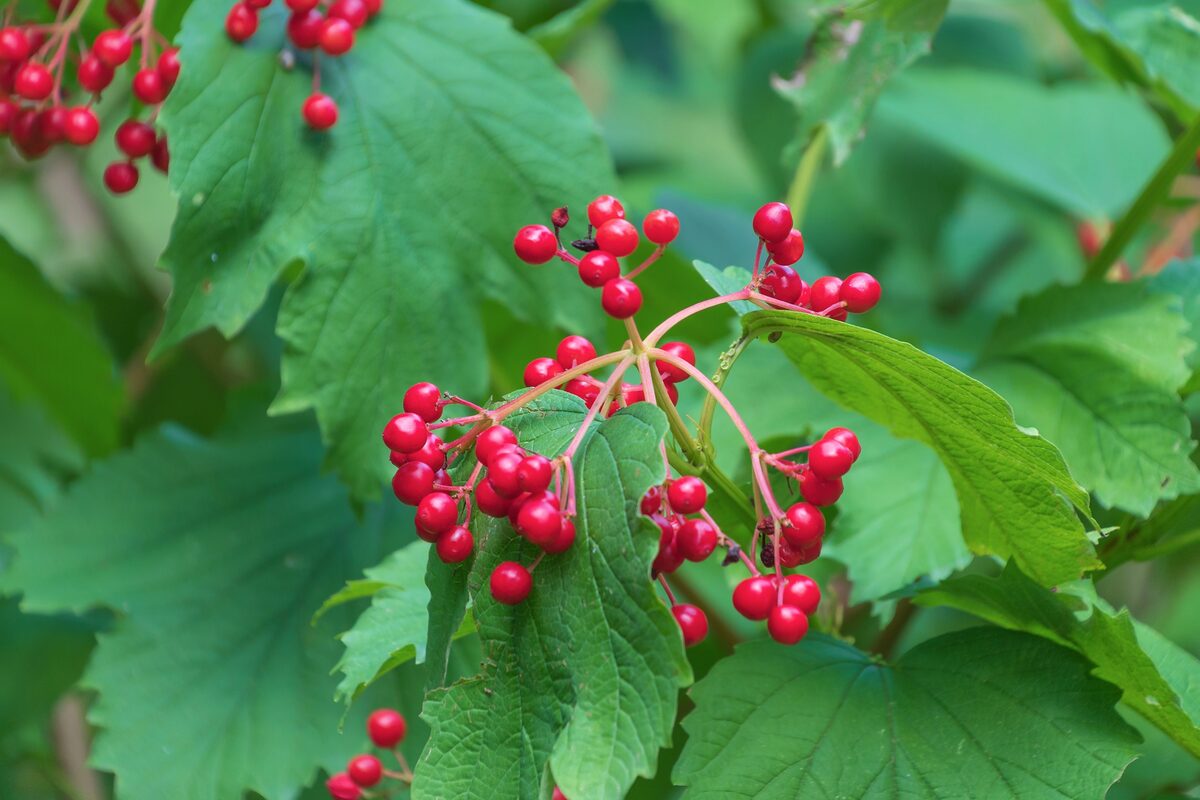
For the coldest gardens, American cranberrybush (Viburnum trilobum) is one of the hardiest choices, rated for zones 2 to 7. Its translucent scarlet berries last well into winter, and birds tend to eat them last.
The shrub reaches 8 to 12 feet tall in sun and average to moist soil. Fall leaves change to red or burgundy.
Prune right after spring flowers fade, never in fall, to protect next year’s fruit. Use it as a hedge beside a pond or a damp boundary. The tart berries are edible when cooked but upset stomachs raw.
Northern Bayberry
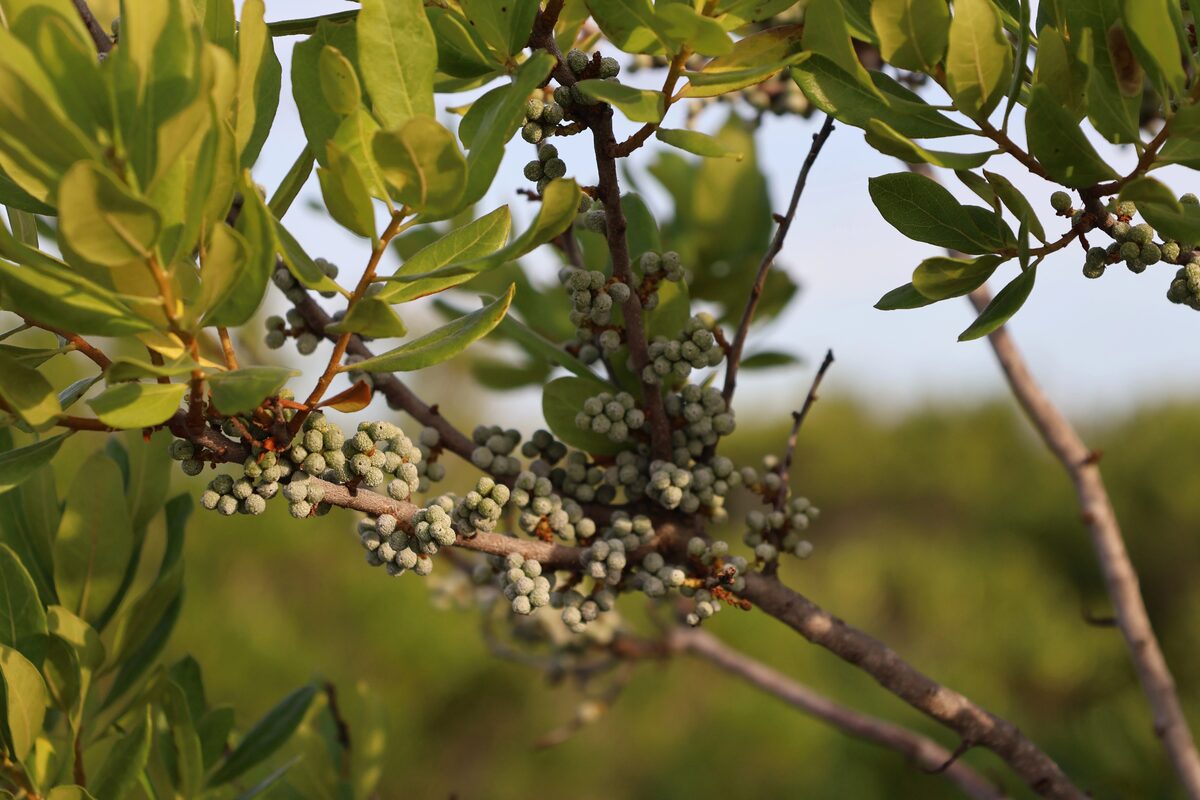
Waxy gray berries coat the stems of female northern bayberry (Morella pensylvanica) from fall through winter, long after the leaves thin out. Wax from these berries is the source of traditional bayberry candles.
Plants grow 5 to 10 feet tall in zones 3 to 7 and tolerate salt, sand, and lean soil better than most shrubs. The roots fix nitrogen, so skip fertilizer.
Set at least one male near several females for fruit. Crushed leaves smell spicy. A seaside hedge or massed screen shows this shrub at its best.
Virginia Rose
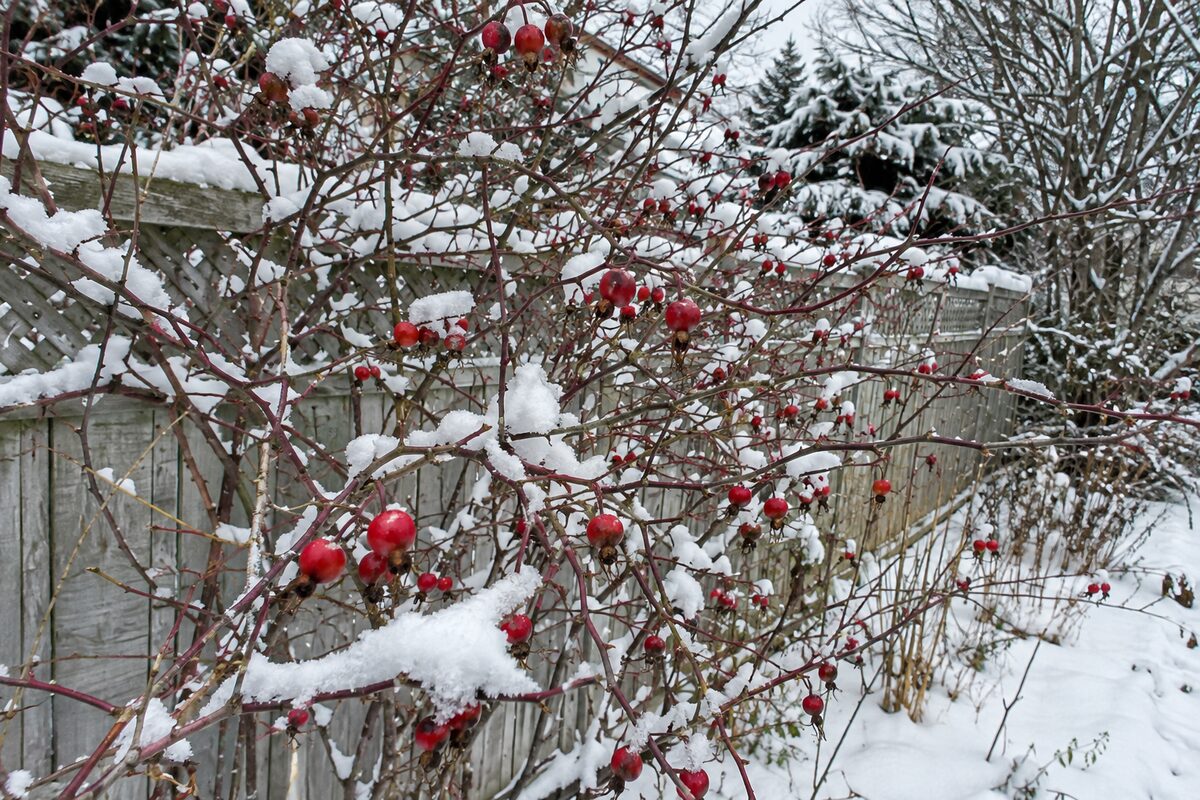
If rose hips count as winter berries, Virginia rose (Rosa virginiana) earns a place with glossy red hips on bare, reddish canes. Single pink flowers appear in early summer in zones 3 to 7.
This native grows 4 to 6 feet tall and adapts to sand, clay, and wet ground. Sun produces the most hips.
Skip deadheading in summer, since spent blooms become the winter fruit. The canes spread into a thicket, so allow room or mow around the edges. Remove the oldest canes in February, and birds will forage the hips beside a fence or wild border.
Skimmia
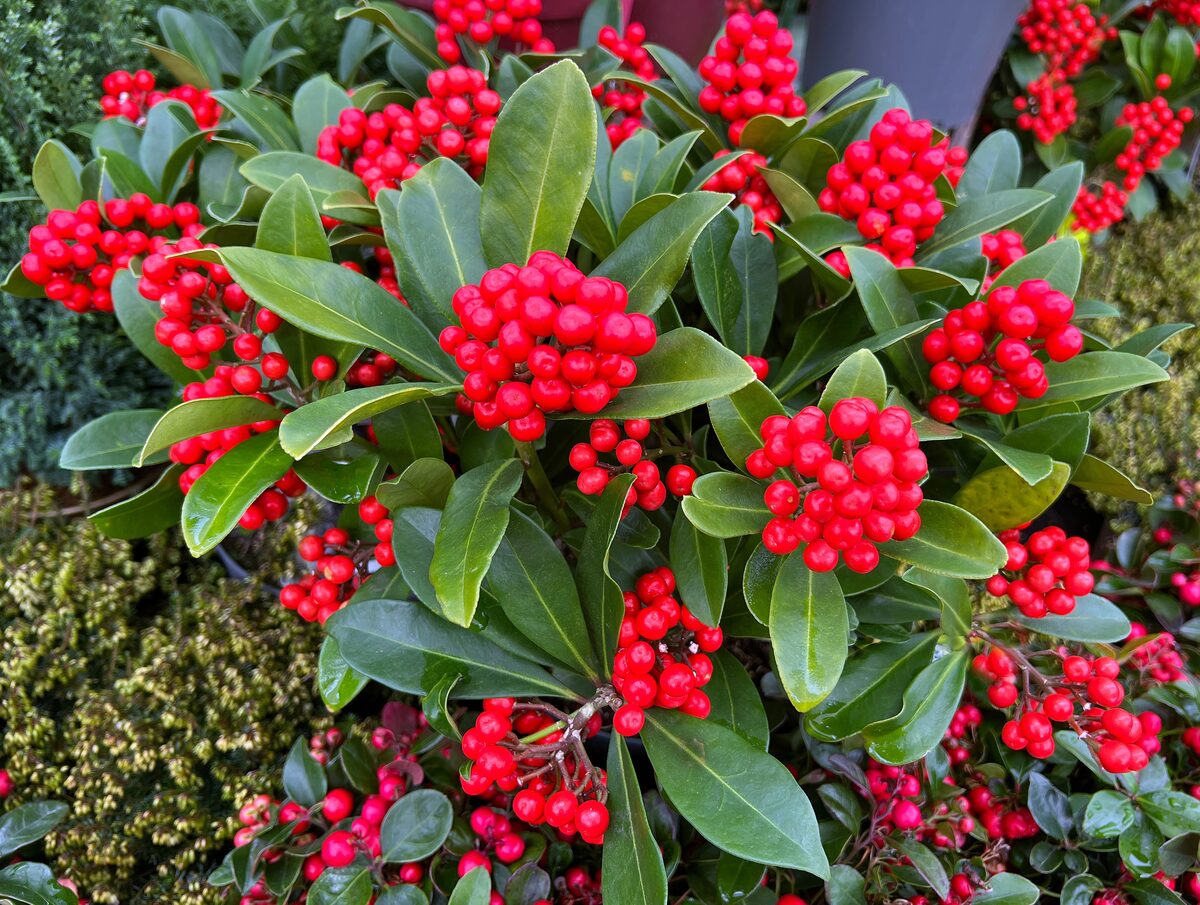
By a shaded front door, skimmia (Skimmia japonica) carries clusters of red flower buds all winter, plus glossy crimson fruit on female plants. This compact evergreen grows 3 to 4 feet tall in zones 6 to 8.
Skimmia grows best in shade, steady moisture, and acidic soil. Hot afternoon sun and alkaline ground yellow the leaves.
Most forms need a male pollinator such as ‘Rubella’, which also has the showiest buds. The berries last for months in a container or woodland bed. Every part of the plant is toxic if eaten.
Firethorn
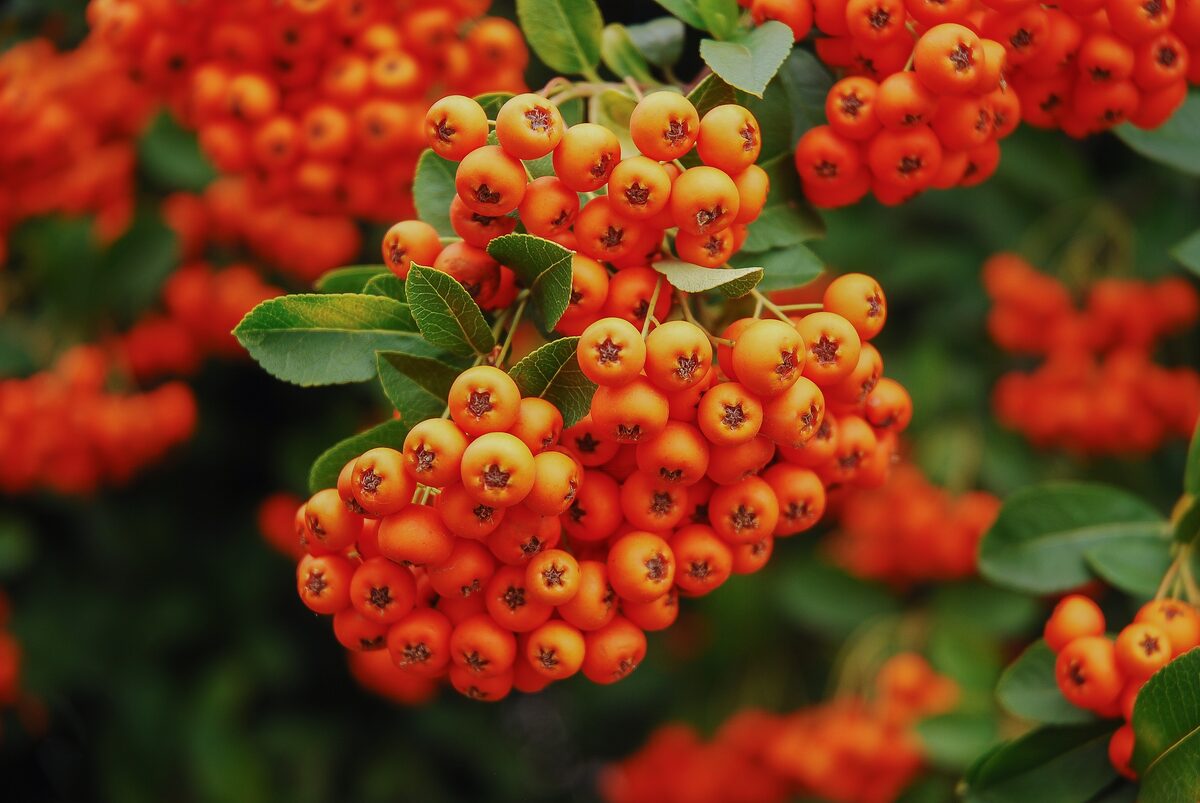
Come November, the thorny branches of firethorn (Pyracantha coccinea) glow with clusters of orange or red berries that last into late winter. This evergreen to semi-evergreen shrub grows 6 to 12 feet tall in zones 6 to 9.
Full sun and average soil with good drainage produce the heaviest crop. Wear heavy gloves, because the thorns are serious.
Train it against a wall or fence as an espalier, and prune after spring bloom. Firethorn has naturalized in parts of California and the Pacific Northwest, so check local invasive lists first. Treat the fruit as mildly poisonous.
Rockspray Cotoneaster
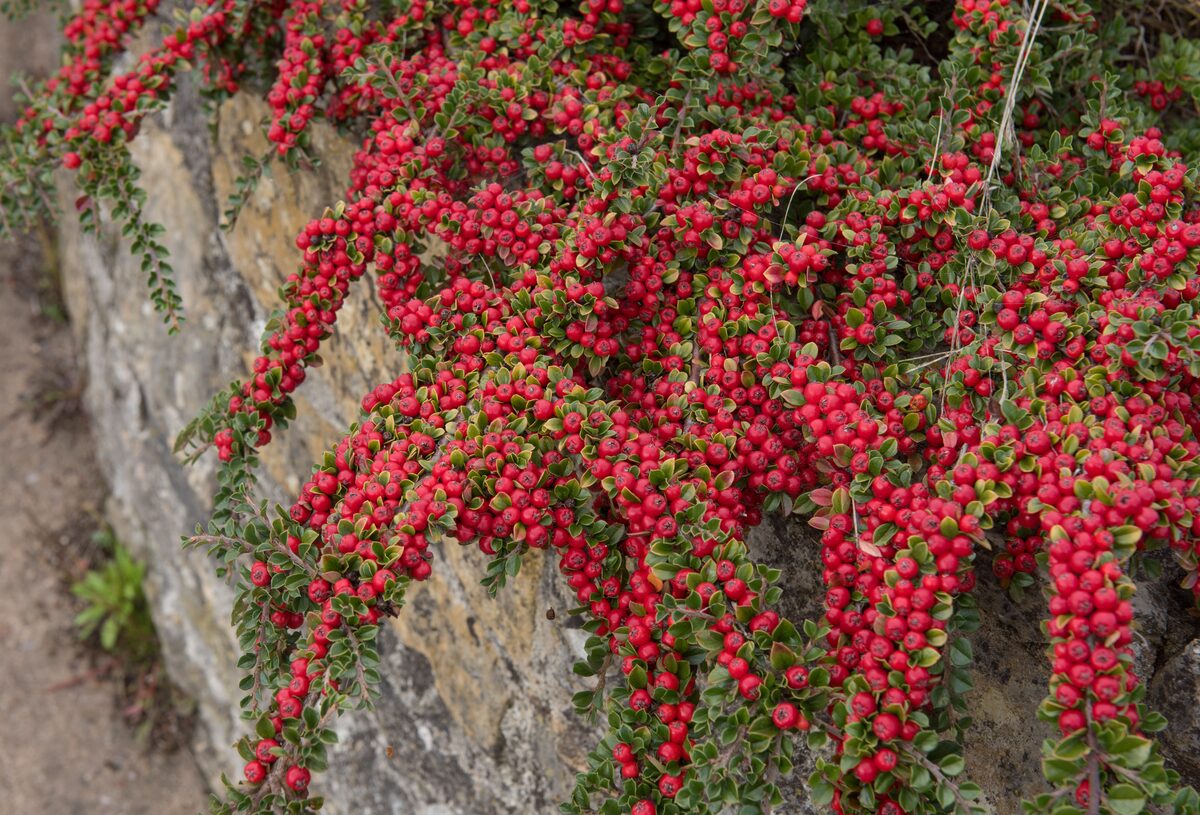
Let rockspray cotoneaster (Cotoneaster horizontalis) drape over a wall or spill down a slope, where its herringbone branches lie flat. Tiny red fruits line those fanned stems through the cold months.
The shrub grows 2 to 3 feet tall and up to 6 feet wide in zones 5 to 7, in sun or light shade and almost any well-drained ground. Leaves change to orange-red before dropping, which exposes the fruit.
Prune lightly to remove dead wood. Several cotoneasters have naturalized along the West Coast, so check local lists before planting. Children and pets should skip the fruit.
Wintergreen
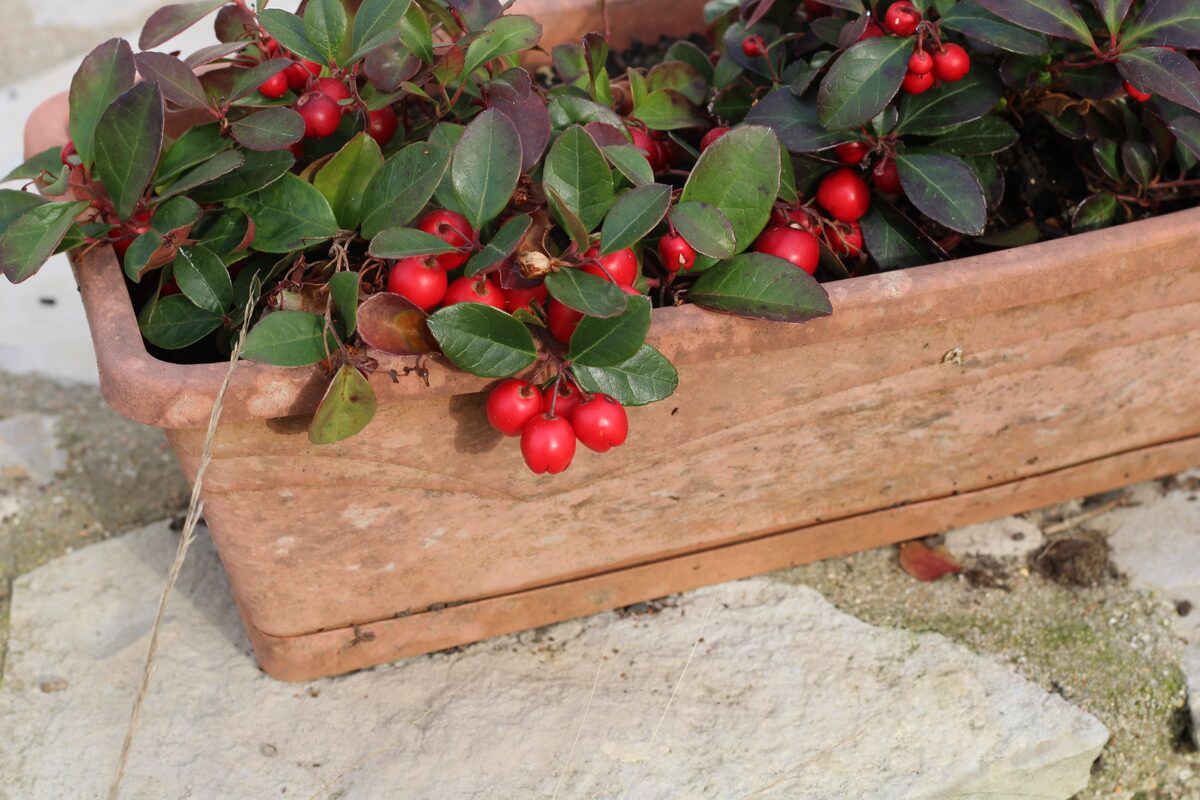
Last on the list is the smallest plant here, a ground cover only a few inches tall. Under azaleas or along a shaded path, wintergreen (Gaultheria procumbens) spreads slowly into a carpet 3 to 6 inches tall. Shiny scarlet berries ripen in fall and frequently hang on until spring.
It grows in zones 3 to 8 and needs acidic, moist soil in partial to deep shade. A mulch of pine needles helps on both counts.
Plants take a couple of seasons to fill in. Leaves darken to bronze in cold weather and smell of mint when crushed. The berries are edible, though birds and small mammals take most of them first.