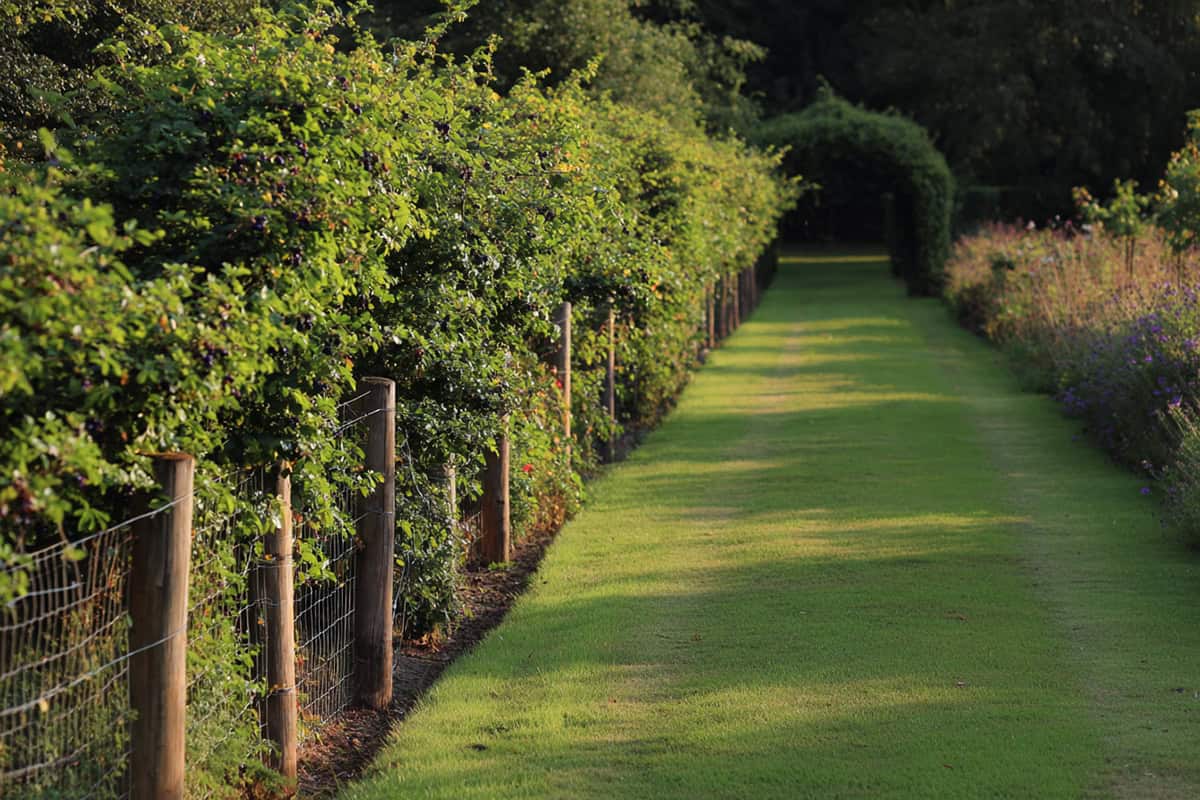
Maybe you want a fence that does more than just stand there. Living borders can swap out wood or metal for something that pulls double duty—privacy, structure, and a snack now and then.
Fruit shrubs, grapevines on trellises, and dense edible perennials can mark your property line and fill your basket. These plants work as hedges, screens, and boundaries. Harvests can stretch across the seasons, and there are options for both tiny spaces and sprawling edges.
Let’s run through plant picks that make perfect choices as an edible and stylish garden fence.
Table of Contents
- Edible Fence Ideas
- Strawberry Wall Fence In Vertical Pocket Planters
- Scarlet Runner Bean Flower-And-Pod Fence
- Raspberry Cane Fence
- Pomegranate Espalier Fence
- Pear Cordons As A Living Boundary Line
- Pea Vine Spring Fence
- Passionfruit Vine Privacy Fence
- Nasturtium-Draped Low Fence
- Mixed Red And Black Currant Fence
- Lemongrass Fence In Long Raised Beds
- Lavender Edible Border Fence
- Kiwi Vine Screen On Sturdy Trellis Fence
- Jerusalem Artichoke Summer Privacy Fence
- Hops Vine Fence
- Herb Fence With Alternating Panels
- Grape Vine Pergola-Fence Hybrid
- Goji Berry Trellis Fence
- Giant Pumpkin Vine Fence
- Espalier Apple Fence On Wire Panels
- Malabar Spinach Vine Fence
- Edible Squash Arch Fence
- Cucumber Trellis Fence With Hanging Fruit Rows
- Climbing Bean Fence
- Citrus Espalier Fence
- Chayote Vine Fence
- Blueberry Border Fence In Raised Planter Troughs
- Blackberry Hedge Fence With Arched Training
Edible Fence Ideas
Edible fences turn the edge of your property into a working part of the garden. With smart plant choices and sturdy support, you get food, privacy, and a bit of structure.
Strawberry Wall Fence In Vertical Pocket Planters
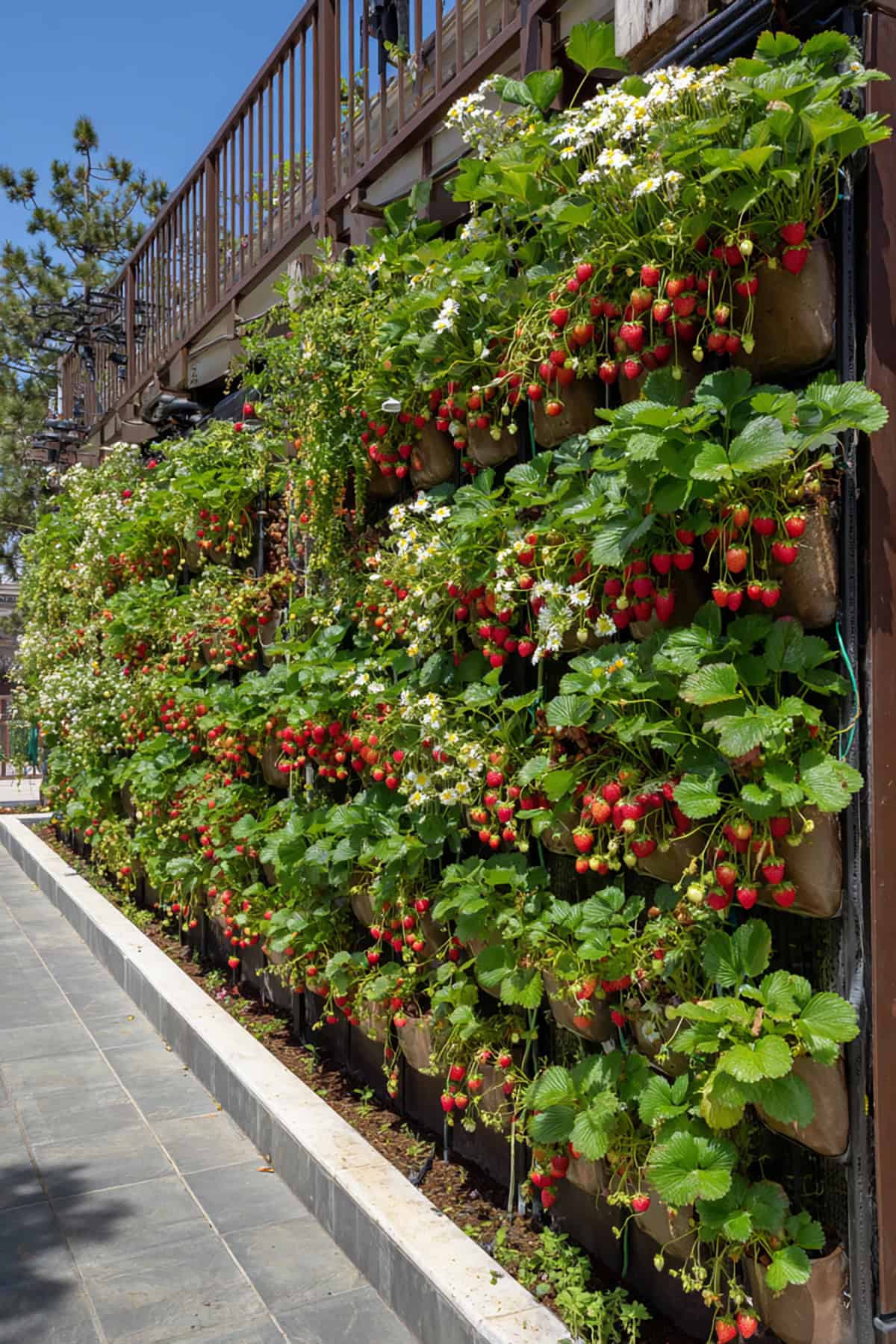
Vertical pocket planters squeeze a fence into the skinniest spots. Mount fabric or rigid panels on a frame that gets plenty of sun. Strawberries do fine in shallow pockets and make picking easy.
Weed control is a breeze with this style, and drip irrigation helps keep things even. Day-neutral varieties give you fruit for longer.
Plan to swap out plants every few years. In chilly spots, you’ll want to protect them over winter. This fence stays low and doesn’t get out of hand.
Scarlet Runner Bean Flower-And-Pod Fence
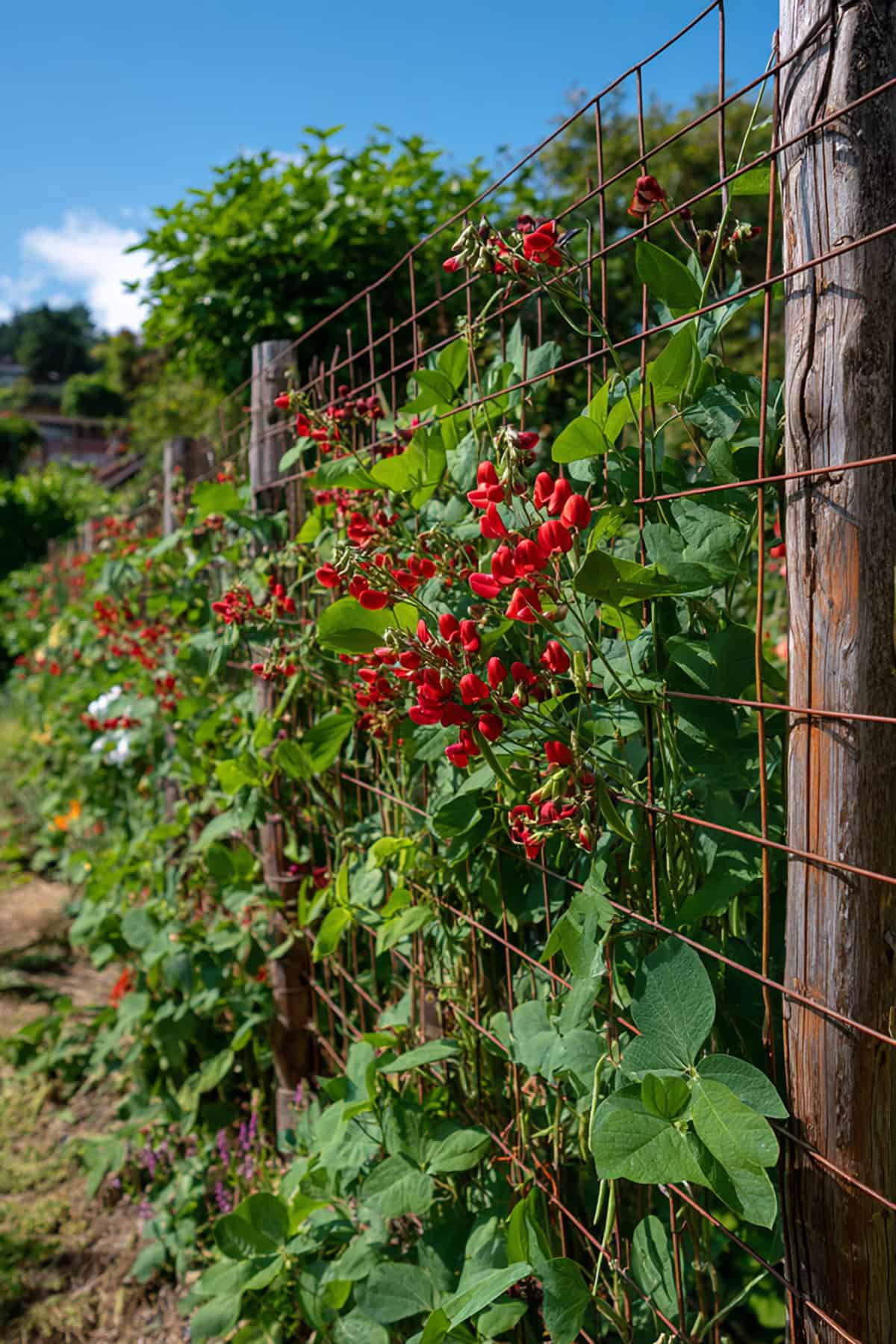
Scarlet runner beans shoot up and cover a fence fast. Just train them on wires or strings between posts. The red flowers are a bonus before the pods show up.
This fence can hit six to eight feet in a single season, once the frost is gone and the soil’s warm. Keep picking to get tender pods.
After frost, the plants are done. Pull them down and toss them in the compost. It’s a great summer screen—nothing more, nothing less.
Raspberry Cane Fence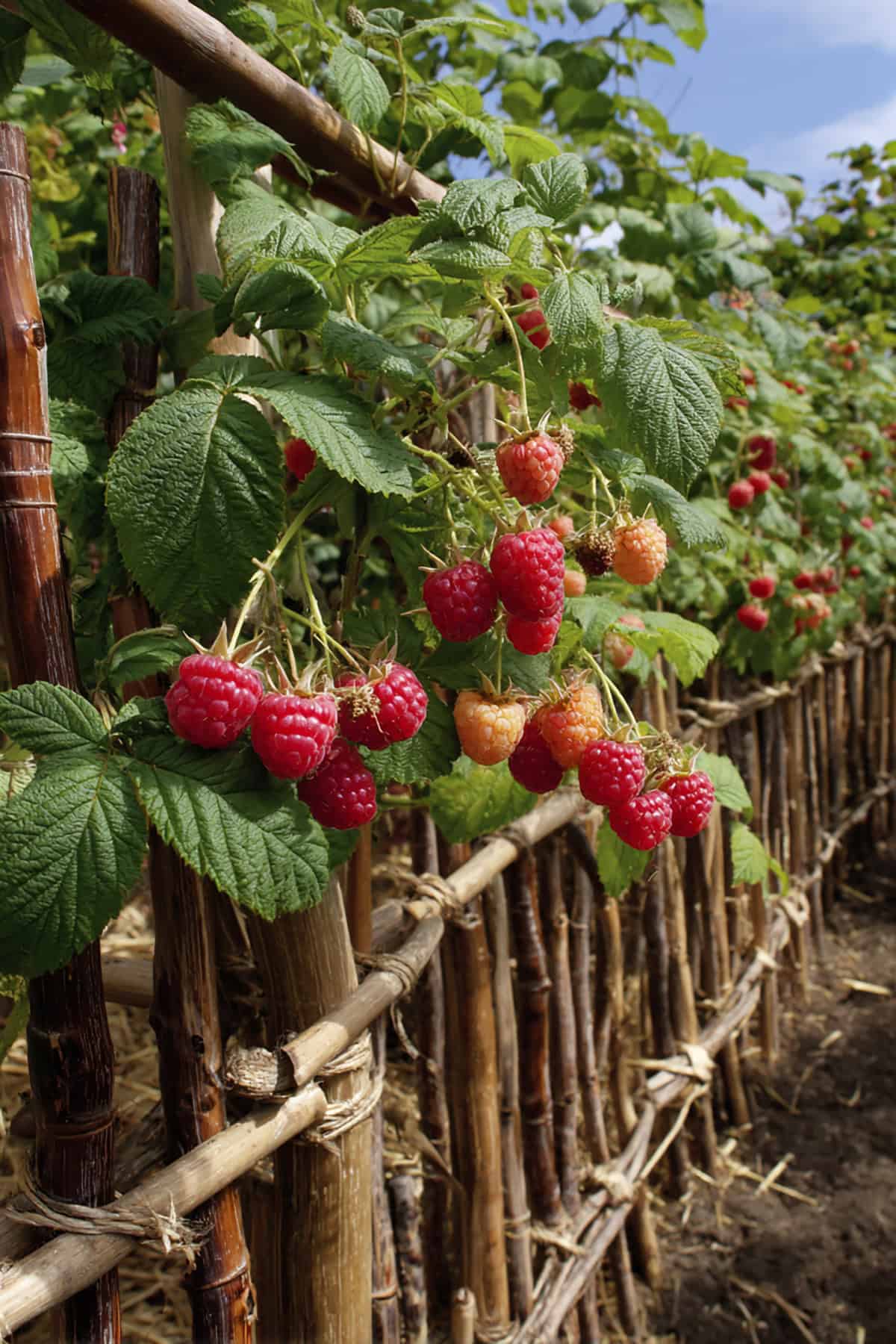
Raspberries make sense for long stretches where you want a living hedge. Set posts with horizontal wires or weave the canes. You’ll get a tidy, productive fence.
Cut out old canes after they fruit, let new ones fill in. Good spacing keeps air moving and cuts down on disease.
Watch the thorns if it’s near a walkway. Straight rows make picking easier and keep things neat.
Pomegranate Espalier Fence
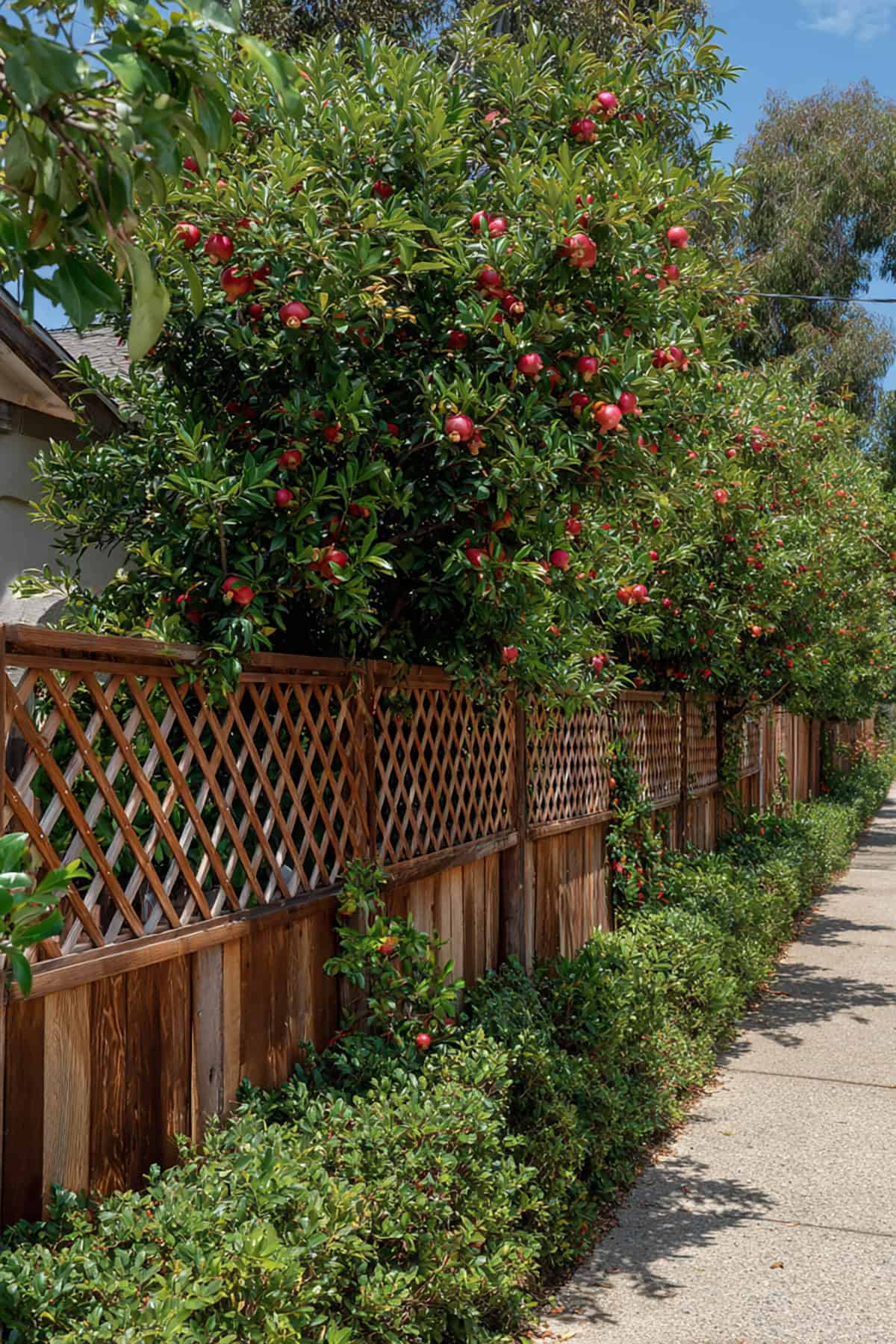
Pomegranates love heat and sun. Train the branches flat against a lattice for a fence that saves space and shows off the fruit.
Espalier does take regular pruning—just guide growth along the horizontal. Fruit sets on new wood, so keep things moving.
If you’re in a cooler spot, winter protection is a must. This style looks sharp and keeps the fruit within reach.
Pear Cordons As A Living Boundary Line
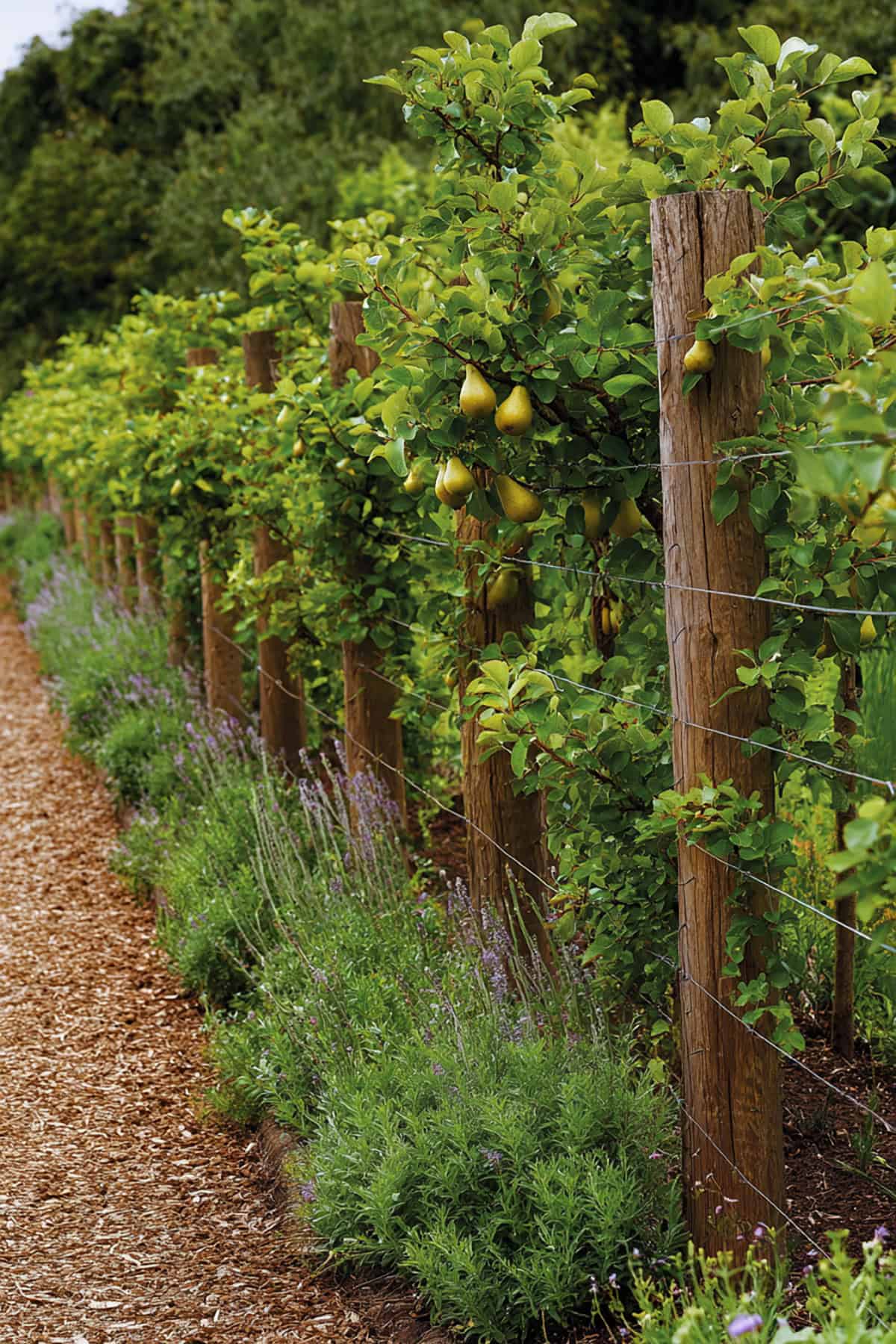
Pear cordons use single-stem trees planted close together along wires, making a skinny fence that fits even small yards.
Summer pruning is key for shape and size. Fruit grows on short spurs, and sunlight reaches every part.
Good drainage matters for pears. With a bit of routine care, you’ll get reliable crops without a bulky hedge.
Pea Vine Spring Fence
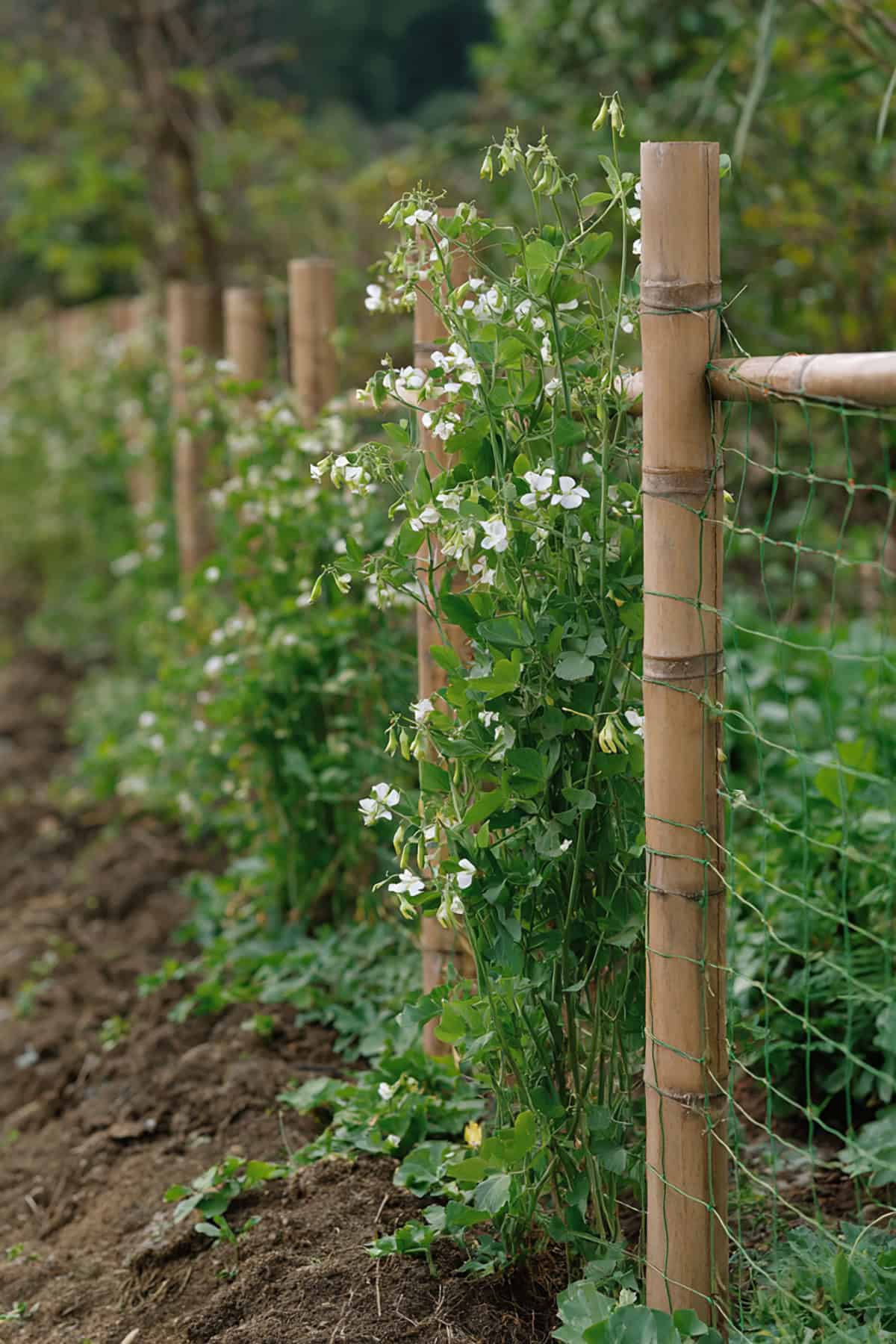
Peas can be your first fence of the year. Stretch netting between posts and let them climb as soon as the weather allows.
They fill in fast, and pods line the netting—easy to grab, easy to see.
Once it gets hot, peas are done. Pull the vines, save the posts, and you’re ready for the next season.
Passionfruit Vine Privacy Fence
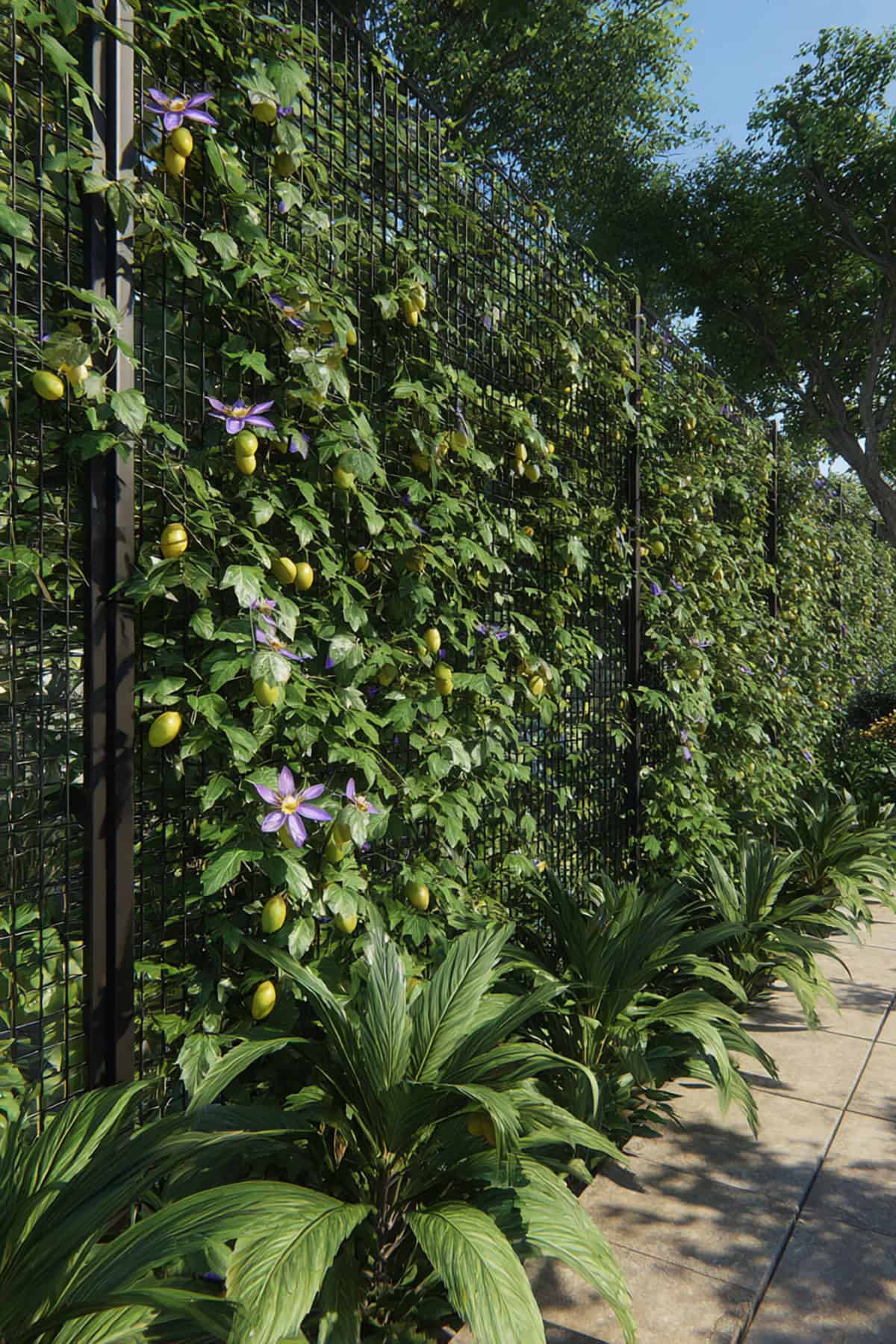
Passionfruit makes a lush, sometimes evergreen screen. Attach mesh to a sturdy fence and let the vines do their thing.
Best for warm climates. The flowers are wild, and with good pollination, you’ll get hefty fruit. Pruning keeps things from getting out of hand.
Heavy vines need solid posts. Airflow is important—don’t crowd them. Good privacy and good eating, if you’ve got the space.
Nasturtium-Draped Low Fence
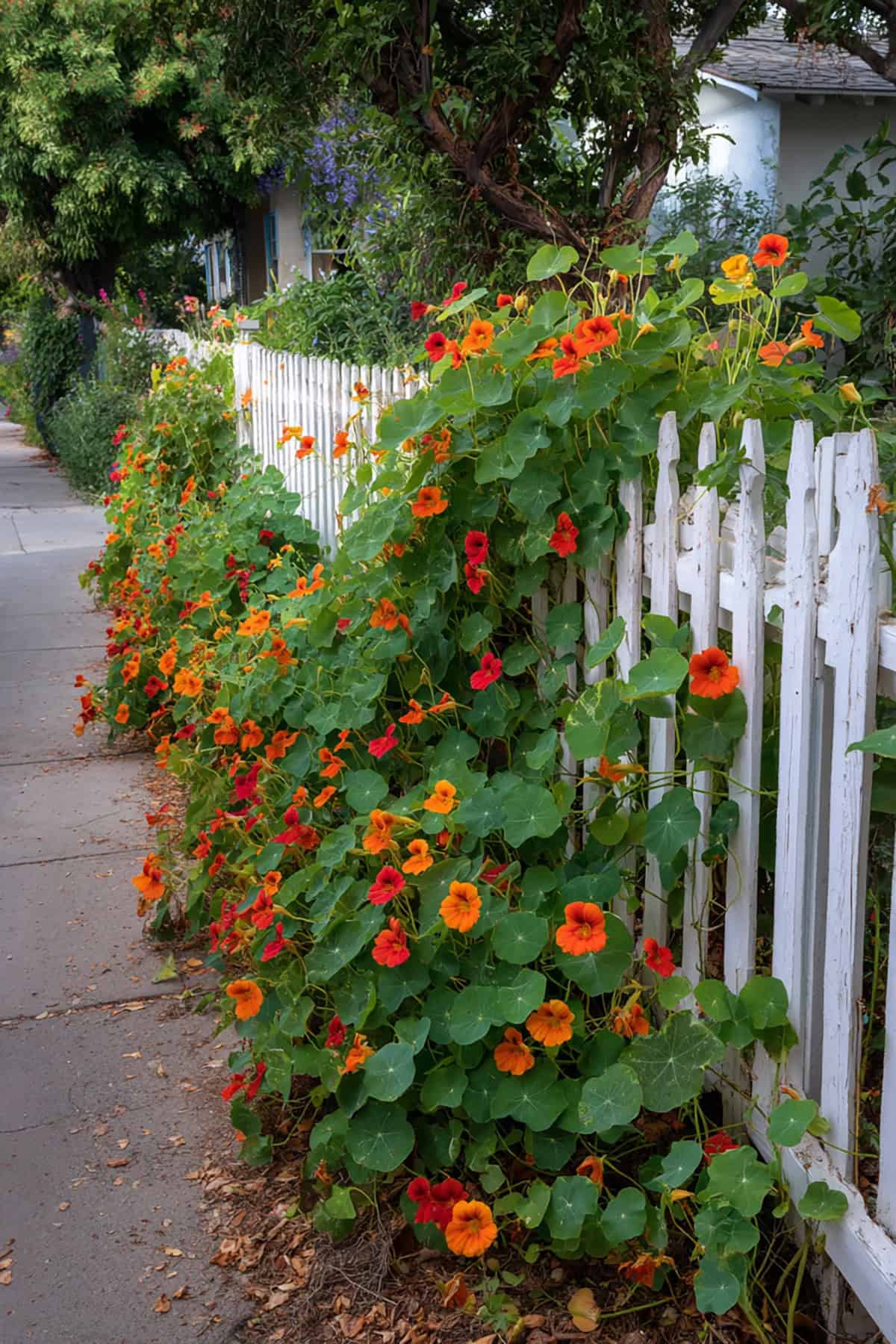
Nasturtiums are perfect for low fences or borders. They grow fast, even in poor soil, and their trails spill over whatever you give them.
Both flowers and leaves are edible. The colors are hard to miss, and they don’t ask for much.
Skip the rich soil or you’ll get more leaves than blooms. Frost wipes them out, but they’re easy to reseed.
Mixed Red And Black Currant Fence
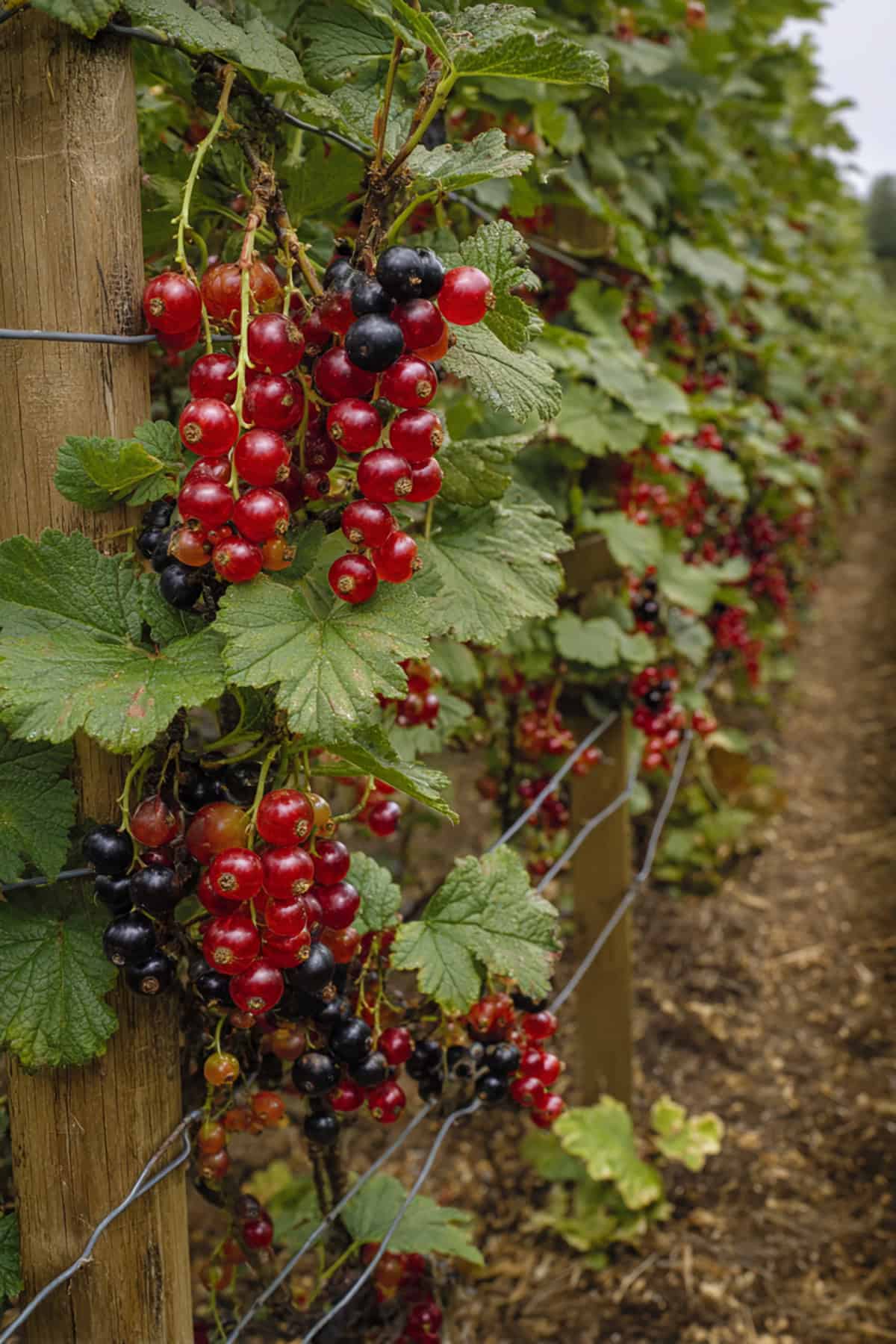
Currants make tidy shrubs for low hedges. Mix red and black for variety. They’ll tolerate partial sun.
Keep the hedge open with light pruning. Berries grow on older wood, so don’t cut too much.
They’re happiest in cool climates. Birds can be a pain—netting helps if you want any berries for yourself.
Lemongrass Fence In Long Raised Beds
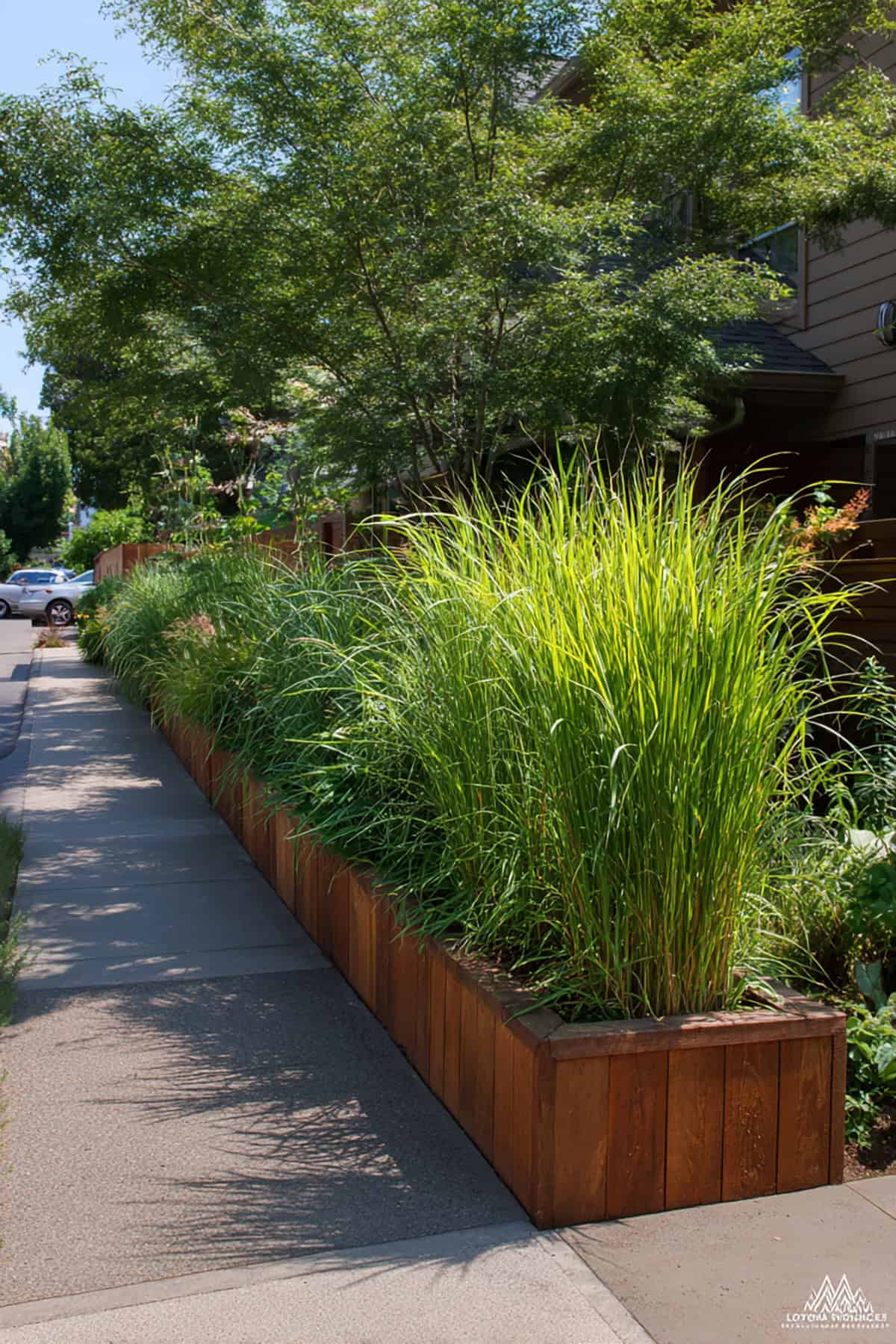
Lemongrass grows in thick clumps—great for a soft, fragrant fence. Raised beds along the edge give them room and keep things neat.
By midsummer, you’ll have a tall screen. Harvest by slicing off the outer stalks. Plus, the smell’s a bonus.
Cold winters mean you’ll need to protect or replant. The look is seasonal but makes a statement.
Lavender Edible Border Fence
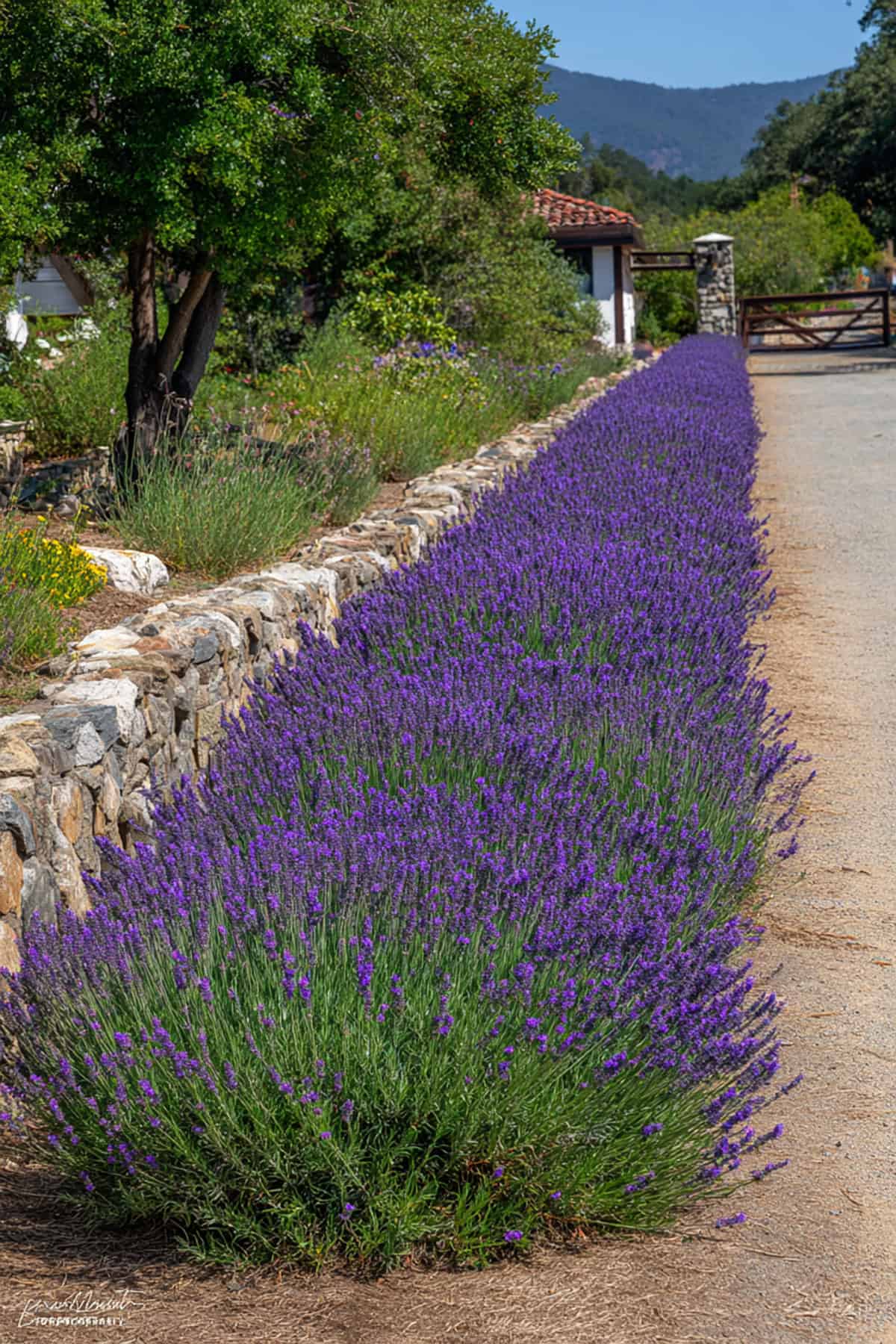
Lavender works for a low, structured border. Plant in straight lines, spaced wide for airflow. They need sun and well-drained soil.
Dry the flowers for cooking or tea. Pruning keeps them from getting woody and wild.
Fits nicely along paths or patios. They won’t get much taller than your knee, and regular trims keep them sharp.
Kiwi Vine Screen On Sturdy Trellis Fence
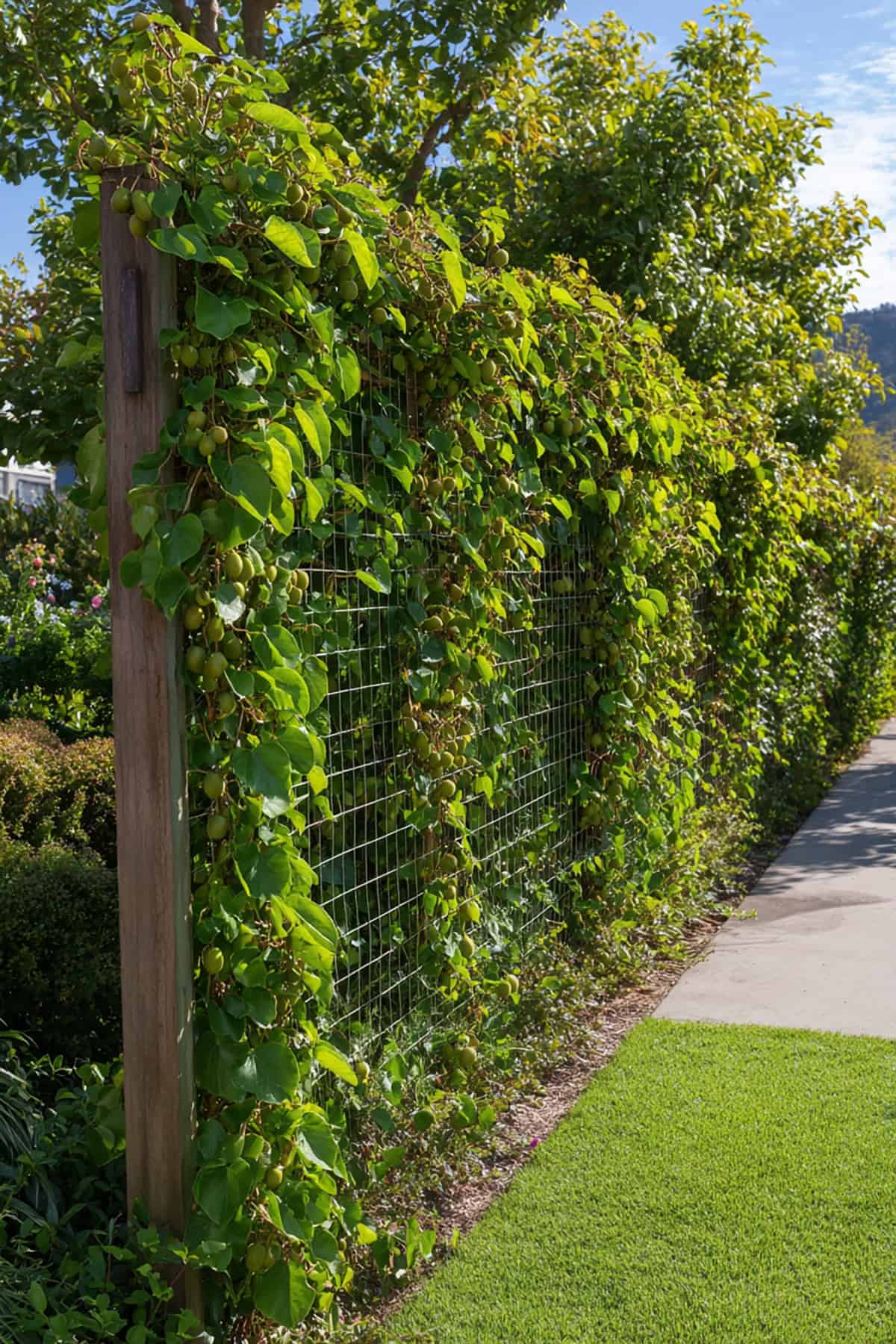
Hardy kiwi is a beast—give it a strong trellis with deep-set posts. The vines are heavy, especially as they mature.
You’ll need both male and female plants for fruit. Pruning is non-negotiable if you want to keep things manageable.
They take up space, but by year three, you’ll have real privacy and fruit hiding under the leaves.
Jerusalem Artichoke Summer Privacy Fence
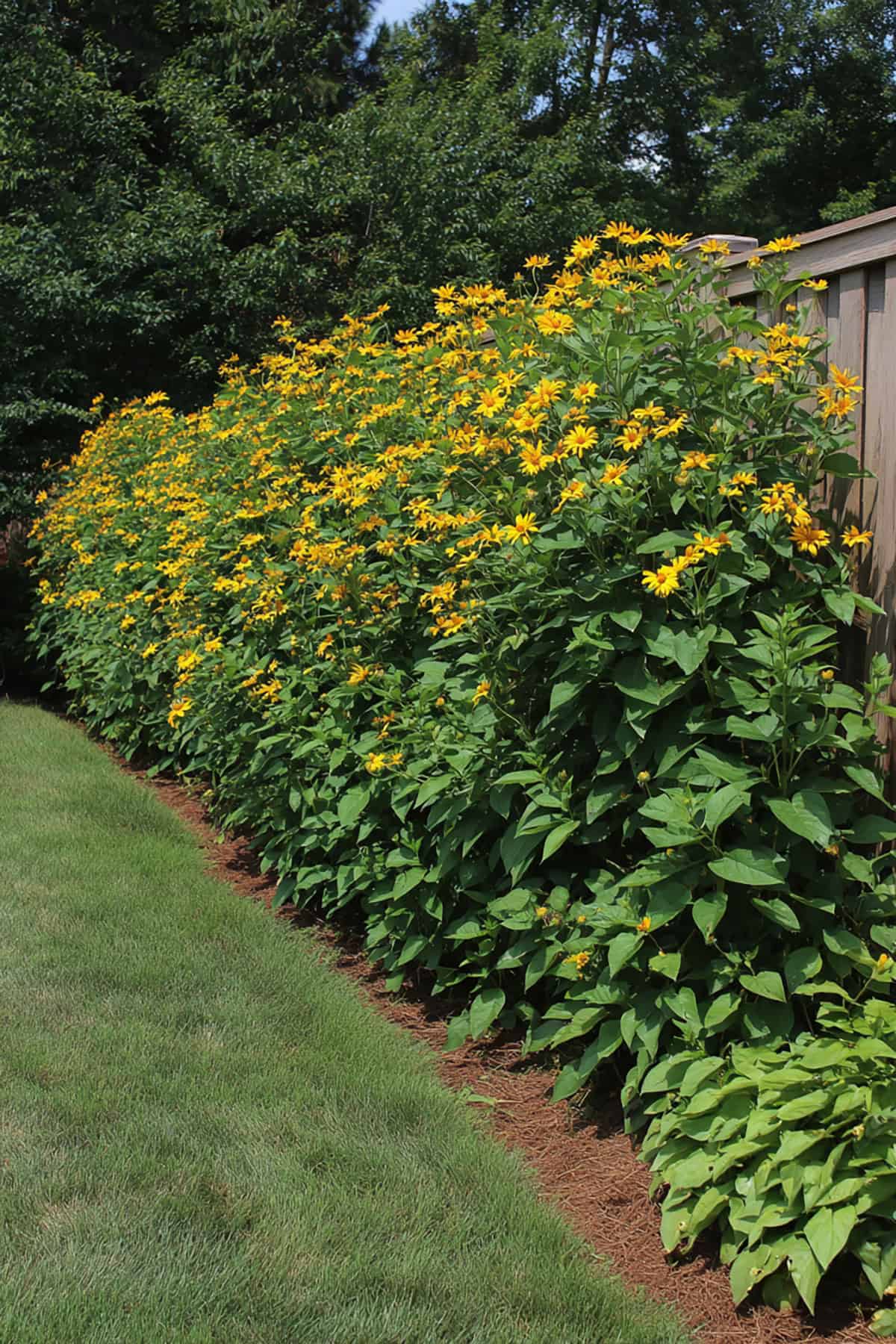
Jerusalem artichokes shoot up tall, blocking views with ease. Plant tubers in a line and watch them hit eight feet.
Late summer brings yellow flowers. Dig tubers after frost. They can spread aggressively, so be ready.
Barriers help keep them where you want. The fence is seasonal—once winter hits, it’s back to open space.
Hops Vine Fence
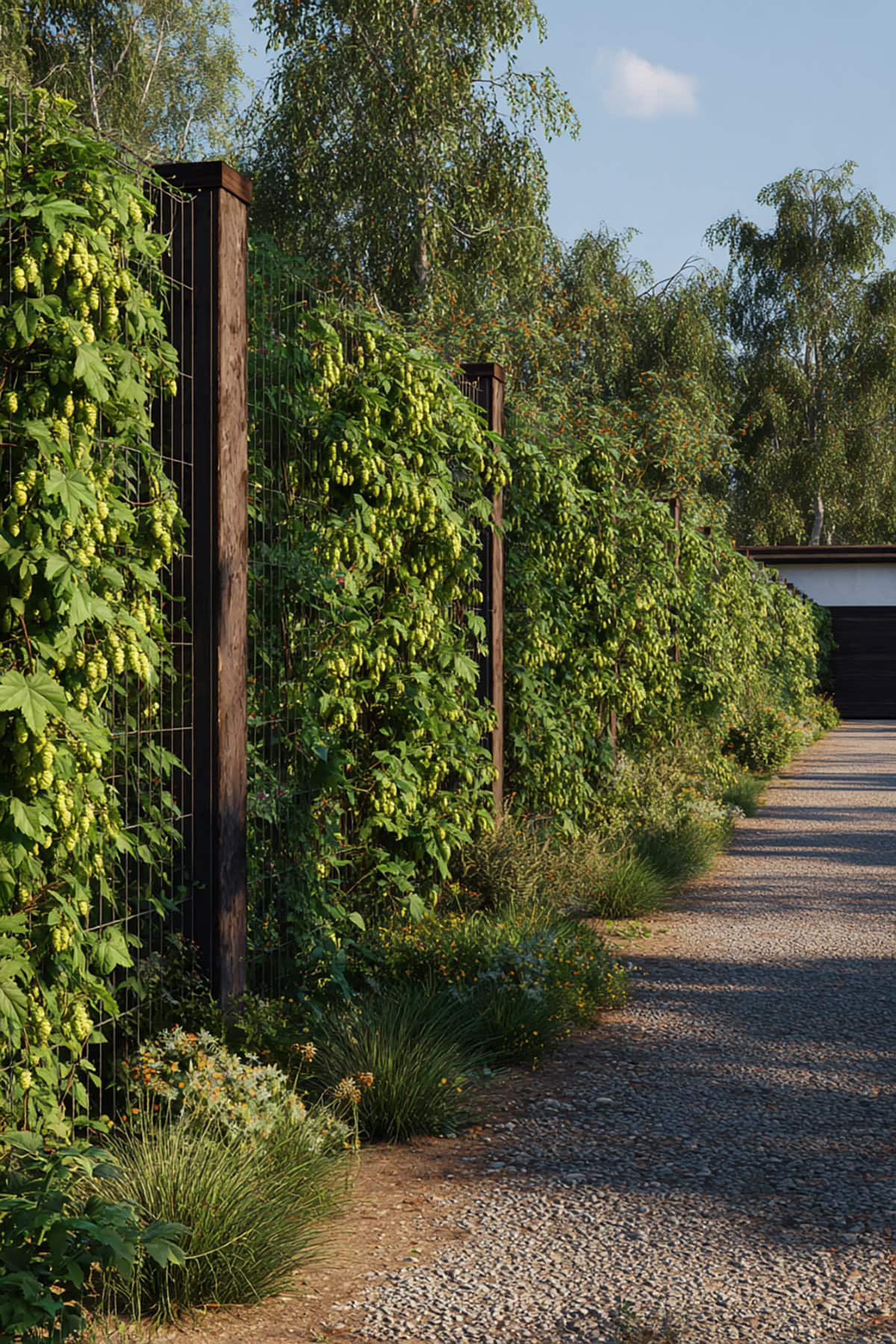
Hops climb like crazy on twine or wire between posts. Sun is key for good cones.
They’ll reach full height every year. Harvest the cones late summer, then cut the vines back after frost.
Sturdy anchors are a must. If you brew, this one’s a no-brainer. Fast privacy, too.
Herb Fence With Alternating Panels
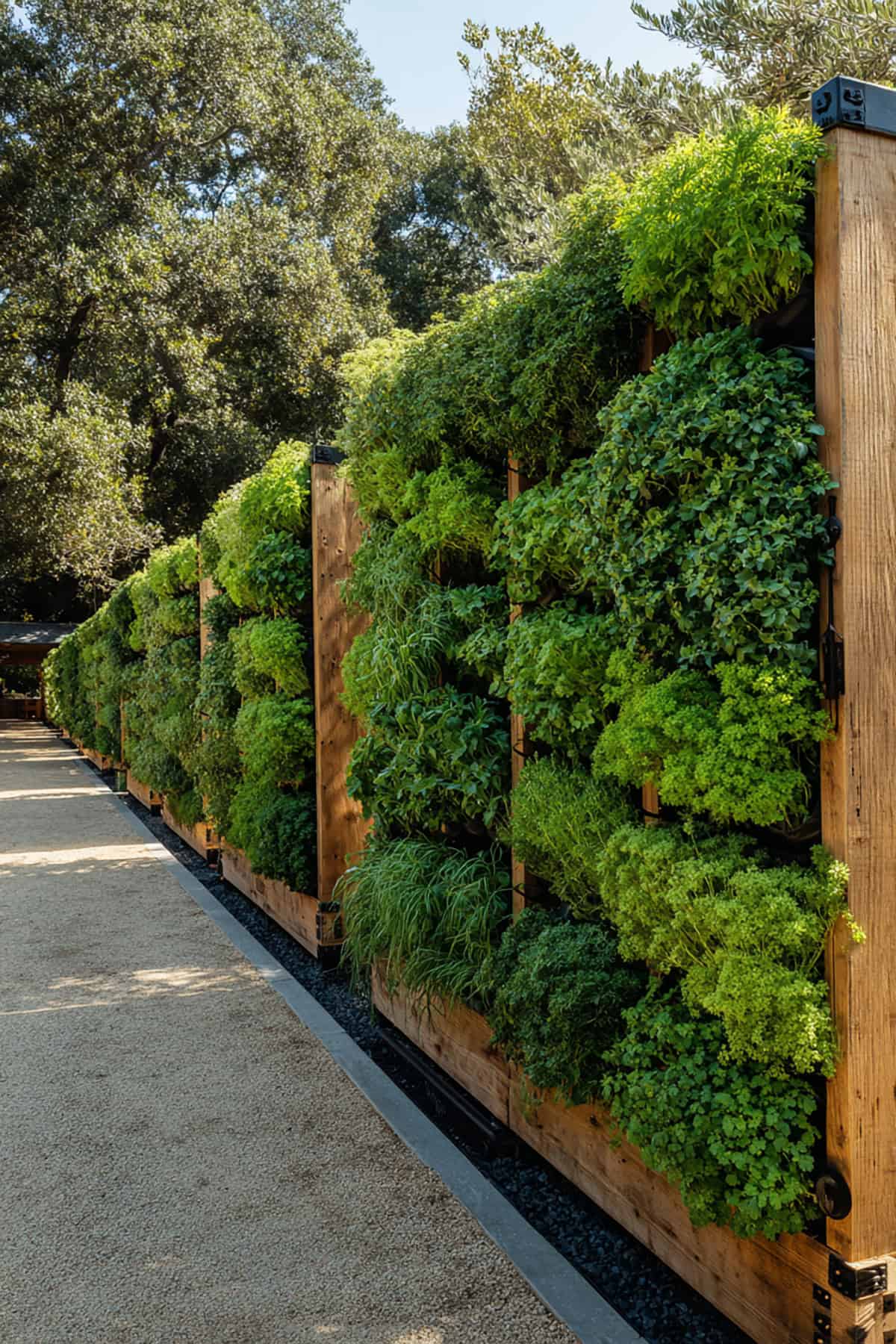
Mixed herbs can make a surprisingly effective low fence. Divide sections with frames, plant a couple of species in each.
Perennials give structure, annuals fill the rest. Regular picking keeps them bushy.
Works well near the kitchen. The scents alone make it worth the effort.
Grape Vine Pergola-Fence Hybrid
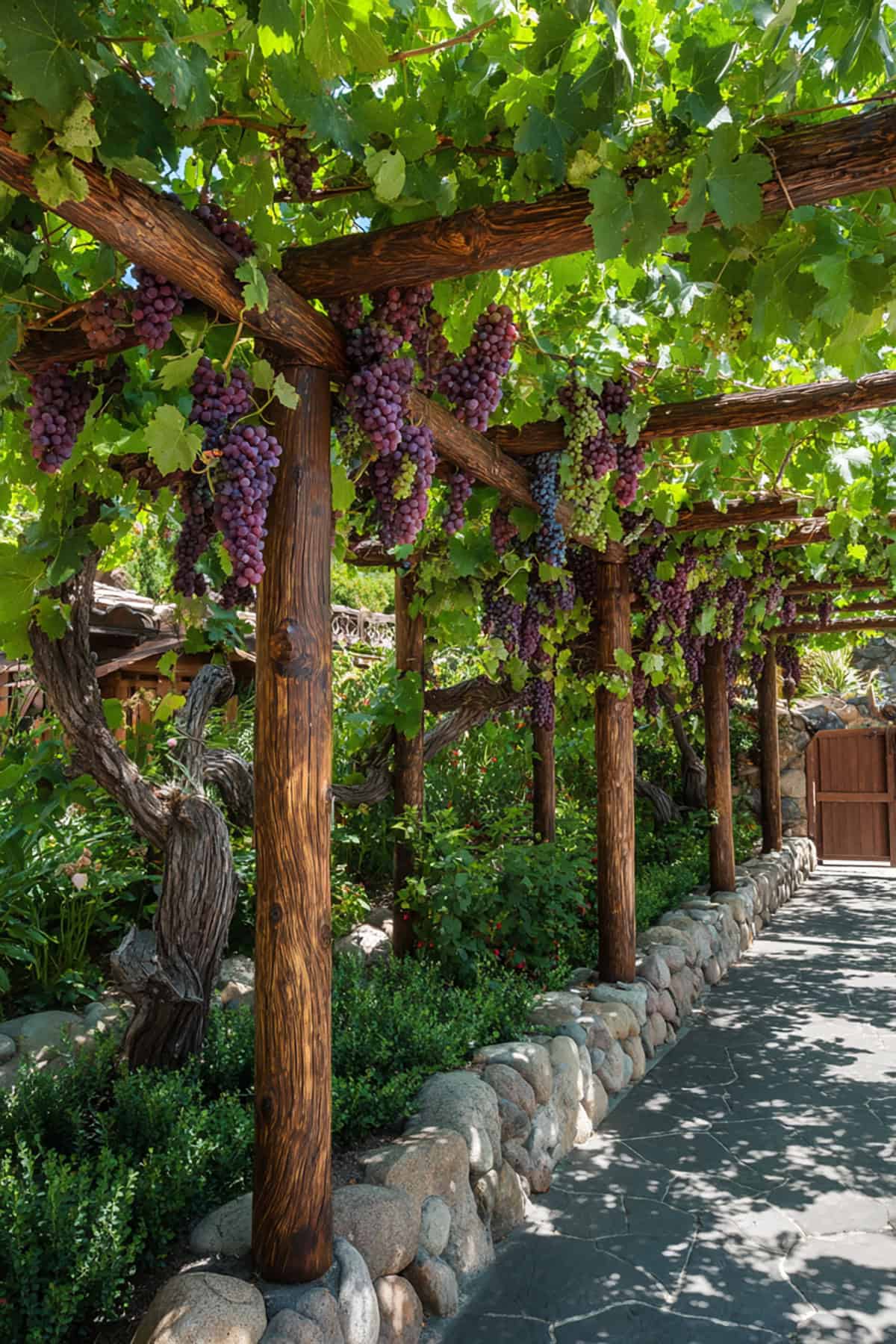
Grapes are happy on a fence-pergola combo. Train them on horizontal beams, let sturdy posts do double duty.
Fruit hangs from above, and summer pruning helps manage shade. Airflow is important for healthy vines.
This setup can define a whole outdoor space, and you’ll have easy access for picking.
Goji Berry Trellis Fence
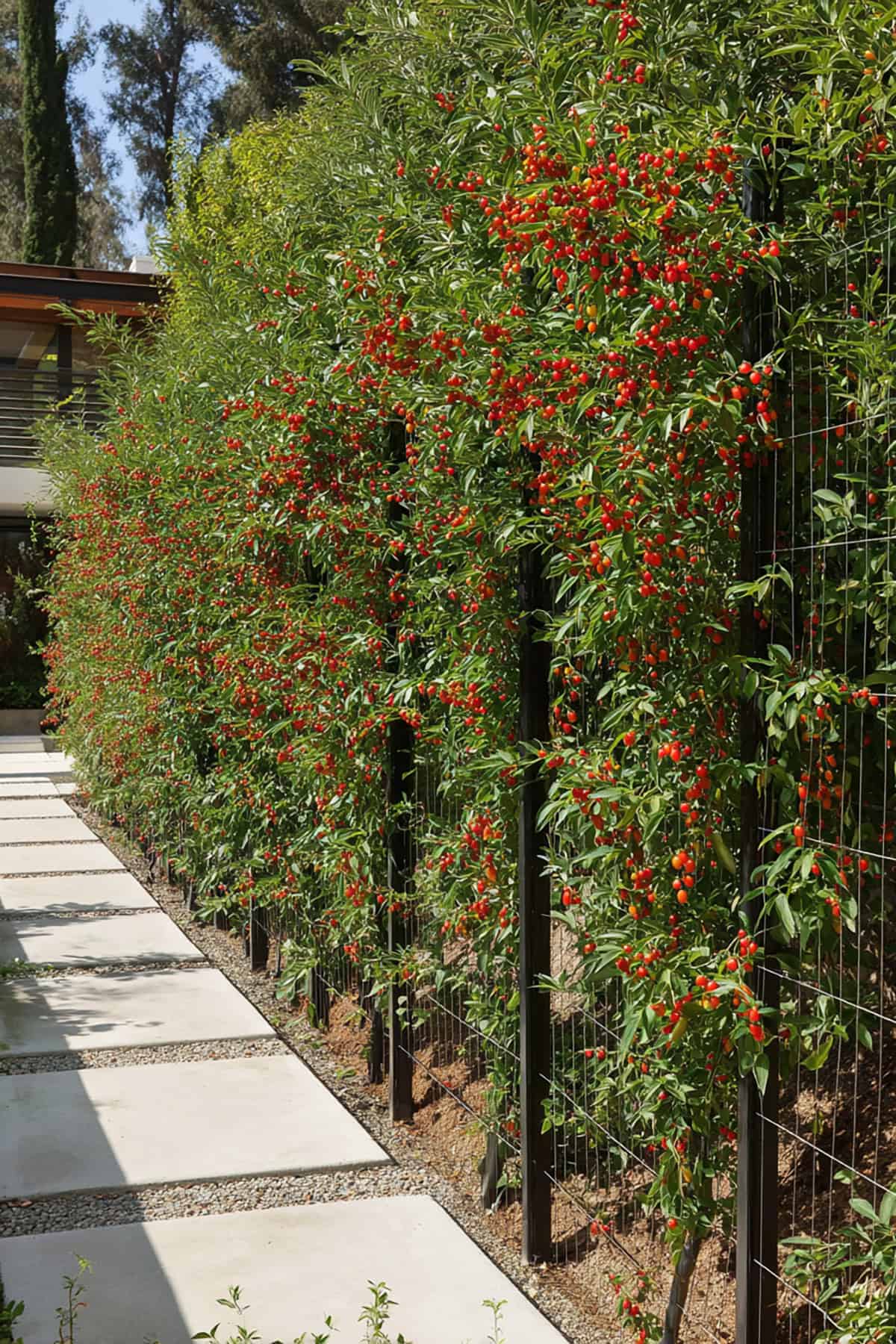
Goji berries have flexible canes that tie nicely to vertical cords, making a slim fence.
Keep them pruned or they’ll sprawl. Berries show up on new growth, and sun makes them sweeter.
They’re cold-tolerant, light and airy, and the harvest comes over several weeks.
Giant Pumpkin Vine Fence
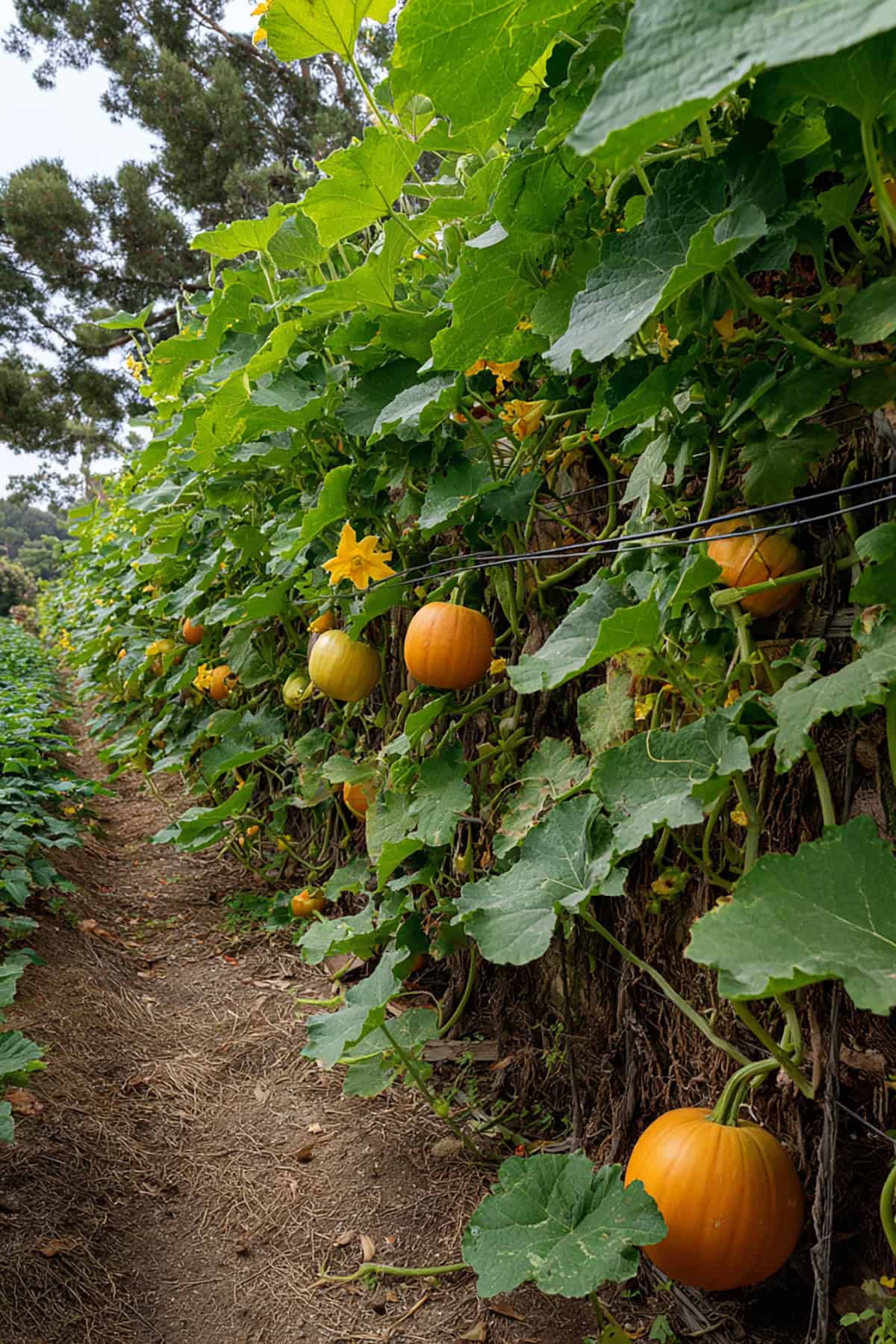
Pumpkin vines will cover a low wire fence if you guide them. Use clips or ties to keep things tidy.
Big fruit sits on the ground, so give them space. Good pollination means bigger pumpkins.
Best for bigger yards. Harvest in fall, then the vines die off with frost.
Espalier Apple Fence On Wire Panels
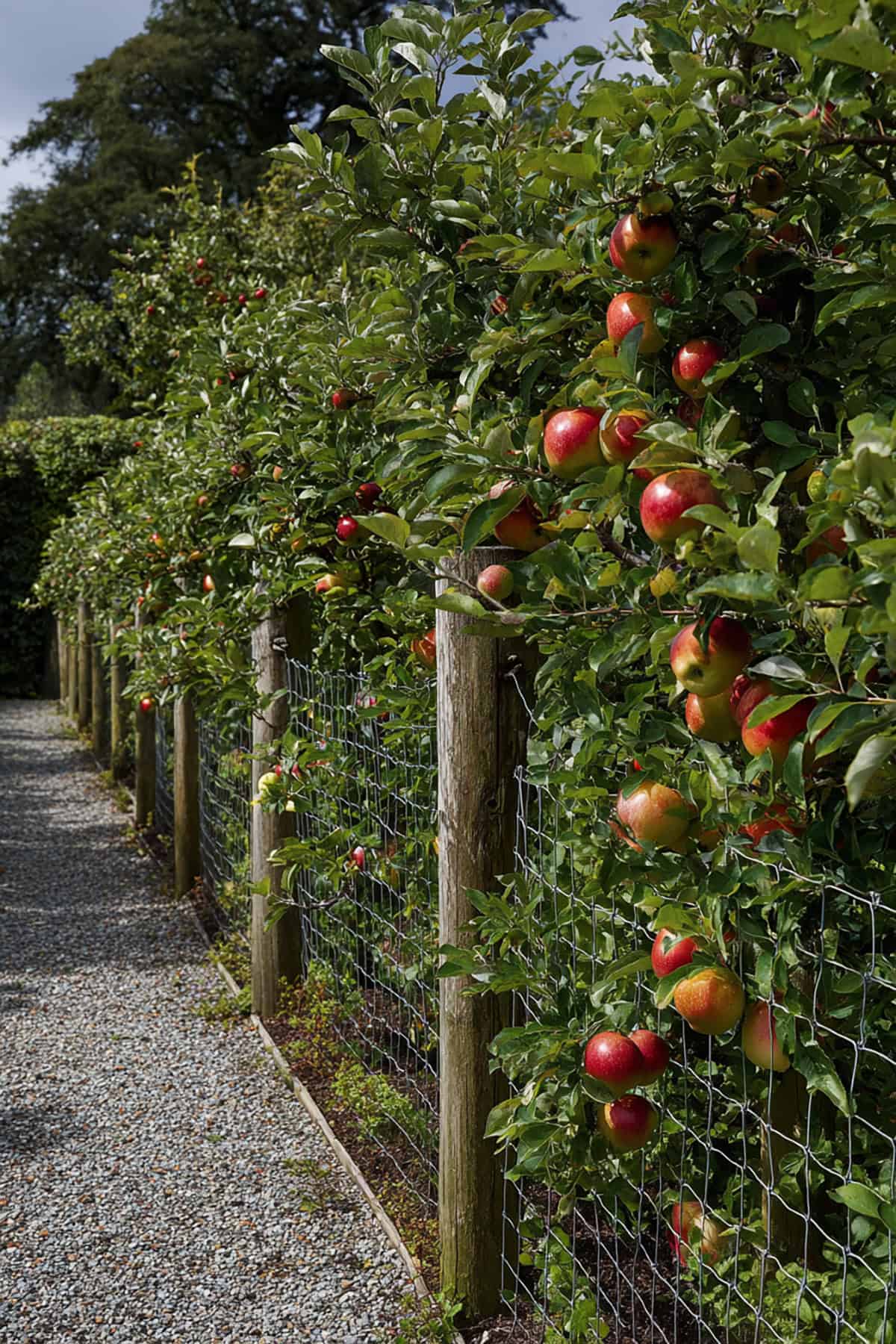
Apples are naturals for espalier. String wire panels between posts and train branches along the lines.
Annual pruning shapes the tree, and fruit grows on spurs close to the wire.
Pick rootstock for the size you want. With some patience, this fence can last for decades.
Malabar Spinach Vine Fence
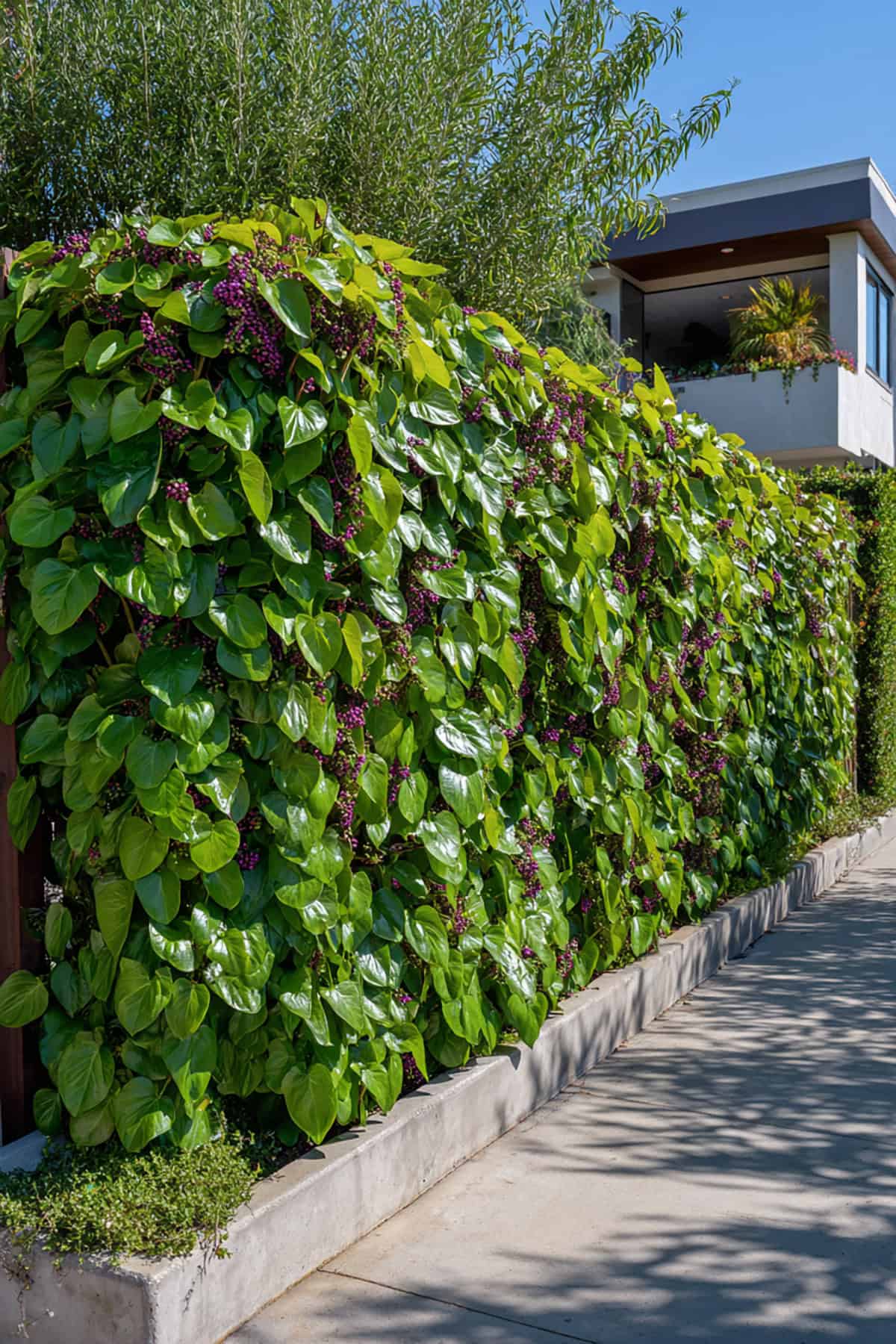
Malabar spinach loves the heat and climbs mesh or wire easily. Leaves stay thick and tender if you keep up with trimming.
Harvest all summer, and it’ll even tolerate some shade. Growth is pretty easy to manage.
Once cold hits, it’s done for the year. It’s a good gap-filler when other greens can’t take the heat.
Edible Squash Arch Fence
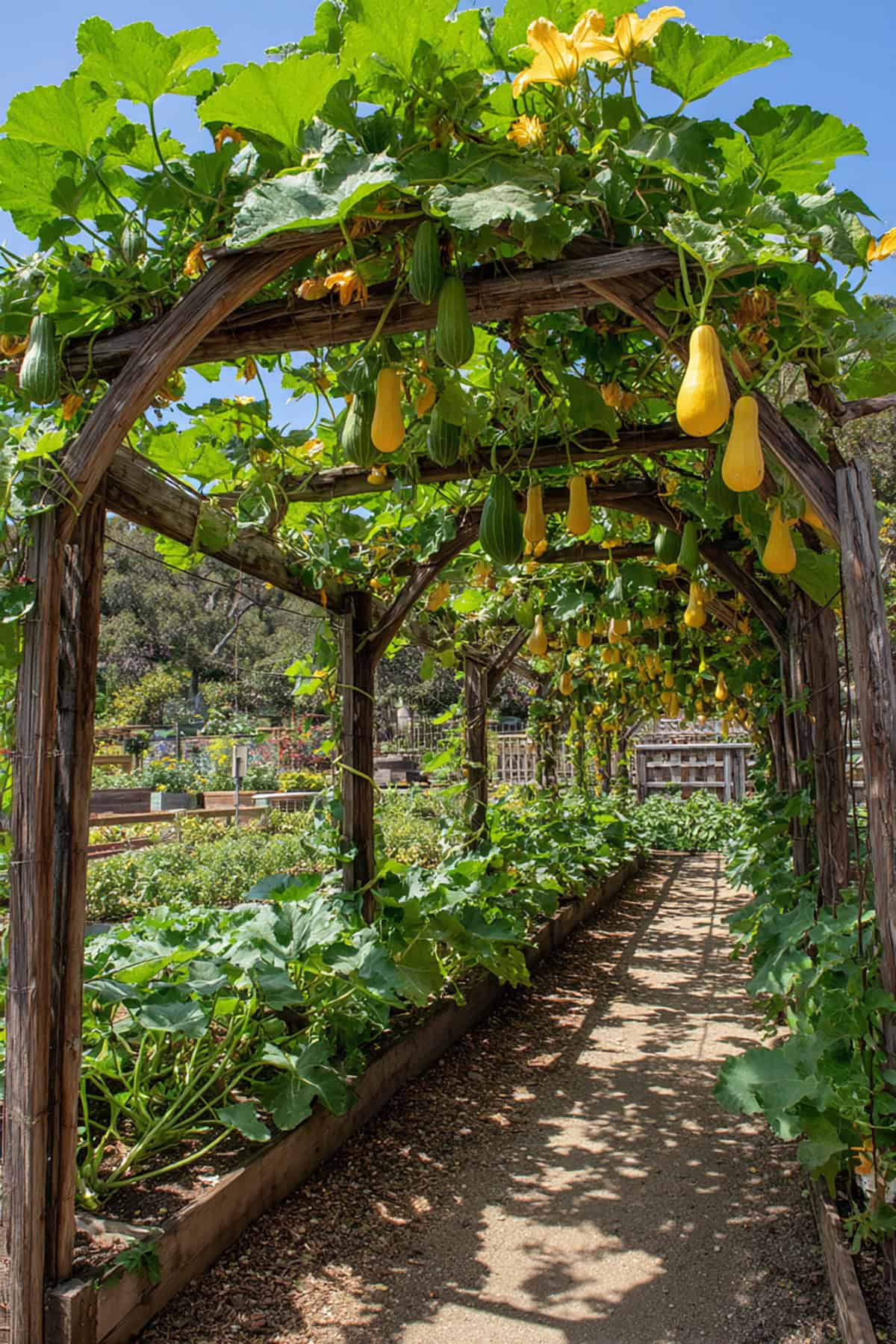
Squash arches make a fence you can walk under. Curve cattle panels into frames and let vines climb up.
Fruit hangs or sits on the supports. Good spacing helps avoid mildew.
They’re great for marking a path, and the panels are reusable year after year.
Cucumber Trellis Fence With Hanging Fruit Rows
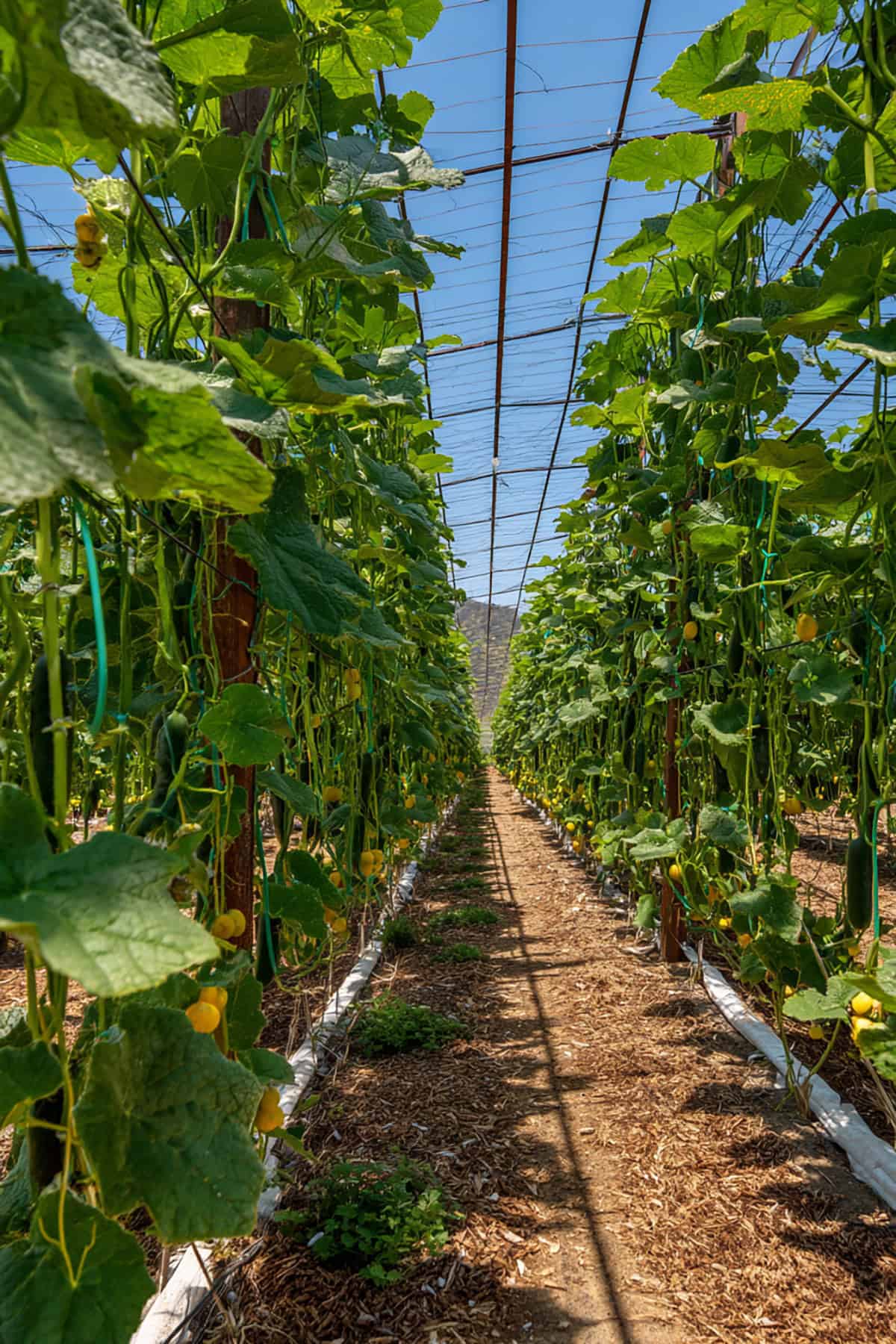
Cucumbers climb vertical trellises well. Tie vines loosely, and you’ll get straight, easy-to-pick fruit.
Good airflow keeps disease down. Pick often for the best yield.
Once frost comes, just pull the vines. This fence is a solid option for small gardens.
Climbing Bean Fence
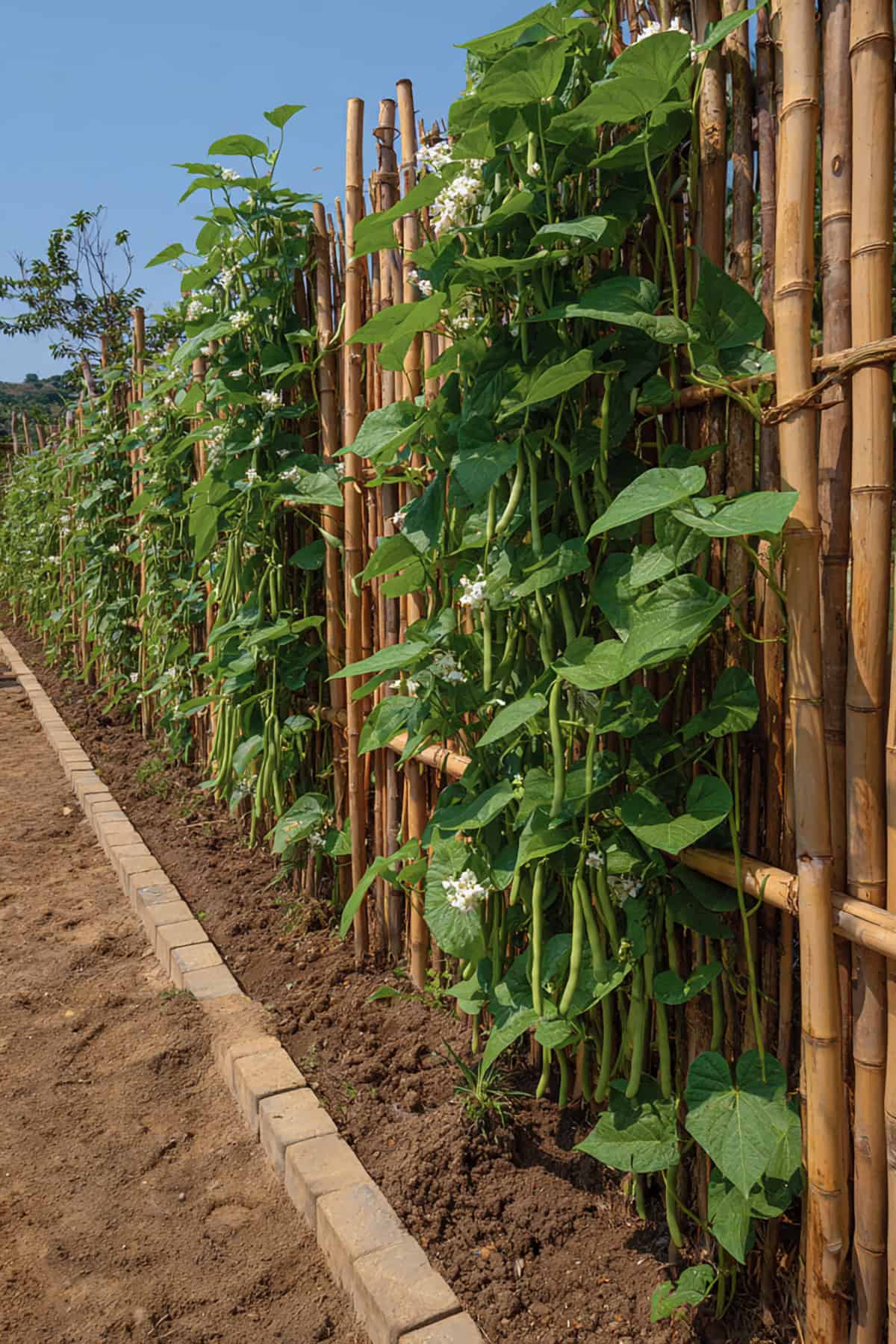
Bamboo A-frames are classic for climbing beans. Lash the poles, repeat along your edge.
Beans fill in both sides quickly. Flowers show up before the pods—easy to reach, easy to harvest.
These frames are light and easy to store. Soil matters for yield, but otherwise, not much fuss.
Citrus Espalier Fence
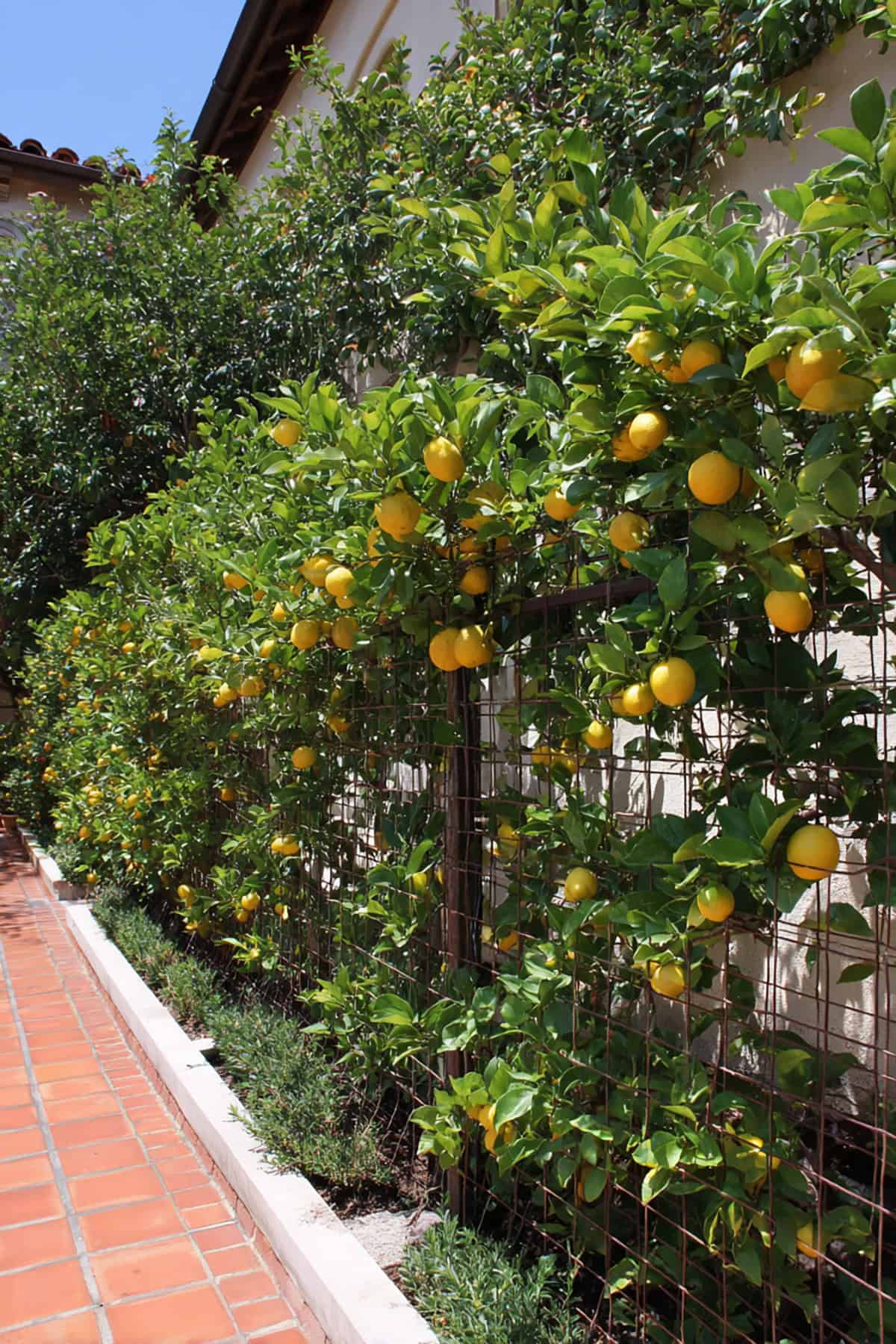
Citrus espalier is best where winters are mild. Train branches along wires for full sun and good fruit.
Keep the growth flat with pruning. In cooler areas, protect from frost. Lemons ripen over months.
This fence stays green year-round, and the glossy leaves look sharp. Fruit’s always close by.
Chayote Vine Fence
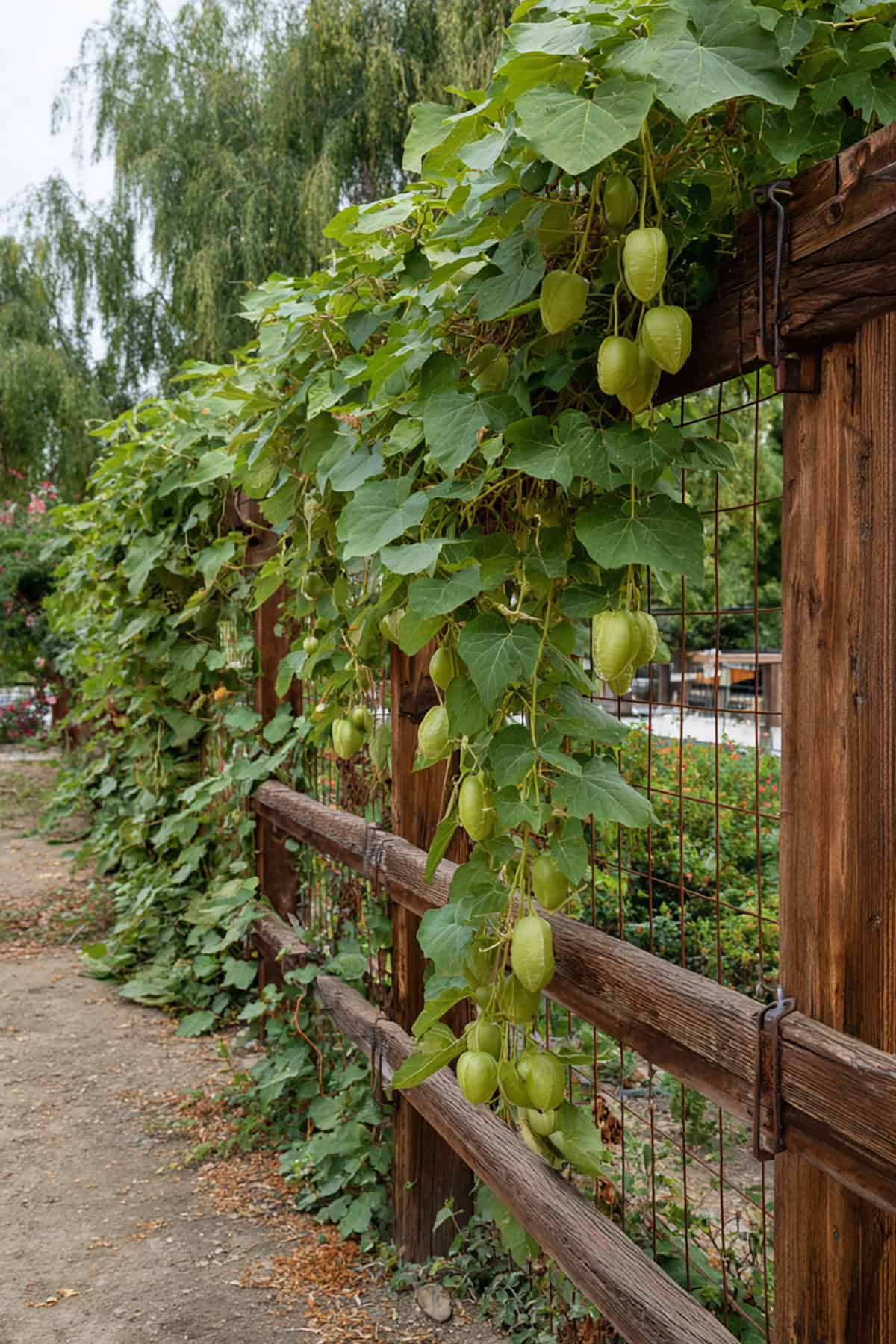
Chayote vines are heavy hitters—cattle panels can handle the load. They take off in heat and cover big spaces fast.
Fruit sets late, and one plant can go a long way. Prune to keep things from getting wild.
Best in warm climates. Anchor panels well, and pick before frost ends the season.
Blueberry Border Fence In Raised Planter Troughs
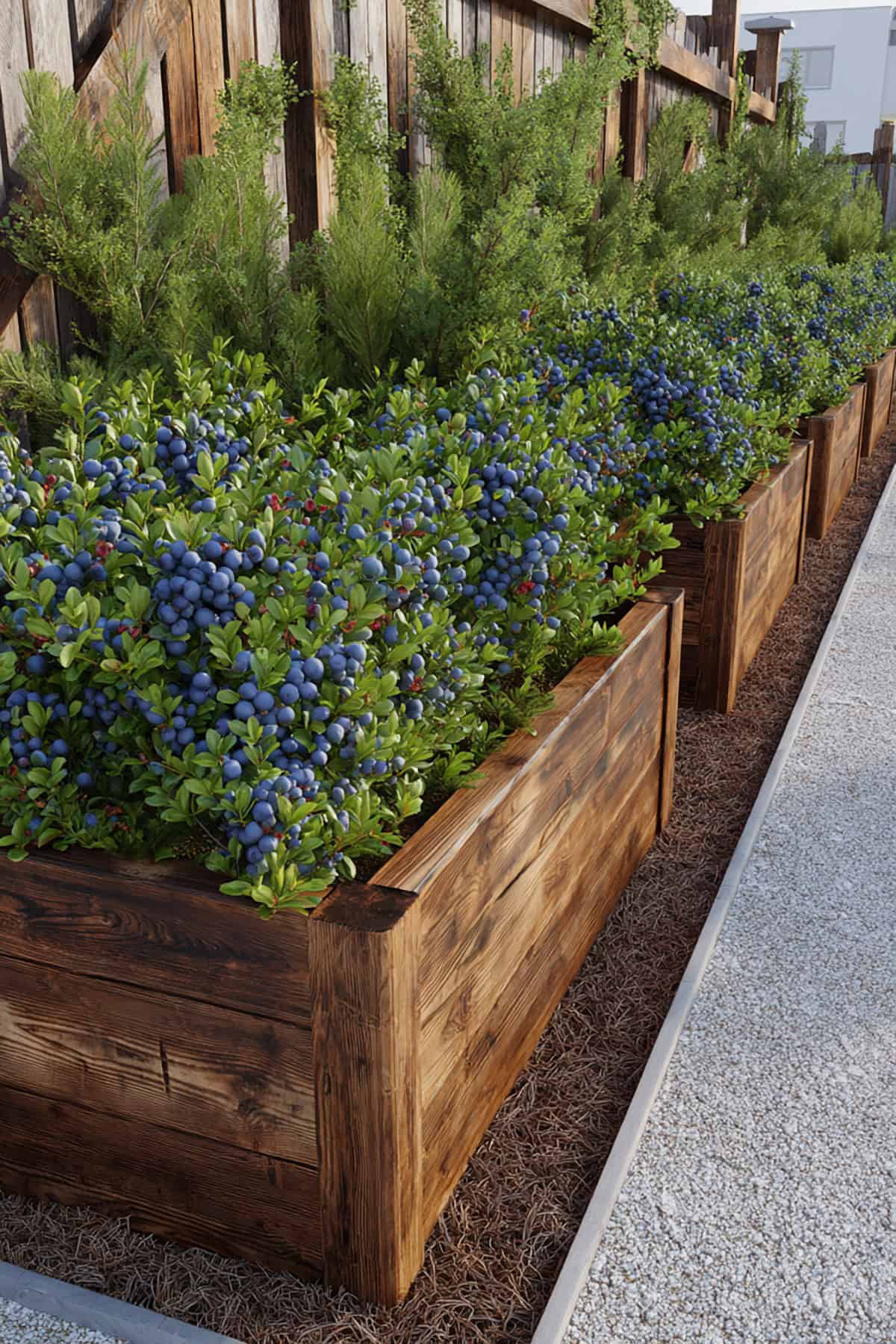
Blueberries want acidic soil, so raised troughs are perfect for controlling conditions. Line them up for a neat, low fence.
Sun helps with yield, mulch keeps roots cool, and pruning keeps them open.
Birds can be relentless—netting helps. Berries ripen in waves, so you’ll be picking over several weeks.
Blackberry Hedge Fence With Arched Training
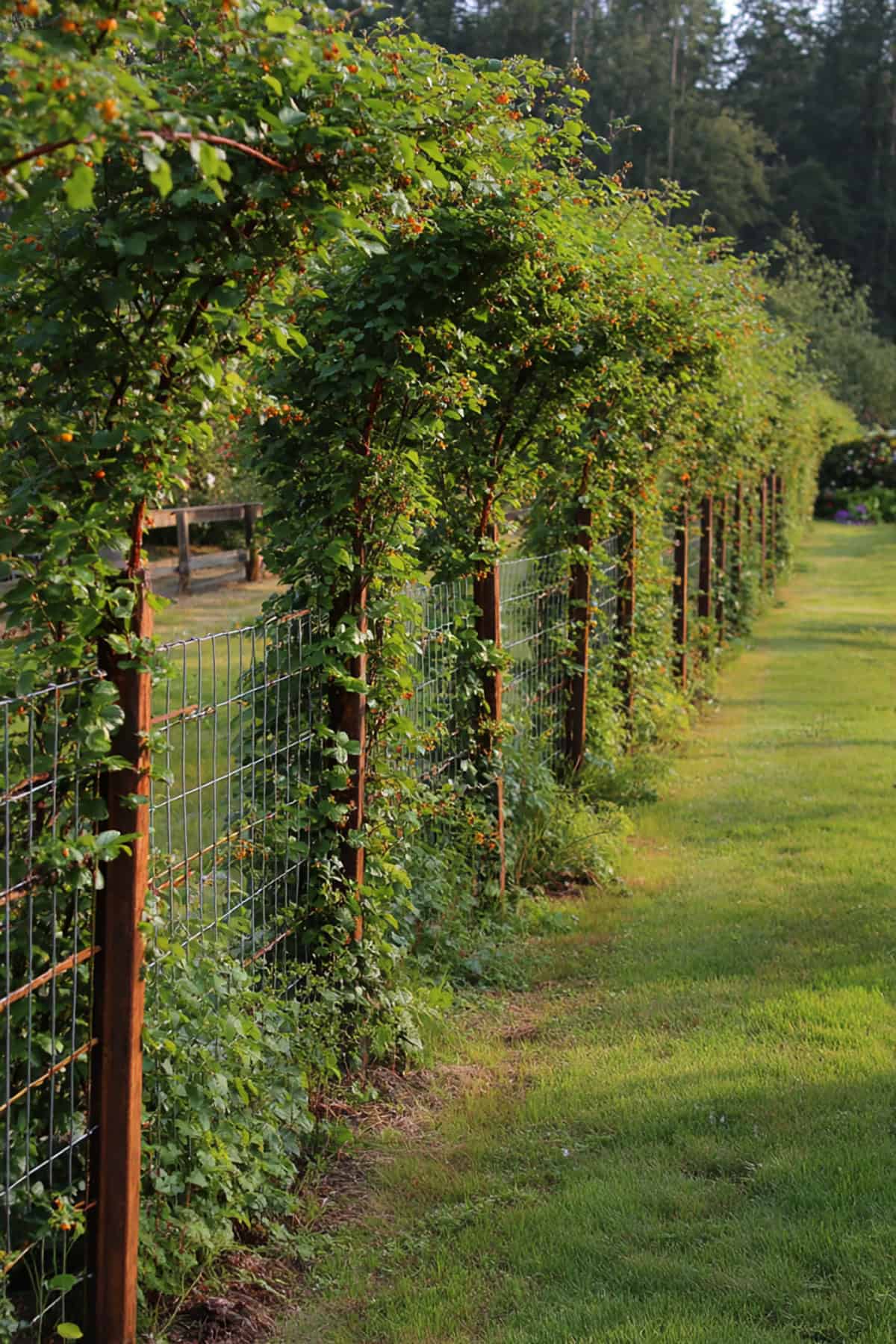
If you’re up for a bit of work, blackberries can make a surprisingly effective hedge. Training the canes in gentle arches along wires keeps things tidy and makes it easier to reach the berries—no more wrestling with a wild, thorny mess.
Once they’re done fruiting, grab some gloves and prune out the old canes. The new ones will take over, but those thorns mean you’ll want to stay alert.
Besides the obvious bonus of fresh berries, a hedge like this gives you some real privacy. Plus, the organized setup means you’re not dealing with a tangled jungle, and the spacing keeps the plants from choking each other out.