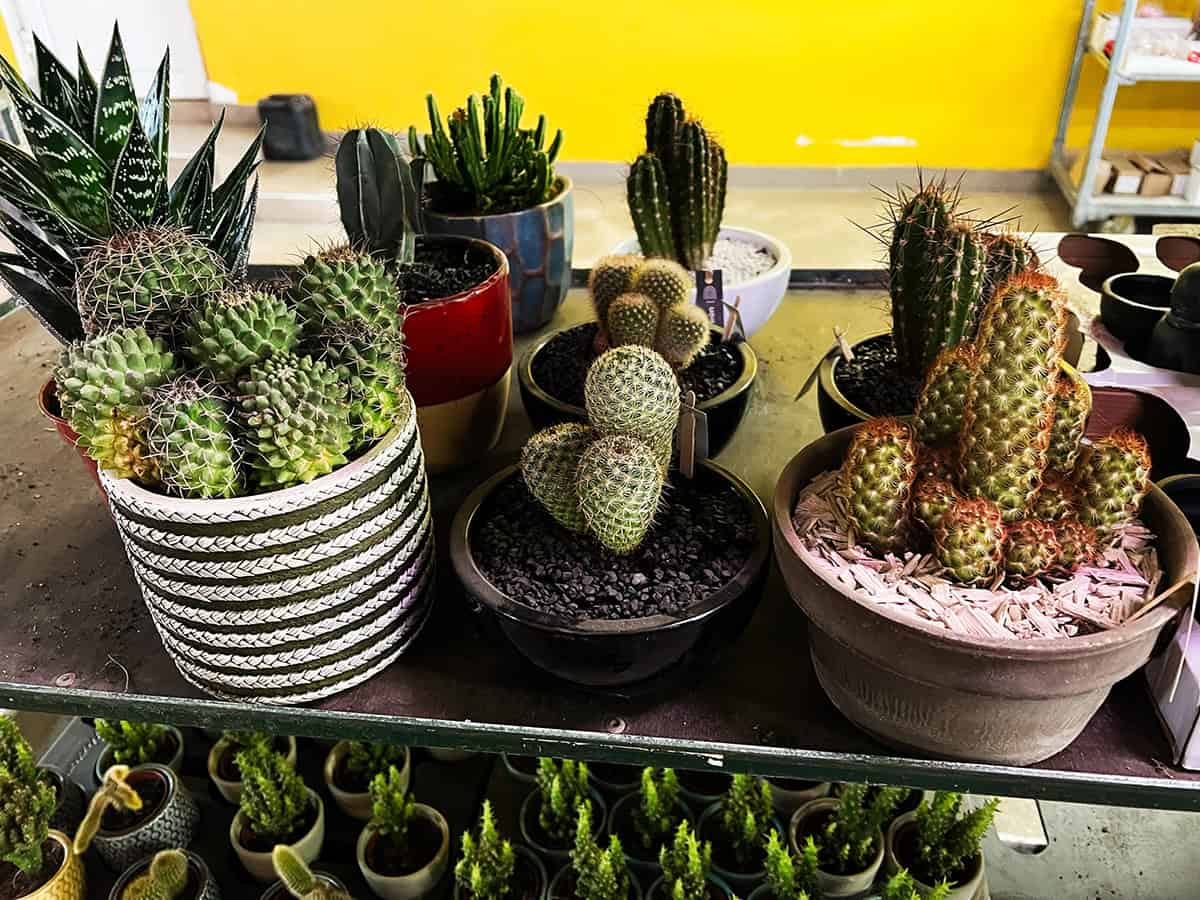
Cacti sit at the top of the low-effort houseplant list for good reason. Dry indoor air is exactly what they want, and a missed watering or three barely registers.
A sunny window is the one requirement most of these 24 share, and several reward a cool, dry winter with flowers in spring.
Table of Contents
- Cactus Plants to Grow Indoors
- Golden Barrel Cactus (Echinocactus grusonii)
- Bunny Ears Cactus (Opuntia microdasys)
- Easter Lily Cactus (Echinopsis oxygona)
- Moon Cactus (Gymnocalycium mihanovichii)
- Star Cactus (Astrophytum asterias)
- Bishop’s Cap Cactus (Astrophytum myriostigma)
- Old Man Cactus (Cephalocereus senilis)
- Old Lady Cactus (Mammillaria hahniana)
- Pincushion Cactus (Mammillaria spp.)
- Powder Puff Cactus (Mammillaria bocasana)
- Fishhook Cactus (Mammillaria spp.)
- Ladyfinger Cactus (Mammillaria elongata)
- Rat Tail Cactus (Disocactus flagelliformis)
- Peanut Cactus (Echinopsis chamaecereus)
- Domino Cactus (Echinopsis subdenudata)
- Fairy Castle Cactus (Acanthocereus tetragonus ‘Fairy Castle’)
- Torch Cactus (Echinopsis / Trichocereus Types)
- Blue Columnar Cactus (Pilosocereus pachycladus)
- Peruvian Apple Cactus (Cereus repandus)
- Night-Blooming Cereus (Selenicereus spp.)
- Christmas Cactus (Schlumbergera spp.)
- Thanksgiving Cactus (Schlumbergera truncata)
- Orchid Cactus (Epiphyllum spp.)
- Ric Rac Cactus (Disocactus anguliger)
Cactus Plants to Grow Indoors
Indoor cacti come in a surprising range of forms. Some fit on a narrow windowsill, others grow into tall columns or trail from a shelf, and several jungle species have flat, leafy stems with no spines at all.
Golden Barrel Cactus (Echinocactus grusonii)
Golden barrel is a spiny green globe with a golden glow. Indoors, young plants are the norm, since mature barrels grow huge outdoors. It needs plenty of direct sun to hold its round shape.
Let the mix dry out completely before watering, since the roots rot quickly in wet soil, and water even less in winter. Growth is slow, and the plant grows happily in the same pot for years. Rotate it regularly to prevent leaning toward the window.
Bunny Ears Cactus (Opuntia microdasys)
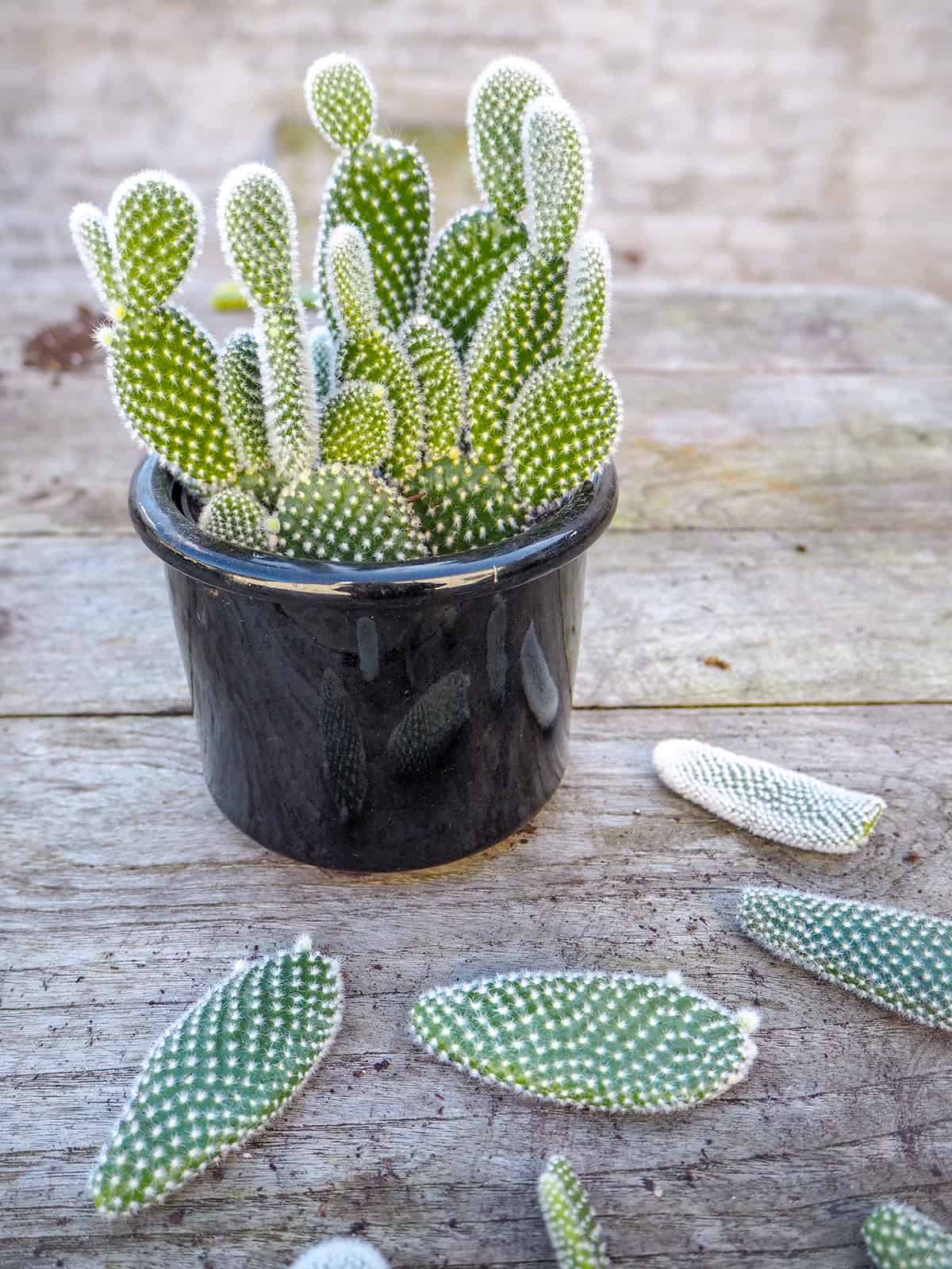
Flat, paddle-shaped pads covered in tiny golden bristles are the charm of bunny ears, though those bristles, called glochids, lodge in skin at the slightest touch. Handle it with thick gloves or folded newspaper.
Place it in a bright, sunny spot for plump pads. Water only when the mix is dry, since excess water causes the pads to droop and rot. It likes warmth and dislikes cold drafts.
The plant branches as it grows, and damaged pads are easy to remove for a tidy shape.
Easter Lily Cactus (Echinopsis oxygona)
Easter lily cactus is small and round, with huge, fragrant flowers that open at night and fade by the next day. Bright light is essential for buds.
Water when the mix is dry in spring and summer, and cut back sharply in winter. A cool, dry winter rest triggers flowering. Use a gritty mix so the roots never sit in water.
Moon Cactus (Gymnocalycium mihanovichii)
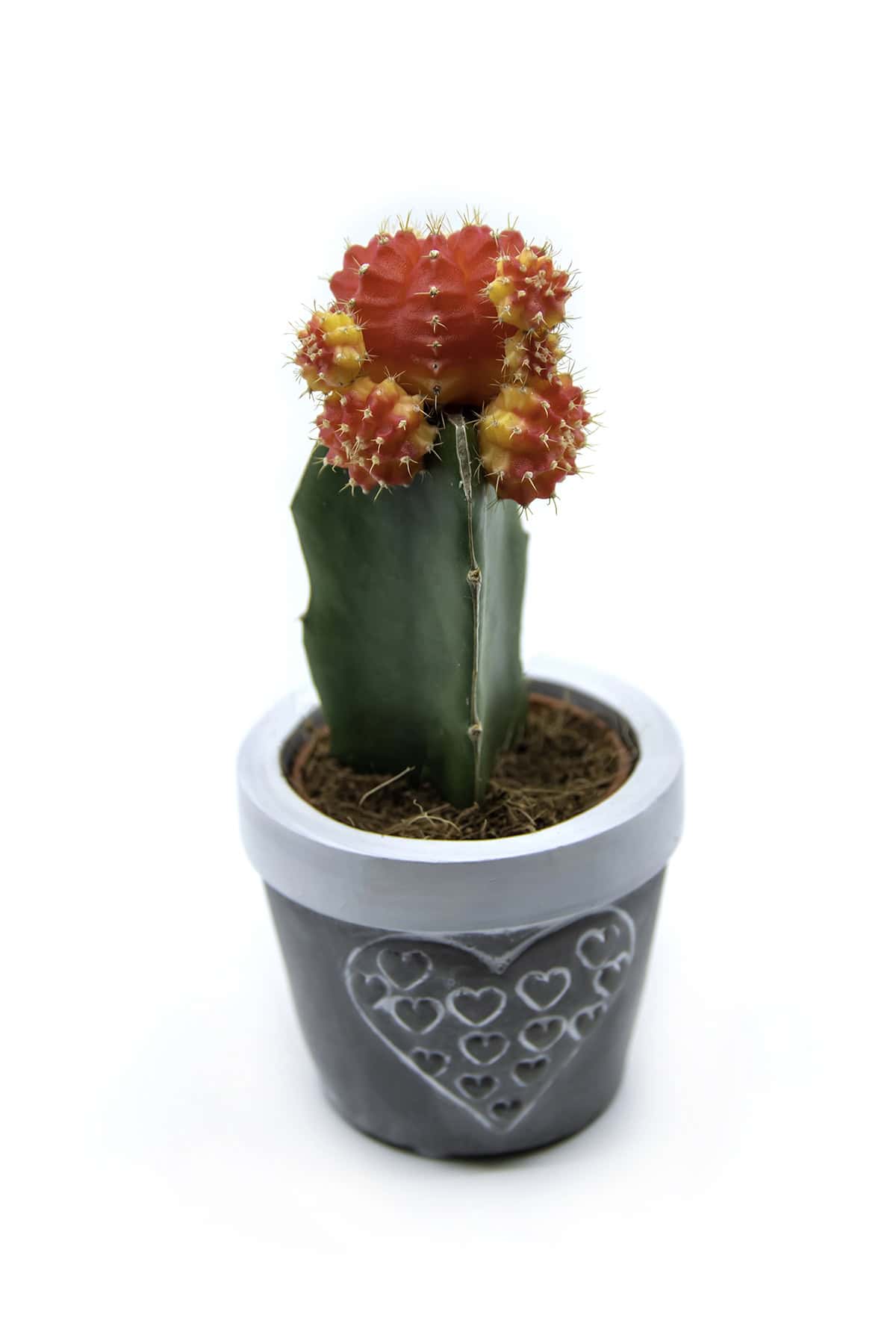
Moon cactus has a brightly colored top grafted onto a green rootstock. The colorful top lacks chlorophyll and survives only on its green host. Bright, indirect light with gentle morning sun is best, since strong afternoon sun scorches it.
Water only when the mix is completely dry. The rootstock powers the whole plant, so rot at the base is fatal. Moon cacti live for a few years with careful care, and experienced growers regraft the top onto a fresh rootstock to extend its life.
Star Cactus (Astrophytum asterias)
Star cactus has no spines, just a flat, speckled body divided into star-shaped segments. It is ideal for shallow pots. It needs bright light, with some protection from harsh midday sun.
Let the mix dry between waterings, and water very little in winter.
Growth is slow, but patient growers are rewarded with pale yellow flowers with red centers.
Bishop’s Cap Cactus (Astrophytum myriostigma)
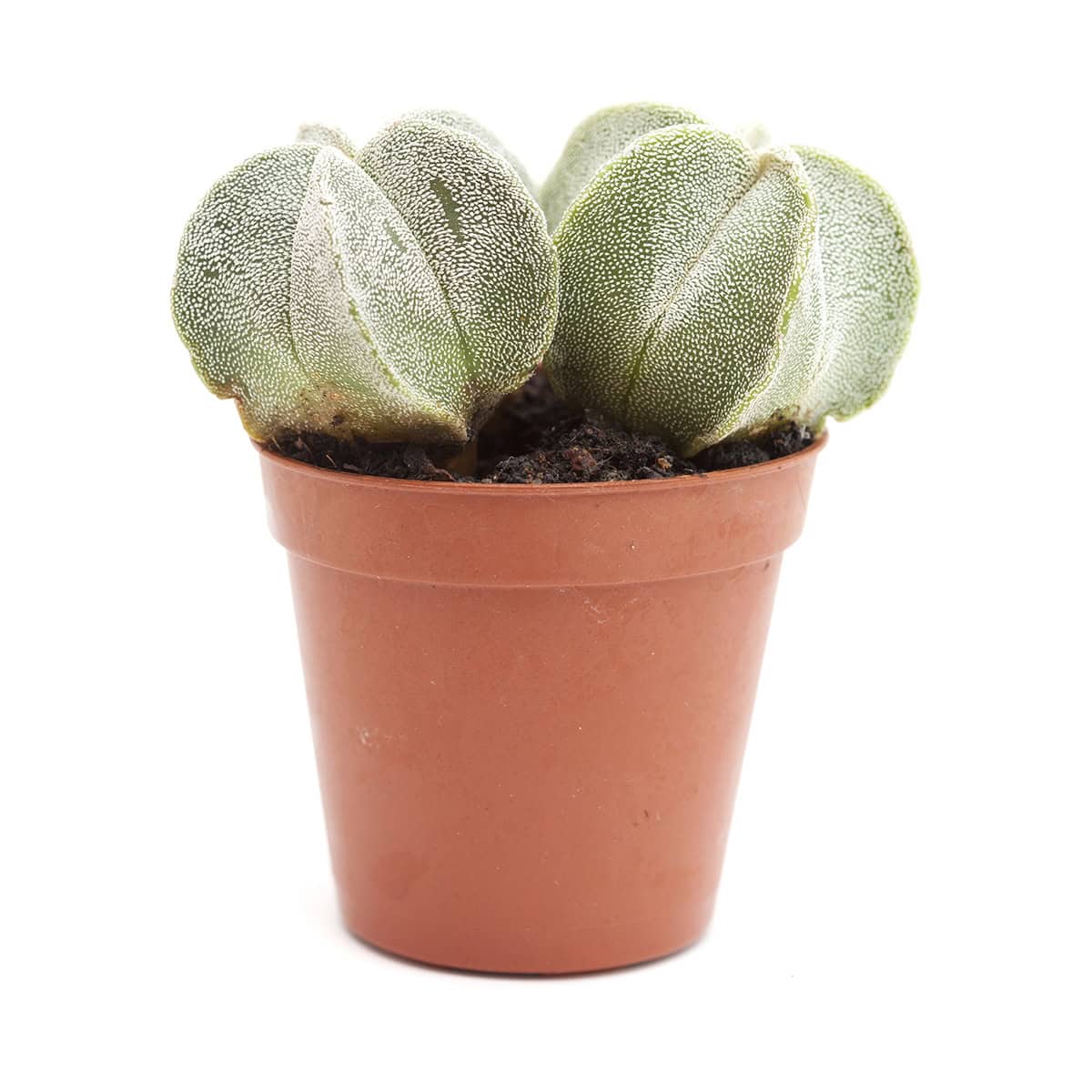
Bishop’s cap looks almost like a geometric sculpture, with deep ribs and white flecks. A bright window produces sturdy growth.
Water sparingly and let the mix dry fully. A cool winter rest is beneficial. Its upright form stands out in a simple, modern setting.
Old Man Cactus (Cephalocereus senilis)
Old man cactus forms a column covered in long white hair, which shields it from sunburn in the wild. Indoors it prefers good airflow and low humidity, and it needs a very bright spot to avoid thin, sparse growth.
Water at the base and avoid wetting the hair. Let the mix dry completely between waterings. Dust collects in the hair, and a soft brush or gentle breeze refreshes its appearance.
Old Lady Cactus (Mammillaria hahniana)
Old lady cactus has dense white spines and hairs that look soft, though the hooked spines beneath are sharp. A ring of pink or purple flowers forms around the crown in spring.
Plenty of light is needed for flowering. Let the mix dry between waterings, since excess water rots the roots, and provide a dry winter rest.
Its small size fits tight spaces with good light.
Pincushion Cactus (Mammillaria spp.)
Pincushion cacti are small, round and neatly covered in spines. Many species flower easily indoors, and a sunny window is enough in most homes.
Water during the growing season, and let the mix dry before watering again. A cool, dry winter rest maintains a compact shape and encourages flowering.
Pincushions group well together in a shallow bowl for a small cactus garden.
Powder Puff Cactus (Mammillaria bocasana)
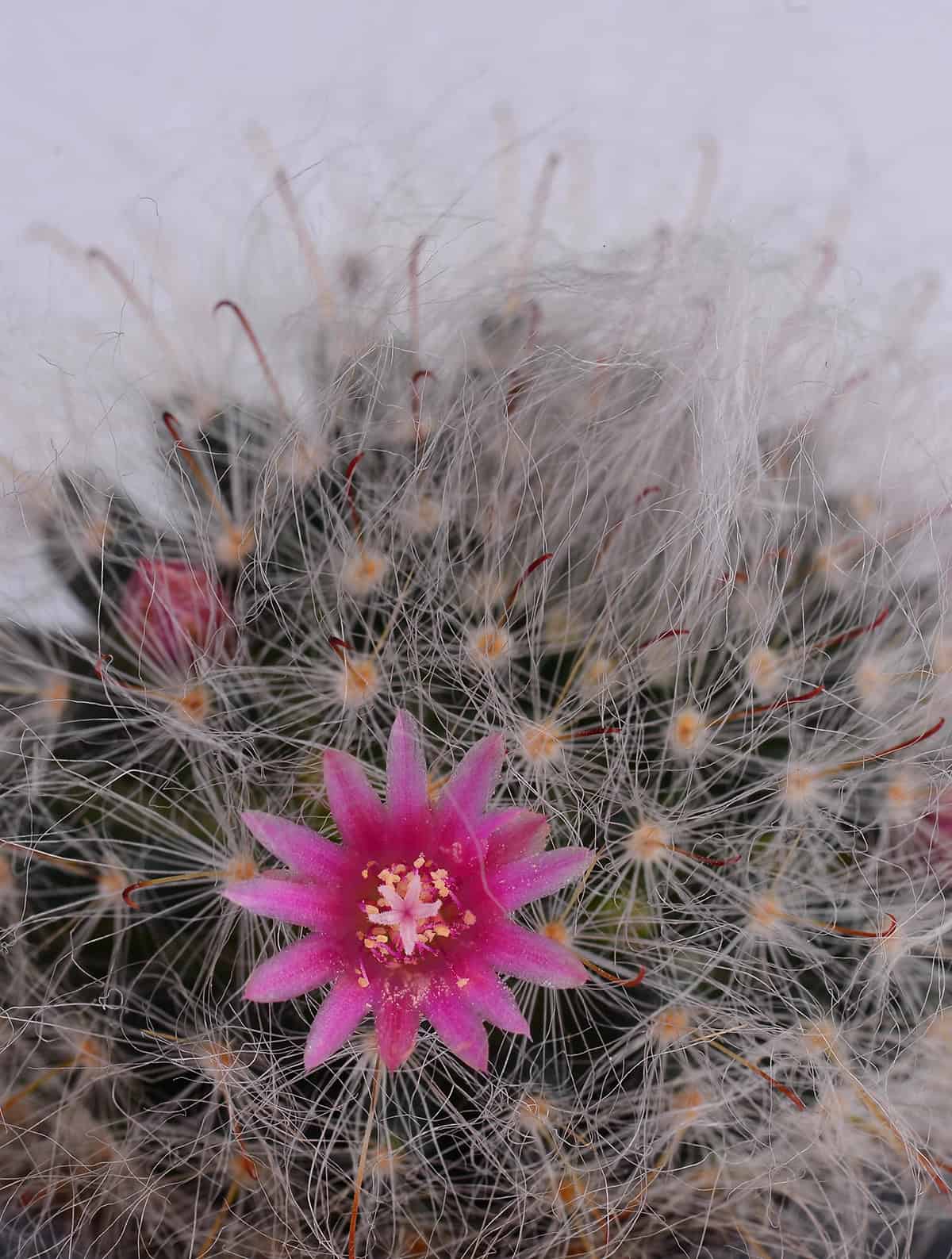
Powder puff cactus has soft, white, hairlike spines that look dusted with snow. Small pink or cream flowers appear in spring. It prefers bright, gentle light.
Water only after the mix is completely dry. High humidity is a problem, and good airflow maintains a healthy plant.
Compact clumps form over time, and a shallow pot is the best fit.
Fishhook Cactus (Mammillaria spp.)
Fishhook cacti have curved, hooked central spines that add character. These compact, rounded plants need lots of light.
Fast-draining mix is essential. Let the mix dry completely before watering, and provide a dry winter rest.
Flowers appear in a ring near the top of the plant, a pleasant surprise each spring.
Ladyfinger Cactus (Mammillaria elongata)
Ladyfinger cactus grows clusters of long, slender stems covered in golden spines that stand upright or sprawl with age. Strong light prevents leggy growth.
Water only when the mix is dry, since excess water rots the stems. It likes warmth, and new plants root easily from detached stems.
Rat Tail Cactus (Disocactus flagelliformis)
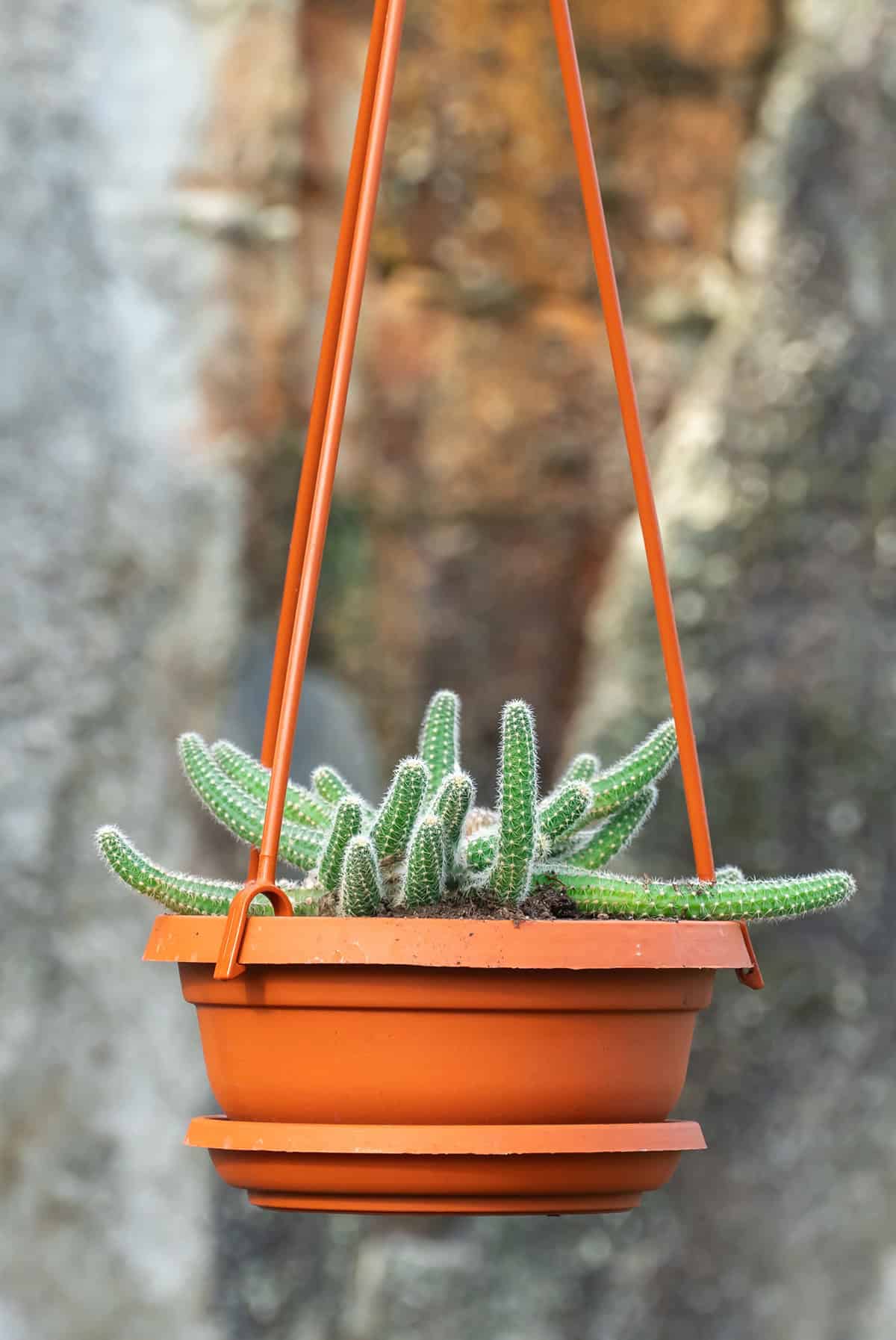
Rat tail cactus produces long, trailing stems that look striking in a hanging basket. Bright light produces dense growth and flowers, with protection from harsh midday sun.
It needs a little more water than desert cacti during the growing season, though the mix should never be soggy. Reduce watering in winter.
Bright pink flowers appear along the stems in spring. It prefers steady temperatures and good airflow.
Peanut Cactus (Echinopsis chamaecereus)
Peanut cactus forms short, finger-like stems that spread quickly into a mat. Bright light, ideally with morning sun, produces compact growth and bright orange-red flowers.
Water moderately, let the mix dry between drinks and provide a cool winter rest for flowers.
It spreads quickly in a shallow pot and makes a low, colorful accent.
Domino Cactus (Echinopsis subdenudata)
Domino cactus is round and nearly spineless, with a clean, minimal look. Large white flowers open at night. Plenty of light is needed to set buds.
Water only after the mix is dry, and provide a cool winter rest to trigger blooms. Avoid overfeeding.
Its small, neat form is perfect for a windowsill.
Fairy Castle Cactus (Acanthocereus tetragonus ‘Fairy Castle’)
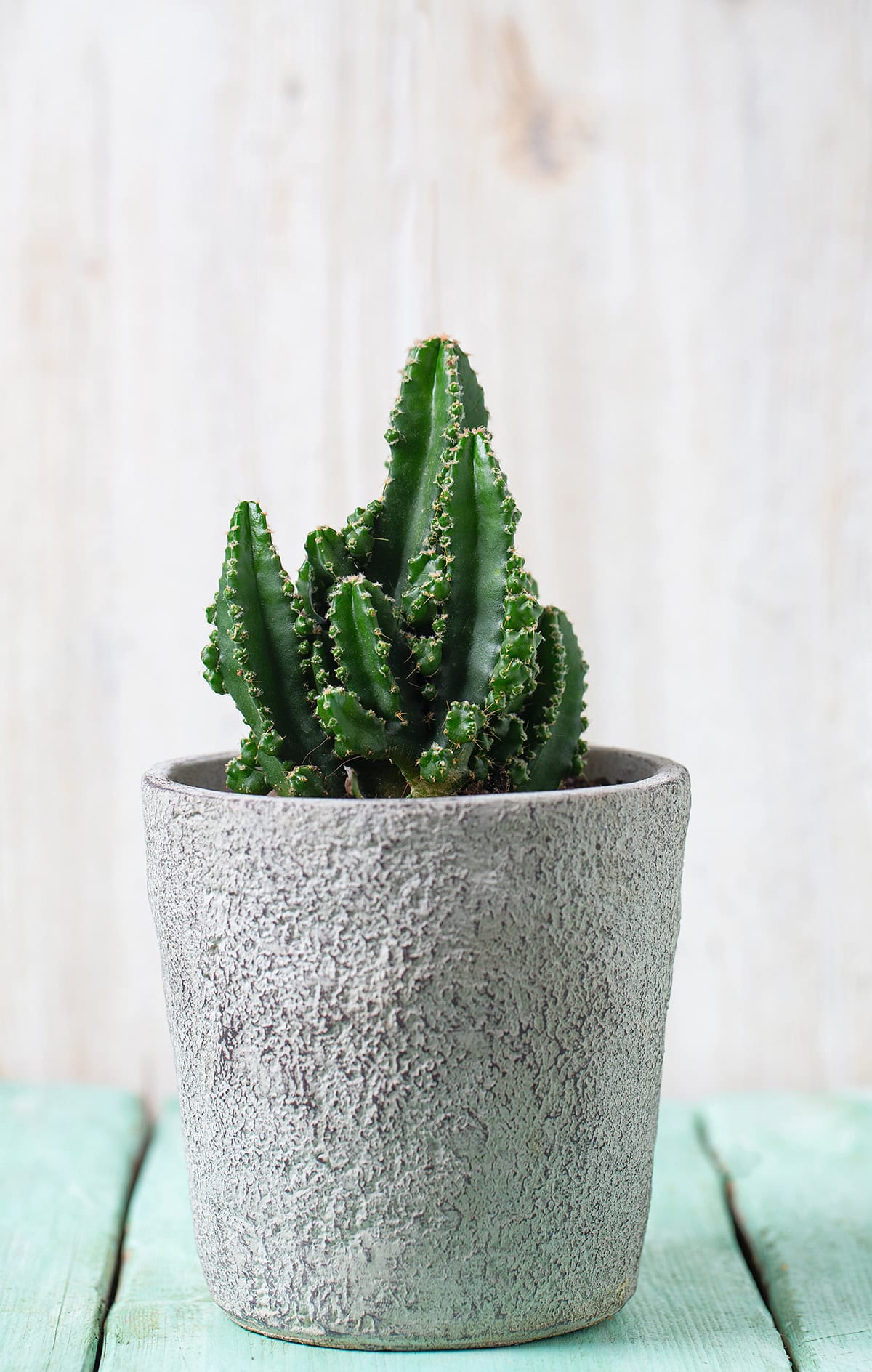
Fairy castle cactus has many upright stems that stack up like the turrets of a tiny castle. It grows slowly indoors and likes bright light with some direct sun.
Water when the mix is dry, since overwatering is the quickest way to lose it. Use a heavy pot, since the plant grows top-heavy.
It rarely flowers indoors, though its unusual shape is reason enough to grow it.
Torch Cactus (Echinopsis / Trichocereus Types)
Torch cacti are columnar, with the potential for huge, fragrant flowers under the right conditions. They need a very sunny spot.
Water more in summer, though the mix should never sit wet, and provide a cool, dry winter rest for better blooms.
These cacti grow tall, so choose a sturdy, heavy pot.
Blue Columnar Cactus (Pilosocereus pachycladus)
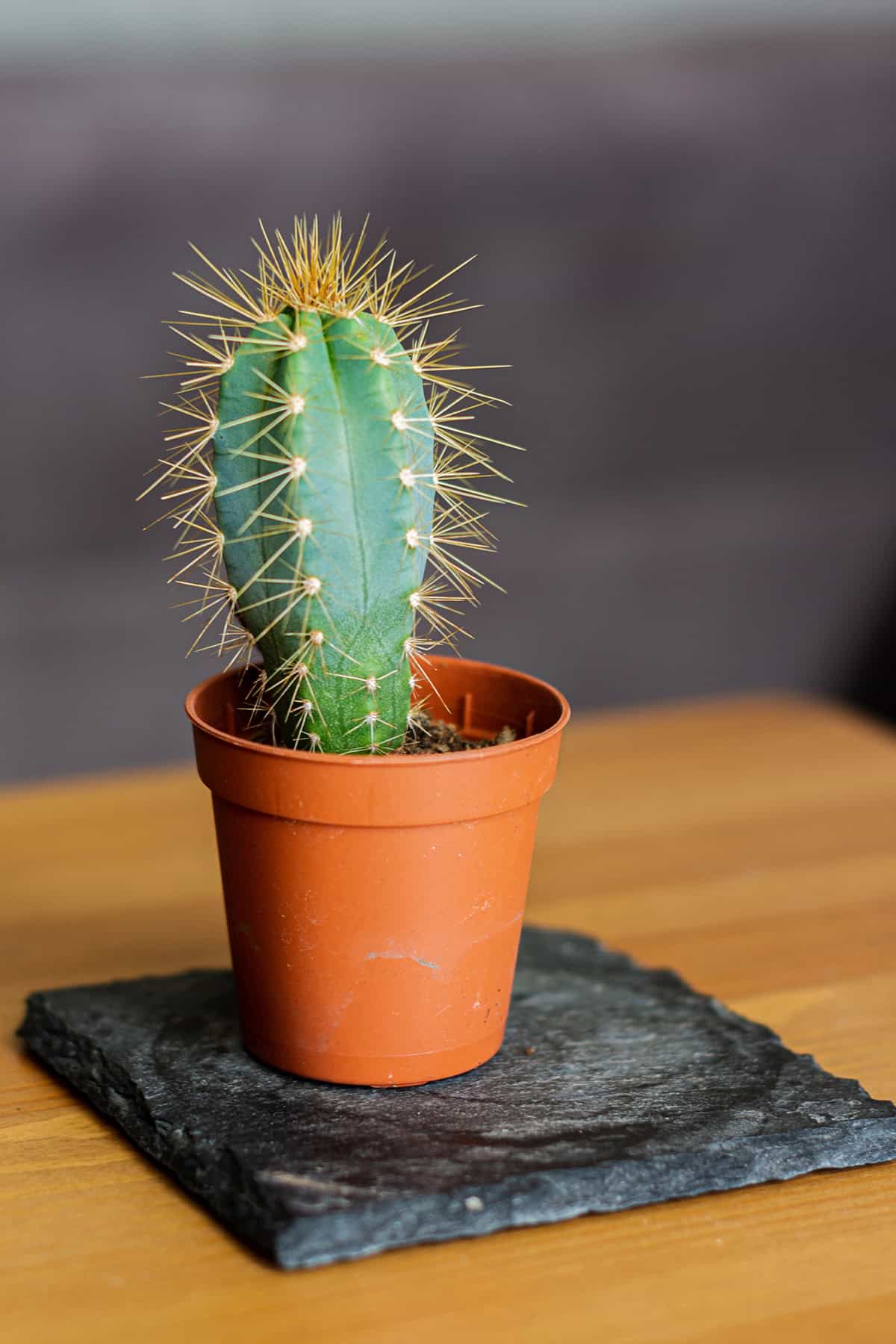
Blue columnar cactus is prized for its powdery blue-green skin. It needs strong light to hold its blue color, and it dislikes cold drafts.
Water lightly, use a well-draining mix and provide steady warmth. Its upright form makes a bold statement beside a large window.
Peruvian Apple Cactus (Cereus repandus)
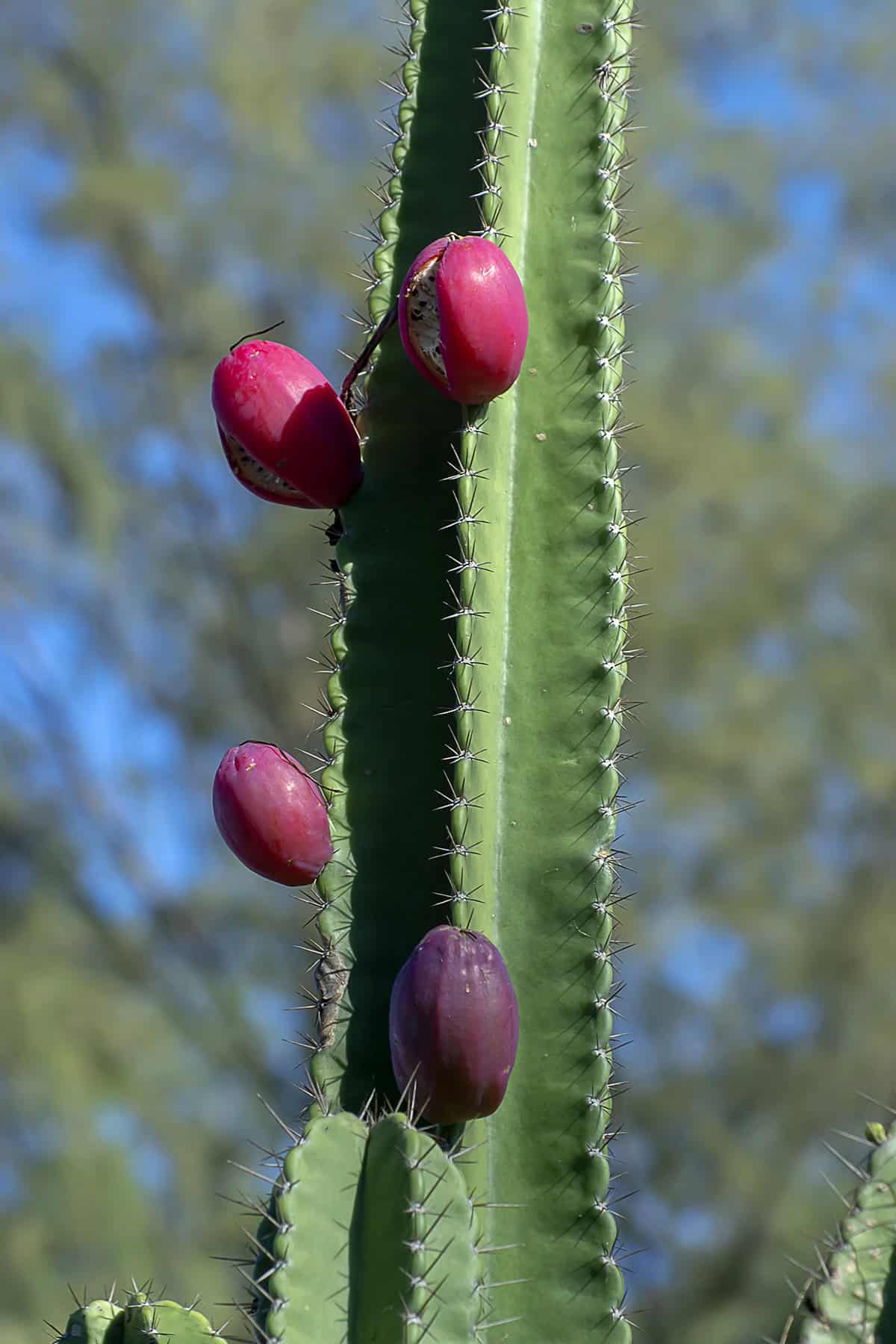
Peruvian apple cactus forms tall, ribbed blue-green columns. It grows quickly in good sun though growth indoors is manageable, and bright, direct light maintains its shape.
Water only when the mix is dry, since excess water causes floppy growth, and provide a dry winter rest.
It flowers and fruits only with excellent care, and most growers enjoy it for its sculptural form.
Night-Blooming Cereus (Selenicereus spp.)
Night-blooming cereus has thin, climbing stems that scramble up a trellis or spill from a hanging pot. Bright, indirect light is best.
Water more generously during active growth, and let the mix dry slightly between waterings. Reduce watering in winter.
Huge, fragrant white flowers open for a single night. Steady conditions improve the chance of blooms.
Christmas Cactus (Schlumbergera spp.)
Christmas cactus has flat, segmented stems with rounded edges, very different from desert cacti. It comes from Brazilian rainforests and likes bright, indirect light and cool temperatures, since strong direct sun stresses it.
It needs more water than most cacti, though soggy mix causes rot. Moderate humidity helps.
Cool nights and long, uninterrupted darkness in fall set flower buds, and the blooms open in winter.
Thanksgiving Cactus (Schlumbergera truncata)
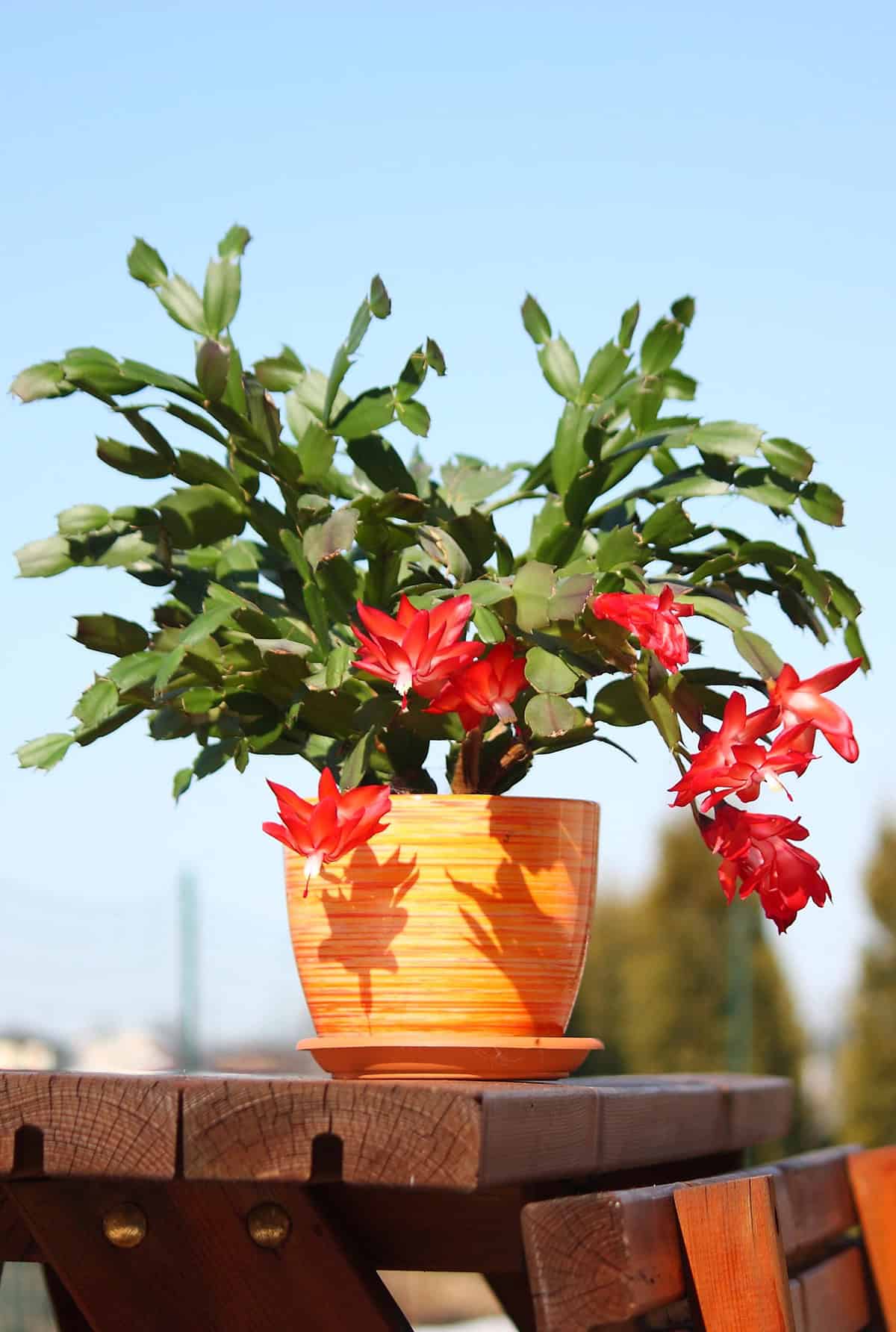
Thanksgiving cactus has pointed, claw-like teeth on its stem segments, which set it apart from Christmas cactus. It needs bright, indirect light and dislikes hot, dry air.
Water when the top of the mix dries, and avoid letting it dry out completely for long. Cool nights in fall encourage buds.
It flowers in November, a few weeks before Christmas cactus. Avoid moving it once buds form, since a change in conditions causes bud drop.
Orchid Cactus (Epiphyllum spp.)
Orchid cactus has flat, arching stems that look almost like leaves. It prefers bright, filtered light, since direct sun scorches the stems.
Water more frequently than desert cacti, though drainage must be excellent.
Large, fragrant flowers reward good care. It looks best in a hanging pot, where the stems spill over the sides.
Ric Rac Cactus (Disocactus anguliger)
The zigzag stems of ric rac cactus are its signature feature. Bright, indirect light produces the best growth, while direct sun scorches it.
Water moderately during the growing season and let the top of the mix dry between waterings. Reduce watering in winter.
Fragrant white flowers open at night. It grows well indoors, especially with gentle air movement and no stuffy corners.