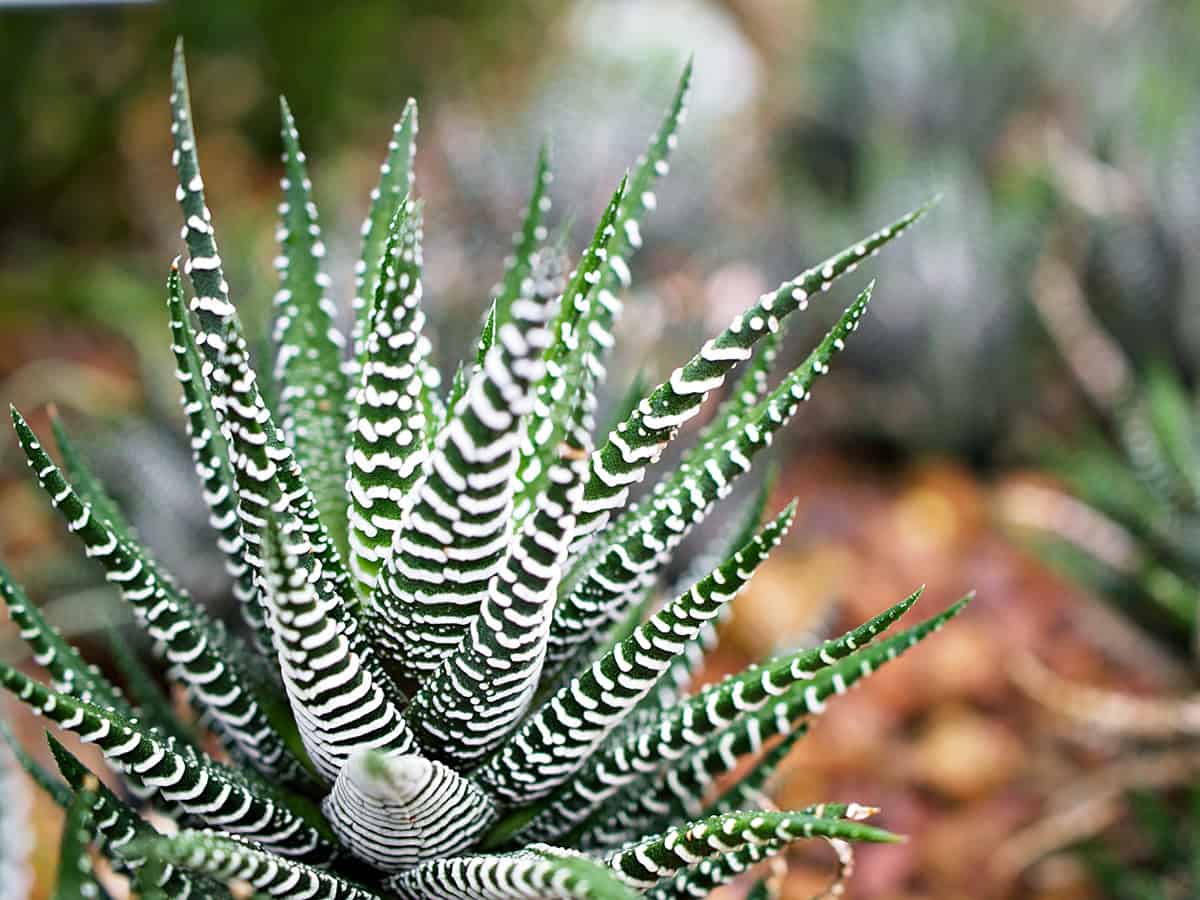
Haworthias are small South African succulents that fit on the narrowest windowsill, with rosettes of firm leaves striped, dotted or set with clear little windows. Most top out under 6 inches tall.
They grow happily in bright, indirect light and need water only every few weeks, which makes them a good match for busy households and new plant owners. Too much water is the one mistake they rarely forgive.
Six popular species close the guide, and the white-striped zebra plant leads that group.
| Common Name | Haworthia |
| Botanical Name | Haworthia spp. and Haworthiopsis spp. |
| Family | Asphodelaceae |
| History & Origin | Native to Southern Africa |
| Plant Type | Succulent |
| Mature Size | 3-5 inches tall, 4-6 inches wide |
| Sun Exposure | Bright, indirect light |
| Soil Type | Well-draining, cactus or succulent mix |
| Soil pH | 6.6-7.5 |
| Temperature | 65-80°F |
| Watering | Water every 2-3 weeks, allow soil to dry |
| Fertilizing | Light feeding during growing season, diluted fertilizer |
| Bloom Time | Spring to early summer |
| Flower Color | White with green or pink veins |
| Hardiness Zone | 9-11 USDA |
| Toxicity | Non-toxic to pets and humans |
| Common Problems | Overwatering, root rot, pests like mealybugs |
Table of Contents
Light
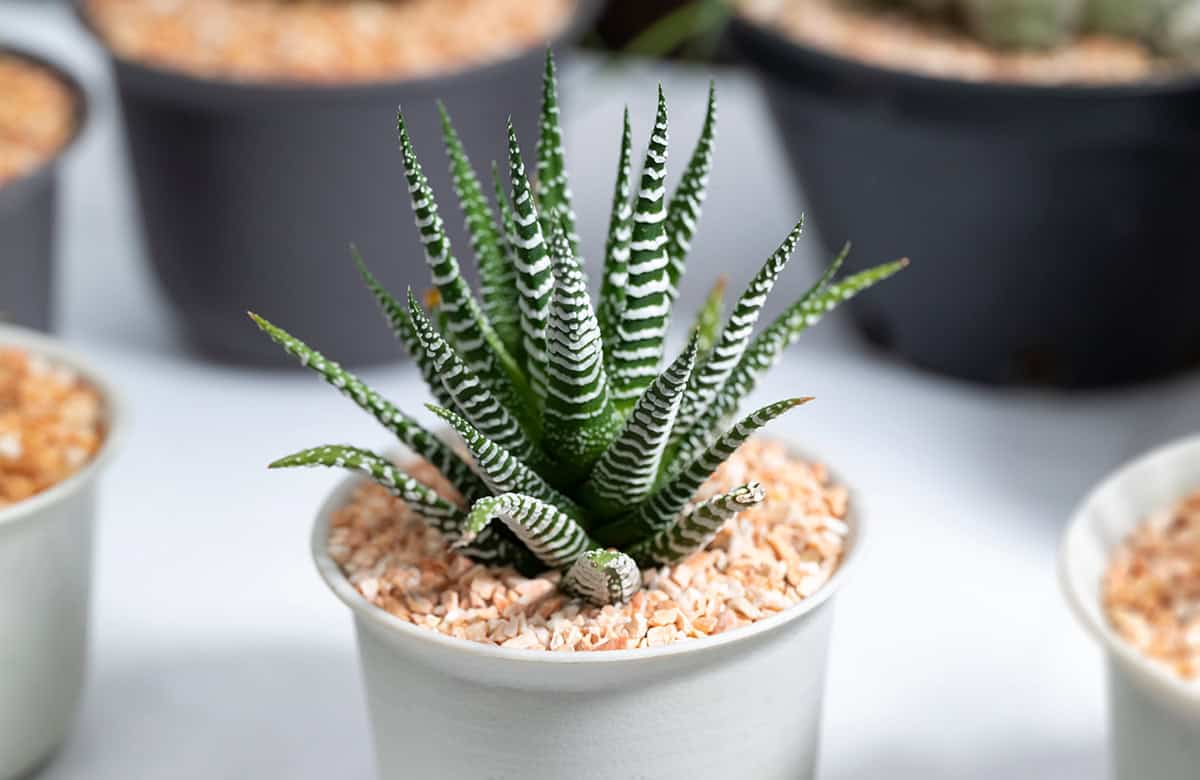
Haworthias grow best in bright, indirect light. Hot, direct sun scorches the leaves and leaves reddish brown or bleached patches. Indoors, an east-facing window or a spot near a south- or west-facing window with filtered light is a good choice.
These succulents adapt to lower light better than most, though growth slows and the rosettes loosen and lose some color. Bright, indirect light produces the best leaf color and compact growth.
Outdoors, choose a spot with morning sun and afternoon shade, or dappled light under taller plants. Shade cloth protects them from harsh midday sun.
LED grow lights help indoor haworthias through short winter days. Hang them about 6 to 12 inches above the plants for 12 to 14 hours a day. LED grow lights are a popular choice for their efficiency and low heat.
For a move to a brighter spot, or outdoors for the summer, make the change gradually over a week or two to prevent sunburn.
Soil
Haworthias need gritty, fast-draining soil that dries out quickly. Soil that holds moisture leads to root rot.
A commercial cactus or succulent mix is a good base, since it drains quickly.
For a homemade blend, mix equal parts potting soil, coarse sand and perlite or pumice. This mix drains well and lets air reach the roots.
Avoid heavy soils, which hold water and rot the roots.
Always use a pot with drainage holes so water flows out freely and the roots never sit in water.
Watering
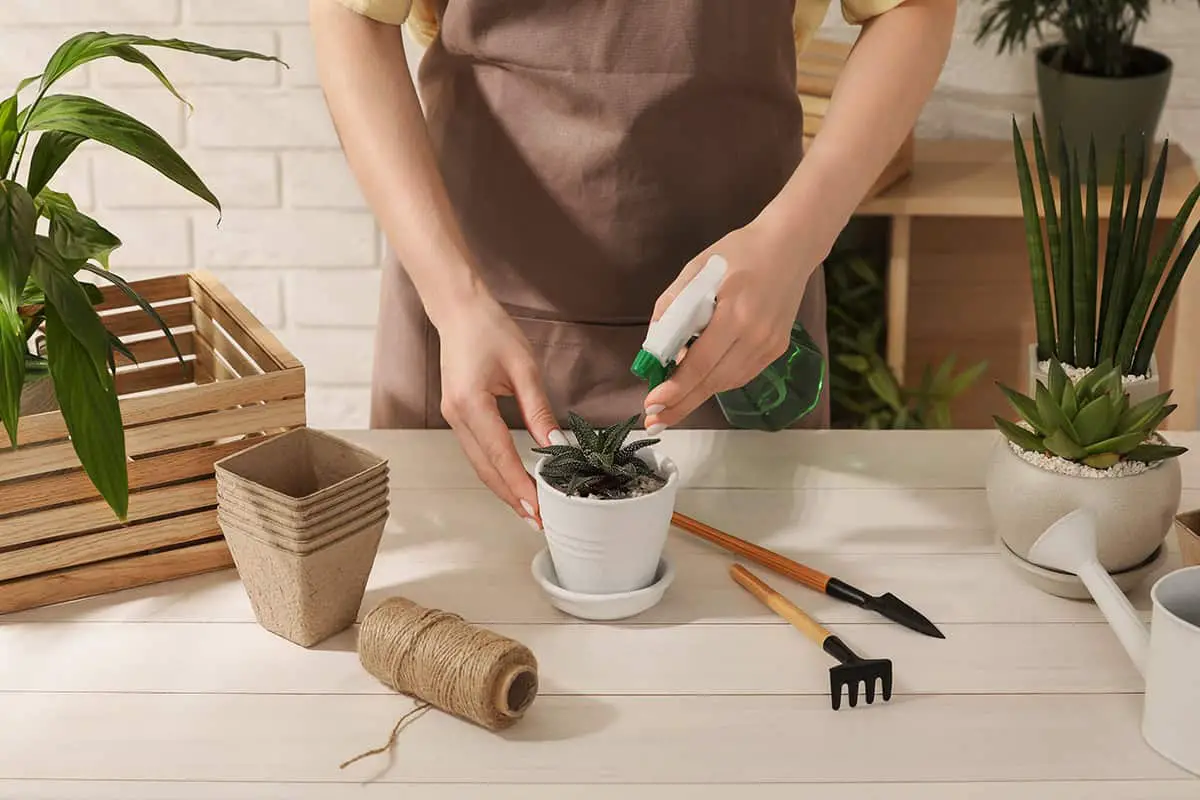
Haworthias store water in their thick leaves and tolerate dry spells. Water deeply but infrequently, and let the soil dry out completely between waterings. Overwatering leads to root rot.
During the main growing seasons of spring and fall, water about every two to three weeks. Haworthias slow down in the heat of midsummer and in winter, so water about once a month then.
A gritty cactus mix with extra perlite helps excess water drain quickly.
Use pots with drainage holes and empty the saucer after watering.
Water in the morning so excess moisture evaporates during the day, which lowers the risk of fungal problems.
Water the soil around the base of the plant and avoid pouring water into the rosette, where it collects and causes rot. A narrow-spouted watering pot makes this easy.
Rainwater is a good choice. Tap water left out overnight to release chlorine is fine too.
Haworthias handle underwatering far better than overwatering. When in doubt, wait a few more days, and check the soil before each watering.
Temperature and Humidity
Haworthias grow best between 65 and 80°F, the range of most homes. They tolerate brief dips to about 40°F in dry soil, but frost kills them.
They grow best at steady temperatures. Place the plants away from cold drafts and heating vents.
Haworthias need no extra humidity. Average indoor air is fine, and no humidifier is needed.
Bright, indirect light from an east or west window rounds out their needs, and a couple of hours of gentle morning sun is fine.
In short, warm rooms, steady temperatures and ordinary dry indoor air are all they need. For more details on their care, visit Penn State Extension’s guide.
Allow the soil to dry out between waterings, as it does in their dry native habitat.
Fertilizer
Haworthias are light feeders and need little fertilizer.
Use a balanced liquid fertilizer or a cactus fertilizer diluted to one-quarter or half strength. Apply it once a month during the spring and fall growing seasons.
Skip feeding during summer heat and winter, when growth slows.
A balanced formula with nitrogen, phosphorus and potassium covers their needs.
Haworthias prefer slightly acidic to neutral soil.
Overfeeding produces soft, stretched growth and salt buildup. Follow the dosage on the package and err on the weaker side.
Water the plant a day before feeding to protect the roots from fertilizer burn.
Propagation
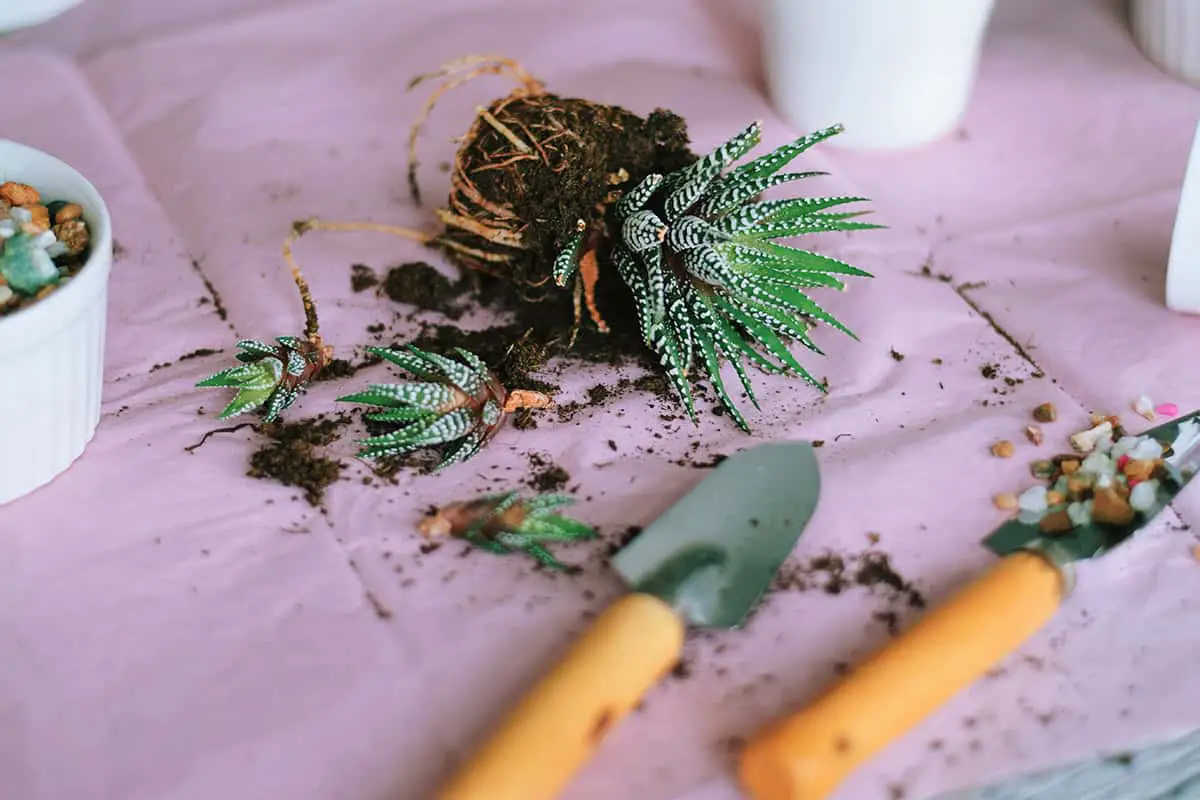
Haworthias are easiest to propagate from offsets.
Most species produce offsets, or pups, around the base of the parent. Separate pups once they have a few roots of their own. Gently pull them away, or cut them free with a clean knife.
Let any cut surfaces dry for a day or two, then plant the pups in a gritty, well-draining mix. Water lightly once roots take hold, and allow the soil to dry between waterings to prevent rot.
The process takes three simple steps.
- Identify the pups at the base of your haworthia.
- Gently separate them from the parent plant.
- Place the pups in individual pots with well-draining soil.
Leaf cuttings are slower and less reliable. Twist off a healthy leaf with its base intact, let it callus for a few days, then lay it on dry succulent mix. Water sparingly until roots and a tiny rosette form, which takes several weeks to months.
Avoid overwatering young plants, check them for mealybugs and use sterilized tools to prevent infection.
Pruning
Haworthias rarely need pruning. They grow slowly and hold a compact shape. Remove dead or damaged leaves as they appear.
Pull dry, papery lower leaves away gently, or snip damaged leaves at the base with clean, sharp scissors.
If a pot grows crowded with rosettes, remove some pups to thin the clump and improve air circulation.
Prune and divide during the active growing seasons of spring and fall, and avoid it during summer heat and winter rest.
Make clean cuts to avoid tearing the leaves, which lowers the risk of fungal infection. Clean your tools before and after use.
A little grooming improves both the look and the health of the plant.
Potting and Repotting
Choose a pot with drainage holes and fill it with a gritty cactus or succulent mix to prevent waterlogging and root rot. Shallow, wide pots fit the spreading clumps.
Place a piece of mesh or a shard over the drainage hole. Add enough soil to set the root ball about an inch below the rim.
Haworthias grow slowly and live happily in the same pot for years. Repot every two to three years to refresh the soil, or when the clump fills the pot.
Repot in spring or early fall. Carefully unpot the plant, shake off the old soil and inspect the roots. Remove dead roots and check for mealybugs.
Plant it in dry or barely damp mix, and wait about a week before watering so any damaged roots heal. This reduces the risk of root rot.
Common Problems & Troubleshooting
Haworthias are hardy and easy to care for, though a few problems come up regularly.
Root rot is the most common. Soft, translucent or mushy leaves and a wobbly rosette signal rot. Unpot the plant, cut away dark roots and soft tissue, let it dry for a few days and replant in fresh, gritty mix.
Shriveled, thin leaves in dry soil mean the plant needs water. Water deeply and the leaves plump up within days.
Red, brown or bleached leaves point to too much direct sun. Move the plant to filtered light.
Stretched, pale rosettes with widely spaced leaves mean too little light. Move the plant to a brighter spot.
Mealybugs hide deep in the rosette and at the roots. Remove them with a cotton swab dipped in rubbing alcohol, and repeat weekly until they are gone.
Haworthia Varieties to Choose
Many popular “haworthias” now belong to the related genus Haworthiopsis, though garden centers still sell them under the old name. Care is the same for all of them, though a few have special quirks.
Haworthia Attenuata (Zebra Plant)
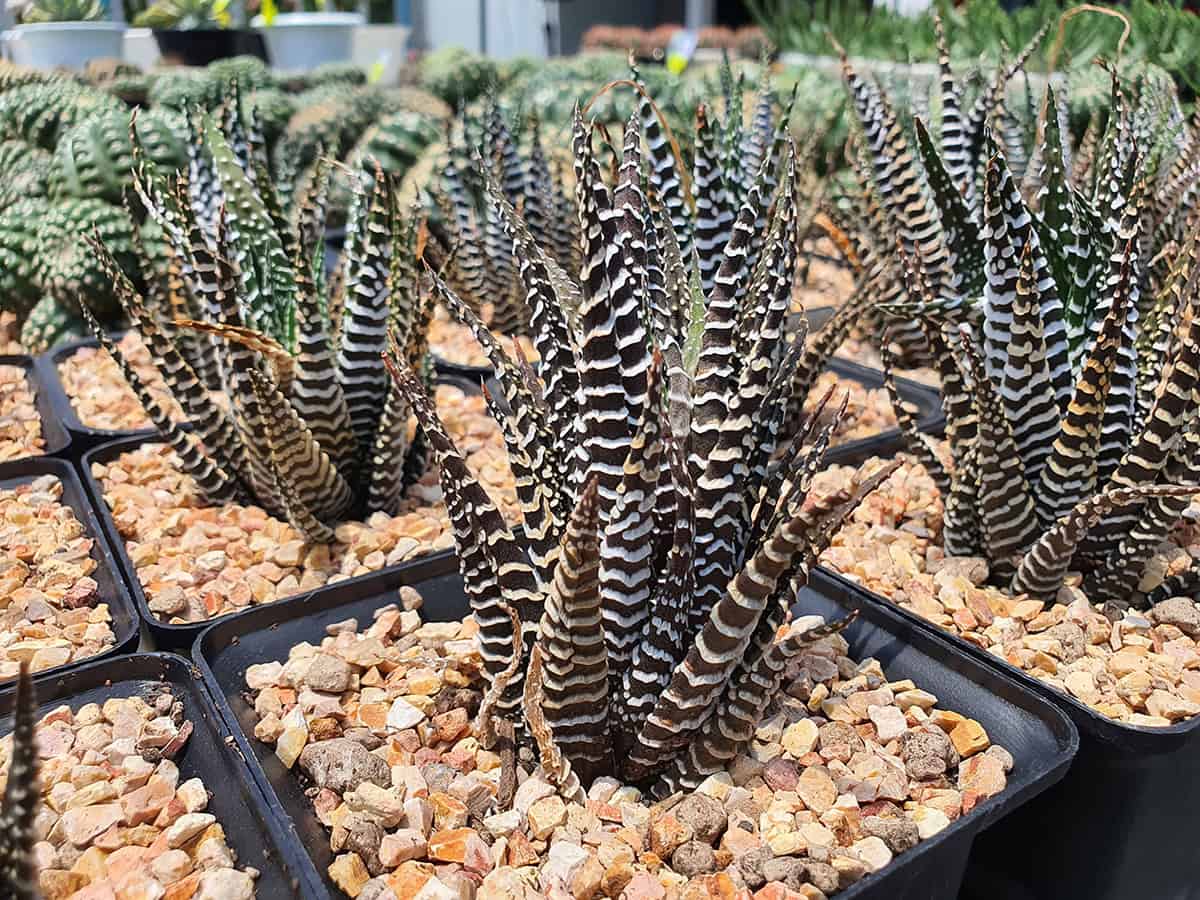
Haworthia attenuata, now Haworthiopsis attenuata, is the zebra plant, with white bumps in bands on both sides of its slim, pointed leaves. It is the most widely sold species and one of the easiest. Like all haworthias, it rots in wet soil, so use a gritty mix and water sparingly. Mealybugs gather at the leaf bases. Remove them with a cotton swab dipped in rubbing alcohol.
Haworthia Fasciata
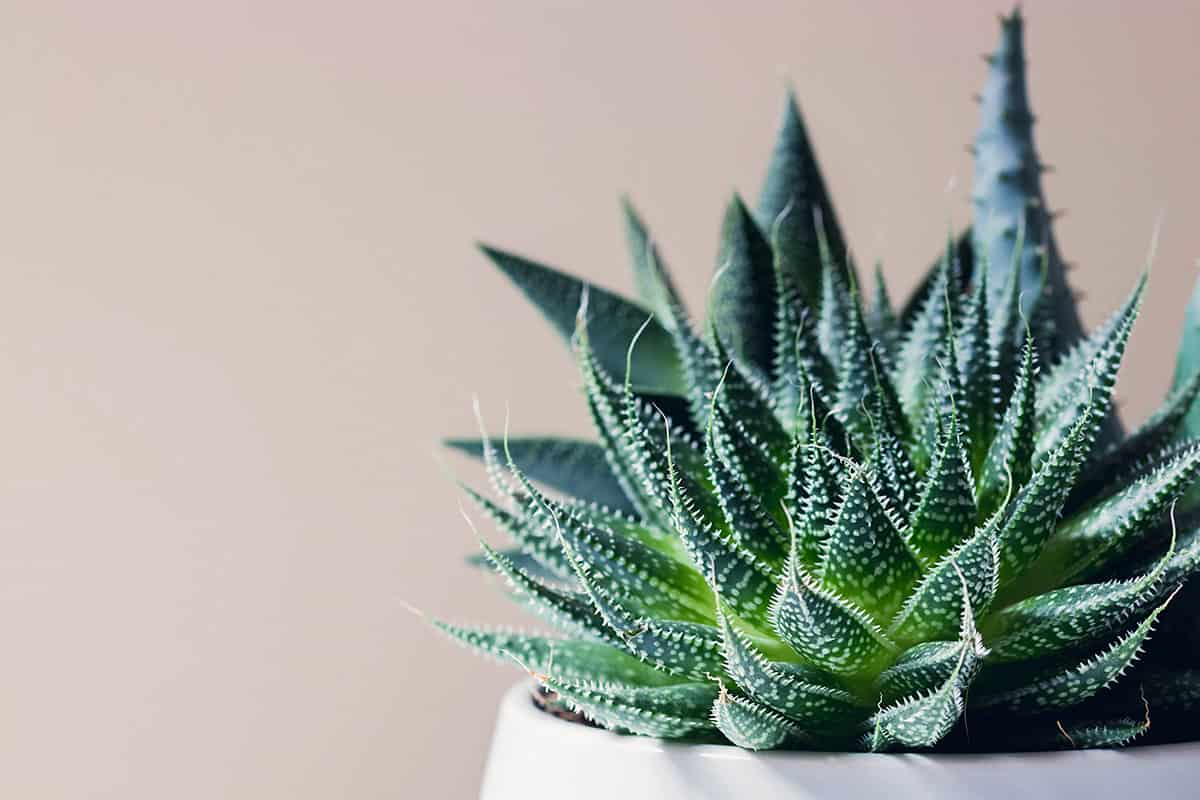
Haworthia fasciata, now Haworthiopsis fasciata, looks very similar to the zebra plant, but its white bands appear only on the outer surface of the leaves, and the inner surface is smooth. Care is the same. Brown, shriveled leaves point to a weak root system, so check the moisture and drainage of the mix. Scale and mealybugs occasionally attack.
Haworthia Cooperi
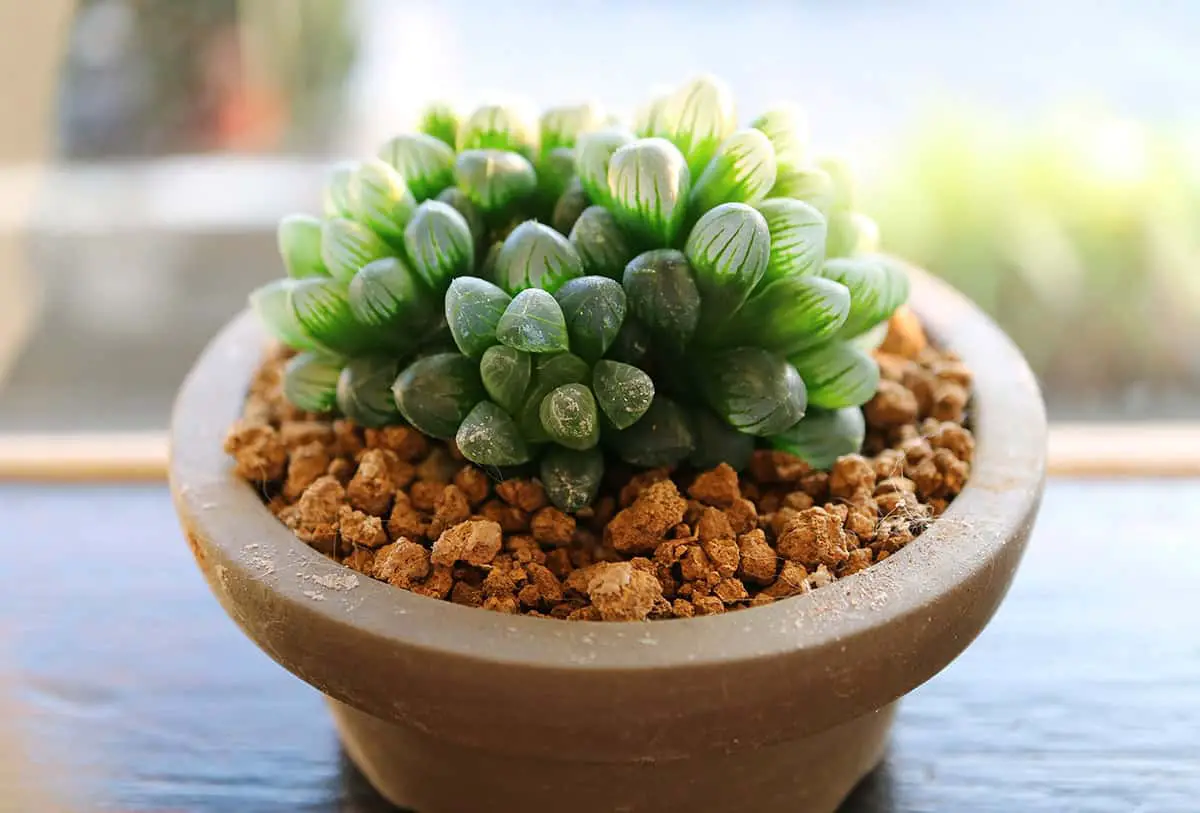
Haworthia cooperi has plump, translucent leaves with clear “windows” at the tips that let light into the leaf. It needs bright, indirect light to hold its compact shape, and harsh sun scorches the leaves reddish brown. Stretched growth points to too little light. It is especially prone to rot, so water sparingly.
Haworthia Limifolia (Fairies Washboard)
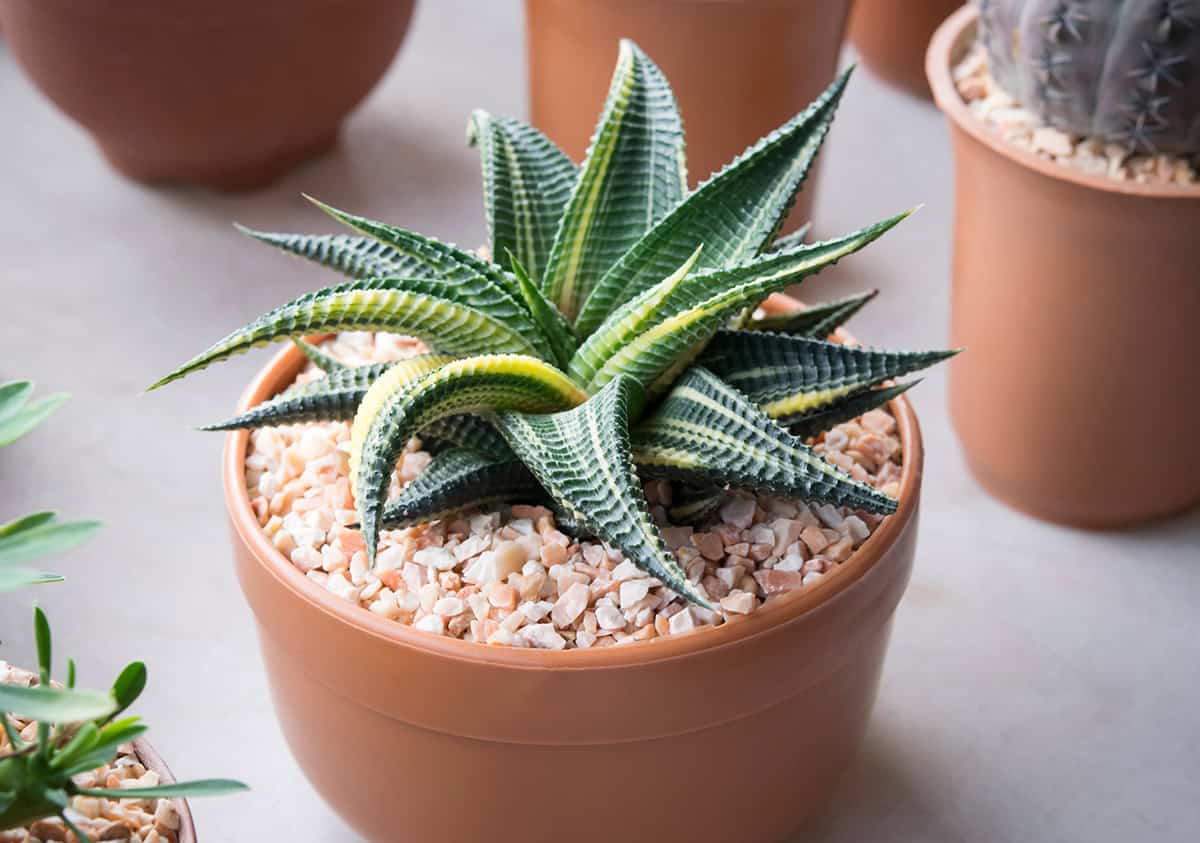
Haworthia limifolia, now Haworthiopsis limifolia, has broad, triangular leaves lined with raised ridges like an old washboard. It is low-maintenance but rots in poorly draining soil. Check the soil before watering. Shriveled leaves mean the plant is thirsty, and soft ones mean it is too wet. Good airflow prevents fungal problems.
Haworthia Truncata (Horse’s Teeth)
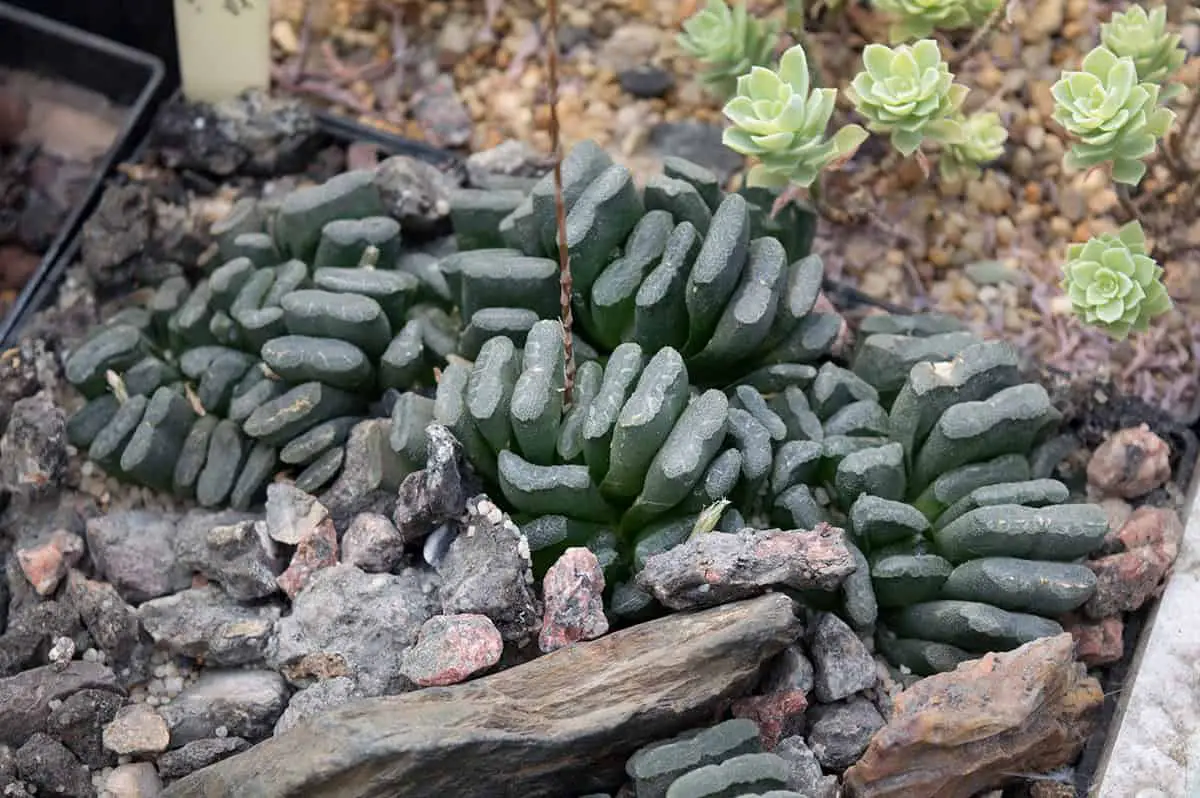
Haworthia truncata grows thick, flat-topped leaves in two rows, like a fan of teeth, with translucent windows on the cut-off tips. It grows slowly and rots in damp conditions, so use an extra-gritty mix and water lightly. Mealybugs are the main pest. It is a collector’s plant and pricier than most.
Haworthia Reinwardtii
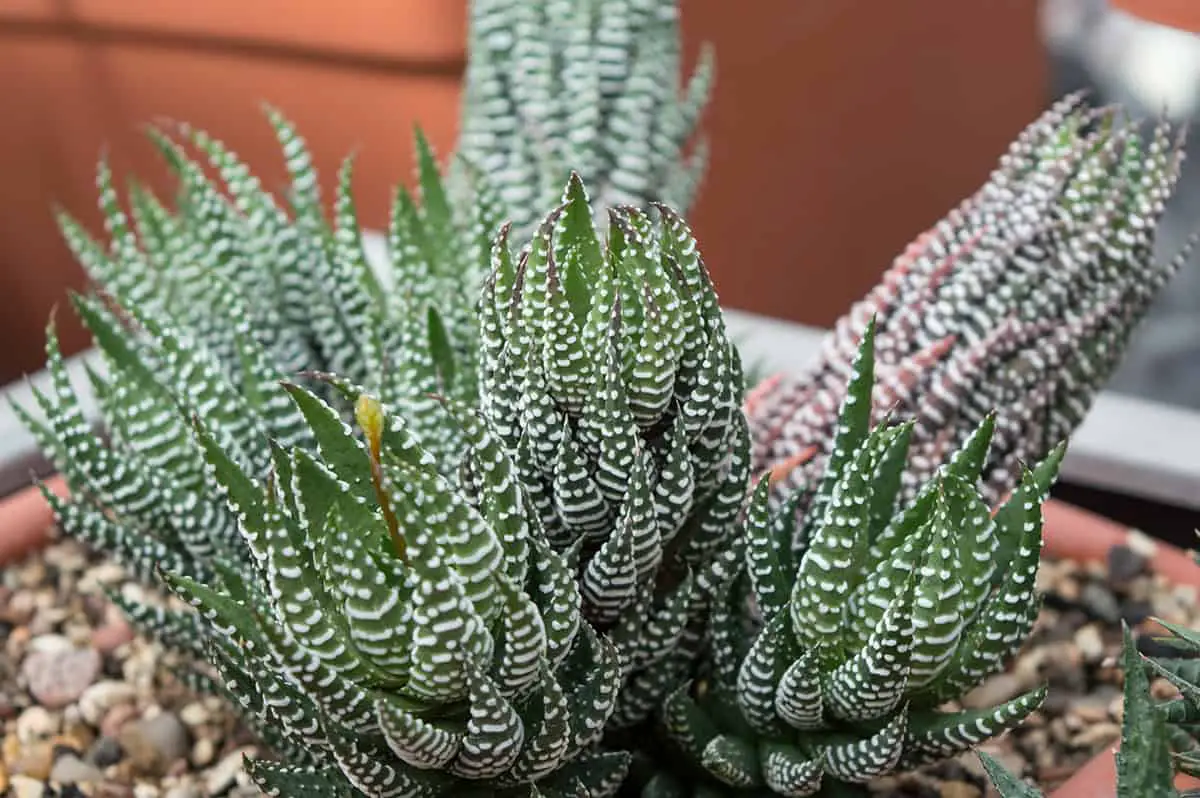
Haworthia reinwardtii, now Haworthiopsis reinwardtii, grows tall, stacked columns of pointed leaves dotted with white bumps. Overwatering leads to root and stem rot, so a cactus mix is essential. Shriveled leaves signal thirst. Watch for mealybugs, and rotate the pot regularly so the columns grow straight.