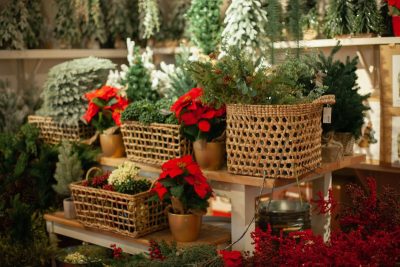
Most Christmas plants stand for eternal life, hope or rebirth, meanings rooted in religious stories and old winter customs. Holly’s spiny leaves and red berries came to represent Christ’s crown of thorns, and the poinsettia owes its holiday fame to a Mexican legend about a humble gift laid at a church altar. Evergreens earned their place by keeping their color through the darkest weeks of the year. Read on for the stories behind 26 holiday plants and what each one says on your table or front door.

Cut greenery lasts longest when the branches are supple at purchase, soaked well before arranging and kept away from heat vents and direct sun. Every stem in a wreath or garland has lost its water supply, and heated indoor air pulls moisture from the needles day after day, which is why a garland above a warm mantel fades within one to three weeks. Read on for care steps for every type of holiday greenery, plus a look at the sprays and home remedies people swear by.

Poinsettias look striking tucked into an evergreen wreath for the front door or grouped low around candles on the holiday table. Their broad red, white and pink bracts read from across a room, which means three or four blooms fill most wreaths. Real stems need sealing and water tubes to last indoors, and artificial ones handle a freezing porch. Read on for 22 wreath and centerpiece ideas, plus the simple stem trick florists use to keep cut poinsettias fresh.

Dwarf spruce, holly and red-twig dogwood rank among the toughest plants for Christmas porch pots, and each one holds its color through freezing weather. Container roots sit above ground, exposed to the same icy air as the branches, which is why a plant hardy to two USDA zones below your own is the safer pick for a pot left outside all winter. Poinsettias belong on a covered porch for a short holiday display only. Read on for all 26 plants and the care each one needs to look good until the decorations come down.
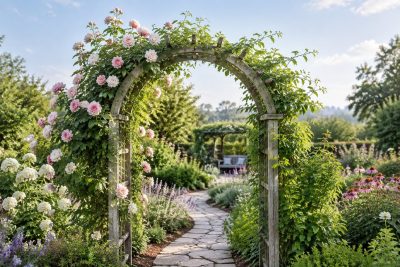
Garden arches frame paths and entrances, support climbing plants, and mark transitions between outdoor spaces. A rose-covered opening gives a walkway a focal point, even in a modest yard. The structure beneath the flowers matters just as much: its width governs passage, and its material shapes the view through it. The details of each arch become clearer once its setting comes into focus.
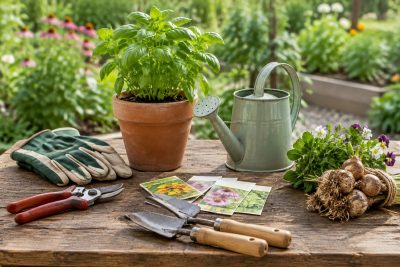
A hori hori garden knife is a strong under-$50 gift for gardeners who plant and weed regularly, thanks to its digging blade and depth markings. The right garden gift earns a place near the potting bench, where damp soil and stray roots put every tool to use. A $50 budget leaves room for sturdy essentials and small pleasures alike. Details such as grip size, drainage, and storage matter once a gift reaches the garden.
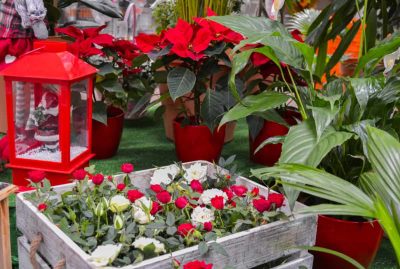
Handmade plant gifts for Christmas pair a living plant with a decorated pot, propagation vessel, or useful accessory. A painted herb pot has a different charm from a moss terrarium, yet each carries the maker’s hand into the recipient’s home. The strongest gifts account for drainage, winter light, and the trip between homes. Those practical details leave plenty of room for holiday color and individual craft.

Fraser fir and noble fir provide dense, lasting greenery for Christmas wreaths and garlands. Their clipped boughs hold a wreath’s circular shape, and their needles give the greenery a full appearance. A strand across a mantel invites a looser line, such as the drape of cedar or white pine. Needle length, stem weight, and drying behavior make each cutting worth a closer look.

To make a fresh evergreen wreath, trim fresh branches into short sprigs, gather them into small bundles, and wire the bundles around a wreath frame with each new bundle covering the stems beneath it. A 12-inch frame makes a manageable first project; its greenery will extend beyond the frame once assembled. Freshness starts before the first bundle is attached. Supple branches, secure wire wraps, and a cool display spot help the wreath hold its shape.

Christmas mantel decor with plants and greenery looks most cohesive when a single leafy shape anchors the display and living plants provide the focal points. Cedar draped across the shelf gives paperwhites a low, fragrant backdrop; upright branches call for a different arrangement. The depth of the mantel, the height above the firebox, and the light reaching each plant shape the display as much as color does. Those details become especially useful once delicate blooms and trailing stems enter the mix.

Houseplants already occupy the windowsills, shelves, and corners where Christmas decorations tend to gather. Lightweight ornaments, battery-powered mini lights, and festive pot accents decorate houseplants for Christmas without crowding their leaves or blocking drainage. A ribbon around a pot takes seconds; a strand of lights asks for sturdier stems and a dry place for its battery pack. Even a single red bow changes the look of a familiar plant. The shape and care needs of each plant determine where the holiday details belong.

Christmas garland and greenery decorating ideas begin with the architecture already in place: a mantel edge, stair rail, doorway, or window frame gives branches a natural path. Cedar falls in soft layers, pine holds a fuller line, and magnolia leaves catch the light. Placement matters as much as the greenery itself, especially near a flame or busy passage. Each spot reveals where a loose drape belongs and where a firm anchor is needed.