
Full sun on a patio means six or more hours of direct light, plus heat bouncing off the pavers and pots that dry out by mid-afternoon.
Plenty of plants shrug that off and flower harder for it. The 15 picks lean toward heat lovers that ask for little water, and each note covers pot size and feeding.
Table of Contents
Petunias

Petunias shine in sunny containers, with flowers in pink, purple, red, white, yellow and bicolor patterns. Beginners and experienced gardeners alike rely on them.
They play the role of filler or spiller in mixed pots, and they look just as good on their own. Full sun produces the heaviest bloom.
Use a quality potting mix and a pot with drainage holes. Water once the top inch of soil is dry, since soggy soil leads to root rot.
Pinch the stems early for bushier plants, and deadhead faded blooms to push out the next wave. Trailing types such as Wave petunias need no deadheading at all.
Feed weekly in summer with a balanced, water-soluble fertilizer, since petunias are hungry plants. They fade as cool fall weather sets in.
White petunias add a crisp, elegant contrast to green foliage. Grandifloras carry the largest flowers, and multifloras produce more, smaller blooms that handle rain better.
Geraniums

Geraniums flower best with at least six hours of sun a day, in fertile, well-drained potting mix. Water once the top of the soil is dry, and avoid soggy soil.
Remove spent flower clusters and their stems to encourage new blooms. Feed every two to four weeks during active growth, and water at the base to protect the leaves.
They add bright color all spring and summer, and they survive winter as perennials in mild climates or indoors on a sunny windowsill.
In cold regions, plant them outdoors after the last frost. Geraniums grow from seed or cuttings, and a mix of several shades makes a cheerful container.
Marigolds

Marigolds bloom from early summer until fall in full sun, with at least six hours of direct light a day. Plant them in well-drained mix and water regularly.
Sizes and colors range widely, with deep reds, oranges and bright yellows. Pinch the tips early for bushier plants.
Containers make it easy to move them into the sunniest spot. Sow seeds once the soil is above 65°F, or set out transplants after frost danger passes.
For small pots, choose a Signet variety. These compact marigolds have fine, lacy leaves and tiny flowers. Once established, many cultivars handle short dry spells well.
The flowers also attract beneficial insects.
Zinnias
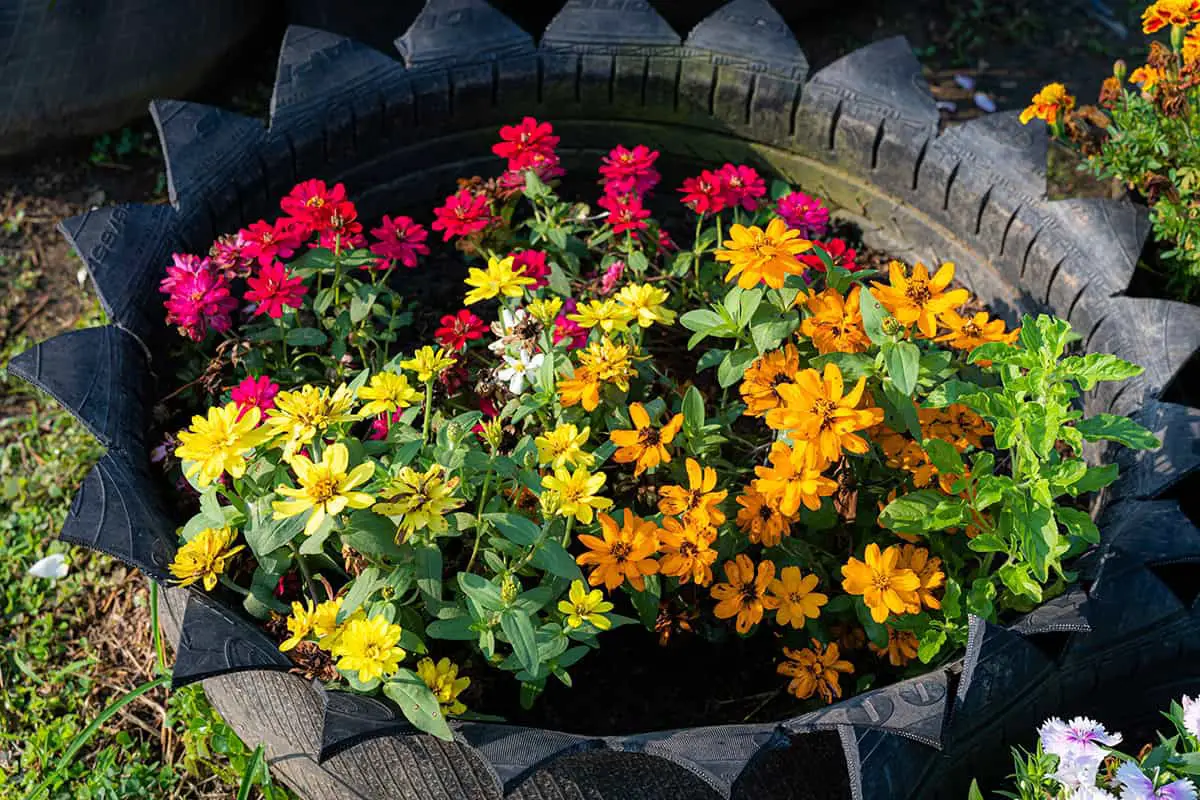
Zinnias love heat and need at least six hours of direct sun. They handle spots that wilt other plants.
Colors span pink, red, orange, yellow, lime green and many shades in between, and containers of zinnias draw the eye from across the yard.
Use well-drained potting mix that holds enough moisture between waterings. Water at the base to prevent powdery mildew.
Deadhead regularly for a continuous display through the season.
Tall varieties reach three feet, so choose dwarf types such as ‘Profusion’ or ‘Zahara’ for pots, or use a large container.
Butterflies visit the flowers all summer.
Salvia

Salvia loves full sun and heat. Many types grow several feet tall, so plant them in a large, heavy pot.
Use a well-draining mix, and check that water never pools on the surface. Water regularly, and let the top inch dry between waterings.
Plant one salvia per 12- to 14-inch pot, or pair it with low trailers in a larger container, for good airflow.
Trim the plants now and then for bushier growth, and cut faded flower spikes to extend the bloom season.
Mix a slow-release, balanced fertilizer into the potting soil at planting for steady color all summer.
Lantana

Lantana loves containers in full sun and flowers nonstop on patios and balconies. It needs at least eight hours of sun a day for the best bloom.
Care is simple. Use a pot with drainage holes and a potting mix rich in organic matter, with a pH around 6 to 6.5. Mix a balanced fertilizer into the soil at planting.
Lantana berries are toxic, and the leaves irritate skin, so place pots away from children and pets.
Water once the top inch of soil is dry, and set the pot in the sunniest spot you have.
Verbena
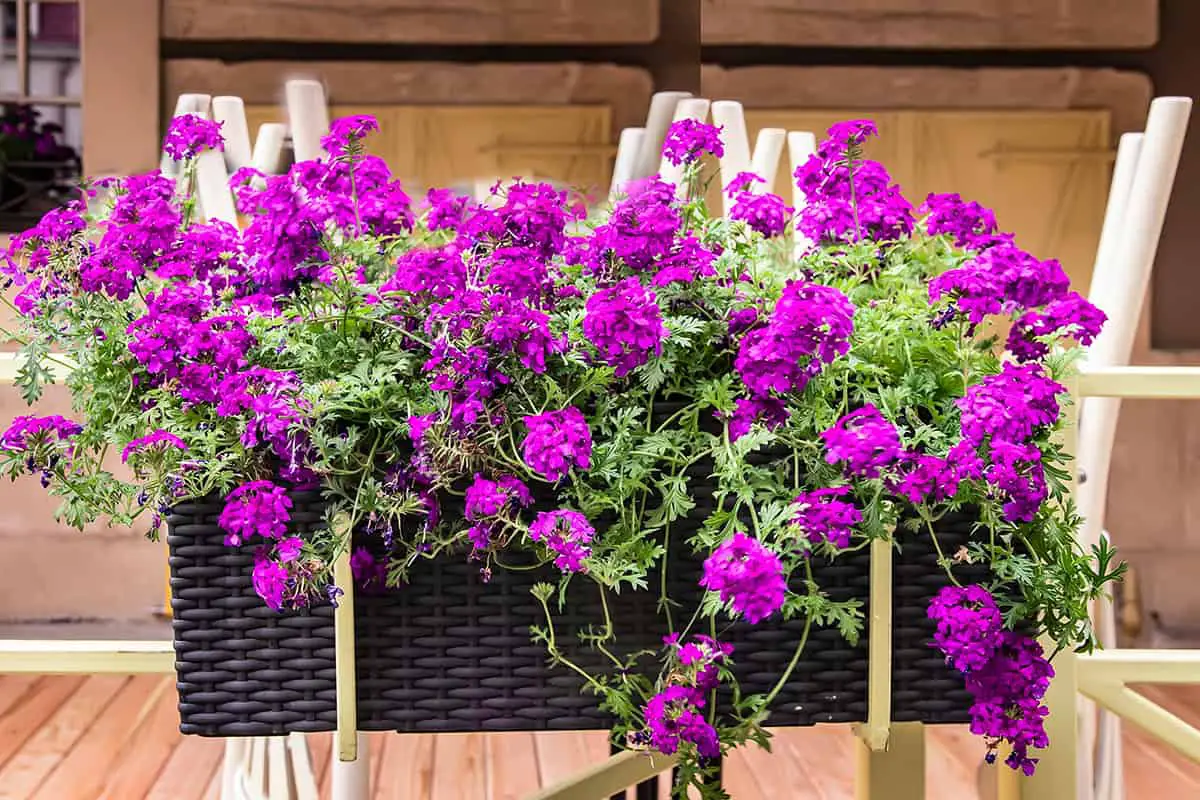
Verbena loves full sun and covers itself in clusters of small, star-shaped flowers all season. It handles light drought once established.
Use a well-draining mix, and deadhead spent flower clusters to encourage more blooms. Feed every two weeks with a general-purpose liquid fertilizer.
Lemon verbena is a different plant, an herb grown for its lemon-scented leaves. It also likes full sun, ample drainage and evenly moist soil, and it rots in soggy pots.
Colors range across pink, red, purple and white, and trailing types spill beautifully over the edge of a pot.
Portulaca

Portulaca, or moss rose, loves full sun, with at least six hours of light a day. Its succulent leaves and stems store water, which makes it very drought-tolerant.
Use a container with excellent drainage, and let the soil dry between waterings, since overwatering rots it. Flowers come in red, orange, yellow, pink and white. They open in the morning sun and close by late afternoon.
It loves hot, dry conditions and even grows in sidewalk cracks. Deadheading is optional, and the plants self-seed freely.
Plant it in hanging baskets, shallow bowls or as a colorful edging. Its toughness makes it a great choice for any level of gardener.
Succulents
Succulents fill full-sun containers with color and form and need very little maintenance once established.
Echeveria

Echeveria comes in a wide range of rosette shapes and colors, and a single plant makes a striking focal point. Use a pot with good drainage and gritty cactus mix, and introduce it to full afternoon sun gradually.
Sedum

Sedum, or stonecrop, grows well in full sun and comes in many colors and forms, upright and trailing. Water sparingly, since it prefers dry soil.
Mandevilla

Mandevilla loves full sun and blooms in pink, white or red from late spring to fall. It needs well-drained potting mix, and containers make it easy to move.
A trellis or obelisk lets the vine climb, and it grows quickly in warm weather. Choose a sturdy support for the container.
Water regularly and feed every two weeks for a full display.
Mandevilla is frost-tender. In cold climates, move the container indoors to a bright spot before the first frost and grow it as a houseplant through winter.
Lavender

Lavender loves full sun, at least eight hours a day, and fills a container with color and a relaxing scent.
Use a gritty, well-drained mix with a neutral to slightly alkaline pH, and a pot with good drainage holes, since lavender rots in wet soil. Refresh the mix every couple of years.
Plants reach one to four feet tall, in purple, blue, pink and white. Bees love the flowers.
Water only once the soil is dry to the touch. Lavender handles drought well, and overwatering is the most common way to lose it.
Sweet Potato Vine

Ornamental sweet potato vine loves sun and heat, with leaves in chartreuse, purple-black, bronze or variegated patterns. It trails beautifully from containers and window boxes.
Care is simple. Use a pot with good drainage and set it where it gets six to eight hours of sun.
In a garden bed, vigorous types sprawl several feet in a season. For pots, compact series such as ‘Sweet Caroline’ and ‘Sweet Georgia’ spread less. ‘Marguerite’ and ‘Blackie’ are classic, faster-growing choices for large containers.
A 5-gallon pot leaves a single plant plenty of room, and warm, sunny conditions produce the most vivid leaves.
Dwarf Citrus Trees

Dwarf citrus trees love full sun and grow well in containers, with fragrant blossoms and homegrown fruit in a small space.
Meyer lemon and calamondin orange are the most reliable container varieties. They grow three to eight feet tall in pots.
Provide full sun, steady moisture and regular citrus fertilizer. Trees moved indoors for winter need hand-pollination with a small brush to set fruit. Light pruning holds them to size.
Use a pot with good drainage and a well-draining citrus mix. Water thoroughly, and let the top inch or two dry between waterings.
Bougainvillea

Bougainvillea covers itself in colorful bracts in full sun and makes a big impact on a sunny patio or balcony with little care.
In warm climates, it grows well in containers, where its size is easy to manage. Place it where it gets at least six hours of direct sun.
Use a well-draining mix and water once the soil dries, since bougainvillea blooms best on the dry side. A balanced or bloom-boosting fertilizer, at the label rate, supports flowering.
In cooler regions, grow it as an annual or move the pot indoors for winter, since frost damages it badly.
Coreopsis
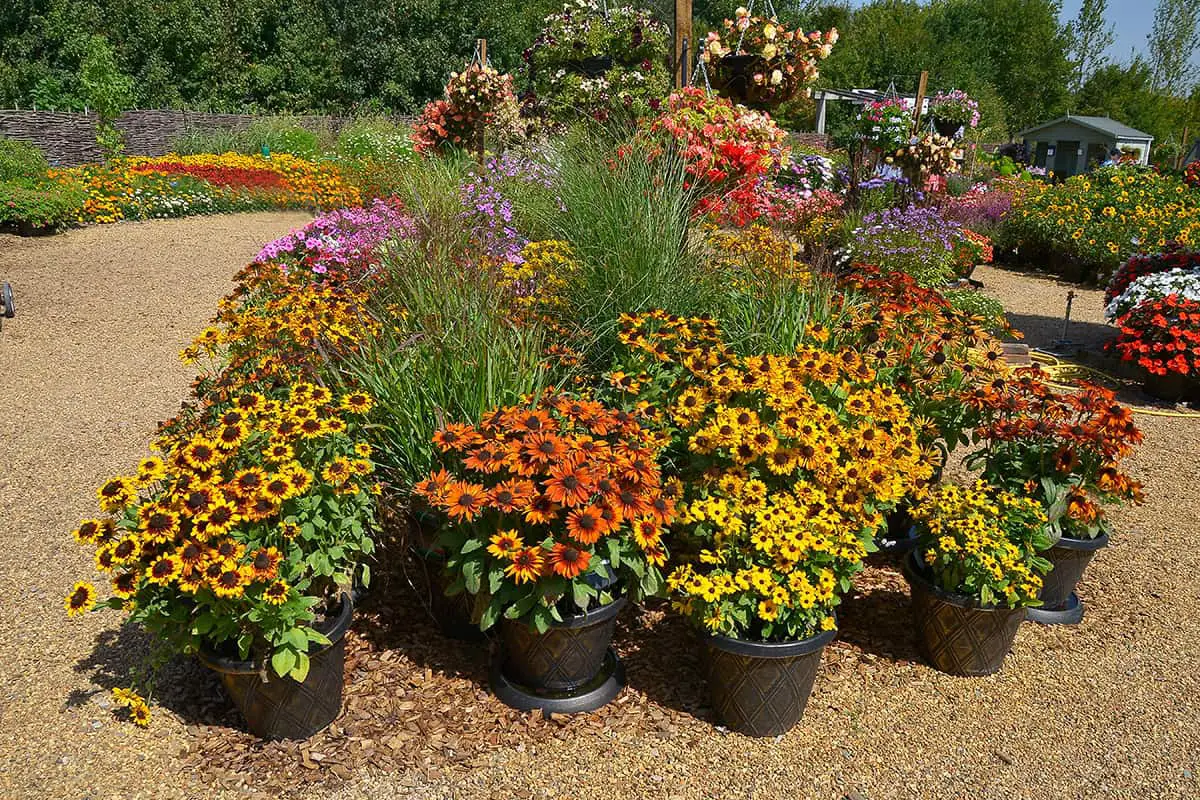
A perennial for sunny containers, coreopsis returns each year with bright, daisy-like flowers. Varieties such as ‘Moonbeam’ carry pale yellow, airy blooms.
It prefers well-drained soil and tolerates poor soil, which makes it easy to grow in a pot.
Some types spread by rhizomes, and a container holds them in check. In very hot regions, light afternoon shade helps.
Once established, coreopsis needs little care. Plant it in full sun with and a well-draining potting mix, and shear it back after the first flush for a second round of flowers.