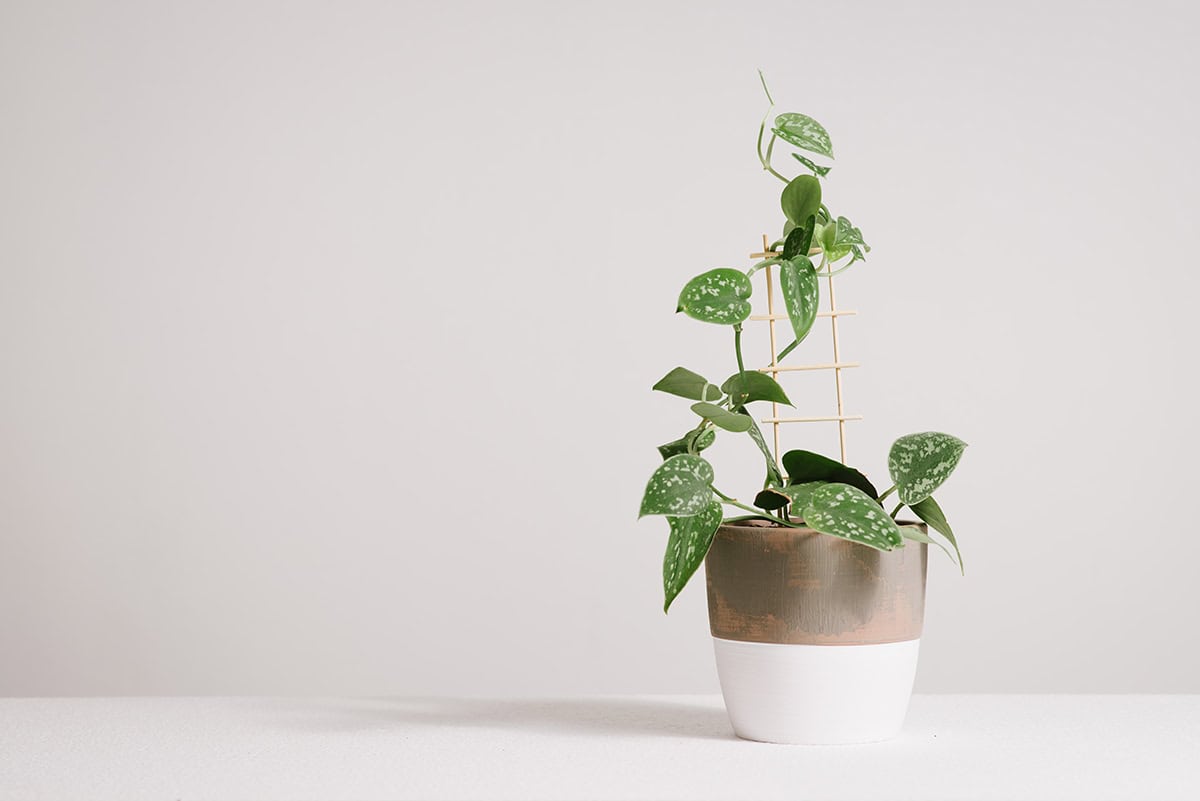
Left to trail, a pothos produces long vines with small leaves. Up a moss pole or trellis, the same plant puts out bigger, thicker leaves, a habit carried over from climbing tree trunks in the wild.
Pothos lacks tendrils, though, and needs a hand to get started.
Pick a support first, since every other tip on the list builds on that choice.
Table of Contents
- 10 Tips to Make a Pothos Climb
- Choose a Support Structure for Your Pothos
- Use a Moss Pole or Coir Pole for Natural Climbing
- Install Wall Hooks or Trellises to Guide Growth
- Use Garden Tape or Soft Ties to Secure the Vines
- Place the Plant in Bright, Indirect Light
- Regularly Prune to Encourage Bushier, Upward Growth
- Train Vines Early While They’re Flexible
- Keep Leaves and Vines Clean to Promote Healthy Growth
- Feed Your Pothos Monthly During Growing Season
- Be Patient and Consistent With Training
10 Tips to Make a Pothos Climb
A climbing pothos grabs its support with aerial roots, so the goal is to put a surface within reach and guide the vines toward it. The tips below run roughly in the order you’ll need them.
Choose a Support Structure for Your Pothos
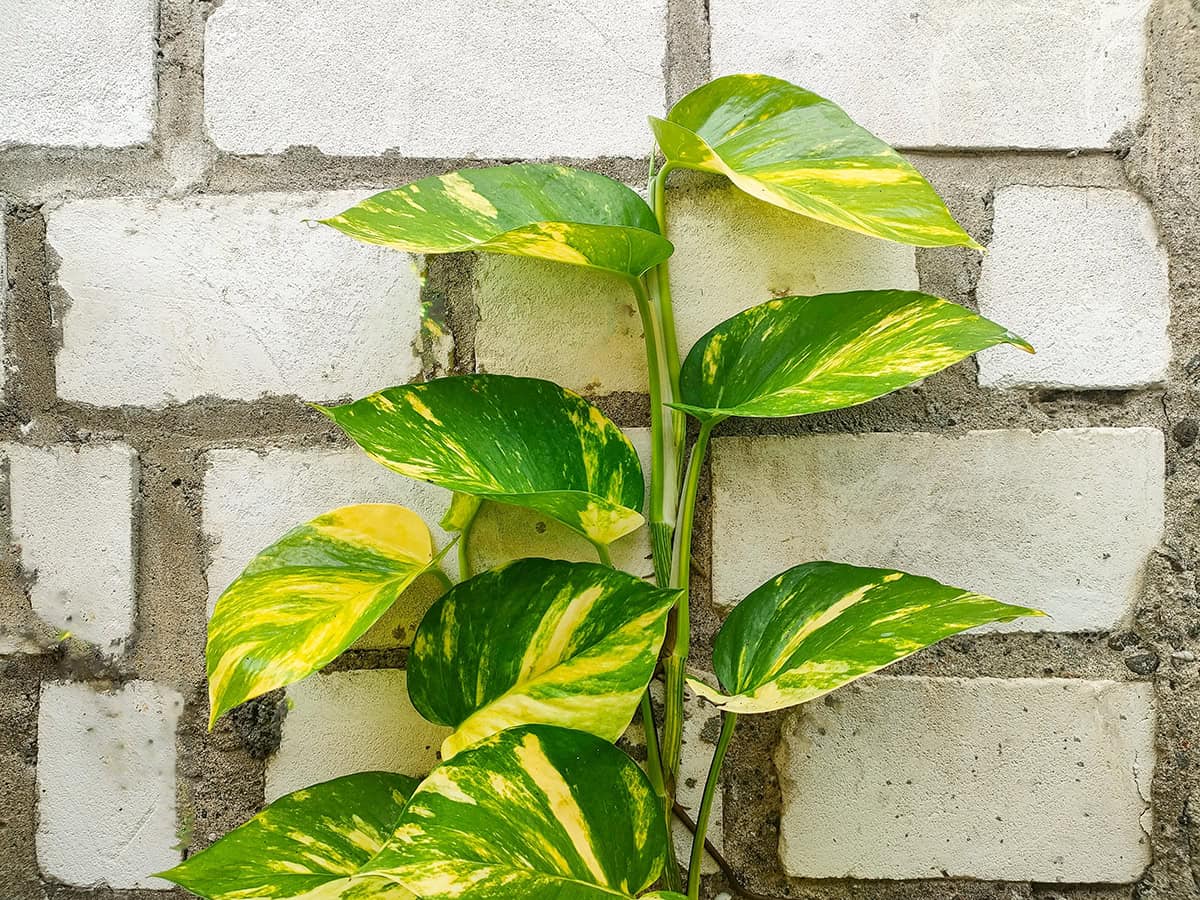
Moss and coir poles hold moisture, which encourages aerial roots to anchor, and they look natural in a living room. Bamboo stakes, metal trellises and plank boards fit a cleaner, modern look. Pick a support at least as tall as you want the plant to grow, and anchor it deep in the pot so the weight of a mature vine sits on firm footing.
Use a Moss Pole or Coir Pole for Natural Climbing
Moss and coir poles imitate the tree trunks pothos climbs in its native forests. Push the pole into the center of the pot during repotting, so the roots grow around its base for stability. Wrap the vines loosely around the pole and attach them with soft ties at each node. Mist the moss every few days, since damp moss encourages aerial roots to grip and grow into it.
Install Wall Hooks or Trellises to Guide Growth
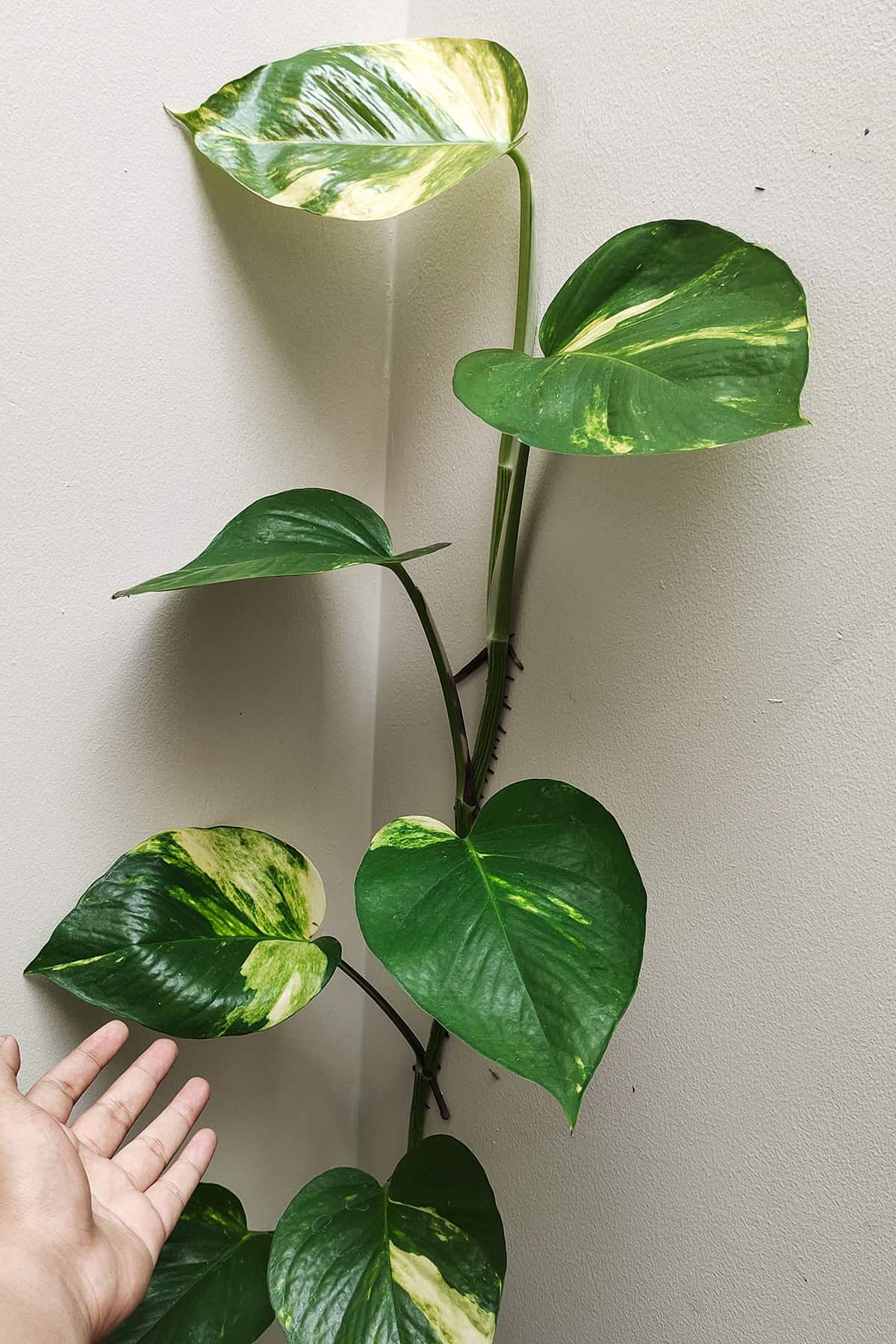
Adhesive hooks or small nails along a wall let a pothos climb or swag across a room. Place them a foot or so apart in a zigzag or arc pattern. Drape the vine over each hook as it grows, or weave it through a trellis panel set behind the pot. Wall-trained vines rarely attach with their aerial roots, which spares the paint.
Use Garden Tape or Soft Ties to Secure the Vines
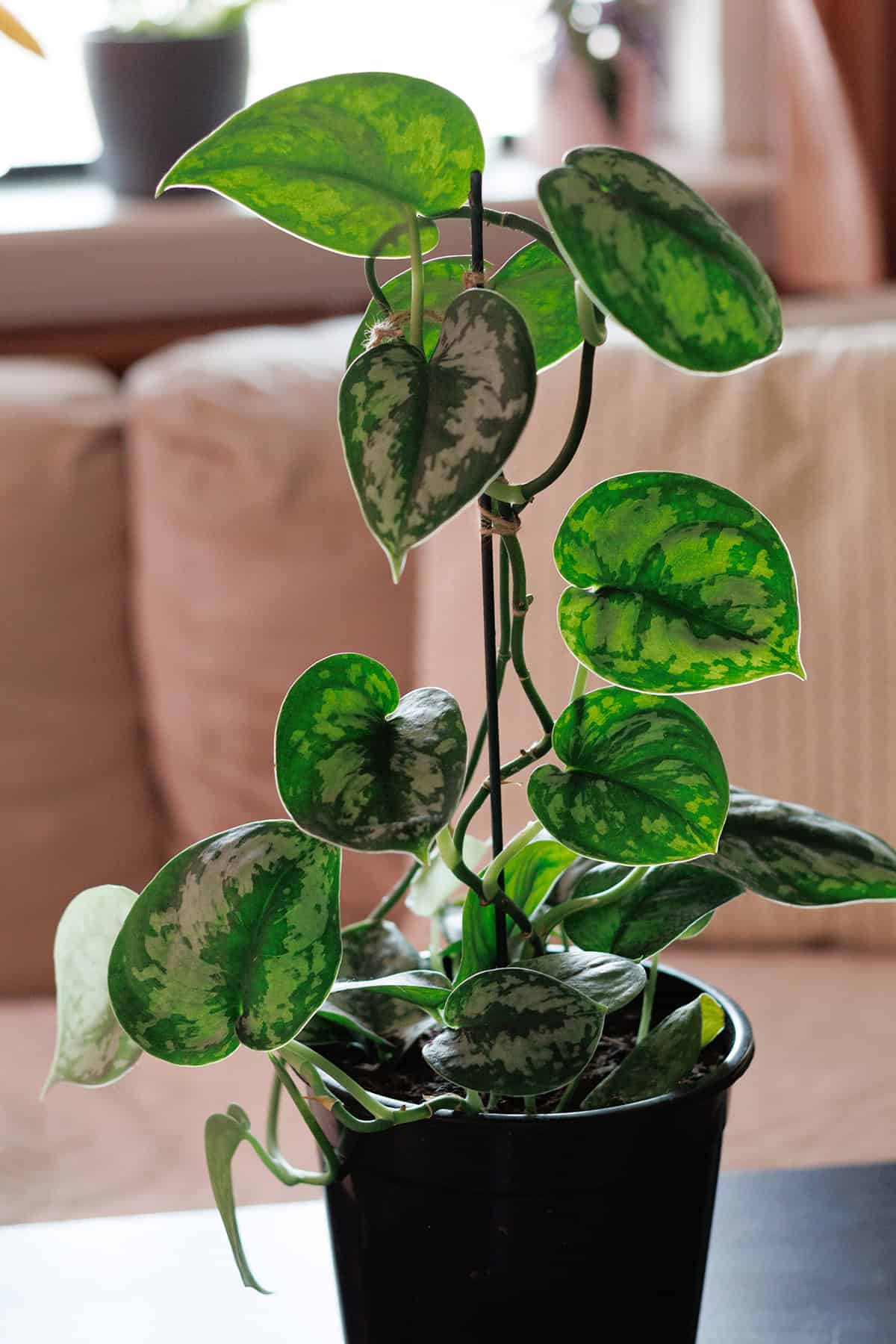
Velcro plant tape, soft twist ties and strips of old nylon tights hold vines in place and leave the stems unharmed. Tie loosely, with room for a finger between the tie and the stem. Place ties just below a node so aerial roots face the support. Check them every month and loosen any that pinch, then remove them once the roots have taken hold.
Place the Plant in Bright, Indirect Light
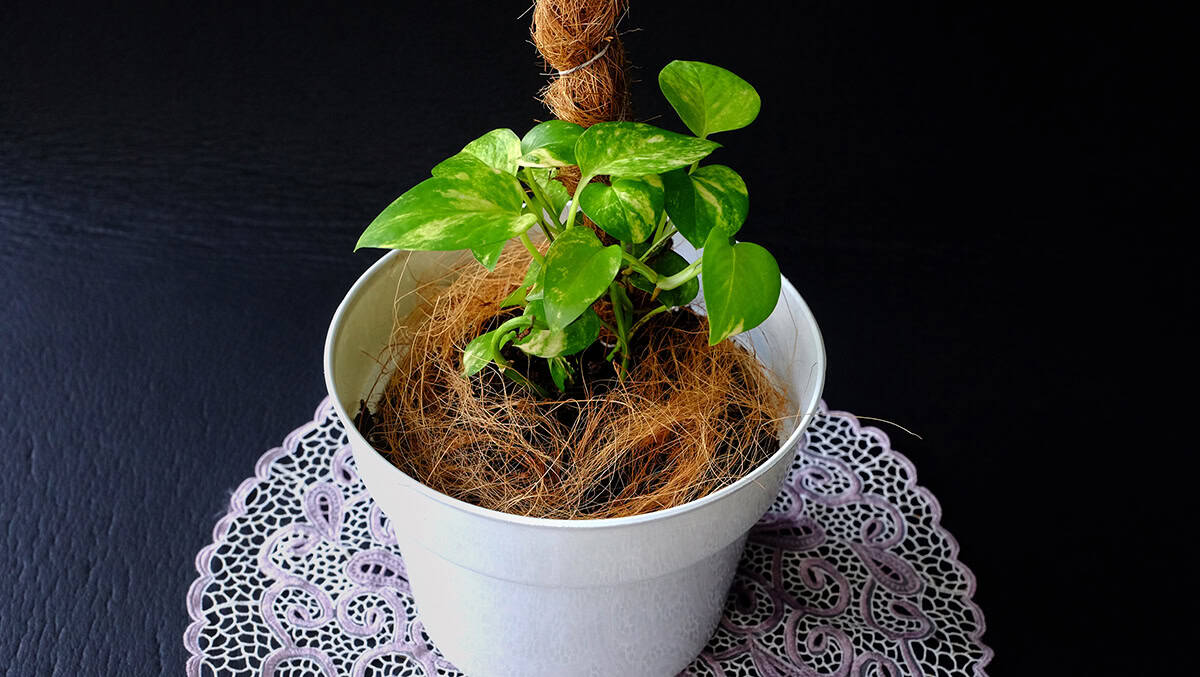
Pothos grows faster and climbs more eagerly in bright, indirect light, such as a few feet from an east or west window. Low light leads to long gaps between leaves and pale variegation. Harsh direct afternoon sun scorches the leaves. In dark rooms, a full-spectrum LED grow light 12 to 24 inches above the plant fills the gap.
Regularly Prune to Encourage Bushier, Upward Growth
Trimming leggy vines pushes the plant to branch near the cut, which fills out the base and produces more stems to train. Snip just above a leaf node with clean scissors. Cut back vines that hang down rather than up, and root the cuttings in water to plant back into the same pot for a fuller look.
Train Vines Early While They’re Flexible
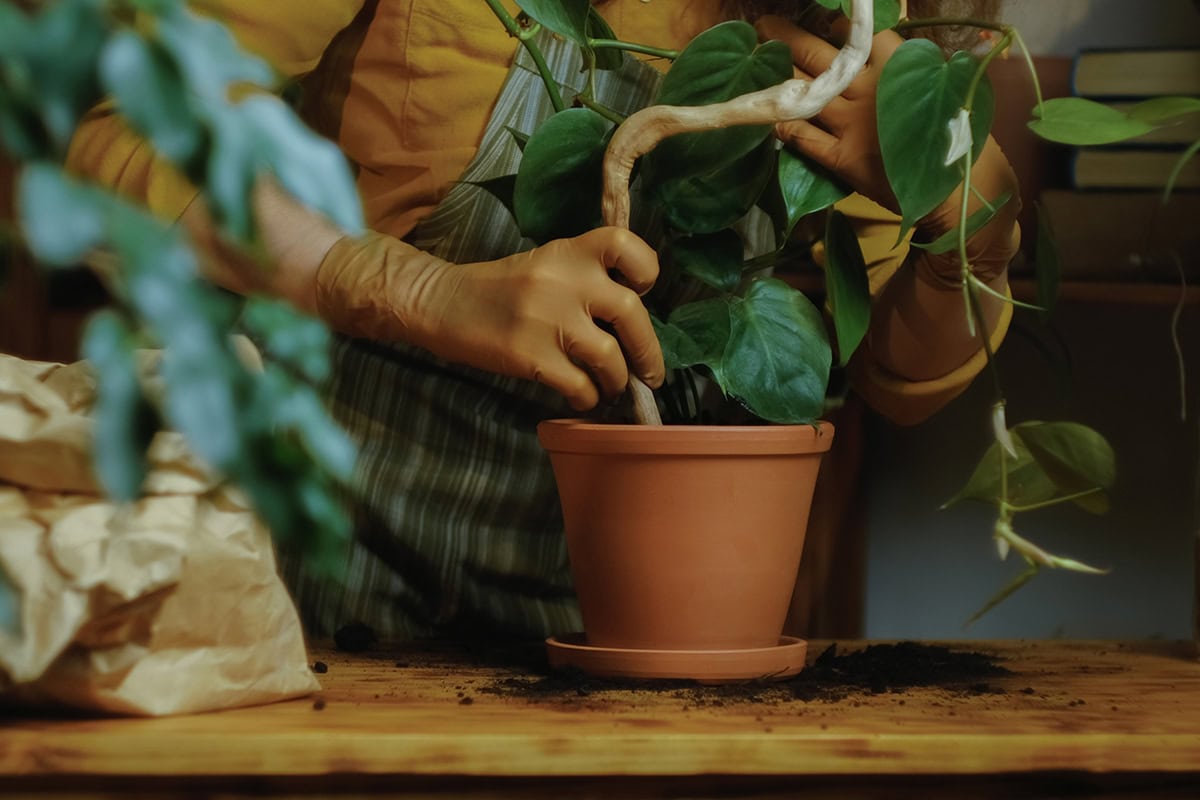
Young vines bend easily, while older stems grow stiff and woody. Start guiding new growth toward the support as soon as it reaches a few inches long. Each week, wrap the newest section around the pole and tie it in place. Vines trained from the start grow straight up instead of reaching outward.
Keep Leaves and Vines Clean to Promote Healthy Growth
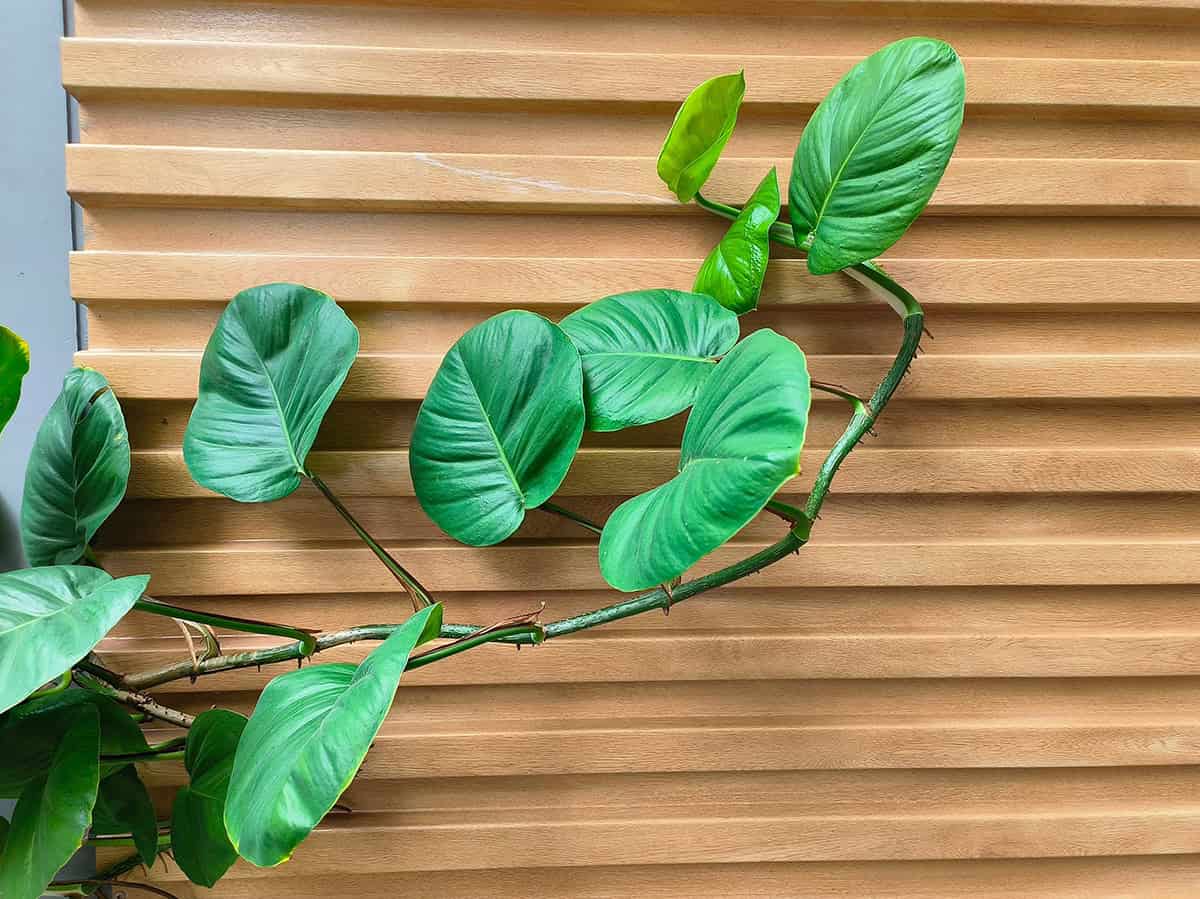
Dust on the leaves blocks light and slows growth. Wipe both sides of each leaf with a damp cloth once a month, or rinse the plant in the shower. Check the undersides for mealybugs, spider mites and scale during each cleaning, and treat any pests right away.
Feed Your Pothos Monthly During Growing Season
A climbing pothos puts on more growth and needs regular food. Feed every four weeks in spring and summer with a balanced liquid fertilizer at half strength. Skip fertilizer in winter, when growth slows. Too much fertilizer burns roots and leaves a salt crust on the soil, so flush the pot with plain water every few months.
Be Patient and Consistent With Training
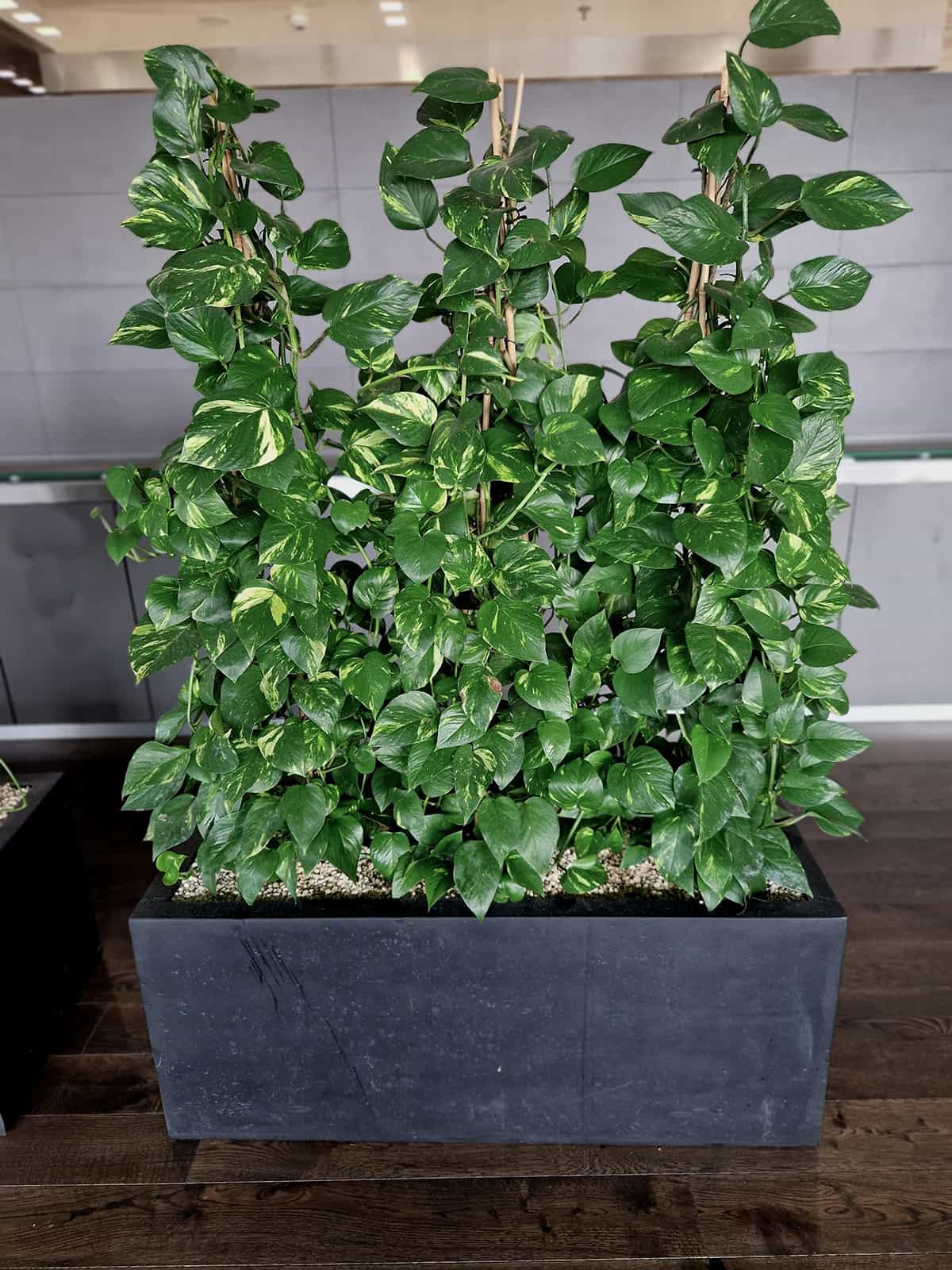
Climbing pothos takes months to fill a pole, and leaf size increases gradually as the vine gains height. Check the plant weekly, tie in new growth and mist the pole. Growth slows in winter and picks up again in spring. Within a year or two, the leaves at the top of the pole grow noticeably larger than those trailing at the bottom.