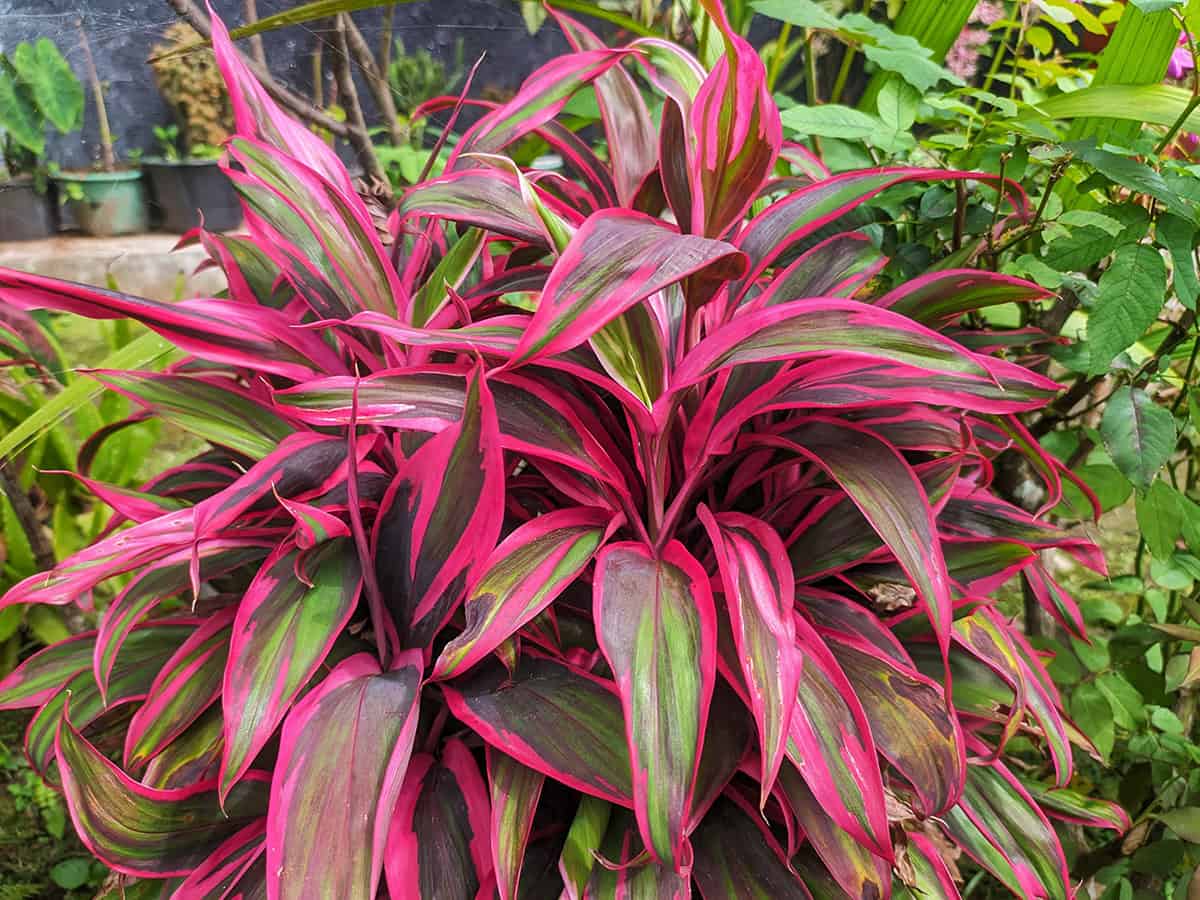
Ti plant leaves grow in a tight spiral at the top of slender canes, in shades of red, hot pink, burgundy, cream or deep green.
Hawaiians plant the green form around homes for good luck and use its leaves to wrap laulau. Indoors, bright filtered light and steady warmth hold the colors at their strongest.
Its sensitivity to fluoride in tap water, one quirk worth knowing early, shows up in the watering and troubleshooting sections.
Table of Contents
Quick Care Summary
Bright, indirect light holds the strongest leaf color on ti plant, and too much direct midday sun indoors burns the leaves. Fertile, fast-draining soil, warmth above 65°F and moderate to high humidity cover the rest of its needs.
- Light: Bright, indirect; partial shade outdoors
- Soil: Fertile, well-drained, pH 6.0–6.5
- Watering: Water when the top inch dries; rainwater or distilled water when possible
- Temperature: 65–85°F; protect below 50°F
- Humidity: 50–70 percent
- Fertilizer: Diluted balanced liquid feed every 4–6 weeks in spring and summer
- Propagation: Tip cuttings or cane sections
Plant Overview
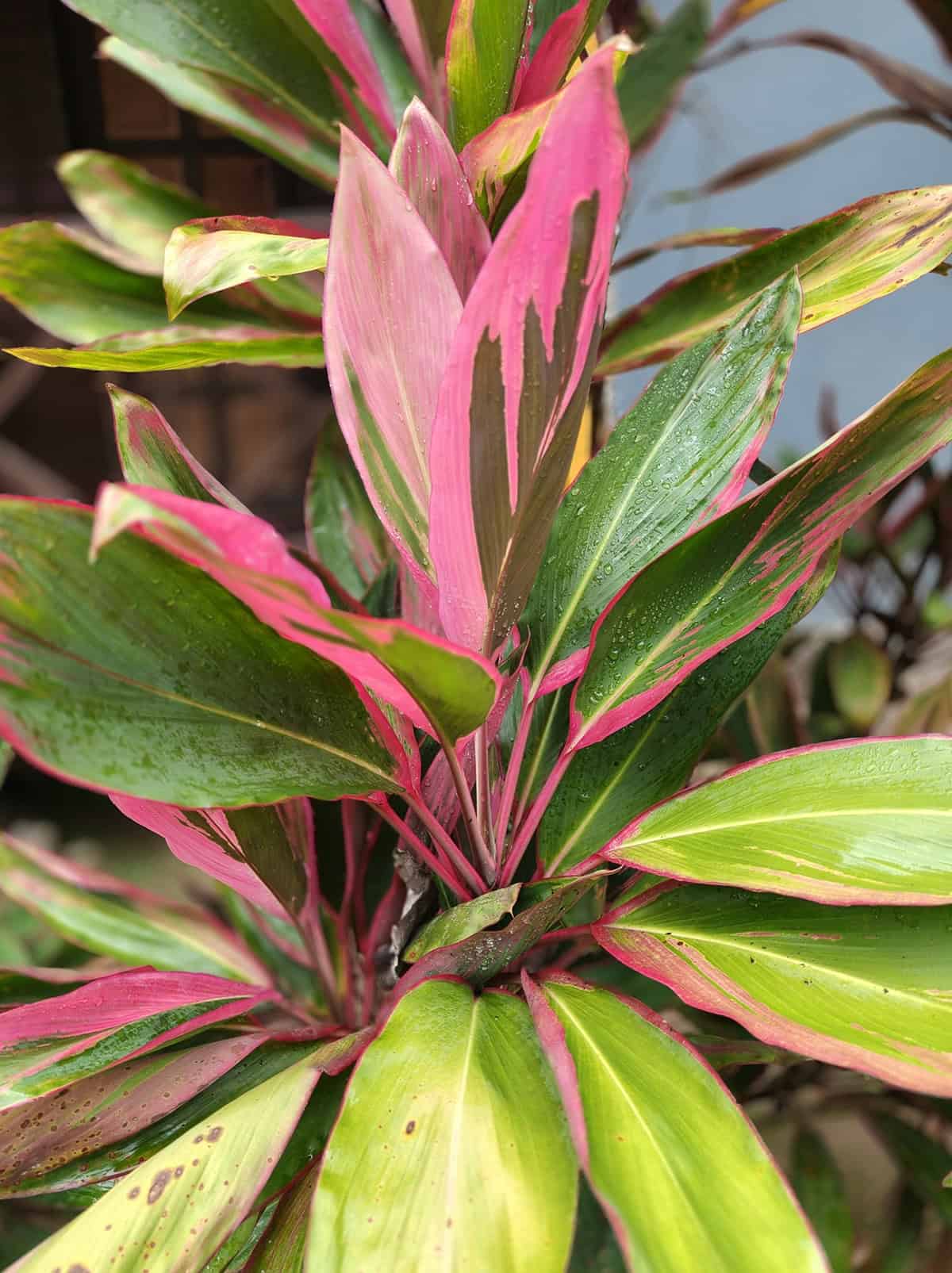
Ti plant grows as an evergreen shrub with woody canes topped by crowns of strap-shaped leaves 1 to 2 feet long. In tropical gardens, mature plants reach 10 feet or more and produce sprays of small lavender or white flowers followed by red berries. Indoors, flowering is rare, and potted plants top out around 3 to 6 feet.
Native to tropical Southeast Asia, New Guinea and the Pacific Islands, the species traveled across the Pacific with early Polynesian voyagers. It grows in the ground only in frost-free climates, USDA Zones 10 to 12.
- Botanical name: Cordyline fruticosa
- Common names: Ti plant, Hawaiian ti, good luck plant
- Plant type: Evergreen shrub
- Mature size: 6–10 feet tall outdoors, occasionally more; 3–8 feet wide
- Growth rate: Moderate
- Toxicity: Toxic to cats and dogs if eaten
- Native region: Tropical Southeast Asia, New Guinea and the Pacific Islands
Light
Bright, indirect light produces the most vivid reds and pinks. An east- or west-facing window fits ti plant well, and a sheer curtain filters a strong south-facing window.
Outdoors, morning sun with afternoon shade protects the leaves in hot climates. Green-leaved types tolerate more shade than the brightly colored cultivars.
Low light dulls the color and stretches the canes, while harsh sun bleaches and scorches the leaves. In winter, move the plant closer to a window or add a full-spectrum grow light for 10 to 12 hours a day.
Water
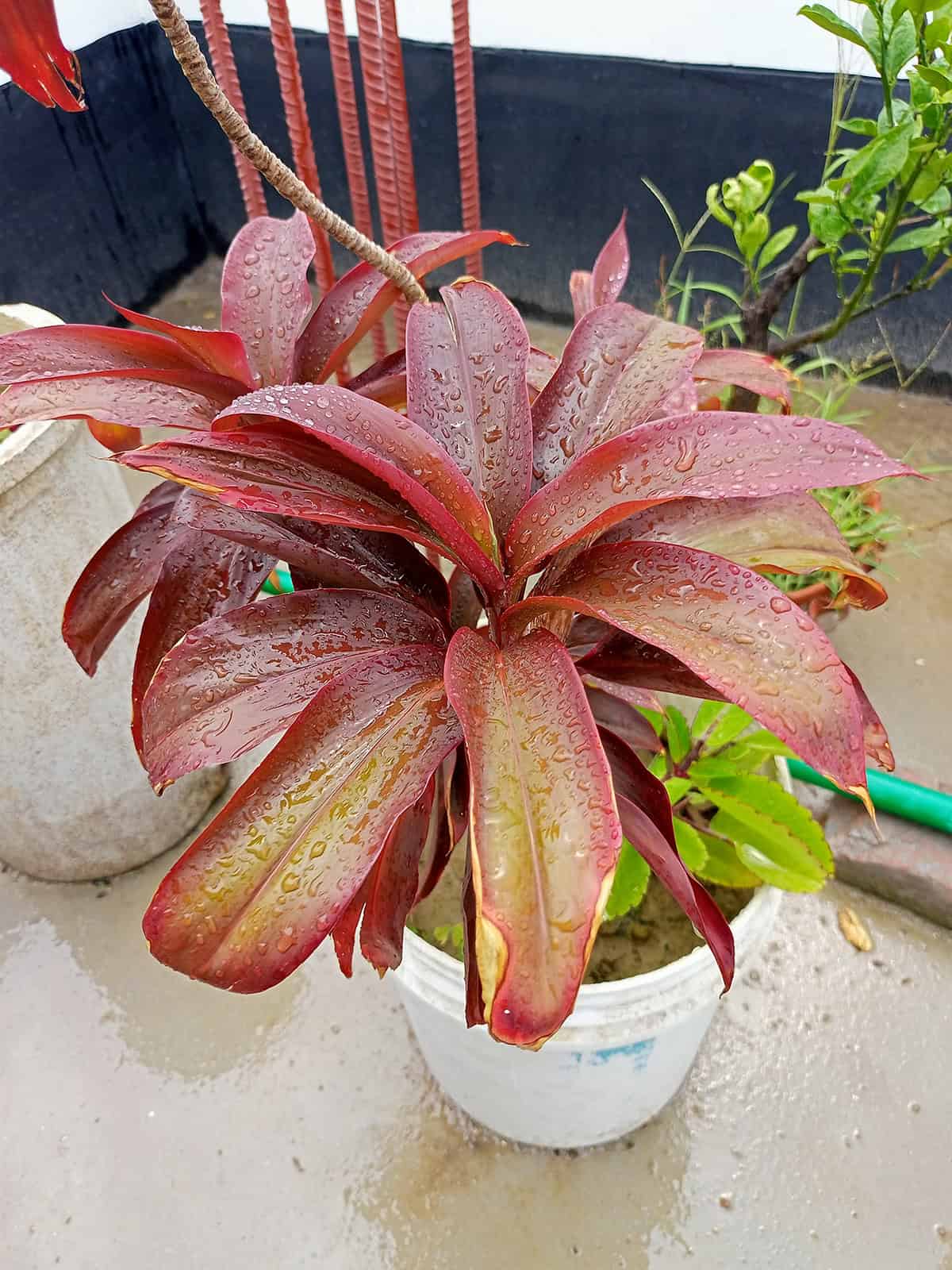
Ti plant likes evenly moist soil during spring and summer, and its roots rot quickly in soggy mix. Water when the top inch dries, and wait another day if it is still damp. In fall and winter, growth slows and the plant needs less water.
Fluoride and chlorine in tap water cause brown tips on the sensitive leaves. Rainwater or distilled water is the best choice, and tap water left out overnight loses its chlorine, although the fluoride is unaffected.
Empty the saucer after watering. Pot size, light and temperature all change how fast the soil dries, so check it rather than following a fixed schedule.
Soil
Ti plant grows best in loose, fertile soil that drains quickly, with a slightly acidic pH between about 6.0 and 6.5. Dense, compacted mixes hold water and lead to rot.
A quality potting mix improves with perlite, coarse sand or fine bark added for drainage. Garden soil in containers packs down and smothers the roots.
Outdoor beds need to drain well after heavy rain. Mix compost and coarse material into clay, or plant in a raised bed.
Temperature & Humidity
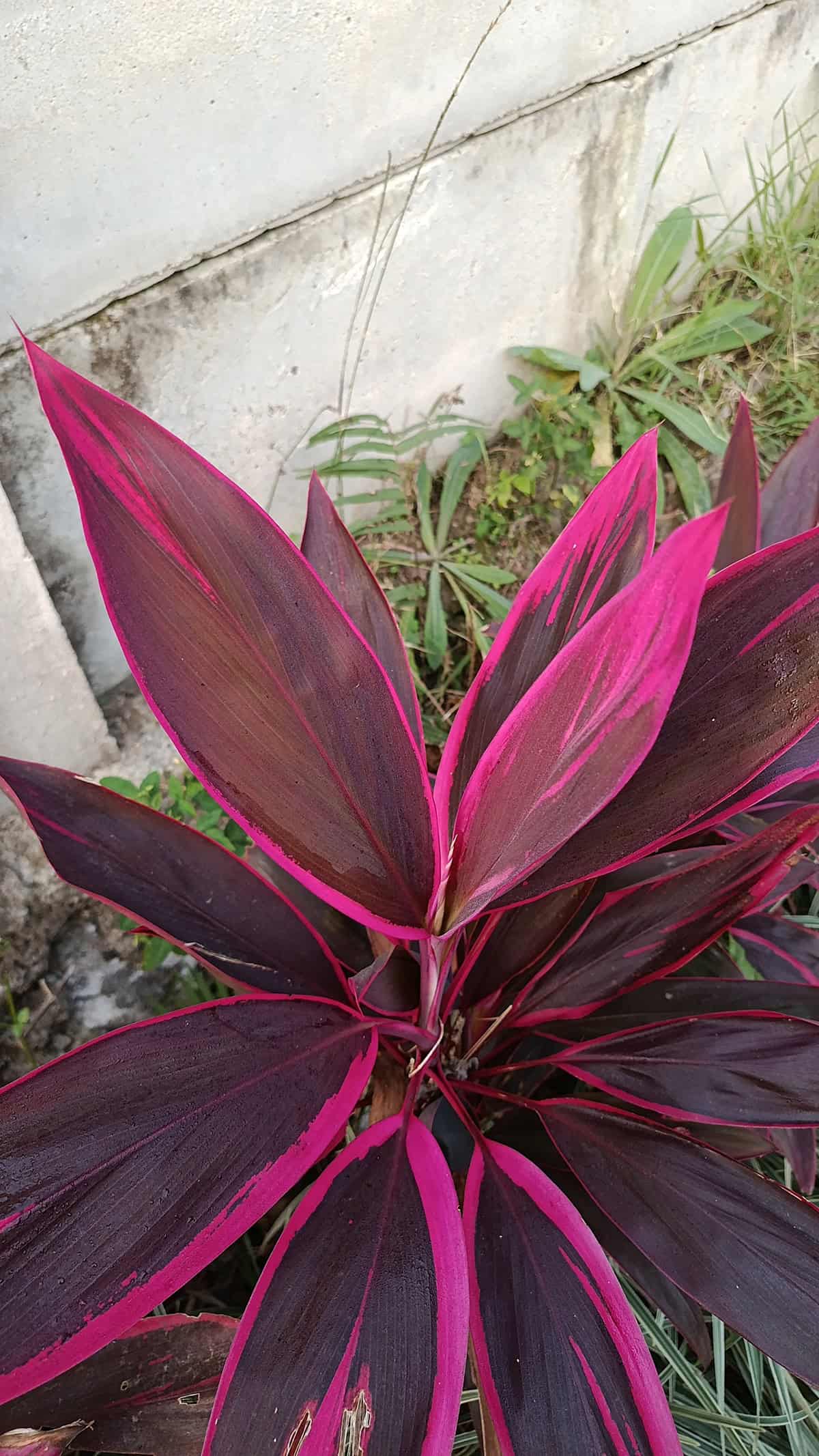
Steady warmth between 65°F and 85°F produces the healthiest ti plants. Temperatures below 50°F damage the leaves, and frost kills the top growth.
Indoors, place the plant away from drafty doors, air vents and cold window glass. Move containers inside before a frost warning.
Humidity of 50 to 70 percent prevents brown tips and curled edges. A humidifier, a pebble tray or a group of plants raises moisture in the air. Cool air combined with wet soil is the most common route to root rot, so water less during chilly spells.
Fertilizer
Feed ti plant every four to six weeks in spring and summer with a balanced water-soluble fertilizer such as 10-10-10 or 20-20-20, diluted to half strength or weaker for indoor plants.
Brown tips and leaf burn signal overfeeding or salt buildup. Every few months, flush the pot with rainwater or distilled water and let it drain completely.
Stop fertilizing when growth slows in autumn and start again when new shoots appear in spring. Outdoor plants do well with a slow-release granular fertilizer in early spring, scattered over moist soil away from the canes and watered in.
Potting & Repotting
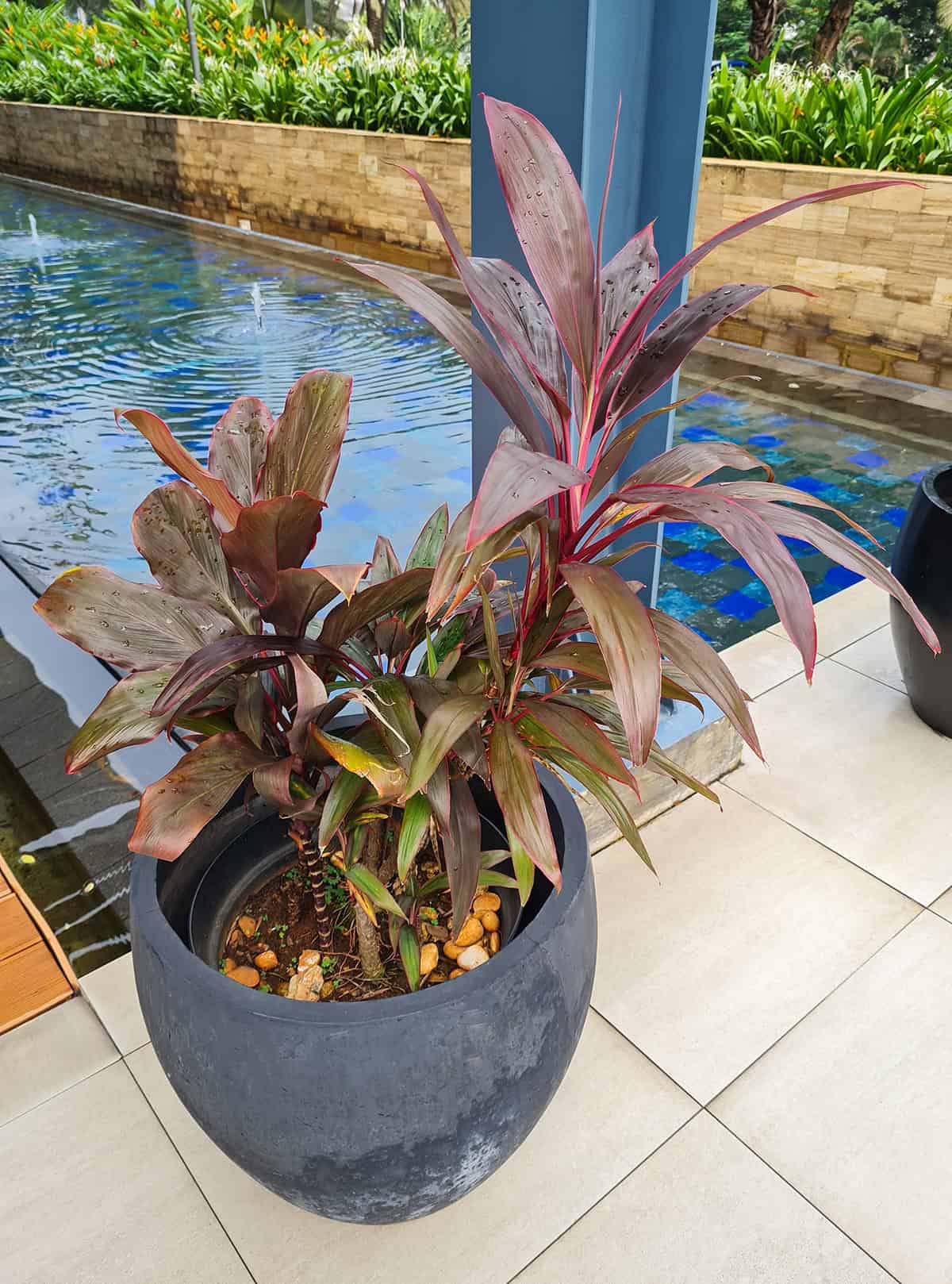
Use a pot with drainage holes, only 1 to 2 inches wider than the root ball. Oversized pots hold excess wet soil around the roots. Plastic and glazed ceramic fit indoor and outdoor plants alike, and tall, top-heavy specimens need a heavier or wider base for stability.
Blend potting soil with perlite or coarse sand, firm it gently around the roots and water thoroughly. Let the extra drain before returning the pot to its saucer.
Repot every two years in spring, or sooner when roots circle the pot or poke through the holes. Fresh mix at each repotting replaces depleted nutrients.
Pruning
Remove yellow or brown leaves close to the cane with sharp, clean shears whenever they appear. Heavier cuts go best in spring and early summer.
To control height, cut a tall cane just above a leaf node. New shoots sprout below the cut and fill out the plant. A leggy plant recovers well when the cane is cut back to 6 to 12 inches above the soil, as long as the roots are healthy and the weather is warm.
Take off no more than a third of the plant at once. Wipe blades with rubbing alcohol before and after use, and wear gloves if the sap irritates the skin. The removed tops root easily as cuttings.
Propagation
Tip cuttings root reliably. Cut a 4- to 8-inch piece with several nodes, strip the lower leaves and let the cut end dry for a few hours.
Set the cutting in moist, well-drained potting mix or a jar of water, in bright, indirect light. Roots appear in three to six weeks.
Older canes also yield new plants. Cut them into 2- to 3-inch sections, each with at least one node, and lay them sideways, half buried, in moist mix. Buds along the cane sprout new shoots, and warmth between 70°F and 85°F with high humidity speeds the process.
Once roots and new leaves form, pot each plant in fresh, fertile soil and introduce it to brighter light over a week or two.
Common Problems
Brown, crispy tips come from low humidity or from fluoride and salts in tap water. Rainwater or distilled water and higher humidity prevent new damage, and a trim of the dead tips tidies the old leaves.
Yellow lower leaves point to overwatering. Let the top layer of soil dry before the next watering.
Mealybugs, spider mites and scale hide under the leaves and fade their color, and slugs and snails chew holes in outdoor plants overnight. Check leaf undersides regularly and treat with insecticidal soap or horticultural oil.
Dark, sticky spots during humid weather signal fungal or bacterial leaf spot. Improve air movement and water at the soil line.
Mushy stems and wilting on wet soil mean root rot. Cut away rotten tissue and replant in loose, airy mix. Limp, washed-out leaves after a cold night point to chill damage below 60°F, and a warmer spot prevents more.
Varieties
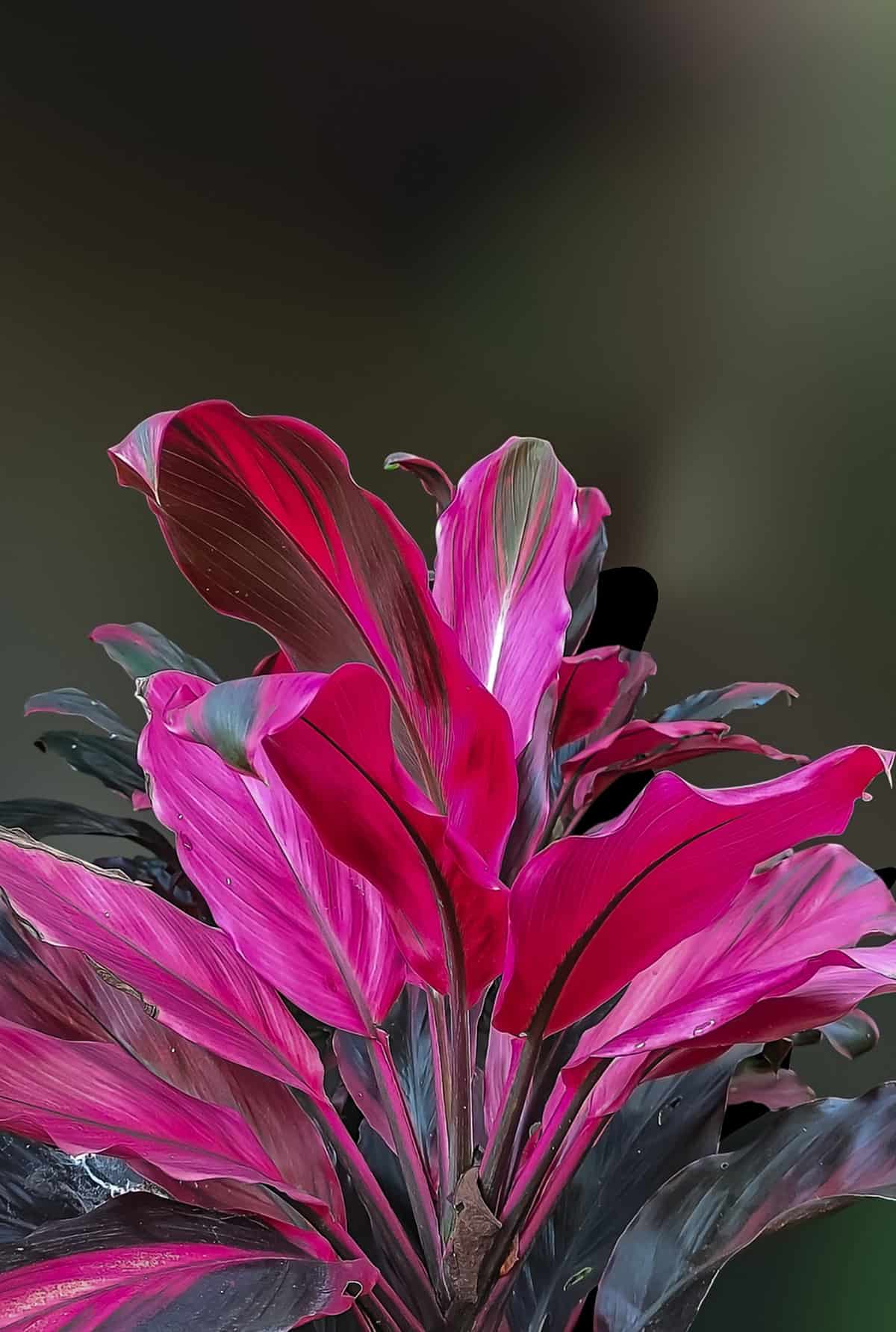
Cordyline fruticosa comes in dozens of cultivars, all with strap-shaped leaves but in a huge range of colors and sizes. Compact types top out near 3 feet in pots, while others reach 10 feet in tropical gardens.
‘Red Sister’ has deep burgundy leaves with hot pink new growth and grows to about 3 feet indoors. ‘Electric Pink’ carries maroon blades edged in bright pink on an upright clump.
‘Kiwi’ has green leaves striped with cream and edged in pink, and the plain green Hawaiian ti grows tall and tolerates more shade. Before buying, compare mature height, leaf color and the amount of sun in the planned spot.