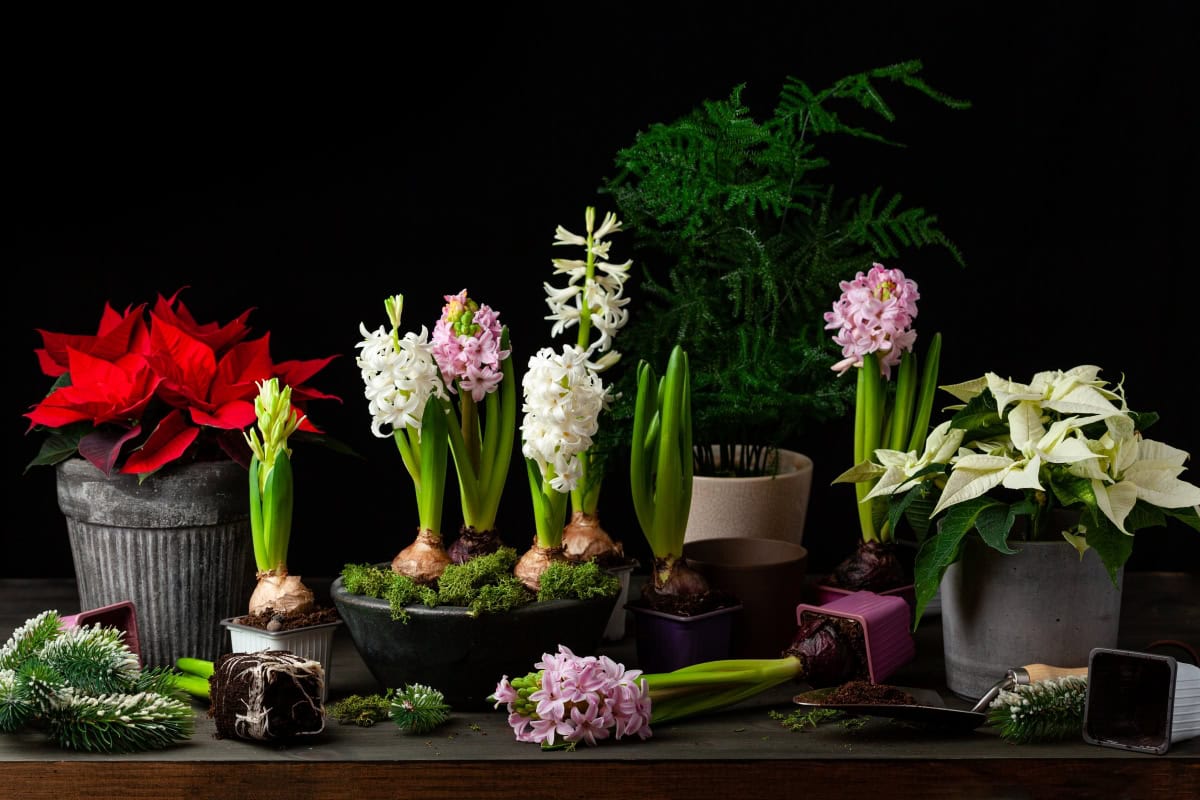
Paperwhites and amaryllis produce winter flowers indoors without chilling, and cold-treated spring bulbs extend the display into late winter. A pot of bulbs on a windowsill holds the promise of flowers during the grayest stretch of the year. Timing matters: tulips and hyacinths need weeks of cool rooting before they enter a warm room. The distinction between bulbs that bloom promptly and those that require a winter rest shapes every planting plan.
Table of Contents
- Paperwhite Narcissus (Narcissus papyraceus)
- Amaryllis (Hippeastrum)
- Dutch Hyacinth (Hyacinthus orientalis)
- Grape Hyacinth (Muscari armeniacum)
- Early Tulips (Tulipa spp.)
- Triumph Tulips (Tulipa Triumph Group)
- Double Early Tulips (Tulipa Double Early Group)
- Miniature Daffodils (Narcissus ‘Tête-à-Tête’)
- Trumpet Daffodils (Narcissus spp.)
- Jonquil Daffodils (Narcissus jonquilla)
- Dutch Crocus (Crocus vernus)
- Snow Crocus (Crocus chrysanthus)
- Reticulated Iris (Iris reticulata)
- Dutch Iris (Iris × hollandica)
- Siberian Squill (Scilla siberica)
- Glory of the Snow (Chionodoxa luciliae)
- Striped Squill (Puschkinia scilloides)
- Snowdrops (Galanthus nivalis)
- Spring Snowflake (Leucojum vernum)
- Checkered Fritillary (Fritillaria meleagris)
- Star of Bethlehem (Ornithogalum umbellatum)
- Freesia (Freesia hybrids)
- Ranunculus (Ranunculus asiaticus)
- Grecian Windflower (Anemone blanda)
- Oxalis (Oxalis triangularis)
- Sparaxis (Sparaxis tricolor)
Paperwhite Narcissus (Narcissus papyraceus)
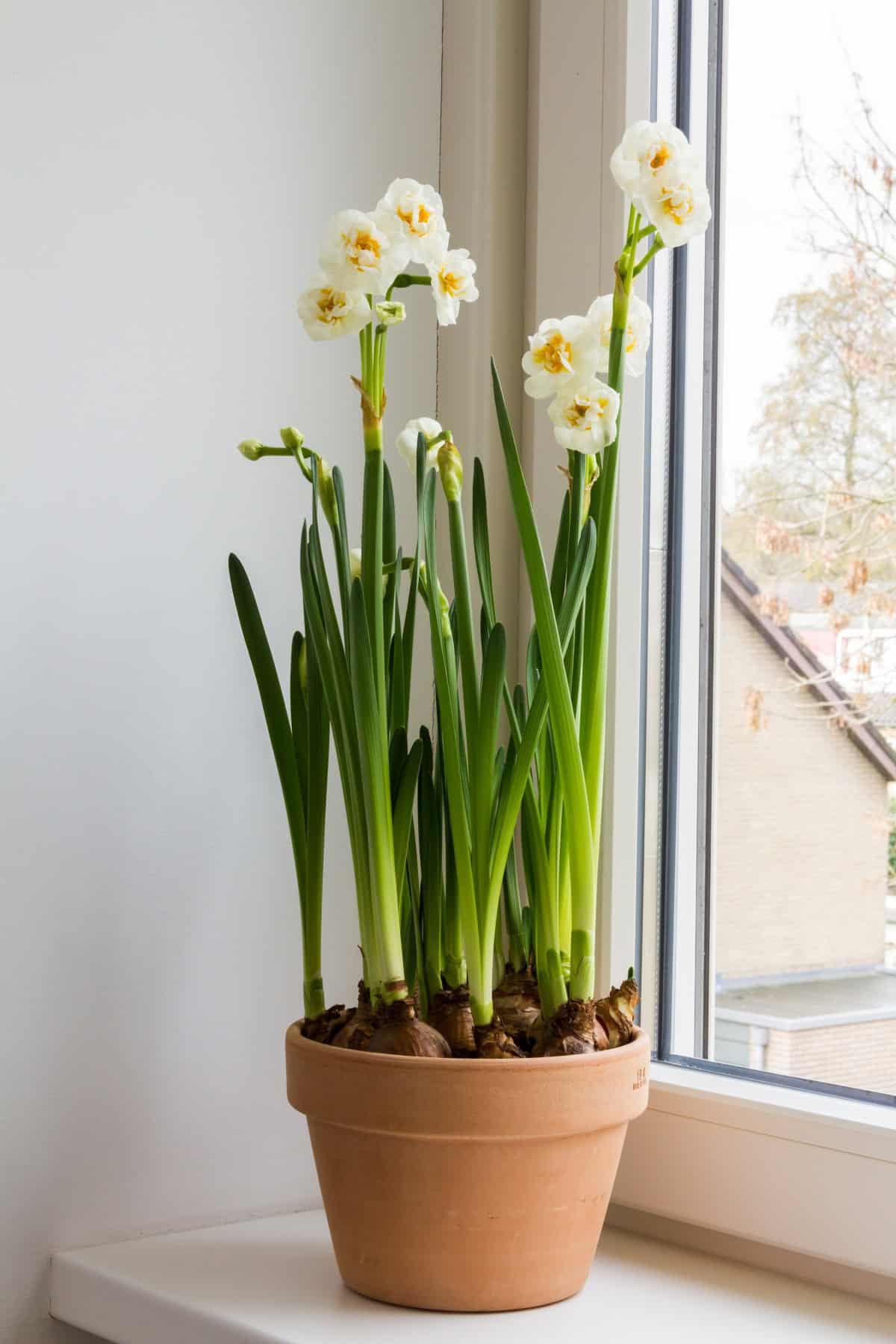
White, star-shaped flowers appear just weeks after paperwhite bulbs are planted, making them a dependable choice for midwinter blooms. Set the bulbs close together in a shallow container of pebbles or potting mix, leaving their pointed tips exposed. In a pebble-filled vessel, water should reach the base of the bulbs without covering them.
Once shoots emerge, bright light and a cool room help keep the stems upright. Paperwhites have a pronounced fragrance, especially in a small space; a single pot on a mantel may scent the entire room.
Amaryllis (Hippeastrum)
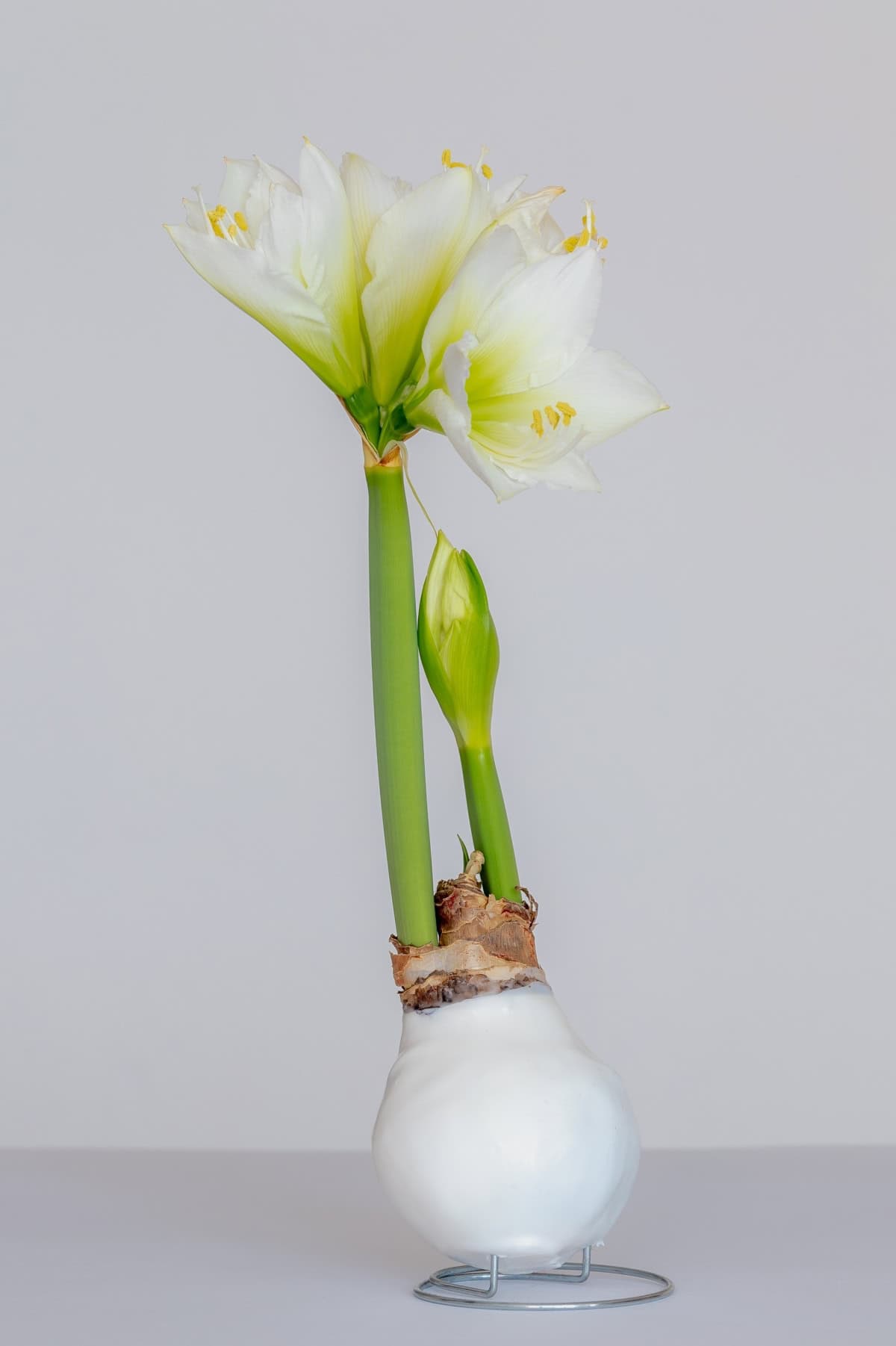
For large flowers on a single commanding stem, amaryllis needs only warmth, light, and a snug pot. Plant the bulb with its upper third above the potting mix, then water lightly until growth begins. A flowering stem may emerge before the leaves, giving the developing buds an unusually clear silhouette.
Turn the pot as the stem grows toward the light. Once flowers open, a cooler position away from heating vents helps preserve the display. Bulb size affects flower-stalk count, with larger bulbs frequently producing a second stalk.
Dutch Hyacinth (Hyacinthus orientalis)
Fragrance is the defining feature of a forced Dutch hyacinth. Its tightly packed flower spike develops after roughly 12 to 14 weeks of cold rooting, followed by a move into a bright, cool room. Bulbs sold as prepared or prechilled shorten the planning required.
A forcing glass supports one bulb above water, leaving space for roots to grow below; the bulb’s base should sit just clear of the waterline. In pots, firm stems and developing buds signal that the bulbs are ready to leave cold storage.
Grape Hyacinth (Muscari armeniacum)
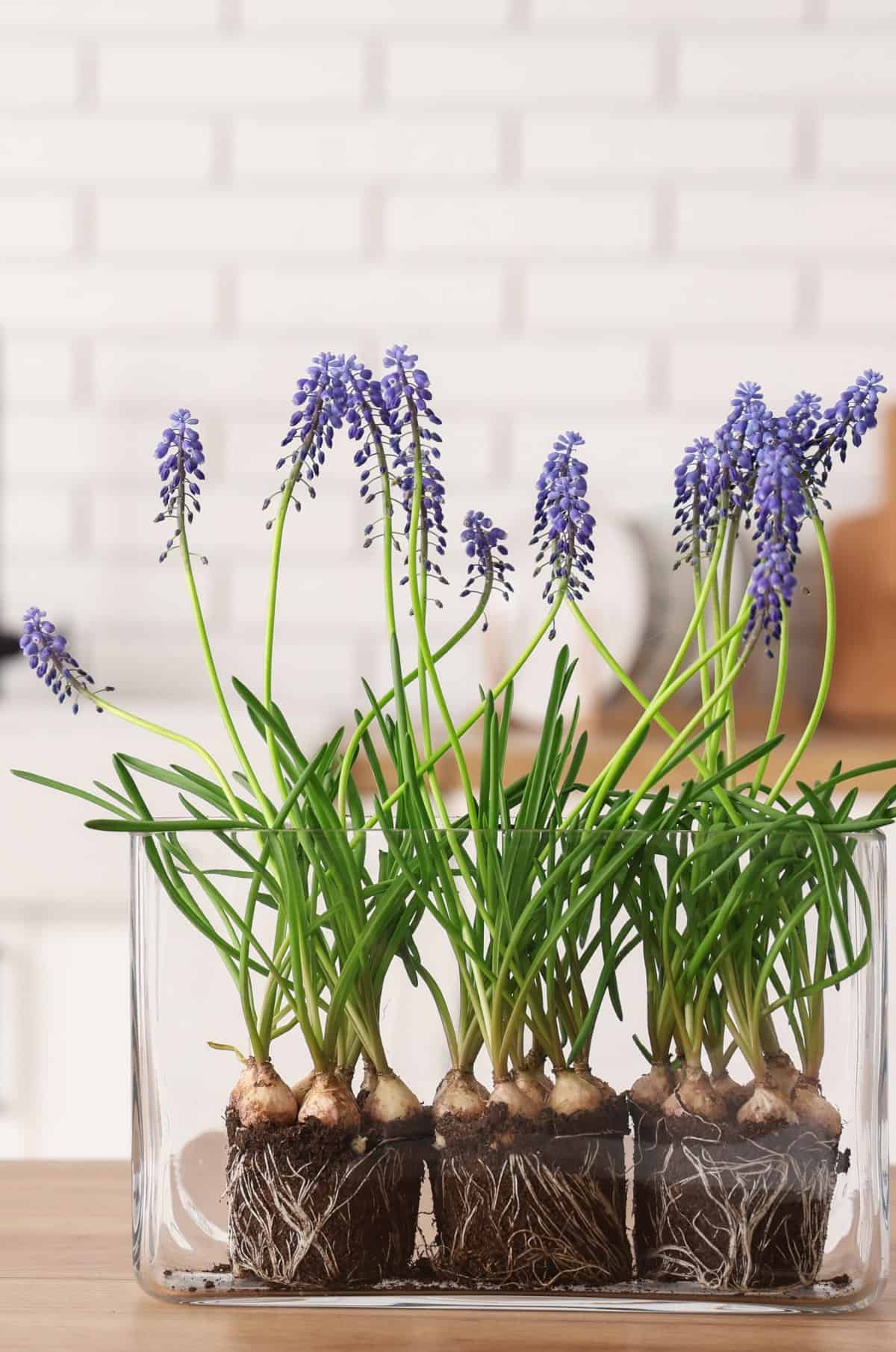
Tiny cobalt-blue flower clusters give grape hyacinths their impact when bulbs are planted in a dense group. Their short stems fit a shallow pot, where the narrow leaves spill gently over the rim. Purple and white selections provide quieter variations on the familiar blue.
Allow about 12 to 16 weeks of cold rooting in moist, well-drained mix. After shoots develop, bright light and modest indoor temperatures support compact growth. The blooms are small, but a crowded planting reads as a continuous band of color.
Early Tulips (Tulipa spp.)
Early-flowering tulip varieties are the practical starting point for indoor tulip forcing. Single Early cultivars have neat, cup-shaped flowers and relatively sturdy stems, though success still depends on a long cold period. Choose firm bulbs labeled for forcing when available.
Plant them close together in a deep, well-drained pot, with their pointed tips near the surface. Rooting commonly takes 14 to 18 weeks in a cold, dark location. Once green shoots reach a few inches, introduce light gradually to limit stretched, weak stems.
Triumph Tulips (Tulipa Triumph Group)
Strong stems and classic tulip cups make Triumph cultivars distinctive in a winter pot. Their broad color range includes clean whites, rich reds, and striped selections, though cultivar choice influences forcing performance. Bulbs specifically designated for forcing provide the clearest guidance on timing.
Give planted bulbs an extended cold rooting period, commonly around 14 to 18 weeks, with the mix kept lightly moist. Indoors, place the pot in bright light away from direct heat. Tulip stems continue lengthening as the flowers mature.
Double Early Tulips (Tulipa Double Early Group)
Layered petals make Double Early tulips resemble compact peonies once their buds open. Their full flower heads reward a grouped planting in a broad pot, with enough depth for roots and drainage holes beneath the mix.
These tulips need a substantial cold rooting period, generally around 14 to 18 weeks. Bright light supports their short, sturdy growth after the pot comes indoors. Because the blossoms are heavy, a cool display spot helps the stems hold their shape as the petals expand.
Miniature Daffodils (Narcissus ‘Tête-à-Tête’)
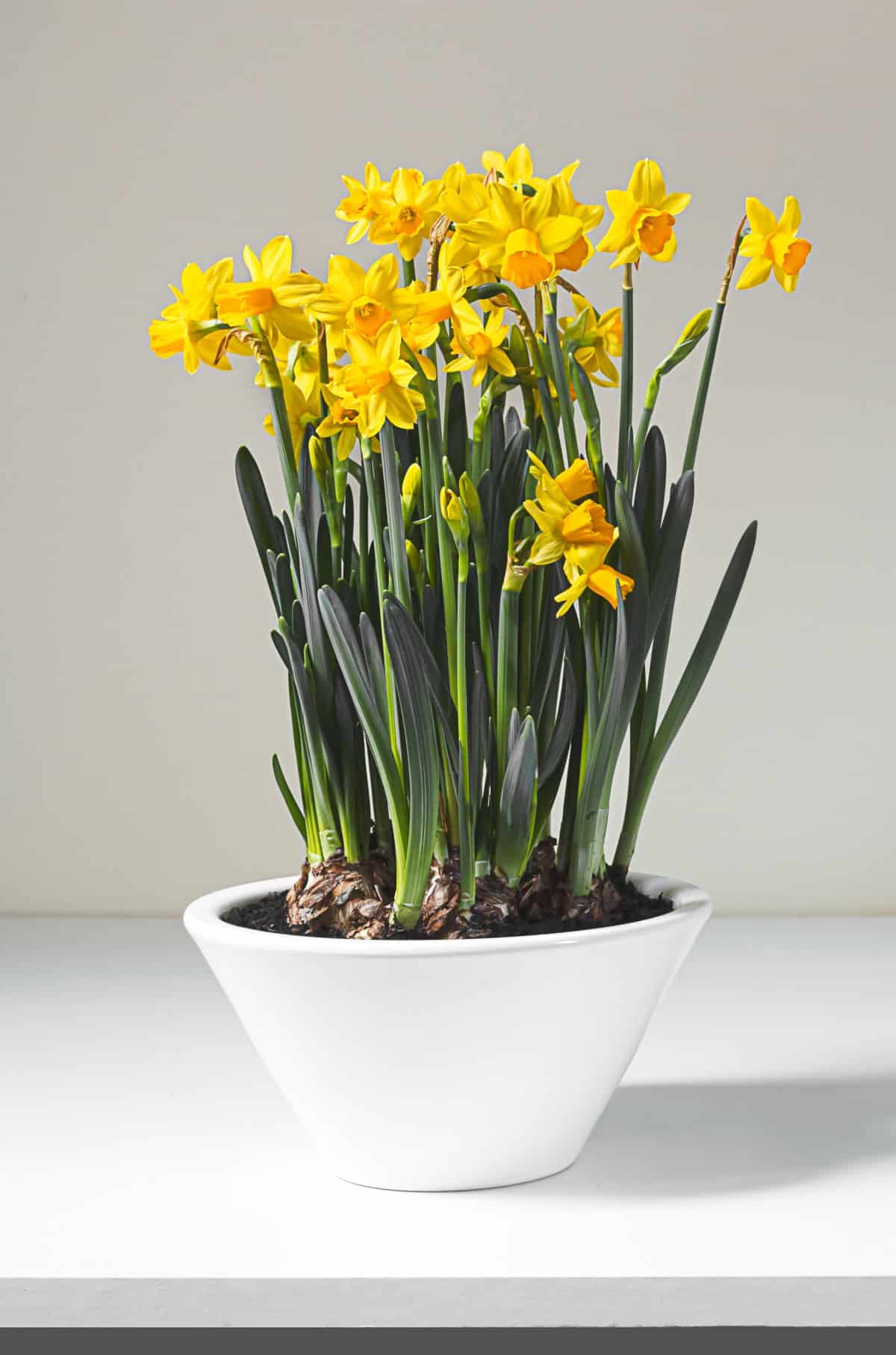
A narrow windowsill has room for a cluster of ‘Tête-à-Tête’ daffodils. Each compact stem carries small golden flowers, and closely planted bulbs produce a generous display without the height of a standard daffodil.
Plant the bulbs in well-drained mix before giving them roughly 12 to 16 weeks of cool rooting. Move the pot into bright light once the shoots are several inches tall and flower buds are evident. Keep the soil lightly moist throughout bloom; standing water around the bulbs encourages rot.
Trumpet Daffodils (Narcissus spp.)
A long central trumpet framed by broad petals gives these daffodils their unmistakable outline. For indoor forcing, choose a cultivar recommended for pots and use a deep container to anchor its taller stems.
Trumpet daffodils generally need 14 to 16 weeks of cold rooting before entering a bright, cool room. Space the bulbs closely without letting them press against the pot’s sides. If leaves race ahead of the buds, stronger light and cooler temperatures help keep the developing flower stems from leaning.
Jonquil Daffodils (Narcissus jonquilla)
Sweet fragrance and slender, rushlike leaves distinguish jonquils in an indoor planting. Several small blooms may appear along a stem, giving a modest pot plenty to look at once flowering begins.
Jonquil types require a cold rooting period for winter forcing; cultivar-specific directions are useful because schedules vary. Plant the bulbs in a container with drainage and move them indoors after roots are established and shoots have developed. A bright position away from radiators protects the flowers, whose scent becomes especially noticeable at close range.
Dutch Crocus (Crocus vernus)
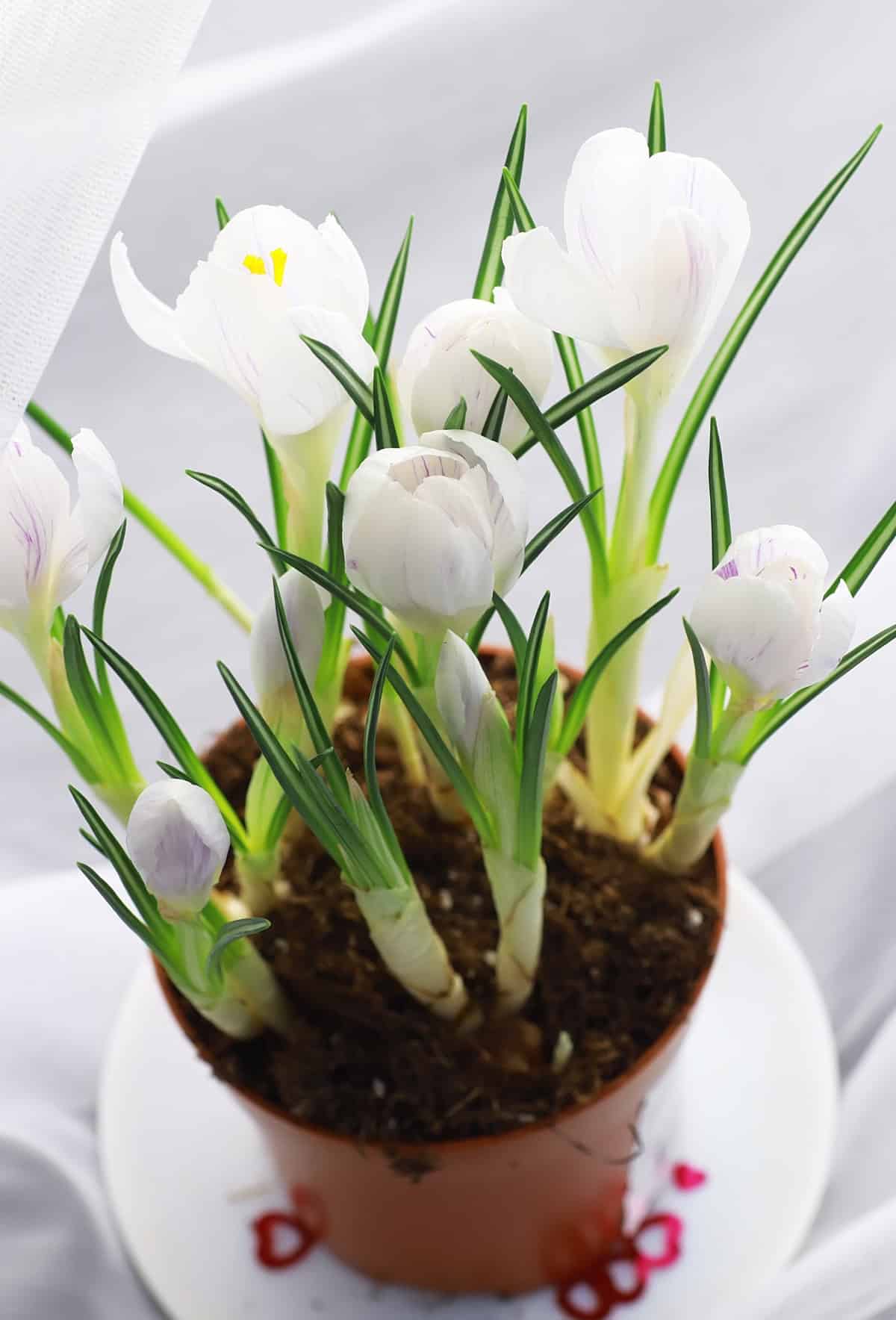
Broad crocus cups open dramatically in bright daylight and close as the light fades. Dutch crocus flowers are large for the genus, with purple, white, and striped cultivars suited to tight groupings in a shallow bowl.
The planting needs about 12 to 15 weeks of cold rooting in moist, well-drained mix. Bring the pot into a cool, bright room when shoots are visible. Keep it near a sunny window during bloom: weak light leaves the flowers closed for much of the day.
Snow Crocus (Crocus chrysanthus)
Early color sits low to the soil with snow crocus. Small flowers in yellow, cream, or violet rise above fine, grasslike leaves, and their scale favors a densely planted dish viewed at close range.
Give the corms roughly 12 to 15 weeks of cold rooting, keeping the mix lightly moist. Once moved indoors, they respond to bright light and cool conditions. The flowers open widest in sunshine, making a window ledge a useful display spot during their brief bloom.
Reticulated Iris (Iris reticulata)
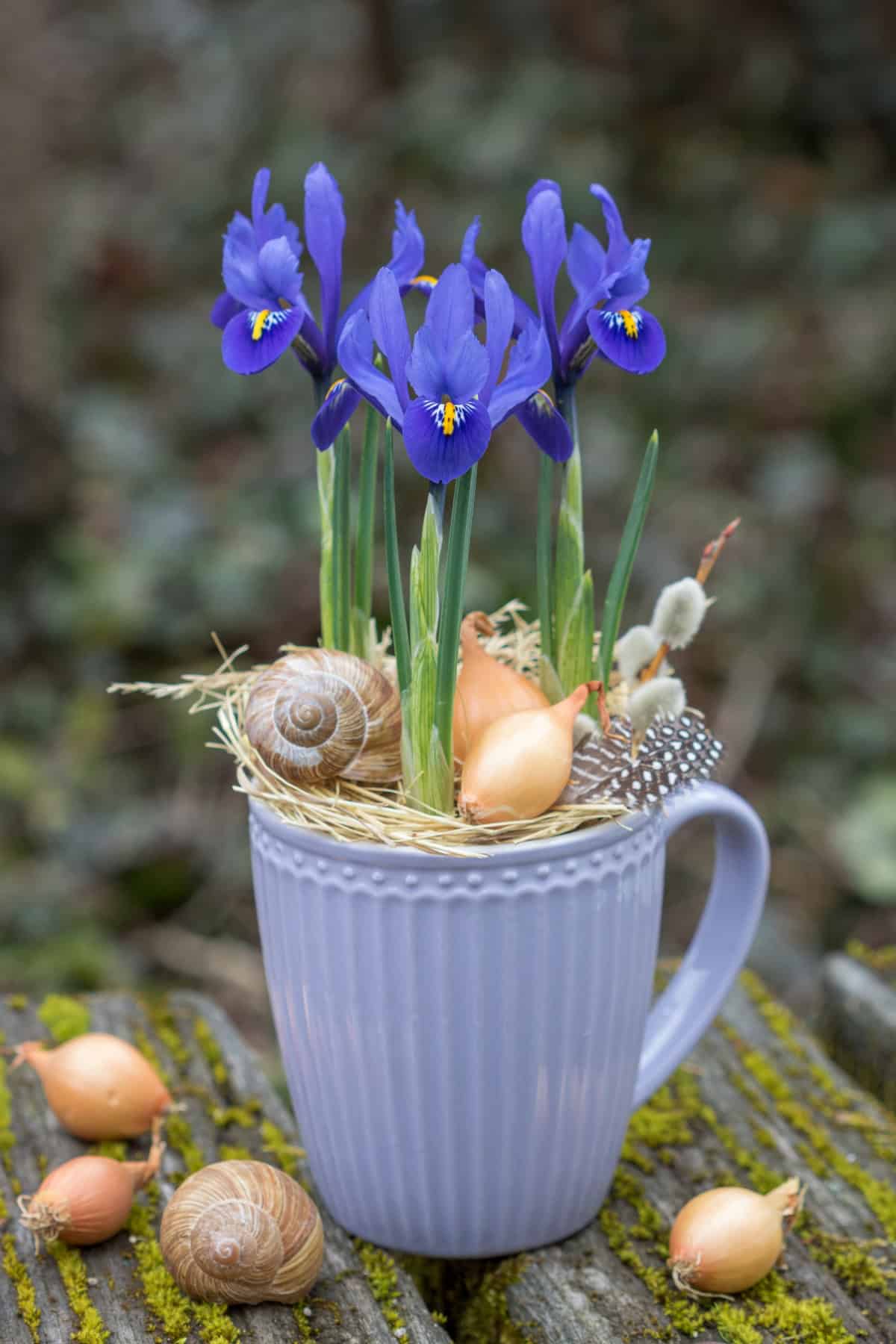
Intricate yellow markings on deep violet petals make reticulated iris rewarding at eye level. Despite the detailed flowers, the plants remain short enough for a small pot on a shelf or windowsill.
Set the bulbs in well-drained mix and allow approximately 12 to 15 weeks of cold rooting. Introduce the pot to bright light as shoots appear; warmth speeds flowering but also shortens the display. The blooms arrive early, sometimes before the narrow leaves have reached their full height.
Dutch Iris (Iris × hollandica)
Tall, slender stems give Dutch iris a different presence from the compact reticulated type. Its sculptural flowers appear in blue, purple, yellow, or white, and a deep pot helps support the height they develop indoors.
Dutch iris needs a lengthy cold rooting period, commonly 14 to 18 weeks, and dependable drainage throughout. Move established pots into a bright, cool space once shoots are growing. Stems may need discreet support as buds swell, particularly in a room where light reaches the pot from one side.
Siberian Squill (Scilla siberica)
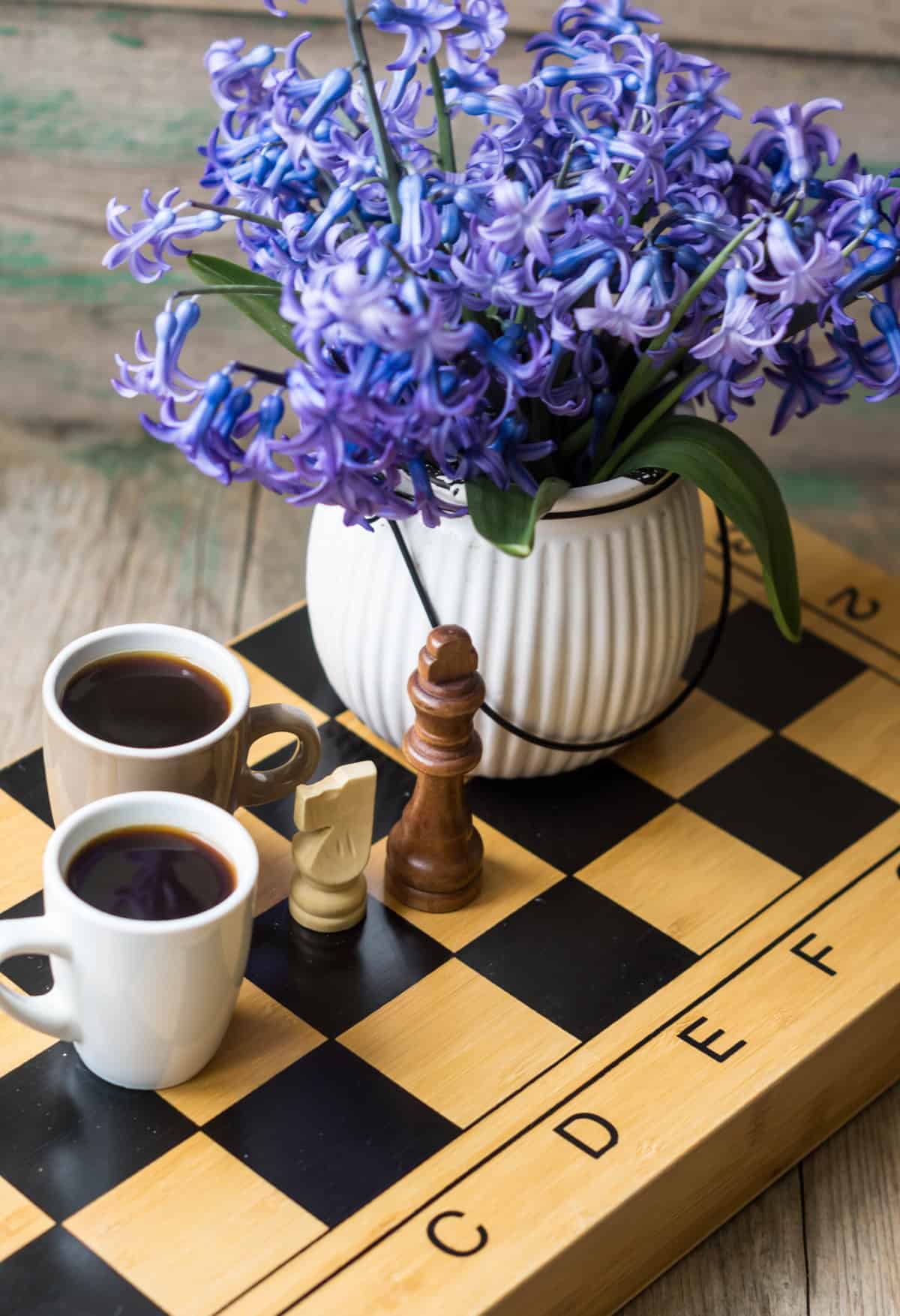
Clear blue, nodding bells stand out against the narrow green leaves of Siberian squill. The bulbs are small, so a generous cluster in a shallow container gives the flowers enough visual presence indoors.
Plant them close together in well-drained mix and provide about 12 to 16 weeks of cold rooting. Shoots develop quickly after the pot enters a bright room. Cool temperatures help preserve the delicate flowers, which hang downward and reveal their richest color when the pot sits slightly above eye level.
Glory of the Snow (Chionodoxa luciliae)
Pale centers brighten the blue star-shaped flowers of glory of the snow. A low, broad pot lets several stems emerge across the surface, echoing the loose spread this spring bulb forms outdoors.
Its bulbs need around 12 to 15 weeks of cold rooting in lightly moist mix. After shoots appear, bright light encourages compact stems and open flowers. The blooms are small enough to reward a close look, particularly where their white centers catch daylight beside a window.
Striped Squill (Puschkinia scilloides)
Fine blue lines running down pale petals give striped squill its distinctive detail. The flowers gather along short stems, and several bulbs planted together produce a lightly clustered display suited to a tabletop pot.
Allow roughly 12 to 16 weeks for cold rooting, with good drainage and steady, light moisture. Bring the pot into a bright, cool room when shoots are established. Warm indoor air moves the bloom along quickly; a cooler overnight spot helps retain the flowers for longer.
Snowdrops (Galanthus nivalis)
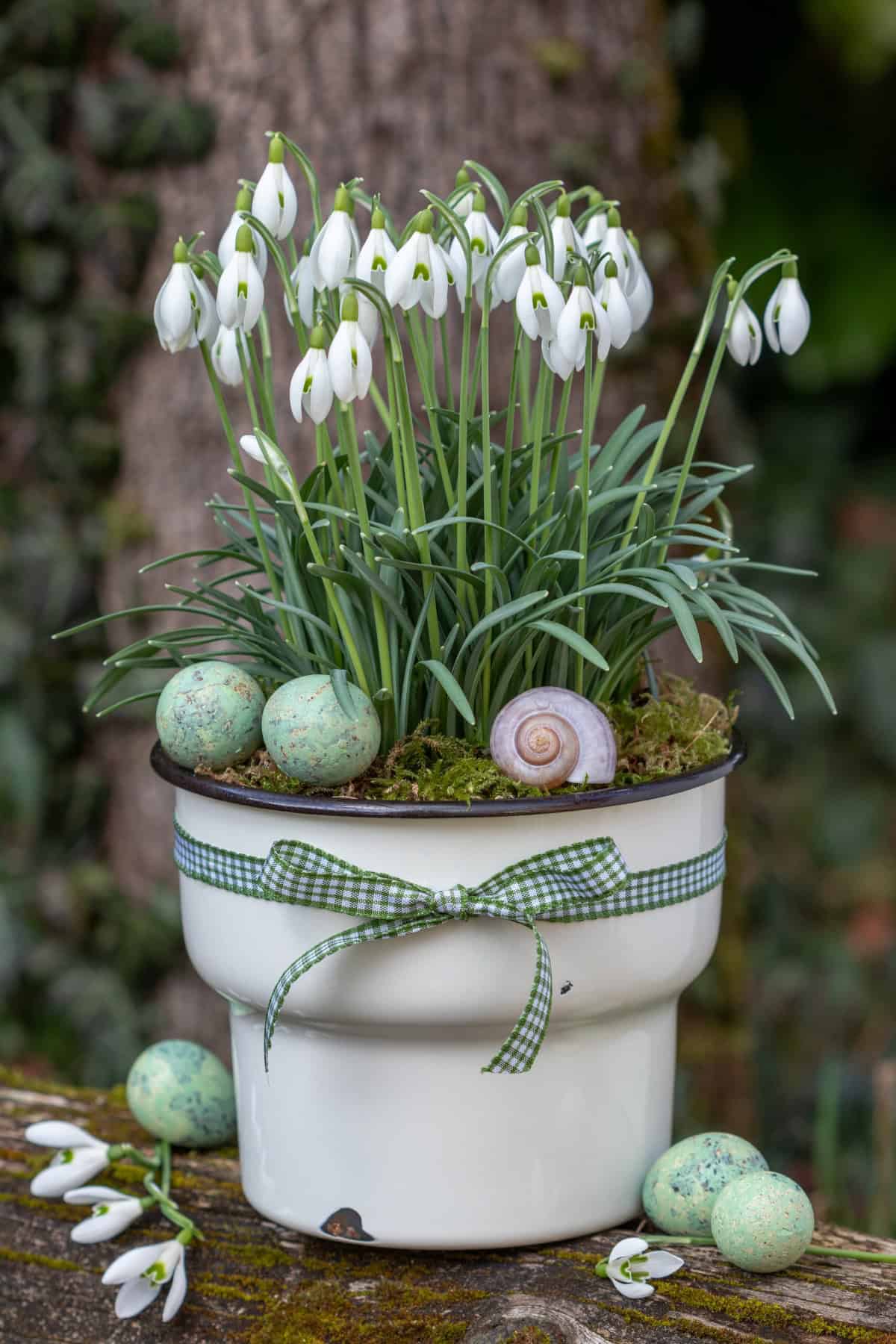
White flowers hanging from arching stems make snowdrops especially striking in a raised pot. Their inner petals carry small green markings, visible when a bloom is gently tilted upward.
Snowdrop bulbs dry out readily in storage, making fresh, firm bulbs important for forcing. Plant them promptly and provide roughly 12 to 16 weeks of cool rooting in evenly moist, well-drained mix. Once growth begins indoors, keep the pot cool and brightly lit. Their slender stems and subdued flowers reward an uncluttered display.
Spring Snowflake (Leucojum vernum)
Green-tipped white bells distinguish spring snowflake from the nearby snowdrops. Its flowers hang beneath arching stems, with a fuller bell shape that shows the green marks at the end of each petal.
Plant fresh bulbs in moisture-retentive, well-drained mix and give them an extended cold period, approximately 12 to 16 weeks. The mix should remain lightly moist during rooting. Once indoors, bright light and cool temperatures support the stems; the flowers are easiest to appreciate in a pot set near eye level.
Checkered Fritillary (Fritillaria meleagris)
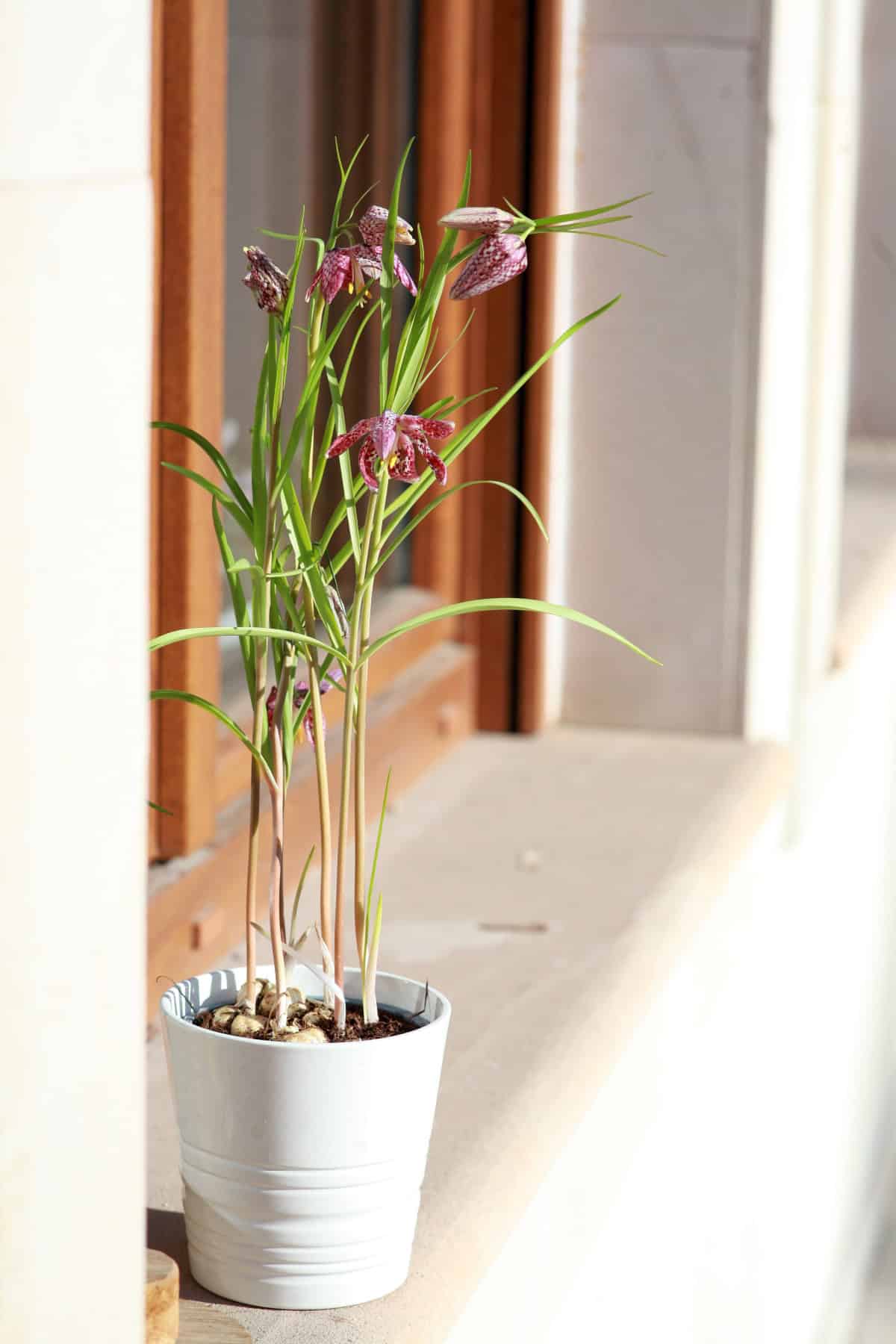
The faint checkerboard pattern on each pendant flower is the reason to grow checkered fritillary indoors. Plum-purple blooms show it most clearly, although pale selections also exist. A small grouping gives the nodding stems room to be seen individually.
Plant fresh bulbs promptly; their thin outer covering leaves them vulnerable to drying in storage. Provide roughly 12 to 16 weeks of cool rooting in well-drained mix that stays lightly moist. Keep flowering pots in a cool room, where the delicate stems remain upright longer.
Star of Bethlehem (Ornithogalum umbellatum)
Six-pointed white flowers open in strong light, giving star of Bethlehem a crisp display on a sunny sill. Green stripes on the backs of the petals remain visible when the blooms close later in the day.
The bulbs need a cold rooting period of roughly 12 to 16 weeks in well-drained mix before they enter a bright room. Keep this species contained in its pot: it spreads aggressively in parts of the United States. Its bulbs and other plant parts are toxic if eaten, so the pot belongs beyond the reach of pets and children.
Freesia (Freesia hybrids)
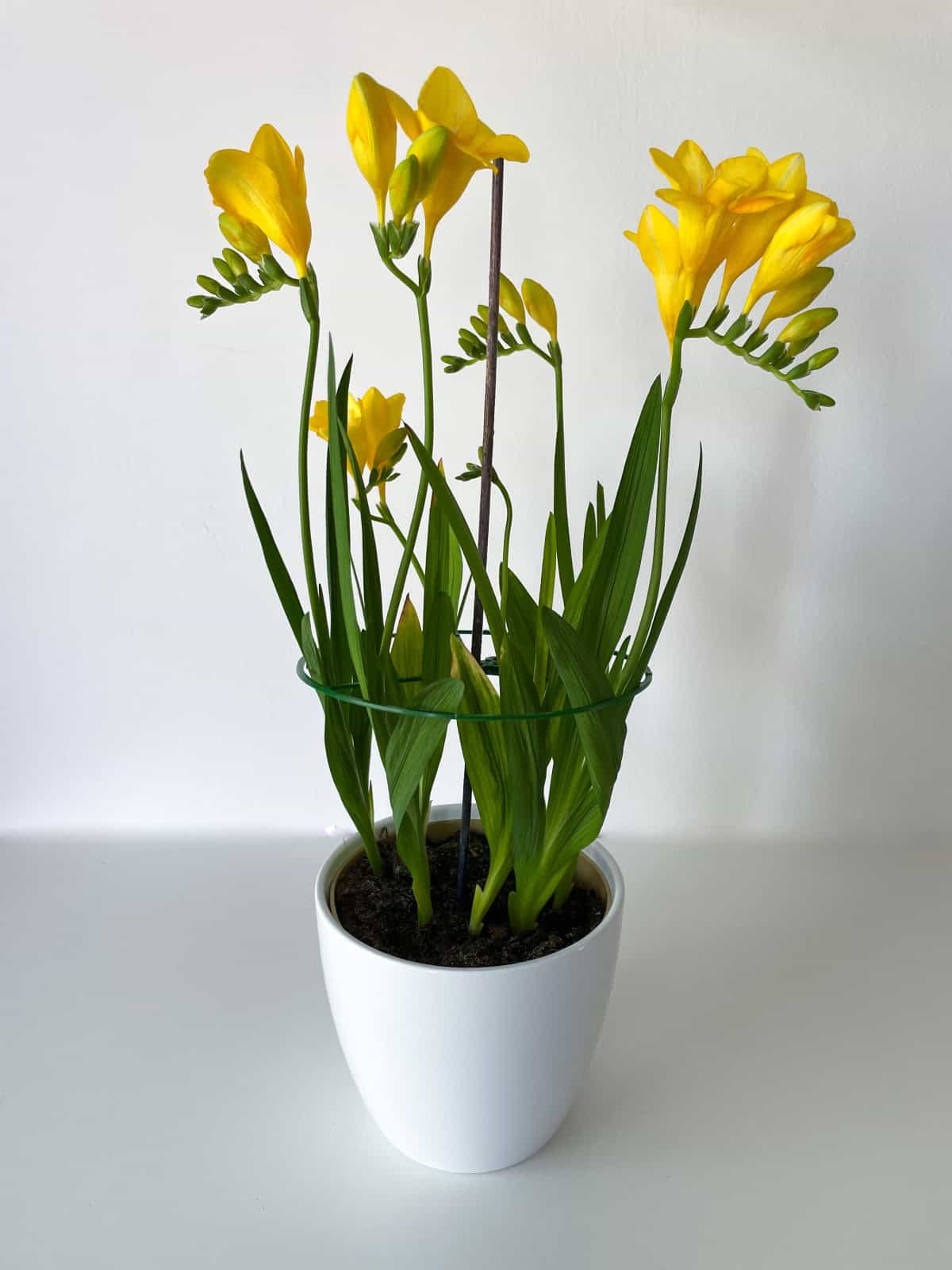
A sweet scent and flowers arranged along one side of an arching stem make freesia memorable indoors. Its corms grow well in pots without the prolonged cold treatment required by tulips. Cool growing conditions are important, though: sustained household heat encourages weak growth.
Plant corms in well-drained mix with their pointed ends facing up, then place the pot in bright light. Temperatures around 50 to 60°F during active growth favor sturdier stems and flower development. Taller varieties may need a slim stake as buds begin opening.
Ranunculus (Ranunculus asiaticus)
Dense rings of petals give ranunculus its flower-shop appearance, yet its claw-shaped tubers also grow in indoor pots. The plants need strong light and cool temperatures throughout growth; a warm, dim room produces disappointing stems.
Soak dry tubers briefly according to the supplier’s directions, then plant with the claws pointing downward in well-drained mix. Water carefully until shoots emerge, avoiding persistently soggy soil. A bright, cool sunroom provides favorable conditions as the leaves develop and flower buds form.
Grecian Windflower (Anemone blanda)
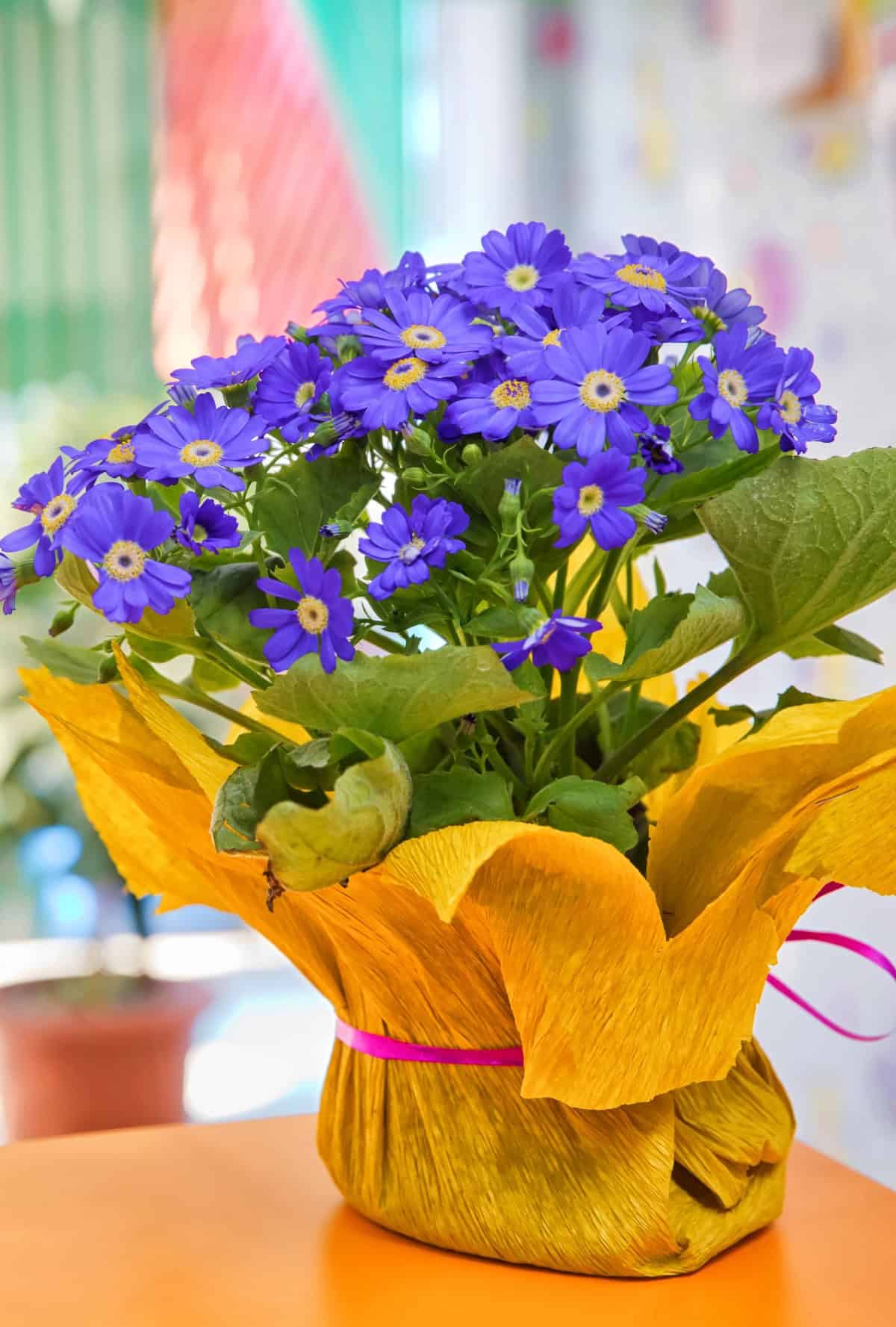
Daisy-like flowers spread across a low planting of Grecian windflower. Blue, pink, and white selections rise above finely divided leaves, filling a shallow pot without tall stems or supports.
Its small tubers benefit from soaking before planting, then need about 10 to 14 weeks of cool rooting in well-drained mix. Once shoots appear, place the pot in bright light and keep it cool. The flowers open freely under good light, with a cluster giving each small bloom a visible place.
Oxalis (Oxalis triangularis)
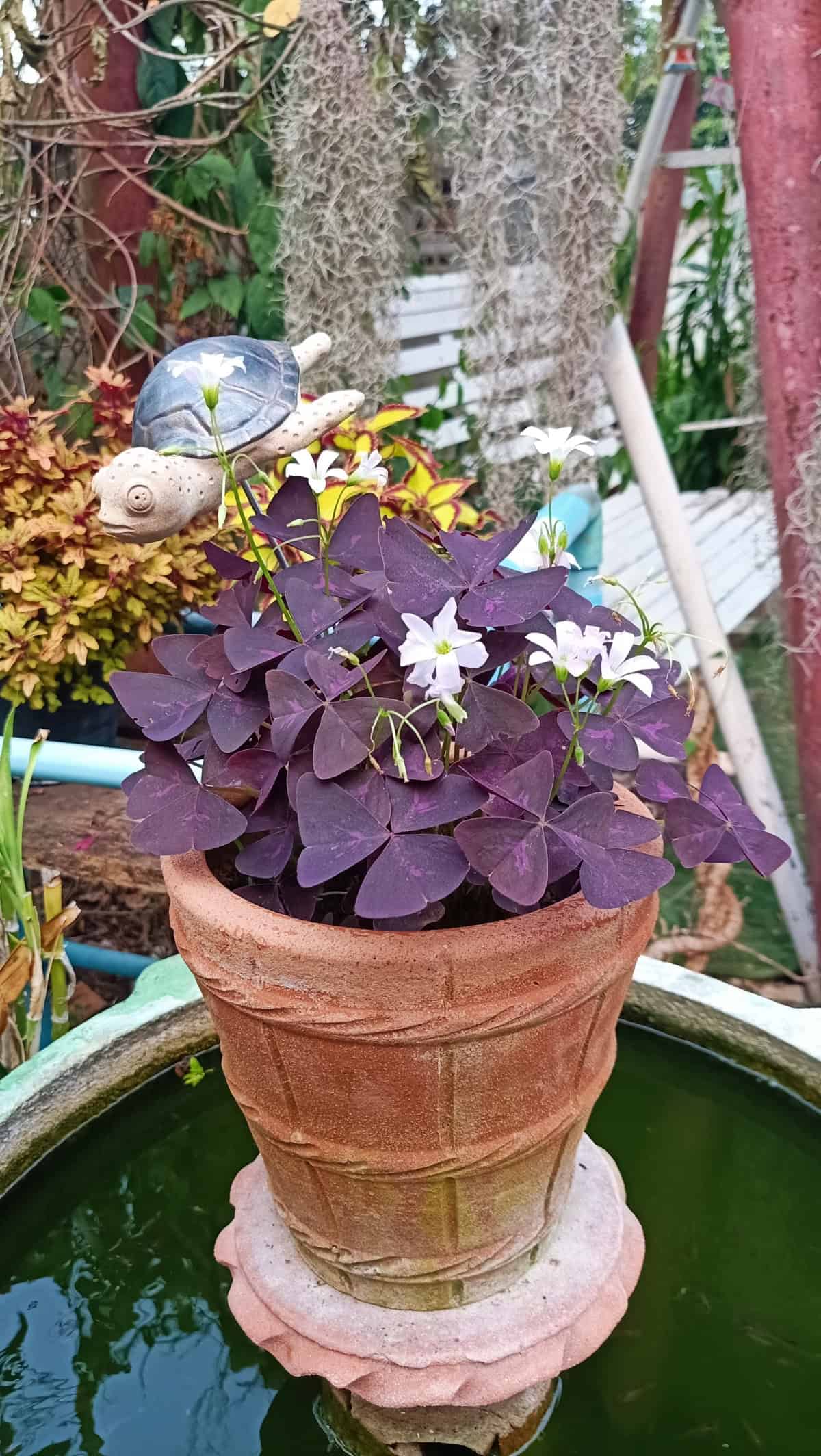
Deep purple triangular leaves make Oxalis triangularis distinctive even between flushes of pale pink flowers. Its underground rhizomes sprout in a warm room without the cold rooting period used for spring bulbs, placing it among the quicker indoor options.
Plant the rhizomes shallowly in a pot with drainage and give the growing leaves bright, indirect light. Water when the top of the mix begins to dry. The leaflets fold in low light and reopen by day; a resting plant may temporarily lose its leaves before fresh growth returns.
Sparaxis (Sparaxis tricolor)
Bold rings of color surround the centers of sparaxis flowers, giving each open bloom a sharply defined pattern. These South African corms grow during cool conditions and need abundant light for sturdy indoor flowering.
Set the corms a couple of inches deep in well-drained mix and keep the pot lightly moist once shoots appear. A bright, cool sunroom is a stronger setting than a heated interior room.
As the flowers open, their color bands show most clearly in direct daylight.