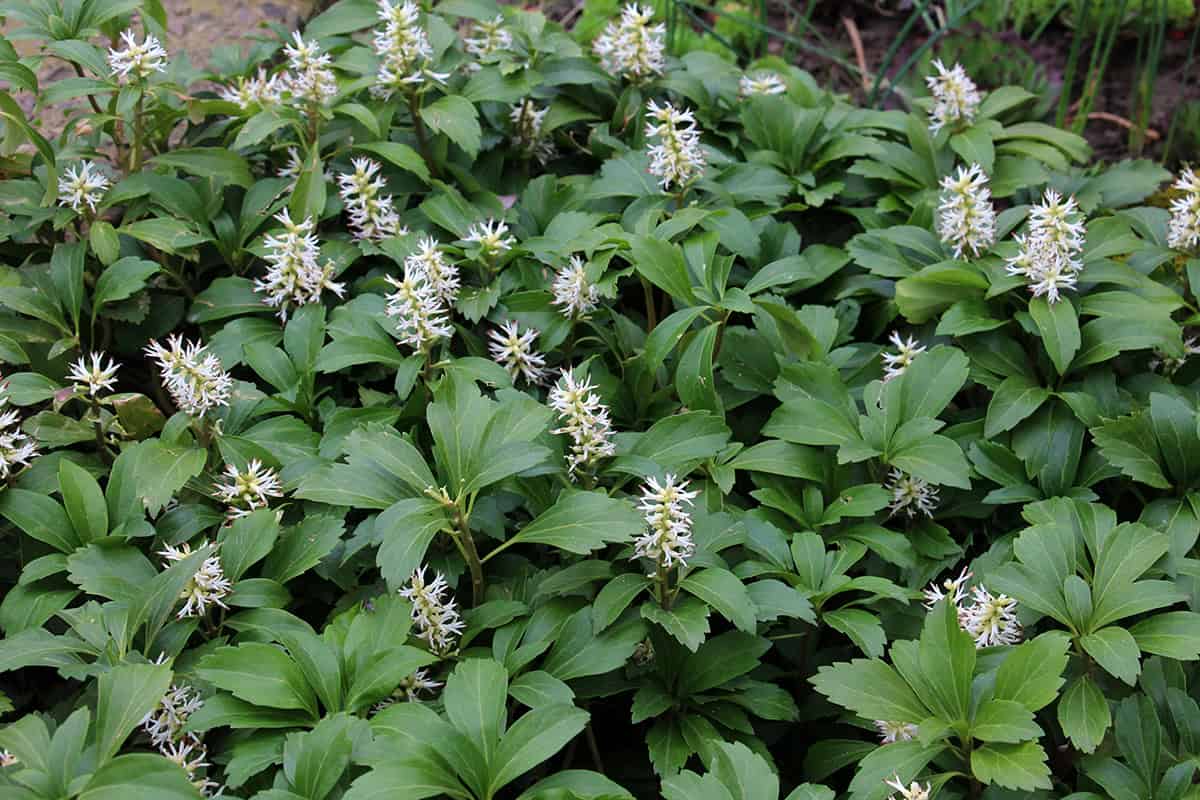
A ground cover suppresses weeds the same way a forest floor does, by shading the soil until weed seeds never get the light they need to sprout.
That only happens once the plants knit together, which takes one to three seasons. Clear the bed of perennial weeds first and mulch between young plants, since weeds win any race on open ground.
Spacing advice appears inside several entries, and closer planting shortens that wait considerably.
Table of Contents
- Ground Covers That Suppress Weeds
- Ajuga / Bugleweed (Ajuga reptans)
- Creeping Jenny (Lysimachia nummularia)
- Sweet Woodruff (Galium odoratum)
- Vinca Minor / Periwinkle (Vinca minor)
- Pachysandra (Pachysandra terminalis)
- Liriope spicata
- Mazus (Mazus reptans)
- Creeping Speedwell (Veronica repens)
- Blue Star Creeper (Isotoma fluviatilis)
- White Clover (Trifolium repens)
- Creeping Phlox (Phlox subulata)
- Bearberry (Arctostaphylos uva-ursi)
- Barrenwort (Epimedium spp.)
- Allegheny Spurge (Pachysandra procumbens)
- Snow-in-Summer (Cerastium tomentosum)
- Creeping Raspberry (Rubus pentalobus)
- Green-and-Gold (Chrysogonum virginianum)
- Wild Ginger (Asarum canadense)
- Golden Groundsel (Packera aurea)
- Partridgeberry (Mitchella repens)
Ground Covers That Suppress Weeds
Thickly planted ground covers leave little room for weeds. Species matched to your soil and light mean less weeding, less spraying and more time to enjoy the garden.
Ajuga / Bugleweed (Ajuga reptans)
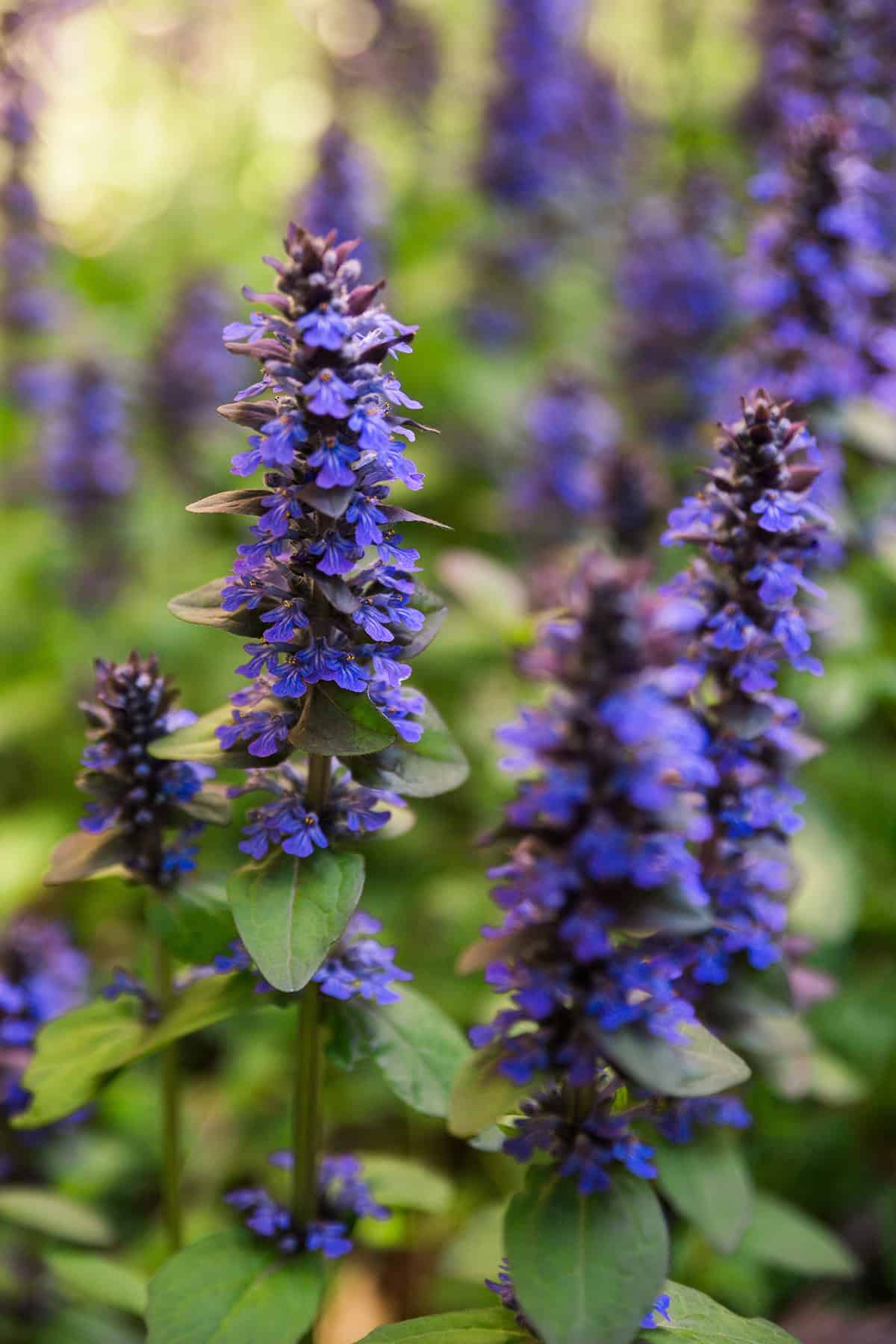
Ajuga spreads into a dense, plush carpet just a few inches high, and its foliage blocks sunlight at soil level, so weed seeds rarely sprout. Partial shade with moist, well-drained soil is ideal.
Leaf colors range from deep green to purple and bronze, and blue flower spikes rise in spring, though the leaves do most of the weed control. Plant about a foot apart for faster coverage.
It tolerates light foot traffic, though it fails as a lawn substitute. In humid regions, space plants generously to prevent crown rot.
Creeping Jenny (Lysimachia nummularia)
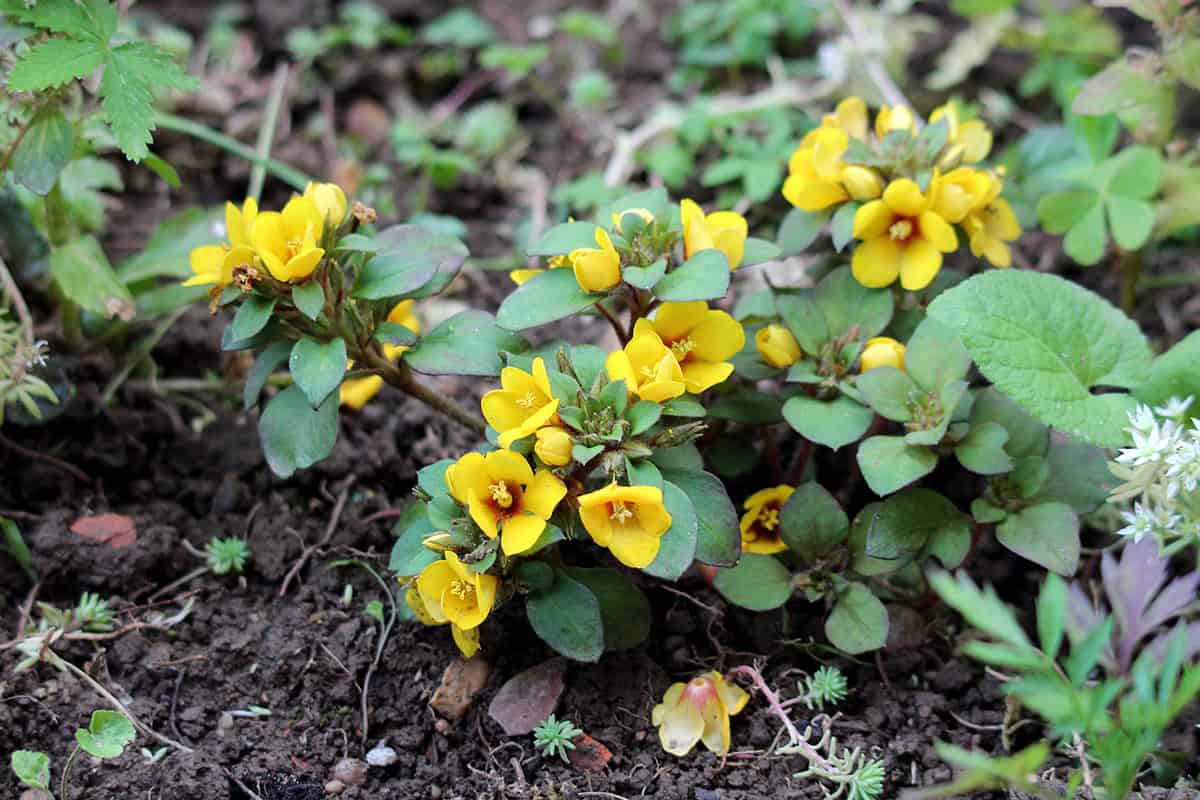
Round leaves hug the ground, and the stems root as they spread to fill open spots quickly. Sun or partial shade is fine, and gold-leaf forms brighten dim corners.
Yellow flowers appear in early summer, though the foliage is the main attraction. Damp soil fuels fast growth, and in warm regions it needs regular trimming, since it is invasive in some areas.
Sweet Woodruff (Galium odoratum)
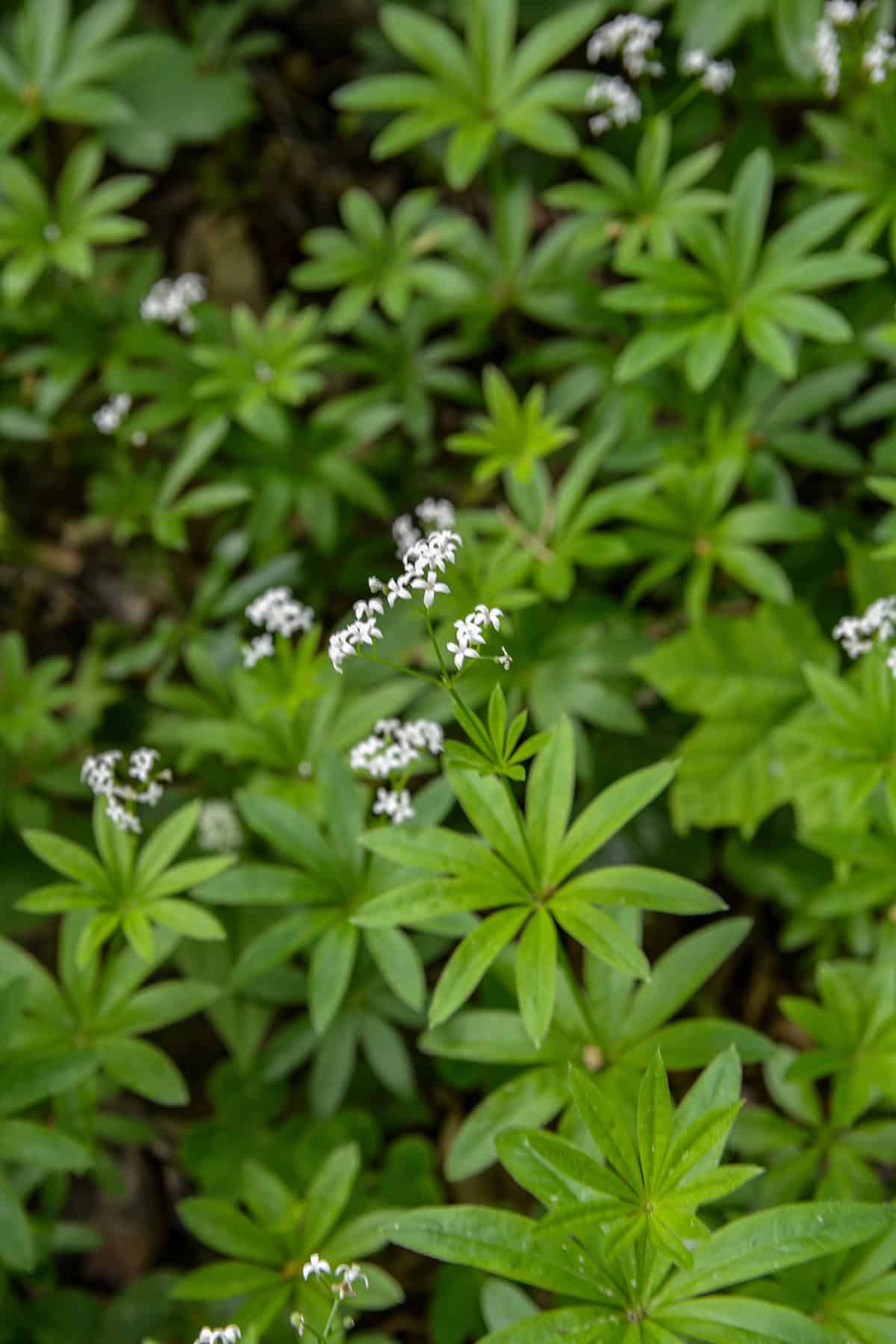
Soft, whorled leaves spread beneath trees and shrubs in a gentle underlayer, rarely over 8 inches tall. It prefers moist, rich shade and tolerates drier spots once established.
Tiny white flowers appear in spring, but the dense leaf cover is what suppresses weeds. A quick trim tidies plants that look leggy in summer.
Vinca Minor / Periwinkle (Vinca minor)
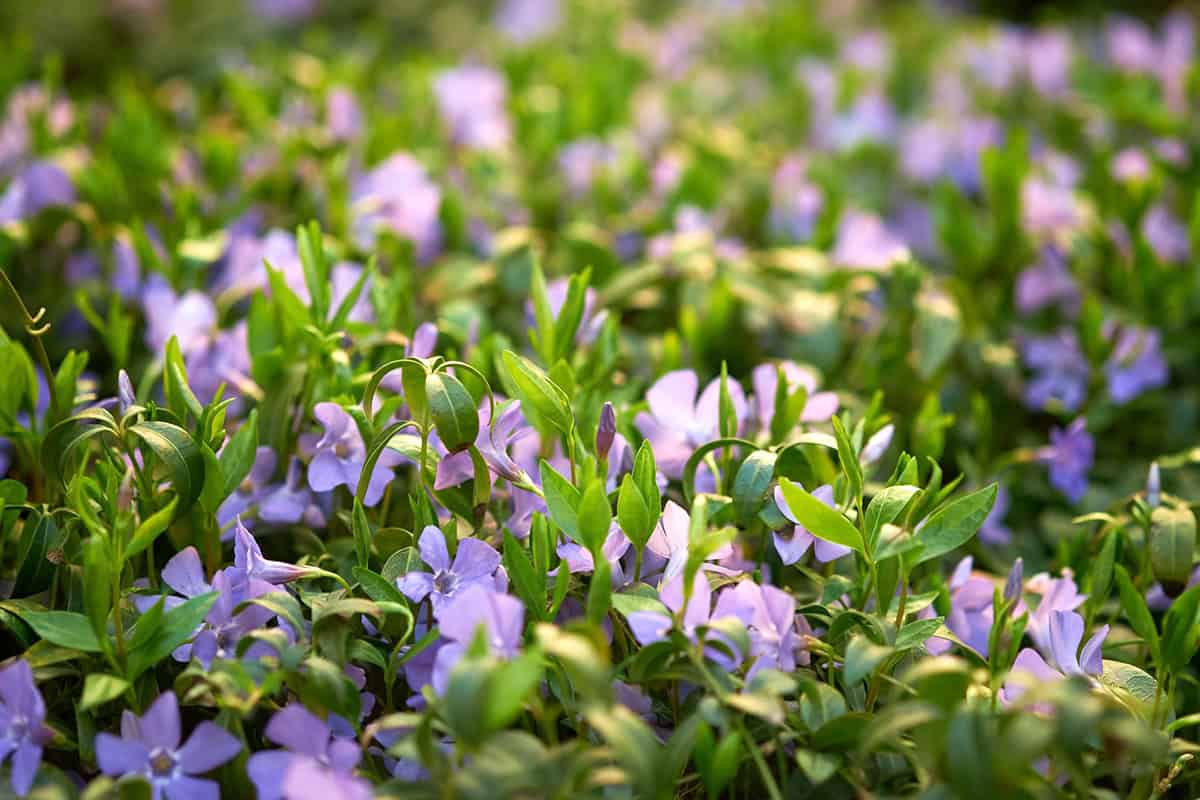
Shiny evergreen leaves cover the ground all year, especially in shady corners, and the trailing stems root wherever they touch into a thick mat.
Blue or purple flowers appear in spring, with a second flush in fall in some years. It handles dry shade better than most ground covers. Avoid soggy spots, edge it to contain it and check local invasive lists, since it escapes into woodlands in parts of North America.
Pachysandra (Pachysandra terminalis)
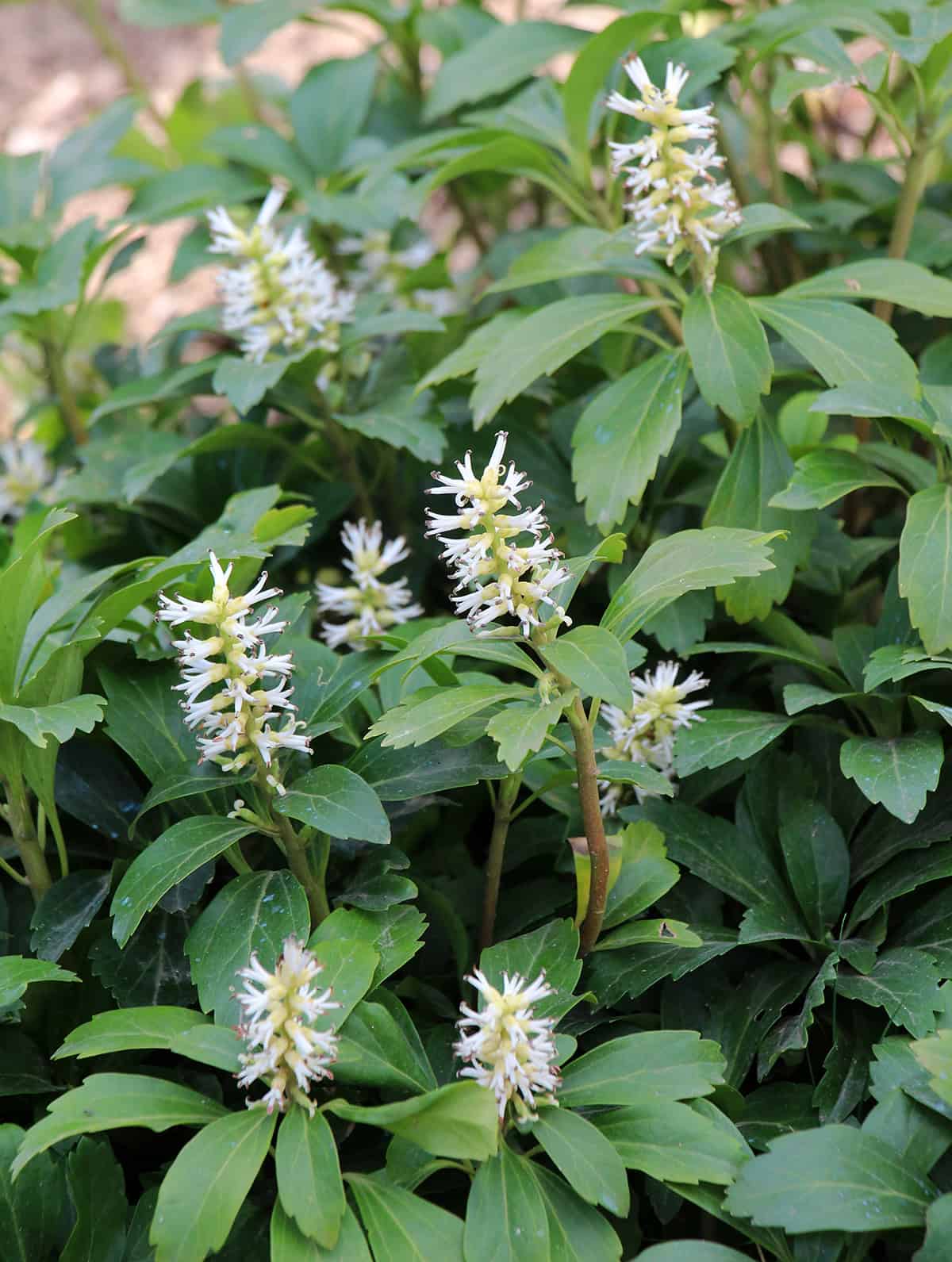
This upright evergreen knits together at 6 to 10 inches high and casts deep shade at soil level. It performs best in shade.
Glossy leaves last through winter, and subtle white flowers appear in spring. Plant closely for a quick fill, and water for evenly moist soil while it establishes. Japanese pachysandra is invasive in parts of the eastern US.
Liriope spicata
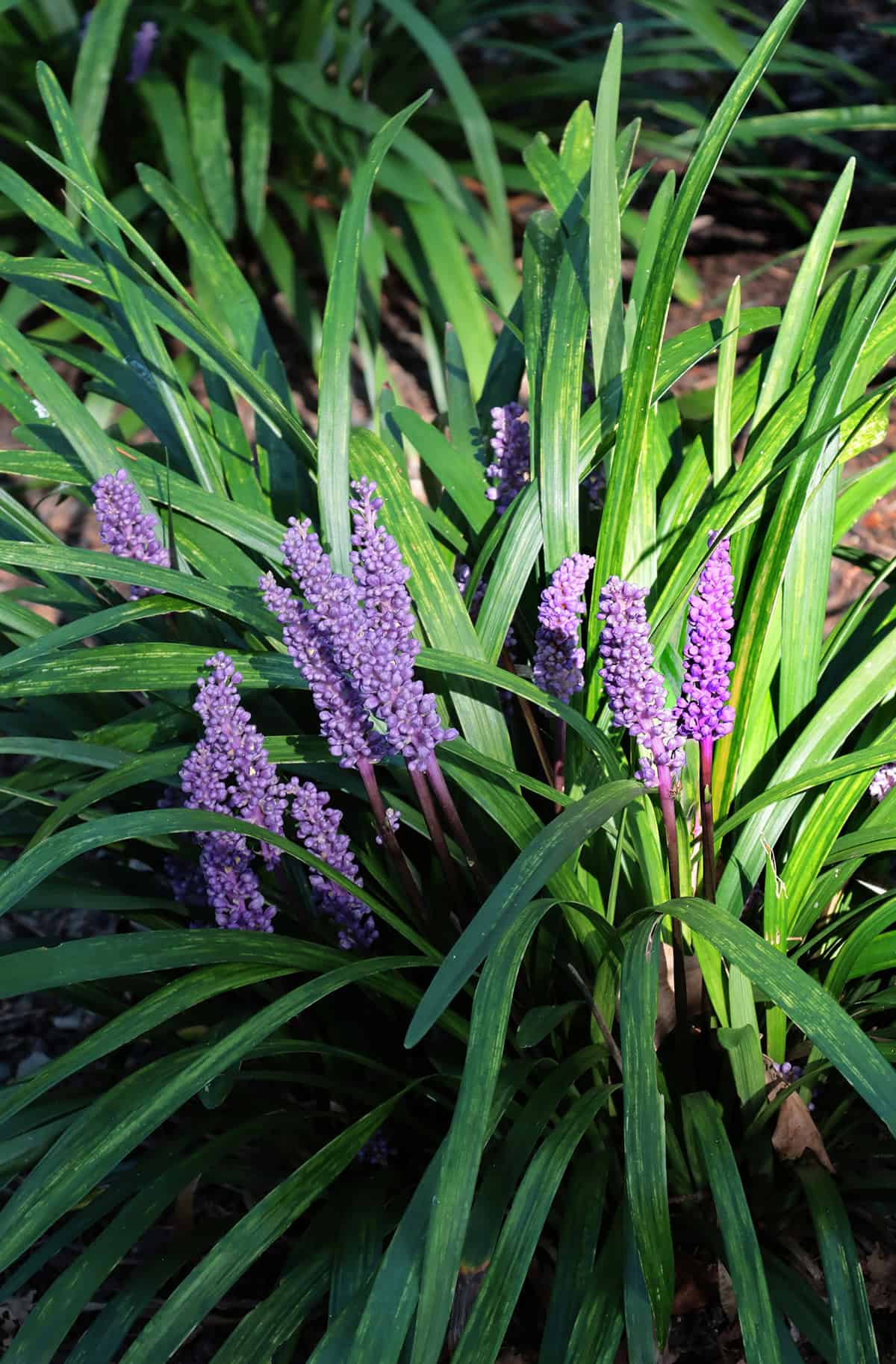
Arching, grassy leaves up to 15 inches tall spread by underground rhizomes, which lets this lilyturf cover large areas and smother weeds. It handles sun and shade.
Purple flower spikes rise in late summer, and the thick clumps leave little soil exposed. Install barriers to limit its spread, since it is invasive in parts of the Southeast, and plant it in soil that drains.
Mazus (Mazus reptans)
Only a couple of inches tall, mazus spreads quickly and fills gaps between stepping stones. Sun or partial shade is fine.
Purple or blue flowers appear in spring, and the fast spread closes bare spots quickly. Water in summer, and expect some winter dieback in soggy soil.
Creeping Speedwell (Veronica repens)
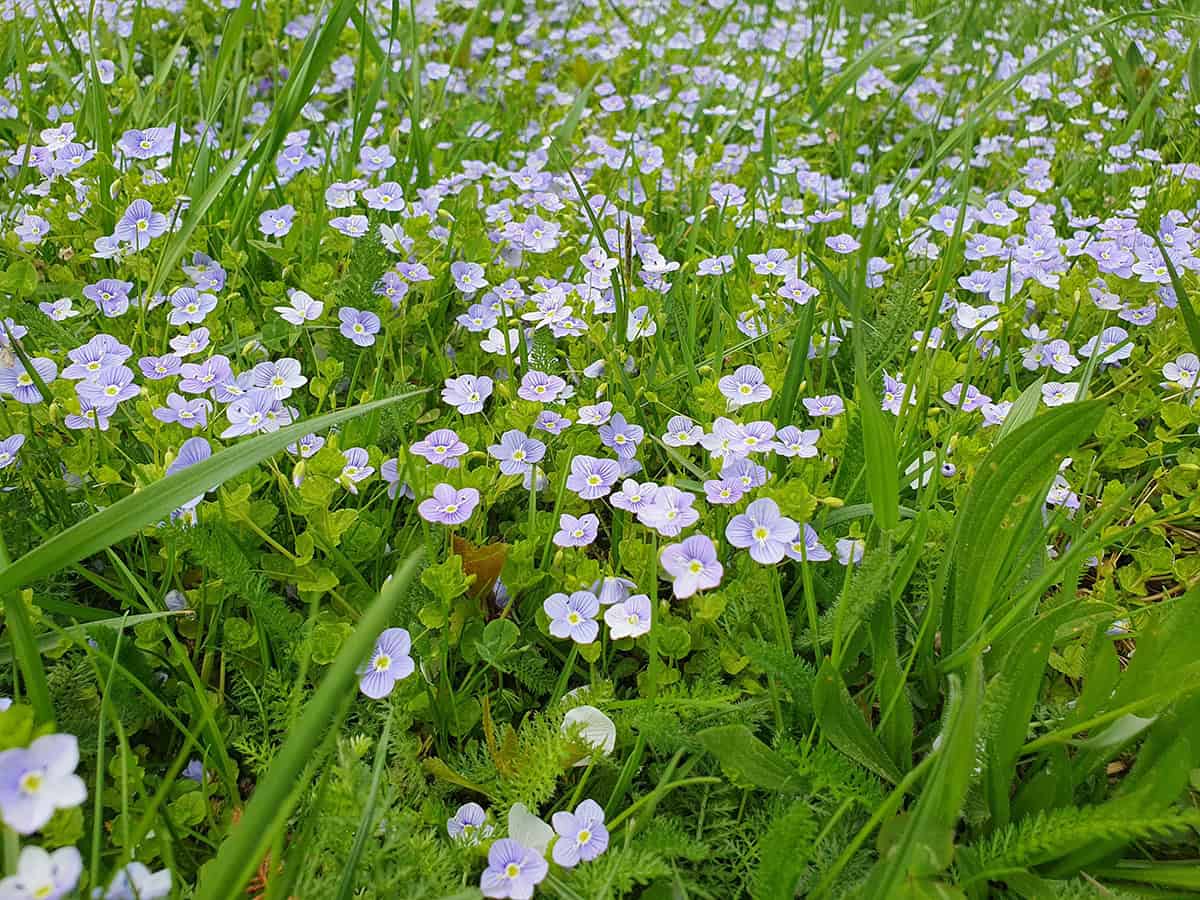
This fine-leaved, low mat-former prefers sunny spots with good drainage. It spreads at a measured pace, for coverage with little chaos.
Blue flowers arrive in late spring, and the dense foliage suppresses annual weeds. Heavy clay is a poor match, but established plants tolerate light foot traffic.
Blue Star Creeper (Isotoma fluviatilis)
Tiny leaves form a smooth, low carpet under 3 inches tall that fits neatly between stones or along paths. It adapts easily to sun or partial shade.
Blue, starry flowers appear from late spring into summer, and the tight cover leaves little space for weeds. Consistent moisture helps, and winter mulch protects it in cold climates.
White Clover (Trifolium repens)
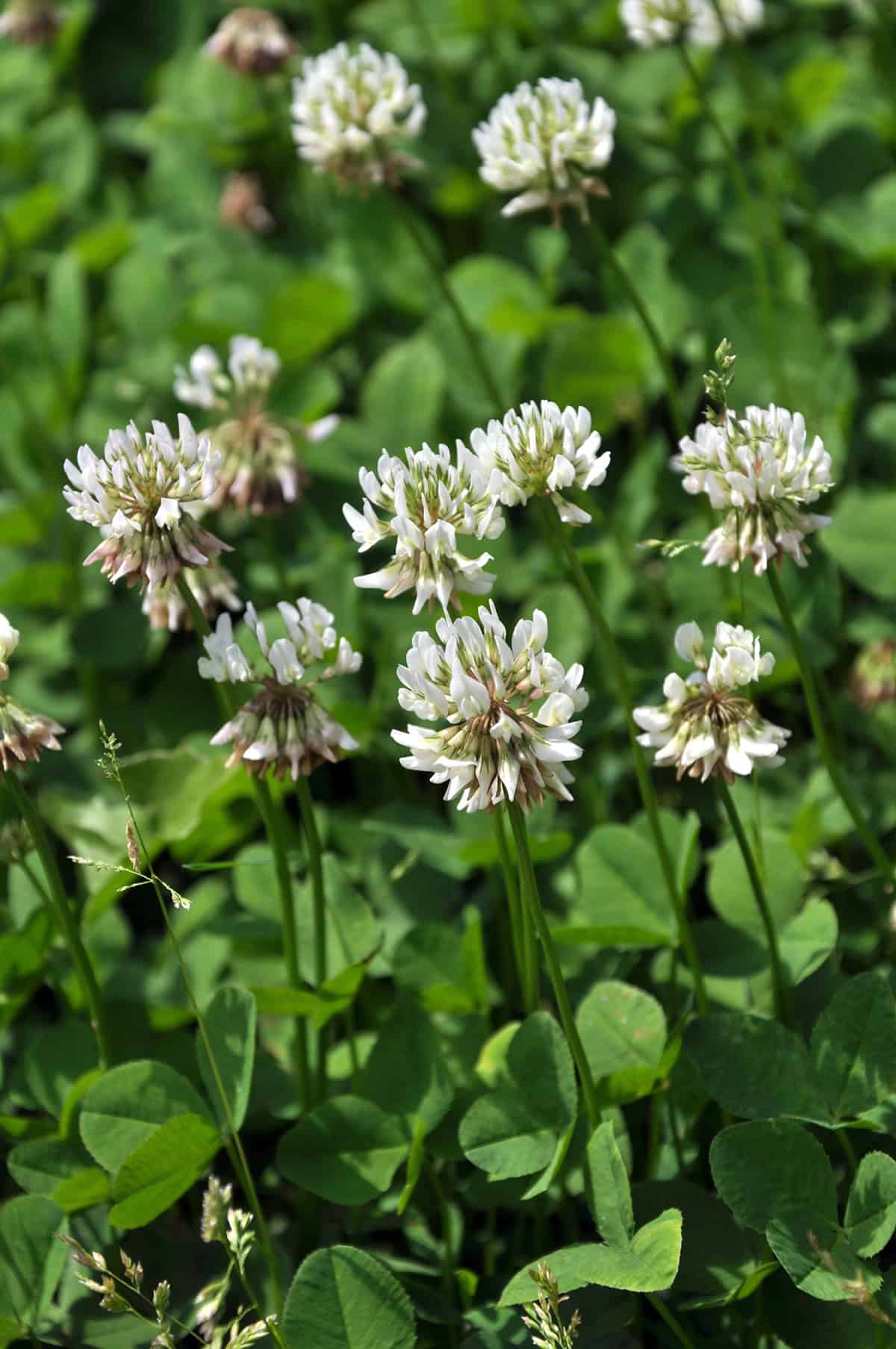
Few living mulches match white clover, with its low, dense foliage that fixes nitrogen and crowds out many lawn weeds. Creeping stems spread and fill gaps.
White flowers attract pollinators. It handles foot traffic and most soils, and an occasional mowing tidies it. Water during dry spells.
Creeping Phlox (Phlox subulata)
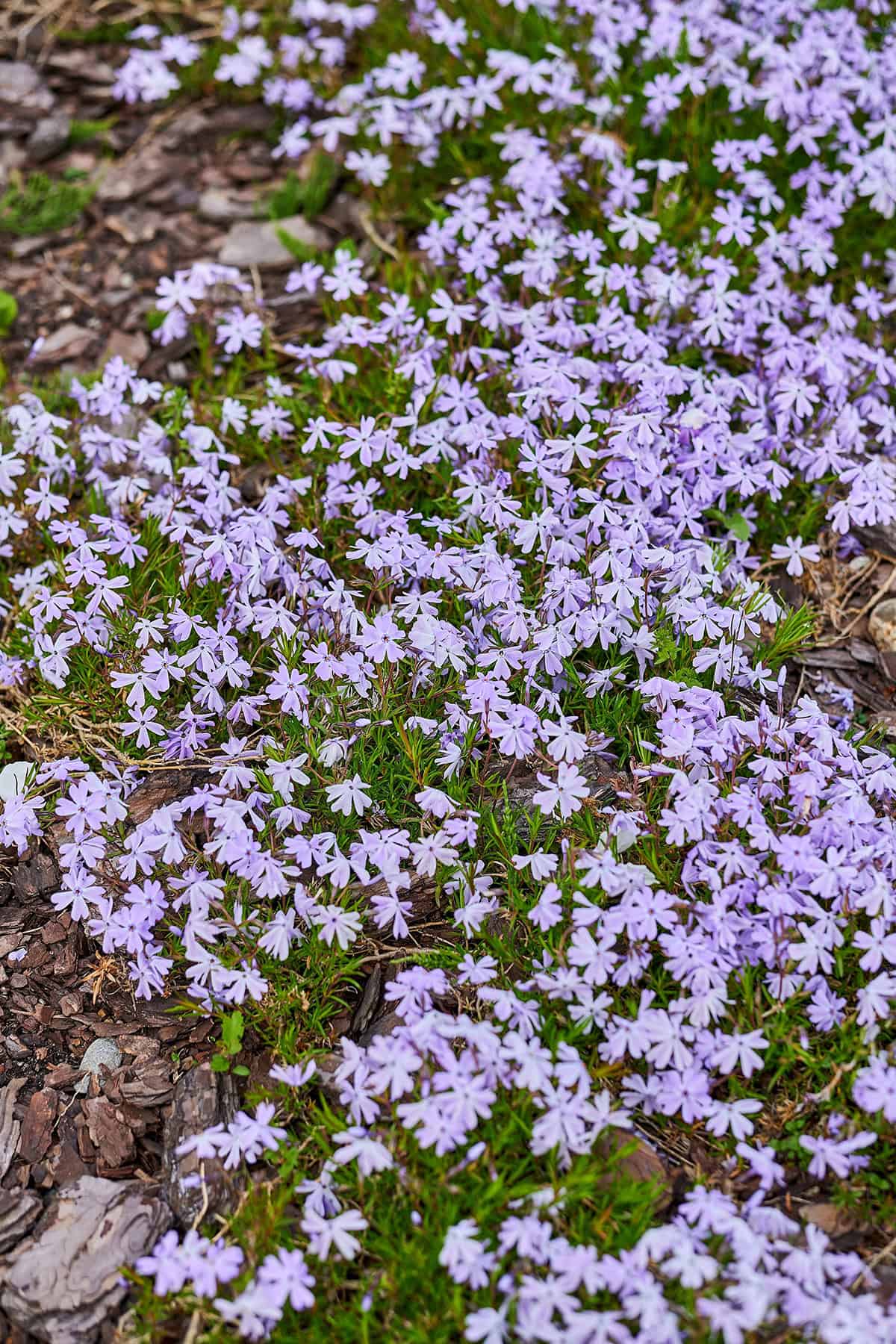
Evergreen needles form low mounds that cover slopes and tough spots in full sun, and masses of bright flowers steal the show in early spring.
The dense stems shade out weeds. Drainage is essential, since soggy soil rots the plants, and a light trim after flowering produces a neat shape.
Bearberry (Arctostaphylos uva-ursi)
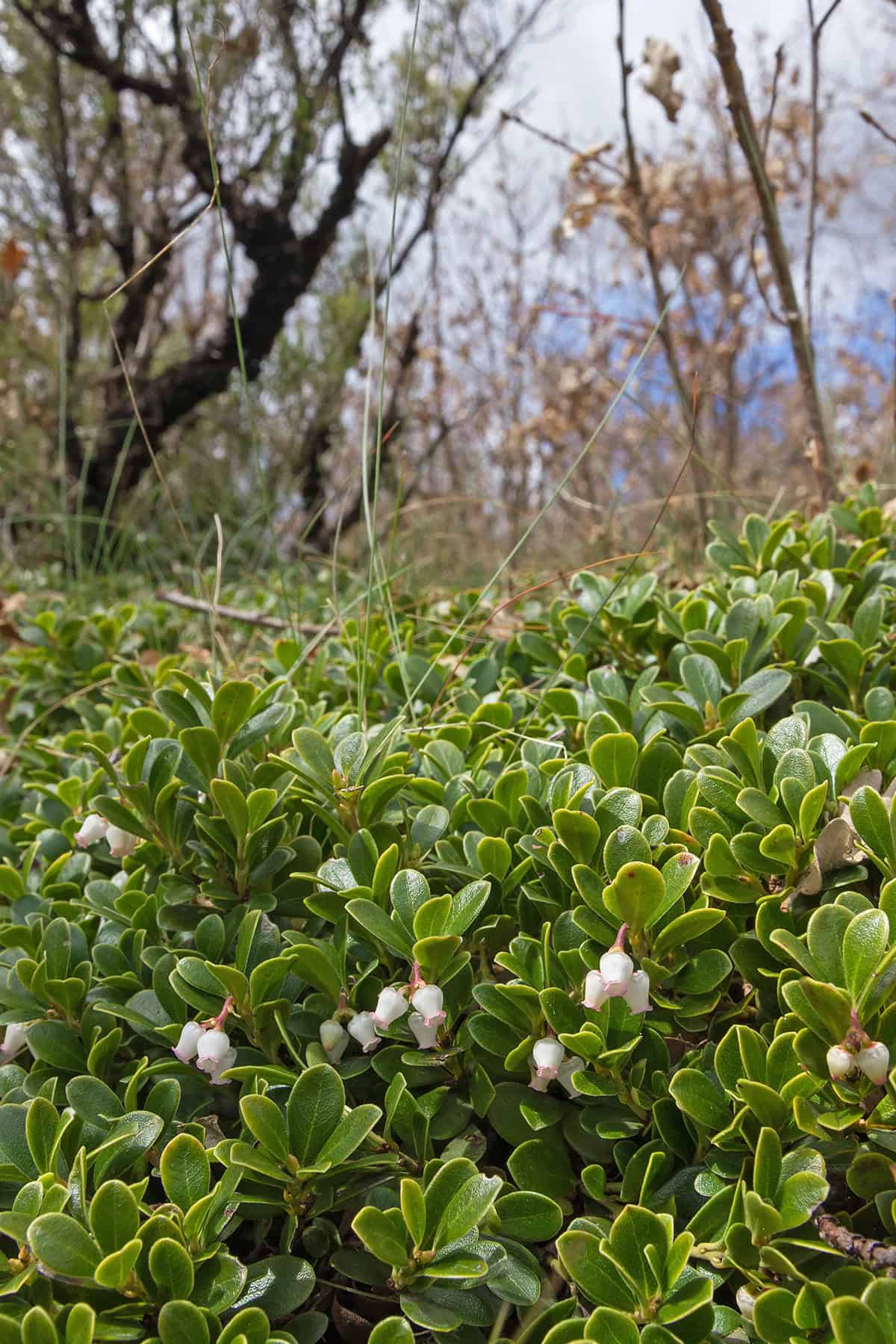
This tough native evergreen creeps along with woody stems that root as they spread into a rugged mat. Sandy, acidic soil is ideal.
Pink flowers appear in spring, followed by red berries, and the leathery leaves handle drought once established. It needs sun to light shade and dislikes heavy or wet ground. Bearberry establishes slowly, so mulch between young plants until they fill in.
Barrenwort (Epimedium spp.)
In dry shade, heart-shaped leaves spread across the ground in loose but reliable cover, and slow rhizomes help it settle in under trees.
Airy spring flowers float above the foliage, and many types color in fall. Cut back the old leaves before new growth appears, and plant in well-drained soil.
Allegheny Spurge (Pachysandra procumbens)
This native cousin of Japanese pachysandra forms a looser, clump-forming cover about 6 to 10 inches tall in shade. Its matte, mottled leaves are semi-evergreen and develop silvery patterns in winter.
Fragrant white to pinkish flower spikes appear in early spring, before the new leaves. It spreads slowly, so plant closely, mulch the gaps and water through the first season. It is a non-invasive choice for eastern North American gardens.
Snow-in-Summer (Cerastium tomentosum)
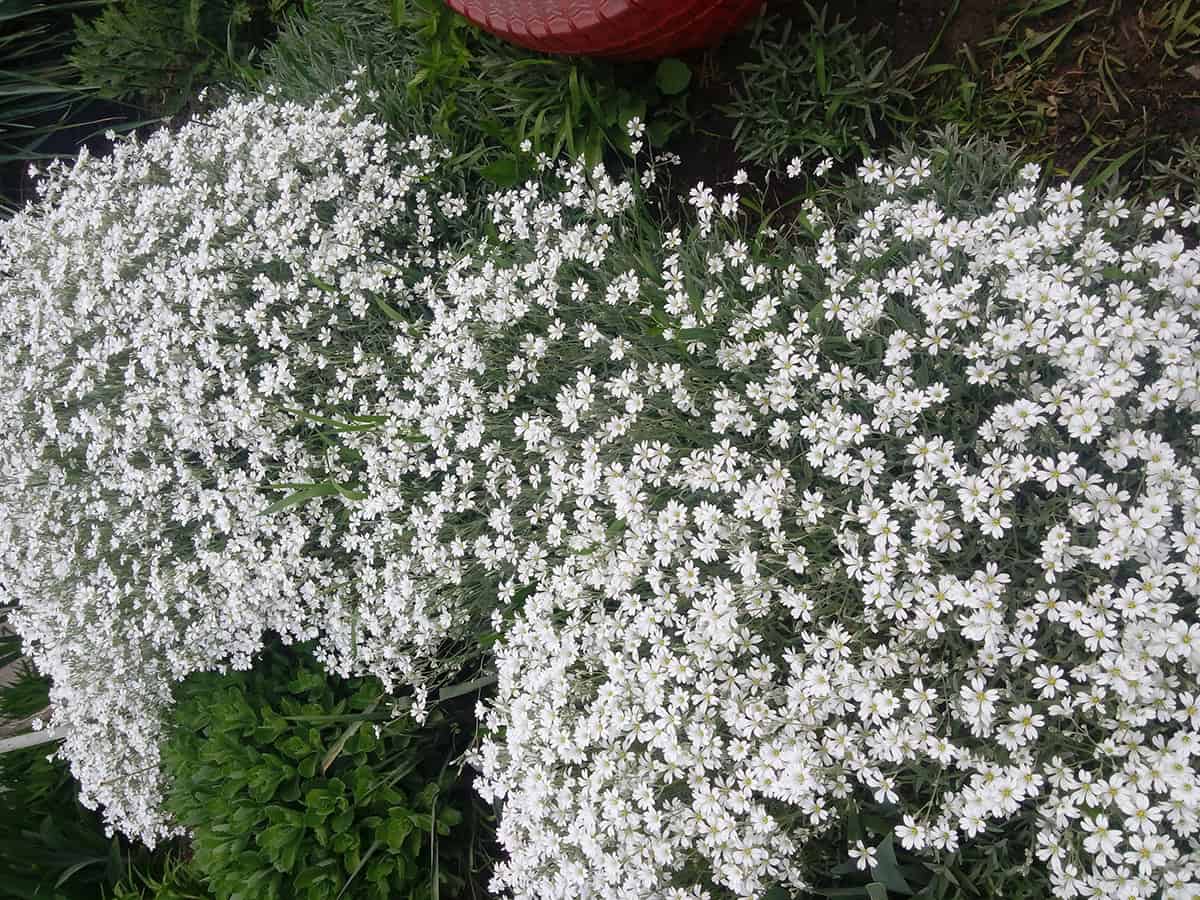
Silvery leaves form a mat in sunny, dry spots, and its stems knit together to leave little exposed soil.
A flurry of white flowers appears in late spring. Good drainage is essential, and rich soil makes it floppy. Shear after flowering for a neat shape.
Creeping Raspberry (Rubus pentalobus)
Coarse, crinkled leaves spread into a mat that roots as it goes, which makes it handy for stabilizing slopes. Sun or light shade is fine.
White flowers in summer lead to small orange-red fruits, and the thick foliage deters weeds. Well-drained soil is essential for winter survival, and a spring cleanup tidies it after rough weather.
Green-and-Gold (Chrysogonum virginianum)
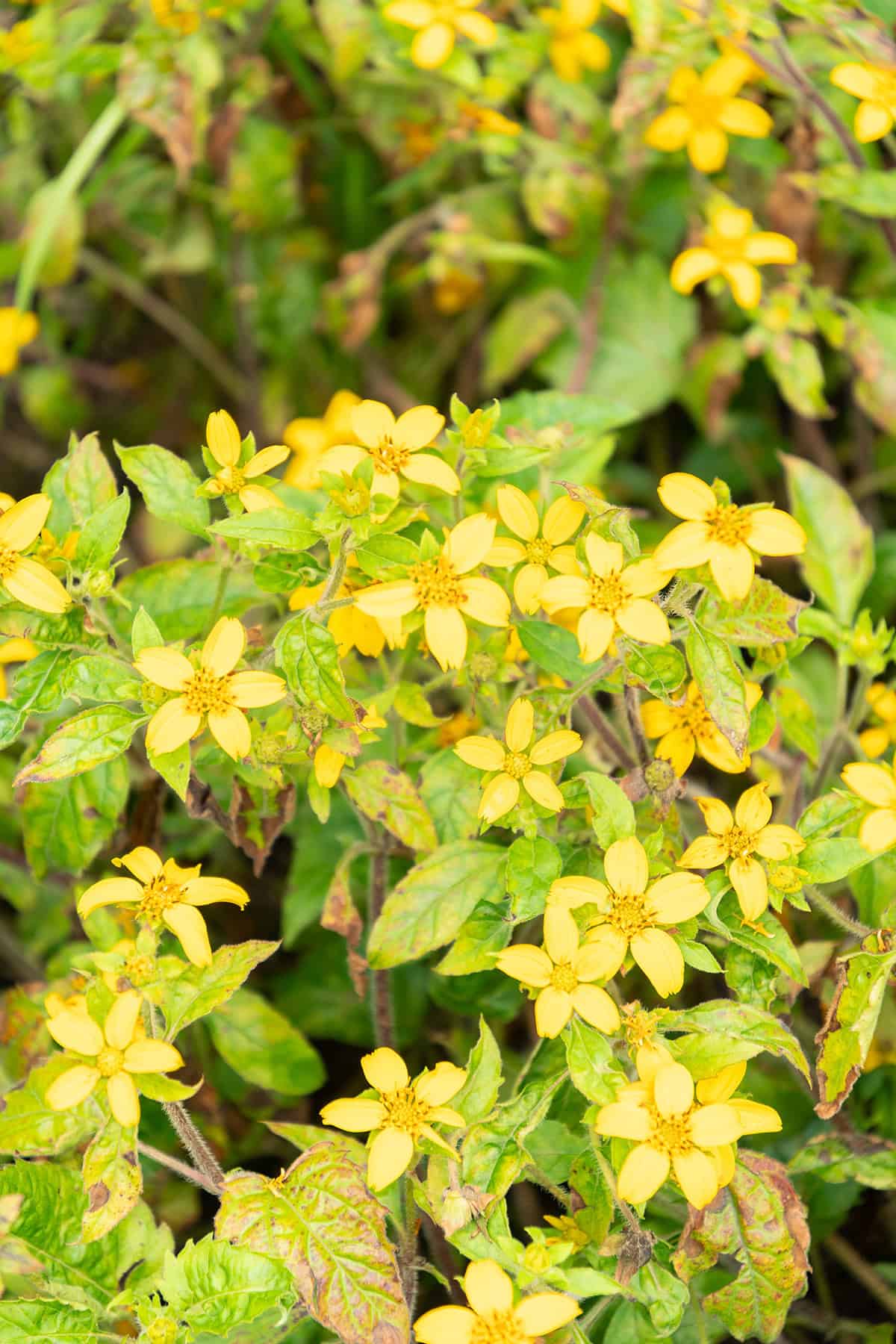
This semi-evergreen native spreads by short runners between shrubs and fills gaps at 4 to 8 inches tall. Part shade and moist, well-drained soil are best.
Yellow, star-shaped flowers appear in spring and return lightly later in the season, and the dense leaves discourage weeds. Water during dry spells and divide clumps every few years for vigor.
Wild Ginger (Asarum canadense)
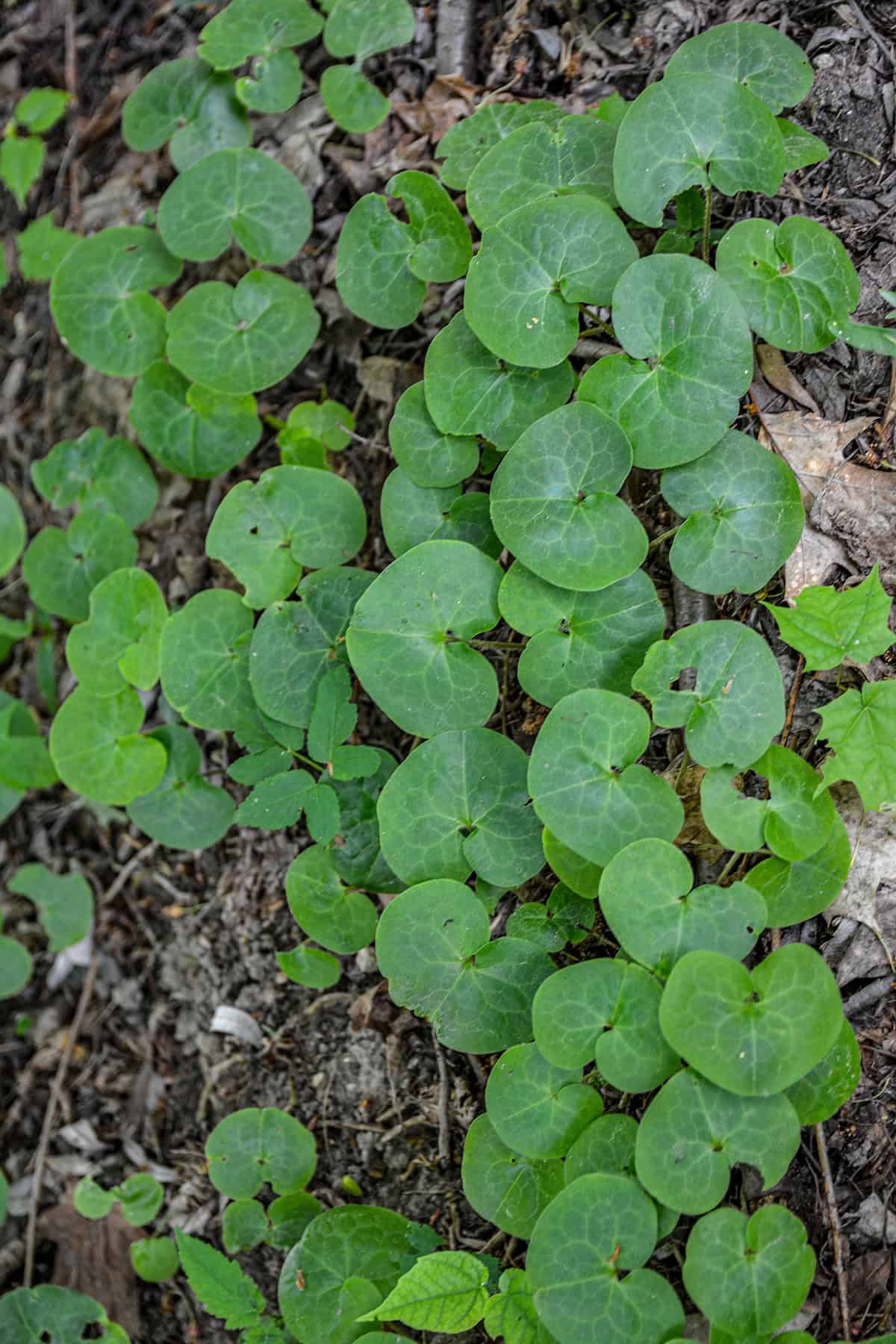
Large, heart-shaped leaves cast deep shade at ground level and thrive in dark corners. Rhizomes spread quietly and crowd out weeds.
Hidden maroon flowers appear at ground level in spring. Rich, moist soil is best, and it suffers in dry soil or hot sun.
Golden Groundsel (Packera aurea)
Basal rosettes knit together into a solid mat 6 to 12 inches tall in moist areas, and short rhizomes help it spread in part shade or full sun in cool regions.
Clusters of bright yellow flowers bloom in spring, and dense foliage carries on through summer. Water for moist soil, and snip spent flower stalks for a tidier look and less self-seeding.
Partridgeberry (Mitchella repens)
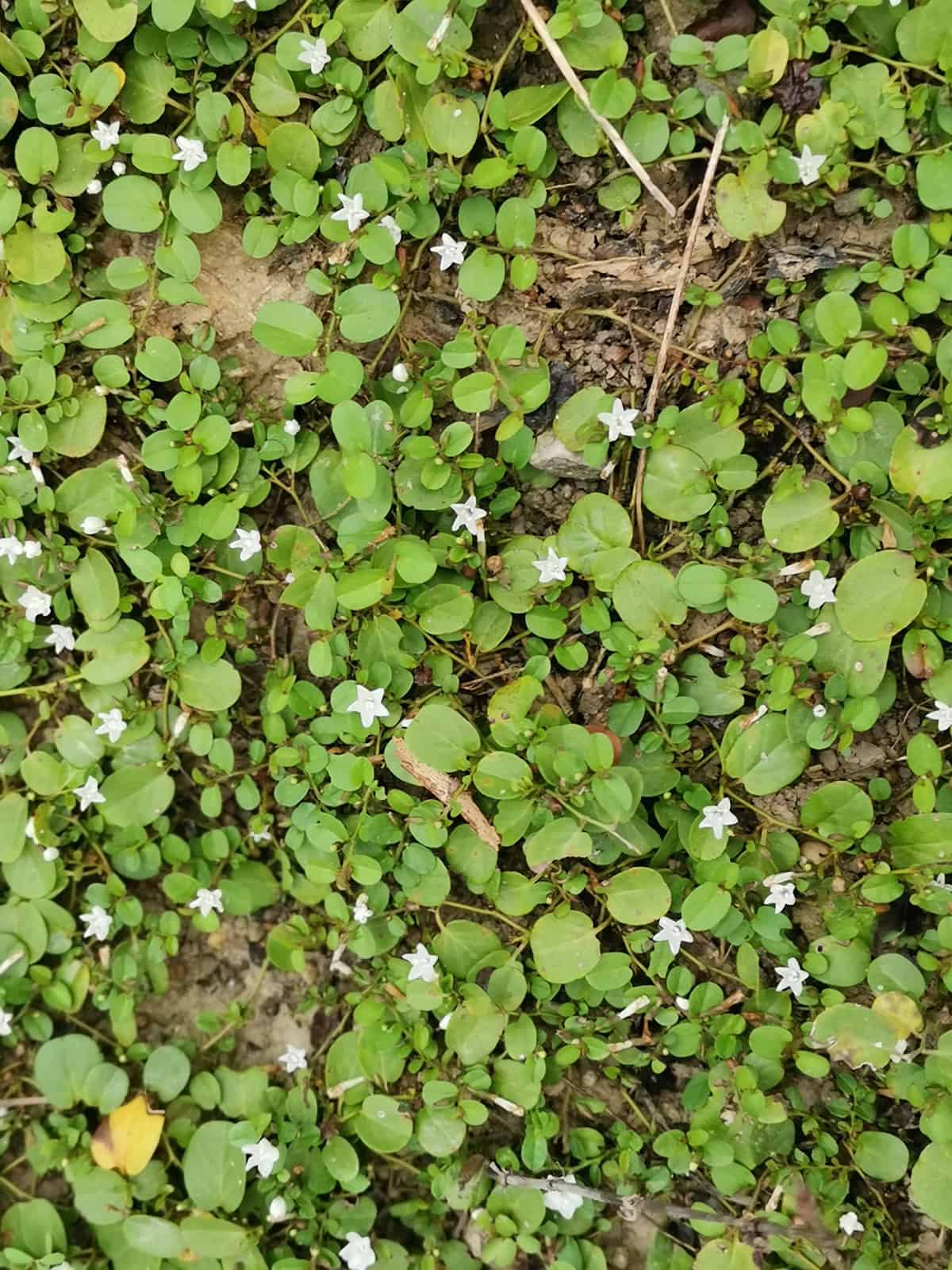
Low and persistent, this evergreen barely rises above the soil and weaves a dense green carpet. Stems trail along the surface and root wherever they touch, and the cover tightens over time.
Tiny white flowers appear in spring and lead to bright red berries that last through winter. The thick, close-set leaves shade the soil and block weeds.
It grows best in acidic, well-drained soil under trees, and a layer of leaf mulch mimics its native forest floor. Avoid exposed, sun-baked spots.