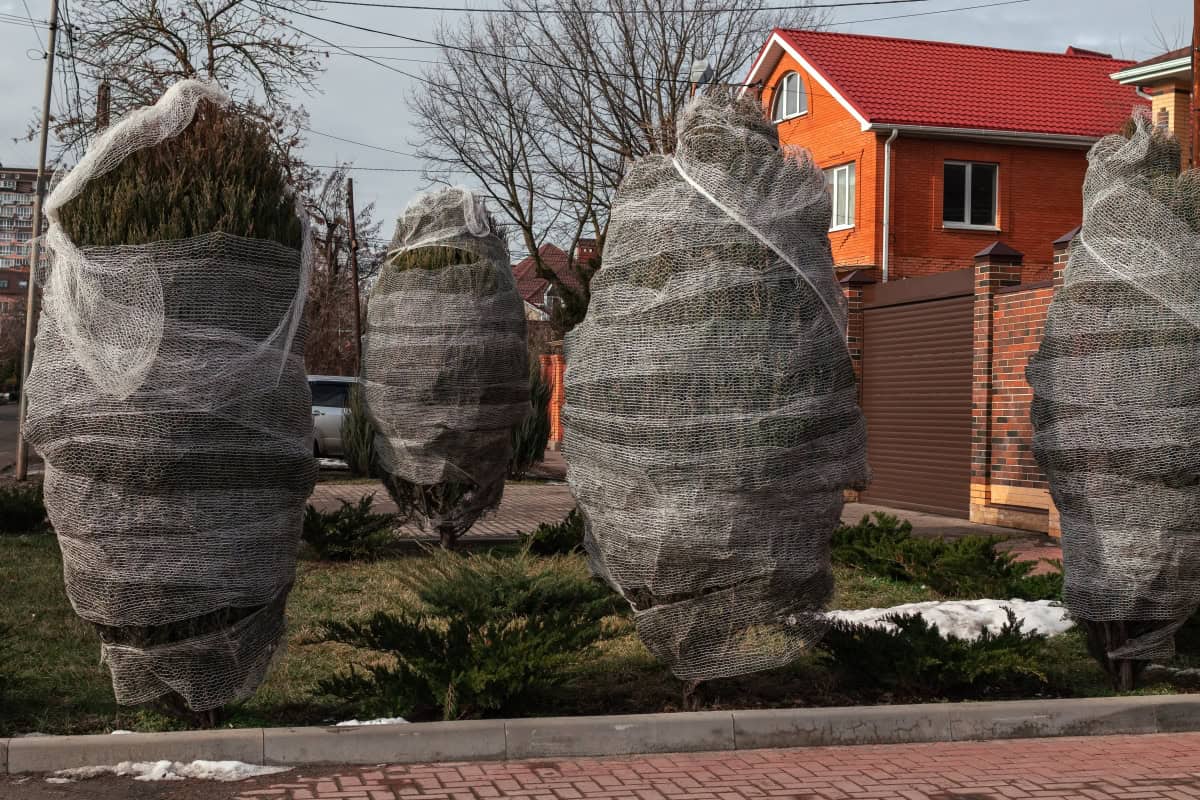
Burlap, twine, and mulch protect shrubs from the damage winter causes quietly: frozen roots, wind-stripped foliage, and branches snapped under ice. The right combination depends on the shrub species, its age, and how exposed the planting site is to wind and road salt. Arborvitae, boxwood, and newly planted shrubs need the most attention, while established deciduous varieties usually need far less.
Wrapping shrubs properly means combining watering, mulching, tying, and covering at the right time, not just throwing a burlap sheet over them in November. Skip a step and a shrub that looked healthy in October can show brown, scorched foliage by March. The details below cover which shrubs need wrapping, when to do it, and how to avoid the mistakes that cause more harm than the cold itself.
Table of Contents
- Why Shrubs Need Winter Protection
- Which Shrubs Benefit Most from Wrapping
- When to Wrap Shrubs for Winter
- Water Shrubs Before the Ground Freezes
- Mulch Around the Root Zone
- Tie Loose Branches Before Wrapping
- Use Burlap for Wind and Cold Protection
- Build a Burlap Screen Around Larger Shrubs
- Protect Shrubs from Heavy Snow and Ice
- Wrap Evergreens Without Trapping Moisture
- Protect Young Shrubs from Winter Burn
- Shield Shrubs from Road Salt and Spray
- Protect Shrubs from Deer and Rabbits
- Use Stakes to Keep Covers Off the Foliage
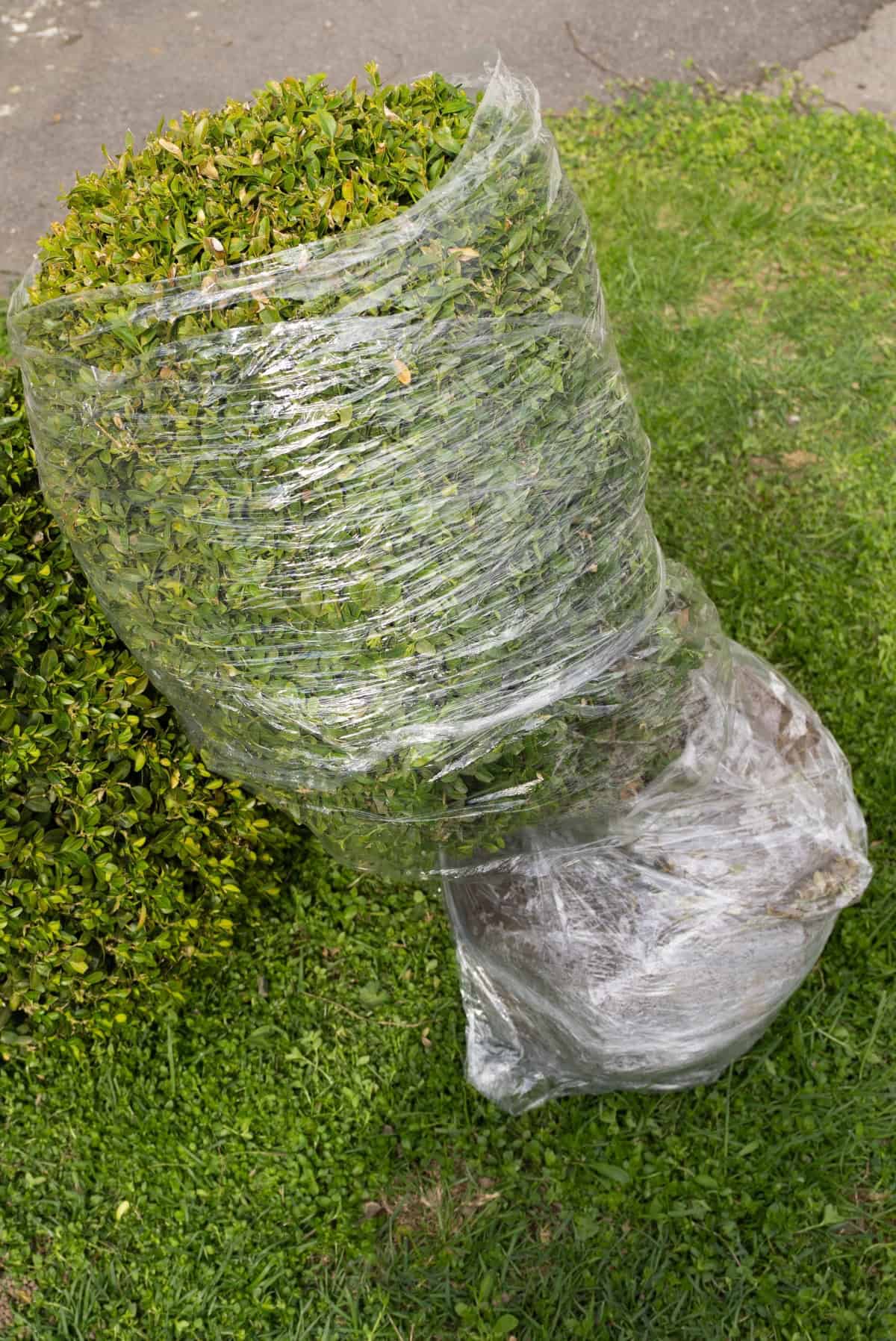
- Avoid Plastic Wrapped Directly Around Shrubs
- How to Protect Newly Planted Shrubs
- How to Protect Potted Shrubs Outdoors
- When to Remove Winter Wrapping in Spring
- Common Winter Wrapping Mistakes to Avoid
Why Shrubs Need Winter Protection
Cold alone rarely kills an established shrub. The damage comes from a combination of drying wind, fluctuating temperatures, and sun reflecting off snow, which pulls moisture out of foliage faster than frozen roots can replace it. This condition, known as winter burn, shows up as brown or bronze patches on evergreens by late winter.
Heavy snow and ice add a second threat, bending or snapping branches under weight they were never built to carry. Road salt spray and foraging deer round out the list of seasonal hazards. Wrapping and related protection steps address these specific risks rather than the cold itself, which most hardy shrubs tolerate without help.
Which Shrubs Benefit Most from Wrapping
Broadleaf and needled evergreens gain the most from winter wrapping because their foliage stays exposed to wind and sun all season. Boxwood, arborvitae, rhododendron, and holly top the list, especially when planted near a south-facing wall or an open, windy corner of the yard.
Deciduous shrubs that drop their leaves rarely need wrapping since there’s no foliage left to scorch, though young or newly planted specimens of any species benefit from extra protection during their first winter. Roses grown in exposed northern climates, particularly grafted hybrid teas, also hold up better with a protective mound or wrap around the graft union.
When to Wrap Shrubs for Winter
Late November into early December is the right window for most of the United States, after shrubs go dormant but before temperatures drop into the teens. Wrapping too early traps warmth and humidity around foliage still actively growing, which invites fungal problems.
Watch the forecast rather than the calendar date. Once nighttime lows consistently sit below 25°F and the ground starts to firm up, it’s time to finish the job. Gardeners in colder zones, such as northern Minnesota or Vermont, typically wrap two to three weeks earlier than those in the mid-Atlantic. Waiting until after the first hard freeze, but before a deep cold snap, gives shrubs the best balance of preparation and protection.
Water Shrubs Before the Ground Freezes
A deep watering in late fall does more for shrub survival than any wrap applied afterward. Evergreens keep losing moisture through their needles all winter, and a shrub that enters the season with dry roots has nothing in reserve once the ground locks up.
Give each shrub a slow, deep soak, roughly one inch of water, during the week before the first hard freeze. Focus on the root zone rather than the foliage. This step reduces winter burn risk more reliably than burlap alone, since well-hydrated roots keep supplying moisture to branches even after the surrounding soil freezes solid.
Mulch Around the Root Zone
A two-to-four-inch layer of shredded bark or wood chips insulates roots and moderates the freeze-thaw cycles that heave shallow root systems out of the soil. Spread it from the base of the shrub out to the drip line, keeping it a few inches clear of the trunk or main stems to avoid rot and rodent damage.
Apply mulch after the ground has cooled but before a hard freeze sets in, typically right alongside the final watering. Straw or pine needles work as substitutes where bark mulch isn’t available. Thinner mulch layers on sandy soil need replenishing more frequently than those on clay, which retains moisture longer.
Tie Loose Branches Before Wrapping
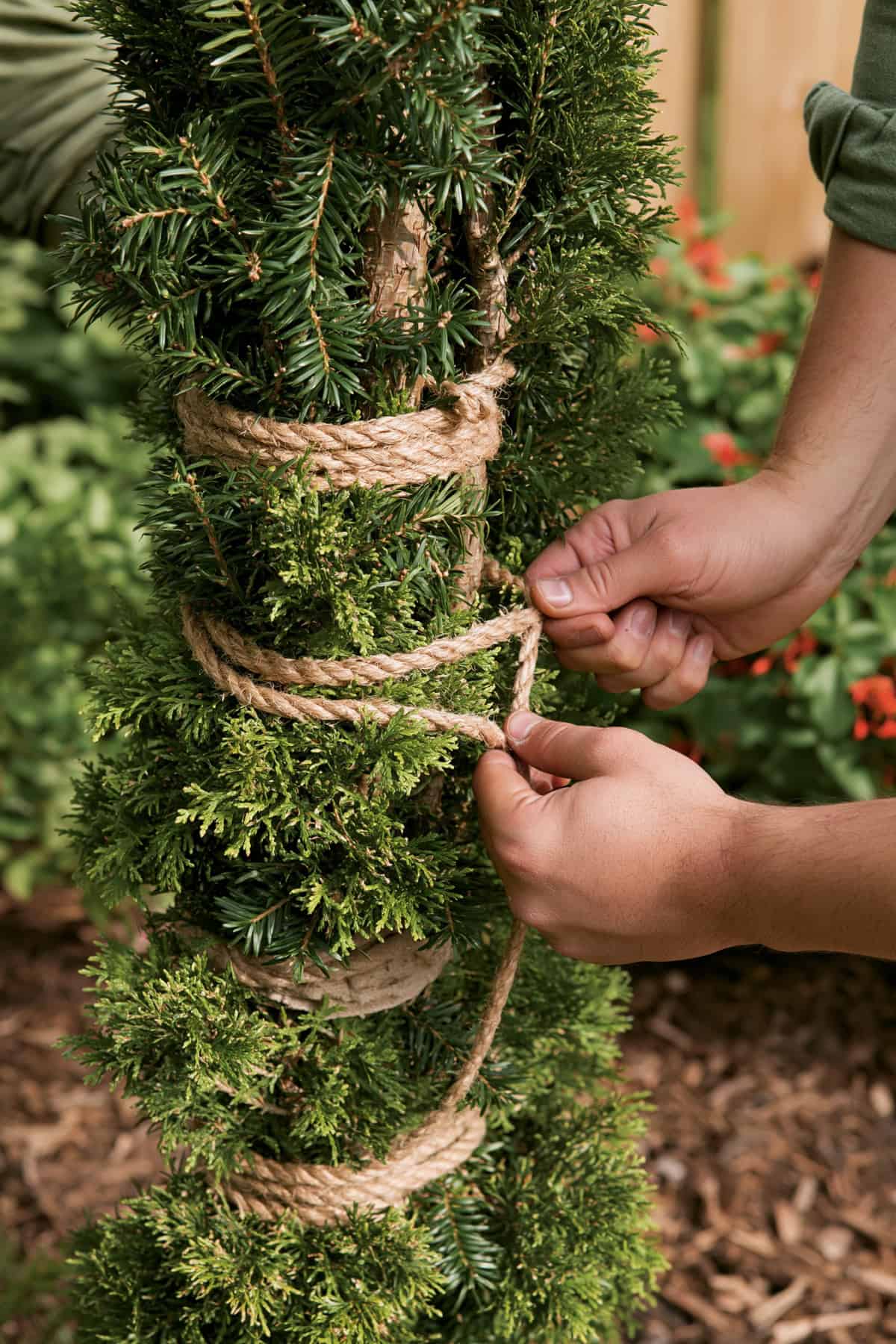
Branches left loose under snow load split at the crotch or snap outright, so gathering them first prevents structural damage. Use soft nursery twine or strips of cloth, wrapping in a spiral from the base upward to draw the branches gently inward.
Avoid pulling branches so tight that they bend unnaturally; the goal is compaction, not distortion. Arborvitae and upright junipers benefit most from this step since their narrow, columnar shape makes them prone to splaying open under heavy, wet snow. Tying takes a few minutes per shrub and holds up through an entire winter once secured.
Use Burlap for Wind and Cold Protection
Burlap blocks desiccating wind without sealing in moisture the way plastic does, making it the standard material for wrapping exposed evergreens. Cut panels wide enough to wrap around the shrub with some overlap, then secure them with twine at the top, middle, and bottom.
Leave the top open or loosely covered so trapped heat and humidity can escape on milder days. Burlap suits boxwood, young arborvitae, and broadleaf evergreens planted along driveways or walkways where wind funnels between structures. Natural burlap breaks down slightly over a season, which is normal, and most gardeners replace it every one to two years.
Build a Burlap Screen Around Larger Shrubs
Large or oddly shaped shrubs do better with a freestanding screen than a wrap pulled directly against the foliage. Drive three or four wooden stakes into the ground around the perimeter, then staple burlap to the stakes to form a barrier a few inches away from the branches.
This method shields against wind and salt spray while still allowing air circulation around the plant itself. It suits specimen shrubs near roadways, corner lots exposed to prevailing winter wind, and anything too wide or tall for a simple wrap. Screens also come down faster in spring since there’s no twine wound directly through the branches.
Protect Shrubs from Heavy Snow and Ice
Snow load, not cold, breaks more branches than any other winter hazard. A-frame shelters built from plywood or stakes and plastic sheeting over vulnerable shrubs redirect sliding roof snow and heavy drifts away from the plant entirely, which matters most for shrubs planted under eaves.
Brush heavy, wet snow off branches with an upward broom motion as soon as possible after a storm, since snow left to sit compacts and refreezes into a heavier load. Never try to break ice off a branch by hand; let it melt naturally; chipping at frozen wood causes more breakage than the ice itself.
Wrap Evergreens Without Trapping Moisture
Sealed plastic or tightly cinched burlap around evergreen foliage traps humidity against the needles, encouraging fungal disease and mold rather than preventing cold damage. Breathable fabric and a loosely secured top allow moisture to escape on warmer afternoons.
Leave a small gap at the crown of the wrap even on the coldest nights. Check wrapped shrubs after major snow or ice events to confirm the covering hasn’t shifted and sealed against the foliage. A properly ventilated wrap looks a little loose, and that looseness is doing its job rather than signaling a mistake.
Protect Young Shrubs from Winter Burn
First and second-year shrubs lack the established root systems that help older plants pull through a hard winter, so newly planted specimens need wrapping even in species that otherwise tolerate cold without help. A burlap screen on the south and west sides, where winter sun and wind hit hardest, reduces the drying effect that causes winter burn.
Anti-desiccant sprays, applied in late fall and again during a winter thaw, add a wax-like coating that slows moisture loss through the leaves. Combine spraying with a burlap screen for shrubs in particularly exposed spots, such as a new foundation planting along a north-facing wall.
Shield Shrubs from Road Salt and Spray
Salt spray thrown up by passing cars damages foliage on contact and builds up in the soil over a winter of plowing and treatment. Shrubs within 10 to 15 feet of a road or driveway face the highest risk, particularly on corners where plows pile snow.
A burlap screen positioned between the shrub and the road blocks direct spray, protecting foliage more effectively than a spray-on product applied after exposure. In spring, flush the root zone with extra water to help leach accumulated salt out of the soil before the growing season starts. Choosing salt-tolerant species for roadside plantings reduces this risk from the start.
Protect Shrubs from Deer and Rabbits
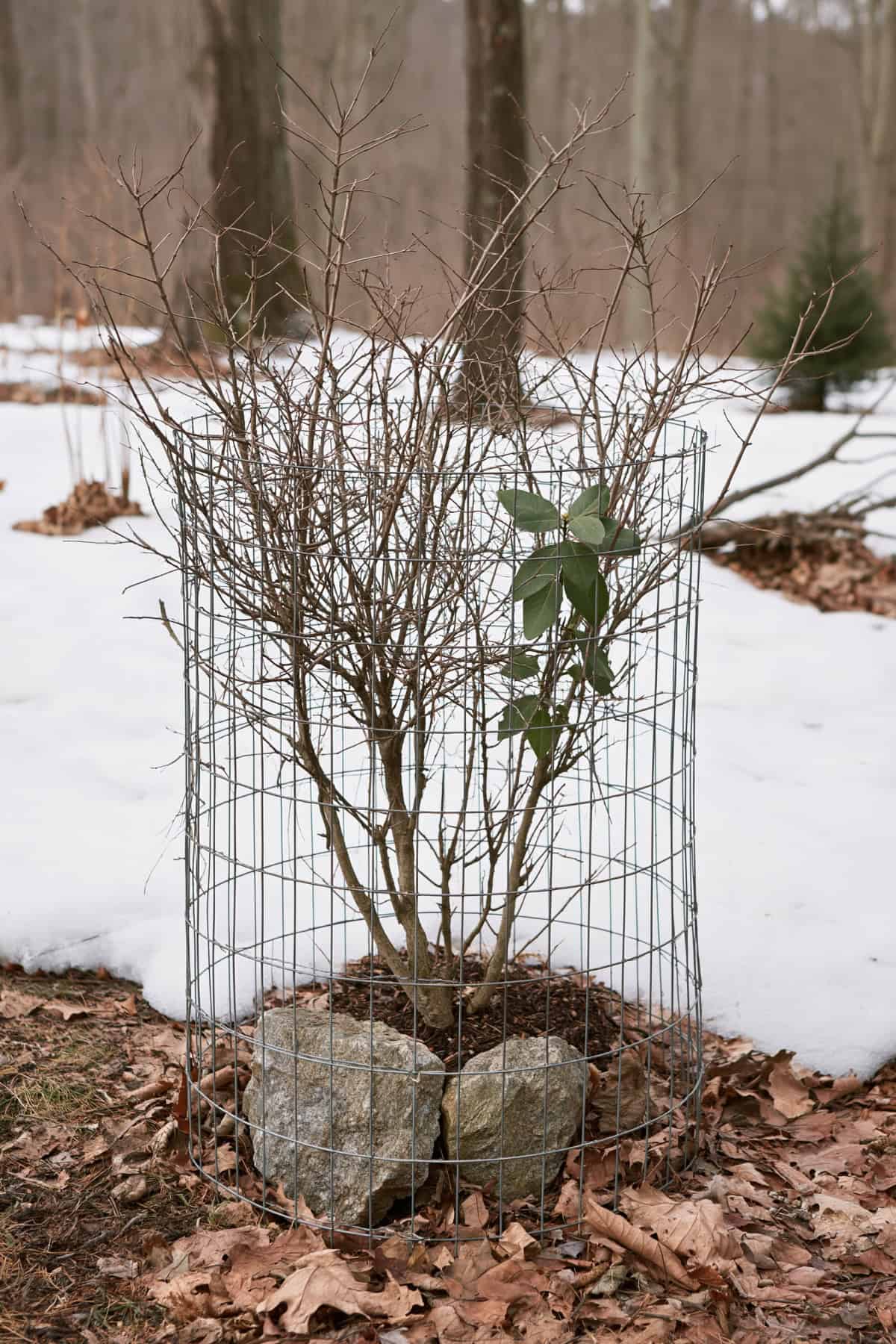
Hungry deer and rabbits strip bark and foliage from shrubs most aggressively in late winter, when natural food sources run low. Chicken wire or hardware cloth cylinders staked around individual shrubs form a physical barrier that outperforms repellent sprays, which wash off or lose potency in freezing weather.
Build the cylinder a few inches wider than the shrub’s mature winter spread and tall enough to clear snow accumulation, since deer reach higher once drifts build up underfoot. Arborvitae and yew rank among the most frequently browsed shrubs in the Northeast and Midwest, making fencing useful in areas with heavy deer traffic.
Use Stakes to Keep Covers Off the Foliage
Wood or metal stakes driven around a shrub’s perimeter hold burlap or fabric away from the foliage, preventing the covering from crushing branches under its own weight once snow piles on top. Three stakes typically suffice for a small shrub; larger specimens need four or more spaced evenly around the base.
Set stakes a few inches taller than the shrub’s mature height so the cover drapes without pressing down on the topmost growth. This gap also improves air circulation, which reduces the moisture buildup that causes fungal issues under tightly wrapped burlap.
Avoid Plastic Wrapped Directly Around Shrubs
Plastic sheeting pressed against foliage traps heat on sunny winter days, then condenses moisture that refreezes overnight, damaging leaves and buds through a thawing and freezing cycle that burlap doesn’t create. Clear plastic also magnifies sun exposure like a small greenhouse, scorching foliage that would otherwise stay dormant and protected.
Reserve plastic for freestanding A-frame snow shelters, where it’s held away from the plant by a wooden frame rather than touching any foliage directly. Breathable fabric remains the better choice anywhere the covering makes direct contact with branches or leaves.
How to Protect Newly Planted Shrubs
Shrubs installed in spring or summer of the same year need the most winter attention since their root systems haven’t had a full season to establish. A four-inch mulch layer, consistent fall watering, and a burlap wrap or screen address the three biggest risks: root heaving, drought stress, and wind desiccation.
Stake the shrub itself if it’s top-heavy or planted in a particularly windy spot, separate from any stakes used to support a burlap cover. Check newly planted shrubs after major thaws throughout winter, since loose soil around fresh roots settles and shifts more than it does around established plantings.
How to Protect Potted Shrubs Outdoors
Container roots freeze faster and harder than roots in the ground, since a pot offers far less insulation on all sides. Moving pots against a house foundation, garage wall, or into an unheated garage shields them from the worst temperature swings without bringing them fully indoors.
Wrapping the pot itself in burlap, bubble wrap, or even an old blanket adds a meaningful insulation layer, and grouping several containers together reduces exposed surface area for all of them. Elevate pots on wood blocks to keep drainage holes clear of standing water that refreezes against the roots. Water potted shrubs on any day the soil surface thaws, since containers dry out even in cold weather.
When to Remove Winter Wrapping in Spring
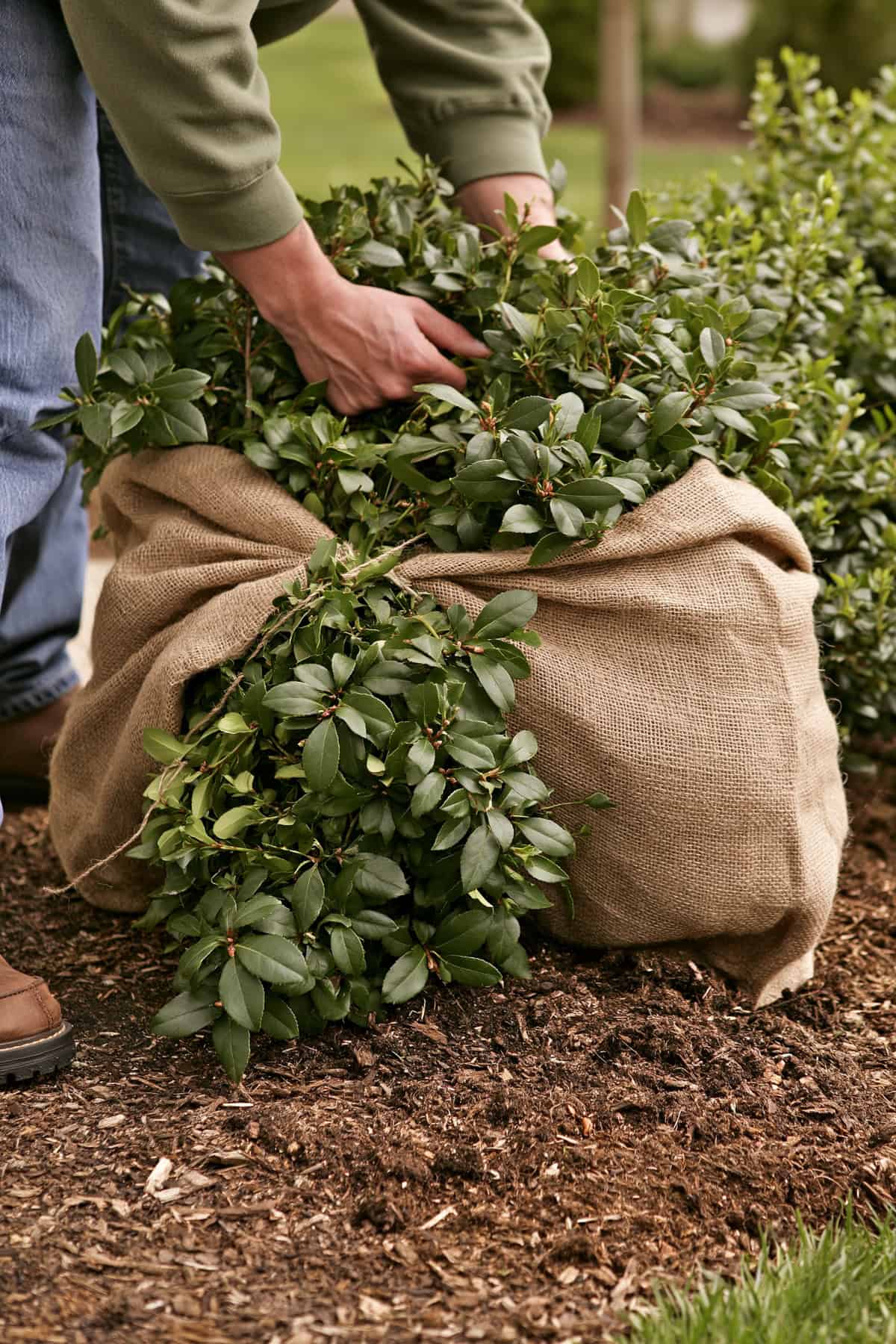
Early to mid-April suits most of the United States, once the hard freeze risk passes but before new growth pushes out and gets damaged by contact with burlap or twine. Removing covers too early exposes tender new shoots to a late frost; leaving them too long blocks sunlight and air that spring growth needs.
Untie branches gradually rather than all at once if they’ve been bound tightly all winter, giving them a few days to relax back into their natural shape. Inspect for winter burn, broken branches, or pest damage while the shrub is still easy to access, and prune out any damage before new growth masks it.
Common Winter Wrapping Mistakes to Avoid
Wrapping too early, while shrubs are still actively growing, traps heat and encourages fungal problems that wouldn’t otherwise develop. Wrapping too late, after a hard freeze already damaged tissue, wastes effort on protection that needed to happen weeks earlier.
Sealing burlap or plastic completely shut ranks among the most frequent errors, since it suffocates foliage instead of shielding it. Skipping fall watering and mulch while focusing only on the visible wrap addresses the smallest part of winter risk.
Forgetting to remove wrapping in spring, or leaving twine cinched too tight for multiple seasons, girdles branches and causes dieback that takes years to show.