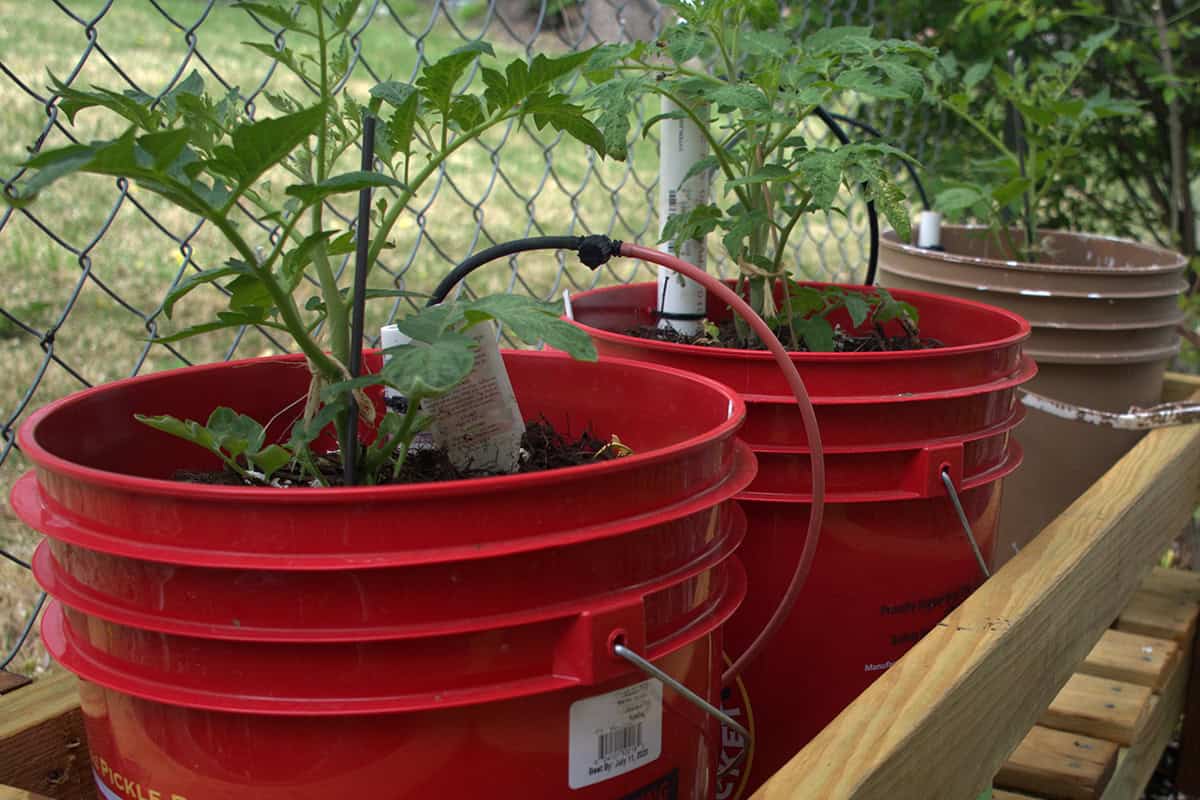
A 5-gallon bucket holds enough potting mix for a full-size tomato plant, and a few 1/2-inch drainage holes drilled in the base make it a planter in minutes. Food-grade buckets in light colors are the safest choice, since dark plastic heats up fast in summer sun.
Fruiting crops claim a whole bucket each, and greens, roots and herbs share space happily. Each entry lists how many plants fit per bucket, the detail that decides most harvests.
Table of Contents
- Vegetables & Herbs You Can Grow in 5 Gallon Buckets
- Cherry Tomatoes
- Patio Tomatoes (Dwarf Varieties)
- Chili Peppers
- Bell Peppers
- Eggplant
- Cucumbers (Bush or Compact Varieties)
- Zucchini (Compact Bush Types)
- Bush Beans
- Peas (With a Small Trellis)
- Lettuce
- Spinach
- Arugula
- Kale
- Swiss Chard
- Radishes
- Green Onions (Scallions)
- Carrots (Short or Nantes Varieties)
- Beets
- Turnips
- Bok Choy / Pak Choi
- Mustard Greens
- Basil
- Parsley
- Cilantro (Coriander)
- Thyme
- Oregano
- Chives
- Dill
Vegetables & Herbs You Can Grow in 5 Gallon Buckets
The range of crops that fit this size of container is surprisingly wide. Fruiting plants, greens, roots and staple herbs all grow well once the bottom has drainage holes and the bucket sits in sun.
Cherry Tomatoes
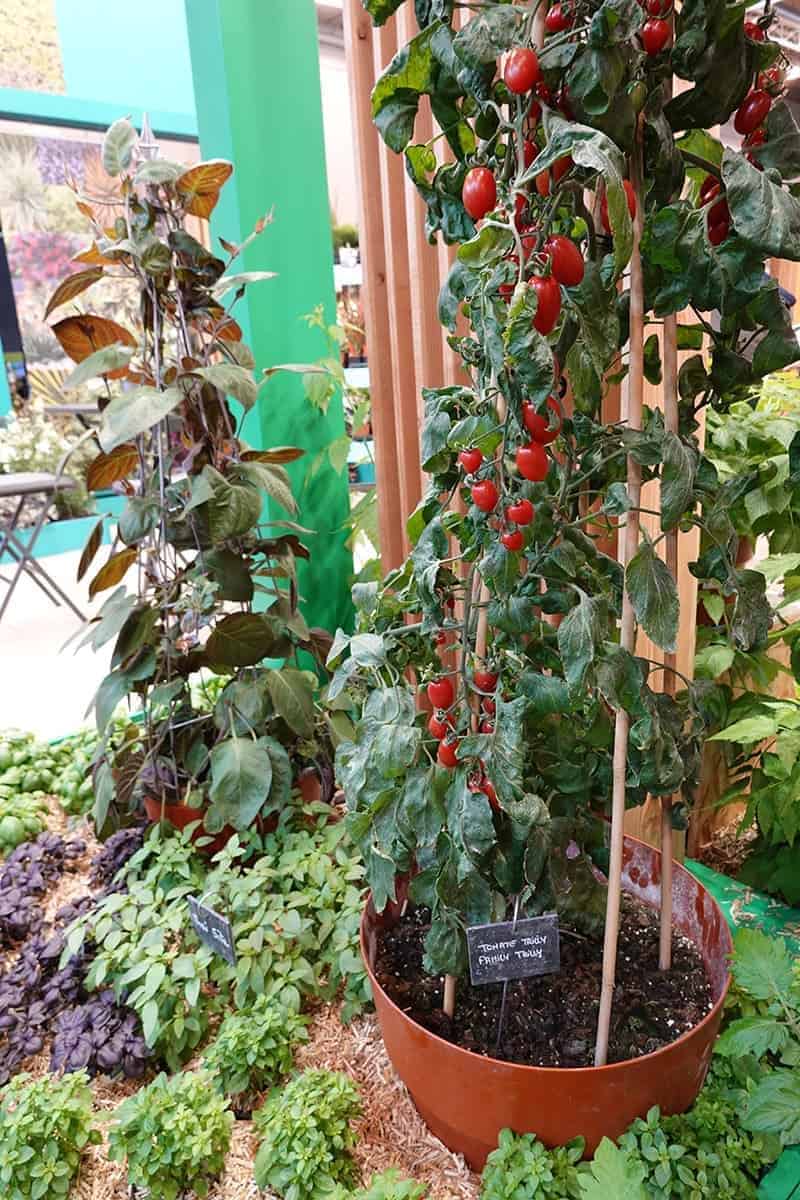
Cherry tomatoes produce heavily in a single bucket. Plant one per bucket and add a sturdy cage or stake at planting, since the vines grow tall and heavy.
Six to eight hours of direct sun is essential. A rich potting mix with some compost and evenly damp, never soggy, soil prevents wilting and split fruit.
Feed every two weeks with a balanced fertilizer once flowers appear. Removing the lowest leaves improves airflow and reduces leaf disease.
Patio Tomatoes (Dwarf Varieties)
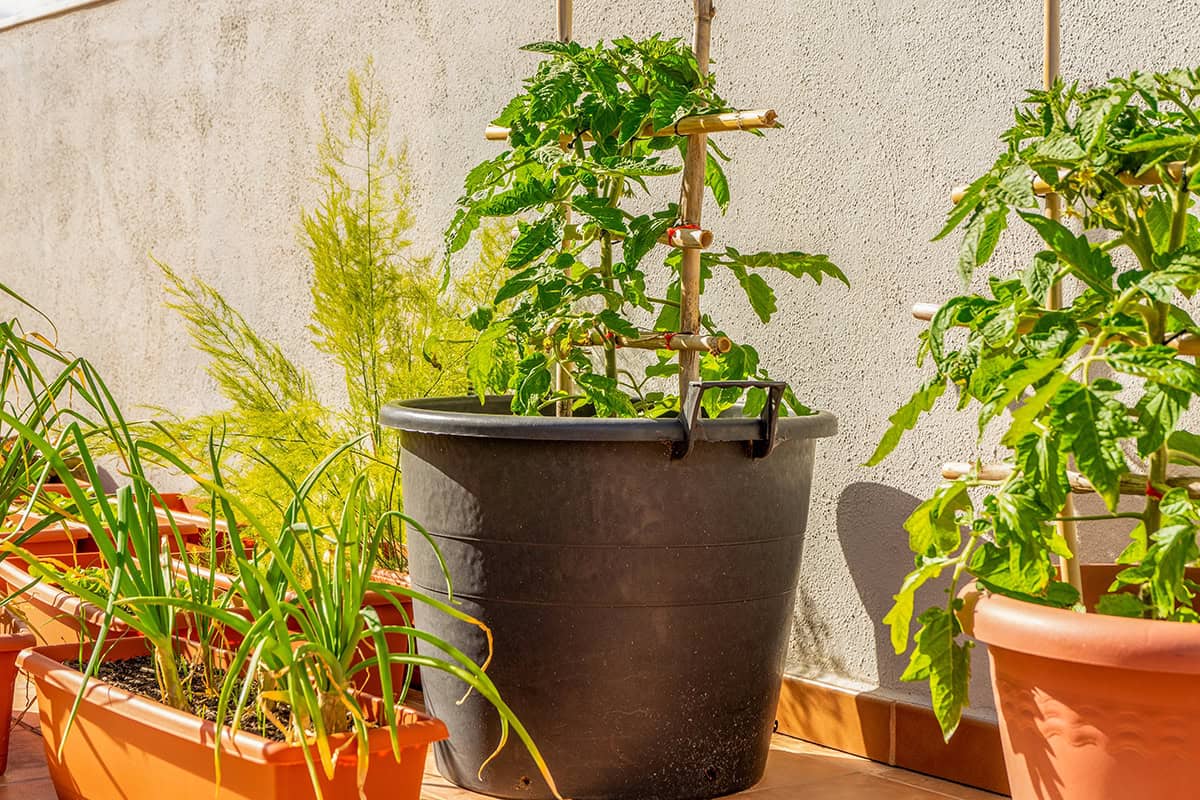
Dwarf patio tomatoes grow compact, typically topping out at 2 to 4 feet, which makes them a natural fit for buckets.
Plant one per container and bury the stem deeply, since tomatoes grow roots along the buried stem and anchor better.
Full sun is essential. Water deeply whenever the top of the soil dries, and add a small cage once fruit weighs down the branches.
Chili Peppers
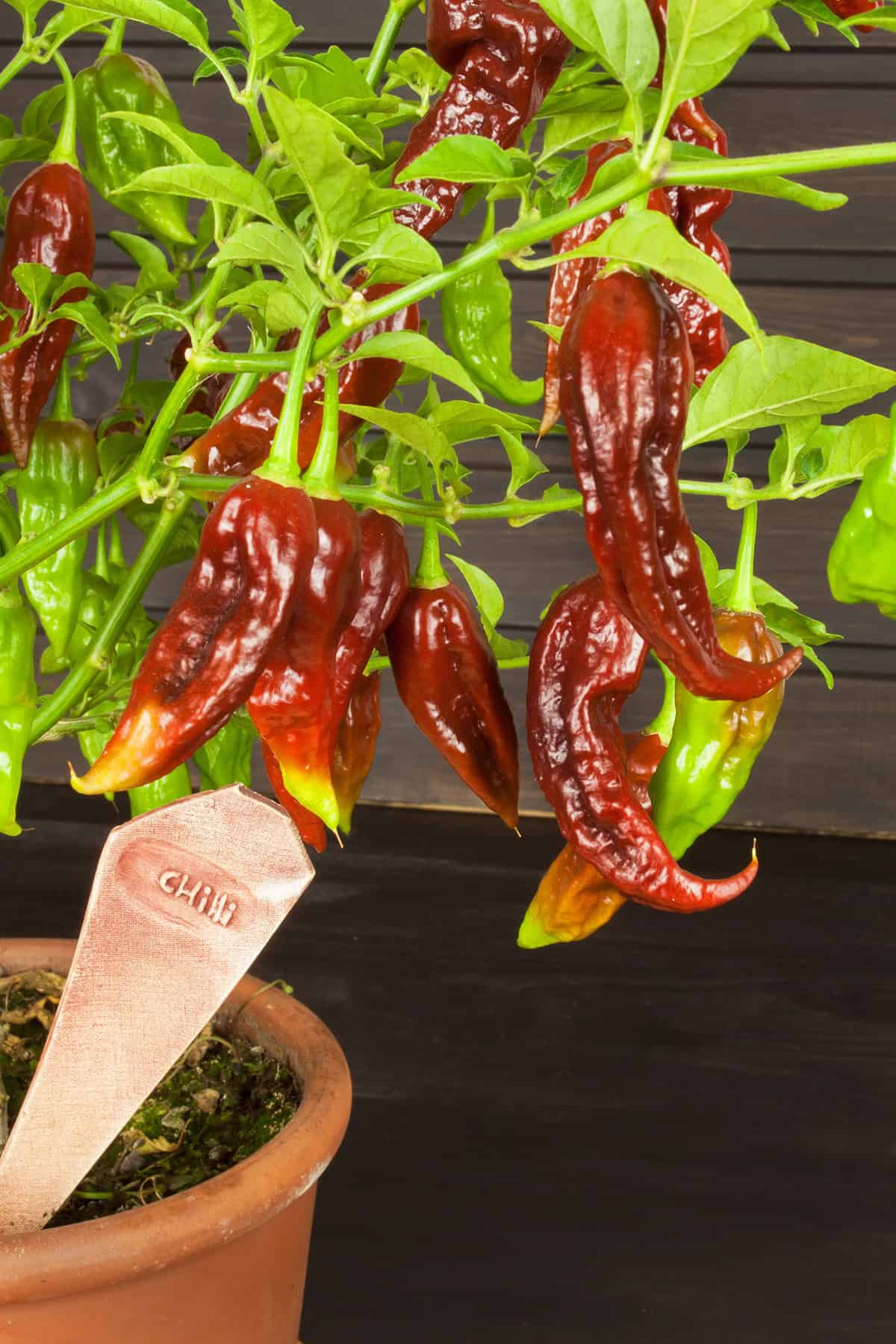
Hot peppers thrive in containers with good drainage, and one plant per bucket is plenty.
Wait until nights are above 55°F before moving them outside. Heat and sunshine produce the best crops.
The soil should be just moist, never soggy. Light feedings every few weeks support steady fruiting.
Bell Peppers
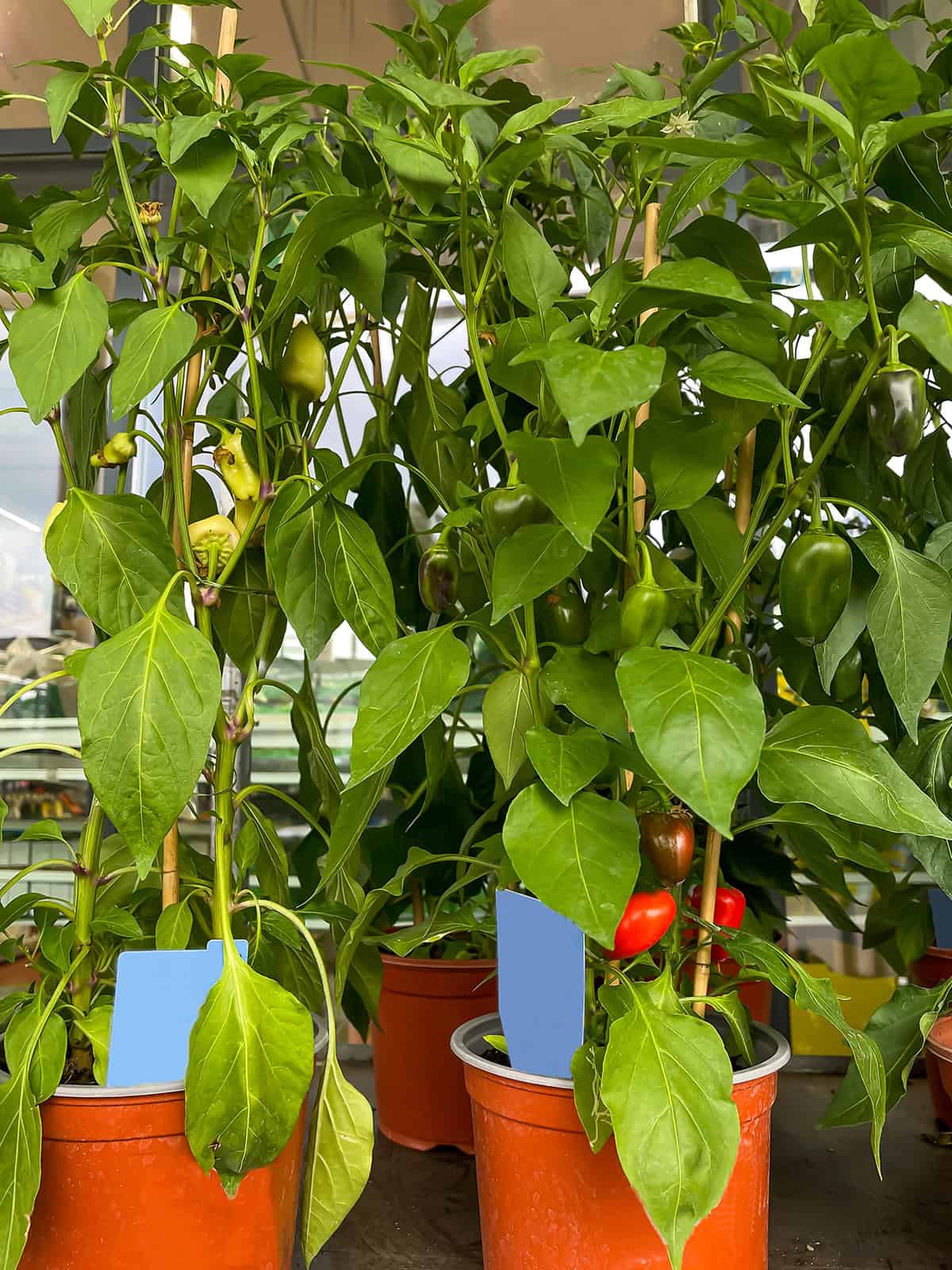
Bell peppers need steadier moisture than hot peppers to fill out their large fruit. One plant per bucket is right.
Six or more hours of direct sun is the minimum, and a stake helps once heavy fruit bends the plant.
Use a well-draining mix and water consistently, since soggy soil rots roots and uneven watering leads to blossom end rot.
Eggplant
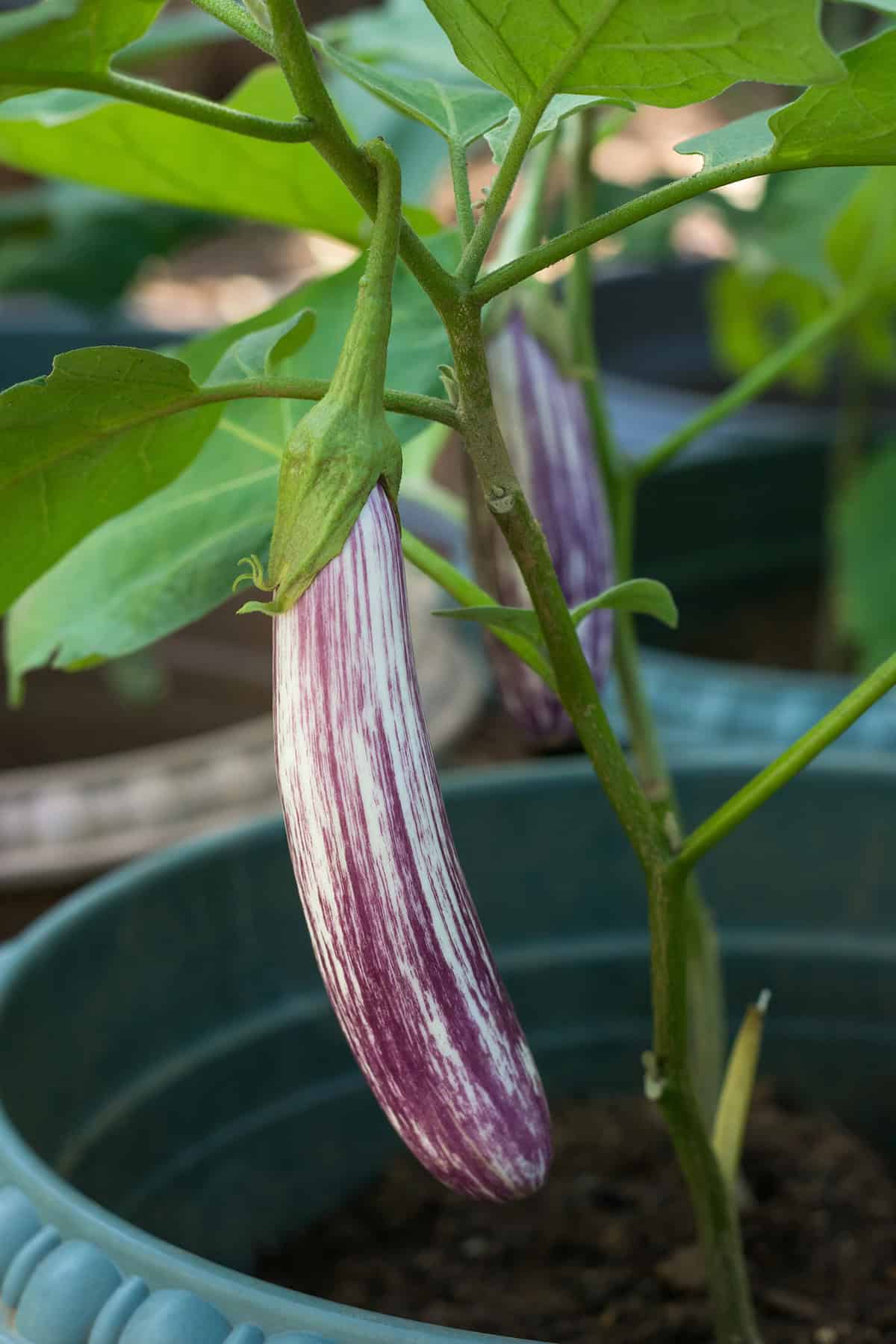
Compact eggplant varieties grow well in buckets, one plant per container so the roots have room.
Choose a warm, sheltered, sunny spot, since eggplants love heat and stall in cool weather.
Let the top inch of soil dry before watering again. Stake the plant early, before fruit sets and the main stem bends.
Cucumbers (Bush or Compact Varieties)
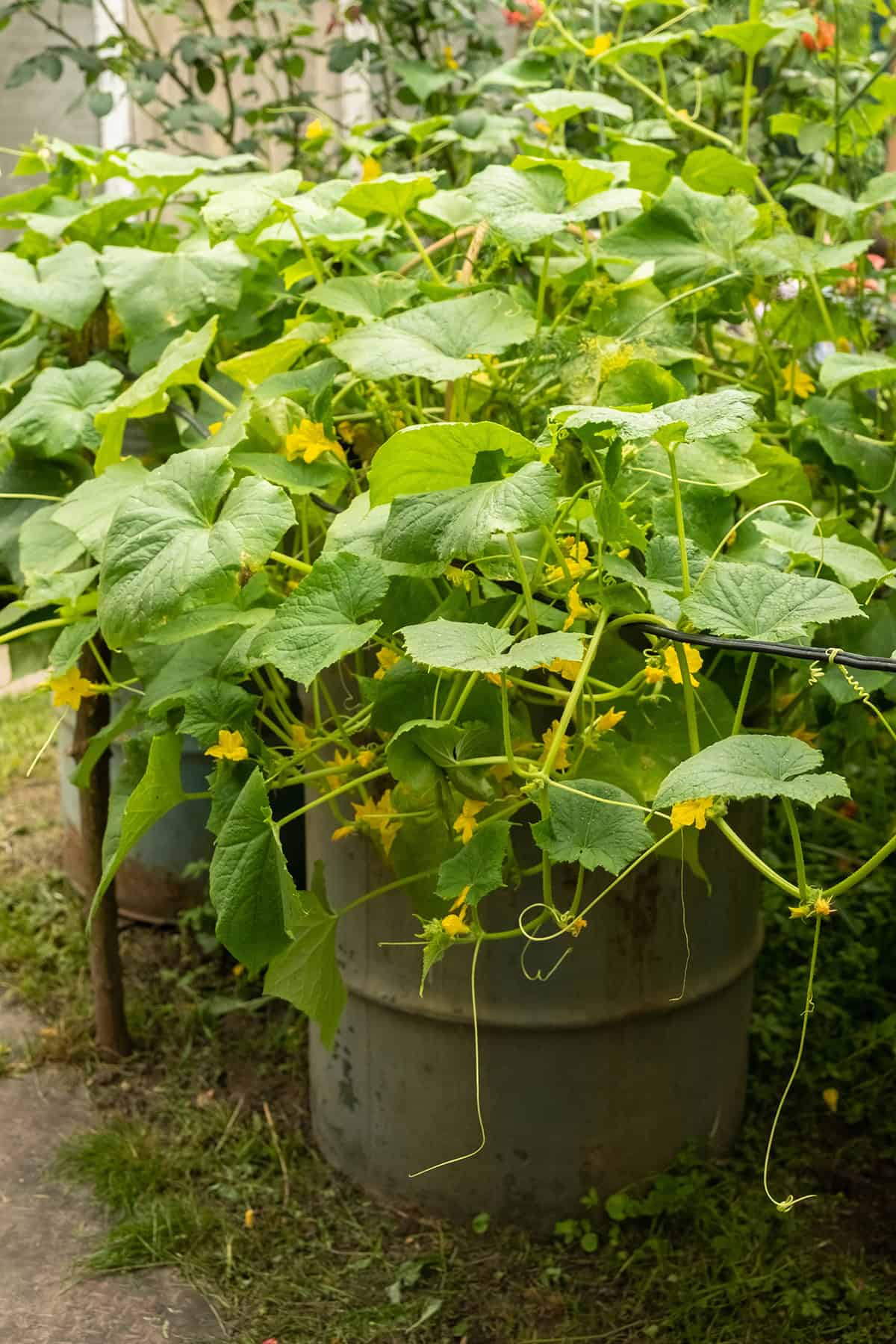
Bush cucumbers ask far less of a bucket than vining types. Plant one per container to avoid crowding.
Add a small trellis or cage at planting time, since even bush types grow better with a little support.
Consistent moisture produces crisp, mild fruit, and dry spells make it bitter. Pick regularly, and the plant produces more.
Zucchini (Compact Bush Types)
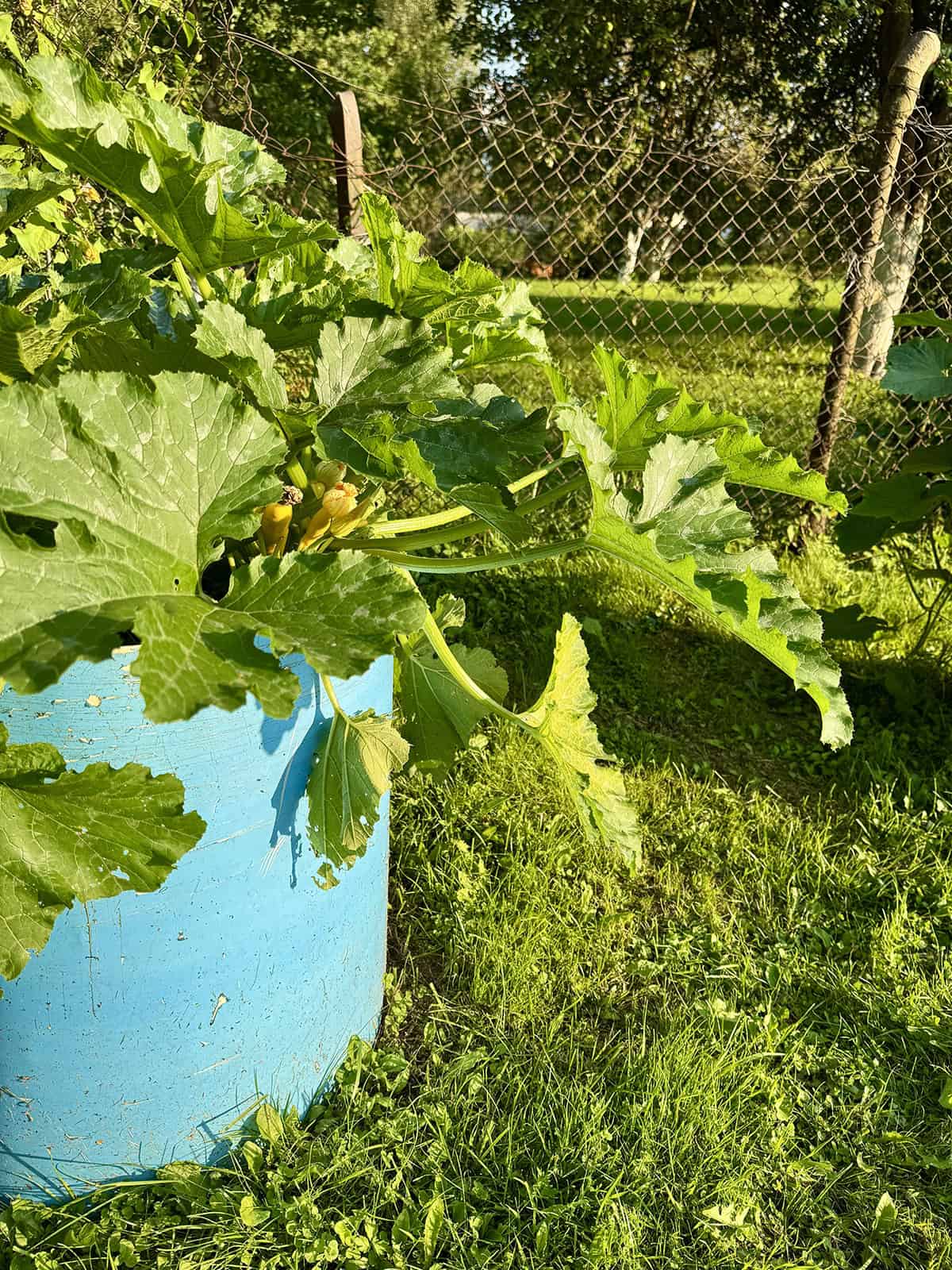
Zucchini fills a bucket quickly with its big leaves and fast growth, so choose a compact bush type and plant just one.
Full sun and regular watering are essential, since the large leaves lose water fast in hot weather.
Watch for squash bugs and vine borers. Harvest the fruit small for tender, tasty squash.
Bush Beans
Bush beans grow well in buckets, and several seeds fit a few inches apart.
Plenty of sun and moderate watering are all they need. Skip high-nitrogen fertilizer, which produces leaves at the expense of beans.
Pods arrive fast, so pick every few days. Most varieties are ready in under two months.
Peas (With a Small Trellis)
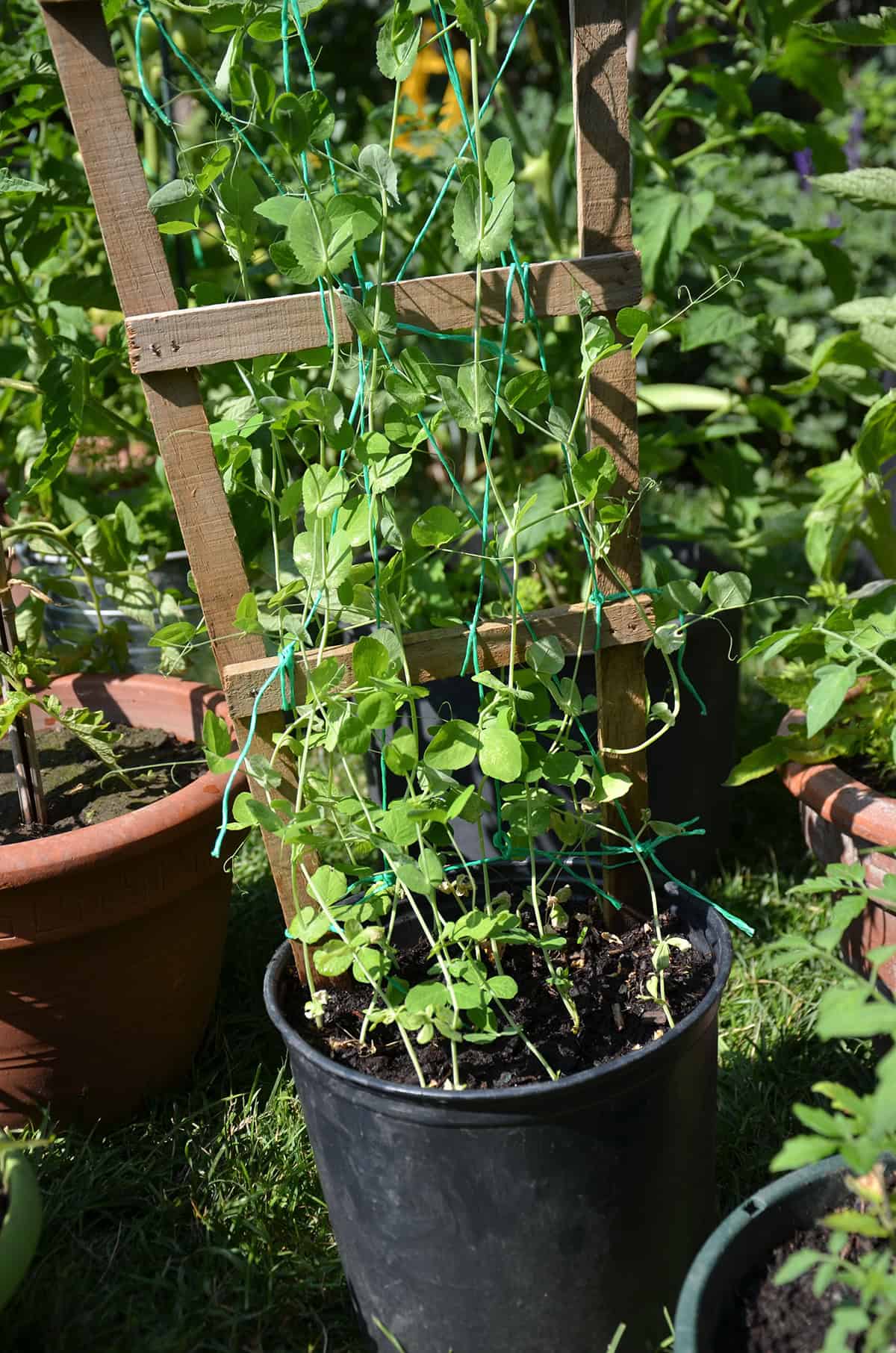
Peas prefer cool weather and tolerate light frost. Sow several seeds, then thin the seedlings.
A short trellis or stakes help these climbers, and even compact types need something to grip.
Water for moist, never wet, soil. Pick the pods while they are plump and still tender.
Lettuce
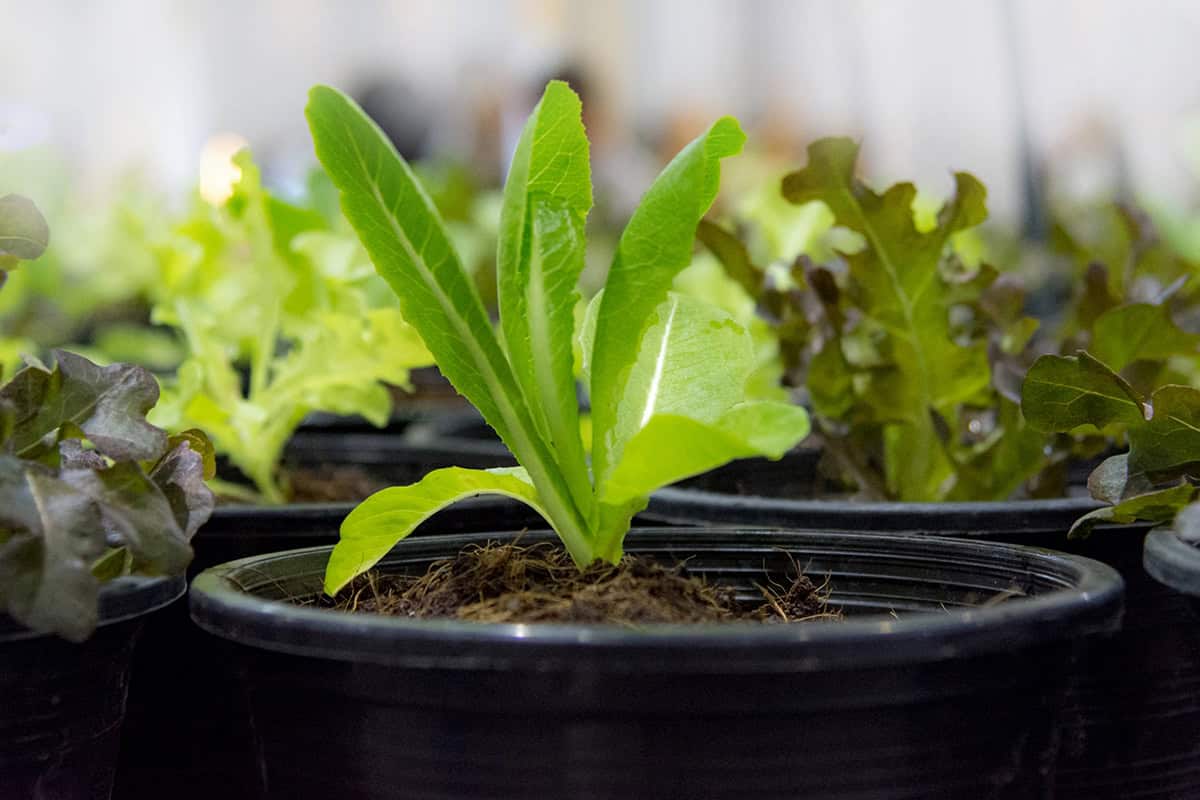
Loose-leaf and mini-head lettuces share a bucket happily, a few plants spaced just far enough apart.
Partial sun is fine, especially in hot summers, and afternoon shade preserves the sweet flavor.
Water frequently to prevent bitterness. Snip outer leaves as needed or harvest the whole head when it matures.
Spinach
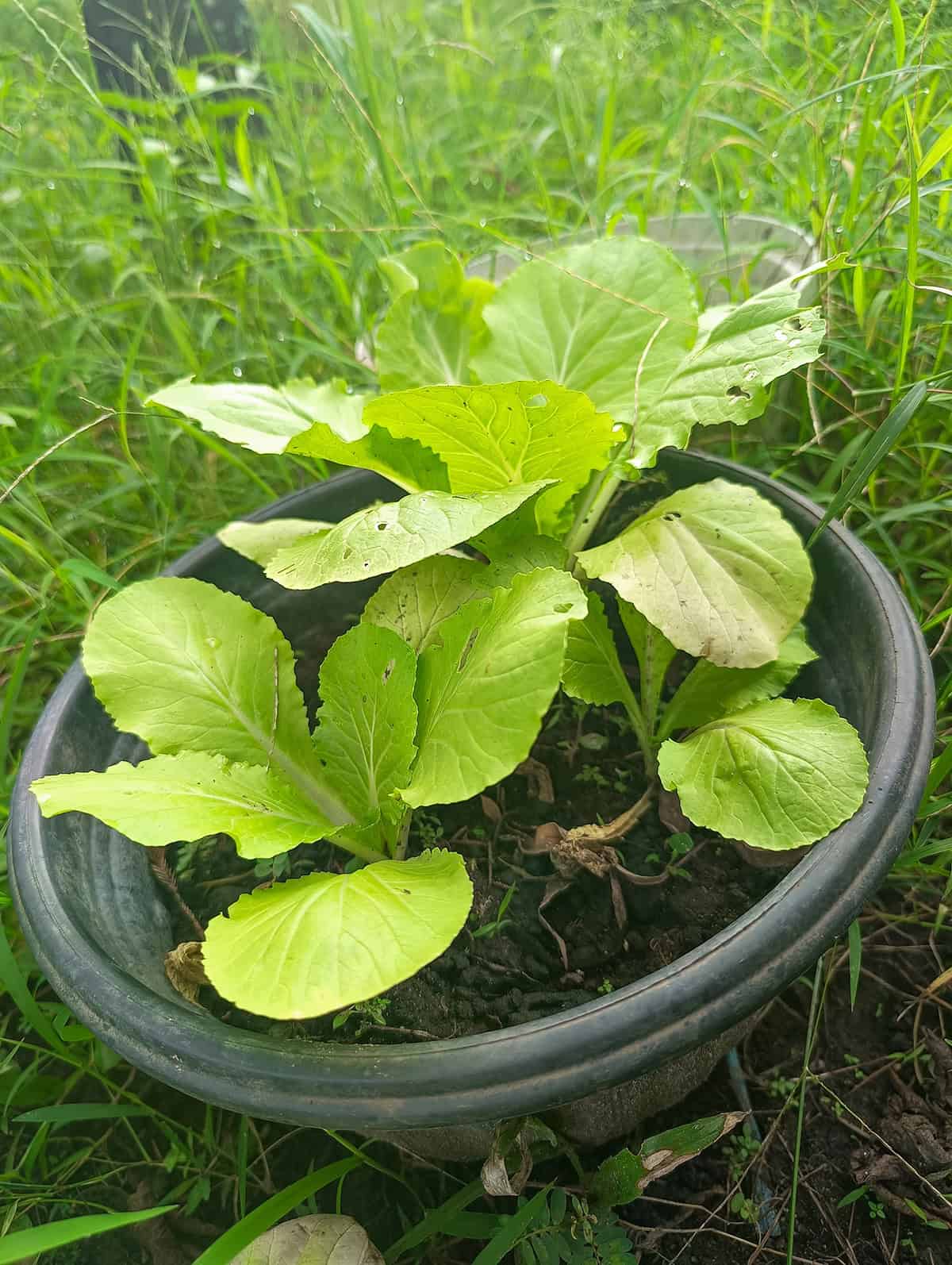
Spinach grows best in the cool seasons. Sow seeds directly and thin out the extras.
Full sun is best in spring and fall, and light shade helps when the weather warms.
Water for damp soil. Pick the outer leaves first, and the plant produces more from the center.
Arugula
Arugula grows fast and needs little space. Scatter the seeds lightly and cover them with a thin layer of soil.
Four to six hours of sun is enough. Regular watering produces tender, milder leaves.
Harvest young for the gentlest flavor, and sow again every couple of weeks for a steady supply.
Kale
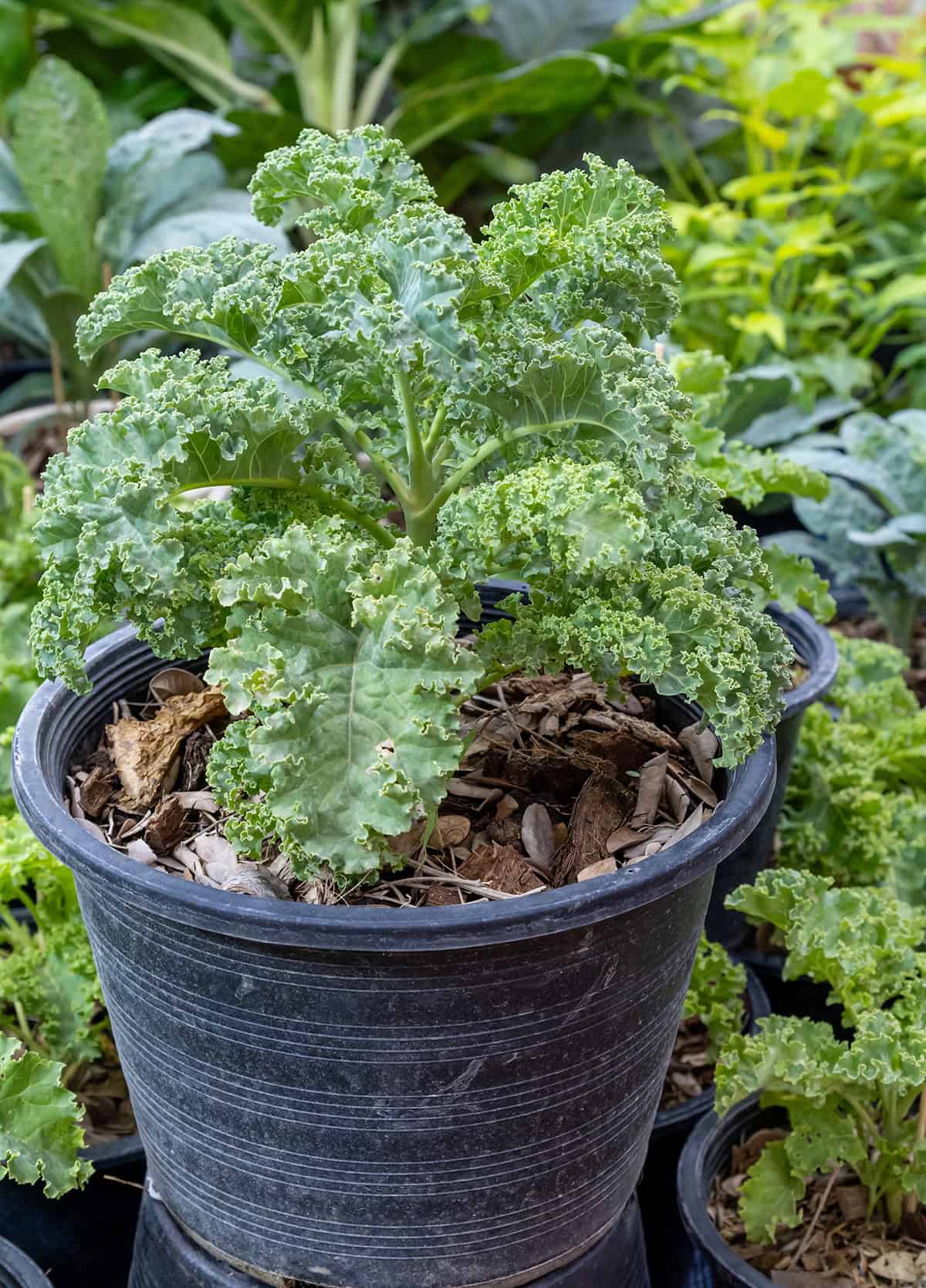
Kale shrugs off cold and light frost. One or two plants per bucket is about right, and large varieties need a bucket to themselves.
Full sun is ideal, and a little shade helps in hot weather. Water when the top layer dries out.
Pick the lower leaves first, and the plant produces for months.
Swiss Chard
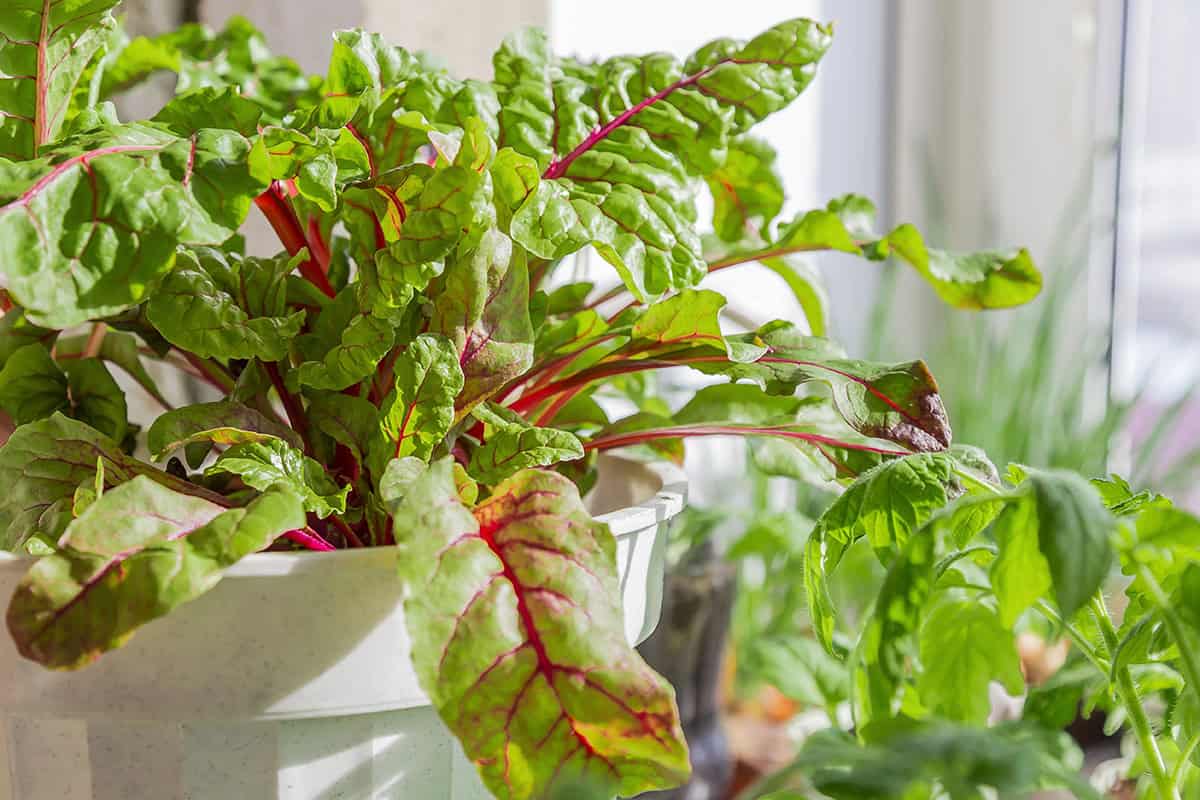
Swiss chard handles heat better than most greens, and two plants fit a bucket comfortably.
It grows in full sun or partial shade. Steady moisture produces tender leaves.
Pick the outer stalks, and new ones grow from the center.
Radishes
Radishes mature quickly and need little depth. Sow generously and thin as the seedlings emerge.
Sun helps the roots fill out, and damp soil prevents tough, cracked roots.
Most varieties are ready in three to five weeks, and roots left too long grow woody.
Green Onions (Scallions)
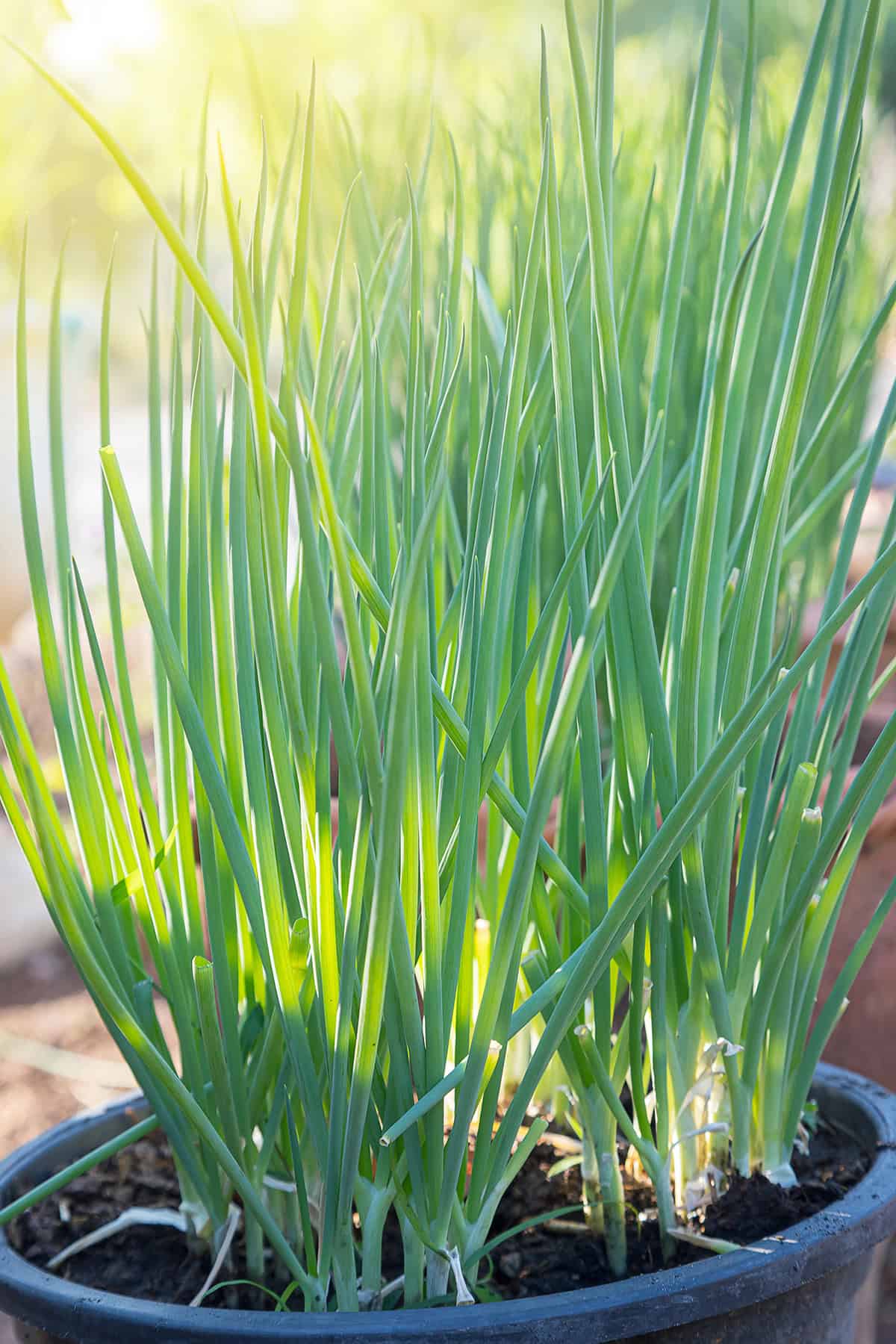
Scallions grow easily in buckets. Plant sets or seeds close together for a full pot.
Sun and moderate watering are all they need, and good drainage prevents rot.
Snip the stems once they thicken, and the tops regrow for a second harvest.
Carrots (Short or Nantes Varieties)
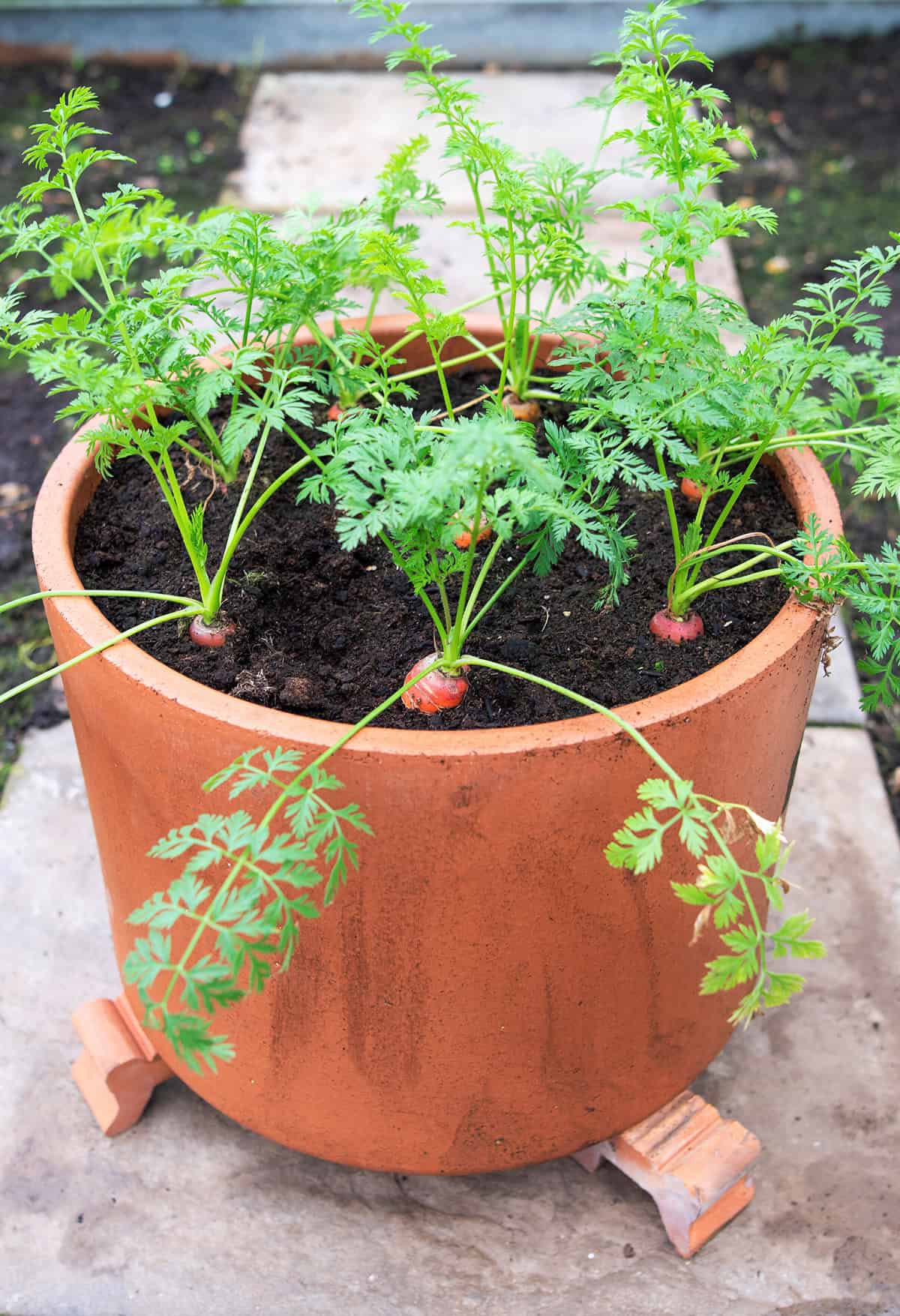
Carrots grow crooked in rocky soil, so fill the bucket with a loose, stone-free mix. Short and Nantes types do best.
Sow directly, then thin the seedlings so the roots have space. Full sun produces the sweetest carrots.
Water steadily, since dry spells cause cracking. Pull the roots once they reach the size you want.
Beets
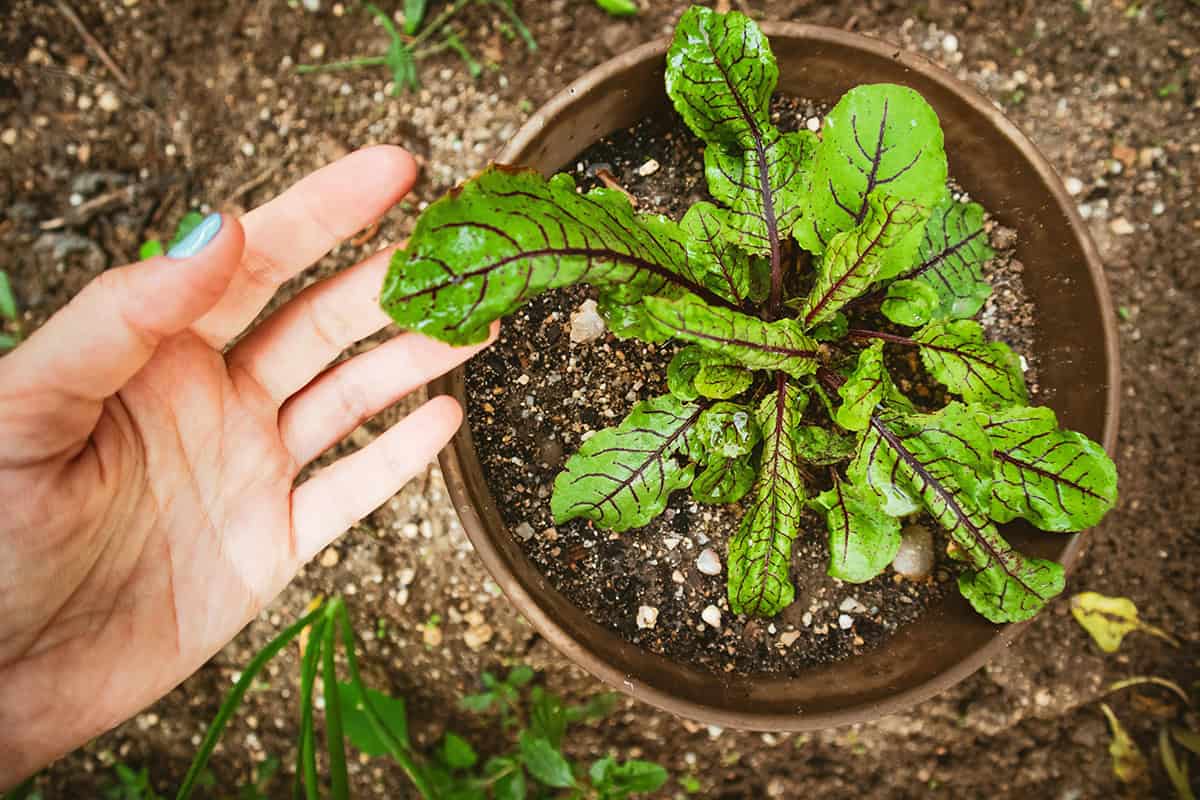
Beets supply both roots and greens. Sow a handful of seeds and thin the seedlings as they grow.
Sun deepens the color and flavor, and even moisture produces tender roots.
Pick a few greens early, or wait about two months for the roots to bulk up.
Turnips
Turnips grow fast and tolerate cold. Sow directly and thin so each plant has room.
Full sun helps the roots develop, and regular watering makes them tender.
Small roots taste best. The greens are edible too, cooked like mustard greens or spinach.
Bok Choy / Pak Choi
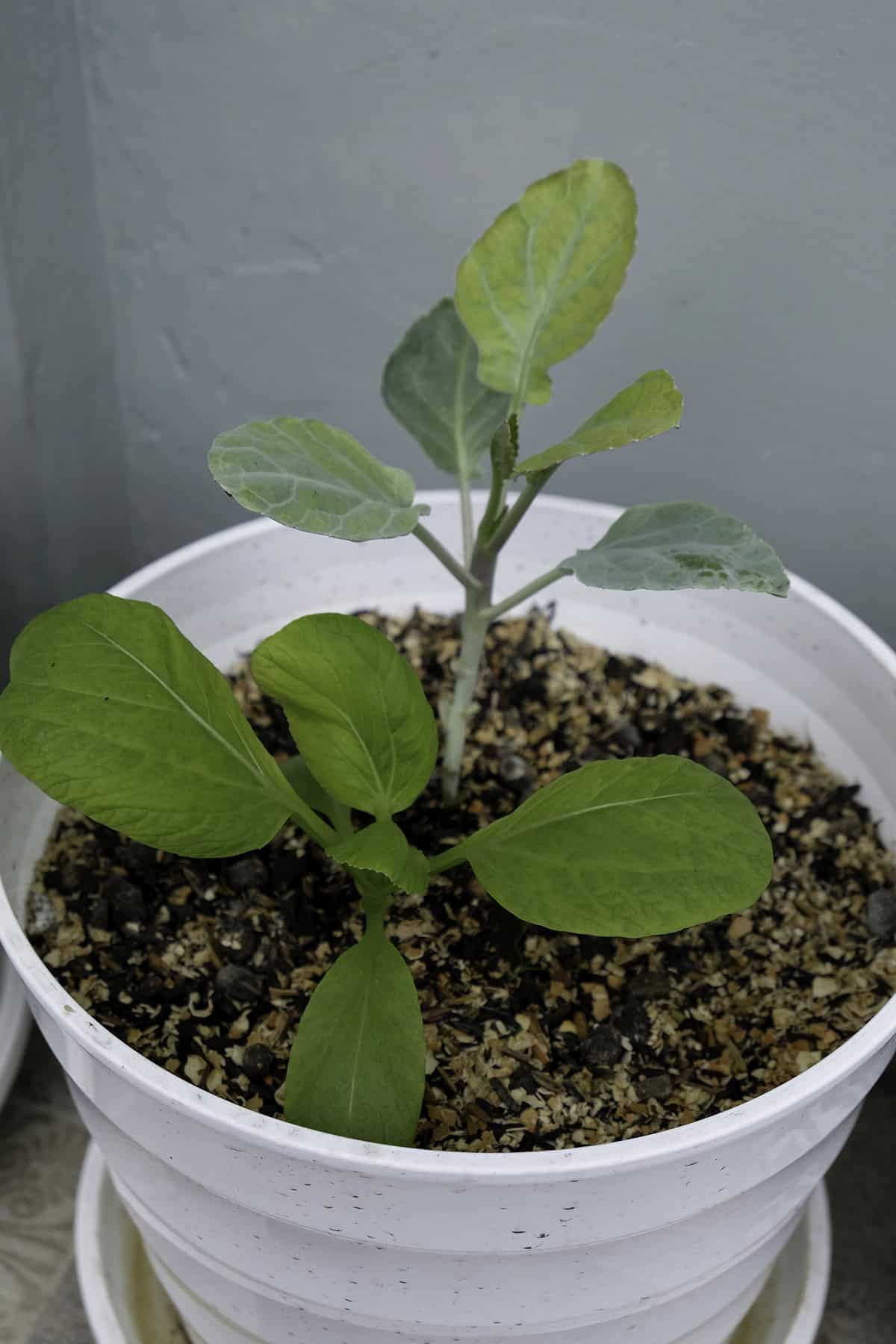
Cool-season bok choy grows well in buckets, and several seedlings share one if spaced properly.
Grow it in sun during cool weather and in light shade during heat. Consistent watering delays bolting.
Harvest the whole plant or take a few leaves at a time.
Mustard Greens
Mustard greens handle chilly weather with ease. Sow directly in the bucket and thin as needed.
Sun encourages lush leaves, and moist soil produces milder, tender greens.
Pick young for a subtle flavor, or let the leaves mature for a spicier bite.
Basil
Basil loves heat and sun, and one or two plants fill a bucket.
Water when the top of the soil dries. Avoid wetting the leaves late in the day to prevent leaf spots.
Pinch the tips frequently for bushier plants and later flowering.
Parsley
Parsley grows a deep taproot, which makes a bucket a good fit. One to three plants fit comfortably.
Partial sun is fine, and even moisture produces steady growth.
Snip the outer stems first, and the plant produces for months.
Cilantro (Coriander)
Cilantro bolts in heat and grows best in cool weather. Sow seeds directly in the bucket.
Grow it in full sun when the weather is cool and in light shade when it is hot. Regular watering helps delay flowering.
Pick leaves early and frequently, and let a few plants flower and set seed for coriander.
Thyme
Low-maintenance thyme needs only well-drained soil and plenty of sun, and one plant gradually fills a bucket.
Water sparingly once established, and let the surface dry between waterings.
Trim the stems occasionally for a tidy shape and fresh growth.
Oregano
Oregano spreads vigorously, so one plant per bucket is enough. Strong sun produces the best flavor.
Water only when the topsoil dries, since excess water makes it leggy.
Snip stems regularly for a bushier, healthier plant.
Chives
Chives form neat clumps in a bucket. Plant several starts together for a full pot.
They grow in sun or partial shade. Water whenever the surface dries so the soil is lightly moist.
Cut the leaves low, and they regrow quickly for another round.
Dill
Dill sends down a long taproot, which makes a deep 5-gallon bucket a good home. Sow the seeds where they will grow, since dill transplants poorly.
Water for damp soil and place the bucket in full sun. Tall varieties benefit from a stake, and compact types such as ‘Fernleaf’ need none.
Snip leaves whenever you need them. For seeds, let a few plants flower and dry on the stem.