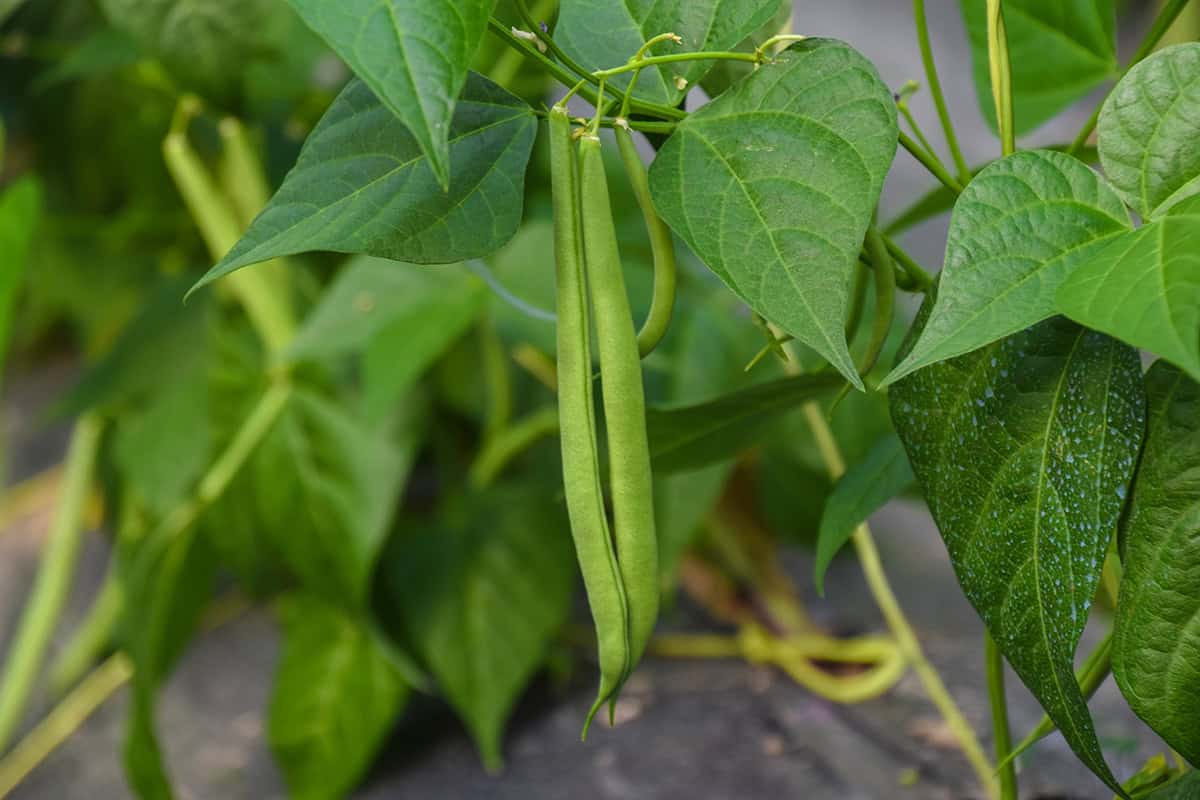
Green beans sprout within a week in warm soil and rank among the most productive vegetables per square foot in a home garden. Bush types fill a bed in under two months, and pole types climb a trellis and bear until frost.
Cold, wet soil rots the seed, which makes planting date the decision that matters most. The planting section sets that date by soil temperature instead of the calendar.
Table of Contents
Quick Growing & Care Summary
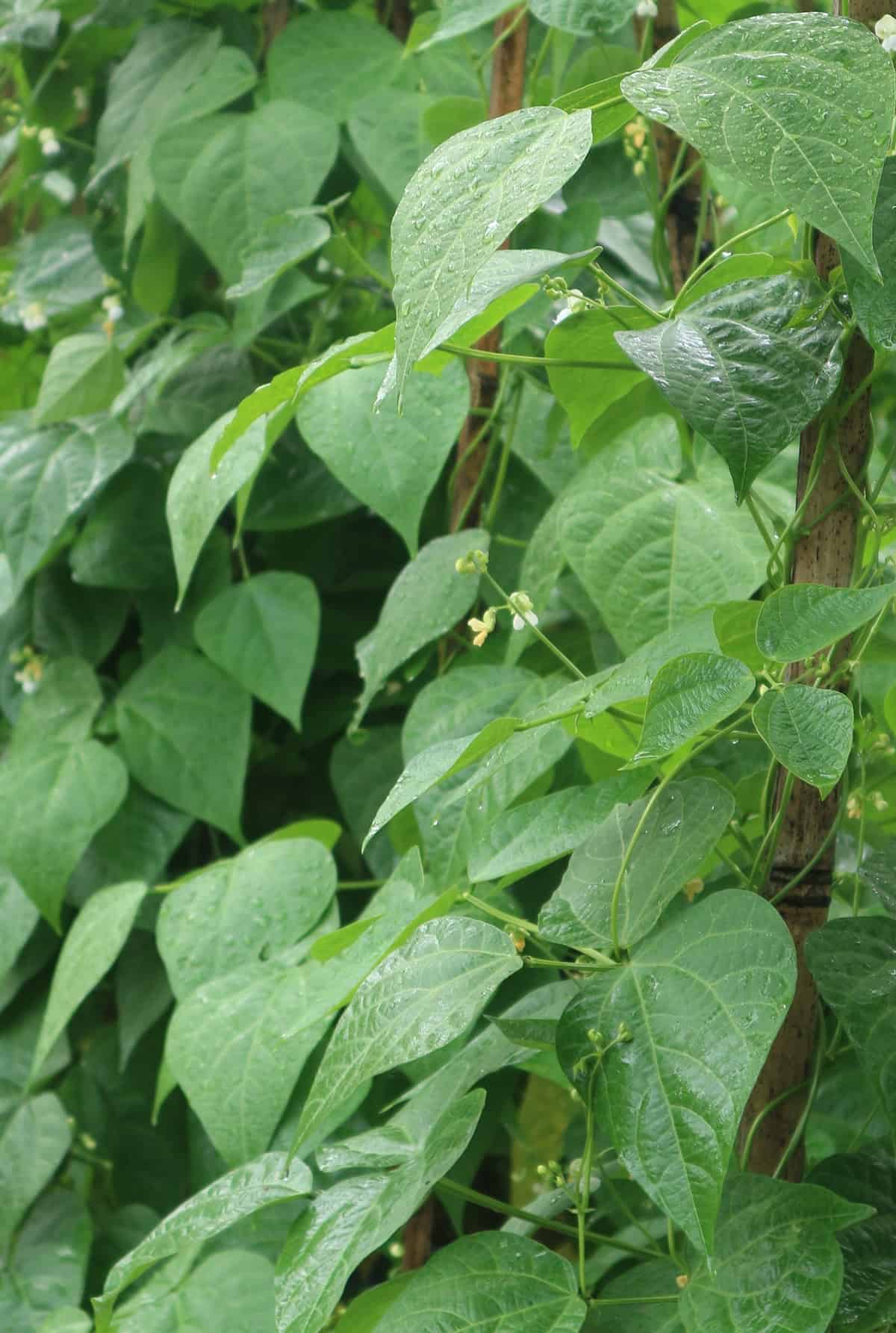
Note these basics before planting.
- Full sun for 6 to 8 hours or more a day
- Loose, well-drained loam with a pH of 6.0 to 6.8
- About 1 inch of water a week, held steady during bloom and pod set
- Soil at 60°F or warmer for planting, ideally 70°F to 80°F, and air temperatures of 65°F to 85°F
- Average humidity, with dry foliage to reduce disease
- Light feeding, since beans fix their own nitrogen
- Grown as an annual in USDA zones 3 to 10
- Harvest in 50 to 65 days for bush types and 60 to 80 for pole types
- Bush types 1 to 2 feet tall, pole types 6 to 10 feet on a support
- Direct-sown seed after the last frost, since roots resent transplanting
Early planting causes the most failures, since seed rots in cold, soggy soil. A soil thermometer at 2 inches deep settles the timing.
Soil
Beans grow best in loose, well-drained soil with moderate organic matter. Soil that crumbles when squeezed, 8 inches down, signals a good bed. Mix 1 to 2 inches of compost into the bed before planting to improve drainage in clay and moisture retention in sand.
Heavy clay that puddles after rain rots seed and invites root diseases, so raised beds help on poorly drained sites. Beans host nitrogen-fixing bacteria in root nodules, and a bean inoculant dusted on the seed helps in beds that lack a recent bean crop. High-nitrogen fertilizer produces leafy plants with few pods.
Planting
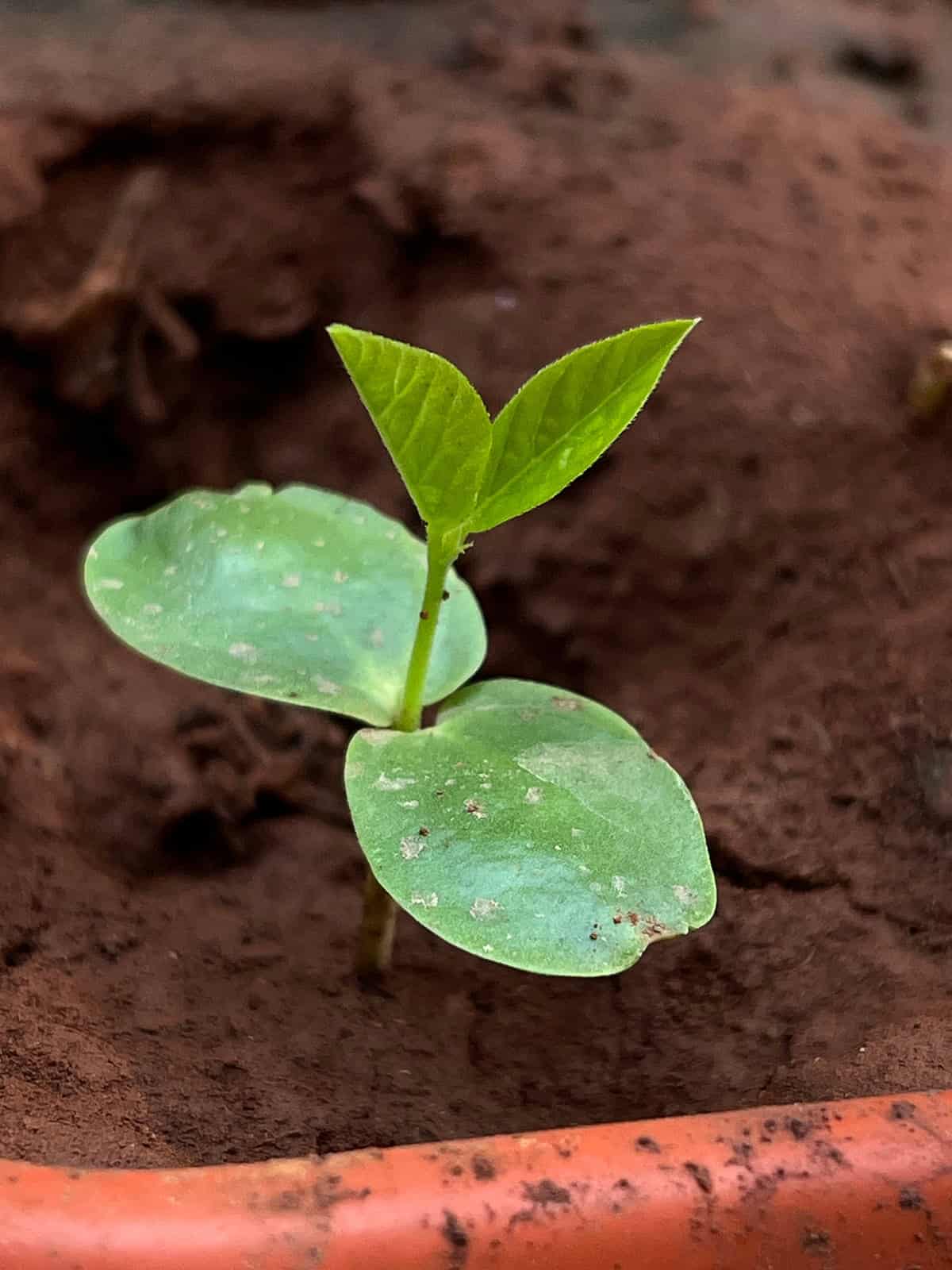
Sow beans after the last frost, once soil at planting depth reaches at least 60°F, and ideally 70°F. Frost kills seedlings, and cold soil delays germination for weeks.
Plant seeds 1 inch deep. Space bush beans 2 inches apart in rows 18 to 24 inches apart, then thin to 4 inches. Skip presoaking, since soaked seeds crack and rot in cool soil.
Sow a new row of bush beans every two to three weeks until midsummer for a steady supply.
Pole beans need a trellis, a teepee of bamboo stakes or a sturdy fence at least 6 feet tall. Set the support before planting, sow seeds 3 inches apart at its base and thin to 6 inches.
Variety Selection
Bush beans grow 1 to 2 feet tall with no support and produce most of their crop over two to three weeks, a good match for canning and the freezer. Pole beans climb 6 feet or more and bear for six to eight weeks.
Blue Lake 274, a bush bean, and Provider, an early, cold-tolerant bush type, carry tender, stringless pods. Kentucky Wonder, a classic pole bean, sets heavy crops in heat, and Blue Lake Pole carries stringless pods on climbing vines.
Scarlet runner beans (Phaseolus coccineus), a related species, carry red flowers that draw hummingbirds, and their young pods taste best picked small. Yellow wax beans such as Golden Wax carry a mild flavor and bright color.
For dry beans such as pinto or kidney, leave the pods on the plant until they rattle and the seeds harden.
Light
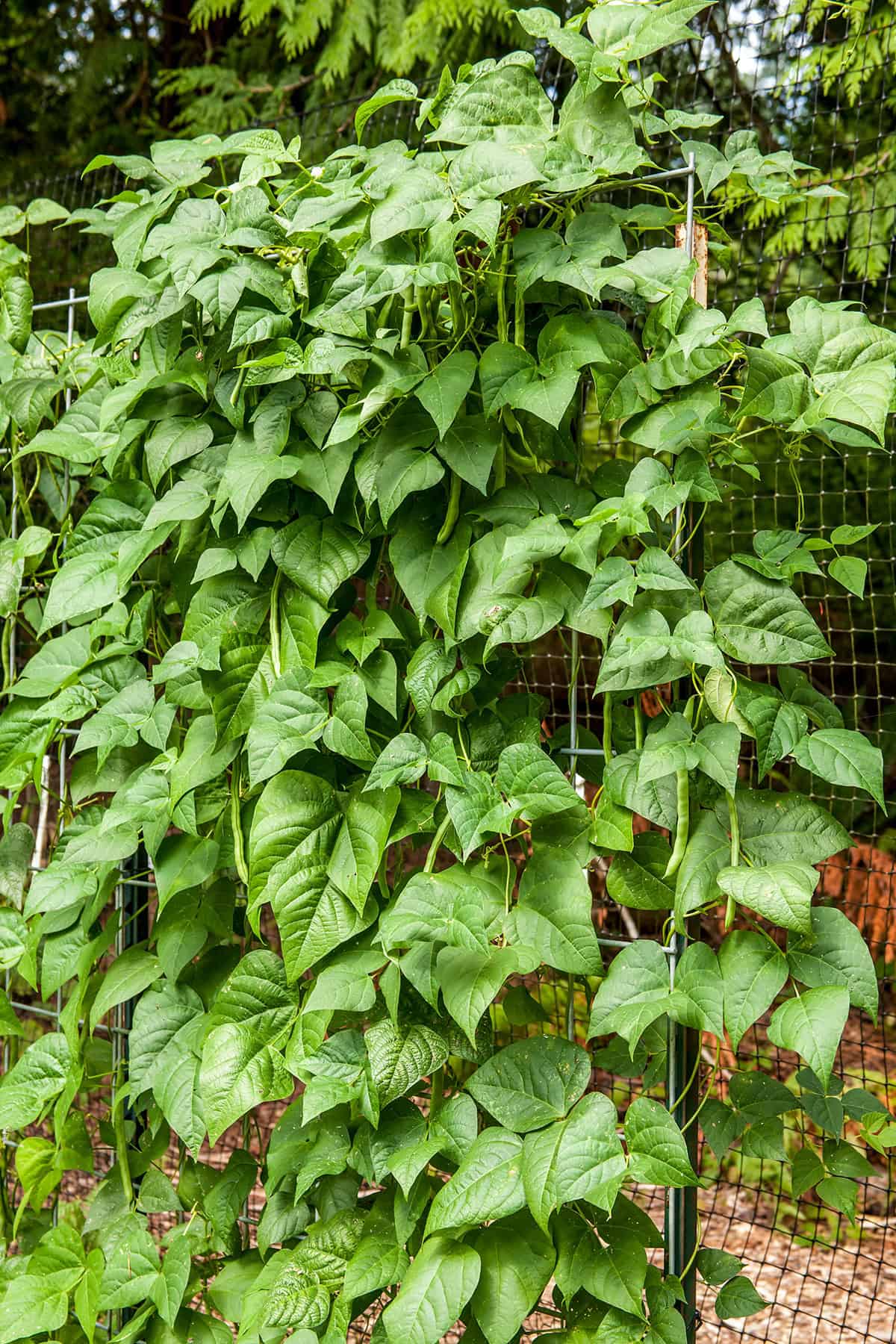
Beans need full sun, at least 6 to 8 hours of direct light a day. Shaded plants grow lanky, flower less and set few pods.
Morning sun dries dew from the leaves early and reduces fungal disease. In very hot climates, light afternoon shade protects the flowers, since temperatures above 90°F cause blossom drop.
Water
Beans need about an inch of water a week from rain or irrigation. Swings between dry and soggy soil stress the plants and produce misshapen pods.
Flowering and pod set matter most, since dry soil at that stage drops blossoms and shrinks the harvest. Mulch the bed with straw once seedlings reach a few inches tall to hold moisture.
Wet foliage spreads bacterial blight and rust, so water at the base with a soaker hose or drip line.
Feeding
Beans need little fertilizer, since root bacteria supply most of their nitrogen. Excess nitrogen produces leaves at the expense of pods.
Before planting, mix a low-nitrogen fertilizer such as 5-10-10 into the bed at about 1 to 2 pounds per 100 square feet, following the label. Compost-rich beds need no extra feeding.
Pale plants in poor, sandy soil benefit from a light side-dressing of compost or a balanced fertilizer at first bloom.
Growth Time
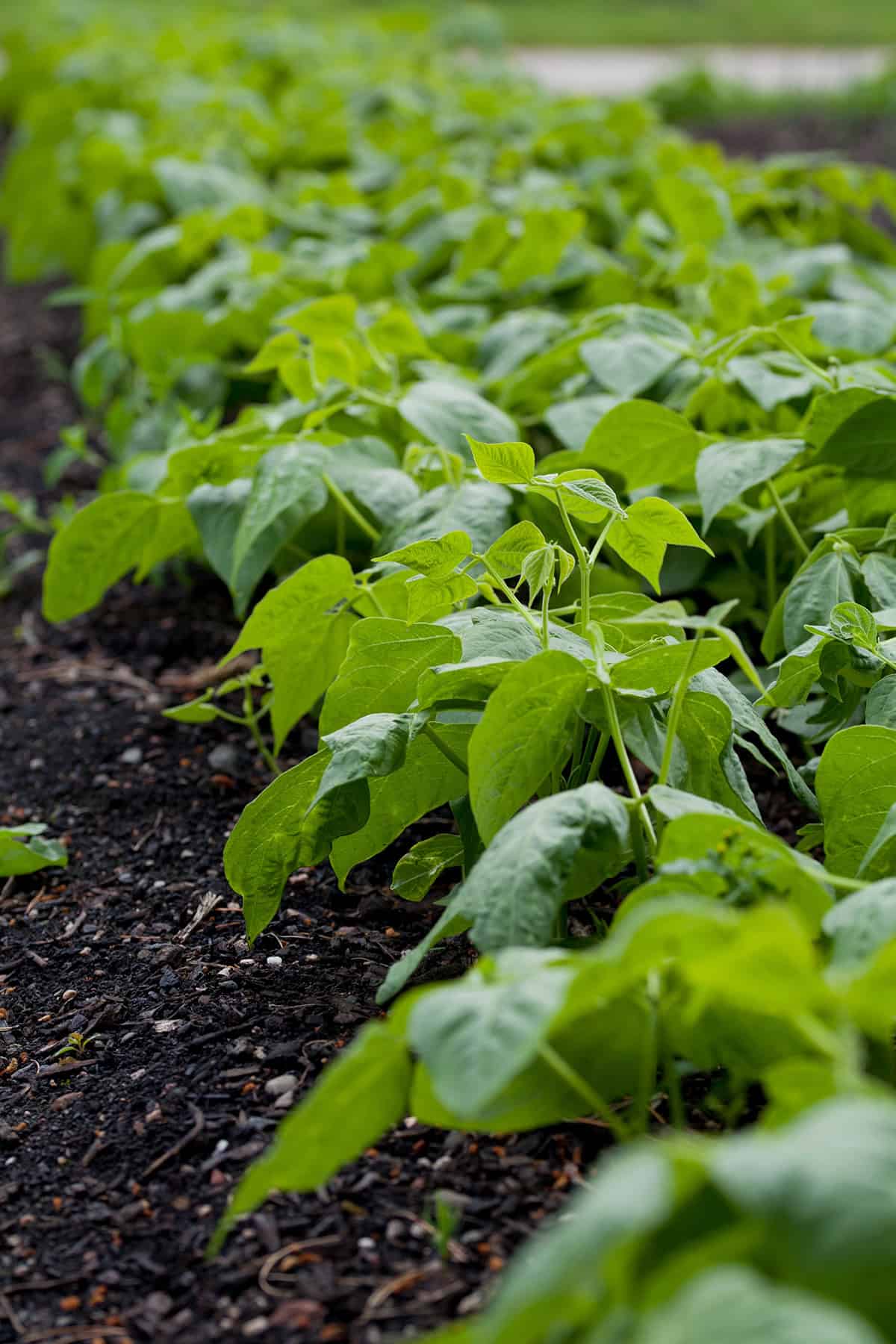
Bush beans mature in about 50 to 60 days from sowing. Pole beans take 60 to 80 days to start bearing and produce over a longer season.
Seeds in 70°F to 80°F soil sprout in about a week, and cooler soil slows germination and raises the risk of rot. In short-season areas, choose fast bush varieties rated at 50 to 55 days.
Growing In Containers
Bush beans grow well in pots, planters and grow bags at least 12 inches deep and wide, with drainage holes. Fill them with quality potting mix blended with a little compost, since garden soil compacts in containers.
Pots dry out quickly in summer, so check moisture daily. Pole beans grow in large, heavy containers set against a fence or fitted with a teepee trellis, and small pots tip over under their weight.
Harvest
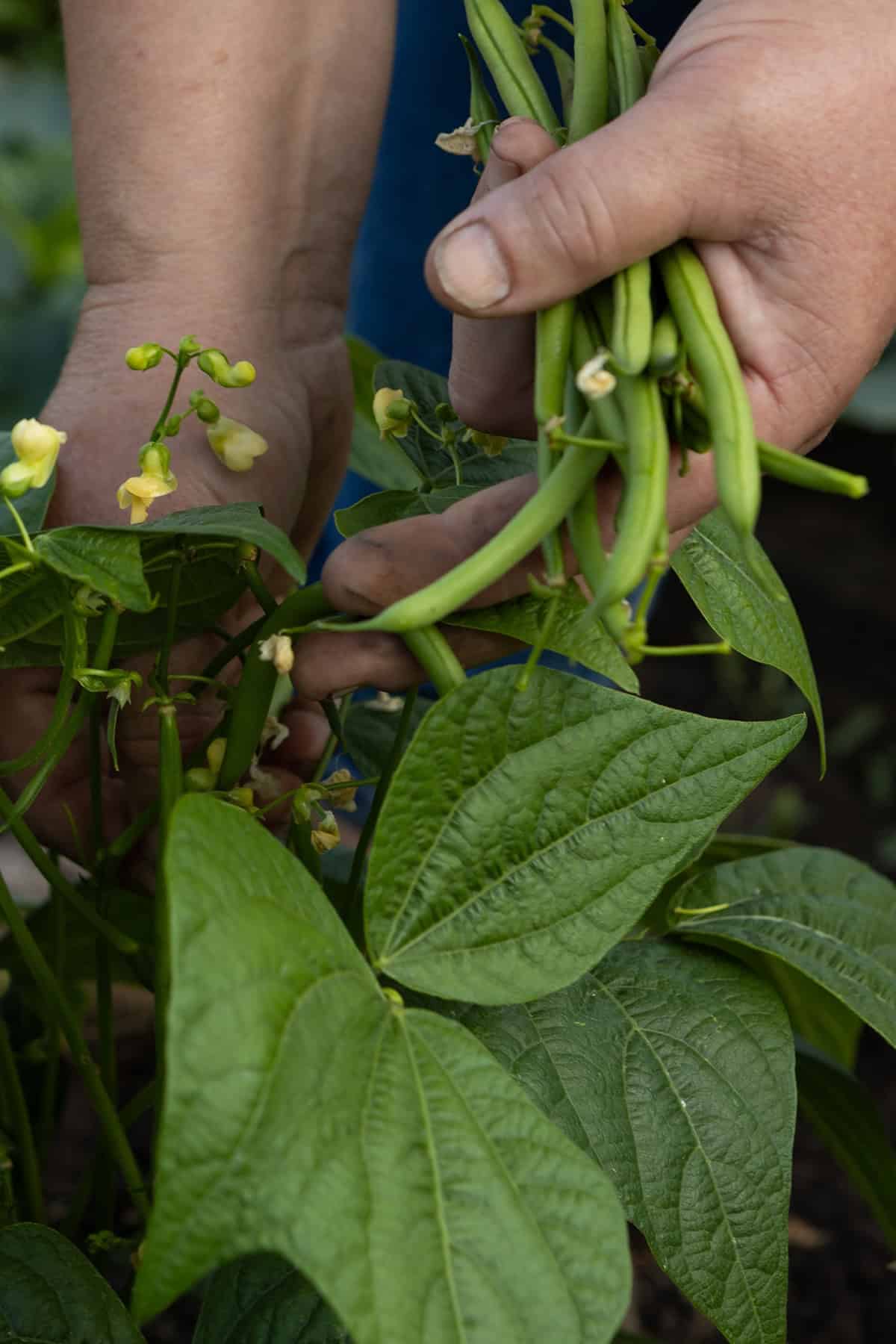
Pick snap beans when the pods are firm, about as thick as a pencil and 4 to 6 inches long, with small seeds inside. That stage arrives about two to three weeks after bloom.
Harvest every two to three days at peak, since mature pods signal the plant to slow production. Overgrown pods grow tough and stringy, though they dry on the plant into soup beans or seed for next year.
Pick when the foliage is dry, since handling wet plants spreads bacterial blight and rust. Hold the stem with one hand and pull the pod with the other to avoid broken branches.
Common Problems And Troubleshooting
Mexican bean beetles, copper-colored with 16 black spots, chew leaves into lace, and their yellow, spiny larvae feed on the undersides. Handpick adults, larvae and yellow egg clusters in small gardens. Neem oil or insecticidal soap controls larvae in larger outbreaks.
Japanese beetles arrive in midsummer and skeletonize leaves. Shake them into a bucket of soapy water early in the morning, when they move slowly. Pheromone traps draw more beetles into the garden than they catch, so skip them.
Leafhoppers, aphids and thrips cause yellow, curled or distorted leaves, and aphids spread bean mosaic virus. Floating row covers protect young plants, and reflective mulch deters aphids.
Seedlings cut off at the soil line point to cutworms. Cardboard or plastic collars around each stem at planting stop them.
Bean rust forms rusty pustules on leaf undersides in warm, humid weather, and bacterial blight leaves brown, water-soaked spots. Remove infected leaves, water at the base, space plants for airflow and choose resistant varieties where these diseases recur.