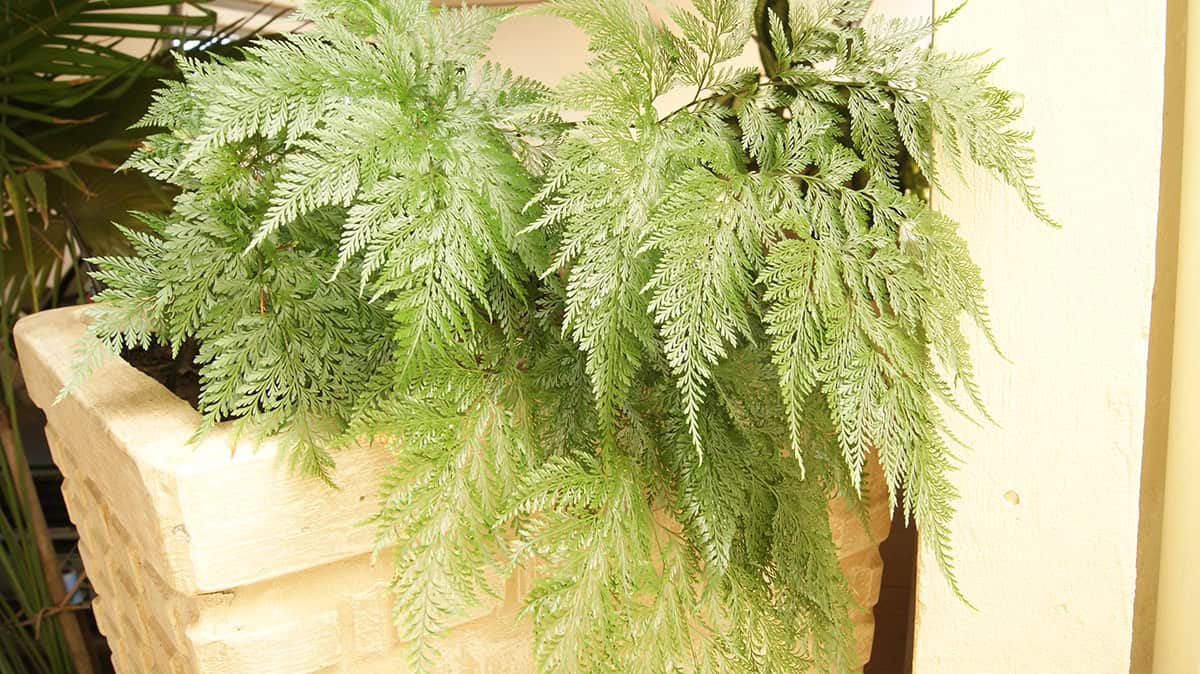
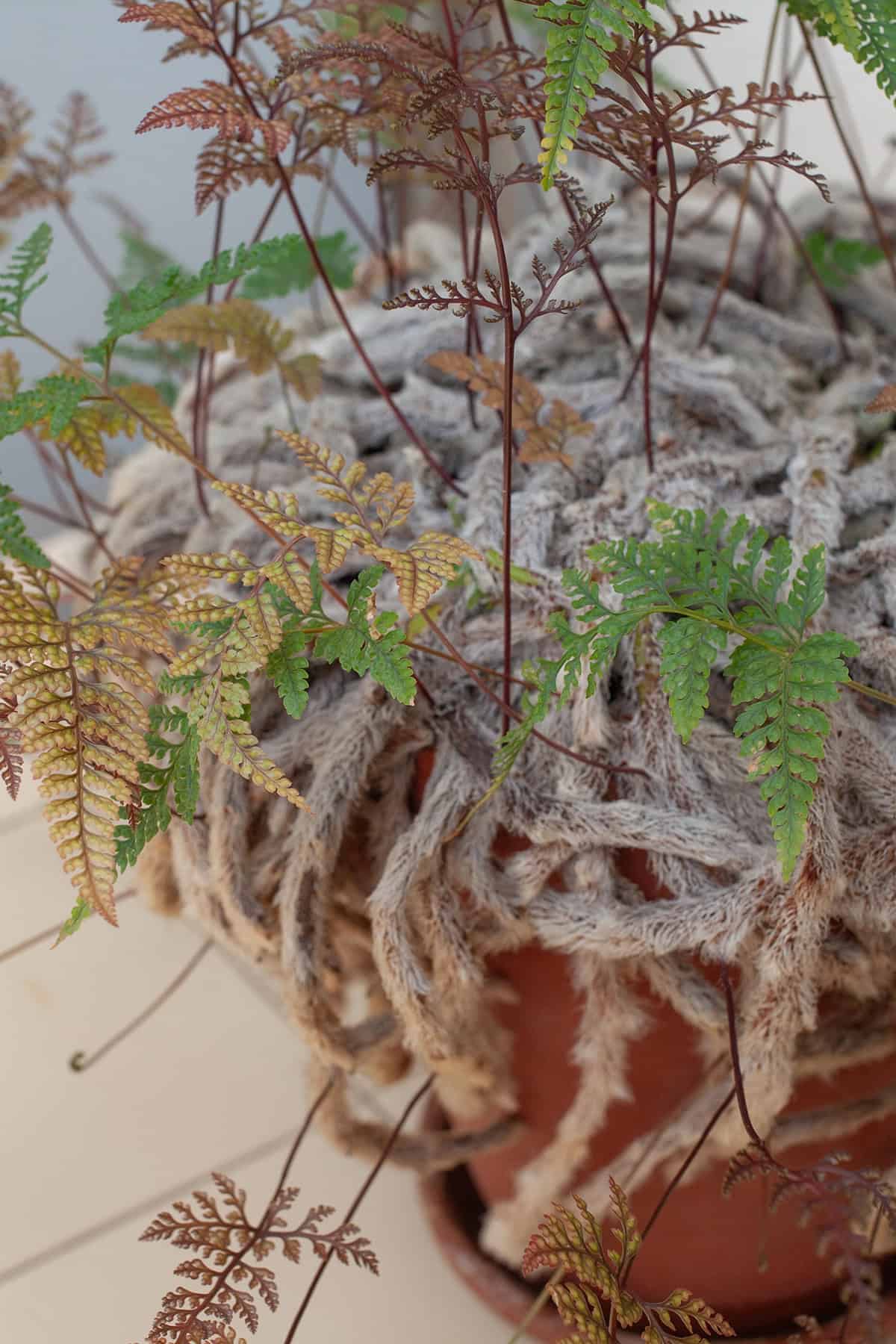
Those fuzzy rhizomes spilling over the pot? They’re what make this fern so distinctive—and a little different to care for. In the wild, rabbit’s foot fern grows as an epiphyte, grabbing moisture from the air, rain, or whatever drips down, not from deep soil. That habit changes how you should treat it indoors.
For a happy rabbit’s foot fern, you’ll want bright, indirect light, a loose, moisture-hugging soil, steady humidity, and a watering routine that lets the mix dry out just a bit between soakings. Warmth without drafts is ideal, and it really doesn’t need heavy feeding—just a little boost when it’s growing. Once you’ve got the basics down, these ferns are less dramatic than some other tropicals.
Table of Contents
Light
Give this fern a spot with bright, indirect light for most of the day. A little soft morning sun is fine, but too much direct light—especially through glass—will scorch the fronds fast.
East-facing windows are usually a sweet spot. North-facing can work if the room isn’t gloomy. In dim corners, growth will slow and fronds thin out. Artificial lights are a decent backup—set the fern a few inches below a gentle grow light, not some mega-bright fixture. Consistency matters more than intensity here.
Soil
This plant wants a loose, airy potting mix that holds some moisture but never stays soggy. Think more like tree bark crevices than heavy garden dirt. That’s what keeps roots happy.
Start with a peat-based houseplant mix and toss in something chunky—perlite or fine bark works—to keep water moving. Heavy, compacting blends are a no-go.
Always keep those furry rhizomes above the soil. They’re not roots; they breathe and soak up moisture from the air. Burying them is a recipe for rot.
Drainage is everything. Skip rich, dense soils. Light feeding comes later if needed, but focus on a mix that stays open and simple.
Water
Moist, not soggy—aim for that with your watering. Let the top half inch of soil dry before you water again. This matches how it naturally grows.
Don’t stick to a strict schedule. Use your finger to check the soil. Dry indoor air dries things out faster, especially in winter. Warmer rooms mean thirstier plants; cooler spots, less frequent drinks. Room-temperature water is best—cold shocks the roots.
Keep water off the fuzzy rhizomes. If you drench them, you’ll risk rot. Water the soil directly, avoid wetting the fronds, and make sure drainage is solid.
Filtered or soft water helps prevent salt buildup. Every so often, flush the pot until water runs clear from the bottom—roots appreciate it.
Temperature And Humidity
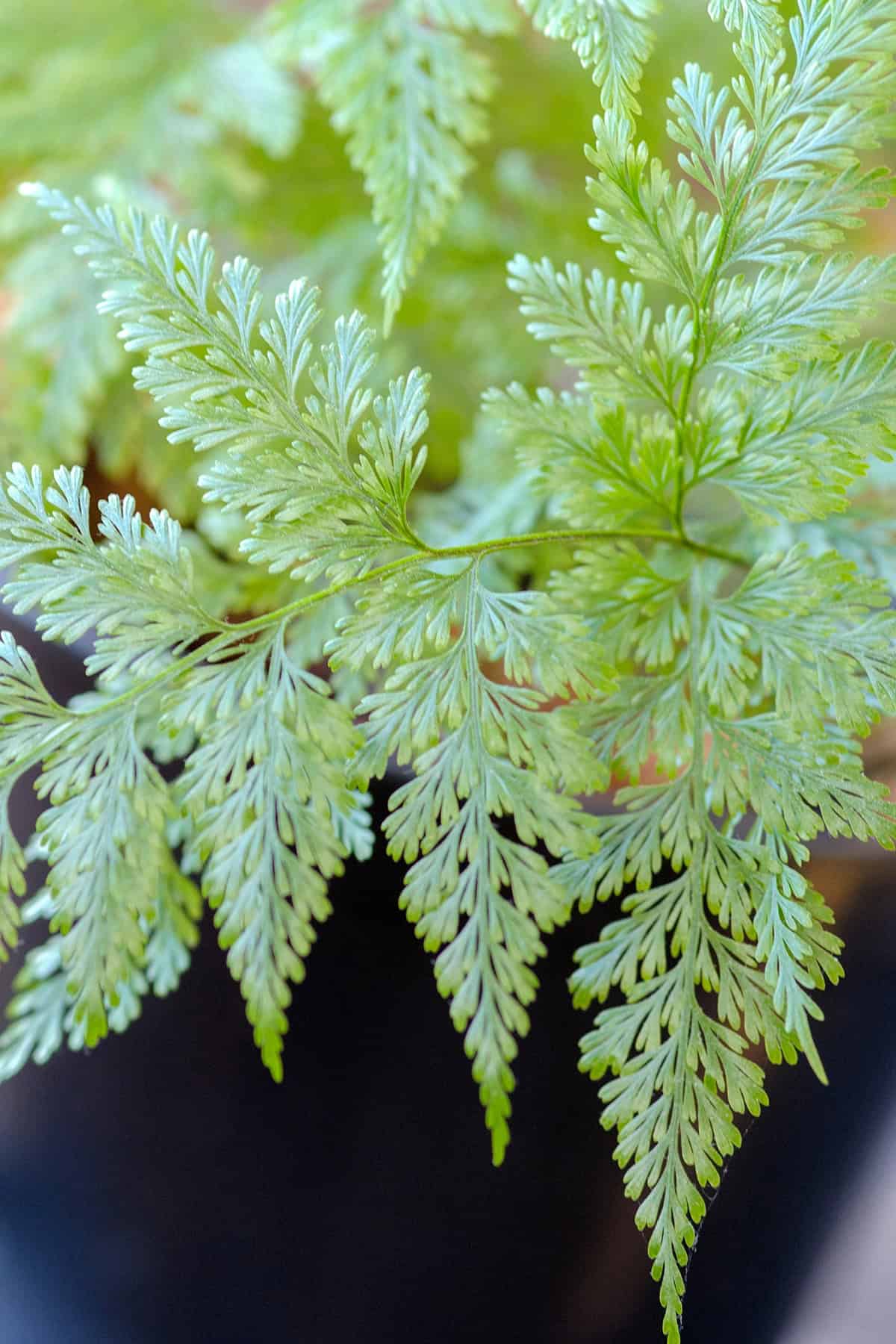
These ferns like it where you do—between 60–75°F. Sudden cold, chilly drafts, or big swings can stress them out. Heat that’s too high isn’t great either. Nighttime stability keeps growth steady and colors fresh.
Moderate to high humidity is helpful. No need for rainforest levels, but dry air brings brown tips. Bathrooms with decent light are often perfect. Cluster plants together if you want to bump up humidity without gadgets.
Rhizomes want air, not constant dampness. Keep the plant away from hot air vents. Gentle airflow helps avoid rot. You don’t need to fuss over exact percentages—aim for what feels comfortable to you too.
Fertilizer
Go easy on the food. Since these ferns are epiphytes, they’re used to picking up bits of nutrients, not getting blasted with fertilizer. Overdoing it just stresses the roots and rhizomes.
Use a balanced houseplant fertilizer, diluted to a quarter or half strength. Feed every four to six weeks, but only in spring and summer. Skip the fertilizer in fall and winter when the plant slows down.
Don’t splash fertilizer on the rhizomes—it can burn or rot them. Always water first if the soil is dry, then feed. Salt buildup will show up as brown tips, so every few months, flush the pot with plain water and let it drain well.
Propagation
If you want more plants, divide the rhizomes—pretty straightforward. Each chunk should have at least a couple healthy fronds and be pressed onto a moist, airy mix. Don’t bury the rhizome; just set it on top with some gentle pressure.
Covering the new piece with something clear can help keep humidity up until it roots. Once it grows new fronds and feels anchored, treat it like a regular plant.
Spore propagation is possible, but it’s slow and fiddly—more for the patient or curious grower. Spores show up as fine brown dust on the underside of mature fronds.
Pruning
This isn’t a plant that wants a haircut every month. Just snip off old, brown, or damaged fronds to tidy things up. The plant will shed old fronds naturally. Big cuts aren’t helpful.
Use clean, sharp scissors and cut close to the soil. Don’t tear—torn tissue just invites problems. Leave healthy fronds alone.
Rhizomes are the energy stores, so don’t trim them unless they’re diseased. Exposed, wandering rhizomes are normal and actually a good sign.
Best to prune during the growing season. The plant bounces back faster with extra light and warmth. After you prune, keep things steady—don’t go wild with water or move it around too much.
Potting And Repotting
Wide, shallow pots are the way to go. The rhizomes want to creep, not get buried. Drainage holes are a must. Plastic pots keep moisture in a bit longer than clay, if that matters to you.
Set rhizomes right on top of the soil—just the fine roots get covered. Use a loose, peat-based mix with good drainage. Press the soil gently so the plant stays put.
Repot when the plant’s outgrown its home or rhizomes are crowding the edges—usually every couple of years. Don’t jump to a huge pot; just go up one size. Swap in fresh potting mix during the move.
Best Spot Indoors
Pick a spot with bright, indirect light. Direct sun is a fast track to crispy fronds. A sheer curtain or east window is usually just right.
Stable warmth and humidity keep it happy. Avoid drafts, heat vents, or super-dry air—bathrooms with good light are often ideal.
Give those rhizomes room to sprawl above the soil. Shelves or plant stands work better than cramming the pot into a tight, stuffy corner. Airflow helps keep things healthy.
Common Problems & Troubleshooting
Yellowing leaves? Usually too much water or bad drainage. Let the topsoil dry a bit between waterings. Always keep rhizomes above the soil to avoid rot.
Brown tips often mean dry air or salt buildup. This fern likes consistent humidity, not constant misting. Try filtered water and flush the pot out now and then.
Pale, slow-growing fronds are a sign of low light. Move the plant somewhere brighter, but not in direct sun—scorched leaves are a real risk if it’s too close to the window.
Pests like spider mites, thrips, or fungus gnats can show up. Dry air brings mites; soggy soil lures gnats. If you spot trouble, rinse the plant gently and use insecticidal soap if needed.
If the rhizomes get mushy or dark, that’s rot—usually from being buried or kept too wet. Improve airflow, water less, and repot into a loose mix if things look bad.
Plant Varieties
There’s a handful of ferns that get lumped together as rabbit’s foot fern, but you’ll probably run into Davallia fejeensis most often. Sometimes it masquerades as hare’s foot fern on the label. Its soft, silvery rhizomes tend to sprawl right over the pot’s edge, and honestly, that’s half the charm. It’s a favorite for garden centers—it just handles indoor life without much fuss.
If you’re after something a little different, Davallia solida brings broader fronds and feels a bit sturdier. Some versions stay pretty compact—think under a foot and a half tall—which makes them great for shelves or hanging baskets where you don’t have a ton of space. Those fuzzy rhizomes still put on a show.
Every now and then, you’ll see Davallia canariensis. It’s got thicker fronds and looks a bit denser overall. Care’s about the same, though this one likes to stretch out more, so you’ll want to give it some elbow room. Plant tags can be a mess, honestly, so it’s usually the fuzzy rhizomes and those finely cut fronds that give the real clues.