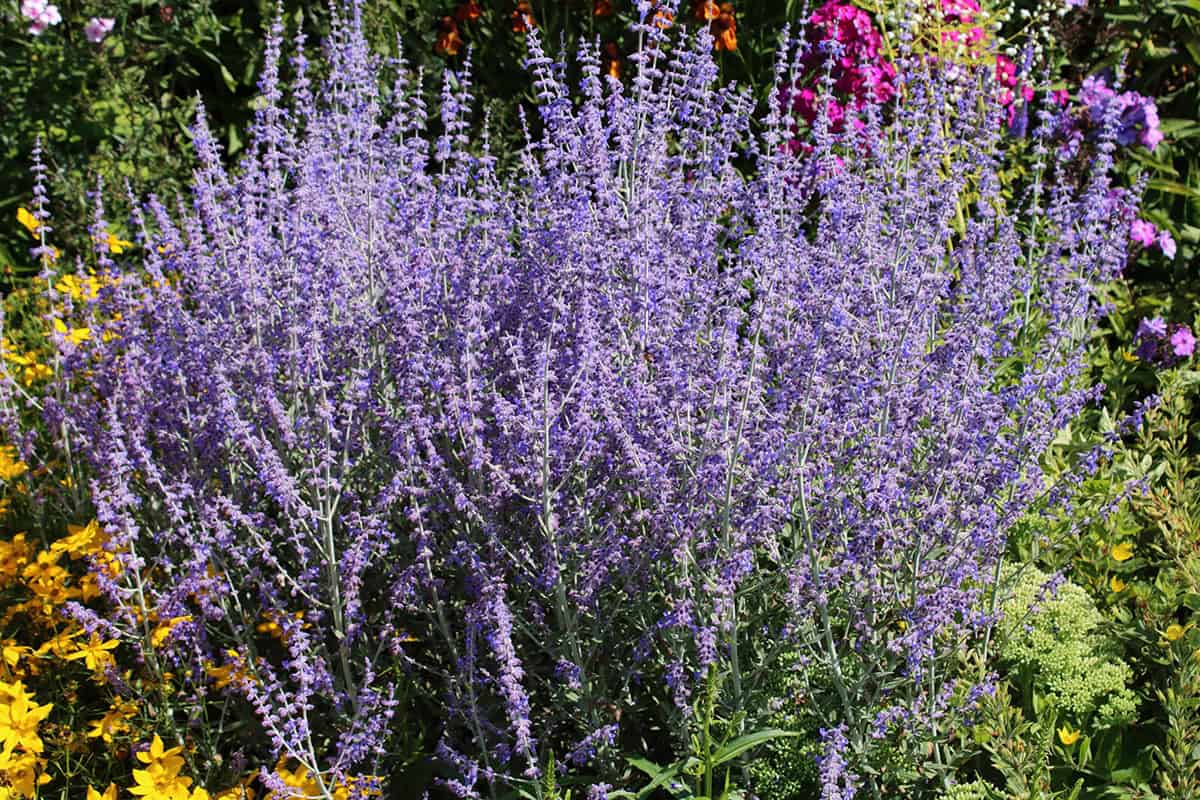
Russian sage sends up airy wands of lavender-blue flowers above finely cut, silver-gray leaves from midsummer well into fall.
Crushed foliage releases a sharp, sage-like scent, and deer and rabbits pass it by. Hot sun, lean soil and one hard spring cutback produce upright clumps 3 to 5 feet tall.
Floppy stems top the list of complaints, and the pruning notes show how a single spring cut prevents them.
Table of Contents
Plant Overview
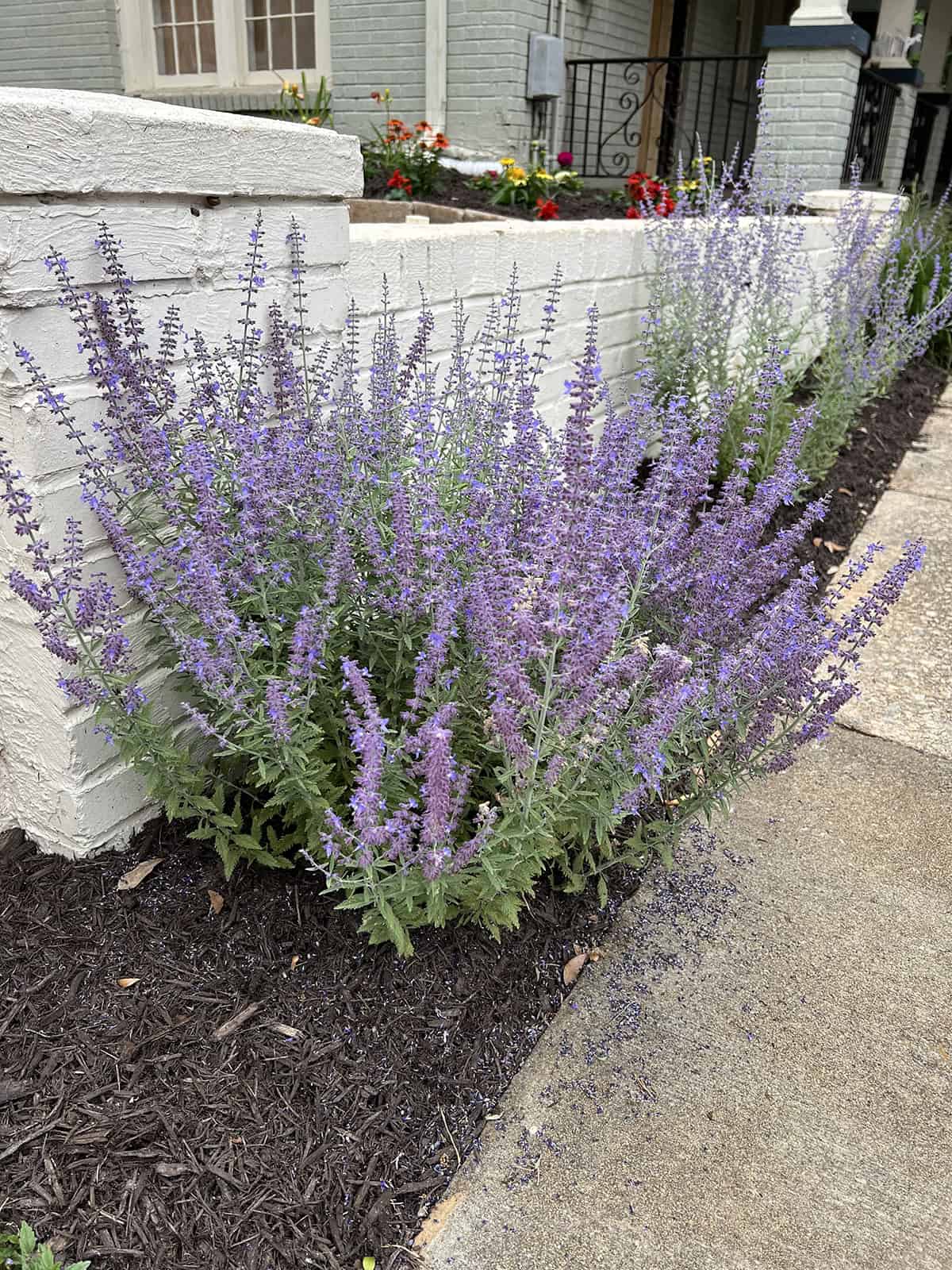
Russian sage grows as a woody-based perennial, or subshrub, with stiff, silvery stems and narrow, deeply cut leaves. Botanists moved it from Perovskia into Salvia in 2017, and plant tags still list both names.
Its tiny tubular flowers bloom from midsummer into early fall in loose, branching panicles, and bees visit them heavily.
- Botanical name: Salvia yangii (formerly Perovskia atriplicifolia)
- Common names: Russian sage
- Plant type: Deciduous woody perennial (subshrub)
- Mature size: 3–5 feet tall, 2–4 feet wide
- Hardiness: USDA Zones 4–9
- Growth rate: Moderate to fast in hot, sunny sites
- Toxicity: No known toxicity to pets
- Native region: Central and southwestern Asia
It pairs well with ornamental grasses, coneflowers and other sun-loving perennials in dry borders.
Quick Care Summary
- Light: Full sun, 6–8 hours or more
- Soil: Lean, well-drained, sandy or gravelly; neutral to alkaline
- Watering: Regular in the first season, then only during long droughts
- Temperature: Hardy in Zones 4–9; thrives in heat
- Humidity: Low to moderate, with good airflow
- Fertilizer: Little or none
- Pruning: Cut back to 6–8 inches in early spring
- Propagation: Softwood cuttings in late spring
Leave the silvery stems standing through winter for interest and crown protection, then cut them back once new shoots appear.
Light
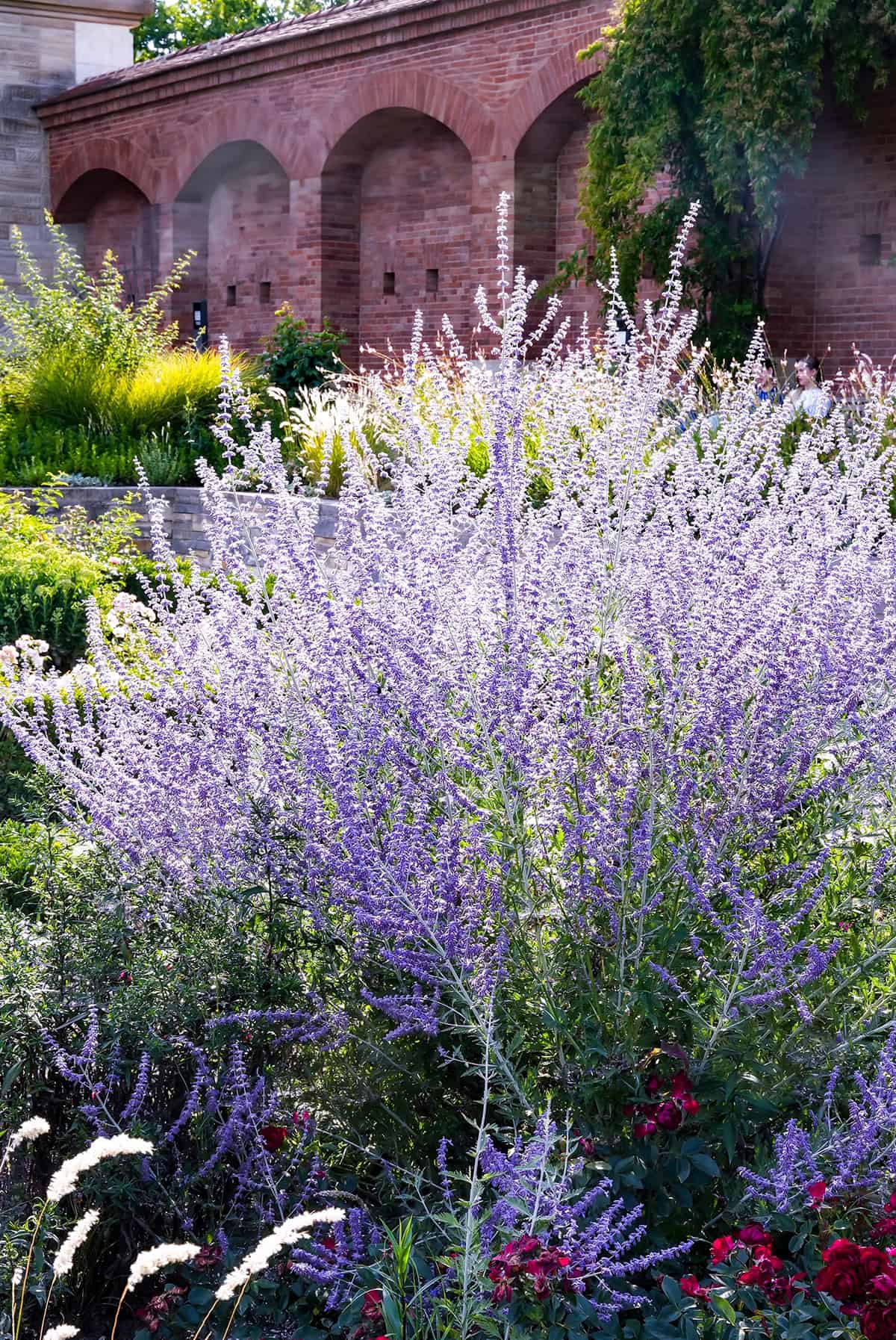
Full sun produces sturdy, upright Russian sage. Six hours of direct light is the minimum, and eight or more is better.
In partial shade, stems grow tall and weak, flop open by midsummer and carry fewer, paler flowers. South- and west-facing beds fit it best.
Even intense desert sun poses no problem as long as the soil drains. Avoid sites hemmed in by trees or tall fences, where reduced light and airflow weaken the stems.
Water
Russian sage handles drought well once established. Deep, infrequent watering produces the strongest roots, and the soil should dry out between waterings.
During the first season, water new plants about once a week, at the base, whenever the top few inches of soil are dry. After that, rainfall covers its needs in most climates.
In long, hot droughts, a deep soak every two to three weeks is plenty. Cut back further in fall and winter, because cold, wet soil causes root rot and stem dieback.
Soil
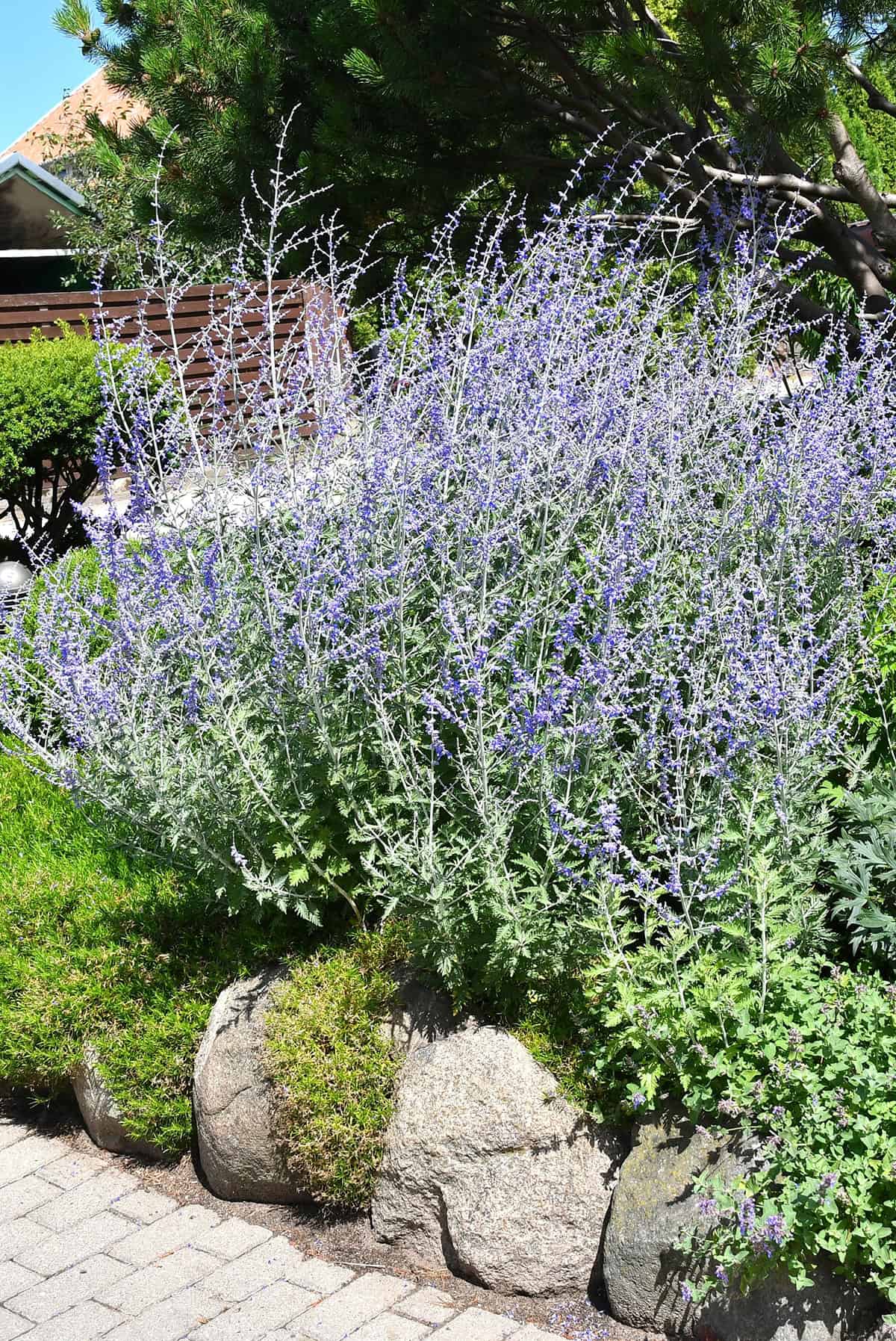
Gravelly, sandy or average soil with good drainage produces the healthiest Russian sage. Clay that holds water after rain suffocates the roots.
Heavy soil benefits from coarse sand or fine gravel mixed in, and raised beds or gentle slopes help where water lingers.
Skip compost and rich amendments, since fertile soil leads to floppy stems and fewer flowers. Neutral to slightly alkaline soil is best, though the plant tolerates a range. Winter drainage matters most, so raise the bed on sites where puddles form.
Temperature & Humidity
Hardy in USDA Zones 4 to 9, Russian sage handles hot summers and cold winters with ease, and heat increases its flowering.
High temperatures leave the foliage unharmed. Cold, wet soil causes far more winter losses than low air temperatures, so drainage before winter is the real protection.
Dry air produces the healthiest plants. In muggy climates, fungal problems and collapsing stems become more likely, so open, breezy spots and generous spacing help. Avoid crowded beds where moisture lingers after rain.
Fertilizer
Lean soil produces the sturdiest, most floriferous Russian sage. Rich ground and heavy fertilizer send stems sprawling and cut flowering.
In truly poor soil, a light sprinkle of low-nitrogen, balanced fertilizer in mid-spring is enough. Scatter it around the root zone, away from the crown, and water it in.
A thin layer of compost in spring is another gentle option. Overfeeding weakens stems and lowers drought tolerance, and plants in average garden soil grow well on no fertilizer at all.
Potting & Repotting
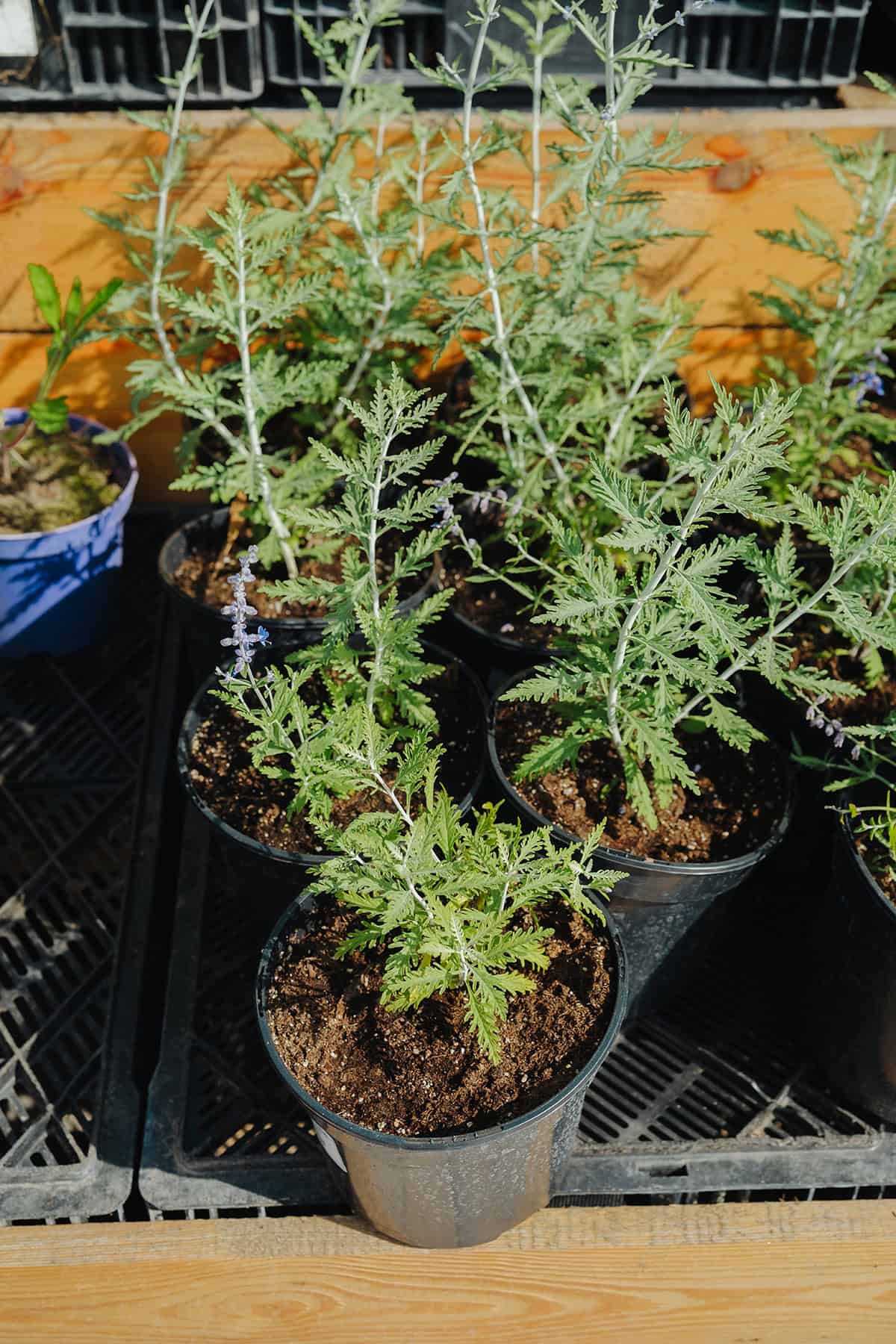
Russian sage grows in containers with full sun and excellent drainage. Choose a large pot, 16 to 20 inches across, with several drainage holes to fit the woody base and deep roots.
Blend standard potting soil with sand or fine gravel for fast drainage, and avoid moisture-holding mixes. Wet roots in winter kill potted plants quickly.
Water deeply, then let the top few inches dry before the next soak. Containers dry faster than beds, especially in heat waves, and need less water as the weather cools.
Repot every couple of years, or when roots circle and growth slows, into a slightly larger container with fresh mix. In Zones 4 and 5, shelter pots in an unheated garage or bury them in the ground for winter.
Pruning
Prune in early spring, once fresh shoots appear at the base. Leave last year’s stems standing through winter, since they shield the crown from cold.
Cut the old growth down to about 6 to 8 inches above the soil, or to just above the lowest new buds. Sharp bypass pruners prevent splintered woody stems.
This hard cut produces compact plants and prevents the tall, split stems that collapse in summer storms. Skipped pruning leads to open, leggy clumps.
During the season, remove broken stems as needed. A light trim in late spring, before buds form, shortens the plant by a few inches, but cuts after early summer reduce flowering.
Propagation
Softwood cuttings root quickly and match the parent exactly. In late spring or early summer, cut 4- to 6-inch stems just below a leaf node, strip the lower leaves and insert them in a moist, well-drained mix. Bright, indirect light and light, even moisture help them root in three to five weeks.
Older clumps also divide in early spring, although the woody crowns resent disturbance. Dig the clump, cut it into sections with strong roots and shoots, replant at the same depth and water well.
Seeds need light to germinate. Sow them on the surface of a seed-starting mix indoors six to eight weeks before the last frost, press them in lightly and hold the mix warm and evenly moist. Seedlings vary from the parent, and named cultivars rarely come true.
Common Problems
Pests and diseases seldom bother Russian sage, and deer pass it by. Most problems come from the growing site.
Flopping stems point to rich soil, too much water or too little sun. Lean ground, full light and a hard spring cut produce upright plants, and a ring of grasses or sturdy neighbors adds support.
Yellow leaves and dieback signal root rot from wet soil, especially in clay. Improve drainage or move the plant to a raised spot.
In cold climates, new shoots appear late in spring, and the stems look dead for weeks. Wait for fresh growth at the base before pruning or digging the plant out.
Varieties
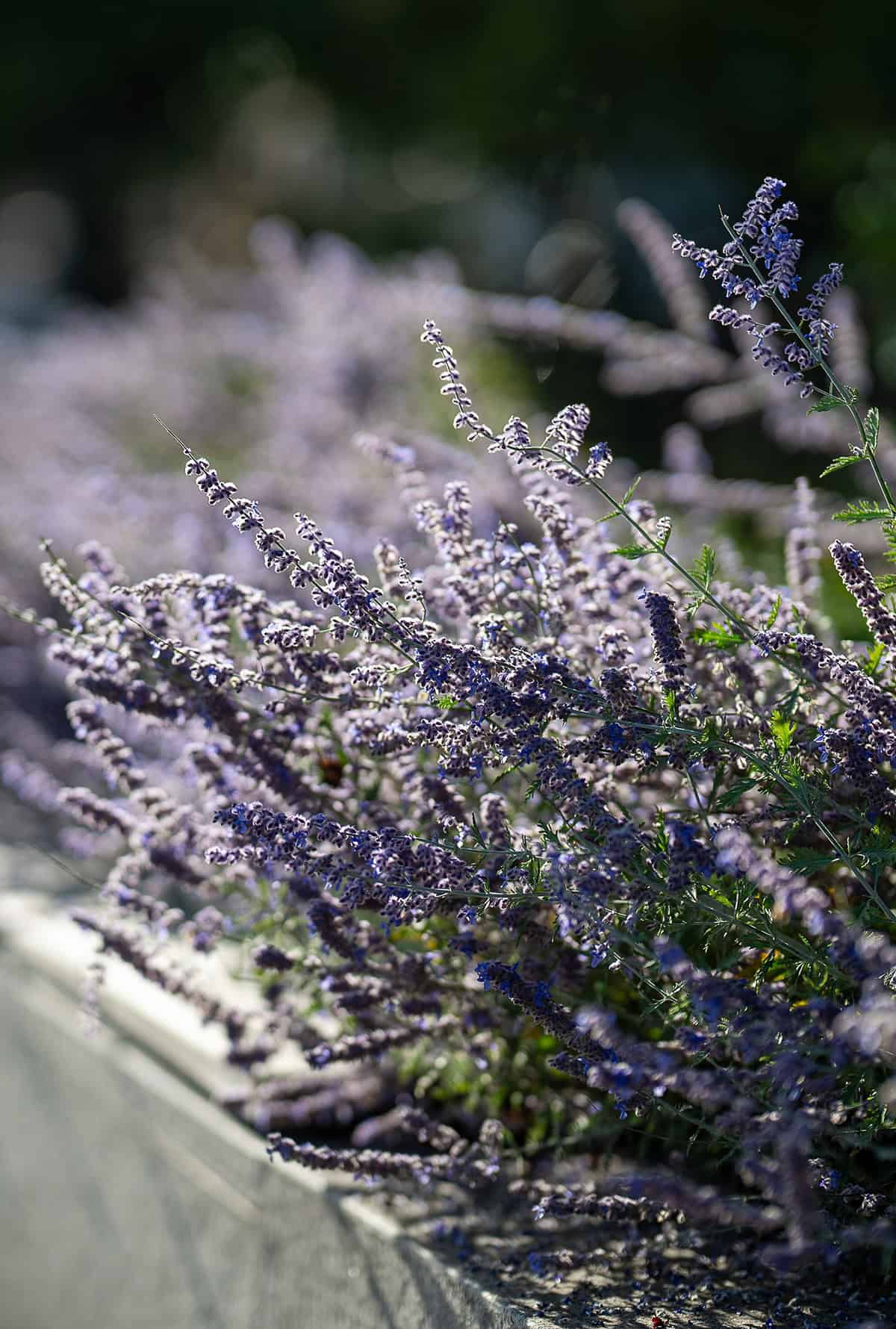
Most Russian sage cultivars descend from Salvia yangii and differ in height, stem strength and flower density.
‘Blue Spire’ grows about 3 to 4 feet tall with deep lavender-blue flower spikes. ‘Longin’ has a stiffer, narrower, upright habit for crisp borders.
‘Little Spire’ and ‘Denim ’n Lace’ top out around 2 to 3 feet, with sturdier stems for small gardens, front-of-border spots and containers.
Flower color ranges between soft lavender and deep violet-blue, and the foliage shade shifts between gray and silvery green by cultivar.