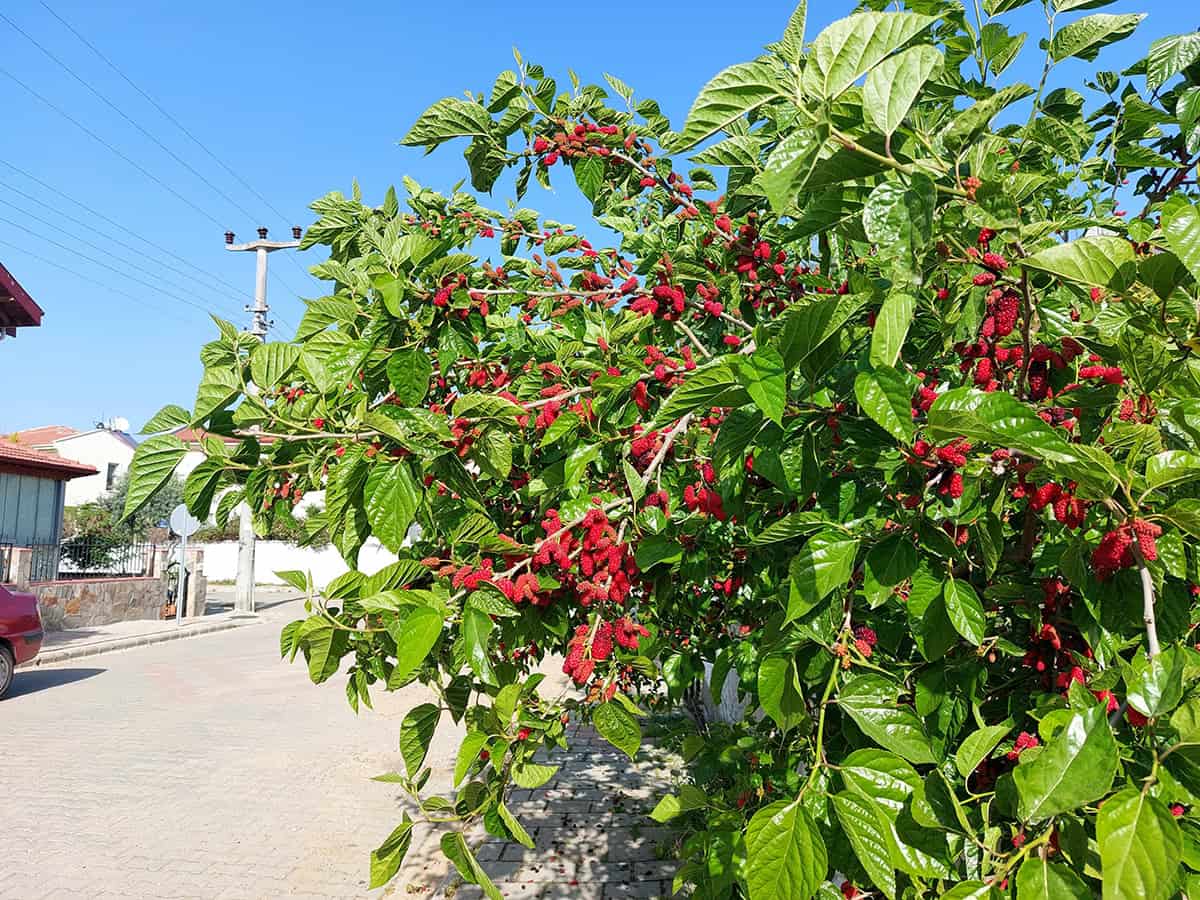
A mature mulberry tree quickly becomes one of the highlights of a backyard. Dense foliage creates cooling shade while colorful berries attract plenty of attention during harvest time. Learn the simple care habits that help your tree stay vigorous and productive year after year.
Table of Contents
Essential Care Overview
Mulberry trees adapt well to many home gardens. You can grow them as shade trees, fruit trees, or compact forms for smaller spaces. Most types grow fast and establish with little trouble once roots settle.
Quick Care Summary
- Light: Full sun for best fruit; tolerates light shade
- Soil: Well-drained soil; adapts to sandy, loamy, or slightly alkaline soils
- Watering: Moderate; water during dry periods, especially when young
- Temperature: Prefers warm climates; many types handle heat well
- Humidity: Average outdoor humidity is suitable
- Fertilizer: Light feeding in early spring if growth seems weak
- Propagation: Cuttings, grafting, or seed
Give your tree space. Some varieties reach 20 to 60 feet tall, though black mulberry often stays smaller. Dwarf selections suit containers or compact yards.
Water young trees deeply and regularly during the first year. Established trees tolerate short dry periods, but steady moisture supports fruit production. Avoid waterlogged soil, which can stress roots.
Prune in late winter to control height and shape. Shorter trees make harvest easier and reduce branch breakage. Remove dead or crowded wood to maintain structure.
Plant Overview
- Botanical name: Morus spp.
- Common names: Mulberry, Red mulberry, White mulberry, Black mulberry
- Plant type: Deciduous tree
- Mature size: 20–60 feet tall, depending on species
- Growth rate: Fast
- Toxicity: Ripe fruit edible; unripe fruit and sap may cause mild stomach upset
- Native region: Asia, Europe, North America (varies by species)
Plant Characteristics
Mulberry trees belong to the genus Morus and grow as deciduous trees with broad, spreading crowns. You can expect strong branches and dense foliage that provides deep shade. Leaves vary in shape, even on the same tree, and often show lobes with serrated edges. Most types produce small clustered flowers that develop into soft, blackberry‑like fruit.
Size depends on the species you choose. Red and white mulberries can reach 30 to 60 feet tall, while black mulberry often stays smaller and suits home gardens. Growth rates tend to be fast, especially in warm climates. Many varieties develop a thick trunk with ridged bark as they mature.
Fruit ranges from white and red to deep purple or black. The berries attract birds and other wildlife. Some ornamental cultivars produce no fruit and serve only as shade trees.
Quick Care Summary
- Light: Full sun for best fruit production
- Soil: Well-drained soil; tolerates loam, sand, and clay
- Watering: Moderate; drought tolerant once established
- Temperature: Hardy in temperate to warm climates
- Humidity: Adapts to average outdoor humidity
- Fertilizer: Light feeding in early spring if growth slows
- Propagation: Cuttings, grafting, or seed
Plant Overview
- Botanical name: Morus spp. (such as Morus rubra, Morus alba, Morus nigra)
- Common names: Mulberry, Red Mulberry, White Mulberry, Black Mulberry
- Plant type: Deciduous fruit tree
- Mature size: 20–60 feet tall, depending on species
- Growth rate: Fast
- Toxicity: Fruit edible; milky sap may irritate skin
- Native region: Asia, Europe, and North America, depending on species
Lighting Requirements
Place your mulberry tree where it receives full sun for most of the day. Aim for at least six hours of direct sunlight. Strong light supports steady growth and reliable fruit production.
You can grow mulberry in light shade, but fruit yield may decline. Red mulberry tolerates partial shade better than white mulberry. Shade often suits young trees in woodland settings.
Select an open site away from large structures or dense tree canopies. Crowded shade reduces branch strength and fruit set. Adequate sun also helps leaves dry faster after rain, which lowers disease risk.
In very hot regions, light afternoon shade can reduce stress on young trees. Mature trees handle heat well once roots establish. Keep the canopy exposed to balanced light from all sides for even growth.
Watering Needs
Young mulberry trees need steady moisture while roots establish. You should water deeply once or twice each week during the first growing season. Soil should stay slightly moist but never saturated.
Check the top 2 to 3 inches of soil before you add water. If it feels dry, soak the root zone slowly so water reaches deeper roots. Deep watering encourages a wide, stable root system.
Established trees tolerate short dry periods. However, regular water improves fruit size and overall growth, especially in hot or dry climates. Provide extra moisture during extended drought or extreme heat.
Reduce irrigation in fall as growth slows. Avoid constant wet soil, which can damage roots and reduce vigor. Keep lawn irrigation separate when possible so turf systems do not overwater the tree.
Soil Preferences
Mulberry trees adapt to many soil types, which makes them easy to place in most yards. You can grow them in sandy, loamy, or clay soil if drainage stays adequate. Roots decline in areas where water stands for long periods.
Aim for soil that drains well yet holds moderate moisture. A slightly acidic to neutral pH between 5.5 and 7.5 supports steady growth. Some types, such as white mulberry, also tolerate mildly alkaline soil.
Improve heavy clay with compost before planting. Organic matter increases drainage and supports root health. Set the tree at the same depth it grew in the nursery container.
Space matters as much as soil quality. Mature trees develop wide root systems and broad canopies. Give your mulberry enough room so roots expand without competition from foundations or large shrubs.
Temperature and Humidity
Mulberry trees handle a wide range of temperatures. Most types grow well in USDA zones 4 through 9. You can expect strong growth where summers feel warm and winters stay moderate. Established trees tolerate short periods of heat above 90°F and winter lows below 20°F, depending on the species.
White mulberry adapts well to heat and poor air quality. Red mulberry prefers regions with steady rainfall and mild summer heat. Black mulberry favors warmer climates and struggles in very cold winters. Choose a species that matches your local climate to avoid winter damage.
Young trees need protection from late spring frost. Cold snaps can damage new buds and reduce fruit set. Plant your tree in a sheltered spot if your area has harsh winter winds. A south-facing location often offers extra warmth.
Humidity rarely causes serious problems for mulberries. These trees grow in both humid and semi-dry climates. Good air flow around the canopy reduces leaf disease in damp regions. Space trees well and prune to keep the canopy open.
Fertilization Practices
Mulberry trees do not require heavy feeding. You often see strong growth with minimal input once the tree establishes roots. Test your soil before you add fertilizer. A simple soil test guides the right nutrient balance and prevents excess nitrogen.
Apply a balanced fertilizer once a year in early spring. Many growers use a general 10-10-10 formula for mature trees. Spread it evenly under the canopy, not against the trunk. Water the area well after application so nutrients move into the root zone.
Young trees benefit from light feeding during their first few years. Use moderate rates to avoid weak, overly fast growth that reduces fruit quality. Established trees in fertile soil may not need annual fertilizer at all. Too much nitrogen leads to leafy growth and fewer berries.
Organic matter also improves long-term health. Compost adds slow-release nutrients and supports soil structure. Spread a thin layer around the base each spring. Keep mulch and compost a few inches away from the trunk to prevent rot.
Container Cultivation
You can grow a mulberry tree in a large, sturdy pot if you lack garden space. Choose a dwarf or compact variety for best results. Select a container at least 18 to 24 inches wide with drainage holes. This space allows roots to expand without stress.
Use a loose, well-drained potting mix with compost or aged bark. Avoid heavy garden soil, which compacts in a pot. Set the root flare slightly above the soil line to prevent rot. Check the root ball and loosen any tight, circling roots before you place it in the pot.
Place the container where your tree receives full sun for most of the day. Water when the top two inches of soil feel dry. Apply a balanced, slow-release fertilizer in early spring. Prune in late winter to control size and remove weak branches.
Cold climates require extra care. Move the pot to a sheltered area if severe frost threatens. In hot regions, shield the container from intense afternoon heat to protect roots. Refresh the top layer of soil each year to maintain soil health.
Potting and Repotting
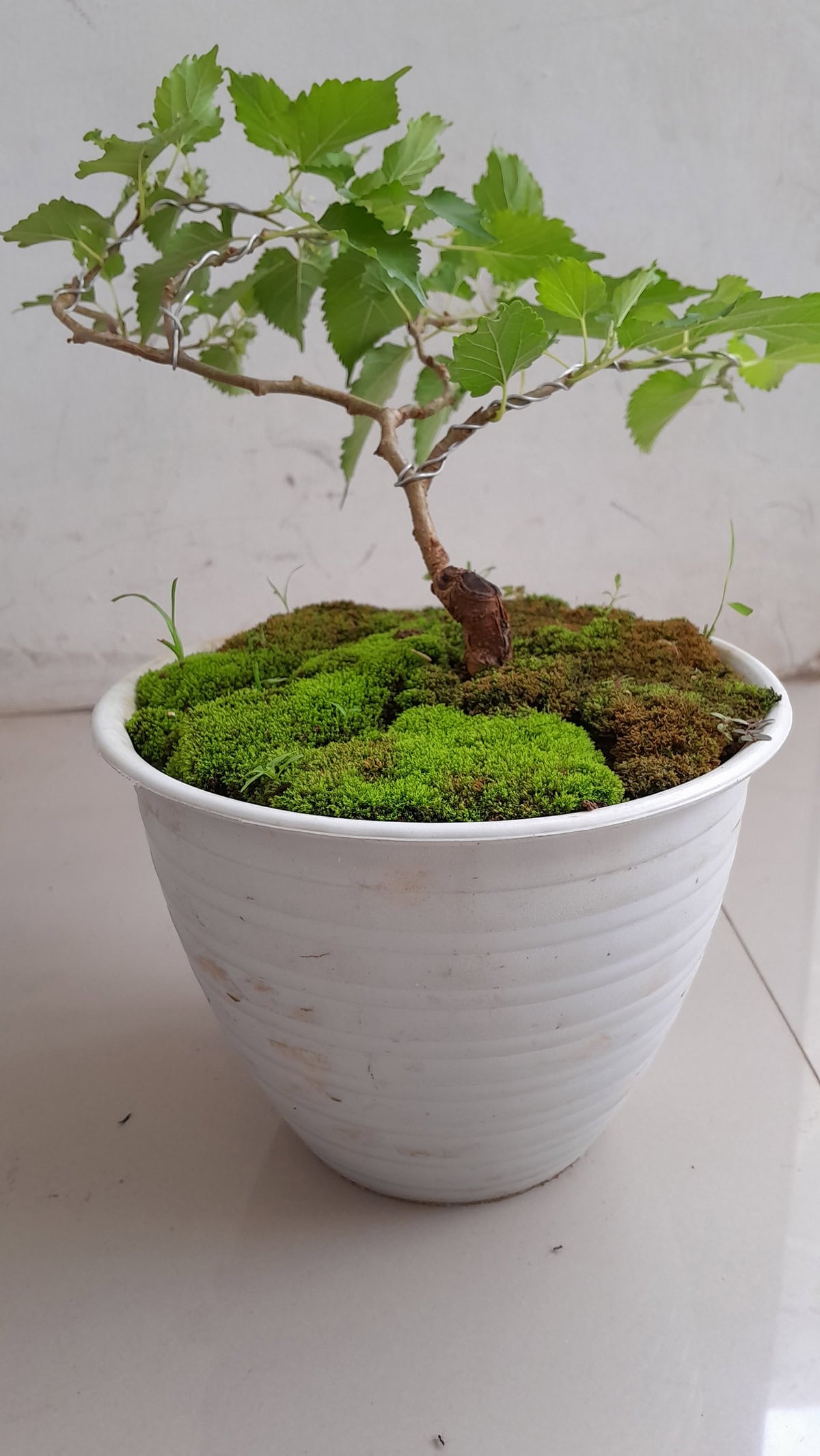
You can grow a mulberry tree in a large container when space is limited. Choose a pot with drainage holes and strong sides. Select a container that measures at least 3 to 4 inches wider than the current root ball. This size gives roots room to expand without excess soil that stays wet.
Use a well-draining potting mix with compost blended in. Do not place gravel at the bottom of the pot. Set a shard or screen over the drainage hole to keep soil in place. Position the root ball so it sits 1 to 2 inches below the rim.
After you remove the tree from its nursery pot, inspect the roots. Trim any dead, broken, or circling roots with clean pruners. Loosen compacted roots so they spread into the new soil. Backfill with your mix and press the soil firm around the base.
Water the container thoroughly after planting. Let excess water drain fully. Repot young trees every one to two years as roots fill the pot. Mature container trees need repotting less often, but refresh the top layer of soil each spring to maintain nutrients.
Pruning Guidelines
You should prune your mulberry tree during late winter while it remains dormant. This timing reduces sap loss and limits stress. Avoid heavy cuts in early spring, as the tree may bleed sap. Light summer trimming can control size, but keep it minimal.
Focus on structure in the first few years. Select a strong central leader or an open framework of main branches. Remove weak, crowded, or crossing limbs. Good spacing improves light exposure and air flow.
Mature trees need less frequent pruning. Cut out dead, damaged, or diseased wood each year. Shorten overly long branches to maintain height and spread. Keep cuts clean and close to the branch collar.
Use sharp, clean tools for every cut. Disinfect blades if you remove diseased wood. Avoid topping the tree, as this practice weakens structure and reduces fruit quality. If large limbs require removal, consult a certified arborist to prevent damage.
Propagation Methods
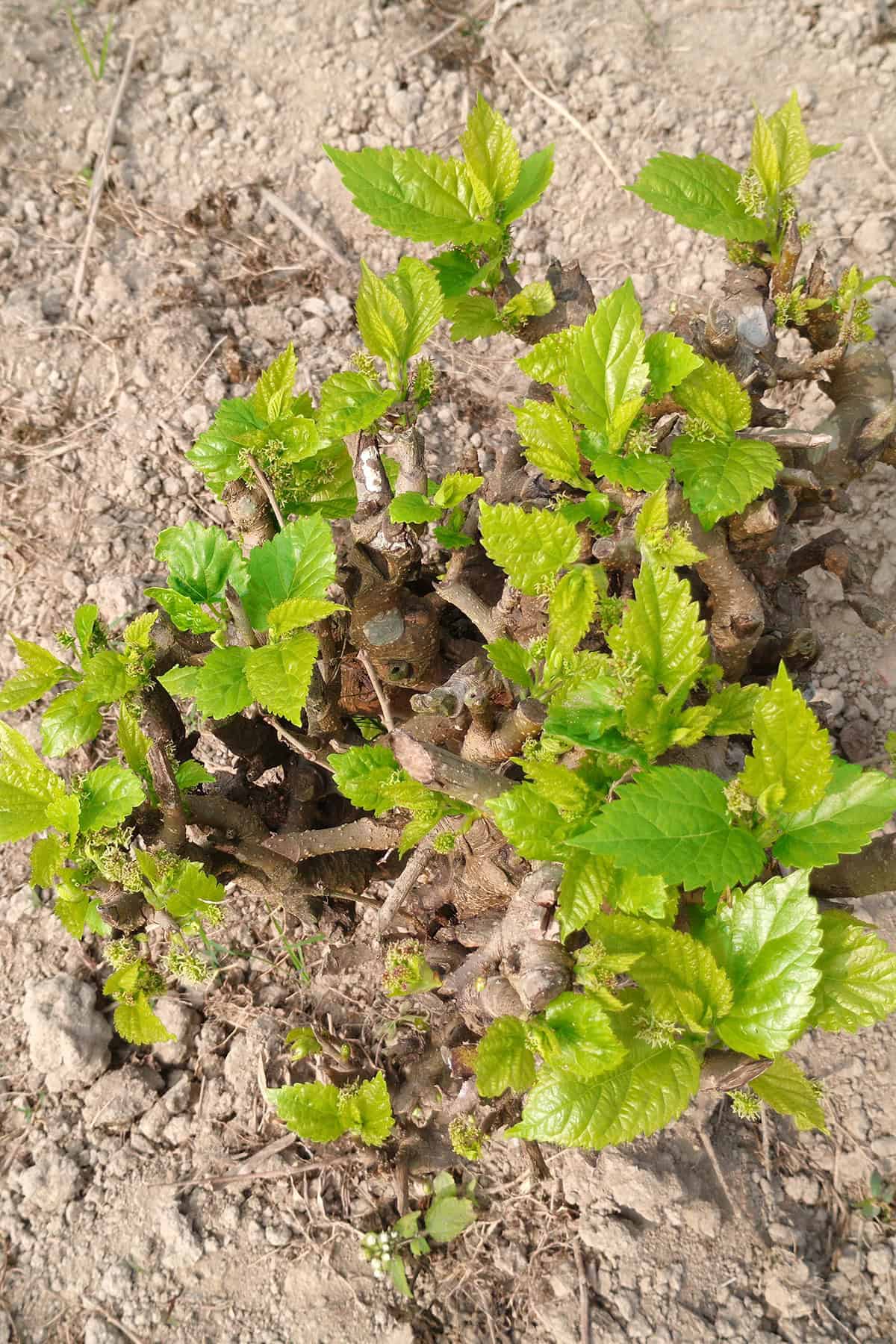
You can start new mulberry trees from cuttings, grafting, budding, or seed. Most home gardeners choose vegetative methods because they produce trees that match the parent plant. Seed-grown trees may vary in fruit quality and growth habit.
Hardwood cuttings root well, especially from white mulberry. Take 8 to 12 inch cuttings during dormancy in late winter. Use firm, healthy wood from the previous season. Plant the cuttings in well-drained soil and keep the medium slightly moist. Roots often form within several weeks under mild conditions.
Softwood cuttings also work in late spring or early summer. Select flexible but mature shoots. Maintain steady moisture and warm temperatures. High humidity improves success, but avoid waterlogged soil.
Grafting and budding help you control fruit quality and tree size. Use a compatible rootstock from the same genus, Morus. T-budding works best when the bark separates easily from the wood. Chip budding suits periods when bark does not slip. Perform grafting in late winter or early spring before active growth.
Seeds offer another option, but they require more time. Clean and dry the seeds after harvest. Cold stratify them for several weeks to improve germination. Expect variation in fruit size and flavor when you grow trees from seed.
Fruit Production and Harvest
Mulberry trees often produce fruit within two to three years after planting. Some types need both male and female trees, while many common varieties set fruit on their own. You should plant more than one tree if you grow a dioecious type. Healthy trees can bear heavy crops each year.
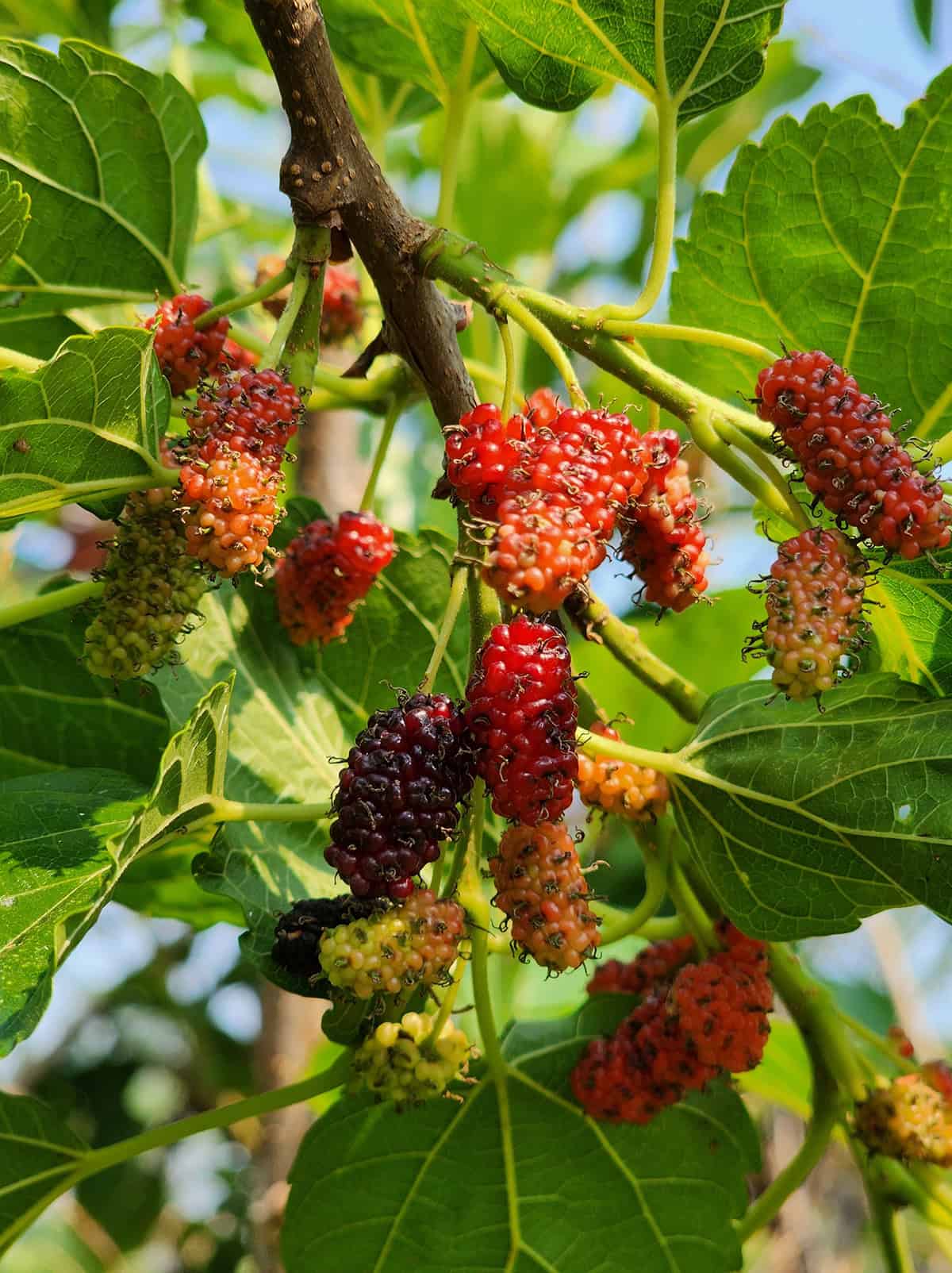
Fruit develops in late spring to early summer in most regions. Berries change from green to red, then to deep purple, black, or white, depending on the variety. You will know the fruit is ready when it softens and releases easily from the stem. Taste offers the best guide, since ripe mulberries have a mild sweetness with slight tartness.
Harvest by hand and handle the fruit with care. The berries bruise easily and have a short shelf life. You can spread a clean sheet under the tree and shake branches to collect ripe fruit. Use the harvest fresh, or refrigerate it for a few days, or freeze it for later use in jams, baking, or drying.
Managing Common Problems
Mulberry trees resist many issues, but pests and disease can still appear. You may see aphids, scale insects, or spider mites on leaves and stems. These pests weaken growth and leave sticky residue on foliage. Spray a strong stream of water on small infestations, or use insecticidal soap when needed.
Leaf spots and bacterial blight can affect young shoots and foliage. Water-soaked spots or dark streaks on twigs signal trouble. Prune damaged branches during dry weather and dispose of them away from the tree. Clean tools after each cut to limit spread.
Fruit drop and stained walkways create frequent complaints. Birds feed on ripe berries and scatter seeds nearby. You can net the canopy or harvest fruit early to reduce mess. Plant fruitless varieties if you want shade without cleanup.
Poor growth often links to site stress. Compacted soil, drought, or poor drainage can lead to leaf yellowing and dieback. Test soil drainage and adjust watering before adding fertilizer. Healthy roots support steady growth and strong canopy structure.
Cold injury may damage young trees in harsh winters. Protect the trunk with tree wrap in exposed sites. Mulch over the root zone to moderate soil temperature, but keep mulch away from the trunk.
Popular Varieties
You will find three main species in home landscapes: red, white, and black mulberry. Each offers different size, flavor, and growth habits. Your climate and available space should guide your choice. Fruit quality also varies by species and cultivar.
Red mulberry (Morus rubra) is native to North America. It can reach about 30 feet tall with a broad crown. This species tolerates partial shade and often grows along woodland edges. Birds favor the fruit, so expect wildlife activity.
White mulberry (Morus alba) grows fast and adapts to many soils. Mature trees often reach 30 to 50 feet in height. Some regions list it as invasive due to seed spread by birds. Many gardeners choose fruitless cultivars to reduce unwanted seedlings.
Black mulberry (Morus nigra) stays smaller than the others. This species suits compact yards and home gardens. The fruit has a rich, sweet flavor with mild acidity. It prefers warm climates and well-drained soil.
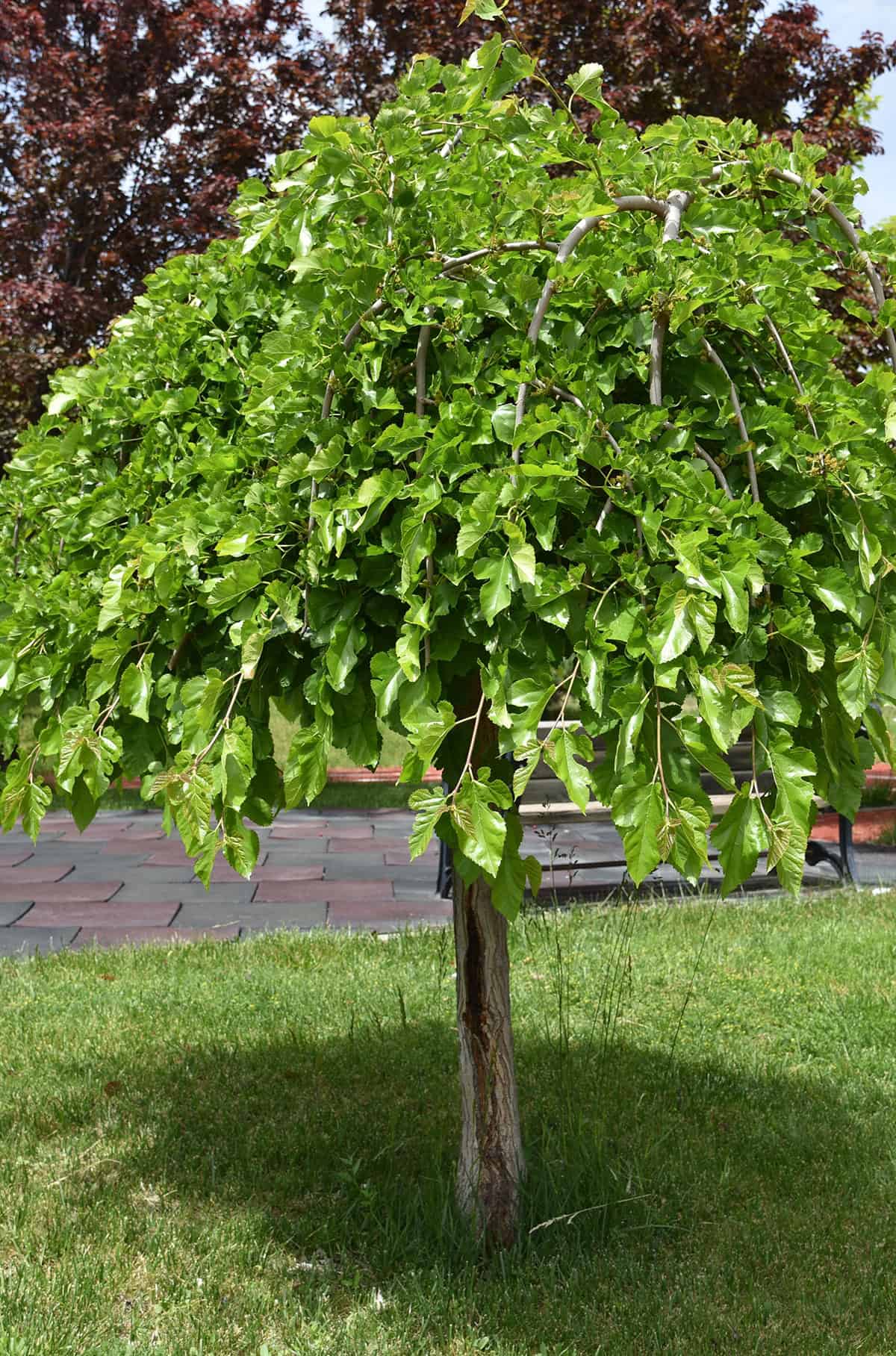
Cultivars such as ‘Illinois Everbearing’ combine cold tolerance with extended fruit production. ‘Pendula’ offers a weeping form that fits ornamental spaces. Dwarf selections work well in small gardens or large containers. Match the variety to your hardiness zone and space limits for best results.