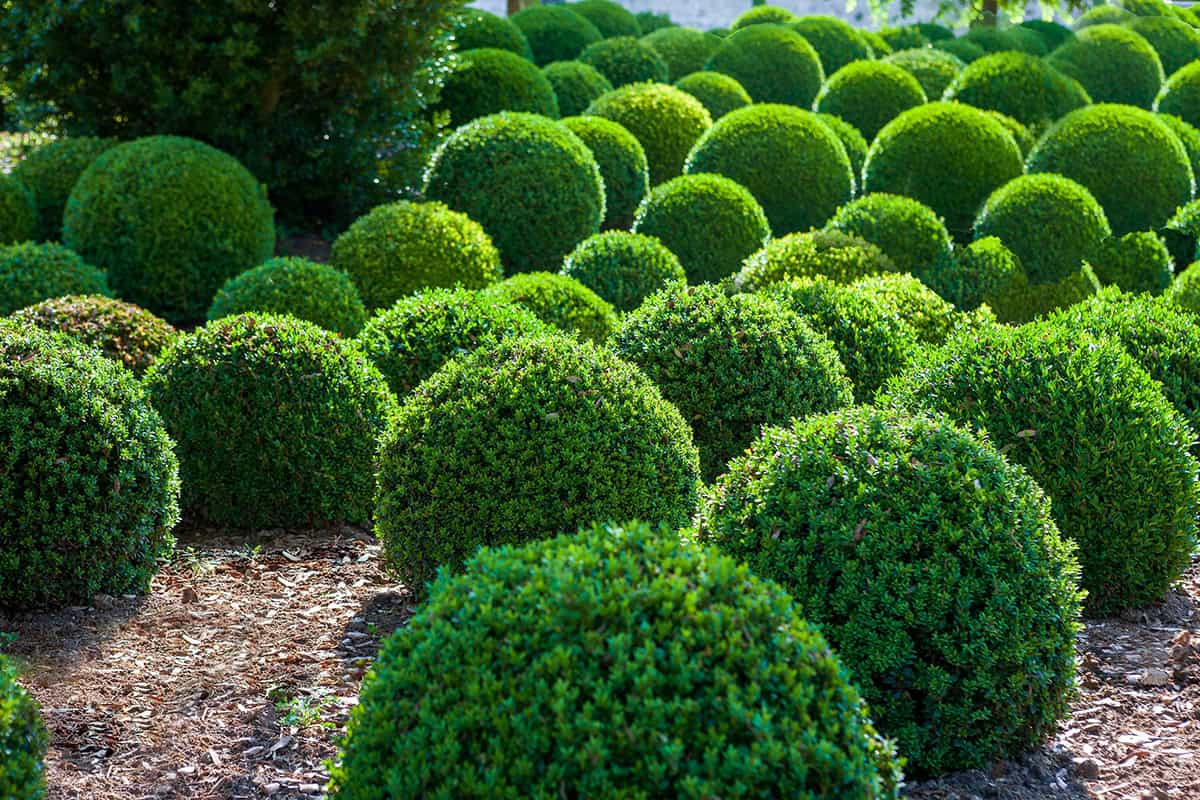
Many gardeners reach for boxwoods because they fit almost every garden style without demanding constant care. Their compact growth and rich green foliage create a polished look all year long. Learn how to plant, water, prune, and maintain healthy shrubs that last for decades.
Table of Contents
Quick Care Summary
Year-round, boxwood’s evergreen leaves keep things looking lively and organized. It’s a favorite for hedges and borders, but also works as a single accent. Most options are slow to moderate growers, holding their shape with just a bit of trimming. Depending on the cultivar, expect mature heights and widths anywhere from 2 to 8 feet.
Light: Most thrive in full sun to partial shade.
Soil: Needs to drain well, with a pH on the neutral or slightly alkaline side.
Watering: Deep soakings during dry spells, especially in the first year. Let the top inch of soil dry out before watering again.
Temperature: Many types shrug off cold, though winter wind can be rough.
Humidity: Average outdoor levels are fine, as long as there’s good airflow.
Fertilizer: If growth seems sluggish, a balanced dose in early spring helps.
Propagation: Semi-hardwood cuttings root reliably in late summer.
Botanical name: Buxus species.
Common names: Boxwood, box.
Plant type: Evergreen shrub.
Mature size: 2–8 feet tall and wide, sometimes larger with age.
Growth rate: Slow to moderate.
Toxicity: Toxic if eaten by pets or children.
Native region: Europe, Asia, parts of Africa, and Central America.
Plant Overview
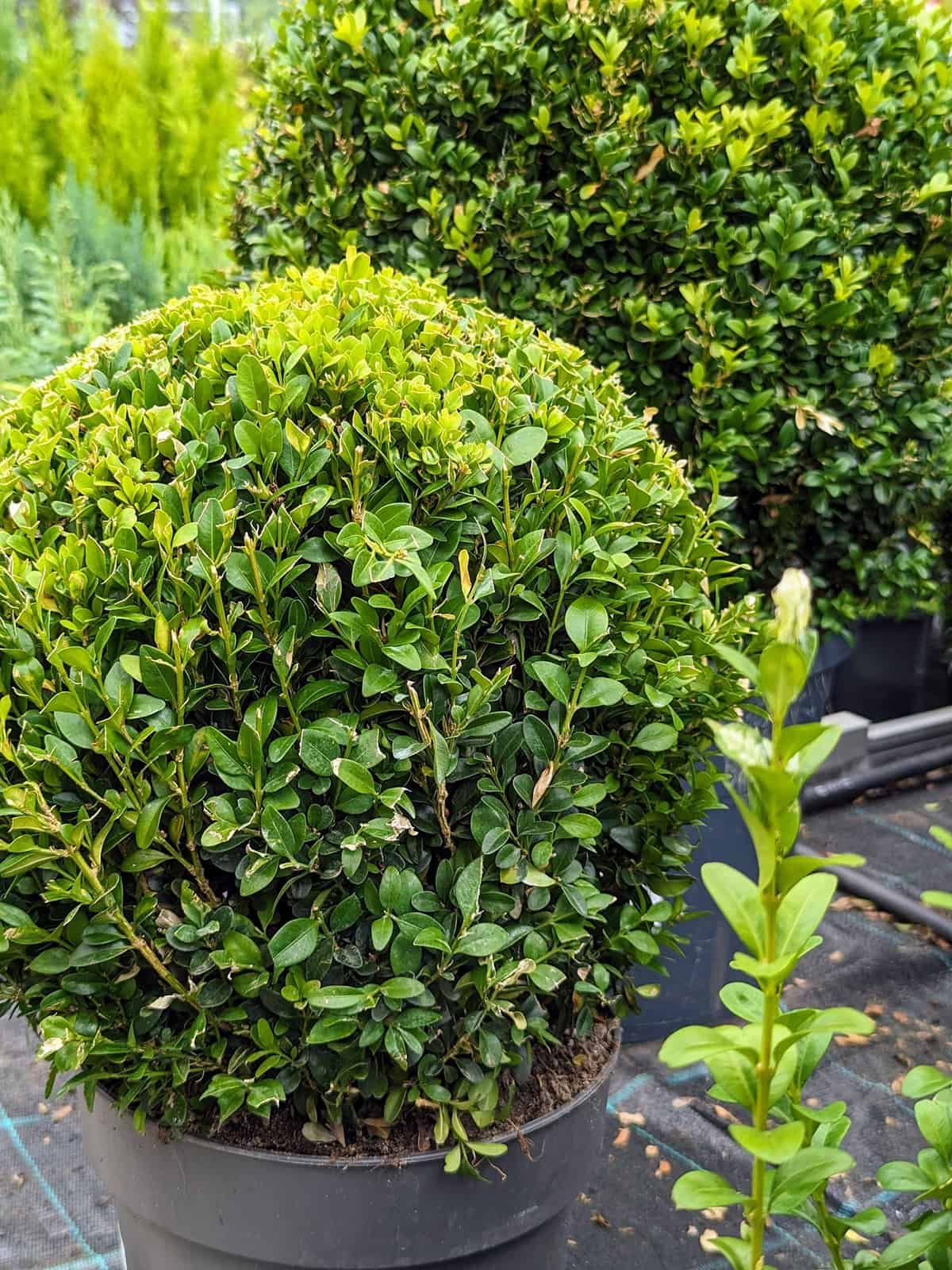
Dense, tiny leaves and a knack for shaping make boxwood a go-to for formal gardens and foundation beds. Its versatility means it fits just as well in mass plantings or as a single clipped accent. The range of species and hybrids is broad—American and Korean boxwood are common, but there’s plenty of variety in size and habit. Some stay tight and compact, topping out at 3 or 4 feet, while others stretch up to 8 feet or more if you let them. That slow growth is a blessing if you’re after clean lines.
Botanical name: Buxus spp.
Common names: Boxwood, Common boxwood, Japanese boxwood
Plant type: Evergreen shrub
Mature size: 2–8 feet tall and wide, depending on variety
Growth rate: Slow to moderate
Toxicity: Toxic if ingested by pets or children
Native region: Europe, Asia, parts of Africa
USDA zones 5 through 9 cover most varieties, though some hybrids dip into colder territory (zones 4 and 5). Match your pick to your climate and what you want from the plant—better health and less fuss down the line.
Light
Morning sun paired with afternoon shade often brings out the best in boxwood, keeping foliage dense and color vibrant. In cooler climates, they’ll handle full sun without much complaint, but in hotter regions, that intense afternoon blaze can leave leaves scorched and brown—especially if winter winds get involved.
Stick one in deep shade and you’ll likely end up with a leggy, thin shrub that’s lost its compact charm. Growth slows, and the overall look just isn’t as crisp.
Exposure to winter sun and wind tends to bronze or brown the foliage, particularly in spots without shelter. Choosing a location with a bit of protection from harsh conditions helps fend off that damage.
Brighter light generally means tighter, more compact growth, but partial shade is often a safer bet in areas with punishing summers. It’s all about matching light to your local climate if you want a sturdy, healthy plant.
Water
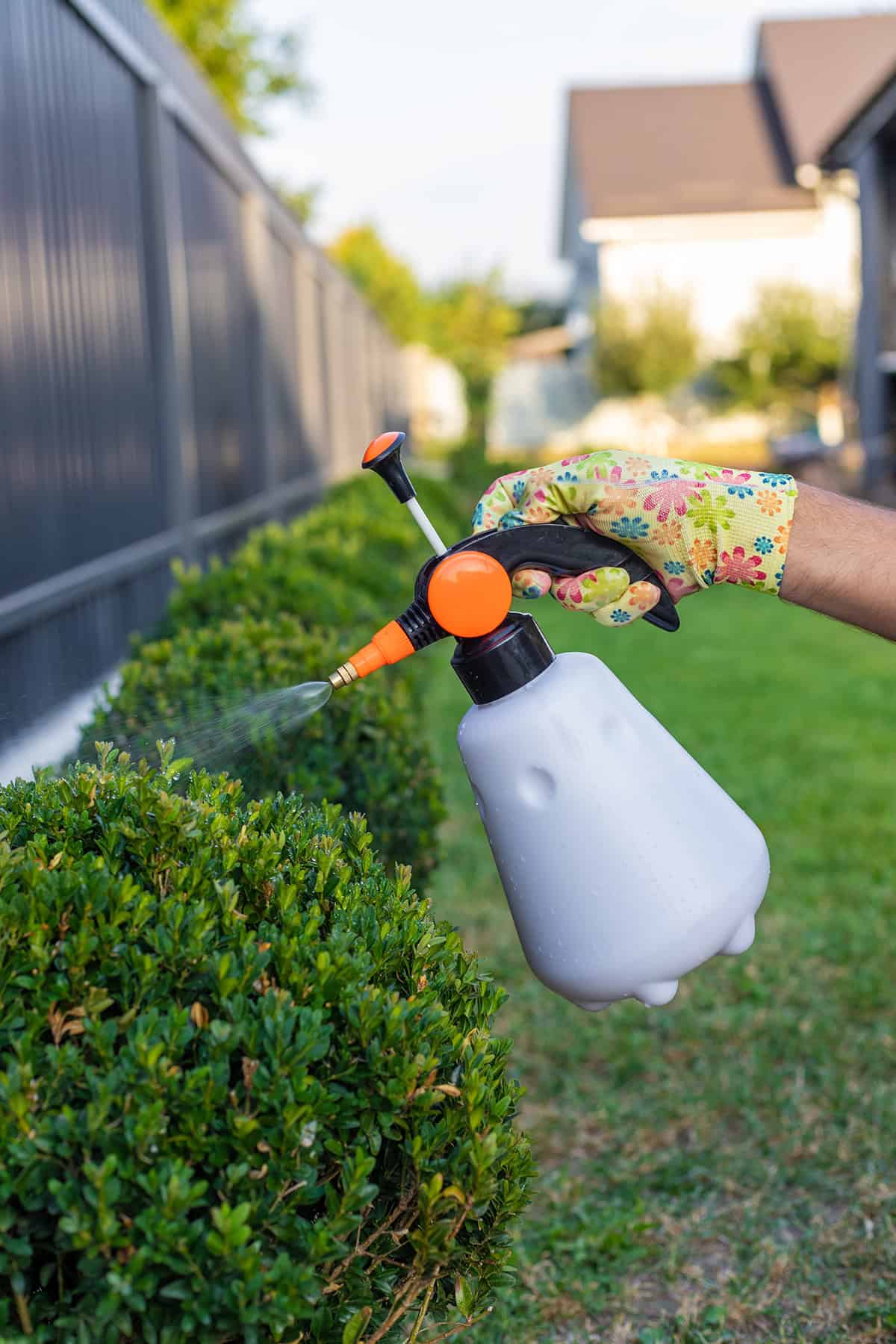
Freshly planted boxwood needs a consistent routine—deep watering once or twice a week, depending on how quickly the soil dries out. The root ball should stay moist but not waterlogged. A quick finger test in the soil before watering again saves a lot of grief.
Once established, these shrubs can shrug off short dry spells, but they’re happiest with even moisture. Sandy soils dry out fast and may need more attention, while clay holds water longer—sometimes a little too well. Overwatering or poor drainage is a recipe for root rot.
Aim for about an inch of water weekly—rain or irrigation both count. As fall winds down, ease up so roots aren’t sitting in soggy soil before winter. If it’s dry heading into winter and the ground hasn’t frozen, give them a good soak. Mulch helps keep moisture in and buffers temperature swings around the roots.
Soil
Loose, well-aerated soil gives boxwood roots the breathing room they need. Compacted ground stunts growth, so prepping the site before planting pays off.
Aiming for a pH between 6.8 and 7.5 keeps things on track. If you’re unsure, a quick soil test clears up any doubt. Adjust with lime or sulfur as needed to hit that sweet spot.
Richness isn’t as crucial as drainage—waterlogged roots spell trouble. In heavy clay areas, raised beds or mounds improve survival odds.
Mixing in compost boosts structure and either drainage or moisture retention, depending on your base soil. Steer clear of fresh manure; it’s too harsh for those shallow roots.
Mulch, two to three inches deep, helps stabilize moisture and temperature. Just don’t pile it against the trunk—leave a small gap to prevent rot.
Never plant deeper than the original container level. If your soil’s slow to drain, set the root ball a bit high. This simple step keeps the vulnerable roots healthier over time.
Temperature & Humidity
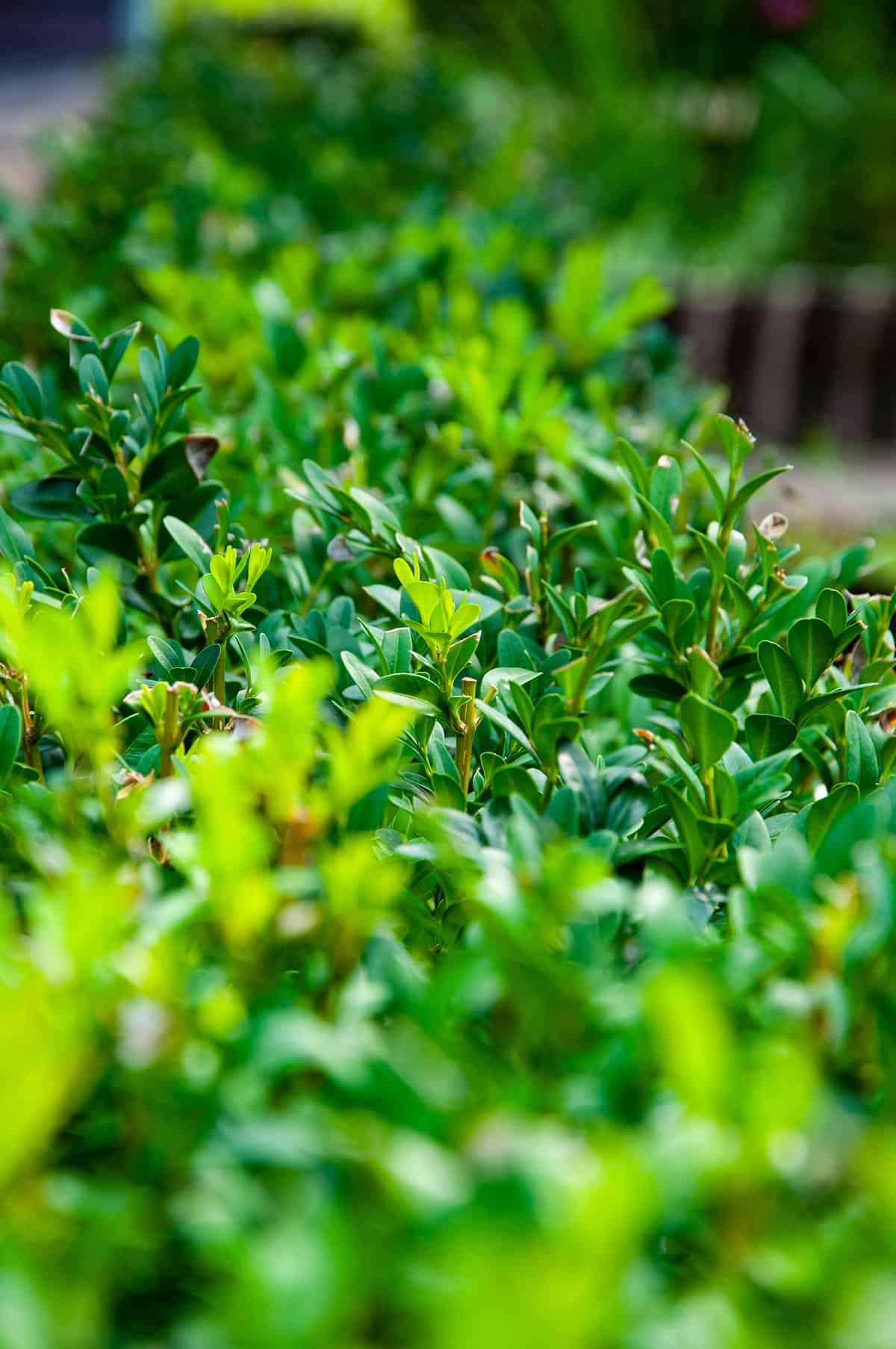
Moderate climates suit boxwood best, but plenty of varieties handle winter chills down to 0°F, and Korean types can even survive -25°F. In hot zones, afternoon shade is your friend—those leaves scorch easily under relentless sun.
Cold, dry winds are notorious for causing bronzed or burnt leaves, so a sheltered spot and a good mulch layer make a difference. Quick temperature swings late in winter can also be rough, so avoid planting in places that get blasted by wind.
Average humidity is just fine, though extremely dry air can cause some leaf drop. For gardens in muggy regions, space plants out to keep air moving and reduce disease risk.
Fertilizer
Boxwood isn’t a heavy feeder, but it does appreciate steady, light nutrition. Always test your soil first; if you’re already in the right pH range (6.8–7.5), you may not need much.
A balanced, slow-release shrub fertilizer works well. Early spring is the best time to apply, right as new growth starts. Skip feeding in late summer or fall—tender new shoots won’t handle winter well.
Roughly a pound of nitrogen per 1,000 square feet of root area is about right. Scatter fertilizer over the soil beneath the canopy, steering clear of the trunk itself.
Water thoroughly after feeding to help nutrients move into the root zone. Don’t fertilize plants that are already stressed by drought.
Younger boxwood in poor soils may benefit from annual feeding, but established shrubs in healthy ground often only need fertilizer every couple of years. Too much fertilizer encourages weak, winter-tender growth, so err on the side of caution.
Potting & Repotting
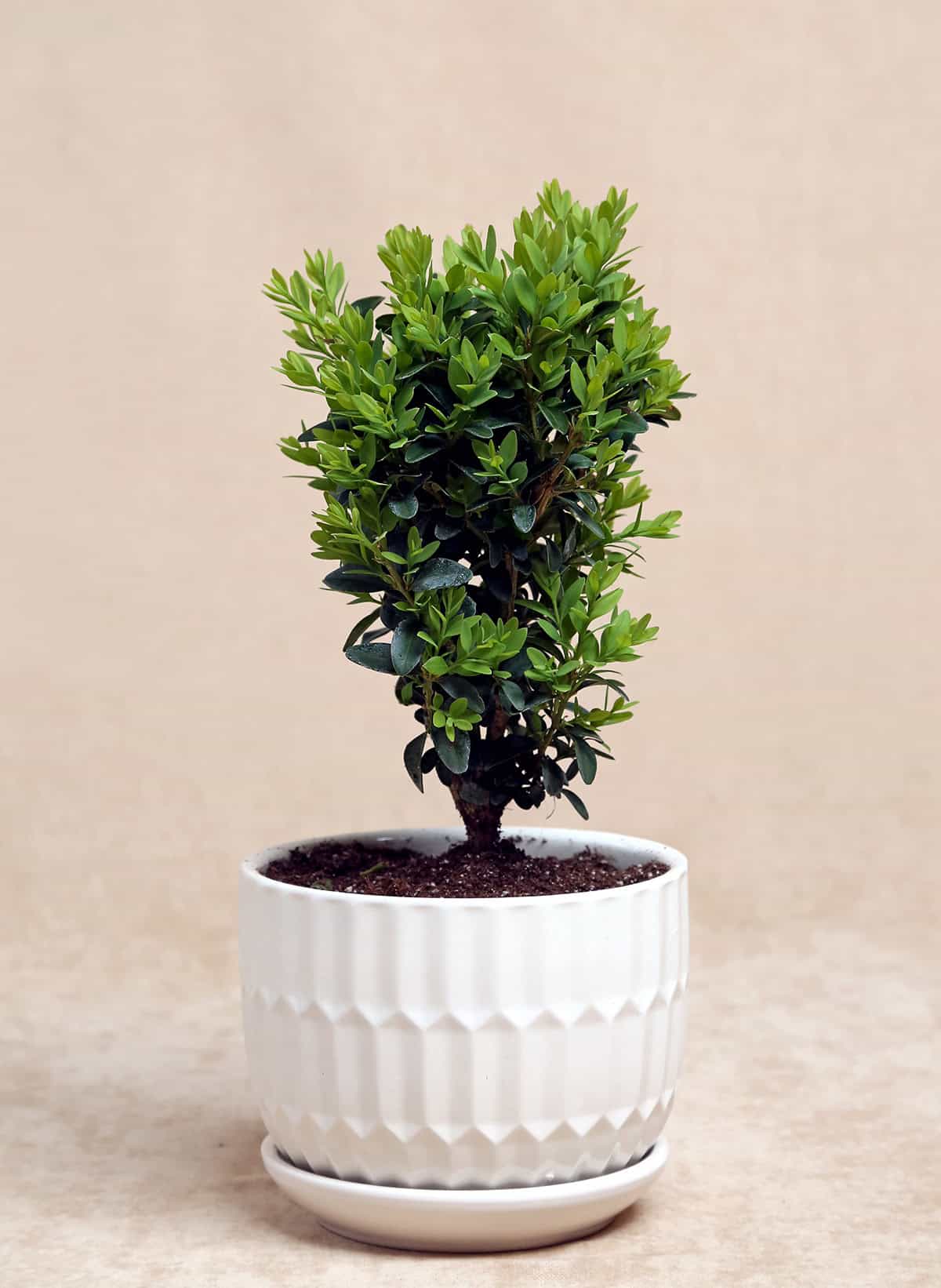
Containers work well for boxwood, especially where space is tight or garden soil isn’t ideal. A sturdy pot with wide drainage holes is key—clay pots add heft and help prevent tipping. Pick one just a few inches wider than the root ball so roots aren’t swimming.
Go for a light, well-drained potting mix with a neutral or slightly alkaline pH. Avoid heavy garden soil; it compacts and suffocates roots in pots. After potting, water in well and firm the soil gently.
Every couple of years, check for circling roots or ones poking through the drainage holes. At that point, either move up to a slightly bigger pot or trim roots and refresh the soil in the same container. After repotting, water thoroughly and give the plant a stint in bright, indirect light to recover.
Pruning
Shaping boxwood is a bit of an art—hedges, spheres, or simple mounds are all fair game. Sharp pruners make clean cuts and keep stress low.
Dwarf forms barely need a trim most years, while faster growers might need a little more attention. The best time to cut back is late spring, after new growth has firmed up. Light touch-ups in mid or late summer can help keep things tidy.
Avoid major pruning in late fall; new growth won’t have time to toughen up before winter. When reducing size, thin branches back to inner stems so sunlight reaches the center.
Thick outer foliage can shade out the interior, so don’t let the plant get too overgrown. After pruning, a light fertilizer and a good soak support healthy regrowth.
Propagation
Starting new boxwood plants from cuttings is straightforward and reliable for most home gardeners. Late spring or early summer works best, once new growth has started to harden.
Pick a healthy, nonflowering stem about 4 to 6 inches long. Snip just below a leaf node and strip off the lower leaves. A quick dip in rooting hormone can boost your odds.
Stick the cutting into a pot filled with moist, well-drained medium—sand and peat or perlite and peat both work. Keep things just damp and place the pot in bright, indirect light. Covering with a clear dome or bag helps keep humidity high.
Roots usually start forming in a few weeks, though some varieties take their time. A gentle tug tells you when they’ve taken hold. Once rooted and growing, transplant into larger pots.
Layering is another option if you’ve got a low, flexible branch. Gently wound a section, pin it to the soil, and cover with dirt while leaving the tip exposed. Roots may develop within a season, but sometimes it takes longer before you can separate the new plant.
Common Problems
Boxwood isn’t immune to trouble, and a few pests and diseases can really do a number on these shrubs. Staying ahead with regular checks—especially in spring and early summer—makes it easier to catch issues early.
Boxwood blight is especially nasty, causing brown leaf spots, black streaks on stems, and sudden leaf drop. Cut out infected branches right away, avoid overhead watering, and always disinfect tools between cuts.
Leaf spot diseases show up as brown or tan blotches and can thin out the canopy if left unchecked. Improving air circulation and keeping foliage dry helps, and fungicides may be needed if things get bad.
Insects like leafminers (blistered leaves), boxwood psyllids (twisted new growth), and mites (fine stippling, dull color) can all cause problems. Horticultural oil or targeted insecticides help when infestations get out of hand.
Winter injury often reveals itself as bronzed or bleached leaves, especially in exposed spots. Cold wind and full sun are the main culprits. Planting in sheltered locations, maintaining soil moisture heading into winter, and using burlap screens in harsh climates can all help cut down on damage.
Varieties
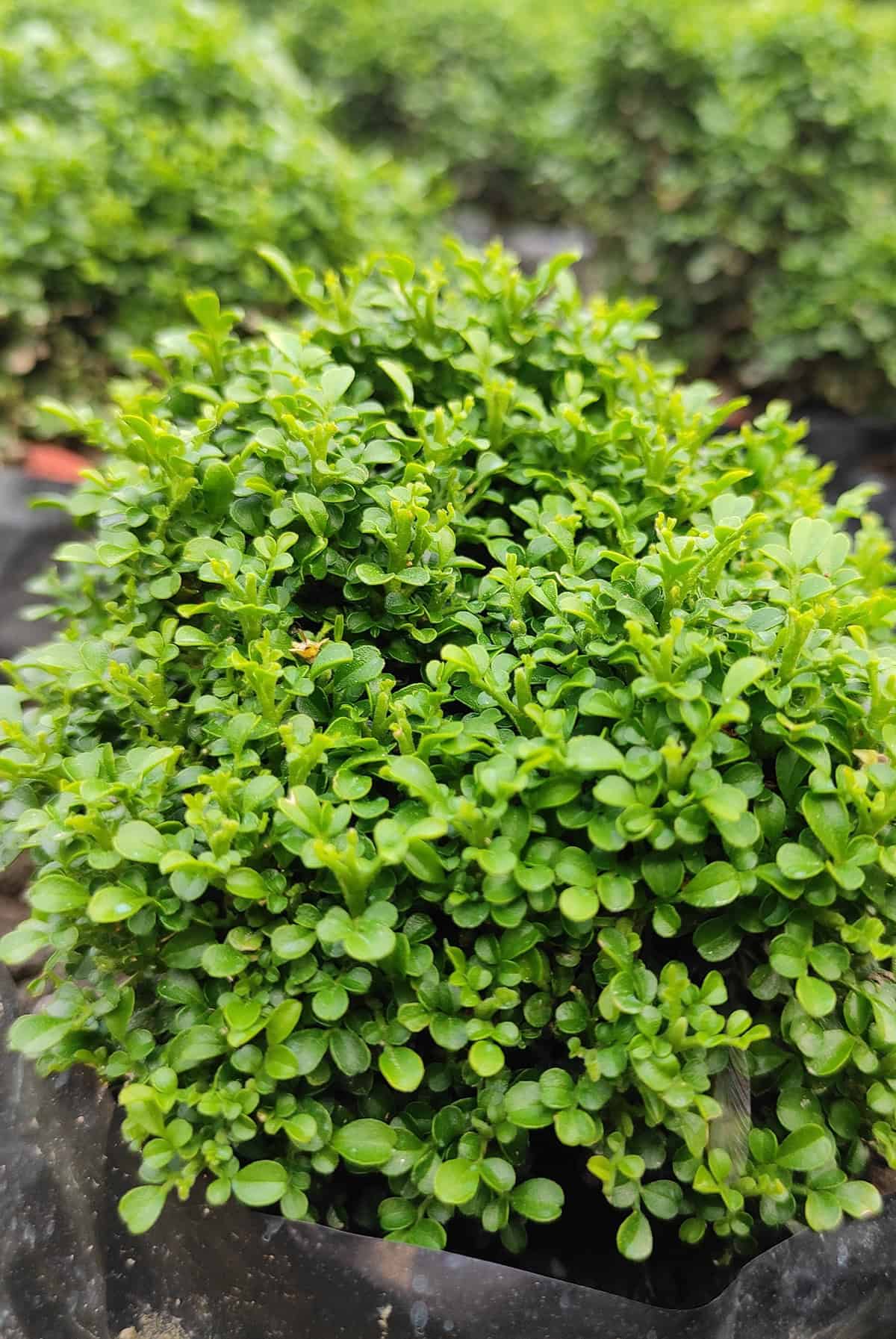
Leaf size, shape, and the ability to handle different climates—boxwood really covers a lot of ground. For those big, stately hedges or clipped garden walls, Buxus sempervirens (American boxwood) usually takes the spotlight. Left alone, it just keeps going, sometimes stretching up to 20 feet, which is honestly a bit much unless you’re into topiary or have a lot of patience with the shears. It shrugs off harsh winters better than most, which is a relief in colder zones.
On the flip side, Buxus microphylla (Japanese boxwood) keeps things tidy and manageable. Compact by nature, it’s a go-to for neat borders, foundation beds, or spots that get pretty toasty in summer. With its tiny, dense leaves, the plant always looks buttoned-up after a trim. Certain cultivars—‘Winter Gem’ and ‘Green Beauty’ come to mind—hold their color surprisingly well when everything else turns drab in the cold months.
Some gardeners just don’t have room for sprawling shrubs, and that’s where dwarf varieties come in. ‘Suffruticosa’, for instance, grows at a snail’s pace and settles into tight, cushiony mounds. If you’re impatient or just want to keep pruning to a minimum, there are quicker-growing options, though you might still need to grab the shears once or twice a year. Picking the right one really comes down to your available space, how fast you want it to fill in, and what your climate will tolerate.