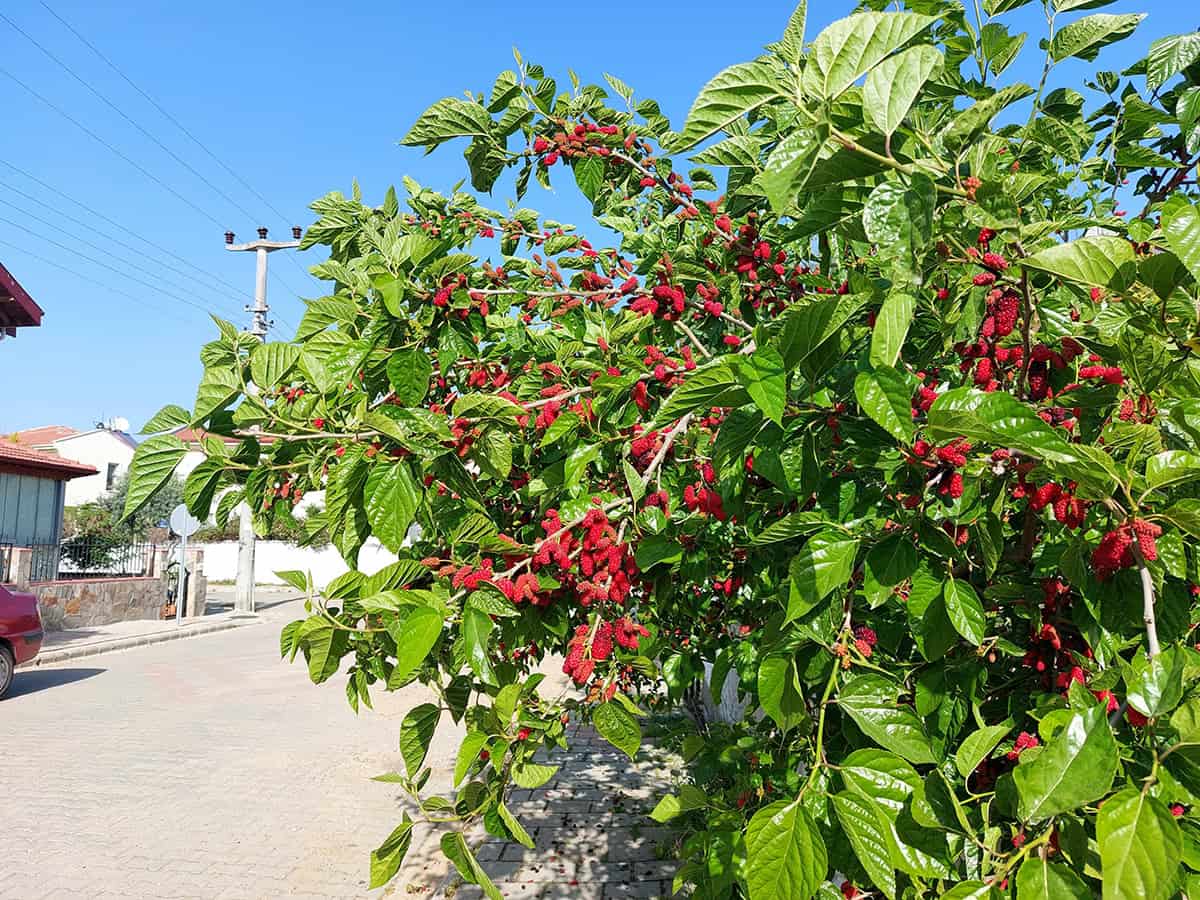
Mulberry trees ripen sweet, blackberry-shaped fruit in early summer, and a single mature tree yields buckets of berries in a few short weeks.
The trees grow fast, handle poor soil and drought once established and cast deep shade. Full sun, room for a broad canopy and a late-winter prune produce the best crops.
Purple stains on patios and cars come with every harvest, and the problems section covers fruitless and dwarf options for tight spots.
Table of Contents
Essential Care Overview
Mulberries adapt to most home gardens as shade trees, fruit trees or compact dwarf forms, and they establish quickly once the roots settle.
- Light: Full sun for the best fruit; tolerates light shade
- Soil: Well-drained sandy, loamy or clay soil; pH 5.5–7.5
- Watering: Deep, regular water while young; drought-tolerant once established
- Temperature: Hardy in USDA Zones 5–9 (varies by species)
- Humidity: Average outdoor humidity
- Fertilizer: Light feeding in early spring if growth is weak
- Propagation: Cuttings, grafting or seed
Leave room for a broad canopy, since standard trees reach 20 to 60 feet tall, and prune in late winter to hold the height at a picking level.
Plant Characteristics
Mulberry trees belong to the genus Morus and form broad, spreading, deciduous crowns with dense shade. Leaves vary in shape on the same tree, between heart-shaped and deeply lobed, with toothed edges. Small catkin-like flowers develop into soft fruits shaped like elongated blackberries.
Red and white mulberries reach 30 to 60 feet, while black mulberry grows smaller and slower. Older trees develop thick trunks with ridged, orange-brown bark. Fruit color ranges between white, red, purple and nearly black, and birds feast on it. Fruitless male cultivars are sold purely as shade trees.
- Botanical name: Morus spp., such as M. rubra, M. alba and M. nigra
- Common names: Mulberry; red, white and black mulberry
- Plant type: Deciduous fruit tree
- Mature size: 20–60 feet tall (varies by species)
- Growth rate: Fast
- Toxicity: Ripe fruit is edible; milky sap and unripe fruit may irritate skin or stomach
- Native region: Asia, Europe and North America (varies by species)
Lighting Requirements
Plant mulberry in full sun, with at least six hours of direct light a day, for steady growth and reliable crops.
Light shade reduces the harvest. Red mulberry tolerates partial shade better than white mulberry and grows naturally along woodland edges.
Choose an open site away from large buildings and dense tree canopies. Sun on all sides of the crown produces even growth and dries the leaves quickly after rain, which lowers disease risk. In very hot regions, light afternoon shade helps young trees through their first summers.
Watering Needs
Water young mulberries deeply once or twice a week during the first growing season. The soil should be slightly moist and never saturated.
Check the top 2 to 3 inches of soil, and when it is dry, soak the root zone slowly so the water reaches deep. Deep watering builds a wide, stable root system.
Established trees handle short dry periods, but regular water during fruit development produces larger berries, especially in hot, dry climates. Reduce irrigation in fall as growth slows, and avoid lawn sprinklers that hold the soil around the trunk constantly wet.
Soil Preferences
Mulberries adapt to sandy, loamy or clay soil as long as water drains. Roots decline where water stands for long periods.
A slightly acidic to neutral pH between 5.5 and 7.5 supports steady growth, and white mulberry tolerates mildly alkaline ground. Mix compost into heavy clay before planting, and set the tree at the depth it grew in the nursery container.
Mature trees spread wide roots and broad canopies, so plant them well away from foundations, septic lines and large shrubs.
Temperature and Humidity
Most mulberries grow in USDA Zones 5 through 9, with some white mulberry selections hardy to Zone 4. Established trees handle summer heat above 90°F and cold winters within their range.
White mulberry adapts to heat and urban conditions. Red mulberry prefers steady rainfall and mild summers, and black mulberry needs warm climates, roughly Zones 7 to 9, and suffers in very cold winters.
Late spring frosts damage new buds and reduce the crop on young trees. A spot sheltered from harsh winter winds helps, and a south-facing site adds warmth.
Mulberries grow in humid and semi-dry climates alike. In damp regions, an open, well-pruned canopy limits leaf disease.
Fertilization Practices
Mulberries need little feeding once established. A soil test before fertilizing prevents excess nitrogen.
Apply a balanced fertilizer such as 10-10-10 once a year in early spring, spread evenly under the canopy and away from the trunk, then water it in.
Young trees benefit from light feeding during their first few years, while established trees in fertile soil may need none. Too much nitrogen produces leafy, weak growth and fewer berries. A thin layer of compost each spring adds slow-release nutrients, as long as it sits a few inches away from the trunk.
Container Cultivation
Dwarf or compact mulberries grow well in large, sturdy pots where garden space is short. Choose a container at least 18 to 24 inches wide with drainage holes.
Use a loose, well-drained potting mix with compost or aged bark, and set the root flare slightly above the soil line. Loosen any tight, circling roots before planting.
Place the pot in full sun and water when the top two inches of mix are dry. Feed with a balanced slow-release fertilizer in early spring and prune in late winter to control size. Move pots to a sheltered spot during severe frost, and shade them from intense afternoon heat in hot regions.
Potting and Repotting
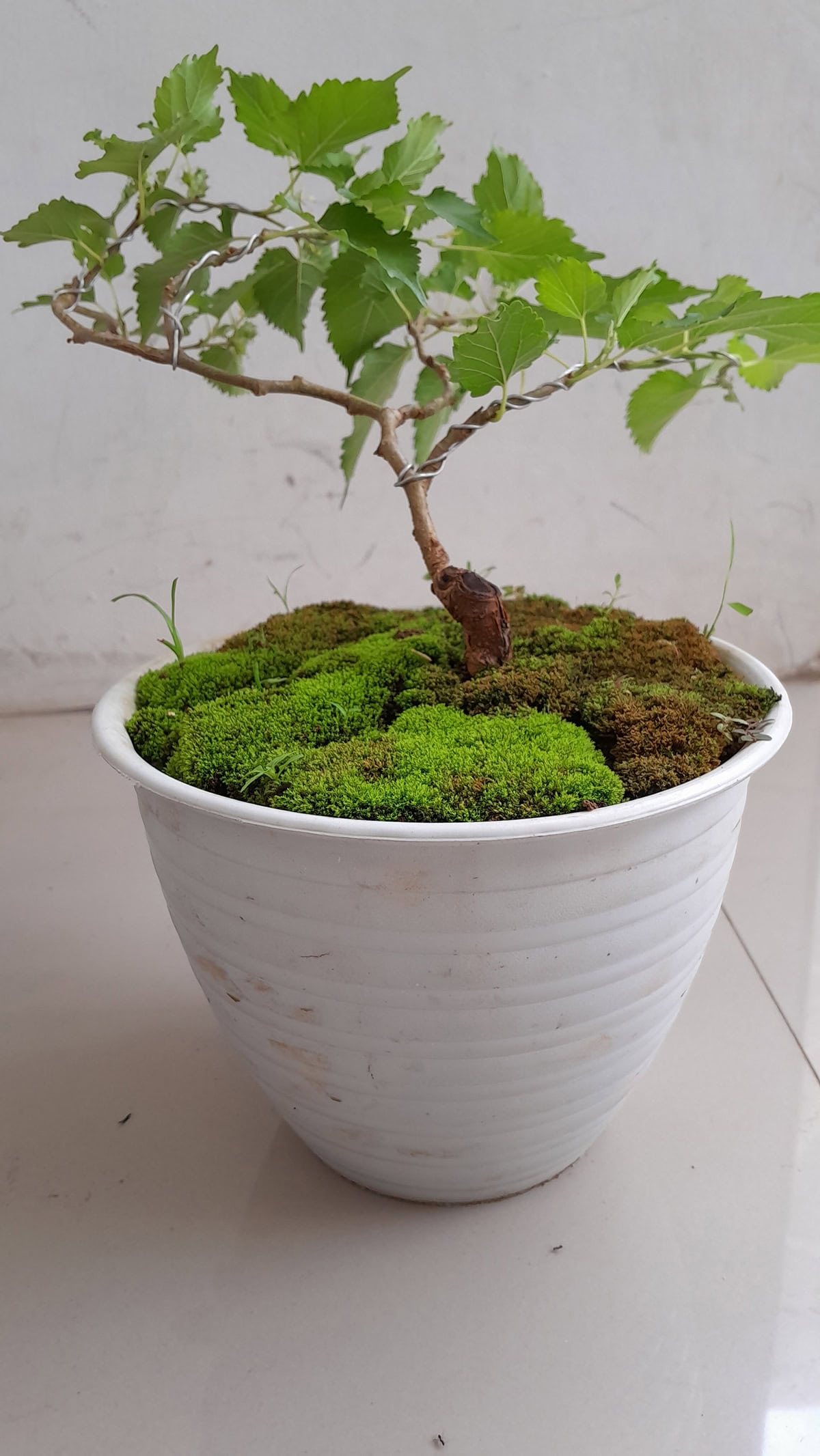
When repotting, choose a container 3 to 4 inches wider than the current root ball, with drainage holes and sturdy sides. A much larger pot holds excess wet soil.
Skip the gravel layer at the bottom and cover the drainage hole with a screen. Set the root ball 1 to 2 inches below the rim.
Inspect the roots after removing the tree, trim dead, broken or circling roots with clean pruners and loosen compacted ones. Backfill with fresh mix, firm it around the base and water thoroughly.
Young container trees need repotting every one to two years. Mature ones need it less frequently, with a fresh top layer of mix each spring.
Pruning Guidelines
Prune mulberry in late winter while it is dormant. Cuts in early spring bleed sap, and summer trimming should be light.
In the first few years, focus on structure. Choose a central leader or an open framework of main branches, and remove weak, crowded or crossing limbs for light and airflow.
Mature trees need less pruning. Remove dead, damaged or diseased wood each year, and shorten overly long branches to control height and spread. Cut cleanly, just outside the branch collar.
Use sharp tools and disinfect them after cutting diseased wood. Avoid topping, which weakens structure and reduces fruit, and hire a certified arborist for large limbs.
Propagation Methods
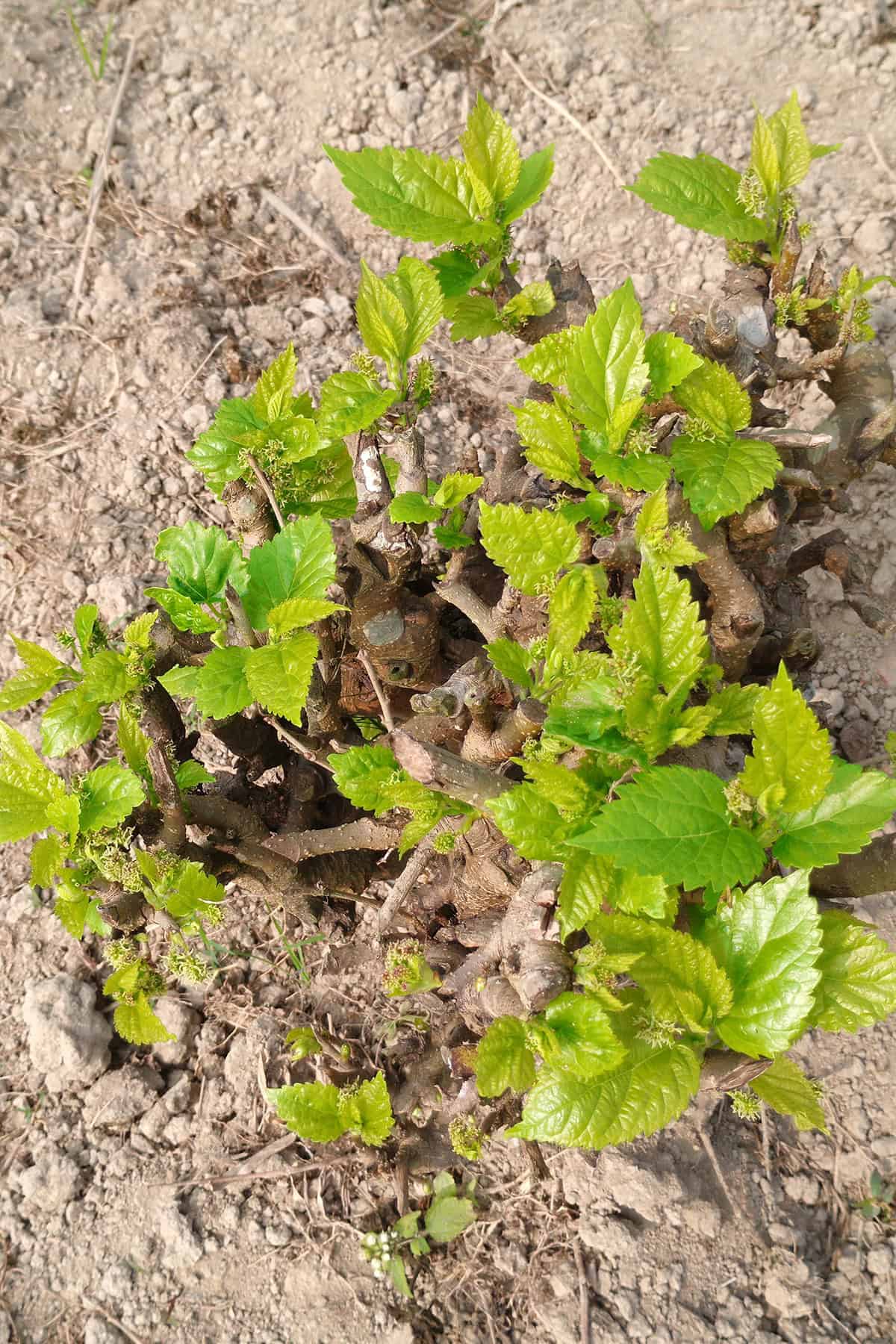
Mulberries grow from cuttings, grafts, buds or seed. Most home gardeners use cuttings or grafted trees, which match the parent, since seedlings vary in fruit quality and habit.
Hardwood cuttings 8 to 12 inches long, taken from firm one-year-old wood during late-winter dormancy, root readily, especially from white mulberry. Plant them in well-drained soil and water lightly until roots form in several weeks.
Softwood cuttings taken in late spring or early summer root in warm, humid conditions in a moist but well-drained mix.
Grafting and budding onto Morus rootstock control fruit quality and size. T-budding takes place when the bark slips, chip budding at other times, and grafts go on in late winter or early spring before growth begins. Seeds need several weeks of cold stratification and produce variable fruit.
Fruit Production and Harvest
Mulberries begin fruiting two to three years after planting. Most named fruiting cultivars set fruit on their own, though some seedling trees are male or female only and need a partner nearby.
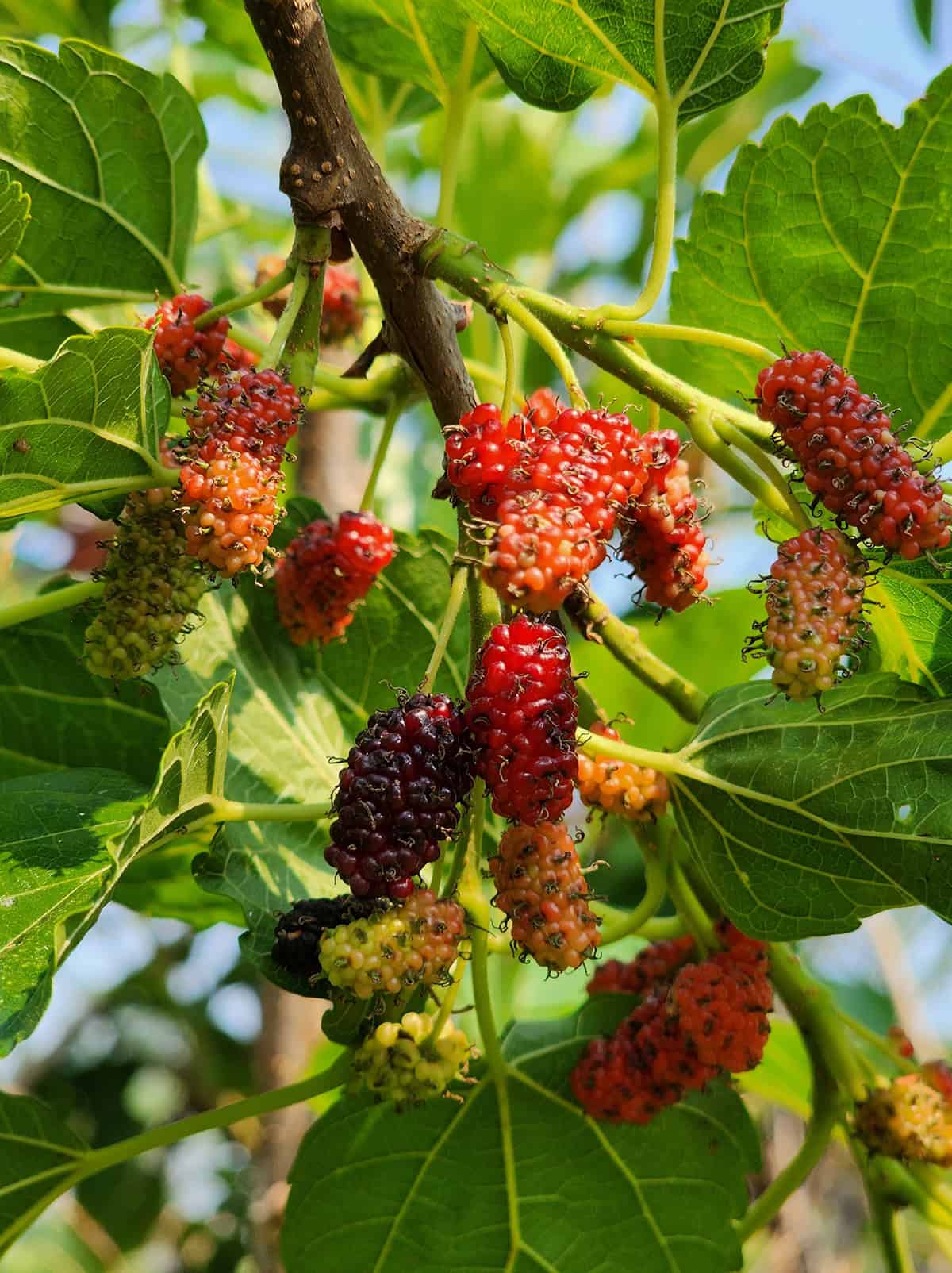
Fruit ripens between late spring and midsummer. Berries shift from green to red, then to deep purple, black or white by variety, and ripe fruit softens and slips easily from the stem. Taste is the best guide.
Pick by hand and handle the berries gently, since they bruise easily and spoil quickly. For a big harvest, spread a clean sheet under the tree and shake the branches. Use the fruit fresh, refrigerate it for a few days or freeze it for jam, baking and drying.
Managing Common Problems
Mulberries resist many problems, though aphids, scale and spider mites appear on leaves and stems and leave sticky residue. A strong spray of water handles small infestations, and insecticidal soap the larger ones.
Leaf spot and bacterial blight cause water-soaked spots on leaves and dark streaks on young shoots. Prune damaged branches in dry weather, dispose of them away from the tree and clean tools after each cut. In the southern U.S., popcorn disease swells individual fruits into hard, white lumps, and infected berries should be collected and destroyed.
Fallen fruit stains patios, cars and walkways, and birds spread the seeds. Netting, early harvest or a fruitless cultivar reduces the mess.
Leaf yellowing and dieback point to compacted soil, drought or poor drainage. Fix drainage and watering before adding fertilizer. Tree wrap protects young trunks from winter injury in exposed sites, and mulch over the root zone moderates soil temperature.
Popular Varieties
Red, white and black mulberry are the three main species in home landscapes, and each differs in size, flavor and hardiness.
Native to eastern North America, red mulberry (Morus rubra) reaches about 30 feet with a broad crown. It tolerates partial shade, and birds love its fruit.
White mulberry (Morus alba) grows fast in many soils and reaches 30 to 50 feet. Birds spread its seeds, and it has become invasive in some regions, which makes fruitless cultivars popular.
Black mulberry (Morus nigra) grows smaller and slower and carries the richest, sweet-tart fruit. It needs warm climates and well-drained soil.
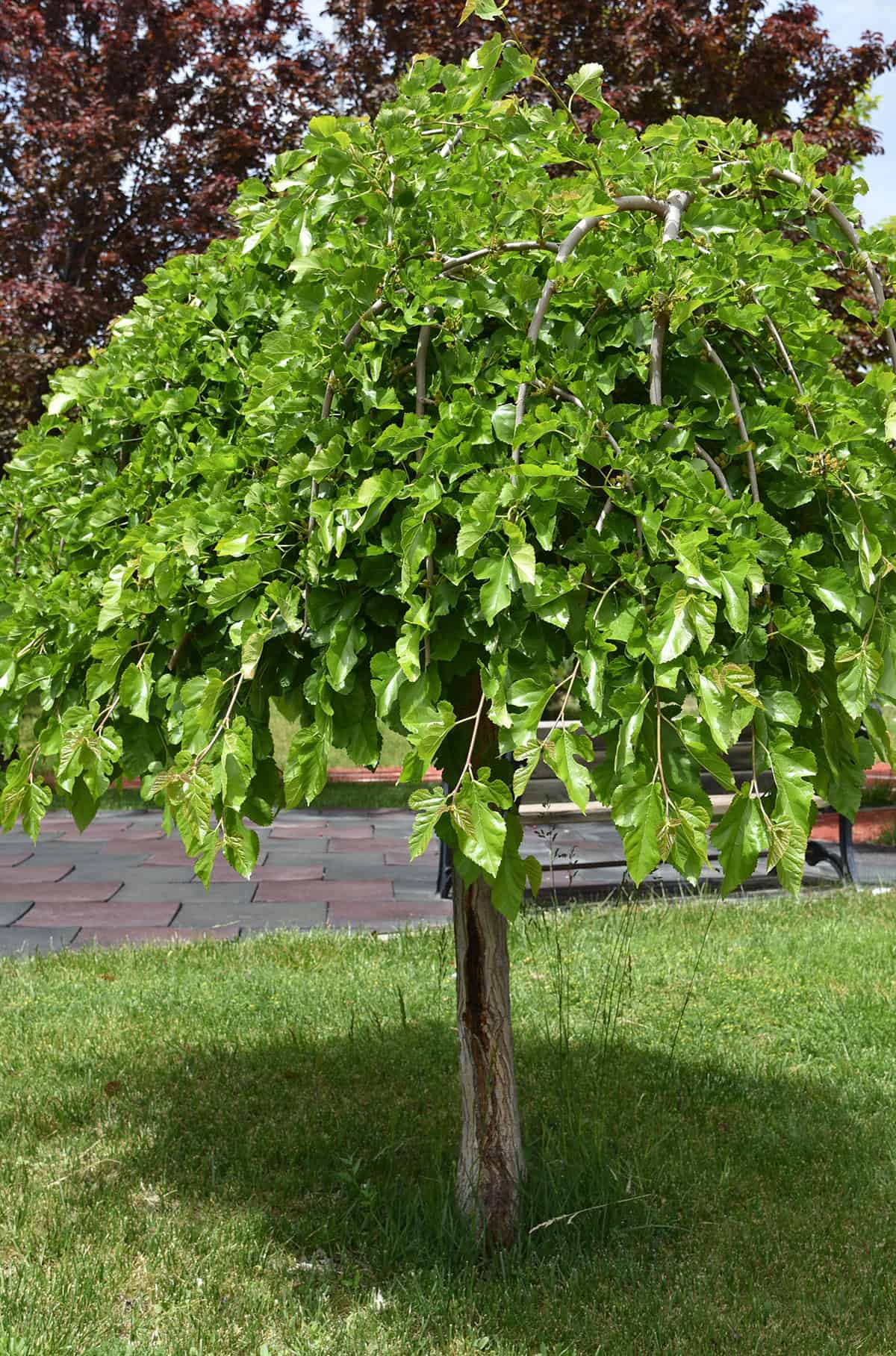
‘Illinois Everbearing’, a hybrid, combines cold hardiness with a long fruiting season. ‘Pendula’ forms a weeping tree for ornamental spots, and dwarf selections such as ‘Dwarf Everbearing’ fit small gardens and large containers.