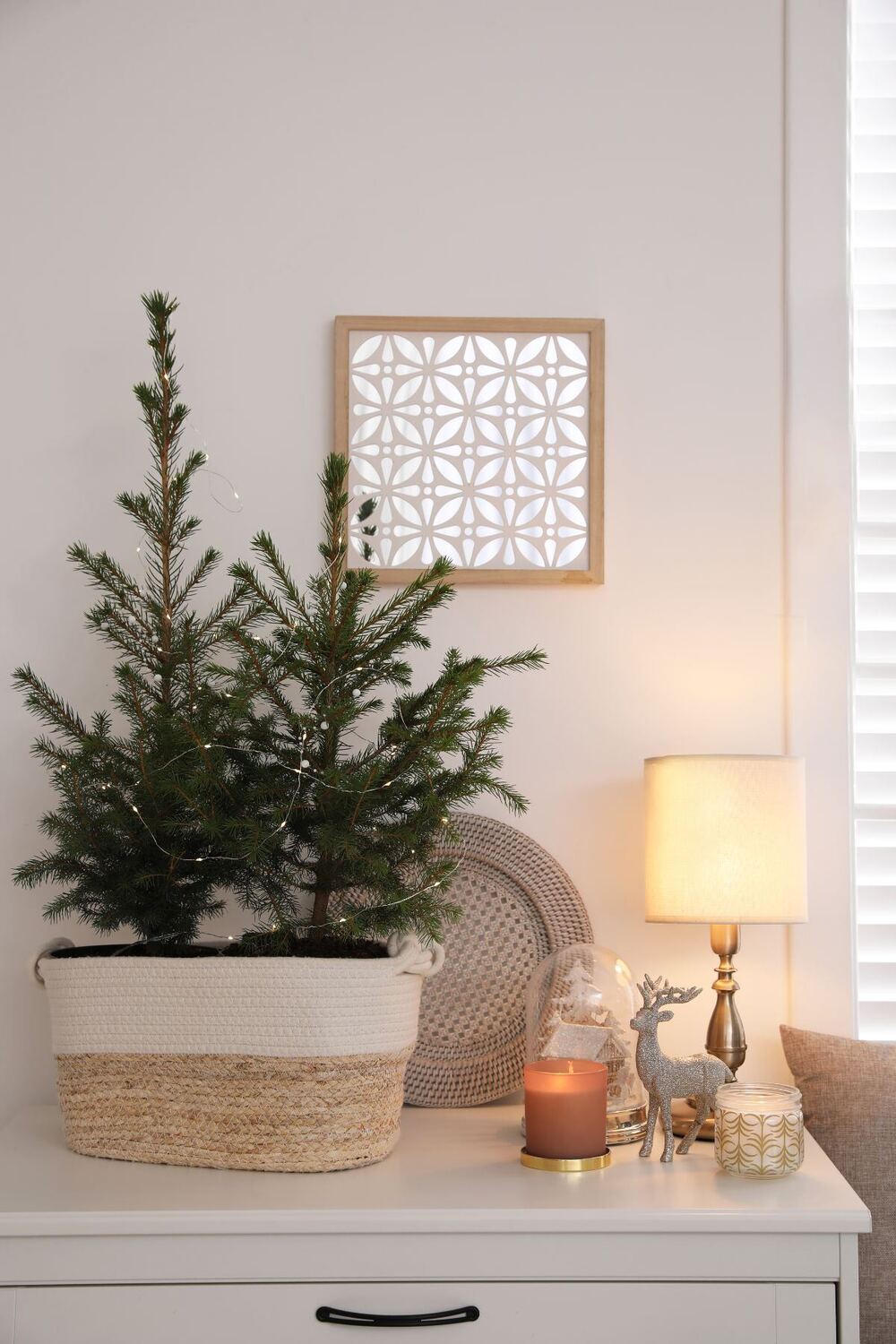
Dwarf Alberta spruce, Fraser fir and Norfolk Island pine are three of the most popular trees for a potted living Christmas tree. Hardy conifers belong outdoors for most of the year and handle only a short visit inside, since warm, dry room air pushes them out of dormancy.
Norfolk Island pine is the exception, a tropical tree happy to live as a houseplant all winter. Pick your tree from the list below before the garden centers run low in December.
Table of Contents
- Dwarf Alberta Spruce (Picea glauca ‘Conica’)
- Norway Spruce (Picea abies)
- Serbian Spruce (Picea omorika)
- Colorado Blue Spruce (Picea pungens)
- White Spruce (Picea glauca)
- Oriental Spruce (Picea orientalis)
- Fraser Fir (Abies fraseri)
- Balsam Fir (Abies balsamea)
- Noble Fir (Abies procera)
- Korean Fir (Abies koreana)
- Nordmann Fir (Abies nordmanniana)
- Douglas Fir (Pseudotsuga menziesii)
- Scots Pine (Pinus sylvestris)
- Mugo Pine (Pinus mugo)
- Eastern White Pine (Pinus strobus)
- Austrian Pine (Pinus nigra)
- Stone Pine (Pinus pinea)
- Monterey Pine (Pinus radiata)
- Leyland Cypress (× Cuprocyparis leylandii)
- Italian Cypress (Cupressus sempervirens)
- Arizona Cypress (Cupressus arizonica)
- Hinoki Cypress (Chamaecyparis obtusa)
- Lawson Cypress (Chamaecyparis lawsoniana)
- Eastern Arborvitae (Thuja occidentalis)
- Western Red Cedar (Thuja plicata)
- Eastern Red Cedar (Juniperus virginiana)
- Rocky Mountain Juniper (Juniperus scopulorum)
- Norfolk Island Pine (Araucaria heterophylla)
Dwarf Alberta Spruce (Picea glauca ‘Conica’)
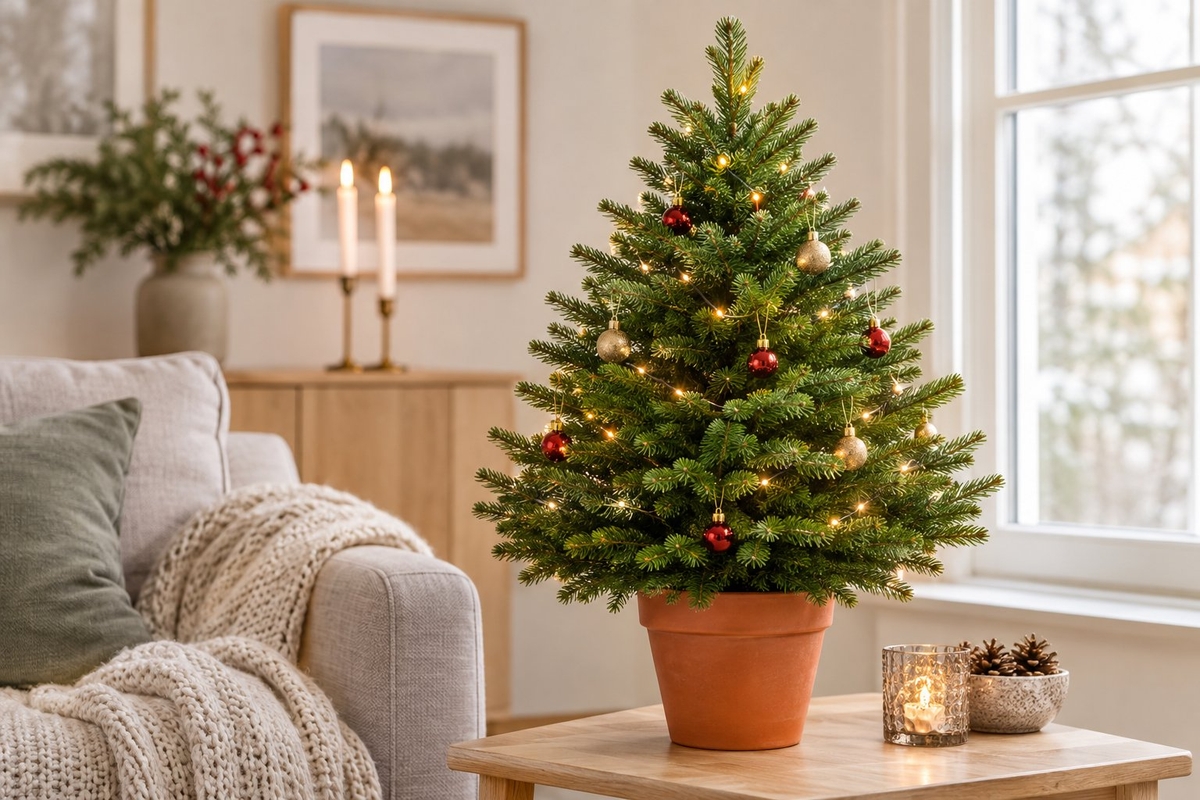
A naturally compact cone gives Dwarf Alberta spruce the shape of a miniature Christmas tree without pruning. Its dense, short needles hold tiny lights and lightweight ornaments neatly, making a modest pot suitable for a tabletop or porch.
This slow-growing cultivar belongs outdoors for most of the year. Bright light, evenly moist soil, and a pot with drainage holes support healthy growth.
In winter, shelter the container from drying wind and protect the roots during severe freezes; its needles remain exposed even after the soil has frozen.
Norway Spruce (Picea abies)
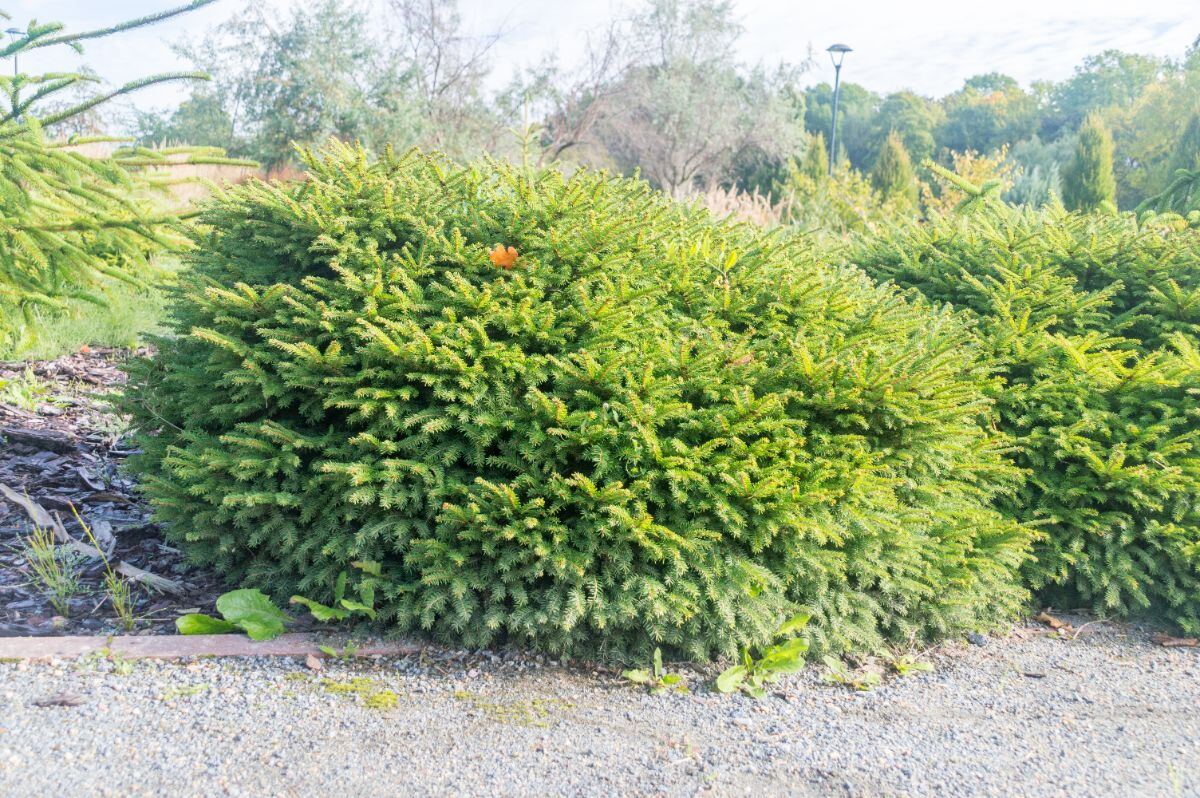
Long, slightly drooping branches give a young Norway spruce a familiar woodland outline. A container-grown specimen has room for ornaments between its branch tiers, though its vigorous growth means the pot is a temporary home.
The tree favors a cool climate and consistently moist, well-drained soil. A short indoor display helps preserve its winter dormancy; a heated room and dry root ball lead to needle drop.
After the holidays, it needs an outdoor location with space for a large tree or a plan for planting it in the ground.
Serbian Spruce (Picea omorika)
Narrow growth makes Serbian spruce useful where a broad Christmas tree would crowd a porch or small room. Its needles show dark green above and silvery white beneath, especially on the gently upturned branch tips.
Choose a young tree with an intact root ball and ample drainage. Serbian spruce tolerates a wider range of garden soils than many spruces, yet container soil still needs regular moisture checks.
Its eventual height calls for repotting or planting out before the roots become tightly crowded.
Colorado Blue Spruce (Picea pungens)
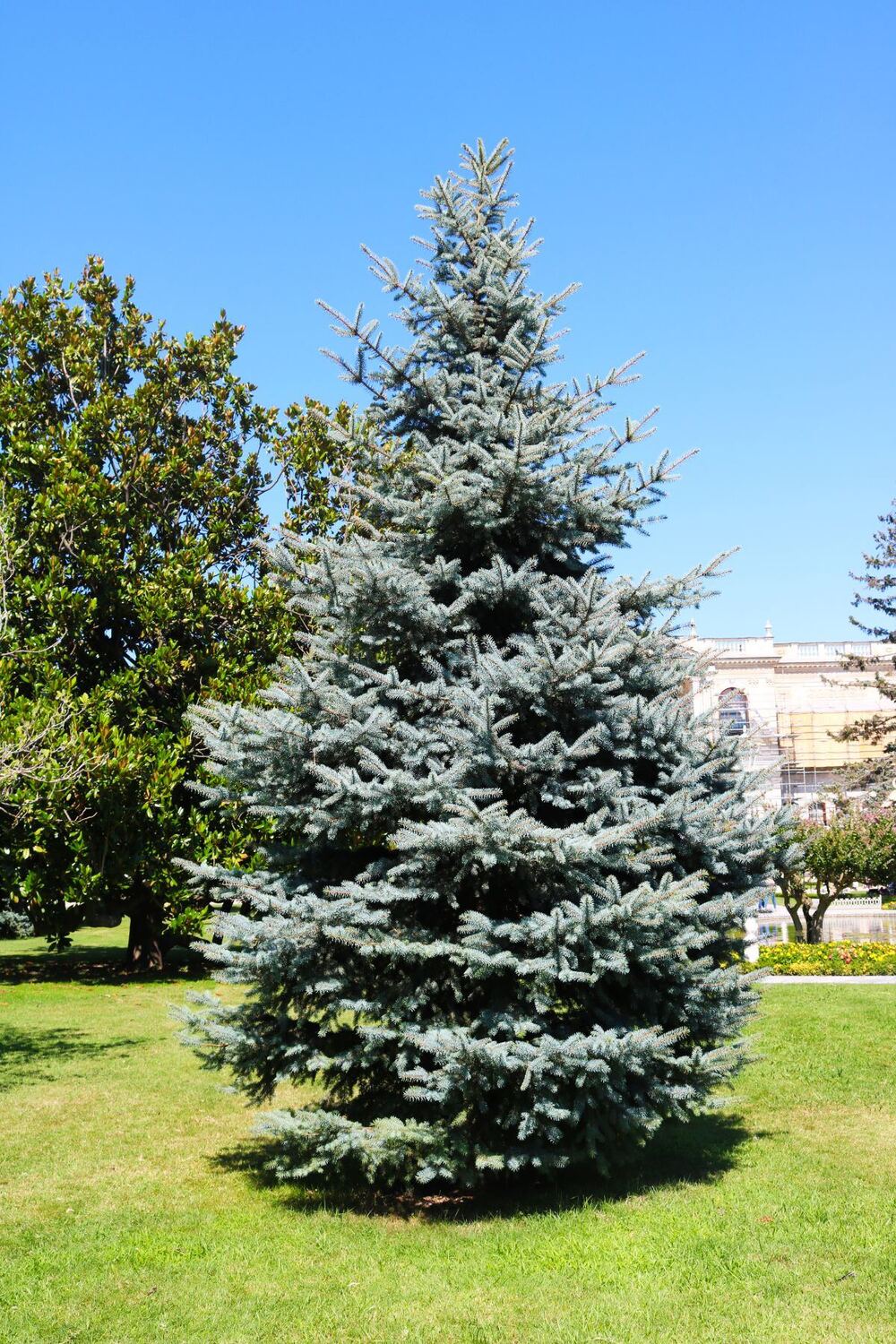
Silvery-blue needles give Colorado blue spruce its distinctive holiday color before a single ornament goes on. The needles are stiff and sharp, which makes sturdy branches useful for decorations but less pleasant in a busy walkway.
This spruce thrives in full sun and well-drained soil. Container roots need protection through hard freezes, particularly where winter temperatures swing sharply.
Select a compact cultivar for a longer life in a pot; a standard seedling grows into a substantial landscape tree.
White Spruce (Picea glauca)
Cold winters are familiar territory for white spruce, a North American evergreen with a tidy young form. Its short needles produce a classic green tree that holds understated decorations without hiding the branches.
A potted white spruce needs full sun outdoors and soil that stays moist without becoming waterlogged. Keep its indoor holiday visit brief and place it away from radiators.
Standard white spruce eventually outgrows a movable container, though a young specimen gives gardeners time to choose a permanent planting site.
Oriental Spruce (Picea orientalis)
Very short, glossy needles give Oriental spruce a fine-grained appearance at close range. On young trees, the slender branches form a graceful outline that needs little decoration.
Cool, humid conditions favor this species. In a pot, its roots need steady moisture and protection from prolonged winter freezing, yet the soil must drain freely.
Bright outdoor light maintains dense growth. Gardeners planning to keep one beyond its early years should allow for its eventual size or select a named dwarf cultivar.
Fraser Fir (Abies fraseri)
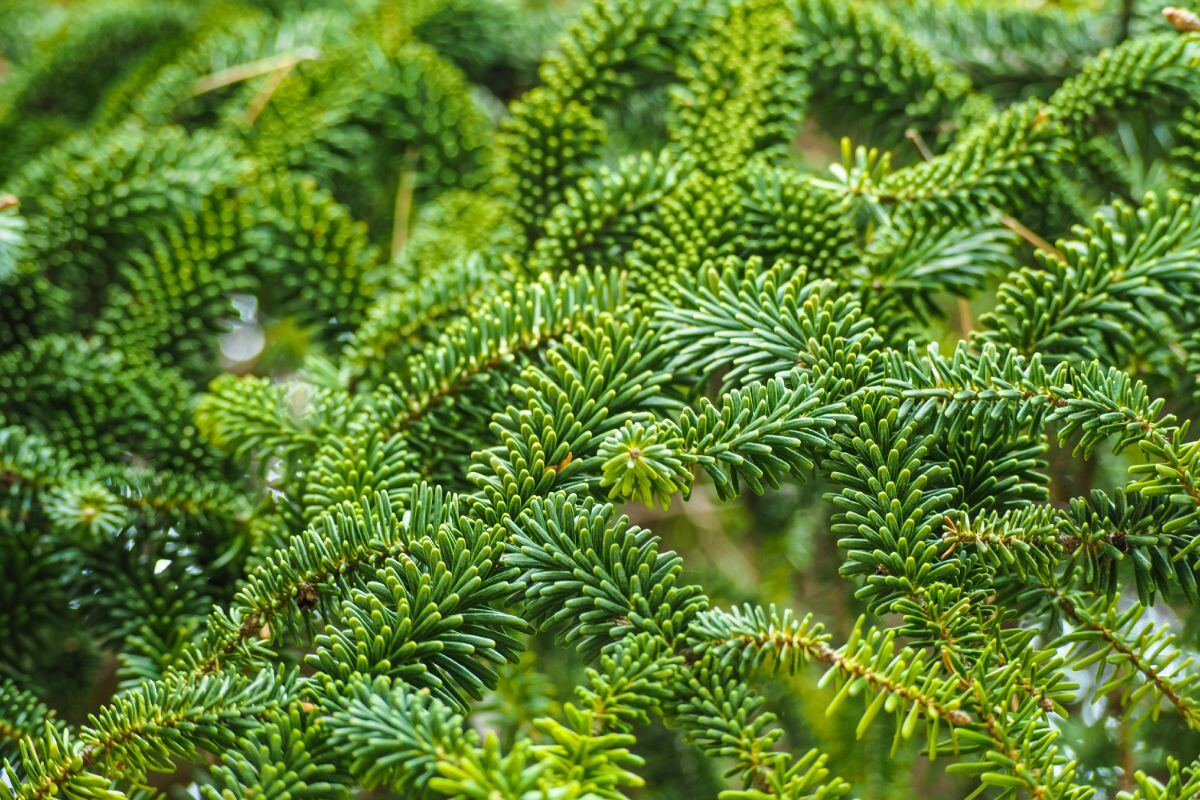
The fresh fragrance associated with cut Christmas trees comes naturally from Fraser fir. Its soft, dark-green needles have silvery undersides, and the firm branches support ornaments without the sharp points of a spruce.
A living Fraser fir needs a cool outdoor climate and a well-drained potting mix that remains moist. It fares poorly during a long stay in a warm house, making a short display the safer choice.
In spring and summer, protect the container from excessive heat around the roots.
Balsam Fir (Abies balsamea)
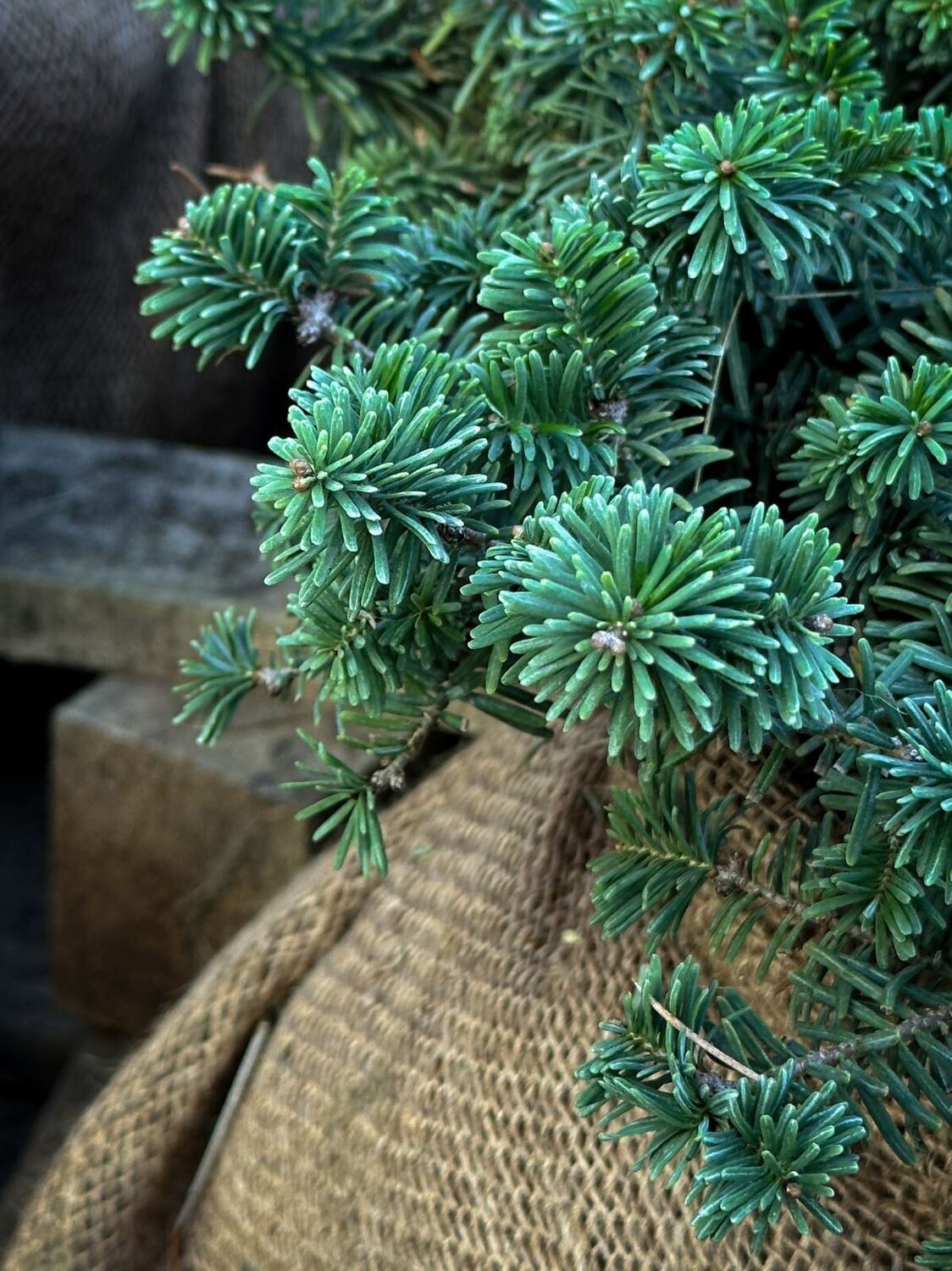
Few potted trees deliver a stronger traditional evergreen scent than balsam fir. Flat needles and a slender profile give a young specimen a familiar Christmas-tree shape, particularly in a cool room.
This northern species prefers moist, acidic soil and cooler summers. Check the container regularly during dry spells, since a confined root ball loses water quickly.
Its outdoor winter home should shield the pot from severe cold; roots in a container face harsher temperatures than roots insulated by the ground.
Noble Fir (Abies procera)
Widely spaced, sturdy branches leave clear places for larger ornaments on a young noble fir. Blue-green needles curve upward, exposing their pale undersides and giving the tree a layered appearance.
Noble fir favors cool conditions and sharply draining soil, especially in the Pacific Northwest. A large, stable container helps support its upright growth, though this is a sizeable forest tree in maturity.
Keep holiday lighting gentle and its time in heated rooms brief, then return the pot to a sheltered outdoor spot.
Korean Fir (Abies koreana)
Purple cones are a striking possibility on mature Korean firs, standing upright above the branches even on relatively young trees. White needle undersides give its green foliage a silvery cast throughout the year.
Its comparatively slow growth makes a young Korean fir manageable in a container for several seasons with timely repotting. It prefers sun, good drainage, and cool summers.
A pot exposed to afternoon heat needs close attention to watering, especially once roots fill much of the available soil.
Nordmann Fir (Abies nordmanniana)
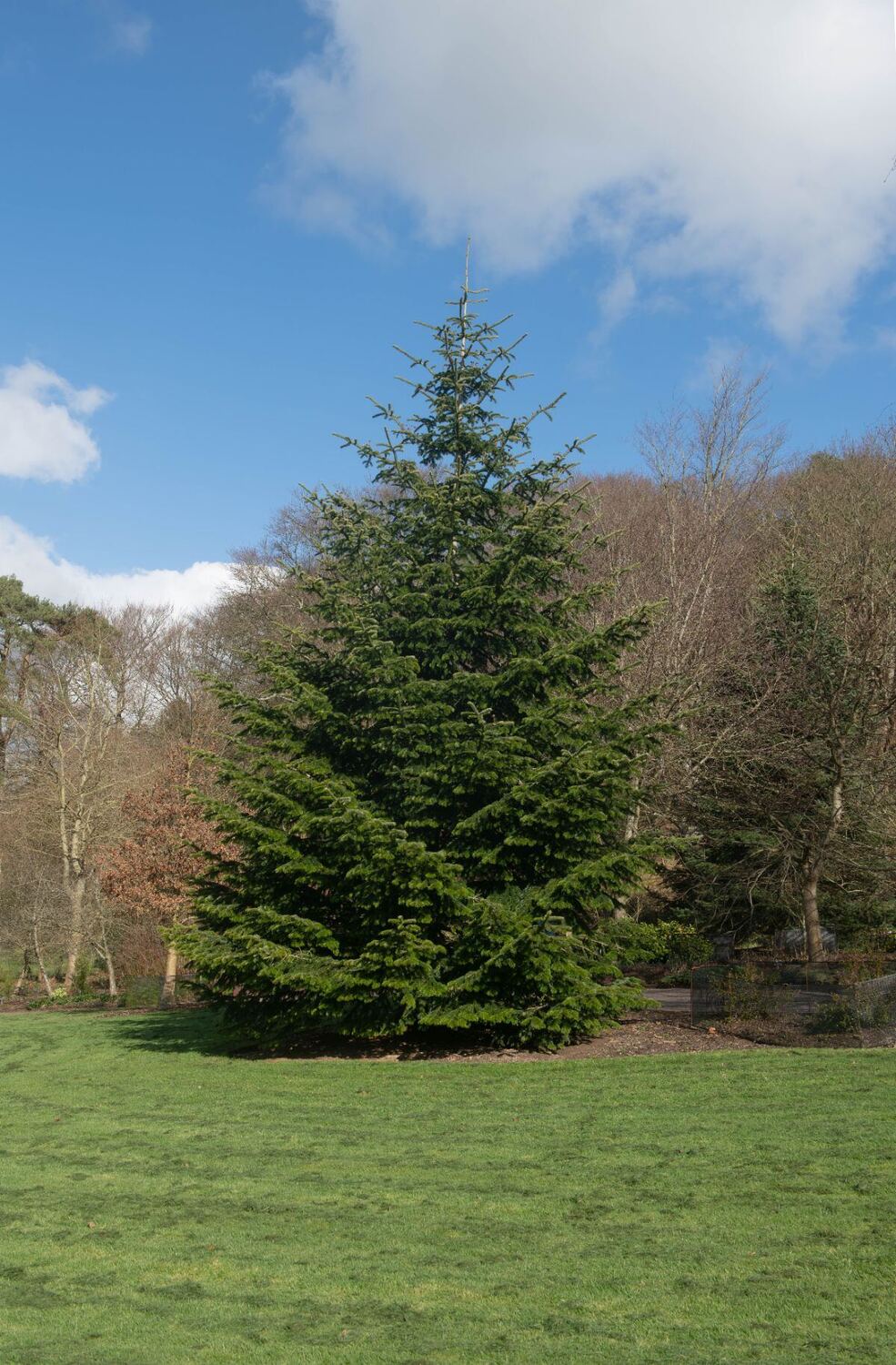
Glossy, deep-green needles make Nordmann fir a refined living tree, and their soft tips ease decorating. Its broad, regular branching develops into a full Christmas-tree outline.
Give a potted specimen moist, well-drained soil and a cool outdoor location. Like other hardy firs, it should spend only a short period inside a heated home.
Nordmann fir becomes a large tree, so container culture calls for eventual planting or a long-term plan for its increasing root and branch spread.
Douglas Fir (Pseudotsuga menziesii)
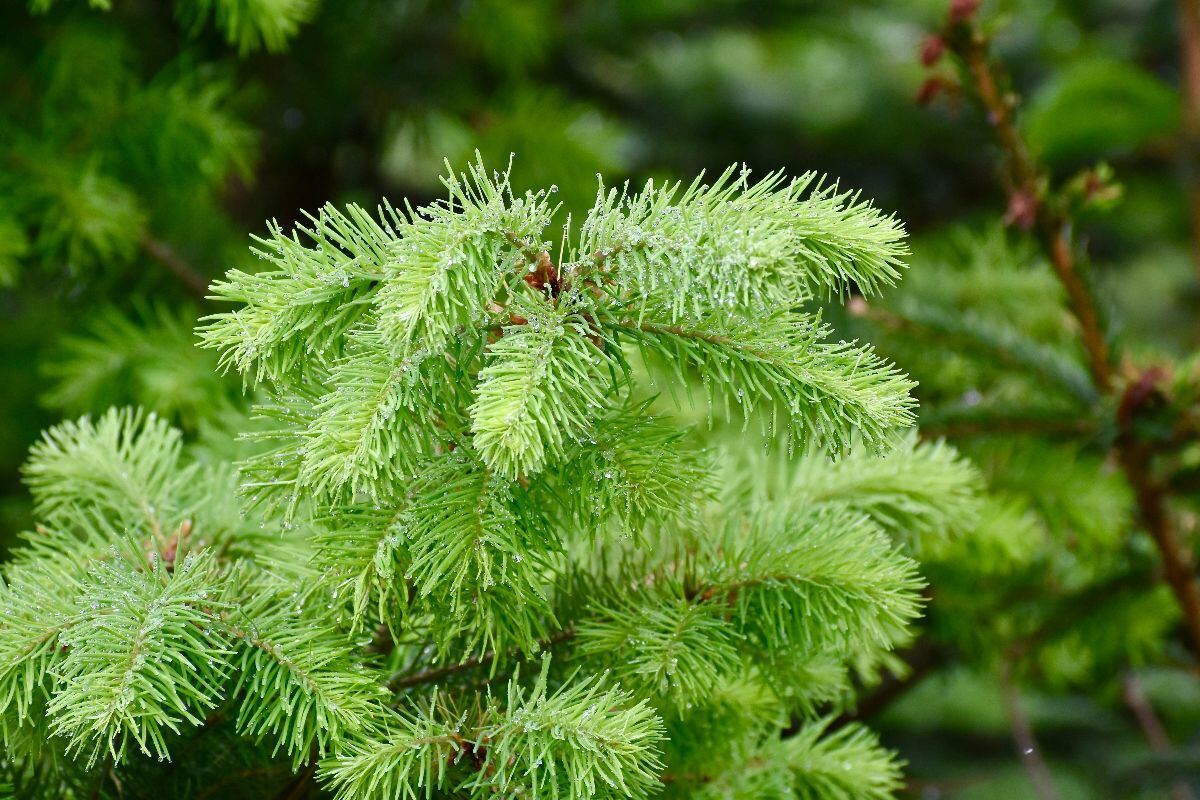
Gently flexible branches and fragrant needles distinguish Douglas fir from the stiffer spruces. A young tree has a loose, natural shape, with soft needles that make hanging ornaments comfortable.
Although sold as a fir, it belongs to a separate genus and grows quickly under favorable conditions. It needs bright outdoor light, reliable drainage, and a container large enough to support its roots.
Keep the indoor visit short, then place it outside with protection for the pot during severe cold.
Scots Pine (Pinus sylvestris)
Orange-toned bark begins to set Scots pine apart as it matures, but a young potted tree earns its holiday place through sturdy branches and long-lasting green needles. Its outline is less uniform than a sheared spruce.
Full sun and free-draining soil are essential. Allow the upper layer of potting mix to dry slightly between waterings without letting the entire root ball become parched.
Scots pine grows into a large tree, making a container most practical for its younger years.
Mugo Pine (Pinus mugo)
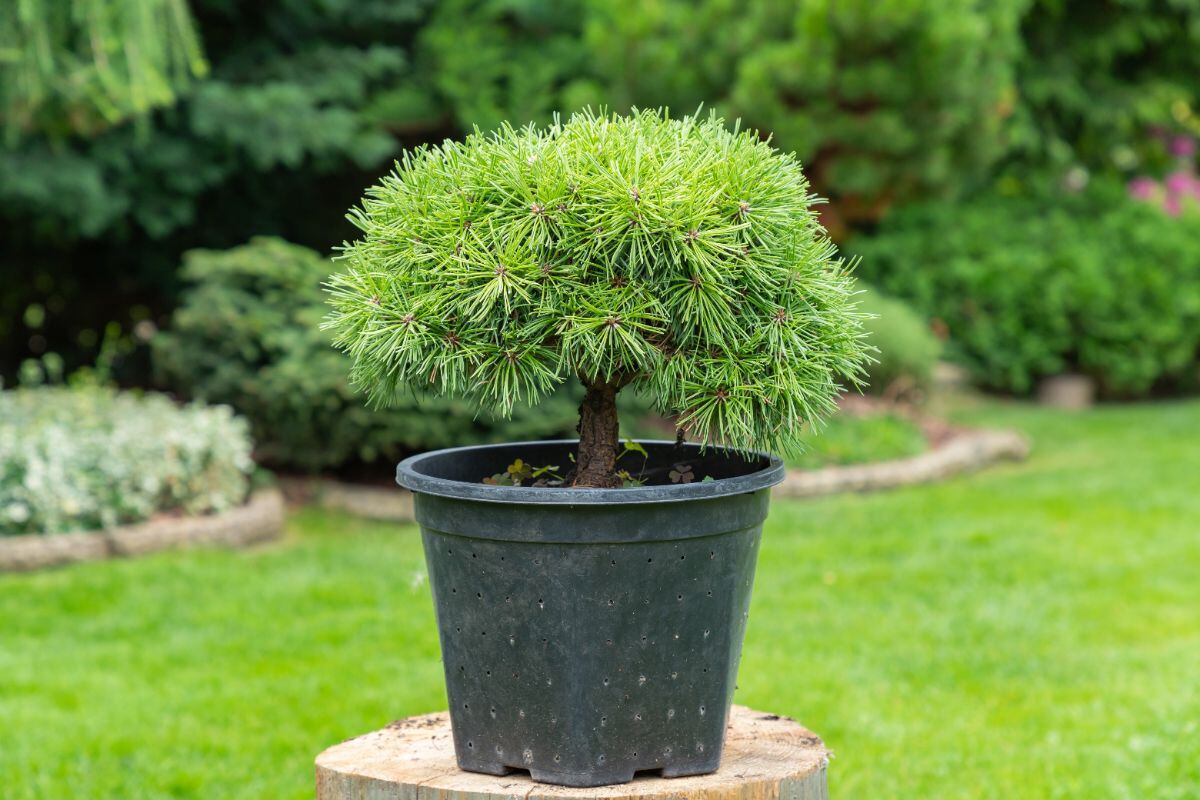
A low, dense mound of needles makes dwarf mugo pine a distinctive tabletop Christmas tree. Its broad shape leaves room for a short strand of lights or a handful of small ornaments.
Check the cultivar label before choosing one for a pot: mature sizes vary considerably among mugo pines. Full sun and sharp drainage support compact growth.
During winter, an outdoor container needs protection against prolonged freezing, even though the established tree itself is notably hardy.
Eastern White Pine (Pinus strobus)
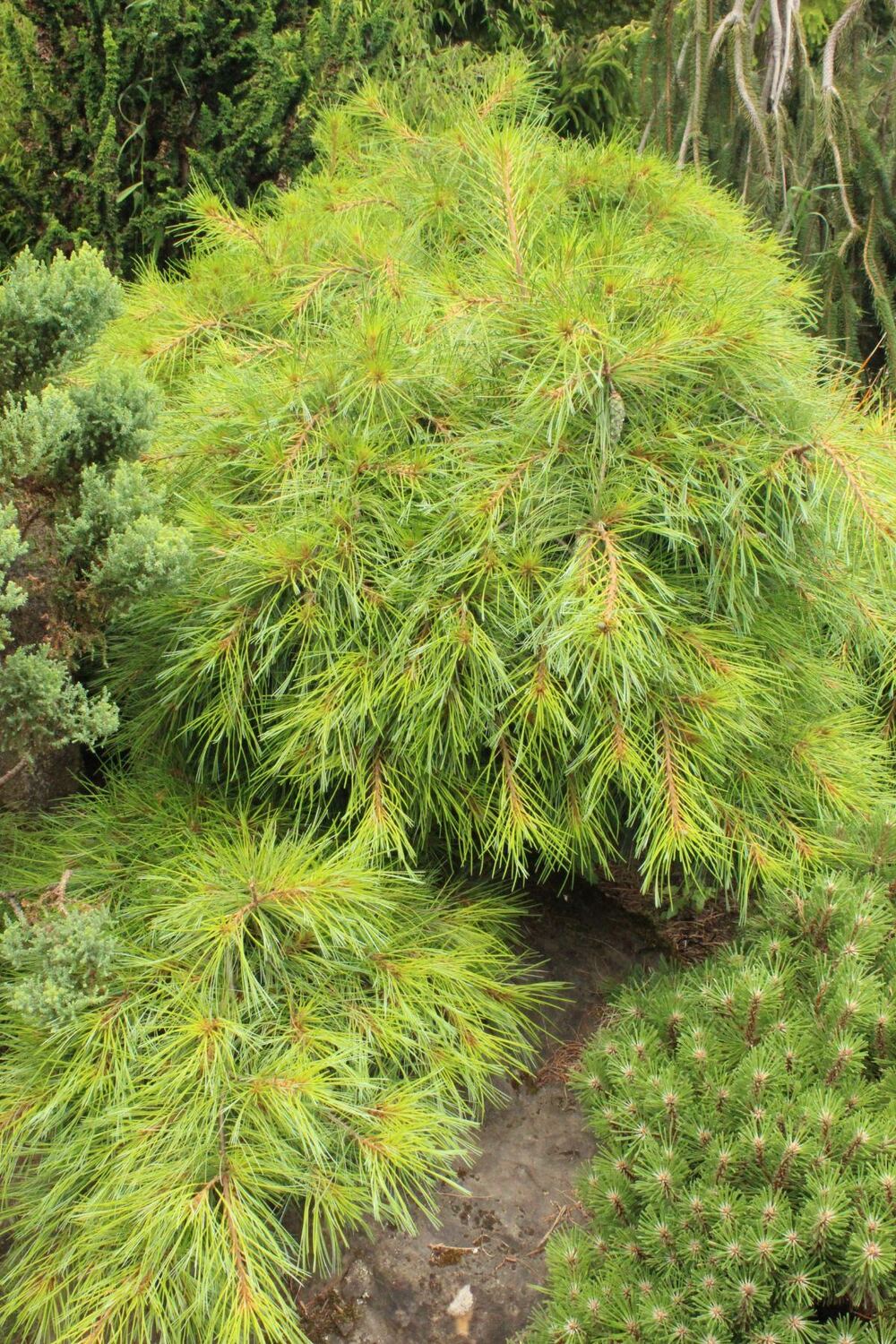
Soft, slender needles give Eastern white pine a feathery outline, particularly when a young tree catches side light. Delicate branches call for lightweight decorations and a loosely draped strand of lights.
This pine prefers acidic, well-drained soil and an outdoor position away from harsh, drying wind. Its roots need steady moisture during establishment.
Eastern white pine grows rapidly into a large tree, so a potted Christmas specimen should have a future planting site in mind before it becomes difficult to move.
Austrian Pine (Pinus nigra)
Thick needles and strong branches give a young Austrian pine a bold, substantial silhouette. It holds heavier ornaments securely, though its long needles leave less open space near the trunk.
Provide full sun and a fast-draining potting mix. Austrian pine tolerates dry conditions once established in the ground, but a container still requires regular watering checks.
In parts of the United States, disease and pest pressures affect this species; local extension guidance is useful before committing to a permanent planting site.
Stone Pine (Pinus pinea)
A juvenile stone pine has a compact, upright shape that looks at home beneath small holiday lights. Mature trees develop the broad umbrella crown associated with Mediterranean landscapes, a reminder that the potted stage is temporary.
Stone pine prefers abundant sun and excellent drainage. It is less cold-hardy than the northern pines in this list, making winter protection important outside mild regions.
A cool, bright indoor position serves a brief holiday display; long spells of warm, dim conditions weaken growth.
Monterey Pine (Pinus radiata)
Rapid growth gives Monterey pine a generous supply of fresh green branches, even when the tree is young. Its relatively open outline leaves visible gaps for ornaments.
Native to a limited stretch of the California coast, it favors mild conditions and well-drained soil. Hard freezes make an exposed outdoor pot risky, and a warm indoor room is suitable only for a brief display.
Because this pine grows quickly, expect to move it into a larger container or plant it outdoors relatively soon.
Leyland Cypress (× Cuprocyparis leylandii)
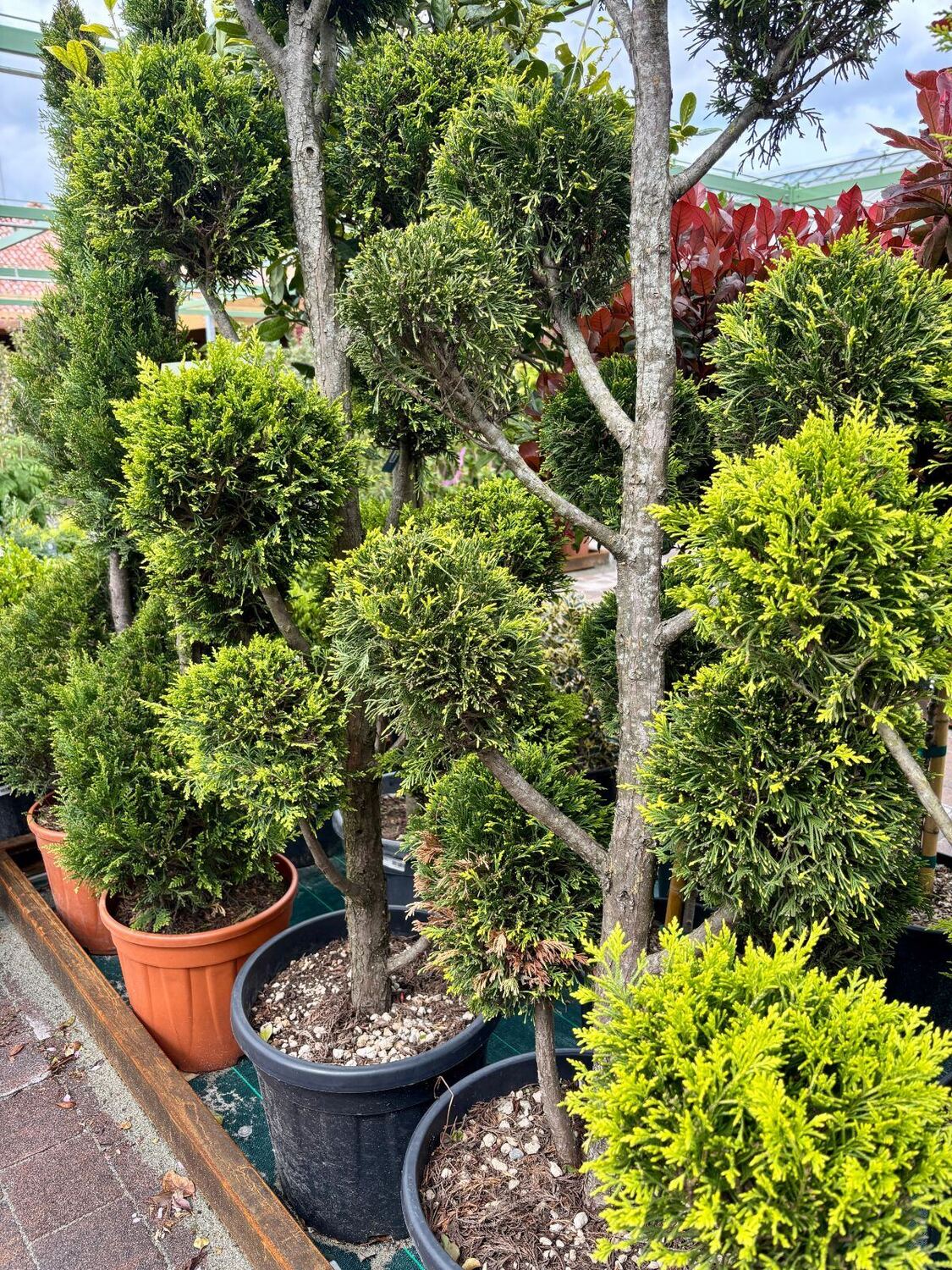
Dense sprays of foliage give Leyland cypress a full, continuous green outline. A slender young plant fits neatly into a porch container, where small lights follow its tapered shape.
Fast growth is the main practical consideration. Even with pruning, a standard Leyland cypress eventually needs substantial space and a larger root area.
Keep its pot evenly moist and well drained, and check local growing conditions before planting it out; its long-term health varies with climate and exposure.
Italian Cypress (Cupressus sempervirens)
A tall, narrow column makes Italian cypress a holiday tree for tight spaces, particularly beside a sheltered entry. Its closely held branches take a spiral of lights neatly, though there is little room for hanging ornaments.
Full sun and sharply draining soil are central to its care. Italian cypress belongs outdoors in mild climates and needs protection where winters are cold.
Its upright form also makes a tall pot vulnerable to wind, so choose a heavy container with a stable base.
Arizona Cypress (Cupressus arizonica)
Blue-gray foliage gives Arizona cypress a cool-toned Christmas display suited to sunny, dry-climate landscapes. The aromatic leaves form dense sprays on a young tree.
Good drainage deserves particular attention in a pot: saturated soil troubles this species, especially during cool weather. Water thoroughly, then allow the upper soil to dry before watering again.
A sunny outdoor position supports its color and shape, and a sheltered container position protects the roots during unusually hard freezes.
Hinoki Cypress (Chamaecyparis obtusa)
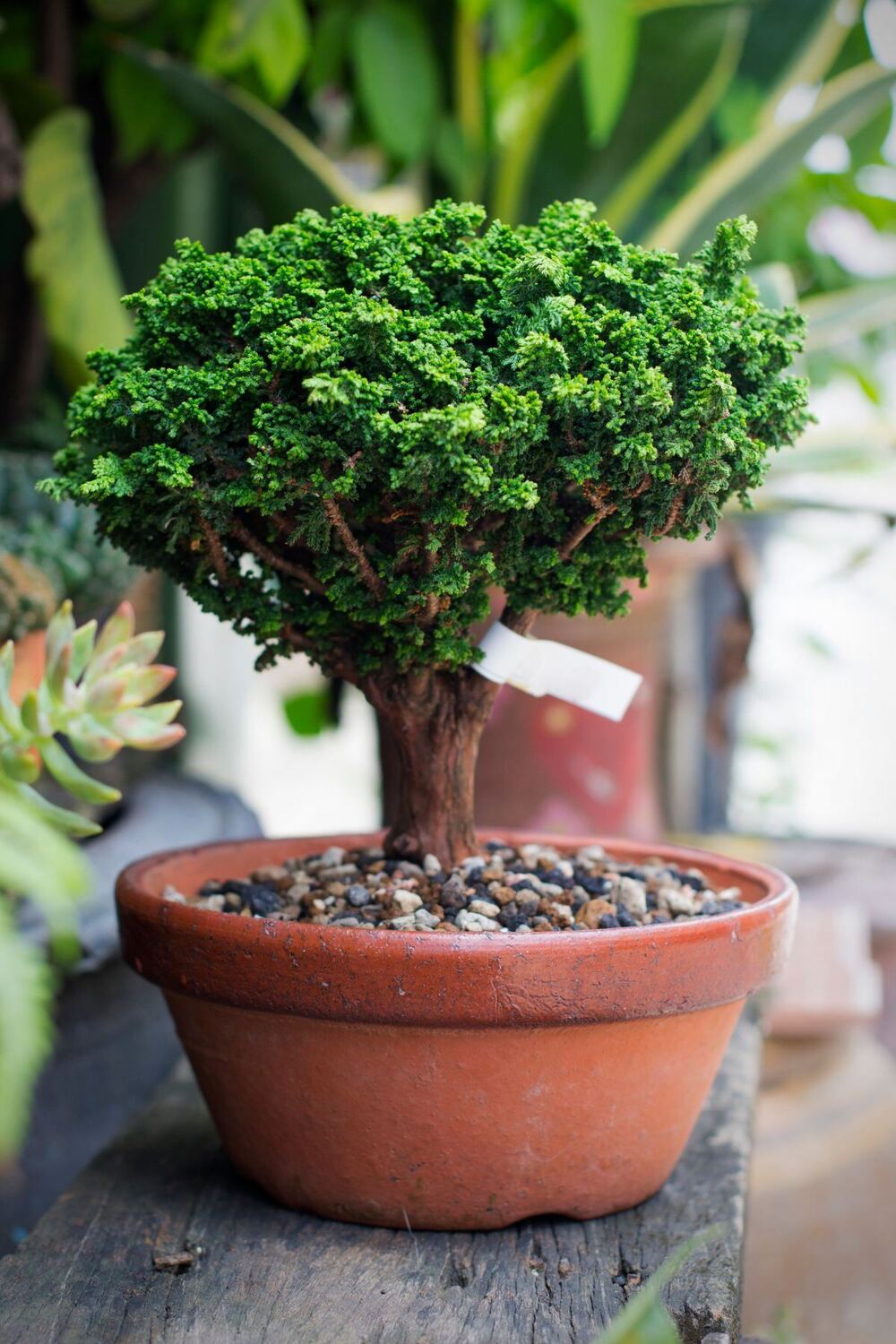
Fan-shaped foliage forms delicate, layered branches on Hinoki cypress. A compact cultivar makes an elegant potted holiday tree with minimal decoration, especially where its branch structure remains visible.
Growth rate and eventual size depend heavily on the cultivar, so the plant label is worth reading closely. Hinoki cypress prefers moist, well-drained soil and protection from drying winter wind.
Keep a potted specimen out of prolonged indoor heat, then return it gradually to outdoor conditions.
Lawson Cypress (Chamaecyparis lawsoniana)
The fine, drooping branch tips of Lawson cypress give a container tree a softer outline than a tightly clipped conifer. Cultivars vary in color and size, including compact forms with blue or golden foliage.
Moist, well-drained soil and a cool outdoor setting support healthy growth. Root rot diseases present a serious concern for Lawson cypress in affected areas, making drainage and local site conditions important.
A named dwarf cultivar is the practical choice for a pot kept beyond one holiday season.
Eastern Arborvitae (Thuja occidentalis)
A dense, narrow arborvitae fits beside a doorway without blocking much of the entrance. Its flattened sprays form a continuous surface for tiny lights, though heavier ornaments tend to rest against the foliage.
Compact cultivars give container growers a manageable starting size. Water regularly during dry weather and protect the pot against deep freezes.
Winter sun and wind dry exposed foliage, especially when frozen roots cannot replace lost moisture; a sheltered outdoor position reduces that risk.
Western Red Cedar (Thuja plicata)
Broad, gently drooping foliage sprays give Western red cedar a graceful outline in a large pot. Crushing a small sprig releases its distinctive evergreen scent.
This Pacific Northwest native favors moist soil and a cool, humid setting. Container soil should drain well yet remain consistently damp through dry periods.
Because the species becomes an enormous tree, its potted Christmas years are limited unless a compact cultivar is chosen. A permanent landscape site requires ample room for its mature spread.
Eastern Red Cedar (Juniperus virginiana)
A rugged, naturally tapered outline gives Eastern red cedar a distinctly American Christmas-tree look. Despite its common name, it is a juniper, with scale-like foliage and small blue berry-like cones on female plants.
This adaptable tree needs full sun and a draining container. Established trees tolerate dry ground, yet young potted roots still require regular watering.
Check local planting guidance before moving it into the landscape, particularly near apple trees, since it hosts cedar-apple rust.
Rocky Mountain Juniper (Juniperus scopulorum)
A narrow cultivar of Rocky Mountain juniper makes a striking potted tree for a sunny porch. Many selections have silvery-blue foliage and naturally upright growth, leaving the surrounding space open.
It favors excellent drainage and air circulation. Water the container deeply, then let the surface dry; persistently wet soil is a greater concern than brief dryness.
Rocky Mountain juniper belongs outdoors for most of the year, with the pot sheltered during severe winter cold.
Norfolk Island Pine (Araucaria heterophylla)
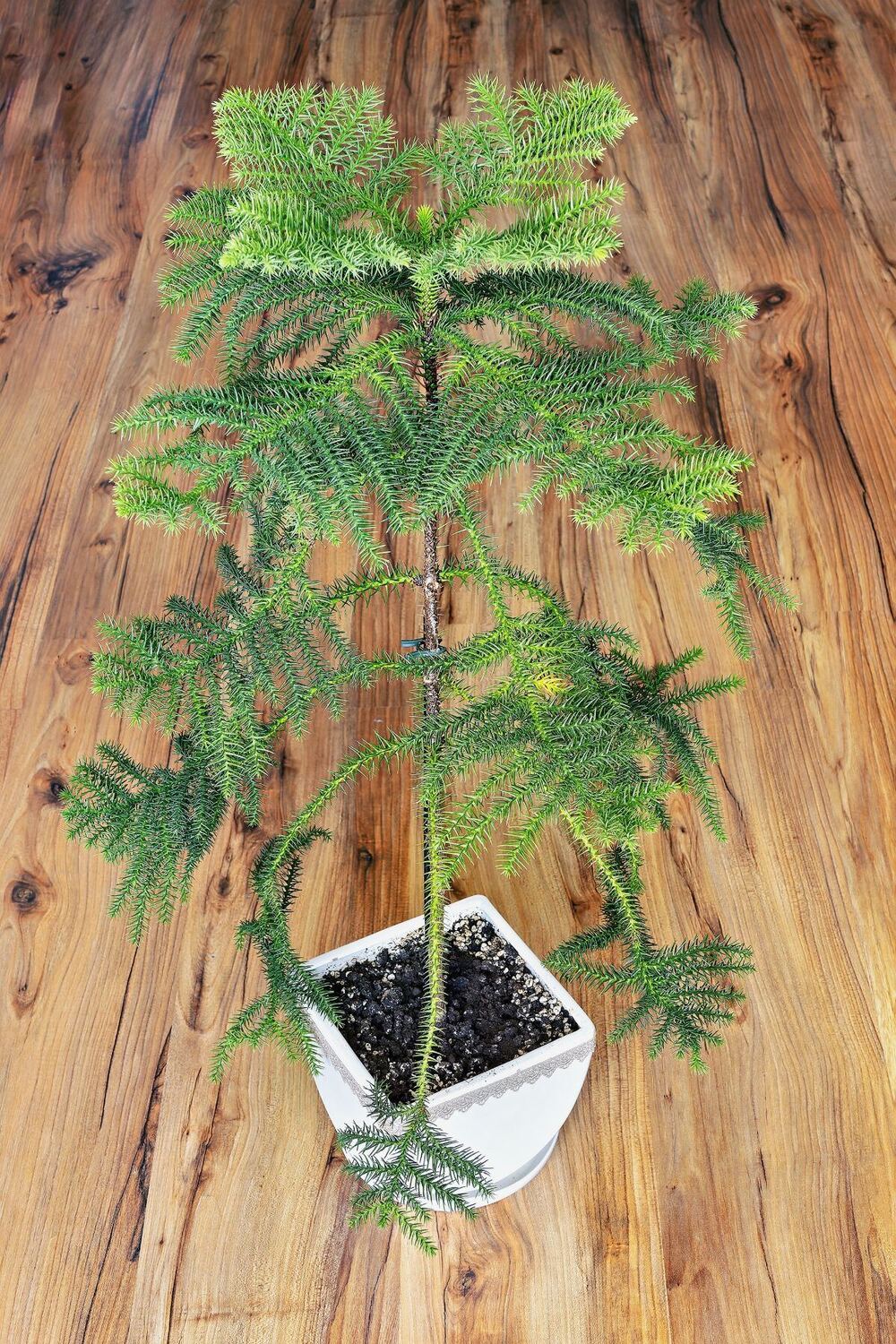
Soft, evenly spaced branch tiers make Norfolk Island pine a living Christmas tree for indoor display. It is a subtropical plant, so its care differs from that of the dormant outdoor conifers above.
Bright indirect light, moderate indoor temperatures, and a draining pot support growth through the holidays and beyond. Water when the upper soil begins to dry, and keep the tree away from heating vents. Use lightweight ornaments on its flexible branches; outdoors, year-round planting is limited to frost-free climates.