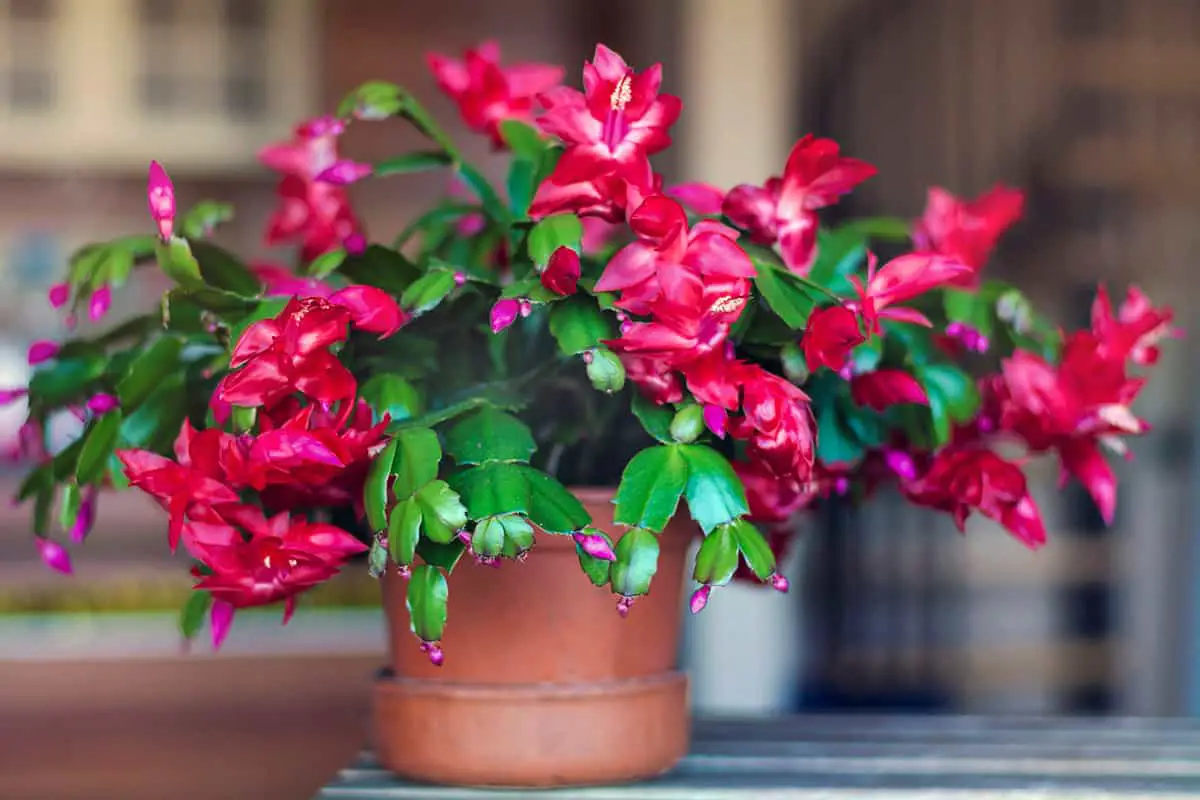
A healthy Christmas cactus flowers for decades, and plenty of family plants have passed through three or four generations.
Most bloom troubles trace back to one misunderstanding. This is a forest cactus from Brazil, with very different needs from the spiny desert types on a sunny windowsill.
Twelve essentials cover its origins, its look-alike cousins and the light, water and temperature cues behind a full set of buds.
Table of Contents
- Christmas Cactus Is Not A Desert Plant
- Know Your Holiday Cactus Type
- Christmas Or Thanksgiving Cactus?
- Air Moisture Keeps It Happy
- No Need To Repot Often
- Cold Nights Trigger Flowering
- Fertilization Is Key For Growth And Blooms
- Outdoor Time Benefits Your Cactus
- Be Gentle With Its Leaves
- Safe Around Pets
- Long Lifespan
- Less Water In Winter
Christmas Cactus Is Not A Desert Plant
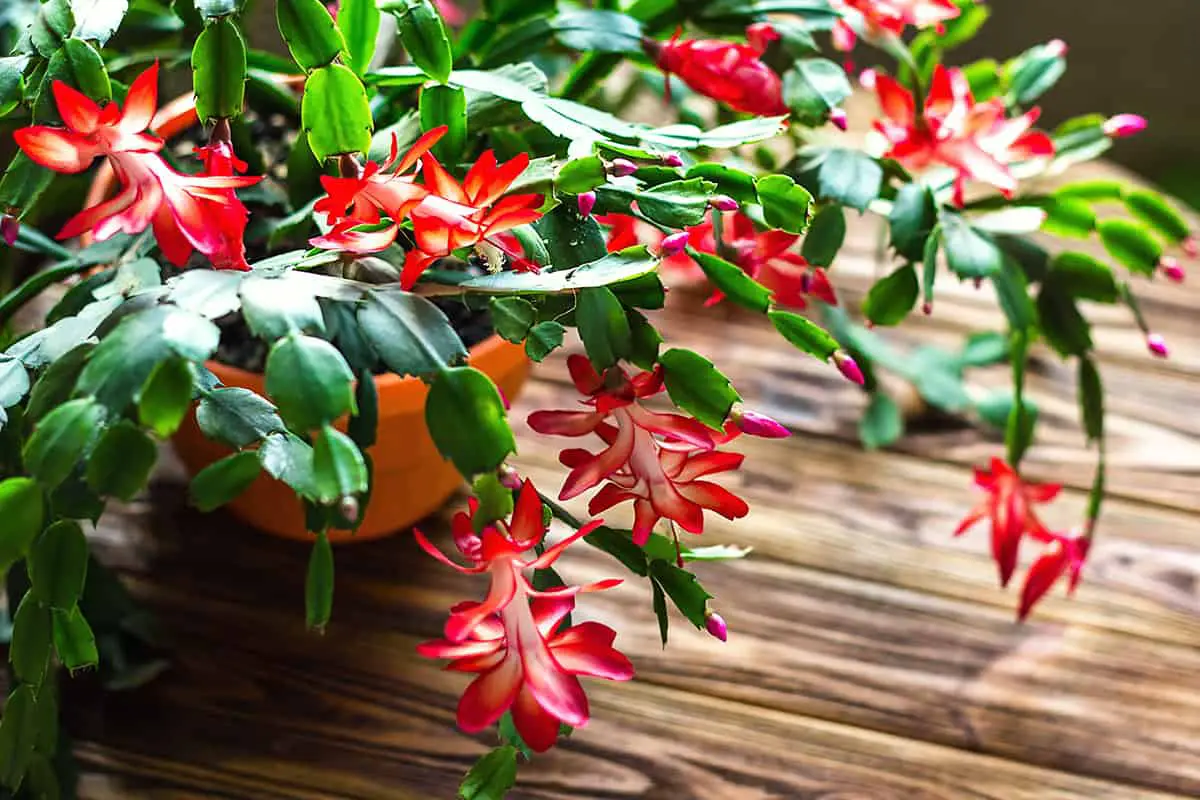
The Christmas cactus comes from the rainforests of Brazil, where it grows on tree branches and mossy rocks in the coastal mountains. Shade, frequent rain and humid air shape everything about its care.
At home, bright, indirect light, regular water and moderate humidity mimic that forest home. A pebble tray or a humidifier helps in dry winter rooms.
Feed during spring and summer, and stop once buds form in fall. Prune after flowering for bushier growth. For new plants, let cuttings of two or three segments dry for a day or two, then set them in moist, clean potting mix, where they root with no hormone needed.
Know Your Holiday Cactus Type
Three holiday cacti are sold under similar names, and each blooms at a different time.
Christmas cactus (Schlumbergera × buckleyi) has flat, segmented stems with smooth, rounded scallops along the edges. Its flowers in pink, red, white and purple hang down from the stem tips and bloom in December.
The Thanksgiving cactus (Schlumbergera truncata) has pointed, claw-like teeth along its stem segments. Its flowers, in pink, red, white, yellow, orange and purple, are held more horizontally and open about a month earlier. Most plants sold as Christmas cacti are actually Thanksgiving cacti.
The Easter cactus (Schlumbergera gaertneri, formerly Rhipsalidopsis) has rounder segments with soft bristles at the tips. Its star-shaped flowers in red, pink, peach and white appear in spring.
Christmas Or Thanksgiving Cactus?
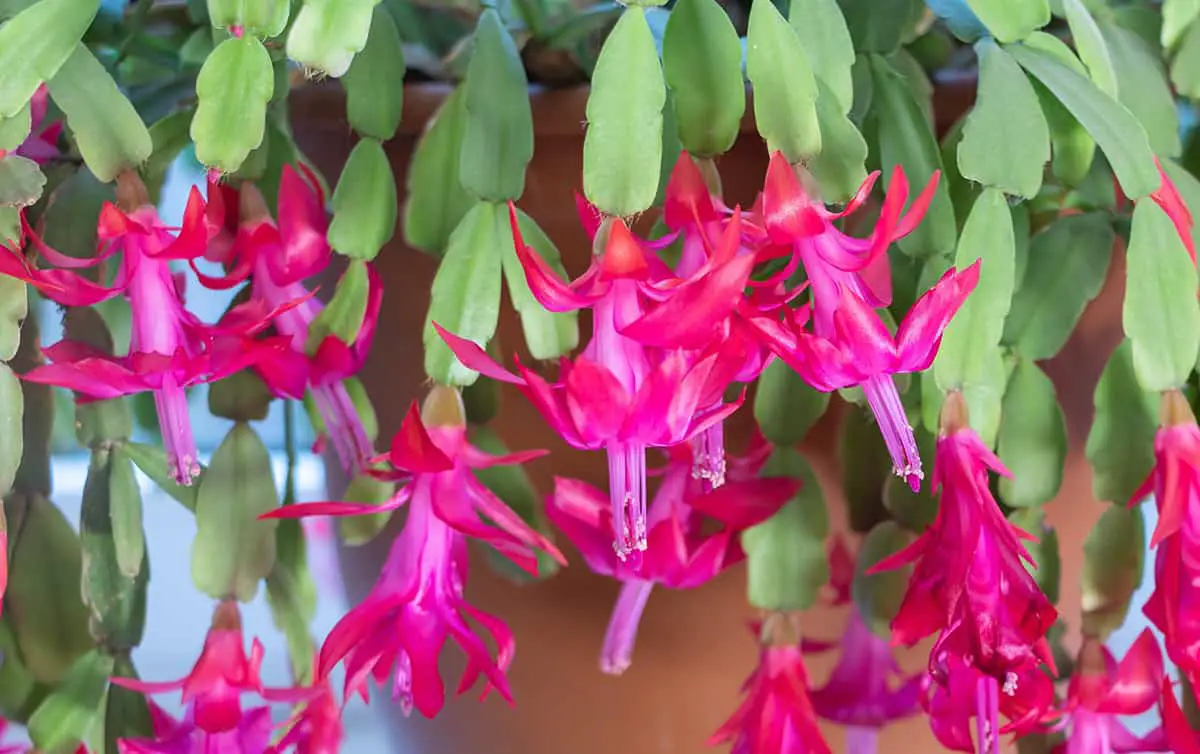
The leaves are the quickest clue. Christmas cacti have rounded, scalloped margins on each stem segment, and Thanksgiving cacti have two to four sharp points along the edges.
Bloom time is the other clue. Thanksgiving cacti flower in late fall, and Christmas cacti start about a month later. The Easter cactus waits until late winter or spring to set buds.
Air Moisture Keeps It Happy
Moderate humidity, around 50 to 60 percent, is right for this forest plant. Very dry air leads to bud drop and shriveled stem segments, especially in winter when heating dries indoor air.
A humidifier is the easiest fix. A pebble tray helps, too. Fill a shallow dish with pebbles, add water just below the top of the stones and set the pot on top, with the base clear of the water.
Grouping plants together also raises the humidity around them.
No Need To Repot Often
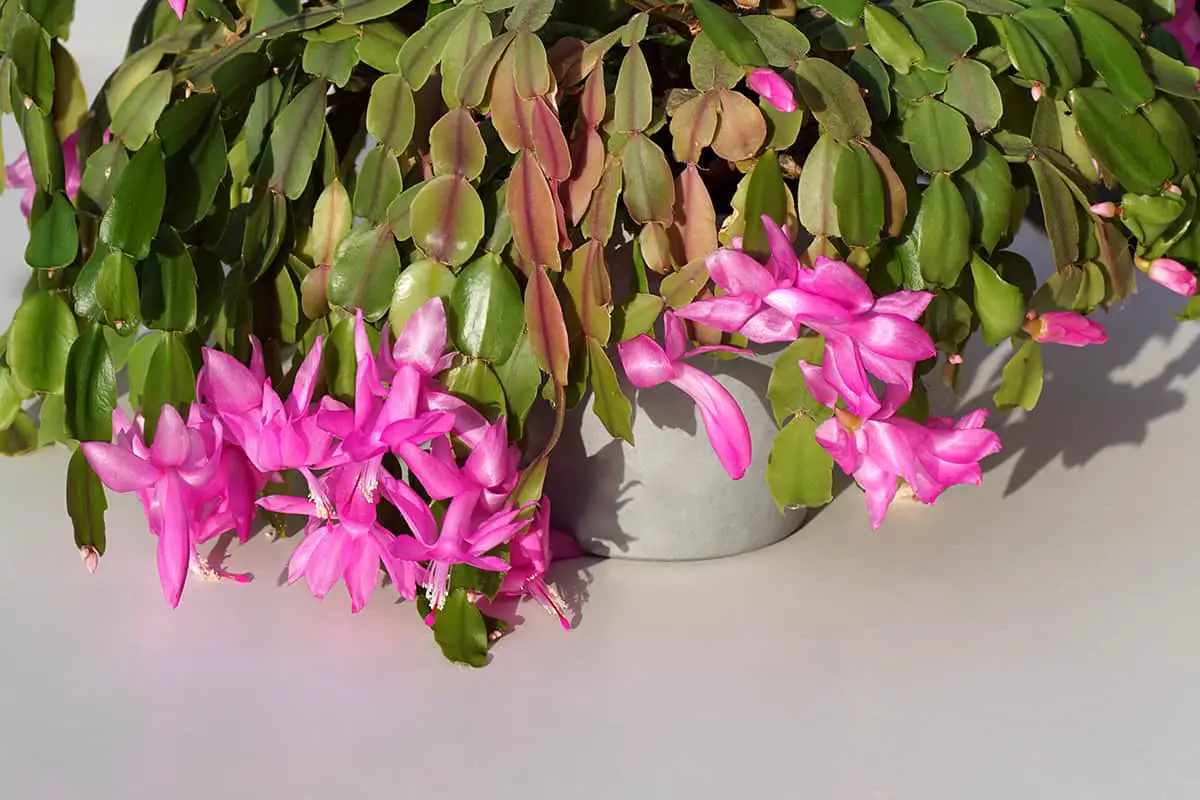
Christmas cacti bloom best when slightly pot-bound, and they need repotting only every three to four years.
Use a well-draining potting mix, such as an all-purpose mix blended with perlite or orchid bark. A gritty desert cactus mix dries too fast for this tropical plant. Choose a pot with drainage holes, since soggy roots rot quickly.
Repot in spring, after flowering, and move up just one pot size. The plant has the whole growing season to settle in before next year’s buds form.
Cold Nights Trigger Flowering
Christmas cacti set flower buds in response to cool temperatures and long nights. In fall, nights of 50 to 55°F trigger buds regardless of day length.
At 60 to 65°F, they need long nights instead. As short-day plants, they require about 12 to 14 hours of uninterrupted darkness each night for about 6 weeks. Starting in late September or early October times the flowers for the holidays.
Even brief light from a lamp at night breaks the cycle. A spare room, a closet for the night hours or a cool, unlit sunporch handles the job.
Fertilization Is Key For Growth And Blooms
Regular feeding during the growing season builds strong stems that support plenty of flowers.
Use a balanced houseplant fertilizer at half strength once a month, between spring and late summer. Stop feeding in early fall, when the plant shifts its energy toward setting buds. A bloom-boosting fertilizer with extra potassium in late summer helps, though a balanced feed is enough for most plants.
Outdoor Time Benefits Your Cactus
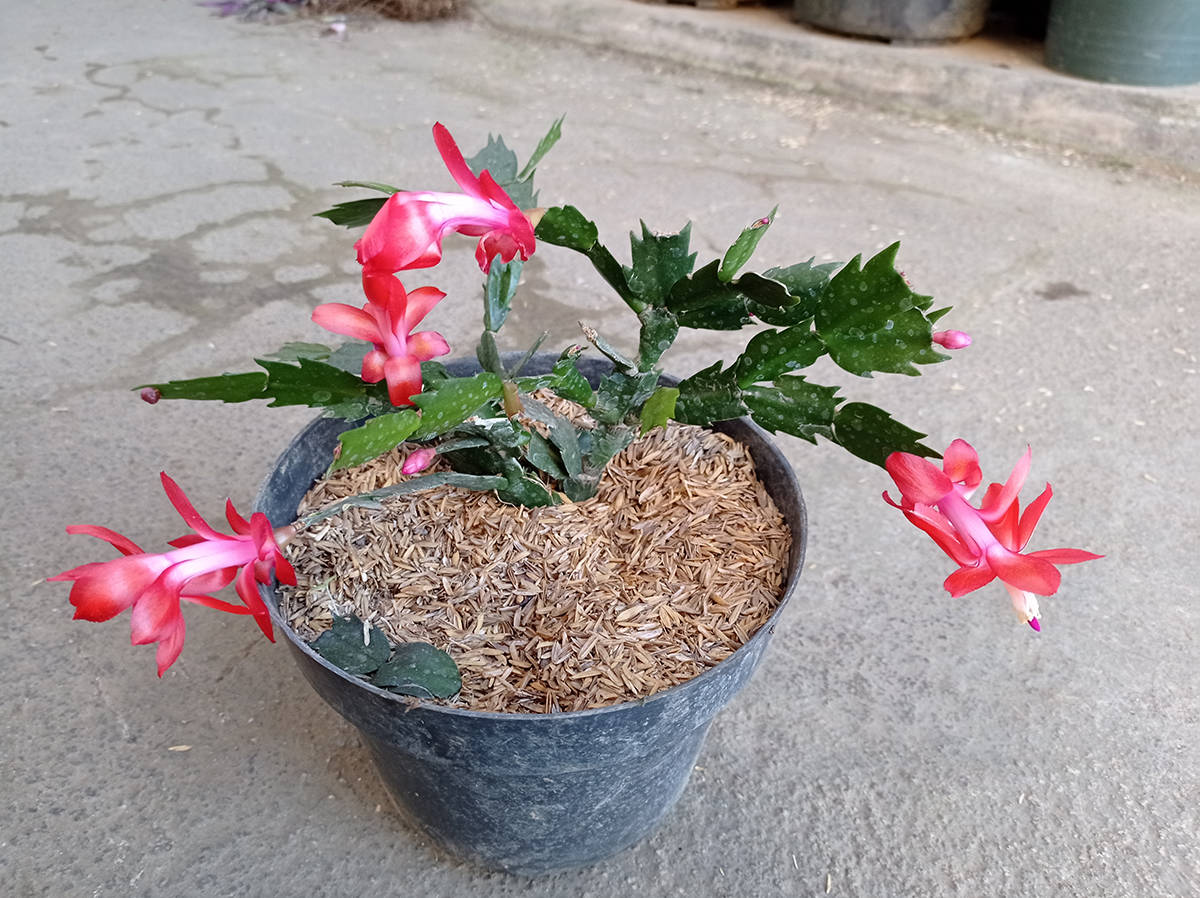
A summer outdoors produces sturdier growth and more buds. Choose a spot in bright shade, such as under a tree or on a covered porch, since direct afternoon sun bleaches and burns the stems.
Move the plant out gradually once nights hold above 50°F, and start in deep shade for about a week. Cool fall nights outdoors help trigger buds, and the plant comes back inside before temperatures drop below about 45°F.
Be Gentle With Its Leaves
The flat, segmented stems break easily at the joints, especially on heavy, older plants.
Handle the plant as little as possible, and support the pot from below when moving it. Moving a plant with buds also causes bud drop, which makes a permanent spot the best choice once buds appear.
Broken segments have a second use. Let them dry for a day, then root them in moist potting mix for new plants.
Safe Around Pets
The Christmas cactus is safe for cats and dogs, per the University of New Hampshire Extension. A pet that nibbles a lot may get a mild upset stomach from the plant fiber.
A high shelf or hanging basket protects the plant from curious paws and prevents it from being knocked over.
Long Lifespan
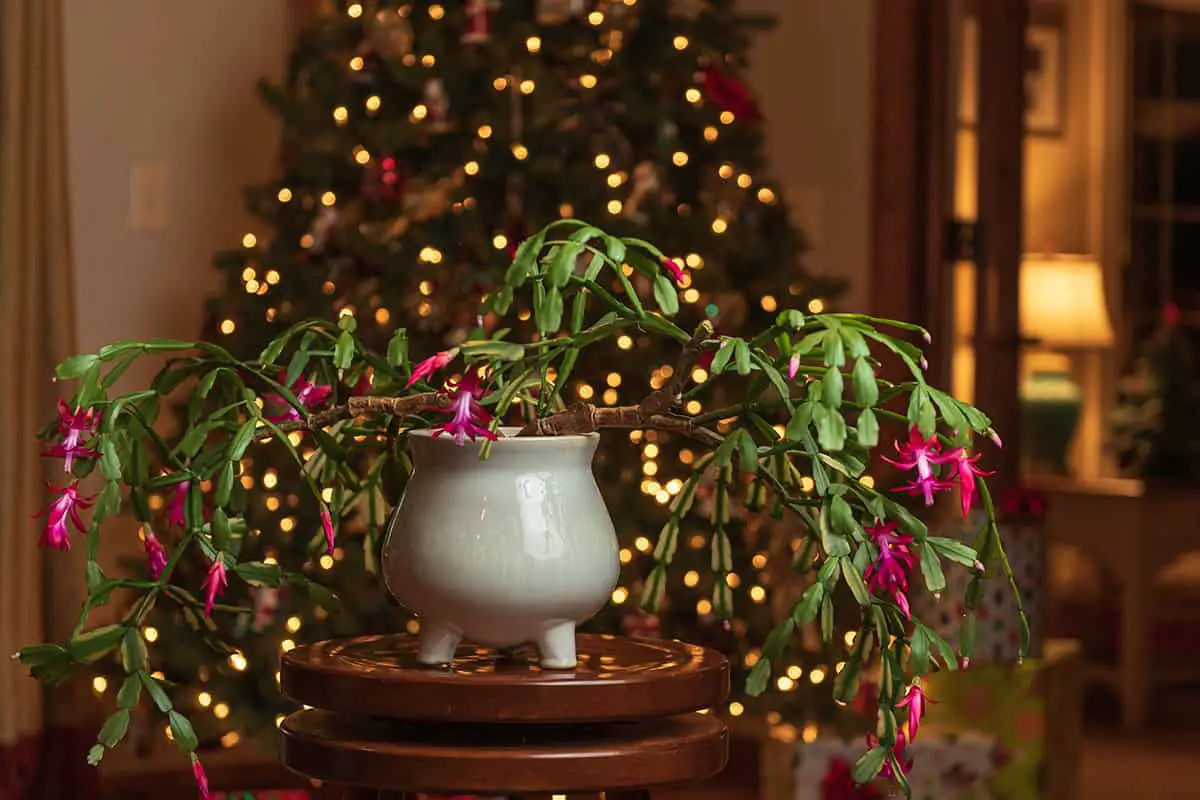
Christmas cacti routinely live 20 to 30 years, and certain family heirloom plants have passed down through generations for more than 100 years.
Their longevity depends on moderate watering, steady humidity and bright, indirect light. Occasional repotting, fresh soil and a light pruning after flowering rejuvenate older plants and support decades of blooms.
Less Water In Winter
Christmas cacti need less water in winter, especially after flowering, when they rest for a few weeks.
As a forest plant, it dislikes long droughts, and it’s equally sensitive to soggy soil. Water thoroughly when the top inch of soil is dry, and let the excess drain away completely.
During the rest period, water only when the soil is dry an inch or two down. Resume regular watering and monthly feeding in spring, through late summer.