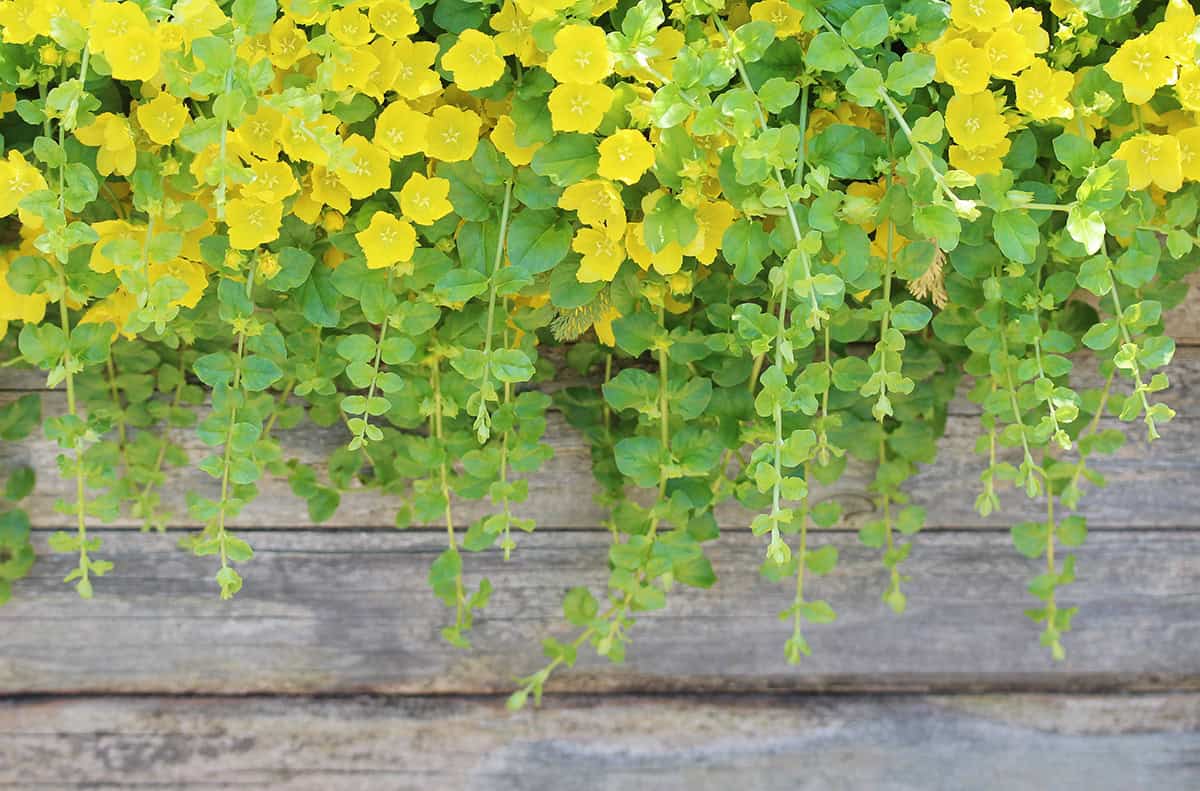
Creeping Jenny earns the nickname moneywort from its round leaves, which line the stems like rows of small coins.
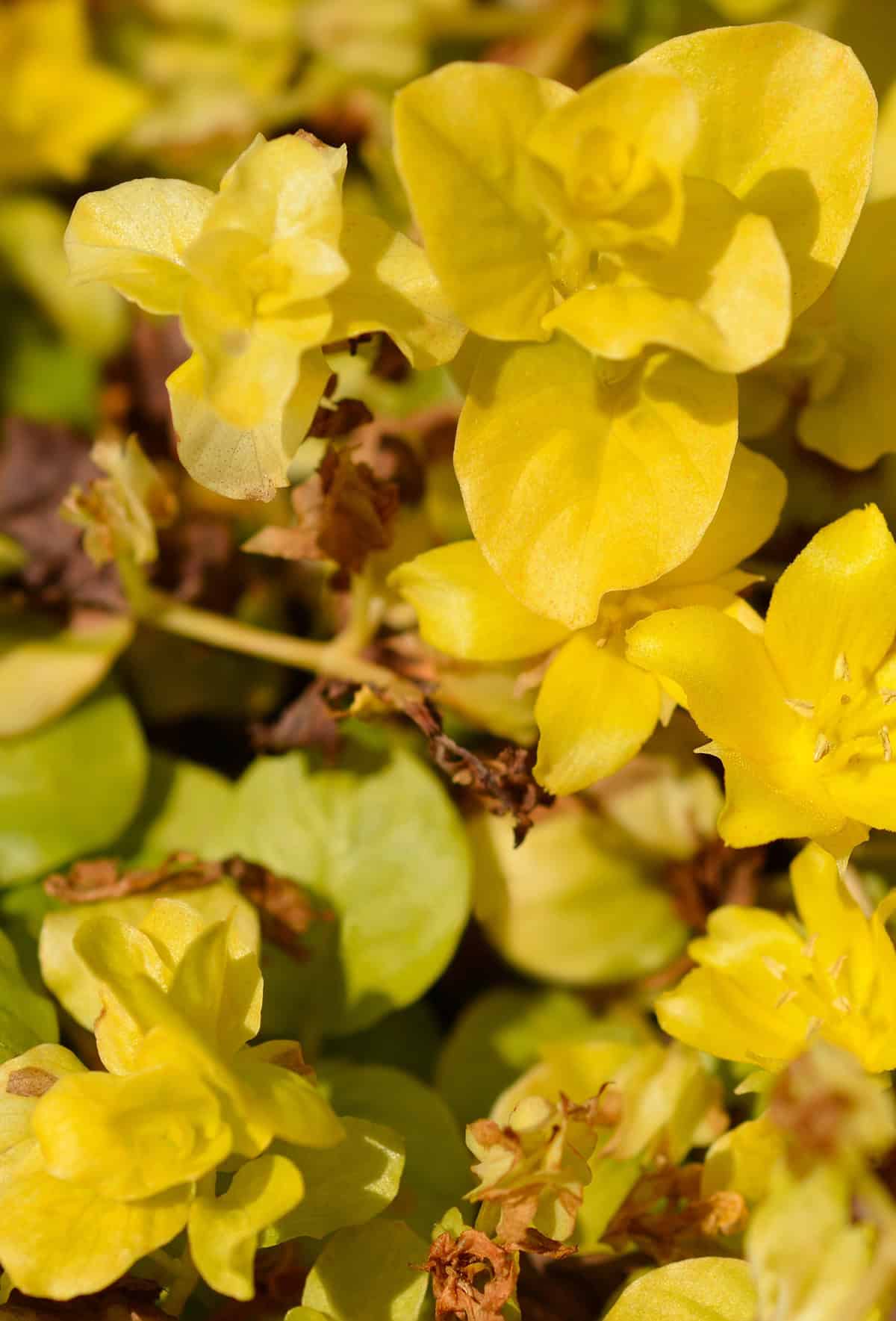
The stems hug the ground and root wherever they touch soil, which lets a single plant form a bright mat in a hurry. Yellow, cup-shaped flowers appear in early summer, though most gardeners grow it for the leaves.
That fast spread is also its biggest drawback, and the pruning notes explain how to hold the edges in check.
Table of Contents
- Light
- Soil
- Water
- Temperature And Humidity
- Fertilizer
- Propagation
- Pruning
- Potting And Repotting
- Common Problems & Troubleshooting
- Plant Varieties
- Frequently Asked Questions
- What are the ideal conditions for growing Creeping Jenny indoors?
- What steps should I take to successfully grow Creeping Jenny in pots?
- How do I protect Creeping Jenny during the winter months?
- Can Creeping Jenny be propagated from seeds, and if so, how?
- Is Creeping Jenny invasive to other plants in the garden?
- Does Creeping Jenny exhibit perennial traits in various climates?
Light
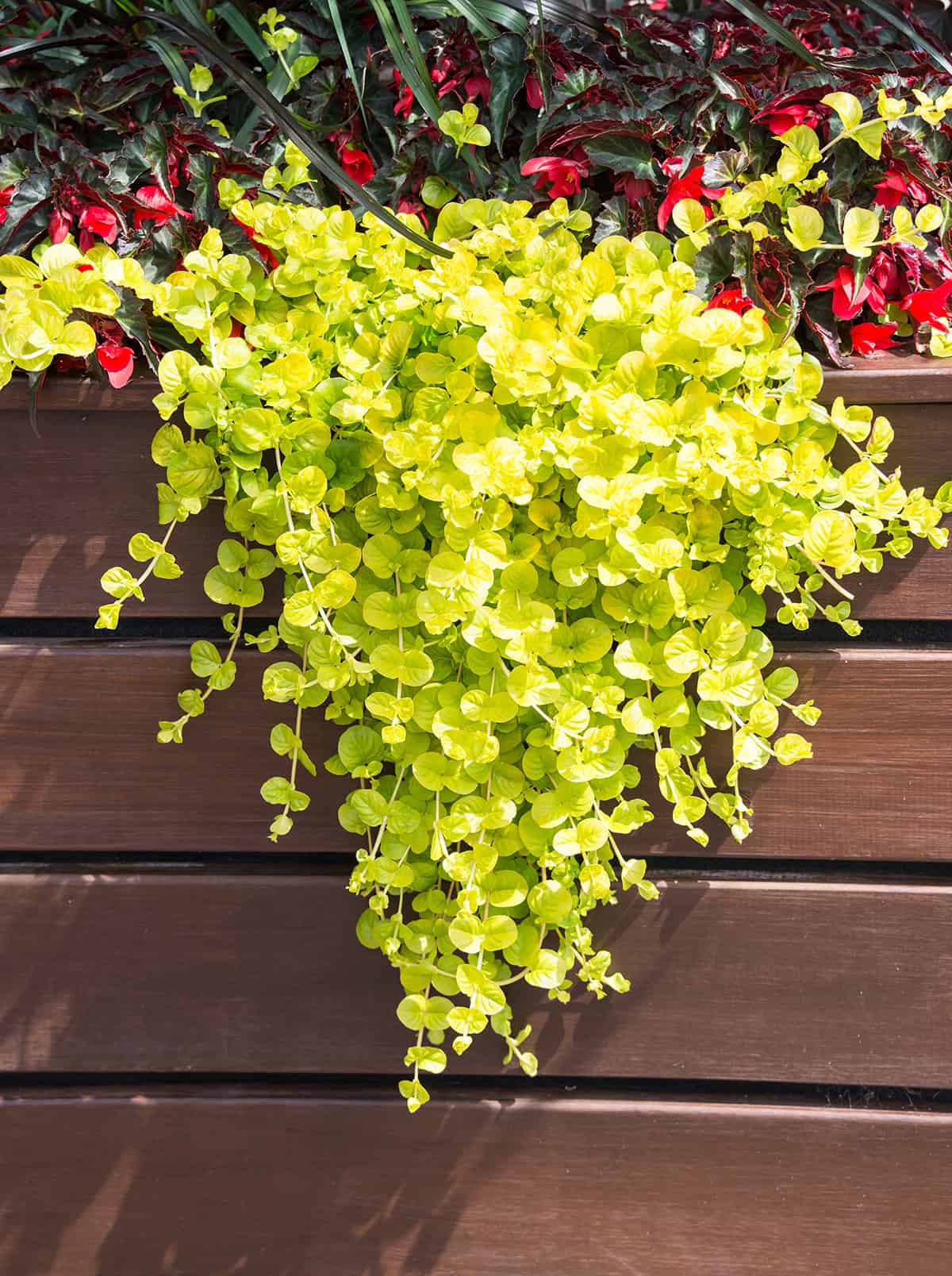
Creeping Jenny grows in full sun or partial shade, and the leaf color shifts with the amount of light.
Full sun produces the brightest lime and gold leaves, a big plus for color. Sunny spots dry the soil faster, so water more to prevent stress.
Partial shade produces softer green leaves with slightly less gold. Growth is still strong, with a looser, more relaxed habit.
Use creeping Jenny in sunny spots for bold color, or let it fill shady gaps under trees. Adjust watering to the heat and sun of each site.
Soil
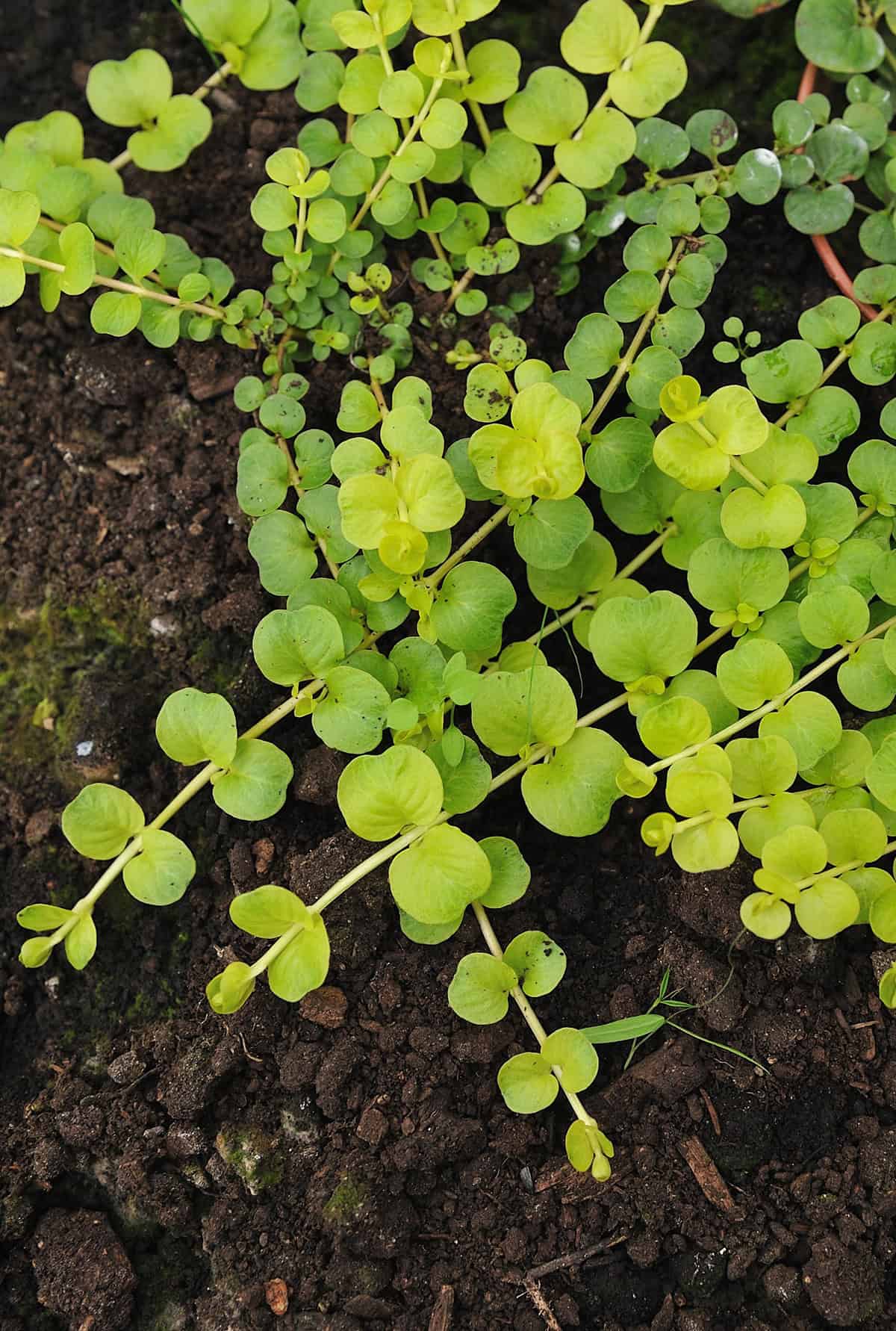
Creeping Jenny thrives in moist soil with good drainage. Soggy ground leads to root rot, and heavy, sticky soil slows growth.
Rich, organic soil is the best match. Compost improves both nutrients and drainage, and amended clay or loam grows better plants than unimproved ground.
The plant tolerates acidic to neutral pH. Compacted soil leads to slow growth and thin patches.
Roots form at the leaf nodes wherever stems touch soil. Loose, crumbly soil helps the stems take hold and spread.
Steady dampness matters most. Dry soil causes crispy edges and patchy mats, and evenly moist soil produces a lush ground cover.
Water
Creeping Jenny prefers soil that is consistently moist and suffers when it dries out.
Water in-ground plants regularly, especially during hot spells, to prevent wilting.
Containers dry out faster and need extra attention. Push a finger into the top inch, and water when it is dry.
The plant also grows beside ponds and streams and tolerates shallow standing water up to a couple of inches deep.
Soil that is soggy for weeks invites root rot, though overwatering is rarely a problem otherwise. Good drainage and steady moisture together are the goal.
Water on a steady schedule. Fast spring and summer growth needs more water, and cooler months need less.
Temperature And Humidity
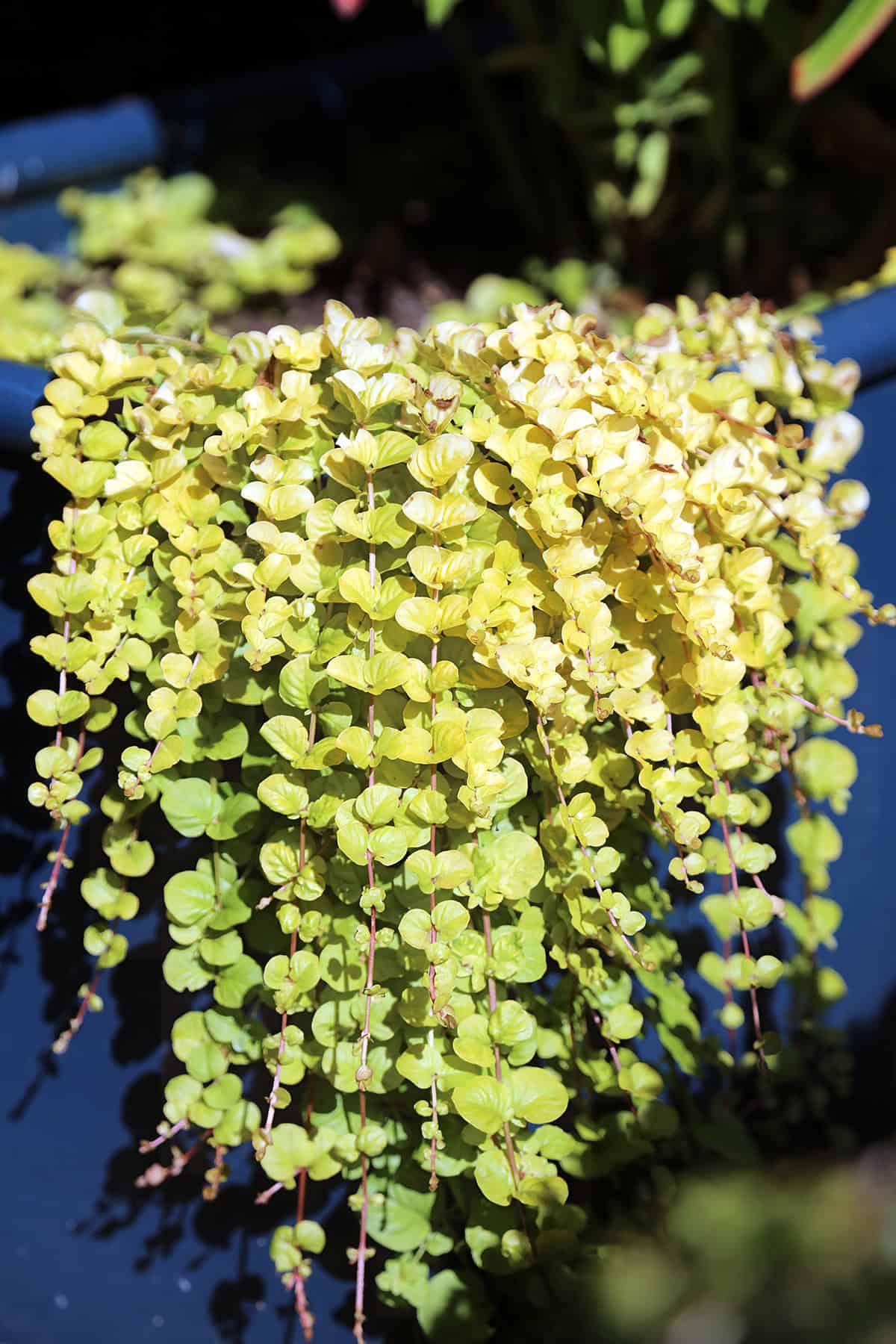
Creeping Jenny handles a wide range of climates and is hardy in USDA zones 3 to 9.
Winter frost rarely bothers it. In very cold winters, the leaves die back while the roots survive.
Moderate temperatures are best. Hot, dry weather leaves the plant looking tired, and cool, damp conditions perk it up.
Humidity helps the foliage look lush, and dry air browns the leaf tips. Indoors, a pebble tray or humidifier helps.
Outside of extremely hot or dry regions, the plant needs few climate adjustments.
Fertilizer
Creeping Jenny needs little feeding. A balanced, slow-release fertilizer in early spring is plenty.
Plants in rich soil may need no fertilizer at all. Extra nitrogen leads to leggy growth and faster spreading.
Apply the recommended amount once in spring and water it in. Feed again only if yellow leaves or stunted growth appear.
A general-purpose fertilizer at the label rate corrects those problems. Extra fertilizer adds risk with no benefit.
A thin layer of compost is a gentle alternative. Water it in to improve nutrients and soil quality.
Propagation
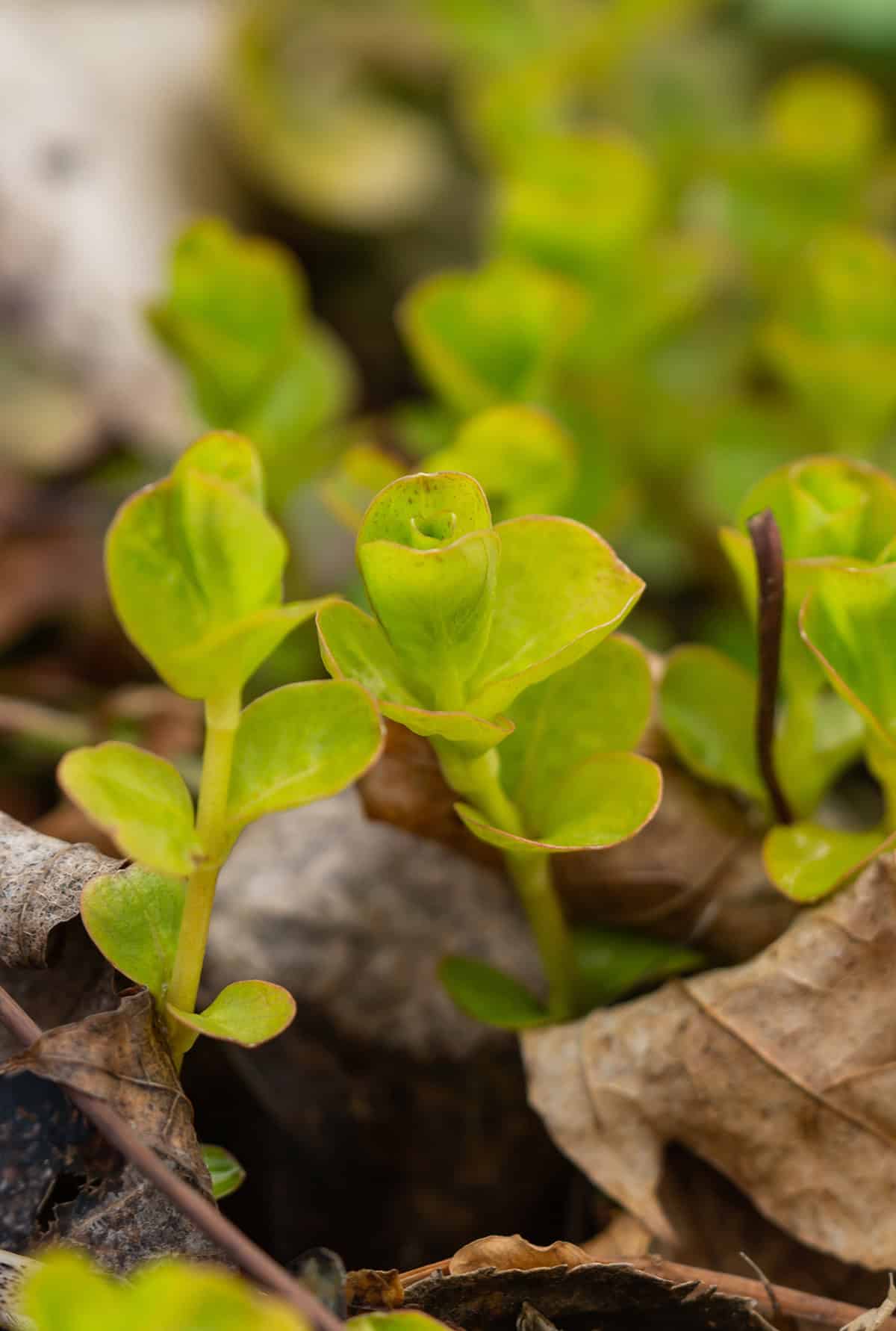
Creeping Jenny multiplies easily by division or cuttings.
The simplest method is division. Dig rooted sections from the edges of the mat, split them and replant, and nearly every piece takes.
Stem cuttings root readily as well. Snip healthy stems and insert them in moist soil, and roots form at the nodes within a few weeks.
The plant seldom sets viable seed, so division and cuttings are the practical choices.
Water new plantings regularly until roots settle in and the young plants take off.
Pruning
Regular trimming prevents creeping Jenny from running wild. The plant grows fast and spreads aggressively, so trim the edges regularly to hold it in bounds.
Use sharp scissors or shears for neat cuts, and snip back stems that wander into unwanted areas. Light trims produce a tidy, low mat.
Remove dead or damaged leaves as you see them. Throw trimmings in the trash, since pieces left on the ground root and spread.
Cutting back old stems encourages new shoots on a sparse planting. A trim after flowering helps the plant fill out and hold its shape, and creeping Jenny recovers quickly.
Trim most during the spring and summer growing season. Winter growth is slow and needs little attention.
Potting And Repotting
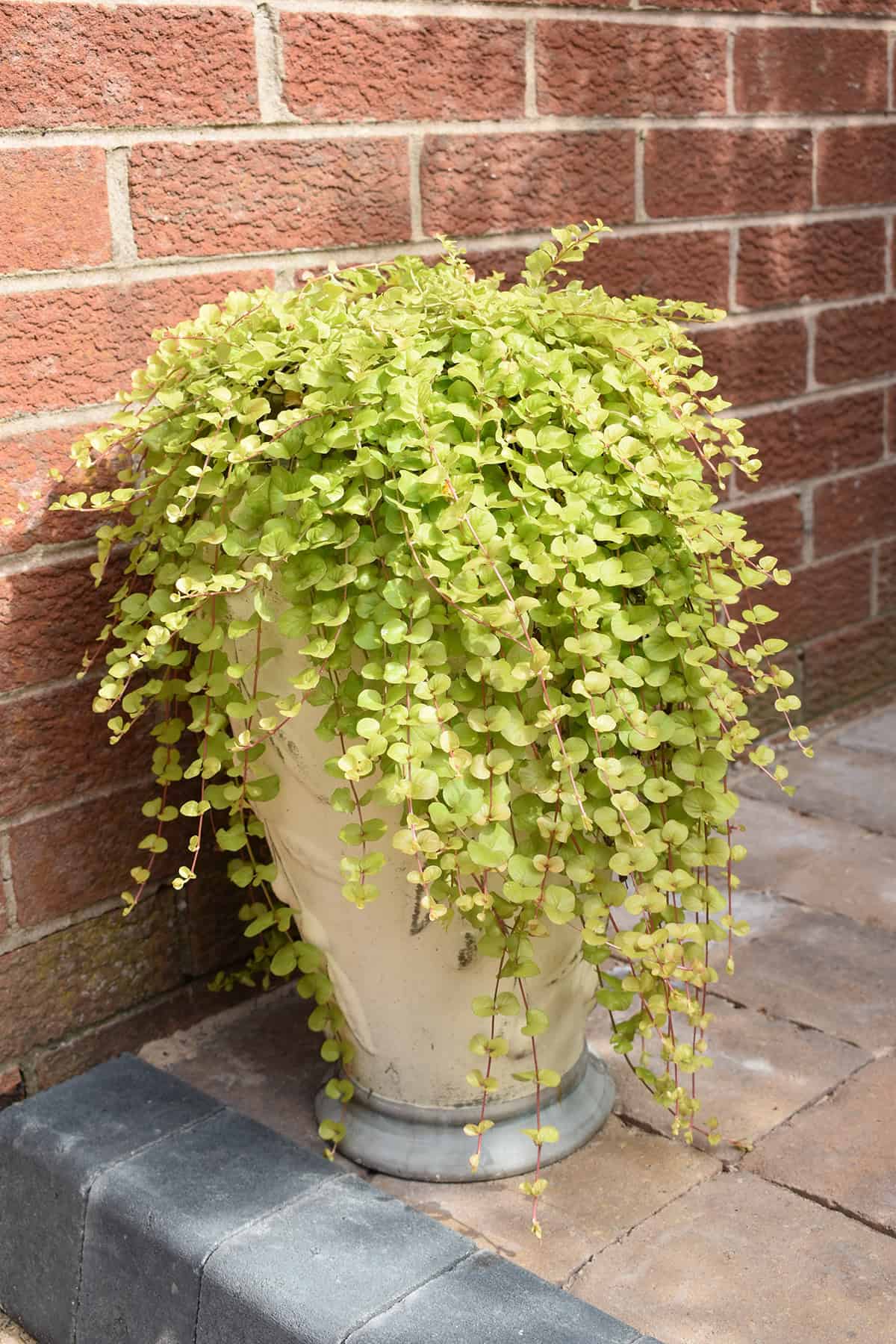
Choose a container with drainage holes, because creeping Jenny hates sitting in water. Use a potting mix that drains well and holds a bit of moisture.
Plant root sections or small starts 4 to 6 inches apart. Water lightly after planting, and place the pot in morning sun or light shade.
Check the roots every couple of years. Roots poking out the bottom or a crowded pot mean it is time to repot. Lift the plant gently, separate dense roots and replant in fresh mix.
Water well after repotting to help the plant recover.
Common Problems & Troubleshooting
Creeping Jenny spreads farther than most gardeners want, and it is listed as invasive in parts of the United States. Trim the borders regularly and avoid planting it near wetlands or natural areas.
Yellow or brown leaves point to watering trouble, from too much or too little. Aim for moist soil that is never soggy.
Slugs and snails chew holes in the leaves and leave slime trails. Barriers or hand-picking control them.
Soil that is wet for too long leads to root rot, so plant in a spot that drains well.
Weak, pale plants in deep shade need more light, since partial sun produces the best color.
Mold or mildew appears in crowded, wet mats. Remove affected leaves and thin the plants for more air.
Weeds poke up through young mats. Pull them by hand, since an established mat crowds out most weeds on its own.
Plant Varieties
Creeping Jenny comes in green and golden forms.
Lysimachia nummularia ‘Aurea’, also called golden creeping Jenny, is the most popular choice. Its yellow-green foliage stands out against darker plants.
The species, Lysimachia nummularia, has bright green leaves and goes by the name moneywort. It forms a solid green carpet.
Creeping Jenny gets confused with field bindweed, though the two are unrelated. Creeping Jenny belongs to the primrose family, Primulaceae, and bindweed to the morning glory family, Convolvulaceae.
Both forms need the same conditions. Plant them in sun or partial shade.
Garden centers also sell creeping Jenny as a spiller for containers, where its trailing stems drape over baskets and pots.
Frequently Asked Questions
Indoor growing, pots, winter care and its spreading habit raise the most questions about creeping Jenny.
What are the ideal conditions for growing Creeping Jenny indoors?
Indoors, bright, indirect light is best, along with moderate humidity. Water when the surface is dry, and avoid soggy soil, which causes root rot.
What steps should I take to successfully grow Creeping Jenny in pots?
Choose a container with good drainage and a quality potting mix that holds a little moisture. Water when the top inch dries, and trim runners for a tidy shape.
How do I protect Creeping Jenny during the winter months?
Outdoors, mulch in late fall to protect the roots from cold snaps. Move potted plants somewhere sheltered before hard freezes.
Can Creeping Jenny be propagated from seeds, and if so, how?
Creeping Jenny rarely sets viable seed, so cuttings and division are the practical methods. Purchased seed, if available, goes into moist potting mix indoors in early spring and needs warmth and light moisture to sprout.
Is Creeping Jenny invasive to other plants in the garden?
Creeping Jenny spreads fast and crowds out other low-growing plants, and some states list it as invasive. Trim the runners regularly, and plant it in defined beds or containers to contain it.
Does Creeping Jenny exhibit perennial traits in various climates?
In USDA zones 3 to 9, creeping Jenny grows as a perennial. In mild climates it holds its leaves year-round, while in colder regions it dies back and resprouts from the roots in spring.