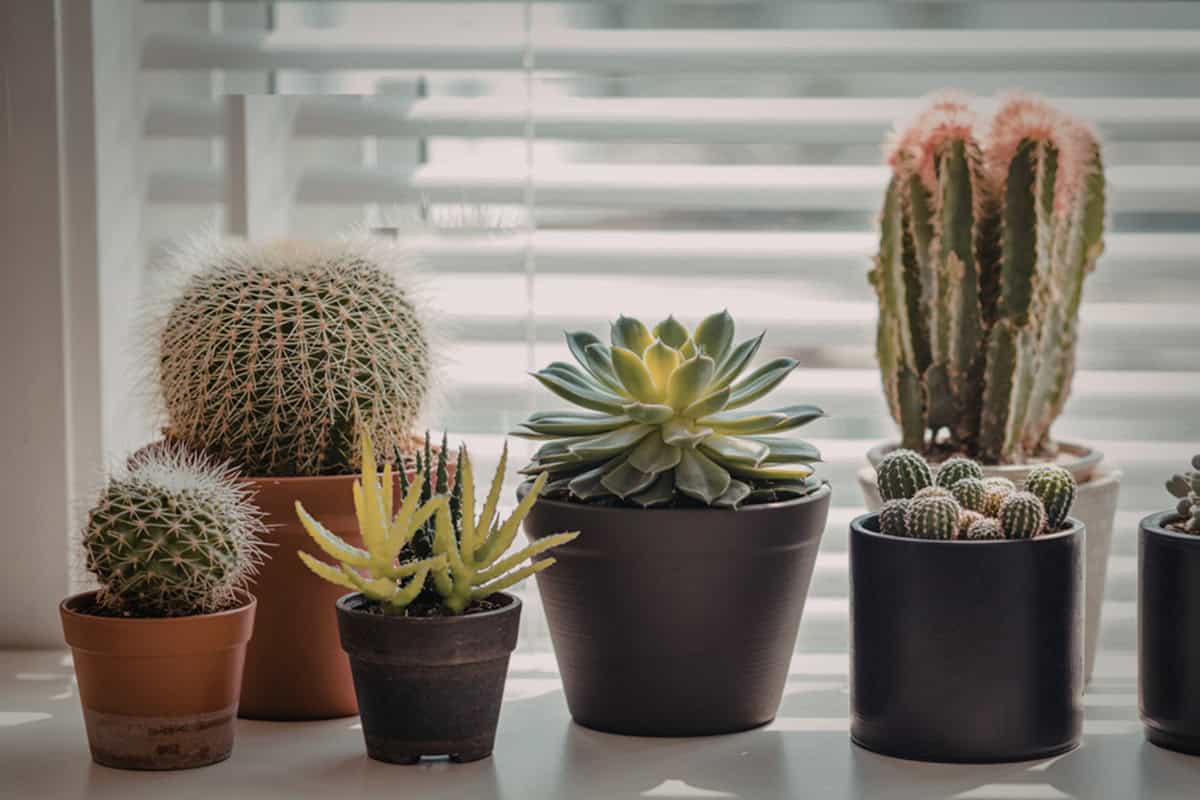
A north-facing window rules out most echeverias, though zebra haworthia, gasteria and snake plants take it in stride. These tougher succulents evolved in the shade of rocks and shrubs, and the softer light of an apartment barely slows them down.
Which of these 25 will be happiest on that north windowsill?
Table of Contents
- 25 Common Low-Light Succulents
- Haworthia fasciata (Zebra Plant)
- Sansevieria trifasciata (Snake Plant)
- Gasteria
- Aloe vera
- Sedum morganianum (Burro’s Tail)
- Crassula ovata (Jade Plant)
- Echeveria ‘Lola’
- Kalanchoe tomentosa (Panda Plant)
- Hoya carnosa (Wax Plant)
- Peperomia graveolens (Ruby Glow)
- Euphorbia milii (Crown of Thorns)
- Senecio rowleyanus (String of Pearls)
- Senecio radicans (String of Bananas)
- Lithops (Living Stones)
- Stapelia gigantea (Carrion Flower)
- Graptoveria
- Adromischus cristatus (Crinkle-Leaf Plant)
- Portulacaria afra (Elephant Bush)
- Rhipsalis baccifera (Mistletoe Cactus)
- Euphorbia tirucalli (Pencil Cactus)
- Dischidia nummularia (Button Orchid)
- Sempervivum tectorum (Hens and Chicks)
- Kalanchoe blossfeldiana
- Othonna capensis (Little Pickles)
- Anacampseros rufescens
25 Common Low-Light Succulents
Plenty of succulents grow well away from direct sun. Haworthia, gasteria, snake plant, hoya and the jungle cacti are the true low-light champions, while rosette types such as echeveria and sempervivum need the brightest indoor spot available, or a grow light, to hold their shape.
Haworthia fasciata (Zebra Plant)
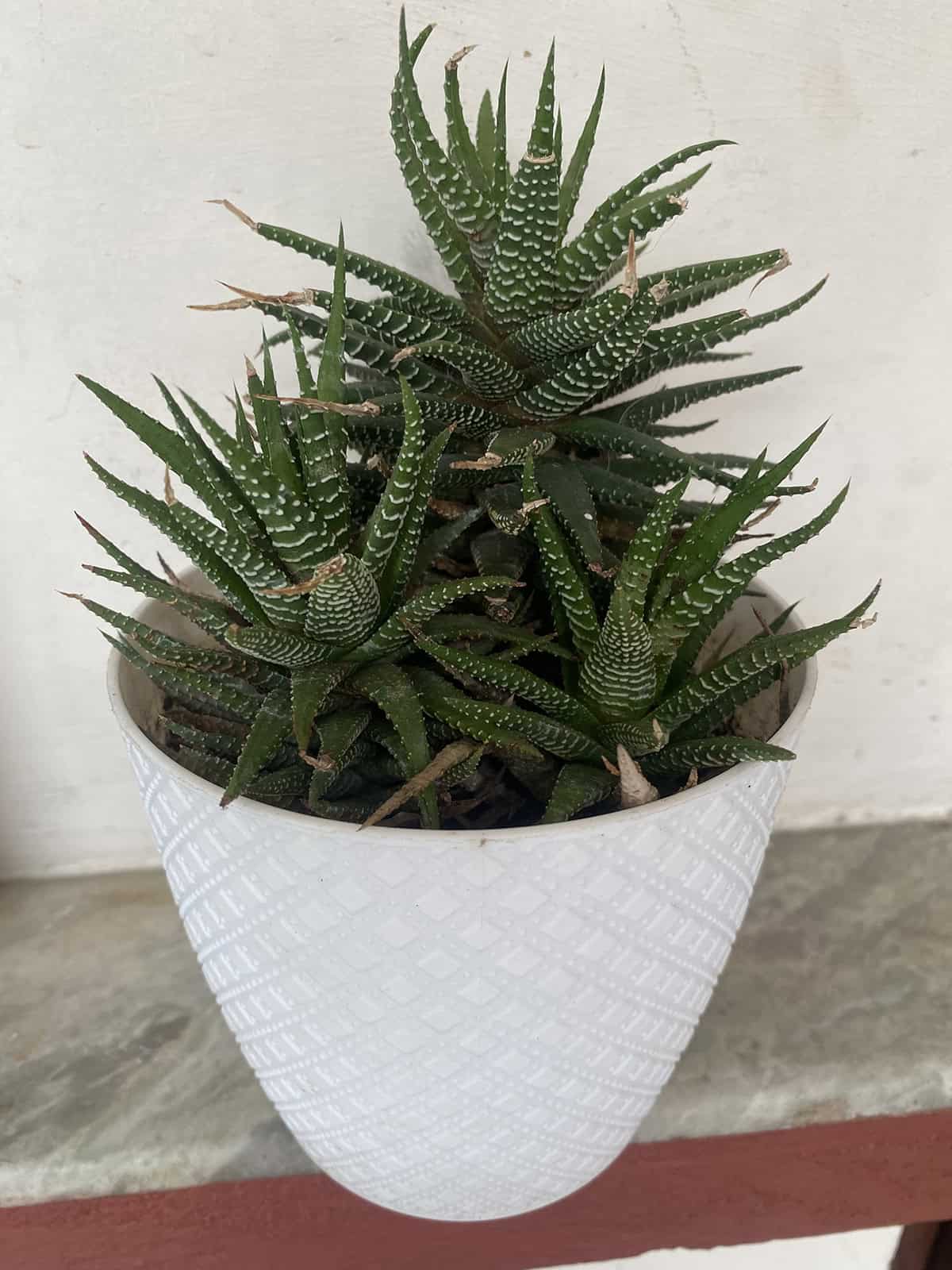
Bold white stripes across stiff, dark green leaves make Haworthia fasciata stand out on any shelf. Its small size fits a desk and handles moderate to low light well.
Let the mix dry out completely before watering, since wet roots rot quickly. Zebra plant grows slowly and rarely outgrows its pot. Use a gritty, fast-draining mix, and check older plants for mealybugs tucked between the leaves.
Sansevieria trifasciata (Snake Plant)
Snake plant thrives in dim corners and tolerates long stretches of neglect. Its tall, upright leaves, dark green with lighter bands, make it a classic for homes and offices.
Water only when the mix is completely dry, roughly every three to four weeks in winter. Dry indoor air causes it no trouble, and it grows faster and taller in brighter light when available.
Gasteria
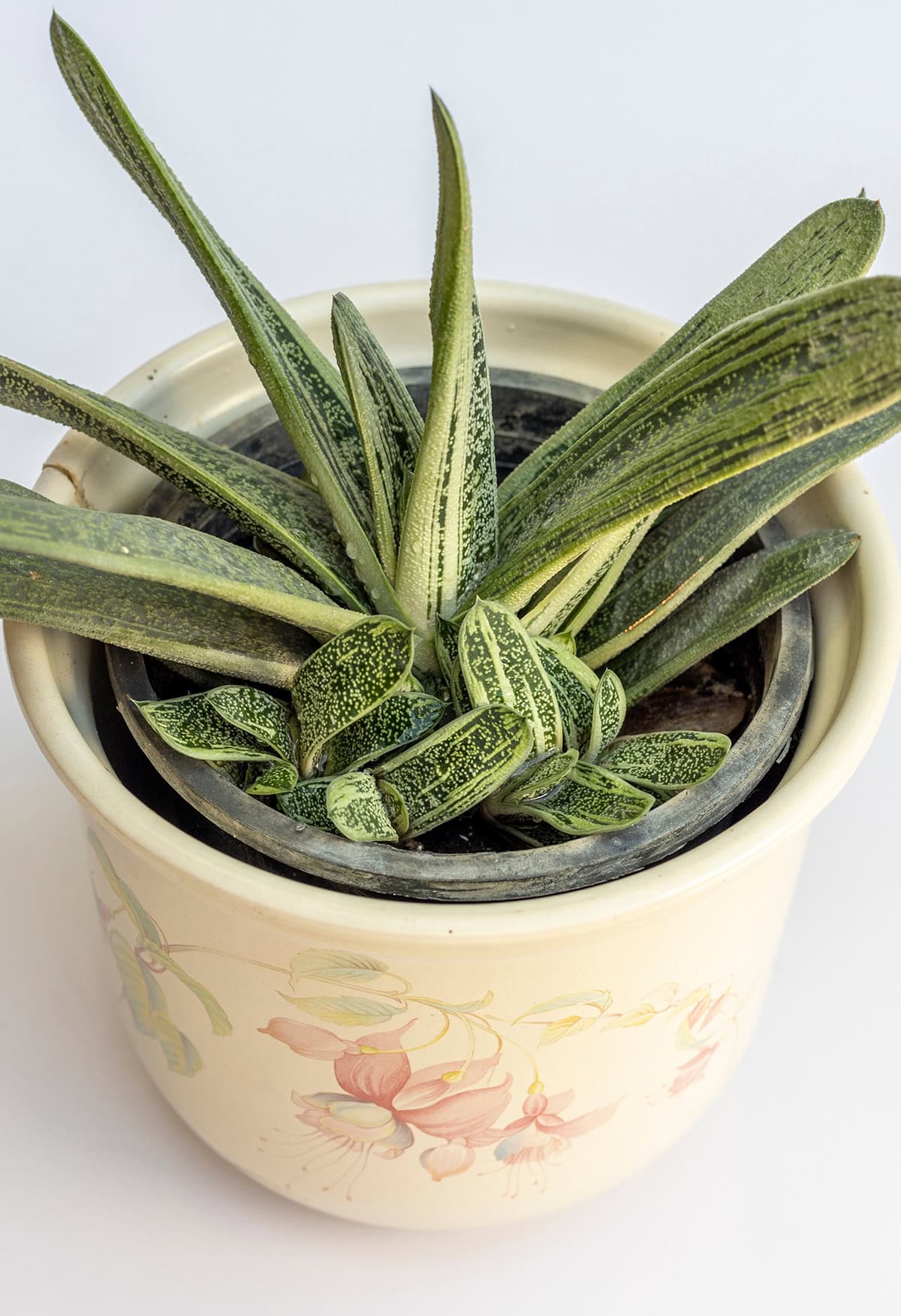
Thick, tongue-shaped leaves marked with spots or streaks make gasteria easy to recognize. Strong sun flushes the foliage red, so bright indirect or even fairly low light is best.
A sandy, well-draining mix and infrequent repotting are all it asks. Fertilize once or twice in summer at most. Gasteria is very forgiving for beginners, provided it never sits in soggy soil.
Aloe vera
Aloe vera handles filtered sun or bright shade. Its thick, fleshy leaves store plenty of water, which allows long gaps between waterings, and the gel inside is the familiar soother for minor burns.
It grows in a small pot, though a larger one allows more growth. In low light, aloe survives but stretches and flops, so an east window or a grow light produces a sturdier plant. Always use a fast-draining mix to prevent rot.
Sedum morganianum (Burro’s Tail)
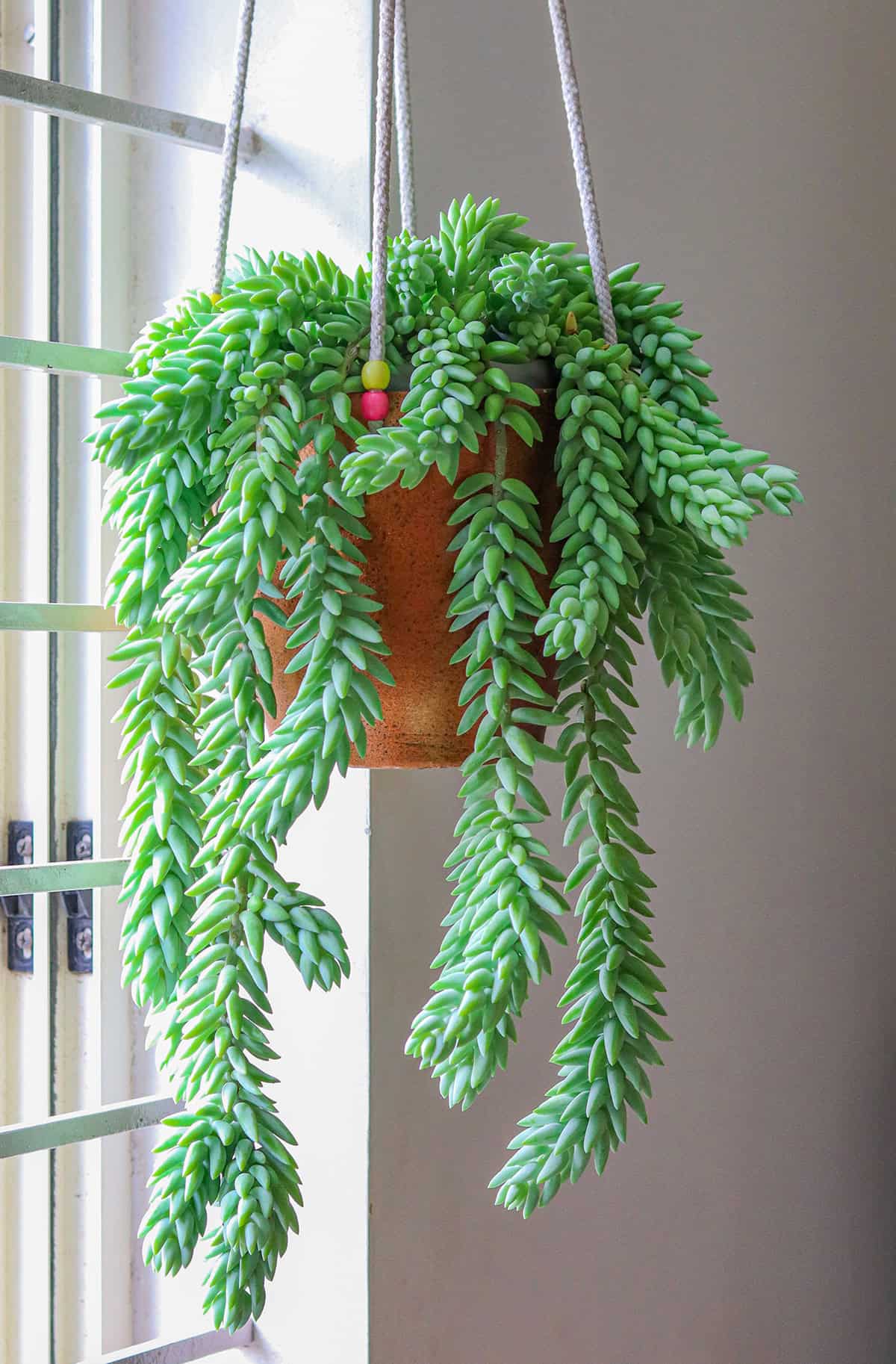
Long stems of plump, blue-green leaves spill over the pot edge in a soft cascade on burro’s tail. Bright, indirect light is best, and it tolerates less sun than many sedums.
Water sparingly, and hang the pot from a shelf or basket where the stems trail freely. The leaves drop at the slightest touch, so choose a spot away from foot traffic. Drainage holes are essential.
Crassula ovata (Jade Plant)
Jade plant has thick, glossy oval leaves on woody stems and the look of a miniature tree. It adapts to moderate indoor light, though growth is slow and leggy in deep shade.
Water sparingly, especially in winter. A jade plant lives for decades with basic care. Rotate the pot every few weeks for even growth. In many cultures, jade is a symbol of prosperity and good luck.
Echeveria ‘Lola’
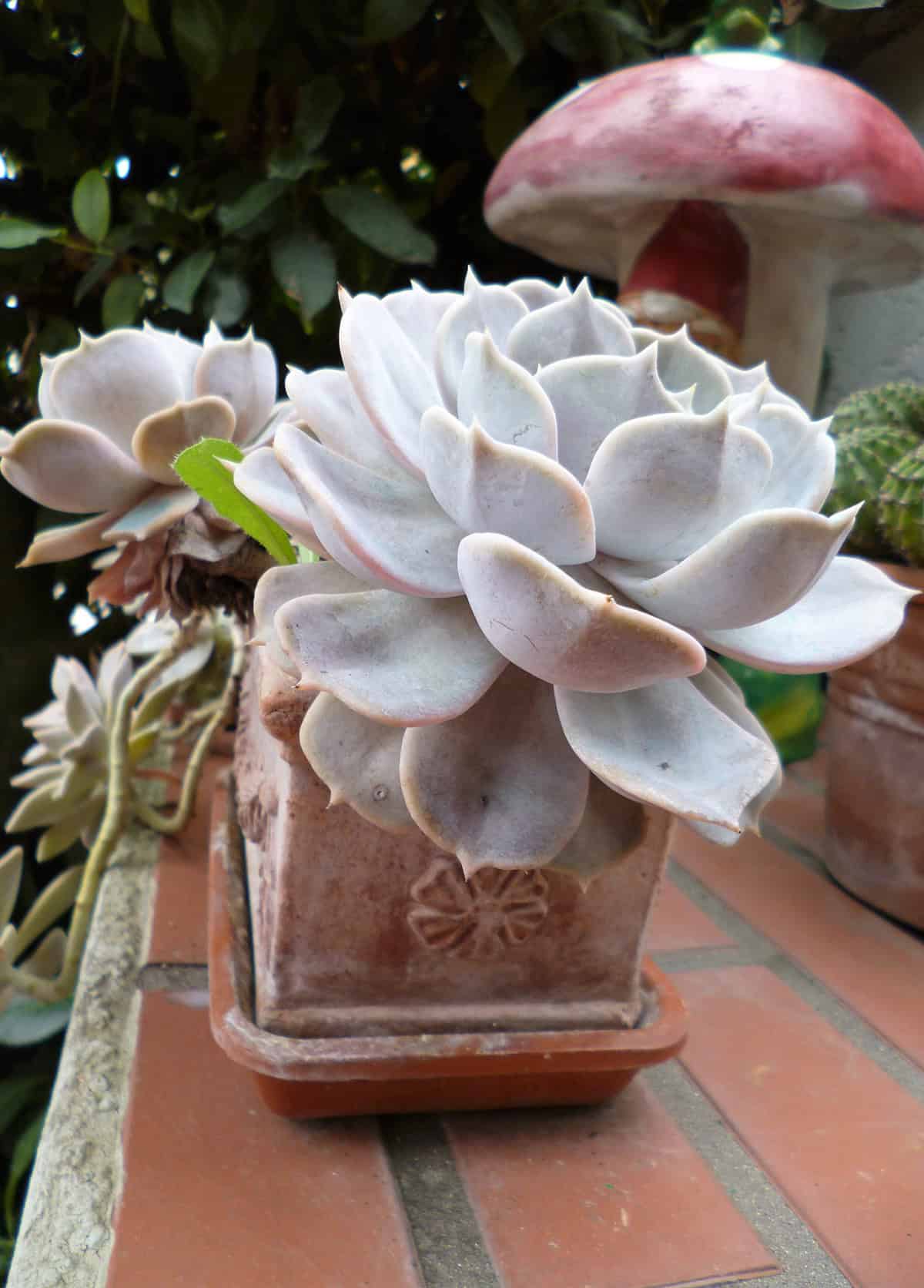
‘Lola’ forms silvery-lavender to pale green rosettes with a waxy, sculpted look. Of all the plants here, this one needs the most light, so place it in the brightest window available or under a grow light.
Low light causes the rosette to open up and stretch. It looks lovely in dish gardens and shallow trays. Let the mix dry completely between waterings, and watch for rot in humid rooms.
Kalanchoe tomentosa (Panda Plant)
Panda plant has velvety, gray-green leaves edged in rusty brown, soft to the touch and held upright. It copes well in moderate indoor light.
Sandy, fast-draining mix is best. The fuzzy leaves store water, which makes the plant tolerant of missed waterings. Leggy stems mean the plant is reaching for light, and trimming them back encourages fuller growth.
Hoya carnosa (Wax Plant)
Hoya carnosa grows thick, twining stems with glossy, waxy leaves, ideal for hanging baskets or high shelves. It grows patiently in moderate light and rewards good conditions with clusters of fragrant, star-shaped flowers.
Let the mix dry most of the way before watering. Growth slows in shade, though the plant holds up well, and bright, indirect light encourages flowering. Leave the old flower spurs in place, because new blooms form on them.
Peperomia graveolens (Ruby Glow)
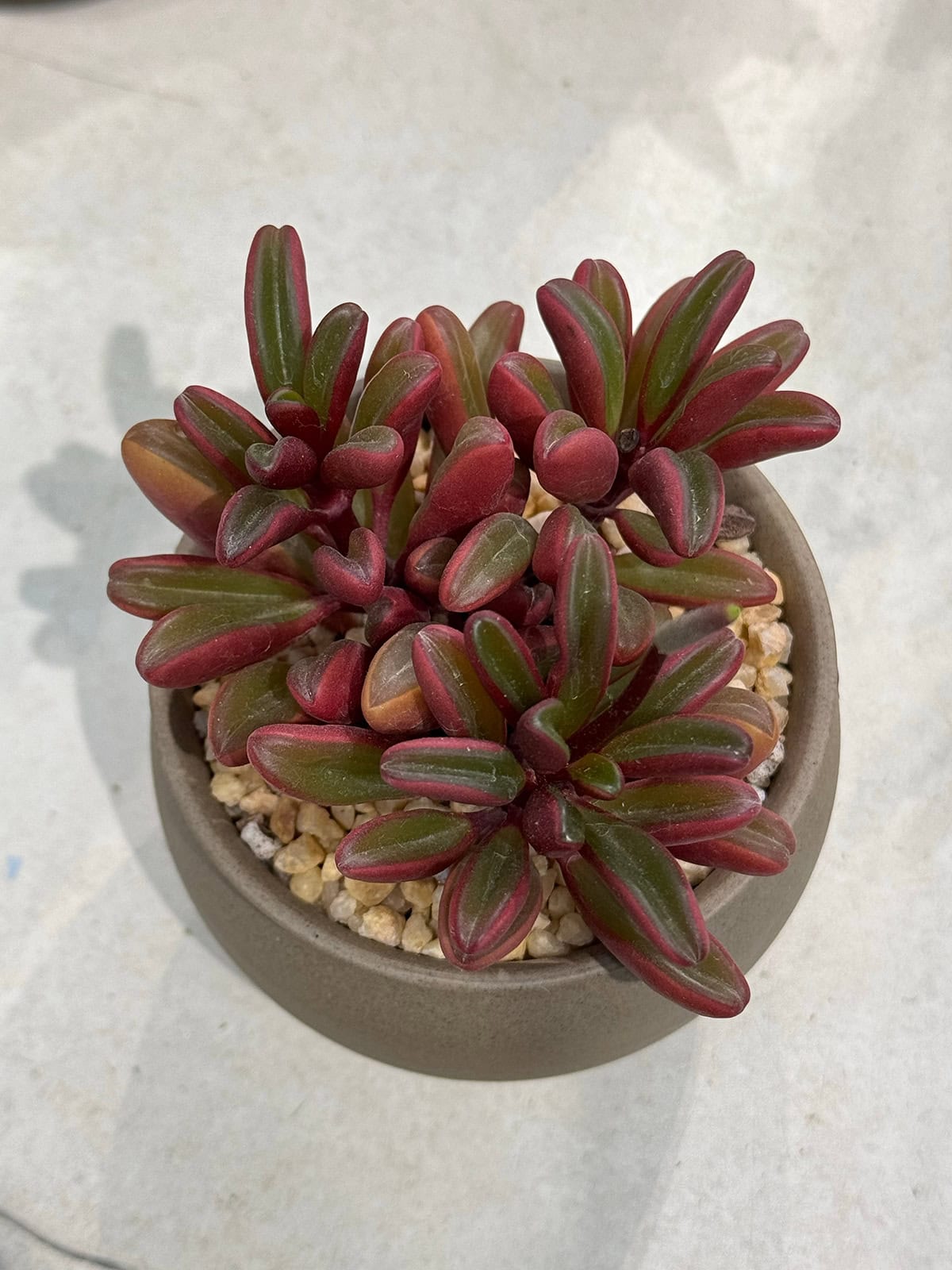
Ruby glow peperomia is compact, with canoe-shaped green leaves and ruby-red undersides. It is at home in low to moderate light.
Small pots and an airy, fast-draining mix are best. Let the mix dry between waterings. Pests rarely bother it, and dry indoor air is no problem.
Euphorbia milii (Crown of Thorns)
Crown of thorns has spiny stems, thick paddle-shaped leaves and small, bright flowers in red, pink or yellow. It tolerates moderate light, though it blooms best with a few hours of sun.
Wear gloves when handling it, because the milky sap irritates skin and eyes. Water sparingly in a loose, sandy mix, and trim dead stems for a tidy shape.
Senecio rowleyanus (String of Pearls)
String of pearls produces round, bead-like leaves on thin trailing stems, perfect for hanging pots in filtered light.
Water only when the mix is dry, since excess moisture rots the stems at the soil line. Stems root wherever they touch the mix, which fills out the pot over time. Trim long strands to encourage fuller growth.
Senecio radicans (String of Bananas)
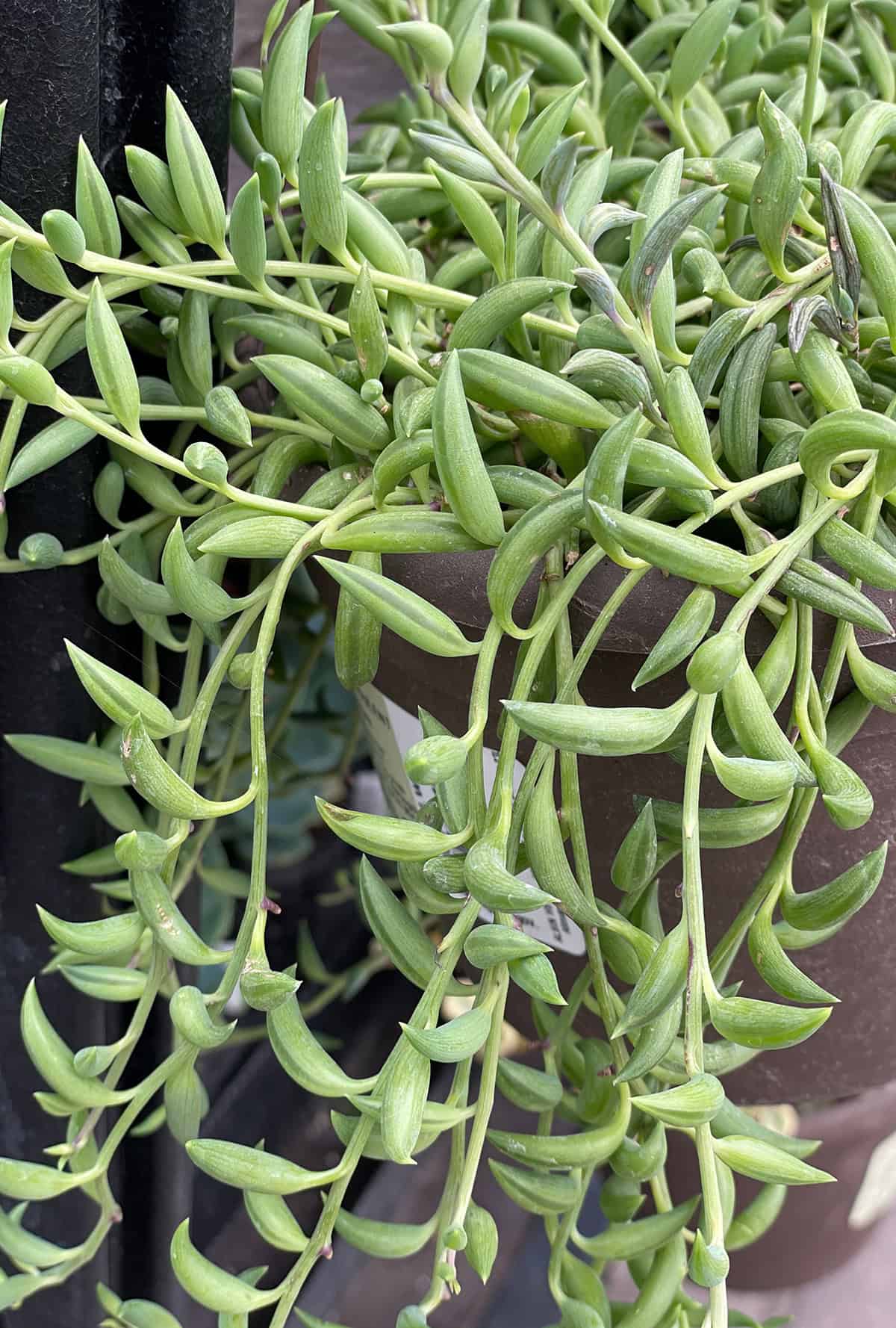
String of bananas sends out long, cascading vines with curved, banana-shaped leaves. It prefers bright rooms but handles indirect light better than string of pearls.
Let the mix dry almost completely before watering. Shallow pots and good drainage are key. A trim now and then holds the plant neat and encourages branching. It grows quickly in good conditions.
Lithops (Living Stones)
Lithops look like tiny split pebbles and blend in among stones. Despite their reputation, they need very bright light, and a sunny windowsill or grow light is essential indoors. In dim rooms they stretch and lose their pebble shape.
Their watering schedule follows their growth cycle. Most species grow in fall and spring, when they need a drink every couple of weeks, and rest in summer and through winter while new leaves form, when water should be withheld. Use a very gritty mix.
Stapelia gigantea (Carrion Flower)
Carrion flower is famous for its huge, star-shaped, hairy blooms and the strong scent that attracts flies. Its thick, cactus-like stems tolerate partial shade.
A wide, shallow pot is best. Let the mix dry out between waterings, and reduce watering further in winter. Place the plant outdoors or in a well-ventilated room during bloom if the odor is a concern.
Graptoveria
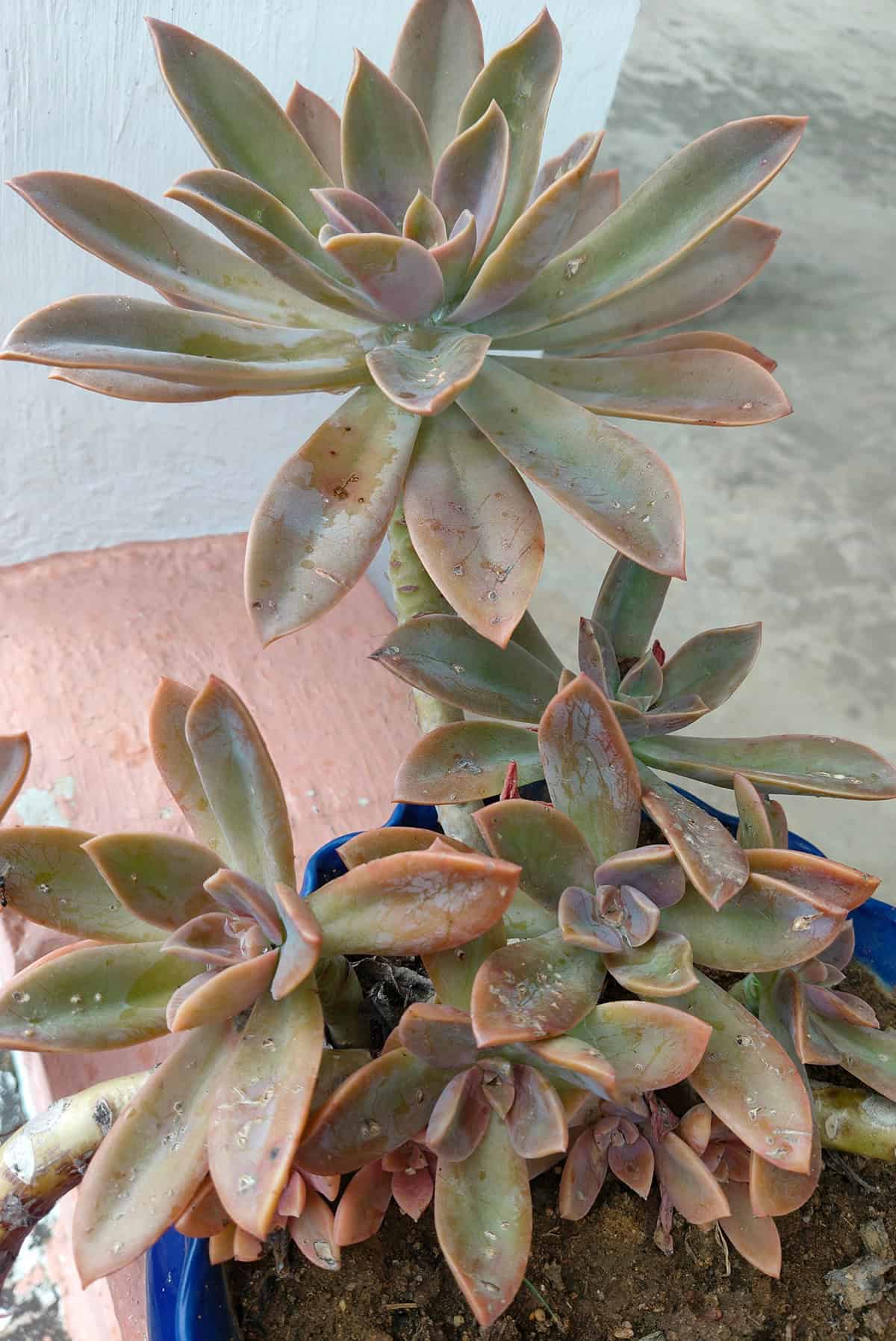
Graptoveria forms tight rosettes of thick, fleshy leaves in shades of blue-gray, pink and lavender. As a hybrid of graptopetalum and echeveria, it needs bright light to hold its compact shape and color.
Water sparingly, especially in the cooler months. A fast-draining mix is essential. Rotate the pot regularly for even growth.
Adromischus cristatus (Crinkle-Leaf Plant)
Crinkle-leaf plant has flat, wavy-edged leaves in gray-green, with reddish tips in good light. The unusual shape makes it a conversation piece, and it adapts to moderate indoor light.
A pot with a wide opening improves airflow. Avoid splashing the leaves when watering. It needs only occasional drinks, and drainage is crucial.
Portulacaria afra (Elephant Bush)
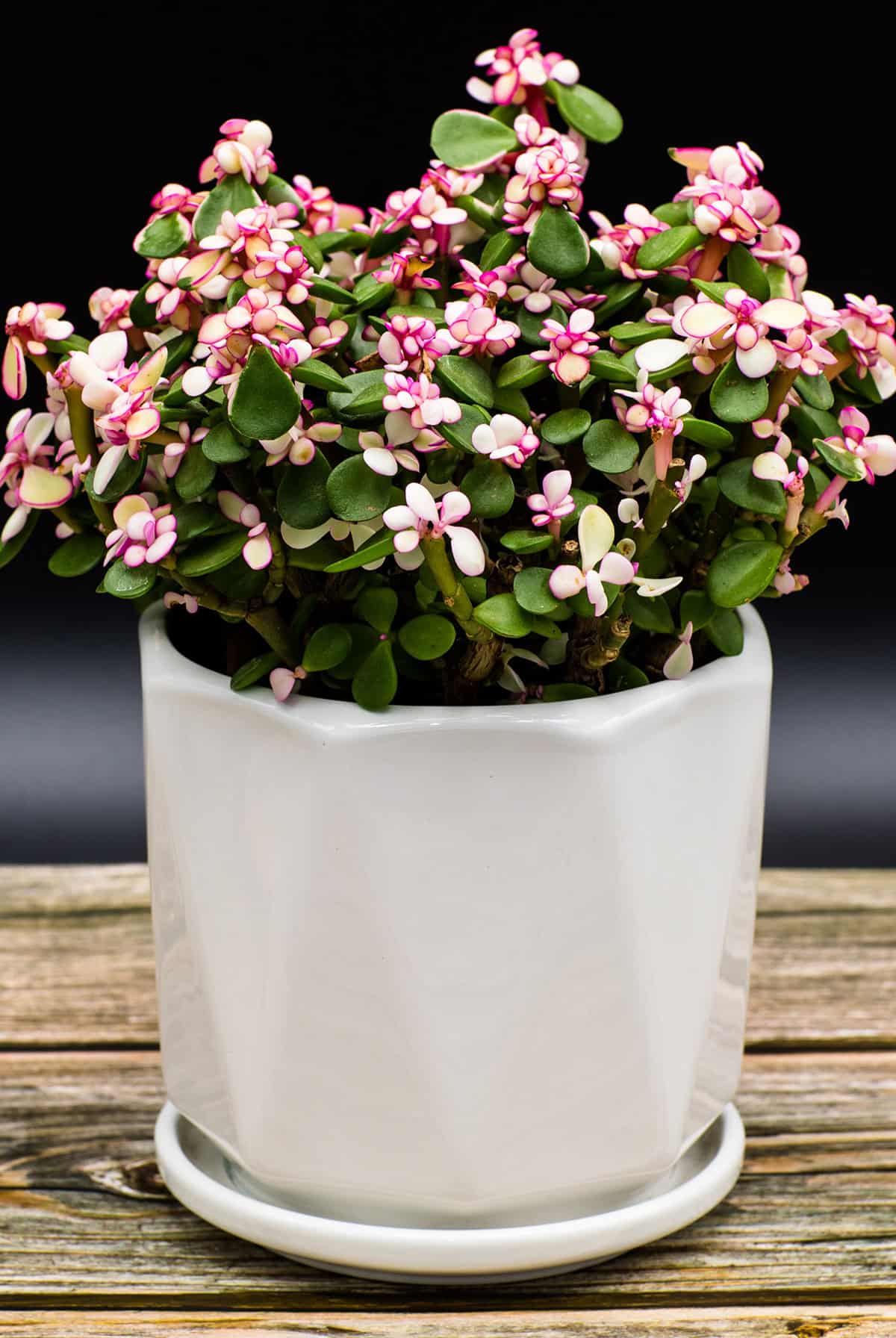
Elephant bush has small, round leaves on reddish stems. It grows upright or trails depending on how it is pruned. Bright, indirect light is best, though it tolerates lower light for a while.
Avoid soggy mix, and prune to shape or remove leggy growth. It handles missed waterings well, provided the roots never sit in water.
Rhipsalis baccifera (Mistletoe Cactus)
Mistletoe cactus has thin, hanging stems with tiny soft bristles. As a native of tropical forests, it thrives in filtered or dappled light. Misting is optional, though higher humidity helps.
Let the mix dry slightly between waterings. It handles low light far better than desert cacti. Repot only when the stems crowd the pot completely.
Euphorbia tirucalli (Pencil Cactus)
Pencil cactus is a mass of bright green, pencil-thin branches with very few leaves. Handle it with care, since the milky sap is a strong irritant.
Moderate light is enough for steady growth. Prune to control size and shape, with gloves and eye protection on. Use a well-draining mix and let it dry thoroughly between waterings.
Dischidia nummularia (Button Orchid)
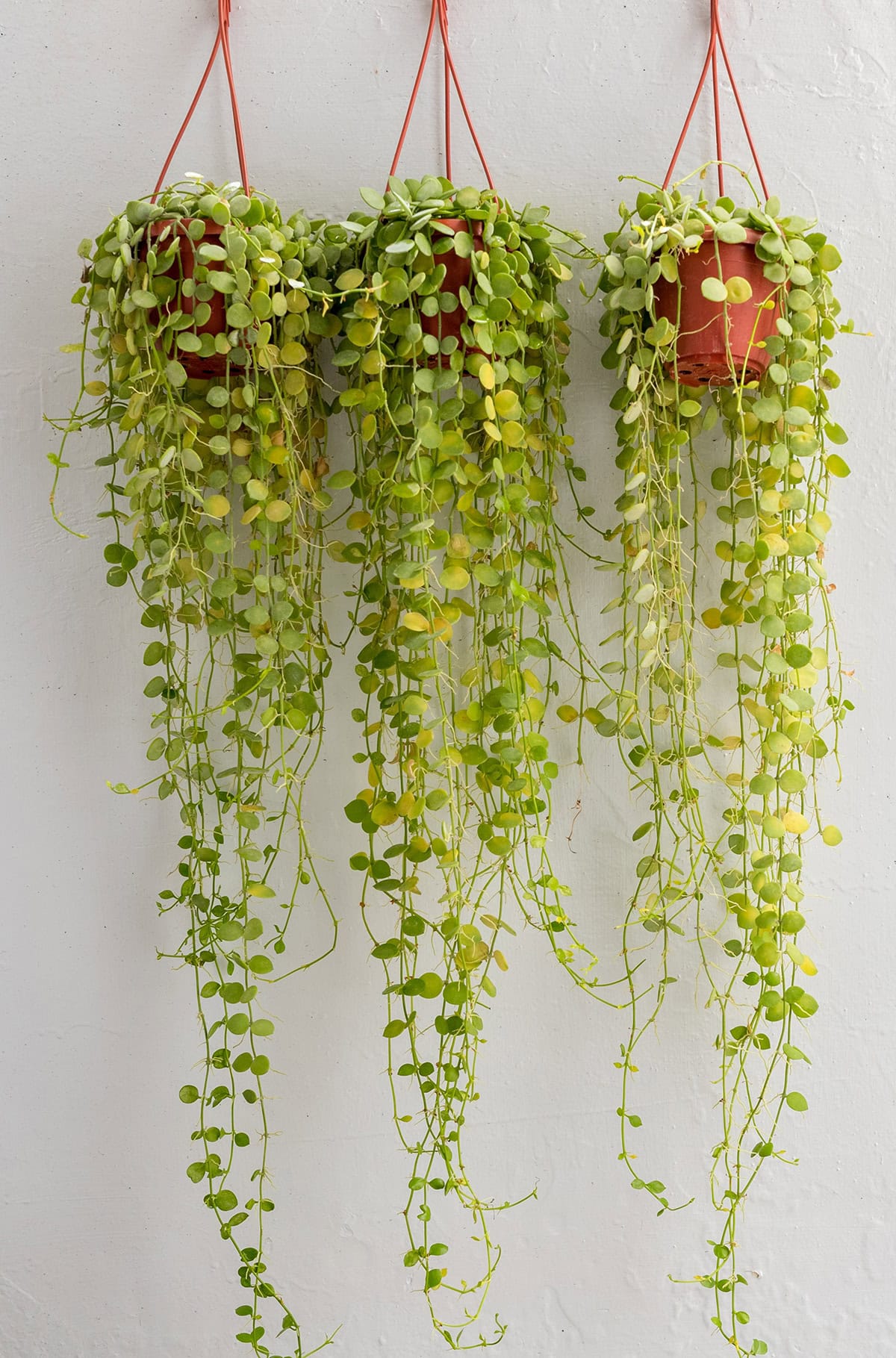
Button orchid sends out trailing stems dotted with round, coin-like leaves. Unlike most succulents, it is an epiphyte that clings to bark and enjoys higher humidity, along with bright, indirect light.
Grow it in a chunky orchid bark mix or mounted on wood. Water once the mix is nearly dry, and mist in dry rooms. Its compact growth fits small pots and terrariums.
Sempervivum tectorum (Hens and Chicks)
Hens and chicks form tight rosettes of pointed leaves surrounded by smaller offsets. They are very hardy outdoors but need bright light indoors, and a sunny windowsill produces the best color.
Let water drain fully after each watering. Fertilizer is rarely needed. Grouping several rosettes in a shallow bowl looks lush, and offsets separate easily when the pot fills up.
Kalanchoe blossfeldiana
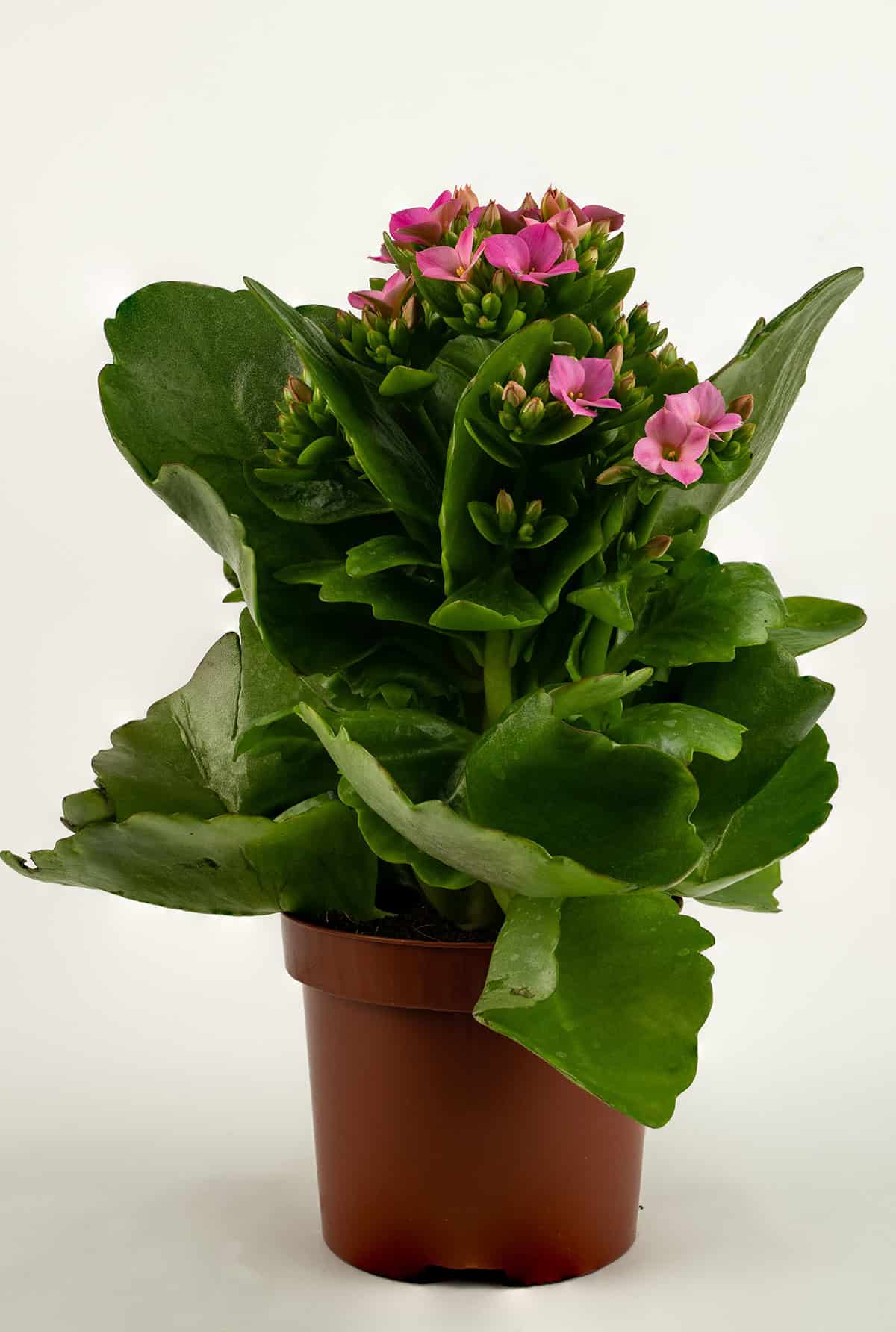
Kalanchoe blossfeldiana brightens a room with clusters of vivid red, orange, pink or yellow flowers. Its thick, glossy leaves tolerate dry air and the odd missed watering.
Bloom lasts several weeks in moderate light. Use a fast-draining mix and water thoroughly but infrequently. Pinch off faded flowers. Getting it to rebloom requires six weeks of long nights, with 14 hours of darkness each day in fall.
Othonna capensis (Little Pickles)
Little pickles trails with dense, blue-green, bean-shaped leaves and small yellow daisy flowers in sun. It manages in moderate light and needs little attention.
Water only when the mix is dry. Clip trailing stems for a neater shape. A standard succulent mix in a small pot is fine.
Anacampseros rufescens
Anacampseros rufescens forms low clusters of pointed leaves in green and deep magenta. It grows slowly in filtered light and holds a tidy shape.
A sandy, gritty mix is best, and the mix should dry out before the next watering. Brighter light deepens the purple color. Its compact size and bold coloring make it a good choice for a small desk pot.