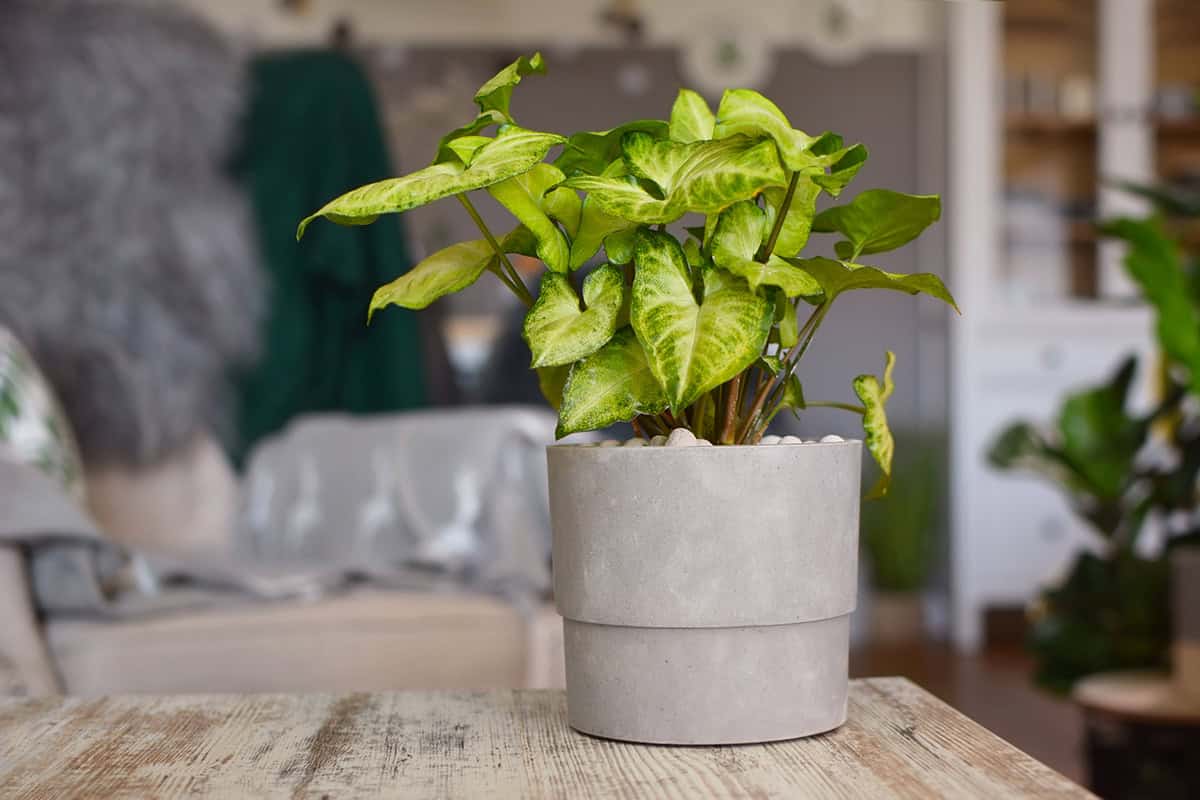
Young arrowhead plants live up to the name, with neat, arrow-shaped leaves in green, pink, cream or white. As the plant matures, the leaves split into three or more lobes and the stems start to climb.
That change surprises a lot of owners. Trimming the long vining stems holds the compact, bushy look, and a moss pole lets the plant climb into a taller vine.
Which of those two shapes to aim for is the main decision in the pruning notes.
Table of Contents
Light
Place arrowhead plant in bright, indirect light, such as near an east-facing window or a bright north window. Direct sun burns the leaves.
The plant tolerates lower light, though growth slows and leaf colors fade, especially on pink and variegated types. Move it closer to a window if colors dull.
Fluorescent or LED grow lights are fine where natural light is limited. Watch for stretched stems or pale leaves under artificial light.
Intense sunlight causes brown patches on the foliage, so filter strong sun with a sheer curtain.
Steady medium to bright light produces fuller growth and compact stems. Rotate the pot every few weeks for even growth and an upright shape.
Soil
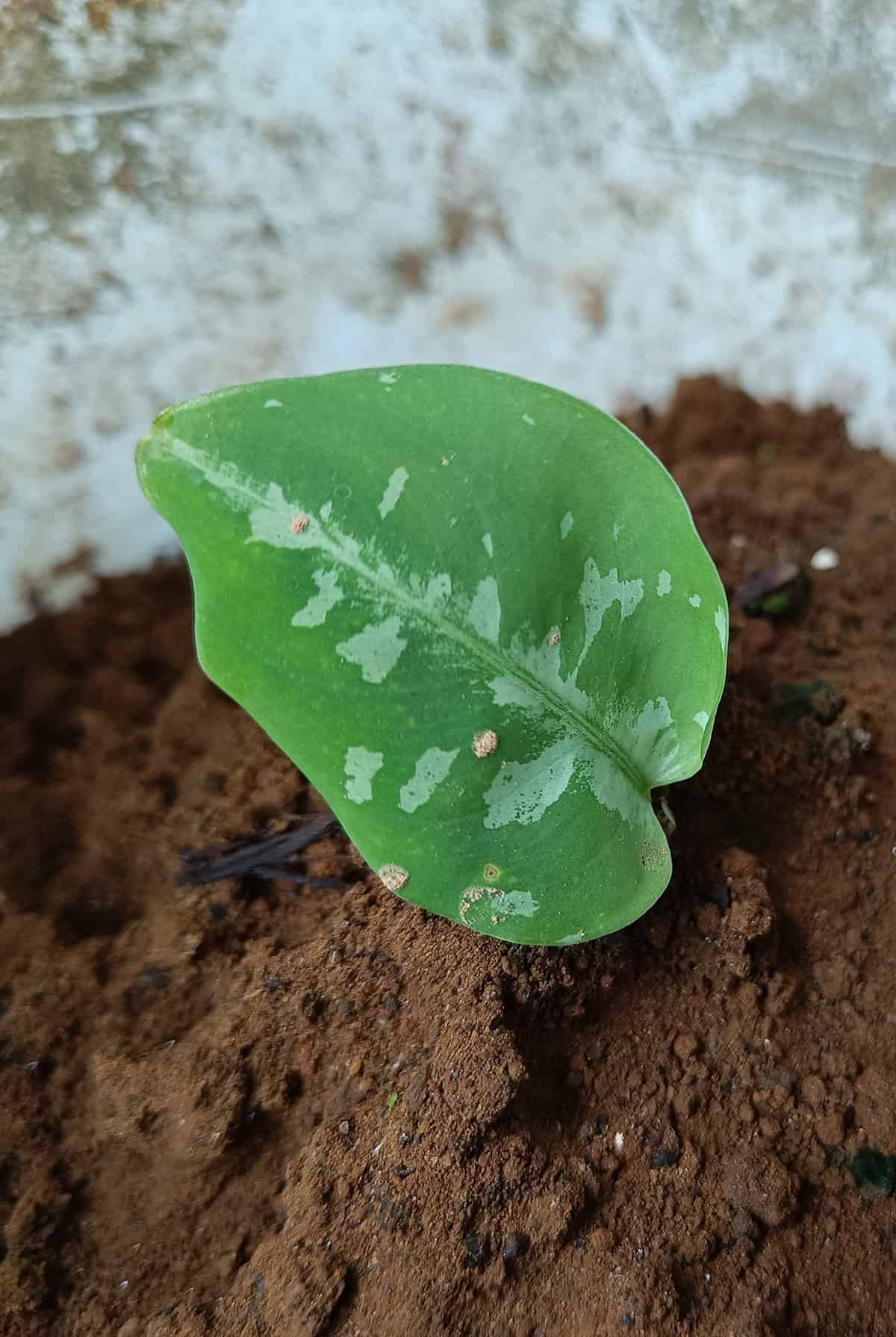
Arrowhead plant needs soil that drains well, since dense mixes trap water and cause root rot.
A peat moss or coir-based mix holds enough moisture and drains freely, which protects roots from fungal problems.
Standard houseplant potting soil with perlite or orchid bark mixed in is a good blend, and the extra air space prevents suffocated roots.
Let the top inch of soil dry before watering again, and wait another day if it is still wet.
Use a pot with drainage holes so excess water escapes. Containers that hold water lead to root problems quickly.
Water
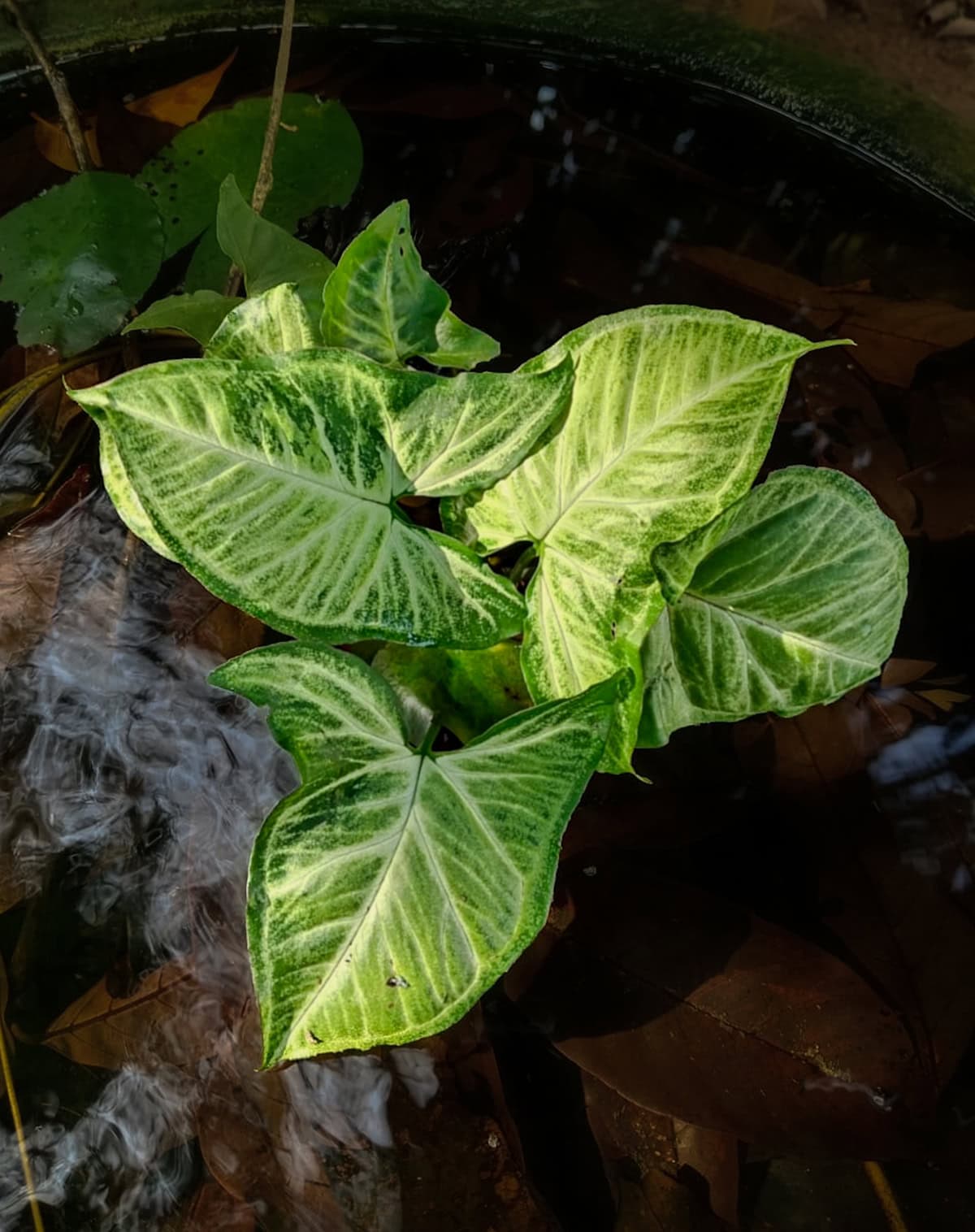
Arrowhead plant likes evenly moist soil. Let the top inch dry before watering again, and check with a finger first.
Soggy roots cause yellow leaves and soft stems, so empty saucers after watering.
Spring and summer growth calls for more water. Water less in cooler months, though the soil should never dry out completely.
Tap water is fine in most homes. Use room-temperature water, since very cold or hot water shocks the roots.
Dry air causes brown leaf tips. A pebble tray or humidifier raises the humidity more effectively than misting.
Temperature And Humidity
Arrowhead plant grows best at steady temperatures, with days between 65°F and 75°F and nights down to 55°F to 60°F. Longer stretches below that cause damage.
Humidity matters, and the plant grows best above 50 percent. In dry homes, set the pot on a tray of wet pebbles or run a humidifier.
Occasional dips in humidity are fine, though prolonged dry air browns the leaf edges. Place the plant away from air vents and heaters.
Sudden drafts and large temperature swings cause stress, so choose a spot away from frequently opened doors and drafty windows. Stable conditions produce the healthiest plants.
Fertilizer
Regular feeding supports healthy leaves and strong roots, and a balanced liquid houseplant fertilizer is all arrowhead plant needs.
Apply once a month during spring and summer, when growth is fastest. Skip fertilizer in fall and winter, when the plant rests.
Dilute a standard houseplant formula to half strength to protect the roots from burn. Excess fertilizer leads to brown leaf tips and stunted growth.
Water the soil before fertilizing, since dry roots burn easily.
A white crust on the soil signals salt buildup from fertilizer. Flush the pot with clean water until the excess drains out.
Propagation
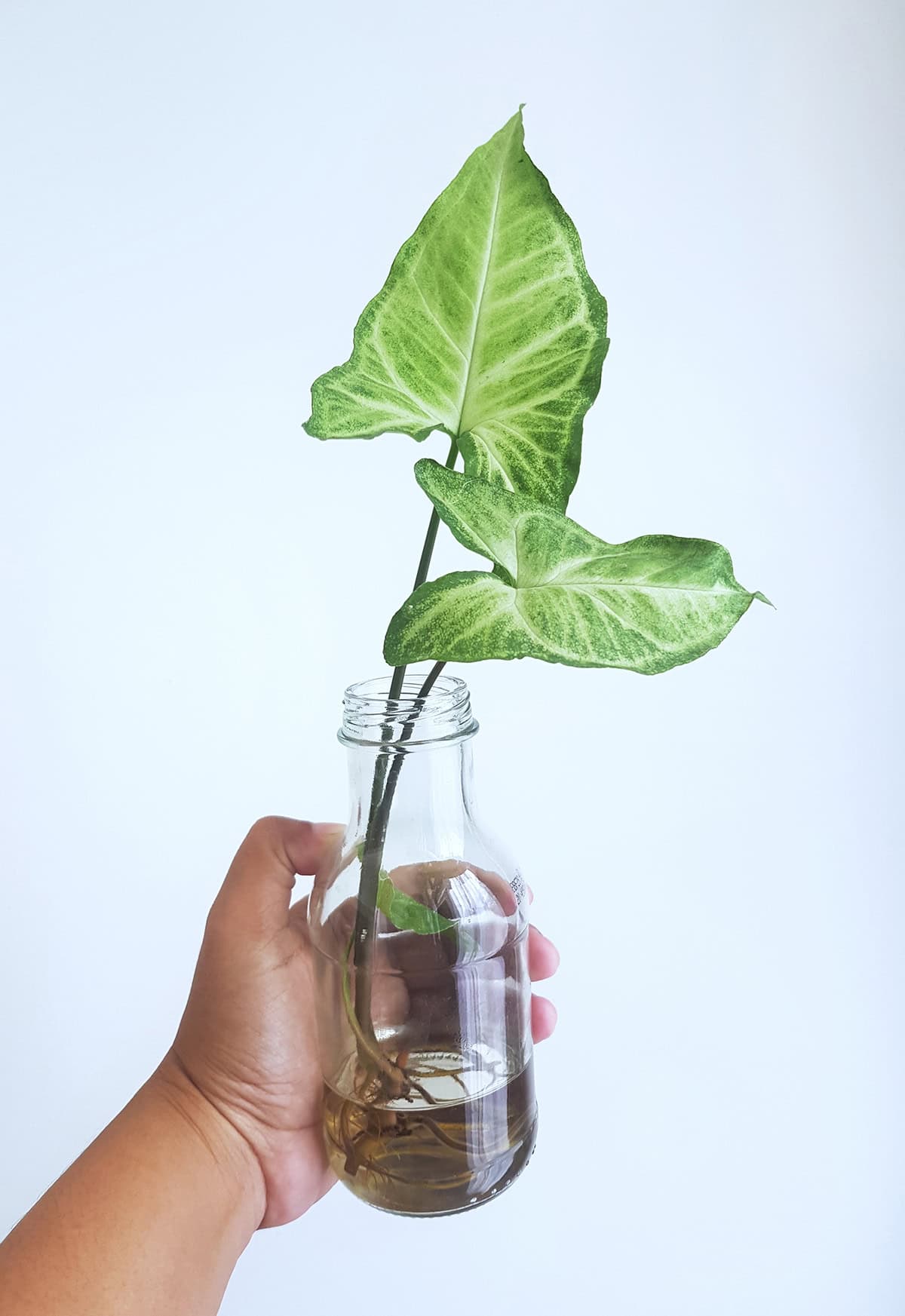
Stem cuttings are the easiest way to propagate arrowhead plant. Choose a healthy stem with at least one leaf and a node, and cut just below the node with a clean, sharp tool.
Root the cutting in water or moist potting mix. In water, submerge the node and change the water every few days.
Roots form within a few weeks. Move the cutting to soil once roots reach a couple of inches, and water lightly for the first weeks so the mix is moist and never soggy.
Large plants also divide. Separate the root clumps gently, with roots and leaves on each section.
Spring and summer are the best seasons for cuttings, since warmth and bright, indirect light speed growth. Shelter cuttings from direct midday sun.
A clear cover or plastic bag over new cuttings raises humidity, which prevents wilting and encourages rooting.
Pruning
Prune arrowhead plant to shape it and control its size. Cutting back leggy stems produces a bushier plant. Use clean, sharp scissors or pruners.
Remove yellow or damaged leaves, and cut stems just above a leaf node for quick recovery. Regular trims prevent thin, sprawling growth.
For the classic arrow-shaped leaves and a compact look, trim stems that start to vine. Pruning also lets light and air reach the center of the plant.
Discard unhealthy or diseased trimmings. Avoid removing too much at once, and trim only what is needed for size and shape. Wear gloves, since the sap irritates skin.
Potting And Repotting
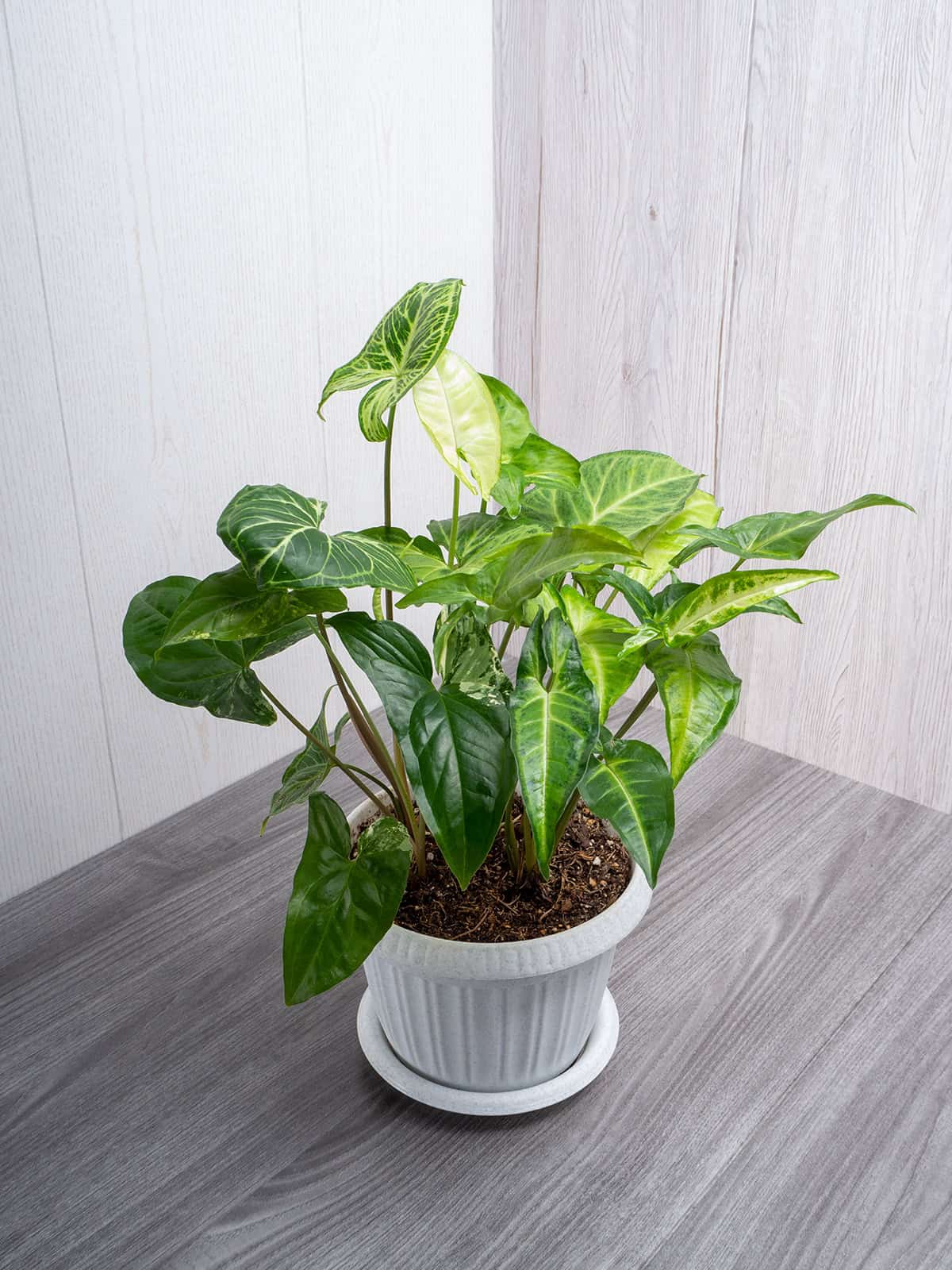
Arrowhead plant grows well in pots with drainage holes, and young plants do best in a snug pot that dries out evenly.
Use a light, well-draining potting mix and water so it is moist and never soggy.
Check the roots every year. Roots circling the pot or growing through the drainage holes mean it is time to repot, into a pot one size larger.
Ease the plant out and loosen the root mass gently. Trim dead or mushy roots, settle the plant in fresh mix, firm the soil and water thoroughly.
Repot in spring or early summer for the fastest recovery, and handle the stems carefully, since they snap easily.
Common Problems & Troubleshooting
Yellow leaves on arrowhead plant point to soil that is too wet. Let the top inch dry before watering.
Wilting or drooping comes from too much or too little water. Check that the pot drains well and adjust the routine.
Brown leaf tips suggest low humidity or salt buildup. Raise the humidity and flush the soil with water every few months.
Brown or black spots come from harsh direct sun or fungal infection. Move the plant out of strong light and remove affected leaves.
Pale or leggy growth means too little light, so move the plant to a brighter spot out of direct sun.
Roots poking from the drainage holes signal the need for a pot 1 to 2 inches larger.
Spider mites, mealybugs and aphids occasionally attack. Inspect the leaves regularly and wipe them with a damp cloth, or use insecticidal soap for heavier infestations. The plant is toxic to pets, so place it out of reach.
Plant Varieties
Most arrowhead plants for sale belong to Syngonium podophyllum, with easily recognized arrow-shaped leaves.
Leaf colors range through solid green and white, silver, pink or cream variegation, and the markings shift as the plant matures.
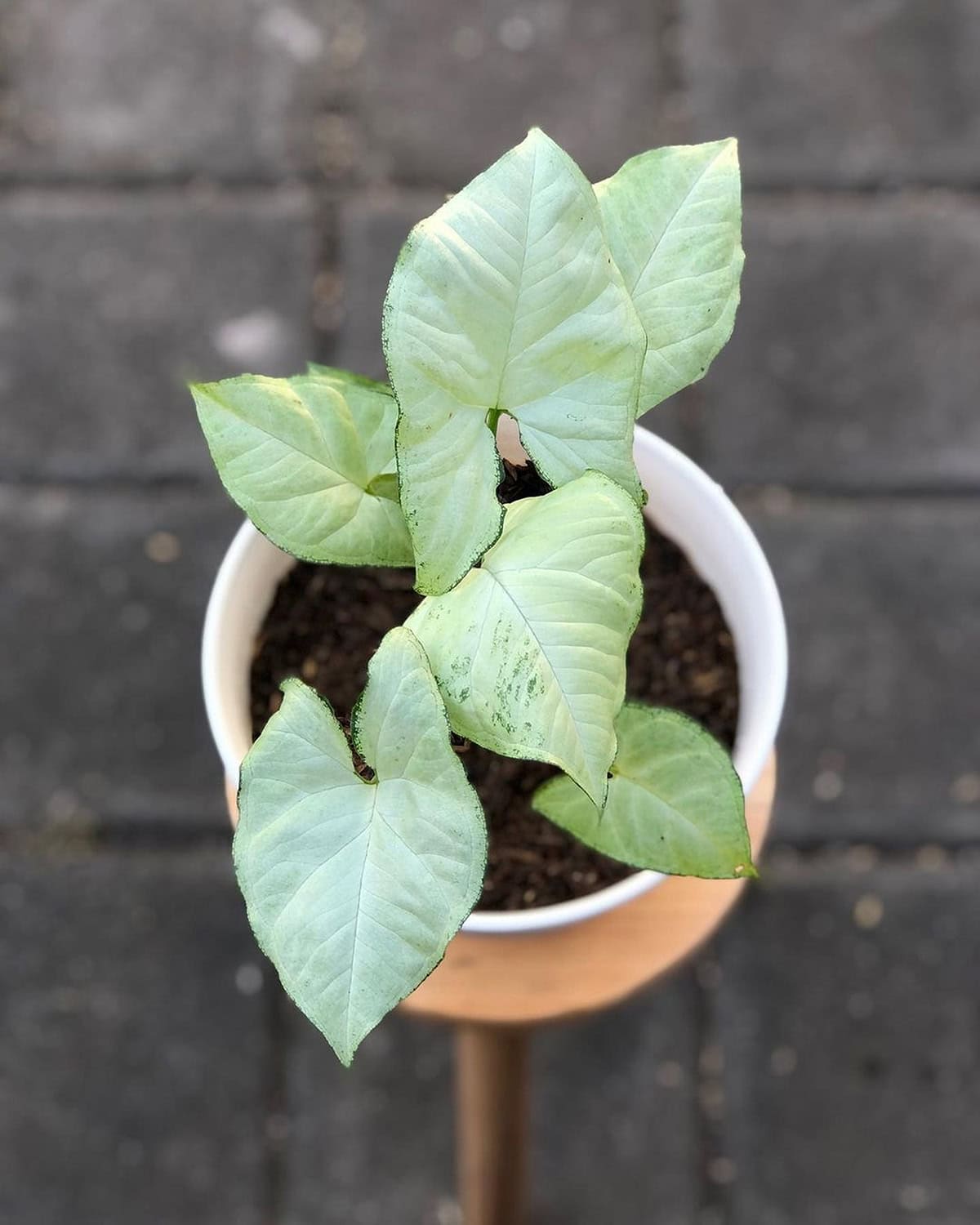
‘White Butterfly’ has creamy-white centers with green edges. ‘Neon Robusta’ carries bright pink leaves, most vivid on young plants.
Compact types such as ‘Pixie’ fit small spaces, and ‘Maria Allusion’ has coppery, blush-toned leaves. Older plants of every type develop a vining habit for trailing or climbing.
Trim the stems for a bushy, shrub-like plant, or let them climb or trail. Mixing several varieties creates a range of color and habit in one display.