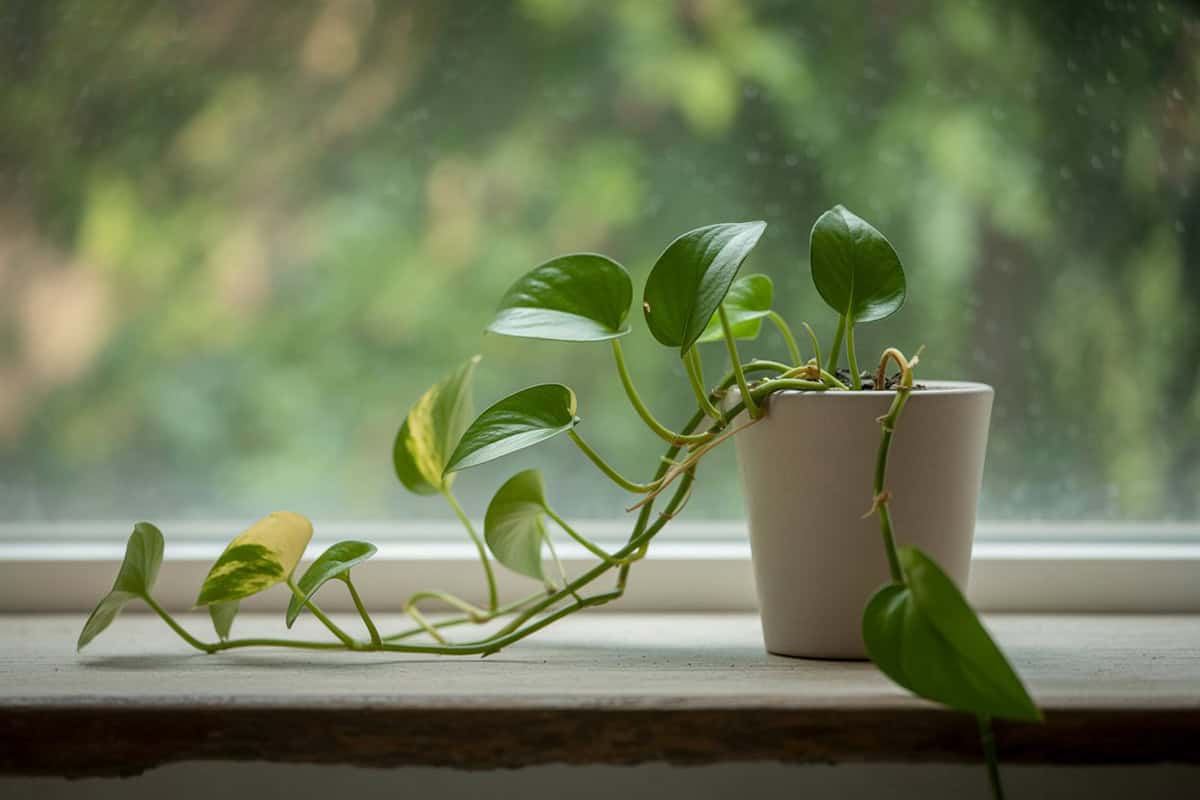
A pothos vine that once trailed in a thick curtain of leaves stretches, in poor conditions, into bare green string with leaves spaced a hand’s width apart.
Those bare sections never refill on their own, since pothos sprouts new leaves only from fresh growth and from nodes near a cut. Low light causes most cases, and pruning plus replanting the cuttings is the fastest route back to a full pot.
Tucking rooted cuttings back into the same pot fills a sparse plant fastest, and the solutions section covers that trick in detail.
Table of Contents
What Is Leggy Pothos?
A leggy pothos has stretched out between its leaves, and long, bare stems replace the thick, leafy cascade.
Definition of Legginess in Plants
Legginess describes stems that grow far longer than normal with few leaves along them. The plant puts its energy into reaching, in most cases toward light, at the expense of filling out.
Weak, leggy stems bend or snap under their own weight, so the problem goes beyond looks.
How Leggy Growth Manifests in Pothos
Gaps between leaves grow wider, and long stretches of vine carry bare stem alone. Leaves shrink and lose their color, and variegated types fade.
New shoots come in thin and floppy, and extra aerial roots appear along bare stems. The plant looks sparse where it used to be lush.
Why Leggy Growth Matters
Leggy growth looks messy and signals that something in the care routine needs adjusting. Fixing the cause produces a healthier plant that resists pests and disease.
Weak stems break easily, and the plant spends energy on stems at the expense of leaves. Early action prevents the problem from spreading to the rest of the pot.
Common Causes of Leggy Pothos
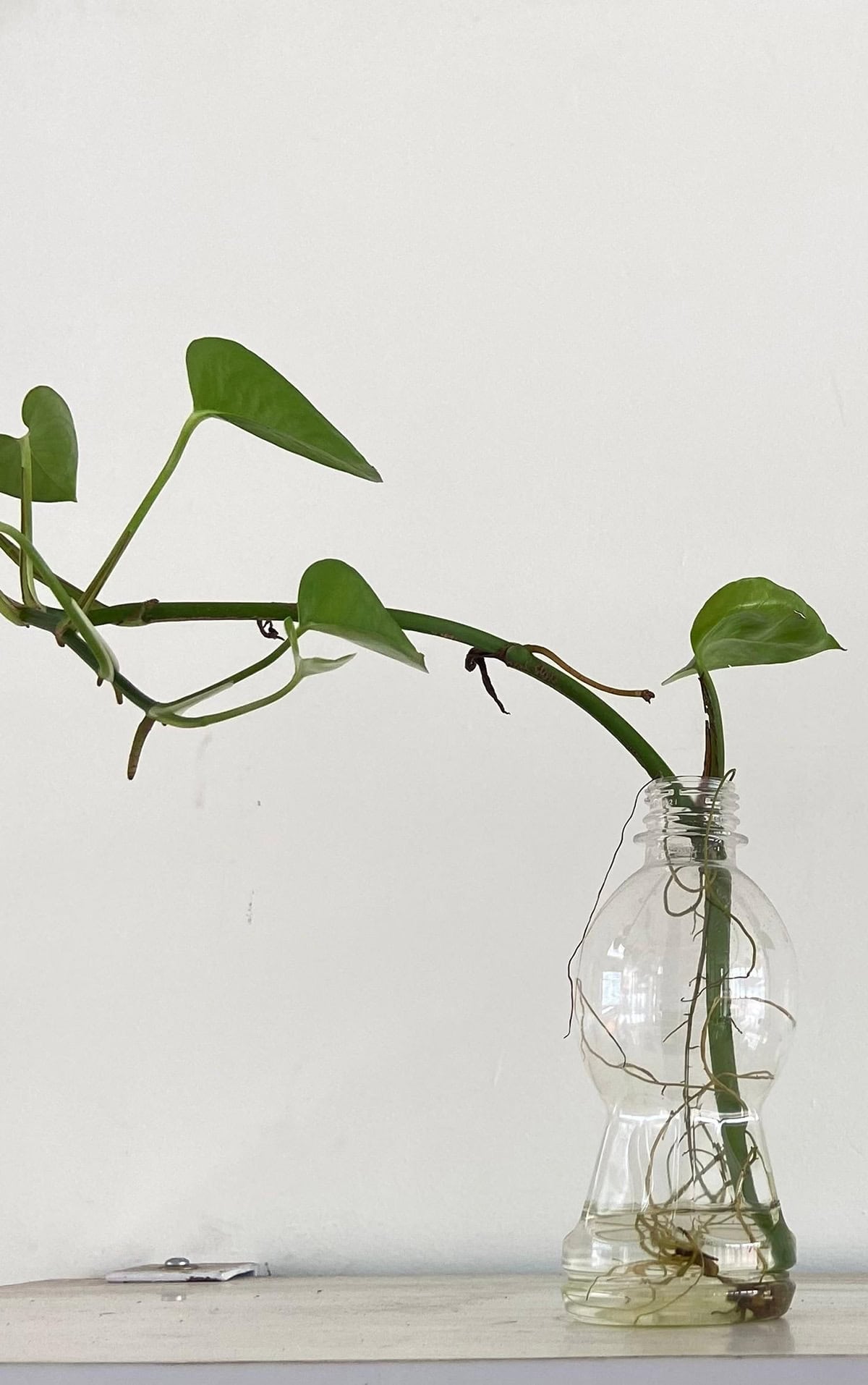
Low light is the main cause of leggy pothos, though skipped pruning, crowded pots and unbalanced feeding also play a part.
Insufficient Light Exposure
Pothos stretches toward light when it sits in a dim spot. Bright, indirect light produces short spaces between leaves, while dark corners and windowless rooms lead to long gaps and small, dull leaves.
Variegated types such as ‘Marble Queen’ need even more light, because the white and yellow sections produce less energy. Overhead office lighting is rarely enough, and an east-facing window or a grow light makes a big difference.
Improper Pruning Techniques
Skipping pruning lets stems run long and sparse, since pothos branches mainly where a stem is cut. Regular trims just above a node prompt new shoots.
Leave about a quarter inch of stem above each node when cutting. Remove no more than a third of the plant at once, and use sharp, clean tools that slice cleanly instead of crushing the stem.
Overcrowding and Competition
Crowded pots force roots to compete for space and nutrients, and the vines stretch outward as they search for light. Dense foliage also shades the inner stems and slows airflow.
Roots circling the pot or poking out of the drainage holes, along with yellow leaves and stalled growth, mean the plant needs a larger pot or a division.
Nutrient Imbalances
Excess nitrogen pushes fast stem growth with few leaves, and too little phosphorus or potassium leaves weak roots and floppy stems.
Feed with a diluted, balanced liquid fertilizer once a month in spring and summer, and skip feeding in winter, when growth slows.
How to Identify a Leggy Pothos
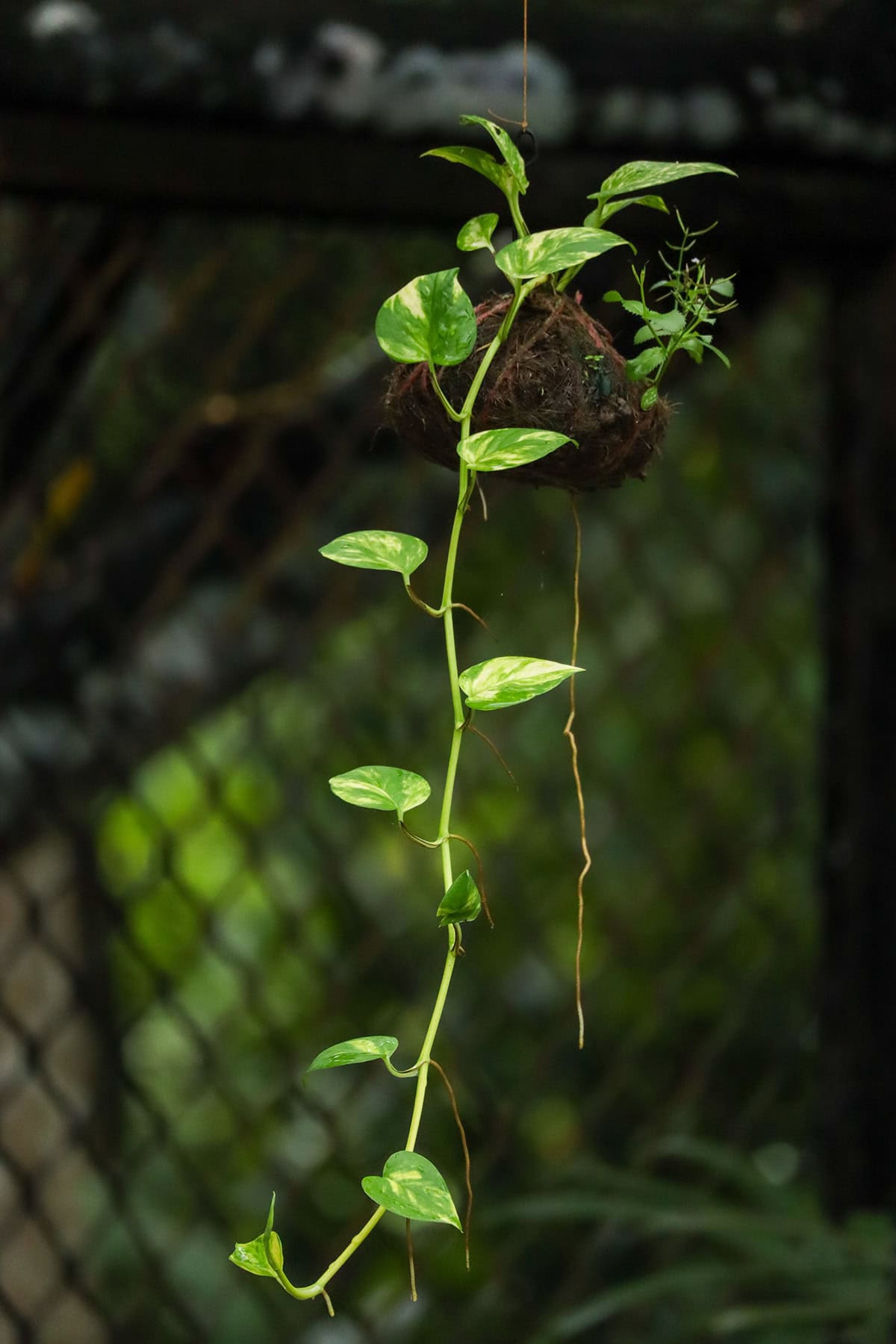
Long, thin stems with wide gaps between leaves are the giveaway, and a side-by-side look at a healthy plant makes the difference obvious.
Signs of Legginess in Stems and Leaves
Leaf spacing is the clearest clue. Healthy pothos carries a leaf every few inches, and a leggy plant has 6 inches or more between them.
Leaves shrink, lose their shine and fade to pale green or yellow, a sign of light problems. Stems get thin and floppy, and the nodes look small and far apart.
Differences Between Healthy and Leggy Growth
A thriving pothos is bushy, with short stems packed with large, glossy leaves and vivid variegation.
Leggy plants carry long, skinny stems with few leaves and pale, washed-out color, and the whole plant looks stringy and weak.
Typical Growth Patterns in Pothos
In the wild, pothos climbs trees with aerial roots and produces huge leaves as it climbs. Indoors, trailing vines with no support to climb produce smaller leaves and stretch more readily.
Young plants start out full, and legginess appears after a few months in poor conditions. Spring and summer growth speeds up stretching in low light, and uneven light makes one side of the pot sparse.
Effective Solutions for Leggy Pothos

Better light, strategic pruning and more space restore a full, healthy pothos.
Improving Lighting Conditions
Move the plant near a window with bright, indirect light, such as an east-facing window, and filter harsh direct sun, which scorches the leaves.
In dim homes, an LED grow light 12 to 18 inches above the plant for 12 to 14 hours a day prevents stretching. Rotate the pot weekly for even growth on every side.
Shorter gaps and brighter leaves on new growth mean the light is right, while yellow, bleached patches signal too much sun.
Pruning for Fuller Growth
Cut leggy stems just above a node with sharp scissors or pruners, and remove no more than a third of the plant at once. New shoots sprout from the node below each cut.
Pinch the tips of remaining vines to prompt branching. Cut extra-long vines into 4- to 6-inch pieces, each with at least one node, and root them in water or soil.
Spring and early summer are the best times, when growth is fastest. Remove dead or damaged leaves at the same time.
Repotting and Spacing Adjustments
Repot when roots poke out of the drainage holes, into a pot only an inch or two wider, since an oversized pot holds too much water. Use fresh, well-draining houseplant mix.
Plant rooted cuttings around the edge of the pot a couple of inches apart for instant fullness. Coil long vines over the soil and pin them down, since nodes touching the soil root and sprout new leaves.
Water well after repotting, then let the top of the soil dry before watering again.
Preventing Leggy Growth in Pothos
Good placement, regular pruning and balanced feeding produce a dense, healthy plant.
Optimizing Light Placement
Place the plant near an east-facing window or in steady, bright, indirect light, away from harsh midday sun. Three to six feet from a bright window is a good range.
In dim homes, run an LED grow light 12 to 18 inches above the plant for 12 to 14 hours a day, and rotate the pot by a quarter every week.
Regular Pruning Practices
Snip vines just above a leaf node, starting with the longest ones, and cut back to where you want new growth.
Pinch off the tips now and then to encourage side shoots, ideally in spring and summer, when the plant recovers fastest.
Proper Fertilization and Watering
Let the top inch of soil dry before watering, and check with a finger first. Overwatering leads to root rot and weak, floppy growth.
Feed once a month in spring and summer with a balanced liquid fertilizer at half strength, since excess nitrogen produces length at the expense of leaves. In winter, feed every two to three months at most, or skip it.
Encouraging Bushier Pothos Growth
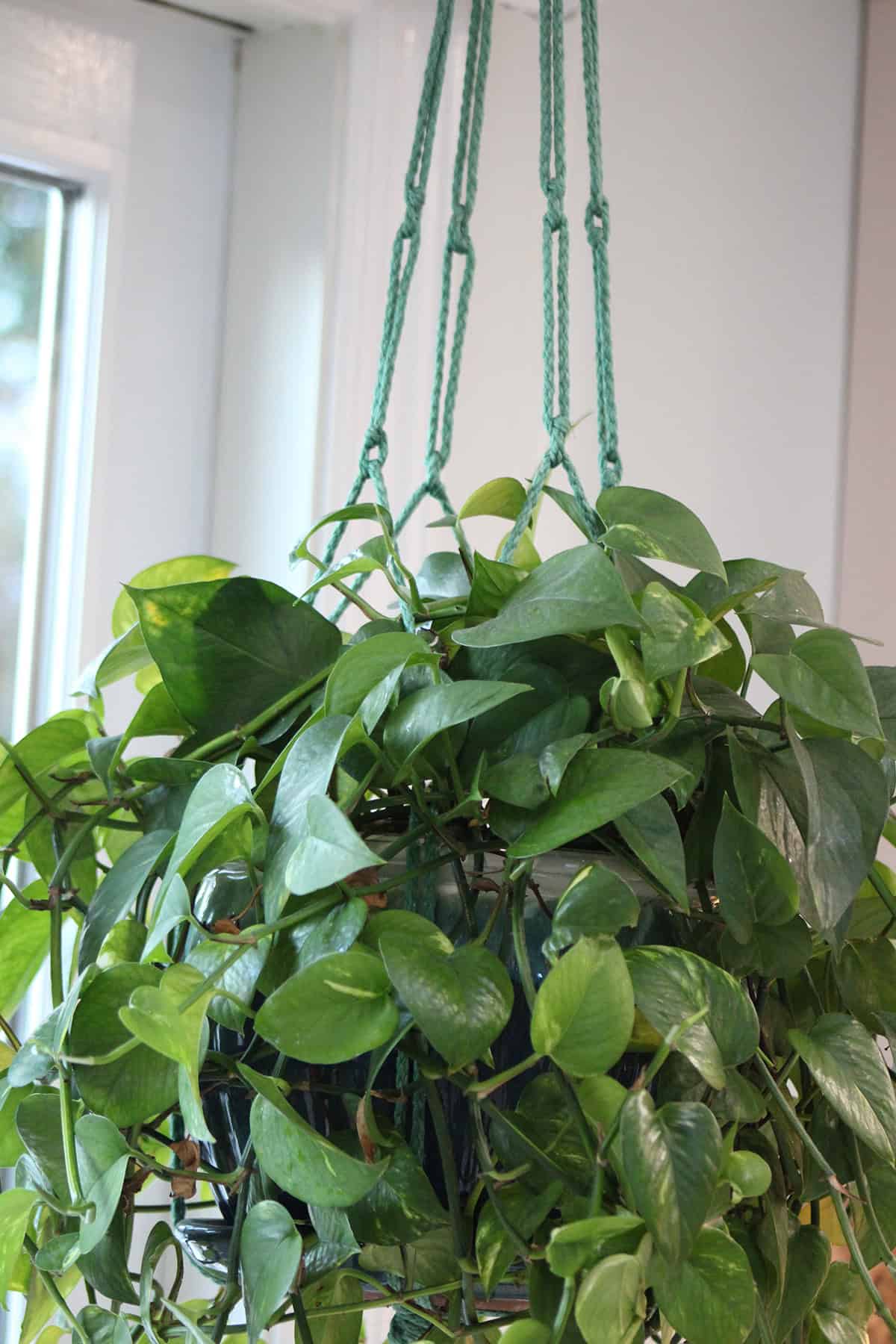
Pruning, propagation and a little training fill out a sparse pothos and direct growth where you want it.
Stem Propagation Techniques
Cut long vines back to 4 to 6 inches from the base to prompt new growth from the remaining nodes.
Root cuttings with at least two nodes in water in bright, indirect light, and change the water every few days. Roots appear within a few weeks, and water rooting is faster than soil for pothos.
Plant rooted cuttings back into the original pot, spaced evenly around the edge, and each one starts a new vine that covers bare spots.
Supporting New Shoots
A moss pole or bamboo stake lets pothos climb, which produces larger leaves and tighter spacing. Install supports before the vines get too long.
Secure young vines loosely with soft ties or clips. Aerial roots grip a moist moss pole as the plant climbs.
Rotate the pot weekly and place it in bright, indirect light for tight growth between leaves.
Training and Guiding Vines
Pinch back tips regularly to encourage branching lower on the plant.
Coil long vines back over the pot and pin them down with a bent wire or hairpin, and the buried nodes root and send up new shoots.
Cut vines to different lengths for a natural look, and guide them around the rim with clips for maximum fullness. Prune and train during spring and summer for the fastest recovery.
Long-Term Care Tips for Healthy Pothos
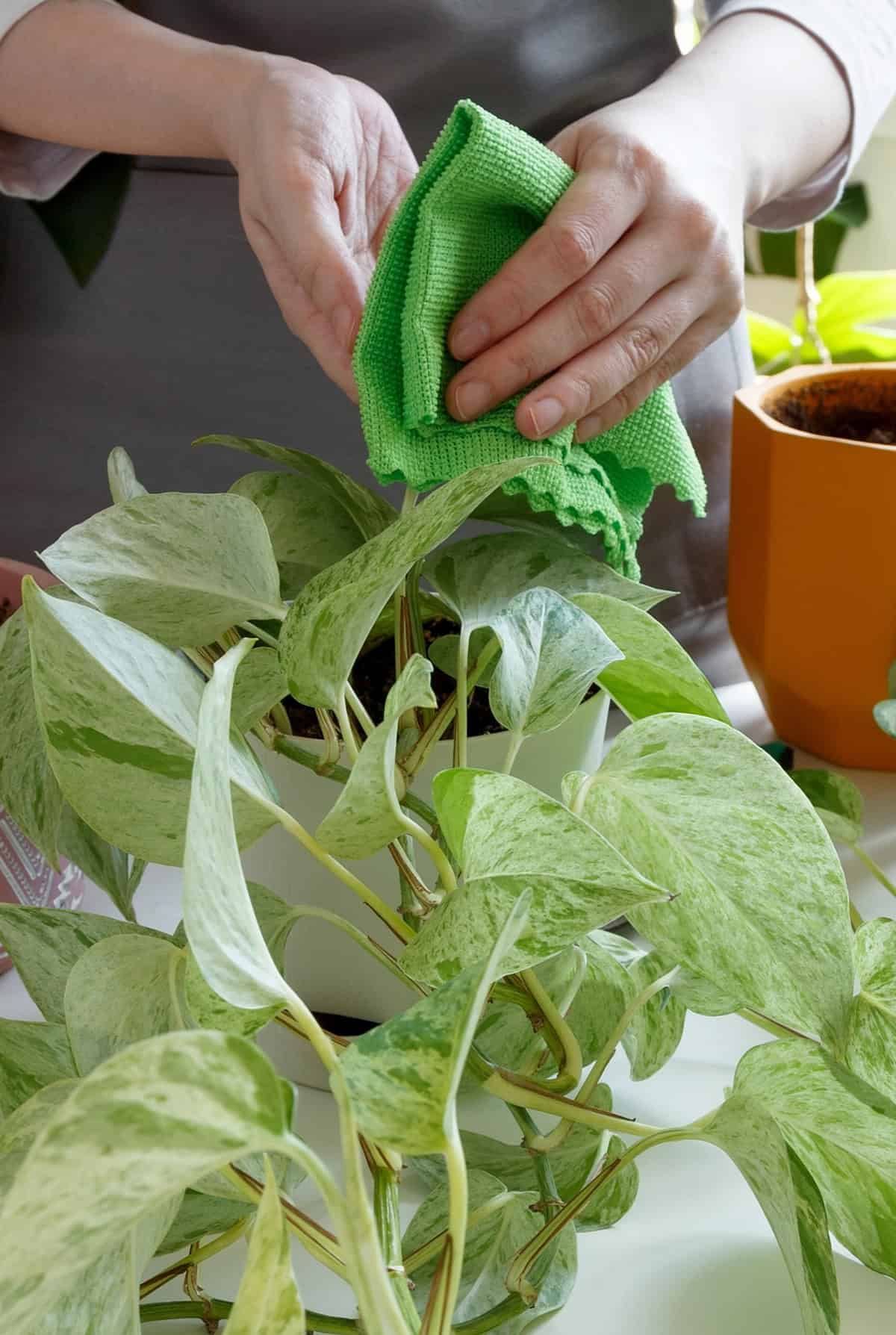
Bright, indirect light near a window prevents legginess over the long run, while harsh direct sun burns the leaves.
Water when the top inch of soil is dry, and feed monthly at half strength in spring and summer only.
Trim wandering vines just above a leaf node to encourage new shoots, and rotate the pot weekly for even growth.
Steady temperatures between 65°F and 75°F, away from heaters and drafts, are best. A humidifier helps in dry homes and prevents brown tips.
Repot every 2 to 3 years when roots crowd the pot, moving up one size with fresh mix. Check for pests and yellow leaves regularly, and remove damaged leaves promptly. Pothos is toxic to cats and dogs, so place it out of reach.
Common Mistakes to Avoid When Treating Leggy Pothos
Removing too much at once stresses the plant, so cut no more than a third of the stems at a time.
Throwing away healthy cuttings wastes an easy way to fill bare spots, since they root readily.
Pruning in winter, when growth is slow, delays recovery. Spring and summer are better.
Ignoring the cause lets the legginess return, and low light is the most common culprit.
Dull or dirty tools crush stems and spread disease, so wipe blades with rubbing alcohol and use sharp scissors.
Fertilizing right after a hard prune pushes soft growth, so wait a couple of weeks.
Cuttings in stale water rot, so change it every few days.
New growth takes several weeks to appear, and patience is part of the process.
A pruned plant with fewer leaves uses less water, so check the soil before every watering to avoid soggy roots.