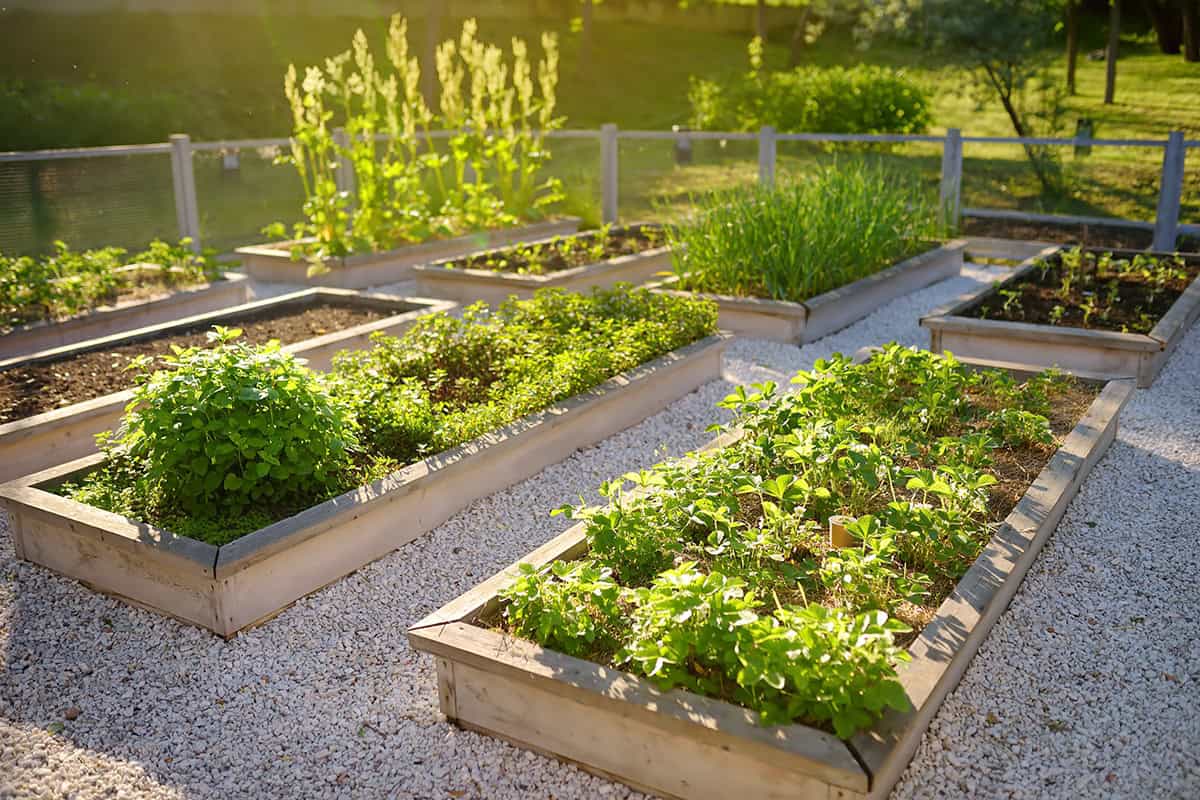
Getting the most out of your vegetable garden takes more than just tossing seeds into good dirt. You’ll want to think through sun, spacing, drainage, and how you’ll rotate crops. Matching your layout to your actual space, sunlight, and soil makes a real difference in harvest and how much work you end up doing.
There is a bunch of ways to set things up—raised beds, blocks, old-school rows, or more compact kitchen garden styles. Each one changes how you deal with weeds, how easy it is to water, and how much you’ll end up picking. Here’s a rundown of practical layouts that work for tiny yards or sprawling plots—and everything in the middle.
Table of Contents
- Vegetable Garden Layout Ideas
- Fence-Line Trellis Layout
- U-Shaped Raised Beds With Access Aisles
- Long Beds For Row Crop Order
- Four-Bed Grid With Brick Paths
- Companion Plant Blocks Layout
- Tiered Beds On A Gentle Slope
- Horseshoe Bed With Wheelbarrow Lane
- Wagon Wheel Bed Layout
- Spiral Herb + Veg Center Bed
- Cottage Patchwork Beds
- Mixed Raised Beds With Pollinator Strip
- Central Cross Path Kitchen Garden
- Raised Beds With Built-In Seating
- Greenhouse-To-Garden Axis Layout
- Triangle Beds For Small Spaces
- Courtyard Potager With Gravel And Box Borders
- Raised Bed + Container Mix Layout
- Keyhole Bed With Compost Basket
- Tomato Corridor With Dual Trellis Lines
- Mandala Circle Beds With Radial Paths
- Compact Urban Raised Bed Row
- Salad Bar Beds Near The Kitchen Door
Vegetable Garden Layout Ideas
Layout isn’t just about looks—it’s about how you control light, get around, use soil, and rotate crops. When you match the bed shape to your space and what you want to grow, you’ll get more veggies and less hassle.
Fence-Line Trellis Layout
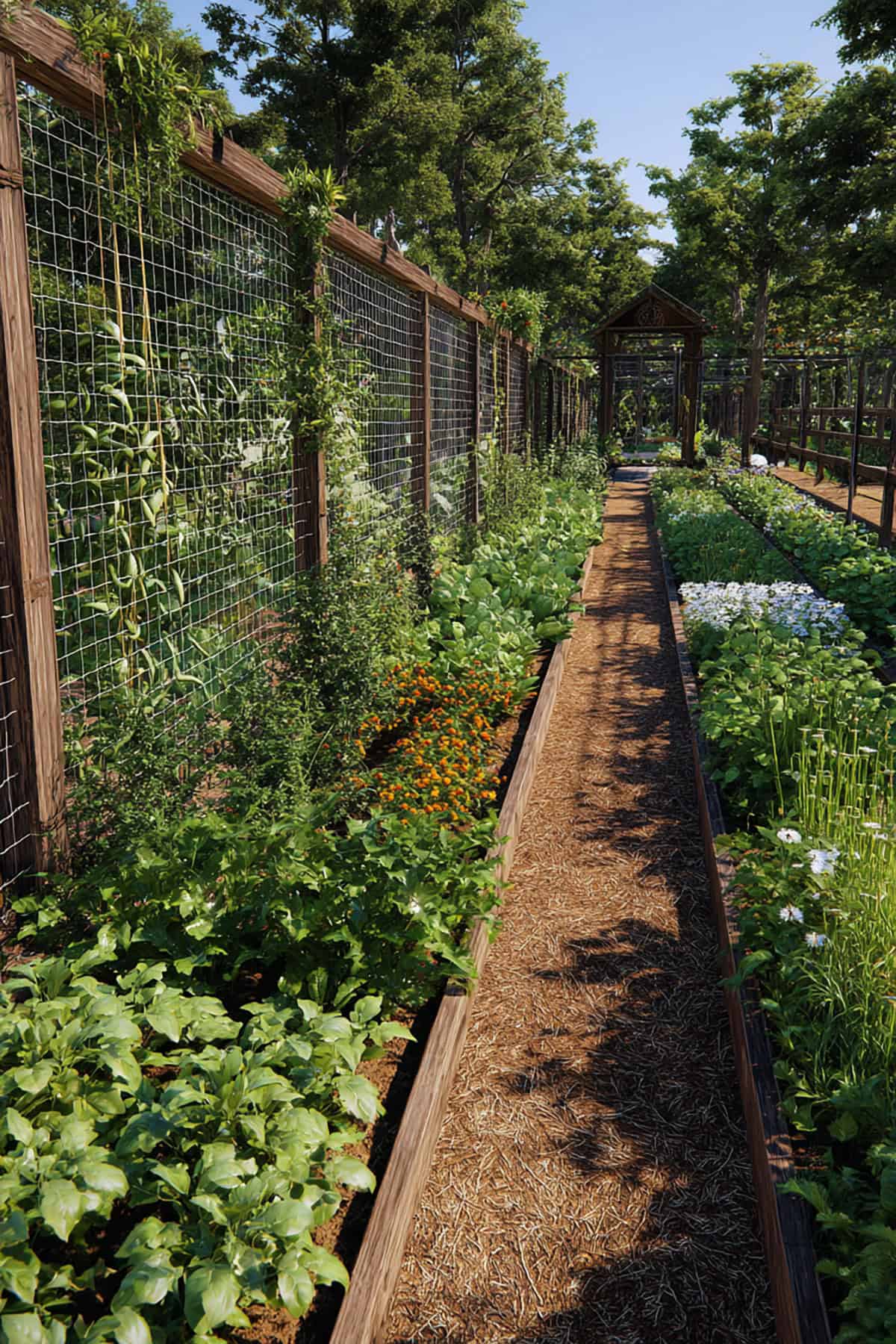
Try planting your tallest crops right up against a sturdy fence—north or west side’s best so you don’t block sun from the little guys like lettuce and carrots. Wire mesh or panels on posts will hold up tomatoes, cukes, and pole beans without drooping.
Keep that bed narrow—2 to 3 feet—so you can reach in without trampling soil, and leave a decent path in front for picking. Drip irrigation at the base helps keep leaves dry and healthier.
Switch up which climbing crops you plant here each year to keep pests down and the soil happy.
U-Shaped Raised Beds With Access Aisles
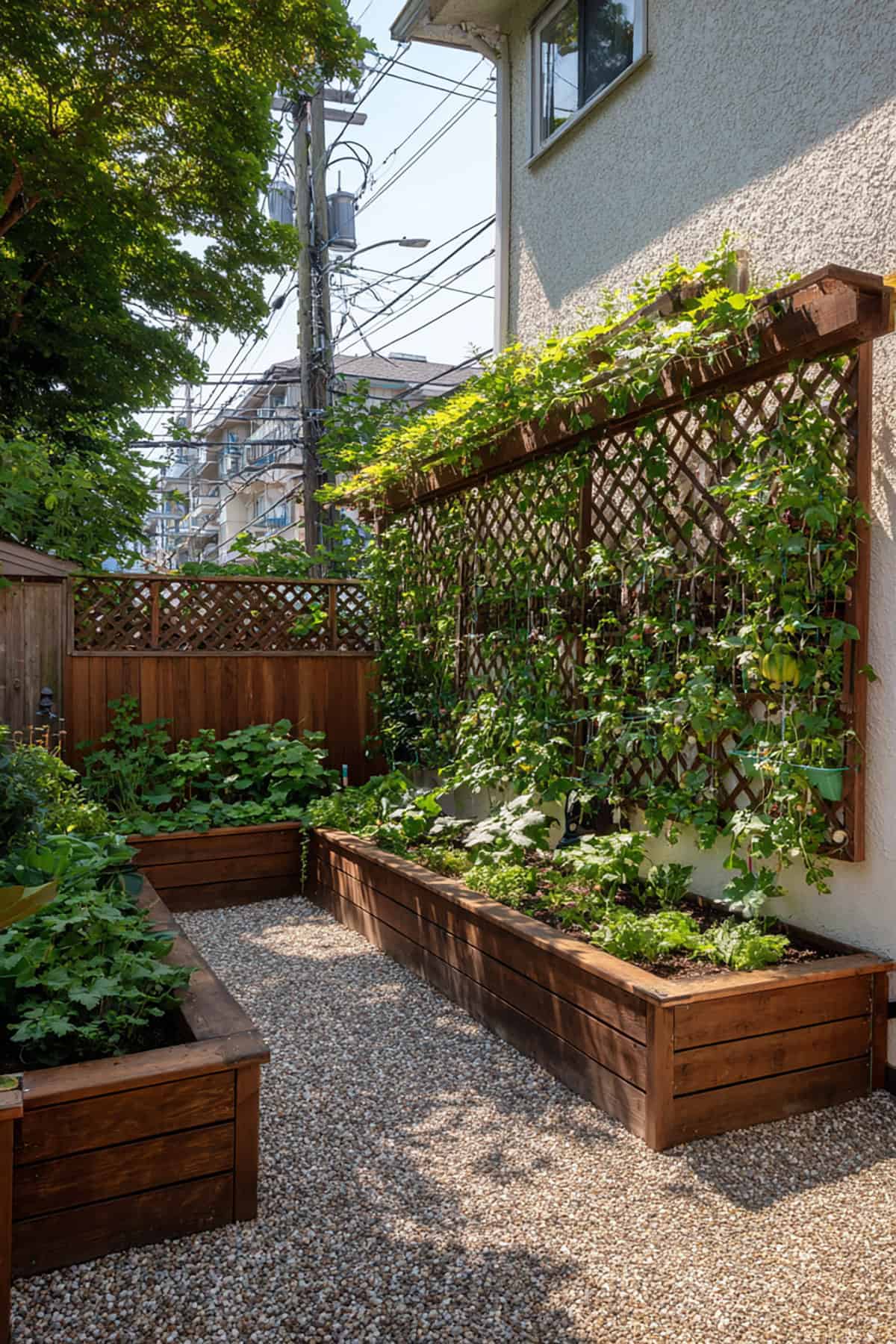
Three raised beds in a U with a wide center aisle (think 3 feet or so) let you reach every spot without stepping on the soil. Beds wider than 4 feet are just asking for trouble.
This works in yards at least 12 by 12 feet. Taller plants go at the back, shorter ones up front. If you aim the open side south, everyone gets their share of sun.
Mulch the aisle to keep weeds out and run drip lines for steady watering.
Long Beds For Row Crop Order
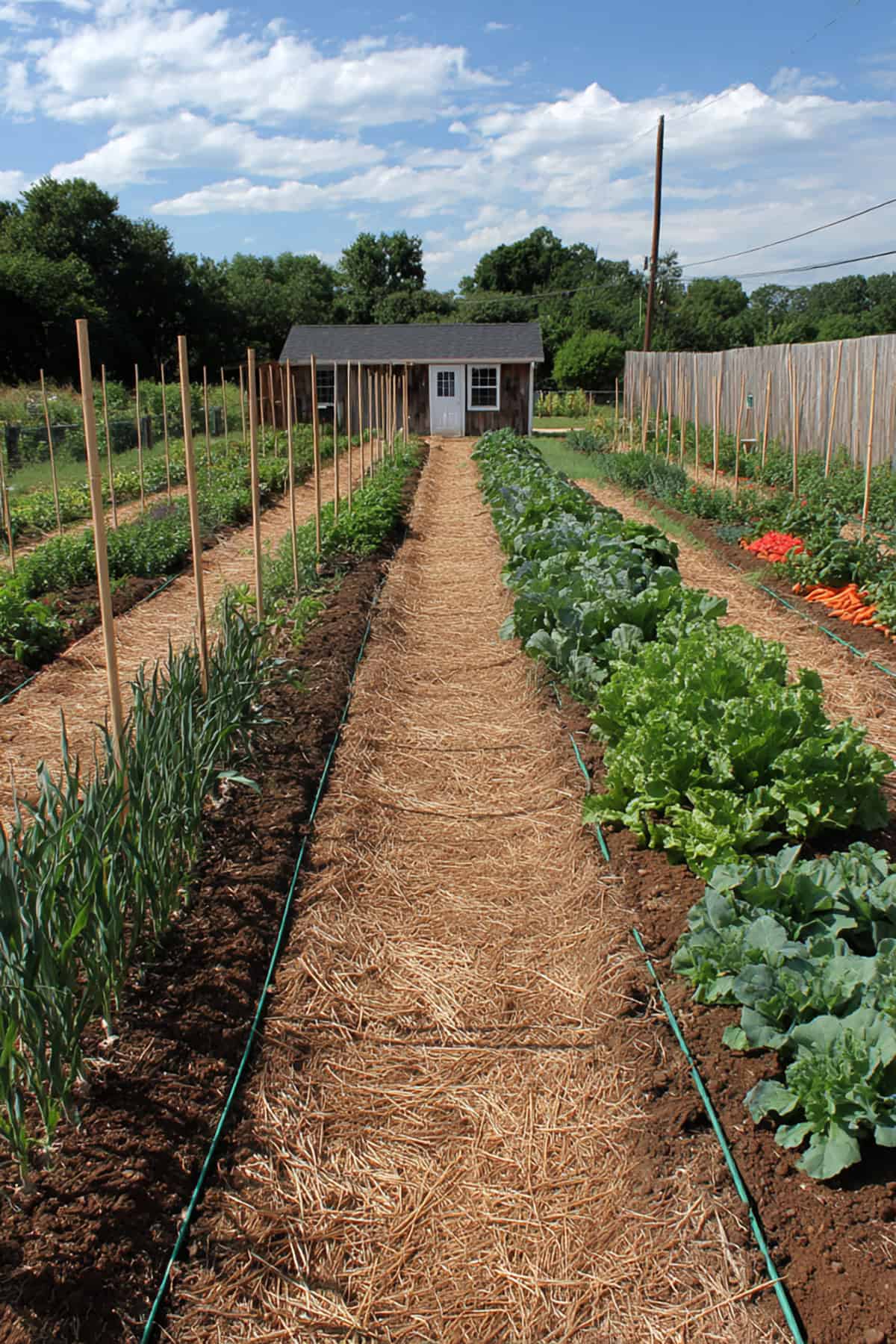
Long, straight beds suit crops like corn, onions, and potatoes. Stick to 3 or 4 feet wide, whatever length fits. Lining them up north to south gives both sides even sun.
Close rows—don’t waste space like a farm field—usually mean better yields and fewer weeds.
Paths between beds should fit your tools and baskets, about 2 to 3 feet wide. Label everything so you remember what went where.
Four-Bed Grid With Brick Paths
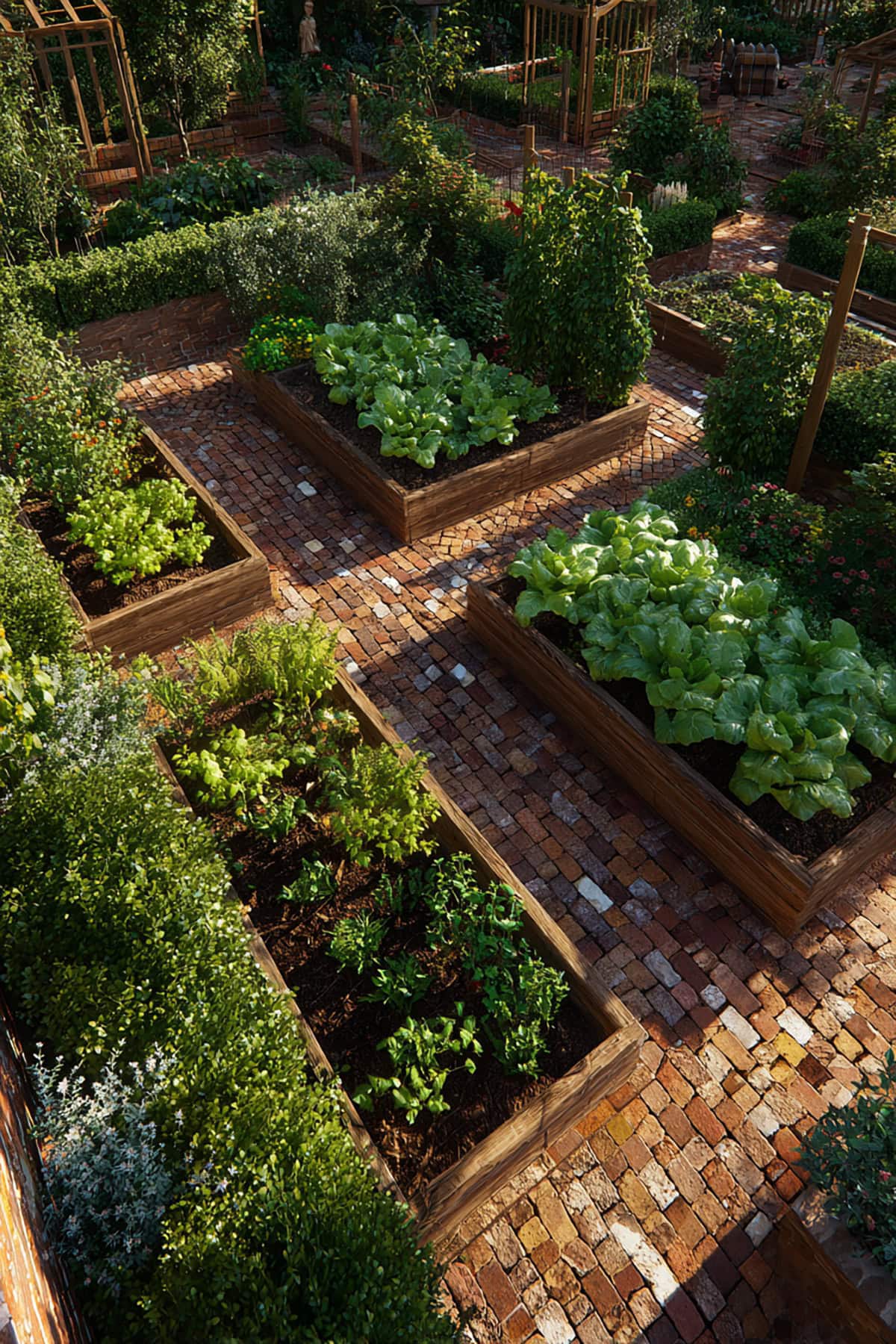
Break your garden into four squares with brick or paver paths in between. You’ll have solid walkways and clear spots for each crop group.
Stick to 4×4 or 4×8 foot beds. Maybe one for heavy feeders, one for legumes, roots, and leafy greens. Rotate them around each year.
Brick paths help with drainage and keep things tidy, especially after rain.
Companion Plant Blocks Layout
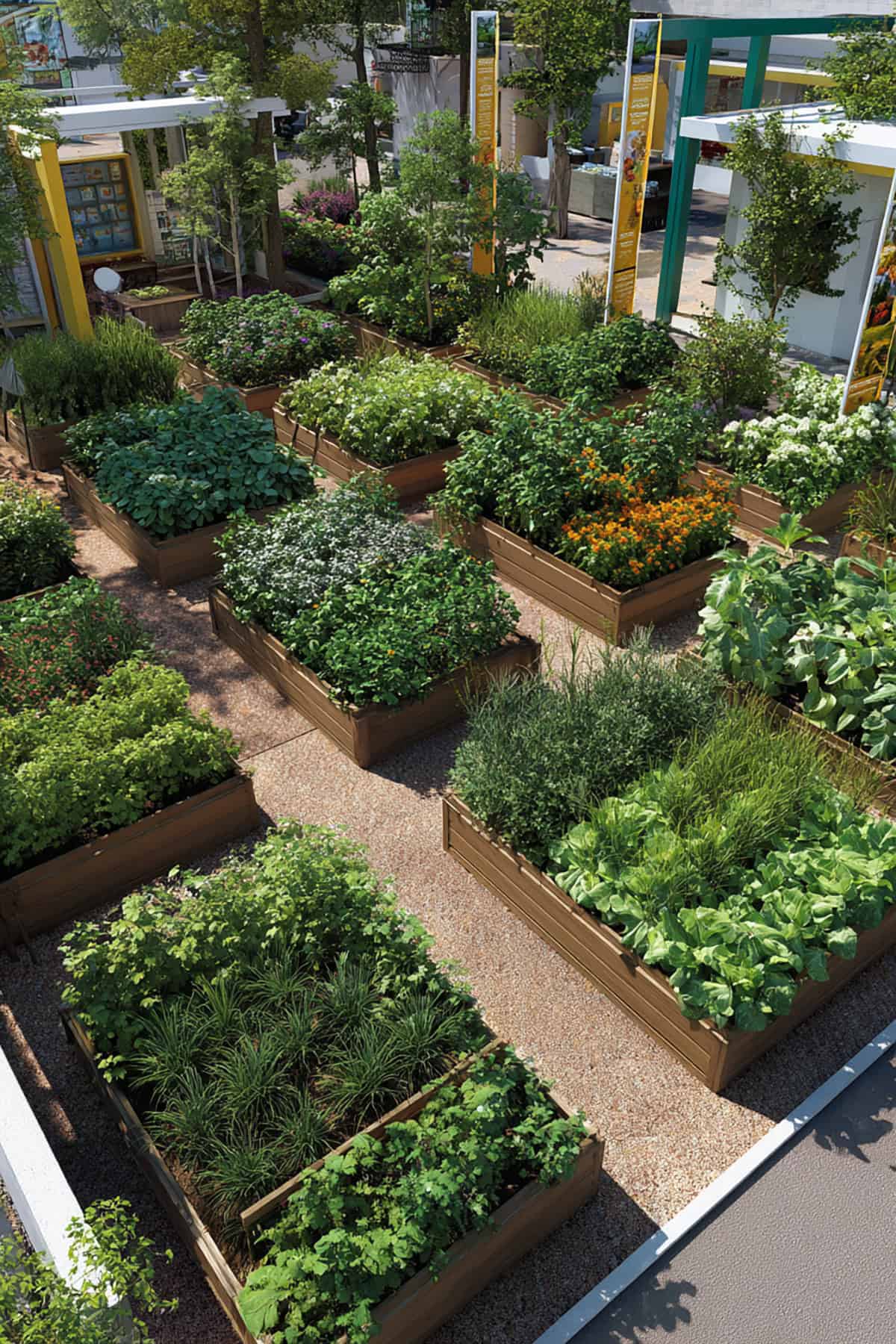
Plant crops in tight blocks based on what gets along—tomatoes, basil, and marigolds in one, carrots and onions in another.
Wide rows or square spacing lets you fit more in, and the close quarters help block weeds. Keep blocks under 4 feet wide so you can reach in.
If two crops don’t play nice, split them up with a path or border. Take notes on what works and tweak it next year.
Tiered Beds On A Gentle Slope
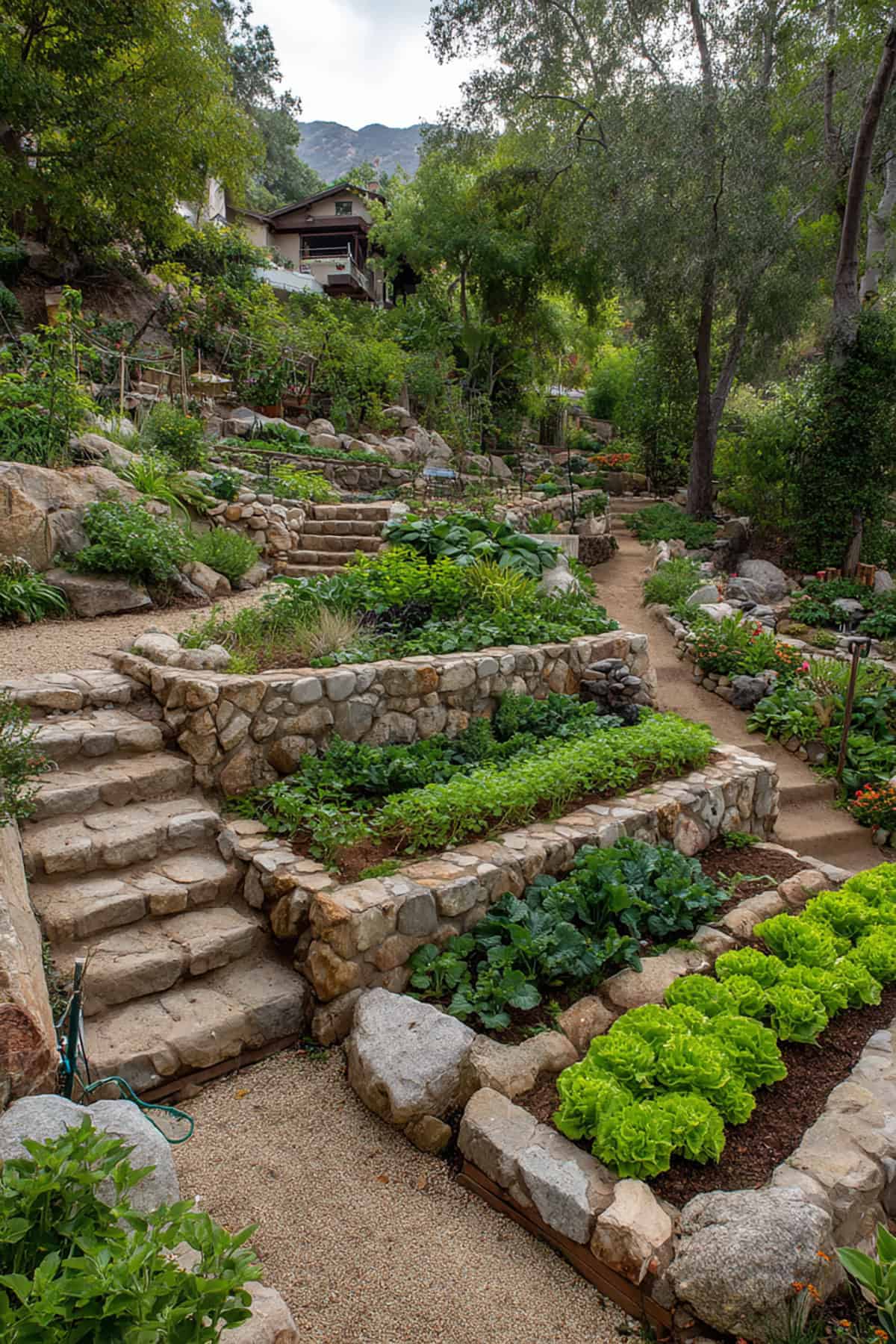
Got a slope? Cut flat terraces into it and hold them with timber or stone. Beds 3 to 4 feet deep are easiest to handle.
Put tall stuff up top so it doesn’t shade what’s below. Drip lines on each level help with runoff. Mulch to keep the soil from washing away.
Steps or solid paths between levels make moving around safer and easier. This setup really helps control water and lets you use tricky land.
Horseshoe Bed With Wheelbarrow Lane
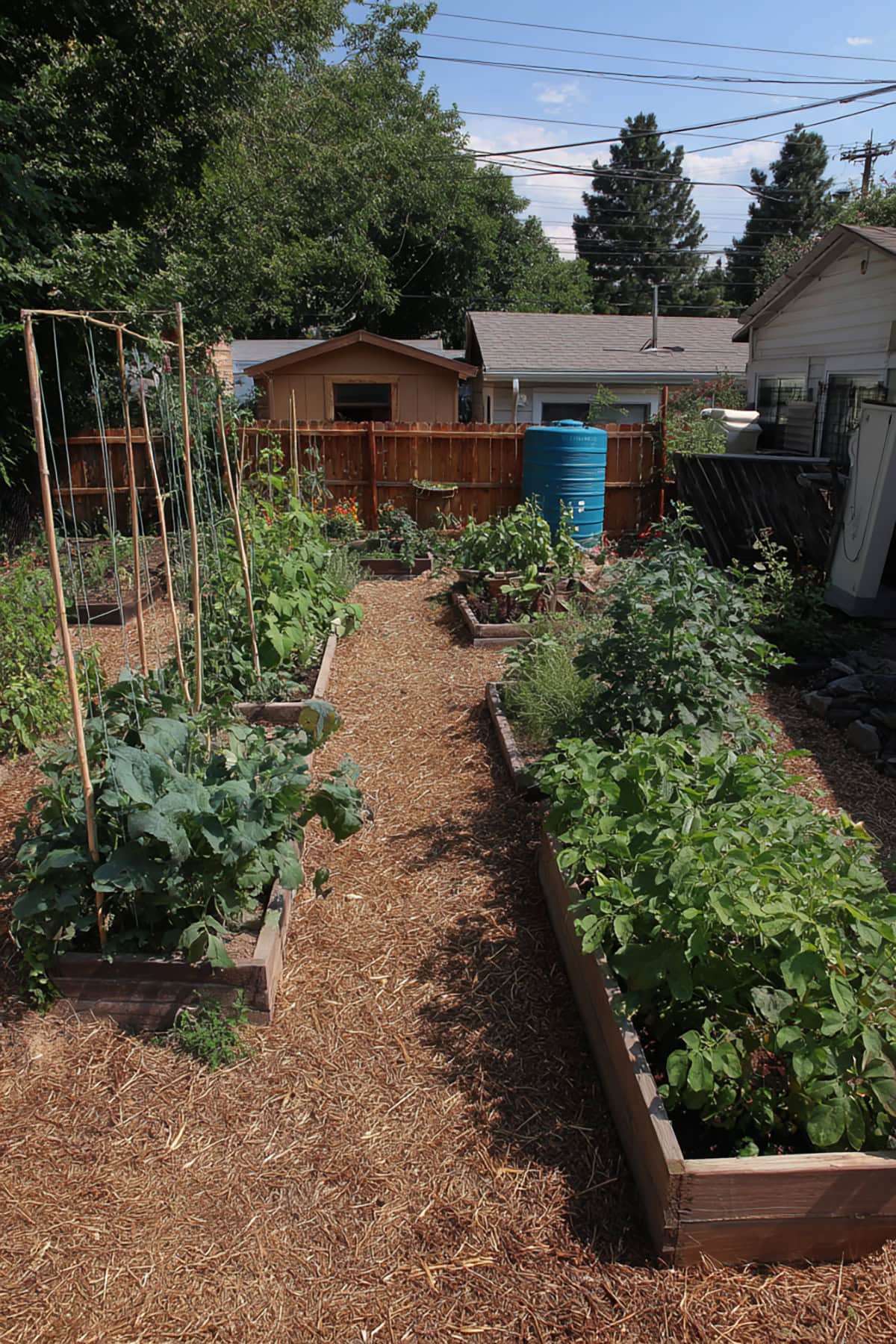
Shape a big horseshoe bed with a center lane wide enough for your wheelbarrow (3 feet is good). It’s handy for moving compost and tools around.
Tall crops go at the back curve, short ones down the arms. You can reach everything from the lane. Don’t make the bed too deep—4 feet max.
Some edging keeps soil where it belongs. This suits bigger yards where you want easy access.
Wagon Wheel Bed Layout
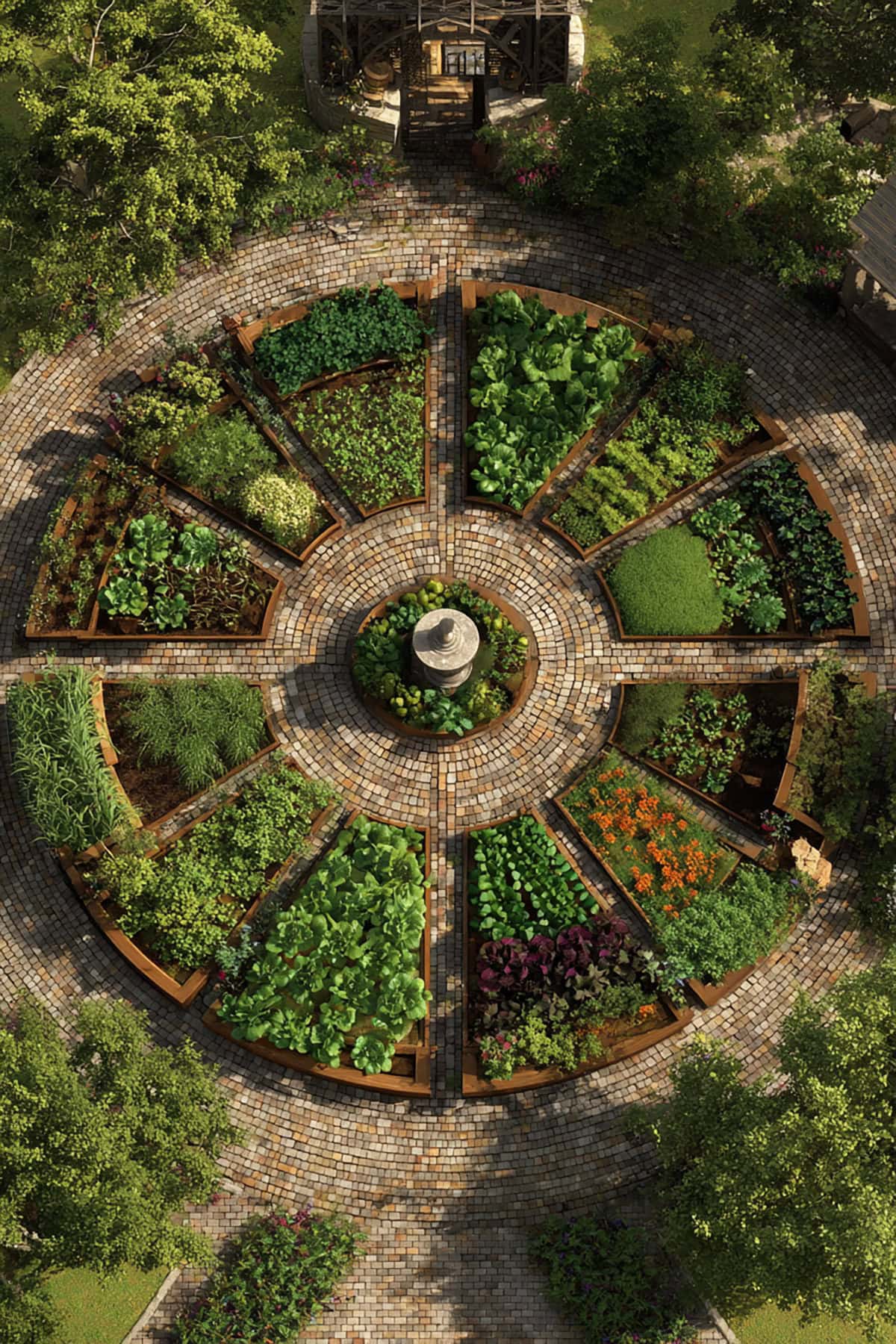
Picture a round bed with paths shooting out from the middle like spokes. Gravel or mulch keeps the paths firm. Cut the circle into wedges for planting.
Keep it small enough that you can reach the center from each spoke. Assign a crop to each wedge and rotate them each season. Tall crops fit best on the north side.
Throw a trellis or a cluster of herbs in the middle for a bit of flair.
Spiral Herb + Veg Center Bed
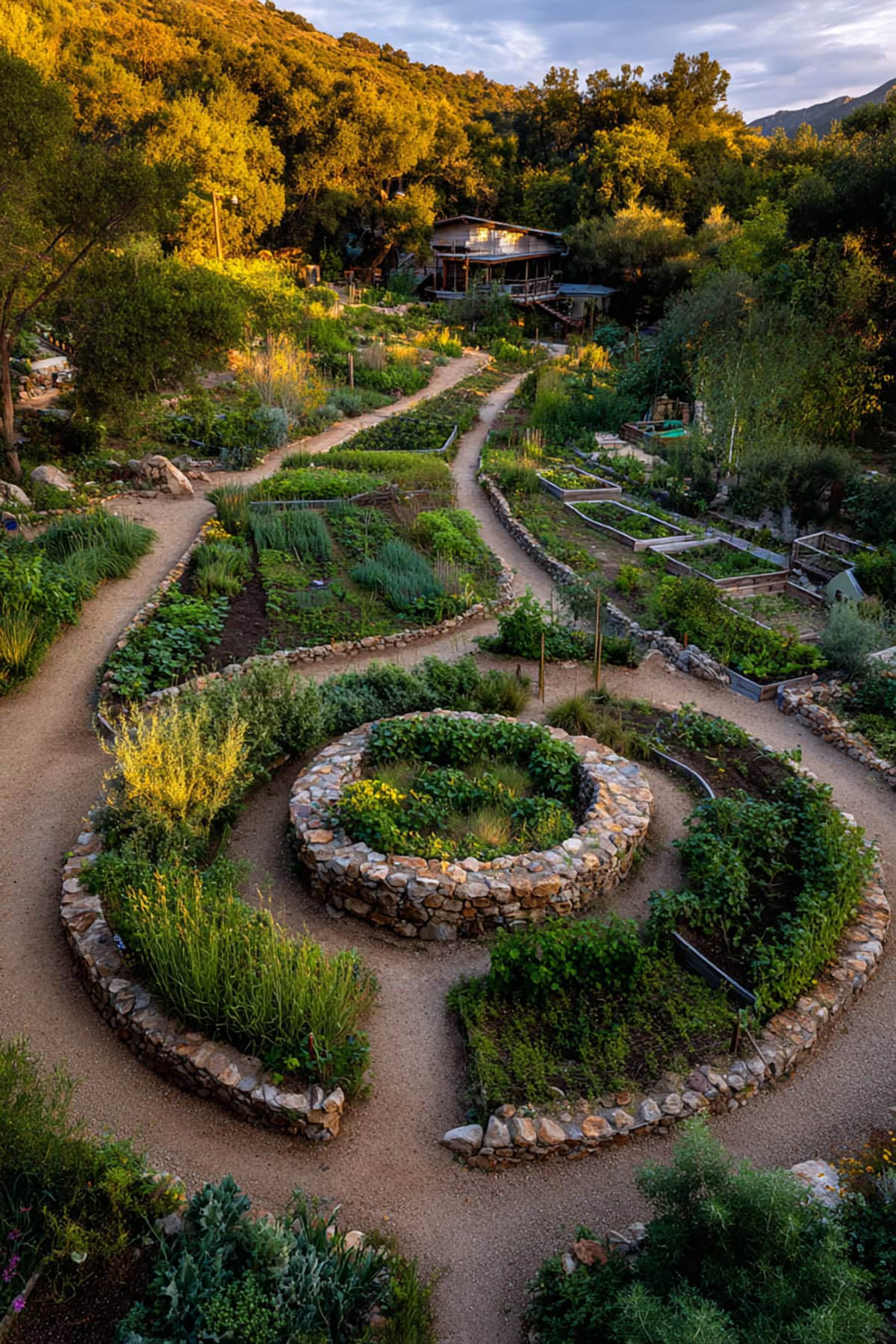
Build a spiral out of stone or brick, maybe 5 or 6 feet across. The top is drier for herbs like rosemary, bottom’s moist for lettuce and parsley.
Put it near the kitchen for quick snips. The spiral shape gives you different sun and shade spots for picky plants.
Clear paths all the way around help with access. A drip line that follows the curve keeps watering simple.
Cottage Patchwork Beds
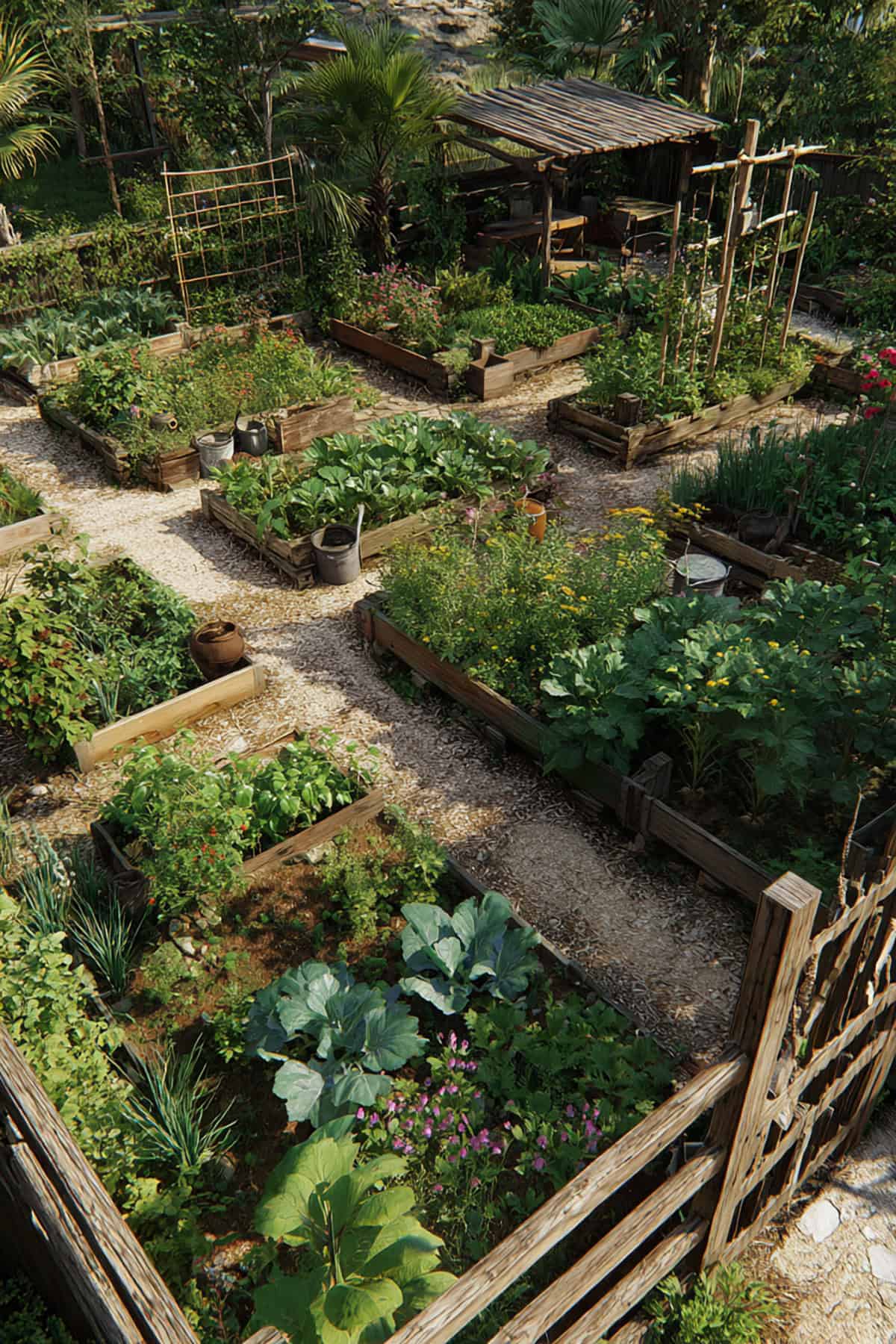
Break the space into small, odd-shaped beds with skinny paths. Mix veggies, herbs, and flowers for pollinators and natural pest control.
Stay under 4 feet wide per bed. Change up plant heights and colors for airflow and looks. Rotate by crop family each year.
Paths of mulch or brick cut down on weeds. This style fits best if you like a bit of organized chaos.
Mixed Raised Beds With Pollinator Strip
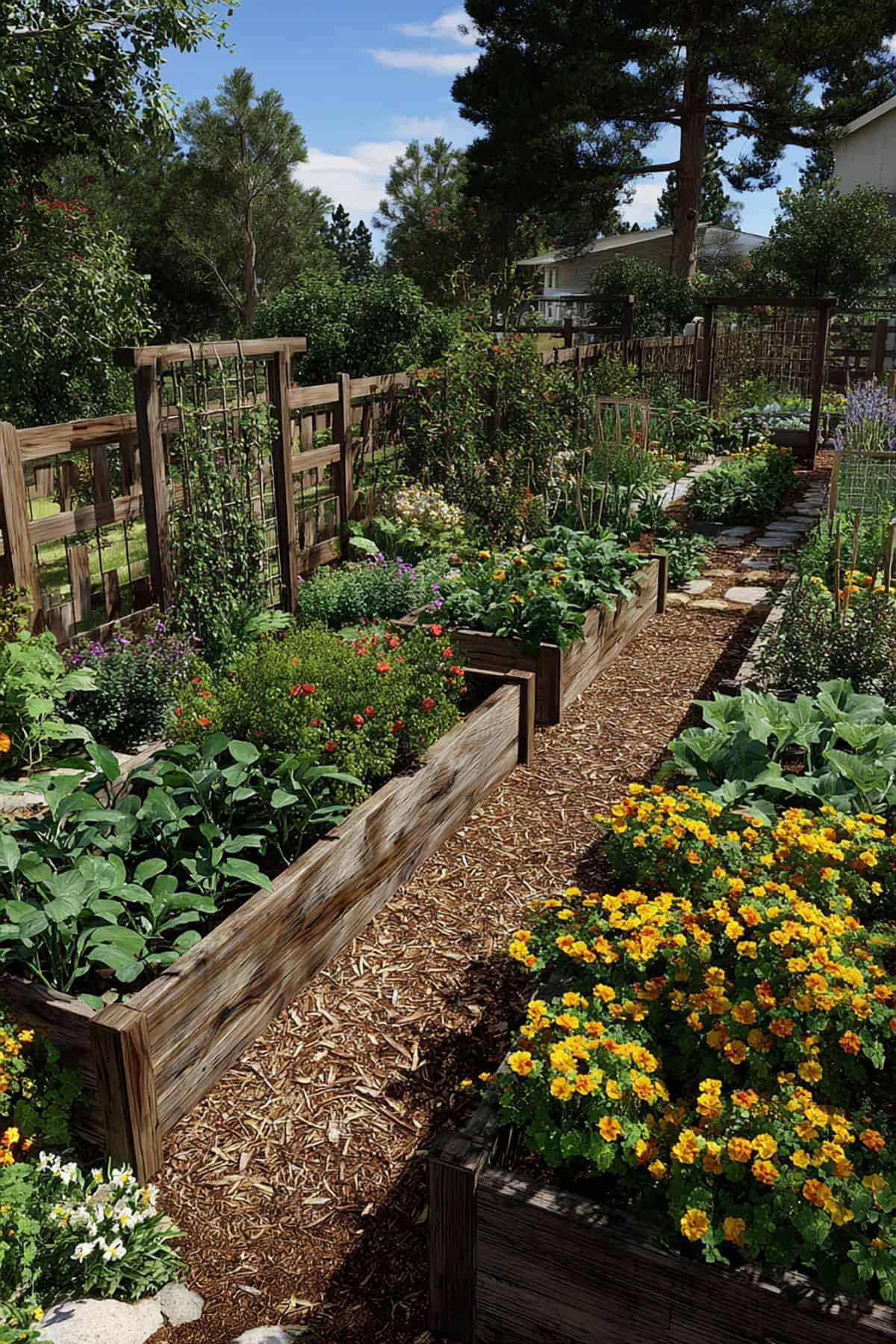
Set up several raised beds and add a strip of flowers along one edge. Pick blooms that last through the season, so bees and good bugs stick around.
South or west edge gets the most light. Beds 3 to 4 feet wide, paths 2 to 3 feet. Grow squash and peppers near the pollinator strip.
Skip pesticides here. Drip watering saves water and keeps both veggies and flowers happy.
Central Cross Path Kitchen Garden
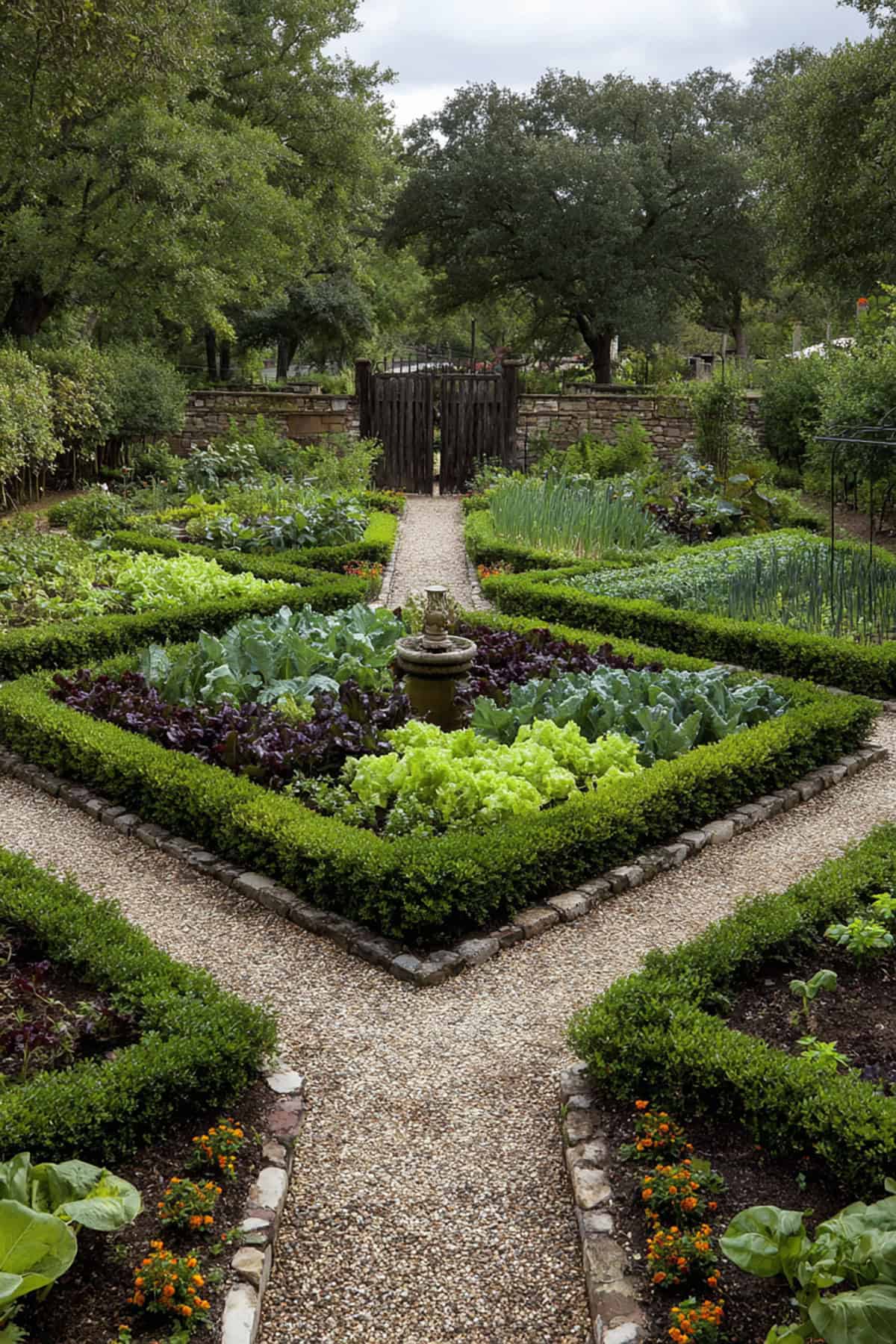
Lay out two main paths crossing in the middle to split the garden into four big planting zones. Each can get a different crop group.
Main paths should be at least 3 feet wide. If you’ve got room, add some skinnier side paths. Put taller crops on the north side of each area.
This works well in square or rectangular spaces and makes rotation and access a breeze.
Raised Beds With Built-In Seating
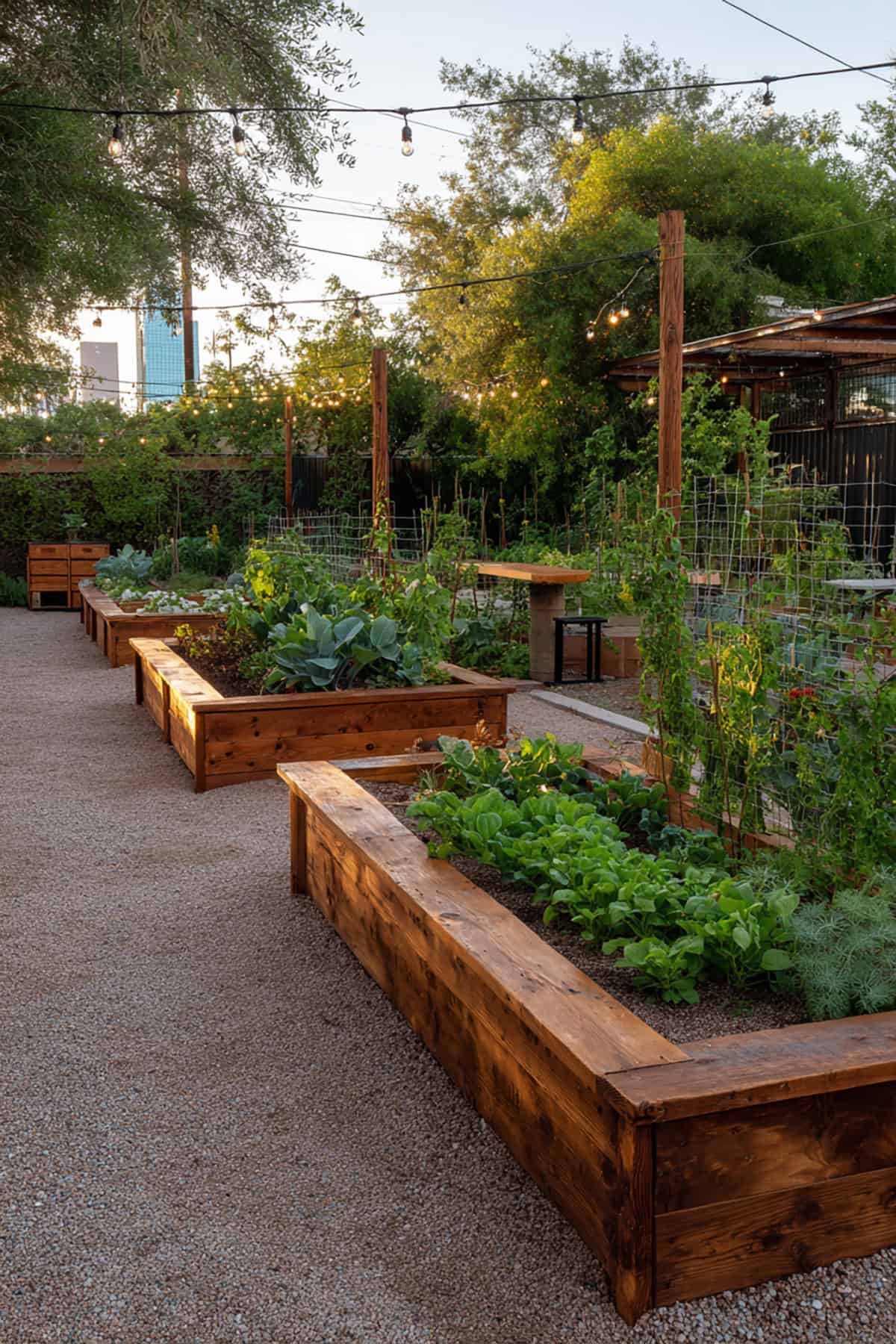
Build raised beds with wide, sturdy edges for sitting—caps should stick out at least 8 inches. Way easier on your back for planting and picking.
Don’t go wider than 4 feet per bed. Put seating where you’ll use it most. Use rot-proof wood or composite boards.
Near a patio or play spot is ideal. Makes it more likely you’ll keep up with the garden.
Greenhouse-To-Garden Axis Layout
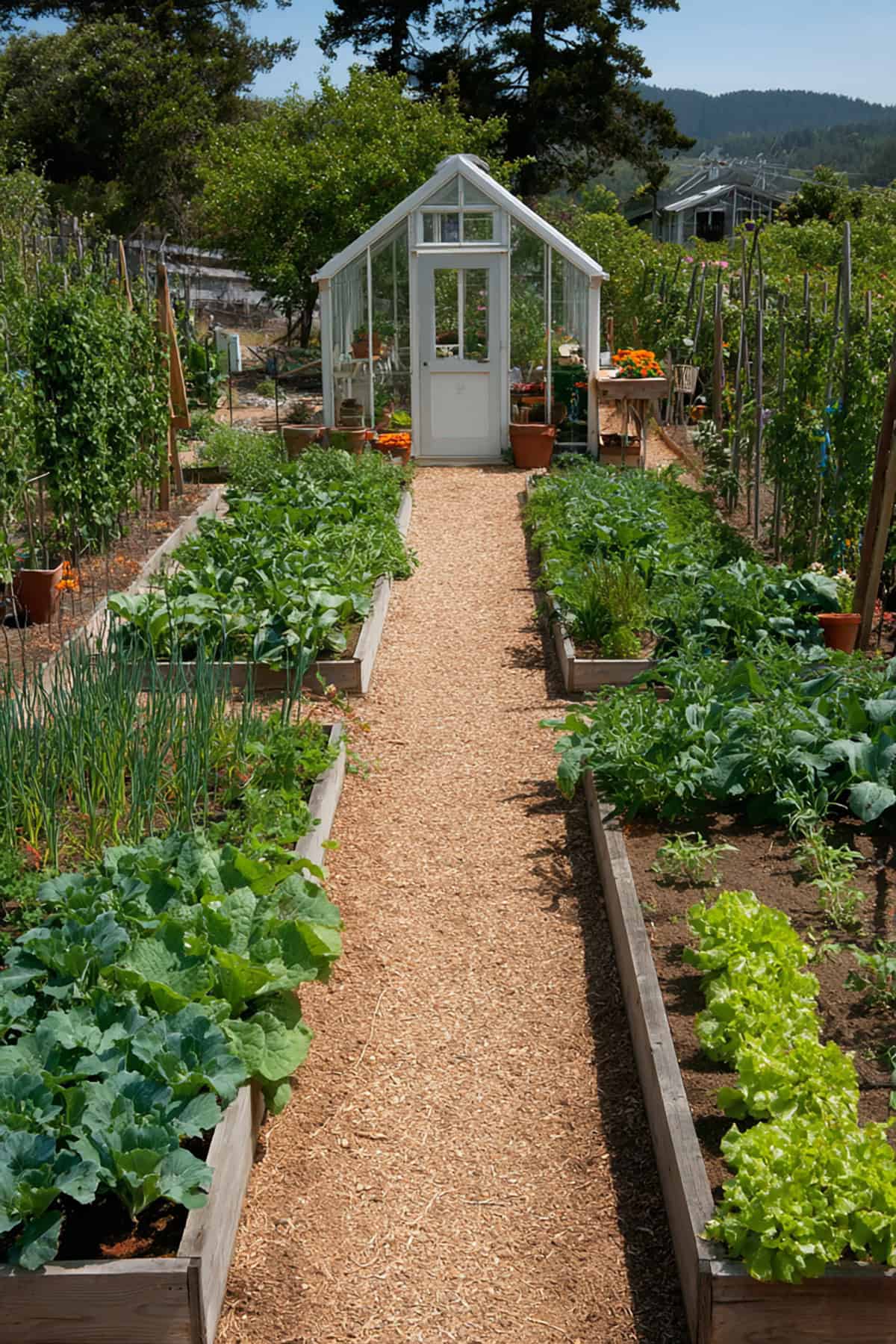
Line up your outdoor beds straight out from the greenhouse door. It’s a clear path for moving plants and gear without tripping over other beds.
Put the crops you care most about closest to the greenhouse, tougher or direct-seeded stuff farther out. Keep the main path solid and wide.
Try to match up irrigation between the greenhouse and outside beds for less hassle.
Triangle Beds For Small Spaces
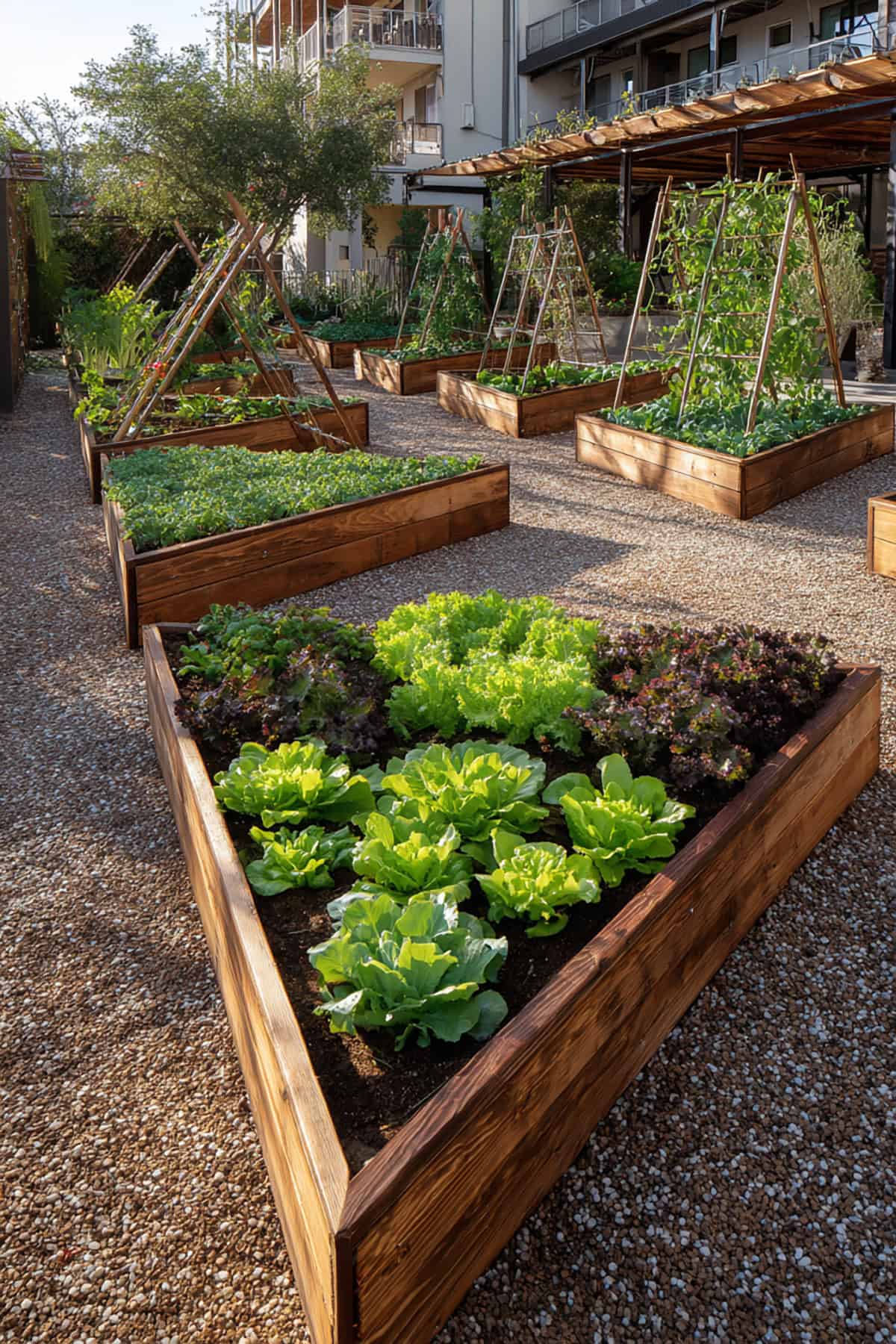
Wedge triangular beds into yard corners or along angled fences. Straight edges make for tidy borders. Keep each side short for easy reach.
Stick to compact crops—think bush beans, peppers, lettuce. Skip tall plants that throw too much shade. Vertical supports work well on the longest edge.
Mulch helps with weeds. Triangles squeeze more out of awkward spots.
Courtyard Potager With Gravel And Box Borders
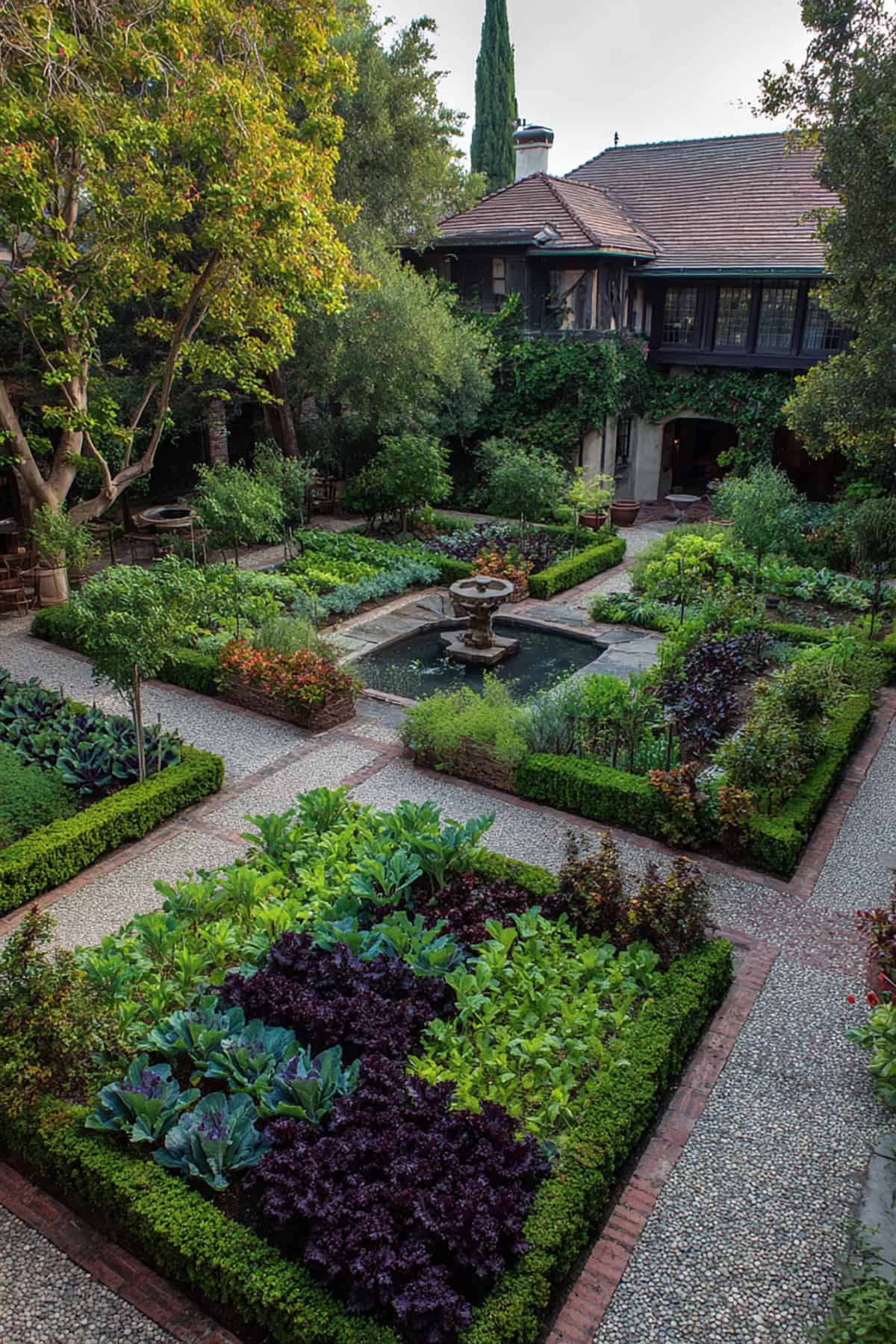
Frame small rectangle beds with box hedges or wood, and fill paths with gravel for drainage. Beds under 4 feet wide work best.
Plant veggies in neat rows or blocks. Herbs and edible flowers add variety. Keep edges sharp for a clean look.
Put this garden where you’ll see it often. You’ll notice pests and harvest on time.
Raised Bed + Container Mix Layout
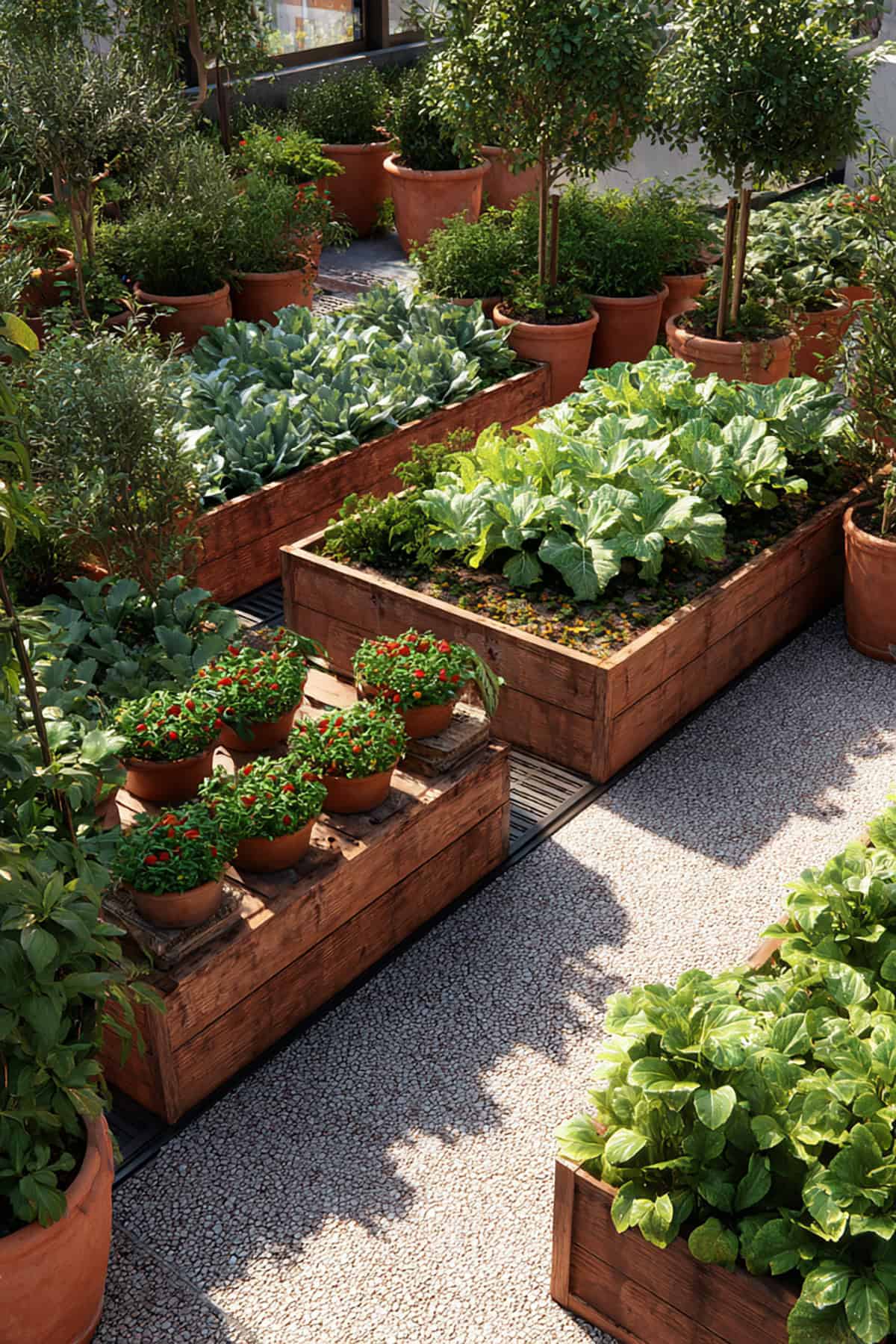
Mix fixed raised beds with big containers around the edges or on patios. Beds are great for long-season crops; containers for herbs and fast greens.
Pick pots at least a foot deep and with drainage. Move them as the sun shifts through the year.
This is a good fit if you’re renting or have a small yard—no need to dig up the whole place.
Keyhole Bed With Compost Basket
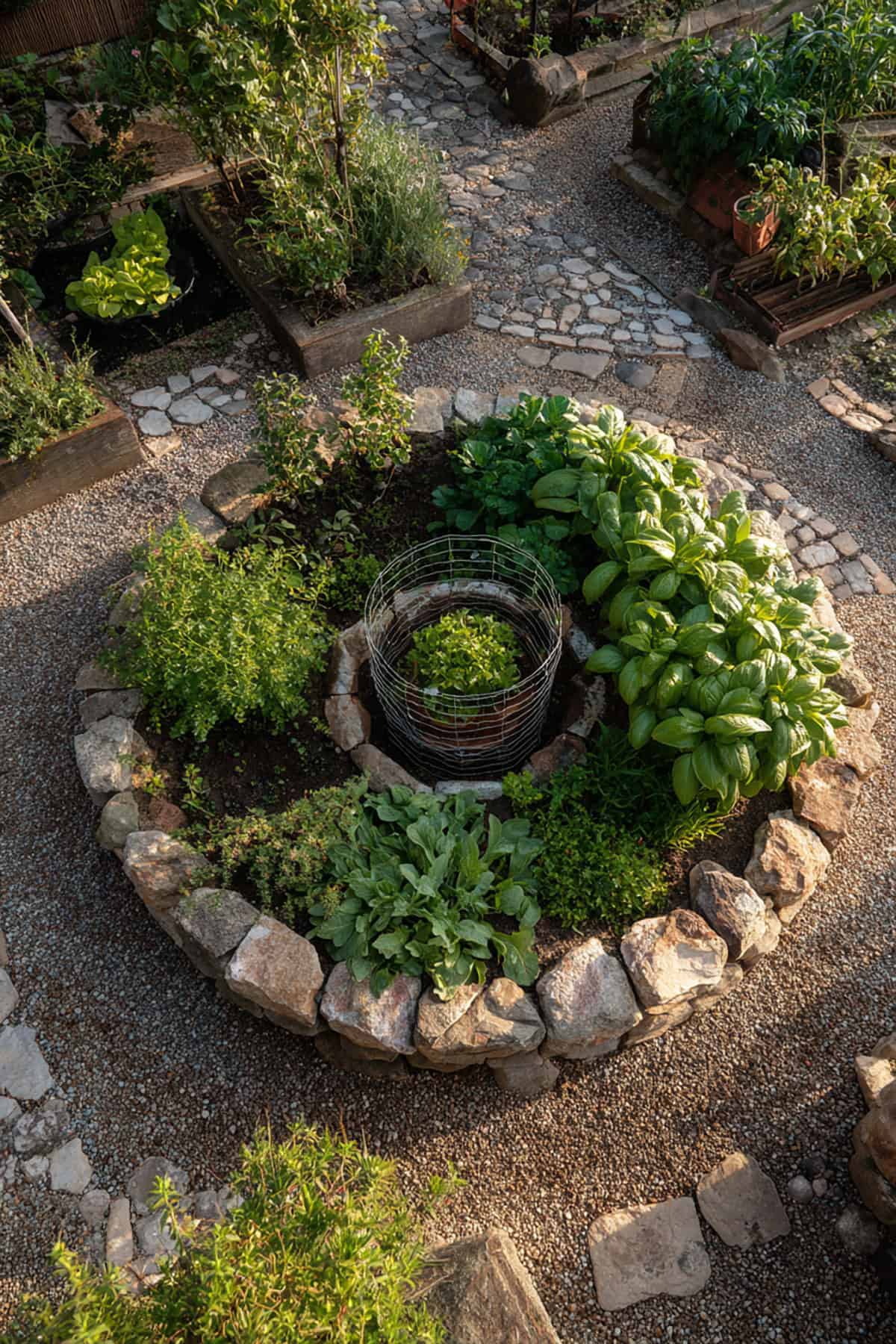
Make a round raised bed with a notch leading to a center compost basket. The notch lets you step in close. The basket feeds the bed as you toss in scraps.
Six to eight feet across works. Water the basket so nutrients spread. Plant heavy feeders around the edge.
Use tough stuff for the wall. This design lets you skip a lot of store-bought fertilizer.
Tomato Corridor With Dual Trellis Lines
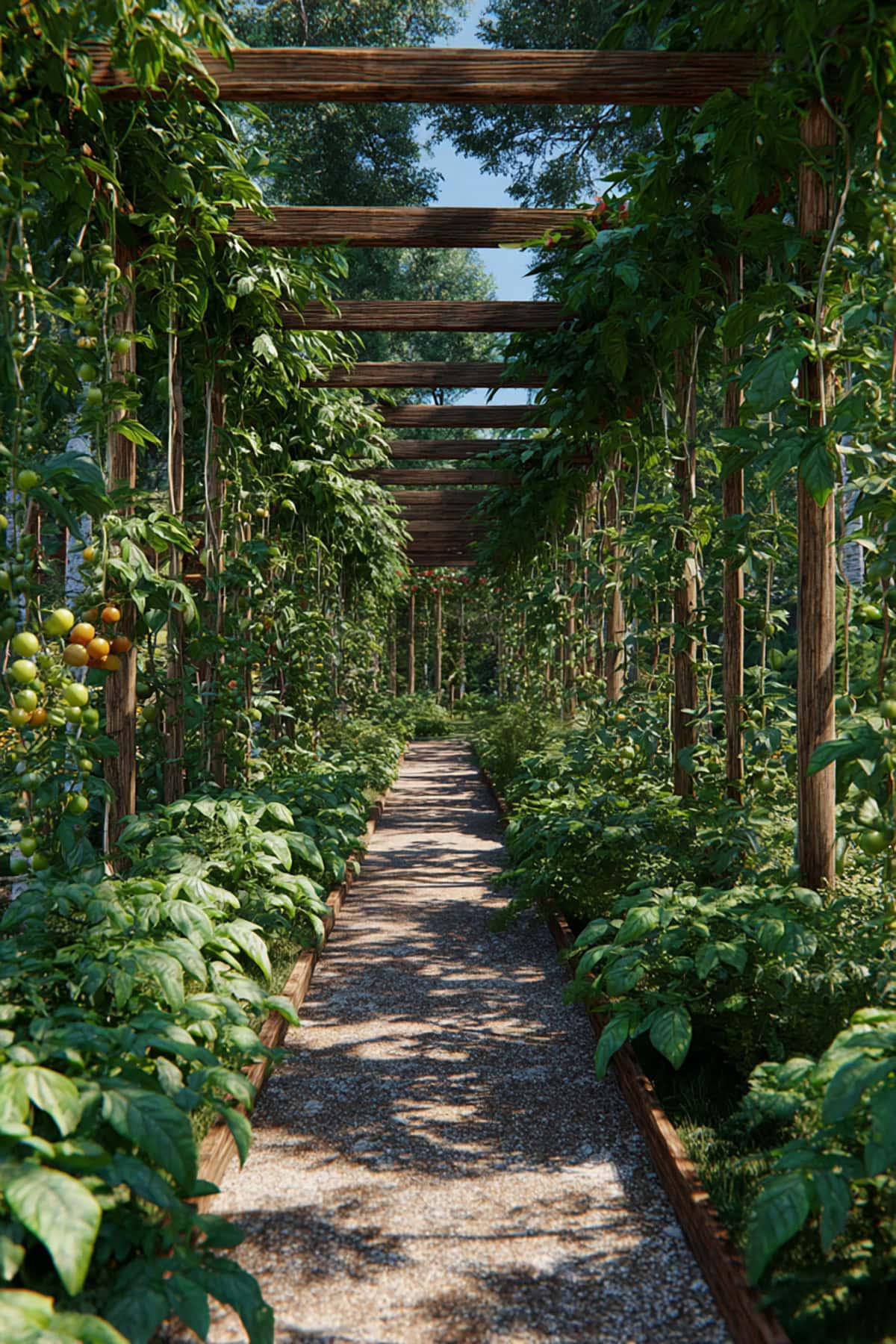
Set up two parallel trellises, 2 to 3 feet apart. Tomatoes on both sides, with a path down the middle for picking and pruning.
Strong posts and wire or panels are a must. Space plants 18 to 24 inches apart. Tie up stems for good airflow.
Drip lines at the base keep watering easy. Pick a sunny spot—at least six hours of direct light.
Mandala Circle Beds With Radial Paths
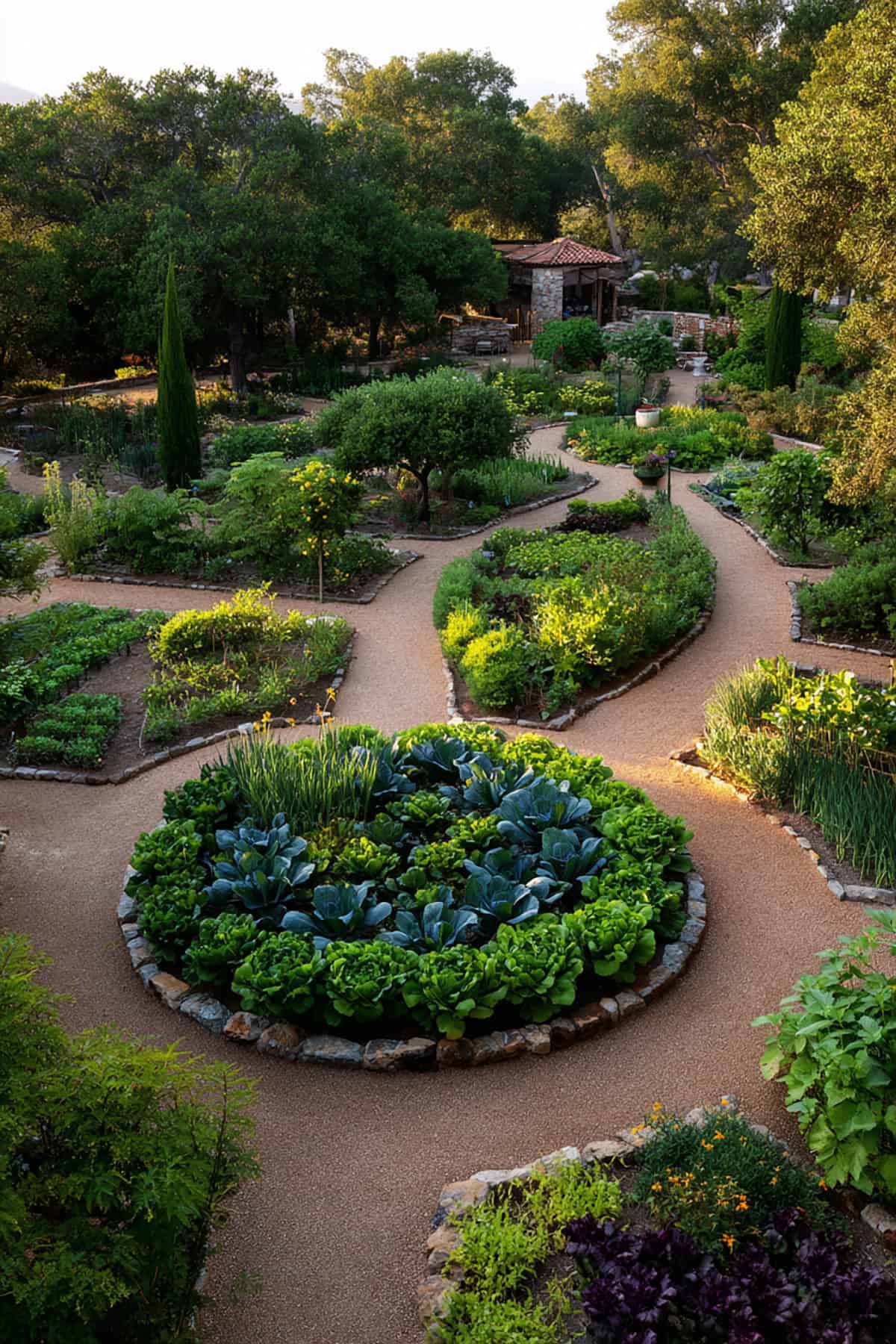
Arrange a few circular beds around a central point, with paths shooting out like spokes. Each circle should be small enough to reach from all sides.
Assign a crop family to each circle and rotate yearly. Tall crops go on the north side of each bed.
Mulch the paths to help with weeds. This setup brings order to bigger spaces.
Compact Urban Raised Bed Row
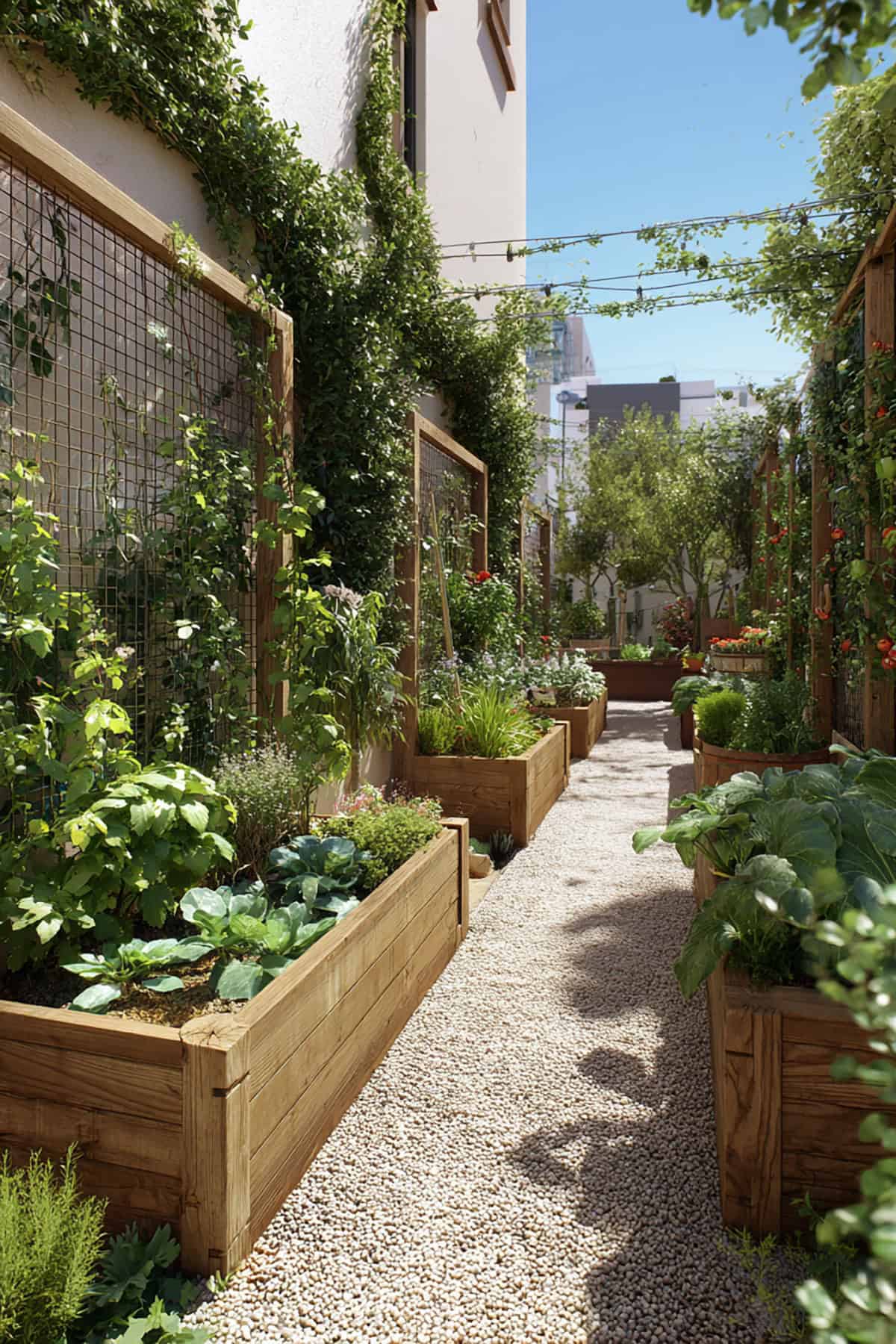
Set up one or two narrow raised beds along a fence or wall—2 to 3 feet wide for tight spots. Use vertical supports to boost the harvest.
Grow what you eat most. Sow greens every couple weeks for a steady supply. Disease-resistant varieties help if space is tight.
Six hours of sun is minimum for fruiting crops. Compost each year keeps the soil going strong.
Salad Bar Beds Near The Kitchen Door
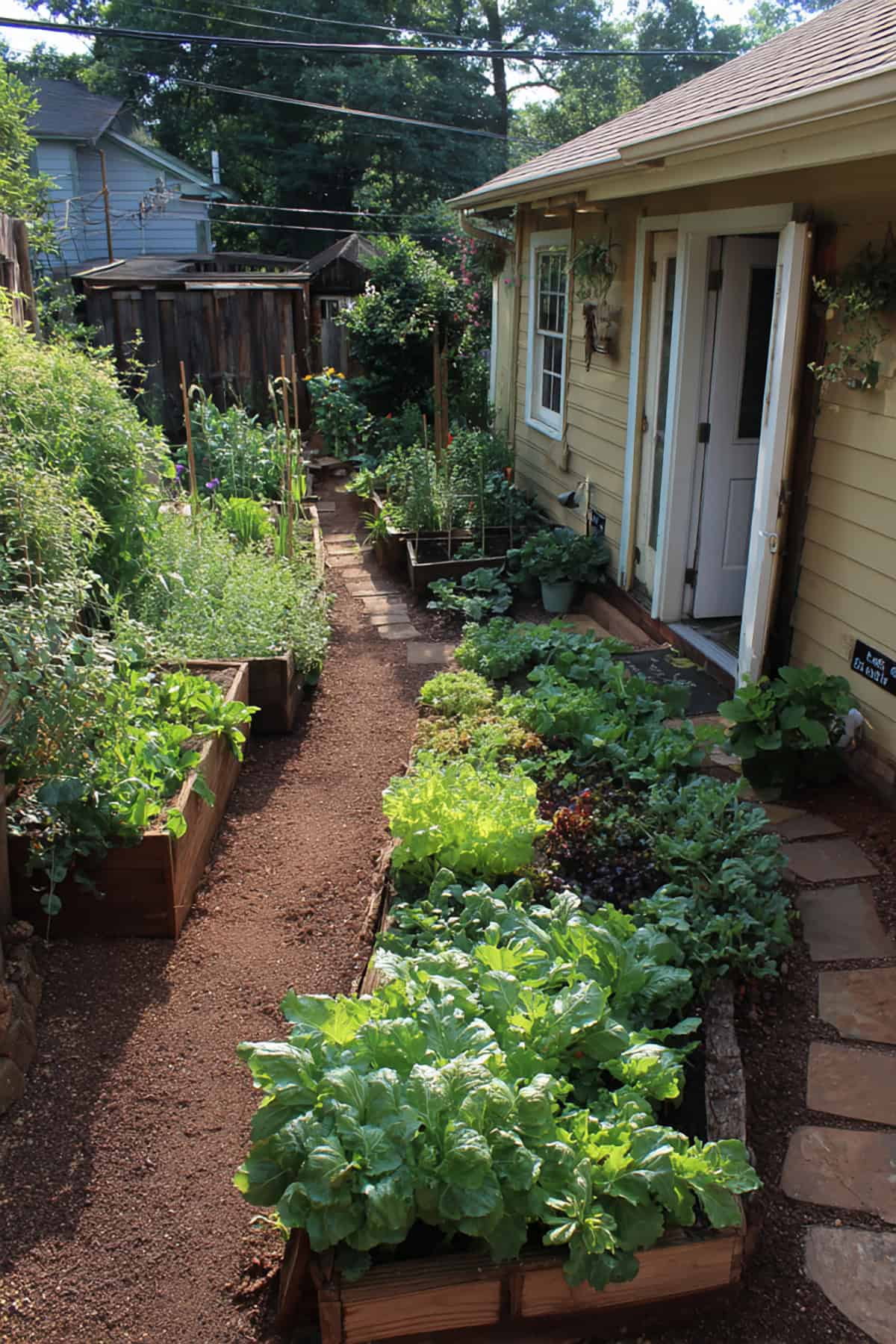
Stick a couple of small beds by your main entrance. Lettuce, spinach, radishes, and herbs all do well here. Honestly, it just makes grabbing a handful for lunch a breeze.
Try to keep them under 3 feet wide—otherwise, you’ll be stretching awkwardly. Plant a bit every week or two, so you’re not stuck with a mountain of greens all at once. Row cover can help keep bugs from ruining your plans.
Don’t let them dry out if you want tender leaves. This setup makes it easy to pick just what you need, right when you need it.