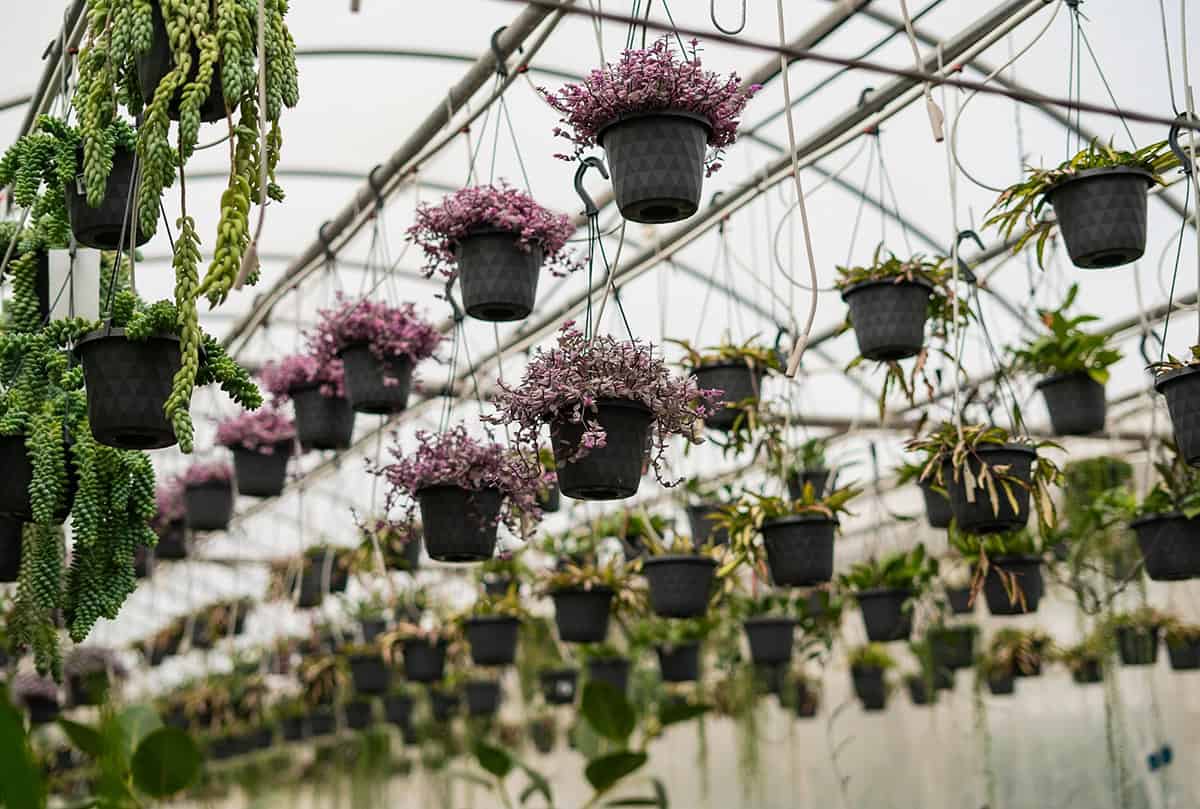
Most greenhouses are built for seedlings and tomatoes, and then quietly become the place everyone wants to sit on a gray February afternoon. Warm light through the glass, the smell of damp soil and a comfortable chair are hard to resist.
Practical setups such as potting benches and drying rails share this list with reading corners, a kitchenette and a dinner table under hanging herbs. Several need only a weekend and a stack of spare lumber.
Table of Contents
- Greenhouse Interior Design Ideas
- Built-In Window Seat
- Wicker Seating Corner
- Floating Slat Wall with Orchids
- Mediterranean Tile Floor
- Raised Bed Perimeter
- Sunlit Conservatory Nook
- Trellis Ceiling Vine
- Pegboard Potting Bench
- Long Center Island Bench
- Bonsai Display and Stone Path
- Steel Shelving
- Herb Drying Rail
- Built-In Storage Workstation
- Tiered Corner Shelves
- Patterned Runner and Styled Shelves
- Hanging Shade Cloth
- Brick Fireplace Corner
- Arched Trellis Ceiling
- Library Corner
- Greenhouse Kitchenette
- Art Studio Work Zone
- Curtain Divider
- Painted Shelves and Coordinated Pots
- Chalkboard Planning Wall
- Symmetrical Raised Beds
- Twin Work Tables
- Dining Table Under Hanging Herbs
- Boho Wood Lounge
Greenhouse Interior Design Ideas
A greenhouse used all year needs a design for both plants and people. Smart layout, good light control and a comfortable seat or two make the space far more inviting.
Built-In Window Seat
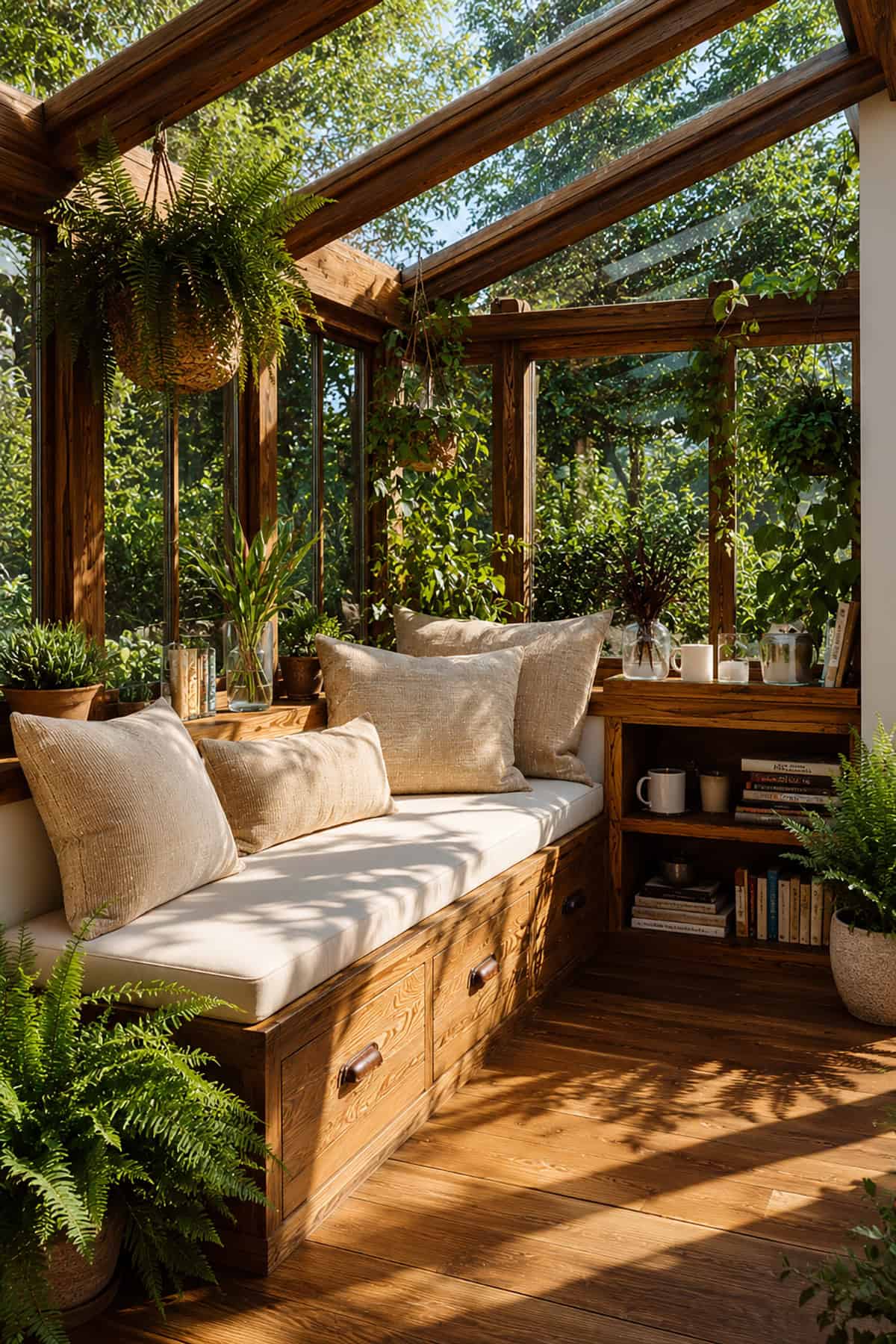
A built-in bench along the south or west wall soaks up winter sun. Build it from moisture-resistant wood such as cedar or treated pine, and seal every seam against the constant humidity.
A seat height of 18 to 20 inches is comfortable. Hinged lids or drawers underneath hide bags of potting mix, gloves and seed packets. Where the bench sits against the glass, insulating the base holds a little extra warmth on frosty nights.
Wicker Seating Corner
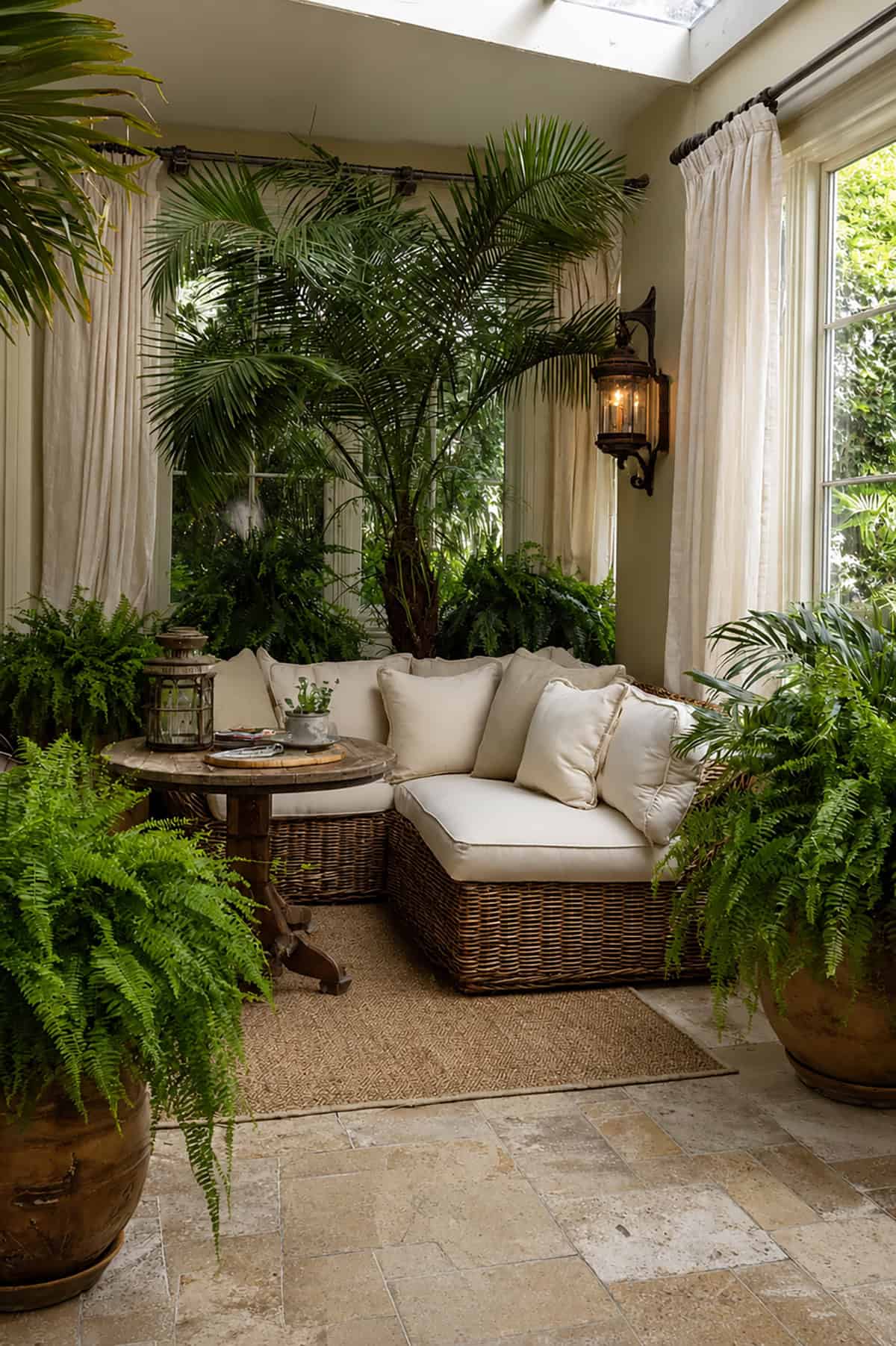
A pair of wicker chairs in a bright corner, just out of the direct glare, makes an easy place to sit with a coffee. Resin wicker holds up best in humid greenhouses, while natural rattan is fine where airflow is good.
A small side table collects pruners, gloves and a watering jug. Leave enough clearance around the seating for carts and hoses to pass.
Floating Slat Wall with Orchids
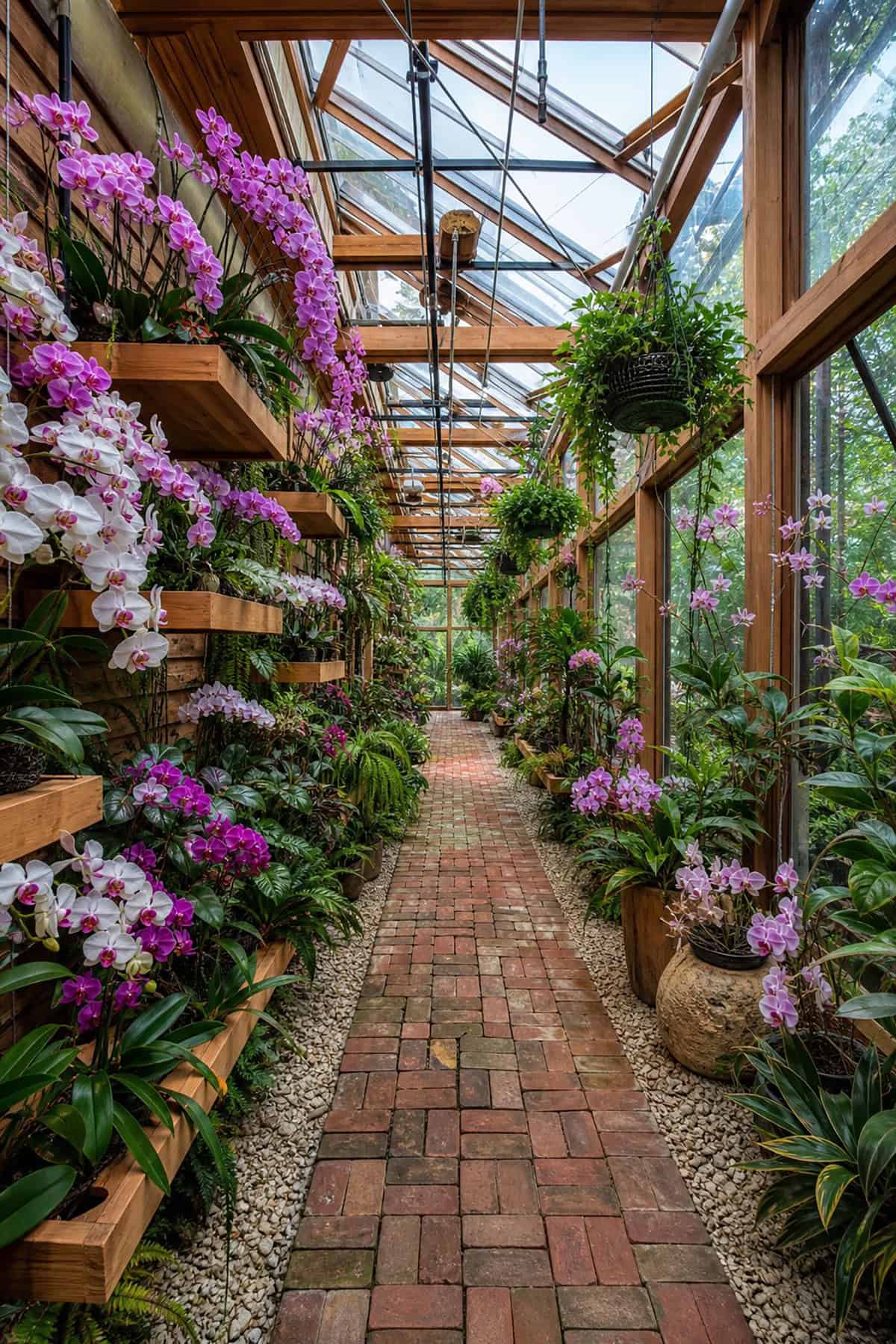
Vertical slat walls hold mounted orchids and air plants with plenty of airflow around their roots. An automated misting system on a timer handles humidity, adjusted for the weather.
A digital hygrometer tracks humidity, and most orchids thrive at 50% to 70%. In weak winter light, full-spectrum LED grow lights rated for damp locations fill the gap.
Mediterranean Tile Floor
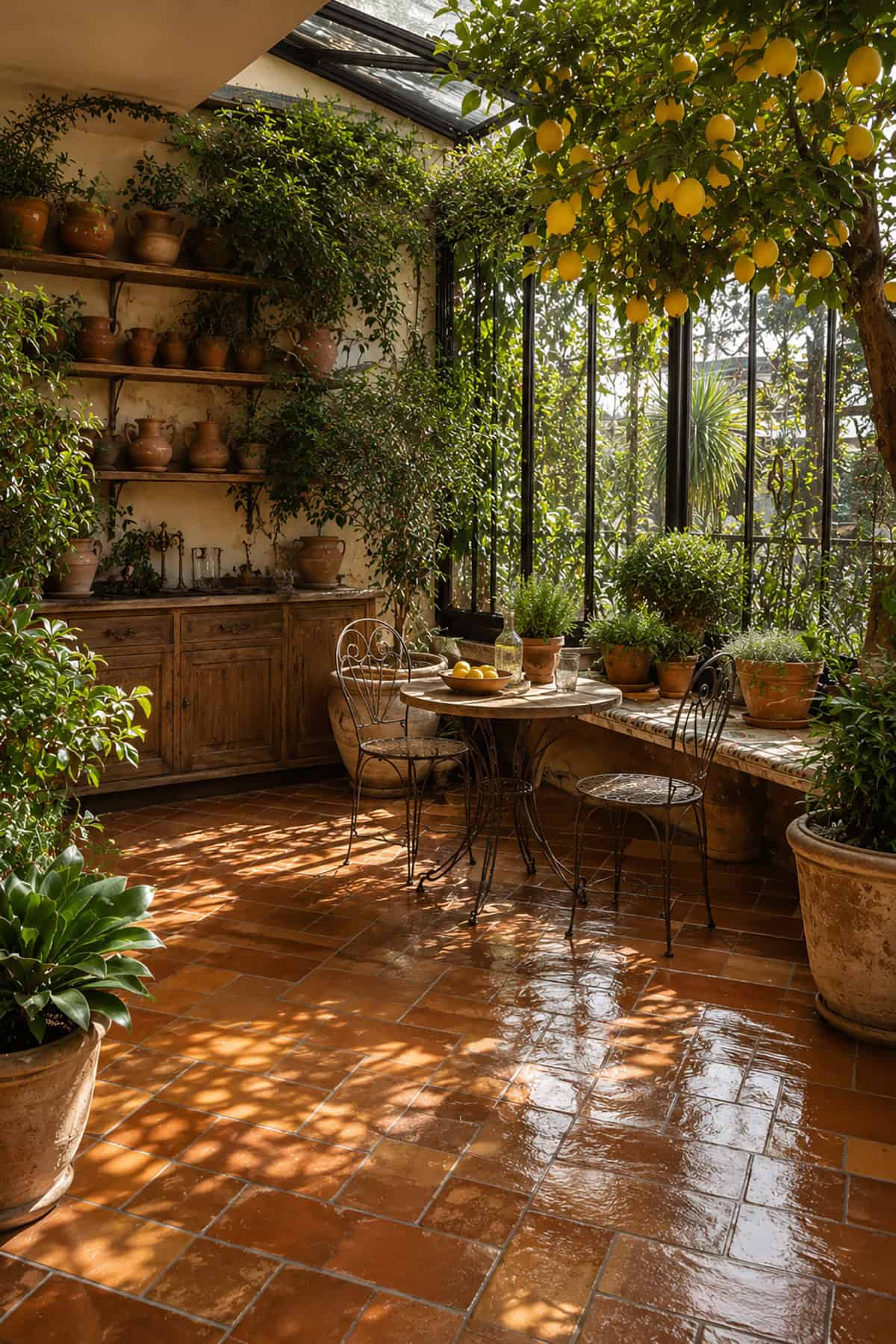
Terracotta floor tiles add warmth and pair naturally with clay pots on open wood shelving. A small wrought-iron bistro table makes a spot for coffee or a light lunch beneath potted citrus and fig trees.
Built-in benches along the windows add display space for herbs, topiary and flowering pots. Unglazed terracotta holds some moisture and raises humidity on hot days, and a coat of sealer protects it from stains.
Raised Bed Perimeter
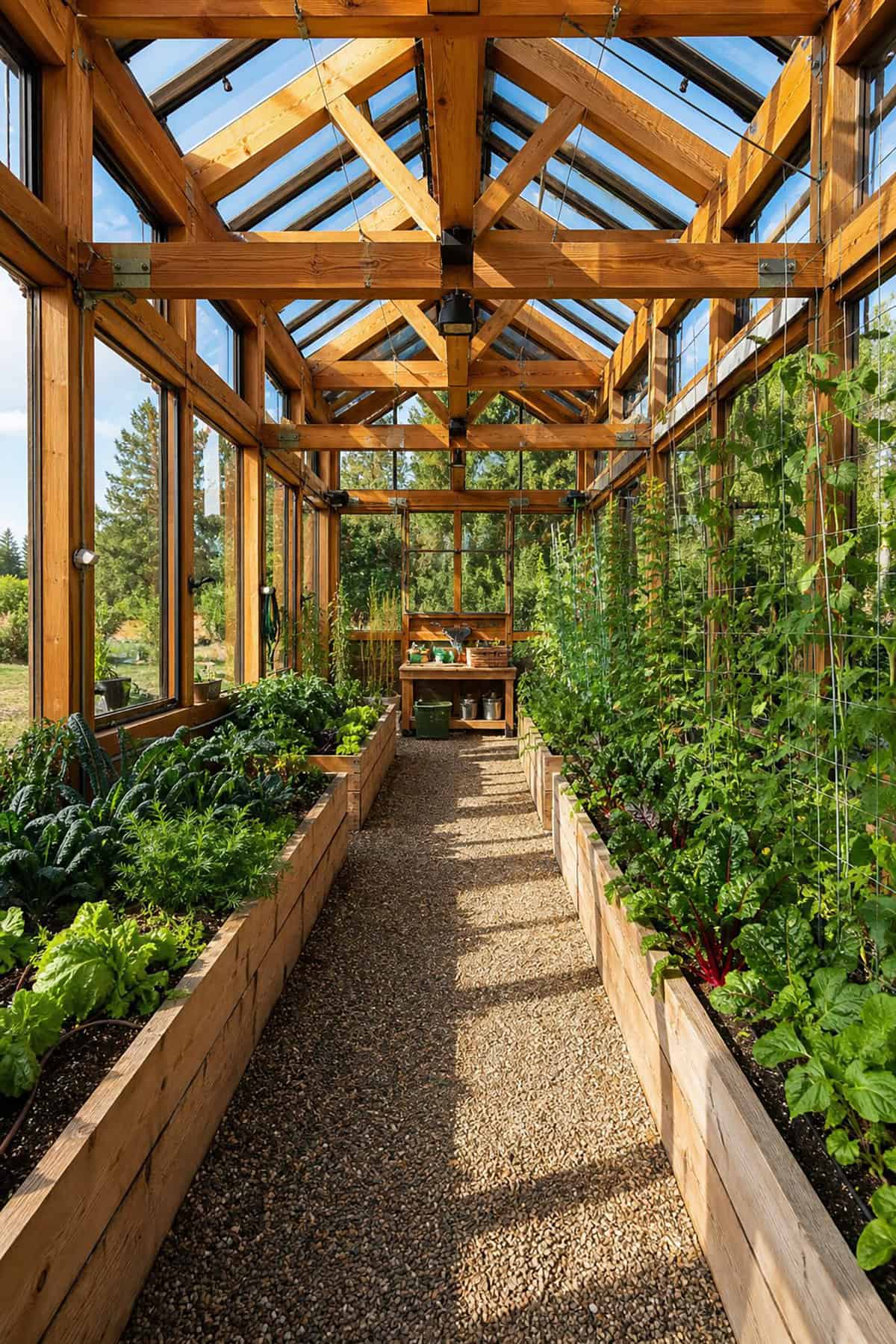
Raised beds around the perimeter leave the center open for moving around with a cart. A height of 24 to 30 inches saves a lot of bending.
Fill the beds with a free-draining mix, and run drip irrigation along the rows to water the roots and leave the foliage dry. Plan the main walkway at least 30 inches wide.
Sunlit Conservatory Nook
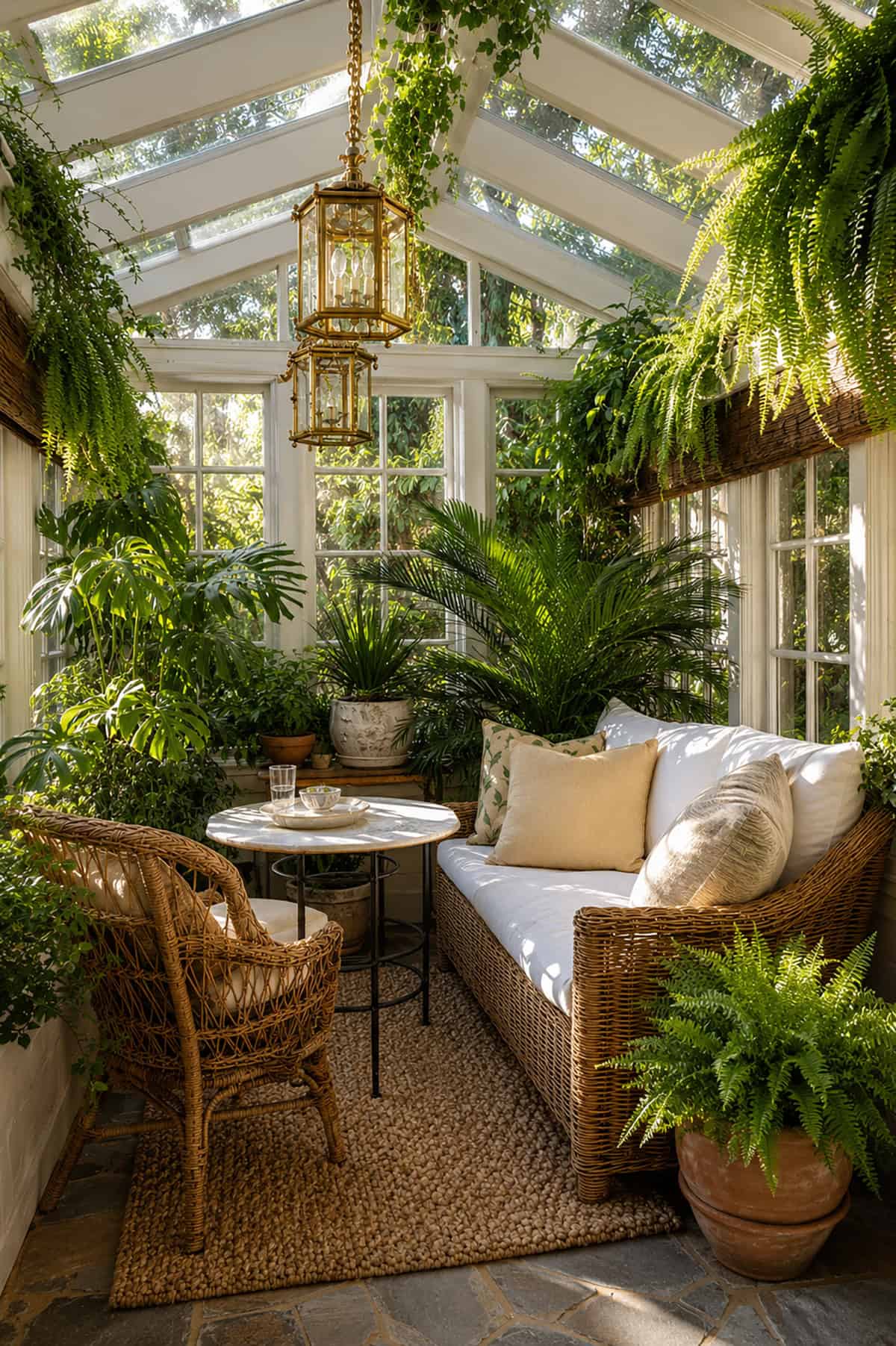
A snug nook with a wicker loveseat and linen cushions is an inviting retreat. Choose mildew-resistant fabrics with removable, washable covers.
Soft white or pale green trim reflects light around the space and makes the foliage stand out. Store throws and spare cushions in a sealed chest, which protects them on humid days.
Trellis Ceiling Vine
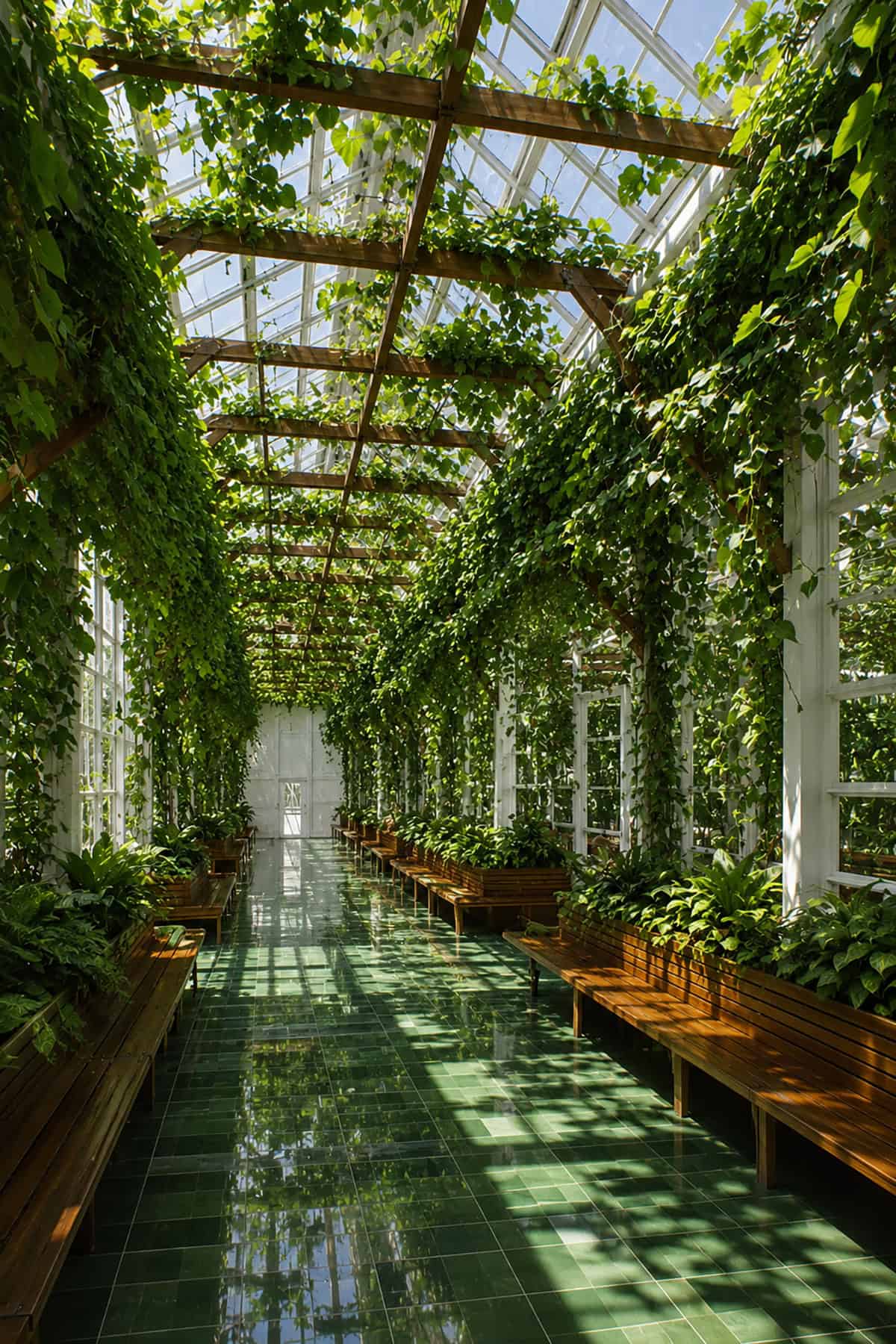
Mount a trellis grid under the rafters in rot-resistant wood or powder-coated metal. Grapevines and jasmine climb well along horizontal wires, and soft ties hold the stems in place gently.
Prune regularly so light and air still reach the plants below. A table or chair set beneath the vines enjoys dappled summer shade, and deciduous vines let the low winter sun back in after their leaves drop.
Pegboard Potting Bench
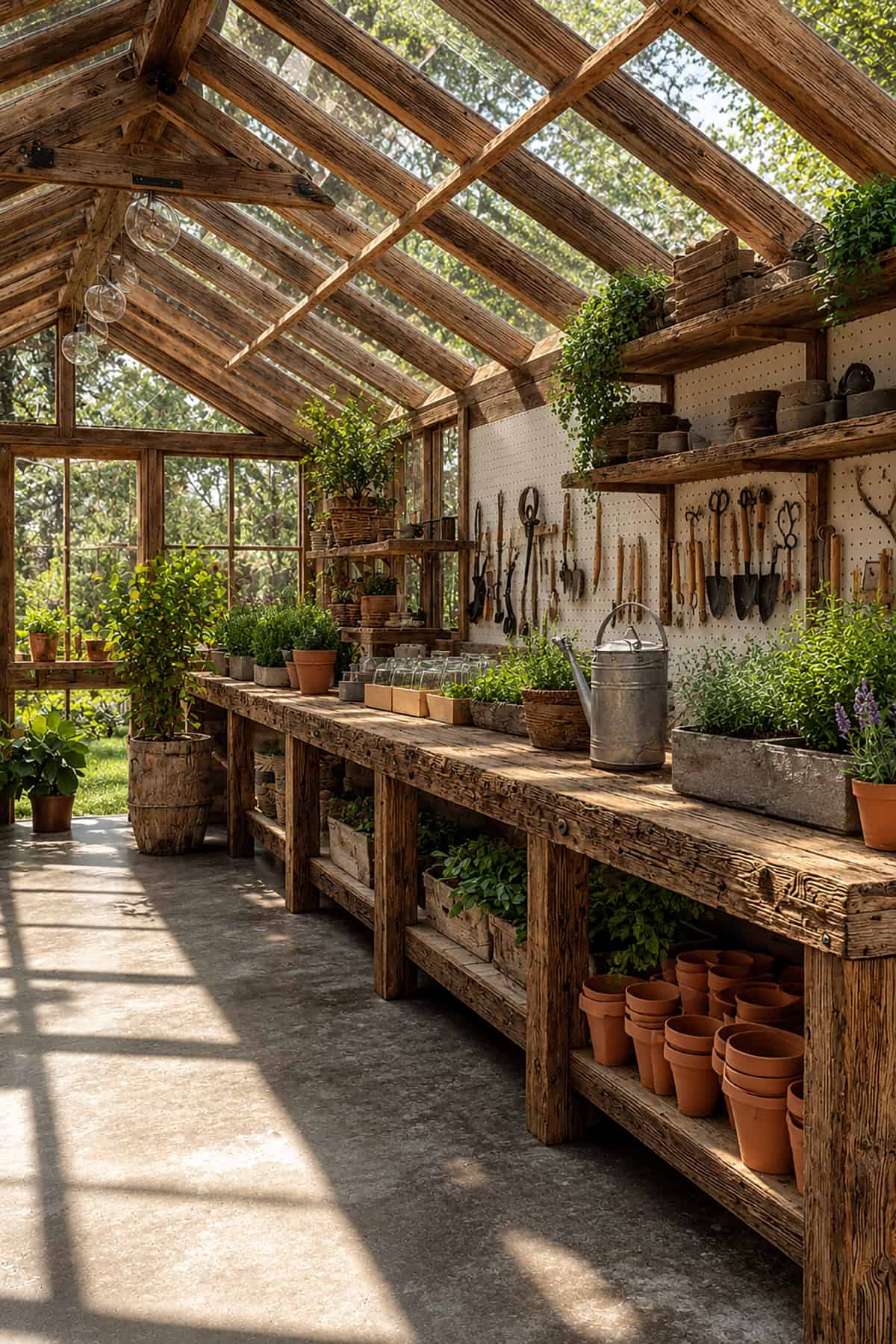
Set a sturdy potting bench against a wall, with a stainless steel or sealed hardwood top that shrugs off spills. A pegboard panel above holds pruners, twine and trowels in plain sight.
A shelf at the top holds labels and seed packets, while fertilizers and sprays belong in closed bins away from heat. A spot near a hose bib or sink saves a lot of trips during seedling season.
Long Center Island Bench
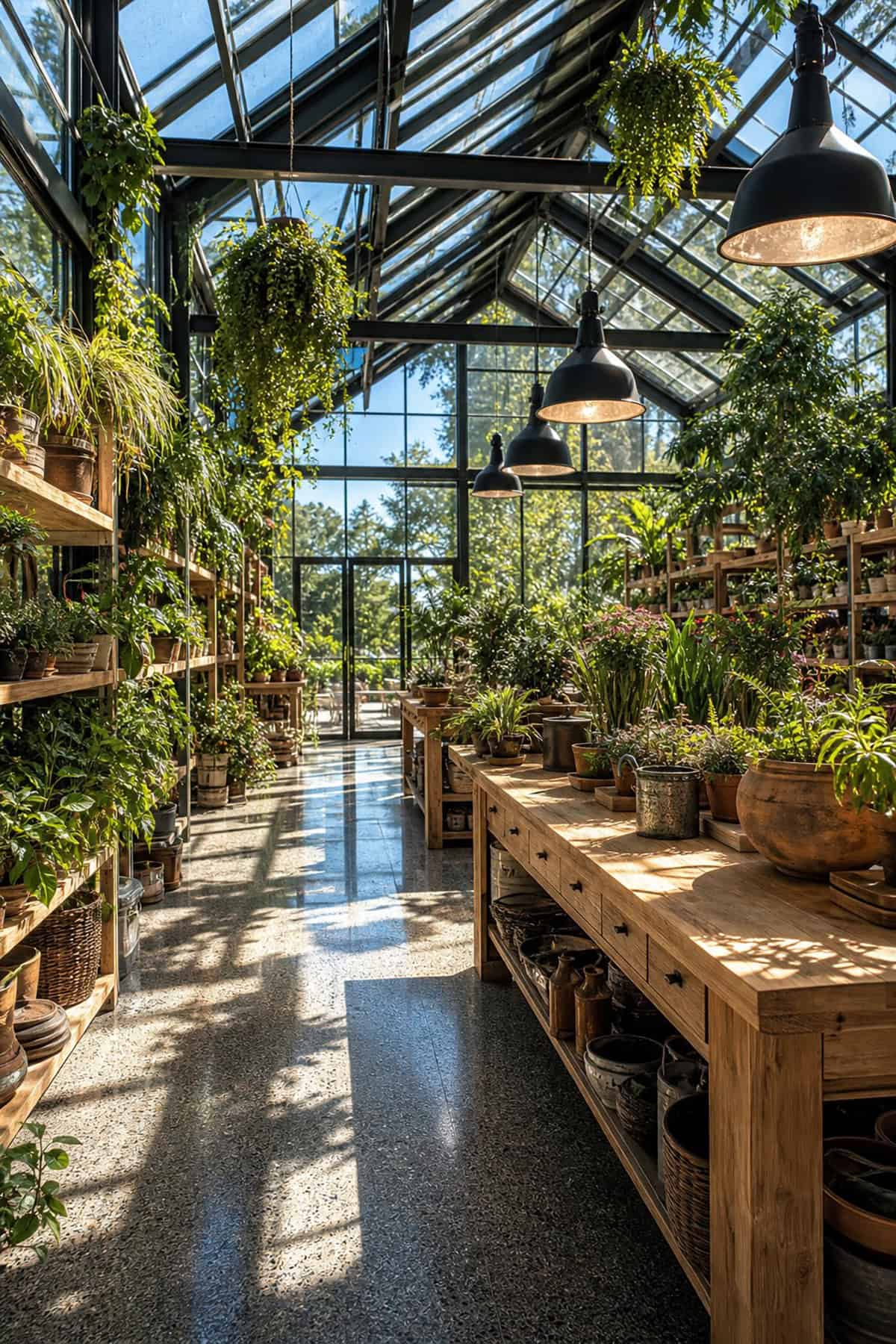
A long central bench provides plenty of workspace. Allow at least 24 inches on each side for walking. It is a great place for seed trays and heat mats, with storage bins underneath.
Anchor the bench firmly, since humidity loosens flimsy frames over time. Task lights mounted directly overhead make close tasks easier on dark winter days.
Bonsai Display and Stone Path
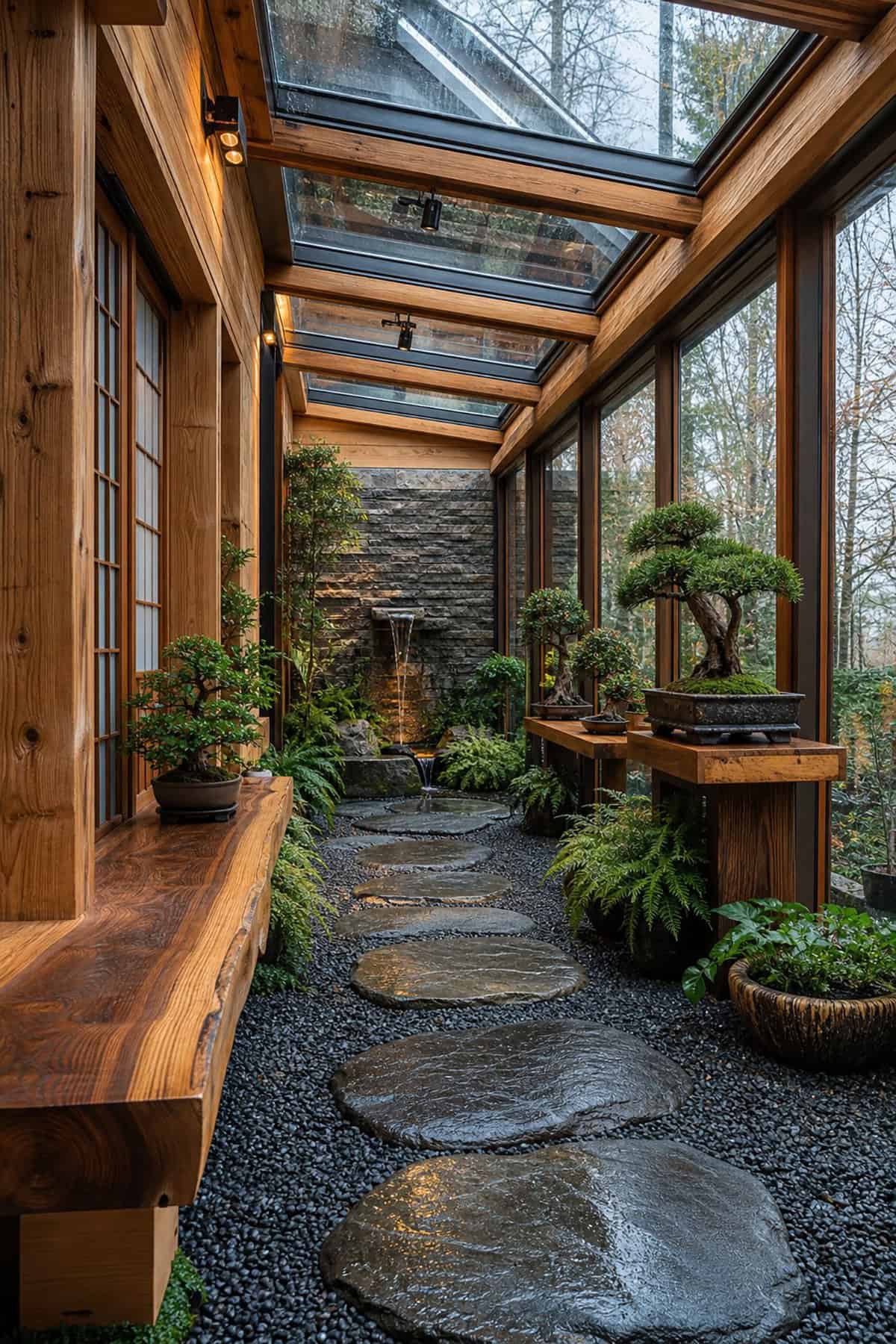
A narrow stone path laid over compacted gravel is stable, tidy and quick to drain. Bonsai on simple wooden stands of varying heights line the path in a balanced arrangement.
A small water basin adds humidity and a calm focal point. Limit the display to a few species for a cohesive look, and prune for clean, simple lines.
Steel Shelving
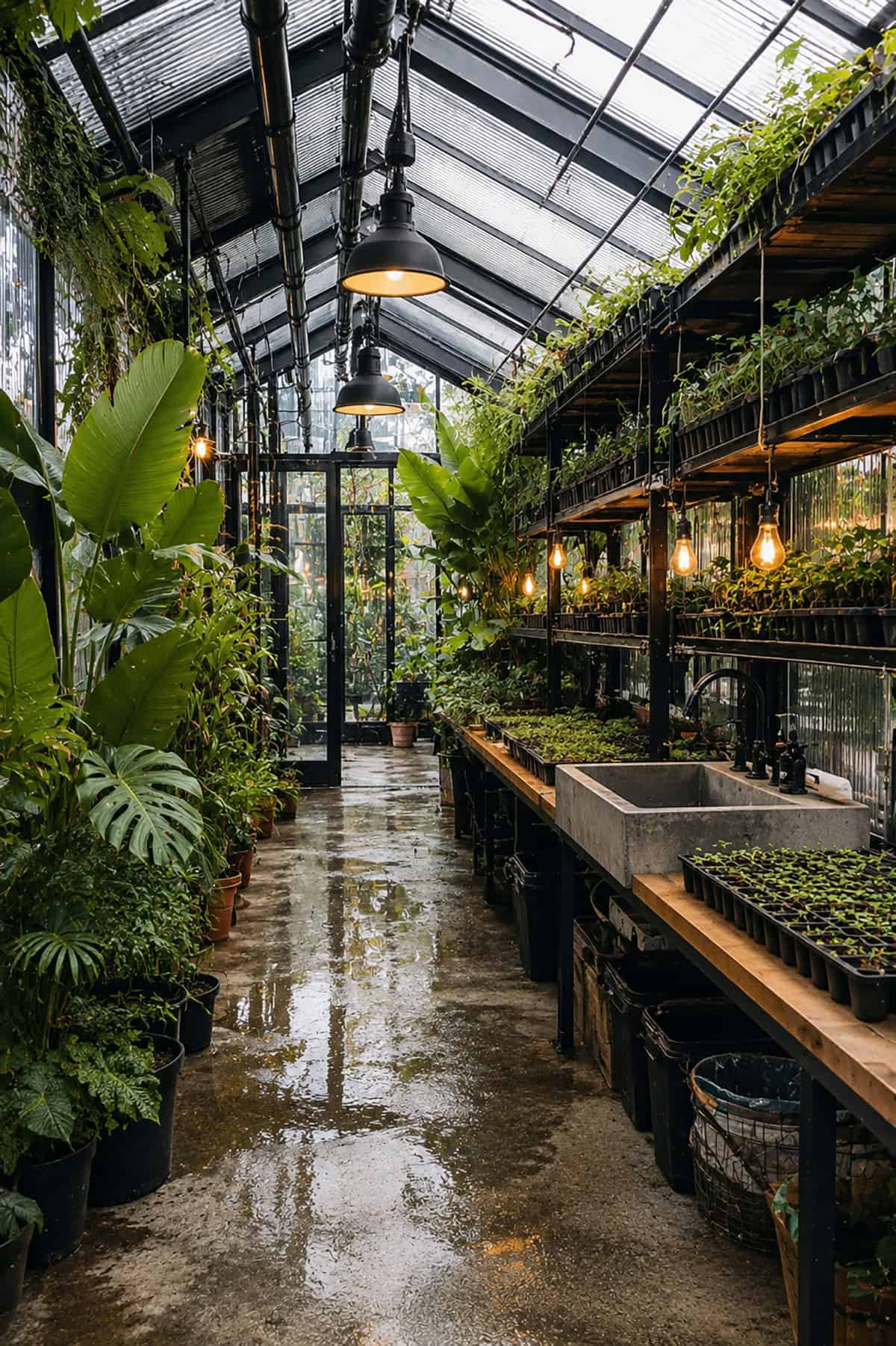
Galvanized steel shelves along one wall handle wet pots and heavy use. A deep concrete or utility sink with a high-arc faucet makes cleanup easy, and a backflow preventer on the water line is essential.
Open wire shelves let air circulate, while solid backs trap moisture. Simple colors and hardware match the rugged, utility style.
Herb Drying Rail
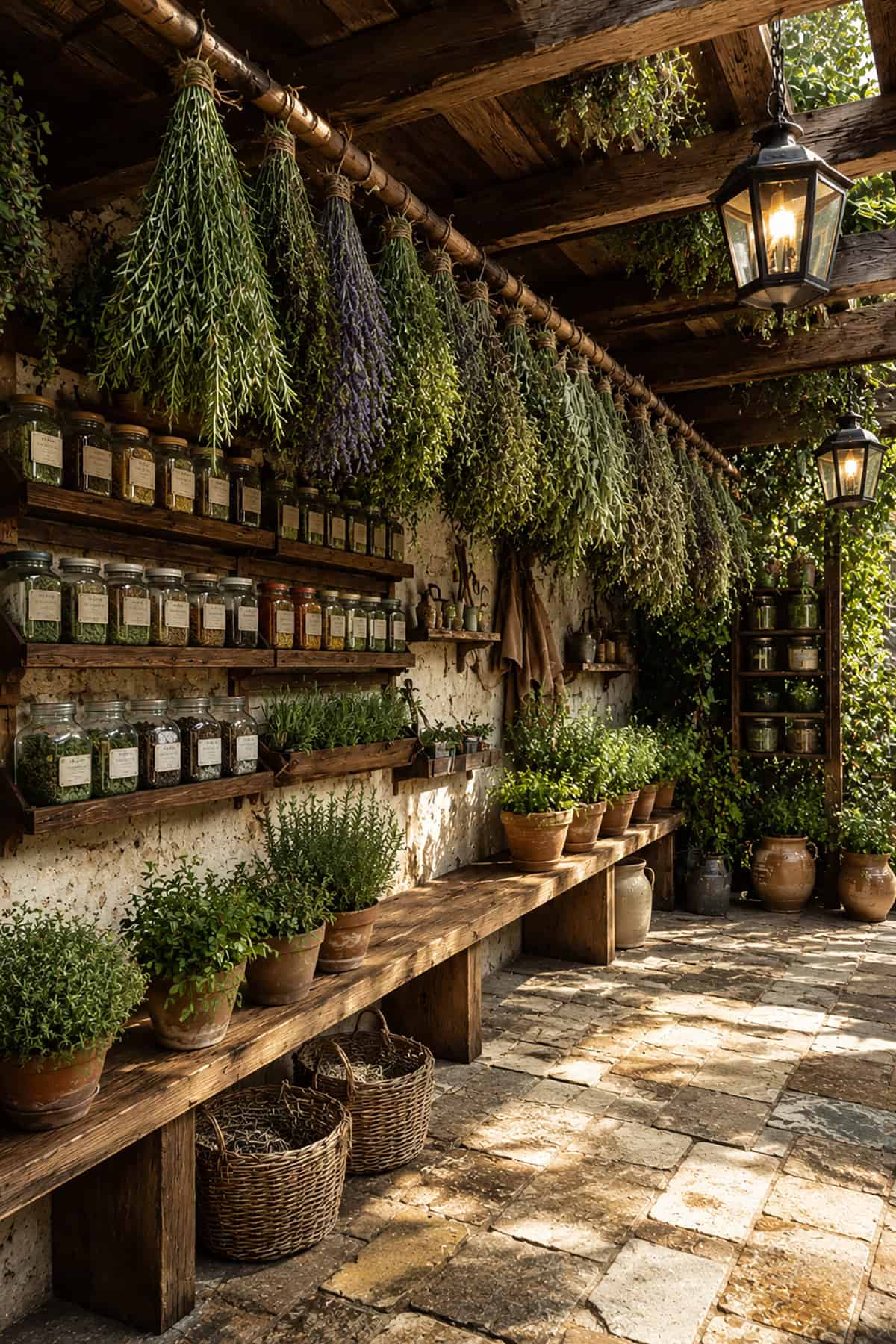
A wooden rail mounted high near the roof, where the air is warmest, is ideal for drying herbs. Fix it securely, then hang small bundles upside down with twine and space them for airflow.
Shade the bundles from direct sun to preserve color and fragrance. In humid weather, a small fan on low speed helps prevent mold.
Built-In Storage Workstation
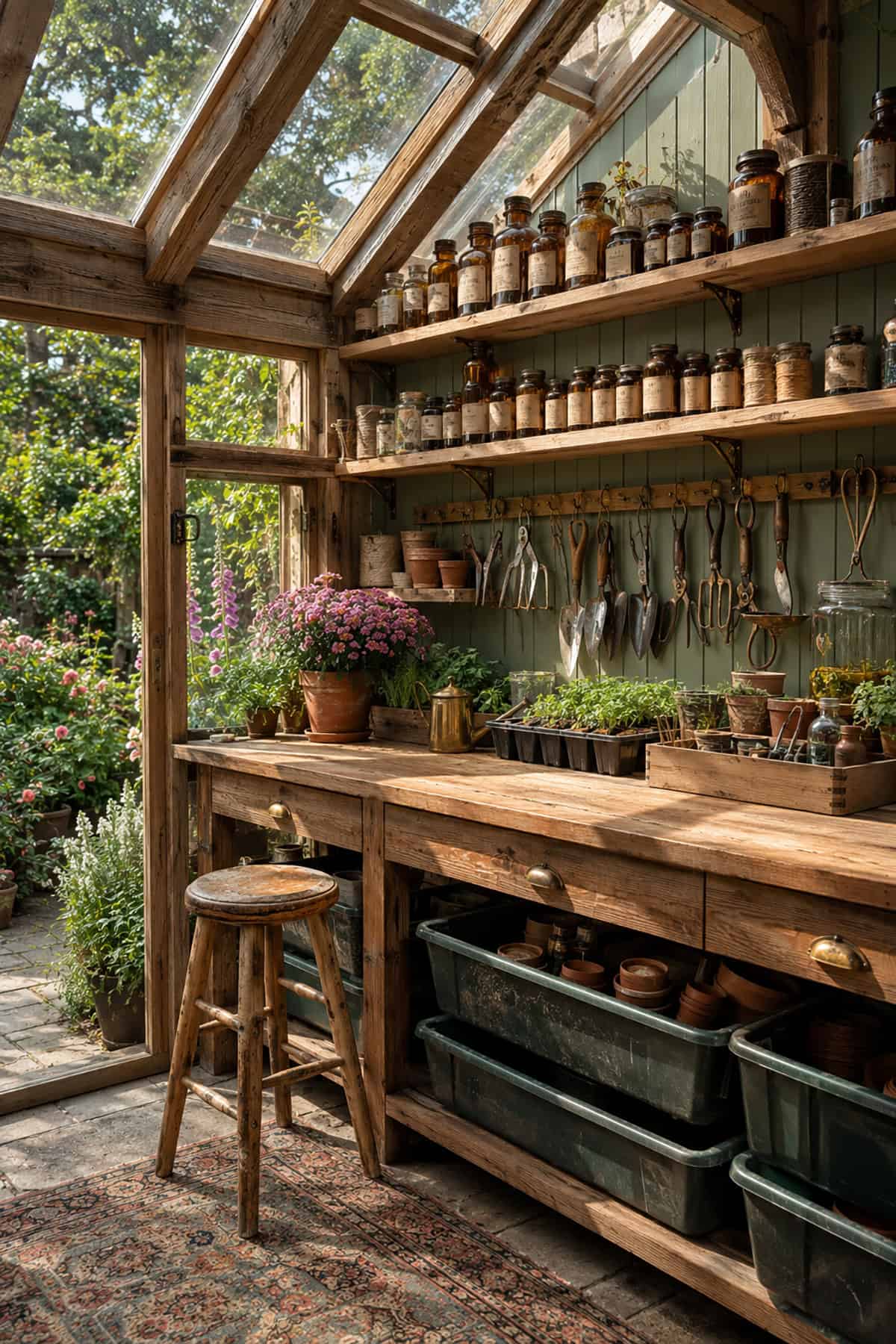
This setup treats the greenhouse like a proper workshop. A generous countertop leaves room for potting, transplanting and seed starting, and cabinets underneath hold supplies out of sight yet close at hand.
Place the workstation beside the door, where it becomes a natural transition point between the garden and the greenhouse.
Tiered Corner Shelves
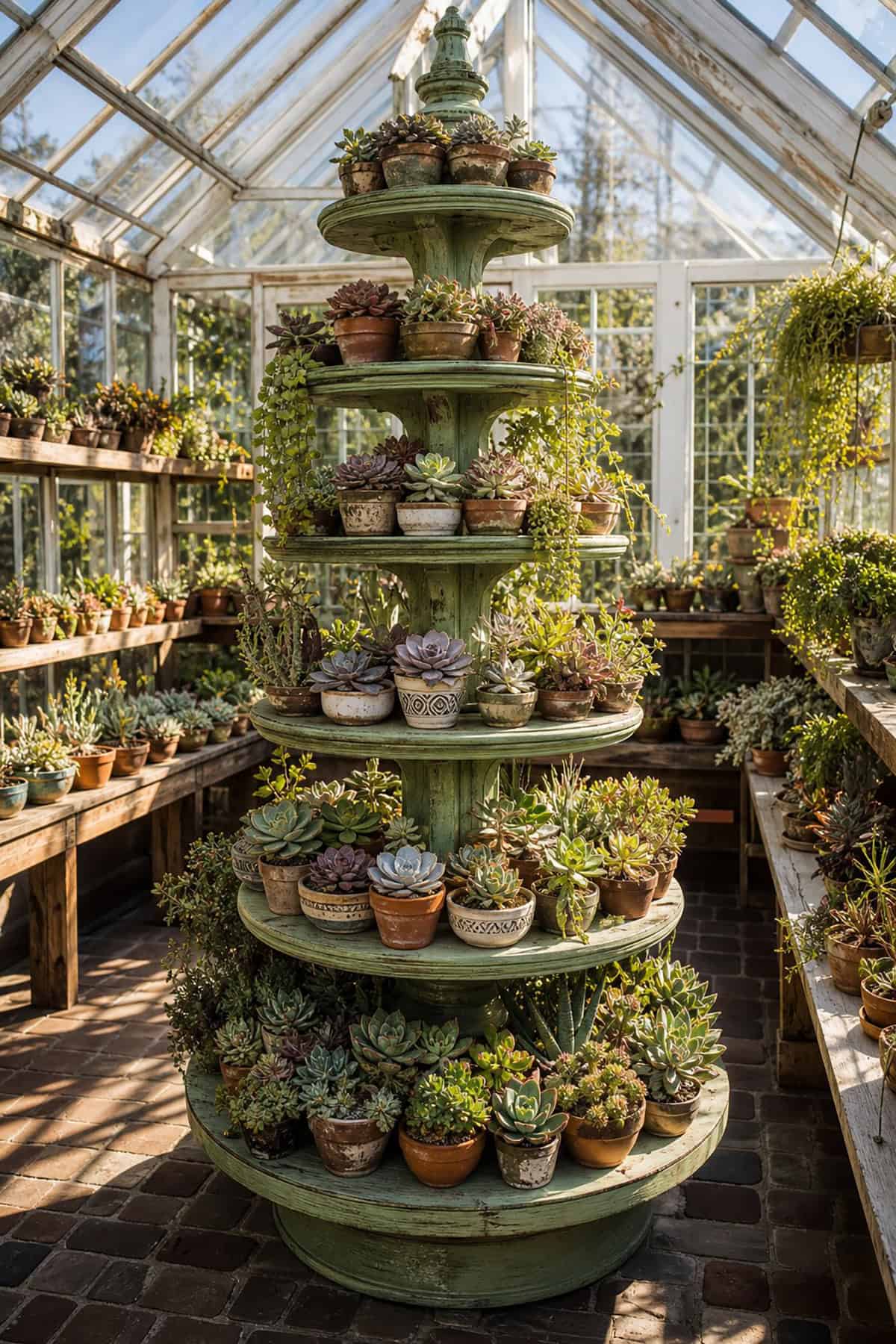
Tiered shelves make use of an empty corner. Fasten the brackets into the frame or studs, and arrange plants by light needs, with shade lovers on the lower tiers and sun seekers at the top.
Saucers or trays under each pot catch runoff and protect the floor. In a dim corner, a damp-rated spotlight adds light for the lower shelves.
Patterned Runner and Styled Shelves
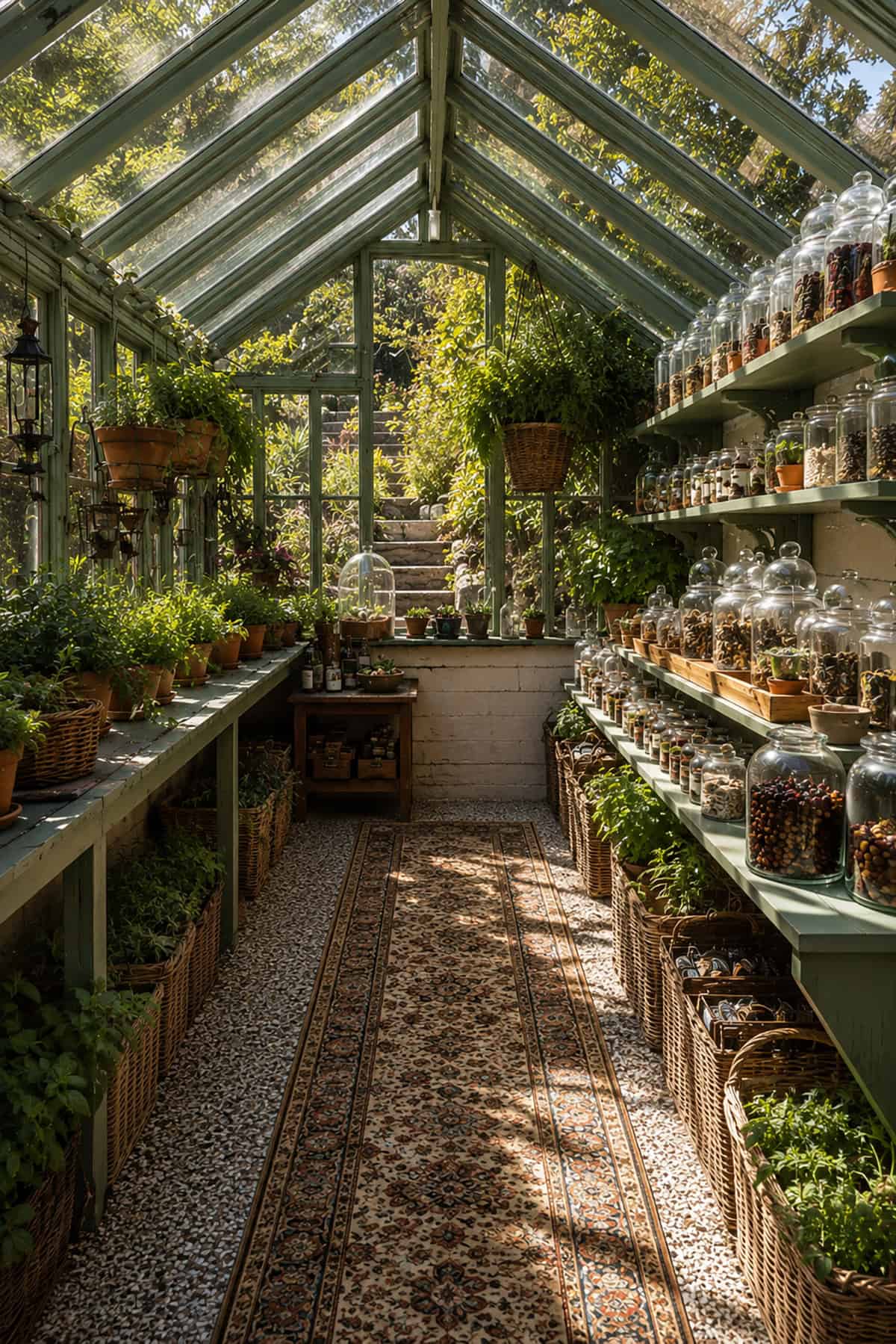
A washable runner along the aisle adds a dose of style. Outdoor fabric with a non-slip backing grips the floor and handles moisture.
Group pots on the shelves by color for a cohesive look, and limit the decorative pieces to a few sturdy favorites, since clutter builds quickly. Lift the runner every week or two to let the floor underneath dry.
Hanging Shade Cloth
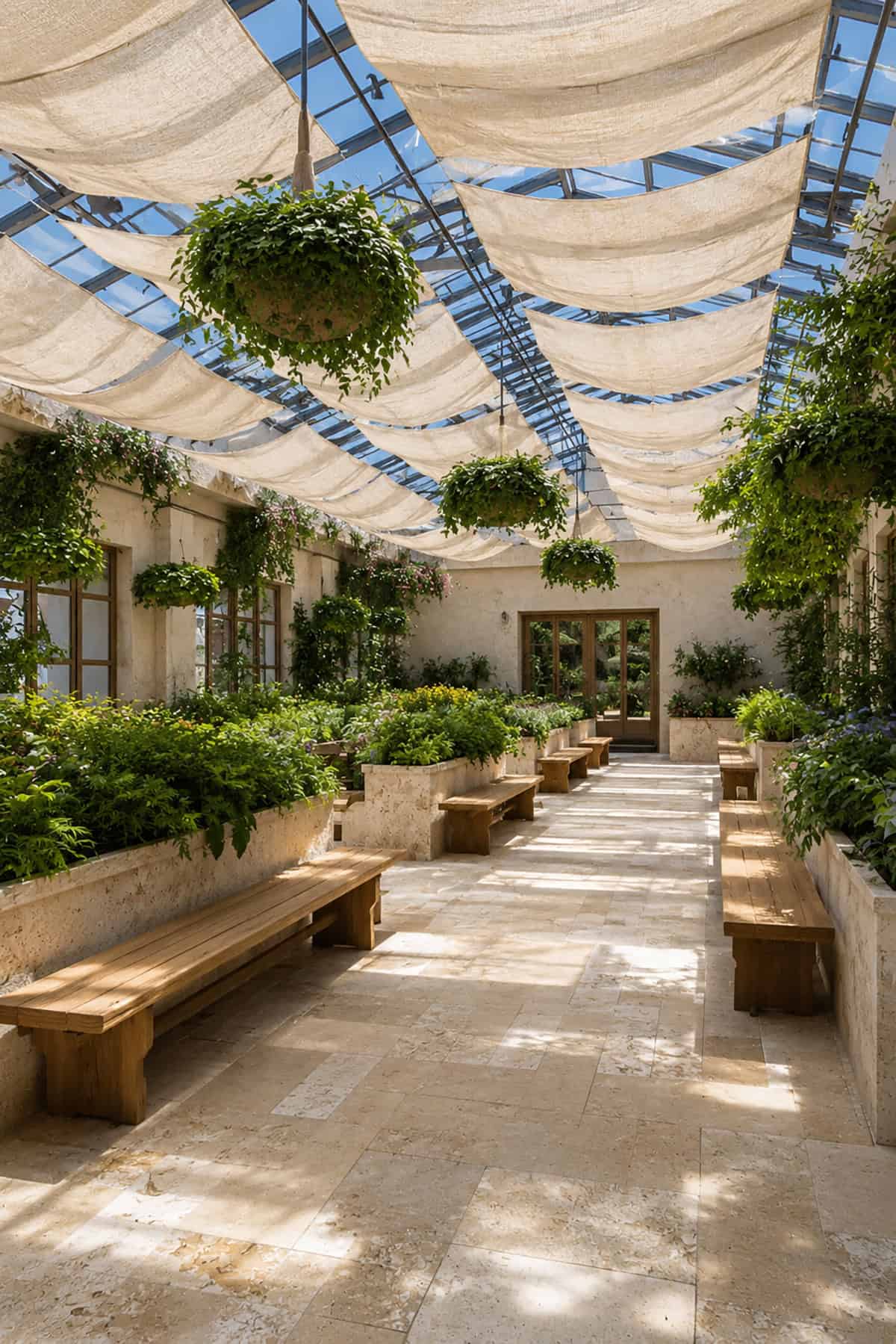
Hang shade cloth under the roof during the hottest months. Clips make it easy to take down. A shade rating of 30% to 50% is right for most vegetables and flowering plants.
Leave space for air to move above and below the cloth to prevent pockets of trapped heat. Remove it in fall so plants receive every bit of winter light.
Brick Fireplace Corner
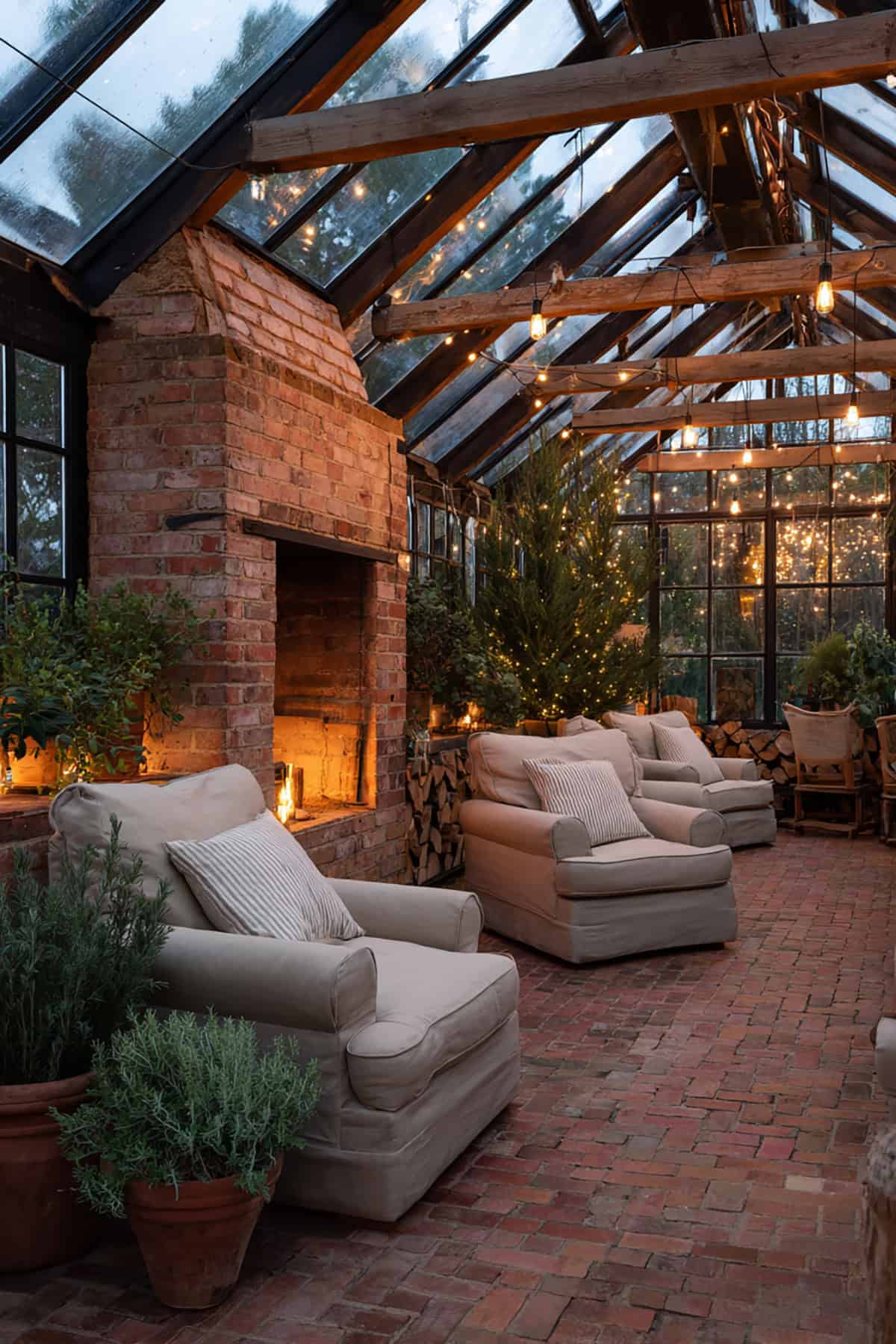
A sealed, vented fireplace or wood stove installed to local building codes adds real warmth on winter evenings. Brick and stone around it absorb heat and release it slowly after the fire dies down.
Place seating at a safe distance from the firebox, and set plants well back from the heat.
Arched Trellis Ceiling
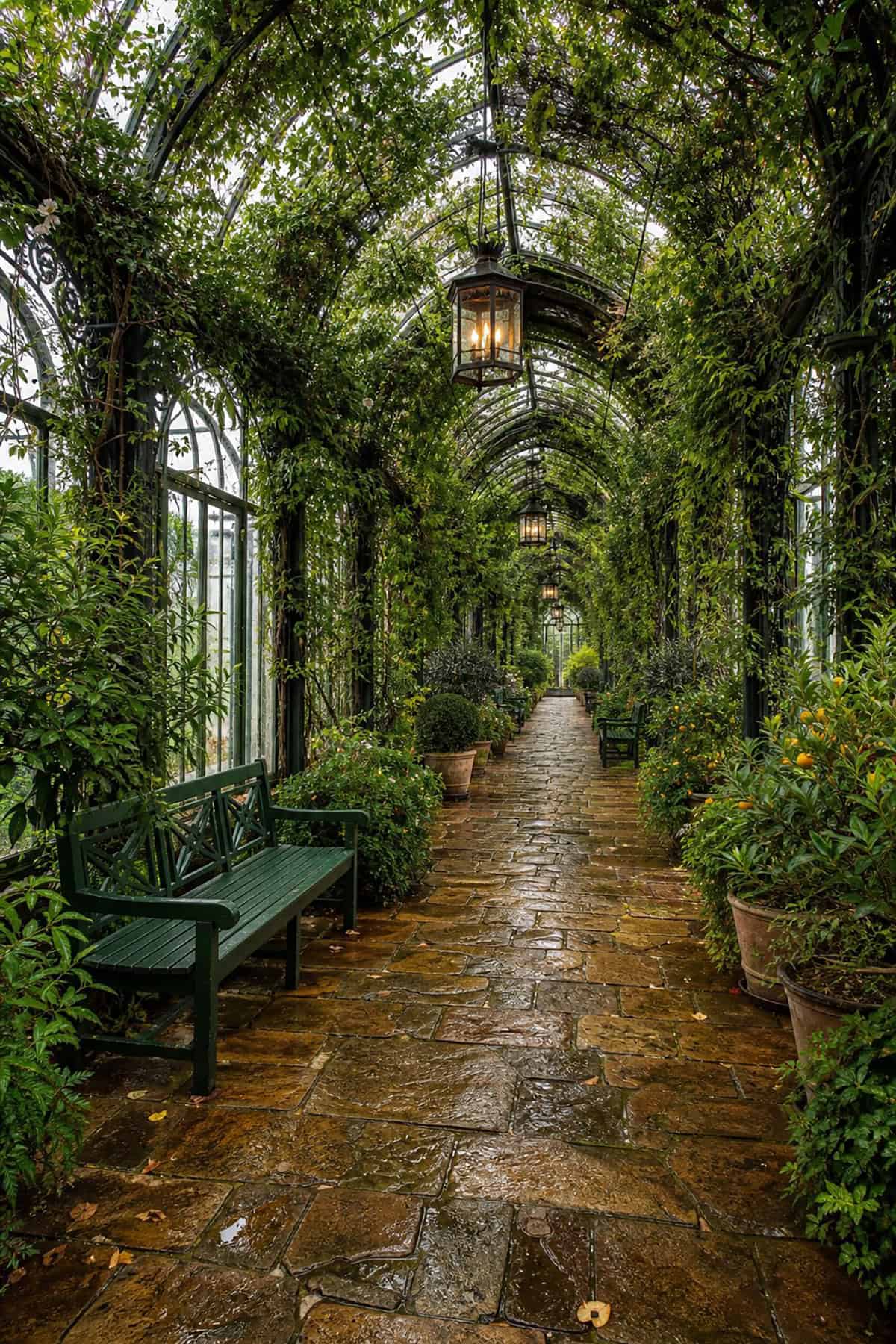
An arched trellis that follows the roofline makes a striking ceiling feature.
Train climbing roses, passionflower or jasmine along the arch. Thin the foliage regularly so light reaches the plants below, and check the load rating of the structure before adding heavy vines.
Library Corner
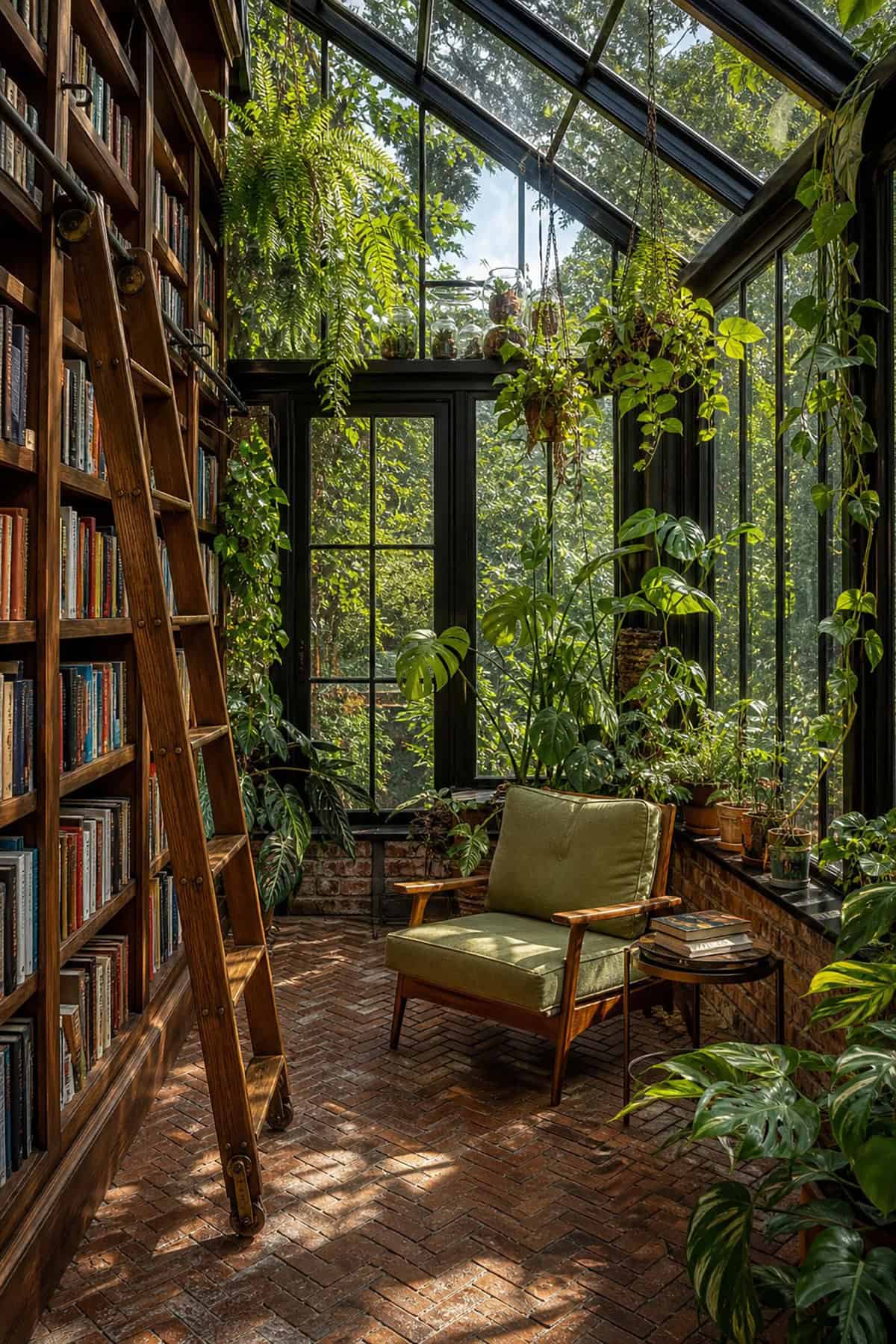
Narrow shelves in a corner hold gardening books and journals, and sealed wood is essential in the damp air. Glass-fronted cabinets protect the pages from humidity.
A rolling ladder reaches the top shelves, with locking wheels for safety. Place the library well away from misting lines and hoses.
Greenhouse Kitchenette
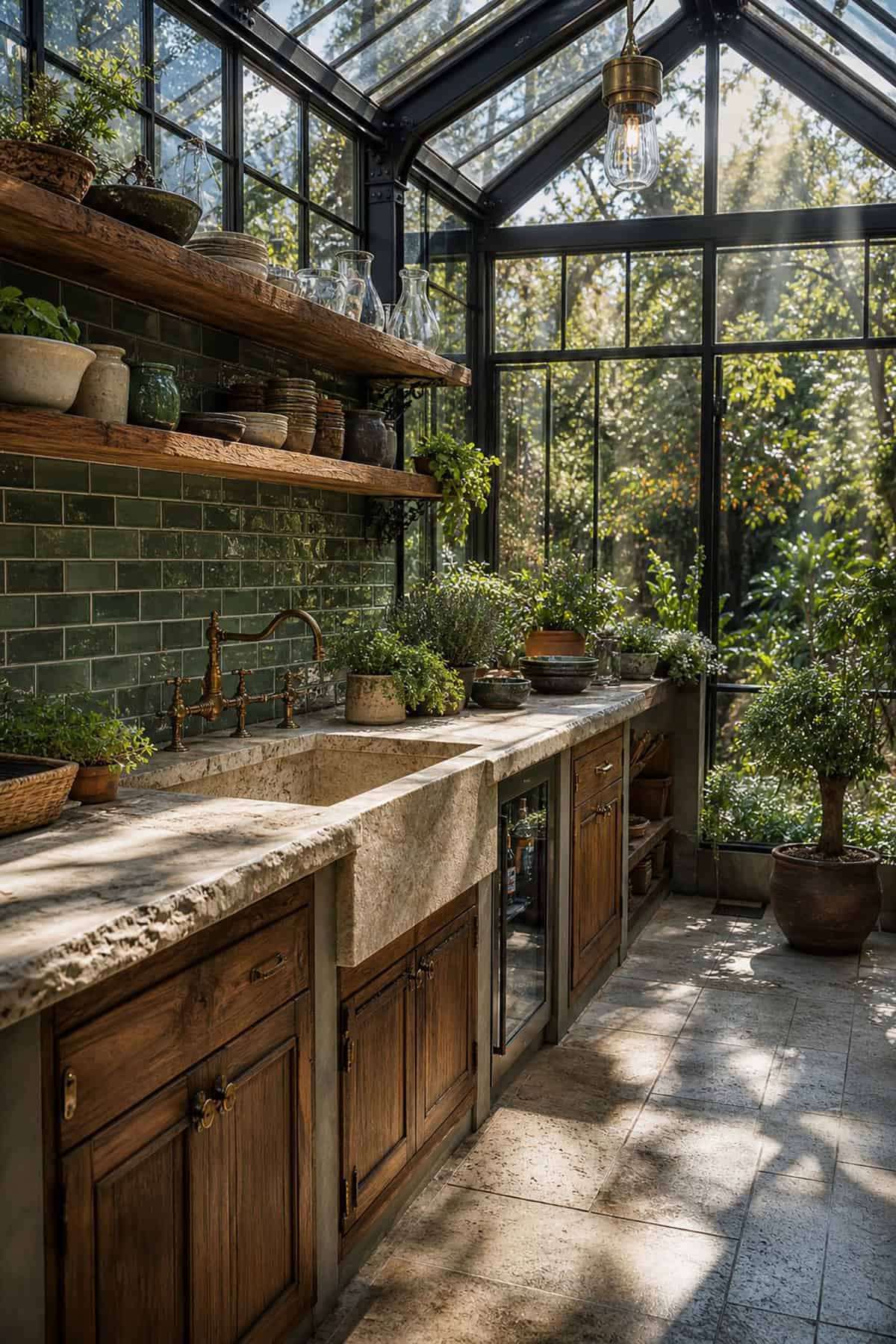
A small prep counter in quartz or stainless steel stands up to spills and wet pots. A wall-mounted pot filler above the counter saves time when filling watering cans.
Closed cabinets underneath hold supplies dry, provided the edges are well sealed. Check under the sink every few months for slow leaks.
Art Studio Work Zone
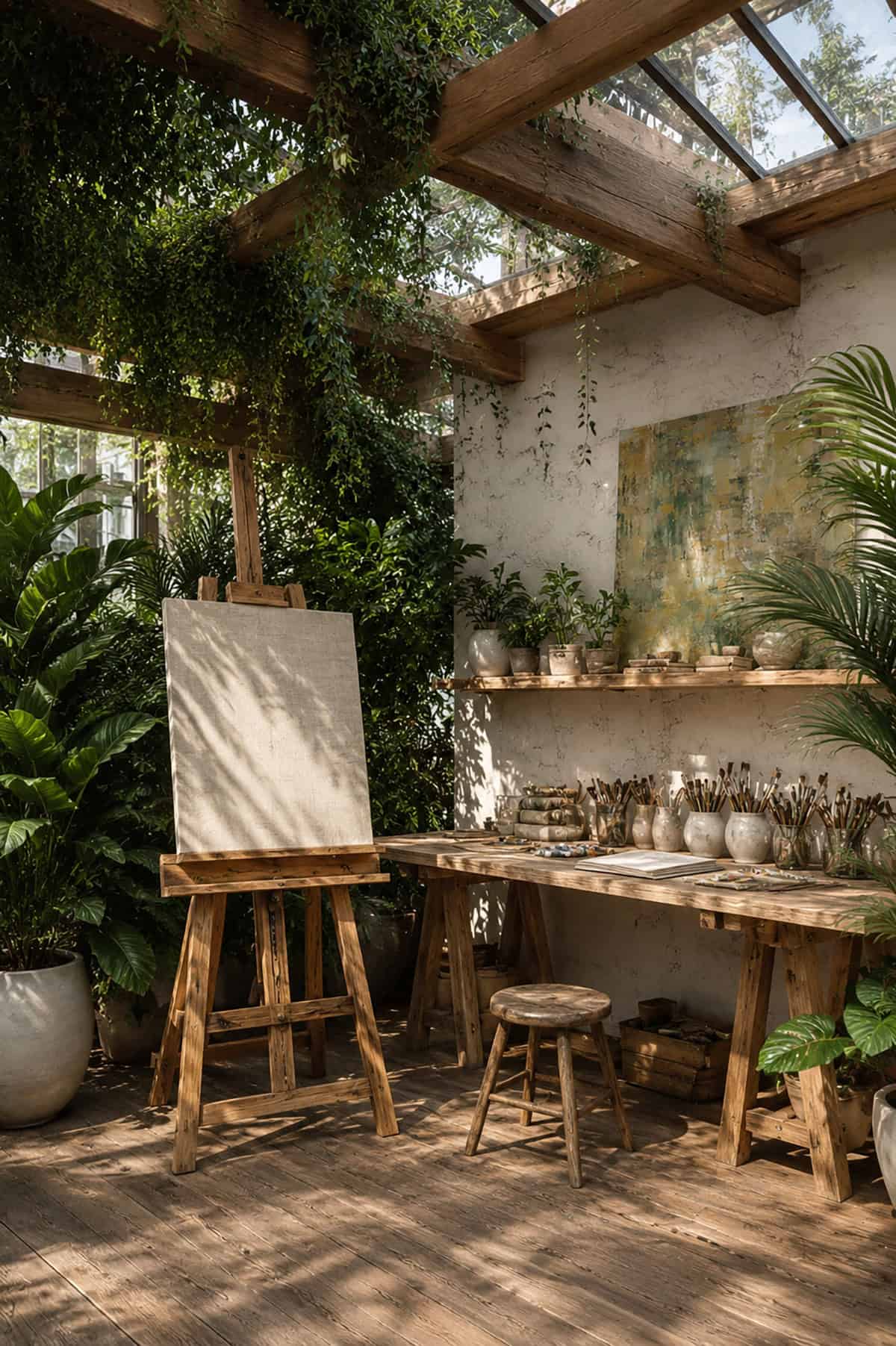
Set up an easel where light is bright and indirect, since glare on the canvas makes painting difficult. Store paints in sealed containers, as many react badly to humidity.
A small table for still-life arrangements allows plant subjects to change with the seasons. Clear floors and coiled hoses prevent tripping.
Curtain Divider
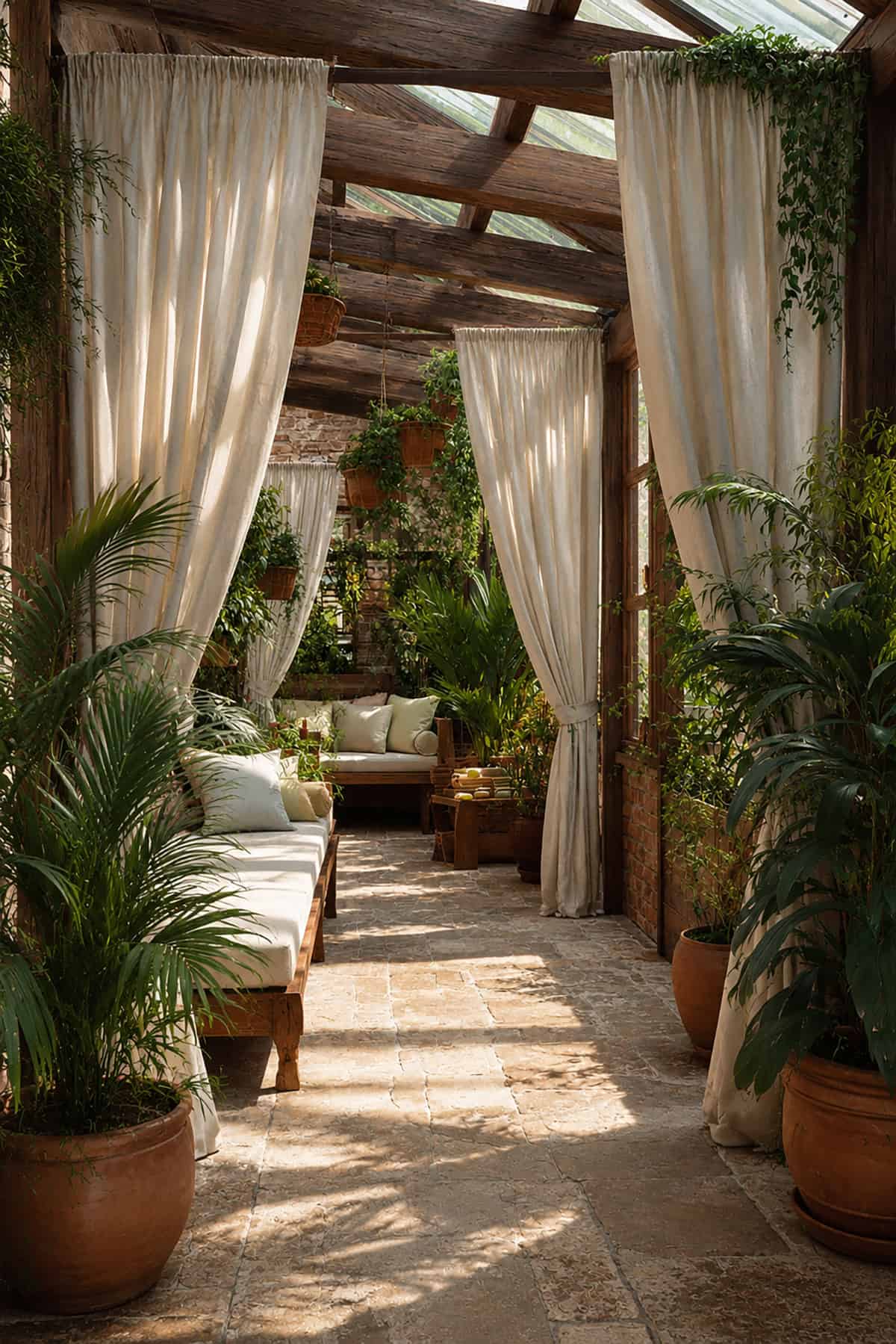
Washable curtains on ceiling tracks divide the greenhouse into zones for propagation, storage or a quiet seating area. Choose mildew-resistant fabric.
Hang the curtains clear of heaters and vents so airflow is unaffected. Tie them back on very humid days to prevent trapped moisture.
Painted Shelves and Coordinated Pots
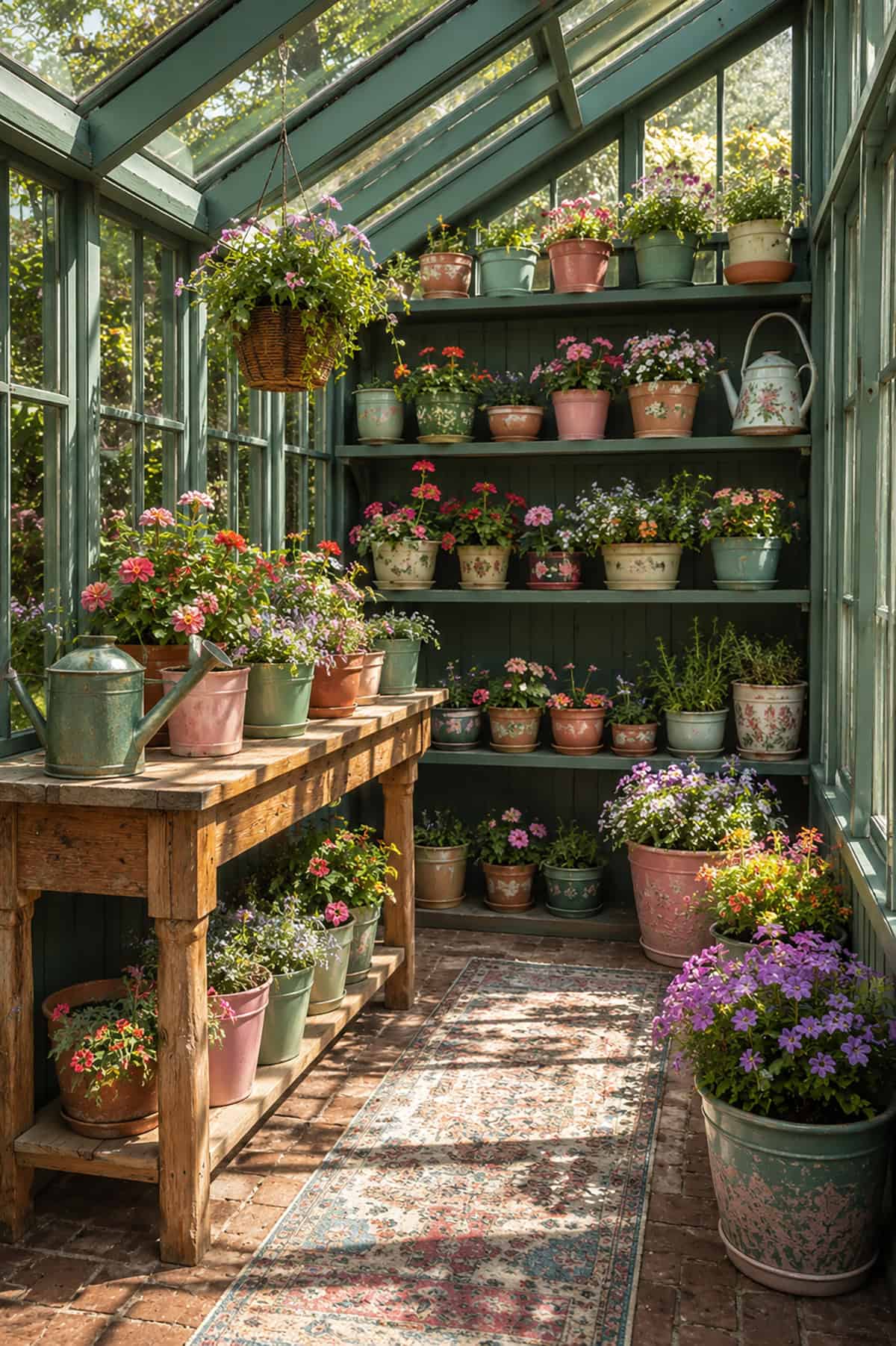
Paint the shelves in weatherproof exterior paint in a bold color, then choose pots in a matching or complementary shade. A limited palette of two or three colors looks cleaner.
Use low-VOC paint and let it cure fully before moving plants back in, since fresh paint fumes harm sensitive foliage. Expect to repaint every few years as moisture takes its toll.
Chalkboard Planning Wall
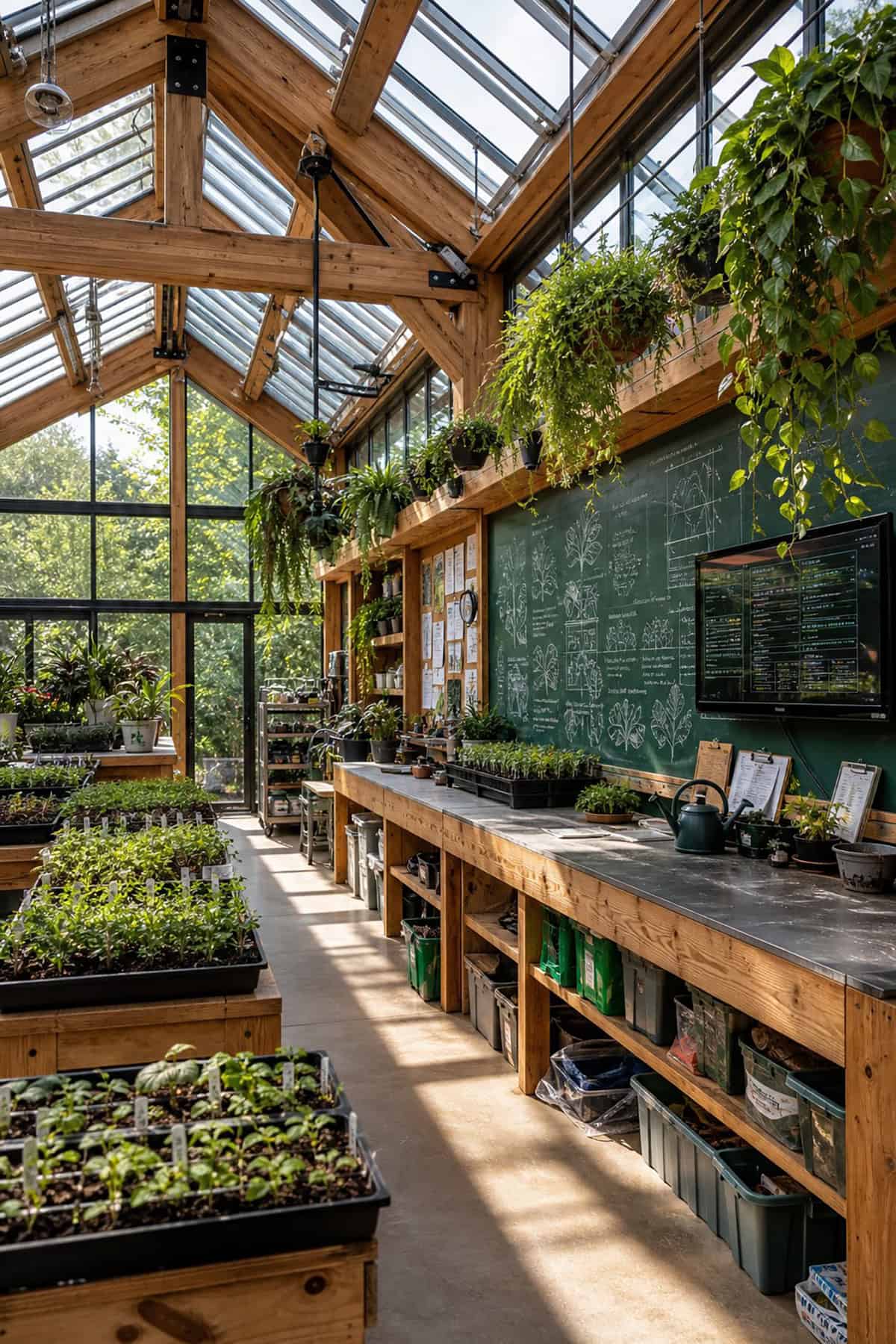
A large chalkboard or dry-erase board near the main potting area tracks sowing dates, harvests and reminders.
Waterproof chalk markers last best in the humid air. Hang a small bin for supplies, and wipe the board clean every week before old notes pile up.
Symmetrical Raised Beds
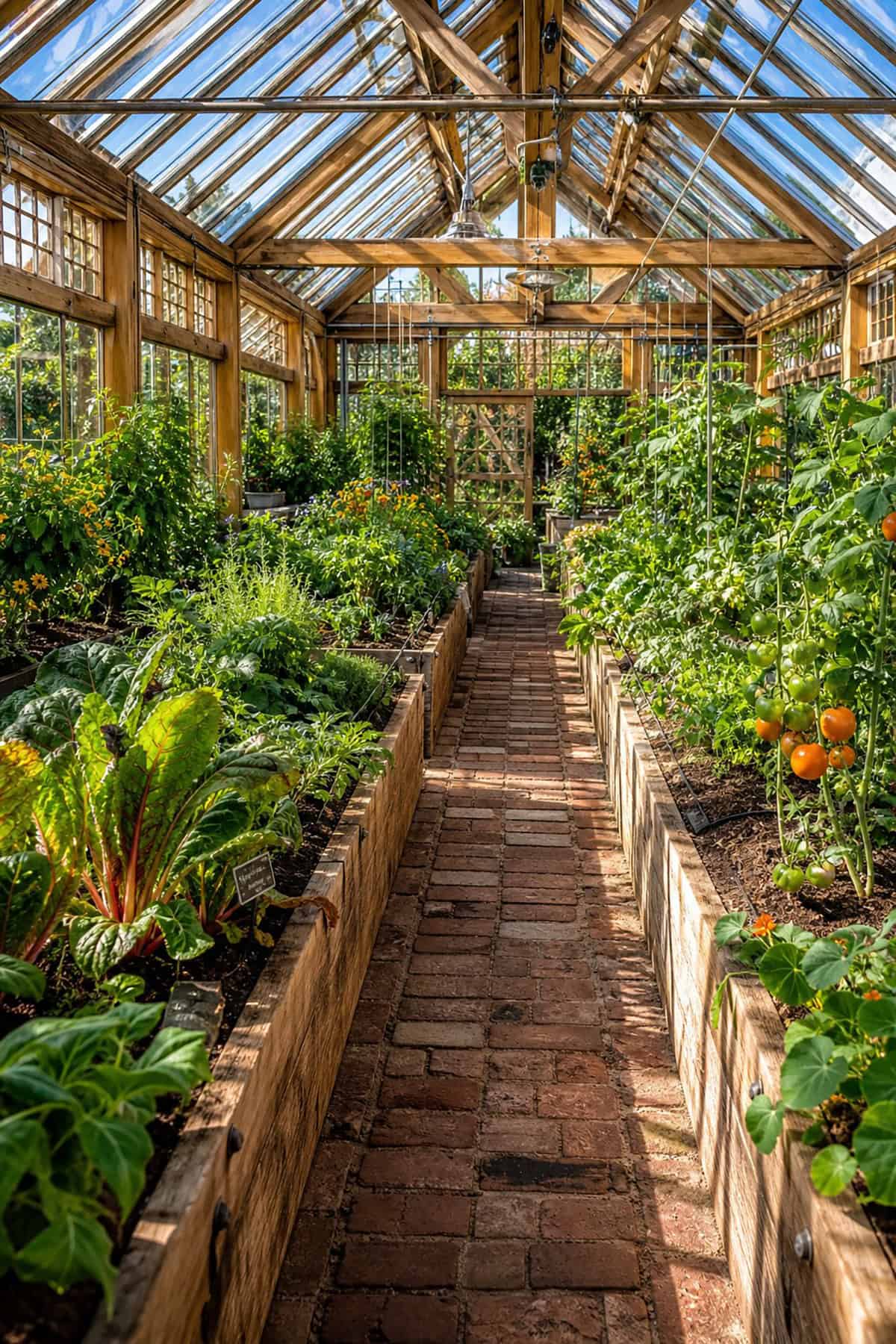
Brick pavers laid over gravel down the center path look tidy and drain well. Matching raised beds on both sides create a balanced, formal layout.
A clear sightline from the door to the back wall makes the space easy to move through and looks sharp. Edge the beds with sturdy timber or brick for easy upkeep.
Twin Work Tables
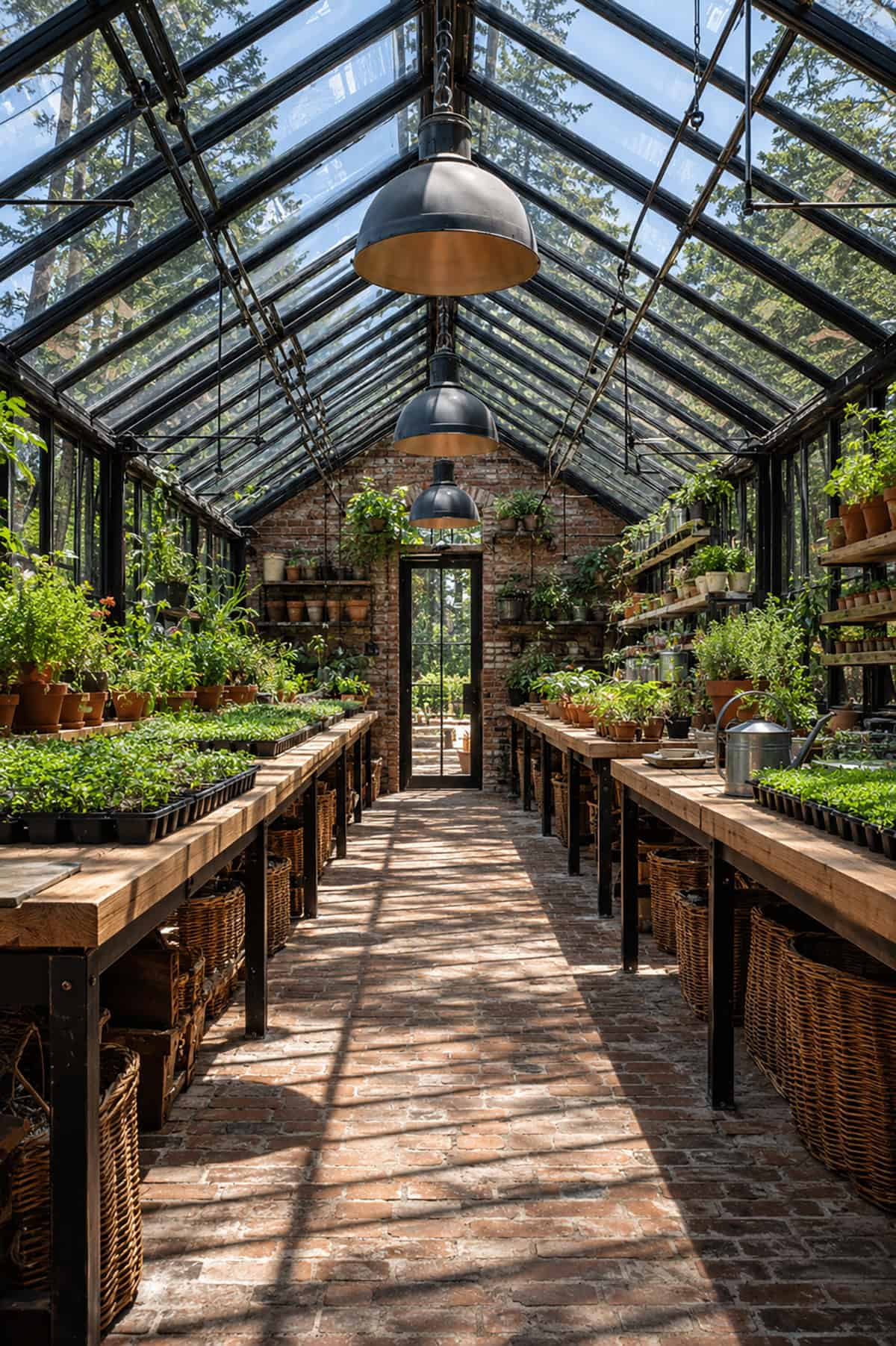
Place two potting tables facing each other along the main aisle, with enough space to move between them. Match the heights at 34 to 36 inches for comfortable standing tasks.
Store tools in labeled bins underneath, and clear the tabletops after each session. Task lights above both tables reduce eye strain.
Dining Table Under Hanging Herbs
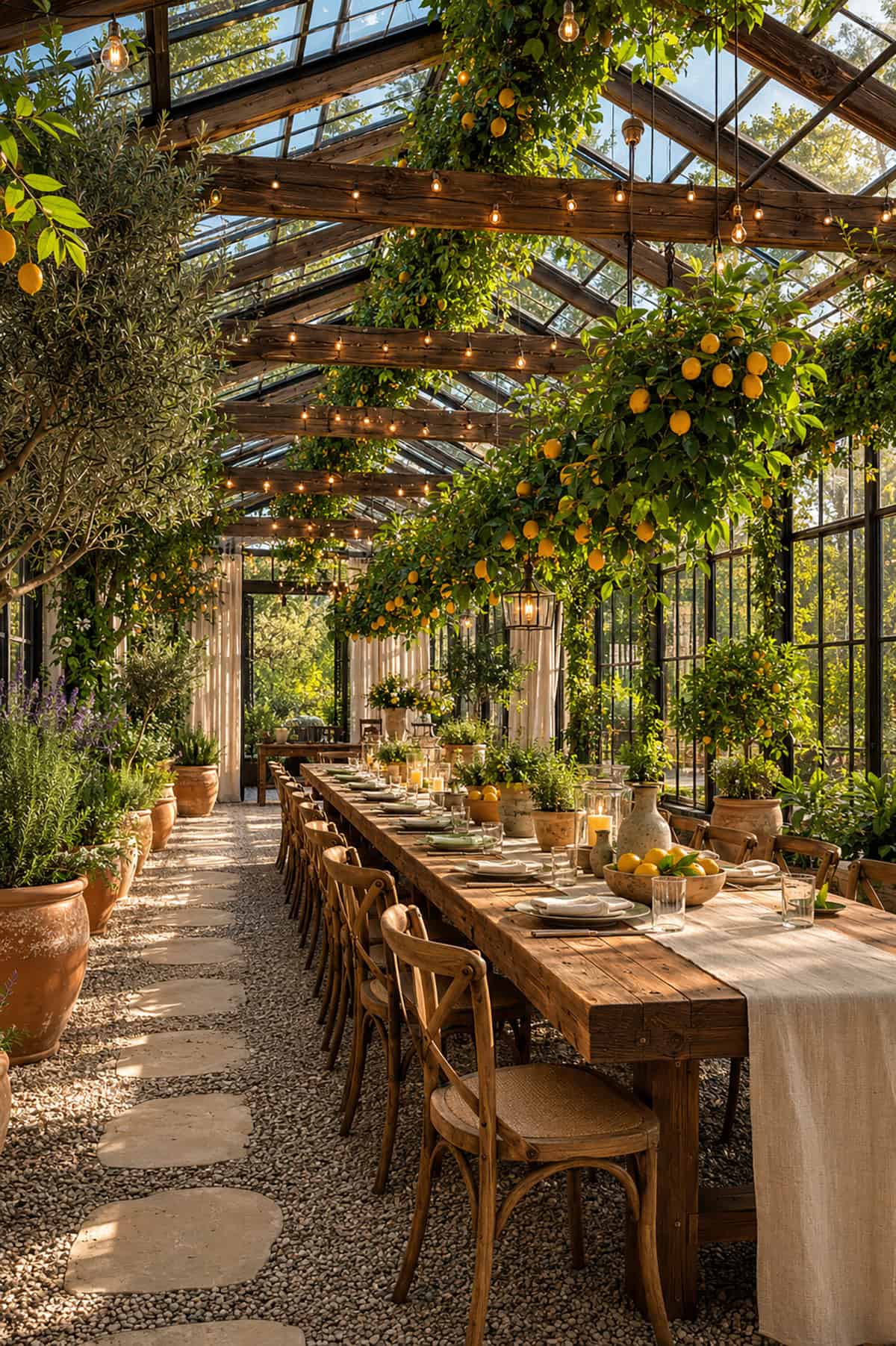
A small dining table set beneath a row of hanging herbs is a lovely spot for a meal. The herbs need plenty of light, so place the rail where sun reaches it, which prevents weak, leggy growth.
Metal or sealed wood tables handle the humidity well.
Hang the herbs high enough to clear heads, and allow good air movement around them to prevent mildew.
Lightweight chairs are easy to move around the table.
Boho Wood Lounge
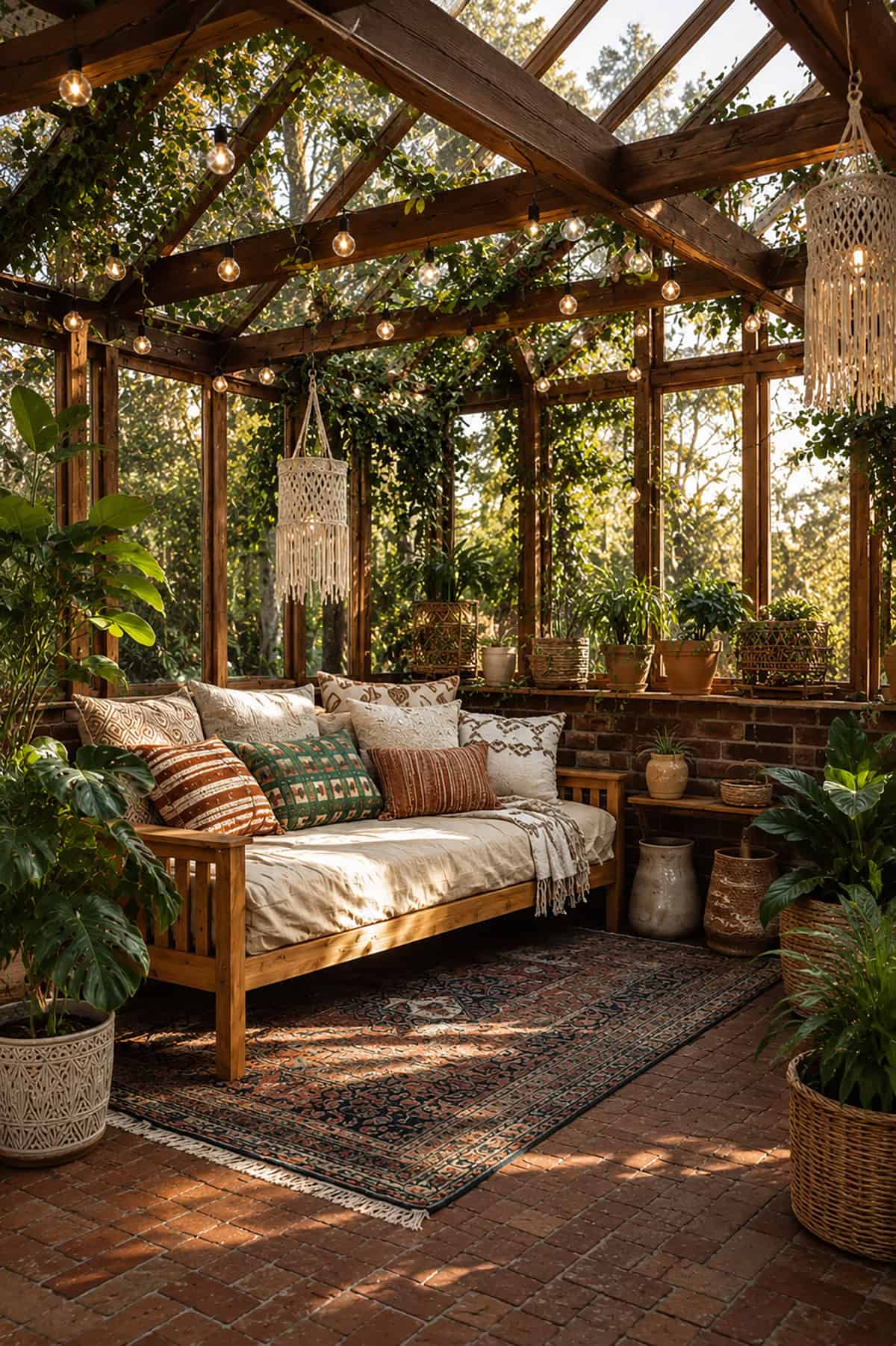
Warm wood furniture with a sealed finish is the base of a boho lounge. Macramé wall hangings fit the style, provided the cord is cotton or synthetic rated for damp spaces.
Layer a couple of outdoor rugs for softness underfoot, and lift them regularly so the floor underneath dries.
Mix leafy plants of different shapes and sizes, with enough space between pots to reach each one for watering.
I occasionally use AI-generated images to represent ideas that I cannot photograph or create myself. They serve as visual examples to support the content.