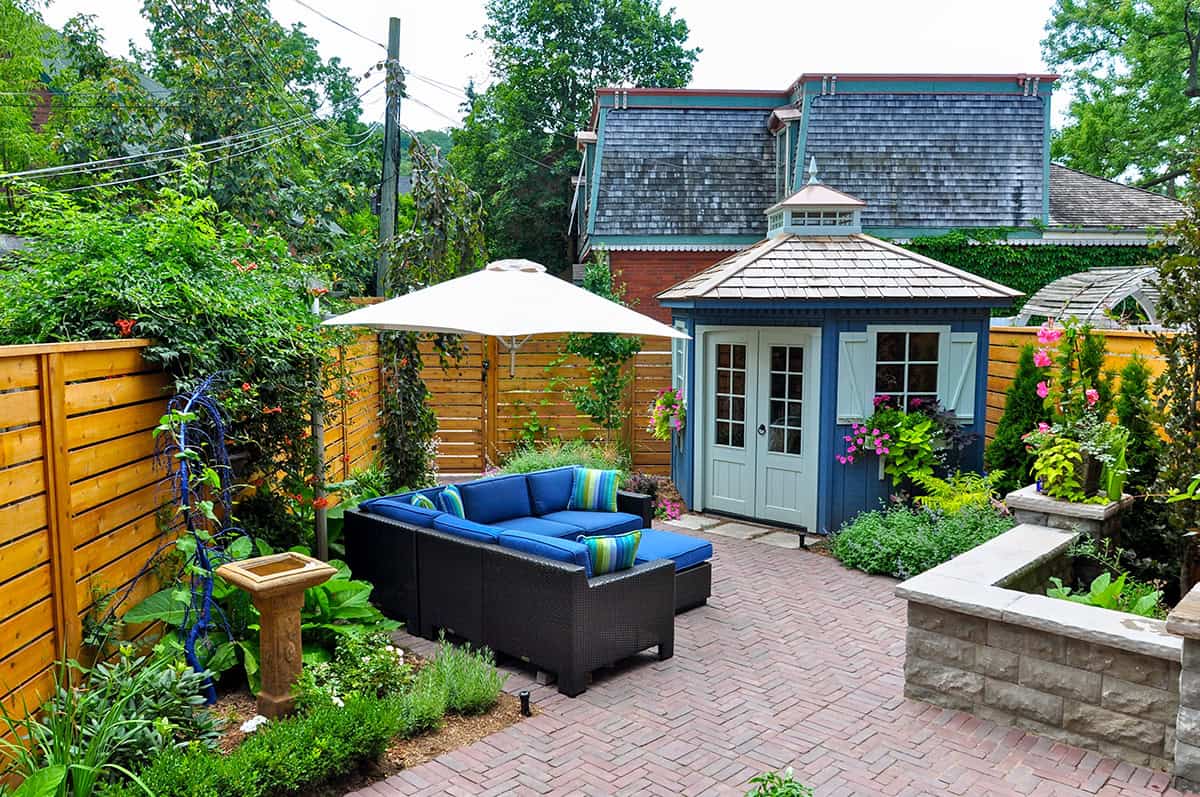
Most small backyards gain space when the planting hugs the edges and the middle is open for chairs, a path or a patch of lawn.
Walls, fences and corners carry the greenery here, through shelves, trellises, stacked planters and slim raised beds. Built-in benches and planters do double duty in the tightest yards.
Forty-six ideas sort into five groups, and the low-budget projects come first.
Table of Contents
- Low-Budget Small Backyard Oases
- Vertical and Wall Solutions
- Wall-Mounted Shelf Garden
- Vertical Vegetable Trellis
- Two-Tier Fence Planter
- Two-Level Planter
- Stacked Tiered Pots
- Stacked Corner Planter Boxes
- Slim Rolling Planter
- Side Yard Garden Strip
- Leaning Ladder Planter
- Fence-Hung Planters
- Slim Raised Bed Along the Fence
- Fence-Line Flower Strip
- Fabric Pocket Wall Garden
- Waist-High Shelf Planter
- Corner Gardens
- Creative Small Garden Layouts
- Mixed-Height Fence Strip
- Slim Bed Along the House Wall
- U-Shaped Raised Beds
- Symmetrical Grid Garden
- Rock-Bordered Garden Patch
- Four Mini Beds With a Cross Path
- Perimeter Planting Bed
- Parallel Raised Beds
- Raised Bed Room Divider
- Patio Planter Border
- Planted Gravel Path
- Central Path Layout
- Arched Trellis Over a Path
- Mixed Herb and Flower Bed
- Courtyard Center Bed
- Built-In Low Wall Planter
- Repeating Linear Planting
- Four-by-Four Salad Box
- Integrated Furniture and Hardscaping
Low-Budget Small Backyard Oases
Everyday materials and unfussy plants build a calm backyard retreat on a small budget. Vertical elements and inexpensive surfaces make even a cramped yard into a real outdoor room.
Gravel Courtyard and Bowl Fountain
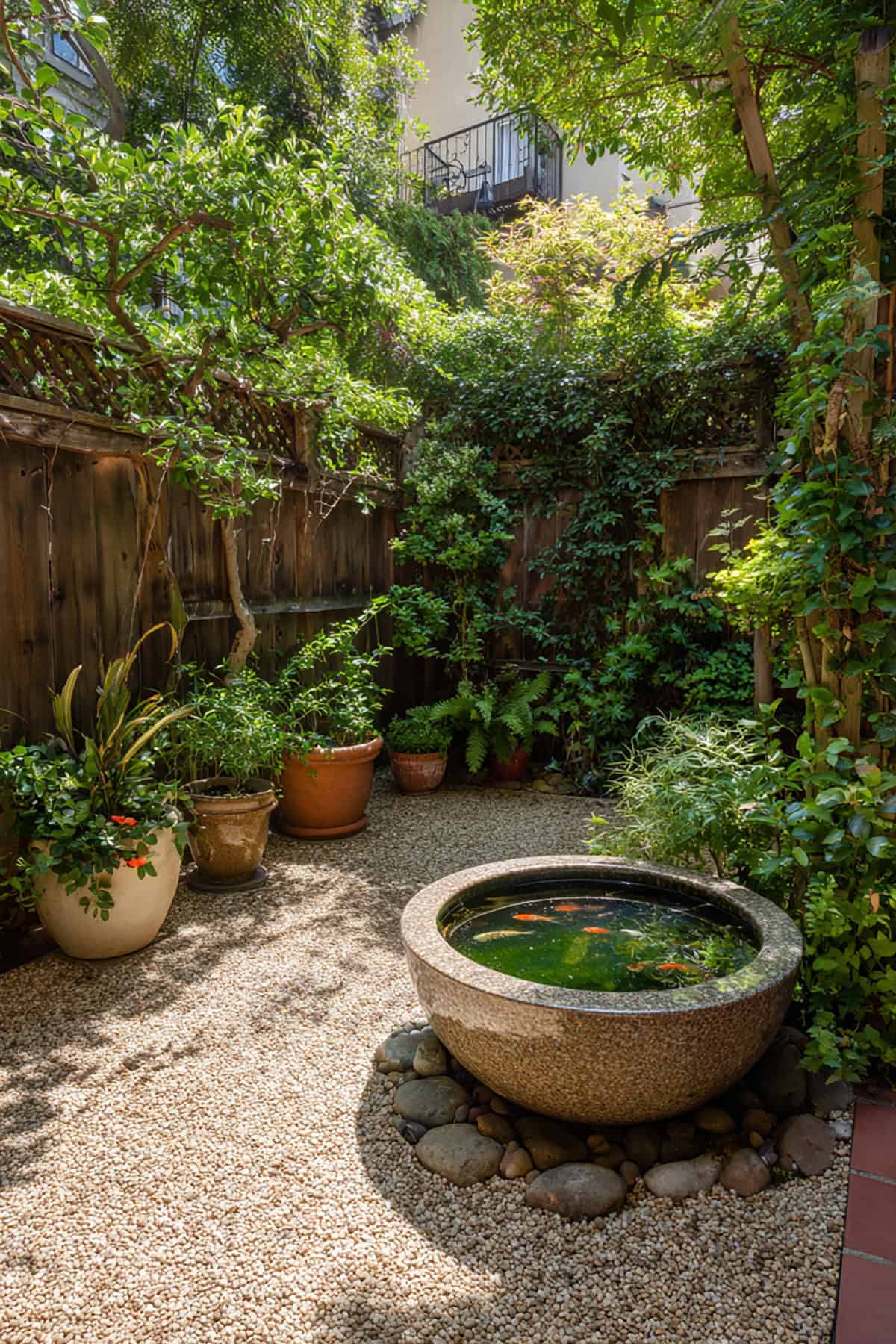
Replacing a patch of lawn with a rectangle of gravel creates a crisp, low-maintenance courtyard. Lay landscape fabric first, spread a couple of inches of gravel and edge it with brick, metal or stone to hold the stones in place.
A glass or ceramic bowl on a pedestal, filled with water and a small solar pump, adds a gentle splash, and a few floating plants finish it. Top up the water and rinse the pump now and then, and limit seating to two chairs and a small table.
String Light Canopy
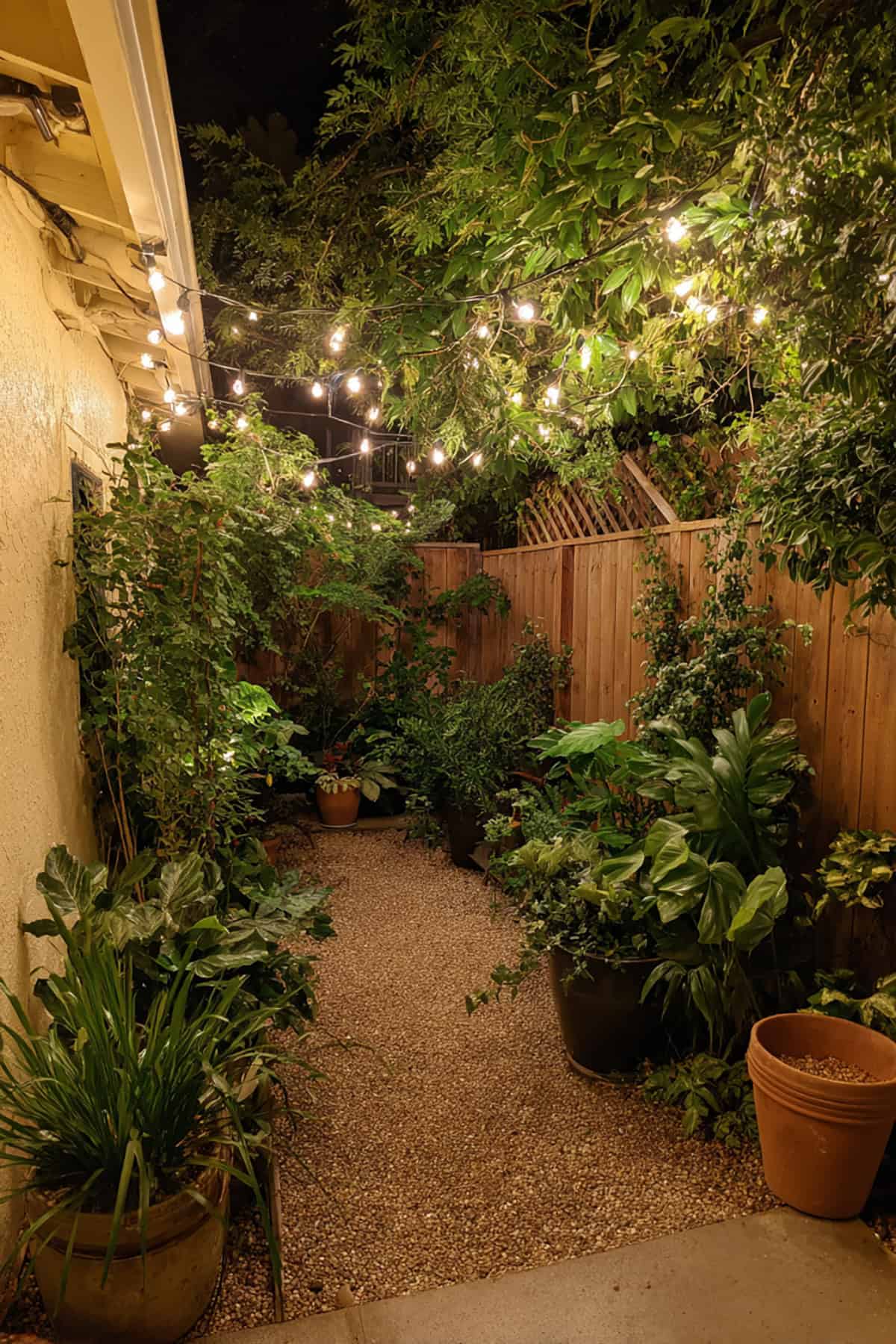
Lights strung overhead change the mood of a small yard after dark. Screw hooks into fences or siding and drape weatherproof string lights in loose zigzags or straight runs, with warm white bulbs for a mellow glow and a timer on an outdoor outlet.
Dense shrubs along the borders, such as hydrangeas or boxwood, form leafy walls, and smaller flowering plants tucked in at eye level add color and privacy. The open middle holds furniture or games, with the lights acting as a ceiling.
Vine-Covered Arch Nook
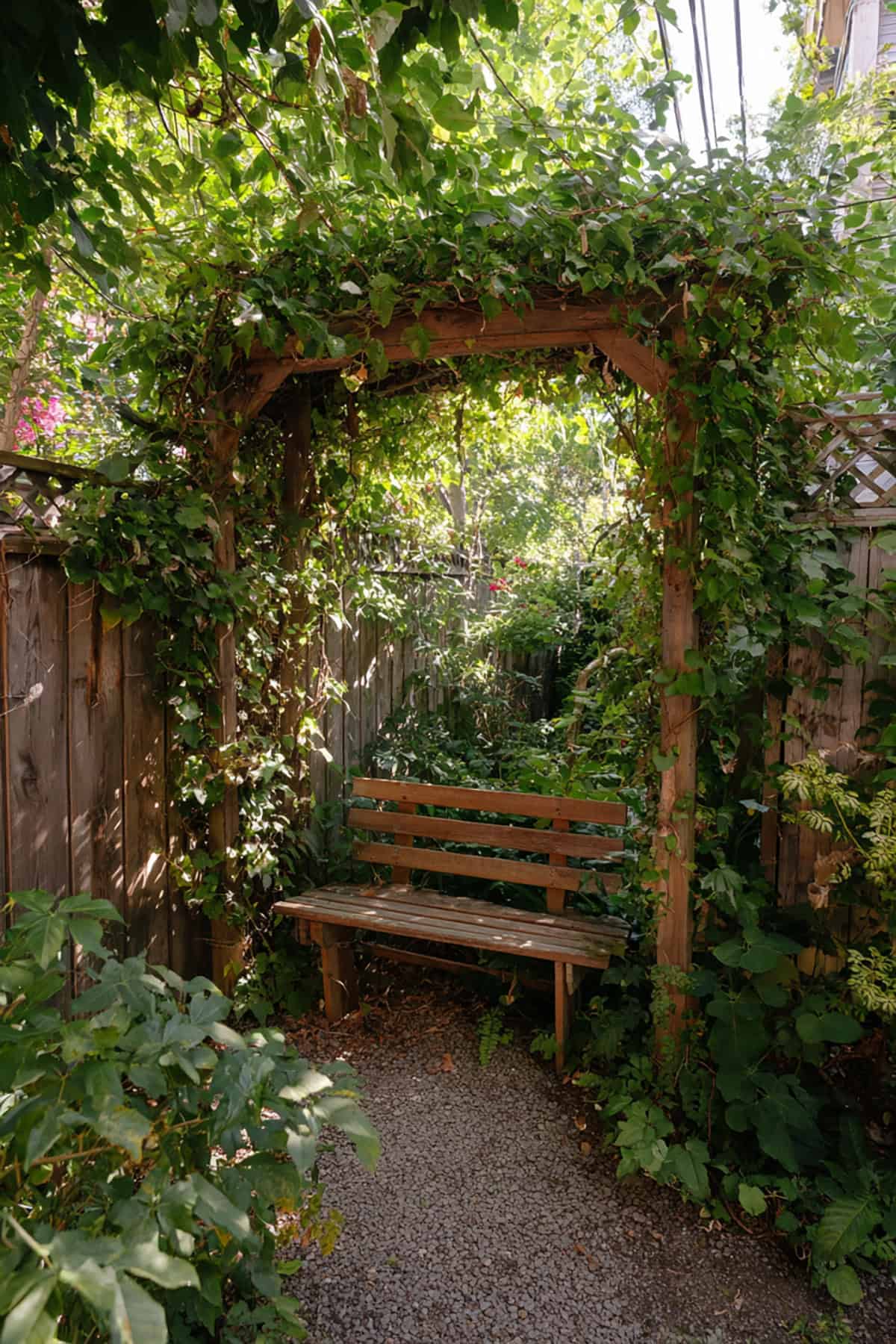
A slim archway draped in green frames a tucked-away seat beautifully. Anchor it in concrete or set it in heavy planters so it becomes the heart of the space.
Choose manageable climbers such as clematis, pole beans or climbing roses, or jasmine and bougainvillea in warm regions, and add a wire grid to guide the stems. Place a bench underneath on mulch or gravel, allow about 3 feet of depth and trim the vines regularly for airflow.
Pallet Daybed
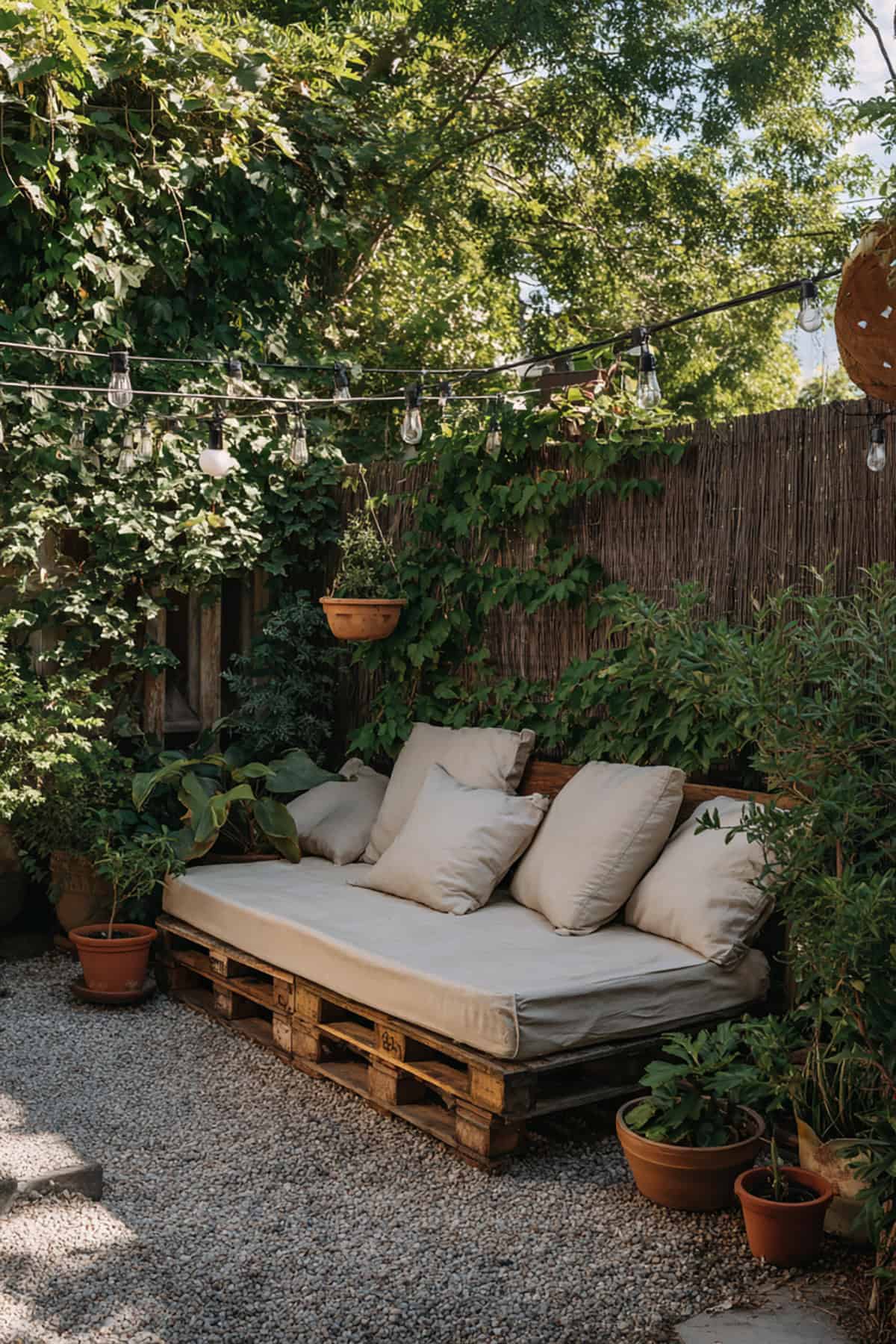
Repurposed pallets stacked two or three high make a sturdy base for a casual daybed. Screw them together and sand the surface to prevent splinters.
A foam mattress in waterproof fabric and a pile of outdoor cushions complete the bed. Tall pots of grasses, dwarf bamboo or compact shrubs behind it add privacy, and herbs and annuals along the sides soften the look. Seal the wood against rain and sun, and leave a couple of feet clear for a walkway.
Shade Cloth Retreat
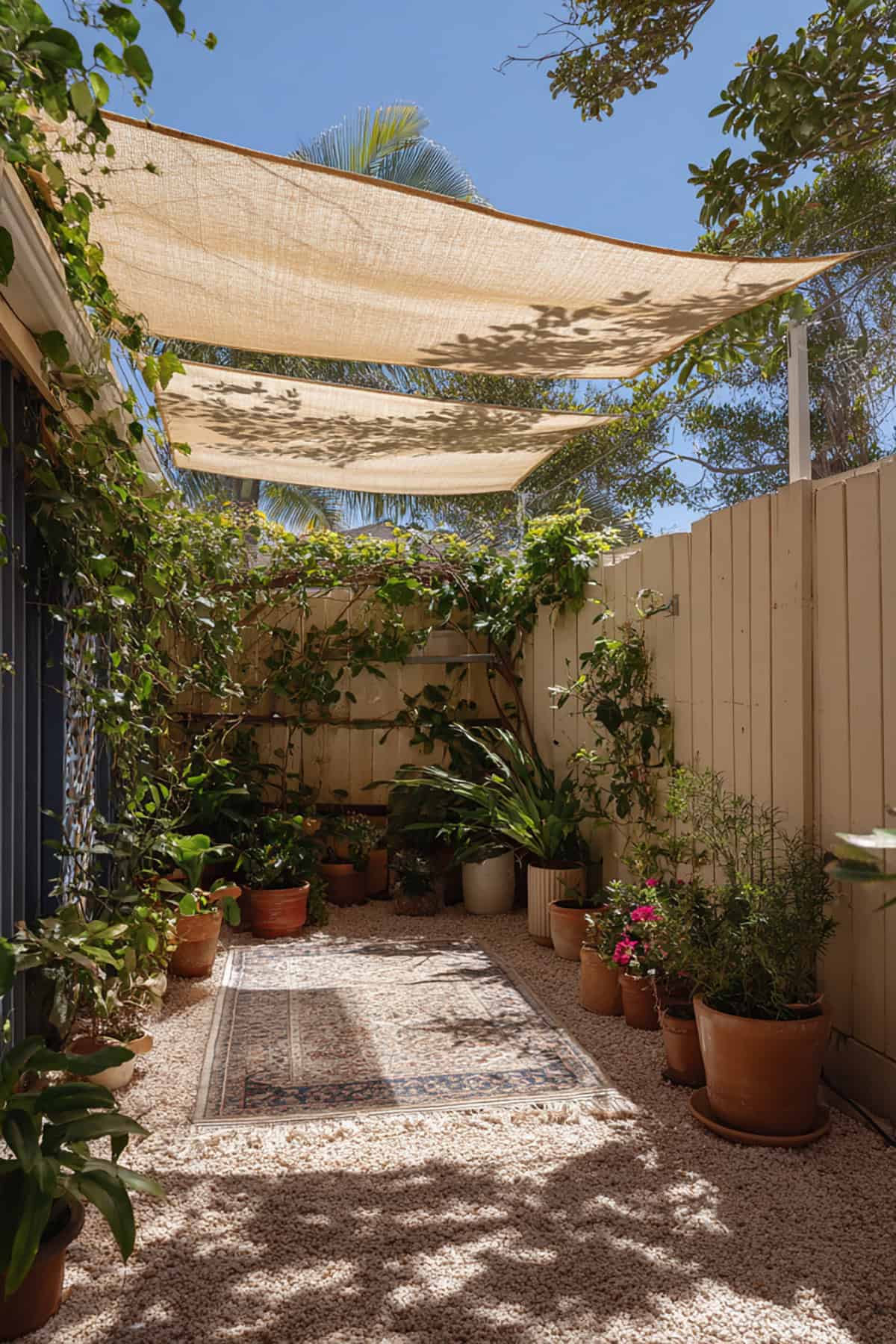
Shade cloth stretched between posts or clipped to wall brackets takes the edge off harsh afternoon sun. Neutral colors fade into the background and leave the focus on the plants, and eye bolts and rope pull the fabric taut.
Arrange plants by height, tall at the back, medium in the middle and low in front, which improves light and airflow and makes the space look larger. A small bistro set or a single lounge chair is enough, and lightweight pieces move easily as the weather changes.
Vertical and Wall Solutions
Few spots in a small yard match bare walls and fences as growing space. Training plants upward frees the ground and fits far more into a small backyard.
Wall-Mounted Shelf Garden
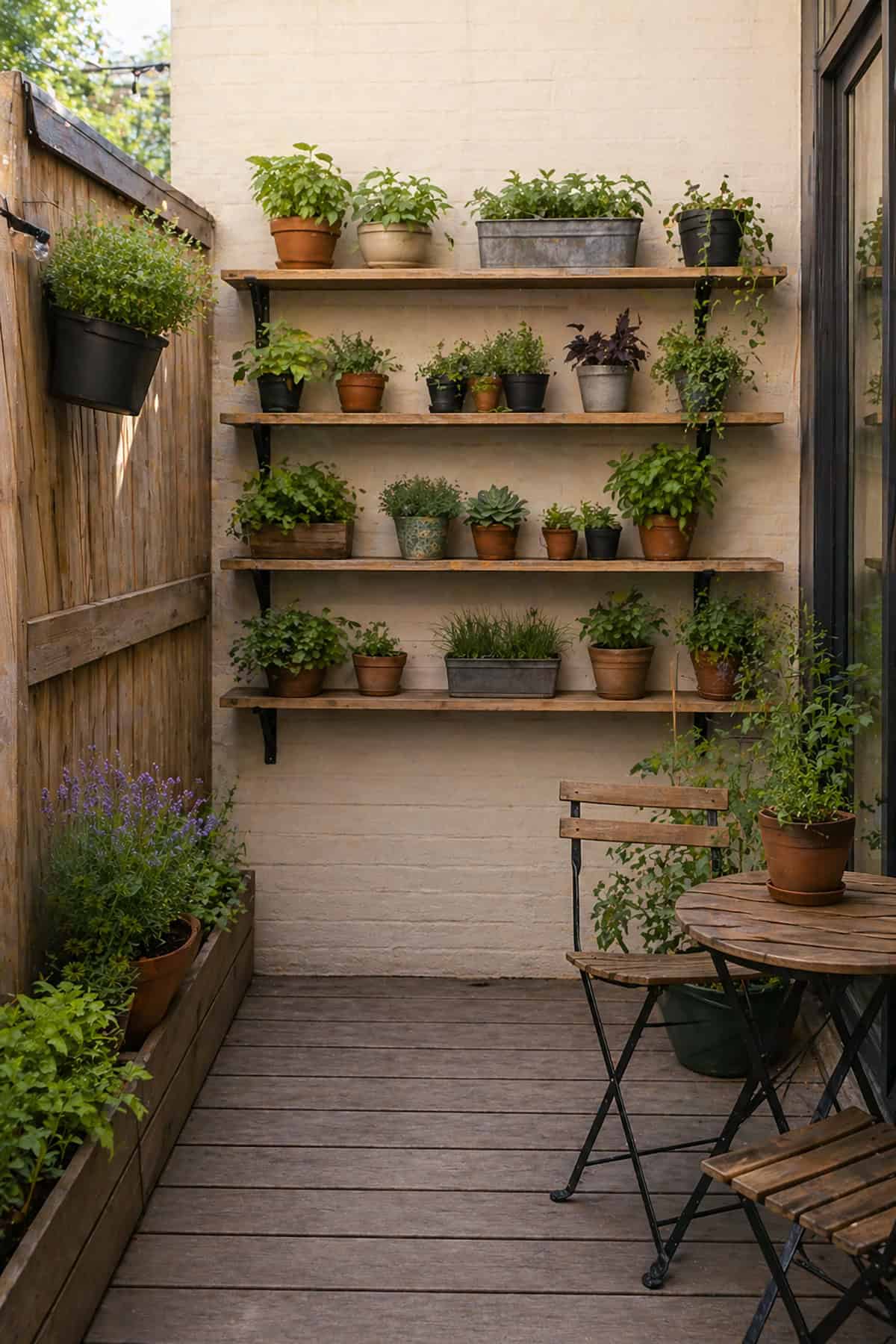
Sturdy shelves on a wall or fence lift pots off the ground and free the space below for chairs or a patch of grass. Use treated wood or metal brackets anchored into studs or masonry, with shallow planters on top and deeper containers lower down. Herbs, lettuce and compact flowers grow well here, and shelves set close together read as a living wall at a fraction of the cost.
Vertical Vegetable Trellis
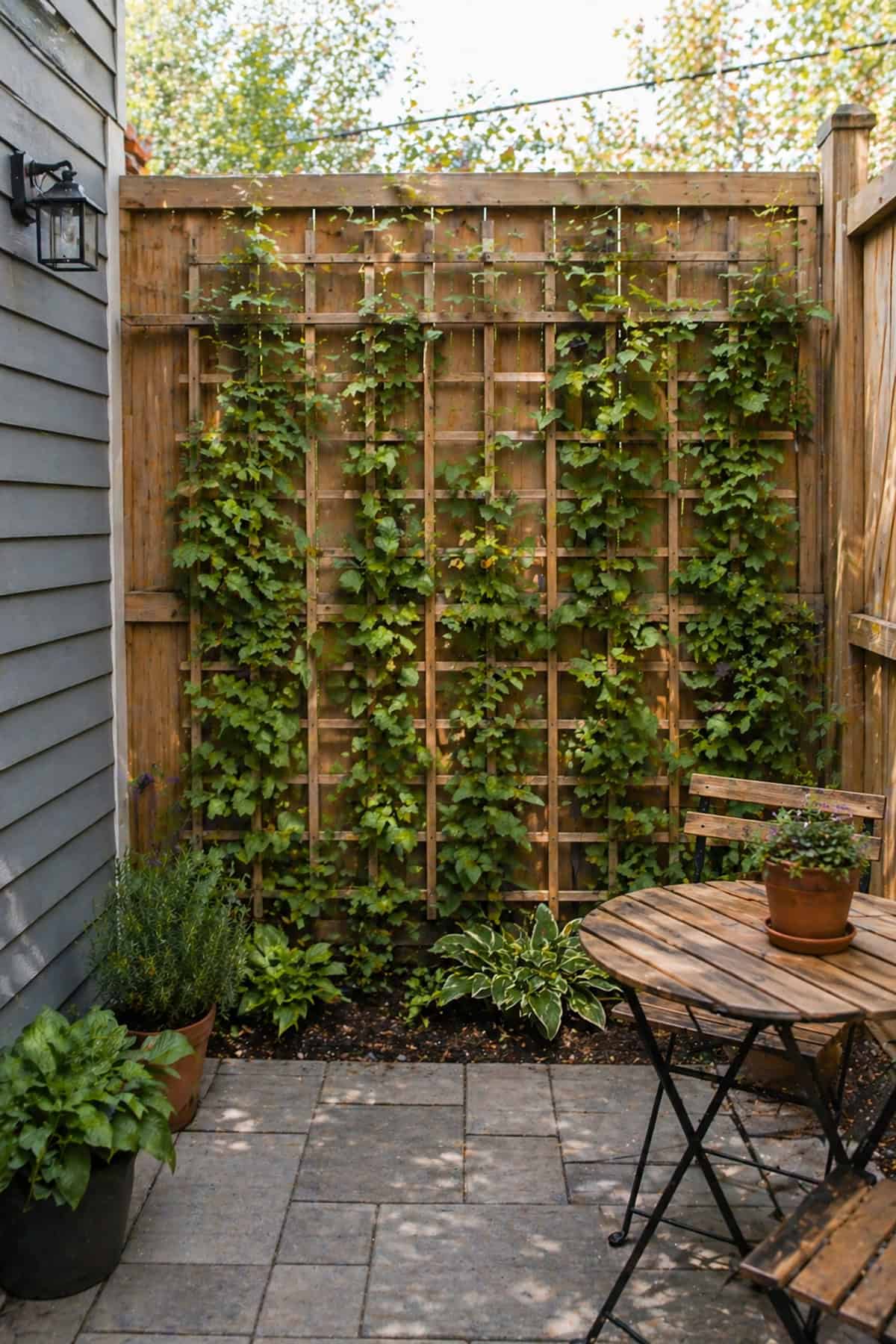
A trellis against a fence or raised bed trains climbing crops upward and improves airflow. Tomatoes, pole beans, peas, cucumbers and even small melons climb happily with proper support.
Build a solid base, since heavy fruit pulls down a flimsy frame. The roots occupy a single narrow row while the vines grow up, a smart choice for slim spaces.
Two-Tier Fence Planter
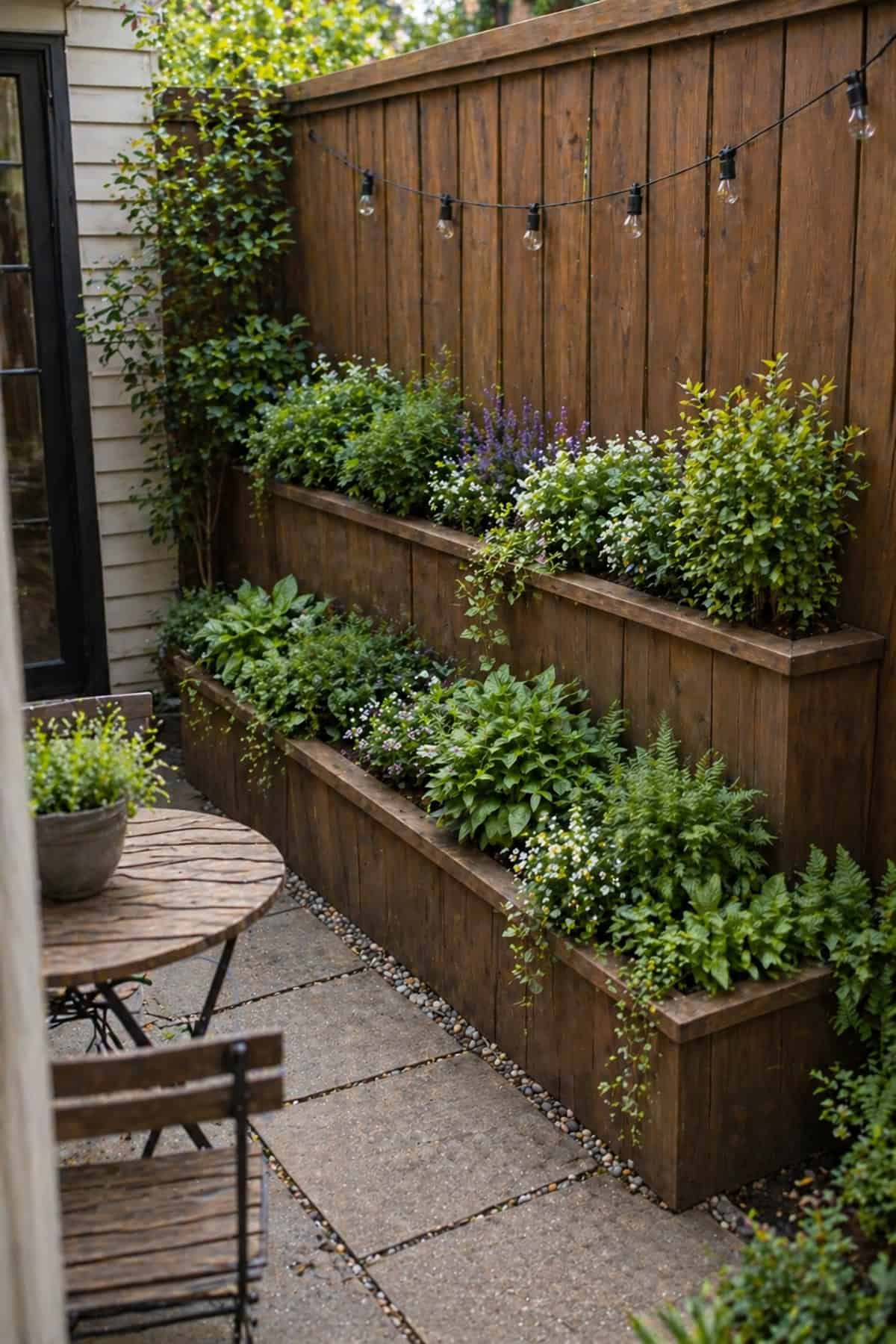
Two planters, one on the ground and another mounted above it, add depth along a fence with little extra width. Plant taller species at the back and shorter ones in front so every plant receives light. Pressure-treated lumber or composite boards hold up well outdoors, and drainage holes prevent soggy roots. The layered look breaks up a plain fence and contains herbs, compact shrubs or seasonal flowers neatly.
Two-Level Planter
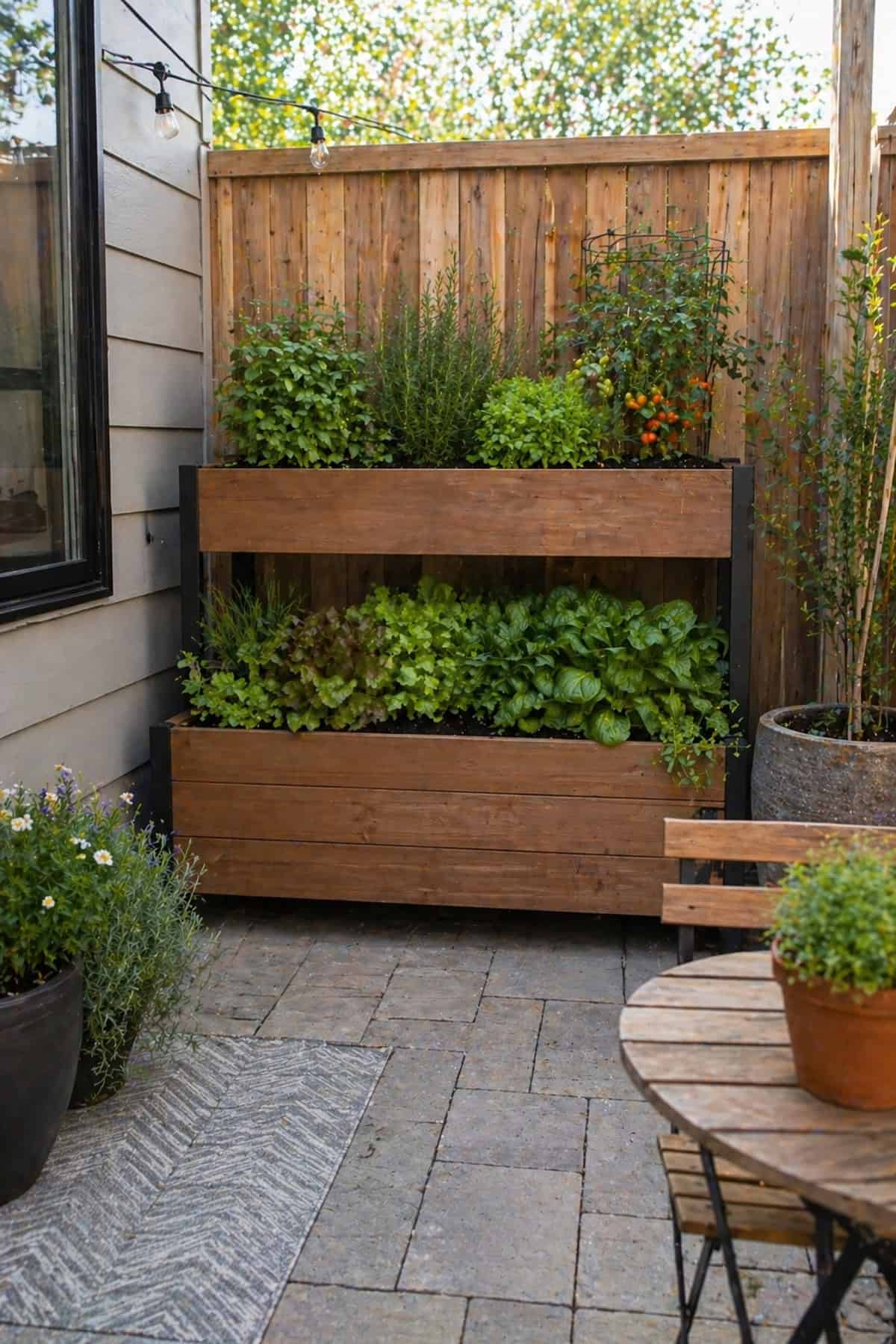
A stepped planter with two distinct levels draws the eye upward in a cramped corner and stretches the sense of height. Plant deep-rooted species on top and shallow crops below, each level with its own drainage. Metal corner brackets prevent the frame from shifting, and every plant sits within easy reach for watering and pruning.
Stacked Tiered Pots
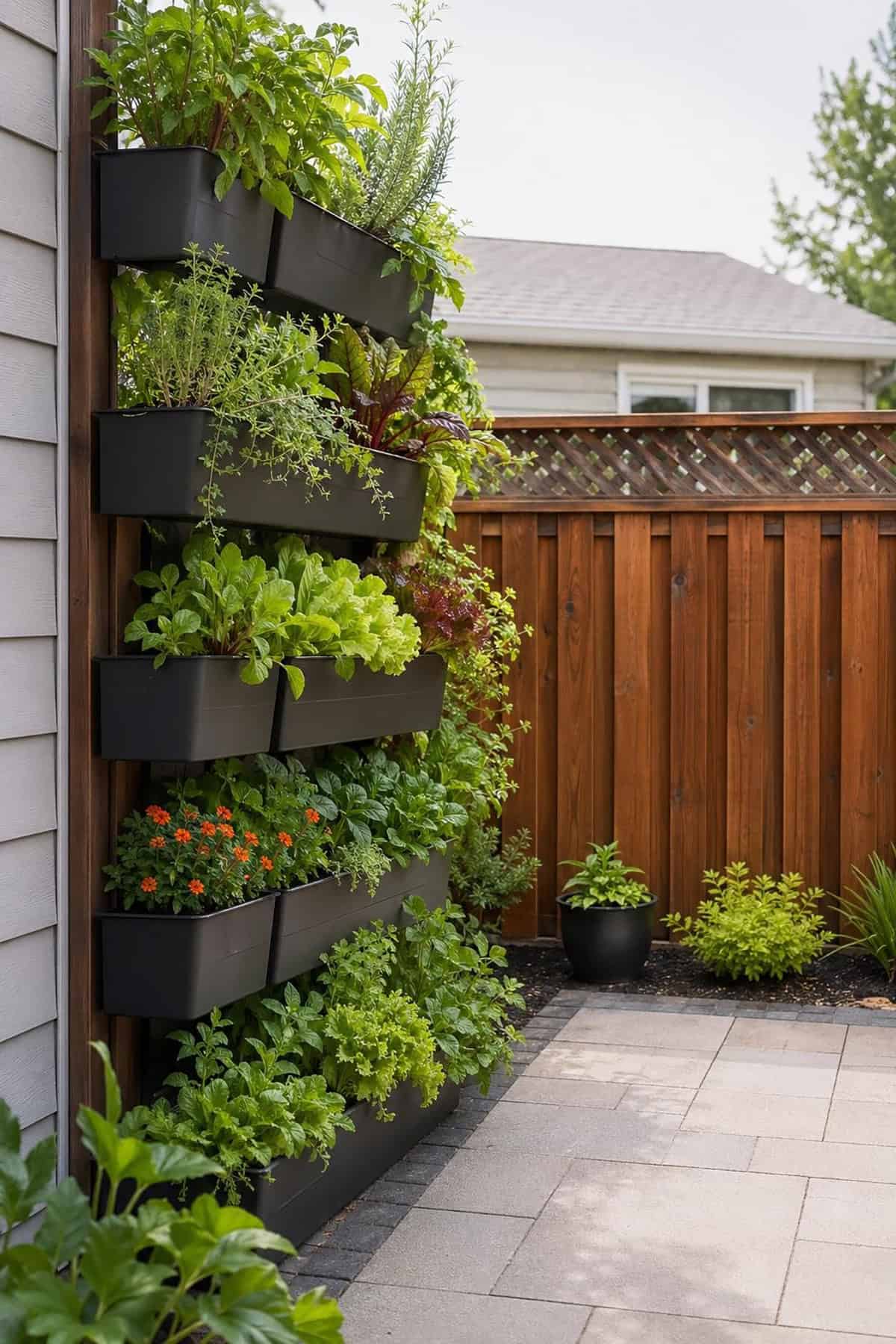
Tiered pots and stackable containers pack a dense growing area into a tight footprint. Sun lovers grow at the top and shade-tolerant plants lower down, which makes the most of shifting light.
Set the stack on level ground and secure it in windy spots. Herbs, strawberries and compact flowers grow well in this setup, with none of the clutter of scattered pots.
Stacked Corner Planter Boxes
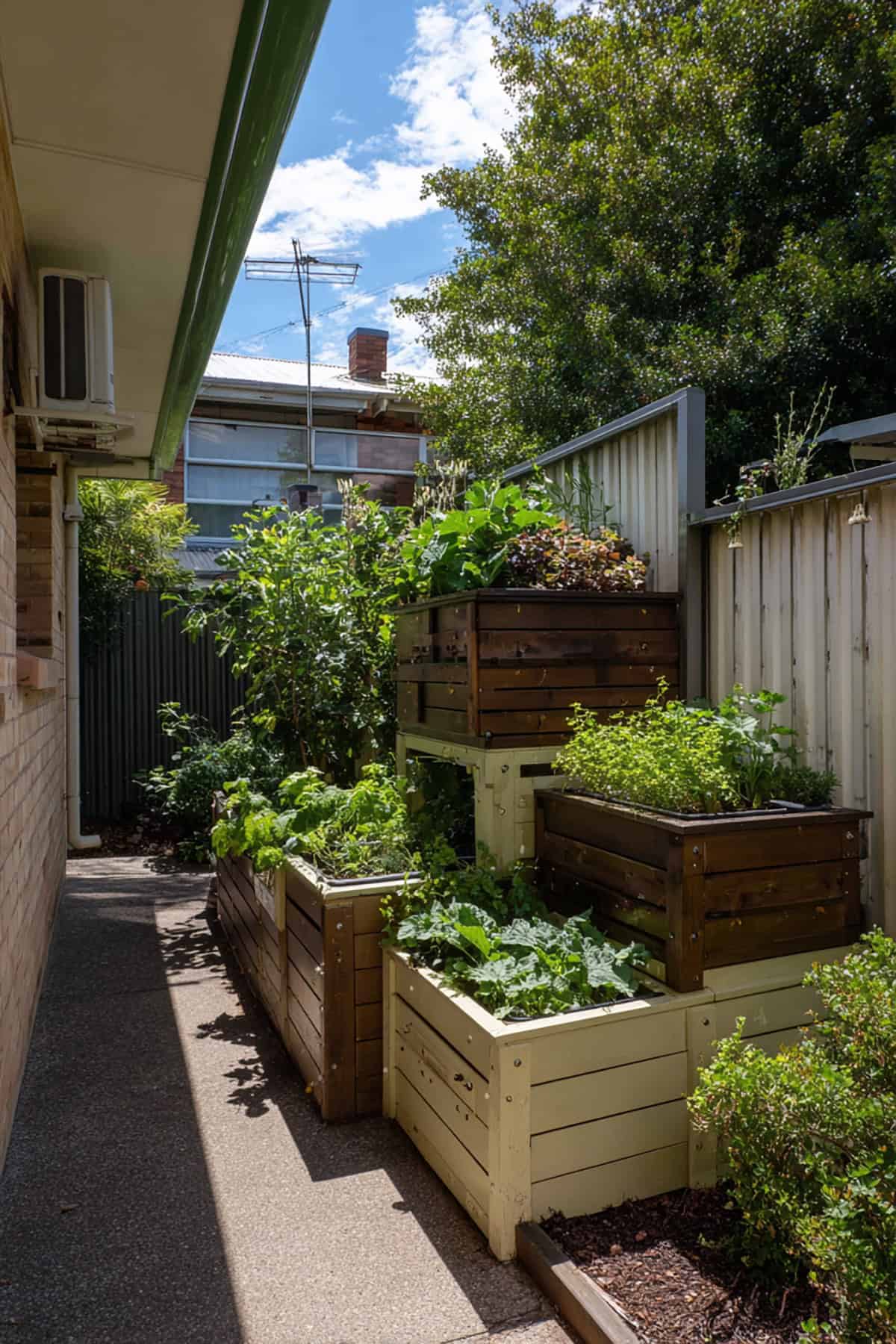
A single spare corner holds two or three planter boxes stacked in a staggered arrangement, each resting securely on the one below.
Trailing plants spill from the top box and soften the edges, and compact vegetables or foliage plants fill the lower boxes. The arrangement defines the corner as its own garden zone and draws attention away from tight boundaries.
Slim Rolling Planter
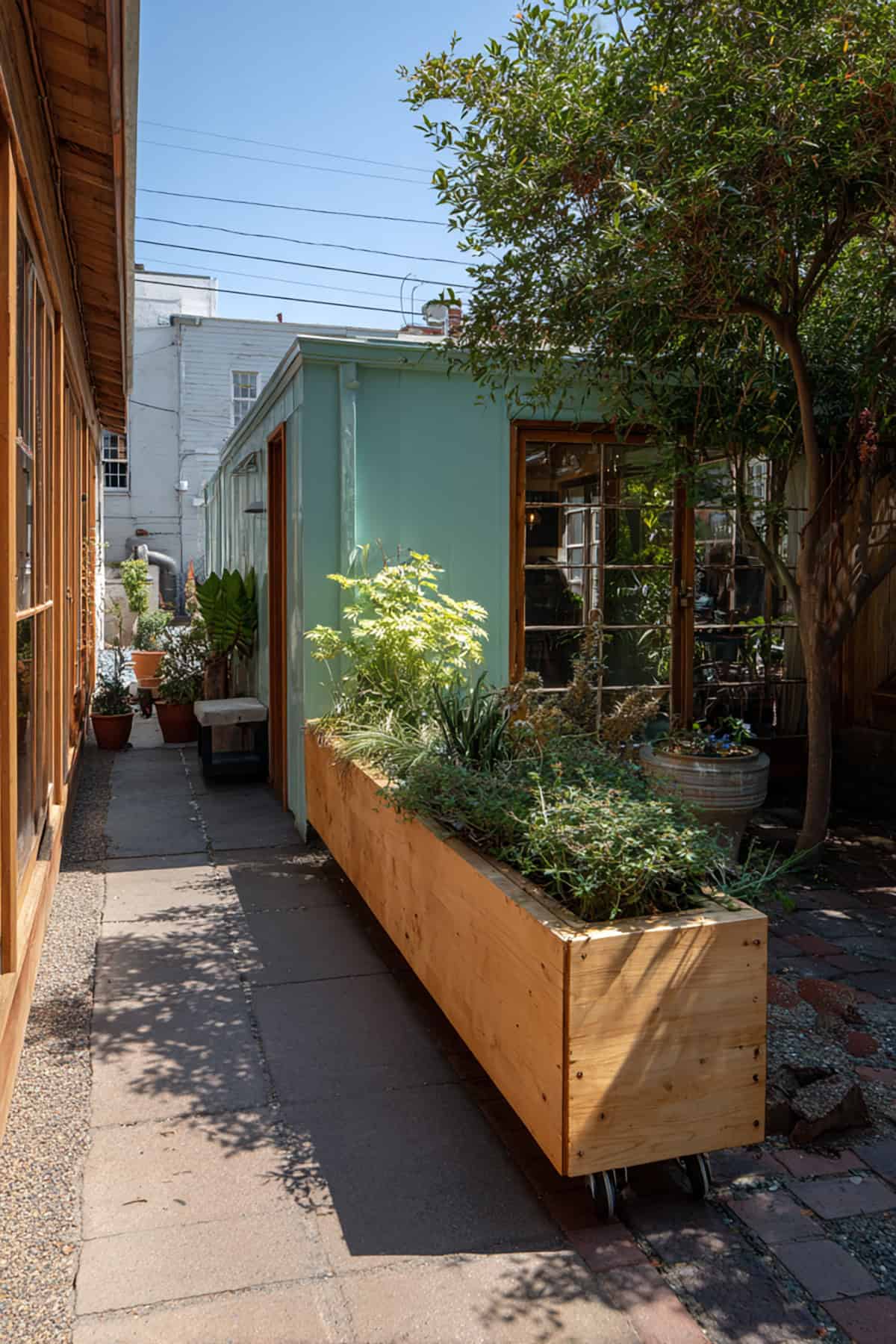
A slim planter on locking casters hugs a wall and moves wherever it is needed. Even a narrow frame holds enough soil depth for tomatoes or dwarf shrubs.
Rolling the planter to follow the sun helps when fences or buildings cast shade at odd times of day, and it allows layout experiments with no commitment.
Side Yard Garden Strip
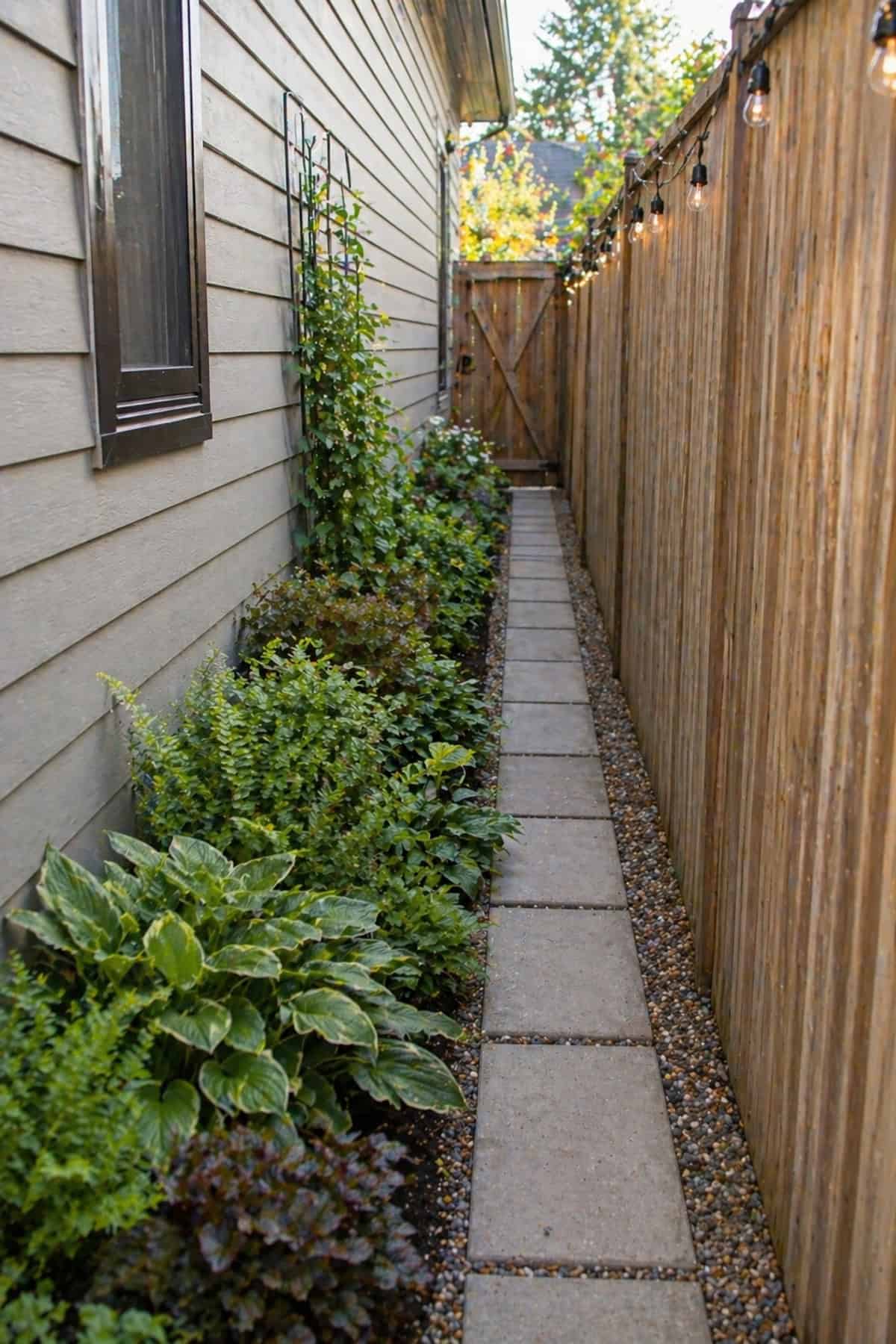
Gardeners tend to ignore long, narrow side yards, and a raised bed or a run of connected boxes along the boundary makes them productive. Climbing vines on the fence create a green wall for privacy and height.
Check that the strip gets enough direct sun for vegetables, and grade the soil so water drains away from the foundation. Even a skinny strip produces herbs, greens and compact crops.
Leaning Ladder Planter
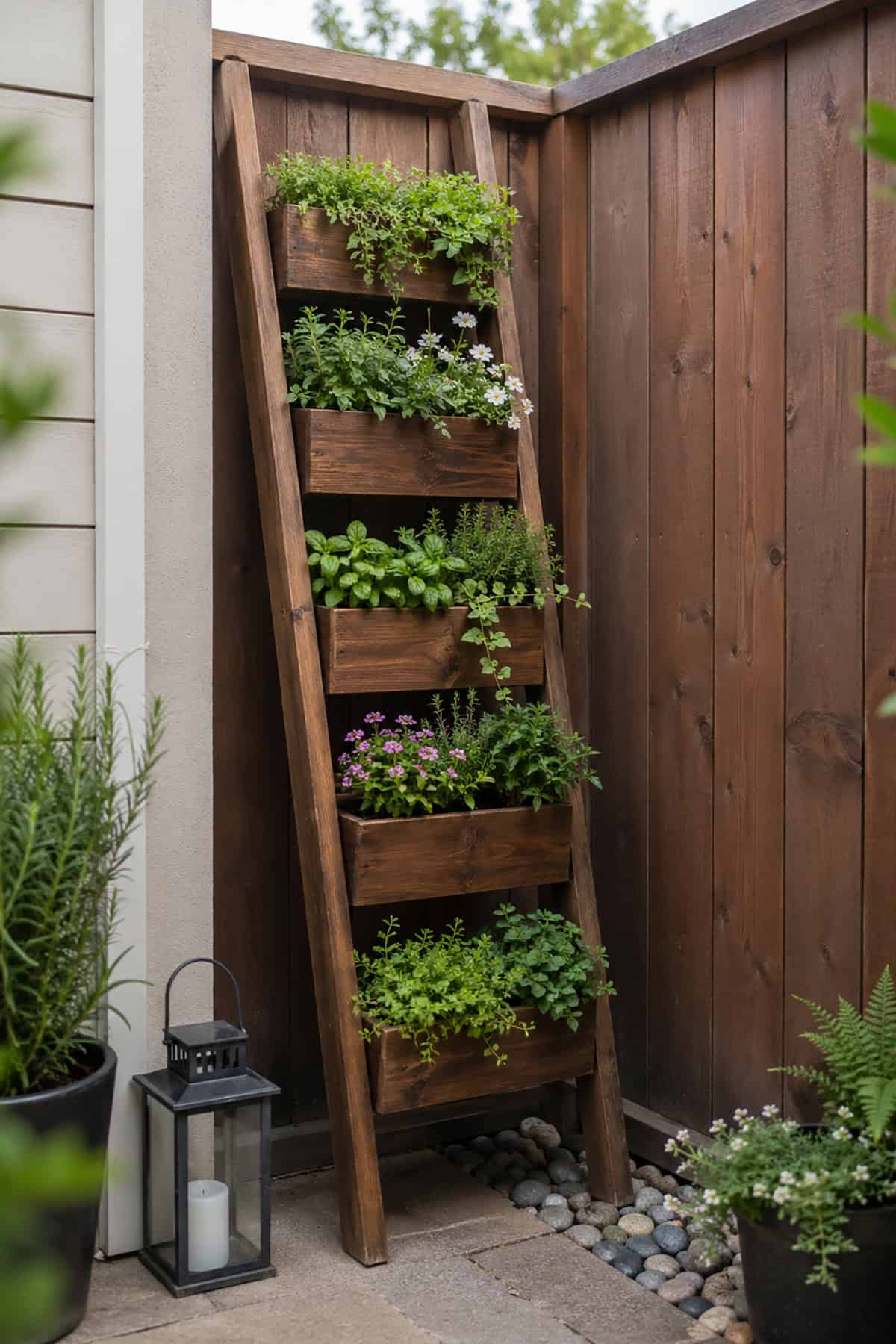
A ladder planter leaned against a wall fills a small corner with life. Each rung holds a shallow pot or box, ideal for lightweight herbs, succulents or annuals.
Avoid heavy containers, which make the ladder wobble, and fasten the top so it holds firm. Outdoor-rated materials last longest, and the layered display fills a spot that once held a single pot.
Fence-Hung Planters
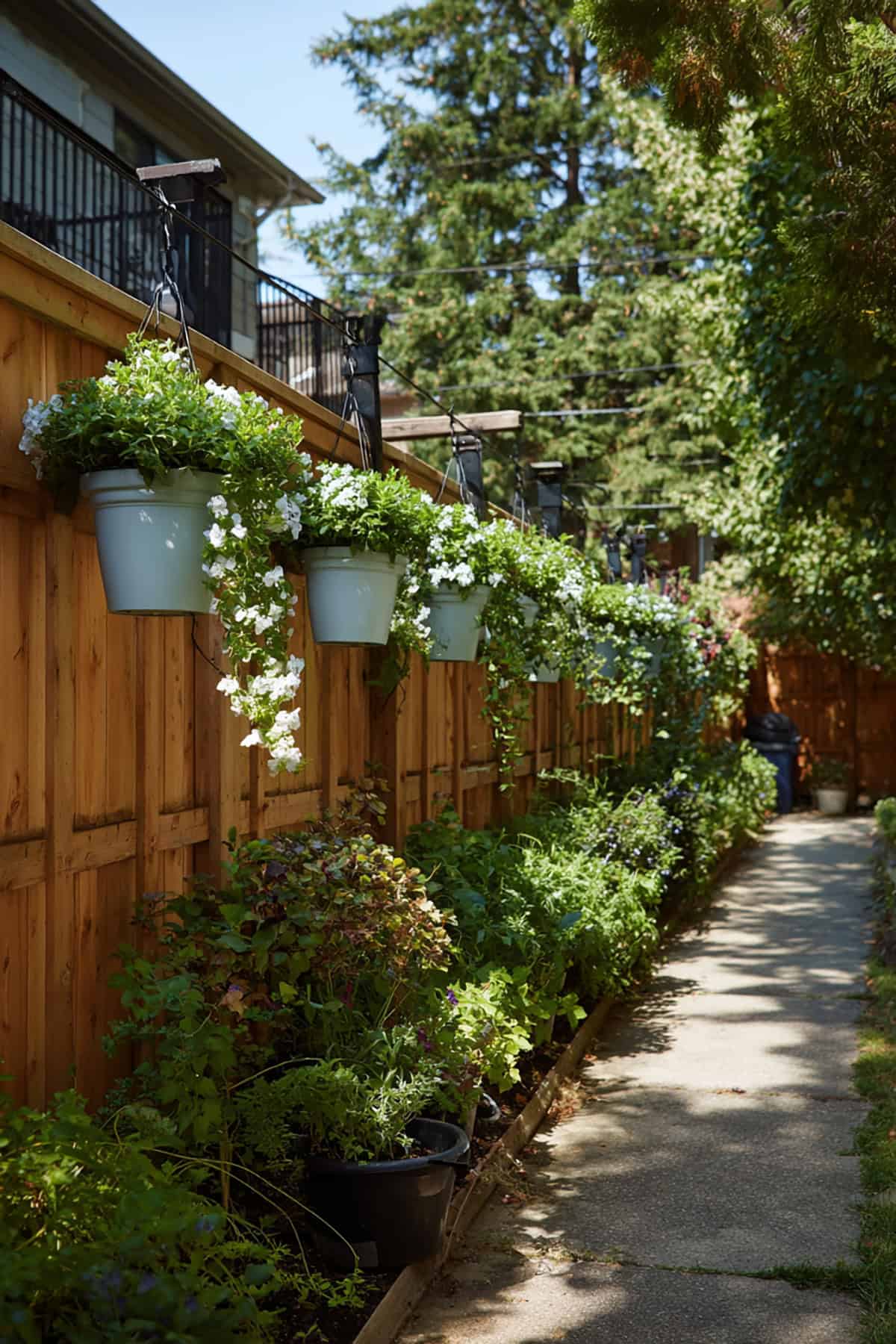
Planters hung on a fence free precious ground space. Use sturdy hooks or brackets, since wet soil and mature plants get heavy fast.
Evenly spaced window boxes form a tidy, rhythmic pattern. Trailing flowers, strawberries and compact herbs thrive in them, and the fence becomes a canvas for greenery.
Slim Raised Bed Along the Fence
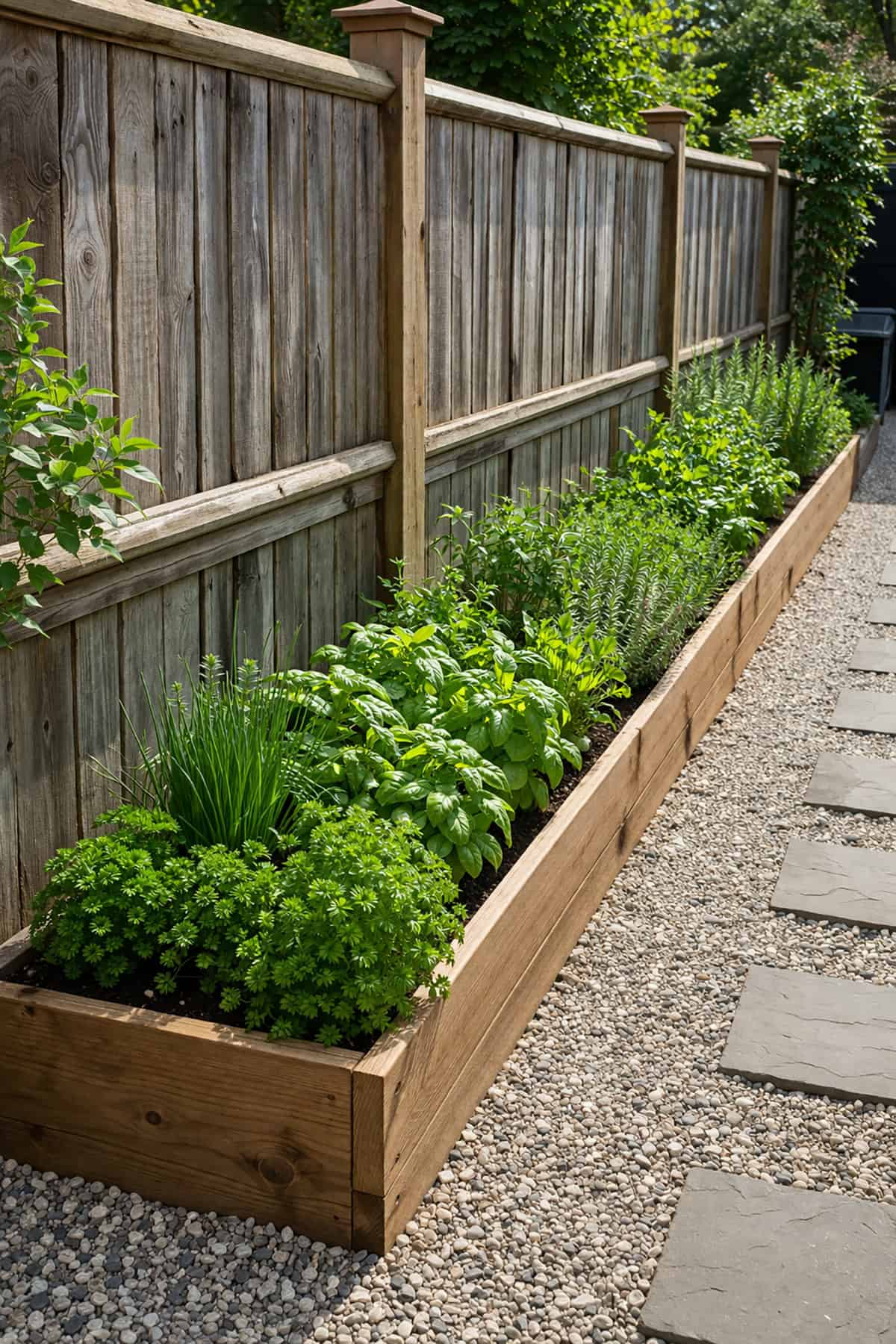
A slim raised bed 12 to 18 inches wide against the fence avoids crowding paths. A trellis at the back lets vines climb, which combines ground-level and vertical growth. High-quality soil matters, since the roots have little room, and lettuce, peppers and compact tomatoes all fit in space that tends to sit empty.
Fence-Line Flower Strip
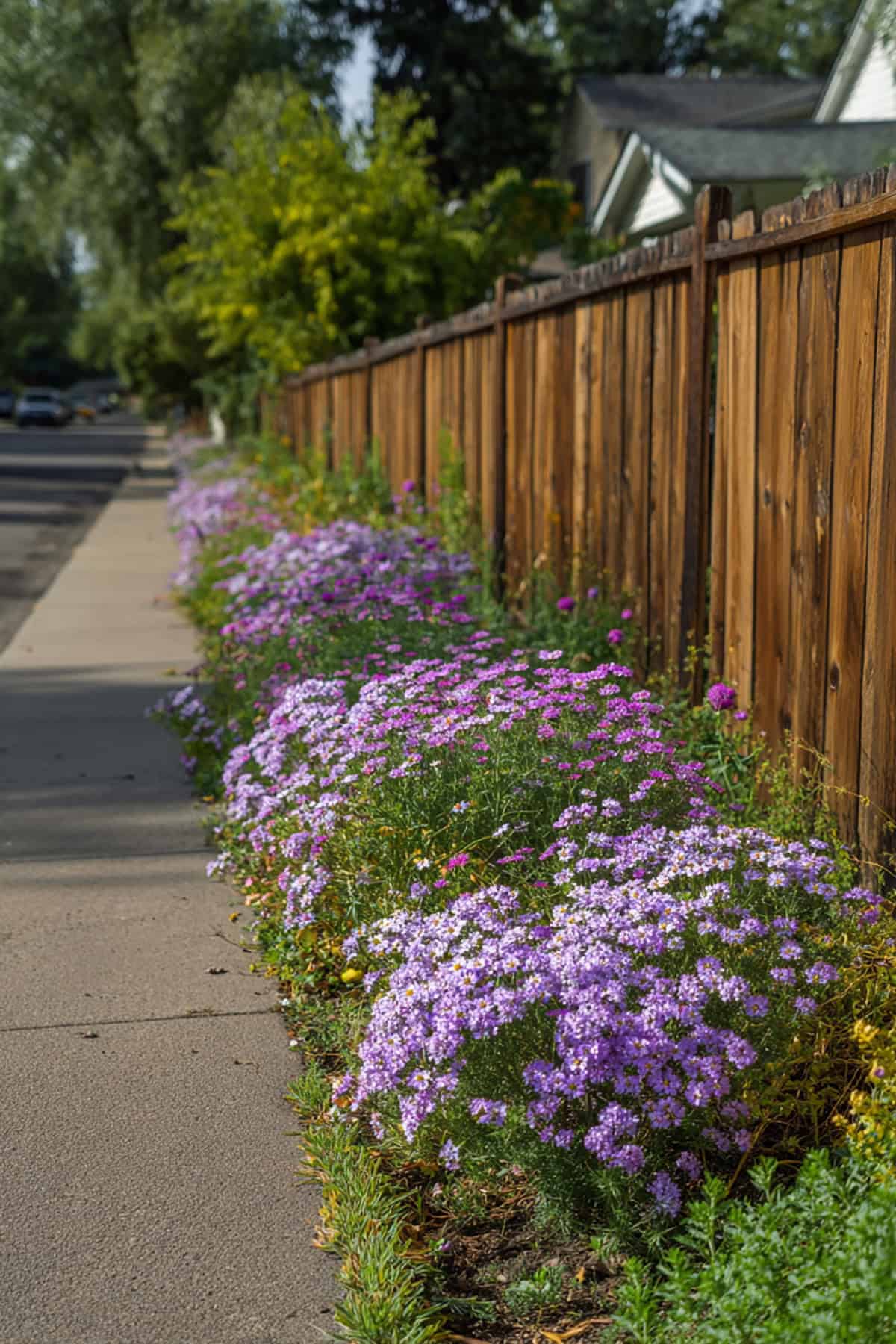
A dense strip of flowers at the base of a fence forms a continuous, colorful border. Choose varieties that tolerate close spacing, and enrich the soil well, since tight plantings need rich soil and reliable watering. Vary the heights, with taller stems at the back, for a full, layered look. The center of the yard is free for other uses, and the edge glows with color.
Fabric Pocket Wall Garden
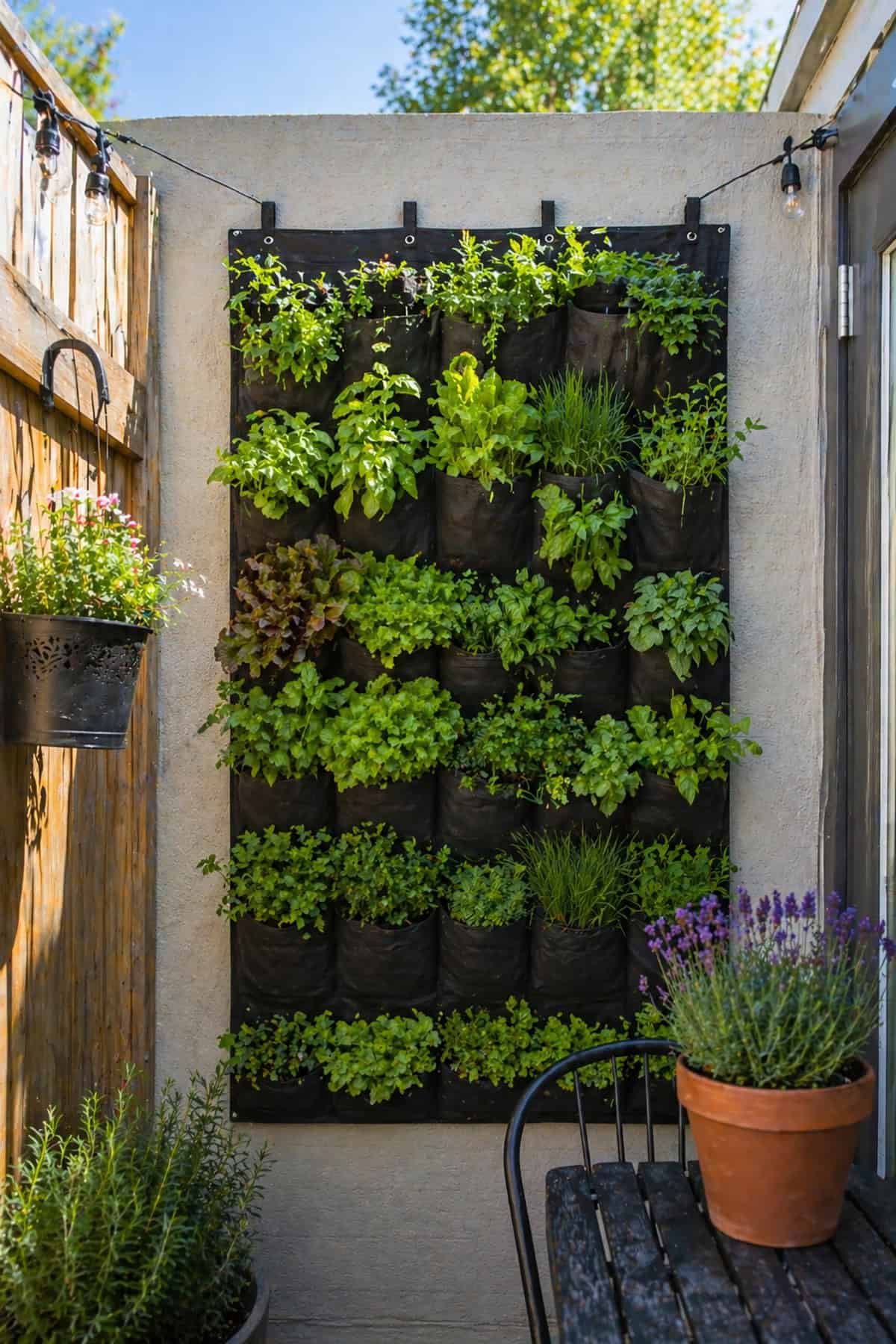
Fabric pocket systems cover a blank wall with a living patchwork, each pocket holding a little soil. Lightweight plants such as herbs, greens and small ornamentals are ideal, since heavy plants strain the fabric.
Mount the system on a sturdy surface, protect the wall behind it from moisture and add a drip line for even watering. It squeezes a vertical garden into the tightest spots.
Waist-High Shelf Planter
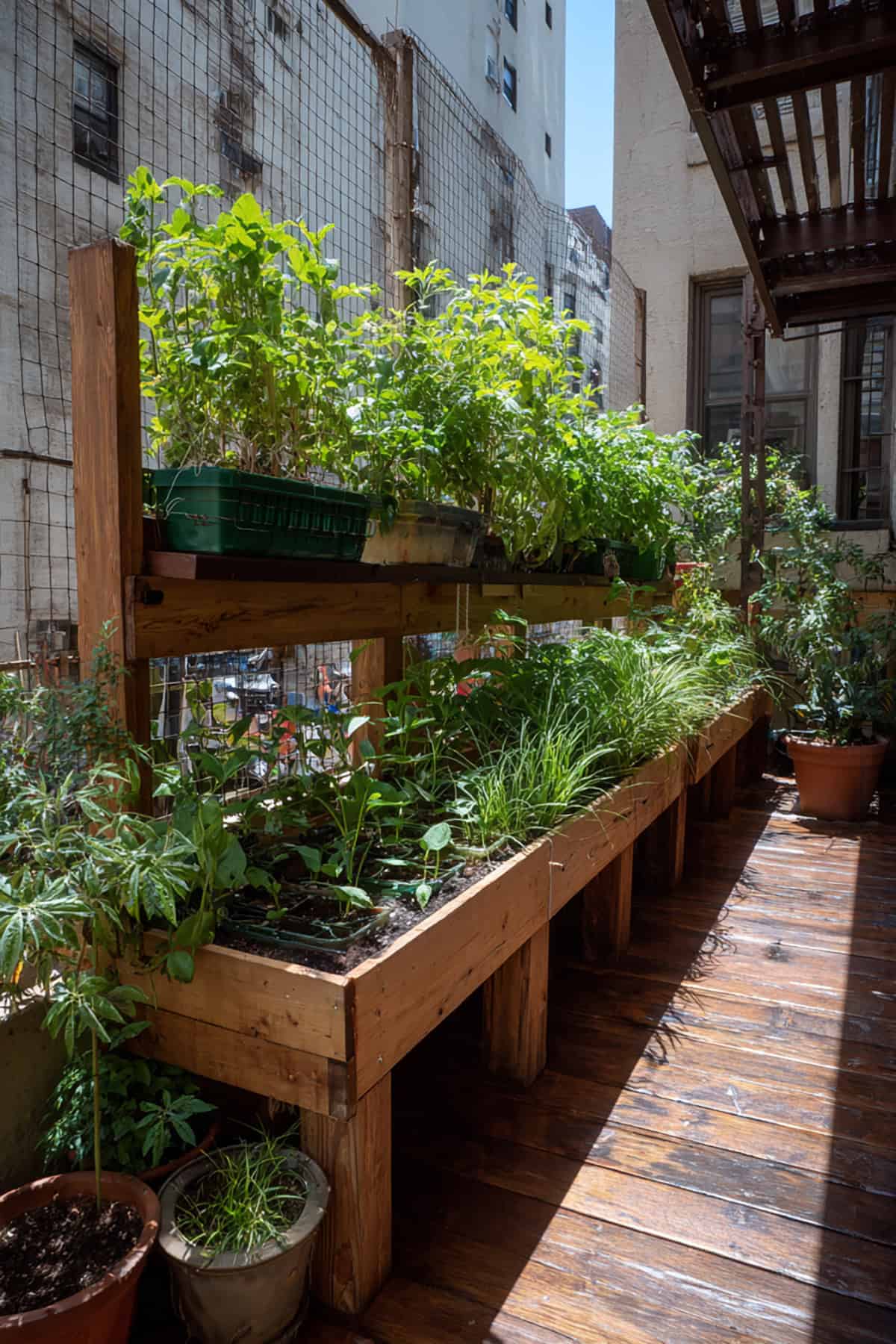
Planters raised to waist height on a sturdy shelf save your back and lift plants away from ground pests. The frame has to carry both soil and water weight, and cross-bracing helps.
Set the shelf against a wall for visual balance, or line up several for a more structured look. Salad greens, herbs and dainty flowers grow well here, and the ground below holds storage or more pots.
Corner Gardens
Layered height in a tight corner packs in more plants than a flat bed. The right structure and plant mix make an awkward spot into a private, useful nook.
Curved Corner Planter
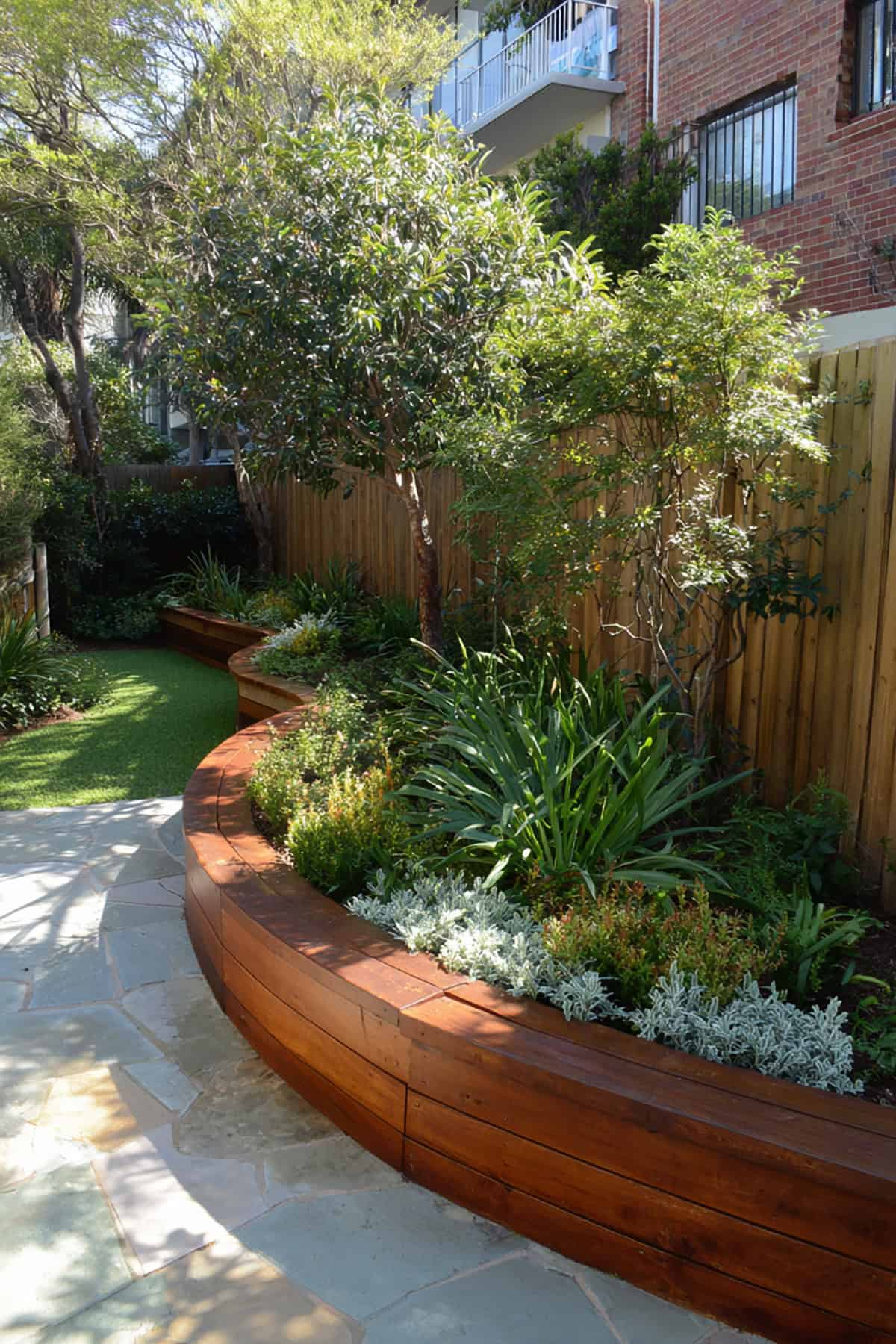
A curved planter fills an awkward corner where straight boxes look wrong. Flexible boards or segmented panels form the frame, with every joint secured to hold the shape.
Layer the soil and add drainage to prevent water from pooling, a common corner problem. The soft curve breaks up hard lines and makes wasted space into a focal point.
Stair-Step Corner Planter
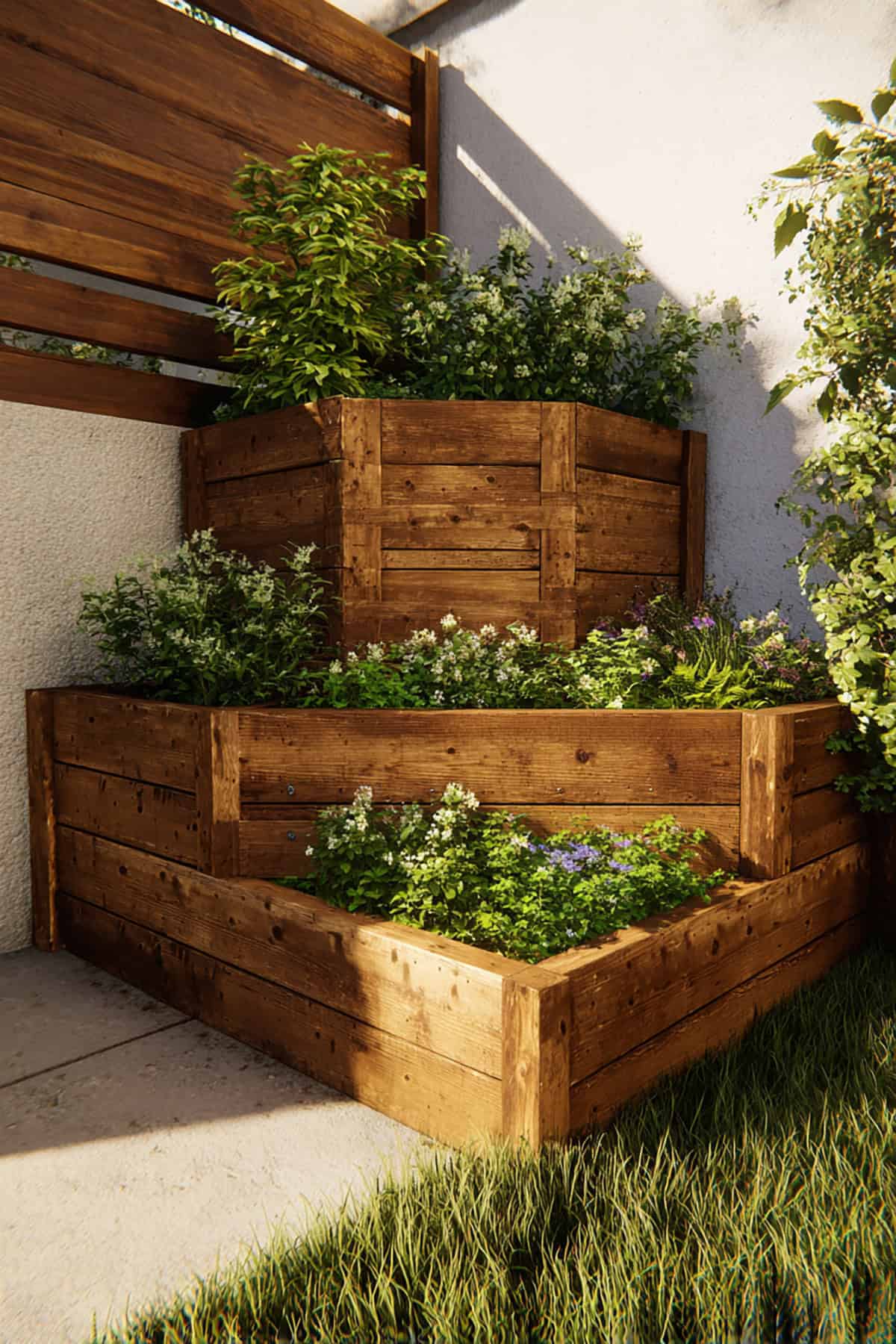
A tiered planter with three steps, each 8 to 12 inches higher than the last, fills a bare corner along the fence with every level within reach. Rot-resistant cedar or composite boards last for years.
Anchor each level with stakes and exterior screws, line it with landscape fabric and fill it with a topsoil and compost mix. Shallow-rooted crops go on the top tier and deeper roots below, and drip tubing along each tier waters evenly.
Privacy Plant Corner
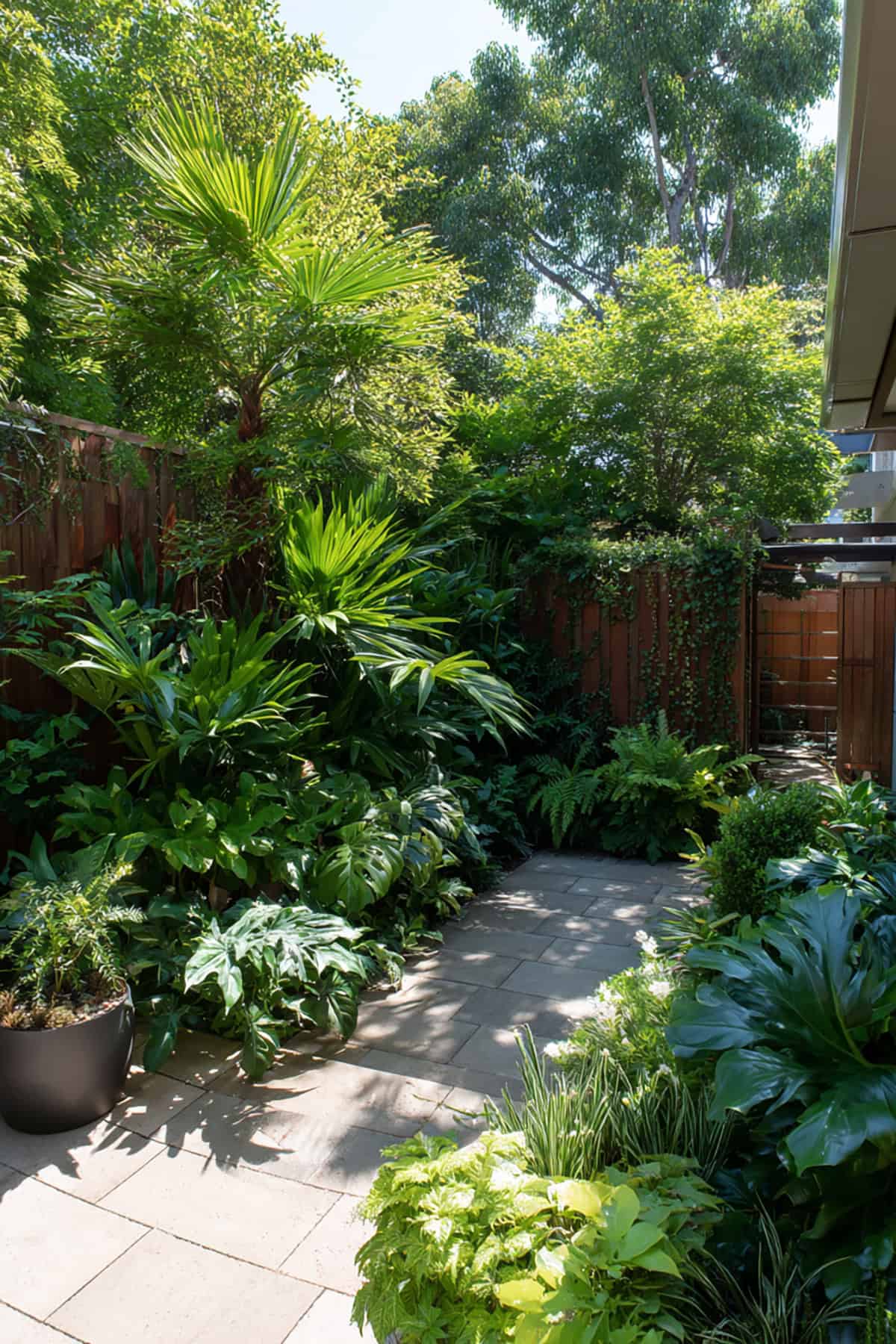
Tall plants packed into a corner add privacy to a small yard. Narrow, upright species such as arborvitae, clump-forming bamboo and columnar juniper form a screen in a small footprint, and each plant tag lists the sun, soil and climate it needs.
Close planting fills in fast, and mulch holds moisture. Shade-tolerant perennials at the base fill gaps, and a simple drip line reduces water waste and upkeep.
Creative Small Garden Layouts
Smart bed shapes, path widths and plant heights open up a compact yard. The right structure fits raised beds, pots and narrow walkways into a layout that avoids a boxed-in look.
Mixed-Height Fence Strip
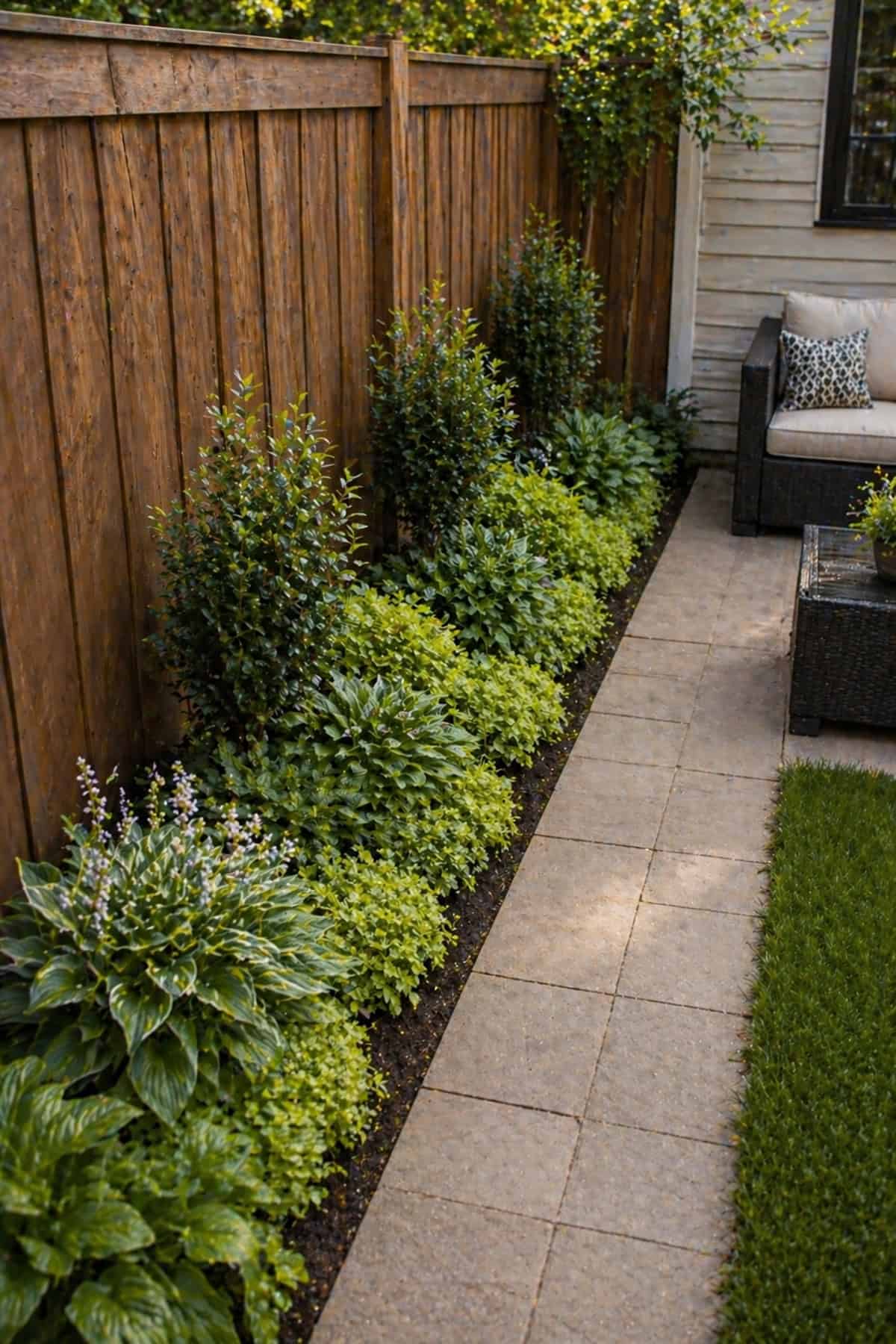
A skinny bed along the fence gains depth from a mix of tall and short plants. Upright dwarf citrus, boxwood or clumping grasses spaced between low herbs and flowers add dimension and lead the eye along the length.
Plan the bed 18 to 24 inches deep. Landscape fabric under mulch reduces weeds, and a slim pea gravel edge contains it neatly.
Slim Bed Along the House Wall
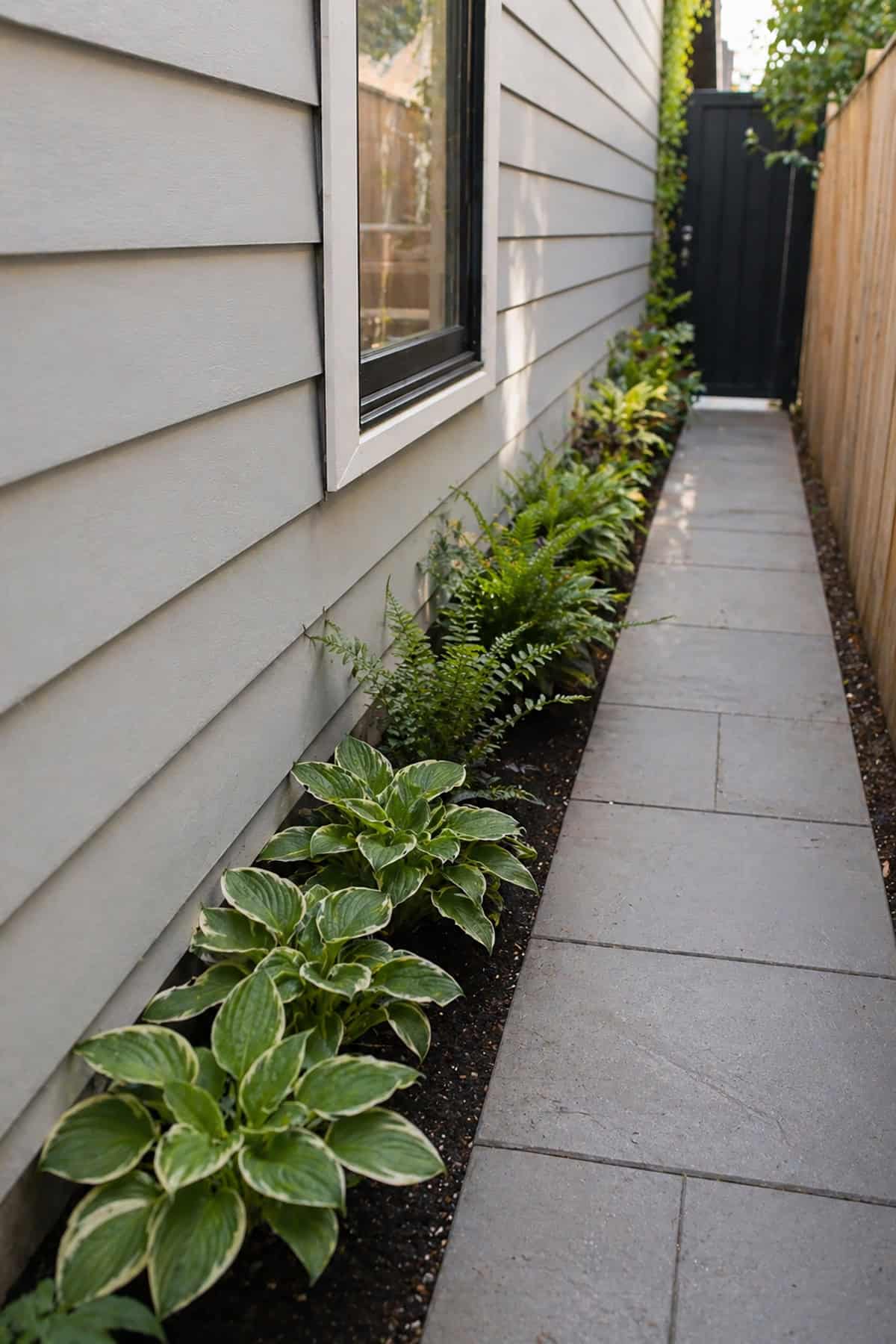
A bed just a foot or so wide produces a surprising harvest. Shallow-rooted edibles such as lettuce, chives and thyme thrive in it.
Fix a flat trellis to the wall for climbing beans or compact cucumbers, and hang pots from wall brackets for extra height in a small footprint. Make sure water drains away from the foundation, and go easy on irrigation.
U-Shaped Raised Beds
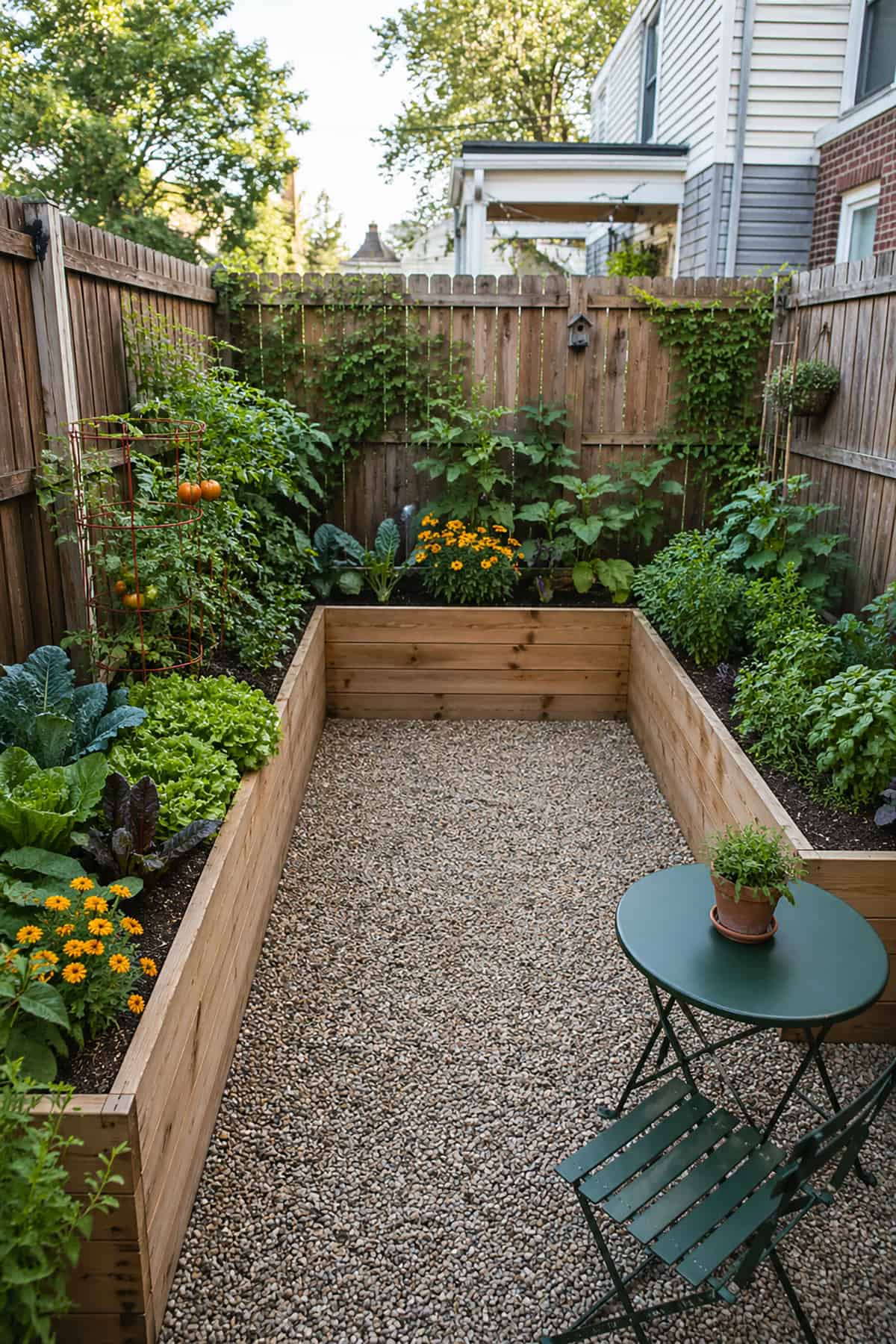
U-shaped raised beds along three sides wrap the yard in greenery and leave a central spot for a chair or easy access.
Beds 18 to 24 inches high are comfortable to tend. Tall crops line the back and herbs and greens fill the front, and a slim pea gravel path inside the U dries quickly after rain.
Symmetrical Grid Garden
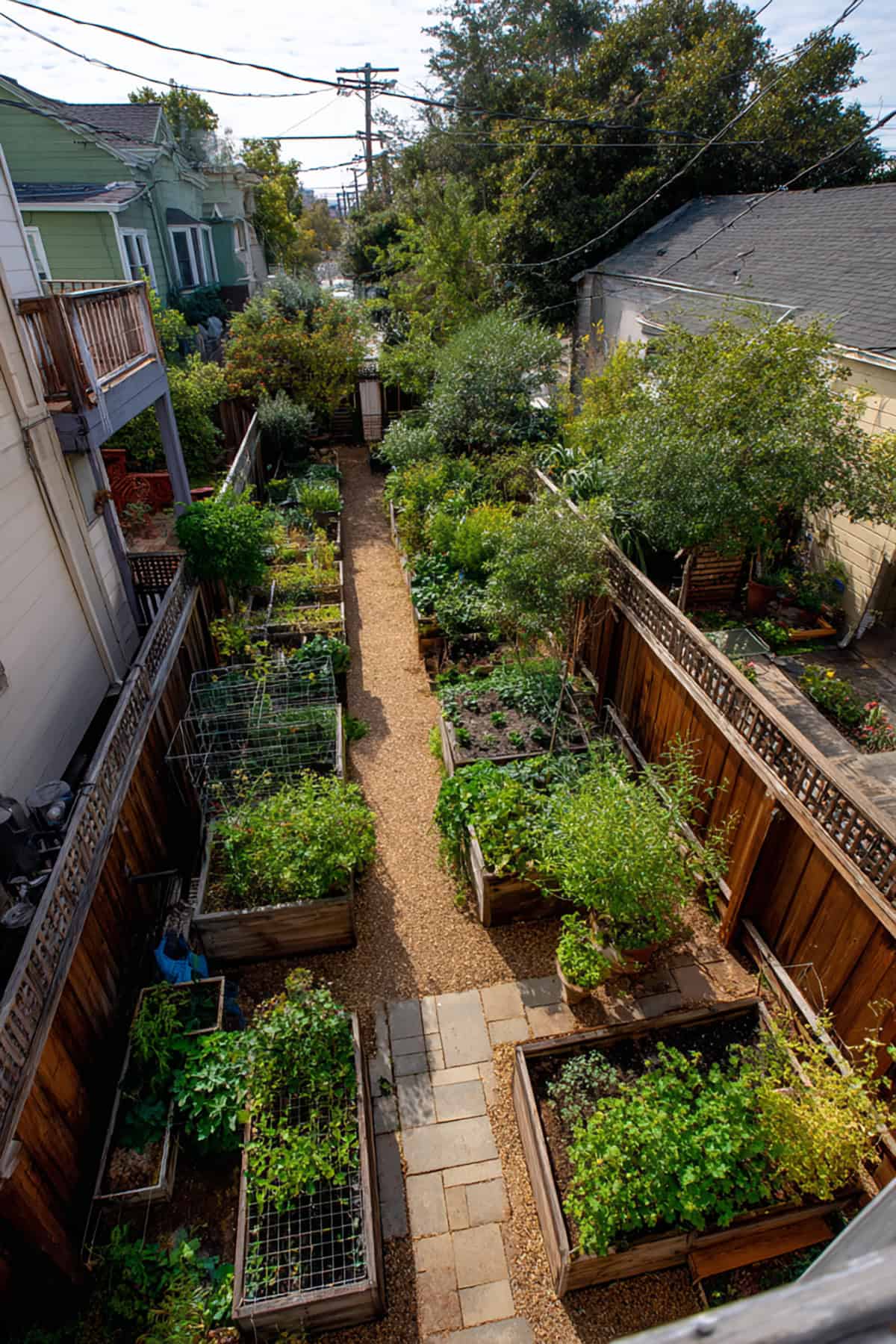
An orderly grid lends a small yard a planned, formal look. Divide the area into equal squares or rectangles with slim paths and compact beds no wider than 4 feet, so every plant is within reach.
Fill some beds with vegetables and others with flowers or herbs. Straight lines of pea gravel and crisp edging complete the tidy style.
Rock-Bordered Garden Patch
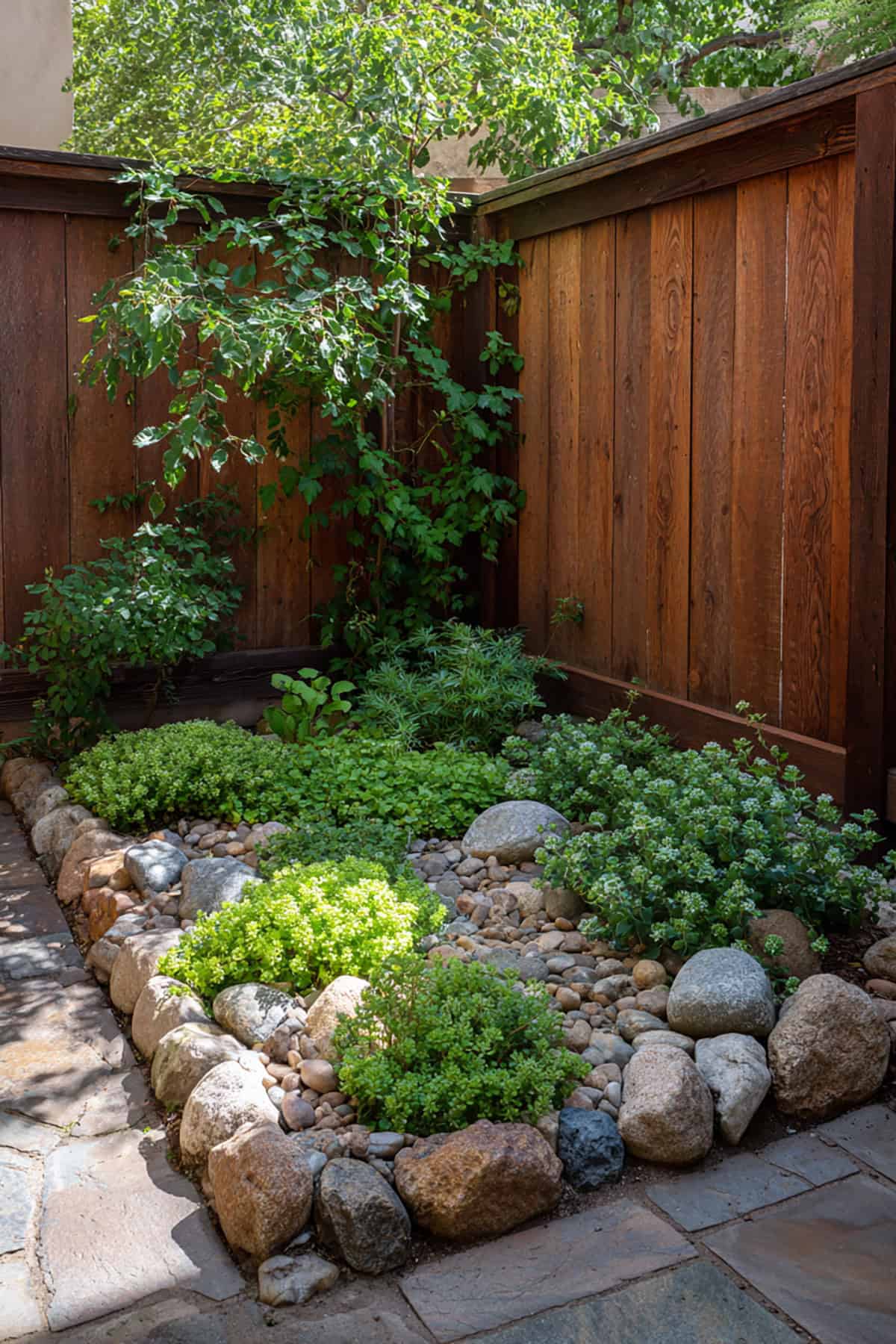
Small planting patches need little more than a clear shape. Fist-sized stones pressed into the soil frame a circle or rectangle in a corner or beside the patio.
Fill it with a mix of vegetables, herbs and a few flowers, and lay landscape fabric under mulch to reduce weeds. The project is a solid choice for first-time gardeners.
Four Mini Beds With a Cross Path
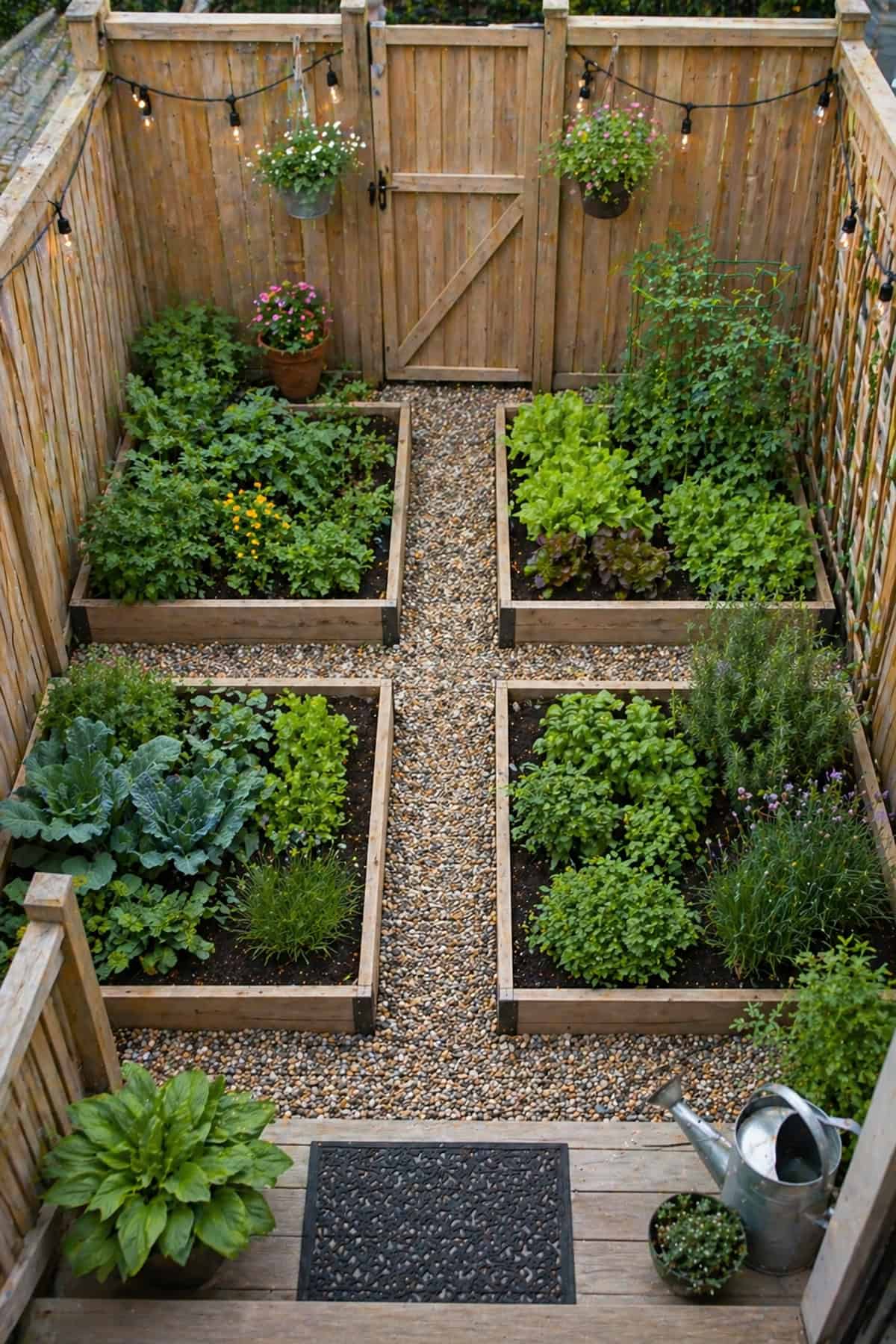
A plus-shaped path divides the yard into four equal beds for a little of everything. Plant salad greens in one, herbs in another and flowers or a dwarf citrus in the rest.
Paths at least 18 inches wide covered in pea gravel are easy to maintain, and the layout simplifies crop rotation and soil care.
Perimeter Planting Bed
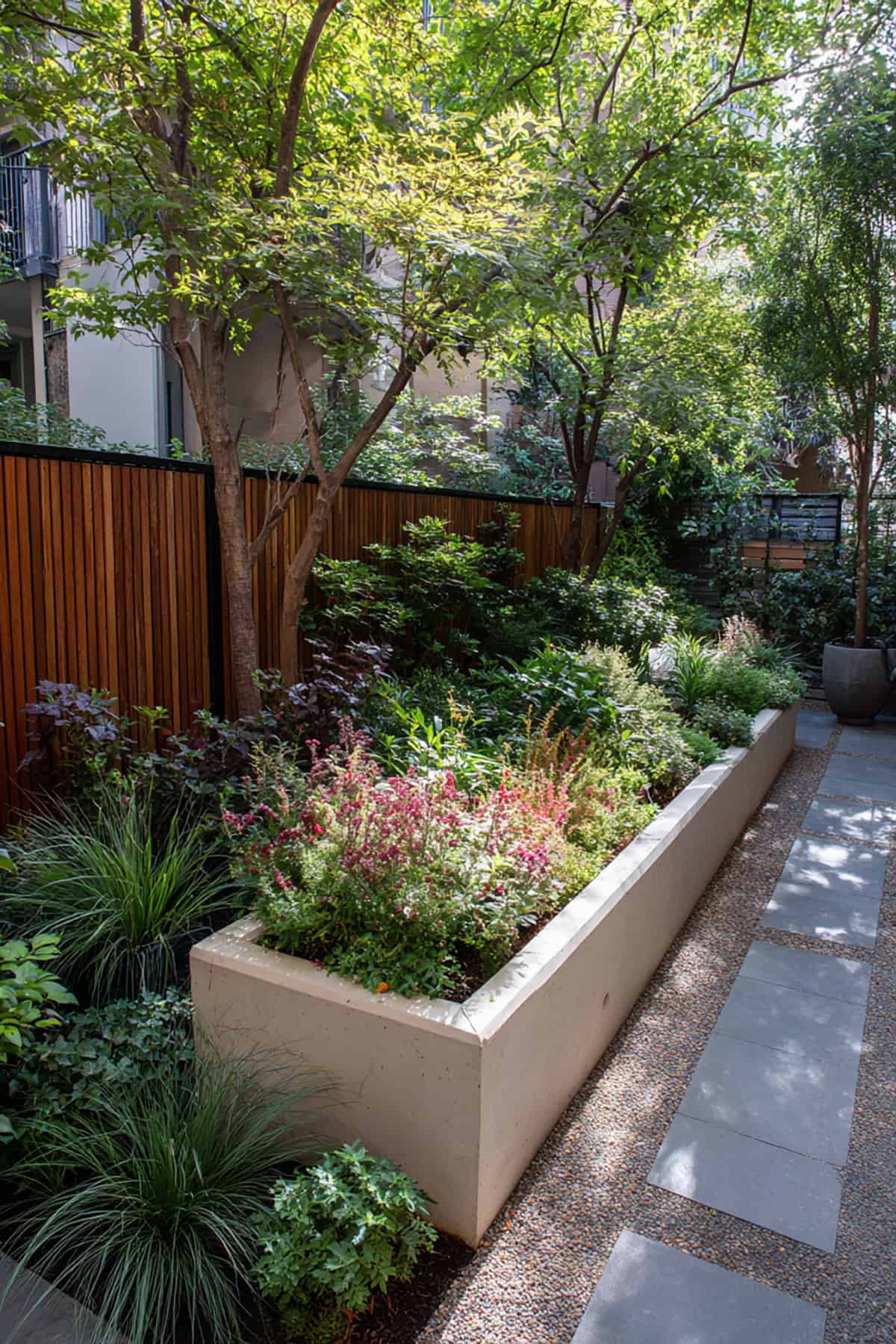
A continuous bed along the fence or edge leaves the middle open for lawn, a couple of chairs or a potting bench. Layer taller plants at the back, medium ones in the middle and herbs in front.
Either raised or in-ground beds fit this layout, which is open in the center and lush around the edges.
Parallel Raised Beds
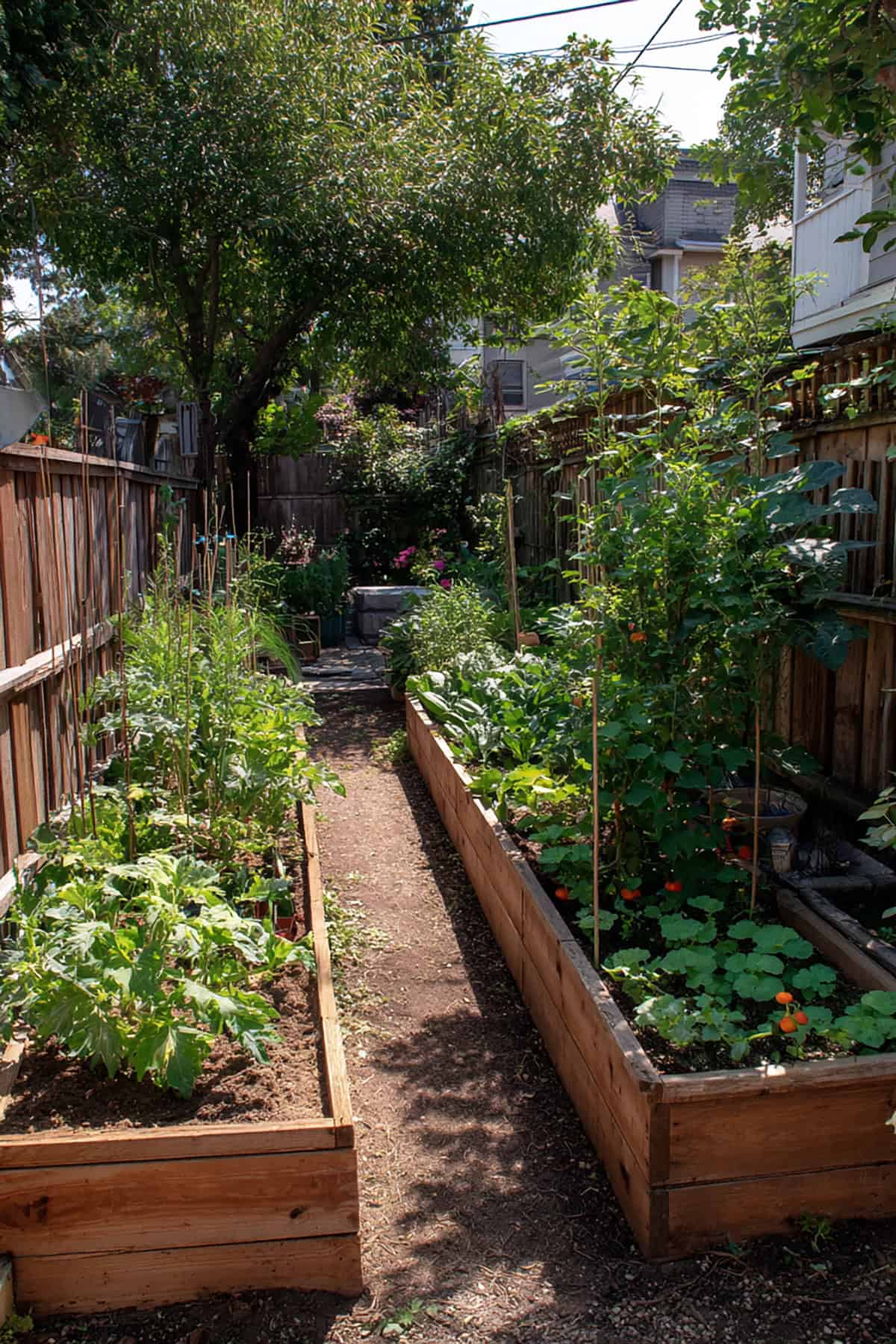
Two parallel raised beds with a slim walkway between them fit neatly into side yards. Make the gap about 18 inches and the beds no wider than 3 feet, so everything is within reach.
A pea gravel path between the beds sheds mud, and the layout makes efficient use of a narrow lot.
Raised Bed Room Divider
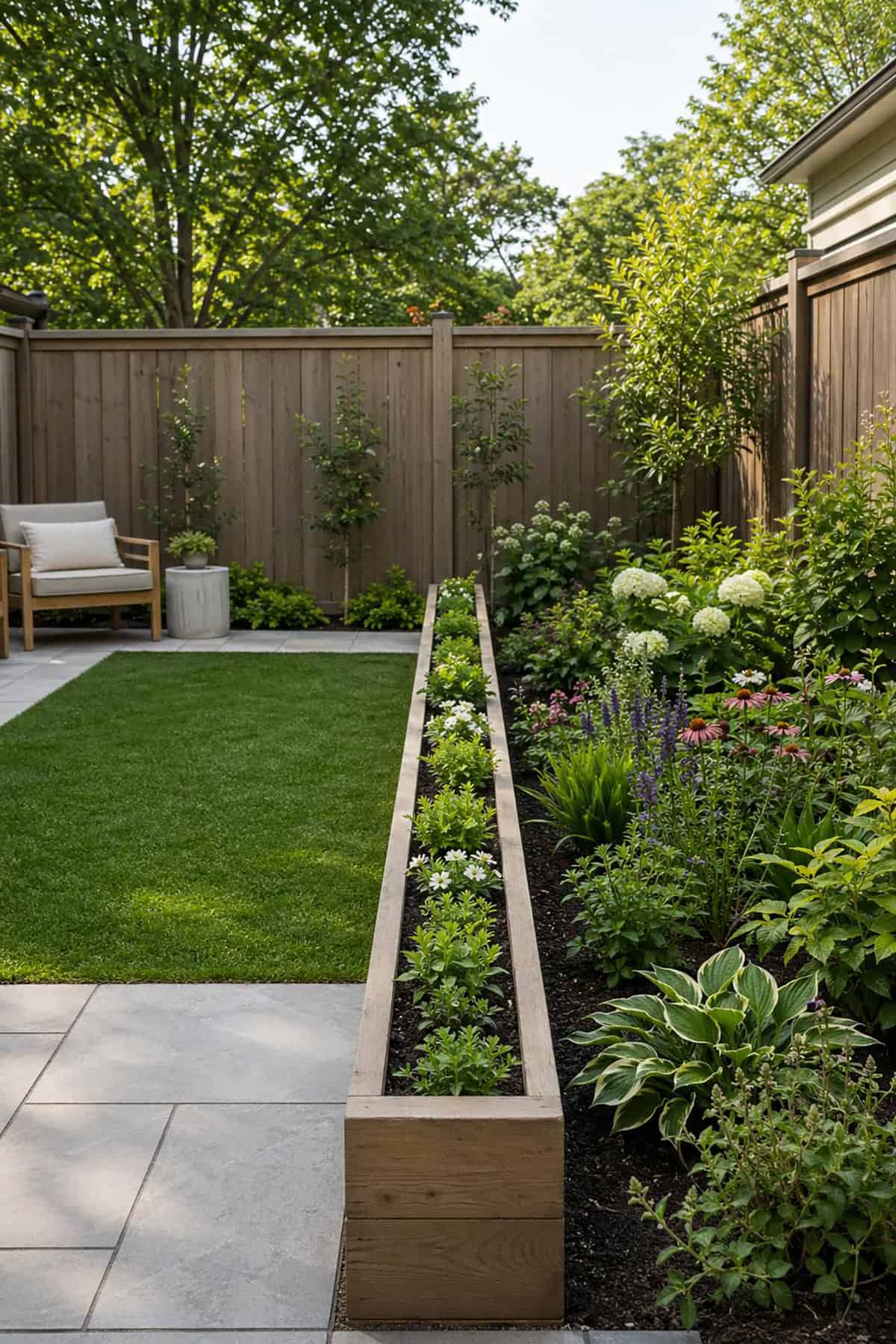
In a tight yard, a raised bed splits the space into zones, such as a patio and a planting area. Two feet high is plenty, with herbs and low vegetables on top.
Potted plants on one side soften the edge, and the bed adds structure and extra planting space with no need for a solid fence.
Patio Planter Border
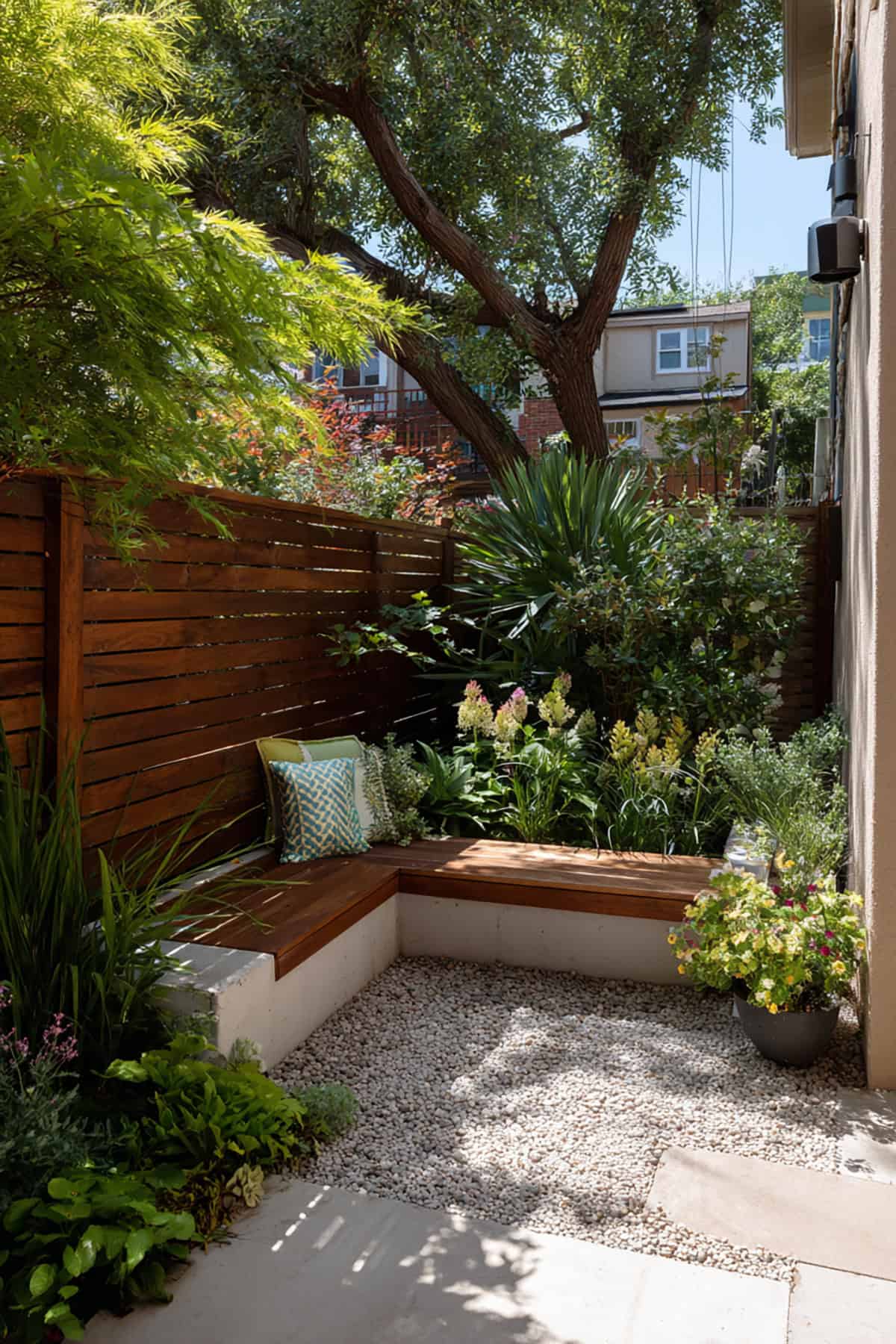
A run of planters, as a built-in low wall or a row of large containers, frames a patio neatly. Choose compact plants that grow clear of the seating.
Herbs near the kitchen door make sense, and dwarf citrus in pots anchors the corners. Every container needs drainage to prevent soggy roots.
Planted Gravel Path
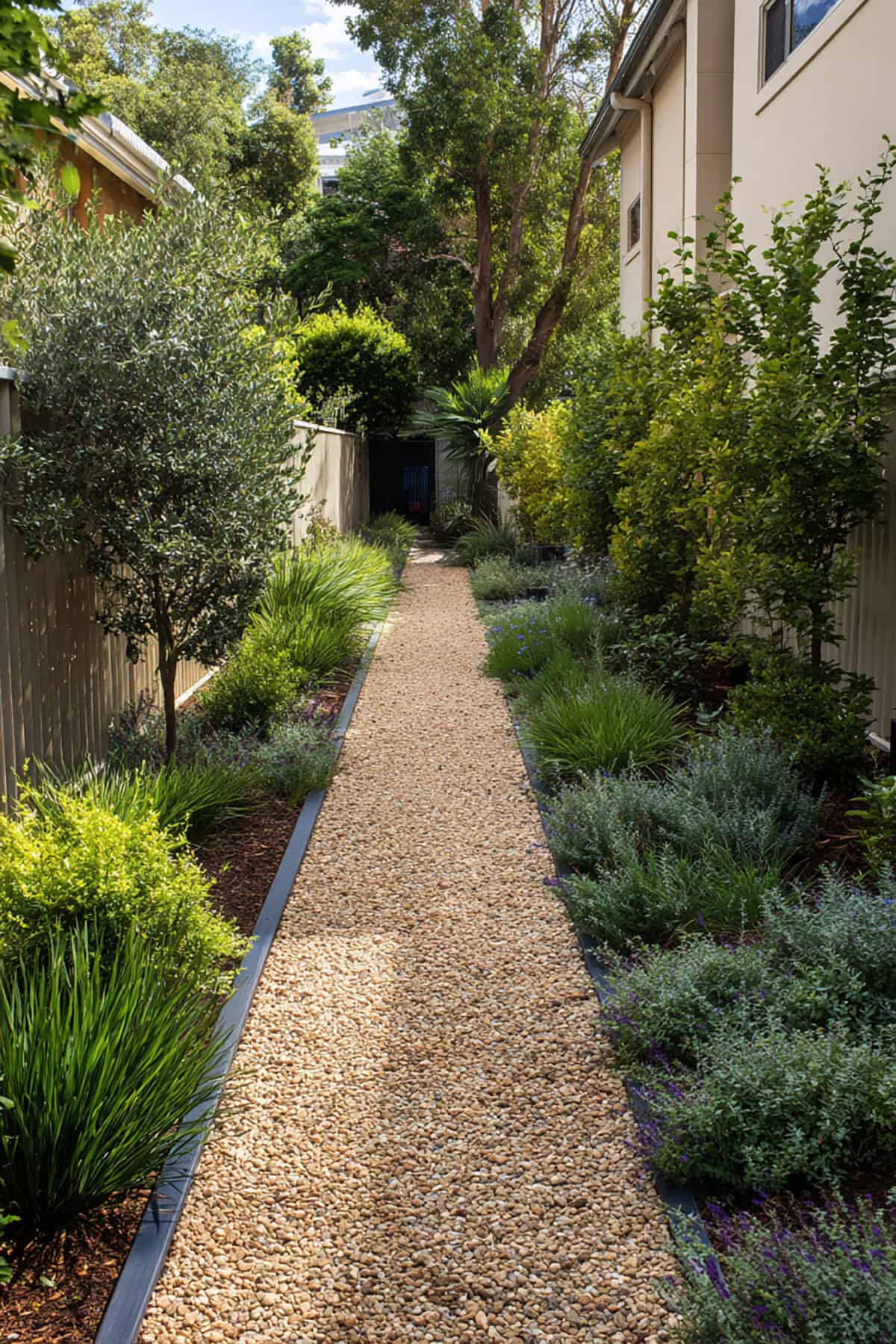
A straight gravel path from the back door to the far end leaves room for planting on both sides, and low-growing herbs and flowers along the edges leave movement unblocked.
In very tight spots, raised beds line one side and in-ground plantings the other. The path directs foot traffic and protects the soil from compaction.
Central Path Layout
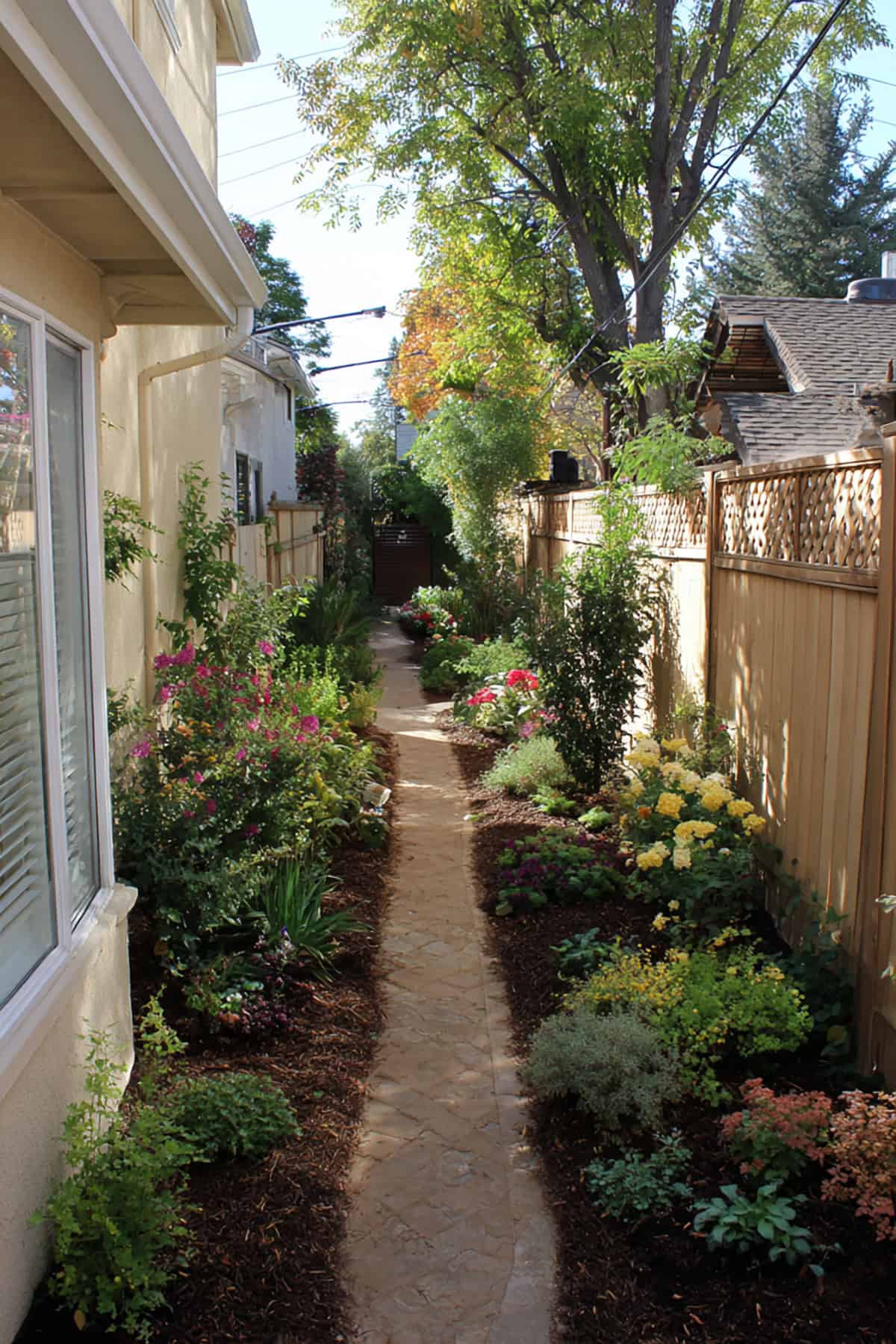
Long, skinny yards benefit from a central path that creates two equal planting strips, each 2 to 3 feet wide. Raised beds and amended in-ground soil are both options, and trellises along the fence add vertical space.
Maintenance is easy, since every bed is reachable from the path.
Arched Trellis Over a Path
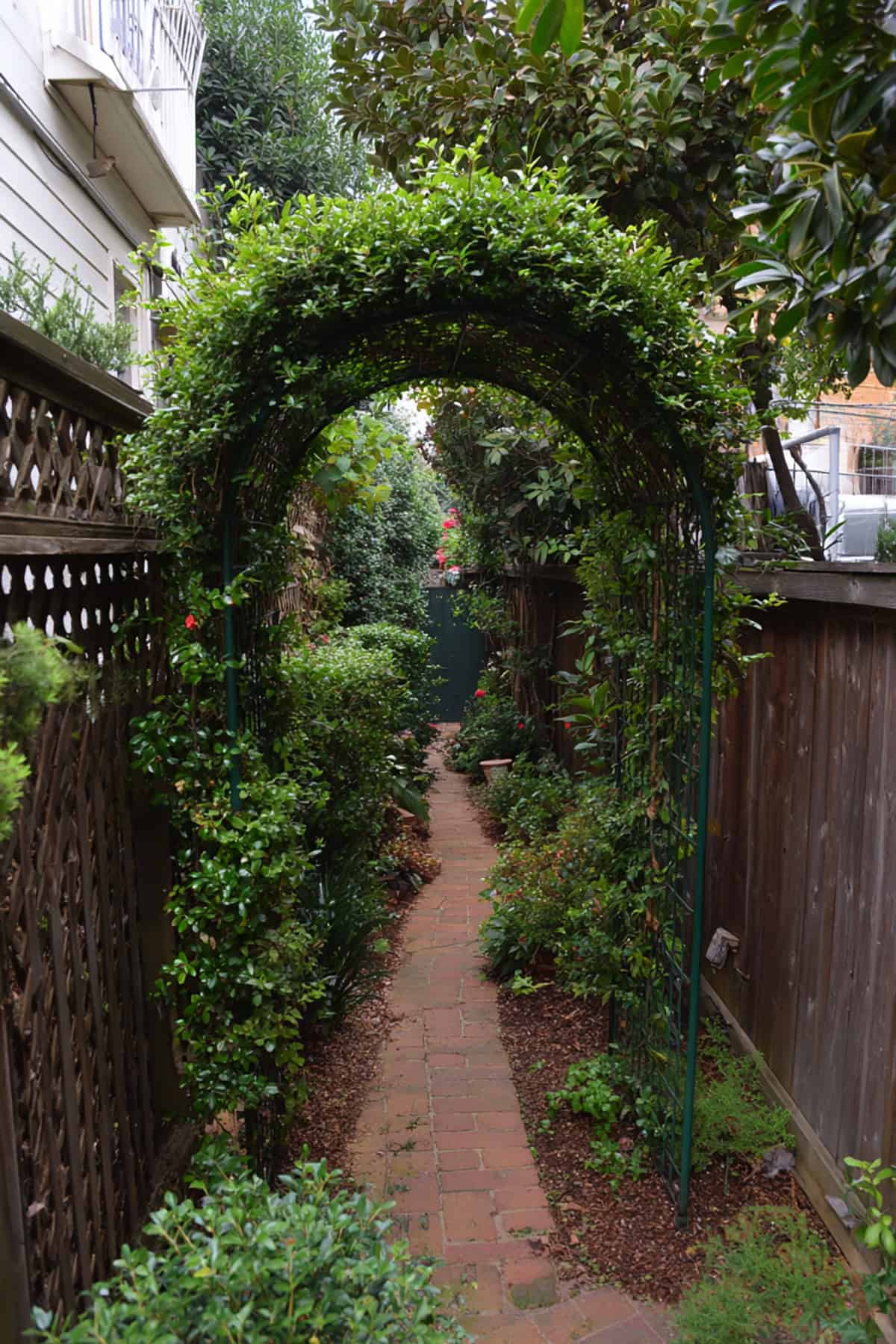
An arched trellis over a short path adds height and structure instantly. Climbing beans, peas or flowering vines cover it, and a 24-inch-wide gravel path underneath allows easy passage.
Raised beds or containers on either side frame the arch and create an inviting entry.
Mixed Herb and Flower Bed
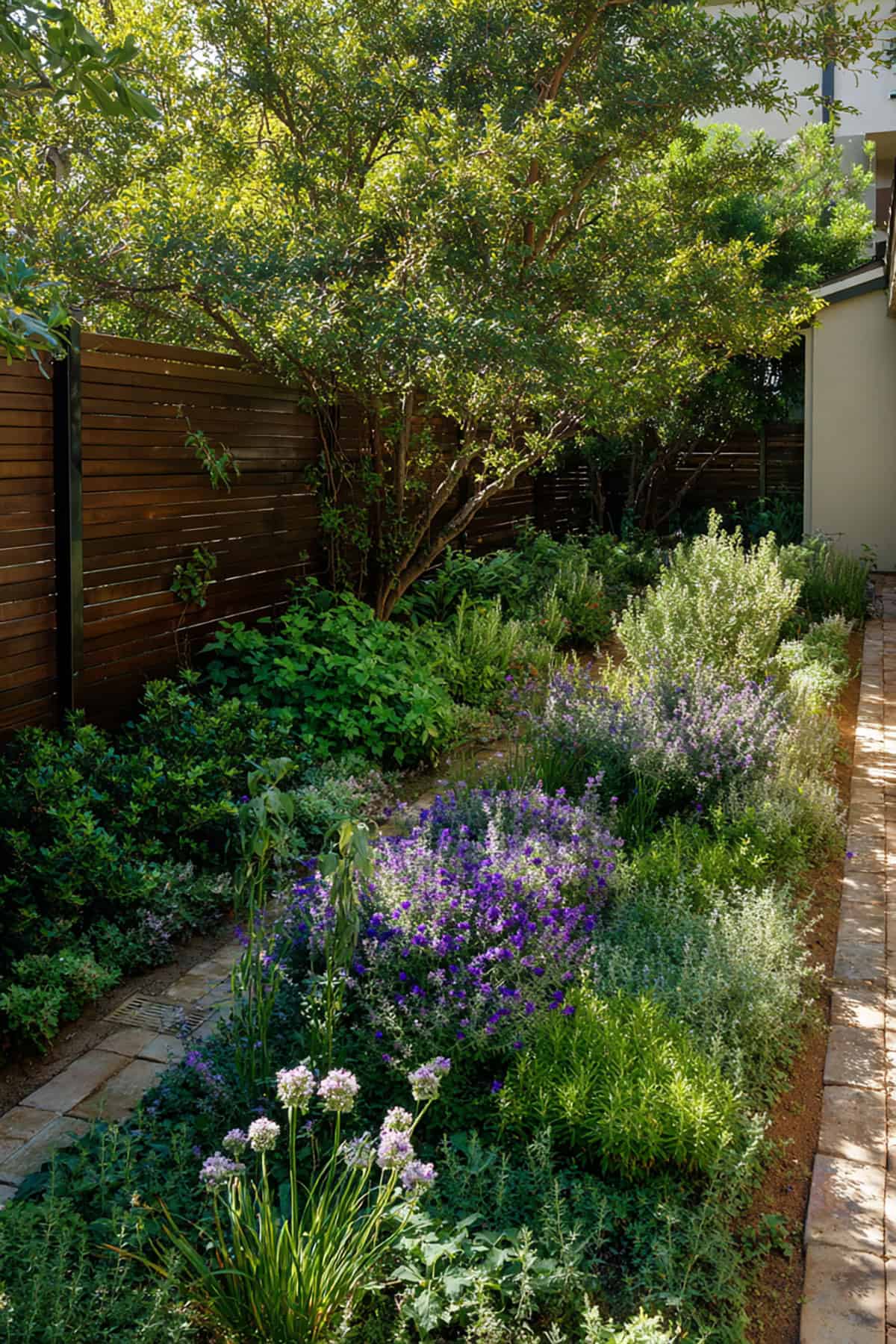
A snug bed of herbs and flowers delivers both flavor and color. Taller herbs such as rosemary go at the back, thyme and parsley in front, and a few small flowers tucked between them draw pollinators.
Make the bed narrow enough to reach across, ideal along a fence or beside the patio.
Courtyard Center Bed
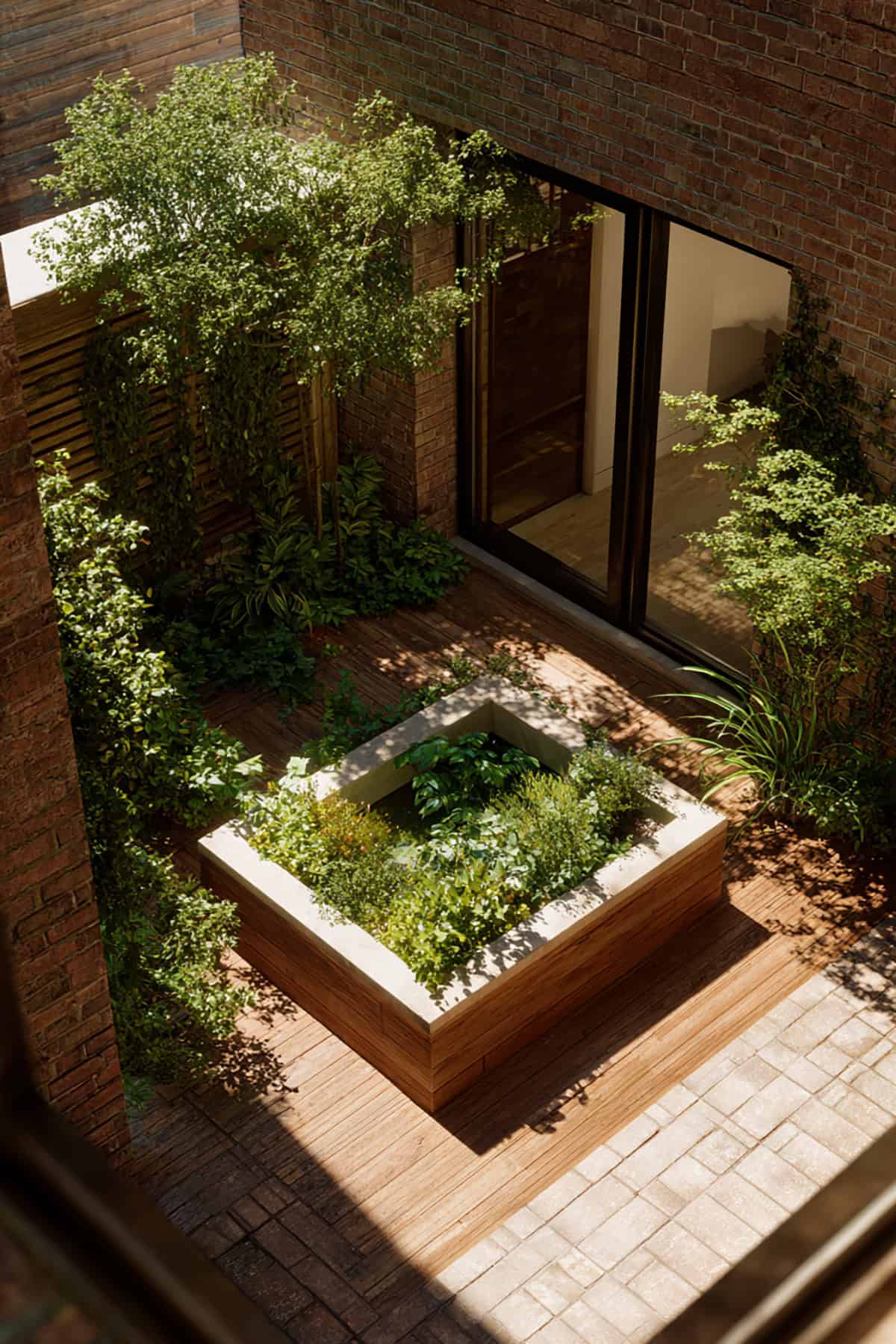
In a yard enclosed by walls or fences, a square or round raised bed in the center becomes the focal point. A mix of vegetables and a dwarf citrus or two adds interest.
Pea gravel around the bed allows easy movement, and potted plants in the corners soften the hard edges.
Built-In Low Wall Planter
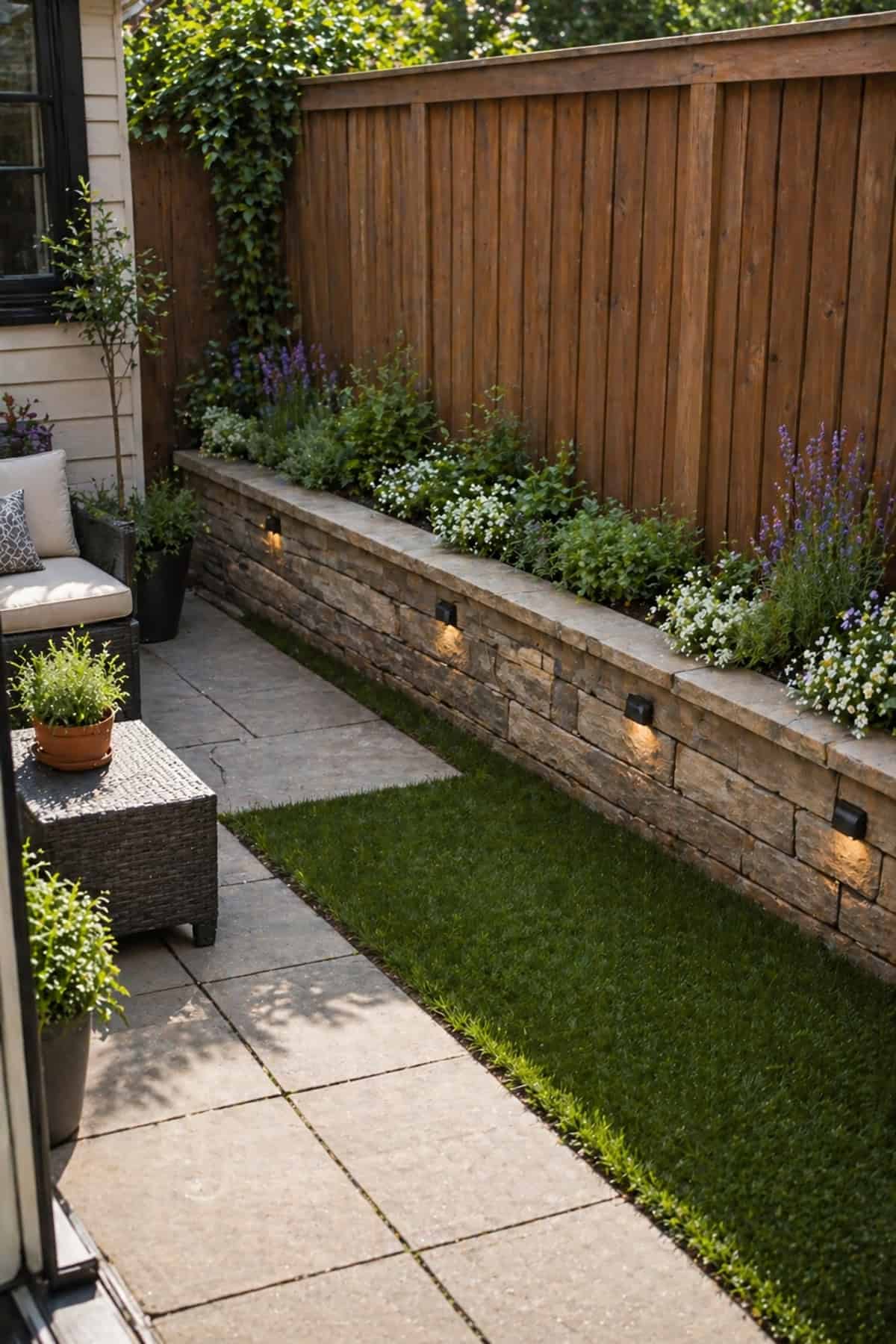
Low wall planters built along the edge of a yard or patio save space and double as extra seating. Fill them with herbs, compact shrubs or seasonal vegetables, and include drainage holes.
About 18 inches tall is a comfortable height for garden chores, and containers set on top add variety.
Repeating Linear Planting
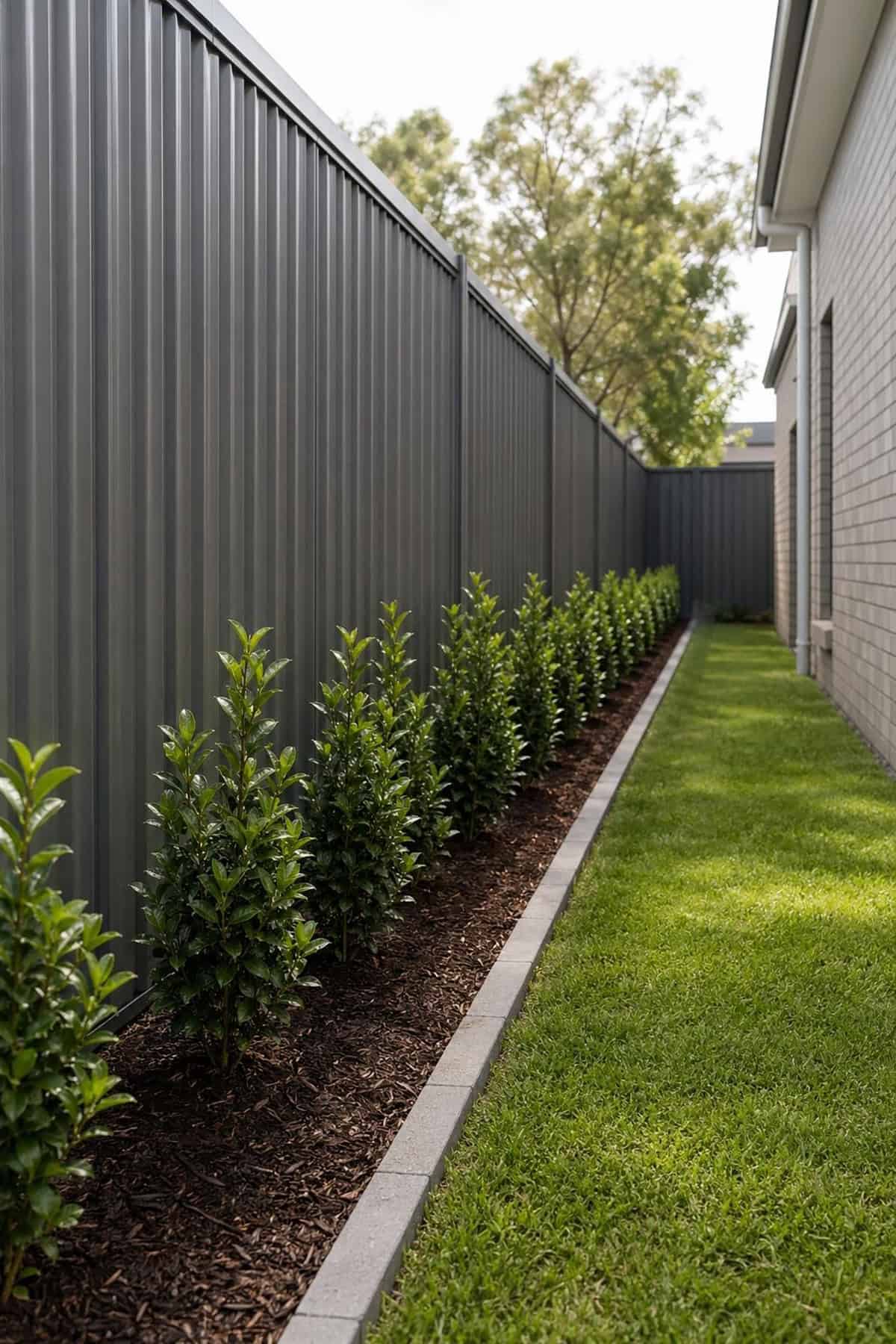
Straight lines and repetition define many modern yards. Boxwood or matching pots at regular intervals, with low herbs or ground cover between them, create rhythm.
Consistent spacing produces a sharp, controlled look, especially in narrow spaces.
Four-by-Four Salad Box
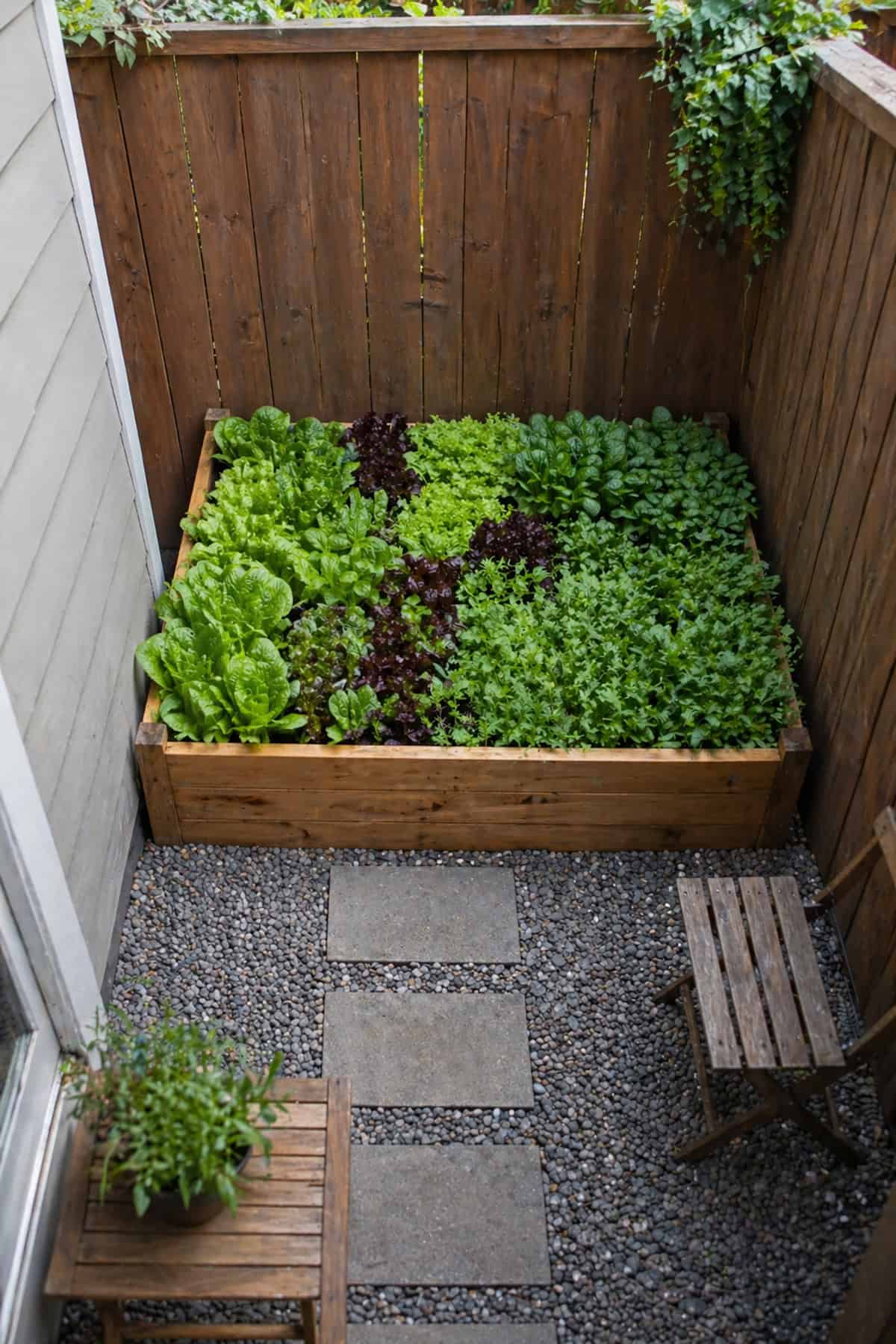
A 4-by-4-foot box packed with salad greens, spinach, radishes and small herbs is a surprisingly productive patch. Pick the outer leaves regularly to prolong the harvest, and top up the compost between sowings.
Place it near the kitchen door, since a nearby bed gets used far more.
Integrated Furniture and Hardscaping
Built-in benches, planters and hardscape features cut clutter and define zones in a small backyard. Seating and planting merge, which leaves room for shaded lounging or outdoor meals.
Continuous Fence Planter
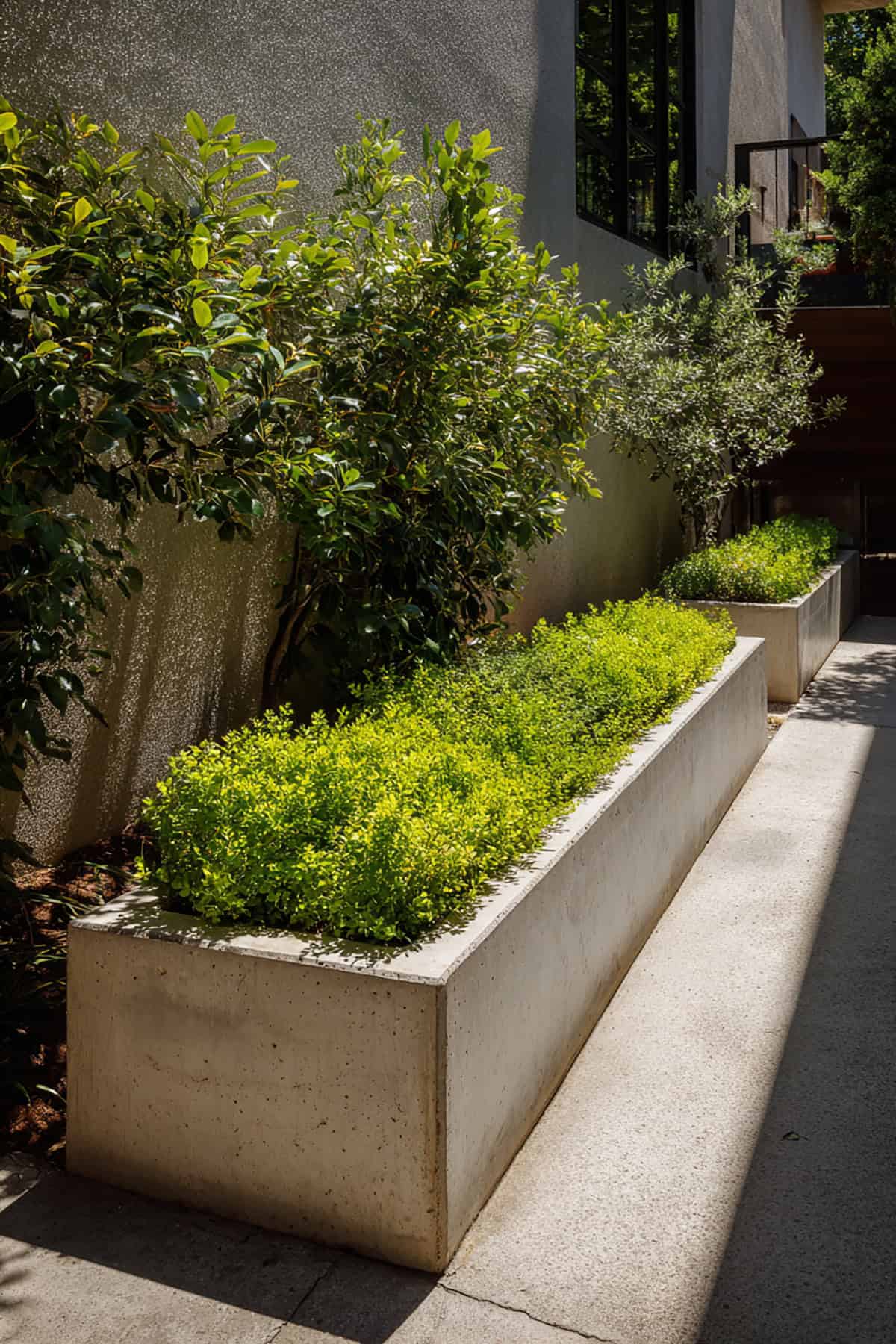
A long planter along one fence layers the garden and leaves the center free for a bistro table or narrow dining spot. A height of 16 to 24 inches doubles as extra seating.
Masonry, concrete block or pressure-treated lumber provide structure, with drainage and a gravel base underneath. Repeated plant groupings unify the look, and shrubs trimmed to a third below fence height maintain balance. String lights overhead light the space at night with no extra lamps.
Compact Pergola With Hanging Plants
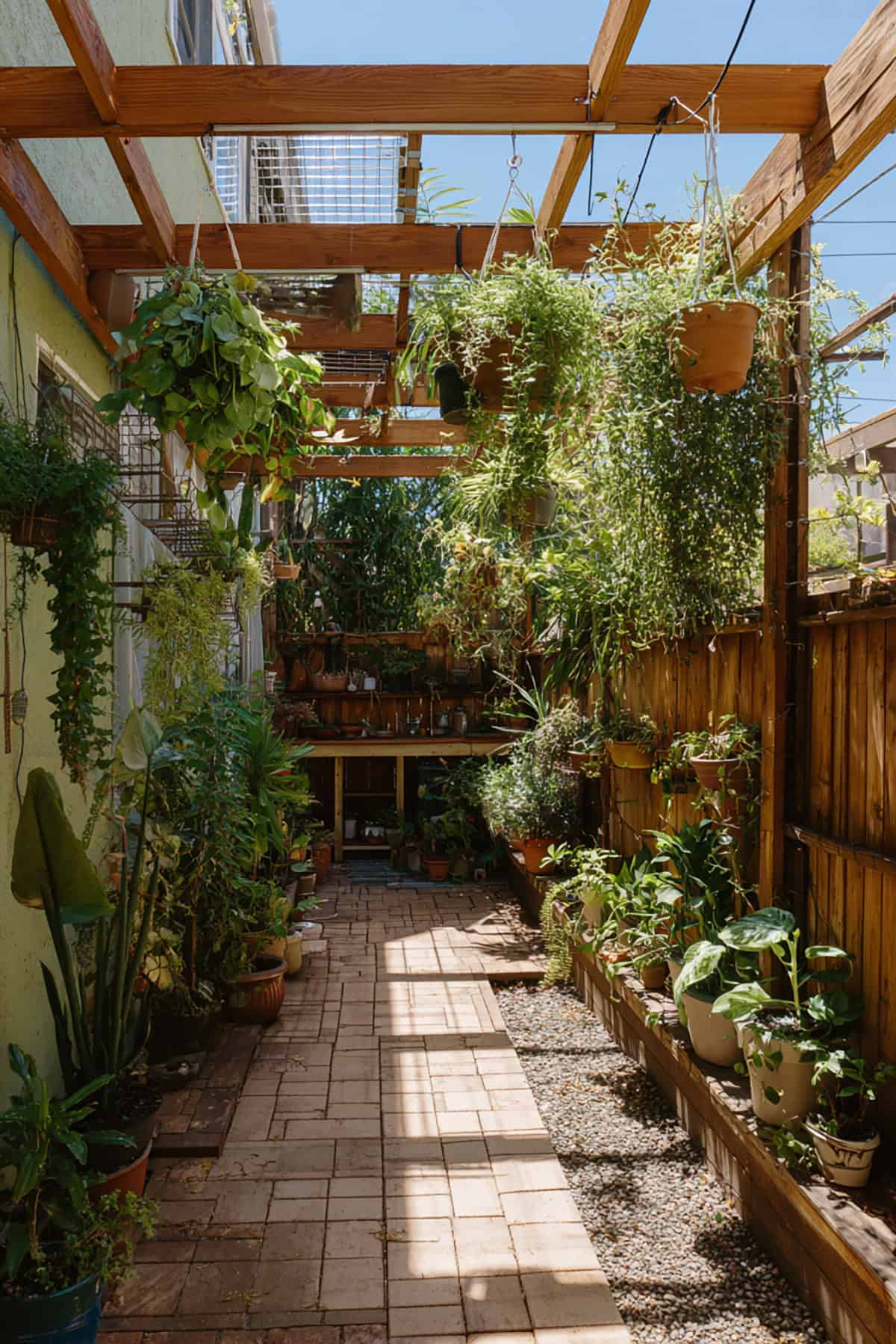
A small pergola defines a cozy seating area and leaves the rest of the yard open. Set the posts just outside the dining zone to avoid crowding, and a height of about 8 feet is in proportion with fences and single-story homes.
Hang planters from the beams on weatherproof hooks instead of filling the floor with pots. Vines trained across the top filter sunlight, and string lights along the beams extend evenings outdoors, with the floor uncluttered.
One-Wall Living Wall
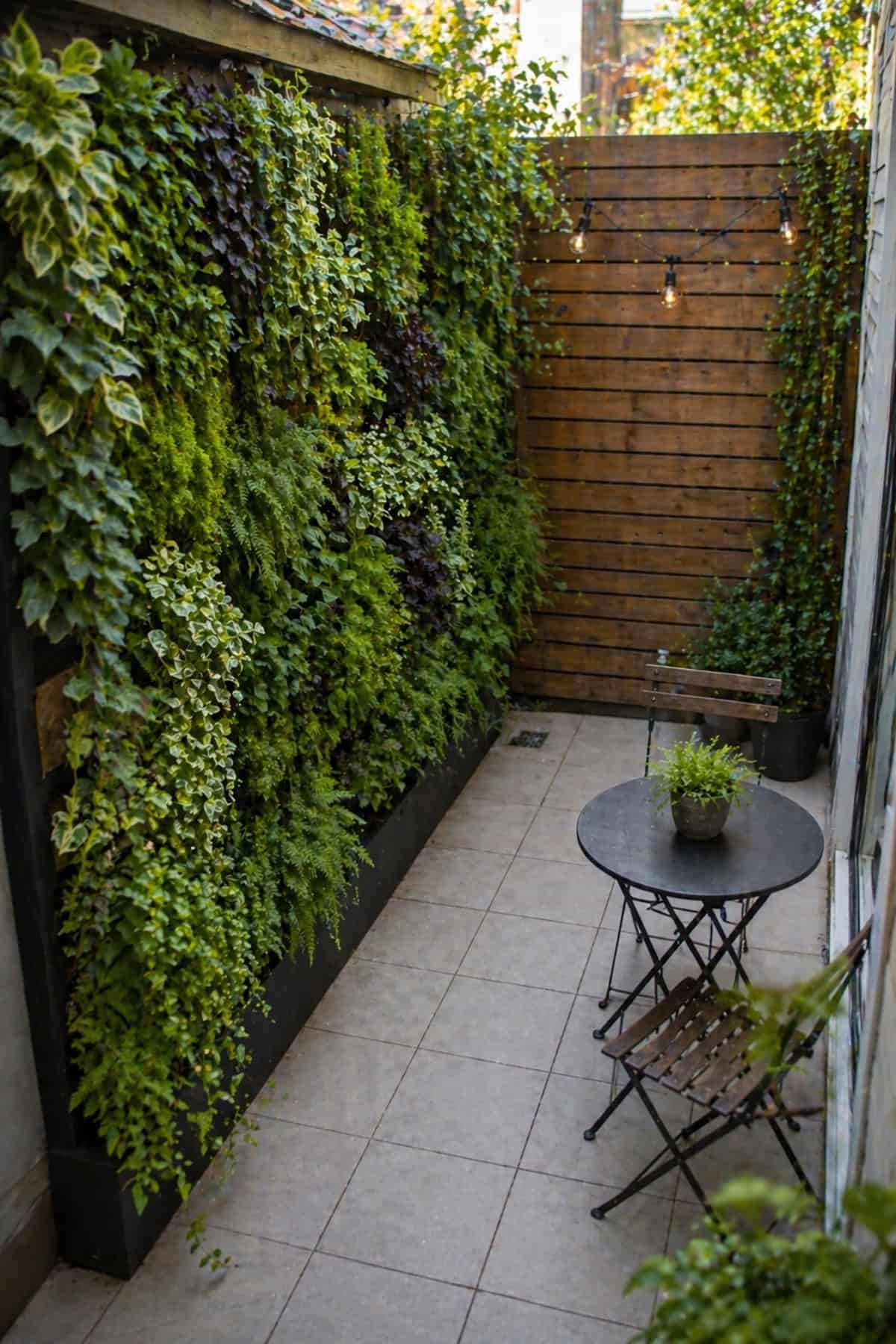
A green wall system on a single wall adds depth and frees the ground for seating or play. Modular panels or fabric pockets mount on a sturdy fence or masonry surface, and the other walls left open prevent a boxed-in look.
Choose shallow-rooted plants with similar water needs, and let a drip system on a timer handle watering. A slim bench or bistro table opposite the wall makes the planting a lively backdrop and widens the sense of space in a narrow yard.
Cinder Block Planter Wall
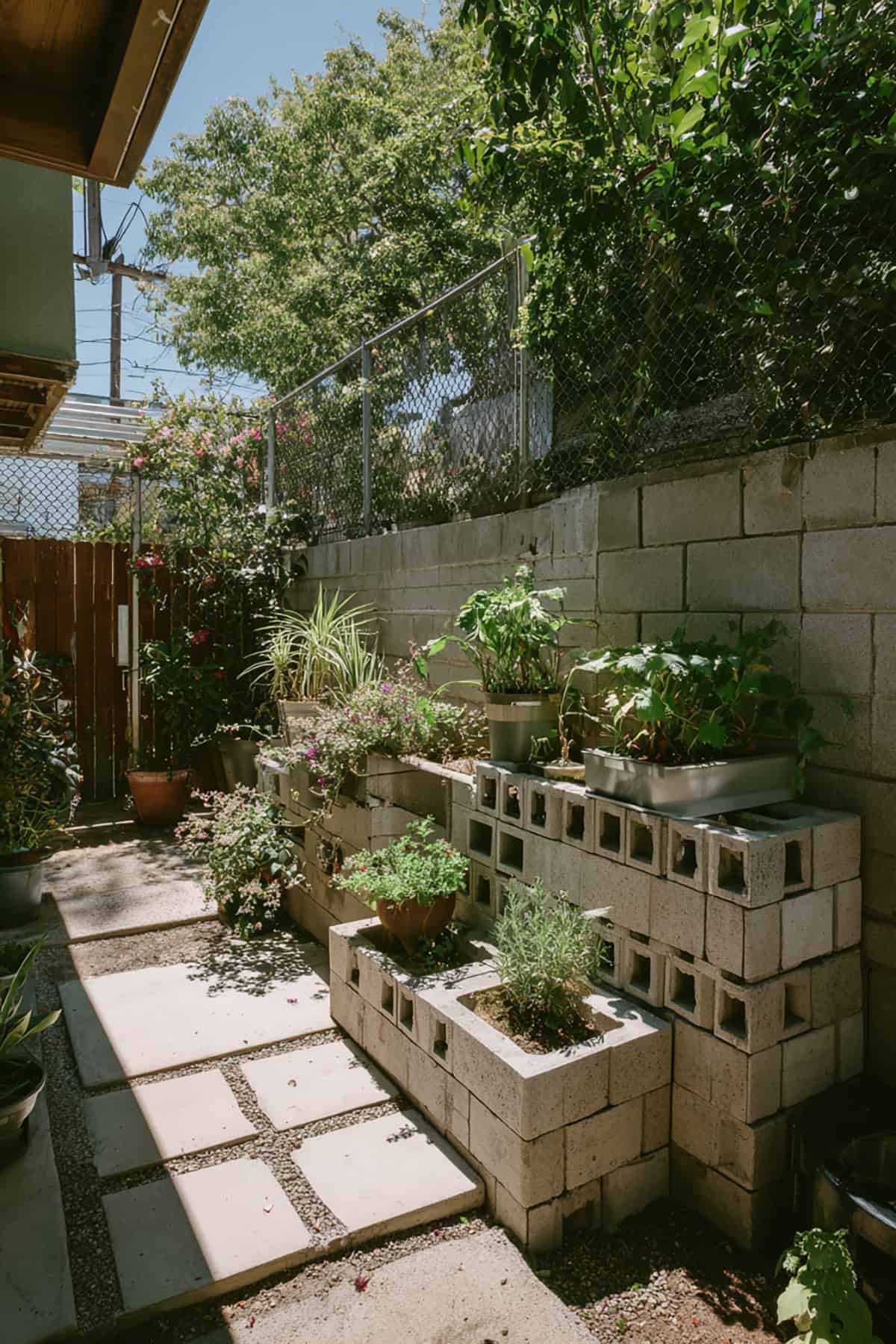
Cinder blocks stacked and reinforced with rebar form a sturdy planter wall that also defines the edge of the yard. Fill some cores with concrete for strength, and cap the wall with smooth stone or wood for seating.
The open cores left unfilled hold herbs or flowers, which contains the soil and clears the walkways. Seating along the capped wall and string lights overhead make evenings outdoors inviting.
Built-In Bench With Planter Strip
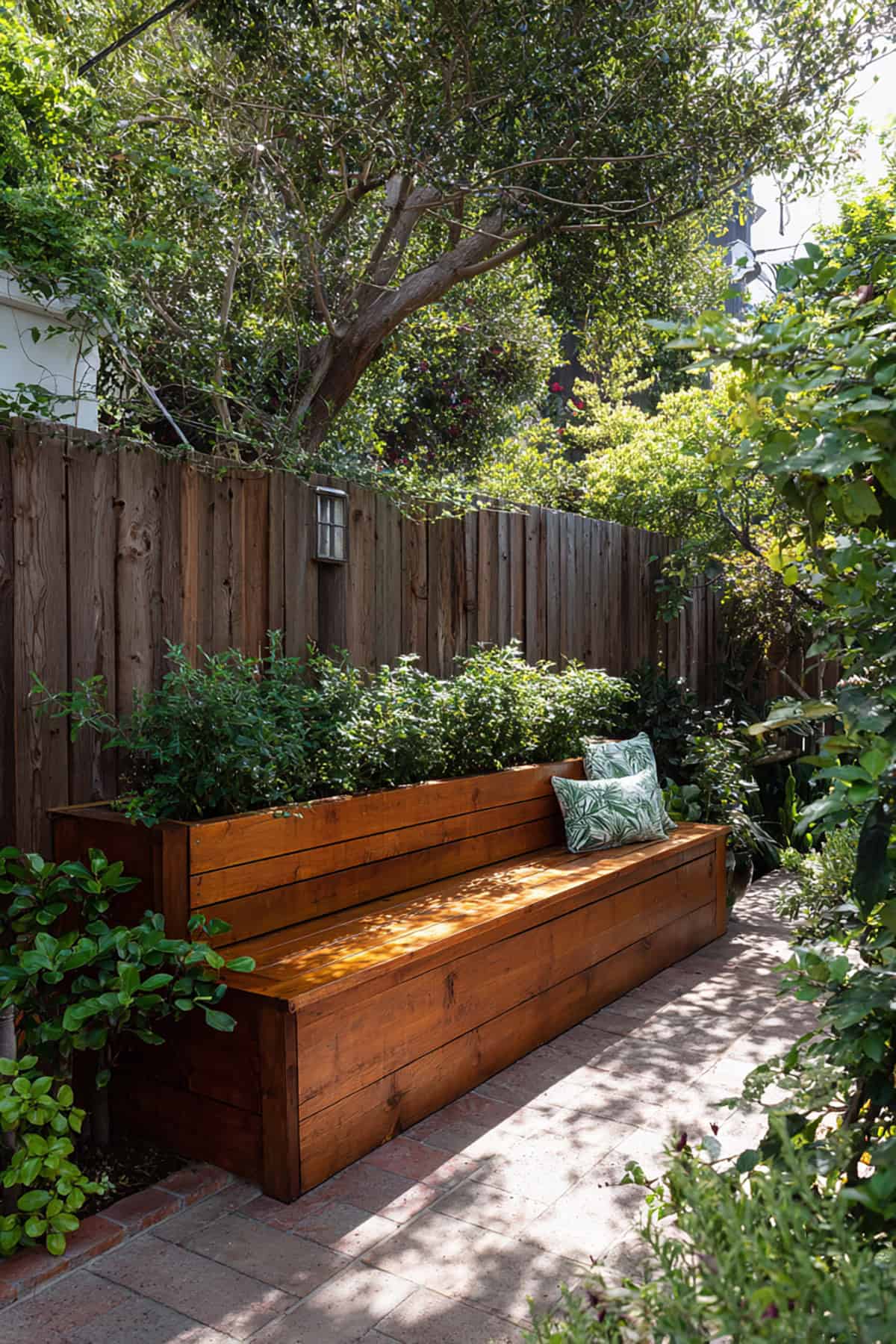
Benches built along the perimeter leave the middle open for movement, and fixed seating never tips or shifts. A planter strip 6 to 12 inches wide behind the backrest holds upright grasses or slim shrubs for privacy that lets light through.
A seat height of 18 inches and a depth of 16 inches are comfortable. A small bistro table in front serves casual meals, and a compact pergola overhead provides shade more neatly than a bulky umbrella.
U-Shaped Bench and Planters
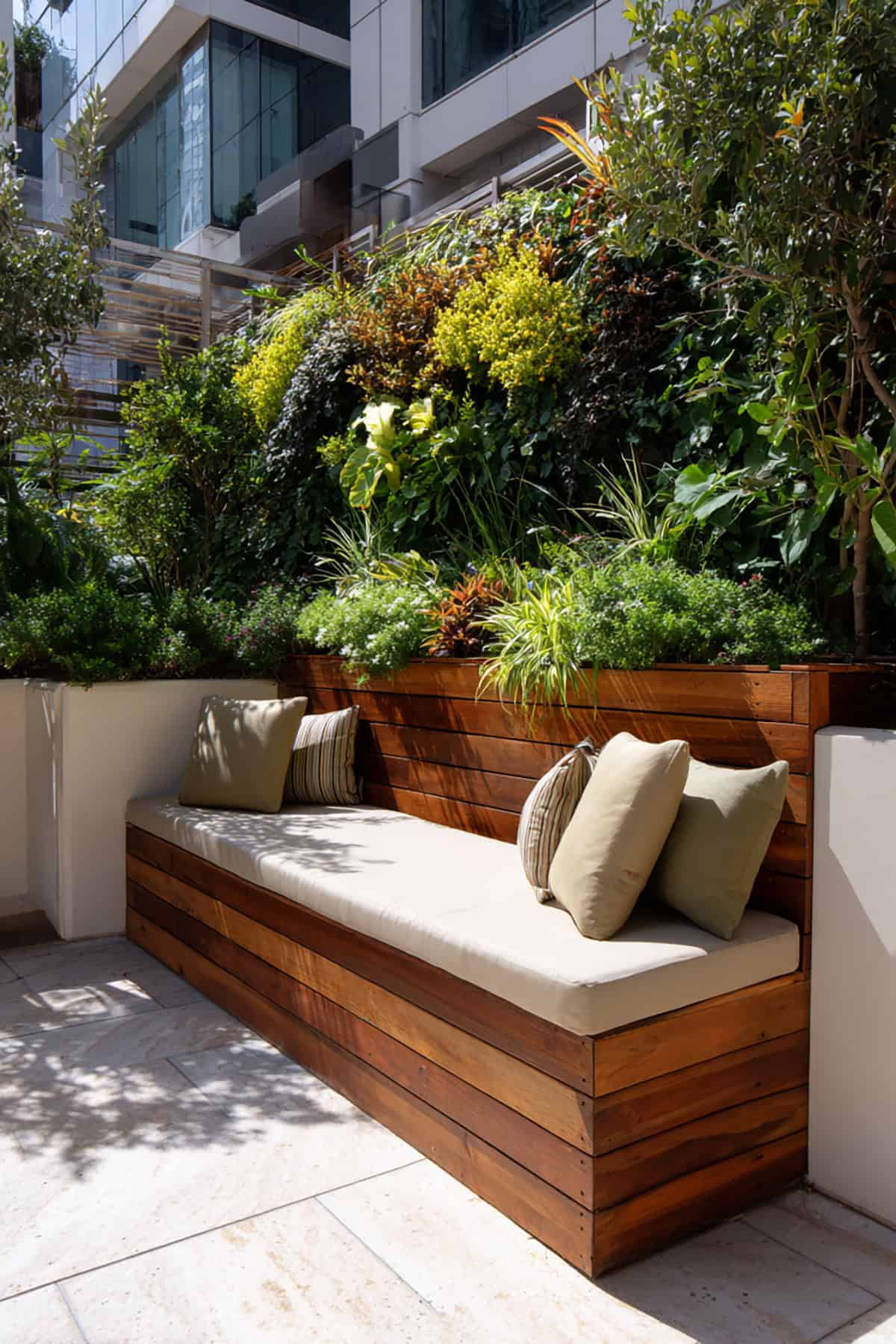
A U-shaped bench wrapped around a snug patio encloses it into a private nook. Seating and planters merge, which cuts clutter and lends the space architectural structure.
Planter boxes at the corners act like bookends, and proportions matched to the yard’s size prevent an awkward look. Small trees that top out under 12 feet suggest a ceiling while leaving the space open, and string lights between them or across a pergola glow after dark.