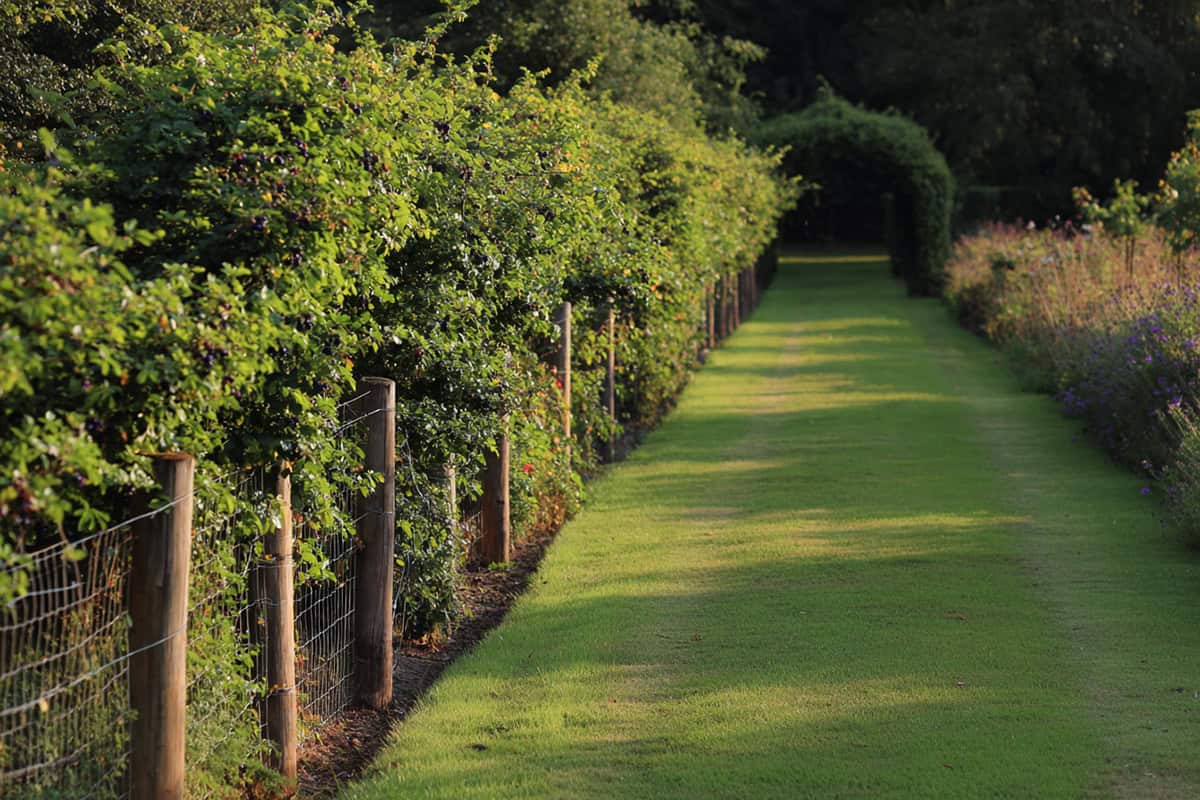
A row of raspberries along the property line blocks the view from the street and hands out fruit every July. Edible fences mark a boundary, screen a patio or soften a chain-link run, and the harvest ends up in the kitchen.
Runner beans and hops cover a bare fence in a single season. Pick the idea that matches the sunniest stretch of the property line and start there.
Table of Contents
- Edible Fence Ideas
- Strawberry Pocket Planter Wall
- Scarlet Runner Bean Fence
- Raspberry Cane Fence
- Pomegranate Espalier Fence
- Pear Cordon Fence
- Pea Vine Fence
- Passionfruit Vine Fence
- Nasturtium Low Fence
- Red and Black Currant Hedge
- Lemongrass Raised Bed Fence
- Lavender Border Fence
- Hardy Kiwi Trellis Screen
- Jerusalem Artichoke Privacy Screen
- Hops Vine Fence
- Paneled Herb Fence
- Grapevine Pergola Fence
- Goji Berry Trellis Fence
- Pumpkin Vine Fence
- Espalier Apple Fence
- Malabar Spinach Vine Fence
- Squash Arch Tunnel
- Cucumber Trellis Fence
- Climbing Bean Fence
- Citrus Espalier Fence
- Chayote Vine Fence
- Raised Blueberry Trough Border
- Arched Blackberry Hedge
Edible Fence Ideas
An edible fence pulls the edge of the yard into the productive garden. With the right plants and sturdy supports, a boundary supplies food, privacy and year-round structure.
Strawberry Pocket Planter Wall
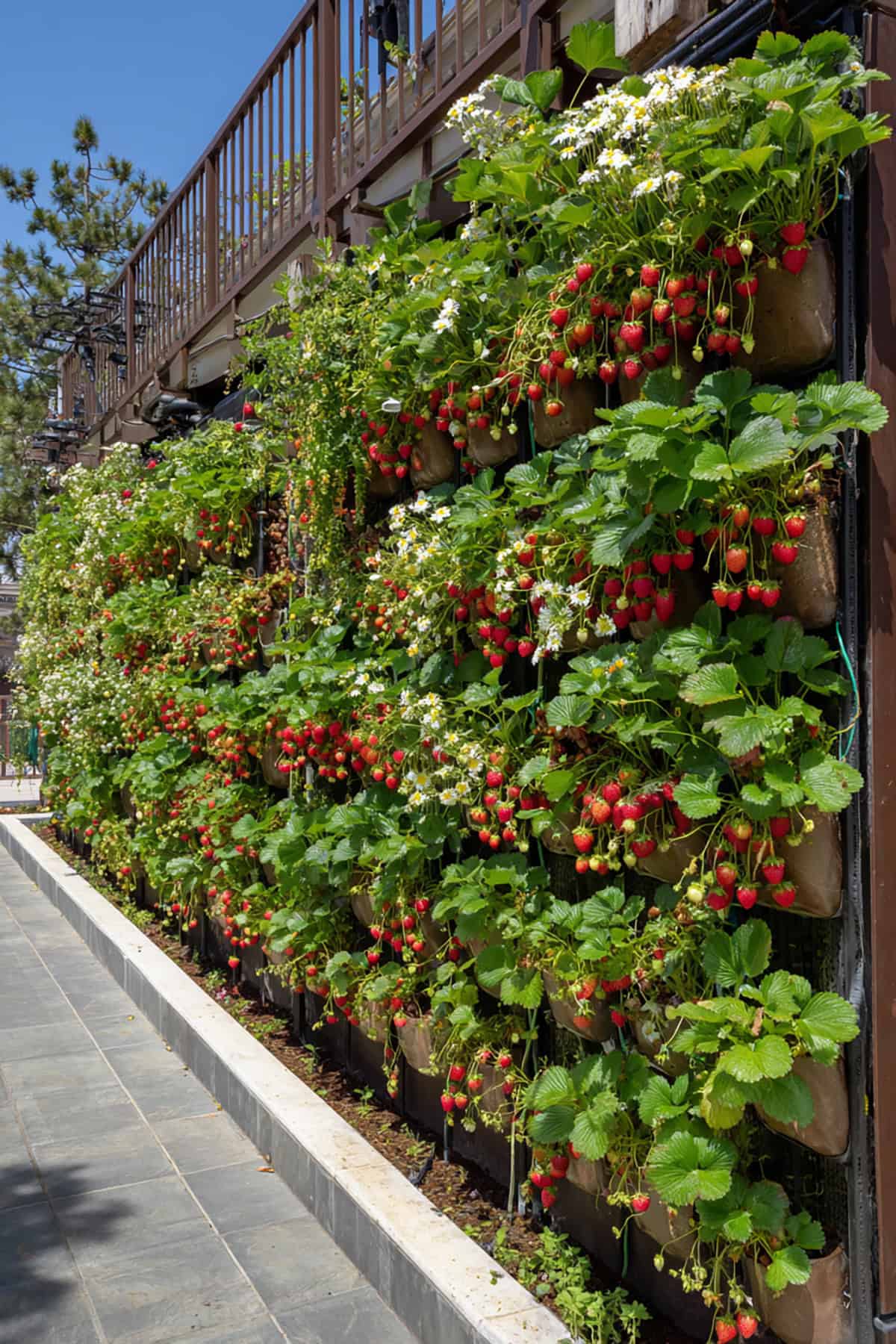
Vertical pocket planters fit a fence into the narrowest strip of yard. Mount fabric or rigid pocket panels on a sturdy frame in full sun, and tuck one strawberry plant into each pocket.
Day-neutral varieties such as ‘Albion’ and ‘Seascape’ fruit from early summer until frost. A drip line along the top row waters every pocket evenly, and weeding is almost nonexistent. Replace the plants every two or three years, and move the panels to a sheltered spot in cold winters.
Scarlet Runner Bean Fence
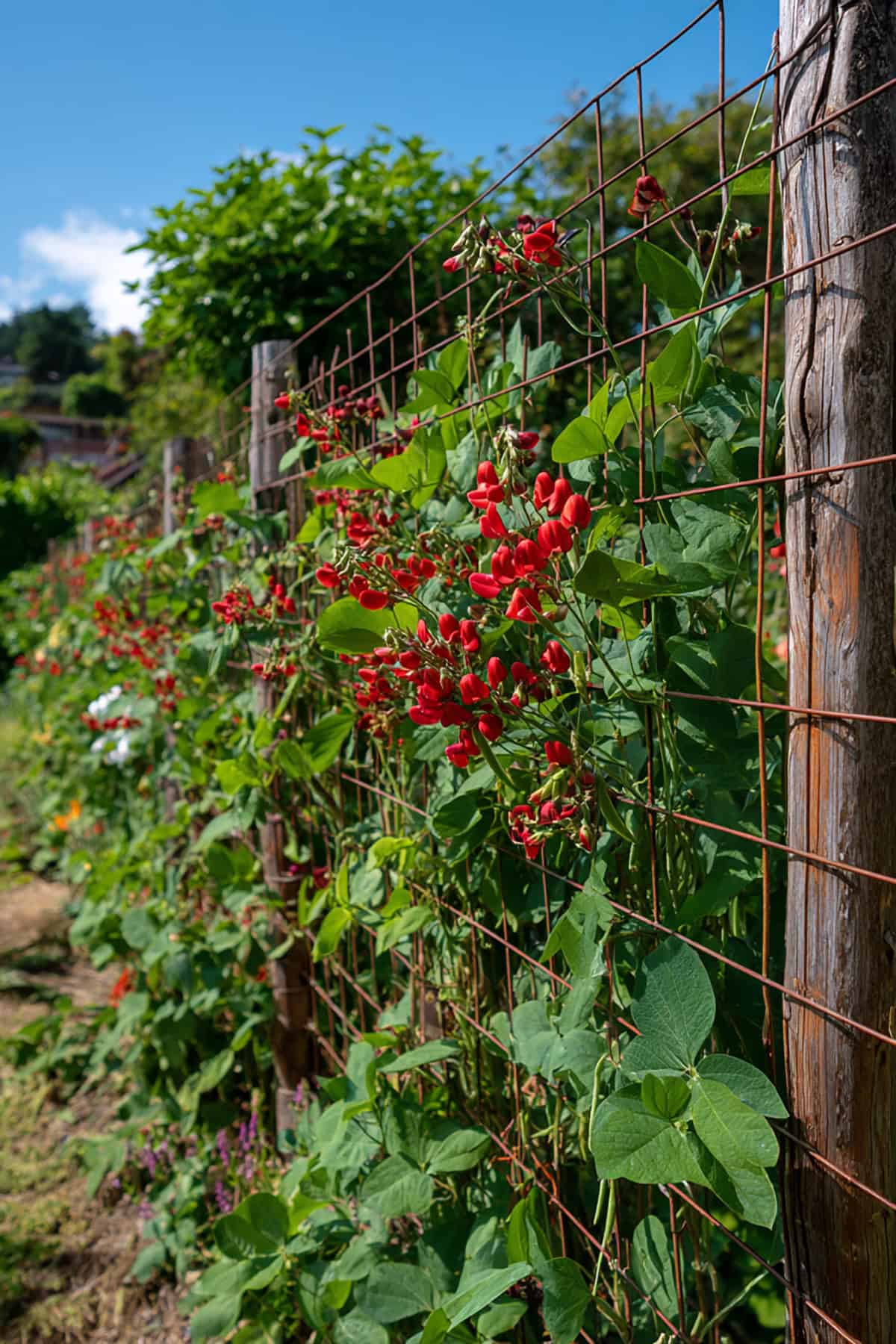
Scarlet runner beans climb fast and cover strings or wire between posts within weeks. Bright red flowers open first and draw hummingbirds, and long, flat pods follow.
Sow the seeds once frost has passed and the soil is warm. The vines reach 6 to 8 feet in a single season, and regular picking produces a steady supply of tender pods. After frost, pull the vines and compost them, and leave the posts for next year’s crop.
Raspberry Cane Fence
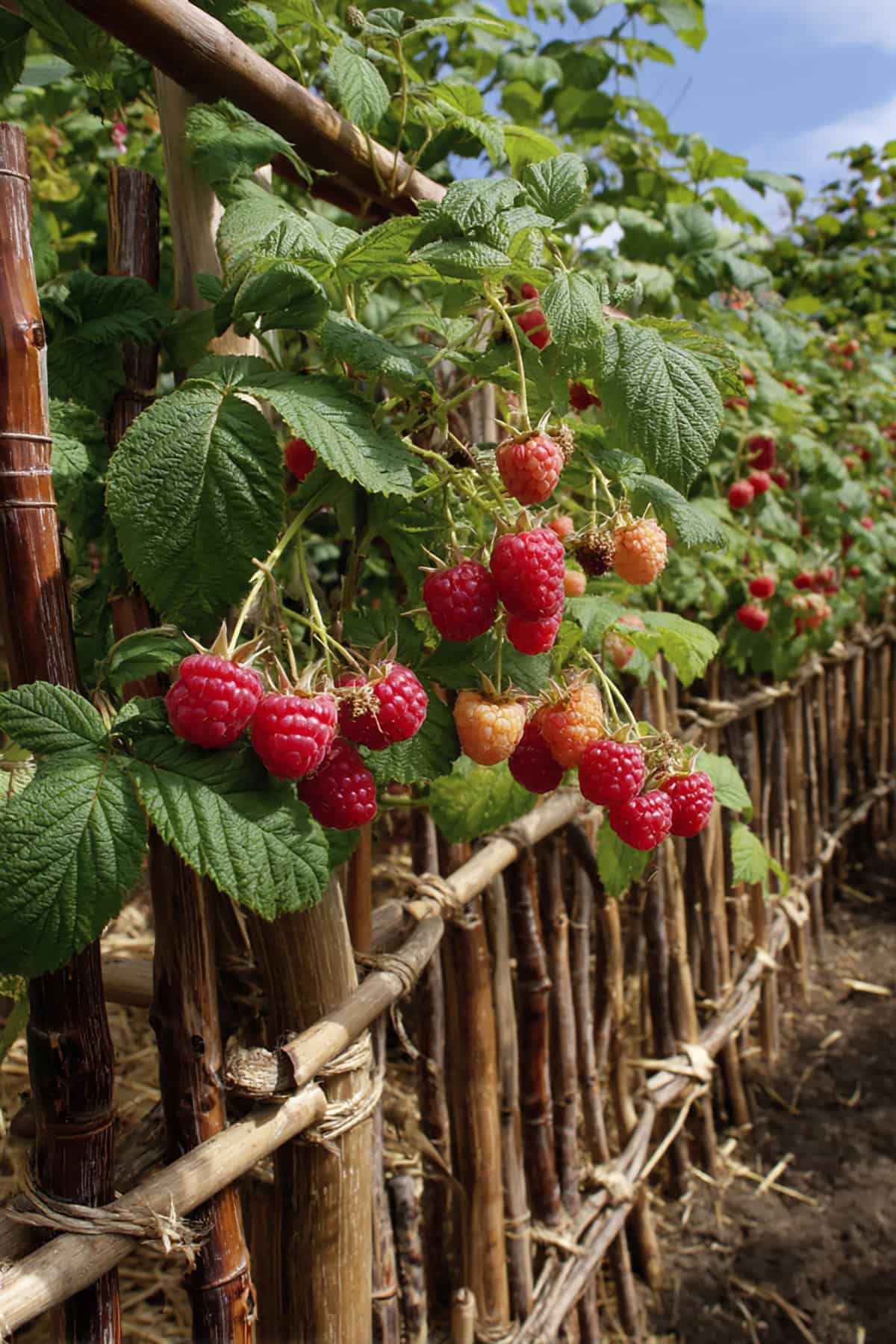
Raspberries make a productive hedge along a long boundary. Set posts at each end with two or three horizontal wires, and tie the canes in a neat row between them.
Cut out canes that have fruited at the end of each season, and let new ones fill the gap. Space the plants about 2 feet apart for airflow, which reduces disease. Thornless varieties such as ‘Joan J’ are a good choice beside paths.
Pomegranate Espalier Fence
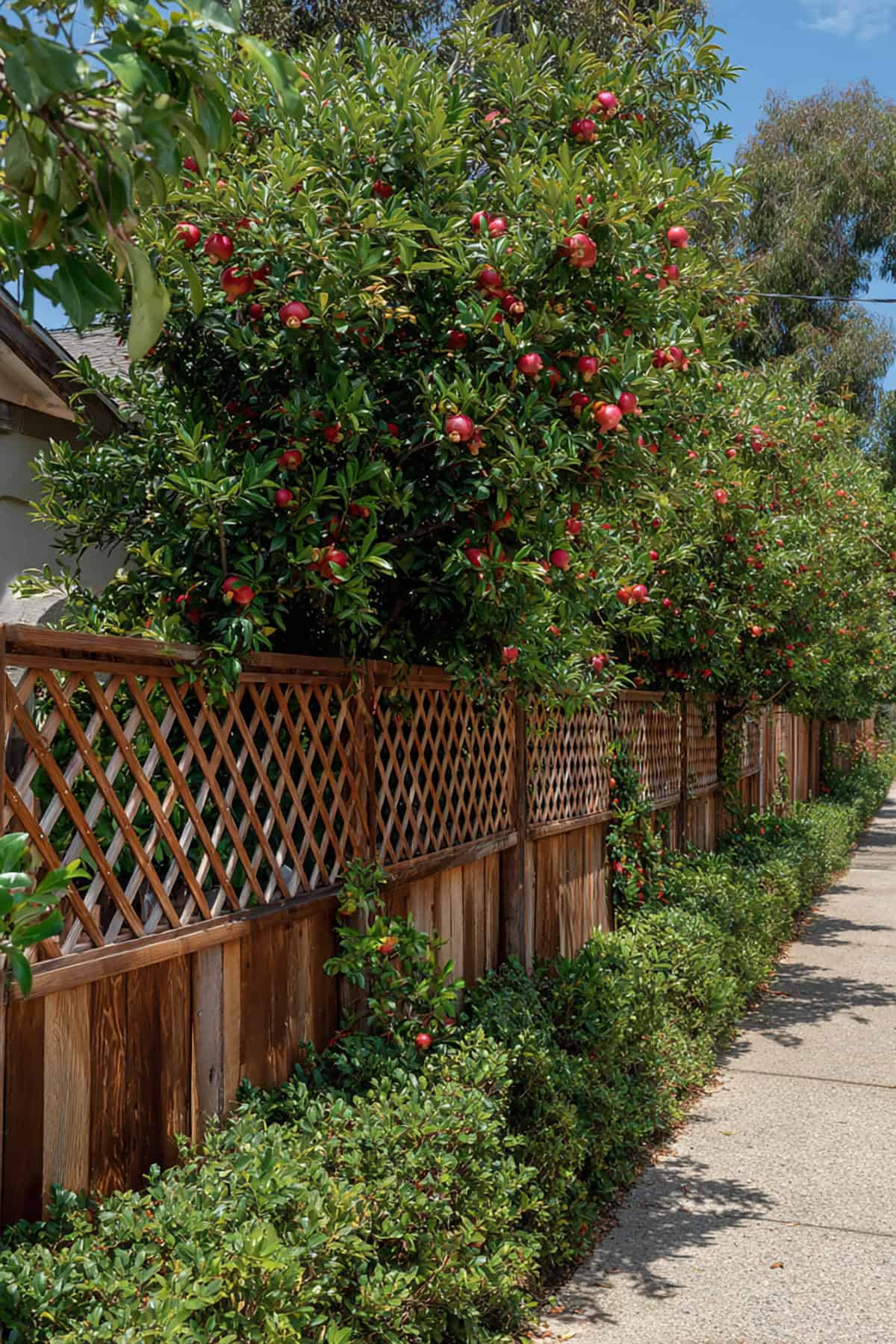
Pomegranates love heat and full sun, and their flexible branches train well against a sturdy lattice or wires. The scarlet flowers and glossy fruit stand out against a wall or fence.
Prune regularly to guide branches along the horizontal lines, and remove shoots growing toward or away from the support. Flowers form on short shoots from older wood, so leave the main framework in place. In zones colder than 8, choose a hardy Russian-type variety or plant against a south-facing wall.
Pear Cordon Fence
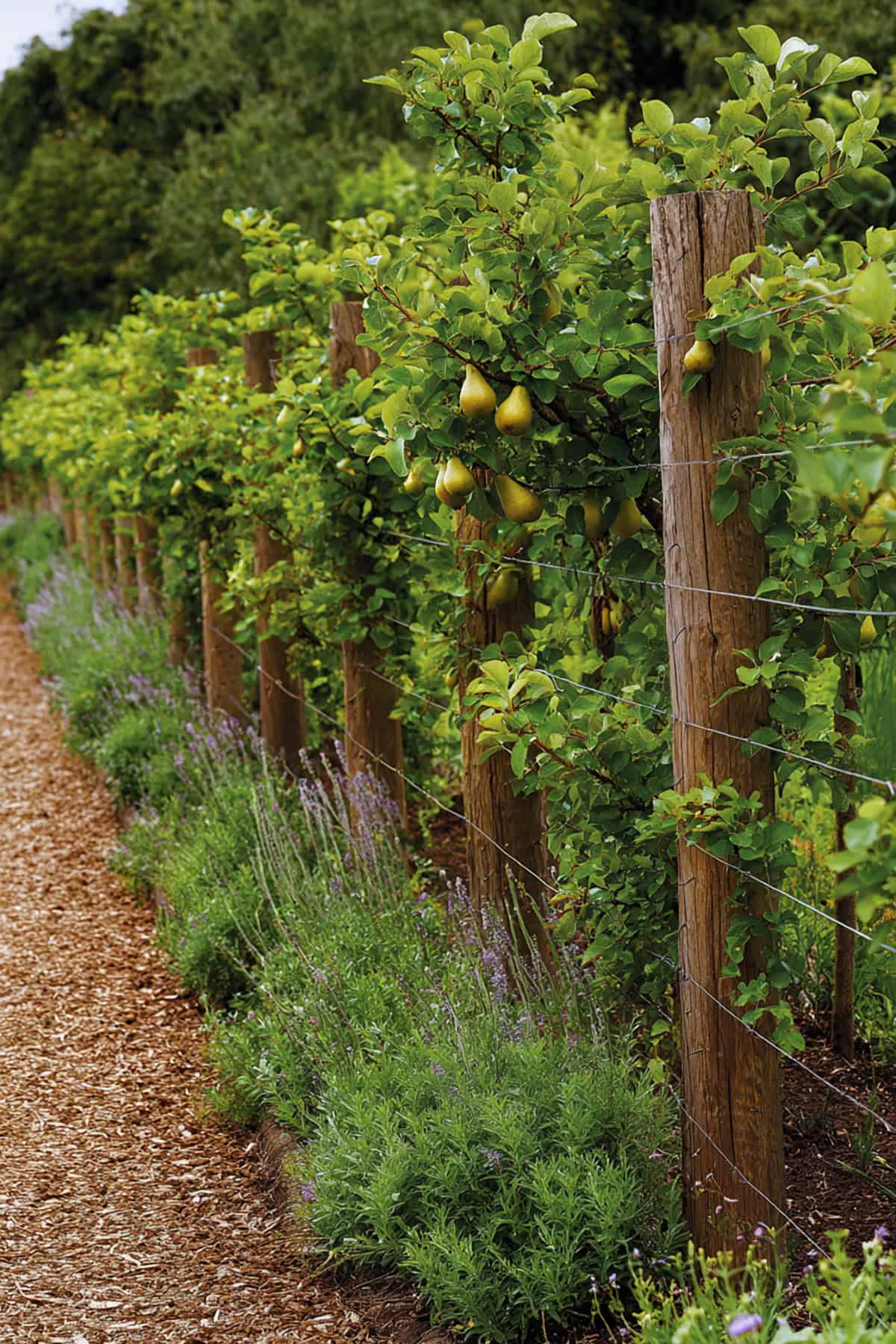
Pear cordons are single-stemmed trees planted 2 to 3 feet apart and angled along wires. They form a slim, productive fence that fits small yards.
Summer pruning of new side shoots controls size and shape. Fruit forms on short spurs along the main stem, where sun reaches every pear. Choose trees on dwarfing rootstock, plant in well-drained soil and include two compatible varieties for pollination.
Pea Vine Fence
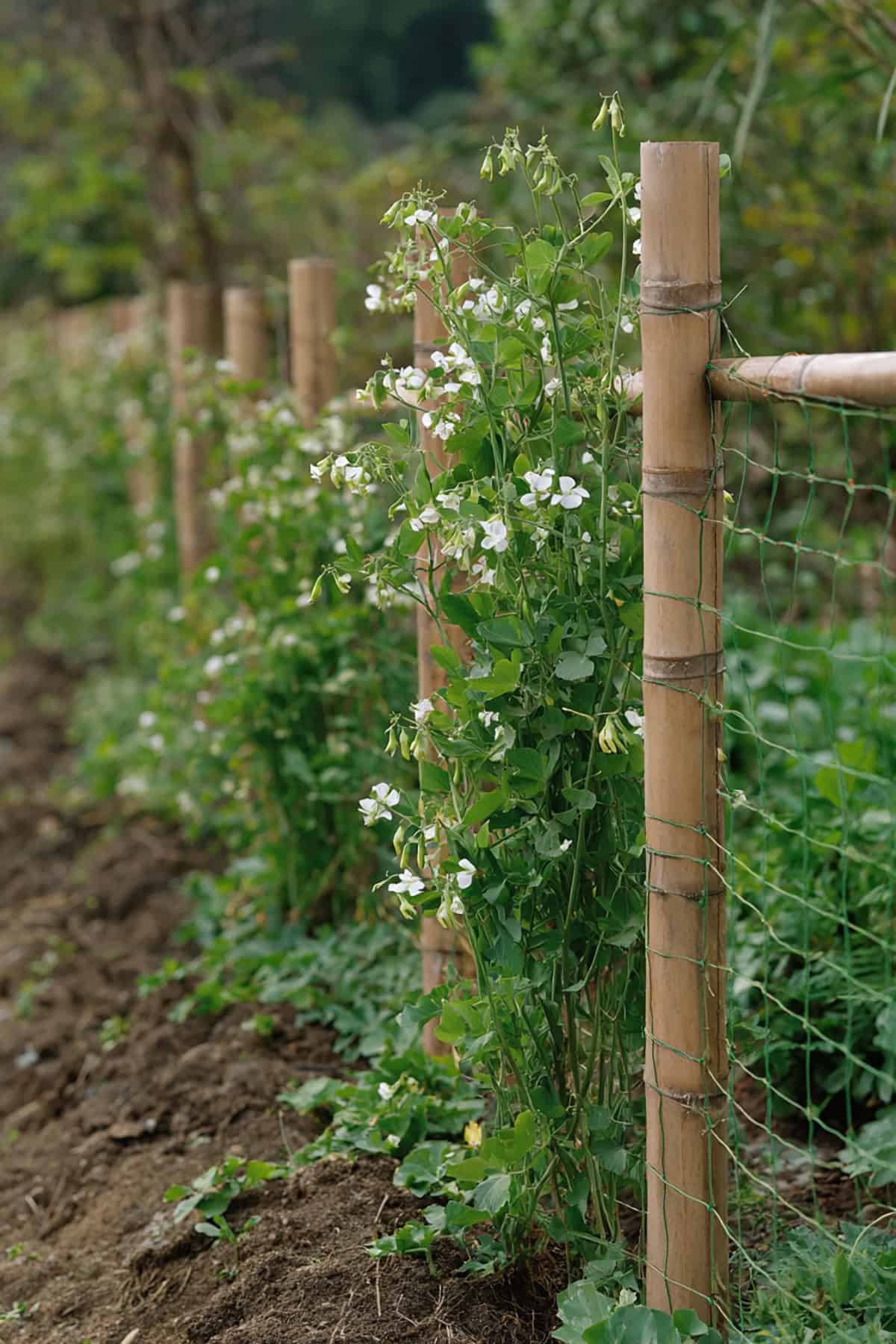
Peas make the first edible fence of the year. Stretch netting between posts and sow as soon as the soil thaws and dries enough to dig in early spring.
The vines fill in quickly, and the pods hang in plain sight along the netting for easy picking. Sugar snap and snow peas are the most productive choices. Once summer heat arrives, pull the vines and reuse the posts and netting for beans or cucumbers.
Passionfruit Vine Fence
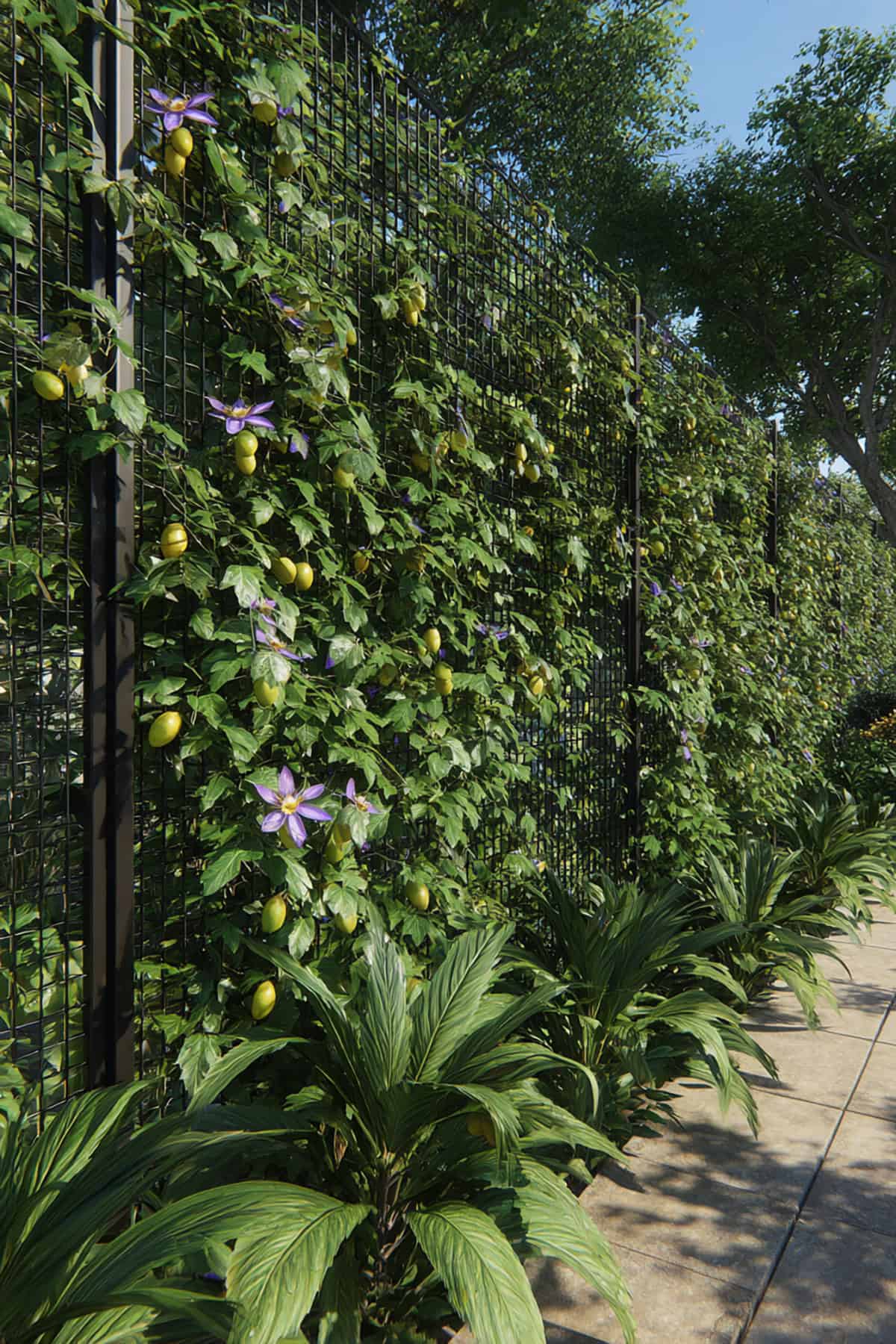
Passionfruit forms a lush, evergreen screen in warm climates. Attach strong mesh or wire to a solid fence, and the tendrils climb it quickly.
The intricate purple and white flowers are a highlight, followed by fruit in late summer and fall. Purple passionfruit is mostly self-fertile, and hand-pollinating with a small brush improves fruit set. Prune each year after harvest to hold the vine in check, and use heavy-duty posts for its weight.
Nasturtium Low Fence
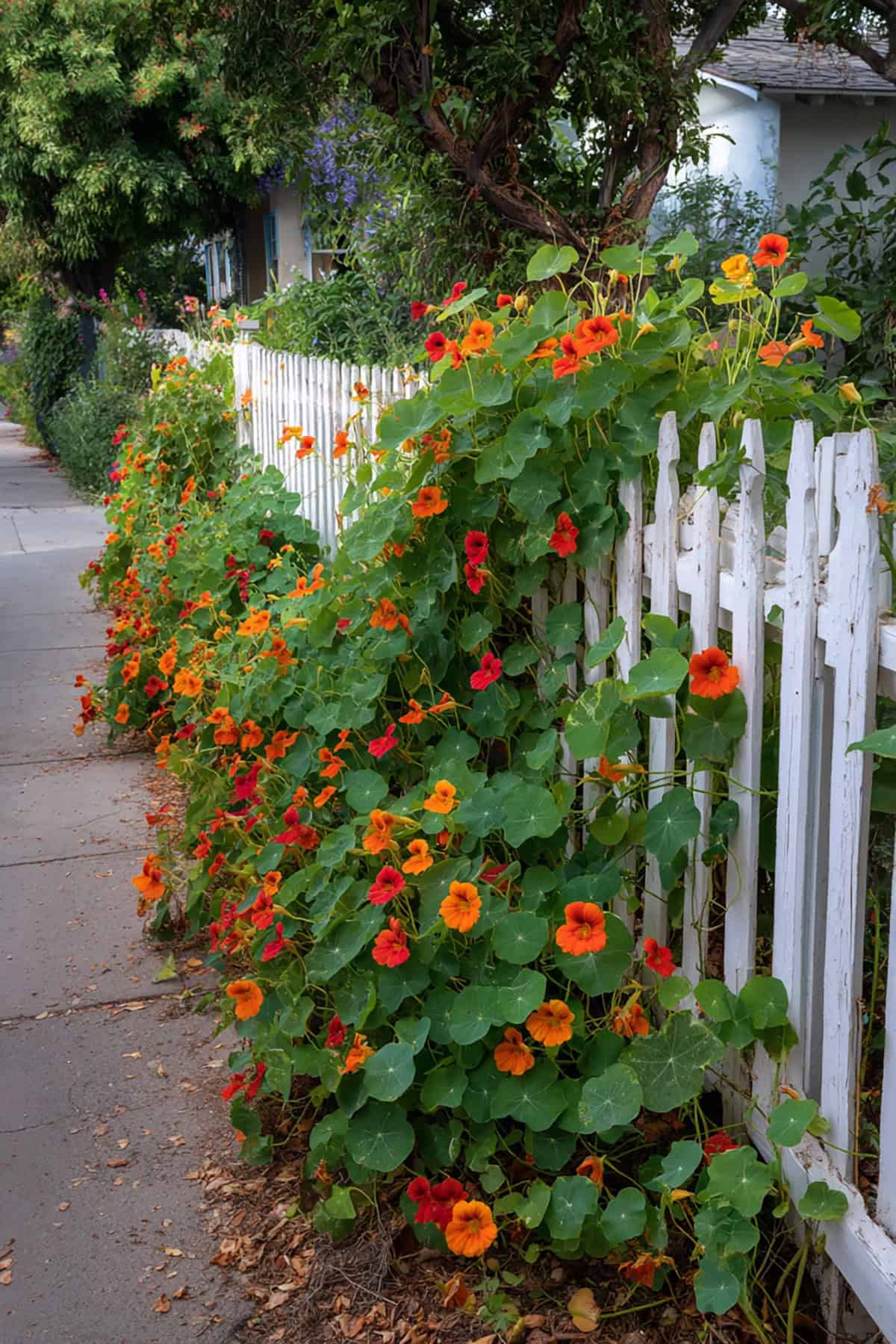
Nasturtiums are ideal for a low fence or border edge. They grow quickly in poor soil and trail over wire, low pickets or the rim of a raised bed.
Both flowers and leaves are edible, with a peppery bite for salads. Plant in lean soil, since rich ground produces lots of leaves and few flowers. Frost kills the plants, though they reseed readily or start easily again from seed in spring.
Red and Black Currant Hedge
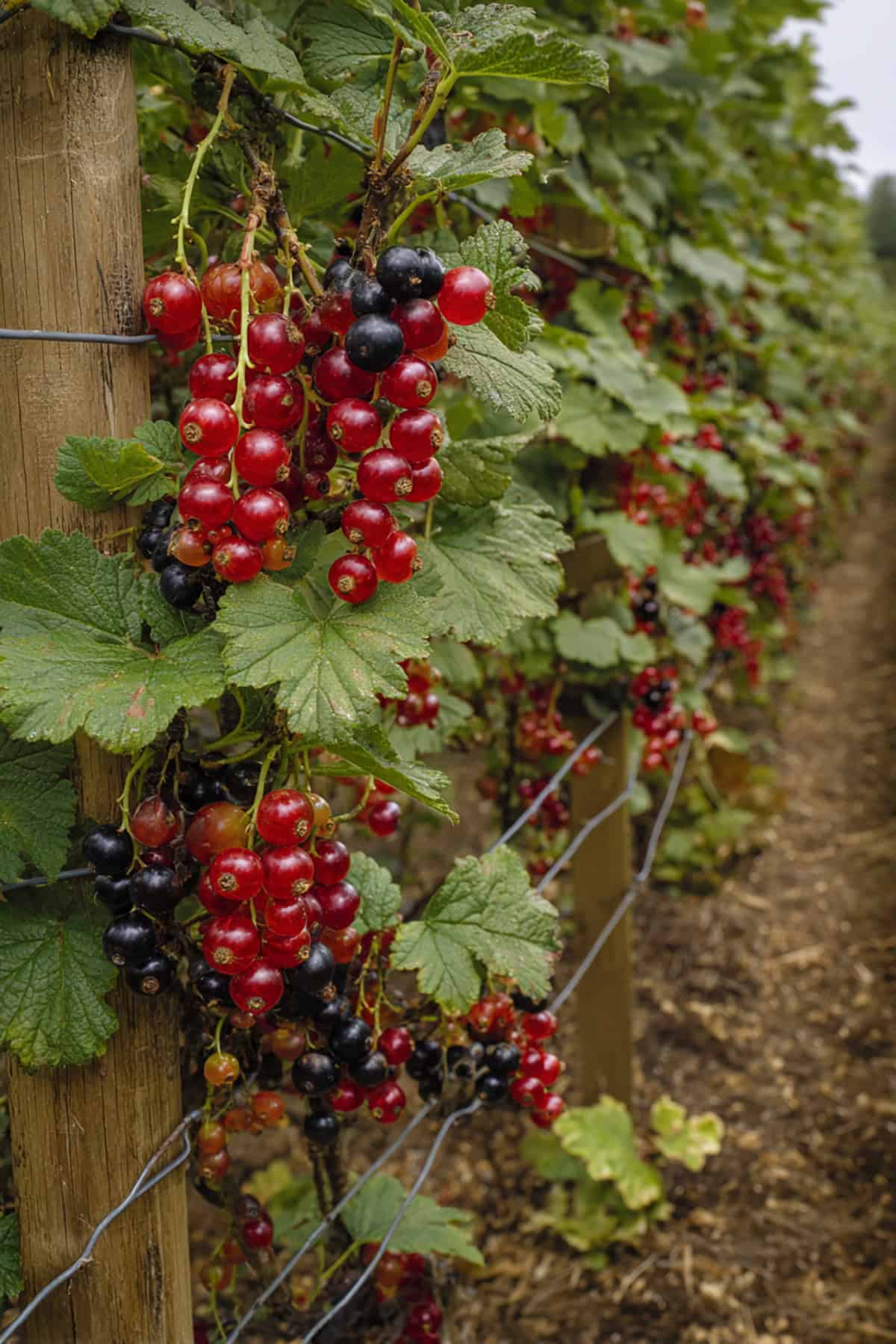
Currants form tidy, compact shrubs for a low hedge, and mixing red and black varieties adds color and flavor variety. They tolerate partial shade better than most fruit.
Red currants fruit on spurs of two- and three-year-old wood, while black currants fruit best on one-year-old shoots, so prune each type differently. Currants thrive in cool climates, and netting protects the berries from birds as they ripen. Check local rules first, since black currants are restricted in some areas because of white pine blister rust.
Lemongrass Raised Bed Fence
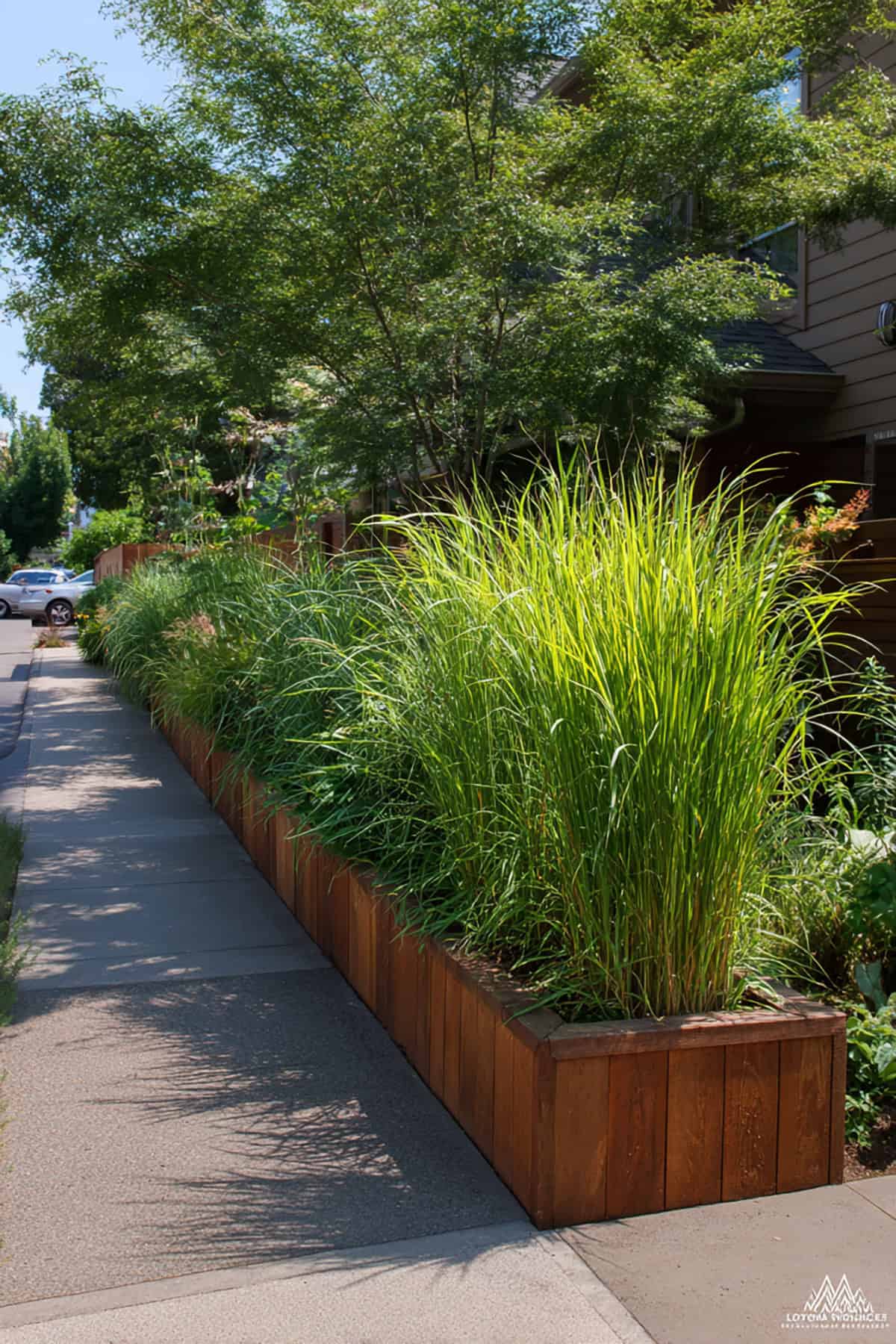
Lemongrass grows into dense, fountain-like clumps that make a soft, fragrant screen. A long raised bed along the edge of a patio contains the clumps and lifts them into view.
By midsummer the clumps reach 3 to 4 feet tall. Harvest by cutting the outer stalks at the base, and the citrus scent rises with every cut. In cold regions, treat lemongrass as an annual, or lift a few clumps into pots to overwinter indoors.
Lavender Border Fence
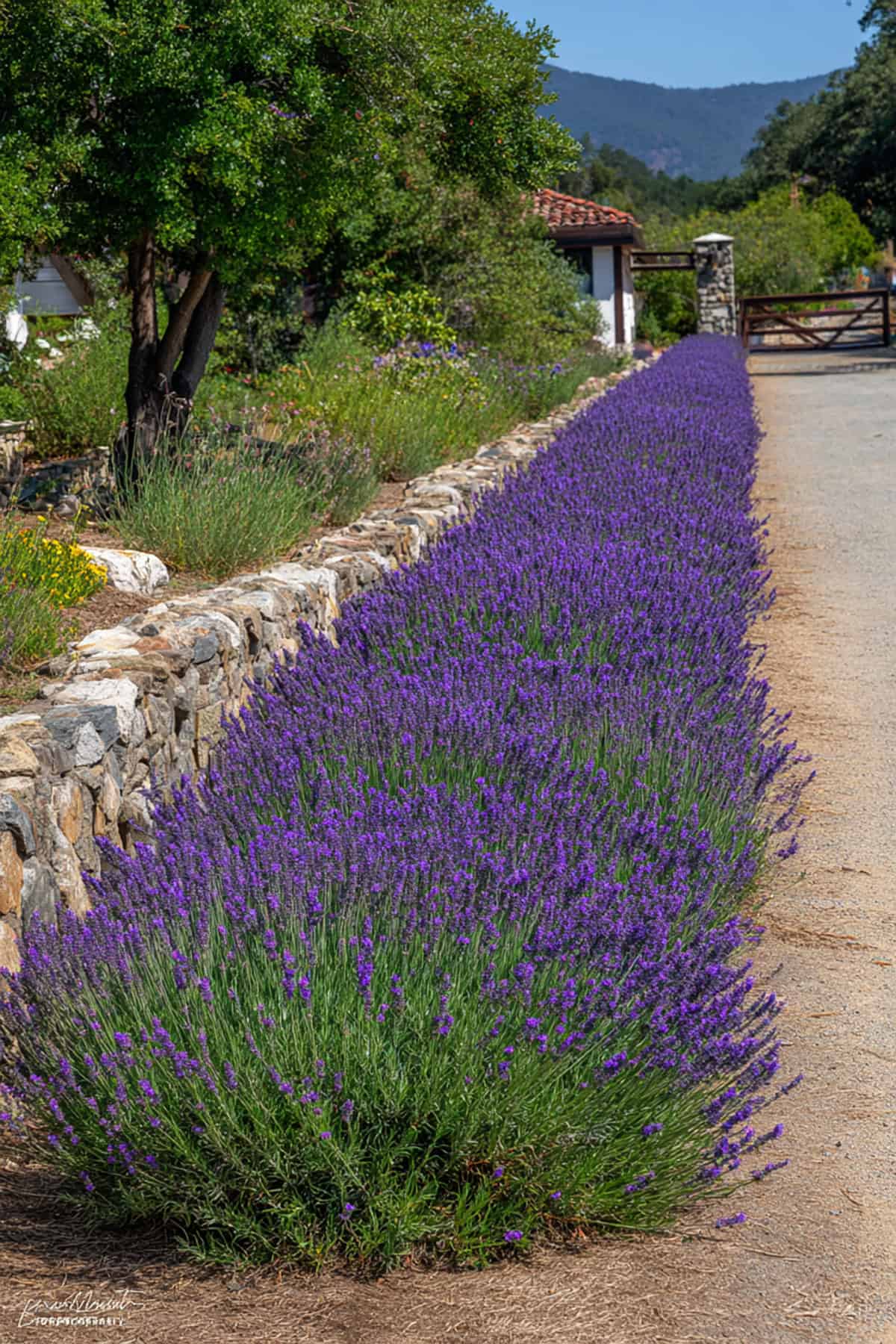
Lavender forms a low, structured border along a path or patio. Plant in straight rows with 18 to 24 inches between plants, in full sun and sharp drainage.
Use the dried flowers in baking, tea and syrups, and choose English lavender varieties such as ‘Munstead’ or ‘Hidcote’ for the best culinary flavor. Shear the plants by about a third after flowering to prevent woody, sprawling growth. Most varieties top out at knee height and hold a neat shape with yearly trims.
Hardy Kiwi Trellis Screen
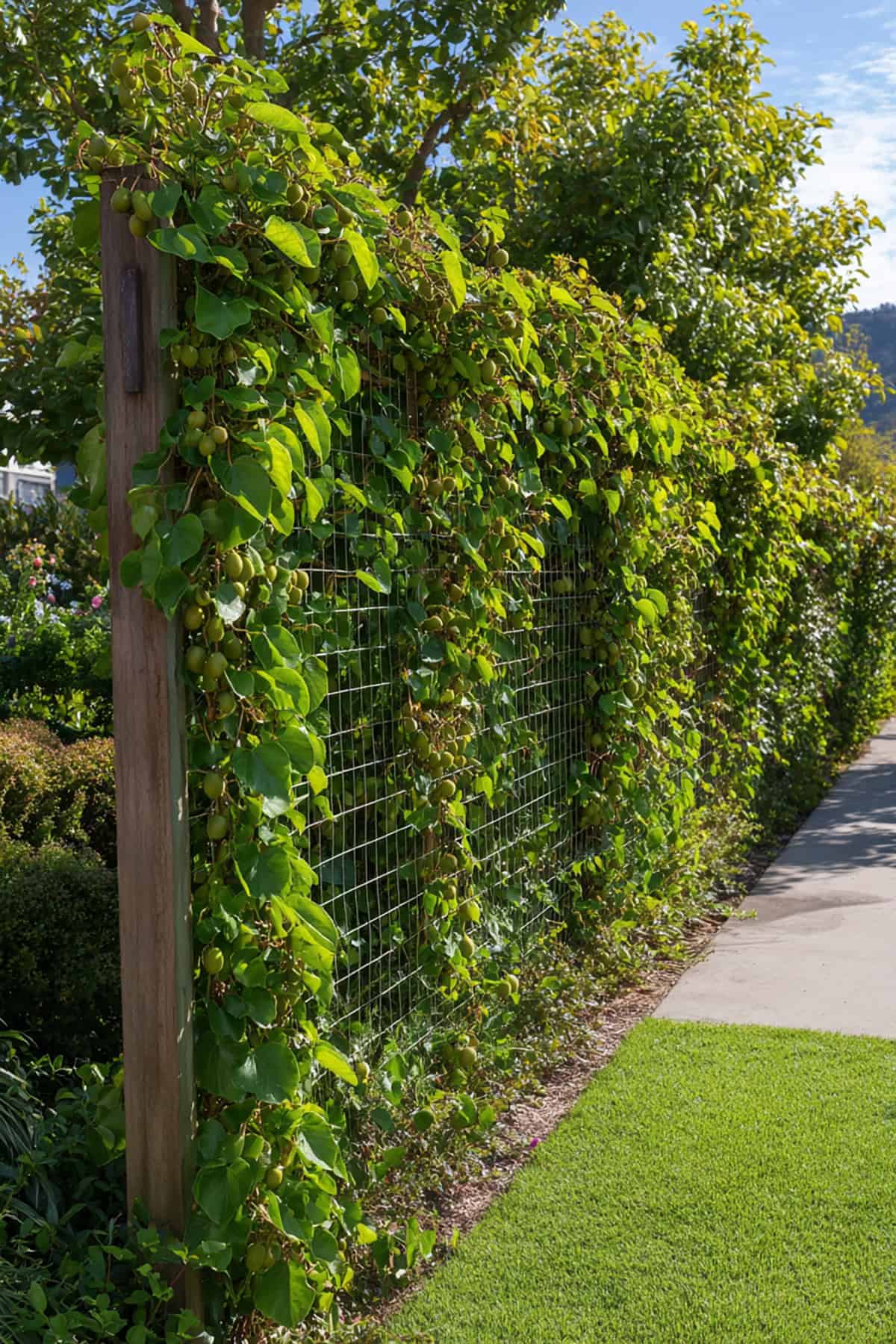
Hardy kiwi is a vigorous vine that needs a strong trellis with deep-set posts, especially as the woody stems thicken over the years.
Plant at least one male for every six to eight females, or choose the self-fertile ‘Issai’. Prune hard in winter and lightly in summer to manage growth. By the third or fourth year, the vine provides real privacy, and grape-sized, smooth-skinned fruit hangs beneath the leaves in early fall.
Jerusalem Artichoke Privacy Screen
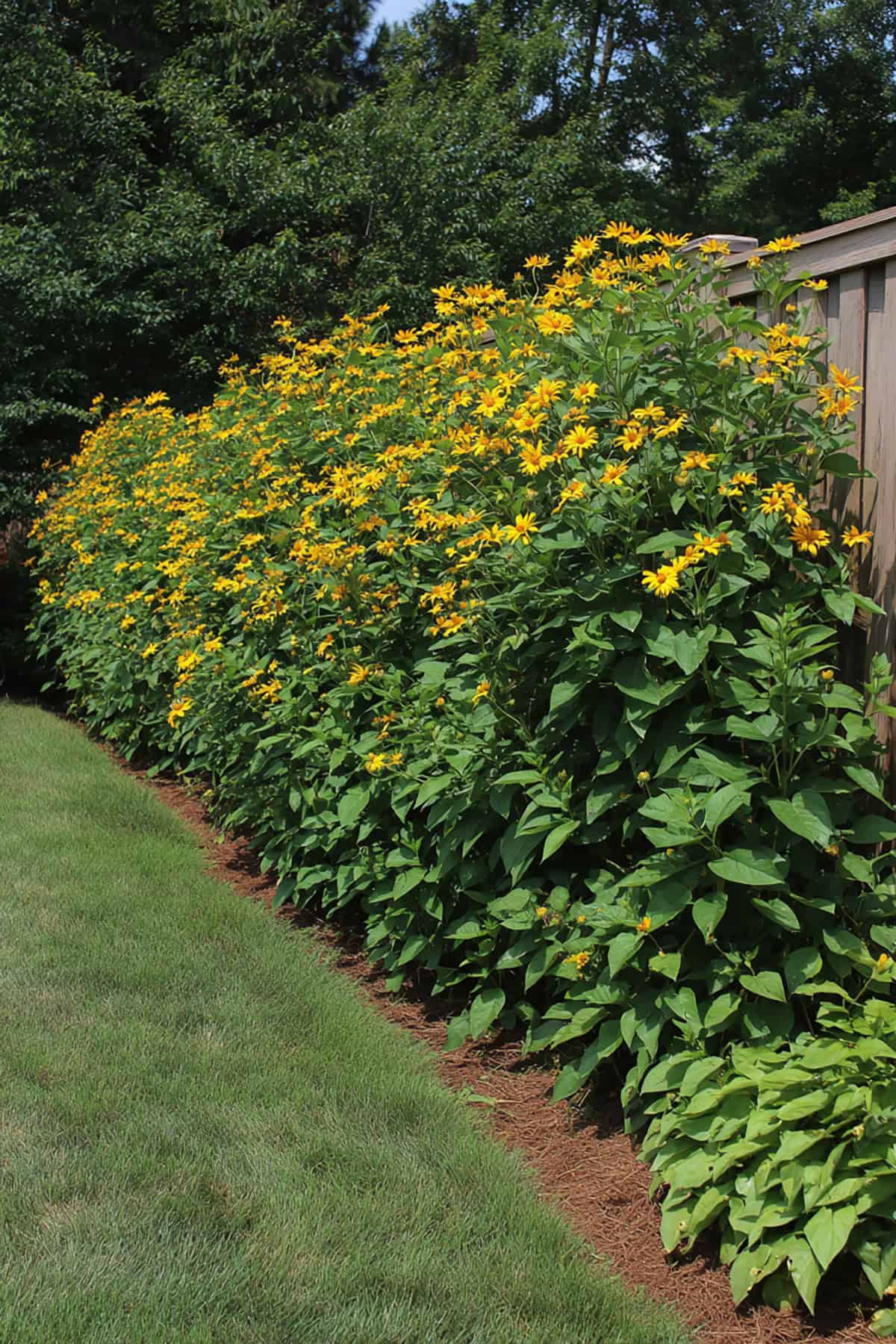
Jerusalem artichokes grow tall and fast into a dense summer screen. Plant tubers in a line in spring, and the stems reach 8 feet or more by late summer.
Small yellow sunflowers appear in late summer. Dig the knobby tubers after frost, when their flavor sweetens. The plants spread aggressively, so plant them inside a buried barrier or in a bed reserved for them. The screen is seasonal, and the space opens up again in winter.
Hops Vine Fence
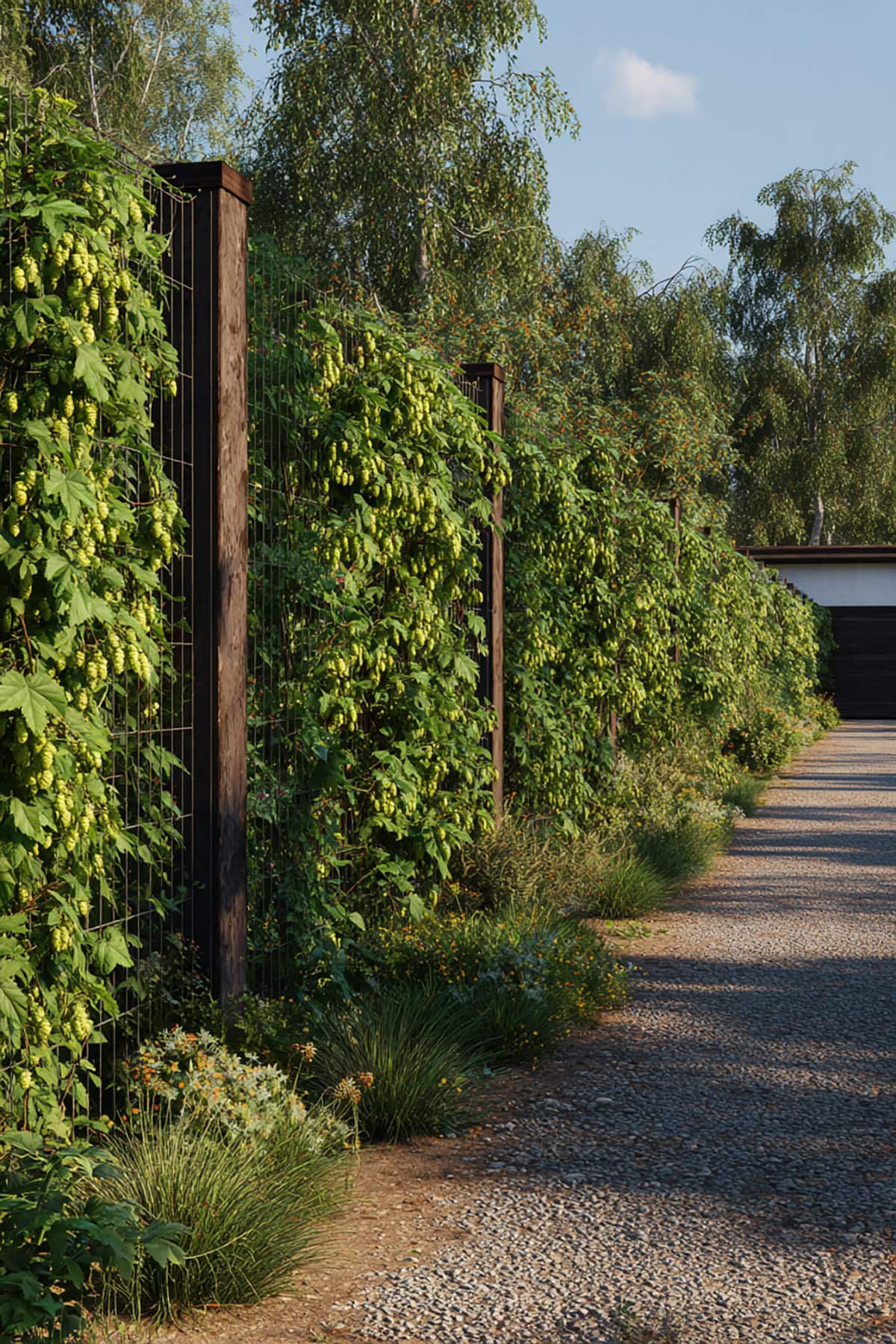
Hops climb rapidly on twine or wire between tall posts and reach 15 to 20 feet in a season. Full sun produces the most cones.
The vines die back each winter and regrow from the crown every spring. Harvest the papery cones in late summer, then cut the bines to the ground after frost. Use sturdy anchors at the top of the support, since a mature vine is heavy. For home brewers, this is the obvious choice, and the screen fills in fast.
Paneled Herb Fence
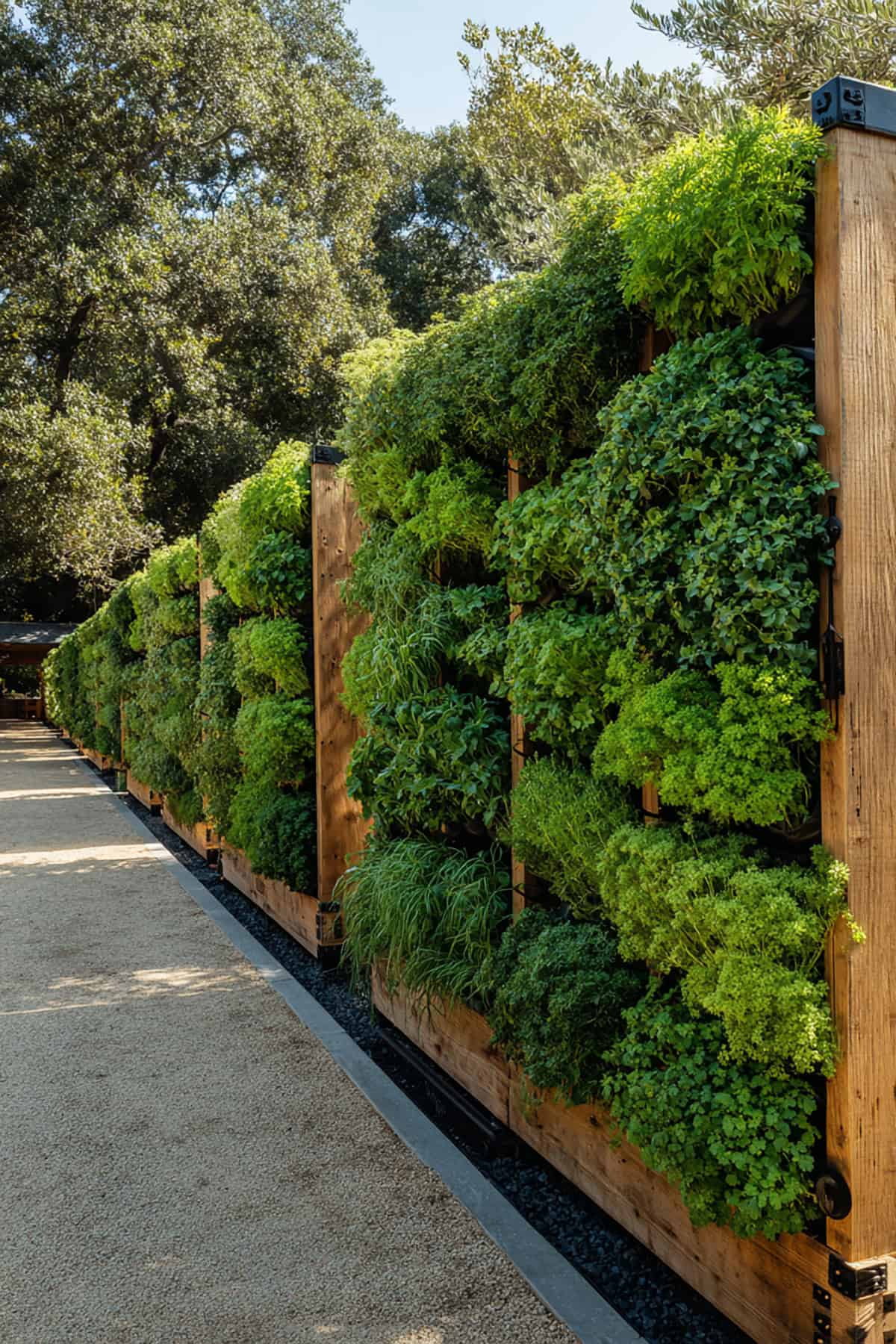
Mixed herbs make a surprisingly effective low fence. Divide a long planter or bed into framed sections, and plant a different pair of herbs in each one.
Perennials such as rosemary, sage and thyme form the structure, and annuals such as basil and parsley fill the gaps. Regular picking encourages bushy growth. A herb fence near the kitchen door is easy to harvest, and the scent rises with every brush of the leaves.
Grapevine Pergola Fence
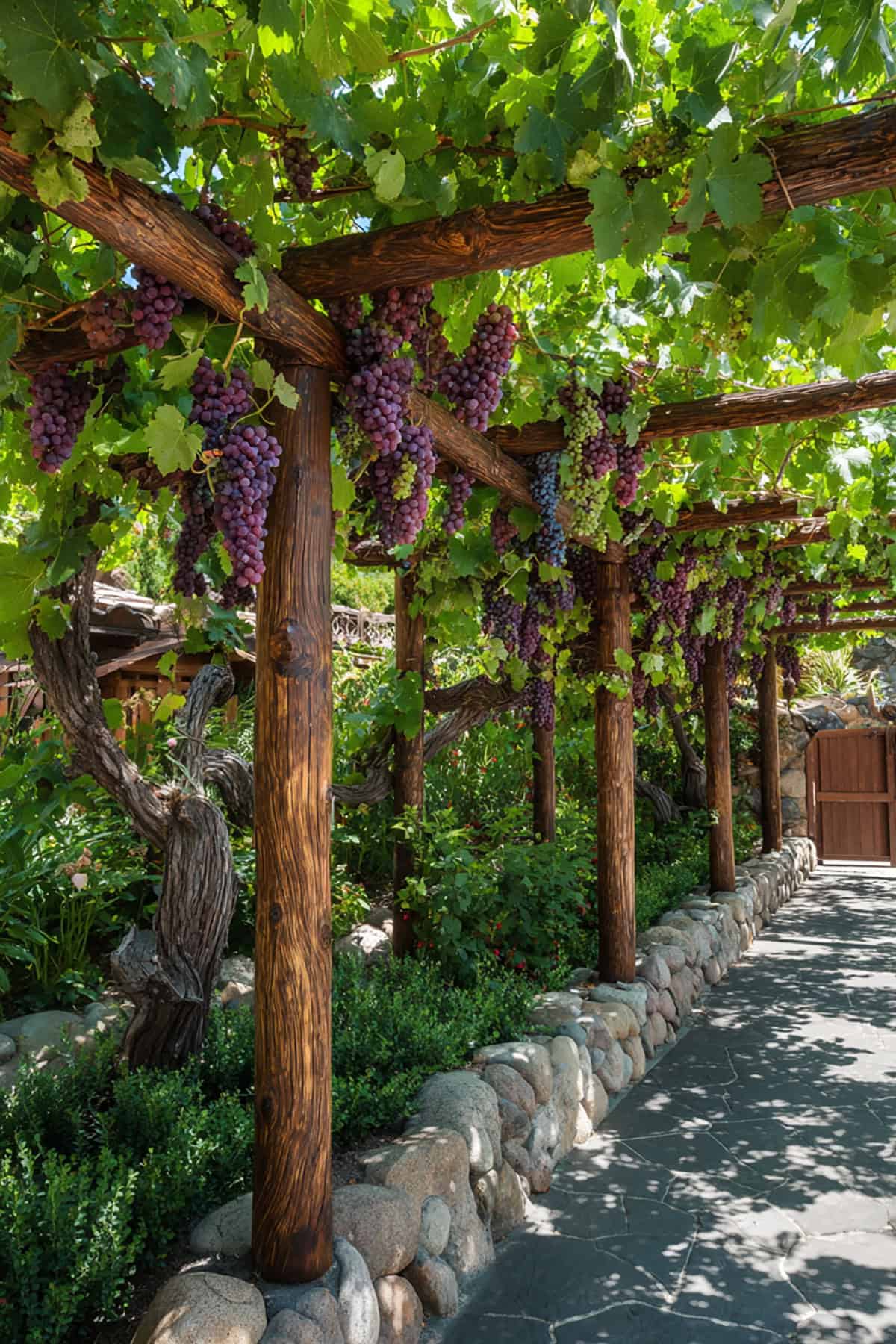
Grapes thrive on a combined fence and pergola. Train the main stems up the posts and along the overhead beams, so the posts double as fence supports.
Bunches hang from above for easy picking, and summer pruning of excess shoots manages shade and airflow, which prevents mildew. A grapevine pergola fence defines an outdoor room and adds shade over a seating area in summer.
Goji Berry Trellis Fence
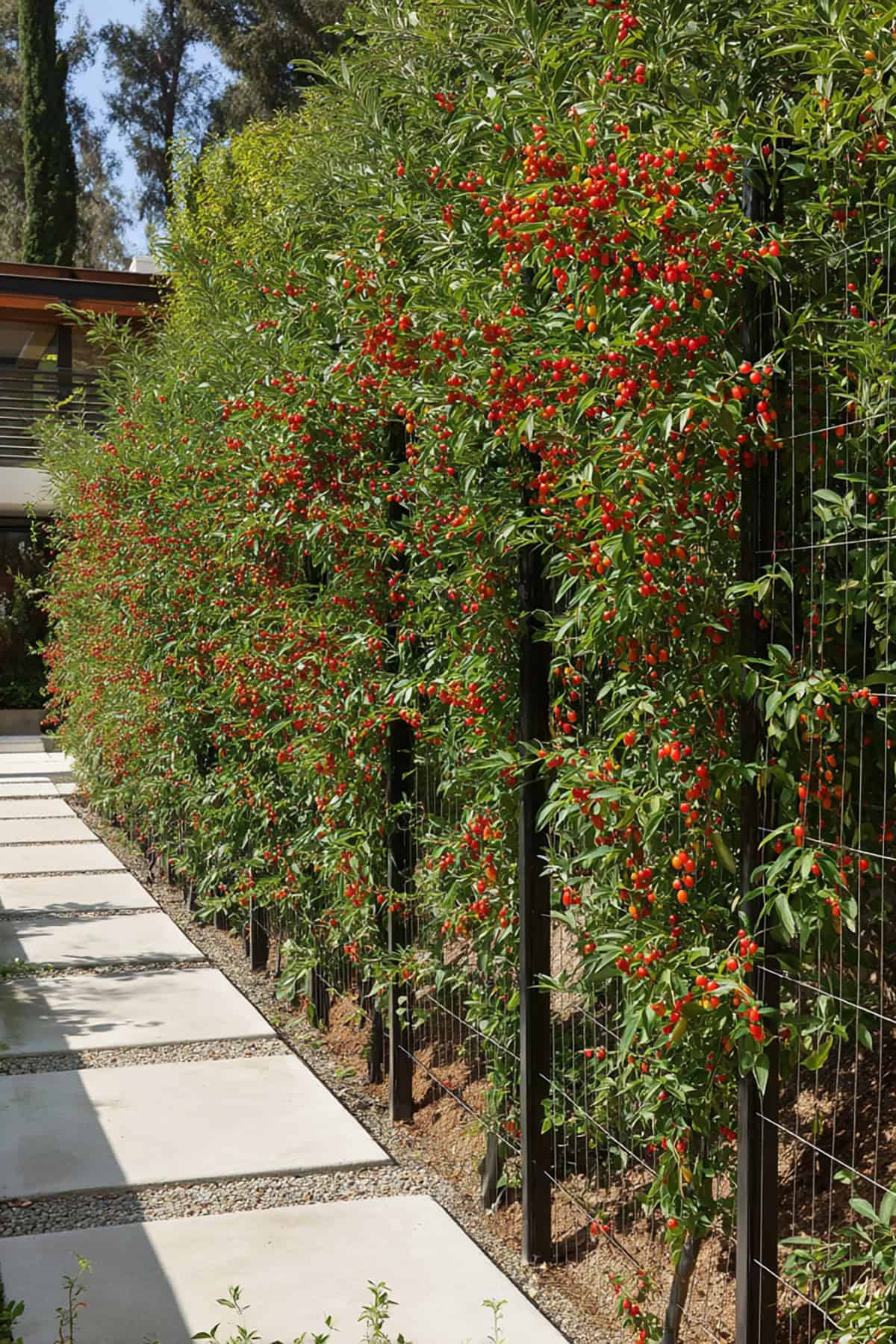
Goji berries have long, flexible canes that tie neatly to vertical cords or wires and form a slim fence.
Prune each spring to control the sprawl. The berries form on the current season’s growth and ripen to bright red in full sun. The shrubs are cold-tolerant and drought-resistant, and the harvest stretches over several weeks from late summer into fall.
Pumpkin Vine Fence
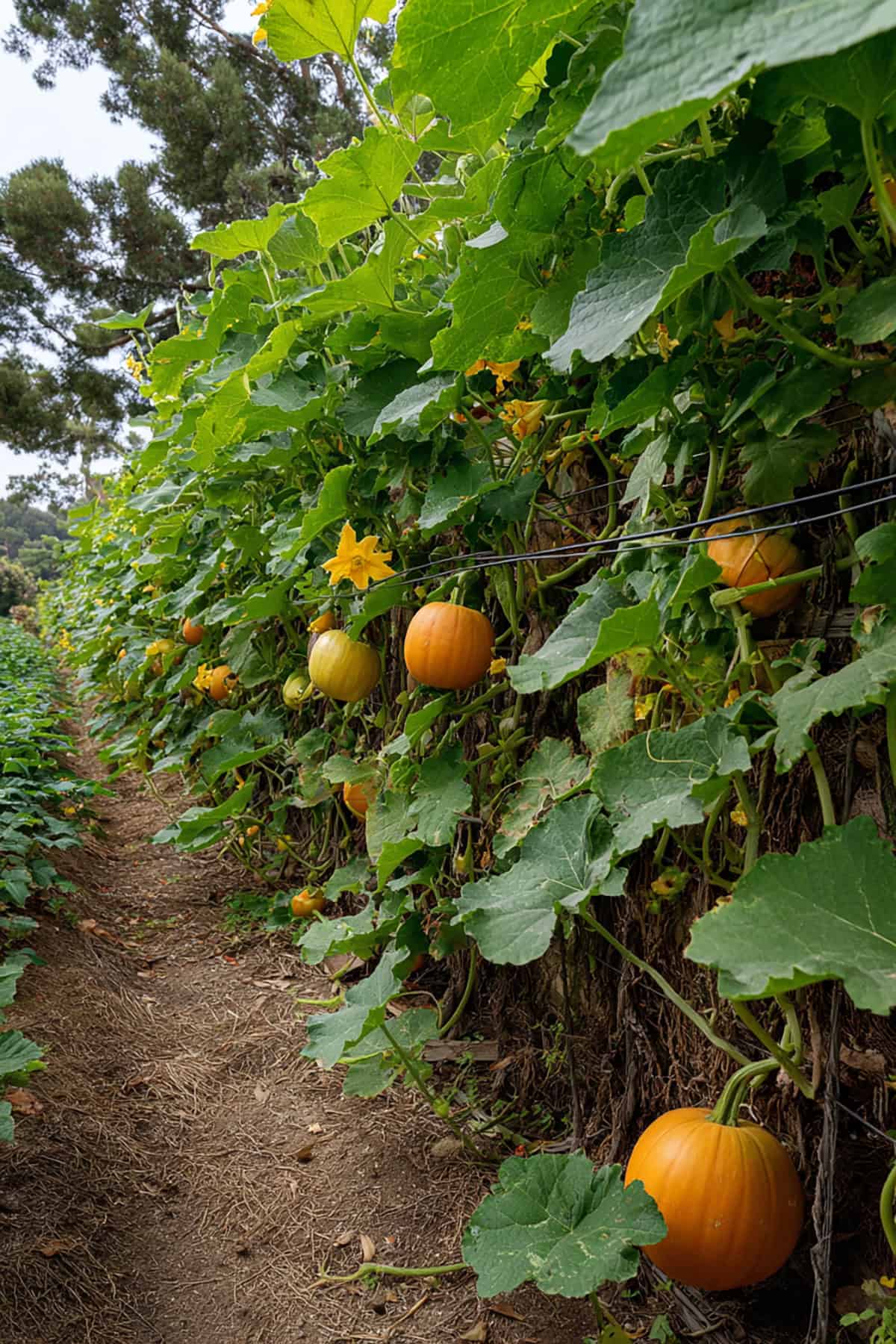
Pumpkin vines cover a sturdy low wire fence when guided along it with clips or soft ties. Choose small to medium varieties such as ‘Sugar Pie’ for training, and support each developing fruit with a fabric sling.
Large pumpkins rest on the ground, which means plenty of space at the base of the fence. Hand-pollinating early flowers improves fruit set. Harvest in fall, before frost ends the vines’ season.
Espalier Apple Fence
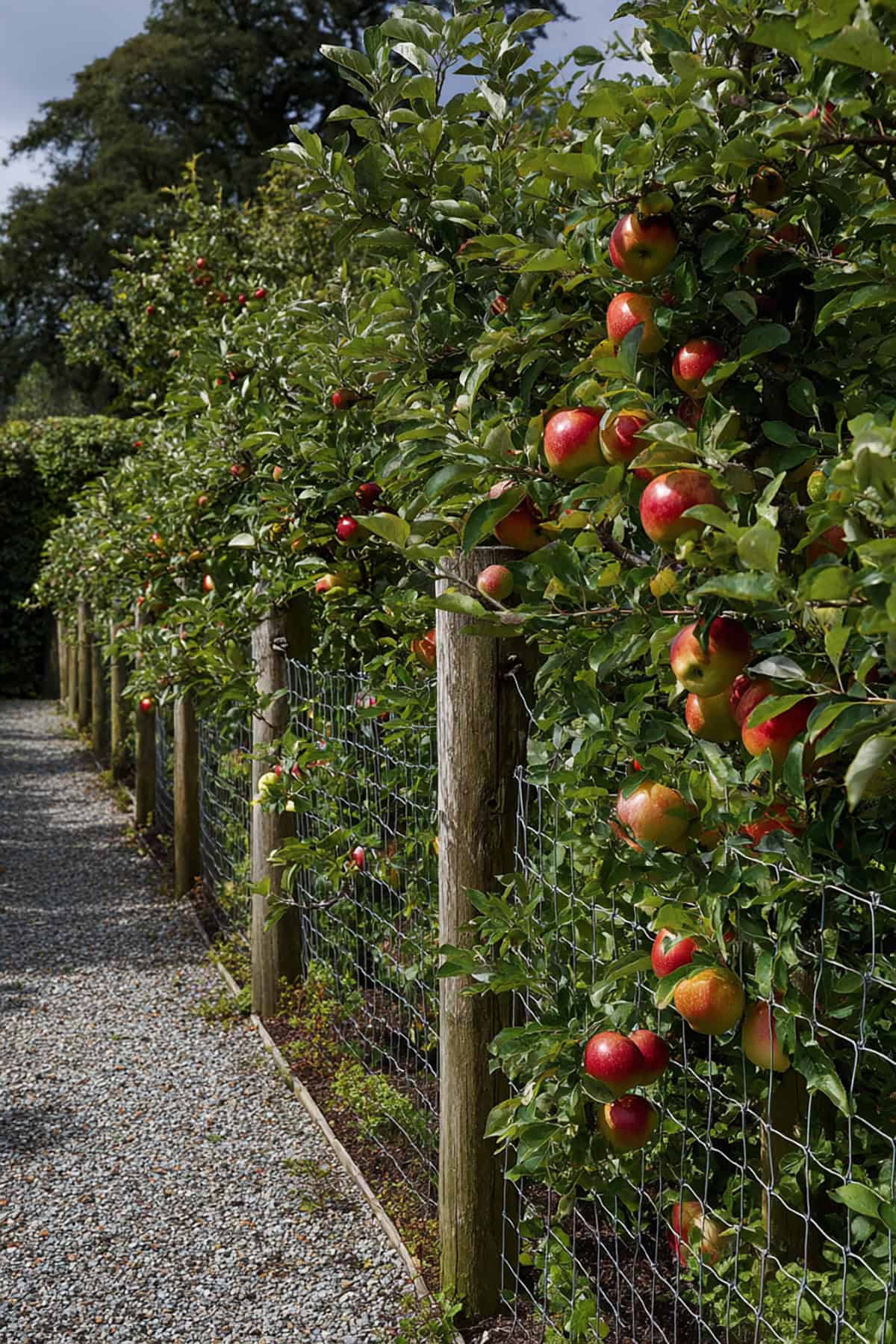
Apples are natural candidates for espalier. Stretch wire panels between posts and train the branches along the horizontal lines.
Annual pruning shapes the tree, and fruit forms on short spurs close to the wire. Choose a dwarfing rootstock such as M9 or M26 to match the height of the fence. Two compatible varieties planted side by side provide cross-pollination, and a well-trained espalier fence lasts for decades.
Malabar Spinach Vine Fence
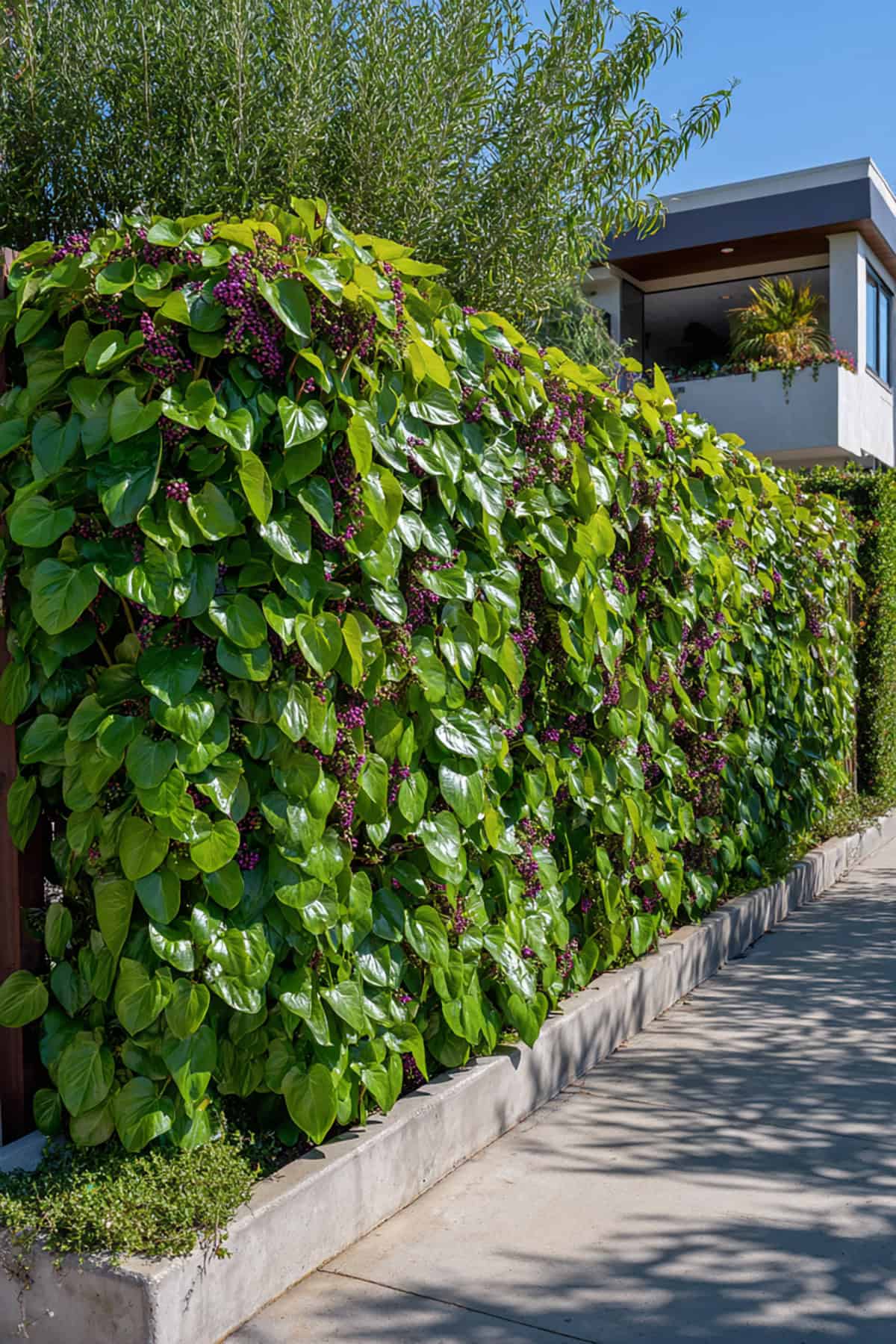
Malabar spinach thrives in heat and climbs mesh or wire with ease. Its thick, glossy leaves on red or green stems make an attractive summer screen.
Regular trimming encourages tender new leaves, and the harvest continues all summer. It tolerates light shade. Cold weather ends the season, and it fills the gap in midsummer when lettuce and true spinach bolt.
Squash Arch Tunnel
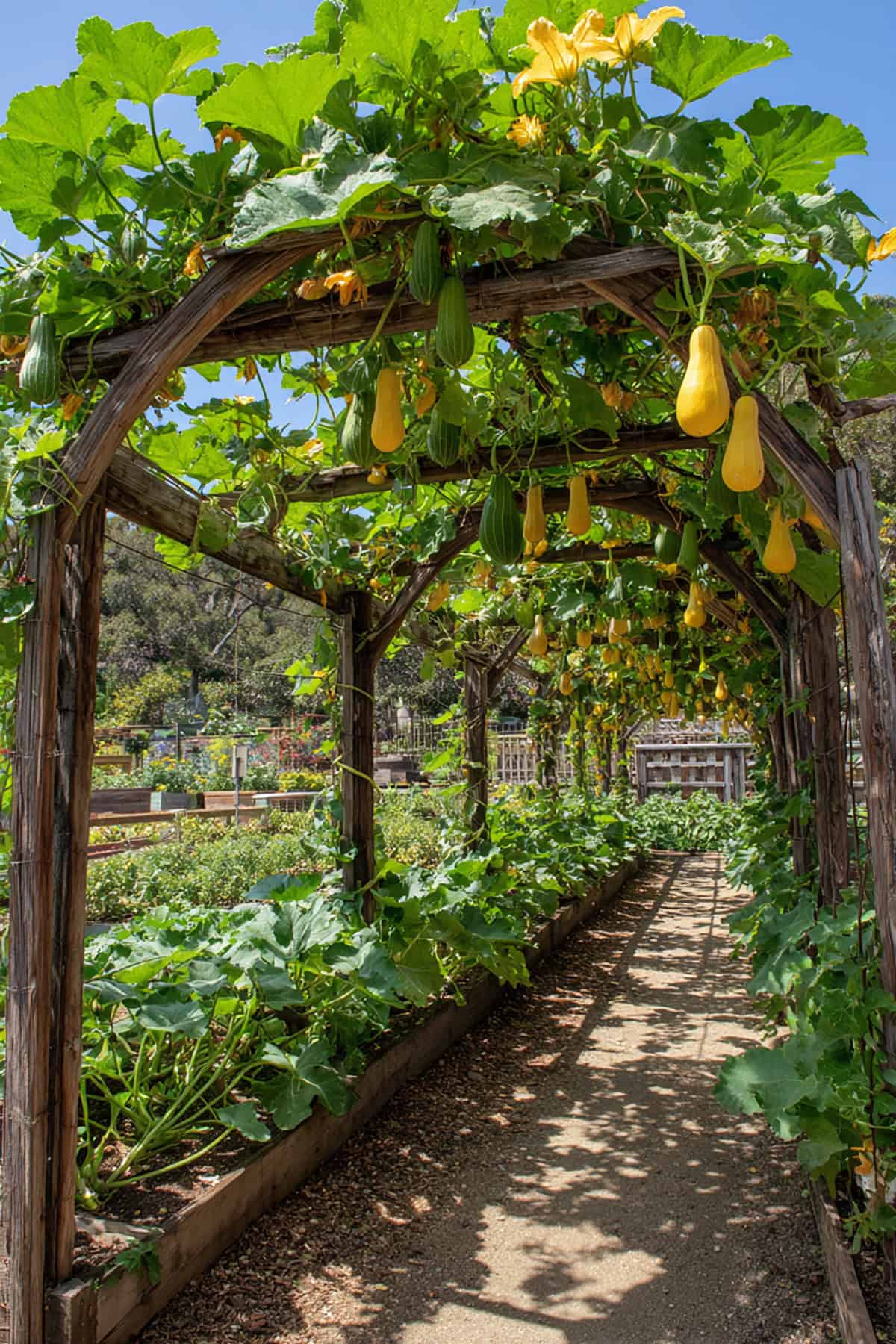
A squash arch creates a walk-through fence. Bend cattle panels into arches between raised beds, and train vining squash up and over them.
The fruit hangs from the arch or rests on the panels, and smaller varieties such as delicata or acorn squash are easiest to support. Good spacing reduces powdery mildew. An arch marks a garden path beautifully, and the panels last for many seasons.
Cucumber Trellis Fence
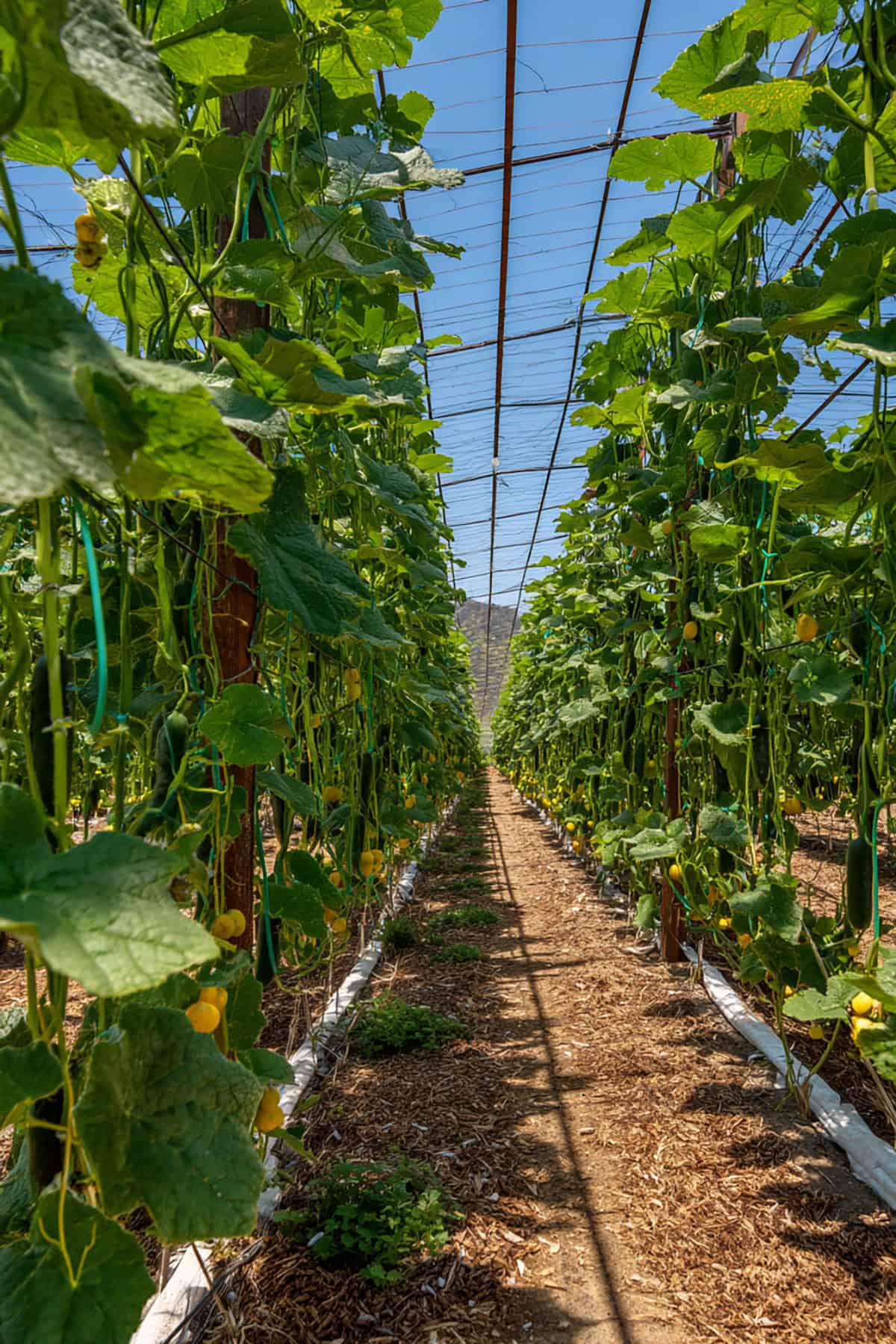
Cucumbers climb vertical trellises readily. Tie the vines loosely as they grow, and the fruit hangs straight and clean for easy picking.
Good airflow on a trellis reduces disease. Pick every day or two at peak season for the best yields. After frost, pull the vines and leave the trellis in place. A cucumber trellis is one of the best edible fences for small gardens.
Climbing Bean Fence
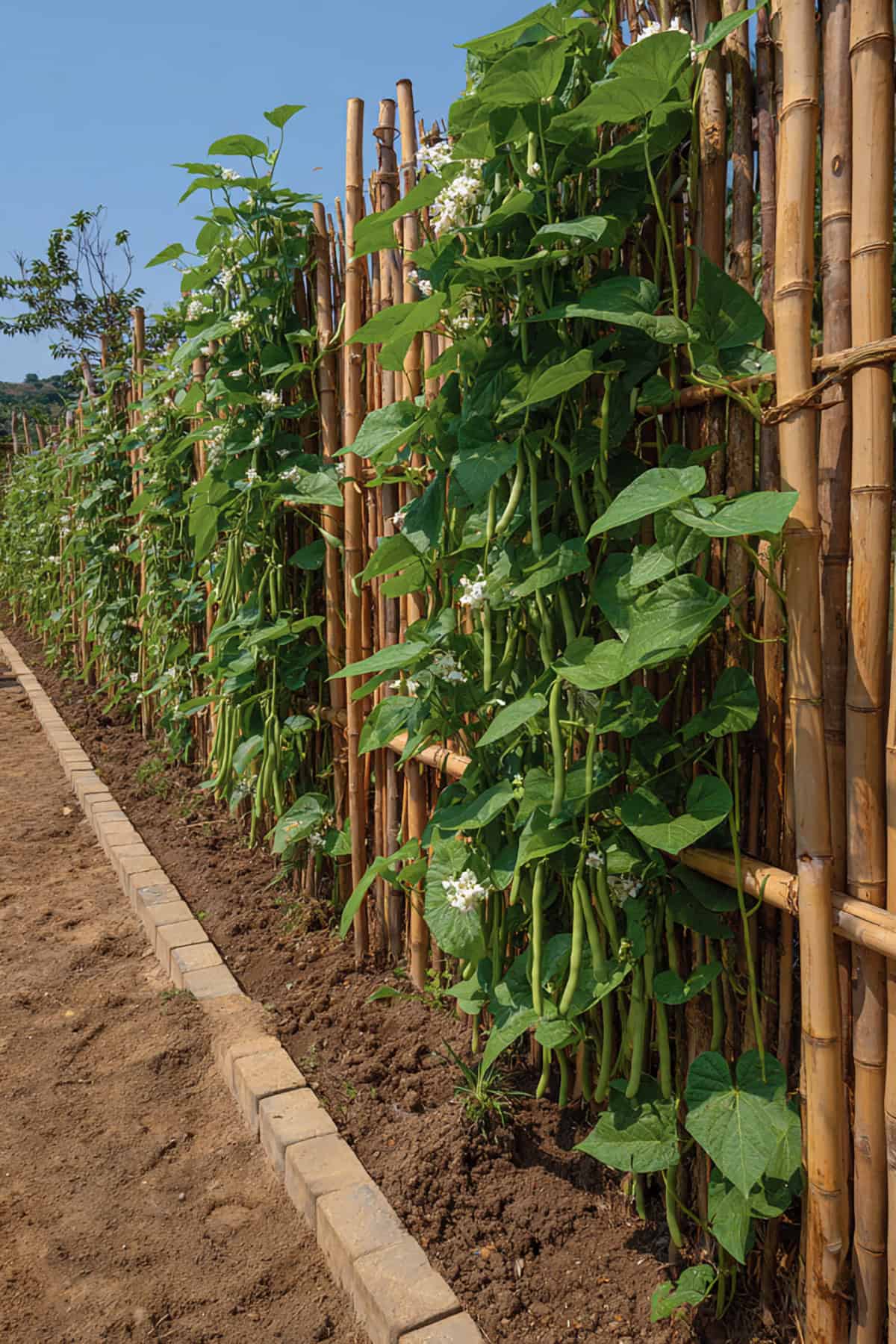
Bamboo A-frames are the classic support for climbing beans. Lash pairs of poles together at the top, and repeat the frames along the boundary.
Pole beans cover both sides of the frame quickly. Flowers appear first, and the pods follow within easy reach. The frames are light and store easily over winter. Rich soil and steady water produce the biggest harvests.
Citrus Espalier Fence
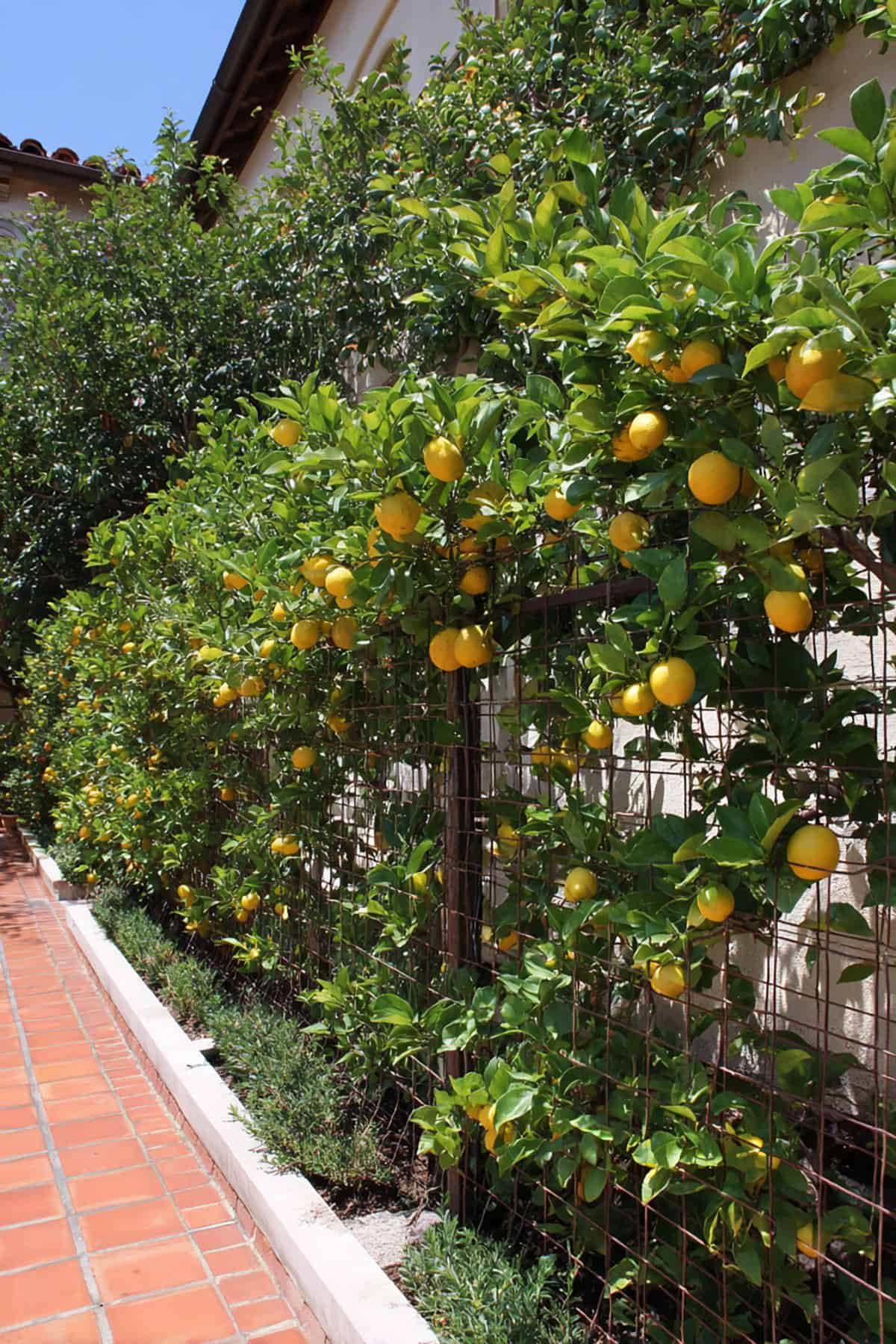
Citrus espalier thrives where winters are mild. Train the branches along wires against a sunny fence or wall, which also reflects heat onto the fruit.
Prune regularly to hold the growth flat. In cooler areas, cover the plants with frost cloth on cold nights. Lemons and kumquats are the easiest choices, and lemons ripen over many months. The glossy evergreen leaves look good all year, and the fragrant spring blossoms are a bonus.
Chayote Vine Fence
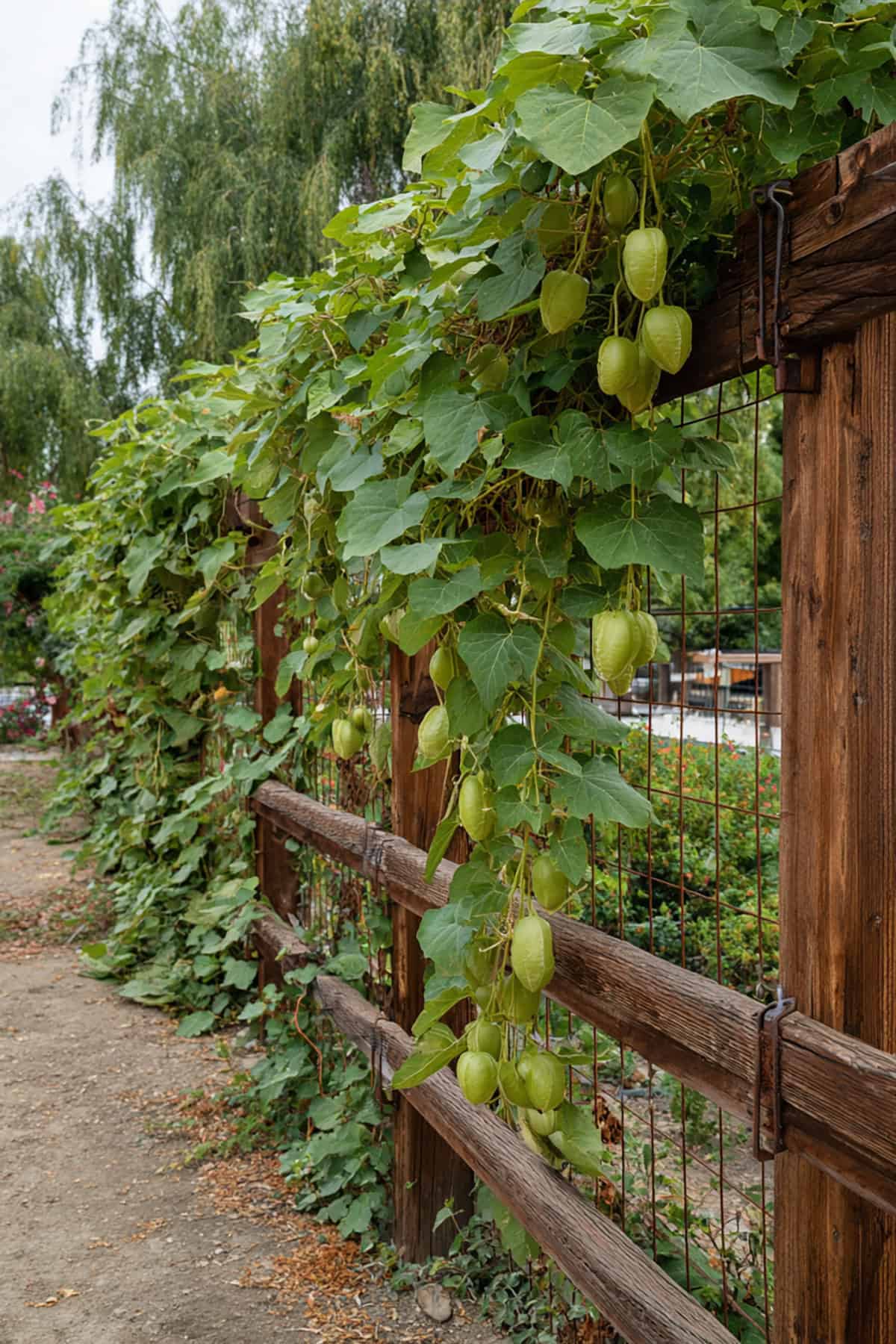
Chayote is a vigorous vine that covers large spaces quickly in warm weather. Cattle panels handle its weight better than lighter trellises.
Plant a whole sprouted fruit in spring. Flowering and fruit set begin in late summer as the days shorten, and a single plant produces dozens of squash. Prune to control growth. Chayote needs a long, warm season and is best in mild climates, where the harvest continues until frost.
Raised Blueberry Trough Border
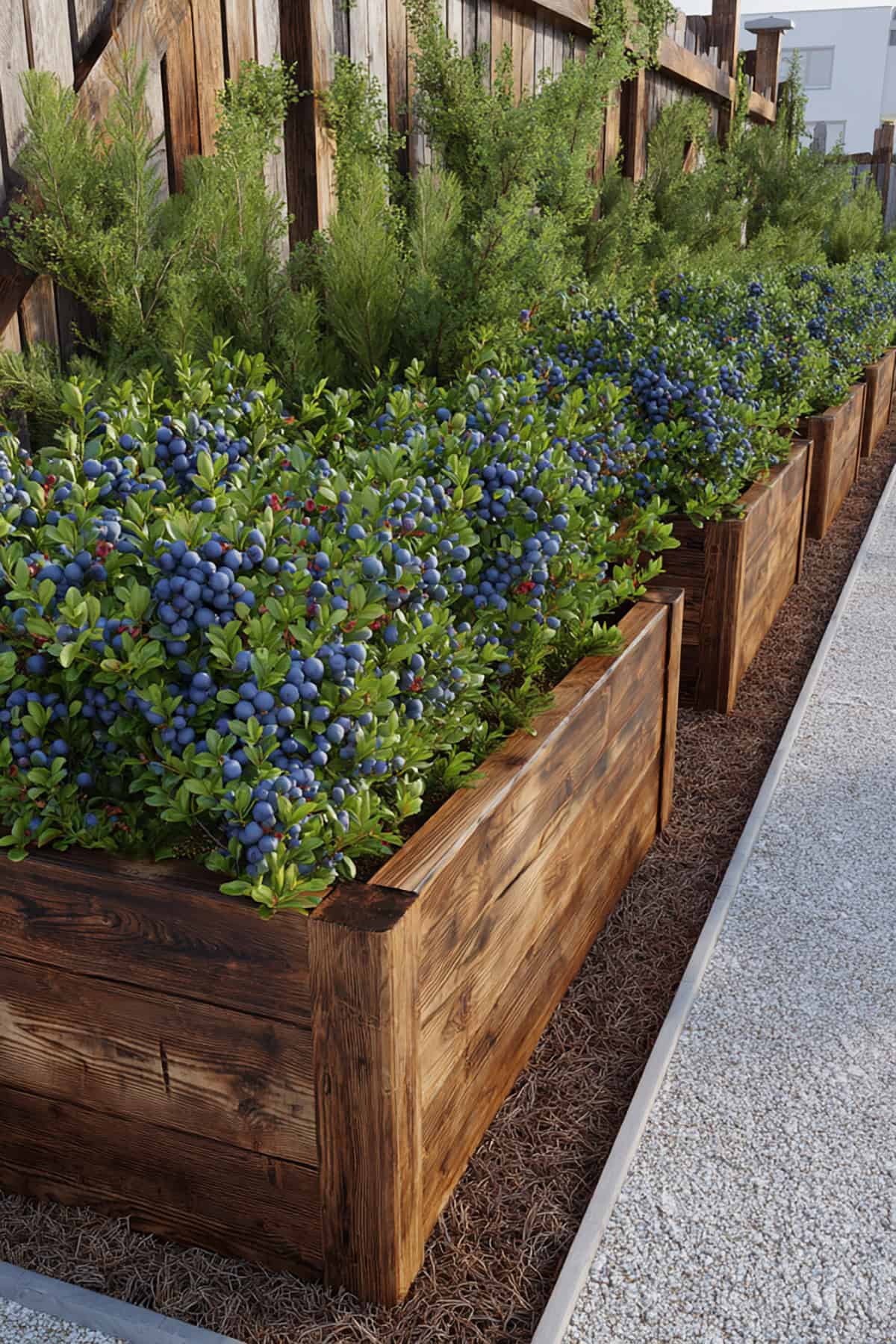
Blueberries need acidic soil, and raised troughs filled with an acidic mix of peat or pine bark make that easy to control. A line of troughs forms a neat, low fence.
Full sun produces the biggest crops, a layer of pine bark mulch cools the roots, and light pruning each winter opens the bushes. Plant at least two varieties for better pollination. Netting protects the berries from birds, and the fruit ripens in waves over several weeks.
Arched Blackberry Hedge
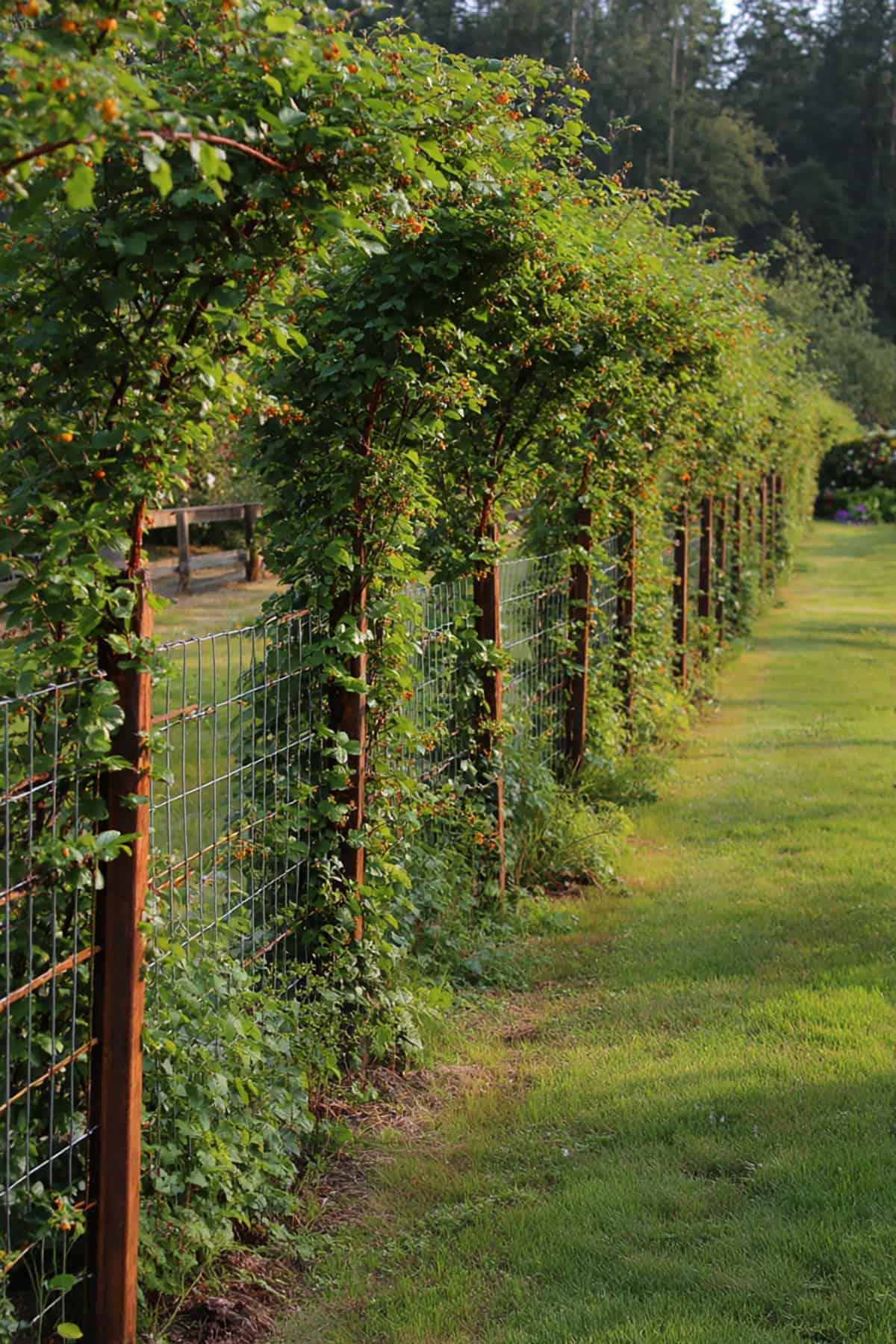
Blackberries make a dense, productive hedge with a little training. Arch the canes along horizontal wires, which tidies the row and puts the berries within easy reach.
After fruiting, wear thick gloves and cut out the canes that bore fruit at ground level. New canes take their place for next year. Thornless varieties such as ‘Triple Crown’ or ‘Navaho’ are far easier to manage beside paths. A trained blackberry hedge provides real privacy along with a heavy summer harvest.