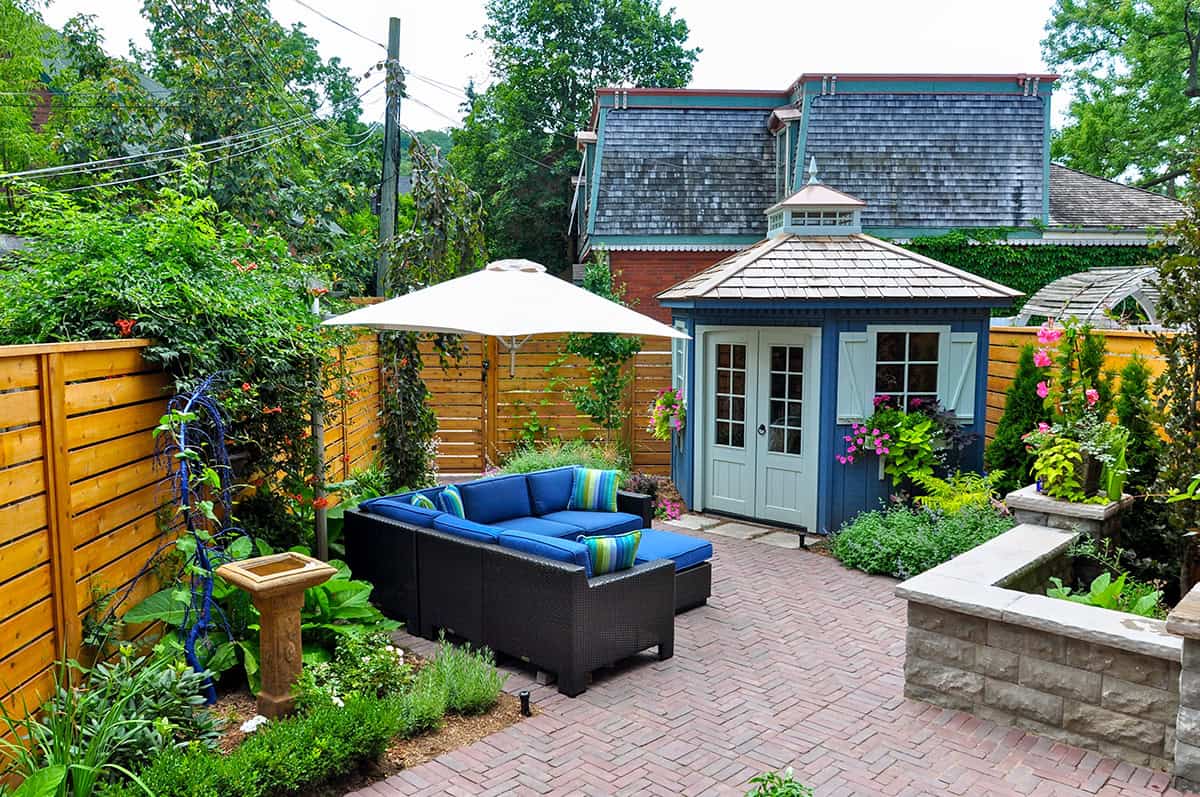
Small backyards don’t need more stuff. They need better use of space. A clean layout, a few well-placed plants, and some structure can go a long way. These 40+ ideas are all about making a small yard feel easier to use without crowding it.
Table of Contents
- Low-budget Small Backyard Oases
- Vertical and Wall Solutions
- Wall-Mounted Shelf Garden to Free Ground Space
- Vertical Trellis Growing Up Instead of Out
- Two-Tier Planter Against Fence for Depth
- Two-Level Planter to Maximize Height
- Stacked Planters Creating Vertical Growing Zone
- Stacked Planter Boxes in One Corner Only
- Slim Rolling Planter in Micro Backyard
- Side Yard Turned Into Garden Strip
- Leaning Ladder Planter for Small Corners
- Hanging Planters Along Fence Line
- Fence-Hugging Raised Bed Strip
- Fence Base Flower Strip With Tight Spacing
- Fabric Pocket Wall Garden for Tight Spaces
- Elevated Shelf Planter to Lift Plants Off Ground
- Corner Garden
- Creative Small Garden Layouts
- Alternating Plant Heights in Narrow Strip
- Ultra-Thin Bed Along House Wall
- U-Shaped Raised Beds Around Small Yard
- Symmetrical Grid Garden in Small Backyard
- Small Garden Patch Defined by Simple Rock Border
- Small Backyard Divided Into 4 Mini Beds
- Rectangular Perimeter Planter With Center Space
- Raised Bed With Narrow Walk Gap
- Raised Bed Used as Divider in Tiny Yard
- Planter Border Defining Small Patio Edge
- Narrow Gravel Path With Side Planting
- Narrow Backyard With Central Path Layout
- Narrow Arch Trellis Over Short Garden Path
- Mixed Herb and Flower Bed in Tight Space
- Micro Courtyard With Single Central Bed
- Low Wall Planter Built Into Backyard Edge
- Linear Bed With Repeating Plants for Order
- Dense Salad Bed in a Single Compact Box
- Integrated Furniture and Hardscaping
Low-budget Small Backyard Oases
With a bit of intention and some thriftiness, it’s possible to carve out a soothing backyard escape using everyday materials and unfussy plants. Leaning on vertical elements and affordable surfaces, even a cramped yard starts to feel like a real outdoor hangout.
Small Gravel Courtyard With Fish Bowl Water Feature
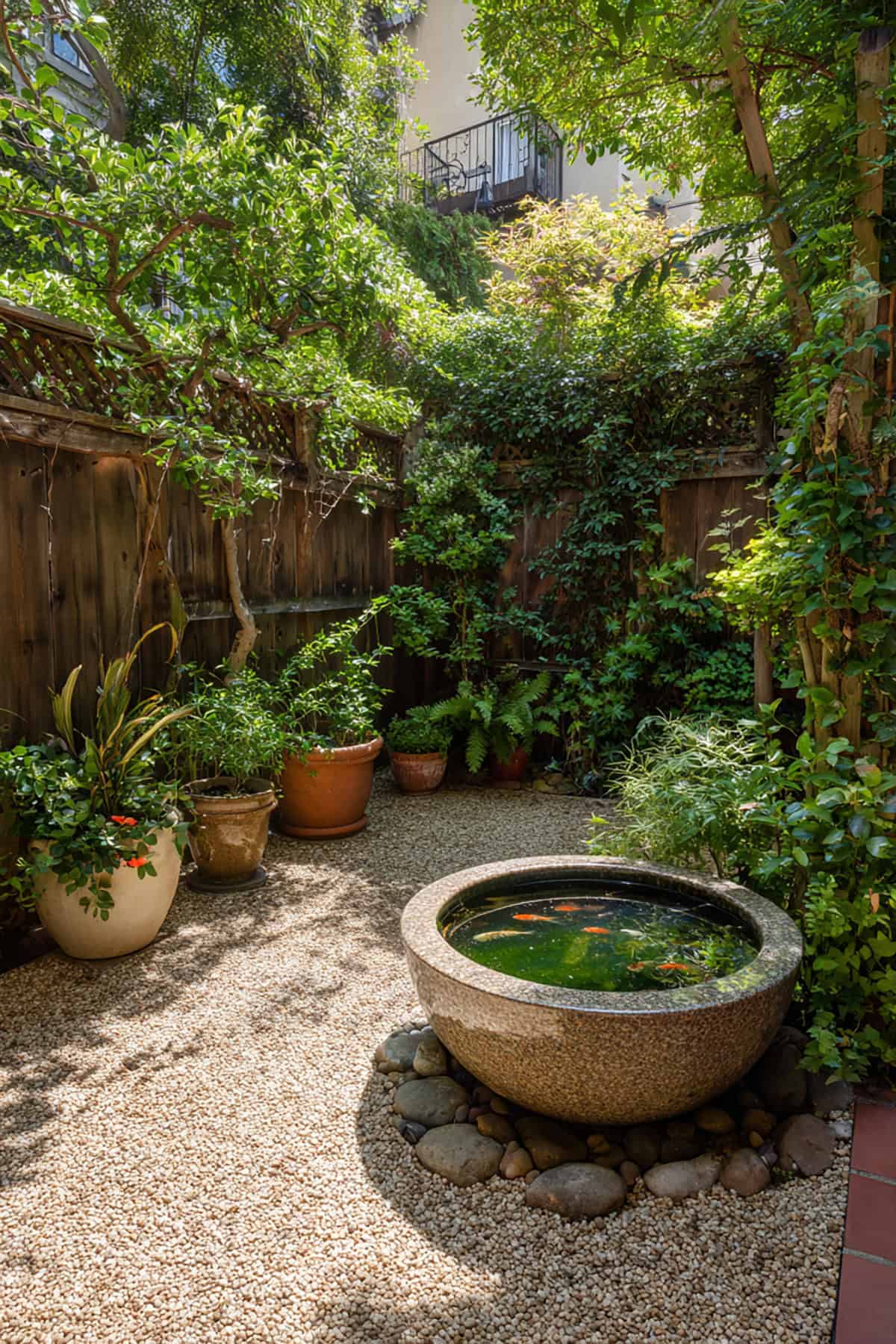
Swapping out lawn for a rectangle of gravel can totally change the feel. Landscape fabric underneath keeps weeds at bay, and a couple inches of gravel sets a crisp, low-maintenance surface.
Brick, metal, or stone edging holds everything in place—no more gravel wandering into the grass.
A glass or ceramic bowl perched on a pedestal, filled with water and a solar pump, brings a gentle splash. Maybe toss in a few floating plants for good measure.
Just keep an eye on water levels and give the pump a rinse now and then.
Seating stays minimal—two chairs and a table are plenty for most spaces, and you won’t feel boxed in.
String Light Garden Canopy With Lush Edge Planting
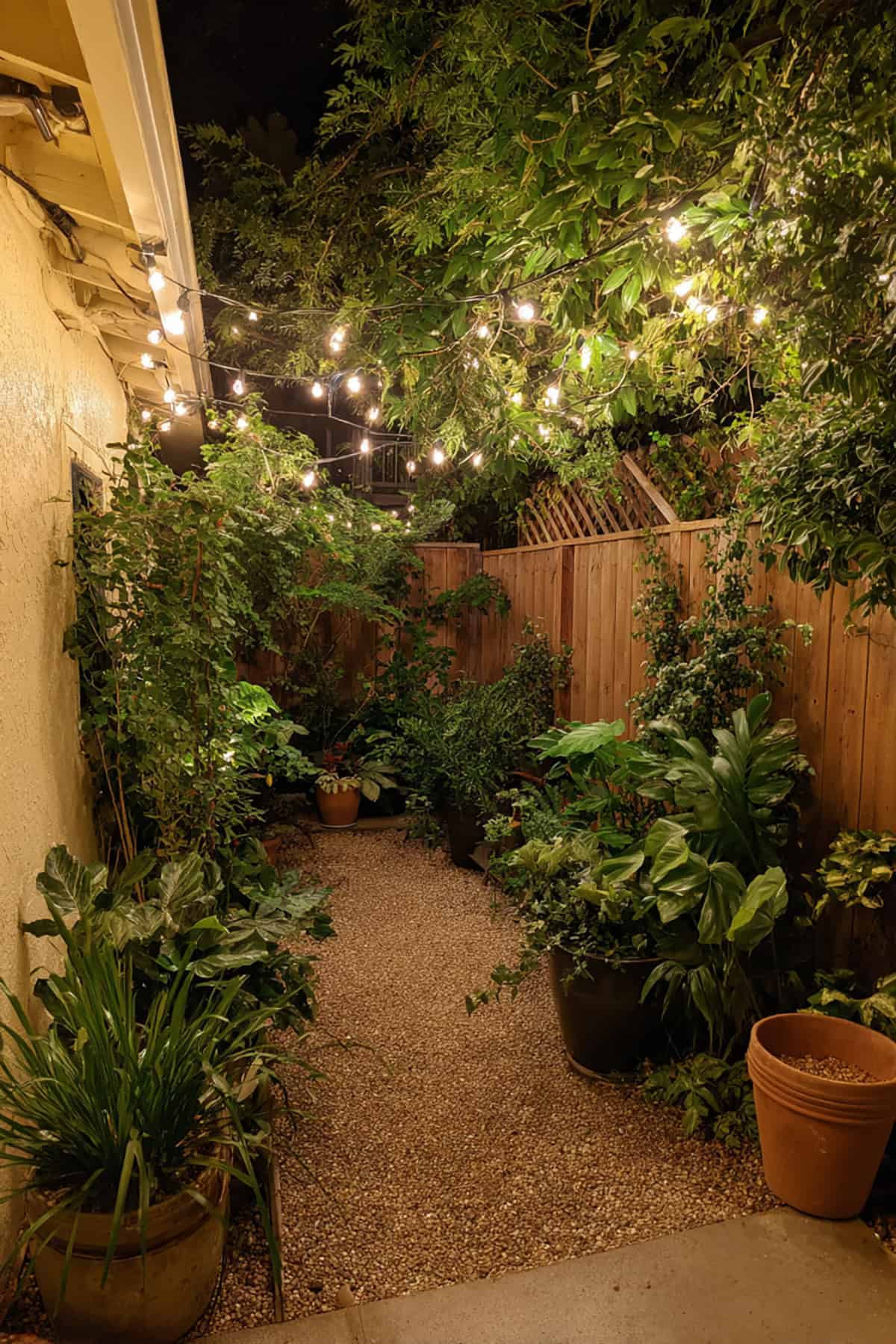
Soft glows strung overhead can totally shift the mood outdoors. Secure a few hooks—maybe on fences, maybe right into the siding—to drape weatherproof string lights. Try running them in loose zigzags or neat lines, depending on your vibe.
Warm white bulbs? Always a safe bet for a mellow, inviting feel. Plug into a weatherproof outlet, and if you’re forgetful like me, throw a timer on it.
Along the borders, dense green—think hydrangeas, boxwood, or whatever sturdy shrubs suit your climate—forms a living backdrop. It’s almost like the yard gets its own leafy walls.
Pockets of color come from tucking in smaller flowering plants here and there, right at eye level. It’s a sneaky way to add interest and a sense of privacy, too.
Leave the middle open—furniture, games, or just space to sprawl. Overhead lights set the “ceiling,” while all that planting gives the edges a cozy, enclosed feeling.
Vine-Covered Arch Nook
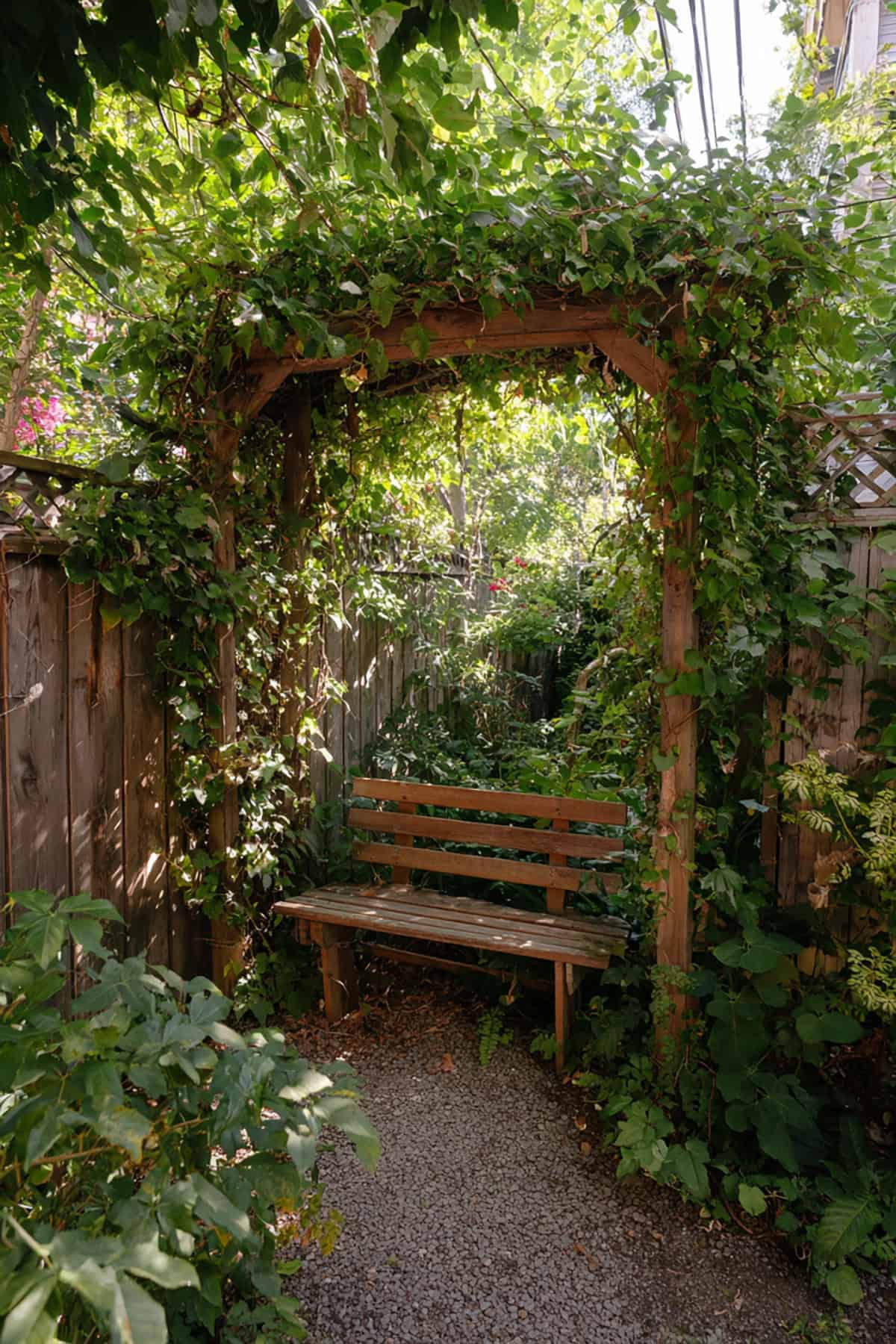
Nothing shifts the mood like a slim archway draped in green, especially when it frames a tucked-away seat. Whether you anchor it in concrete or just wedge it into hefty planters, the arch becomes the heart of the space.
Go for climbers that won’t turn into monsters—clematis, pole beans, or climbing roses stay manageable. In warmer spots, jasmine or bougainvillea will absolutely smother an arch in color and scent. A simple wire grid helps keep the vines on track and tidy.
A bench or a couple of tough chairs slip right underneath, with mulch or gravel underfoot to keep things from getting muddy.
Three feet of depth is about right so you’re not squeezed in. Don’t forget to hack back the vines now and then—airflow matters, and nobody wants a jungle swallowing their seat.
Pallet Daybed Surrounded by Greenery
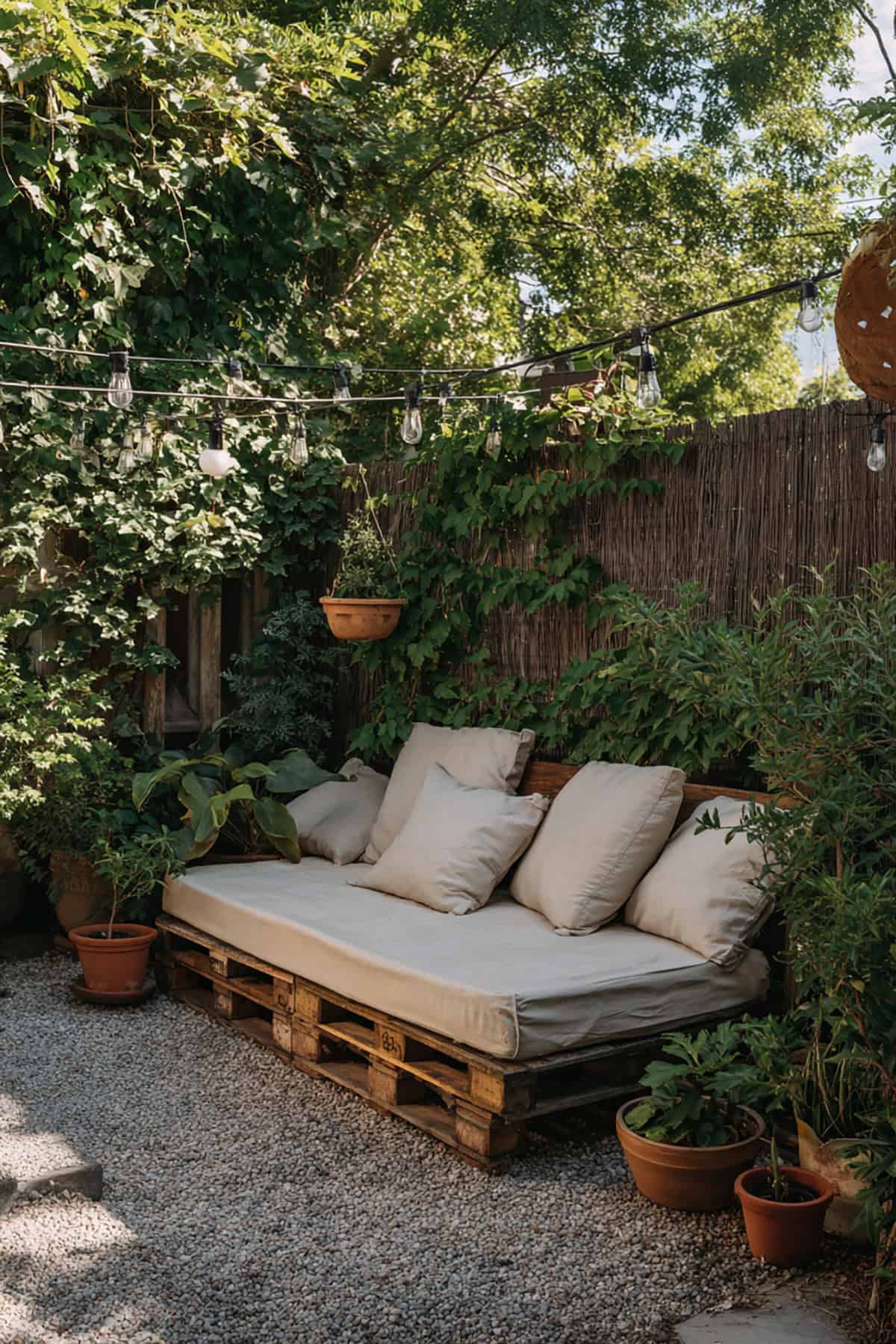
Repurposed pallets, stacked two or three high, make a surprisingly sturdy base for a casual daybed. Screws hold everything together, and a quick sanding spares you from splinters.
On top, a foam mattress wrapped in waterproof fabric gives you a spot to sprawl. Outdoor cushions and pillows make it feel less like, well, a pile of pallets.
Tall pots behind the daybed—think grasses, dwarf bamboo, or squat shrubs—build a bit of privacy, even in tight quarters.
Herbs and bright annuals in mid-sized pots along the sides blur the lines and soften the look.
Clear at least a couple of feet for a walkway. Sealing the wood helps it last through wet seasons and sun.
Shade Cloth Retreat With Layered Plants
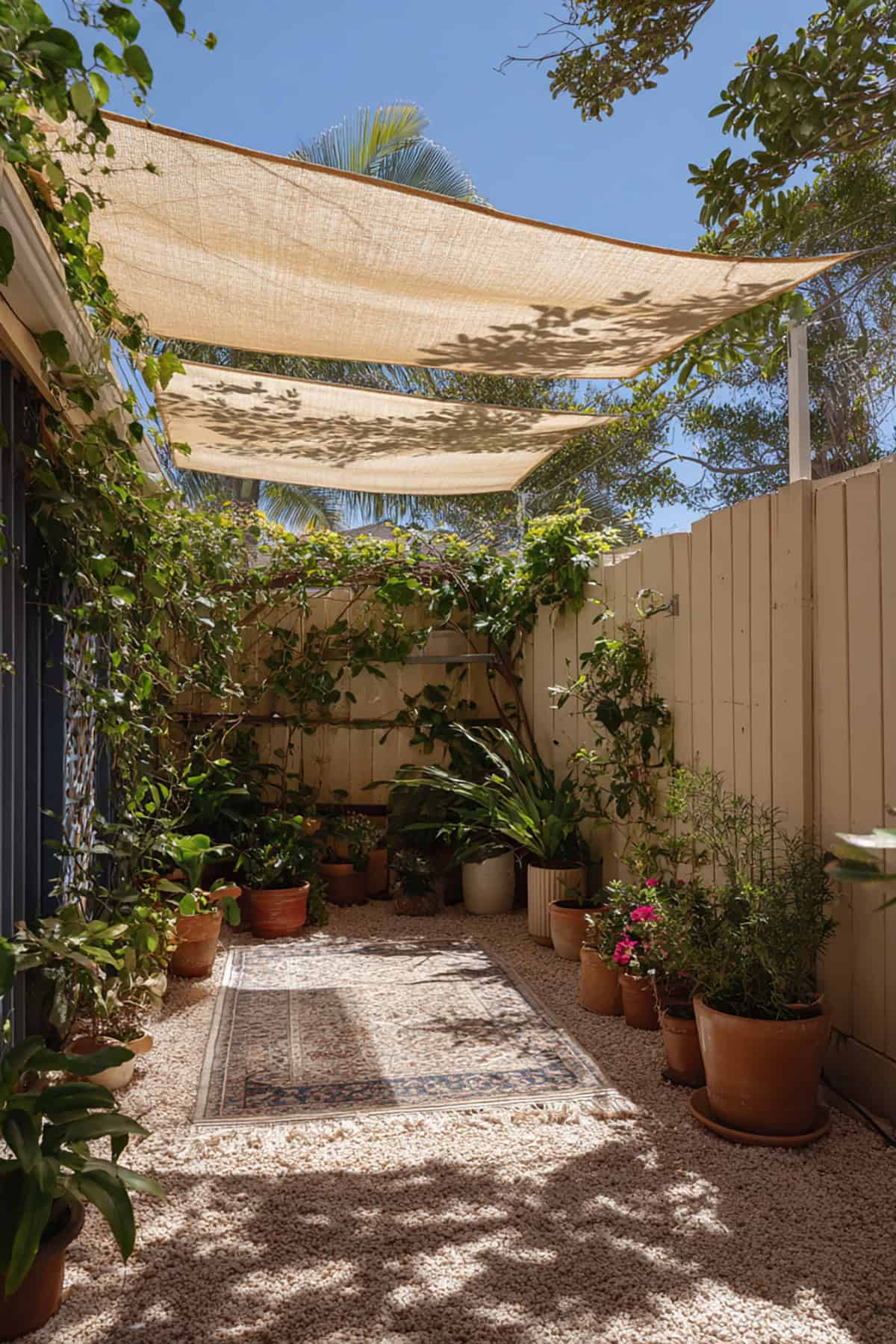
Harsh sun can ruin the vibe fast. Shade cloth, stretched between posts or clipped to wall brackets, knocks the edge off the afternoon glare. Neutral colors fade into the background, so the focus stays on the plants.
Pull the fabric taut—nobody wants a droopy canopy. Eye bolts and rope do the trick.
Plants get arranged by height: tall in back, mid-sized in the middle, and low stuff up front. This not only helps with sun and airflow but also tricks the eye, making the space feel a bit bigger.
Drop in a tiny bistro set or a single lounge chair—nothing too bulky. Lighter pieces are easier to shuffle around when the mood (or the weather) changes.
Vertical and Wall Solutions
Bare walls and fences are prime real estate for growing—why let them sit empty? Pushing plants upward frees up the ground and lets you squeeze more into a small backyard.
Wall-Mounted Shelf Garden to Free Ground Space
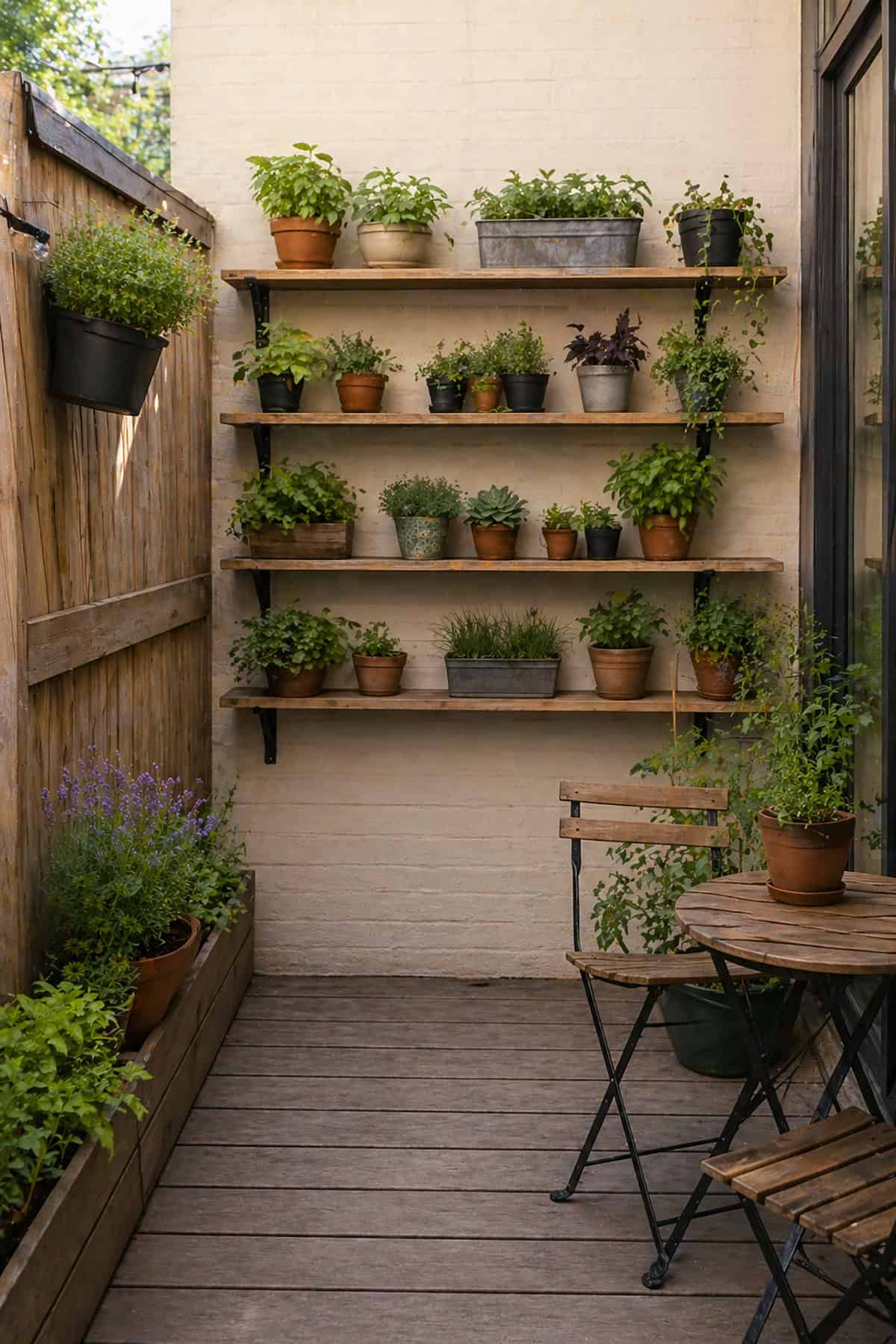
Sturdy shelves attached to a wall or fence lift pots out of the way, leaving room below for chairs or a patch of grass. Use treated wood or metal brackets anchored into studs or masonry for safety. Shallow planters fit up top, deeper containers below; herbs, lettuce, and compact flowers are naturals here. Line shelves close for a living wall effect—no need to go all-in on a full green wall system.
Vertical Trellis Growing Up Instead of Out
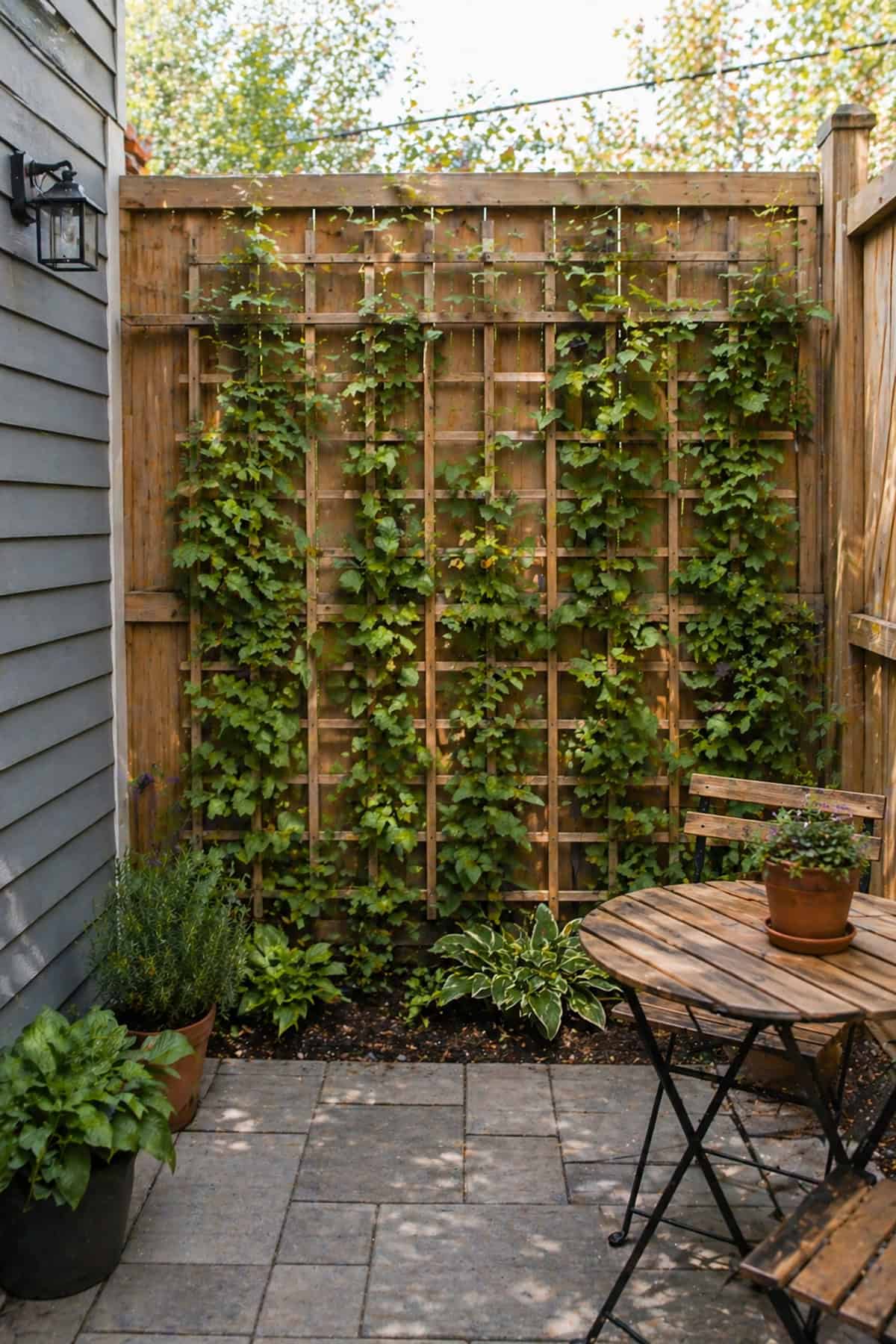
Trellises against fences or raised beds keep climbing plants tidy and boost airflow. Tomatoes, pole beans, peas, cucumbers, even small melons can all climb if you give them the right support.
Make sure the base is solid—heavy fruit can pull down a flimsy frame. Roots stay in a single row, but the vines go up, making this a smart move for narrow spaces.
Two-Tier Planter Against Fence for Depth
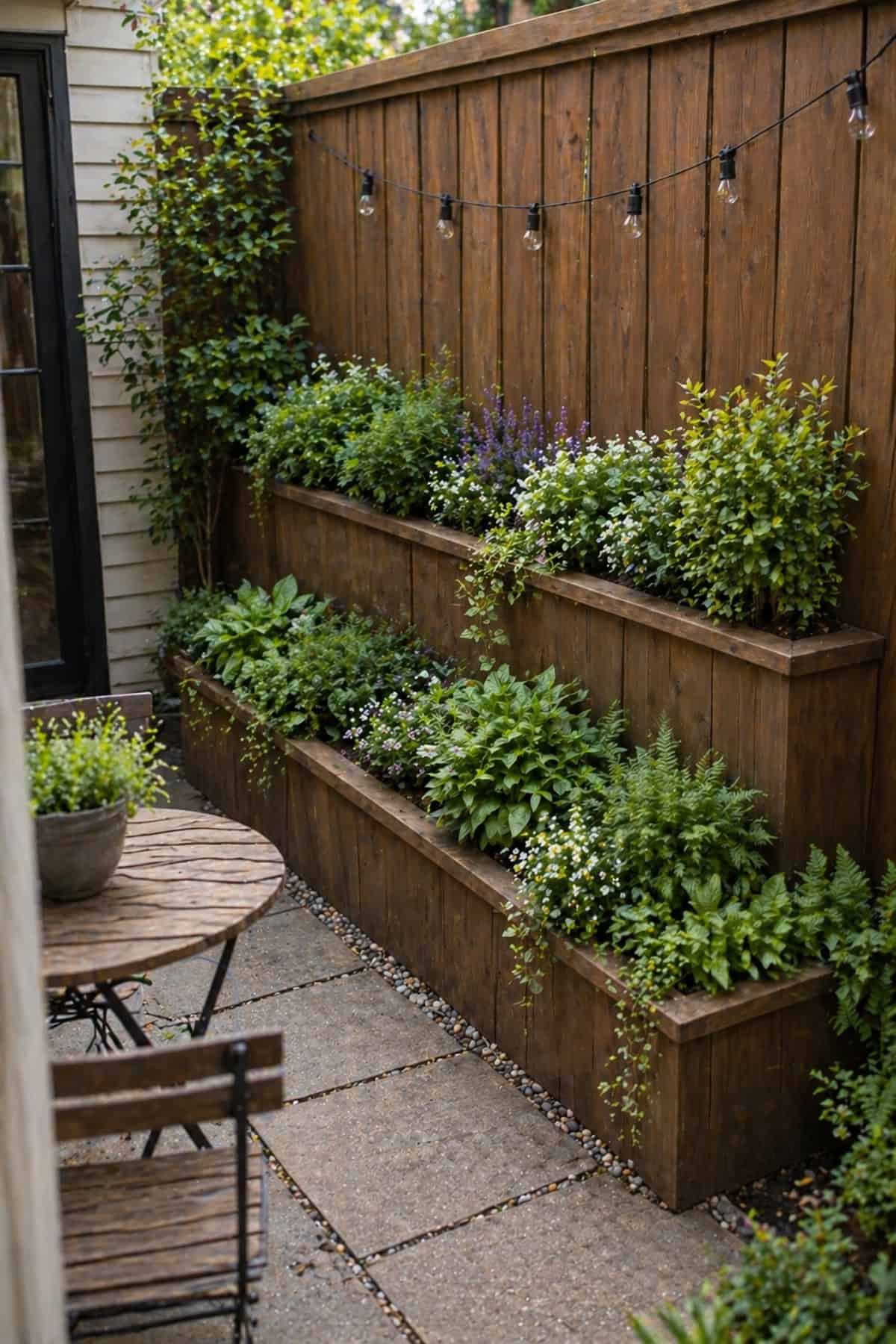
Stacking two planters—one on the ground, another mounted above—adds depth without eating up width. Taller plants in back, shorter ones up front, so nothing gets shaded out. Pressure-treated lumber or composite boards hold up well, and drainage holes prevent soggy roots. The layered look breaks up a plain fence and gives you a tidy, contained spot for herbs, compact shrubs, or seasonal blooms.
Two-Level Planter to Maximize Height
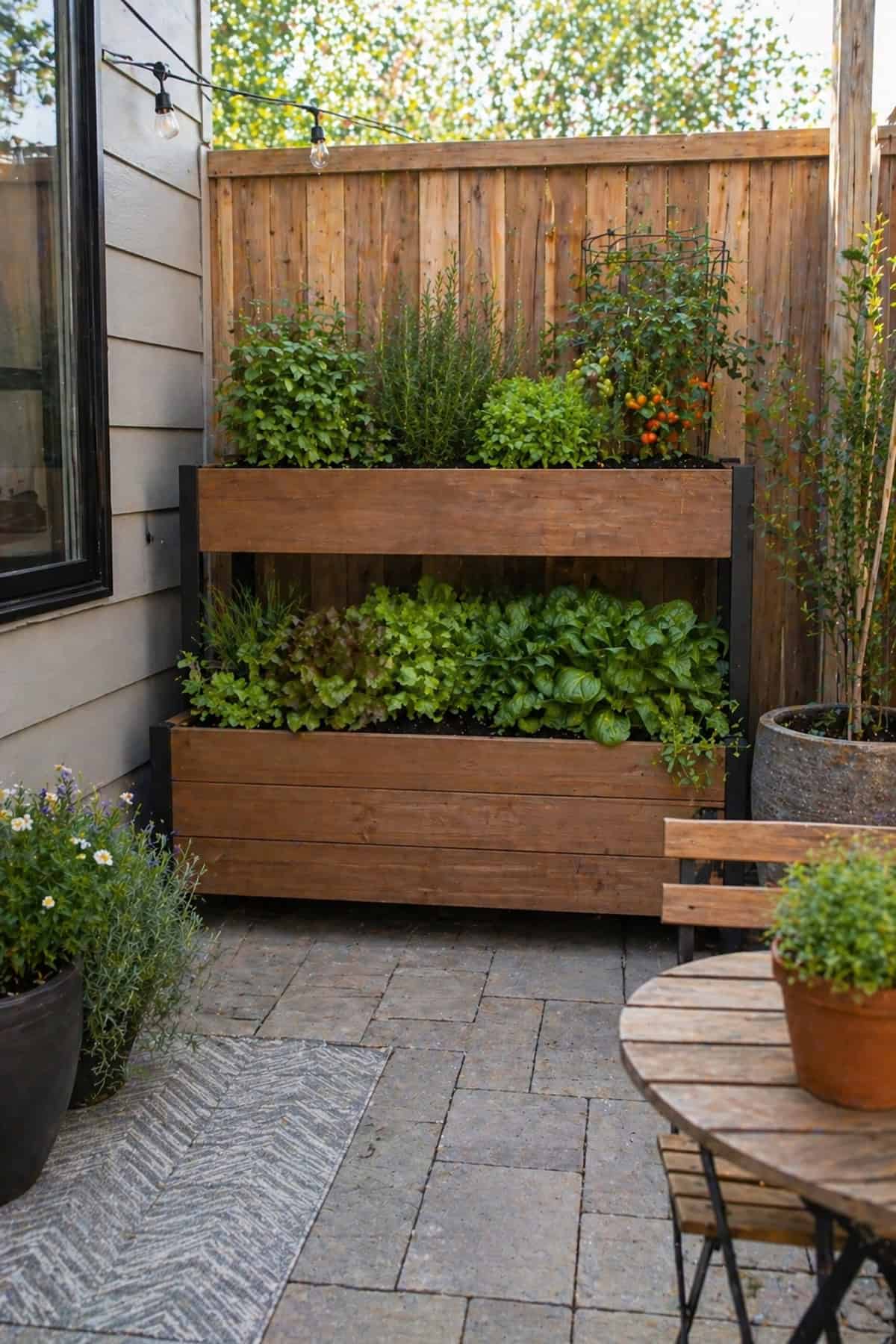
In a cramped corner, a stepped planter with two distinct levels draws the eye upward, stretching the sense of height. Tuck deep-rooted plants up top, while shallow crops fill the lower tier—each with its own drainage and soil support. Metal brackets at the corners keep the frame from shifting over time. Maintenance stays straightforward, with all plants within easy reach for watering or pruning.
Stacked Planters Creating Vertical Growing Zone
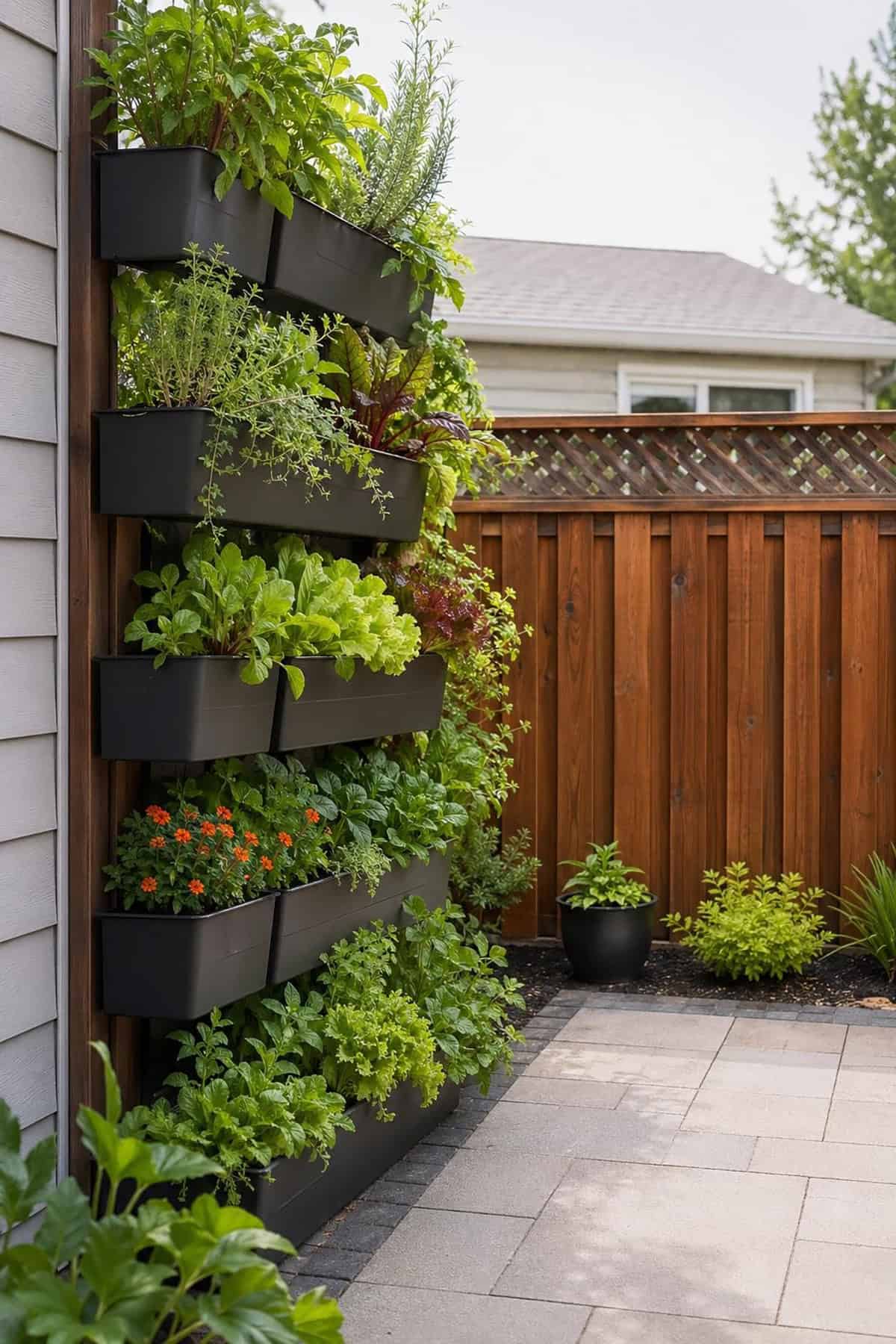
When floor space is at a premium, stacked planters—think tiered pots or interlocking containers—build a dense growing area in a tight footprint. Sun-lovers thrive up top, shade-tolerant picks settle lower down, making the most of shifting light.
Securing the stack on even ground is a must, especially if wind’s a concern. Herbs, strawberries, and compact flowers all find a home in this setup, and you sidestep the clutter of scattered pots.
Stacked Planter Boxes in One Corner Only
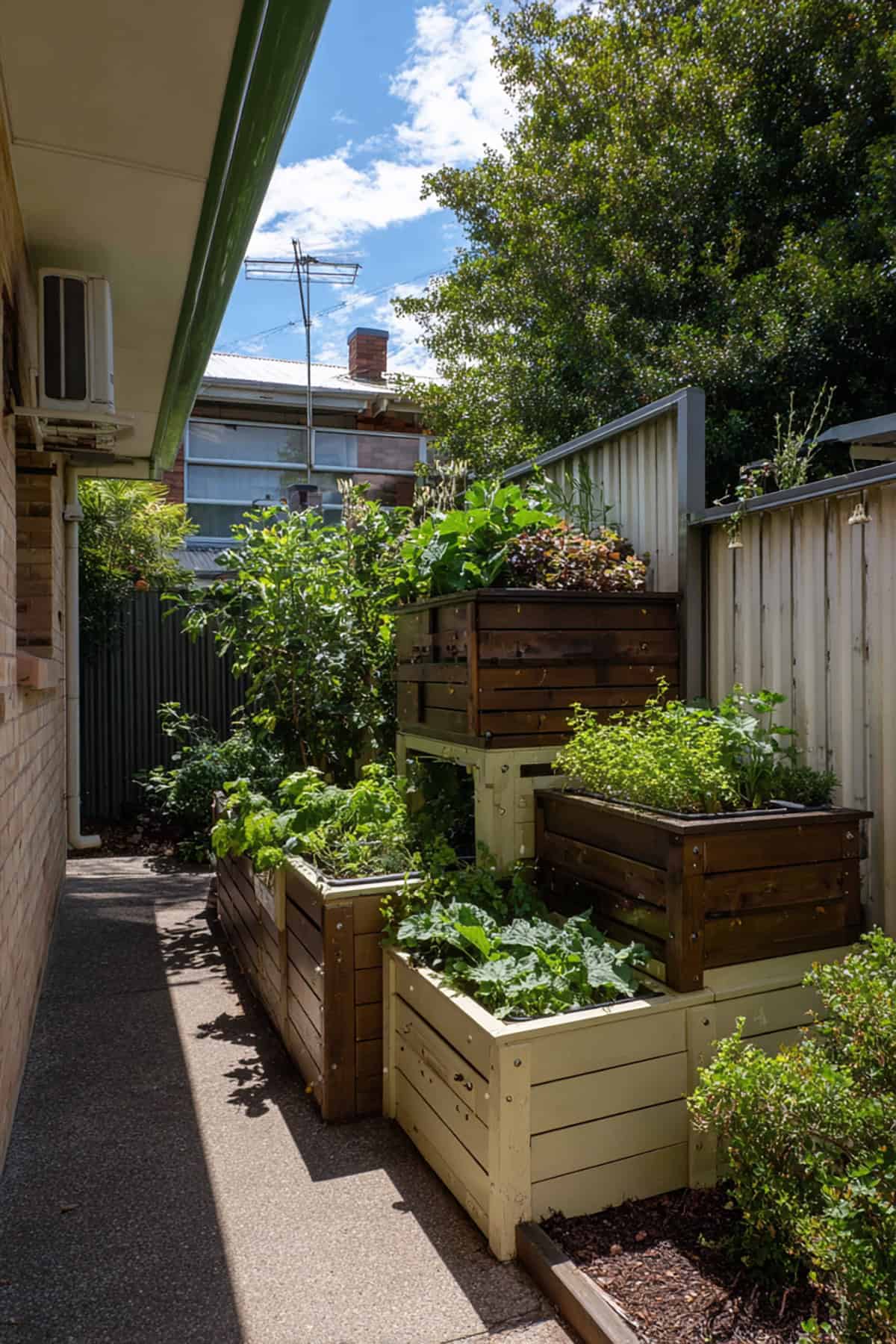
Sometimes, a single corner is all you can spare. Stagger two or three planter boxes vertically, each resting securely on the one beneath.
Trailing plants spill from the top, softening edges, while compact veggies or foliage fill the lower boxes. The arrangement frames the corner as a distinct garden zone and subtly pulls attention away from narrow boundaries.
Slim Rolling Planter in Micro Backyard
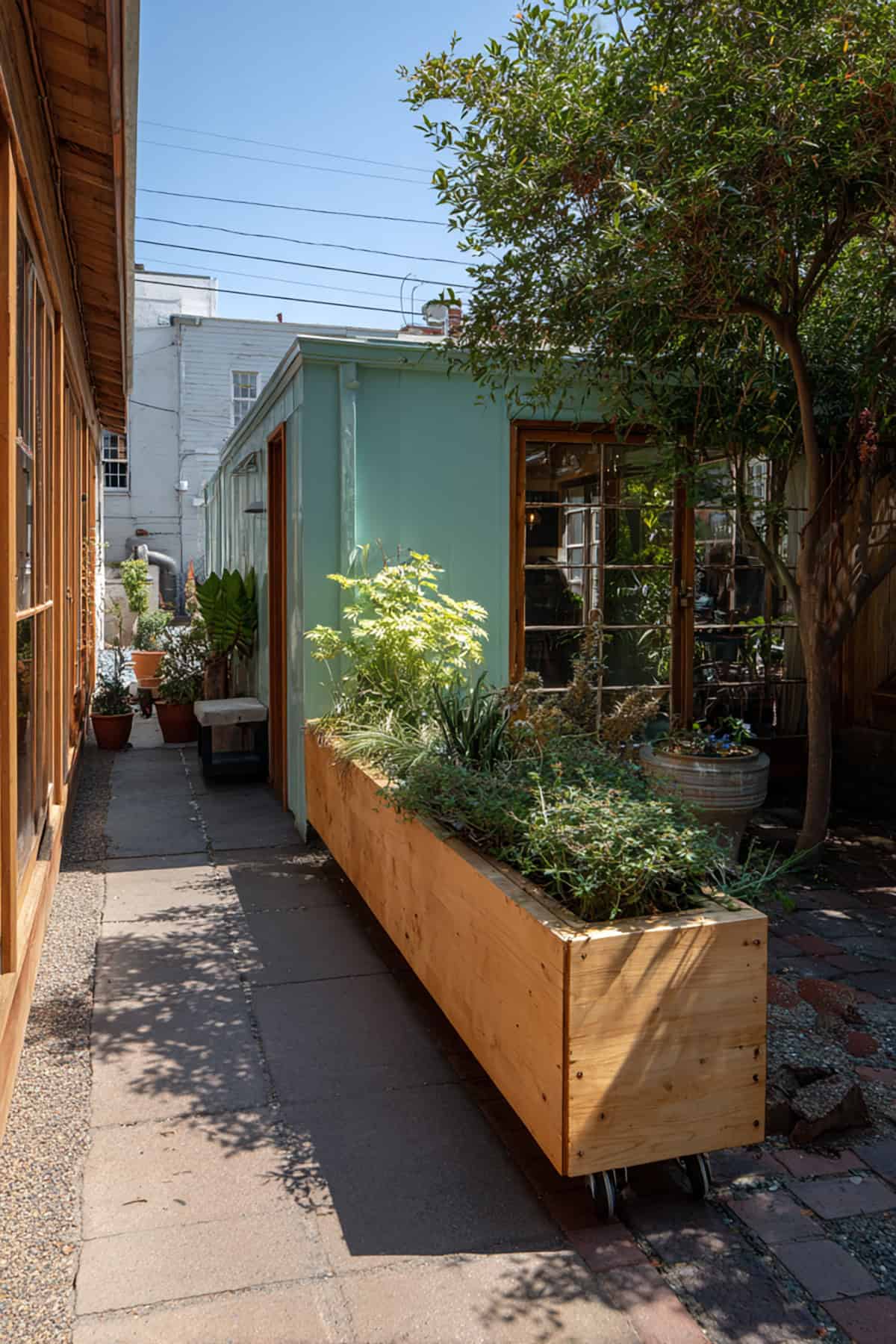
Rolling planters—slim and mobile—hug a wall and move wherever you need them. Locking casters keep things steady. Even with a narrow frame, deep soil lets you grow tomatoes or dwarf shrubs.
Shifting the planter to chase the sun is surprisingly handy when fences or neighboring buildings throw shade at odd times. It’s a flexible way to test layouts without commitment.
Side Yard Turned Into Garden Strip
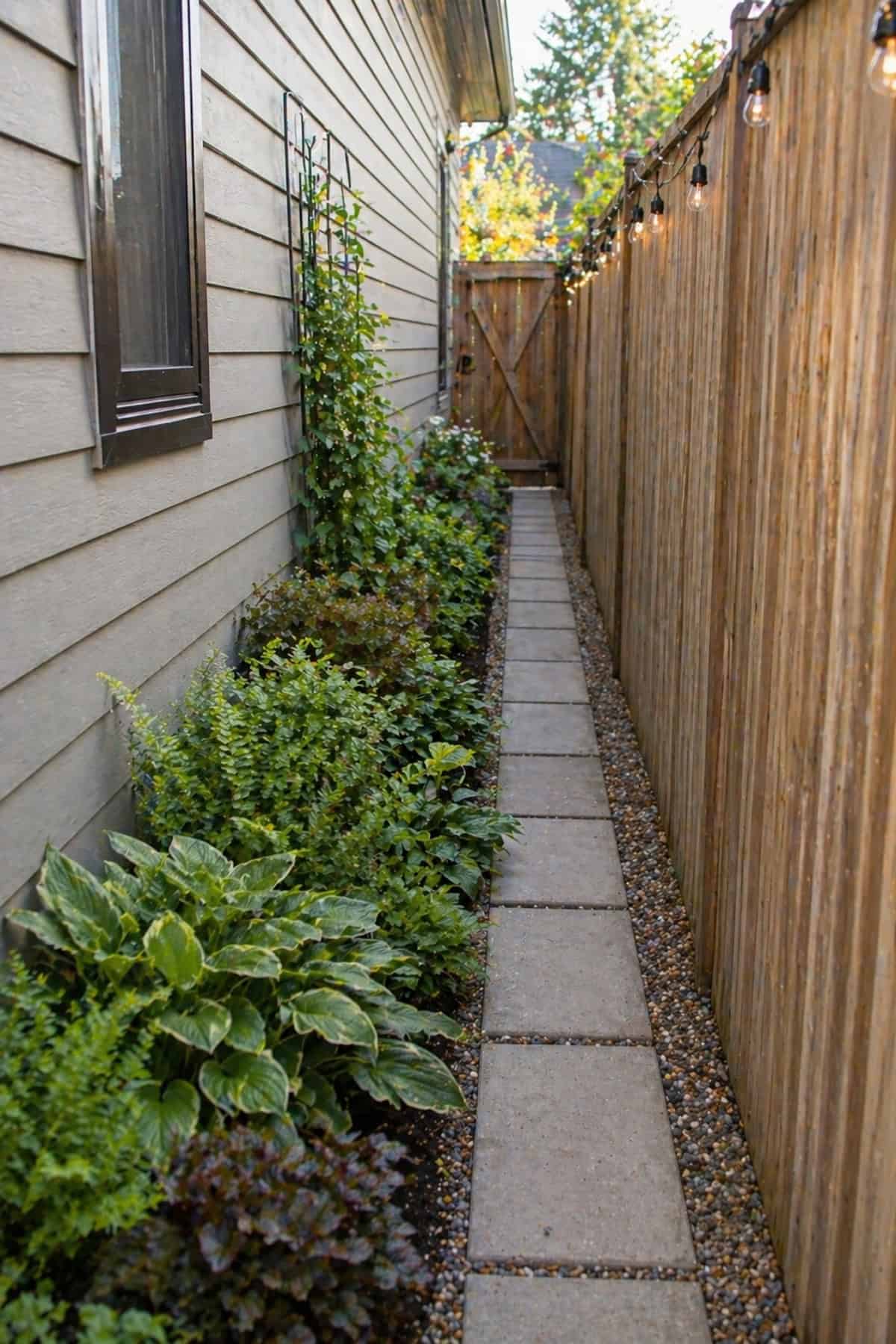
Long, narrow side yards often get ignored, but a raised bed or a string of connected boxes along the boundary can change that. Climbing vines on a fence turn plain boards into a living green wall, adding privacy and vertical interest.
Just make sure the area gets enough direct light for veggies, and sort out drainage so water won’t pool by the foundation. Even a skinny strip yields herbs, greens, or compact crops—suddenly, it’s productive ground, not just a path.
Leaning Ladder Planter for Small Corners
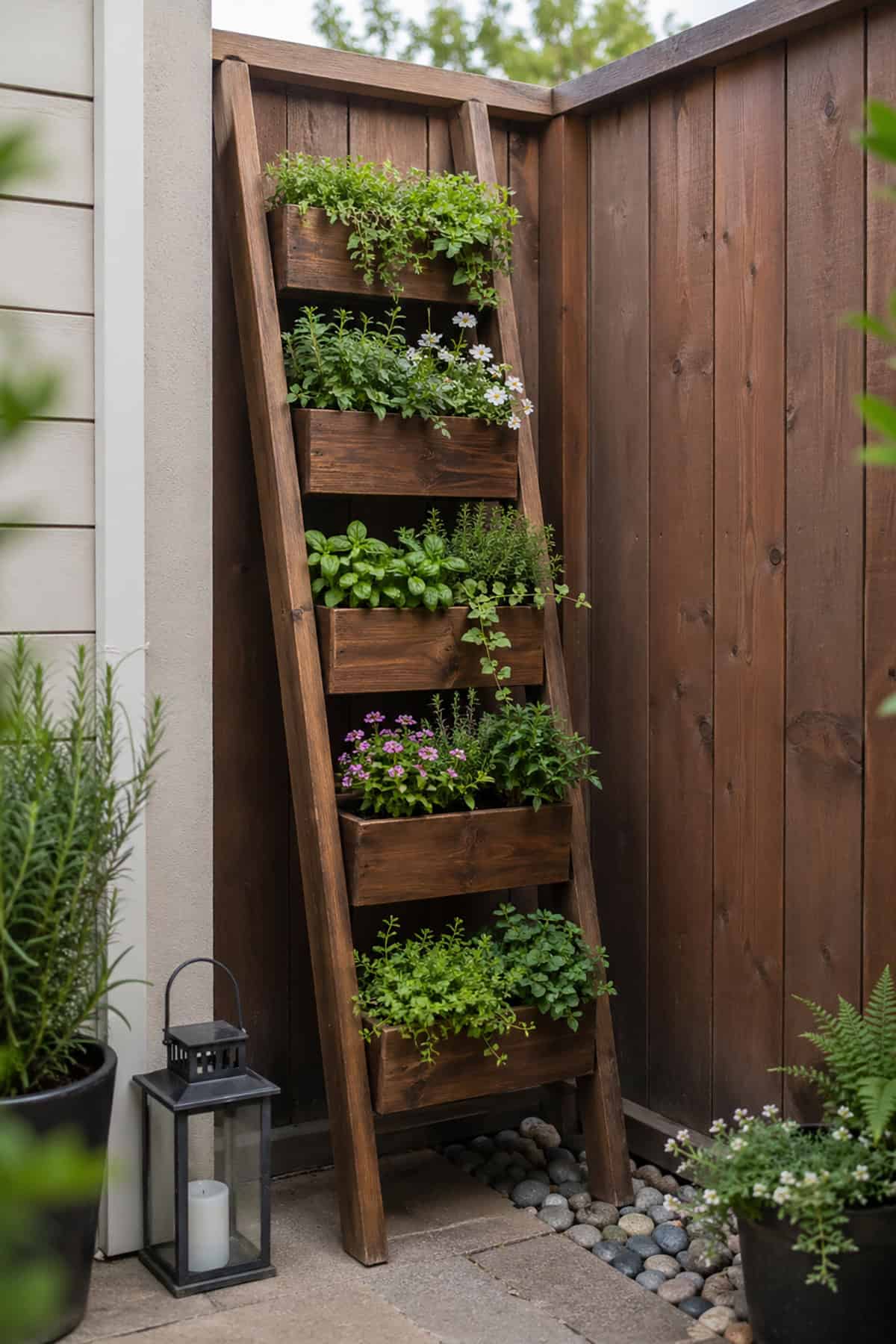
Leaning a ladder planter against a wall makes a small corner burst with life. Each rung holds a shallow pot or box—ideal for lightweight picks like herbs, succulents, or annuals.
Heavy containers? Best avoided unless you want a wobbly mess. Secure the top so it doesn’t slip, and opt for outdoor-friendly materials for longevity. A vertical approach brings layers where only one lonely pot might’ve sat before.
Hanging Planters Along Fence Line
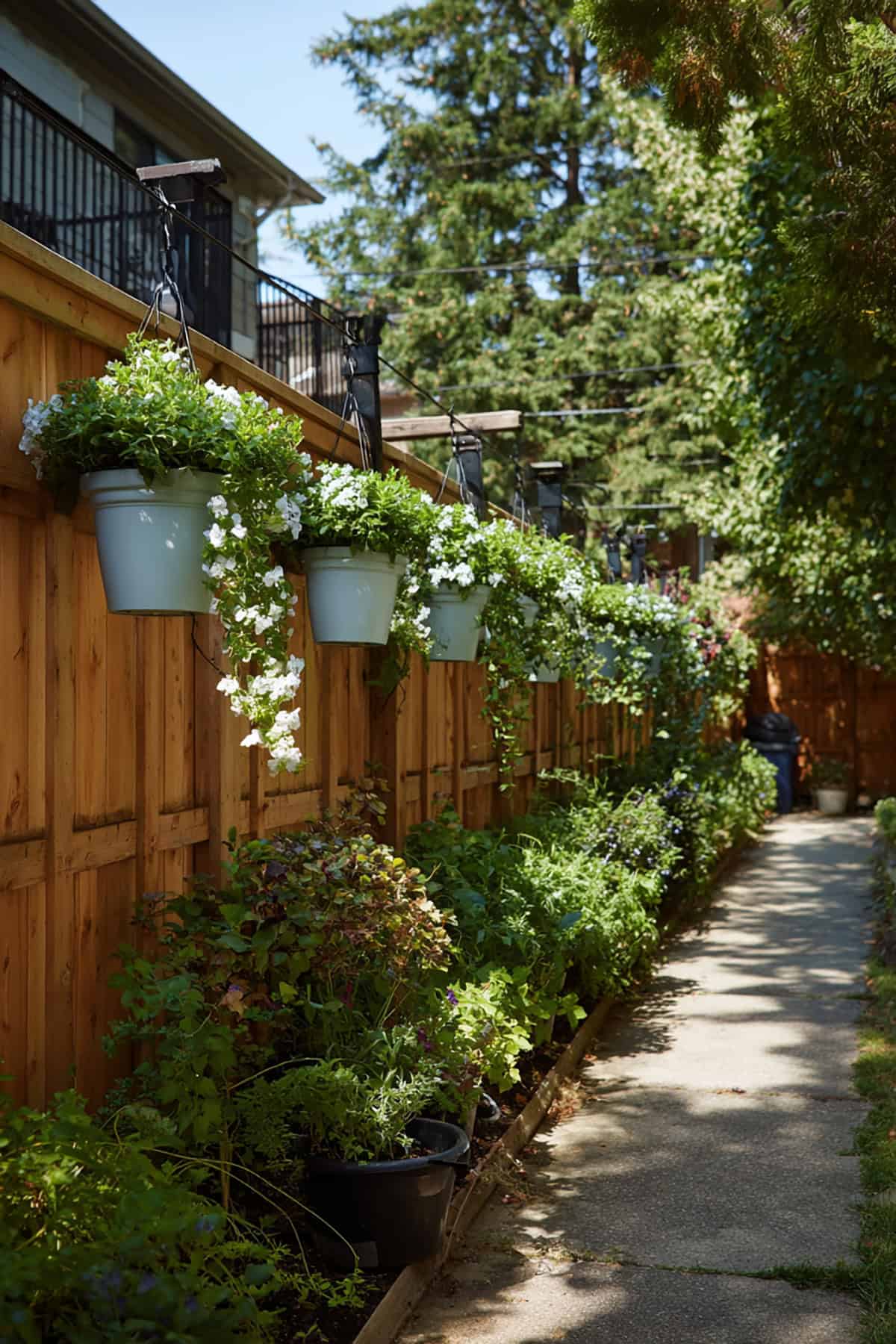
Utilizing a fence for hanging planters frees up precious ground. Sturdy hooks or brackets are essential—wet soil and mature plants get heavy fast.
Window boxes, when spaced evenly, create a tidy, repeating pattern. Trailing flowers, strawberries, and compact herbs thrive here, and suddenly your fence isn’t just a barrier but a canvas for greenery.
Fence-Hugging Raised Bed Strip
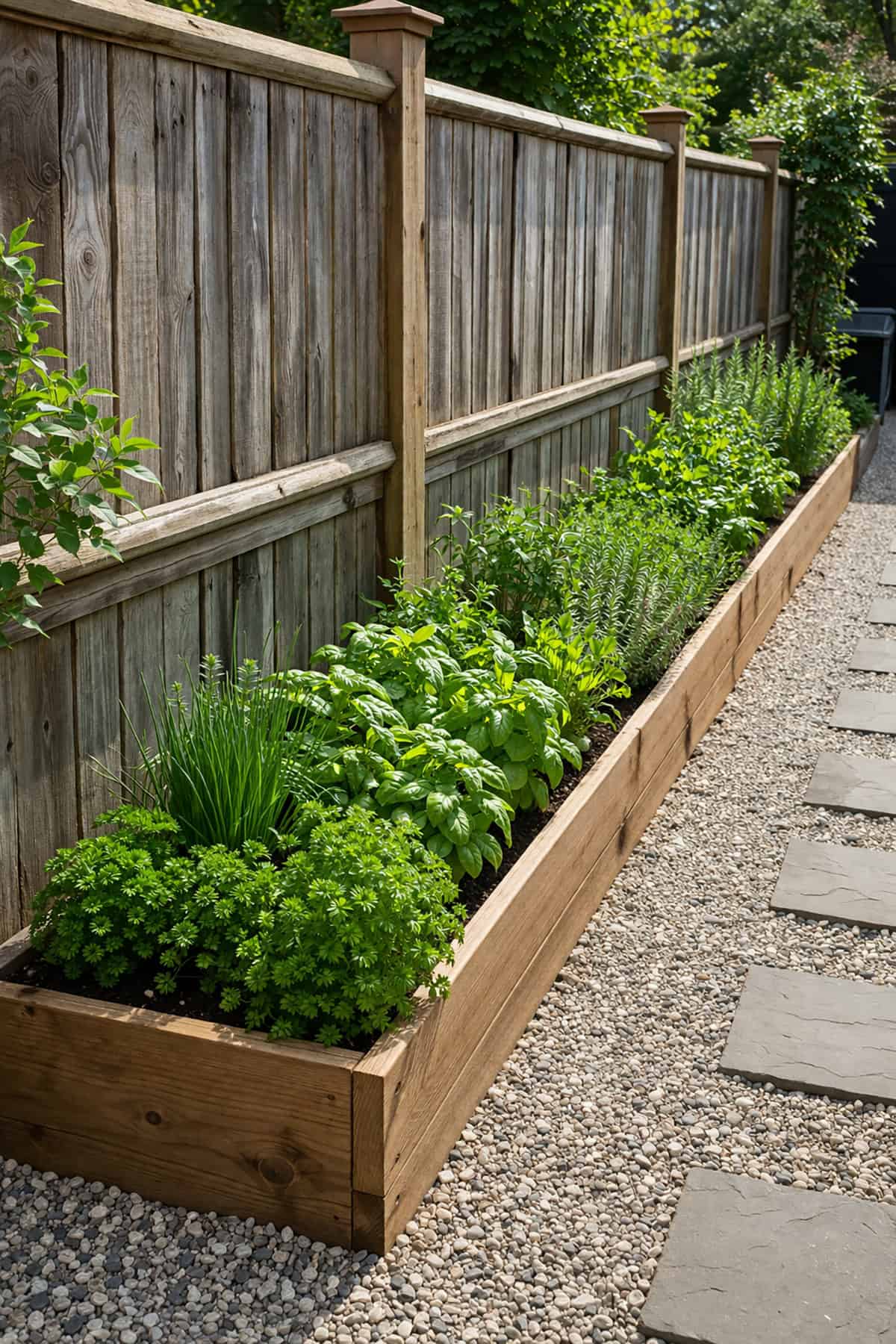
Building a slim raised bed right against the fence—12 to 18 inches wide—avoids crowding paths. A trellis at the back invites vines to climb, mixing ground-level and vertical growth. High-quality soil is crucial since there’s not much room for roots to roam. Lettuce, peppers, compact tomatoes—they all fit, making use of space that usually sits empty.
Fence Base Flower Strip With Tight Spacing
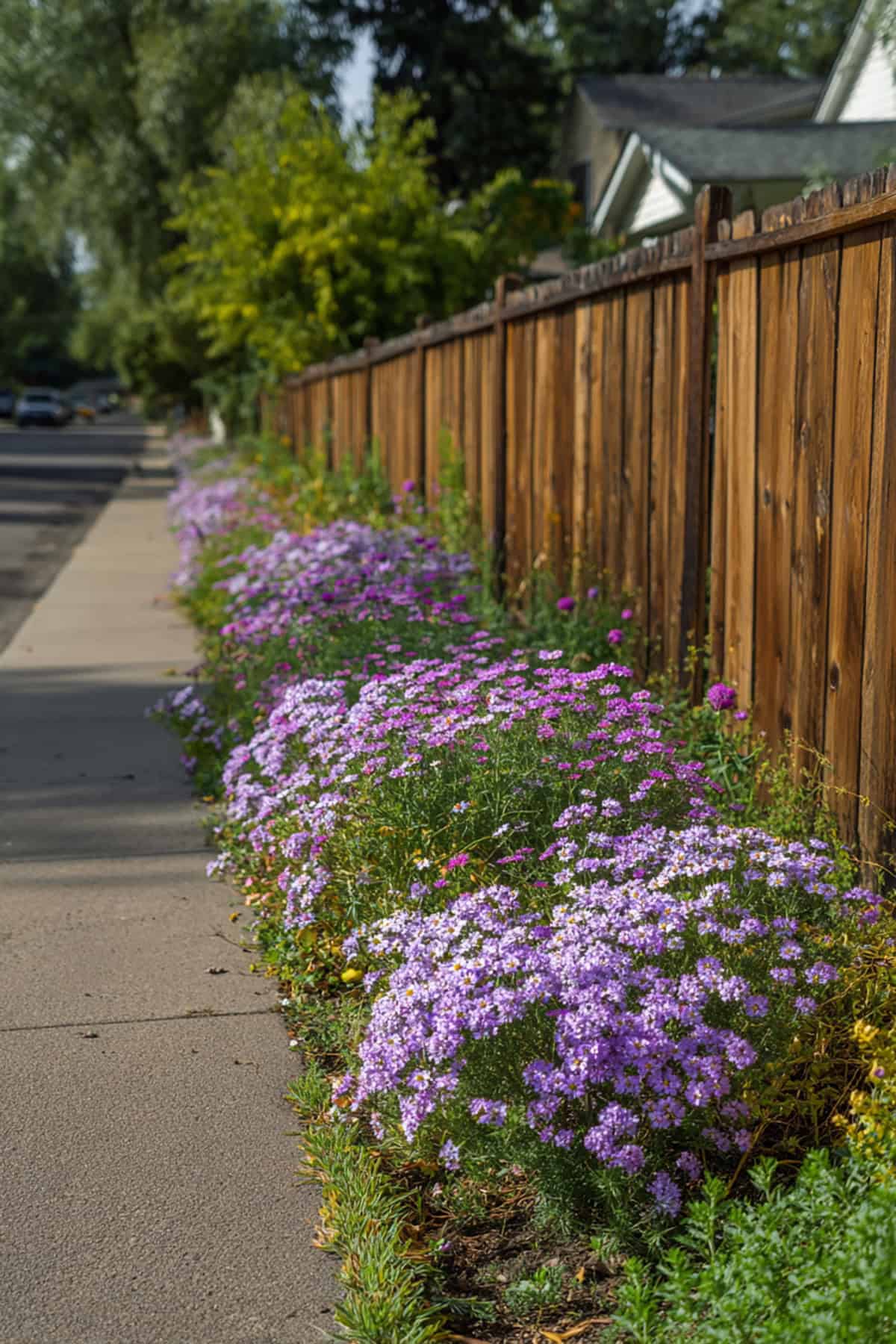
Dense flower strips at the fence base form a continuous, colorful border. Pick varieties that don’t mind close quarters and prep the soil well—tight plantings demand rich dirt and reliable watering. Vary heights to dodge a flat, boring look, placing taller stems at the back. The center of the yard stays clear, but the edge pops with color.
Fabric Pocket Wall Garden for Tight Spaces
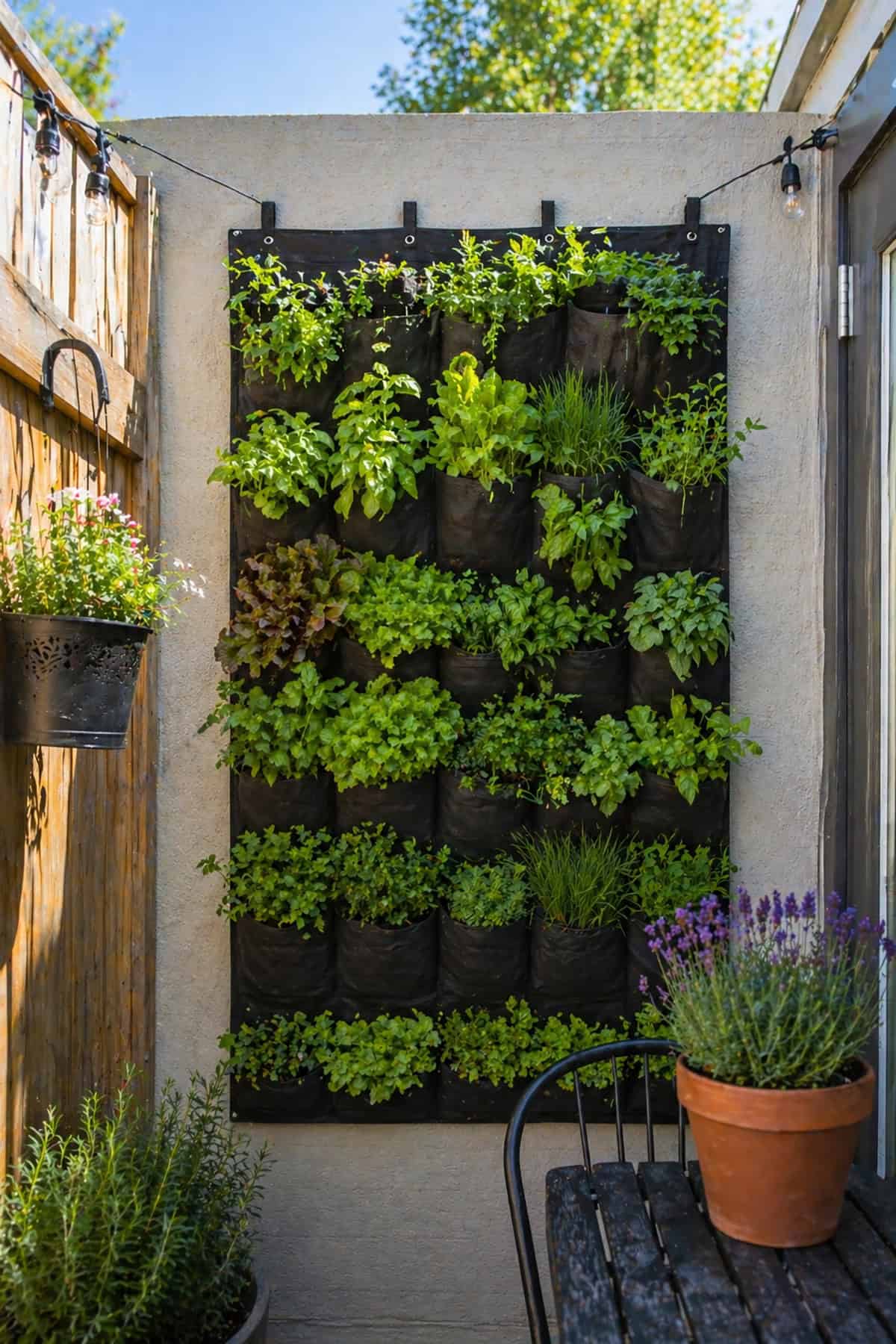
Fabric pocket systems transform a blank wall into a living patchwork, each pocket cradling a bit of soil. Light plants like herbs, greens, and small ornamentals suit this setup; heavyweights can strain the fabric.
Mount on a sturdy surface, guard against moisture, and maybe add a drip line for even watering. It’s a clever way to squeeze a vertical garden into the tightest spots.
Elevated Shelf Planter to Lift Plants Off Ground
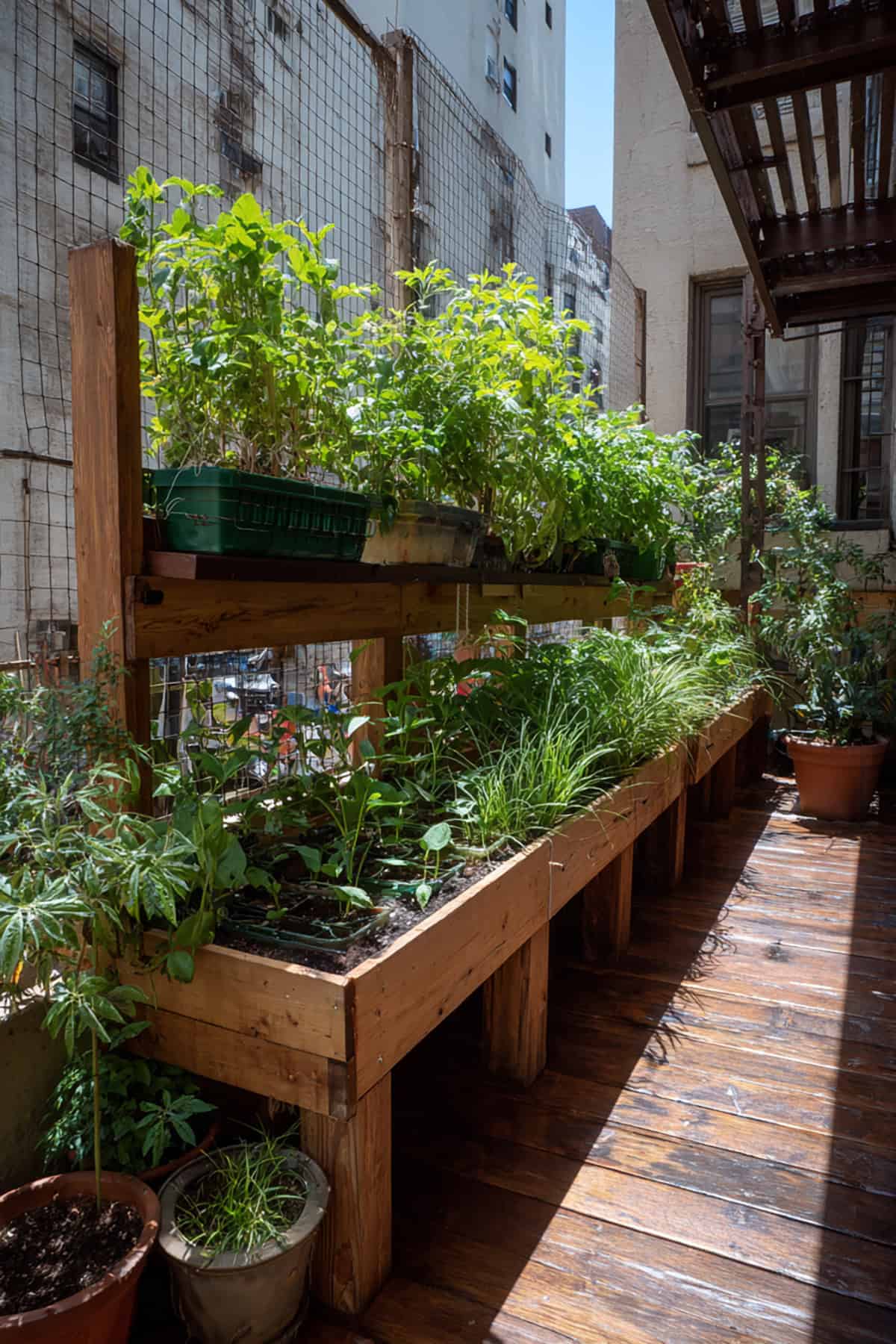
Raising planters up to waist height—on a sturdy shelf—saves your back and keeps plants out of reach of ground pests. Make sure the frame handles both soil and water weight; cross-bracing helps.
Nestle the shelf near a wall for visual balance, or line up several for a more structured vibe. Salad greens, herbs, and dainty flowers do well here, and you free up the ground below for storage or more pots.
Corner Garden
Layering height in a tight corner can pack in more plants than any flat bed. The right structure and plant mix turn a cramped spot into a private, purposeful nook.
Curved Corner Planter to Fit Awkward Space
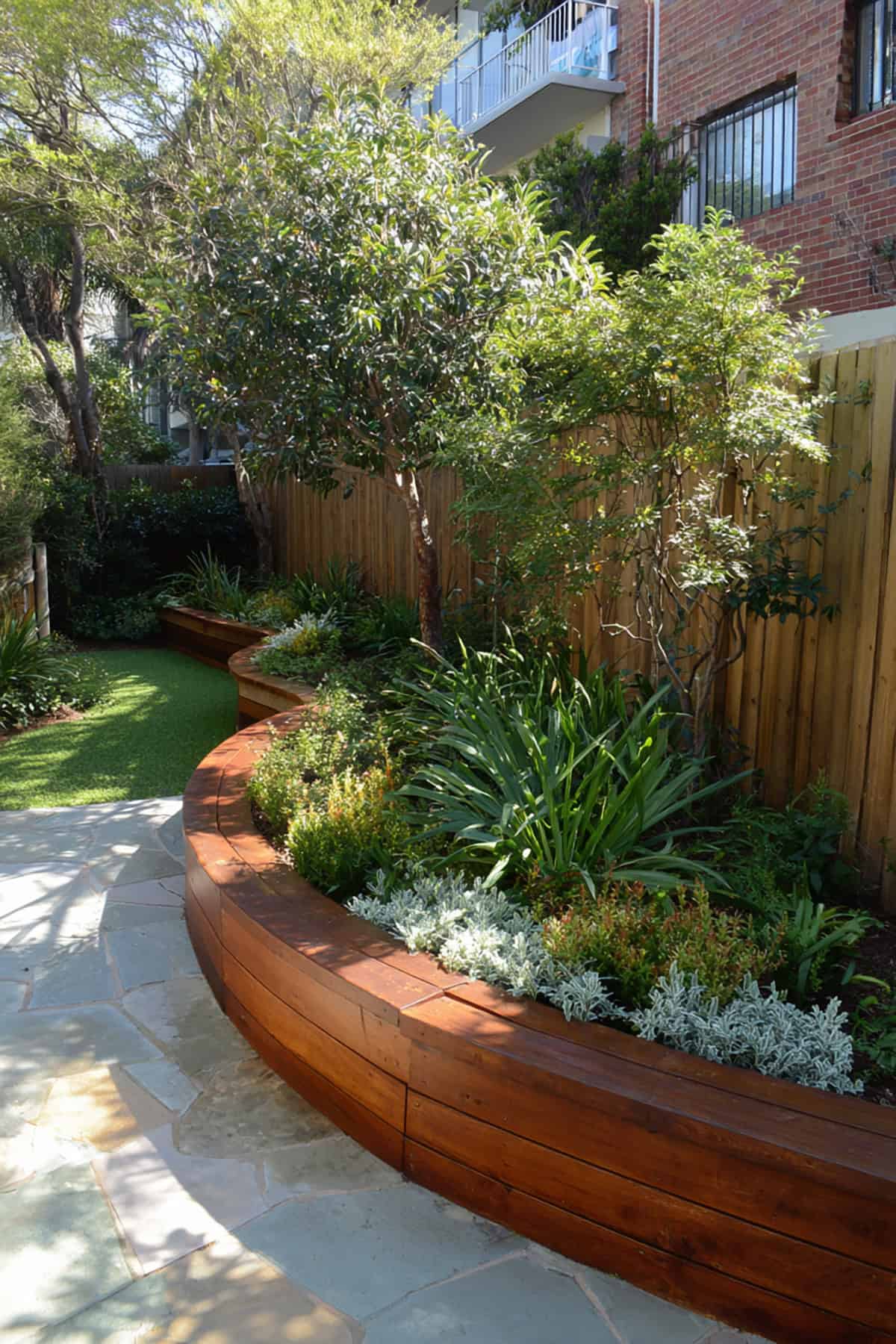
Curved planters solve the puzzle of awkward corners where straight boxes just don’t fit. Flexible boards or segmented panels make up the frame—secure each joint so it holds shape. Layer the soil to prevent water from pooling, since corners can be tricky with drainage. The soft curve breaks up harsh lines and turns wasted space into a focal point.
Corner Stair-Step Planter Build
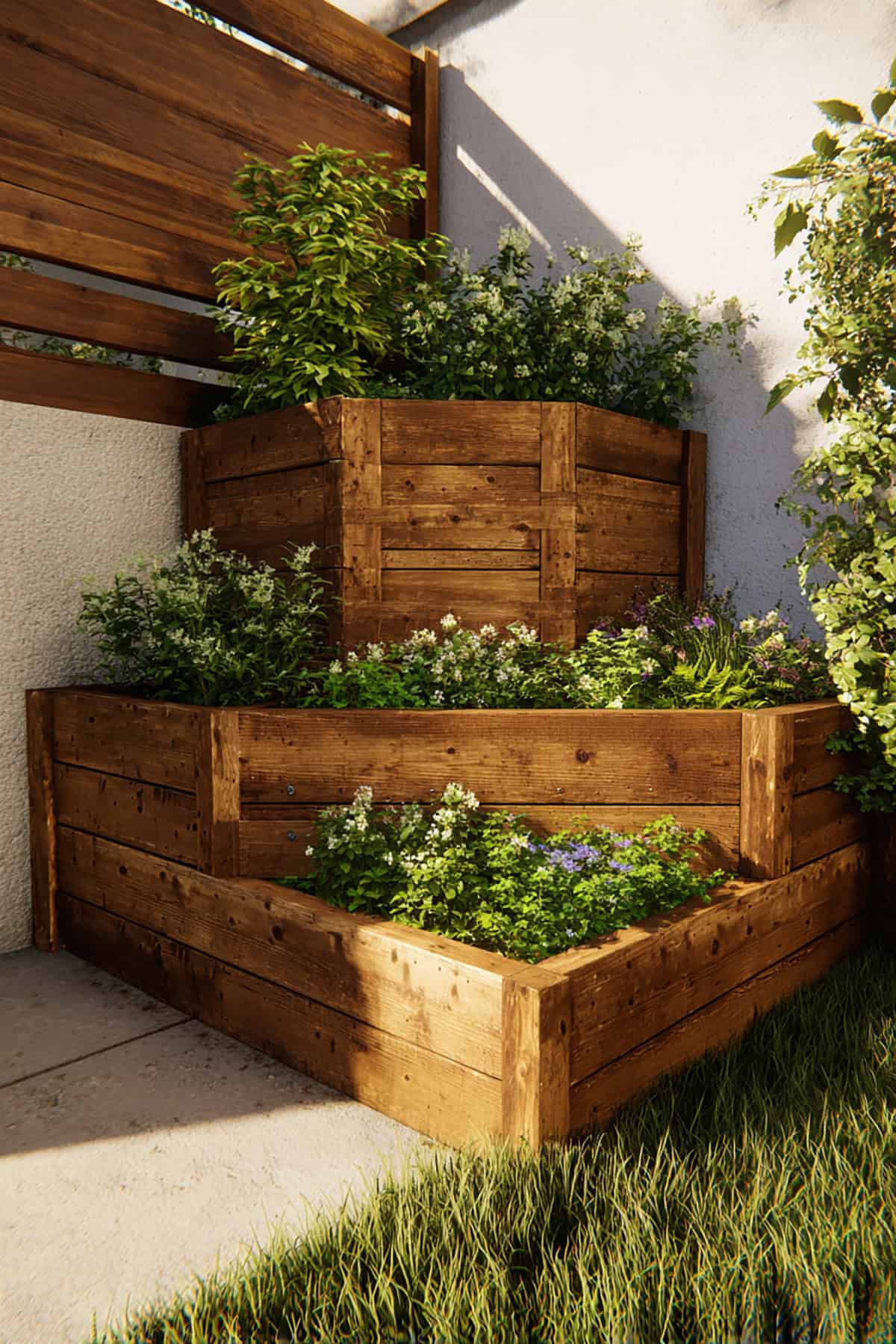
Transforming a bare angle with a tiered planter—three steps rising 8 to 12 inches each—lets you hug the fence line without making the area unreachable. Rot-resistant lumber like cedar or composite board makes for a lasting build.
Stakes and exterior screws anchor each level, while landscape fabric and a topsoil-compost mix keep roots happy and drainage steady. Shallow-rooted crops take the top tier; deeper roots nestle below. Drip tubing along each tier helps keep watering efficient and soil evenly moist.
Corner Packed With Tall Privacy Plants
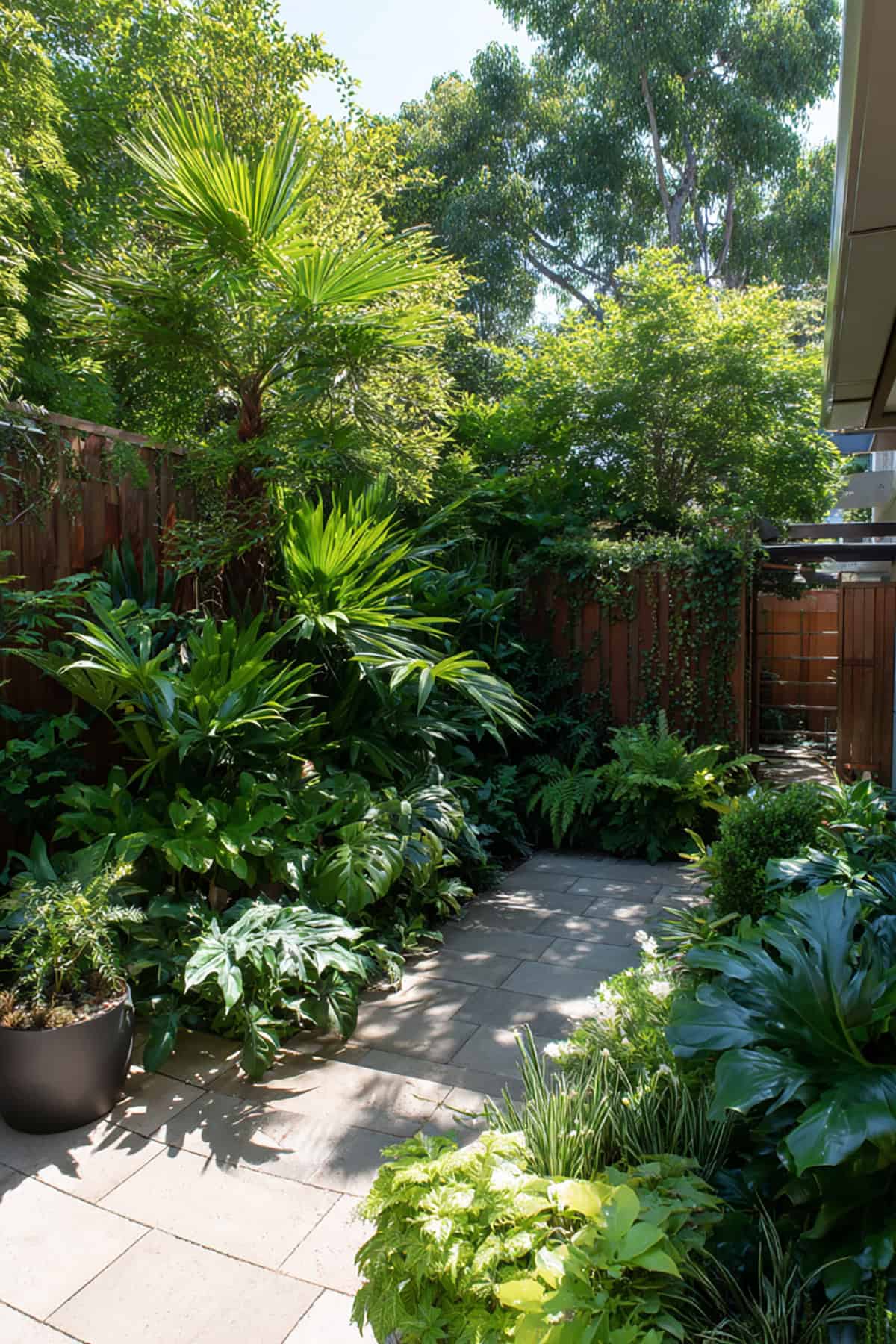
Stacking height in a corner brings privacy to a small yard. Narrow, upright plants—think arborvitae, clumping bamboo, or columnar juniper—form a screen without hogging space. Check tags for sun, soil, and climate compatibility before buying.
Shrubs planted close together fill in fast, and mulch keeps moisture from escaping. Shade-tolerant perennials at the base soften gaps and ground the look. A simple drip line cuts down water waste and keeps upkeep low.
Creative Small Garden Layouts
Control over bed shapes, path widths, and plant heights can really open up a compact yard. The right structure lets you fit raised beds, pots, and narrow walkways so the place feels less boxed in.
Alternating Plant Heights in Narrow Strip
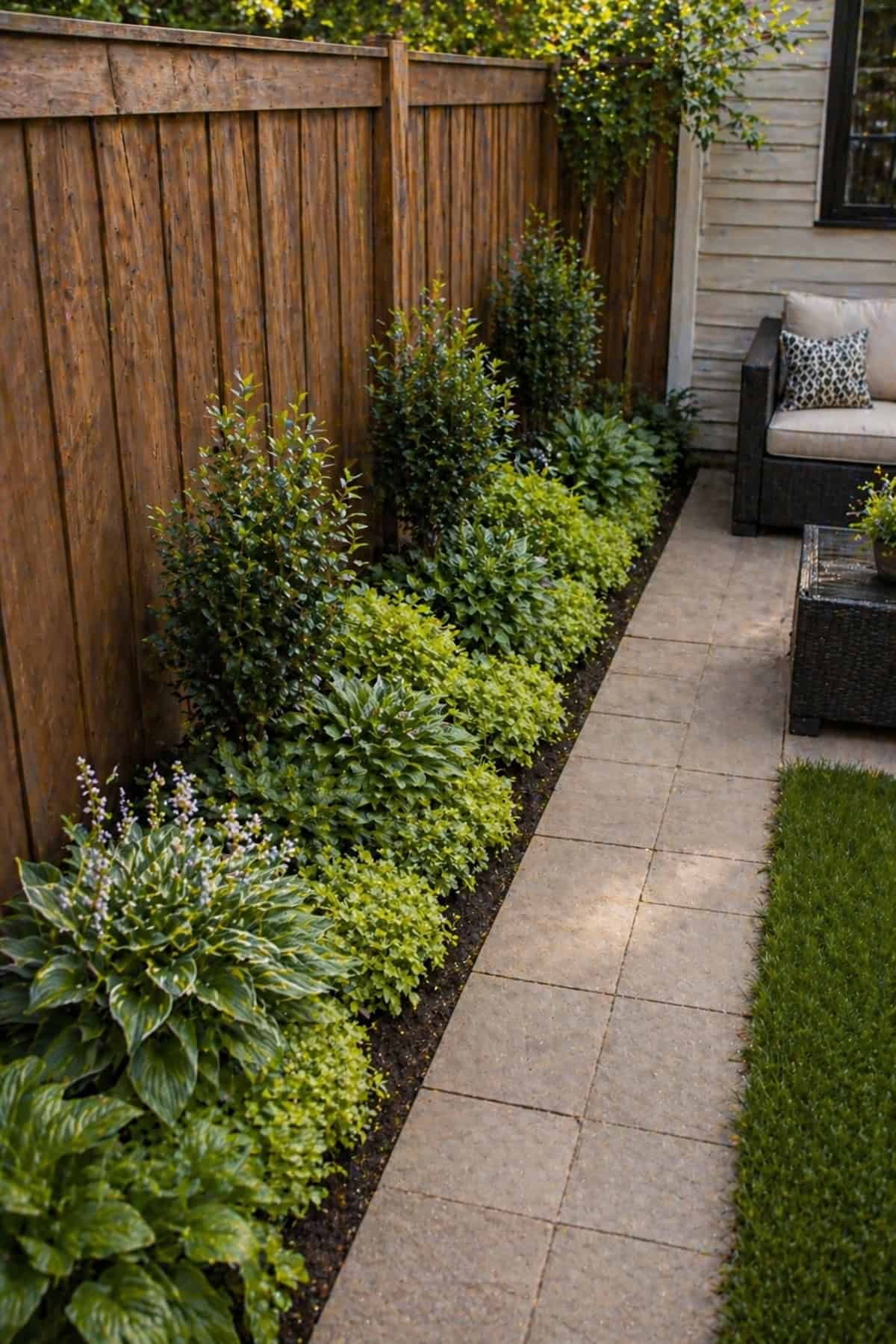
That skinny section along the fence? It doesn’t have to look flat or dull. Mixing tall and short plants—think upright dwarf citrus, boxwood, or clumping grasses, spaced between low herbs and flowers—adds dimension and draws your eye along the length.
Stick to about 18–24 inches deep. Landscape fabric under mulch cuts down on weeds, and a slim pea gravel edge keeps things tidy and contained.
Ultra-Thin Bed Along House Wall
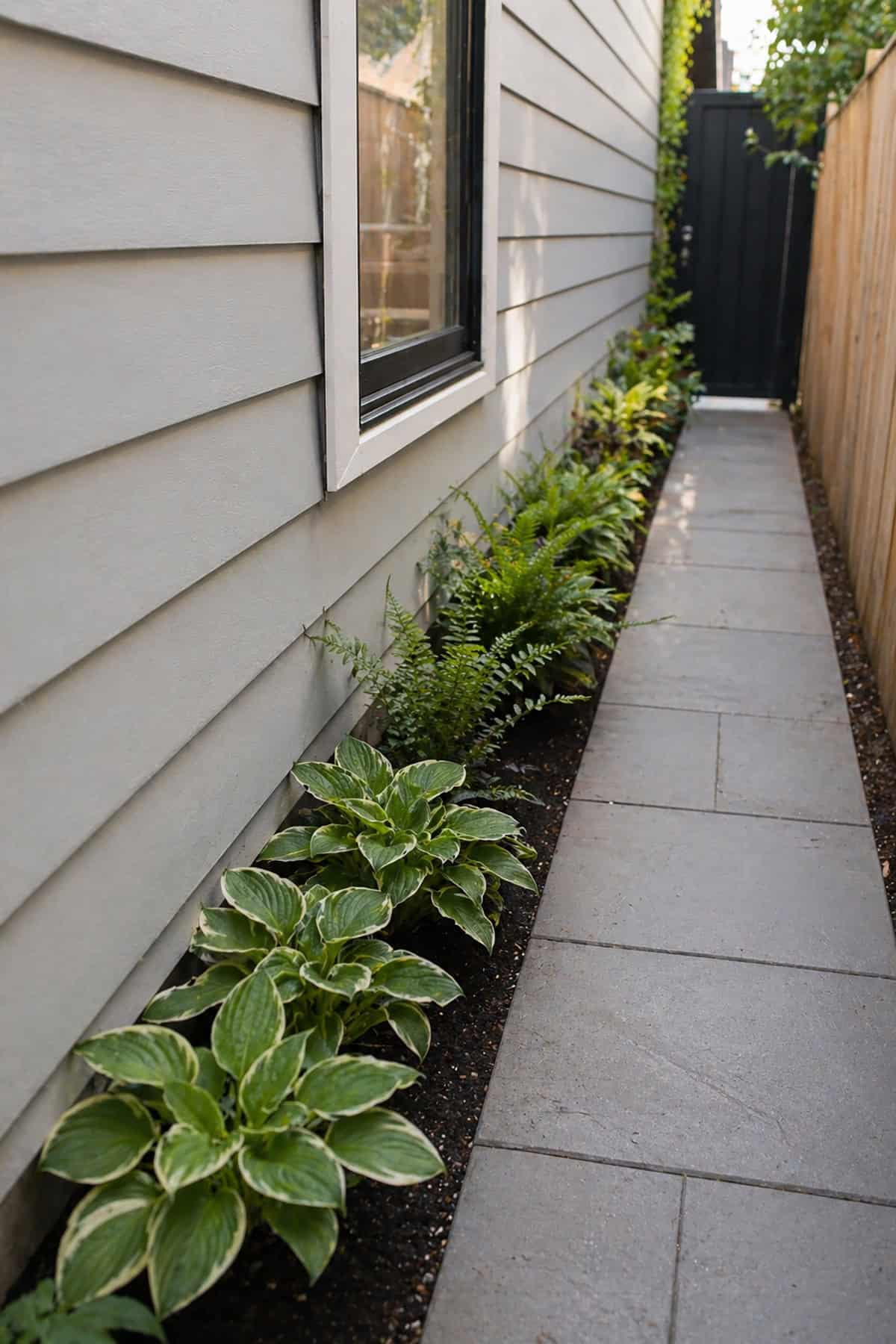
Even a bed just a foot or so wide can be surprisingly productive. Shallow-rooted edibles like lettuce, chives, and thyme thrive here.
Flatten an arched trellis against the wall for climbing beans or compact cucumbers. Hanging pots from wall brackets adds vertical interest without eating up ground. Just make sure water drains away from your foundation, and don’t overdo the irrigation.
U-Shaped Raised Beds Around Small Yard
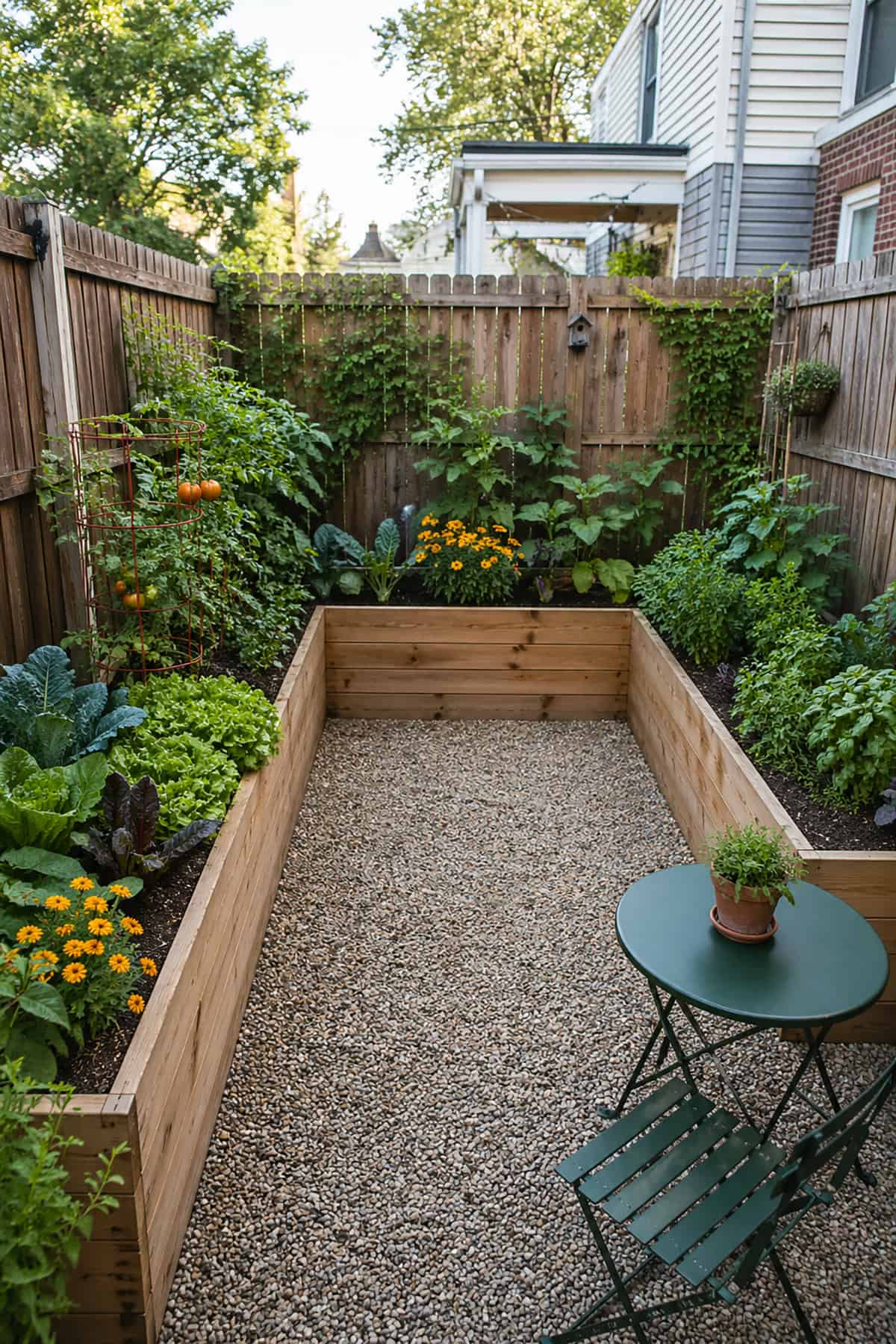
Some layouts wrap you in greenery. U-shaped raised beds along three sides leave a central spot open for a chair or just easy access.
Go for 18–24-inch-high beds for comfort. Tall crops can line the back, with herbs and greens closer to the front. A slim pea gravel path inside the U keeps your shoes clean even after rain.
Symmetrical Grid Garden in Small Backyard
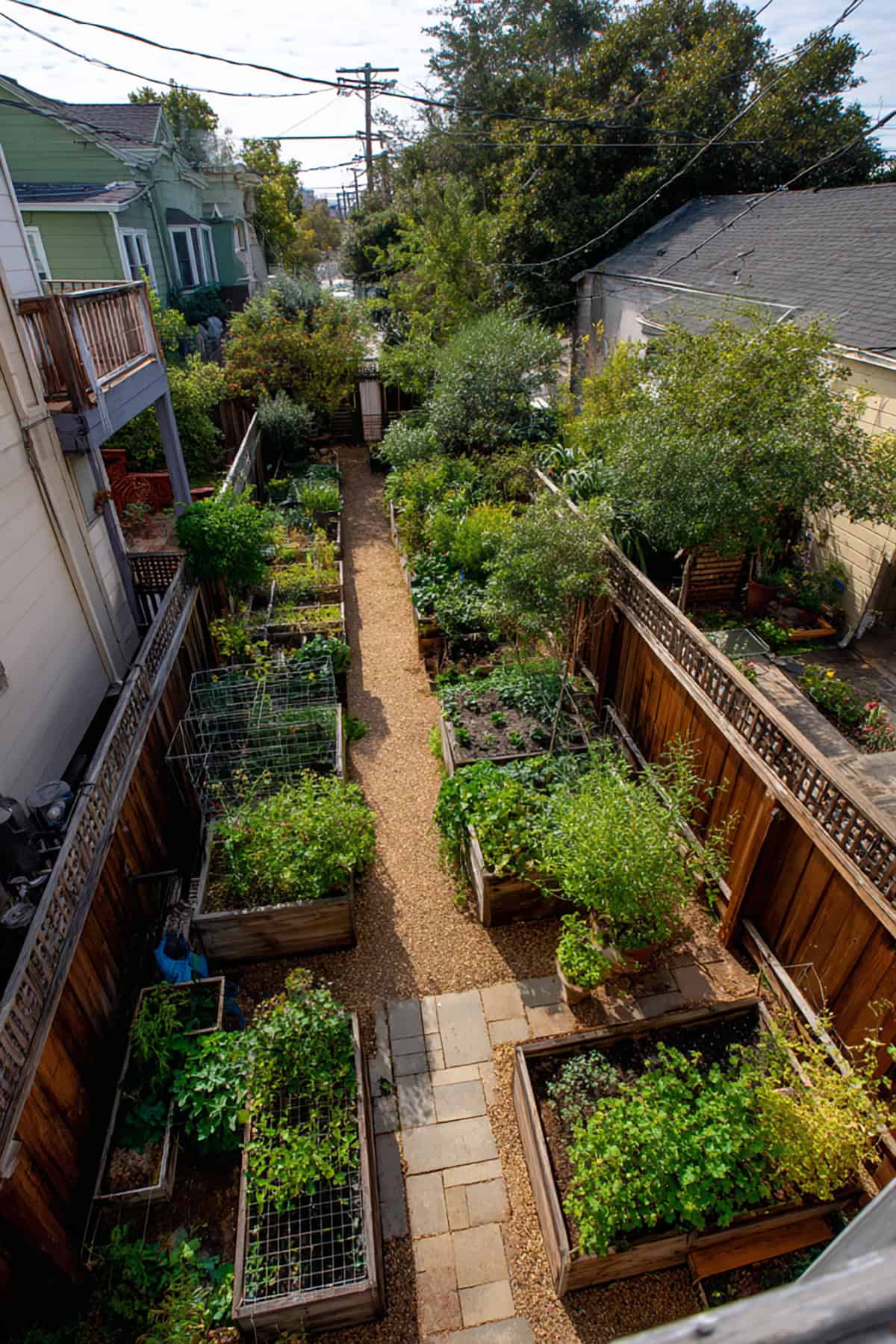
Orderly grids can make a yard feel intentional. Divide the area into equal squares or rectangles with slim paths and compact beds—nothing wider than four feet, so you’re never stretching too far. Some beds for veggies, others for flowers or herbs. Straight lines of pea gravel and crisp edging give it a formal, tidy vibe.
Small Garden Patch Defined by Simple Rock Border
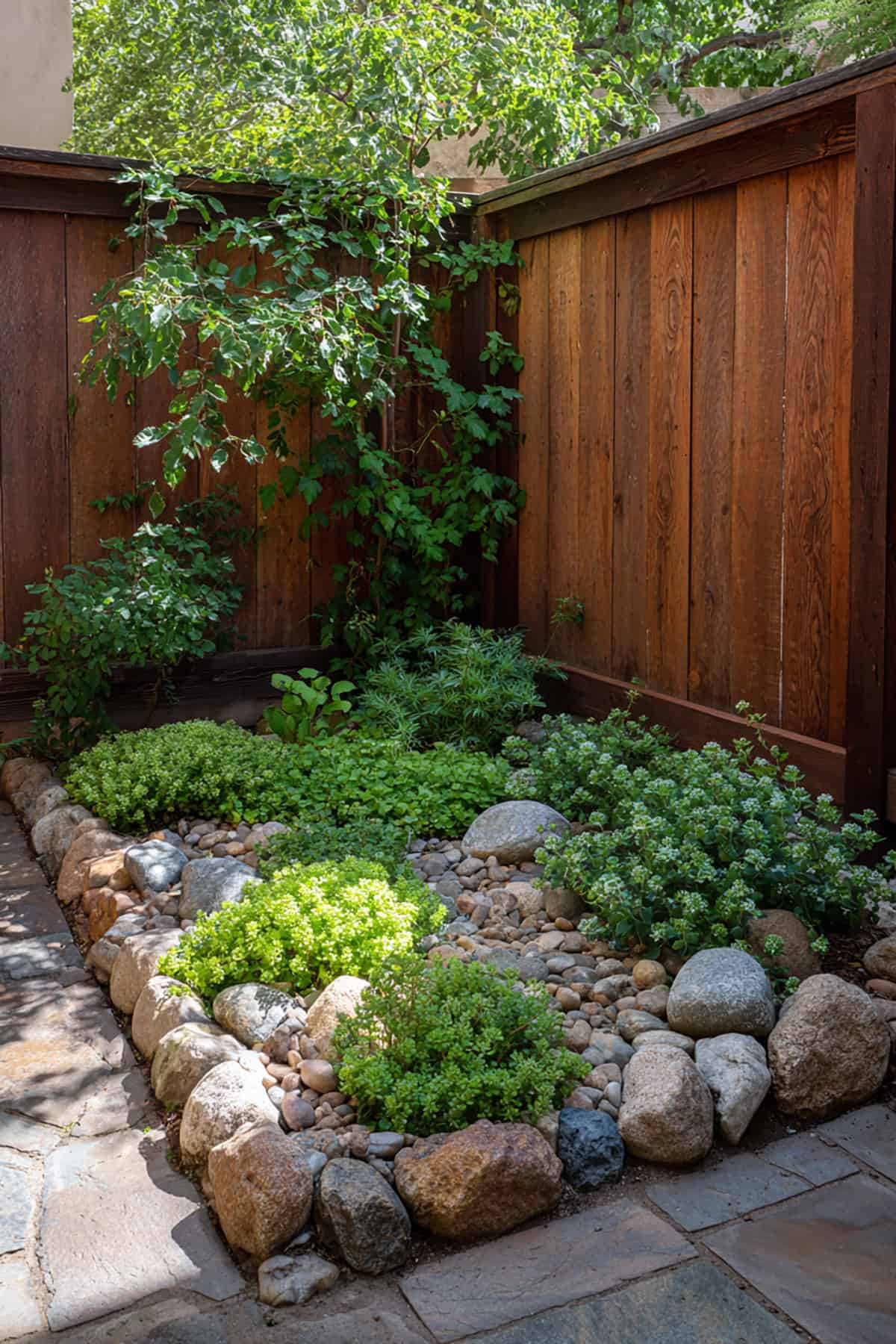
Sometimes all you need is a clear shape. A rock border—just fist-sized stones pressed into the dirt—frames a small planting patch in a corner or by the patio. Keep it simple: a circle or rectangle, filled with a mix of veggies, herbs, and a few flowers. Landscape fabric under mulch helps with weeds, and this is a solid pick for anyone just starting out.
Small Backyard Divided Into 4 Mini Beds
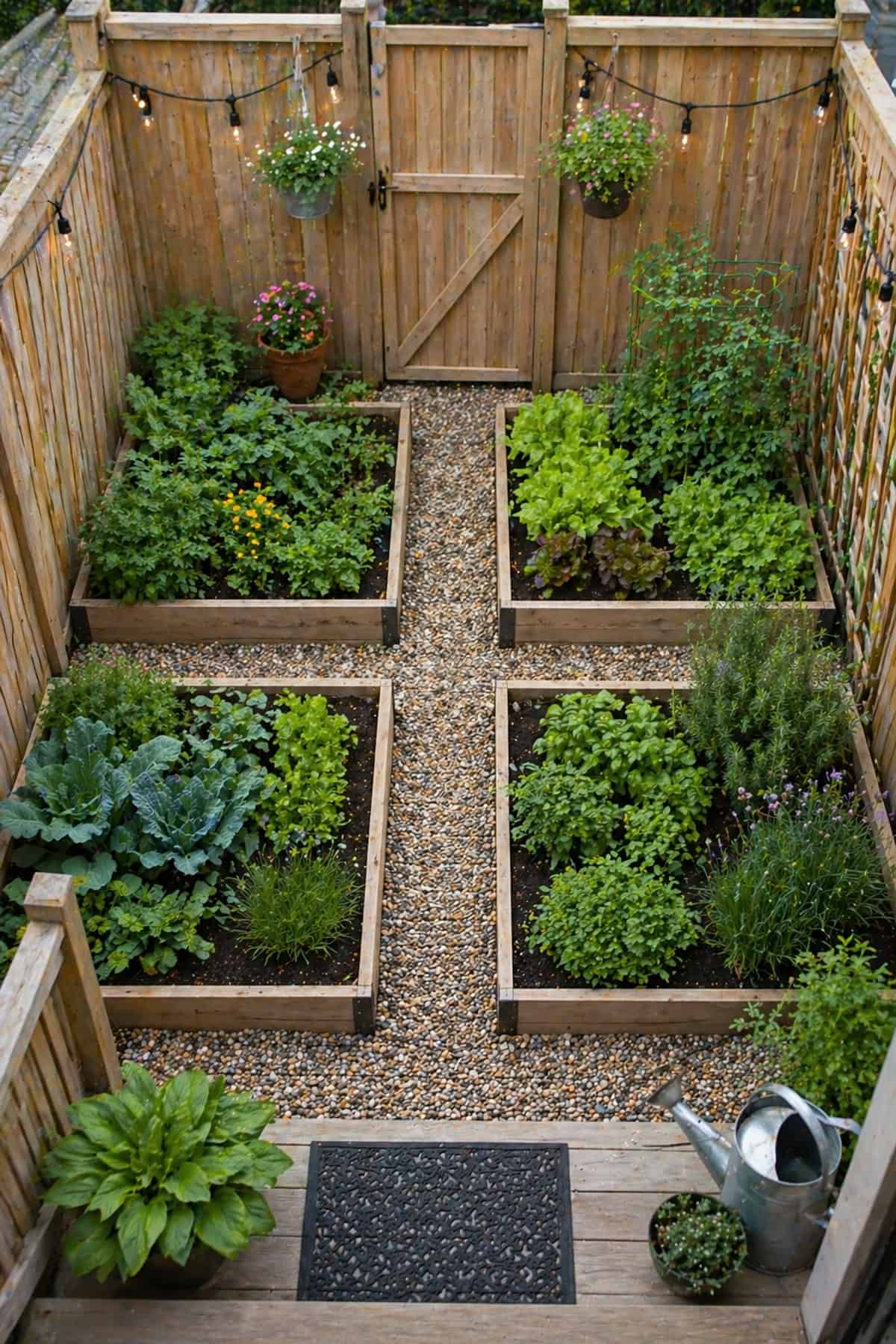
Breaking a yard into four equal sections with a plus-shaped path lets you try a bit of everything. One section for salad greens, another for herbs, the rest for flowers or maybe a dwarf citrus. Paths should be at least 18 inches wide, with pea gravel for easy care. Rotating crops and keeping soil healthy gets a lot easier in this setup.
Rectangular Perimeter Planter With Center Space
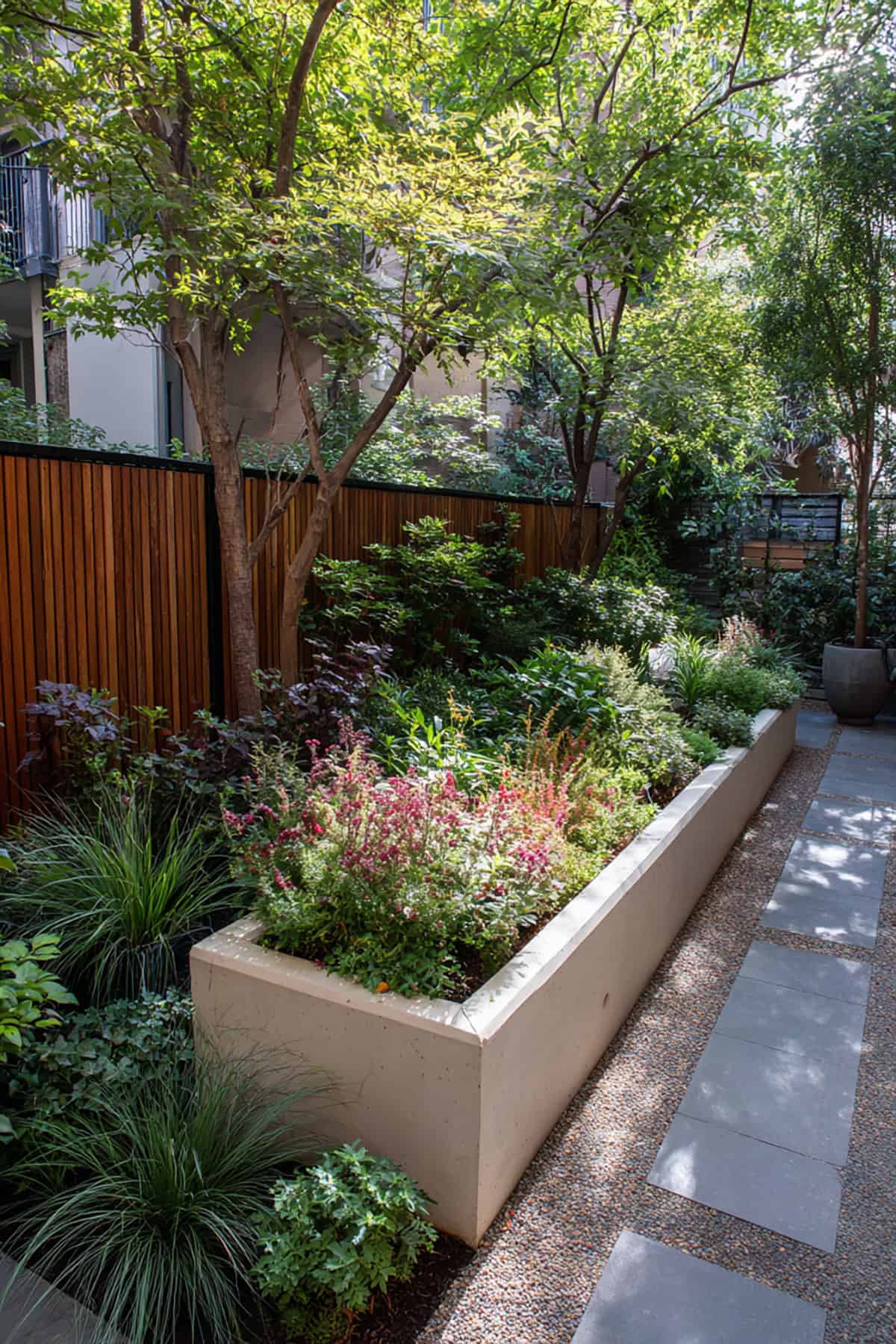
Hugging the fence or edge with a continuous bed means you keep the middle open—maybe for a patch of grass, a couple chairs, or a wheelbarrow display. Layer taller plants at the back, medium in the middle, and herbs up front. Raised or in-ground, either works; this keeps things open but still lush.
Raised Bed With Narrow Walk Gap
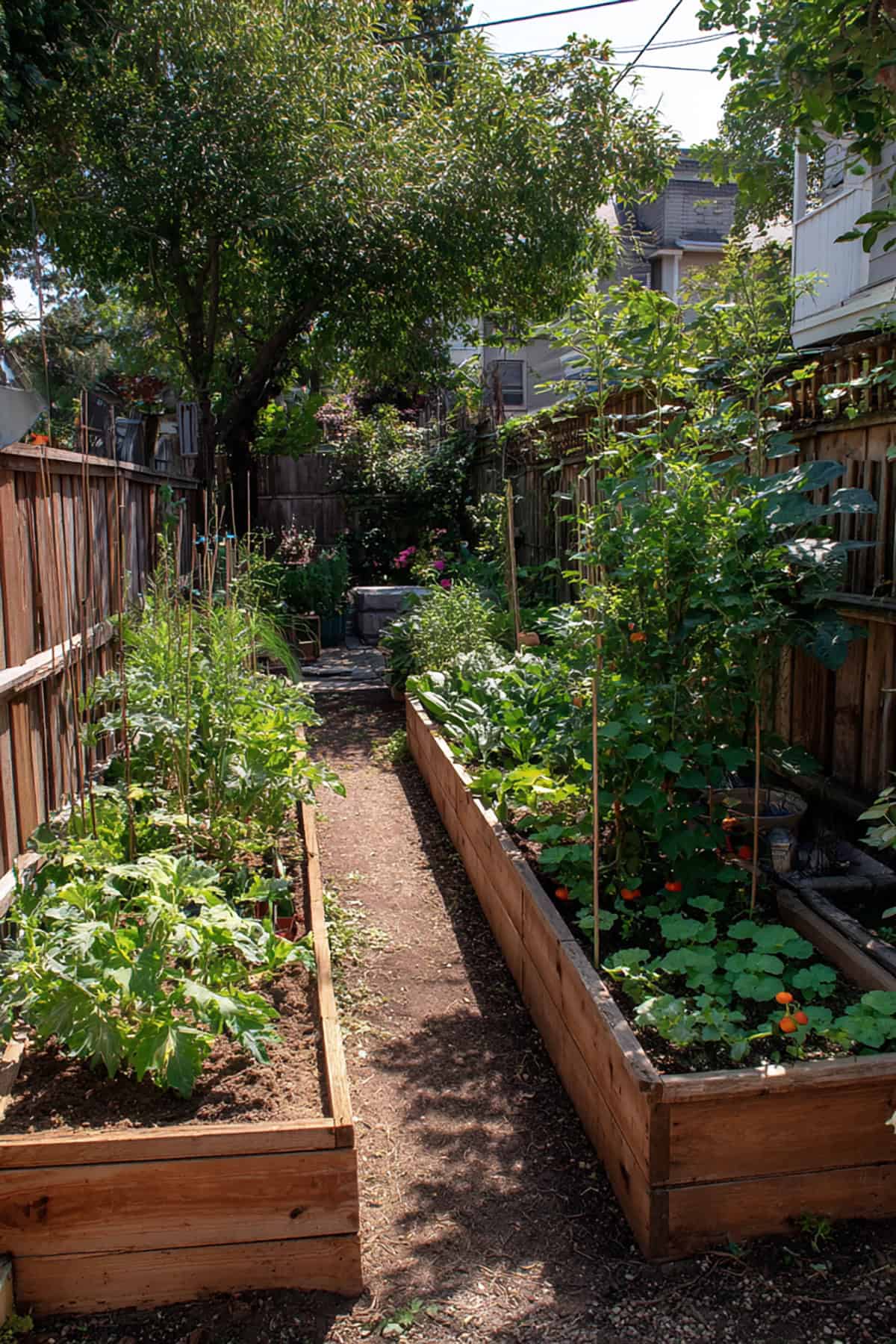
Parallel raised beds with just a slim walkway in between fit snugly into side yards. Keep the gap at about 18 inches, and beds no wider than three feet. Everything’s within reach, and the pea gravel path keeps things neat. It’s a tight, efficient use of space—good for narrow lots.
Raised Bed Used as Divider in Tiny Yard
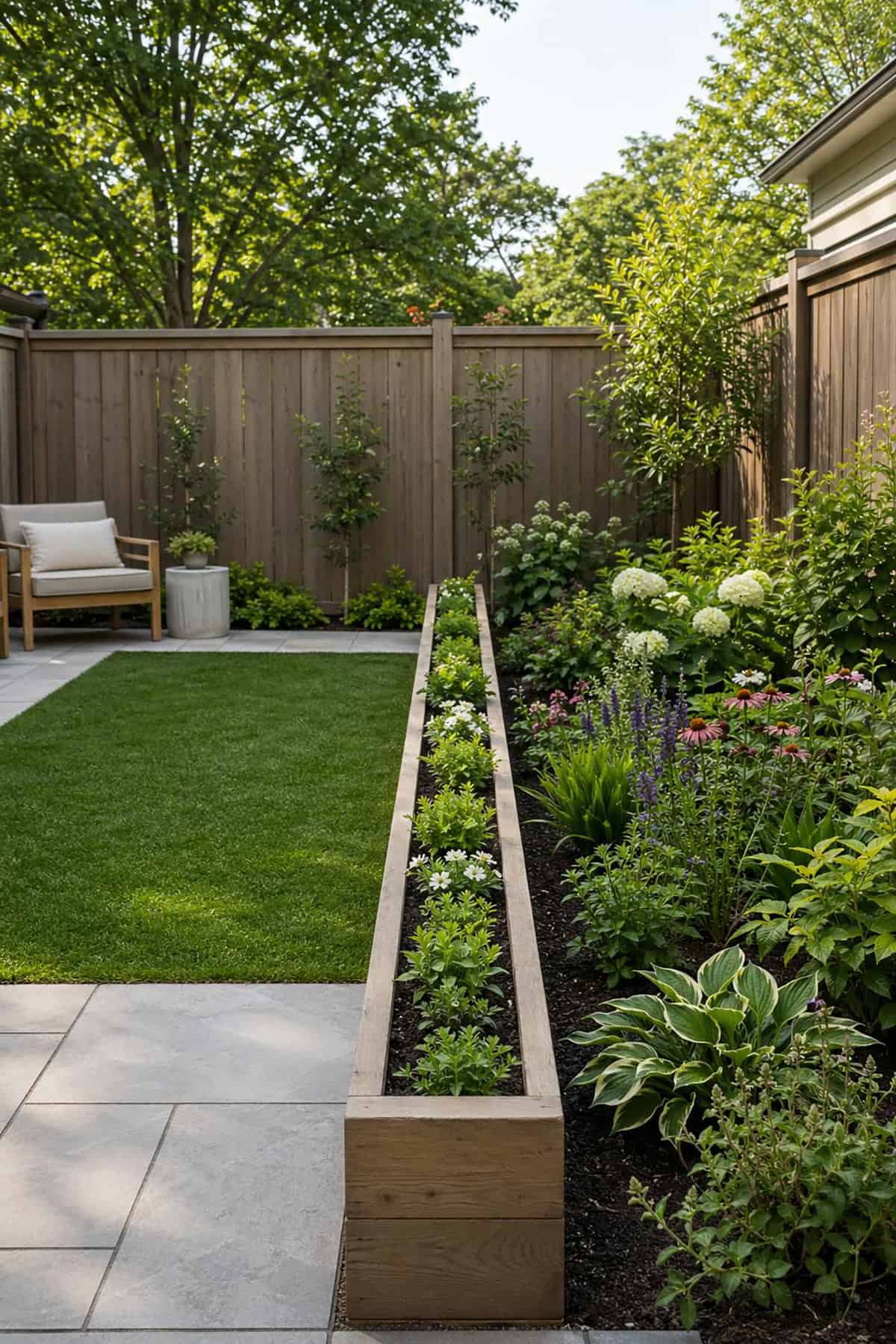
When space is tight, a raised bed can split a yard into zones. Placing it across part of the area separates a patio from a planting spot. Two feet high is plenty, with herbs and low veggies on top. Potted plants on one side soften the edge, giving you structure and extra growing space—no need for a solid fence.
Planter Border Defining Small Patio Edge
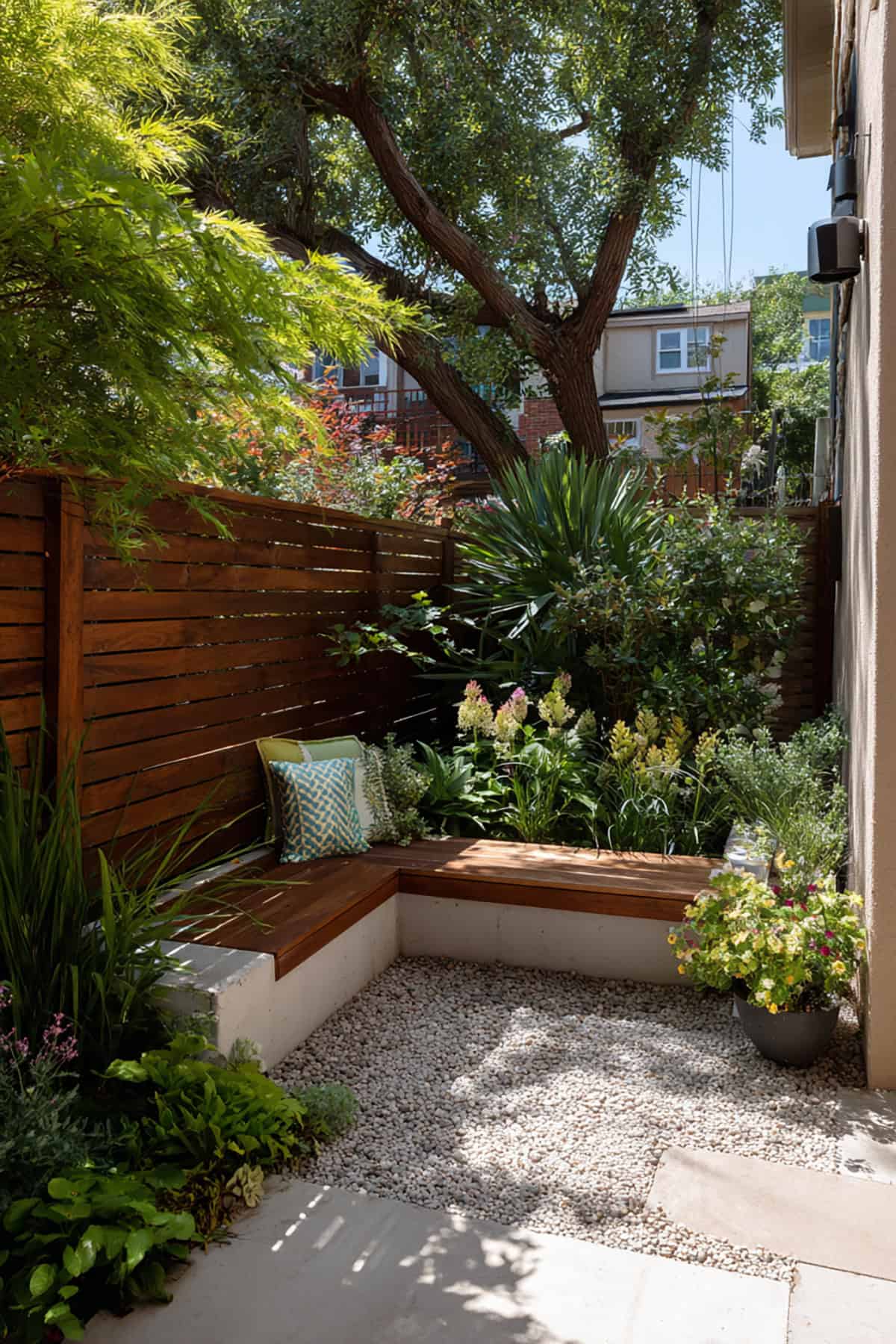
Framing a patio with a run of planters—either a built-in low wall or a row of big containers—keeps things defined and tidy. Stick to compact plants that won’t sprawl into seating areas. Herbs near the kitchen door make sense, and dwarf citrus in pots anchor the corners. Drainage is key for each container to avoid soggy roots.
Narrow Gravel Path With Side Planting
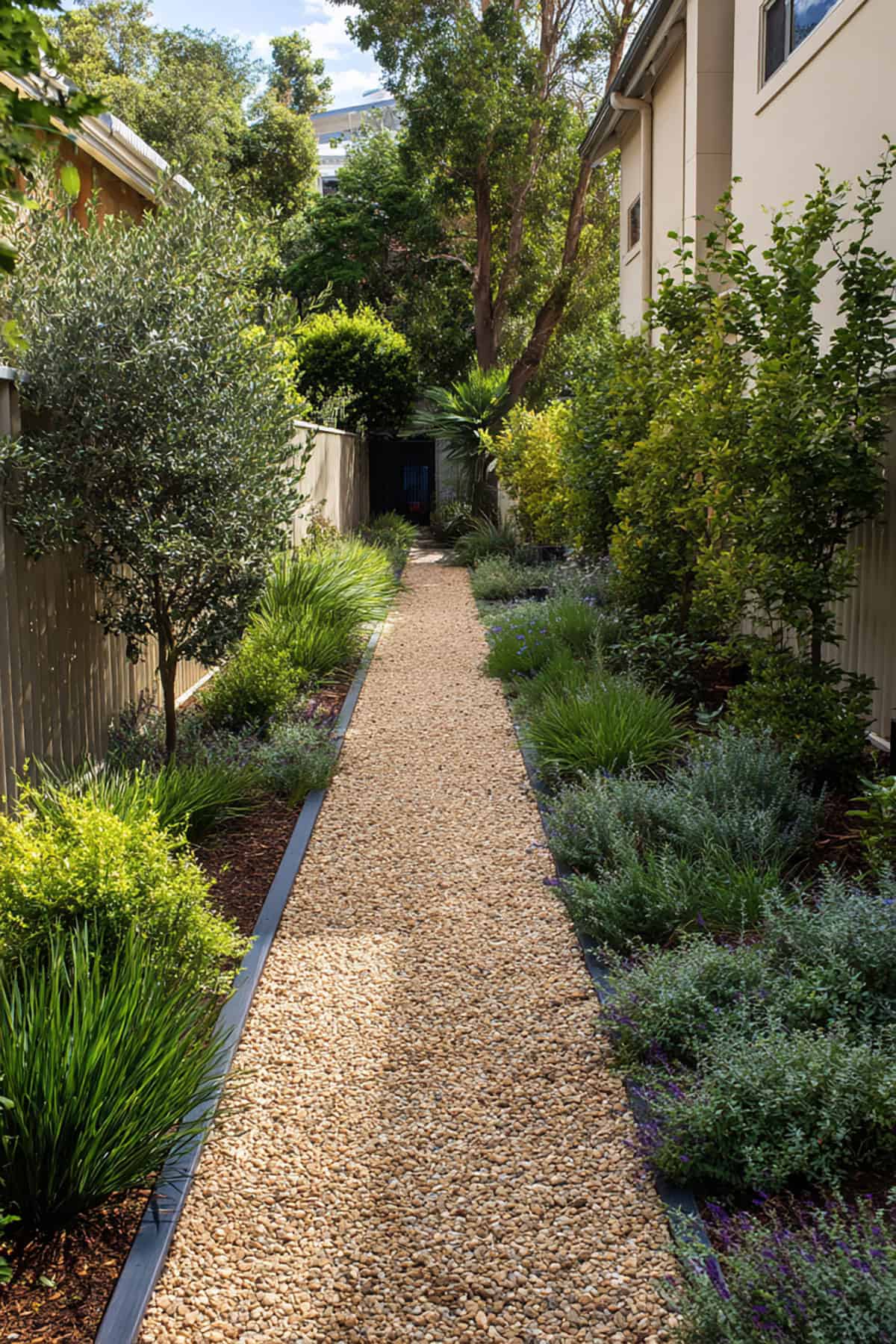
A single straight gravel path from the back door to the far end leaves plenty of room for planting on both sides. Low-growing herbs and flowers along the edge won’t block movement. In especially tight spots, one side might have raised beds, the other in-ground plantings. This layout channels foot traffic and keeps soil where it belongs.
Narrow Backyard With Central Path Layout
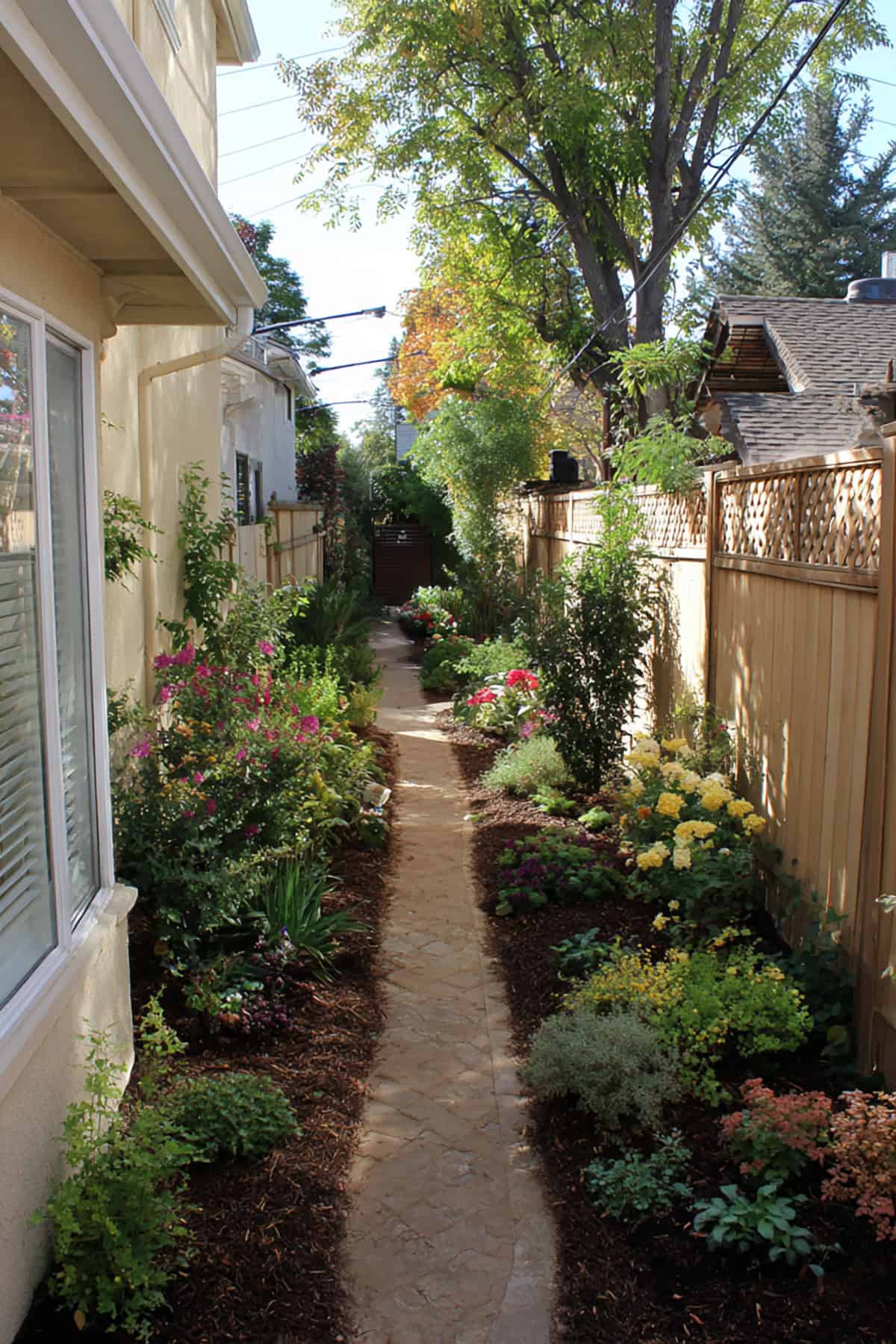
Long, skinny yards benefit from a central path. That way, you get two equal planting strips—each about two to three feet wide. Raised beds or improved soil both work, and trellises along the fence let you grow up, not out. Maintenance is a breeze because you never have to step into the beds themselves.
Narrow Arch Trellis Over Short Garden Path
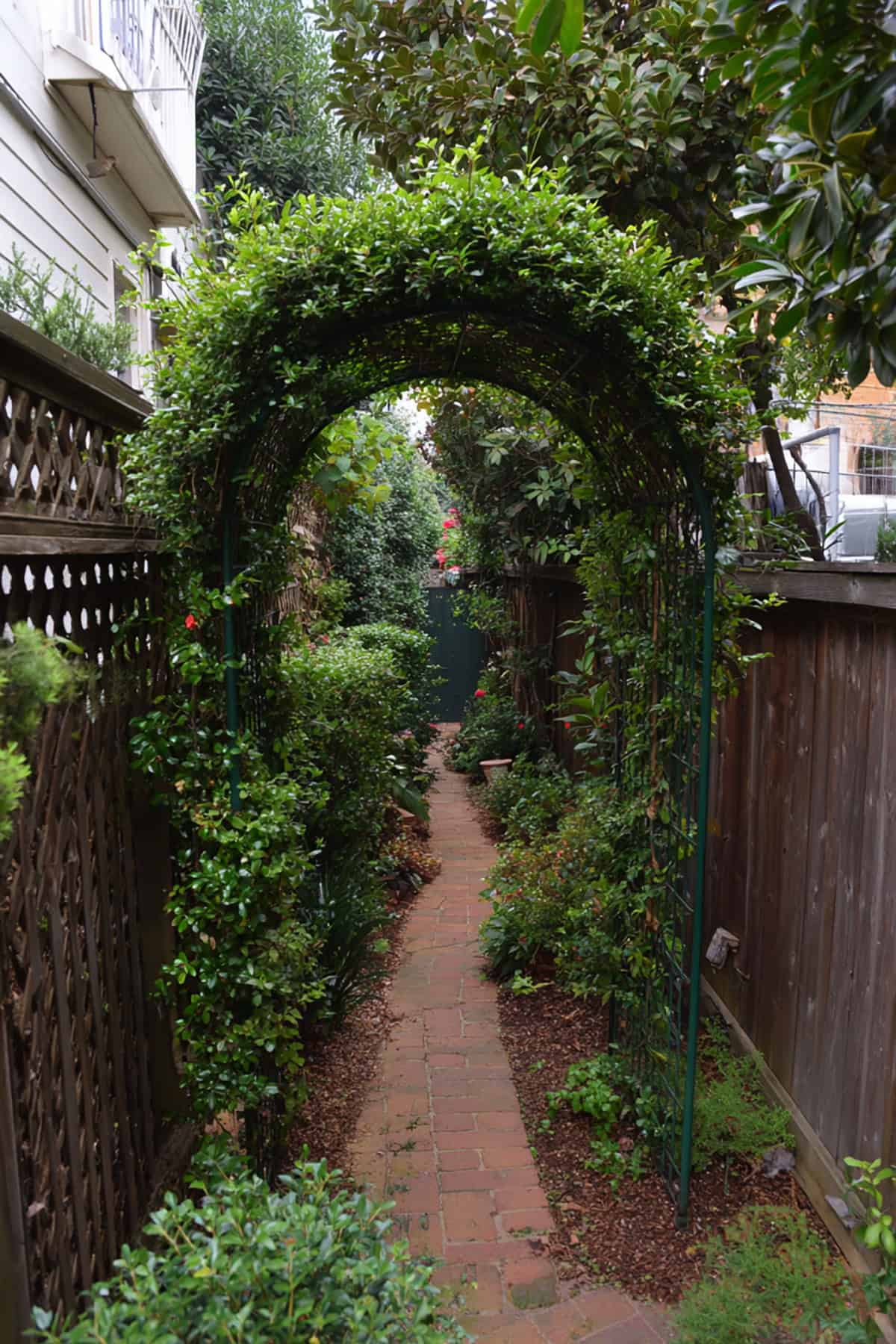
Adding an arched trellis over a short path instantly brings height and structure. Climbing beans, peas, or flowering vines can cover it, and a 24-inch-wide gravel path underneath keeps things accessible. With raised beds or containers on either side, you get a defined, inviting entryway.
Mixed Herb and Flower Bed in Tight Space
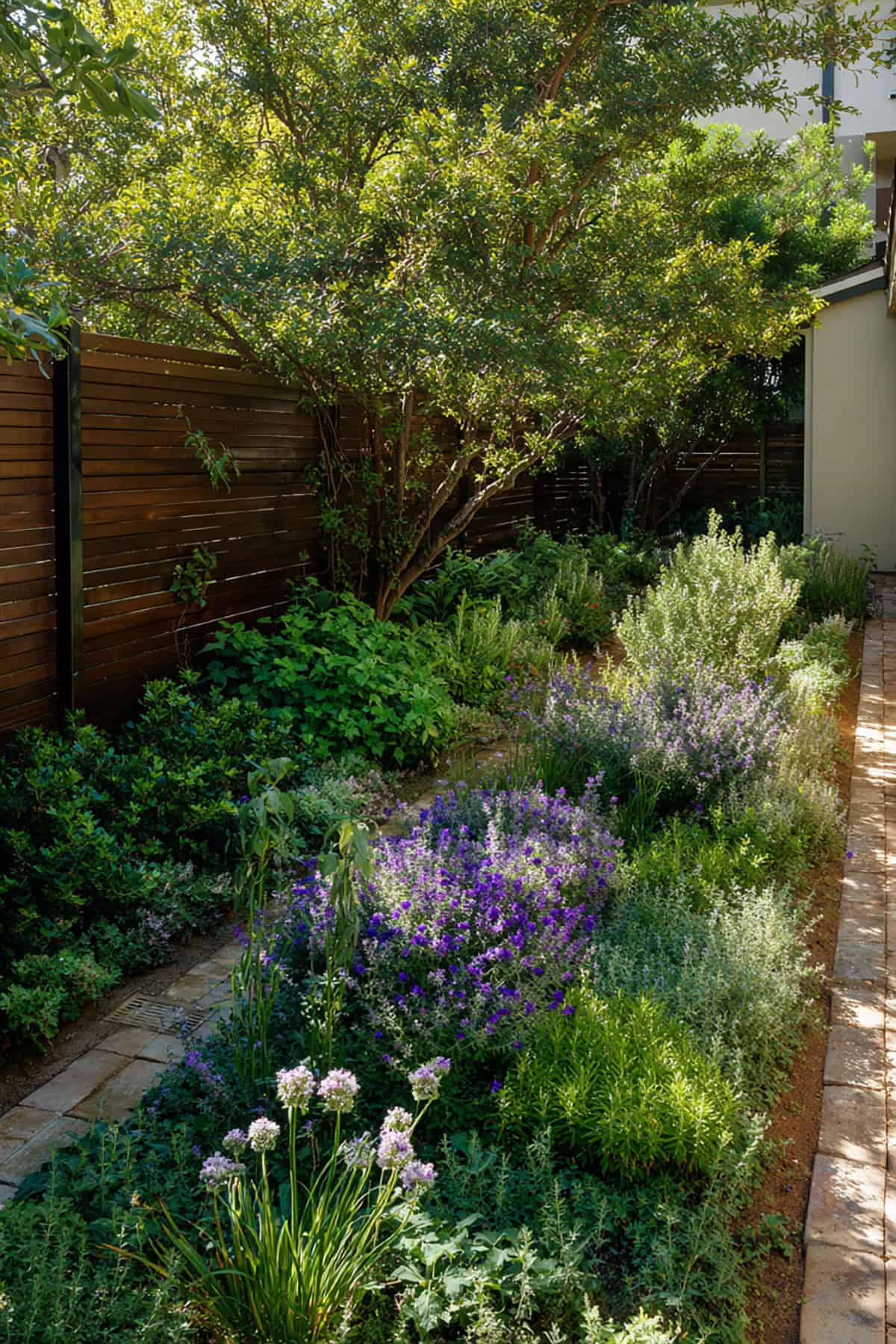
Combining herbs and flowers in a snug bed brings both flavor and color. Taller herbs like rosemary can go at the back, with thyme and parsley up front, and a few small flowers tucked in for pollinators. Keep the bed shallow enough to reach across—ideal along a fence or near the patio.
Micro Courtyard With Single Central Bed
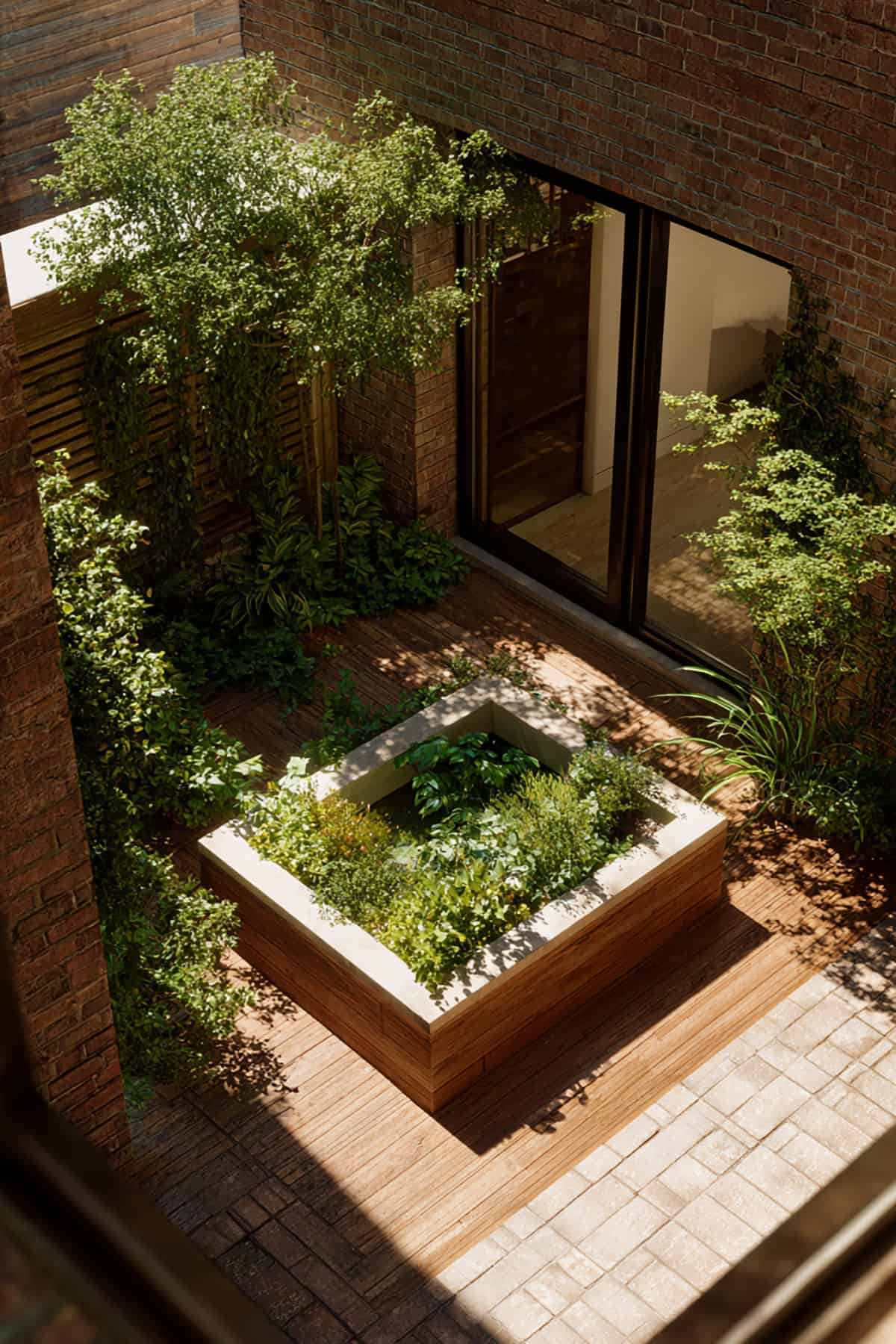
When you’re surrounded by walls or fences, a central raised bed—square or circular—becomes the focal point. A mix of veggies and maybe a dwarf citrus or two keeps things interesting. Pea gravel around the bed allows easy movement, and potted plants in the corners soften the hard edges.
Low Wall Planter Built Into Backyard Edge
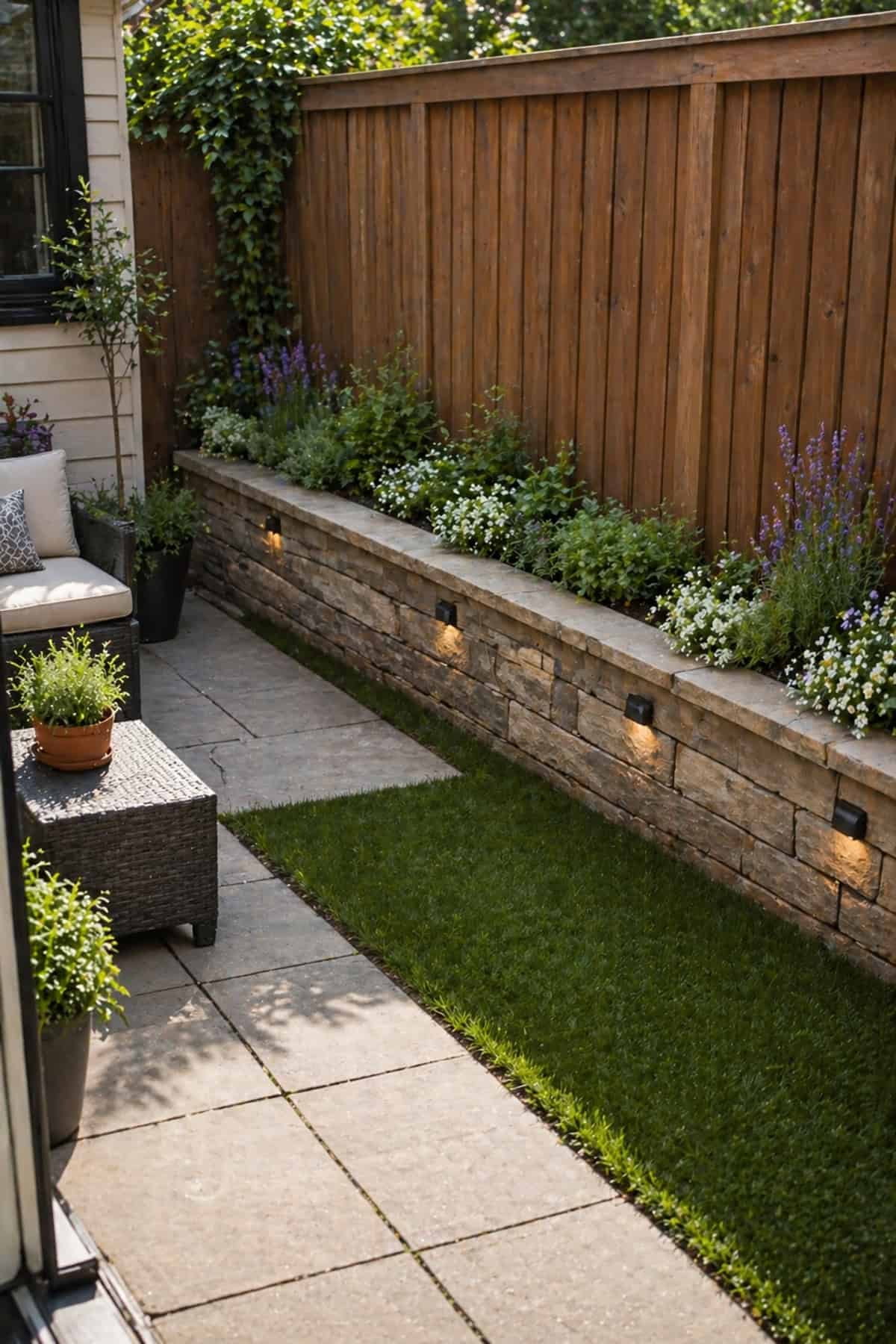
Built-in low wall planters along a yard or patio edge save space and double as extra seating. Fill them with herbs, compact shrubs, or seasonal veggies, and don’t forget drainage holes. Somewhere around 18 inches tall is easy to work with, and you can always add containers on top for more variety.
Linear Bed With Repeating Plants for Order
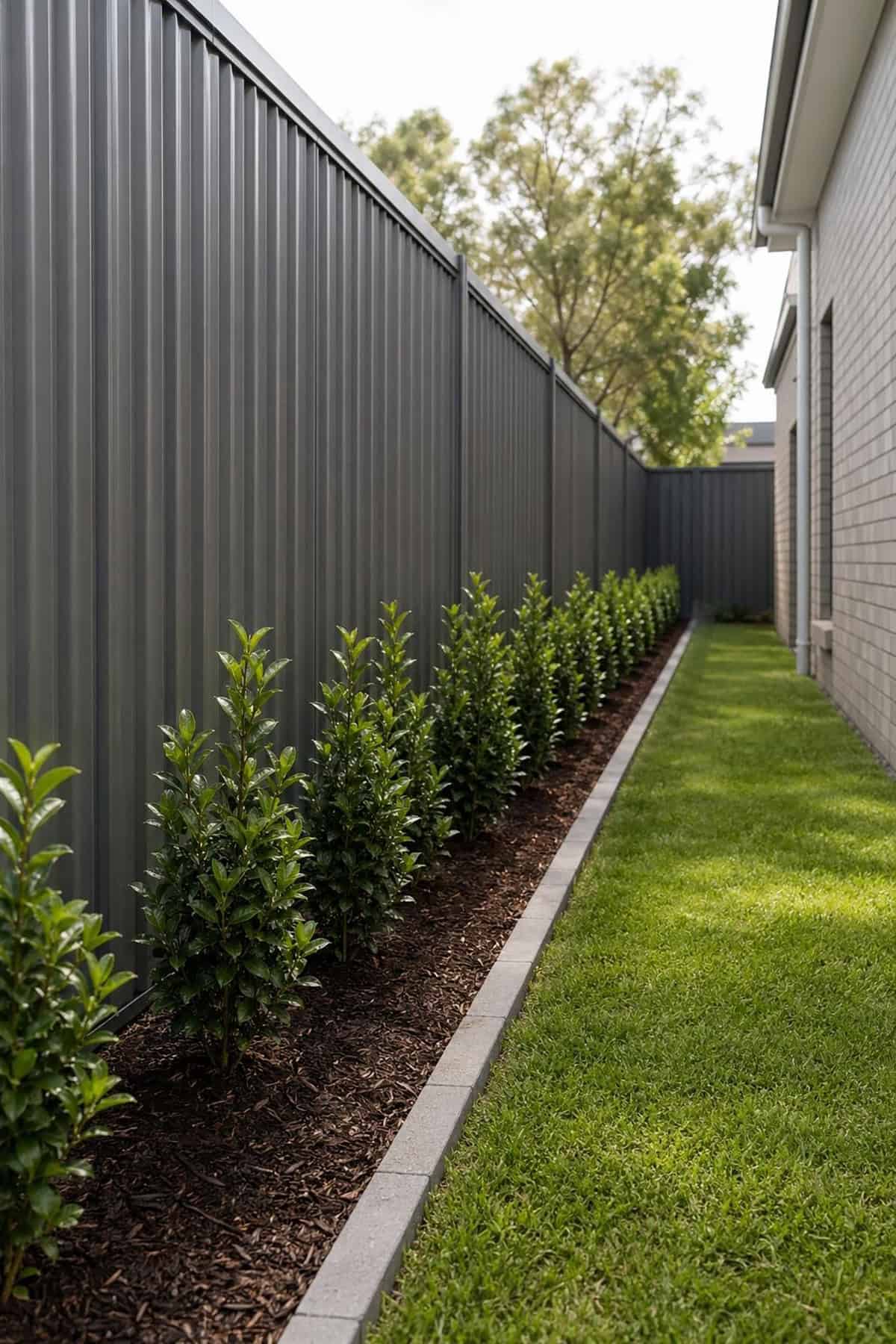
Modern yards often go for straight lines and repetition. Regular intervals of boxwood or matching pots, with low herbs or groundcover between, create a sense of rhythm. Consistent spacing keeps it all looking sharp and under control, especially in narrow spaces.
Dense Salad Bed in a Single Compact Box
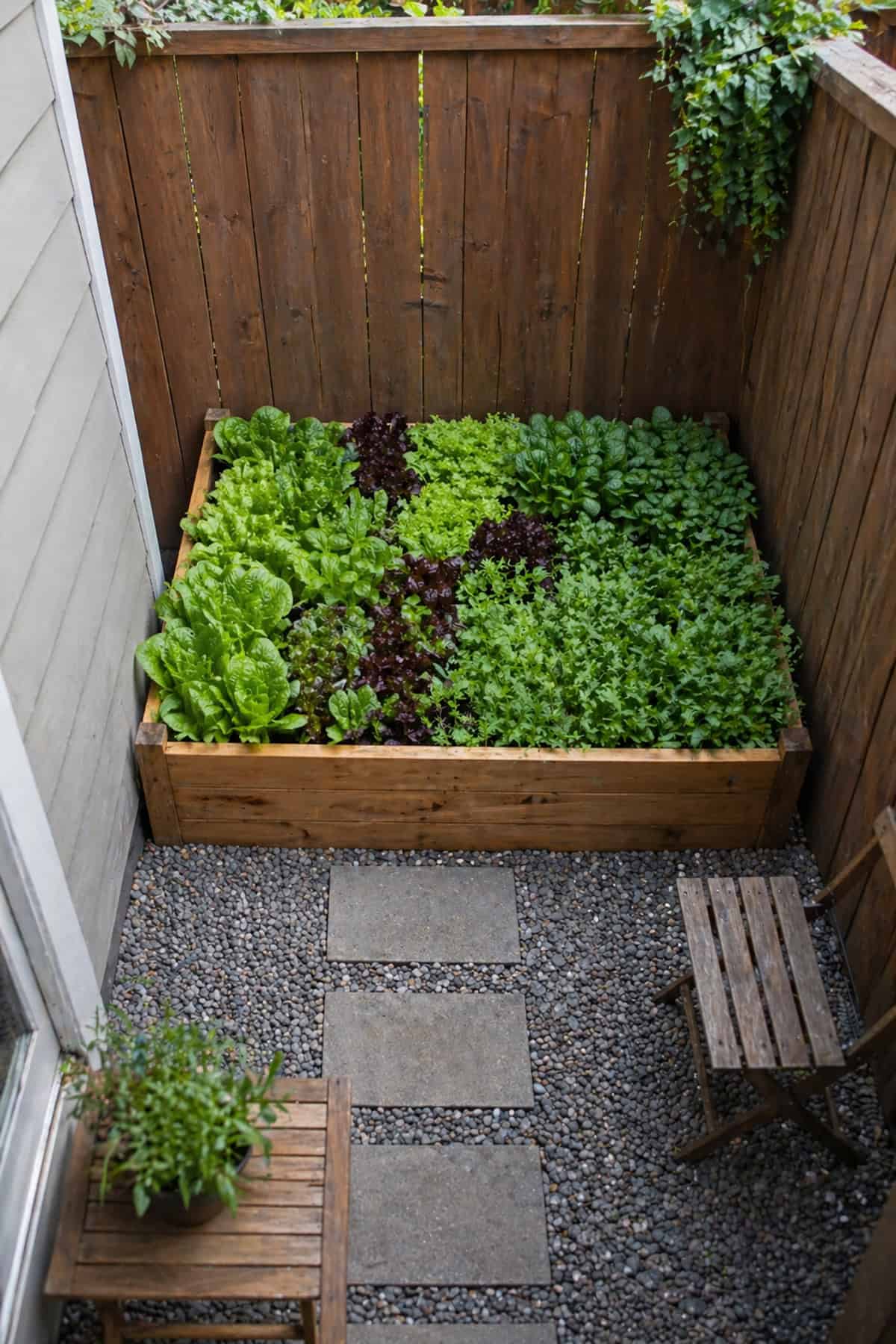
Packing a four-by-four-foot box with salad greens, spinach, radishes, and small herbs makes for a surprisingly productive patch. Pick outer leaves often to keep things going, and top up with compost between sowings. Placing it near the kitchen door means you’re more likely to use what you grow.
Integrated Furniture and Hardscaping
Built-in features—benches, planters, hardscape—cut clutter and carve out zones in a small backyard. Seating and planters blend together, making room for shaded hangouts or outdoor meals without crowding everything together.
Continuous Wall Planter Row in Tight Yard
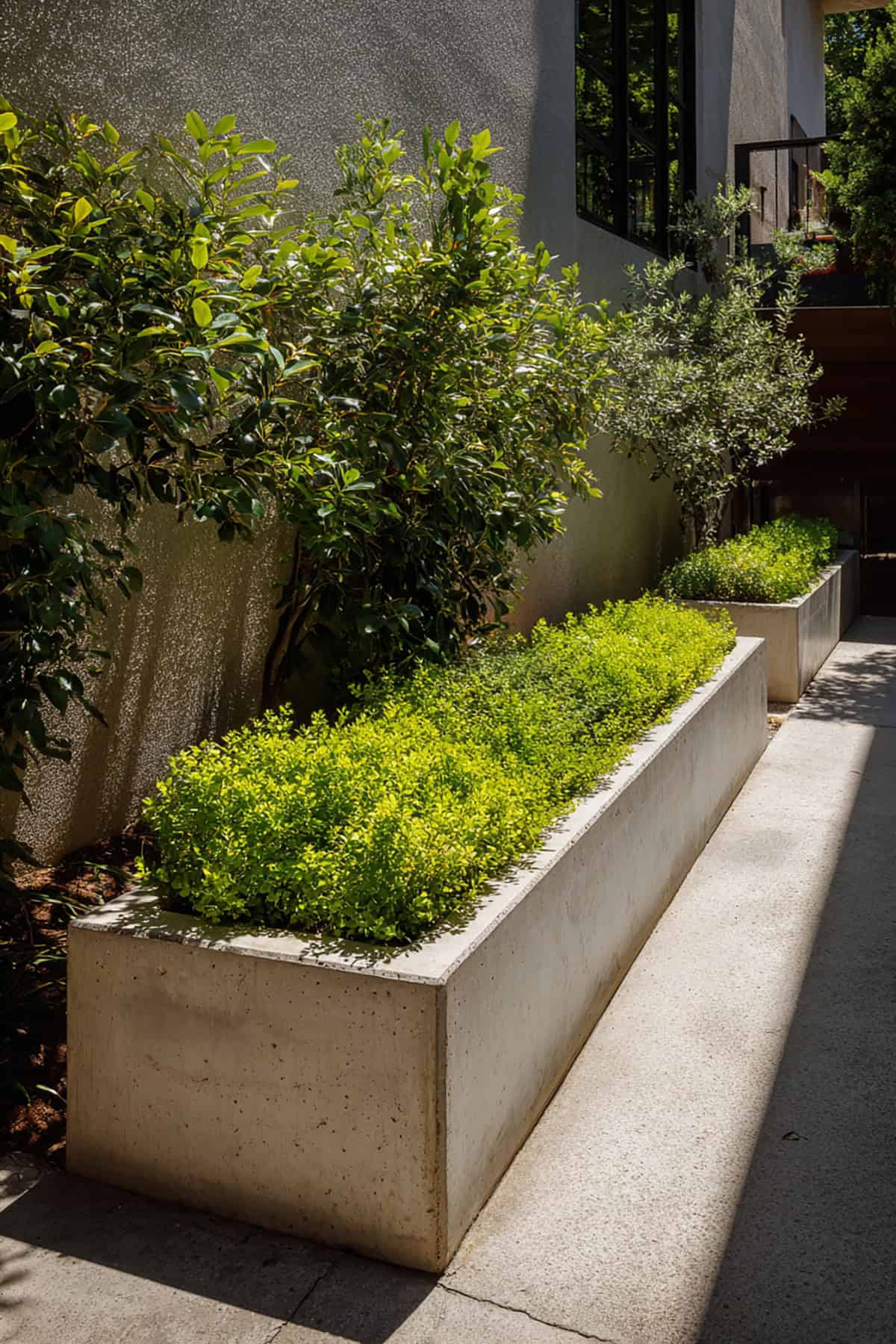
Running a long planter along one fence line layers the garden without eating up the center, which stays open for a bistro table or narrow dining spot. A planter height of 16 to 24 inches can double as extra seating.
Masonry, concrete block, or pressure-treated lumber give structure—just don’t forget drainage and a gravel base. Grouping plants in repeats brings unity, and keeping shrubs below fence height by a third maintains balance. String lights overhead bring the space to life at night, all without the need for extra lamps.
Compact Pergola With Hanging Plants Only
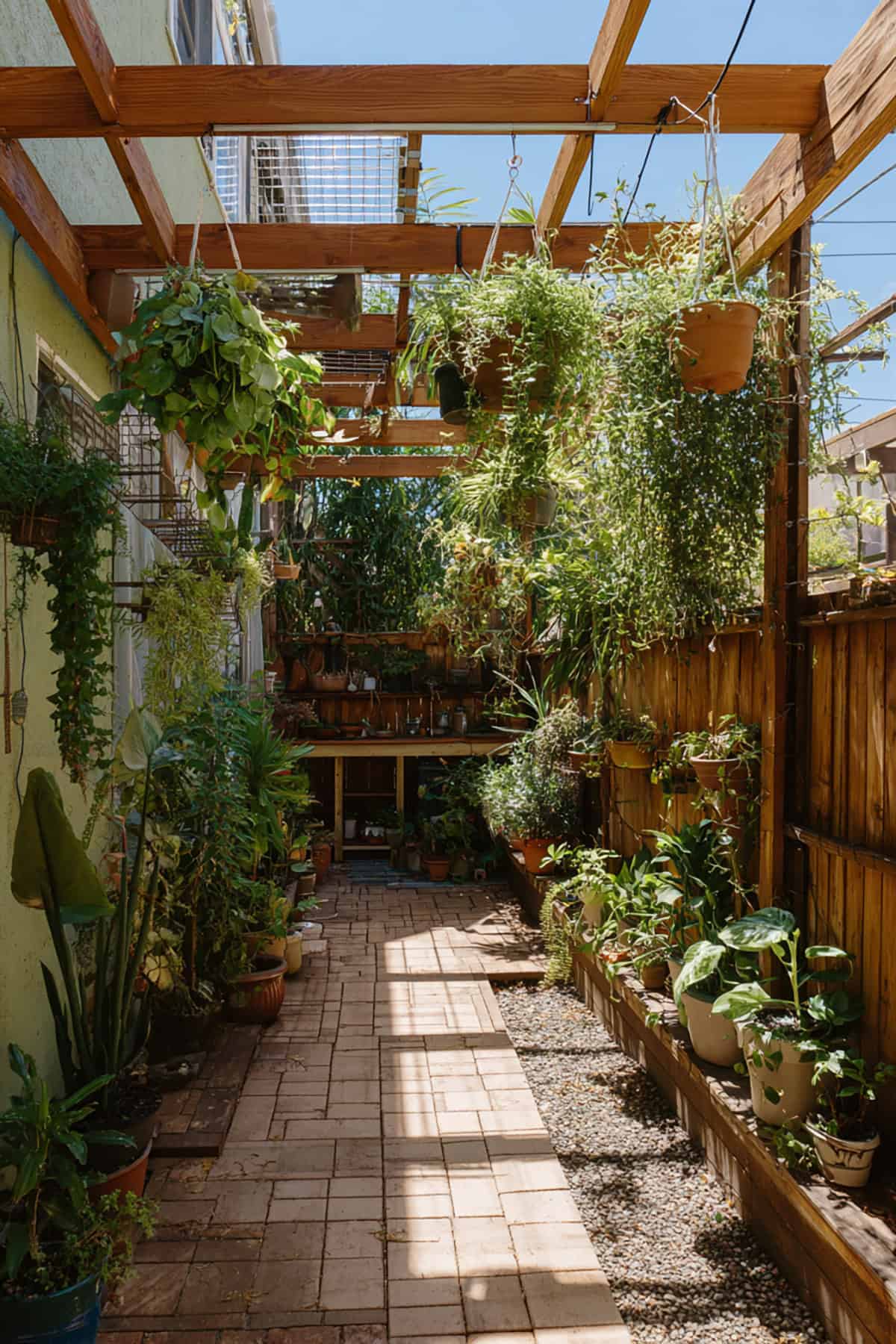
Pergolas, when kept small, define a cozy seating area without boxing in the whole yard. Posts should sit just outside the dining zone to avoid crowding. At around 8 feet tall, the structure feels proportional to fences and single-story homes.
Instead of bulky pots below, hang planters from the beams using weatherproof hooks. Vines trained across the top filter sunlight, and string lights strung along the beams let you linger outdoors after dark. Circulation stays open and floor space uncluttered.
Compact Green Wall Filling One Side Only
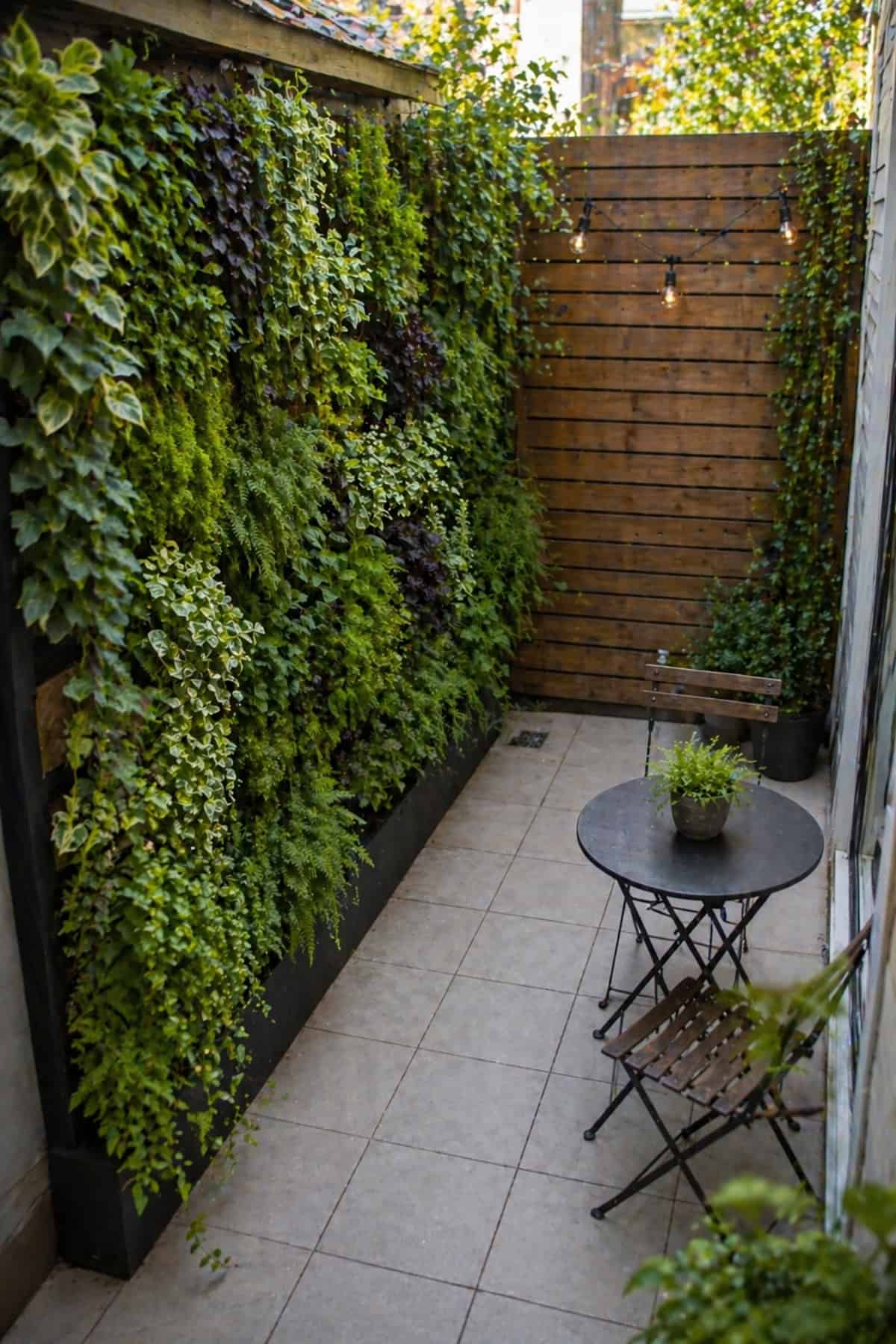
Covering a single wall with a green wall system brings depth and frees up the ground for seating or activities. Modular panels or fabric pockets mount on a sturdy fence or masonry surface; leaving one wall open avoids a boxed-in vibe.
Stick with shallow-rooted plants that share similar water needs, and let a drip system with a timer handle the chores. A slim bench or bistro table placed opposite the green wall makes the planted surface a lively backdrop, stretching the sense of width in a narrow yard.
Cinder Block Planter Wall in Narrow Yard
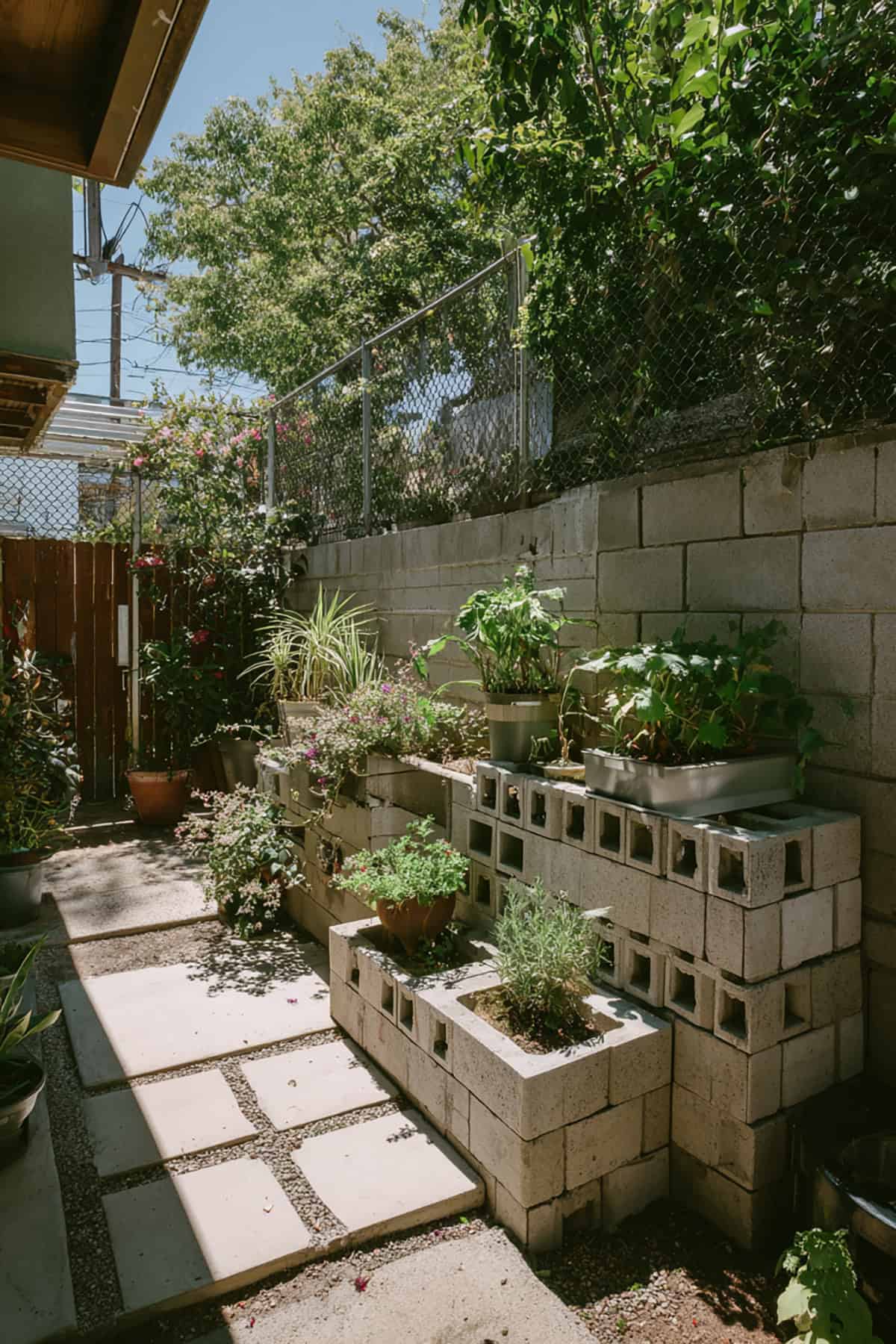
Cinder blocks stacked and reinforced with rebar create a sturdy planter wall that also defines the yard’s edge. Fill the open cores with concrete for strength, then cap with smooth stone or wood for extra seating.
The hollow pockets double as planting spots for herbs or flowers, keeping soil contained and walkways clear. Shaded seating against the capped wall, plus string lights overhead, soften the look and make evenings outdoors more inviting.
Built-In Bench With Hidden Planter Strip
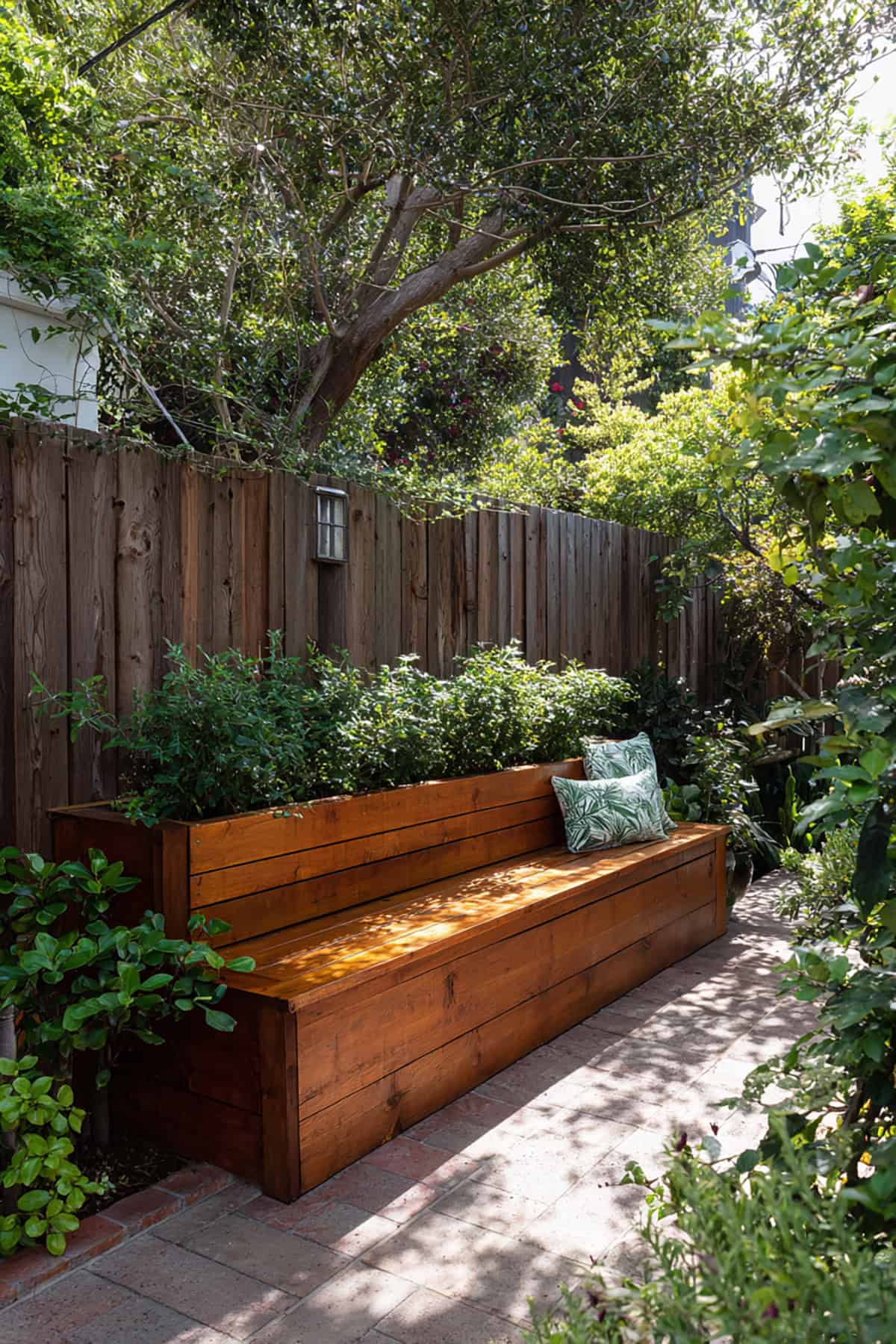
Benches built along the perimeter keep the middle open for moving around. Fixed seating won’t tip or shift, and a 6 to 12 inch planter strip behind the backrest offers space for upright grasses or slim shrubs—privacy without blocking light.
An 18-inch seat height and 16-inch depth hit the comfort sweet spot. A small bistro table in front works for casual meals, and if shade’s needed, a compact pergola overhead beats a bulky umbrella any day.
Built-In Bench Planter Combo
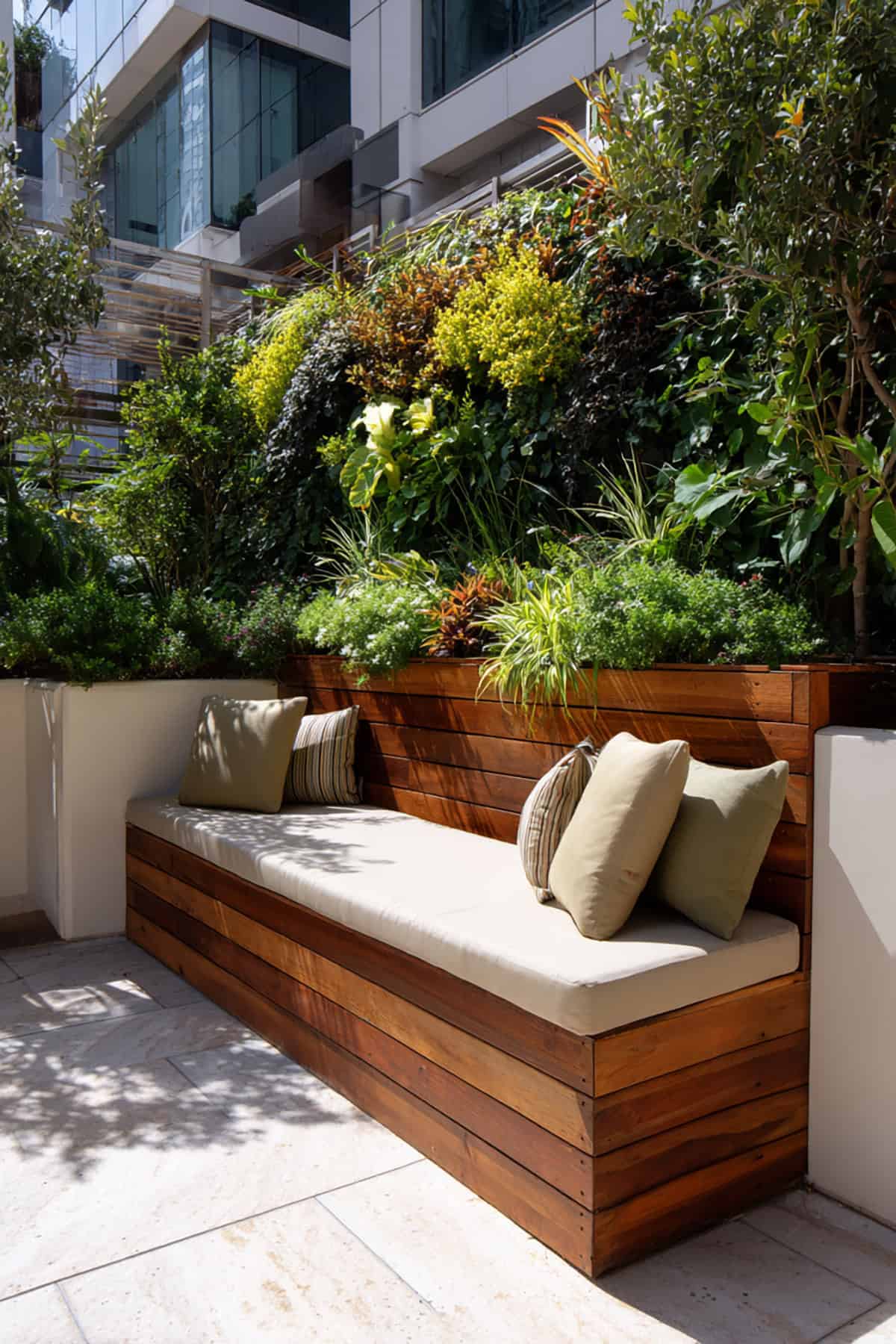
Sun spills over a U-shaped bench wrapping a snug patio, enclosing it just enough to feel like a private nook. Instead of scattered pots, seating and planters merge, cutting down the clutter and giving the space a bit of architectural backbone.
Planter boxes hug the corners—kind of like bookends—bringing a sense of order without feeling forced. If the proportions go off, the whole thing feels awkward, so keep the scale honest with the yard’s size.
Small trees, the kind that won’t shoot past 12 feet, settle in those planters. They hint at a ceiling overhead, shaping the area without swallowing it whole.
String lights zigzag between the trees or stretch across a pergola, throwing a gentle glow after dark. Suddenly, the patio’s got this shaded, almost festive vibe, with a dining spot that doesn’t eat up all your outdoor real estate.