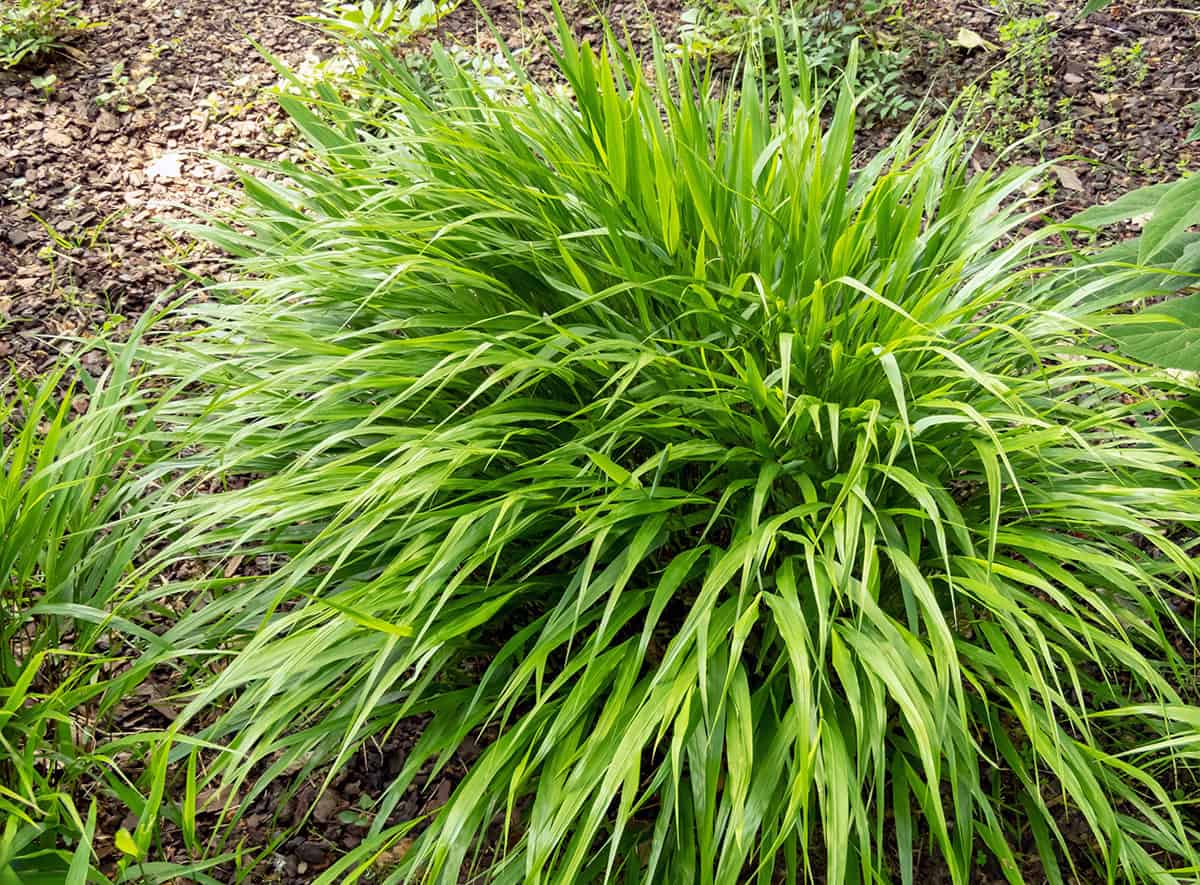
Japanese forest grass grows in low, cascading mounds, and every blade sweeps in the same direction, as if combed by a breeze.
Native to the wet mountain woodlands of Japan, Hakonechloa macra thrives in the shade most grasses avoid. Moist, rich soil and protection from afternoon sun produce the lushest clumps.
Gold, striped and deep green cultivars round off the guide, along with how each one handles light.
Table of Contents
Plant Overview
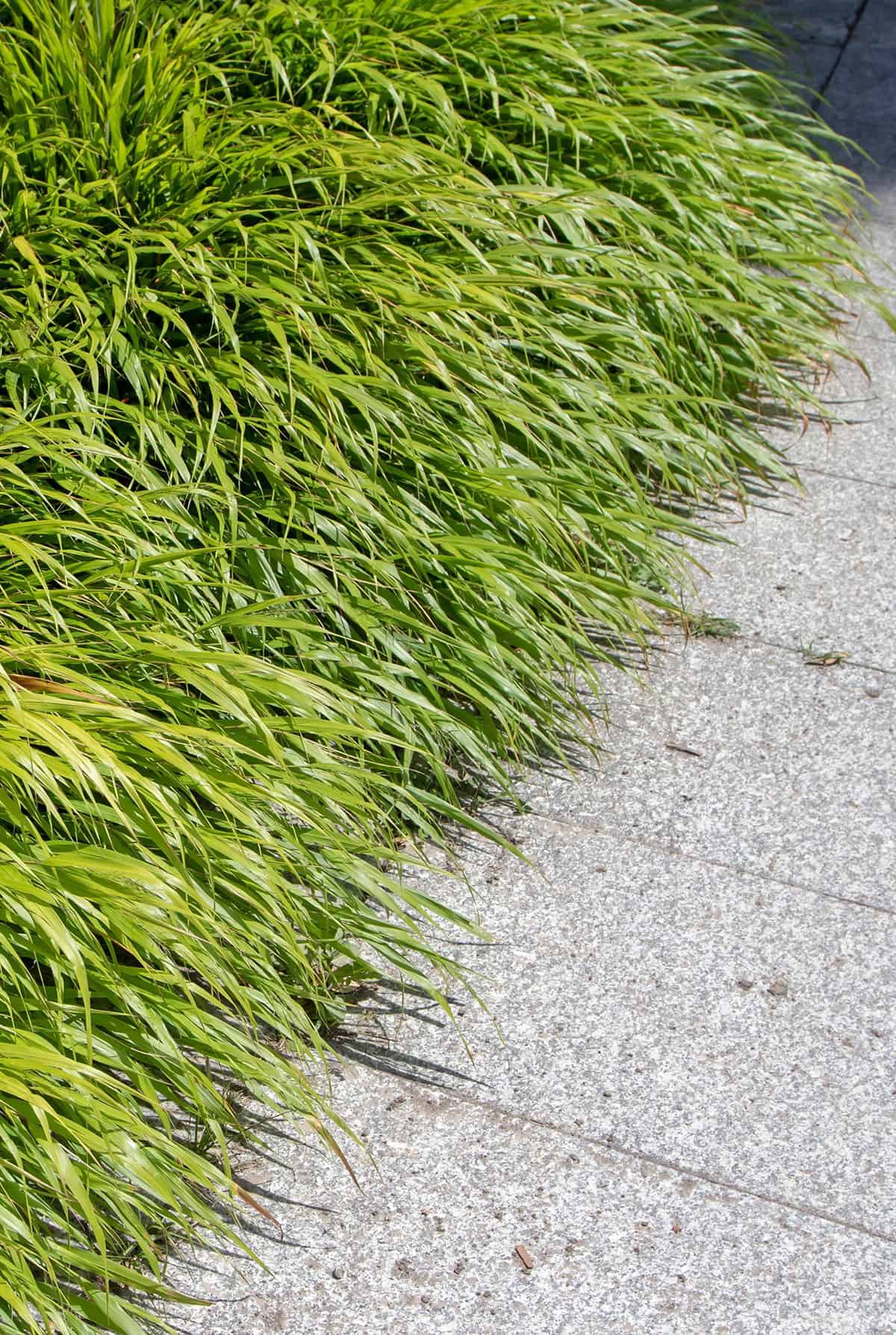
Hakonechloa macra forms slow-spreading clumps of arching, bamboo-like leaves that ripple in the slightest breeze. It grows as a deciduous perennial, and the foliage takes on copper, orange or red tints in autumn before dying back for winter.
The grass spreads slowly by rhizomes and stolons, never aggressively, and fits tight spaces, shaded borders and containers.
- Botanical name: Hakonechloa macra
- Common names: Japanese forest grass, Hakone grass
- Plant type: Deciduous perennial ornamental grass
- Mature size: 12–24 inches tall, 18–36 inches wide (varies by cultivar)
- Hardiness: USDA Zones 5–9
- Growth rate: Slow
- Toxicity: No known toxicity to pets or people
- Native region: Mountain woodlands of Japan
Quick Care Summary
- Light: Partial shade, with morning sun at most; more sun tolerated in cool climates
- Soil: Moist, well-drained, rich in organic matter; pH 6.0–7.0
- Watering: Even moisture through the growing season
- Temperature: Hardy in Zones 5–9; struggles in hot, dry summers
- Humidity: Average to high
- Fertilizer: Light, slow-release feeding in spring
- Pruning: Cut back to 3–4 inches in late winter
- Propagation: Division in early spring
Light
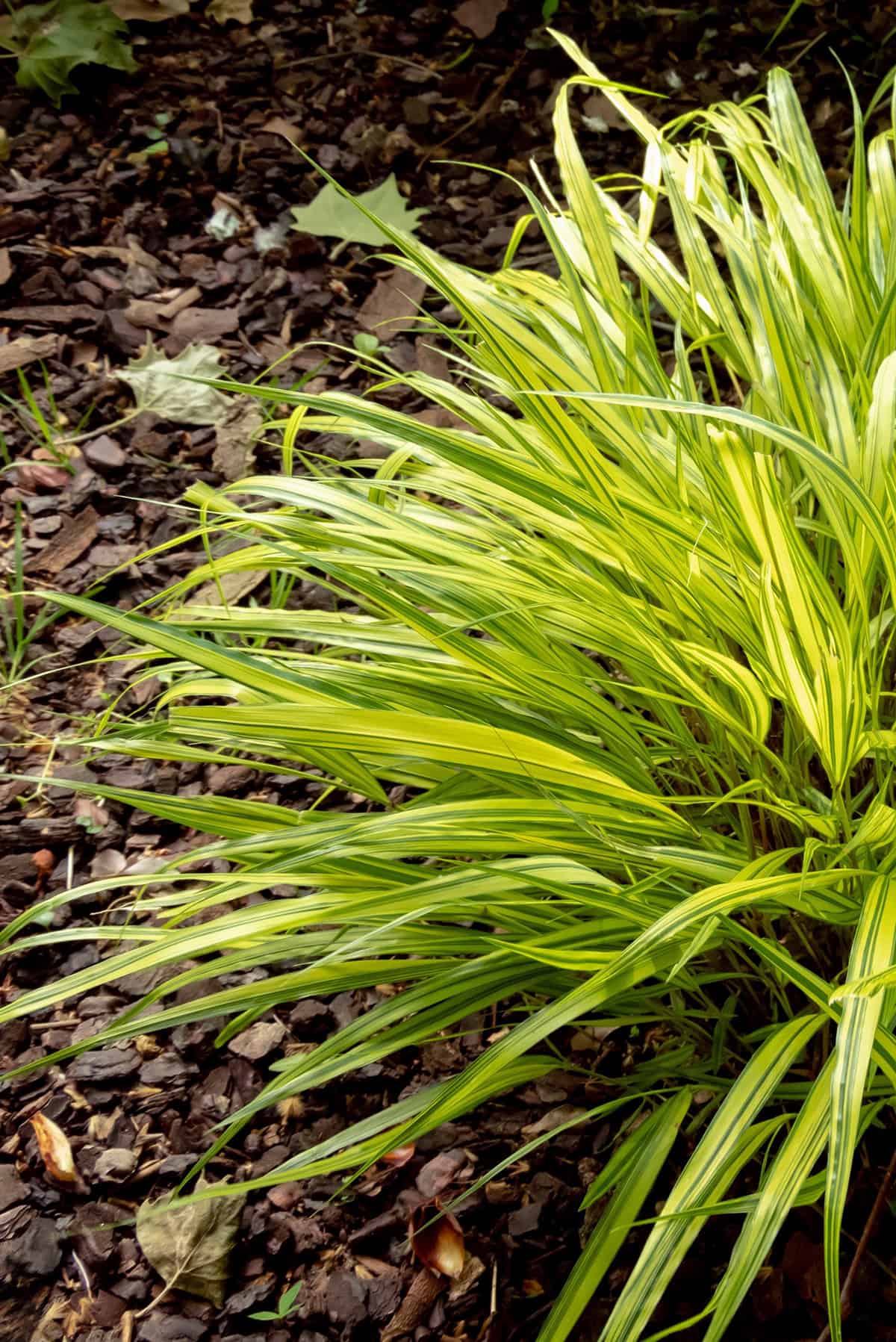
Morning sun with afternoon shade, or bright dappled light under trees, produces the lushest foliage and the best leaf color. Harsh afternoon sun scorches the tips and fades the gold and striped cultivars.
In cool northern gardens, plants handle up to about four hours of direct sun, and the solid gold forms tolerate the most. In deep shade, growth slows and gold types fade to lime green, although the plants survive.
Move container plants to a better spot whenever the leaves show stress.
Water
Japanese forest grass needs steady moisture. Water when the top inch of soil starts to dry, since soil that dries out completely leads to crispy tips and limp clumps.
New plants need water once or twice a week during their first season in dry weather. Established clumps handle short dry spells, but they look their best in evenly damp soil, and hot climates call for more frequent checks.
Soggy ground rots the roots, so the right spot holds moisture and still drains. A 2-inch layer of shredded bark or leaf mulch holds moisture in the soil and shades the roots in summer.
Soil
Rich, loamy soil full of organic matter produces the best growth and color. Before planting, dig compost or leaf mold into the bed to improve both drainage and moisture retention.
A slightly acidic to neutral pH between 6.0 and 7.0 fits the grass, and most garden soils fall in that range. A soil test settles any doubt.
Heavy clay and dry, sandy ground both need generous amendment. Avoid low spots where water pools after rain. In containers, use a quality potting mix blended with compost and replace it every couple of years.
Temperature & Humidity
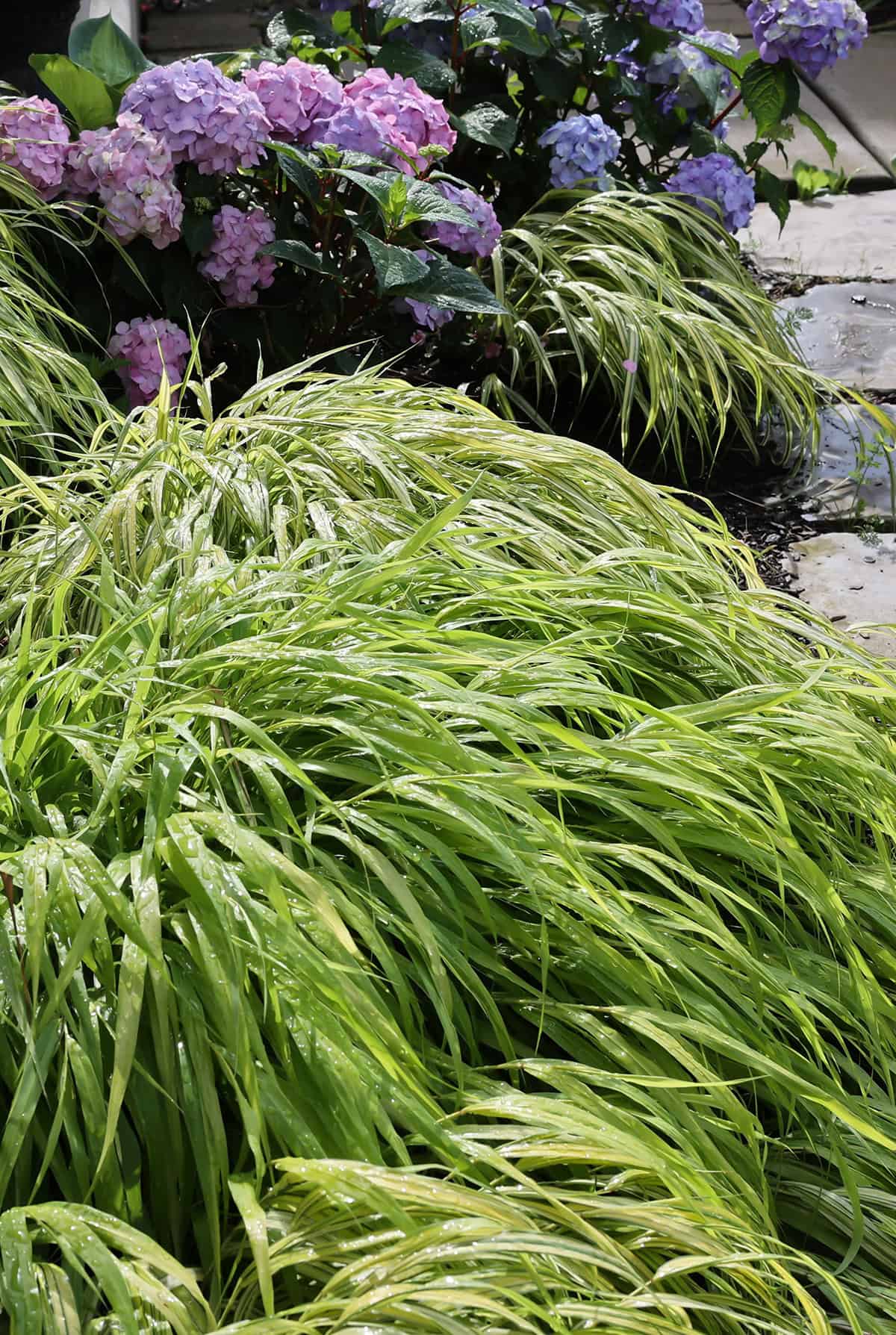
Mild days between about 60°F and 75°F produce the densest clumps and deepest color. Cool nights help the foliage hold its shape through summer.
Winter cold poses no problem in Zones 5 to 9. The leaves die back after frost while the roots rest underground, and a layer of mulch protects crowns in the coldest areas.
Long stretches above 85°F, especially with dry air or hot winds, scorch the leaves and wash out the color. Deep shade, mulch and regular watering help it through heat waves. Humid air is welcome, since the plant comes from damp Japanese forests.
Fertilizer
Japanese forest grass needs very little feeding. In rich soil, compost alone is enough, and too much fertilizer produces floppy blades that lose their graceful arch.
In poorer soil, scatter a balanced slow-release fertilizer such as 10-10-10 around the base in early spring at about half the label rate, away from the crown.
Container plants lose nutrients faster through watering, and a diluted liquid feed in late spring and again in midsummer helps them. Water after each feeding, and skip fertilizer after midsummer to avoid soft late growth.
Potting & Repotting
Japanese forest grass grows well in containers with drainage holes, partial shade and steady moisture. Choose a pot a few inches wider than the root ball to leave room for the clump to spread.
Fill it with a rich, well-drained potting mix with compost. Garden soil compacts in pots and suffocates the roots.
Pots dry faster than garden beds, especially in summer, so check them every day or two in hot weather. Repot or divide every two to three years in early spring, when roots circle the pot. Trim back old leaves, water well and place the plant in shade until it settles.
In Zones 5 and 6, move pots to a sheltered spot or sink them in the ground for winter, since roots in containers face harsher cold.
Pruning
This grass needs only one cutback a year. In late winter or early spring, before new shoots appear, cut the old foliage down to about 3 to 4 inches with sharp shears.
Leave the dried leaves standing through winter. They protect the crown from cold and add a soft tan color to the winter garden.
During the growing season, snip off any brown or damaged blades.
Propagation
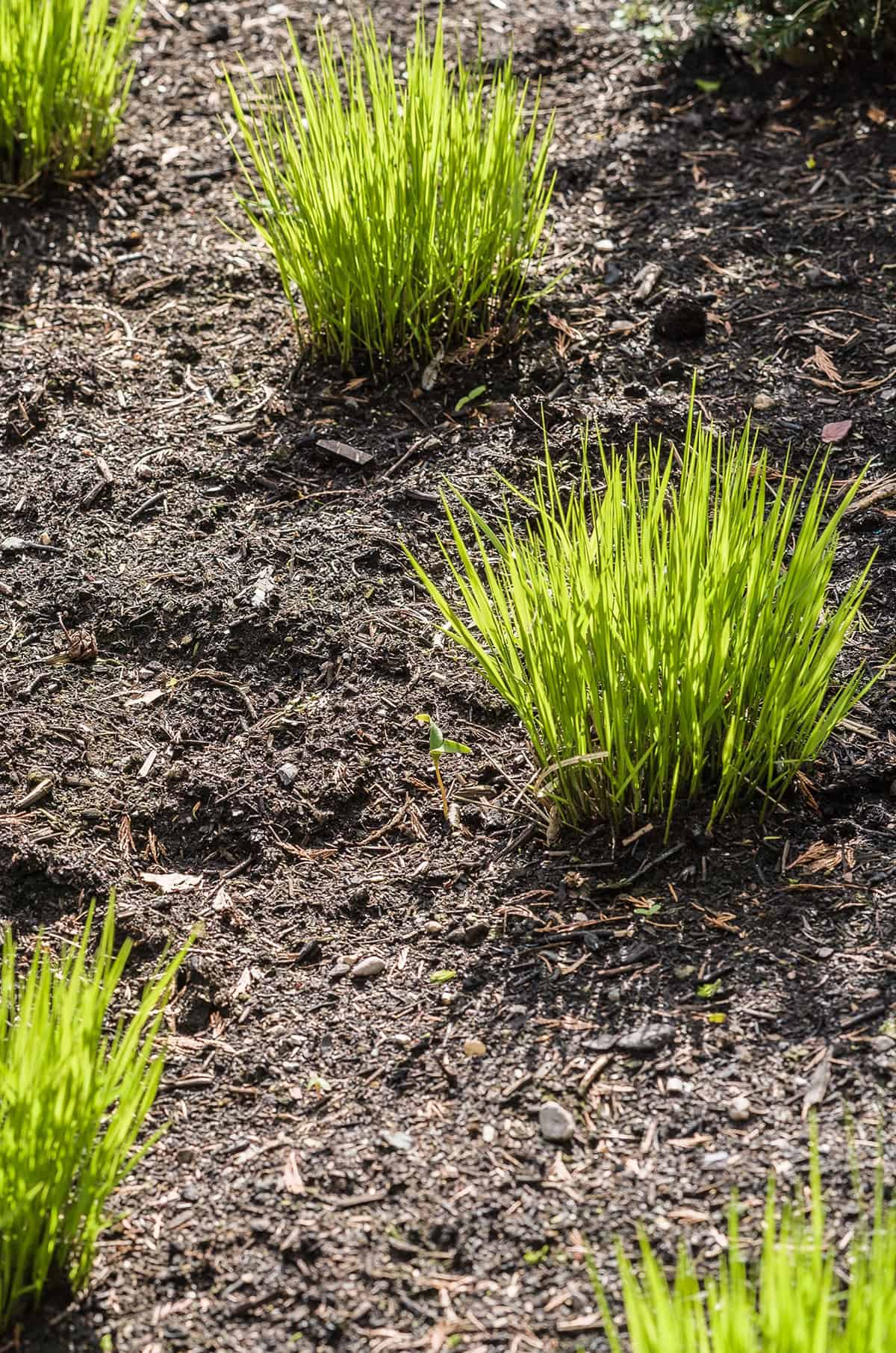
Division produces new plants identical to the parent. Seeds rarely come true for the named cultivars, and seedlings grow very slowly.
Divide in early spring as new growth begins, or in early fall in mild climates. Dig the clump, cut it into sections with several shoots and healthy roots each, and replant at the same depth, 18 to 24 inches apart.
Water the divisions well and hold the soil moist while new roots establish. Slow growth means division every three to five years is plenty, and it also refreshes older clumps with dead centers.
Common Problems
Pests and diseases rarely bother Japanese forest grass, and most problems trace back to light, water or weather.
Crispy brown tips and faded leaves point to sun scorch, especially on gold or variegated types such as ‘Aureola’. Move the plant into more shade and water more consistently.
Wilting and thin growth mean the soil is too dry, and deep watering plus mulch fix it. Yellow, collapsing leaves signal root rot in soggy ground, which calls for better drainage or a new spot.
New plants establish slowly, and clumps thicken over two or three years. Deer and rabbits mostly ignore mature plants, though young shoots may get nibbled, and a simple fence protects new plantings.
Varieties
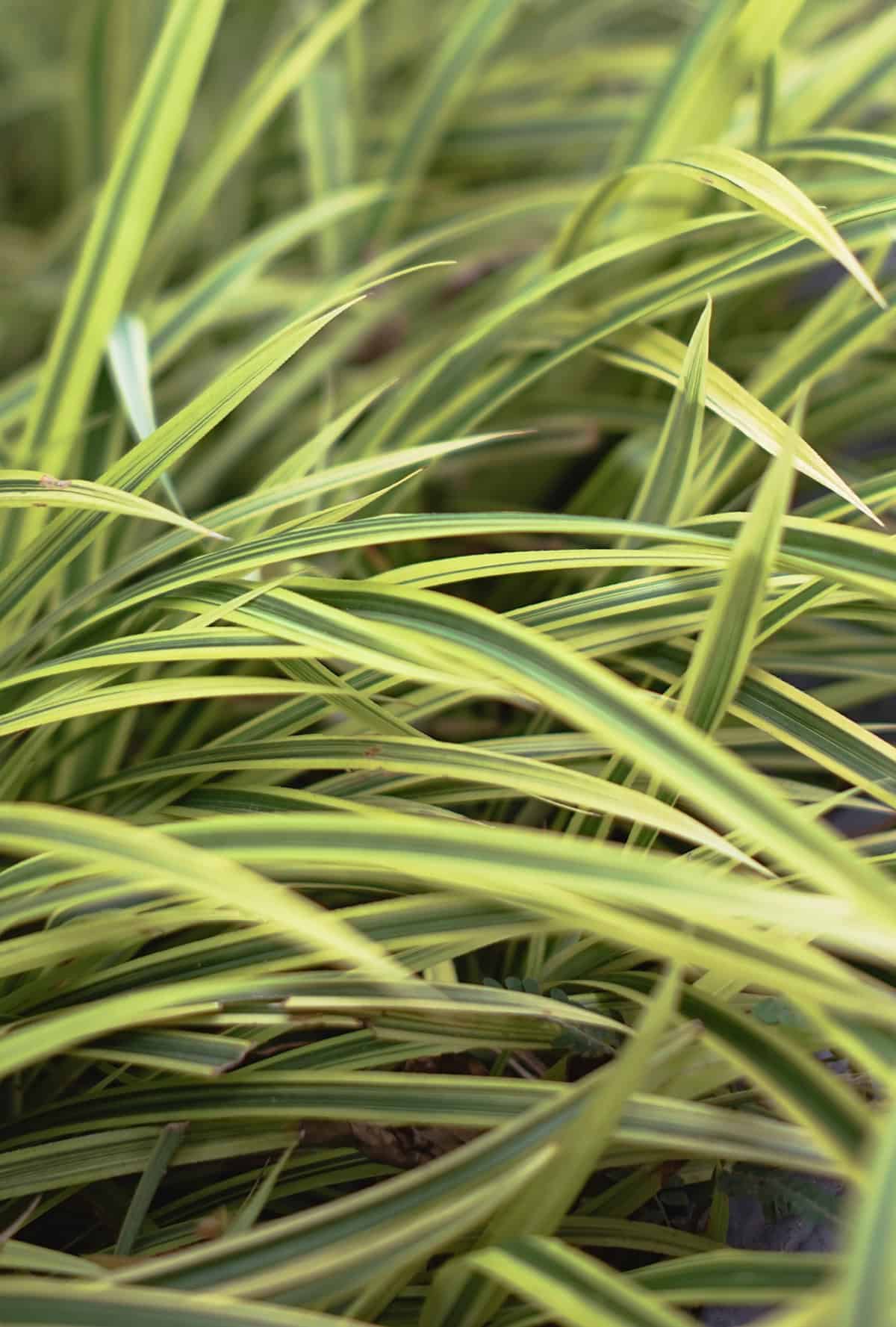
All cultivars share the same cascading habit, and they differ mainly in leaf color and size.
‘Aureola’, the best-known form, has bright yellow leaves striped with narrow green lines and grows 12 to 18 inches tall. Its color is richest in partial shade, and cool fall weather adds a pink or red blush.
‘All Gold’ carries solid golden-chartreuse blades on compact mounds about 12 to 14 inches tall. It tolerates more sun than other gold forms and fits containers well.
‘Albostriata’ has green leaves striped with creamy white and grows a little taller, to about 2 feet. ‘Beni-kaze’, whose name means red wind, starts green and blushes red and orange in fall.
The straight species, Hakonechloa macra, has plain bright green leaves and a coppery fall color. It pairs well with hostas and ferns along shaded borders.