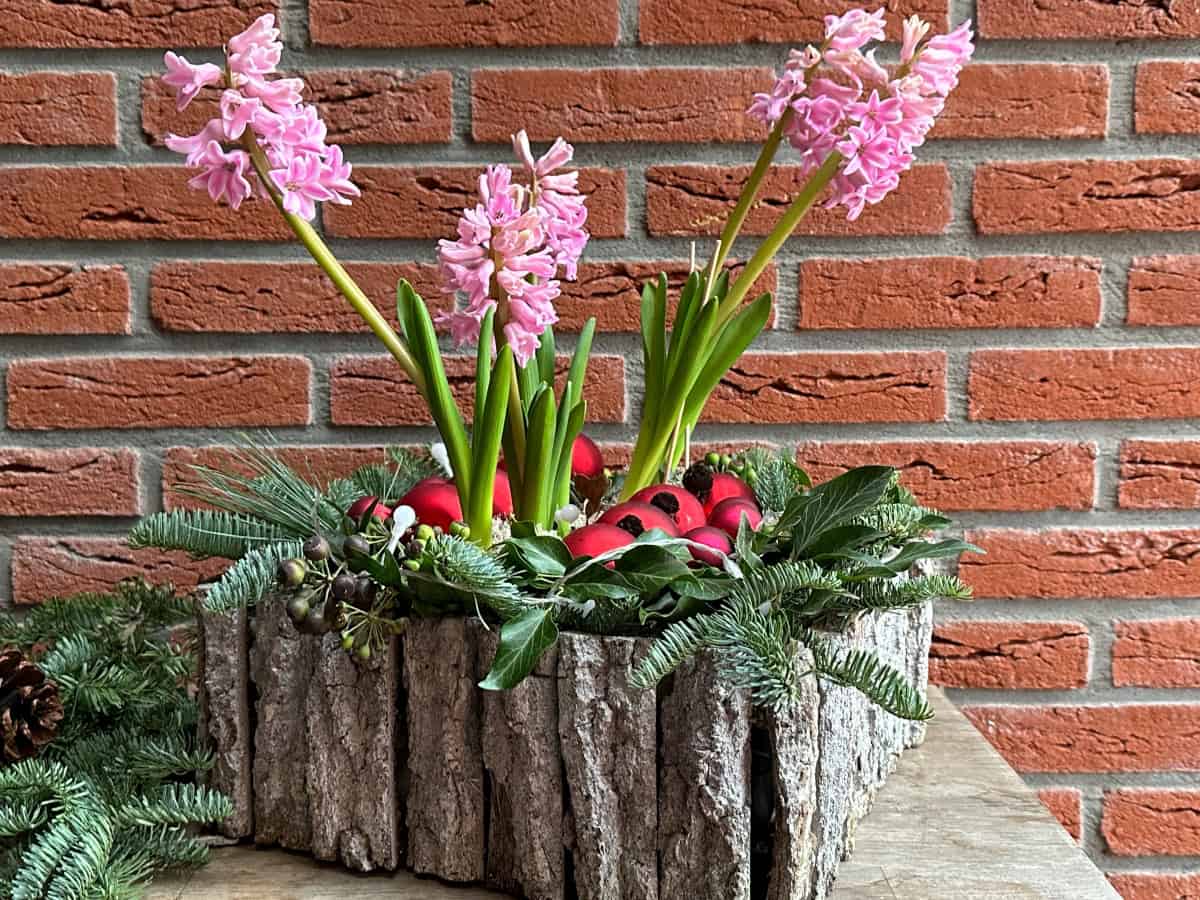
A galvanized bucket from a thrift shop costs less than a cup of coffee and holds up through frost, wind, and repeat seasons of reuse. Twenty dollars for fresh-cut greenery stretches far once stuffed into dented tin instead of a store-bought urn.
Porch displays built from secondhand containers and yard clippings read as custom-made, not cut-rate, once the branches settle into place. A neighbor walking past rarely clocks the price tag; the dents and patina just look like history.
Table of Contents
- Thrifted Metal Bucket Evergreen Planter
- Dollar-Store Ornament Planter With Pine Clippings
- Repurposed Wooden Crate Christmas Planter
- Free Yard Clippings And Pinecone Planter
- Painted Plastic Pot Made To Look Expensive
- Burlap-Wrapped Nursery Pot With Cedar
- Recycled Tin Can Mini Christmas Planters
- Old Basket Evergreen Porch Planter
- Cardboard Box Hidden Inside A Decorative Wrap
- Thrifted Crock With Fresh Evergreen Branches
- DIY Faux Birch Log Planter With Painted Branches
- Laundry Basket Hidden Inside Evergreen Greenery
- Old Toolbox Christmas Planter
- Terracotta Pot With Painted White Rim
- Mason Jar Cluster Inside A Wooden Box
- Cheap Plastic Urn Upgraded With Greenery
- Repurposed Rain Boot Christmas Planter
- Old Watering Can Evergreen Arrangement
- Reclaimed Wood Box With Red-Twig Branches
- Paper Bag Wrapped Porch Pot
- Secondhand Enamel Basin Christmas Planter
- DIY Wooden Barrel Look From A Cheap Plastic Pot
- Scrap Ribbon And Evergreen Planter
- Thrifted Colander Mini Evergreen Planter
- Concrete Block Planter With Fresh Greenery
- Reused Shipping Box Wooden Sleeve Planter
- Two Matching Budget Planters From Nursery Pots
- Minimal Evergreen Planter With One Statement Branch
Thrifted Metal Bucket Evergreen Planter
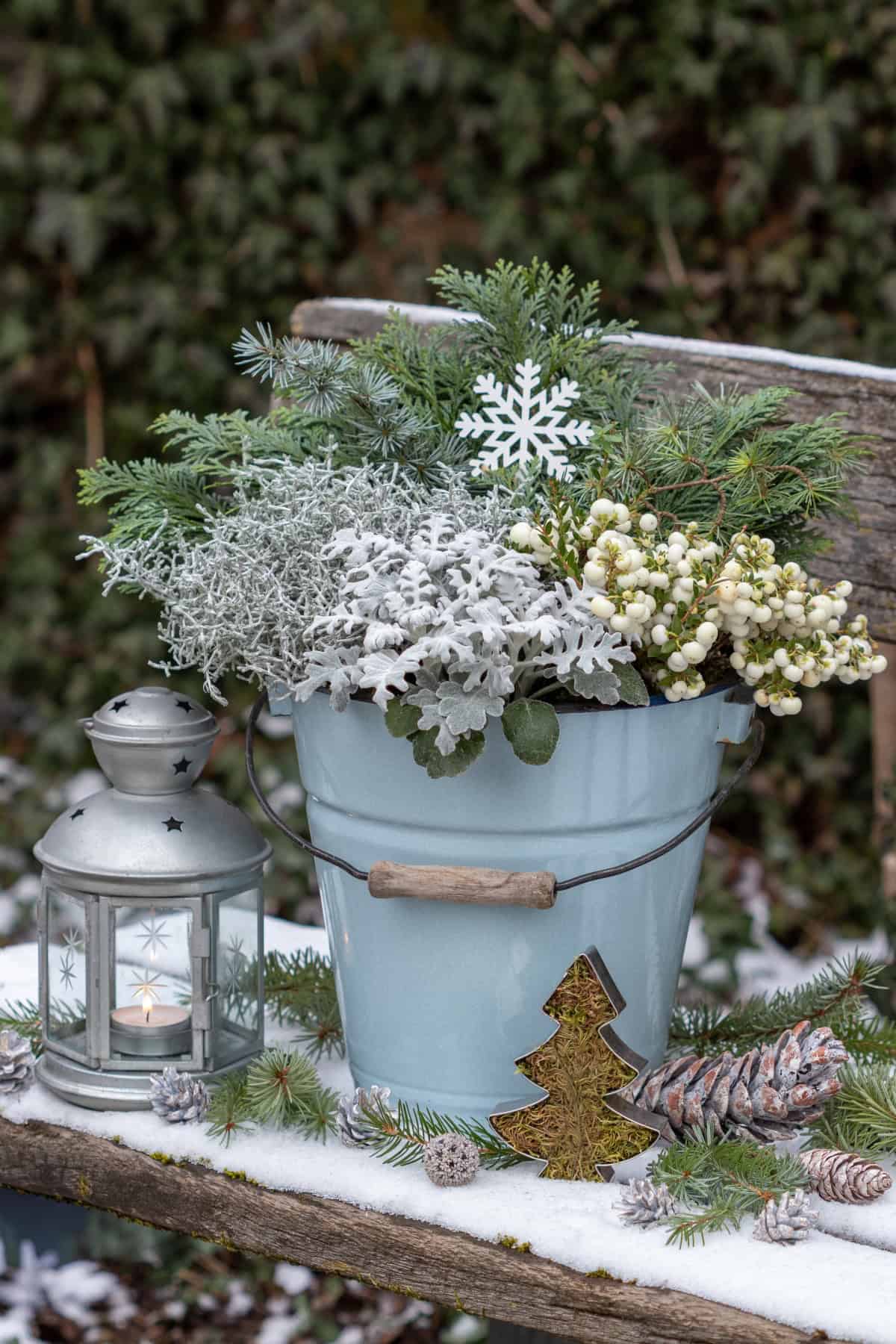
A dented galvanized bucket, the kind sold for two or three dollars at any secondhand shop, holds its shape under heavy greenery better than most new containers twice the price. Drill a few drainage holes in the base before loading it with florist foam or sand to anchor stems upright.
Noble fir, white pine, and boxwood clippings fan out at varying heights, with a cluster of red berry picks tucked near the rim for color. The dull silver finish reads as farmhouse, not forgotten, once it holds a season’s worth of greenery.
Dollar-Store Ornament Planter With Pine Clippings
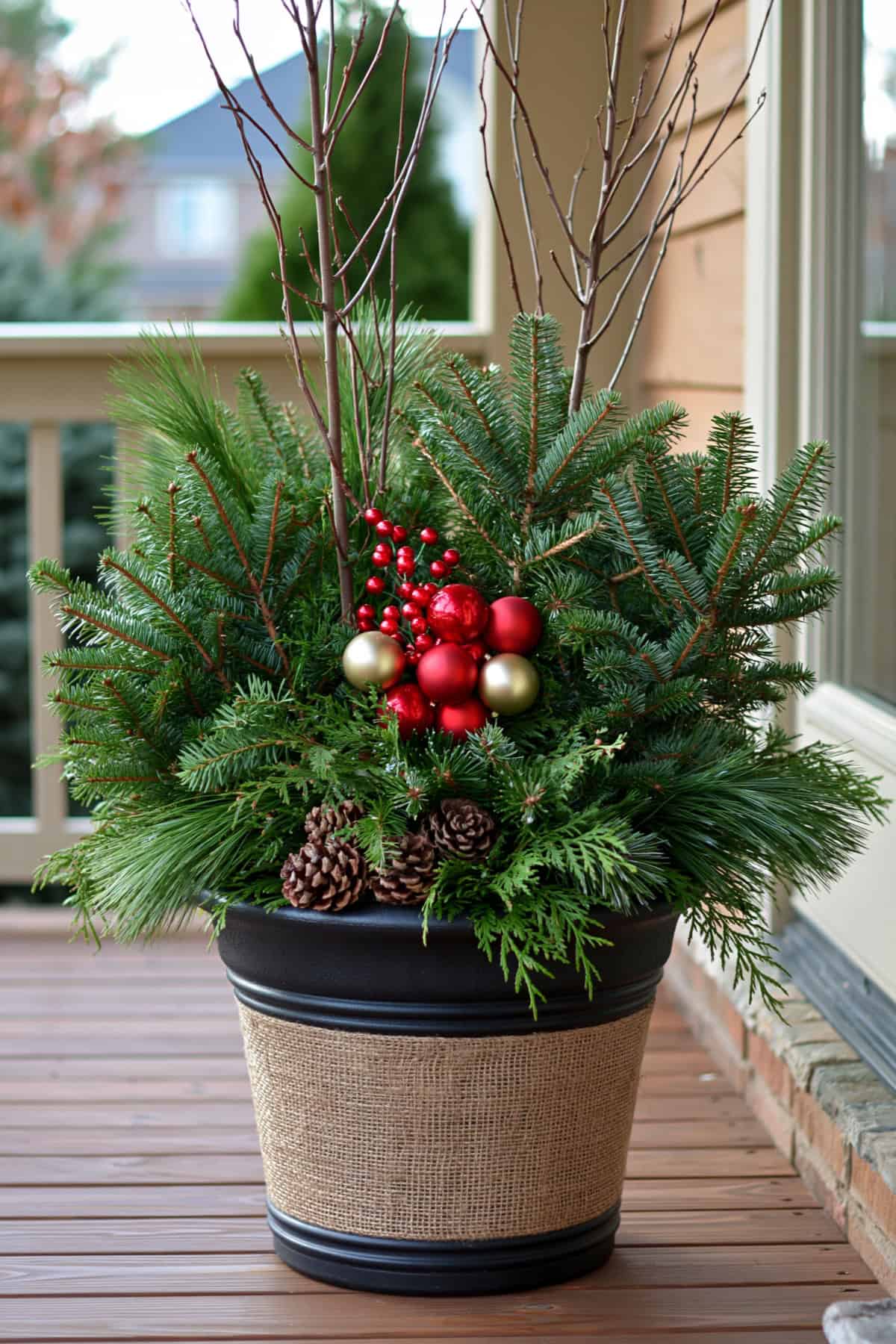
Shatterproof ornaments in bulk packs run a few dollars at most budget retailers, and loose ones scattered through pine clippings catch porch light at odd angles all evening. Push wired picks of Douglas fir into a foam base set inside any small pot, then nestle ornaments between the branches rather than hanging them.
Clustering three or four colors (deep red, matte gold, a single frosted white) keeps the arrangement from reading as leftover holiday stock. A planter built this way costs under fifteen dollars and looks assembled by a florist, not pulled from a clearance bin.
Repurposed Wooden Crate Christmas Planter
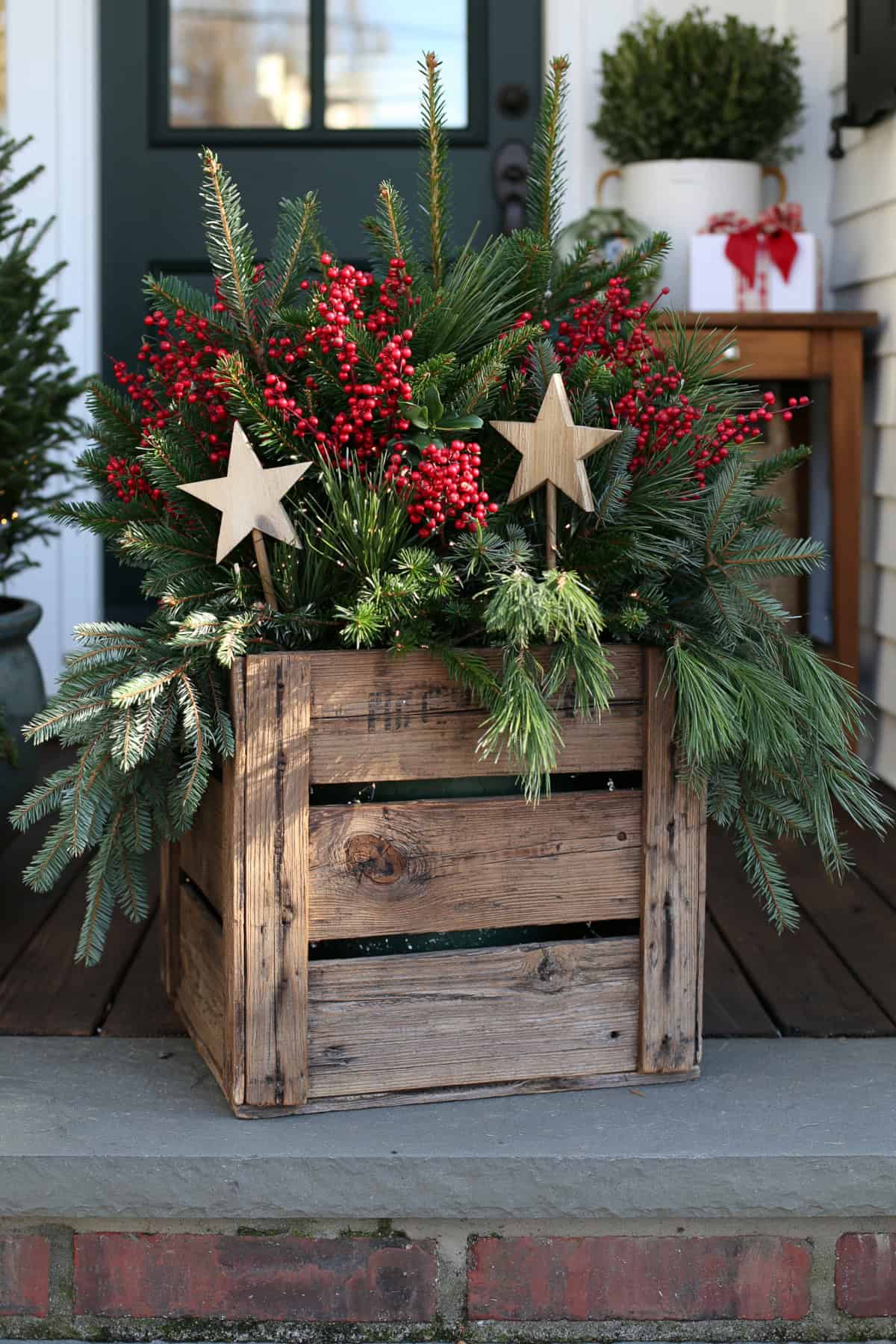
Slatted wood with visible wear, the kind stamped with old produce logos or shipping stencils, sets a rustic frame around greenery that a smooth ceramic pot never quite matches. Farm stands and liquor stores frequently give these away once their stock runs out.
Line the inside with a plastic nursery pot or trash bag before adding soil or foam, since the gaps between slats leak. Stack two crates of different sizes on a porch step for height variation, with longer branches spilling past the crate’s edge toward the ground.
Free Yard Clippings And Pinecone Planter
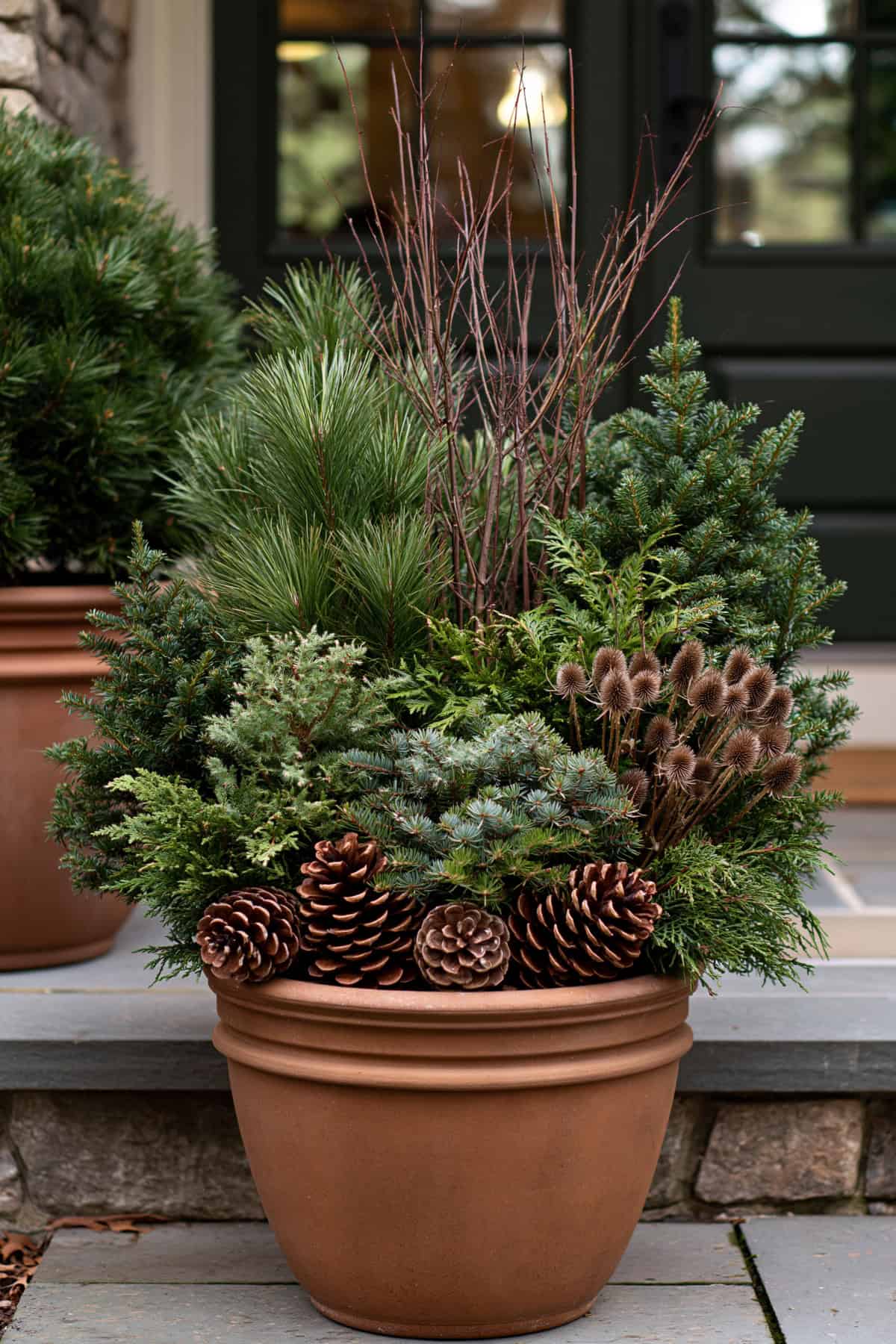
Cost barely factors into this one: pinecones litter most yards by late November, and a single mature pine or spruce drops enough branches after a windy day to fill several containers. Gather clippings with varied needle lengths (cedar, juniper, spruce) for depth rather than relying on one species alone.
Pinecones wired or hot-glued onto skewers push into soil or foam at staggered heights, filling gaps between greenery. A planter built entirely from yard scraps costs nothing beyond the container itself, and the mixed textures hold their shape through several hard frosts.
Painted Plastic Pot Made To Look Expensive
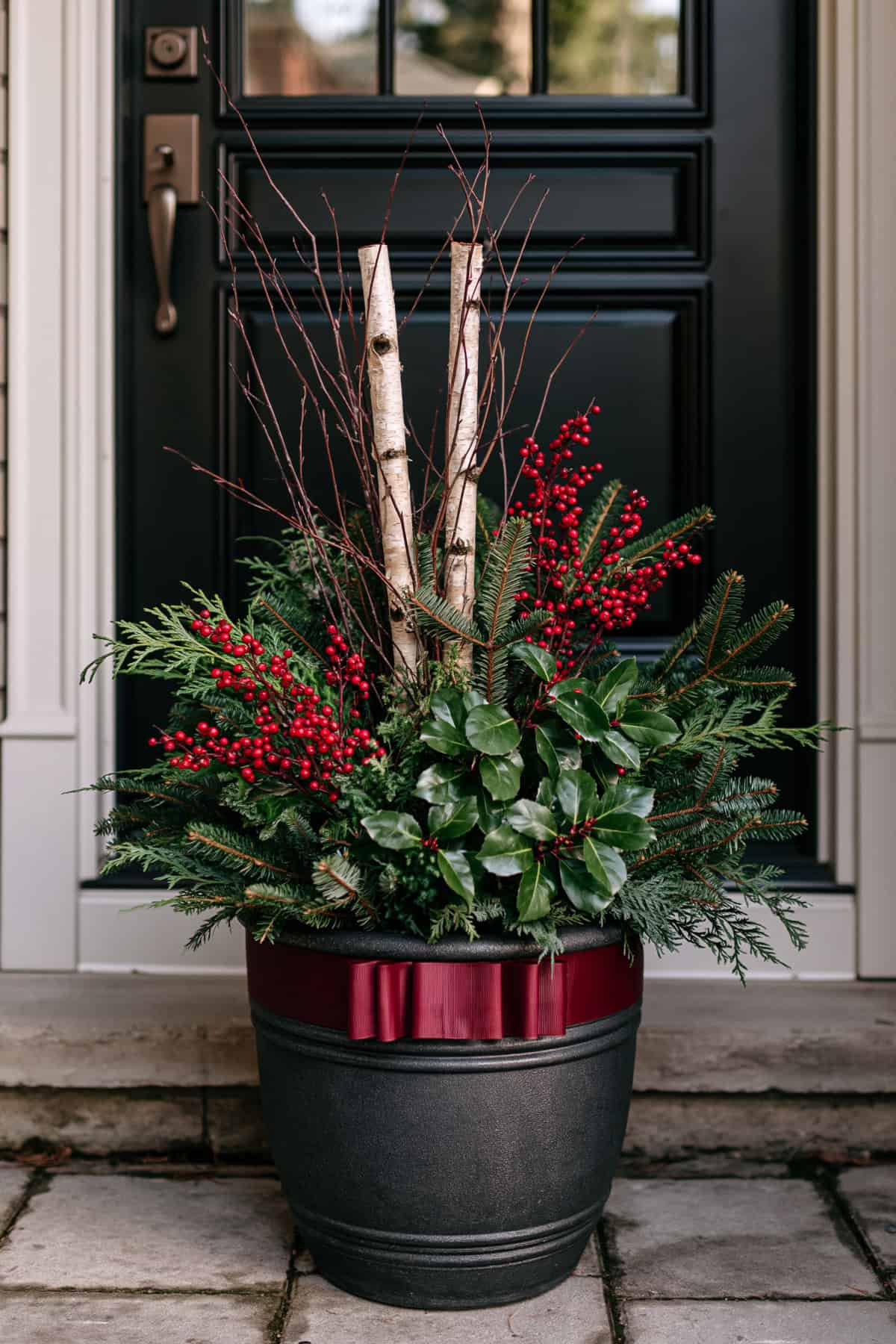
Lightweight plastic pots from a hardware store clearance rack rarely pass for anything upscale straight off the shelf, but two coats of matte spray paint in charcoal, cream, or deep green change that fast. Sand the surface lightly first so paint grips plastic instead of beading on it.
A coat of stone-textured spray paint, sold near concrete patching products, replicates cast stone at a fraction of the weight and cost. Finished pots sit beside porch columns holding greenery, and guests rarely guess the container started as a three-dollar nursery pot.
Burlap-Wrapped Nursery Pot With Cedar
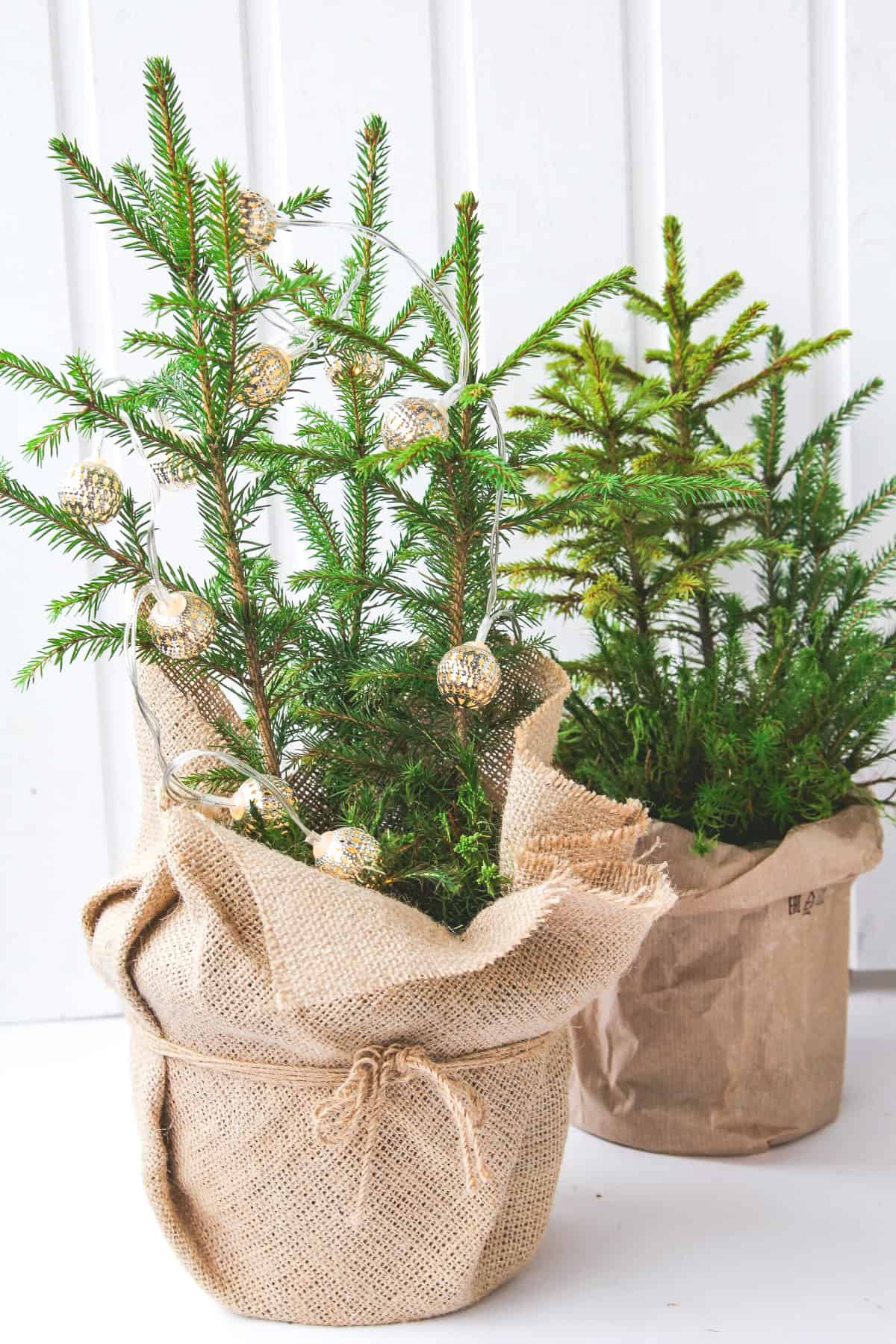
Rough burlap wrapped twice around a black plastic nursery pot hides the seams and gives a planter arrangement a handmade edge, without the cost of a real wood or ceramic container. Secure the fabric with jute twine or hot glue along the back seam where it won’t show.
Cedar boughs, heavier and more fragrant than pine, hold their shape well inside burlap’s loose structure and release scent whenever brushed against. A nursery pot that cost under five dollars, dressed this way, sits convincingly on a porch step beside a far pricier neighbor.
Recycled Tin Can Mini Christmas Planters
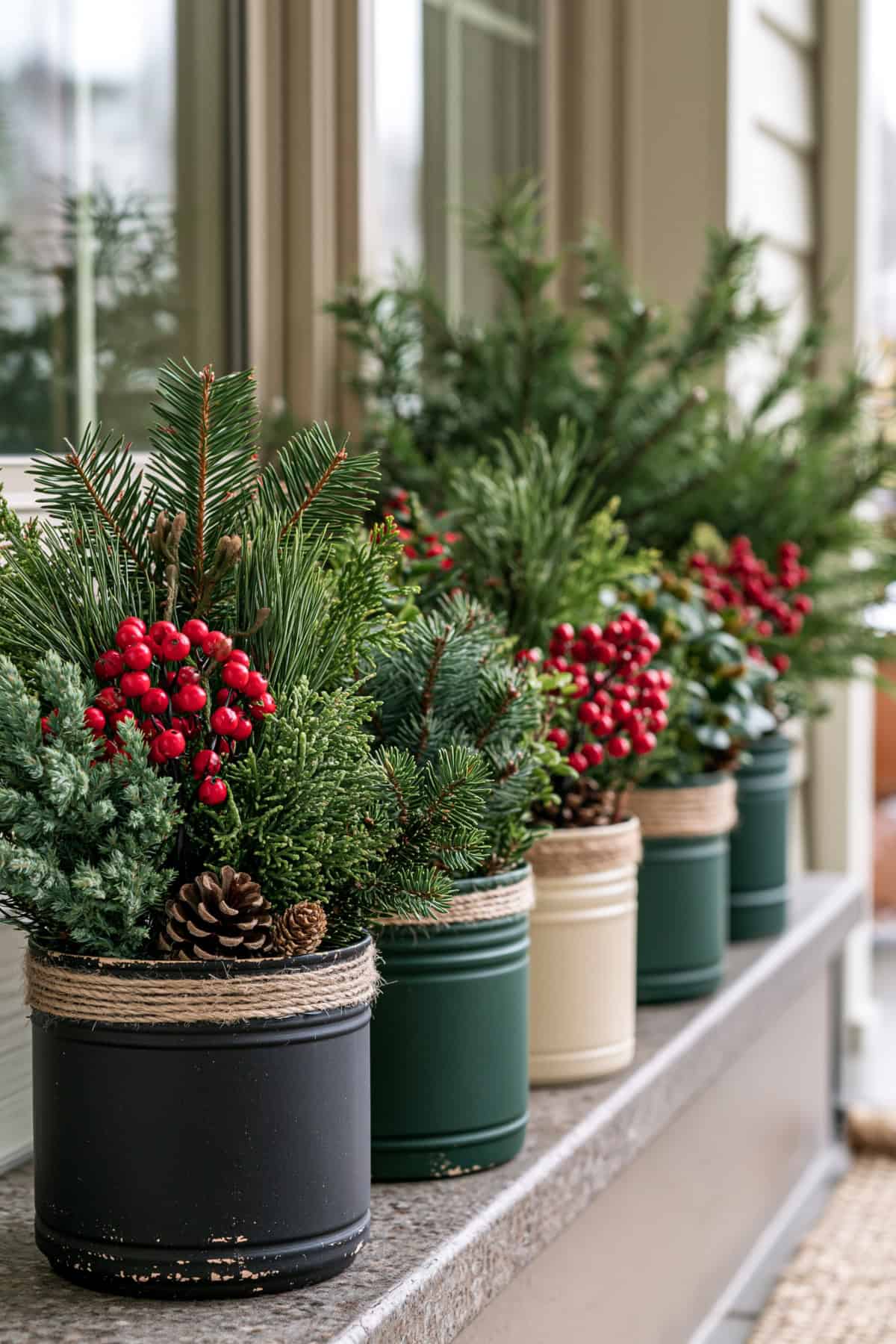
Soup cans, coffee tins, even large tomato cans, once the labels soak off in warm water, turn into a cluster of miniature planters perfect for a windowsill or entry table. Punch a drainage hole in each base with a hammer and nail before loading with sprigs of rosemary, boxwood, or holly.
Wrapping each can in a strip of plaid ribbon or twine disguises the printed metal underneath. Grouped in odd numbers, three or five cans of varying heights read as a deliberate collection rather than recycled kitchen waste.
Old Basket Evergreen Porch Planter
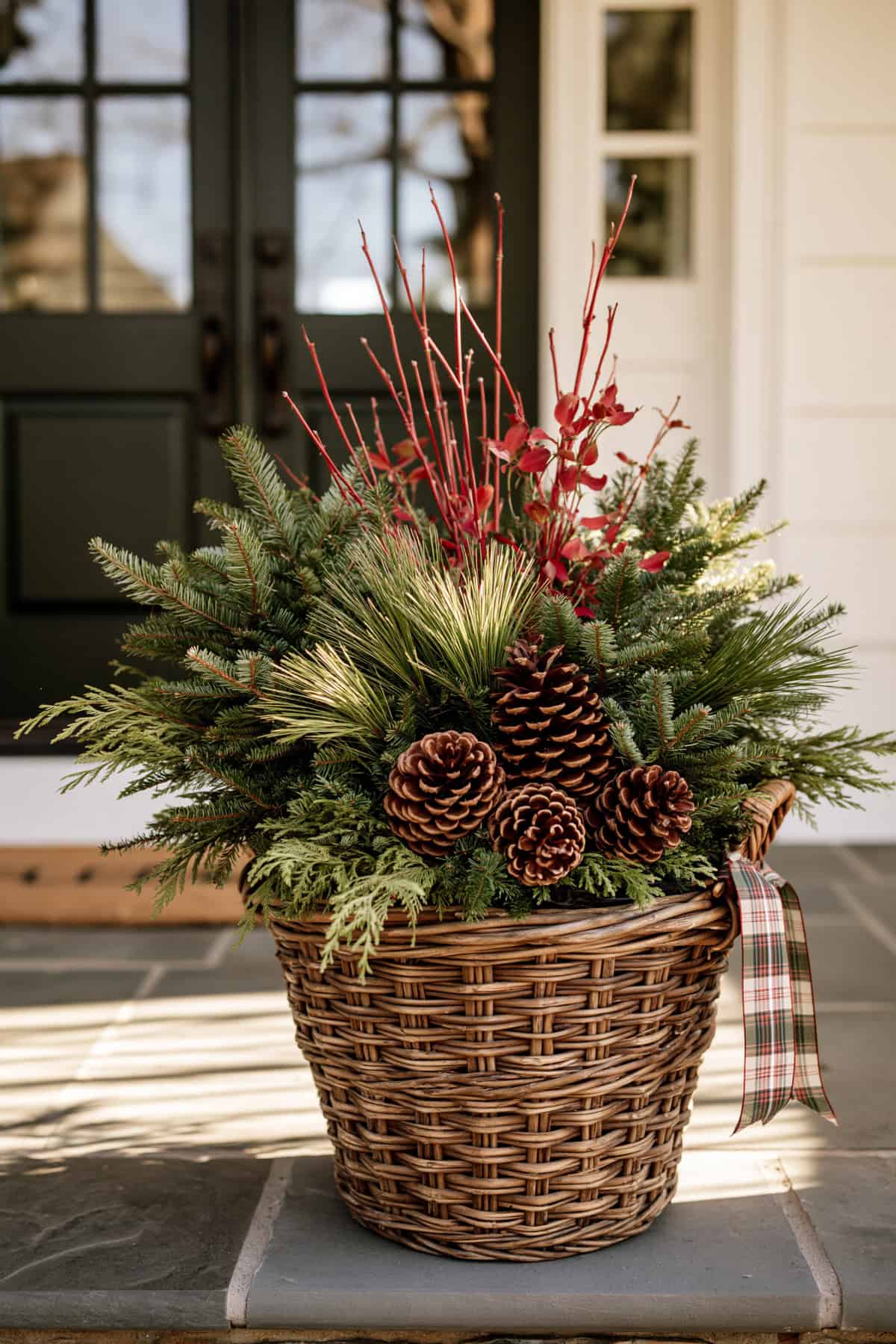
Woven baskets with handles, the kind found stacked in thrift store corners for a dollar or two, carry an irregular shape that mass-produced planters rarely replicate. A plastic liner or trash bag keeps soil and moisture off the natural fibers, which otherwise rot within a season outdoors.
Tall branches of white pine or birch lean against the basket’s handle for support, creating height without extra hardware. Set beside a front door, a basket planter holds up through a full winter if kept dry between waterings.
Cardboard Box Hidden Inside A Decorative Wrap
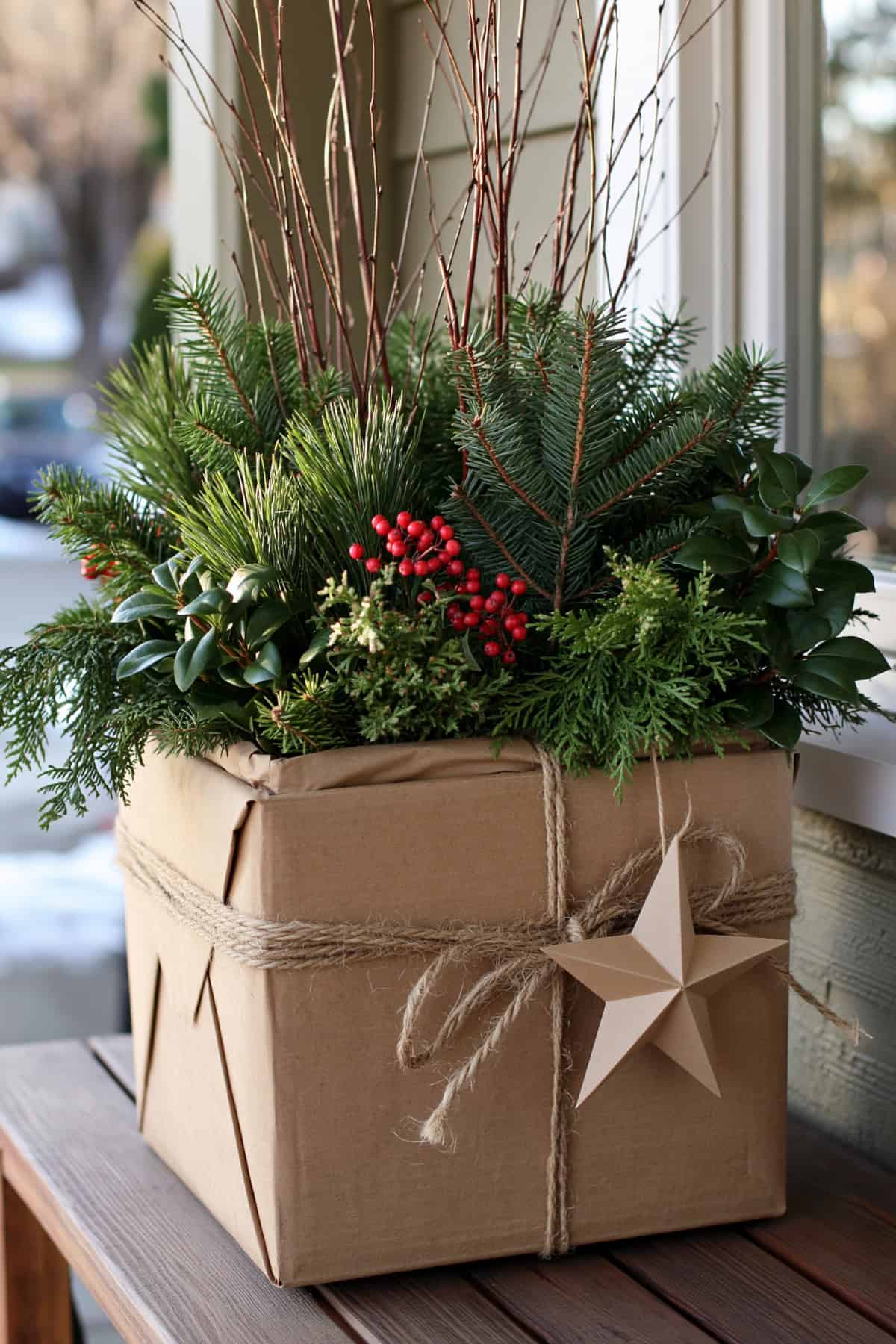
A sturdy shipping box, the free kind piling up after online orders, forms the hidden skeleton behind several budget planter builds. Wrapped in wood-grain contact paper or plain kraft paper cinched with twine, the box disappears entirely under the finished look.
Weight matters here: fill the base with sand, rocks, or old bricks before adding a plastic liner and foam, since cardboard alone buckles under wet soil. Greenery arranged at the top draws the eye away from the structure holding it up.
Thrifted Crock With Fresh Evergreen Branches
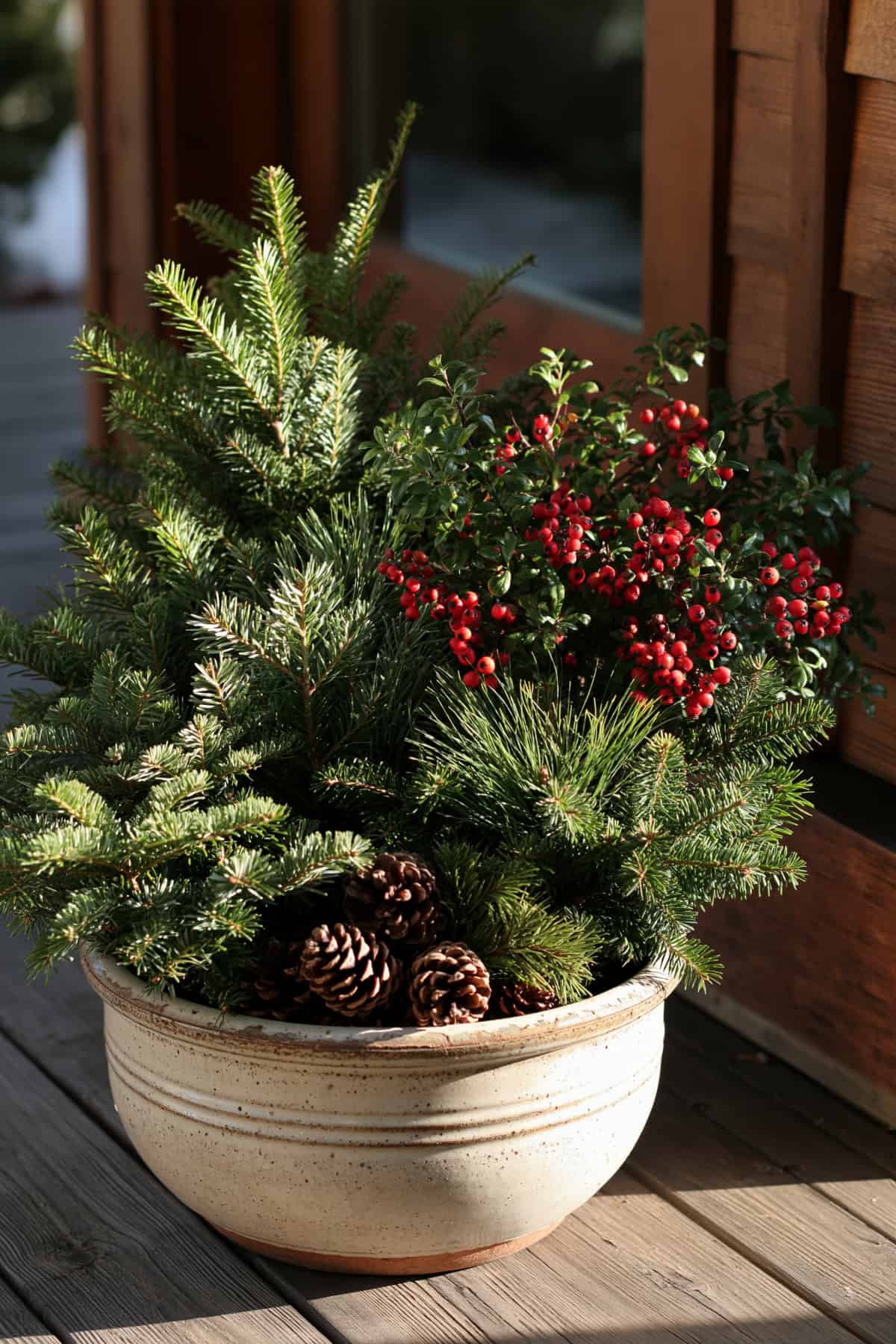
Stoneware crocks, often sold as kitchen antiques for five to ten dollars, carry a weight and glaze that no plastic imitation matches. Chips and hairline cracks along the rim barely register once greenery spills over the edge.
Fresh-cut branches of fir or spruce, pushed directly into damp sand inside the crock, stay green for weeks without foam or wire. The crock’s narrow mouth holds stems upright on its own, cutting out a step most other containers require.
DIY Faux Birch Log Planter With Painted Branches
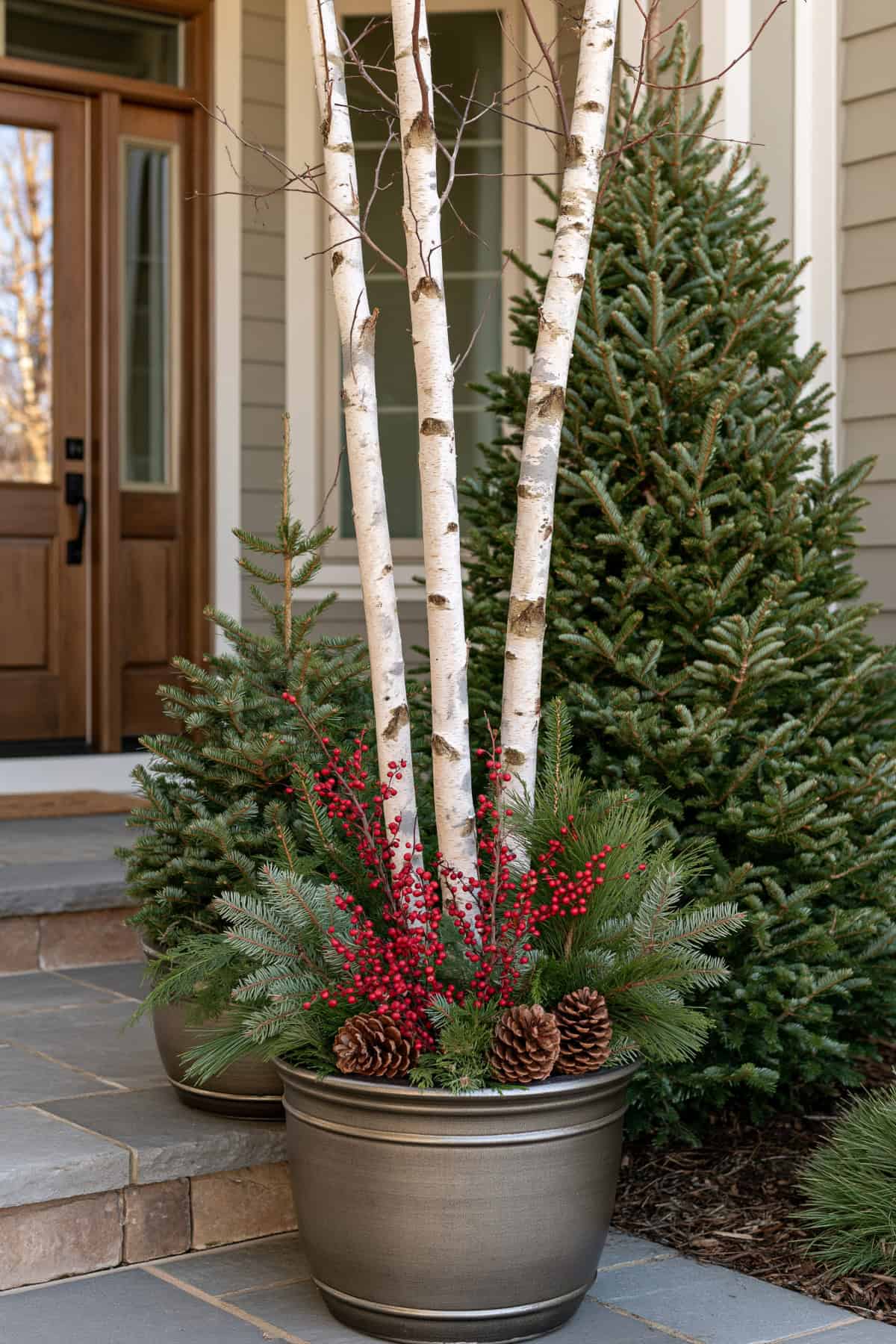
Plain wooden dowels or fallen branches, painted in horizontal bands of white and gray, replicate birch bark closely enough that most passersby never question it. Glue several painted lengths around the outside of a plastic bucket or coffee can, standing them vertical like a tight fence.
A thin rubber band or wire holds the dowels in place while glue sets. Greenery tucked into the container’s open top plays against the pale bark tones, and the whole build costs less than a single real birch log from a craft store.
Laundry Basket Hidden Inside Evergreen Greenery
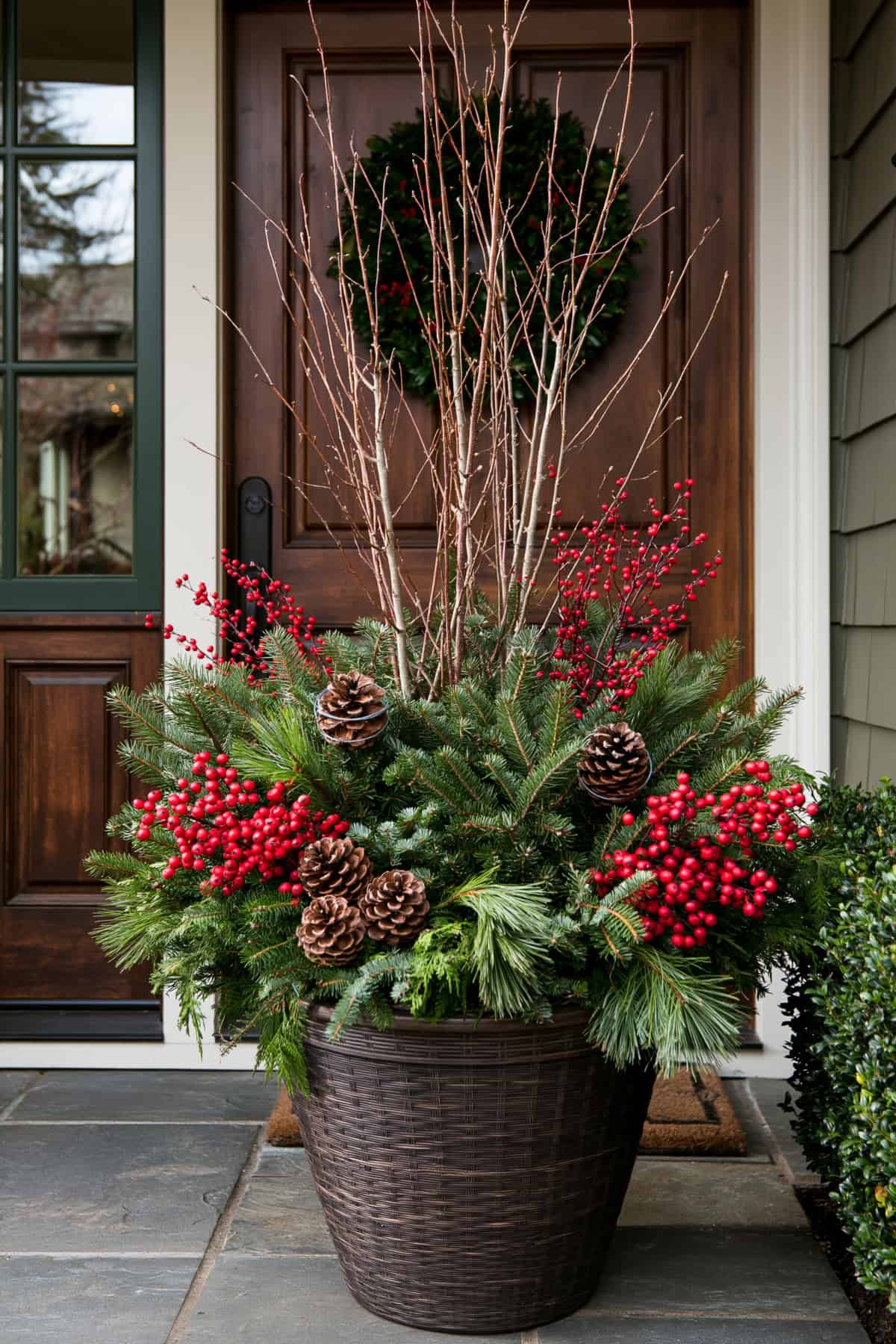
An old plastic laundry basket, the kind with open-weave sides, drains water on its own and skips the step of drilling holes most containers require. Line it with a trash bag, cut slits for drainage, then pack the interior with soil or foam before covering the visible plastic with layered greenery.
Long cedar or pine boughs draped over the rim hide the basket’s shape within minutes. Its size works for a large porch corner, where a single small pot looks lost.
Old Toolbox Christmas Planter
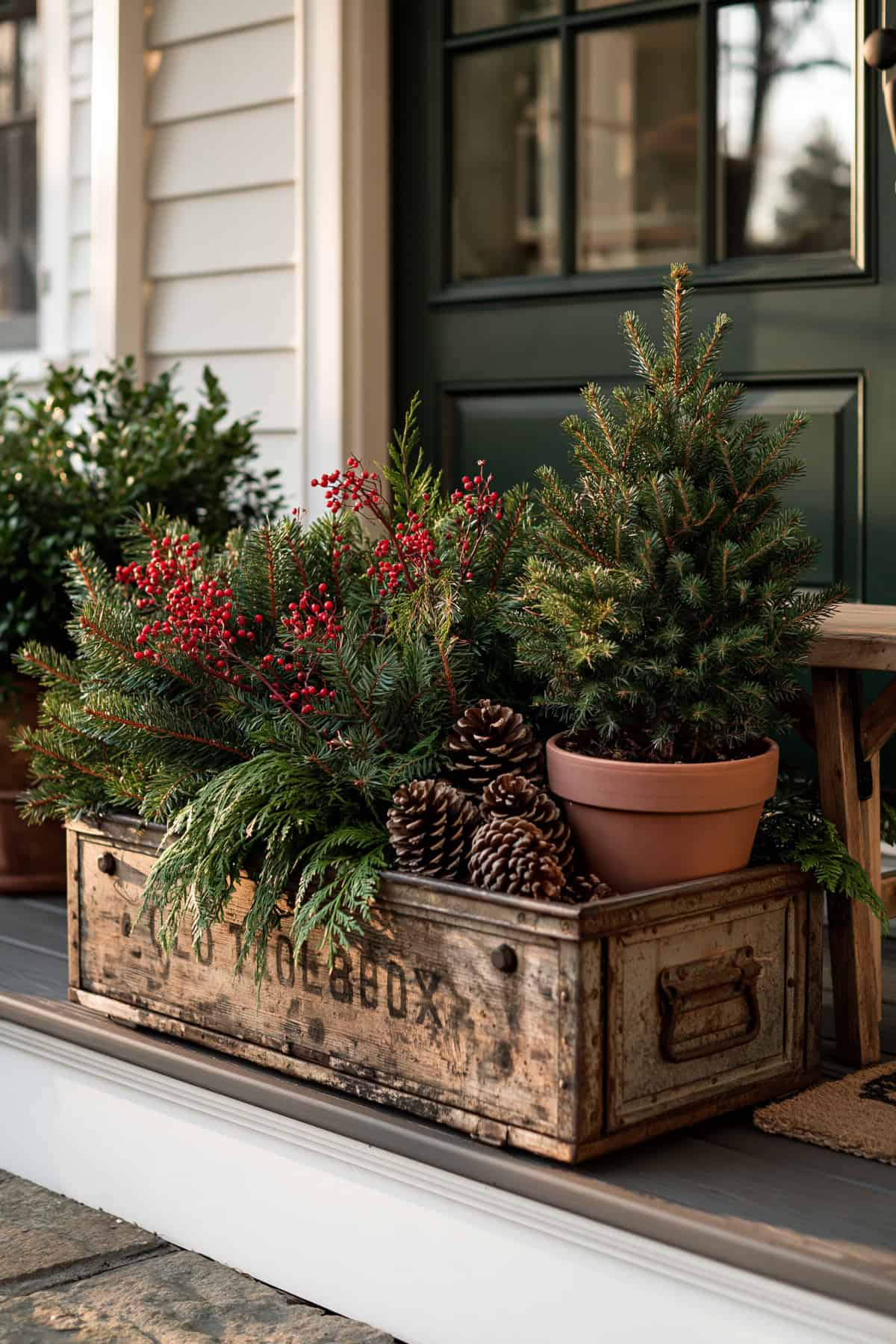
Metal or wooden toolboxes, especially vintage ones with a flip-top lid and worn paint, sit low and wide in a way few traditional planters do. The shape works especially well laid flat along a porch railing or windowsill, since the original handle doubles as a hanging point.
A plastic liner inside catches runoff before it stains old wood or rusts bare metal further. Short clippings of boxwood or holly, kept low, respect the toolbox’s horizontal lines instead of fighting them with tall branches.
Terracotta Pot With Painted White Rim
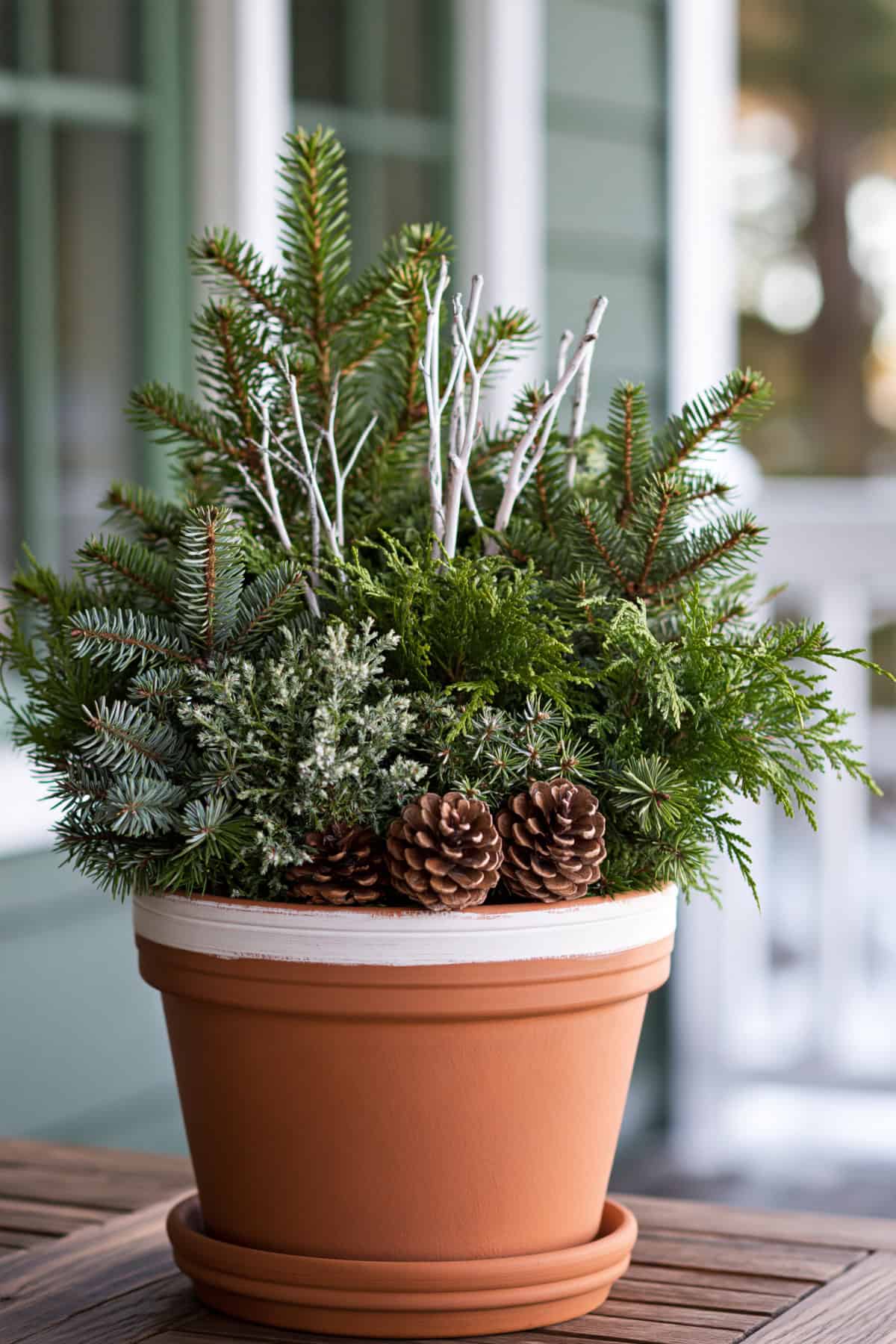
A plain clay pot, the cheapest planter option at any garden center, reads as a different object entirely once the top two inches get a coat of white paint. Painter’s tape marks a crisp line before brushing on an exterior-grade white, left to dry fully before greenery goes in.
The contrast between raw terracotta and the painted band mimics a far pricier ceramic finish. Stacked in graduated sizes along porch steps, three or four painted pots cost under twenty dollars combined.
Mason Jar Cluster Inside A Wooden Box
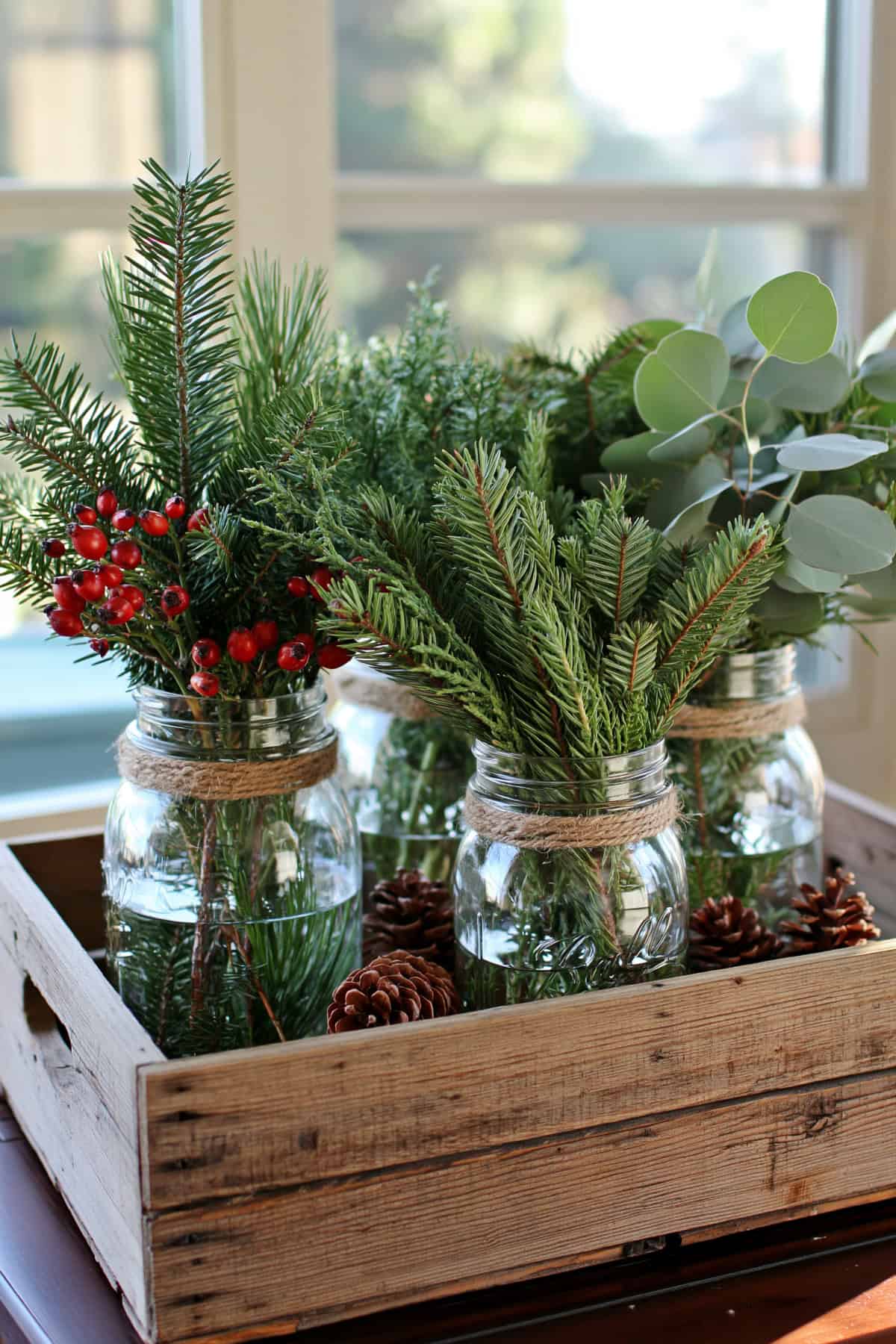
Glass jars, whether leftover from pantry storage or picked up secondhand for pennies each, hold water cleanly and show off stems through clear sides. Grouped inside a shallow wooden crate or box, five or six jars of mismatched heights create a tiered look without extra hardware.
Short clippings of eucalyptus, pine, or berry stems fit into narrow jar openings far easier than wide florist foam blocks allow. The wood frame around the jars hides their mismatched labels and keeps the glass from tipping over in wind.
Cheap Plastic Urn Upgraded With Greenery
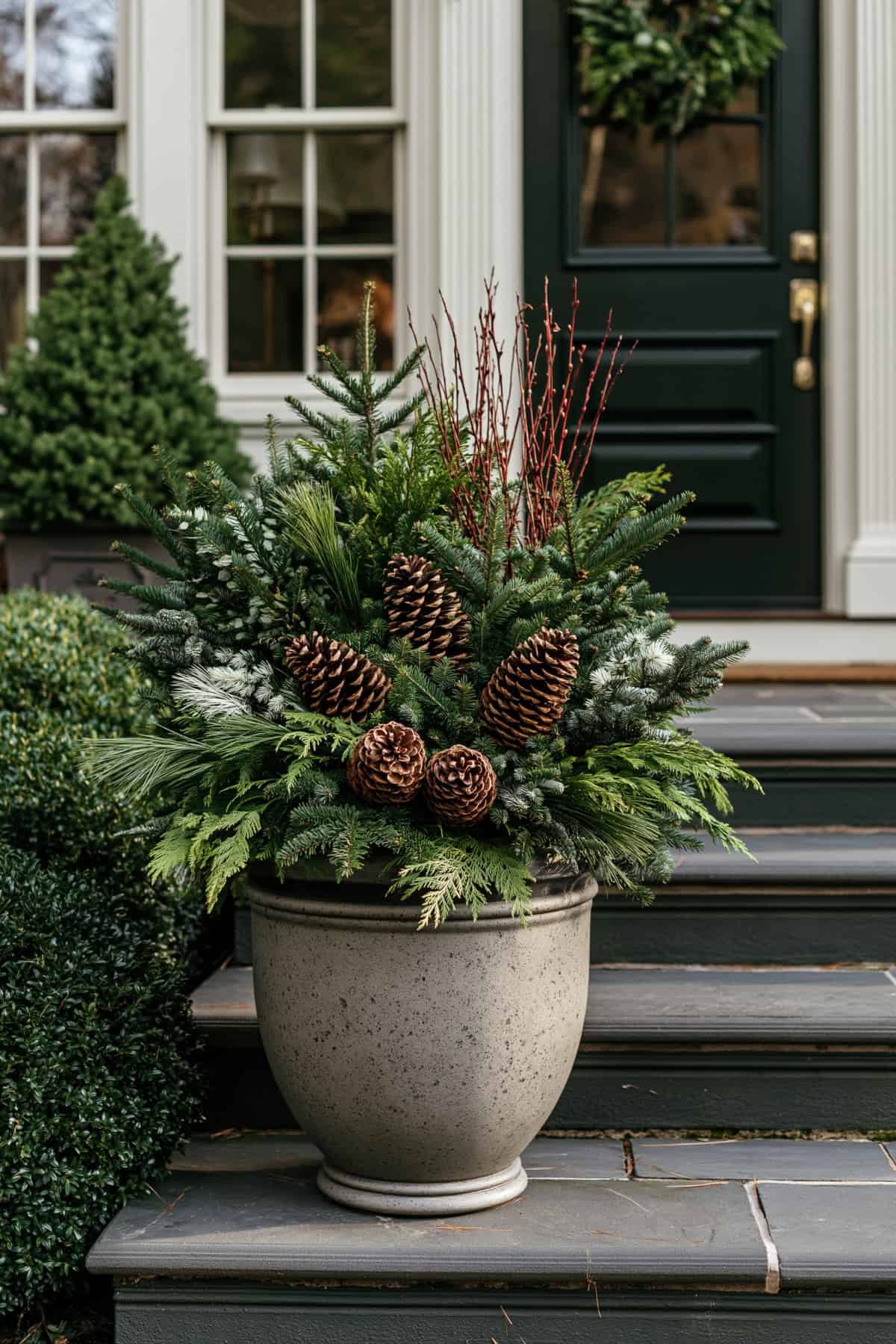
Discount garden centers sell plastic urns shaped like classic cast stone, usually under ten dollars, and the illusion holds up surprisingly well from porch distance. A coat of stone-effect spray paint, textured rather than smooth, corrects the slight plastic sheen that gives cheaper pots away up close.
Tall branches of pine or magnolia anchored in the urn’s center, with shorter greenery trailing over the rim, draw attention upward and away from the base material. Flanking a front door in a matched pair, two upgraded urns read as a single cohesive purchase.
Repurposed Rain Boot Christmas Planter
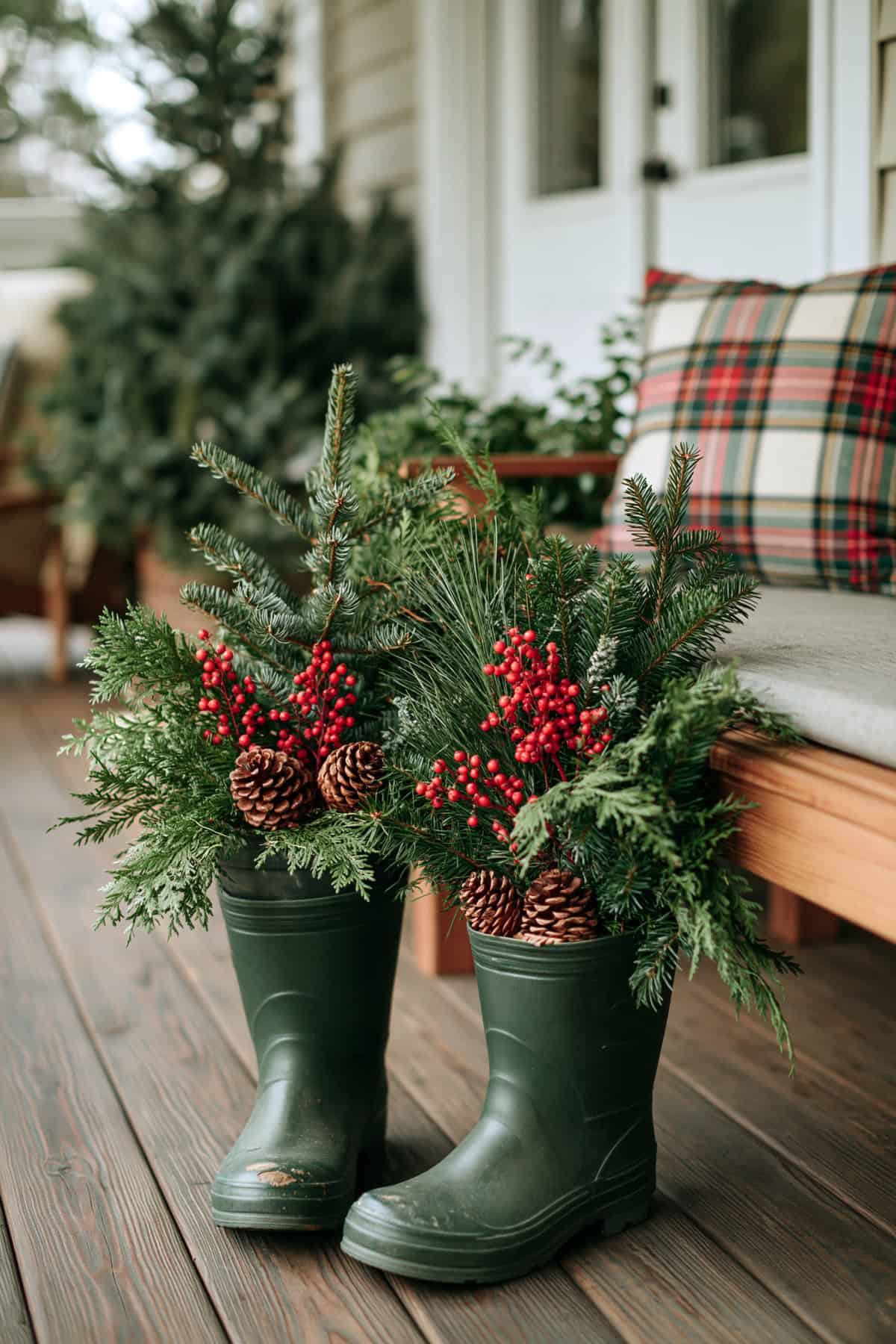
A single cracked rain boot, retired from actual use, holds soil and greenery at an angle most rigid containers can’t replicate. Drainage holes punched through the sole keep water from pooling inside the rubber.
Red or green boots lean into the holiday color scheme directly, while a neutral tan or black pair reads more like a rustic farmhouse accent. Set on a low step or bench, one boot planter catches attention precisely because it stands out as a planter at all.
Old Watering Can Evergreen Arrangement
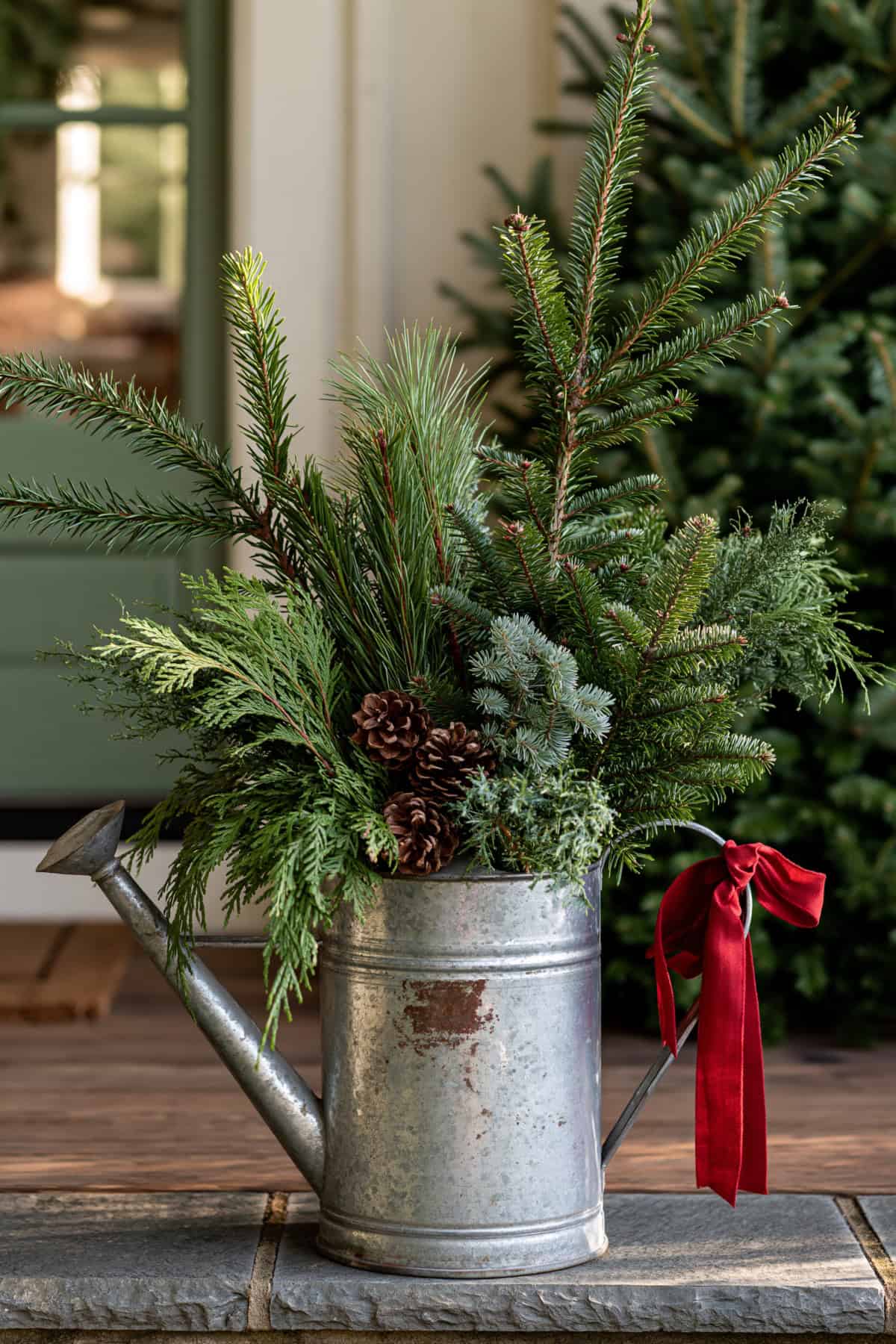
Rust spots and a dented spout, flaws that would sink a watering can’s usefulness for actual watering, give it character once it holds greenery instead. The narrow opening at the top limits arrangement size but keeps stems upright without foam or wire support.
Branches of cedar or juniper pushed through the spout opening create a secondary, smaller cluster beside the main arrangement in the can’s body. Set on a porch railing or step, a repurposed watering can costs nothing if one is already sitting unused in a garage or shed.
Reclaimed Wood Box With Red-Twig Branches
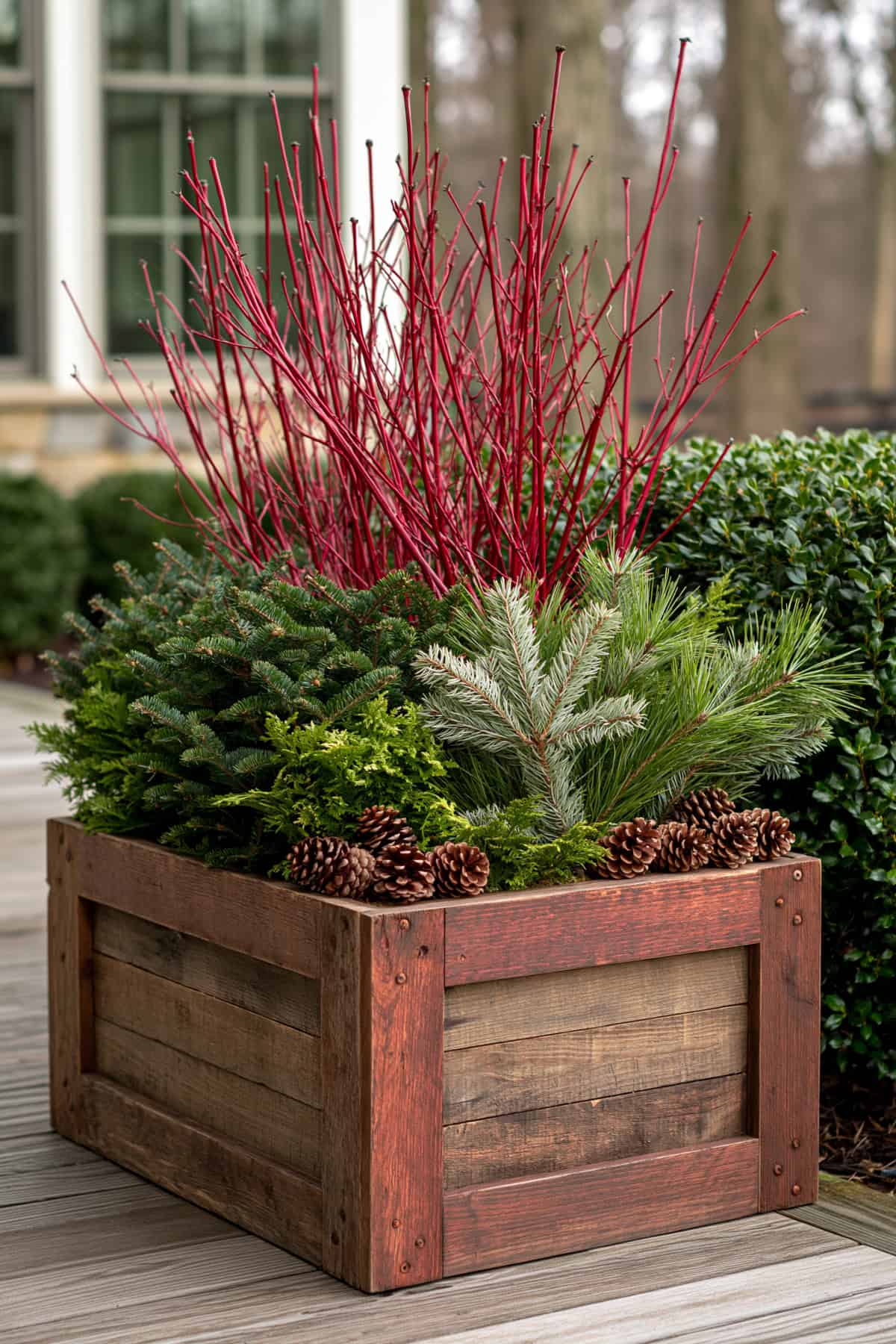
Weathered boards pulled from an old pallet or fence, nailed into a simple open box shape, carry a gray, sun-bleached tone that new lumber takes years to develop naturally. Red-twig dogwood branches, sold in bundles at most garden centers for under ten dollars, push into the box’s soil or foam base and rise well above the rim.
The bright red bark against silvered wood creates the sharpest color contrast on this list, visible from the street even without added ornaments. Snow collecting on the thin branches only sharpens the effect further.
Paper Bag Wrapped Porch Pot
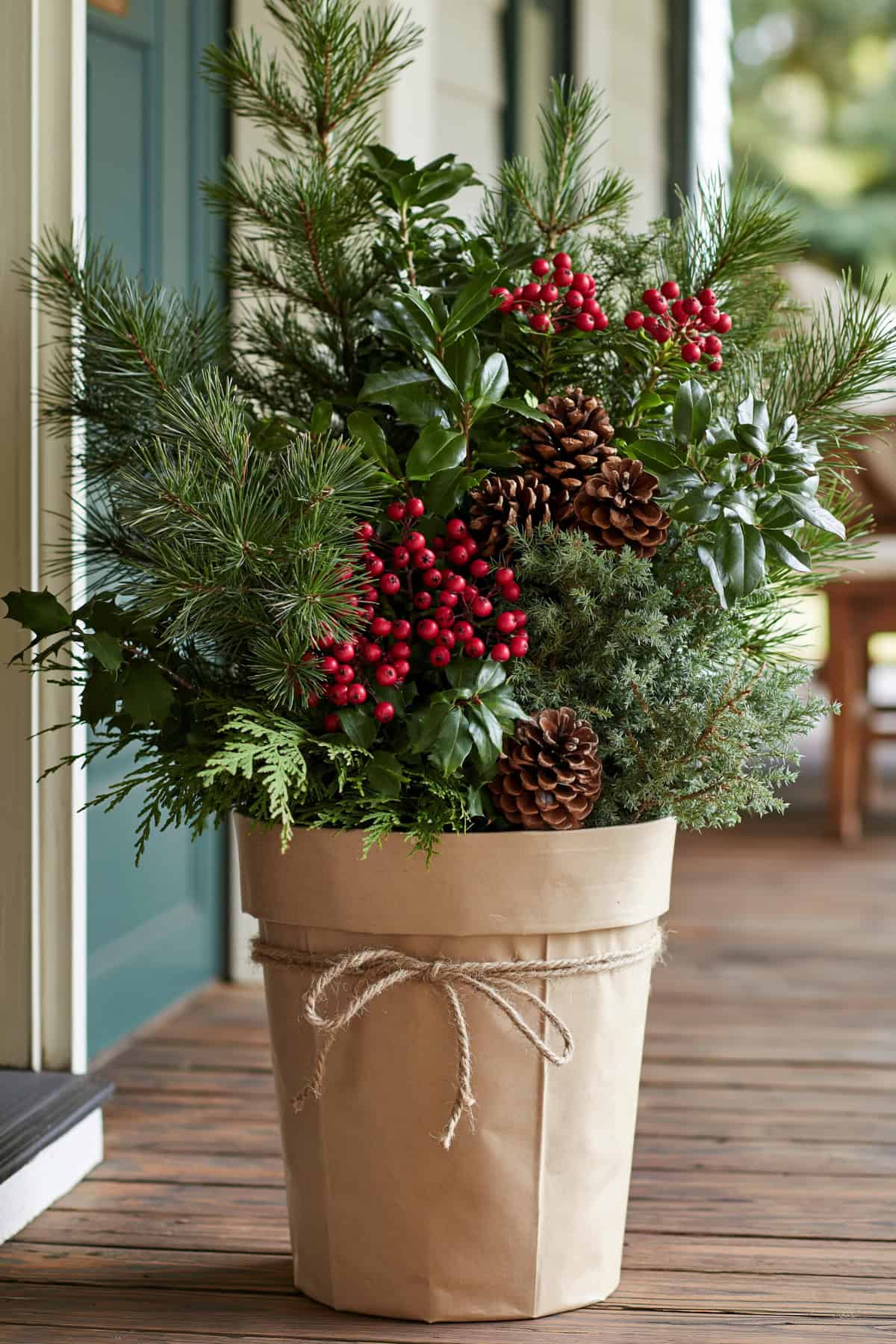
Heavy kraft paper bags, the grocery-store kind, wrap around a plain plastic pot and cinch at the top with twine for a look closer to a designer paper planter sleeve. Double or triple-layering the bags adds rigidity, since a single layer sags once damp.
Folding the top edge down like a cuff, rather than leaving it straight, adds a finished edge without extra materials. Short greenery clippings kept close to the rim avoid putting too much weight against the paper’s limited support.
Secondhand Enamel Basin Christmas Planter
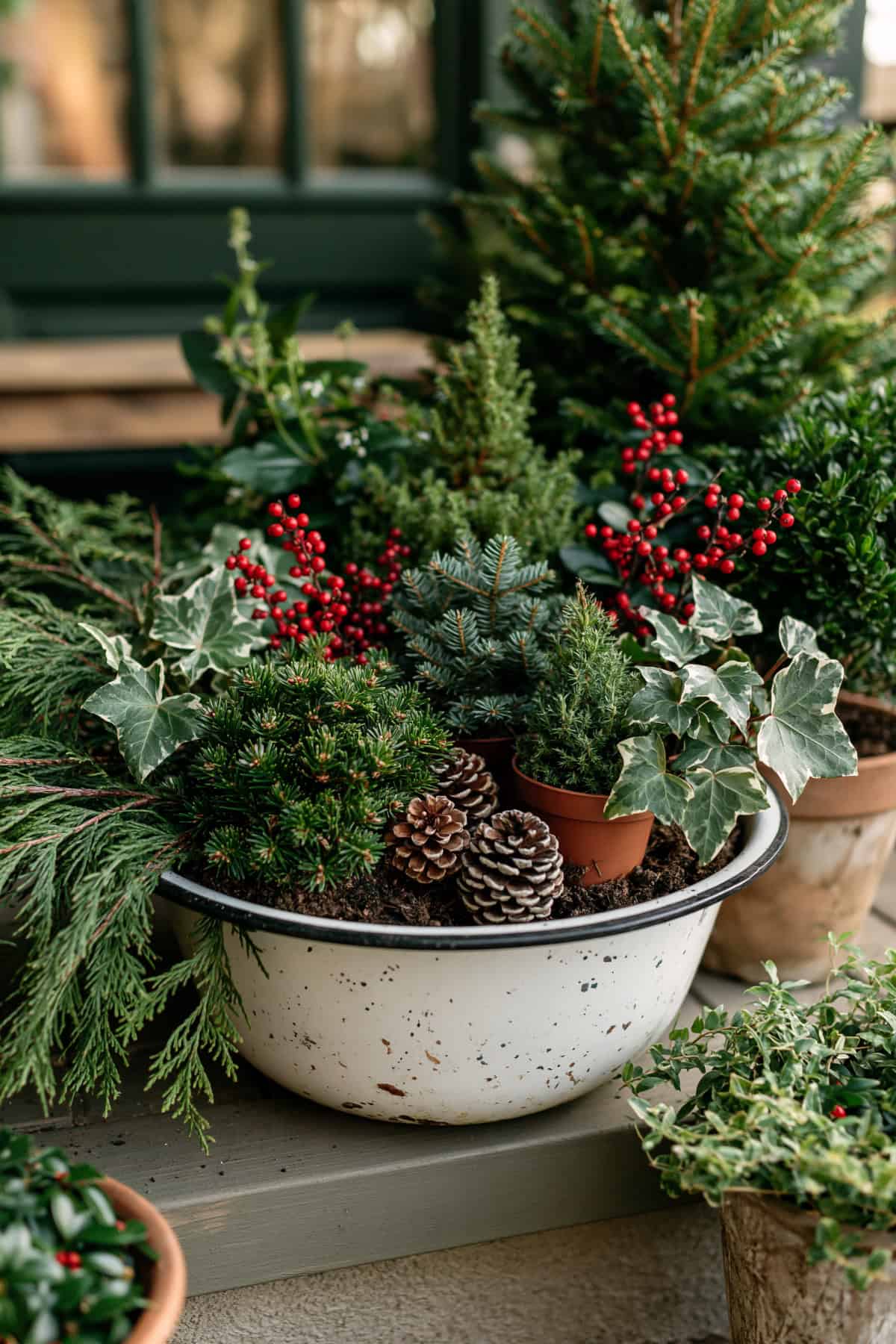
Chipped enamelware basins, sold at flea markets and estate sales for a few dollars, show their age in a way that reads as collected over time rather than bought new last week. The shallow, wide shape holds a dense, low arrangement better than a tall narrow pot does.
A tight dome of boxwood or cedar clippings, trimmed level across the top, matches the basin’s rounded silhouette instead of fighting it with tall spikes. Rust around the rim’s edge, left untouched, only adds to the aged look.
DIY Wooden Barrel Look From A Cheap Plastic Pot
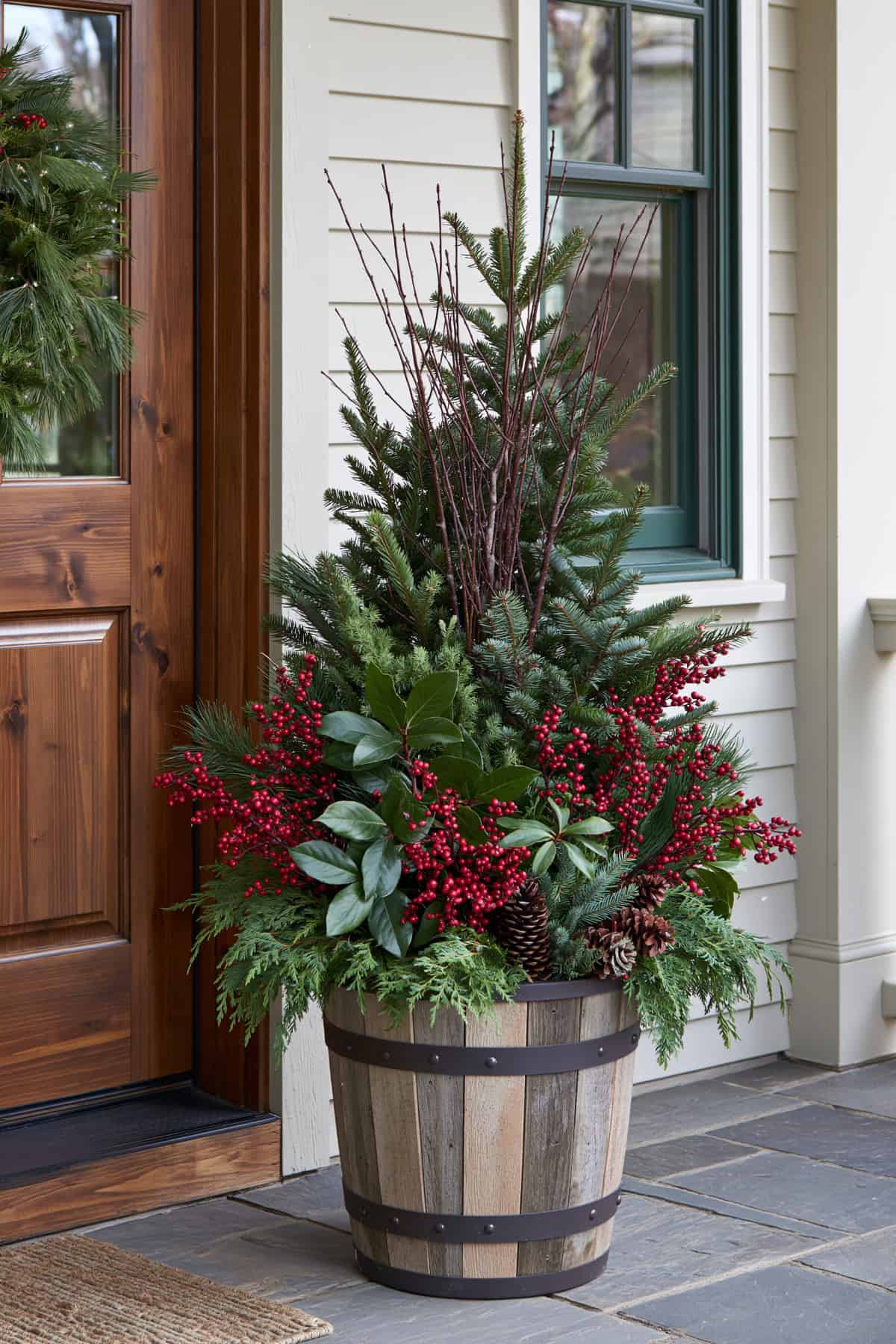
A round plastic pot, wrapped in thin wood slats glued vertically around the outside, mimics a half-barrel planter at a fraction of the weight and cost. Craft stores sell pre-cut wood strips by the bundle, or a hand saw turns a few fence pickets into the same shape.
Metal-look ribbon or painted cardboard bands wrapped horizontally around the slats, spaced like barrel hoops, complete the illusion from a few feet away. Loaded with greenery and a single pinecone cluster, the finished planter weighs far less than an actual barrel and moves easily between porch and storage.
Scrap Ribbon And Evergreen Planter
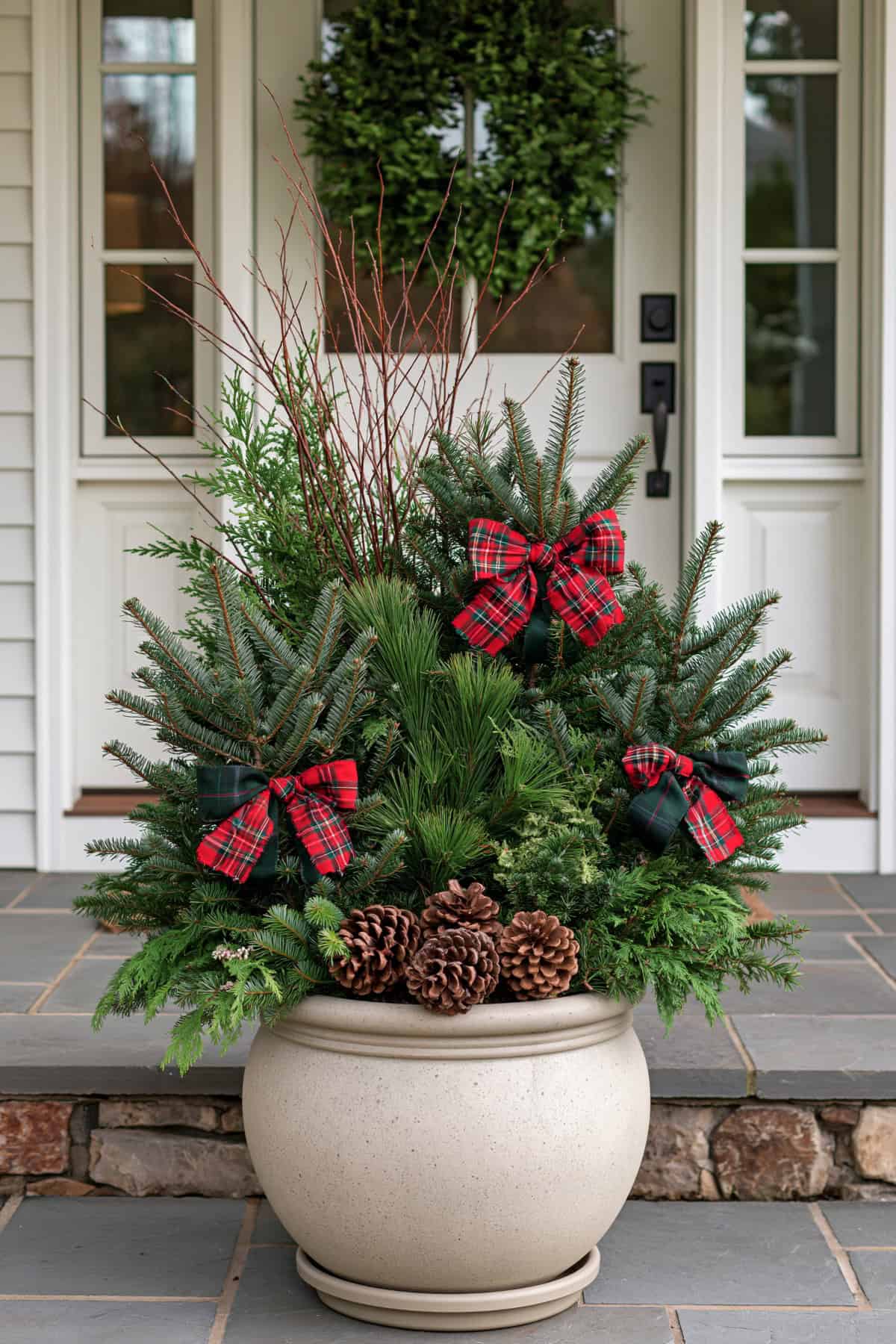
Leftover ribbon spools from past holidays, the half-used rolls shoved in a drawer every January, find their second life wound around a plain pot rim or tied into bows between greenery stems. Mismatched patterns and widths, layered rather than matched, read as gathered rather than sloppy once greenery fills most of the visible space.
Wired ribbon holds its shape in loops better than plain fabric ribbon, which droops within a day outdoors. A planter dressed this way costs nothing beyond materials already on hand.
Thrifted Colander Mini Evergreen Planter
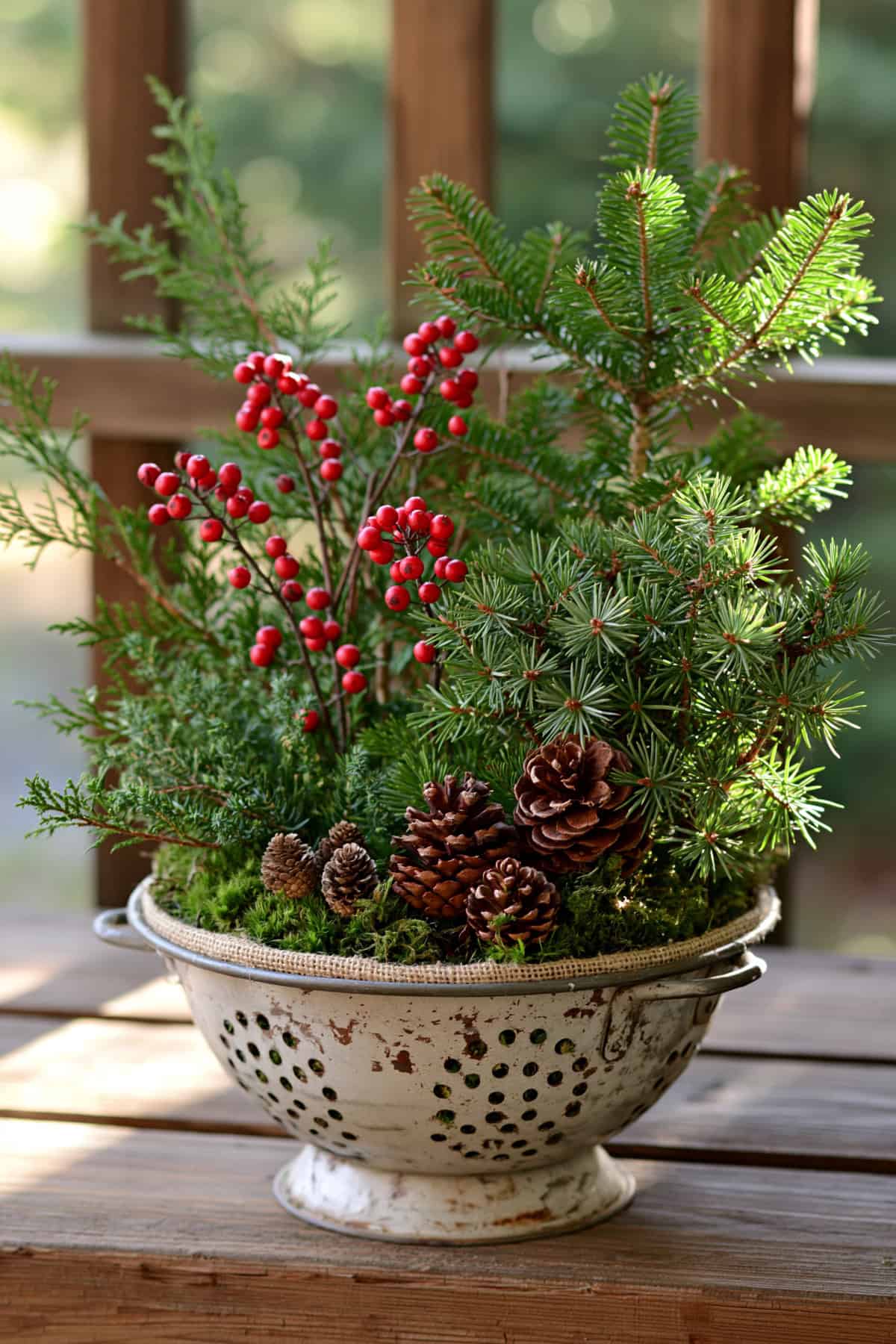
A metal colander’s built-in holes solve the drainage problem every planter needs to address, skipping the step of drilling through solid metal or plastic. Found at thrift shops for a dollar or two, colanders hold a compact, rounded shape suited to small clusters of greenery rather than tall arrangements.
Boxwood or rosemary sprigs packed densely across the surface hide the perforated metal beneath. Set along a windowsill or entry table in a small grouping, colander planters fill gaps too narrow for larger containers.
Concrete Block Planter With Fresh Greenery
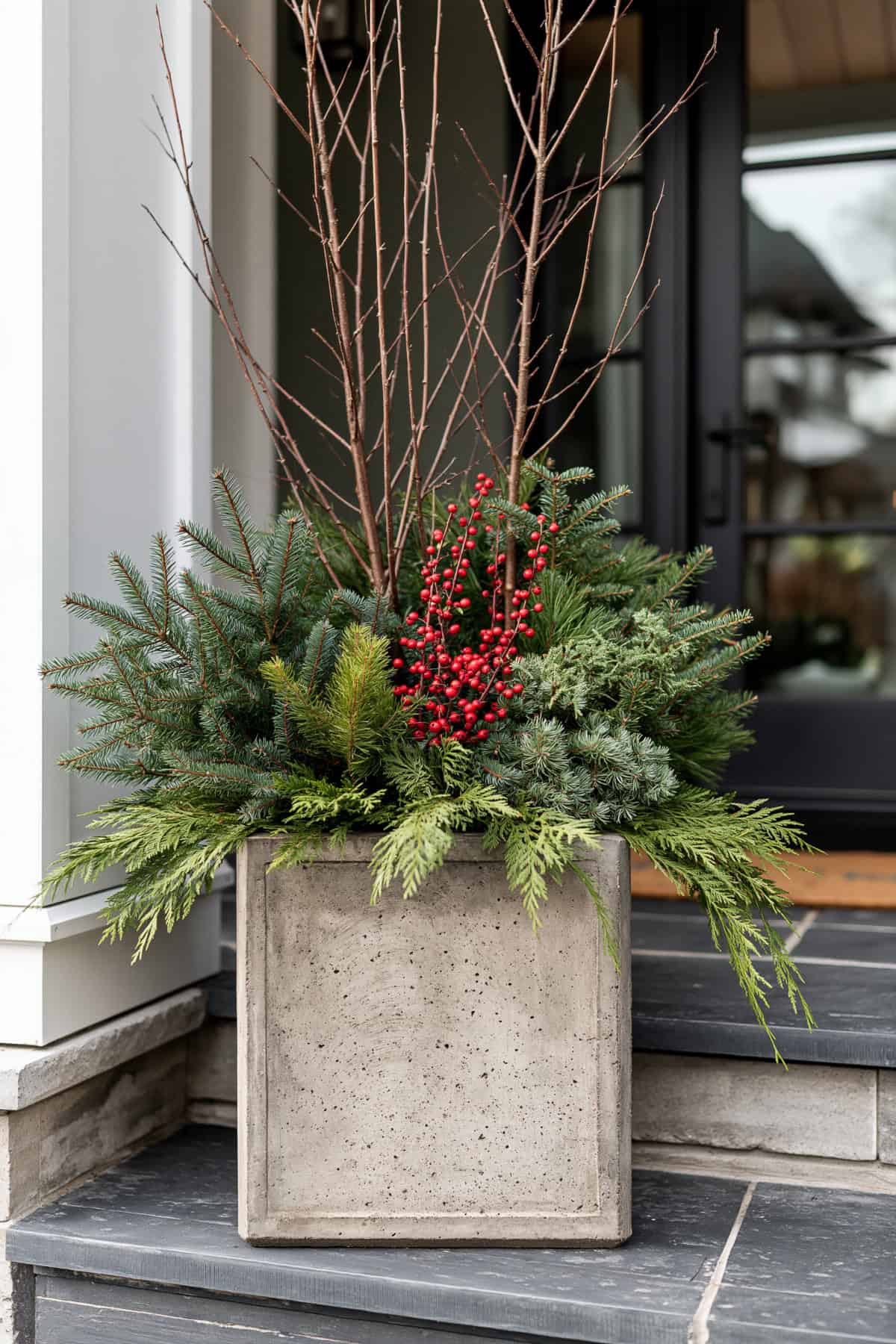
Gray cinder blocks, sold individually at any hardware store for under three dollars, hold soil directly in their pre-formed cavities without a liner or extra container. Stacked two or three high, the blocks build height along a porch edge or walkway border.
Spray paint in matte black or deep green softens the industrial gray, though plenty of builds leave the raw concrete exposed for contrast against bright greenery. Pine or fir branches pushed into each cavity, trimmed to similar heights, keep the overall shape clean despite the blocky base.
Reused Shipping Box Wooden Sleeve Planter
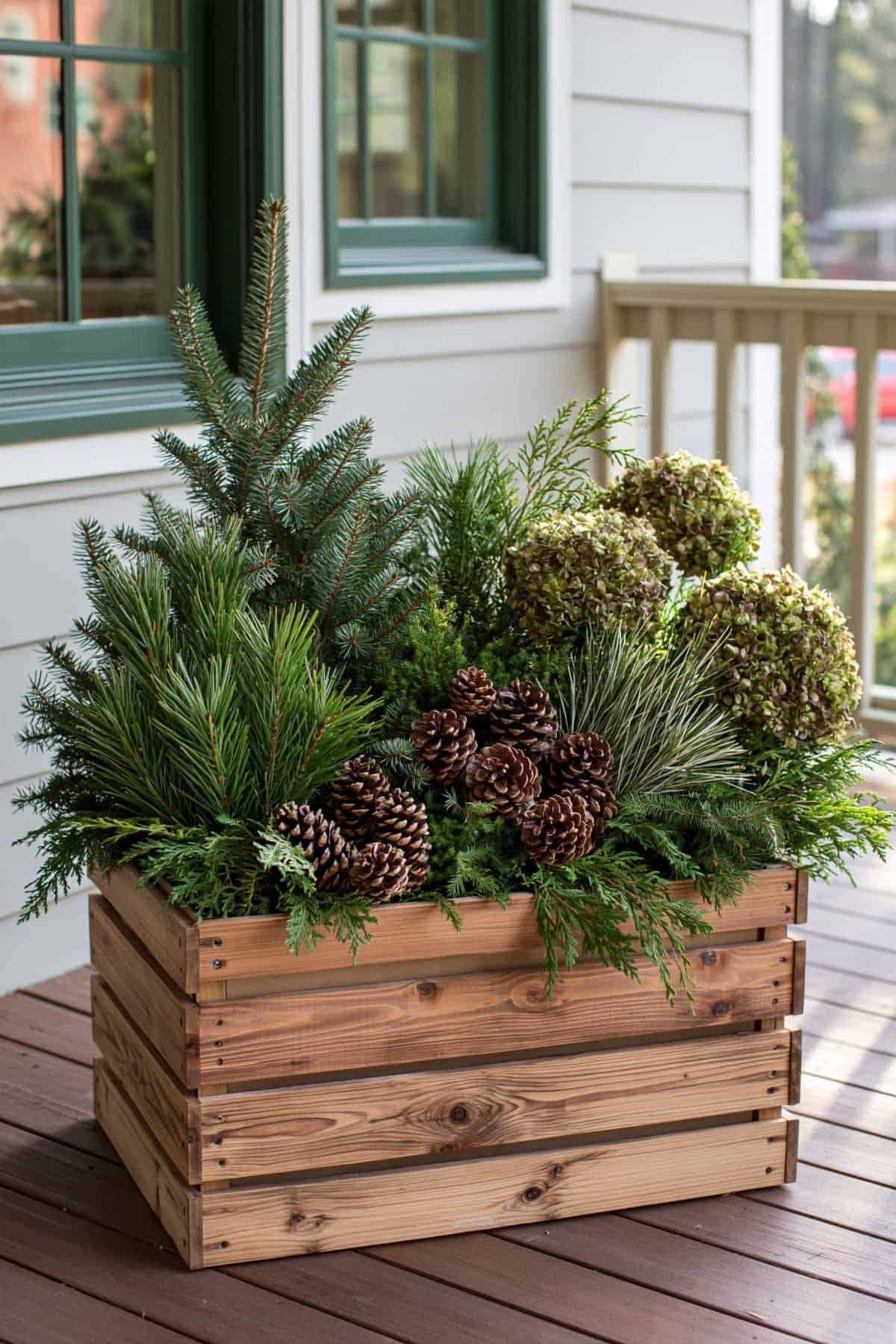
A cardboard box, reinforced and wrapped in thin plywood or fence board scraps, forms a square planter sleeve that costs almost nothing beyond basic tools. Cutting the wood panels to match each side of the box, then gluing or nailing them on, hides the cardboard completely once assembled.
A plastic liner inside protects the structure from soil moisture, extending its outdoor life through a full winter season. Square and geometric, this build pairs well flanking a modern front door where rounded baskets or crocks look out of place.
Two Matching Budget Planters From Nursery Pots
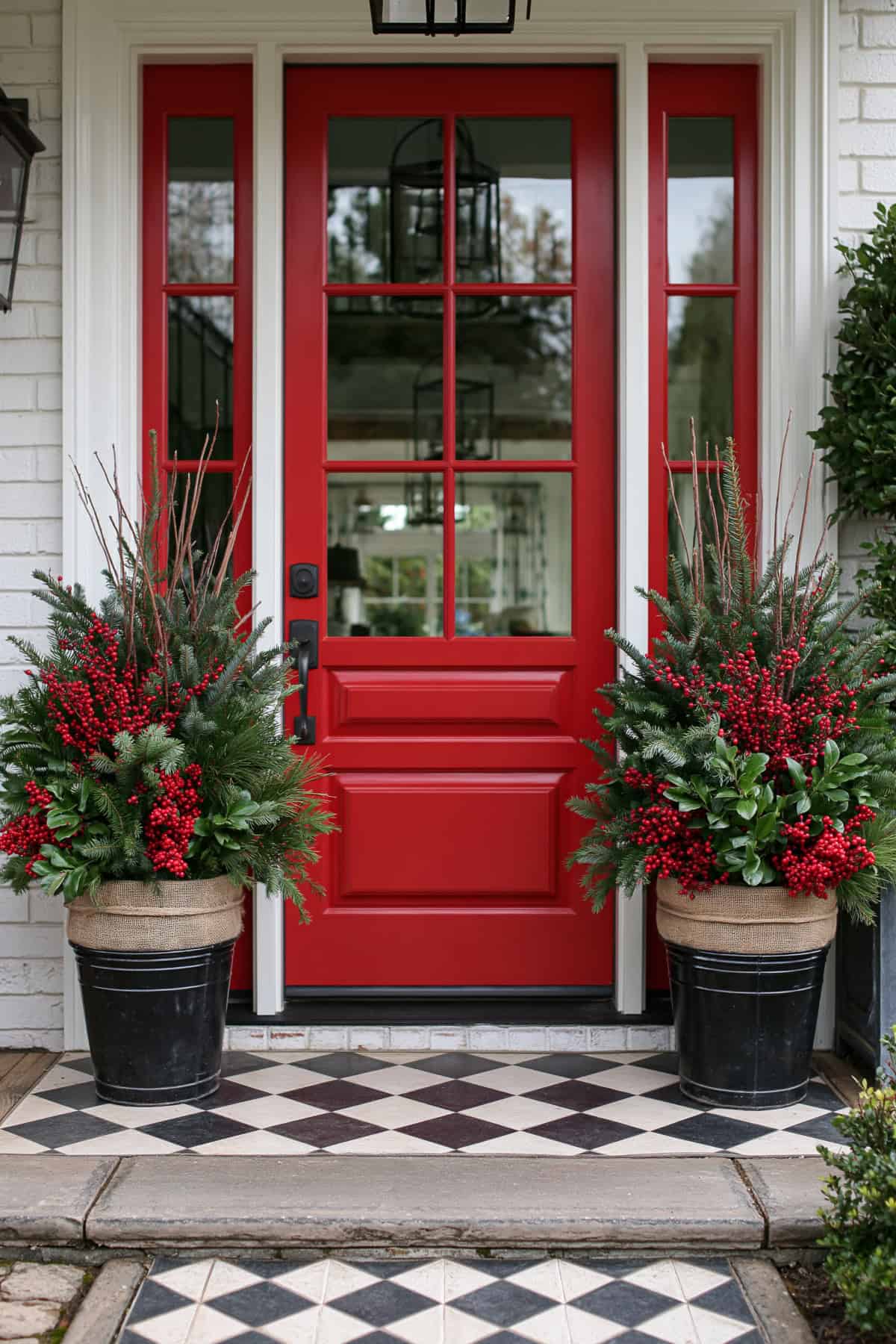
Black plastic nursery pots, the ones plants come in at purchase, get thrown out by the dozen at garden centers each fall, and most staff hand them over for free on request. A matching pair, spray-painted the same color and dressed with identical greenery, flanks a doorway convincingly without matching price tags.
Consistency in height and branch placement between the two pots matters more here than the container material itself. Since nursery pots already include drainage holes, this build skips several steps required by repurposed household containers.
Minimal Evergreen Planter With One Statement Branch
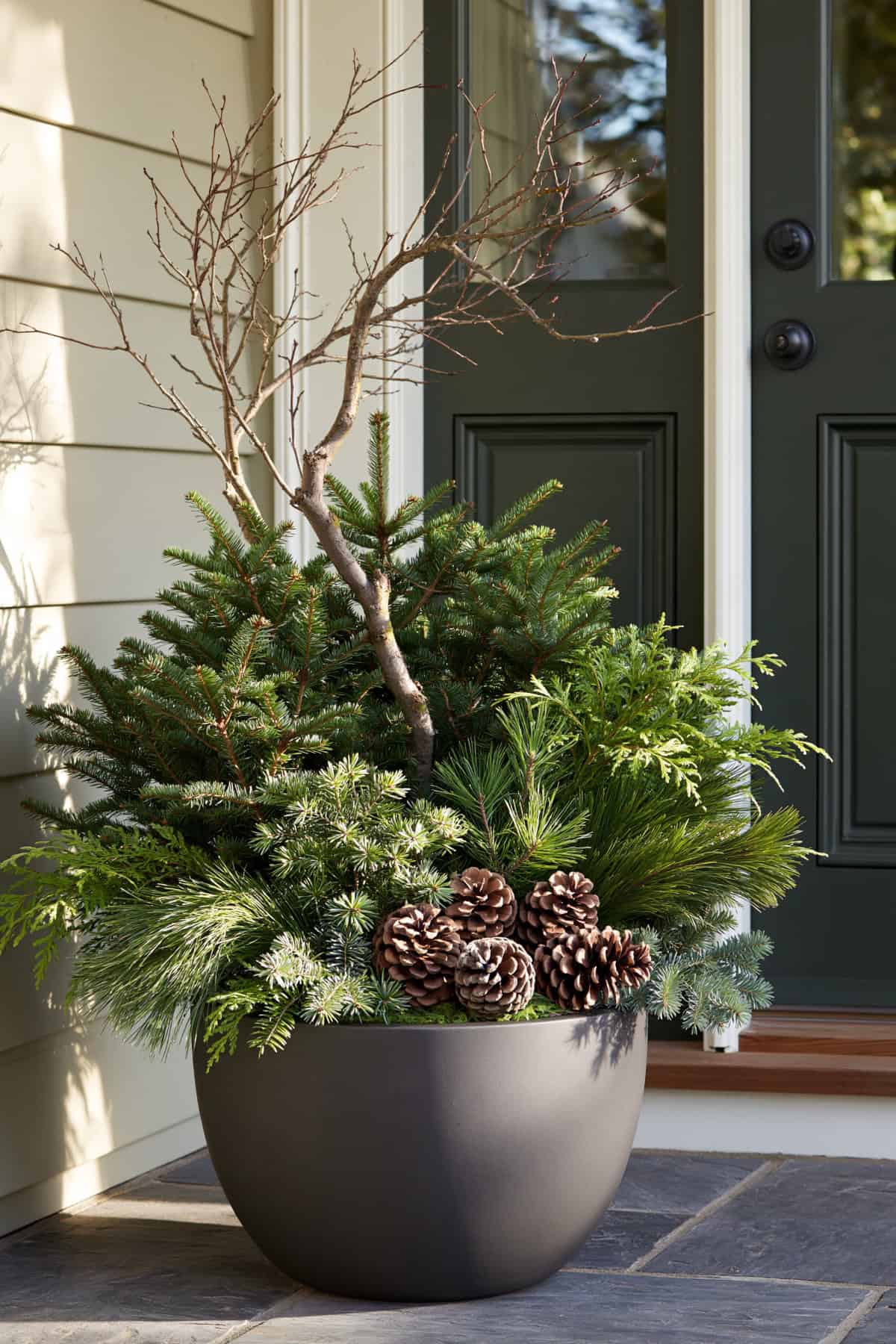
A single oversized branch, cut from magnolia, curly willow, or birch, standing alone in a plain pot, holds more visual weight than a dense cluster of mixed greenery crowded into the same space. This build costs the least of any on this list: one branch, one container, no wiring or foam required beyond a bag of sand to hold the stem upright.
Pine cones or a single ribbon accent at the base keep the arrangement from reading as unfinished. Placed beside a door with clean lines, the stark simplicity reads as a choice rather than an oversight.