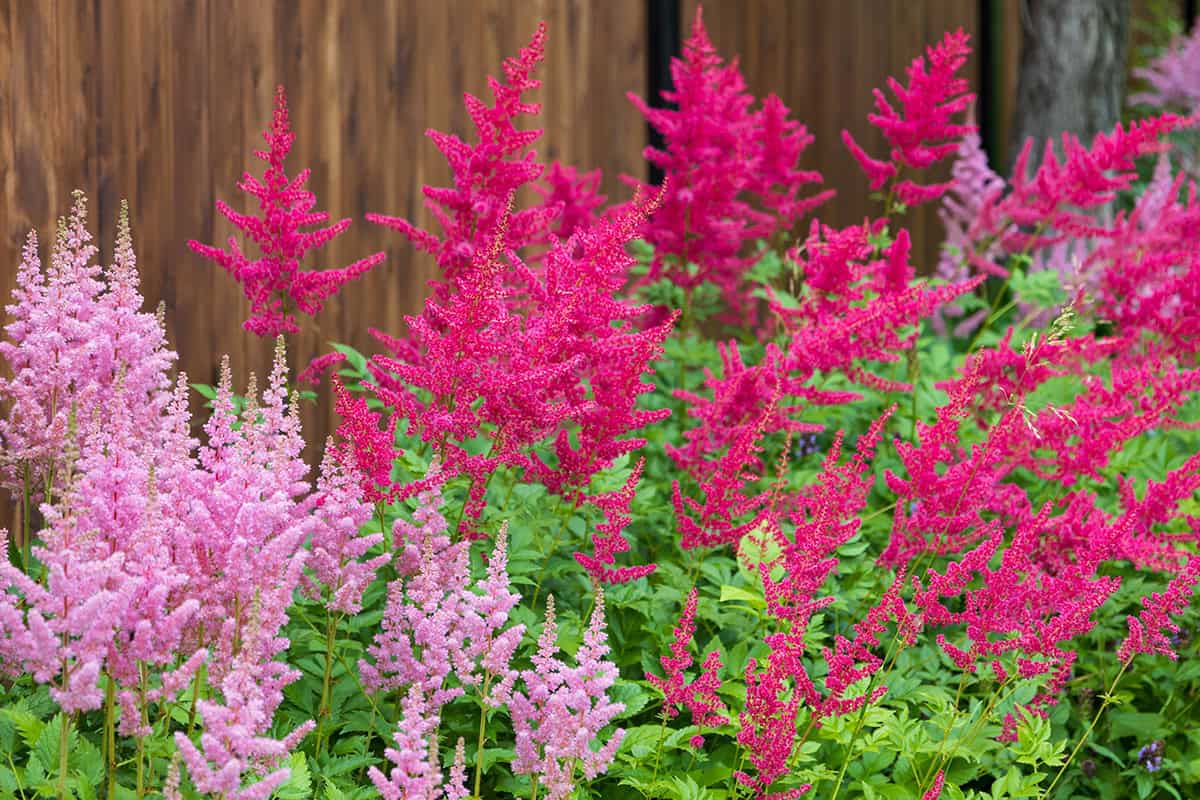
Astilbe raises feathery plumes of pink, white, red or lavender above clumps of glossy, fern-like leaves in the shady parts of the garden.
Each plume holds hundreds of tiny flowers, and the dried heads hold their shape through winter frost. Partial shade and rich soil that never dries out produce the fullest blooms.
Early, midseason and late cultivars, along with the dwarf forms for edging, fill the final section.
Table of Contents
Quick Care Summary
Astilbe returns for years in shade gardens with very little fuss, as long as its roots have steady moisture.
- Light: Partial shade; more sun only with constantly moist soil
- Soil: Rich, humus-heavy, moist but well-drained; pH 5.5–7.0
- Watering: Even moisture; dry spells brown the leaves
- Temperature: Hardy in USDA Zones 4–8; prefers cool summers
- Humidity: Average to high
- Fertilizer: Balanced slow-release fertilizer in early spring
- Propagation: Division every 3–4 years in spring or early fall
Choose a planting spot that never bakes dry in summer, and mix plenty of compost into sandy ground before planting.
Plant Overview
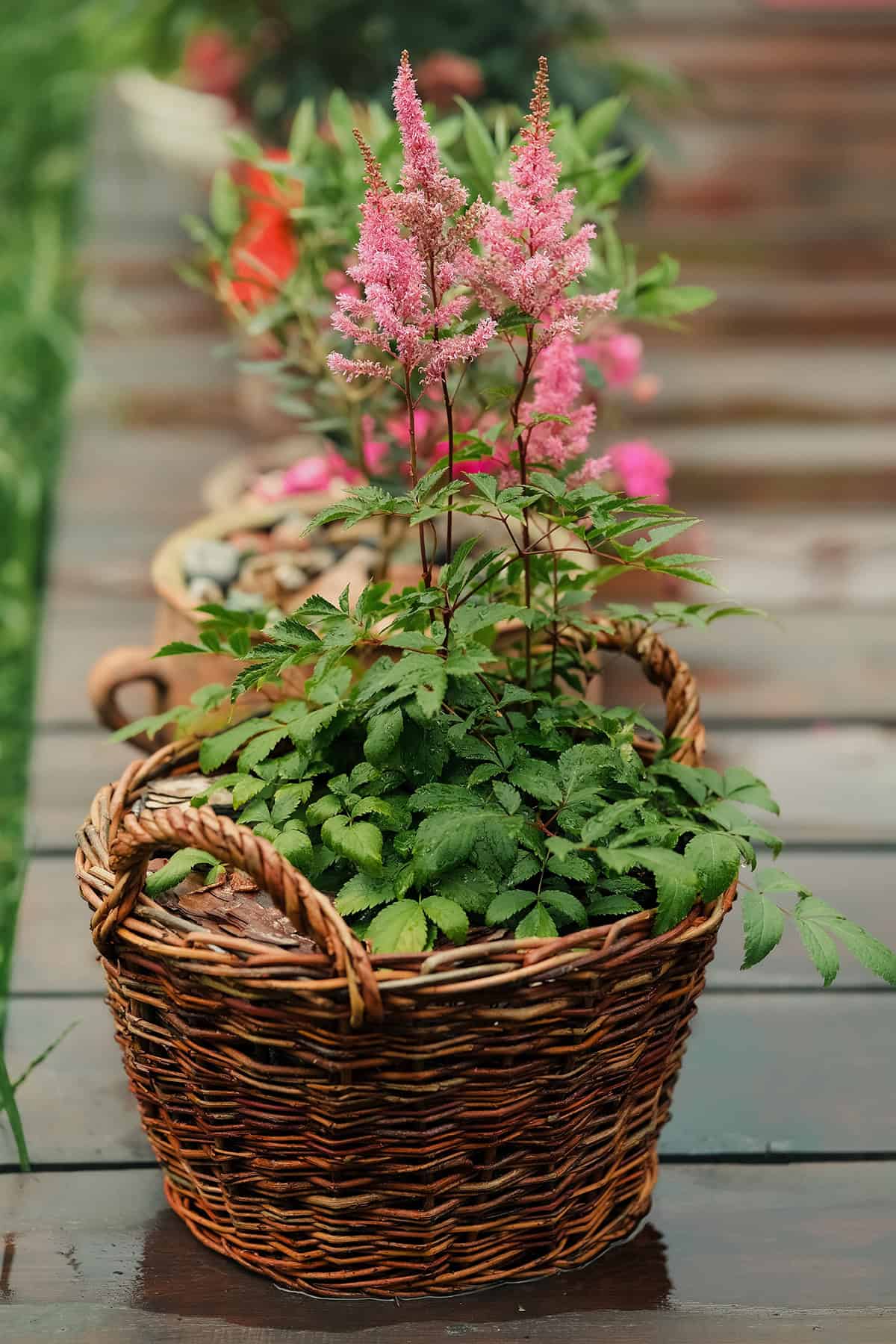
Dense, fern-like foliage and upright flower plumes fill shaded beds and woodland gardens, and most types bloom between late spring and midsummer. Clumps expand slowly by rhizomes and benefit from division every few years.
- Botanical name: Astilbe spp. and hybrids such as Astilbe × arendsii
- Common names: Astilbe, false spirea, false goat’s beard
- Plant type: Herbaceous perennial
- Mature size: 1–4 feet tall, 1–3 feet wide (varies by cultivar)
- Growth rate: Moderate
- Toxicity: Non-toxic to cats and dogs
- Native region: East Asia, with one species native to the southeastern United States
Blooms range across white, pink, red and lavender, attract pollinators and last well in a vase.
Light
Partial shade produces the best flower show. Morning sun followed by afternoon shade fits astilbe in most climates, and the dappled light beneath open trees does too.
Brighter spots succeed only with constant watering. In hot regions, afternoon sun scorches the leaves, and the edges brown quickly when moisture lags behind the heat.
Deep shade produces plenty of foliage and few flowers, with smaller plumes and floppy stems. Northern gardens handle more direct sun, while southern gardens need more shade.
Water
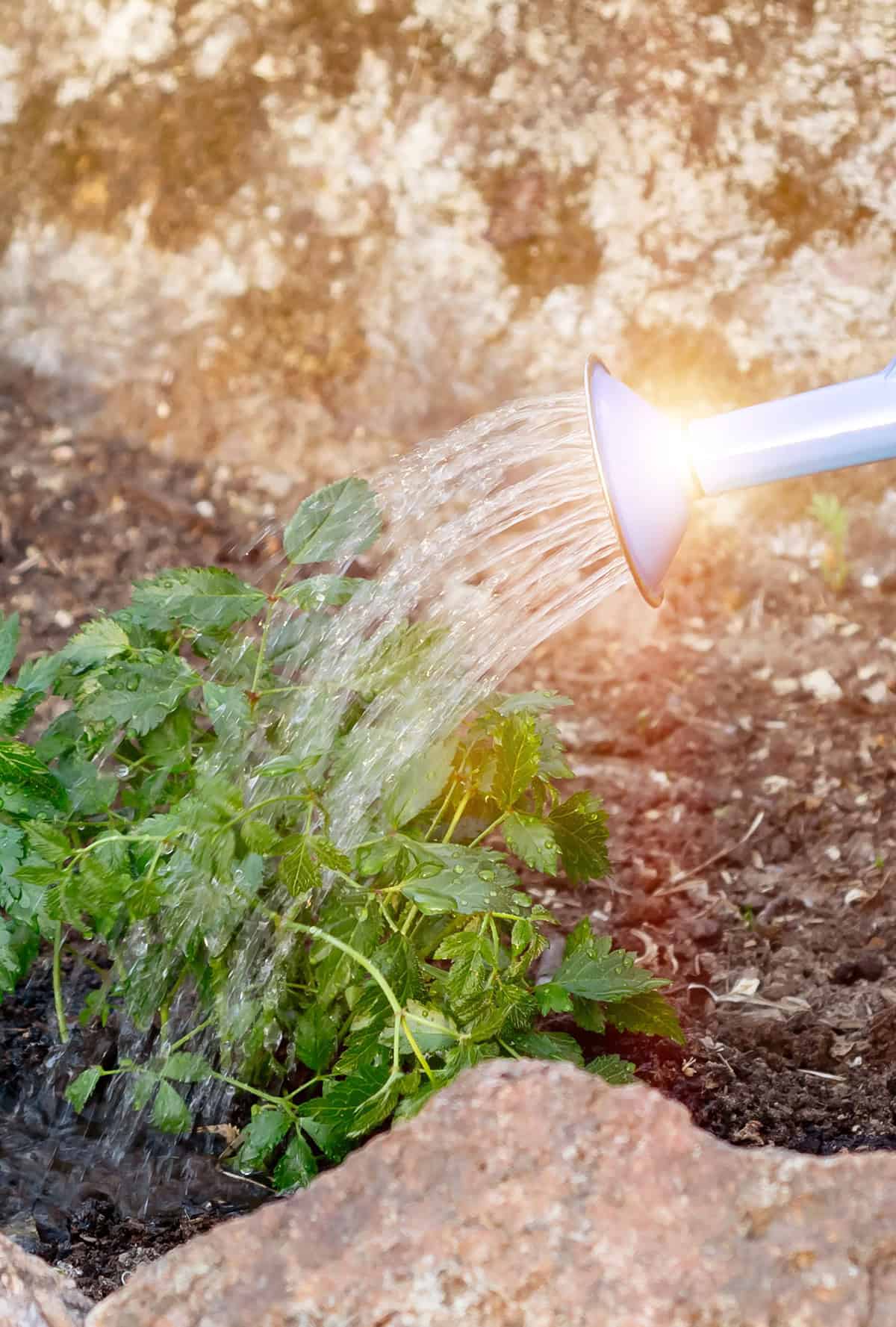
Astilbe needs evenly moist soil all season. Dry roots lead to crispy leaves and fewer blooms within days.
Check the soil with a finger, and when the top inch is dry, water deeply enough to reach the roots. Light, frequent sprinkles leave the roots shallow and stressed.
Heat waves and sunny sites call for more frequent watering. A 2- to 3-inch layer of shredded bark or leaf mulch holds moisture and cools the roots, and compost-rich soil holds water longer while still draining.
Soil
Deep, rich, spongy soil produces the healthiest astilbe. It needs to hold moisture and still drain, so dry, sandy beds and heavy clay both need generous compost.
Before planting, dig compost, leaf mold or well-aged manure into the top 8 to 12 inches. This improves water retention, adds nutrients and loosens the ground for spreading roots.
A slightly acidic to neutral pH, around 5.5 to 7.0, is best. A thin layer of compost each spring replenishes the bed, and a soil test helps if growth stalls.
Temperature & Humidity
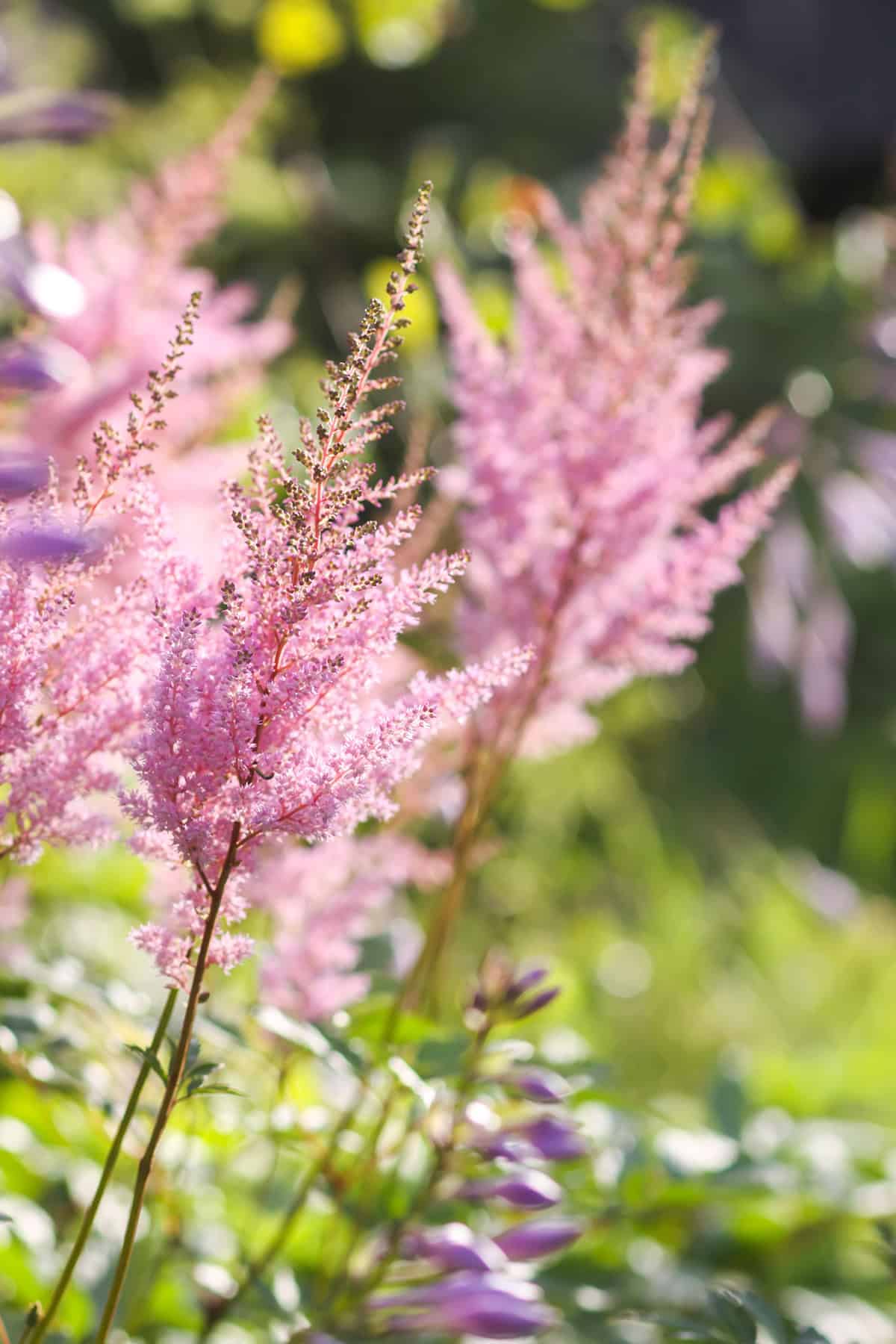
Cool, moderate weather produces the strongest growth, with daytime temperatures between about 60°F and 75°F. Long stretches above 85°F reduce flowering and burn leaf edges, especially in sun.
In southern gardens, afternoon shade and regular watering during heat waves protect the plants. Hardy in USDA Zones 4 to 8, astilbe handles freezing winters with ease, and a late fall mulch protects crowns from freeze-thaw heaving.
Moderate humidity supports lush leaves, while dry, hot air speeds water loss from the foliage. Sheltered spots away from drying winds produce the best results.
Fertilizer
Astilbe feeds heavily, and rich soil produces strong leaves and full plumes. Compost dug in before planting gets it off to a good start.
In early spring, as new shoots appear, apply a balanced slow-release fertilizer at the label rate. Too much nitrogen produces lush leaves at the expense of flowers and burns roots.
A light top-dressing of compost after flowering replenishes the soil for next year. Always water after fertilizing, and avoid feeding dry soil.
Potting & Repotting
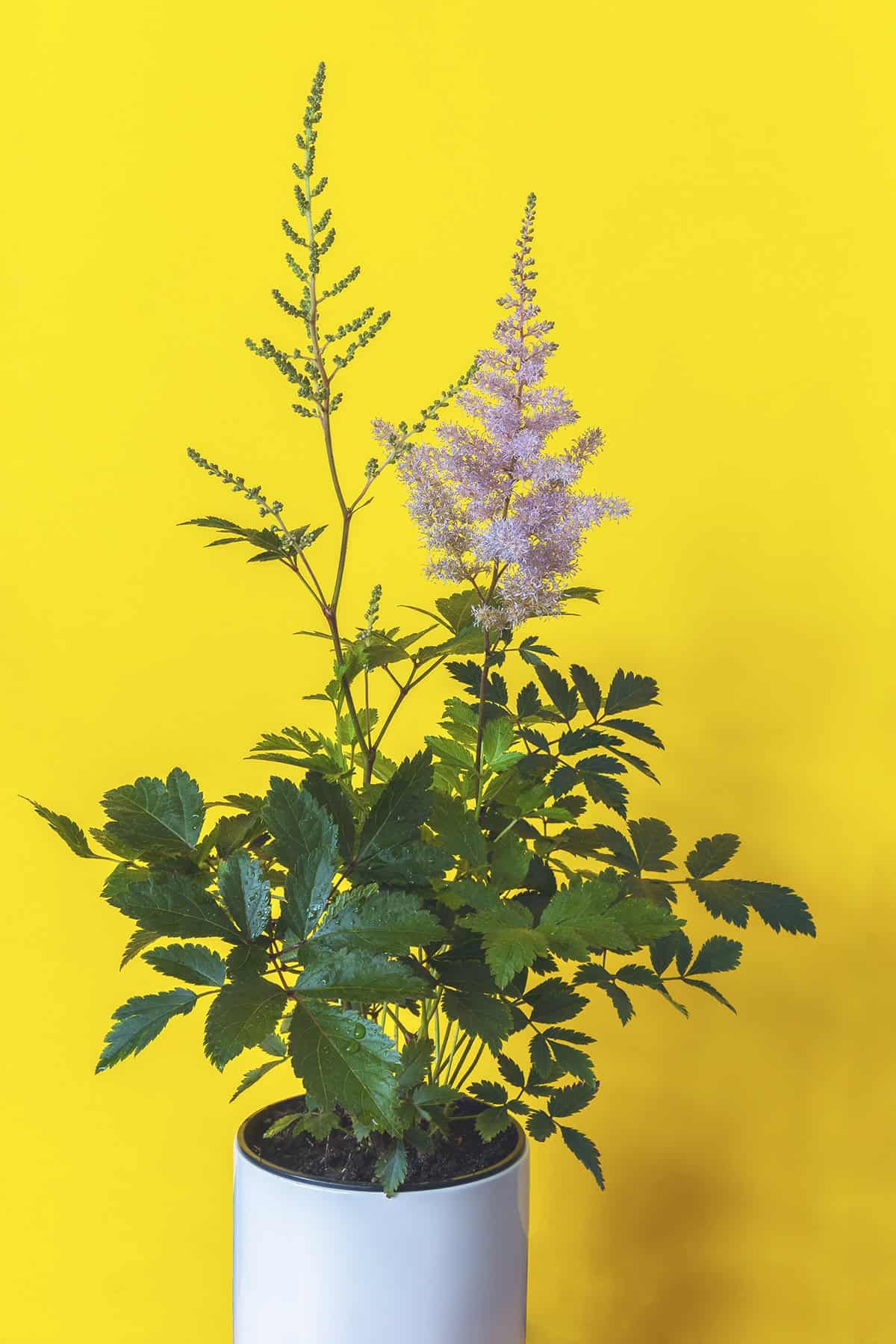
Astilbe grows well in containers with attentive watering. Pick a pot at least 12 inches wide with drainage holes, and fill it with a rich, humus-heavy potting mix. Set the crown level with the soil surface.
Pots dry out faster than garden beds, and a dry root ball browns the leaves quickly, so check moisture daily in summer. Partial to full shade produces the best blooms.
Every three or four years, or when roots fill the container, divide and repot in spring. Lift the root ball, cut away old, woody rhizomes and replant the healthy, firm sections in fresh mix. Feed potted plants lightly in early spring.
Pruning
Astilbe needs only light pruning. Faded plumes are optional to remove, since deadheading tidies the plant but triggers no new blooms, and many gardeners leave the dried heads for winter interest.
Hold off on cutting plants to the ground in fall, because the old foliage protects the crown in harsh winters.
In early spring, as new growth starts, cut dead stems and leaves down to the soil with sharp, clean pruners. Handle the area around the fresh shoots carefully.
Propagation
Dividing established clumps produces vigorous new plants identical to the parent. Early spring, as shoots emerge, is the best time, and early fall is fine in mild climates. Avoid hot, dry periods.
Lift the whole clump with a spade, then slice it into sections with a sharp knife, each with several roots and at least one bud. Discard tired, woody centers.
Replant divisions at the original depth, 18 to 24 inches apart, water them in and mulch. Division every three to four years refreshes crowded clumps that bloom less.
Astilbe also grows from seed, but results vary, and seeds need light and steady moisture to sprout. Division preserves the exact color and form of a cultivar.
Common Problems
Crispy brown leaves point to dry soil or too much sun. Steady water, mulch and afternoon shade prevent this, since decline sets in fast once the soil dries.
Sparse flowering traces back to deep shade, full sun with too little water or poor soil. A spring feeding and better light improve bud set.
Compacted or soggy soil leads to crown and root rot, and organic matter improves drainage. Powdery mildew and leaf spot appear in humid stretches. Remove affected leaves and improve airflow to curb them. Deer and rabbits mostly leave astilbe alone.
Varieties
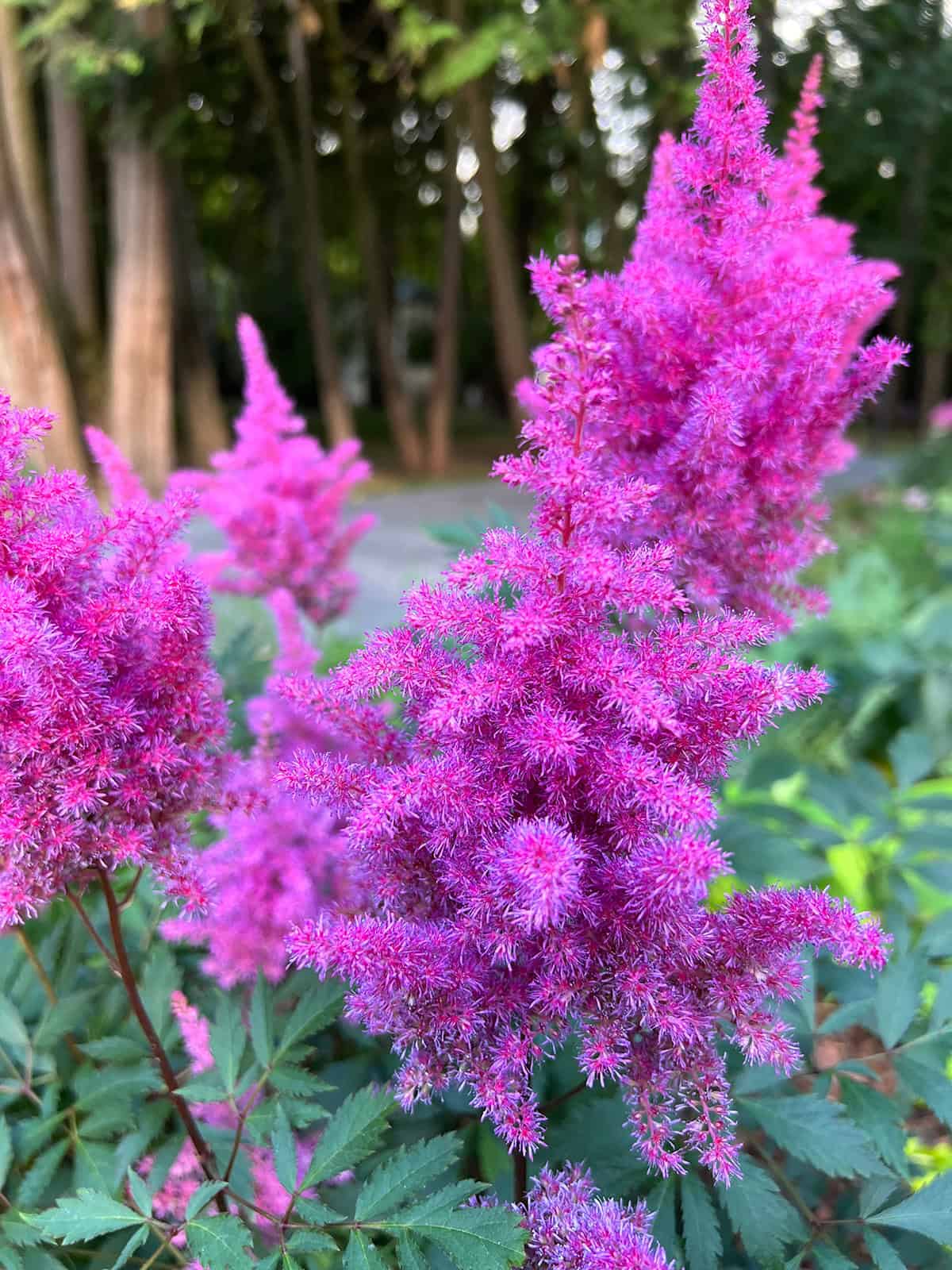
Hundreds of astilbe cultivars exist, and height, color and bloom time vary widely. Most nursery plants descend from hybrid groups such as Astilbe × arendsii, bred from East Asian species.
Arendsii hybrids grow 2 to 3 feet tall in white, pink, red and lavender, with upright plumes for the middle or back of a border. ‘Fanal’ has deep red flowers and bronze-tinted leaves, and ‘Bridal Veil’ carries creamy white plumes.
Astilbe chinensis types bloom later and tolerate drier soil better than most. Dwarf ‘Pumila’ reaches about 12 inches and spreads into a mat of mauve-pink spikes for edging, and ‘Visions’ has raspberry-red plumes on 15-inch stems.
‘Mighty Chocolate Cherry’ grows about 4 feet tall with cherry-red plumes over dark, chocolate-toned leaves in midsummer. A mix of early, midseason and late cultivars stretches the flowering season over several weeks.