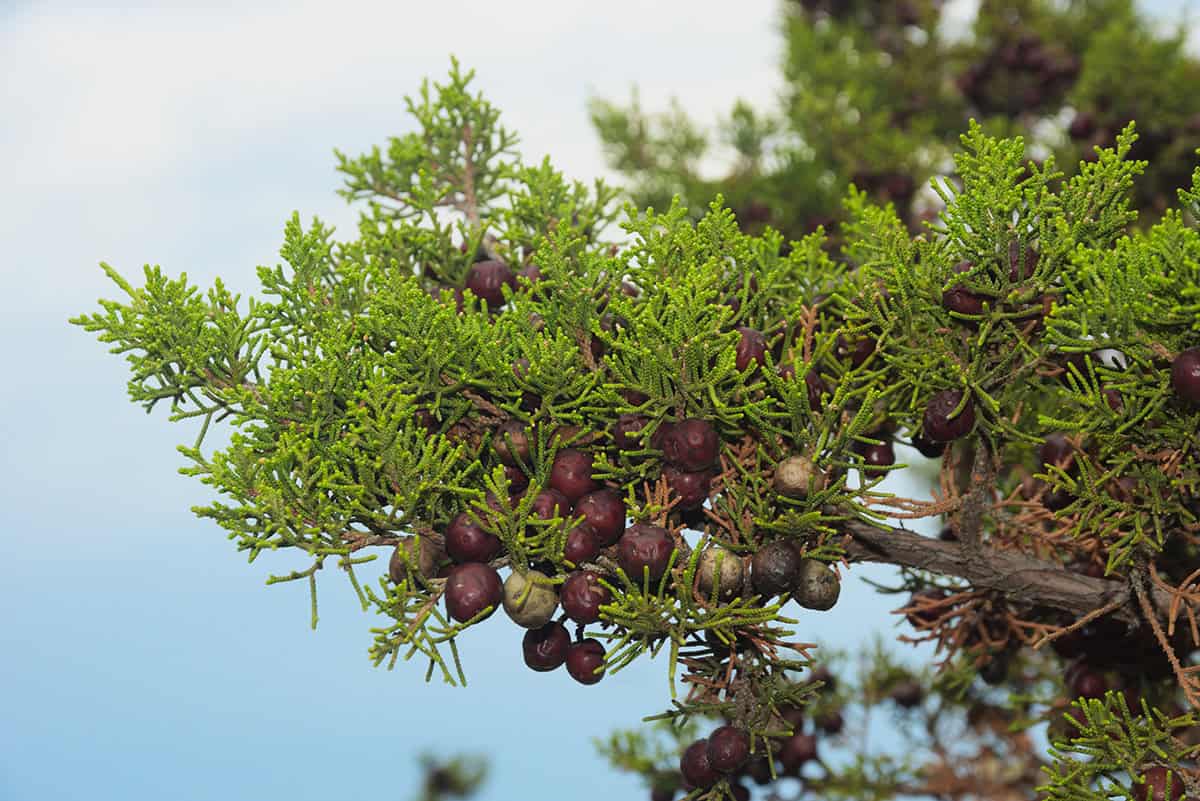
Juniper foliage holds its color through every season, in shades of deep green, silver-blue, steel gray or gold, on plants that range between ankle-high mats and 30-foot trees.
Junipers shrug off heat, drought, wind and poor soil once settled. Full sun and sharp drainage matter most, and wet ground causes nearly every serious problem.
The varieties section matches creeping, shrubby and upright types to slopes, borders and windbreaks.
Table of Contents
Quick Care Summary
Bright sun and fast-draining soil cover the basics for every juniper, whether it grows as a ground cover, a shrub or a tree. Established plants handle drought and lean soil, and good airflow limits disease.
- Light: Full sun; light afternoon shade in very hot regions
- Soil: Fast-draining; sandy, gravelly or rocky is fine
- Watering: Regular in the first year, then deep and infrequent
- Temperature: Hardy in USDA Zones 2–9 (varies by species)
- Humidity: Low to moderate, with good air movement
- Fertilizer: Light, balanced slow-release feeding in early spring only if growth is weak
- Propagation: Semi-hardwood cuttings; seed is slow
Space each plant for its mature spread, and skip heavy shearing. Excess fertilizer loosens the growth and spoils the natural shape.
Juniper Overview
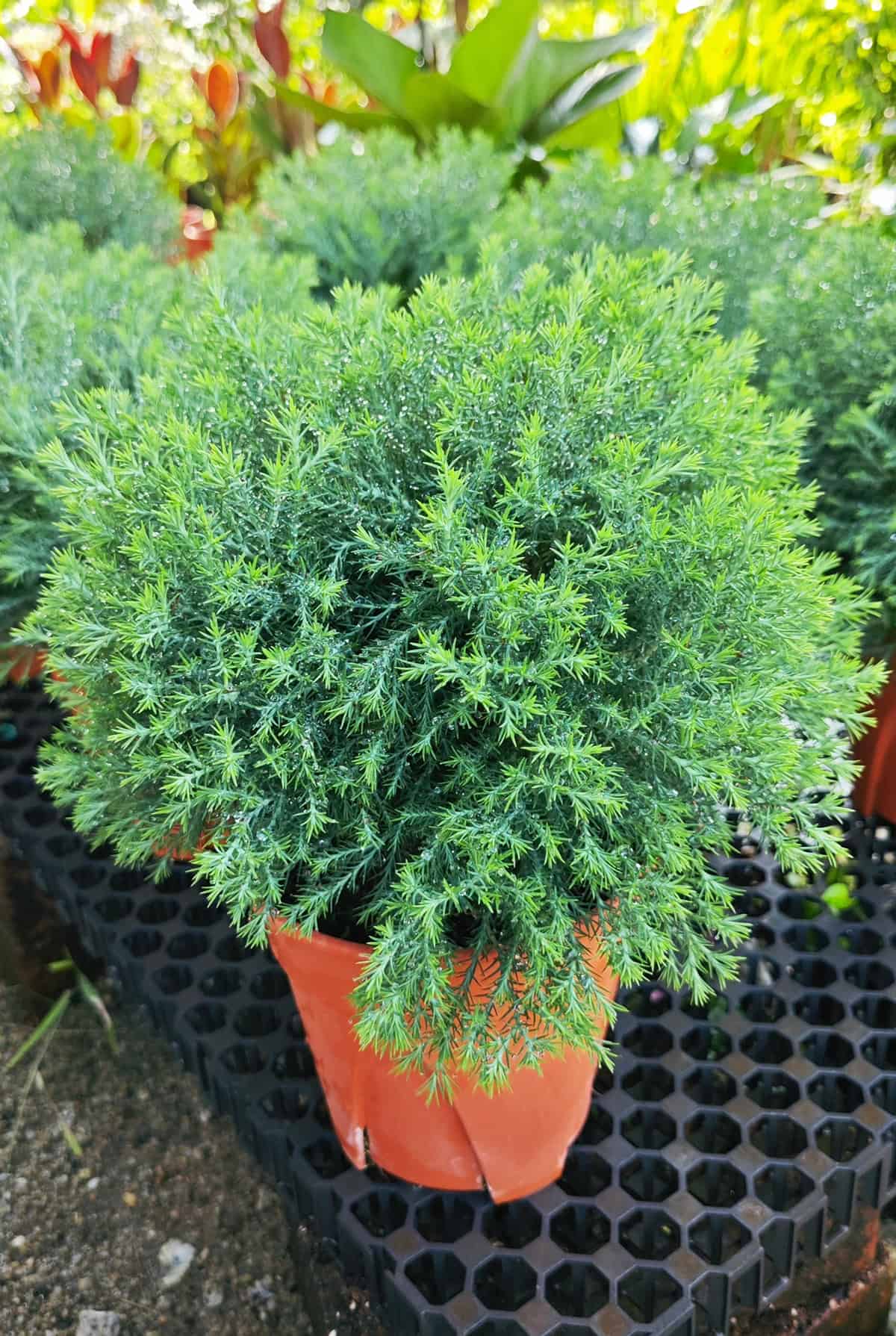
The genus Juniperus holds roughly 50 to 70 species of evergreen conifers, with prickly, needle-like leaves on young growth and soft, scale-like leaves on many mature plants. The berry-like fruits are fleshy cones, blue or bluish black on most species.
Junipers fill many roles, such as erosion control on slopes, foundation planting, hedges, windbreaks and specimen accents.
- Botanical name: Juniperus spp.
- Common names: Juniper; eastern redcedar (J. virginiana)
- Plant type: Evergreen conifer, shrub or tree
- Mature size: 6 inches to 30+ feet (varies by species)
- Growth rate: Slow to moderate
- Toxicity: Berries and foliage of some species, such as savin juniper, are toxic if eaten
- Native region: Across the Northern Hemisphere
Light
Six or more hours of direct sun produce tight, dense foliage and the best blue or gold color.
In partial shade, junipers grow open and leggy. Ground covers spread unevenly, upright forms thin out in the center, and vigor declines over the years.
Slopes, rocky beds and open borders fit them well, and they handle reflected heat from pavement and walls. In the hottest southern gardens, light afternoon shade helps, although full sun still produces the best results.
Water
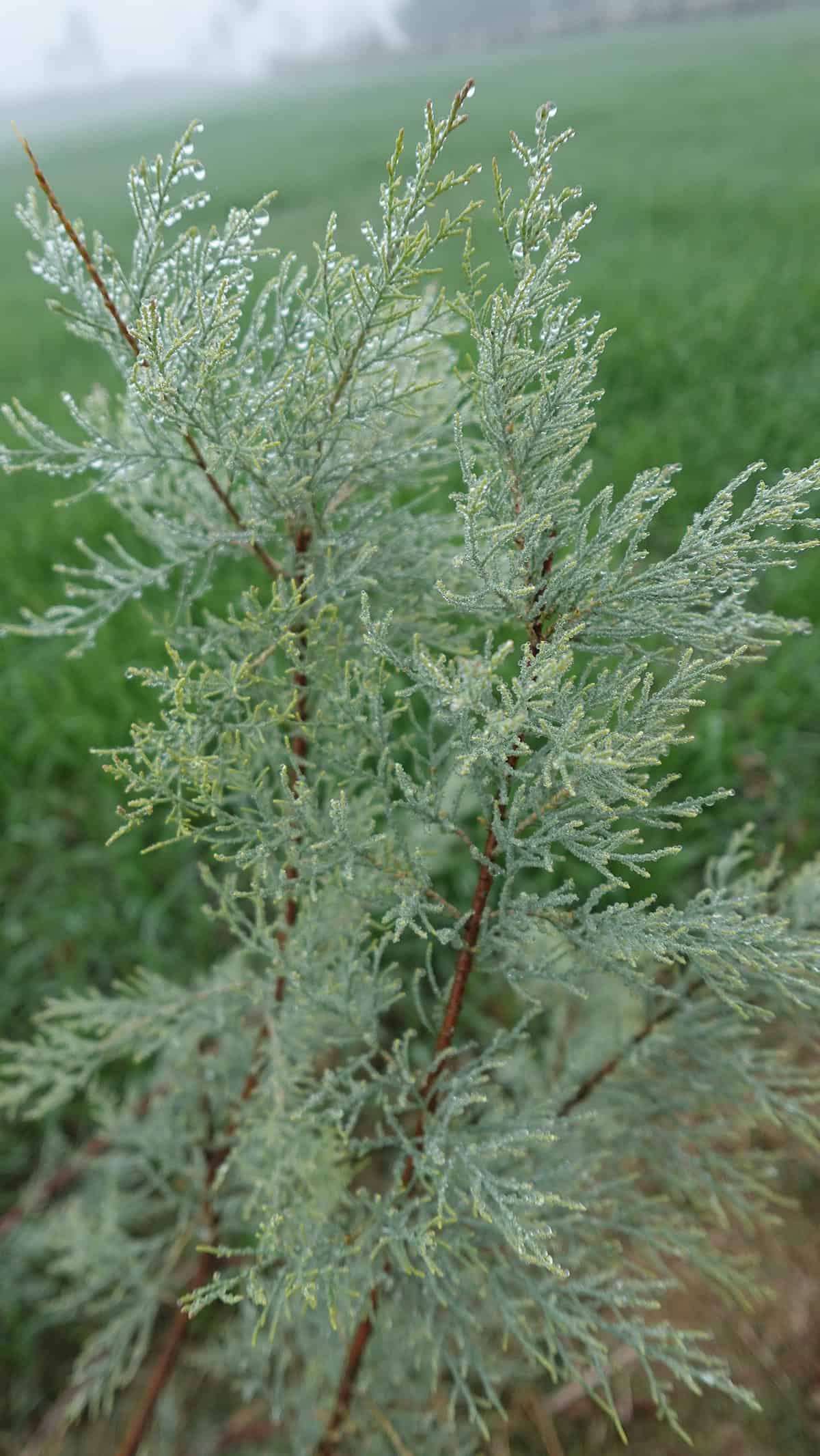
First-year plants need regular deep watering. After that, junipers handle dry spells well, and deep, occasional soakings are far better than frequent sprinkles.
Water when the top couple of inches of soil are dry, and soak the ground 6 to 12 inches deep. Let the soil dry again before the next watering.
Rain covers the needs of established plants in most years. During long droughts, a deep soak every two to three weeks is enough, with a little more in sandy soil and less in clay.
Standing water and compacted soil cause root rot, and overhead sprinklers wet the foliage and encourage blight. Container plants dry faster and need checks every few days in summer, with a thorough soak until water drains out.
Soil
Juniper roots need quick drainage. Pick a spot where water disappears within a few hours after rain.
Gravelly or sandy soil fits them well. They tolerate low fertility and a wide pH range, between slightly acidic and slightly alkaline.
Heavy clay needs coarse sand or fine gravel mixed in, or a raised bed. Rich, fertile ground produces soft, floppy growth, and extra organic matter is unnecessary.
A 2- to 3-inch layer of mulch suppresses weeds and evens out soil moisture, but pull it back from the trunk to prevent rot.
Temperature & Humidity
Most junipers handle wide temperature swings, and hardy species grow in USDA Zones 2 through 9. Common juniper survives far northern winters, while other species and cultivars tolerate southern heat.
Weeks above 90°F cause little stress as long as the roots dry out between waterings. Poor drainage in hot weather causes far more trouble, so open, sunny, breezy spots are best.
Muggy, stagnant air invites fungal disease, especially in crowded plantings. Eastern redcedar handles humid summers, while many western species prefer dry air, so matching the species to the local climate prevents problems.
Fertilizer
Junipers need little feeding, and average soil covers their needs. Too much fertilizer produces weak, floppy growth.
At planting, a small amount of balanced slow-release fertilizer mixed into the backfill is plenty. For established beds with weak growth, spread a balanced granular fertilizer over the soil between early spring and midsummer, scratch it in lightly and water.
Roots run shallow, so rake gently. Skip feeding in late summer and fall, since soft new growth suffers in winter. Pale or sluggish plants call for a soil test before more fertilizer.
Potting & Repotting
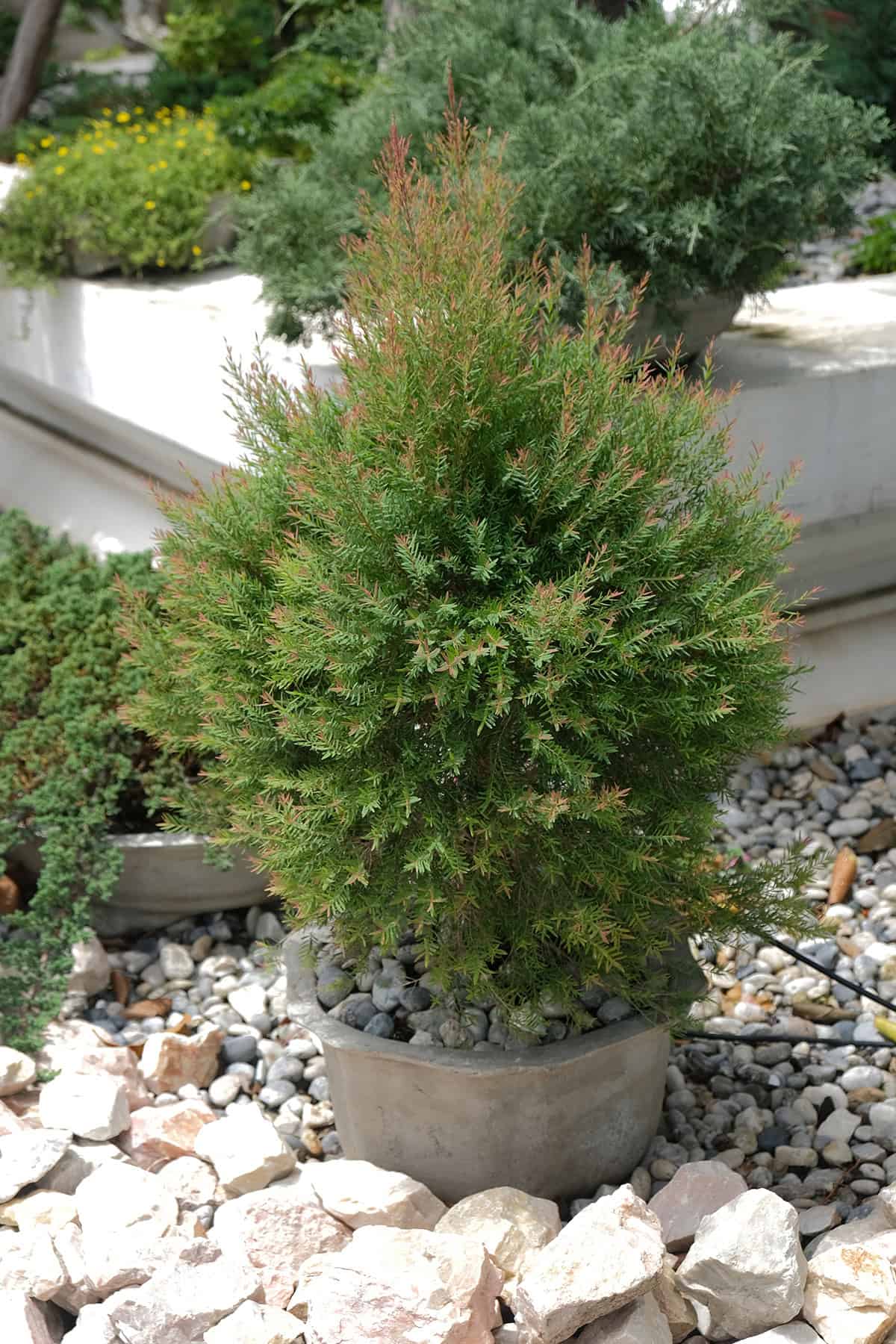
Junipers grow in pots with sharp drainage and plenty of sun. Choose a container with drainage holes, only a little larger than the root ball, since excess soil holds water.
Use a gritty, fast-draining mix of potting soil blended with coarse sand or fine gravel, and skip a gravel layer at the bottom, which slows drainage. Set the root ball an inch or two below the rim.
Water the plant an hour before repotting, ease it out, loosen circling roots and replant at the same depth with fresh mix. Repot every few years in early spring, when roots fill the pot, and water lightly until fresh shoots appear.
Pruning
Junipers need very little pruning. Remove dead or damaged wood, thin crowded spots and trim stray branches to fit the space.
Cut back to a side branch with sharp, clean pruners. Avoid cutting into bare, brown wood, since junipers rarely sprout from leafless stems.
Early spring, just before growth begins, is the best time, with a light shaping in early summer for hedges. Late-season cuts expose tender new shoots to cold.
Thinning the interior lets in light and air and limits disease. A juniper that constantly outgrows its spot is better replaced with a more compact cultivar.
Propagation
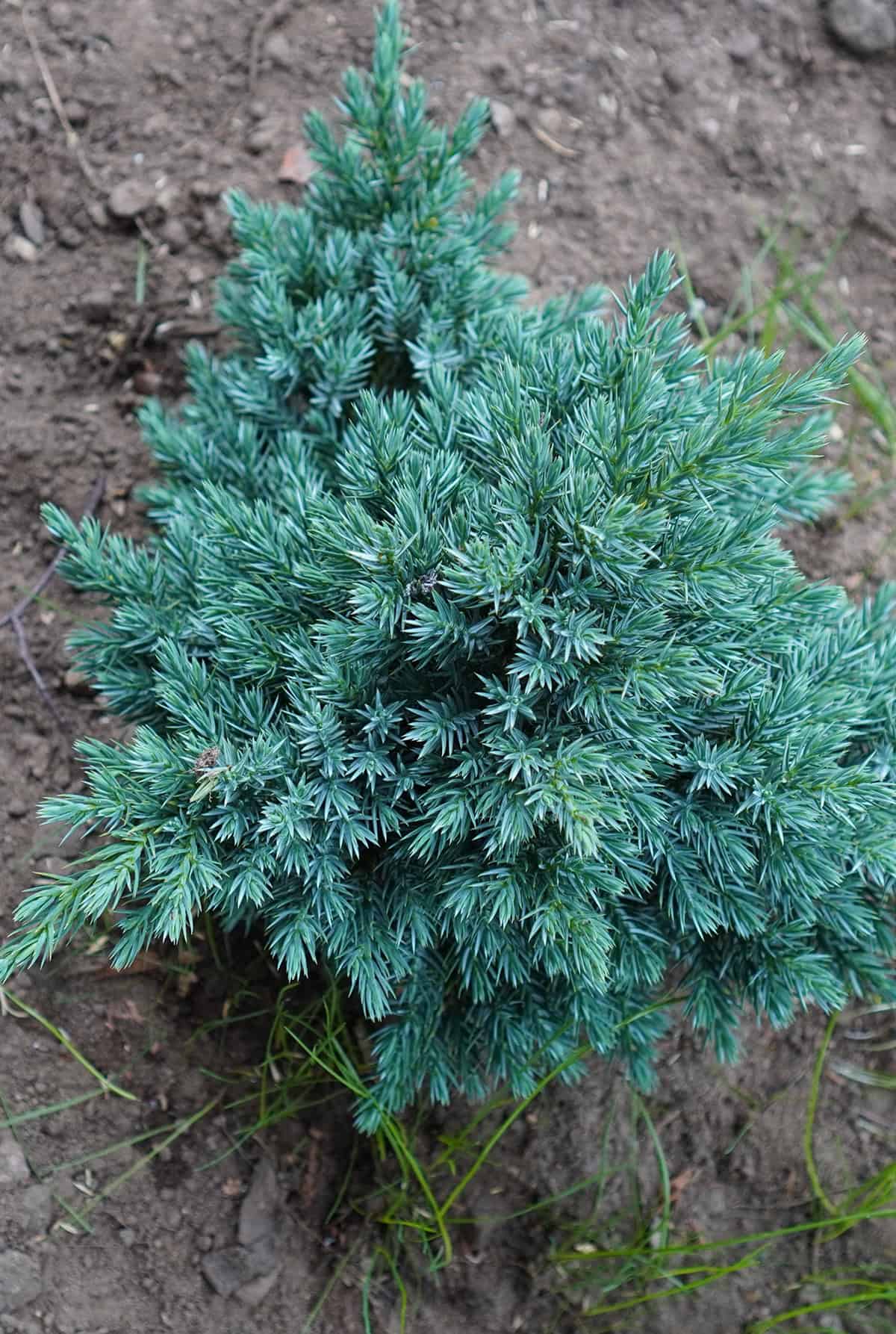
Cuttings copy the parent reliably and are the most common method. Take 4- to 6-inch semi-hardwood cuttings of healthy growth in late summer or early fall. Strip the lower foliage, dip the ends in rooting hormone and insert them in a well-drained mix of sand and peat or perlite. Lightly moist mix and bright, indirect light help them root.
Roots form in several weeks, and some species take a few months. Move cuttings to individual pots once firm new growth appears.
Seeds need a warm period followed by a long cold stratification and take a year or more to sprout, so they are best left to patient growers.
Low, spreading types also layer easily. Pin a flexible stem to the ground, cover a section with soil and cut the new plant free once roots develop.
Common Problems
Sparse growth, dull foliage and dying branches point to too much shade, compacted soil or planting too deep.
Overwatering causes root stress and yellow or brown foliage. Check the soil before watering, and water less during cool or rainy spells.
Phomopsis and Kabatina tip blight brown the branch ends, and cedar-apple rust forms orange, jelly-like galls in spring rains. Prune out affected branches in dry weather and improve air movement.
Spider mites cause stippling and bronzing in hot, dry spells, and juniper scale appears as small white or tan bumps that lead to yellowing and dieback. Strong water sprays, horticultural oil and the removal of heavily infested shoots control both.
Varieties
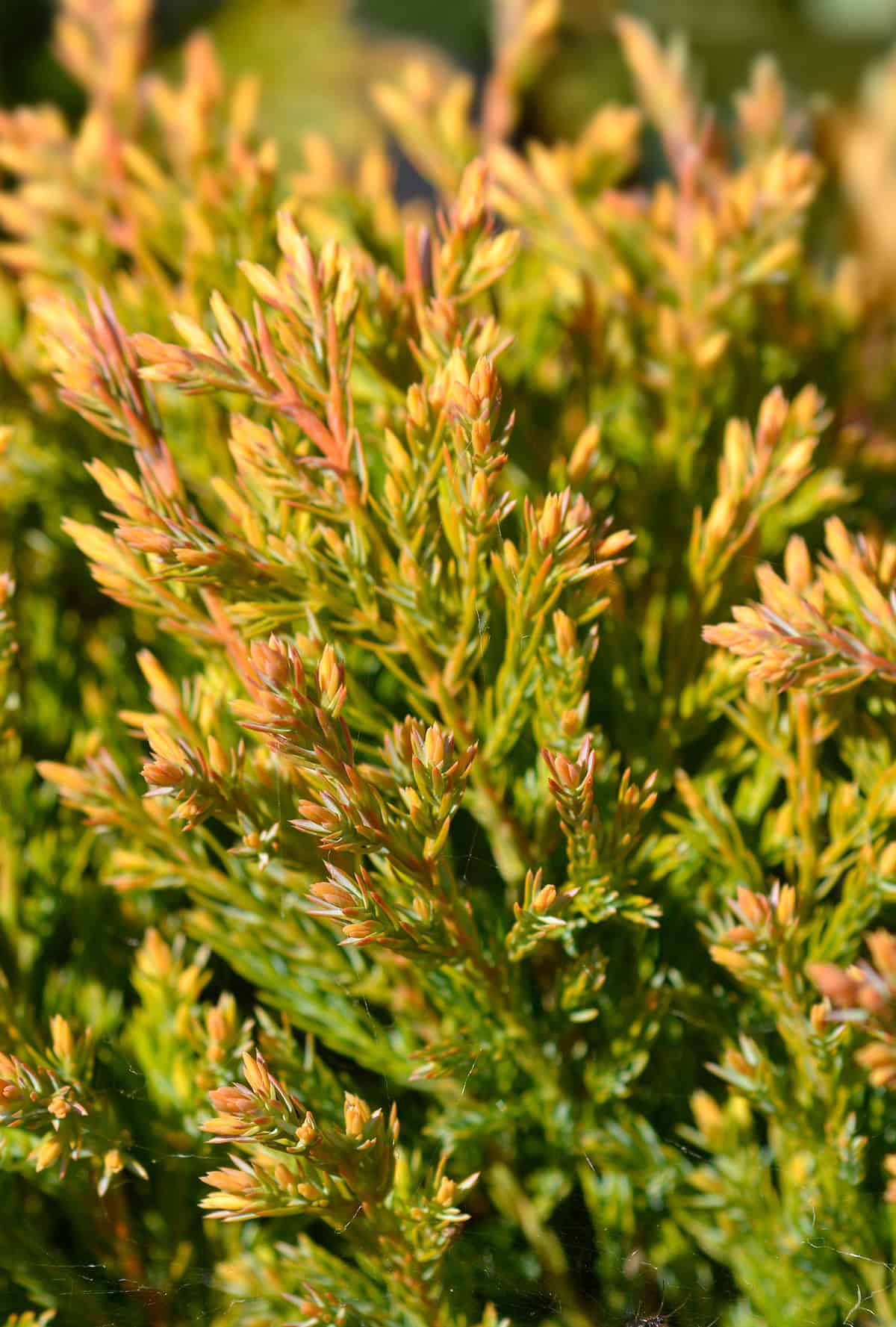
Juniper forms range between ground-hugging mats a few inches tall and upright trees well over 15 feet, and some cultivars shift to plum or bronze tones in winter.
Creeping juniper, Juniperus horizontalis, grows under a foot tall and spreads several feet across into a dense mat for slopes and path edges. ‘Wiltonii’, also sold as Blue Rug, has silver-blue foliage, and ‘Bar Harbor’ takes on a purple tint in winter. Shore juniper ‘Blue Pacific’ fills similar spots in warmer, coastal gardens.
Common juniper, Juniperus communis, includes the narrow, upright ‘Hibernica’, known as Irish juniper, and the golden, columnar ‘Gold Cone’. Rocky Mountain juniper, Juniperus scopulorum, has tall forms such as ‘Skyrocket’ and ‘Wichita Blue’ for windbreaks and vertical accents.