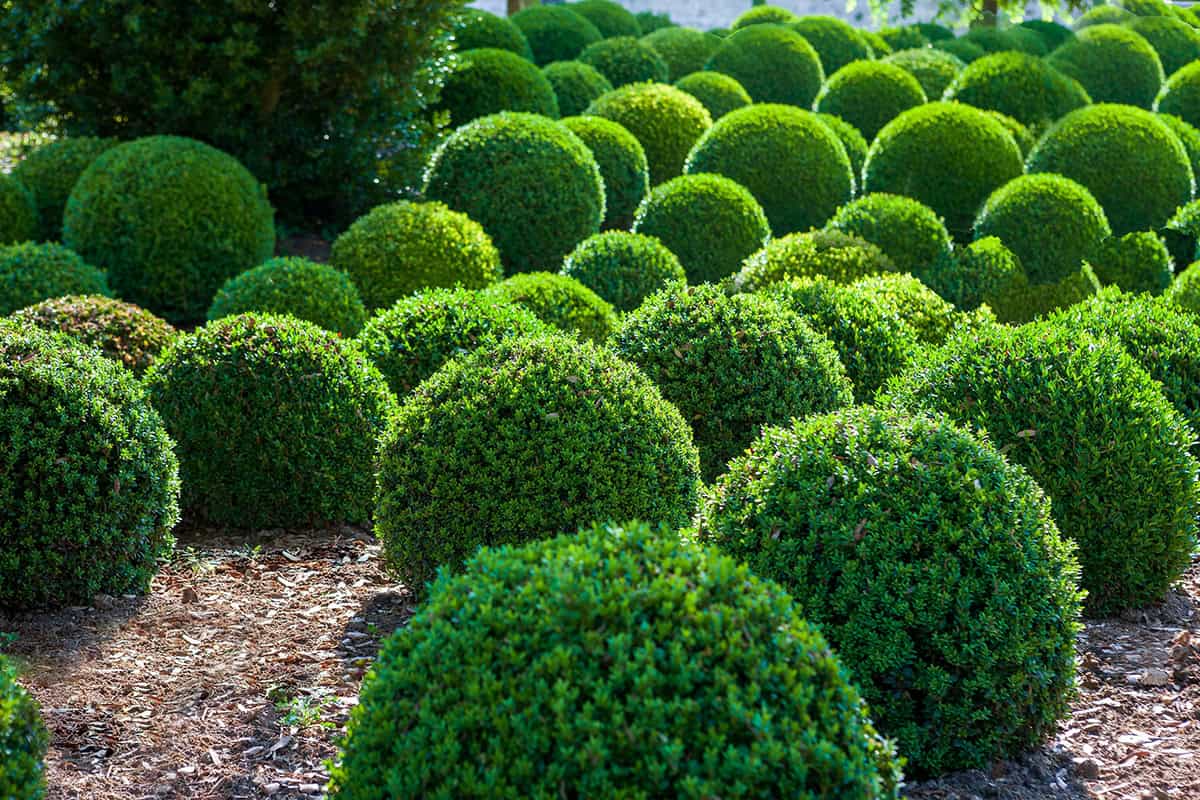
Boxwood holds its small, glossy leaves all year, and its dense branching takes clipping into hedges, globes and cones with ease.
The oldest boxwood hedges in European gardens have stood for centuries. A sheltered spot, well-drained soil near neutral pH and careful pruning produce shrubs that last for decades.
Boxwood blight and the box tree moth, two newer threats, are worth recognizing early, and the troubleshooting section shows the signs.
Table of Contents
Quick Care Summary
Boxwood’s evergreen leaves anchor hedges, borders and single clipped accents all year. Most types grow slowly and hold their shape with light trimming, and mature size runs 2 to 8 feet tall and wide by cultivar.
- Light: Full sun to partial shade; afternoon shade in hot regions
- Soil: Well-drained, neutral to slightly alkaline (pH 6.8–7.5)
- Watering: About 1 inch per week; deep soaks during dry spells, especially in the first year
- Temperature: Hardy in USDA Zones 5–9; some hybrids to Zone 4
- Humidity: Average, with good airflow
- Fertilizer: Light, balanced slow-release feeding in early spring if growth is slow
- Propagation: Semi-hardwood cuttings in summer
Plant Overview
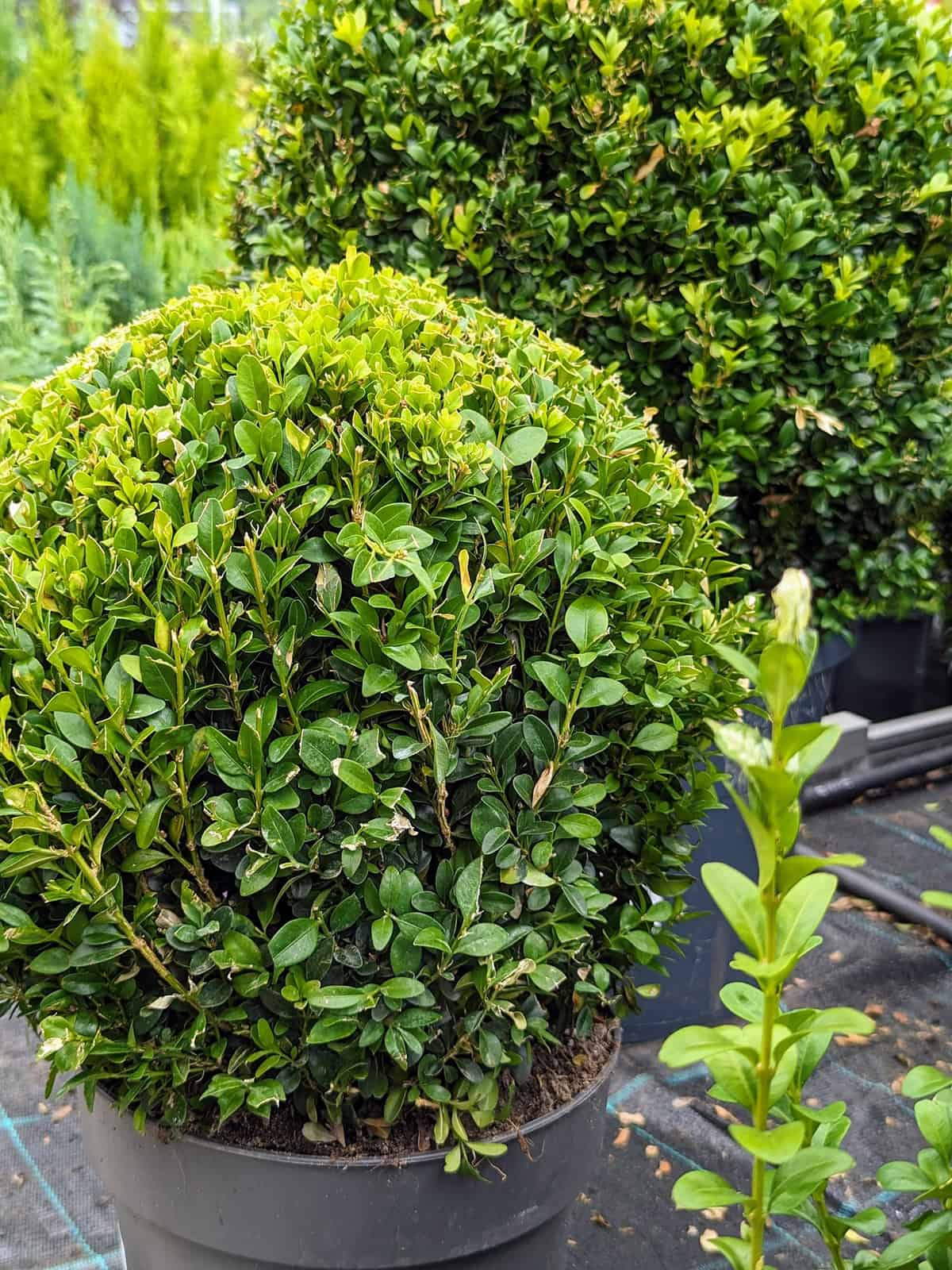
Dense, tiny leaves and a tolerance for shaping make boxwood a staple of formal gardens and foundation beds. Common, Japanese and Korean boxwood and their hybrids cover a wide range of sizes, between compact 2-foot mounds and shrubs that pass 8 feet with age.
- Botanical name: Buxus spp.
- Common names: Boxwood, box; common, Japanese and Korean boxwood
- Plant type: Evergreen shrub
- Mature size: 2–8 feet tall and wide, larger with age (varies by cultivar)
- Growth rate: Slow
- Hardiness: USDA Zones 5–9; some hybrids to Zone 4
- Toxicity: Toxic to pets and people if eaten
- Native region: Europe, Asia, Africa and parts of Central America and the Caribbean
Matching the cultivar to the local climate prevents most winter damage.
Light
Morning sun with afternoon shade produces dense foliage and rich color on boxwood. In cooler climates, full sun is fine, while intense afternoon sun in hot regions scorches and browns the leaves.
Deep shade leads to thin, leggy shrubs with an open, loose shape.
Winter sun and wind bronze the foliage on exposed sites. A location sheltered from harsh winter wind, such as the east side of a house, limits that damage, and partial shade is the safer choice in regions with hot summers.
Water
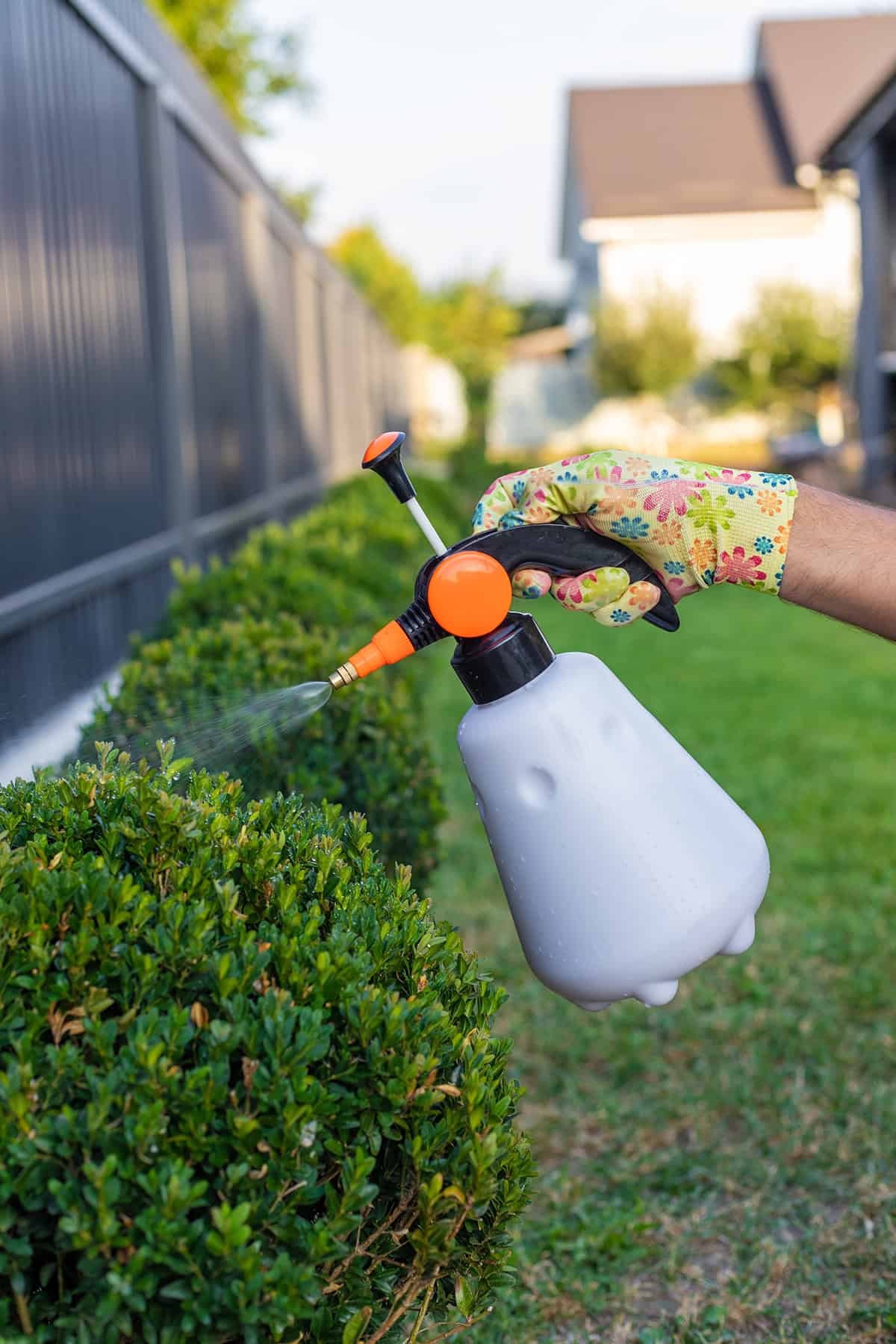
Water new boxwood deeply once or twice a week through the first growing season, whenever the top inch of soil dries. The root ball should be moist and never waterlogged.
Established shrubs handle short dry spells, though even moisture produces the healthiest plants. Sandy soil dries fast, while clay holds water longer, and overwatering or poor drainage leads to root rot.
Aim for about an inch of water a week from rain or irrigation. Ease off in early fall, then water deeply in late fall if the season has been dry and the ground is still unfrozen. A layer of mulch holds moisture and buffers root temperatures.
Soil
Loose, well-aerated soil produces healthy boxwood roots, and compacted ground stunts growth.
A pH between 6.8 and 7.5 is best. A soil test confirms the reading, and lime raises the pH of acidic soil.
Drainage matters more than fertility. In heavy clay, raised beds or mounds improve survival. Compost improves drainage in clay and moisture retention in sand, but fresh manure burns the shallow roots.
Plant at the same depth as the nursery container, or slightly higher in slow-draining soil. A 2- to 3-inch layer of mulch evens out moisture and temperature, as long as it sits a few inches away from the trunk.
Temperature & Humidity
Many boxwoods handle winter lows near 0°F, and Korean types and hybrids such as ‘Green Velvet’ survive much colder winters. In hot zones, afternoon shade protects the leaves from scorch.
Cold, dry winter winds bronze and burn the foliage, so a sheltered site and a mulched root zone help. Sudden temperature swings in late winter also damage exposed shrubs.
Boxwood handles average humidity, although very dry air leads to leaf drop. In muggy regions, wider spacing improves airflow and reduces disease.
Fertilizer
Boxwood feeds lightly. Test the soil first, since plants in the right pH range need little extra.
In early spring, as new growth begins, apply a balanced slow-release shrub fertilizer over the soil beneath the canopy, away from the trunk. About 1 pound of actual nitrogen per 1,000 square feet of root area is the standard rate.
Water thoroughly afterward, and skip feeding plants stressed by drought. Late-summer and fall feeding produces tender growth that suffers in winter. Young shrubs in poor soil benefit from yearly feeding, while established plants in good soil need it only every couple of years.
Potting & Repotting
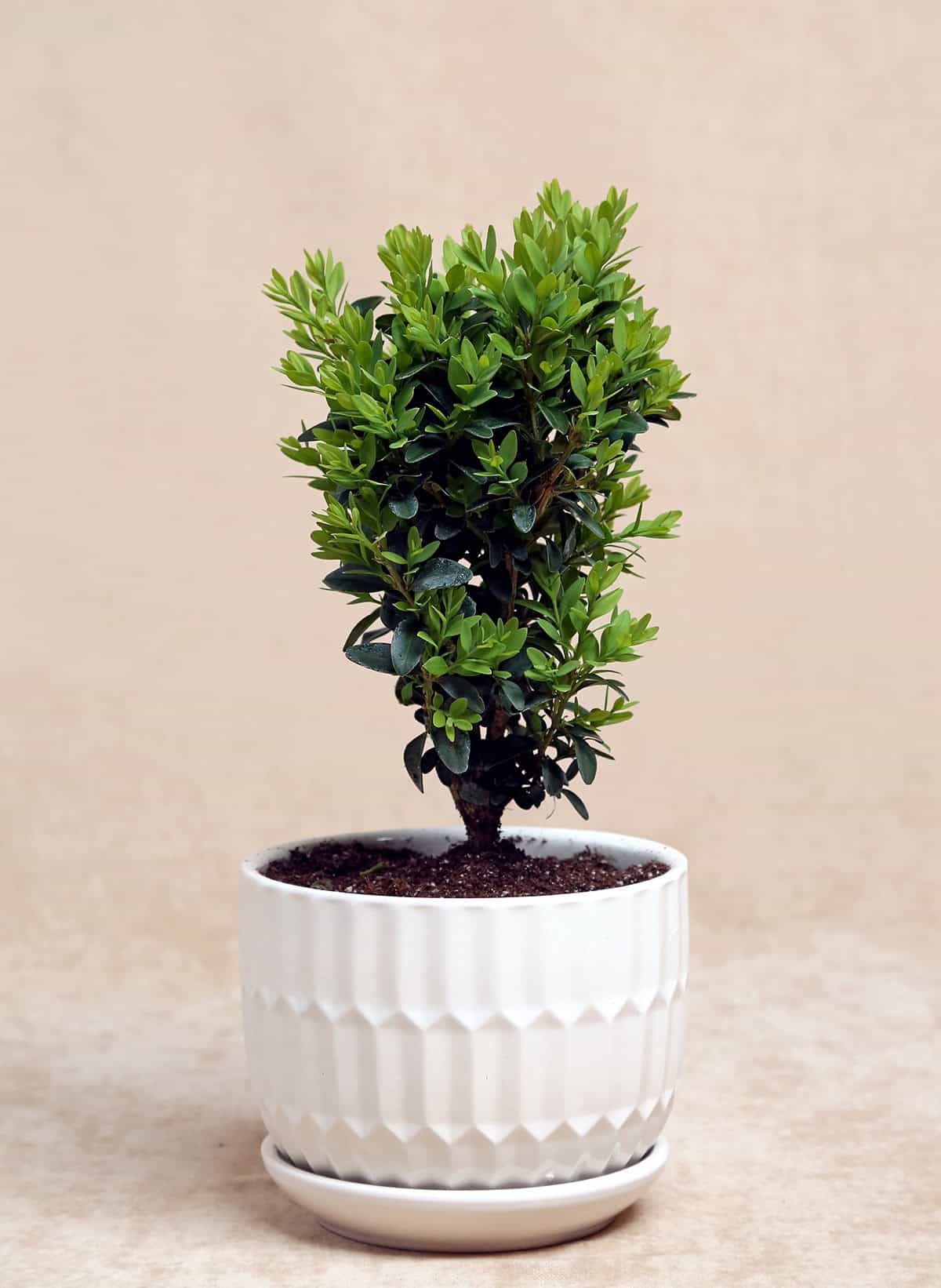
Boxwood grows well in containers where space is tight or garden soil drains poorly. Choose a sturdy pot with large drainage holes, a few inches wider than the root ball, and favor heavy clay or concrete to prevent tipping.
Use a light, well-drained potting mix with a neutral to slightly alkaline pH, and avoid garden soil, which compacts in pots. Water in well and firm the mix gently.
Every couple of years, check for circling roots or roots poking out of the drainage holes. Move up one size, or trim the roots and refresh the mix in the same pot. Container roots are more exposed to cold, so in Zone 6 and colder, shelter or wrap pots for winter.
Pruning
Boxwood takes shaping into hedges, spheres or loose mounds. Sharp, clean shears make clean cuts and limit stress.
Prune in late spring, after the new flush of growth has firmed, with light touch-ups through midsummer. Dwarf forms need a trim only every year or two, and faster growers more frequently.
Avoid heavy pruning in late fall, since new growth needs time to harden before winter. To reduce size or open a dense plant, thin selected branches back to inner stems, which lets light into the center. Heavy outer shearing alone shades out the interior and leaves bare stems inside.
Propagation
Boxwood roots reliably from cuttings taken in summer, once new growth has started to harden.
Cut healthy 4- to 6-inch stems just below a leaf node, strip the lower leaves and dip the ends in rooting hormone. Insert them in a moist, well-drained mix of sand and peat or perlite and peat.
Place the pot in bright, indirect light and cover it with a clear dome or bag to raise humidity. Roots form in four to eight weeks, and a gentle tug that meets resistance means they have taken hold. Pot rooted cuttings individually once they show new growth.
Low, flexible branches also layer. Wound the underside of a section, pin it to the soil and cover it, with the tip exposed. Roots develop within a season or two.
Common Problems
Regular checks in spring and early summer catch most boxwood problems early.
Boxwood blight causes brown leaf spots, black streaks on stems and sudden leaf drop. Remove and bag infected plants or branches right away, avoid overhead watering and disinfect tools between cuts. ‘NewGen’ cultivars and other blight-tolerant selections reduce the risk.
Volutella blight and other leaf spots appear as tan or orange-pink patches that thin the canopy. Better air circulation, dry foliage and fungicide in serious cases help.
Boxwood leafminer blisters the leaves, psyllids cup and twist new growth, and mites cause fine stippling. Box tree moth caterpillars, a newer pest in North America, strip whole shrubs and spin webbing. Horticultural oil, targeted insecticides or Bt for caterpillars control them.
Winter injury shows as bronzed or bleached leaves in exposed spots. A sheltered site, moist soil going into winter and burlap screens in harsh climates reduce the damage.
Varieties
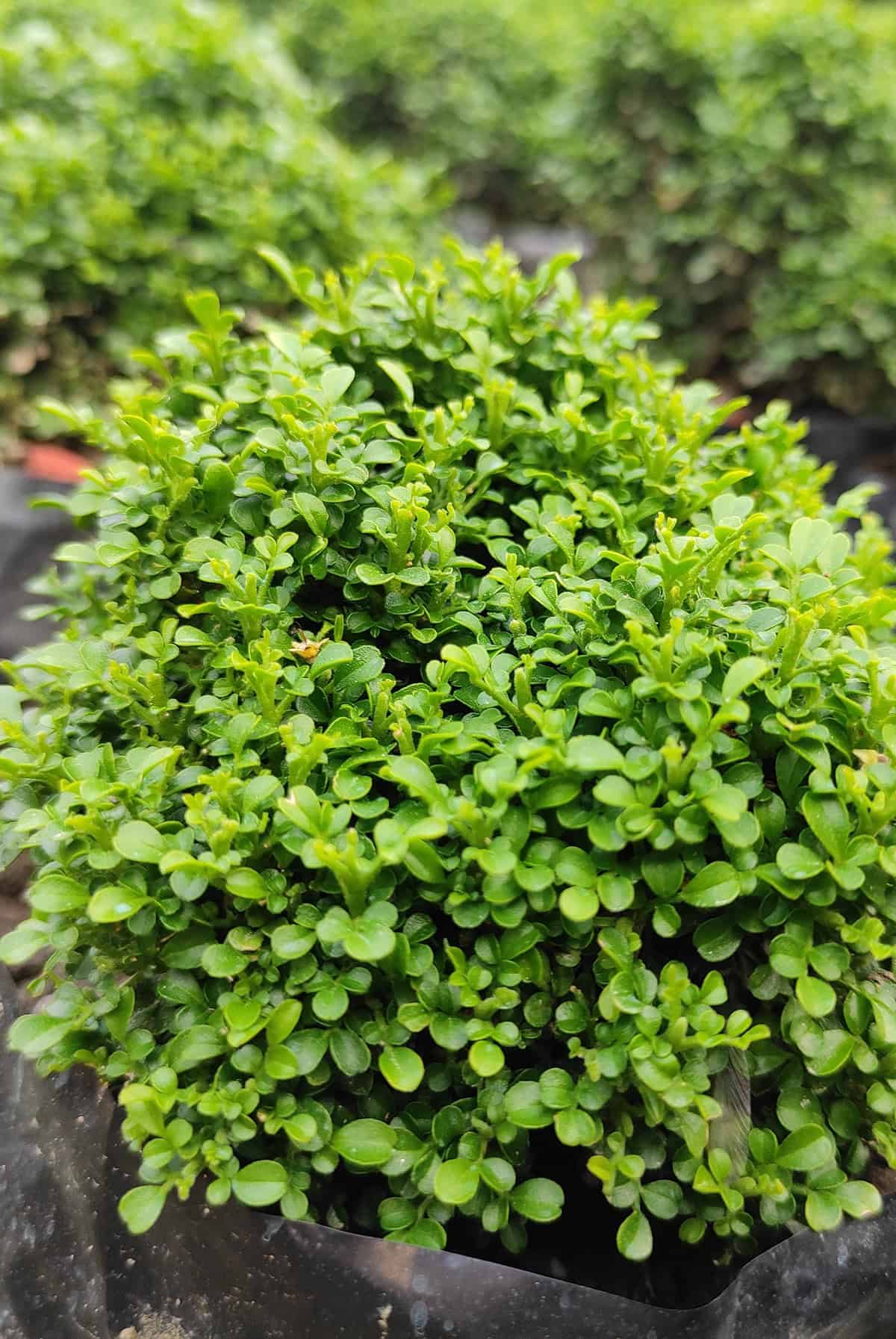
Boxwood species and hybrids differ in leaf size, growth rate and cold tolerance.
Common boxwood, Buxus sempervirens, also called American boxwood in the U.S., grows into large hedges and reaches 15 to 20 feet if left unpruned. ‘Suffruticosa’, or English boxwood, grows very slowly into tight, cushiony mounds for edging.
Japanese boxwood, Buxus microphylla, has a compact habit and handles summer heat well, and ‘Green Beauty’ holds its dark color through winter. Korean boxwood selections such as ‘Winter Gem’ and ‘Wintergreen’ survive colder winters, although their leaves bronze in winter sun.
Hybrids such as ‘Green Velvet’ and ‘Green Mountain’ combine cold hardiness with good year-round color.