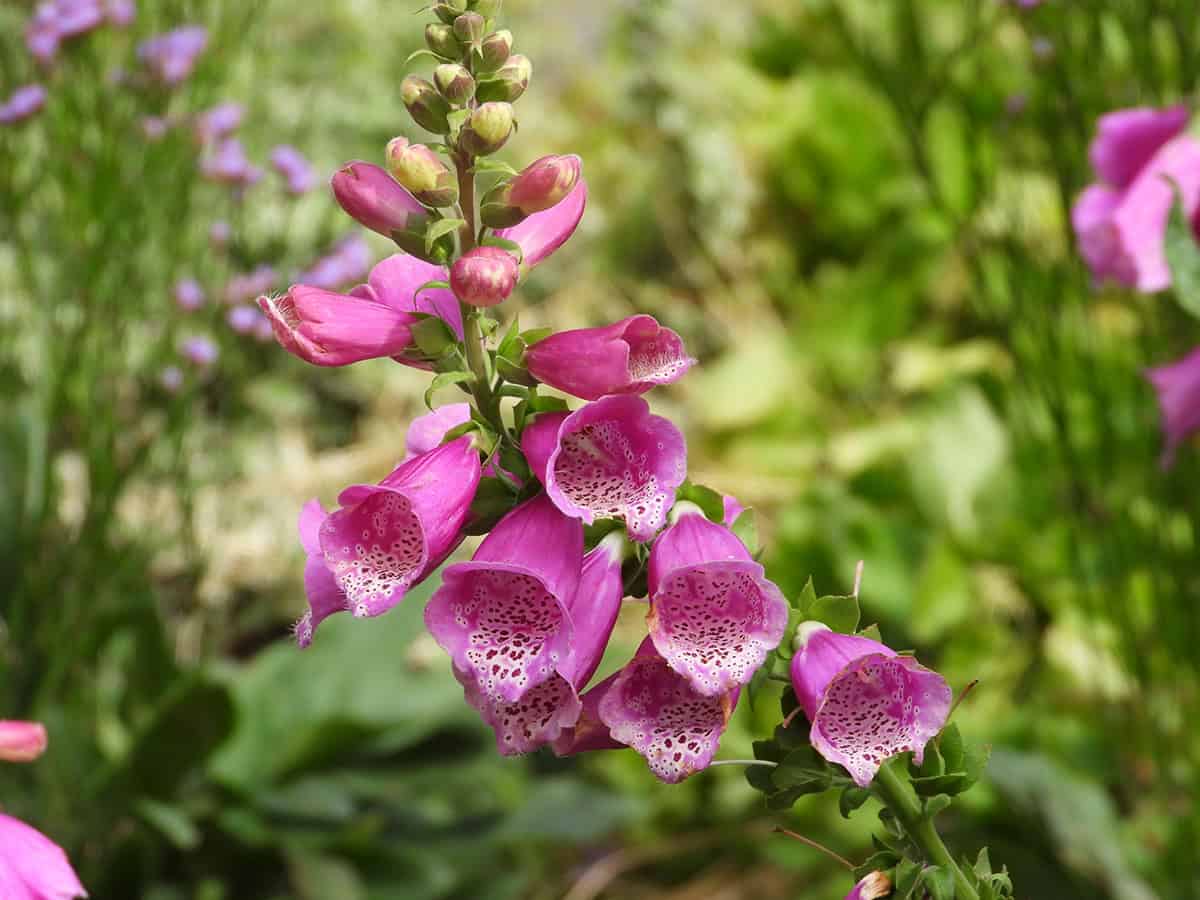
Foxglove sends up spires 3 to 5 feet tall in early summer, each lined with drooping bells whose freckled throats guide bees inside.
Common foxglove spends its first year as a low rosette of soft, fuzzy leaves and flowers in the second. Cool weather, rich soil and light afternoon shade produce the tallest spires.
Its leaves, flowers and seeds are all toxic, which shapes where the plant belongs in a garden with pets or children, and the care notes flag it wherever it matters.
Table of Contents
Quick Care Summary
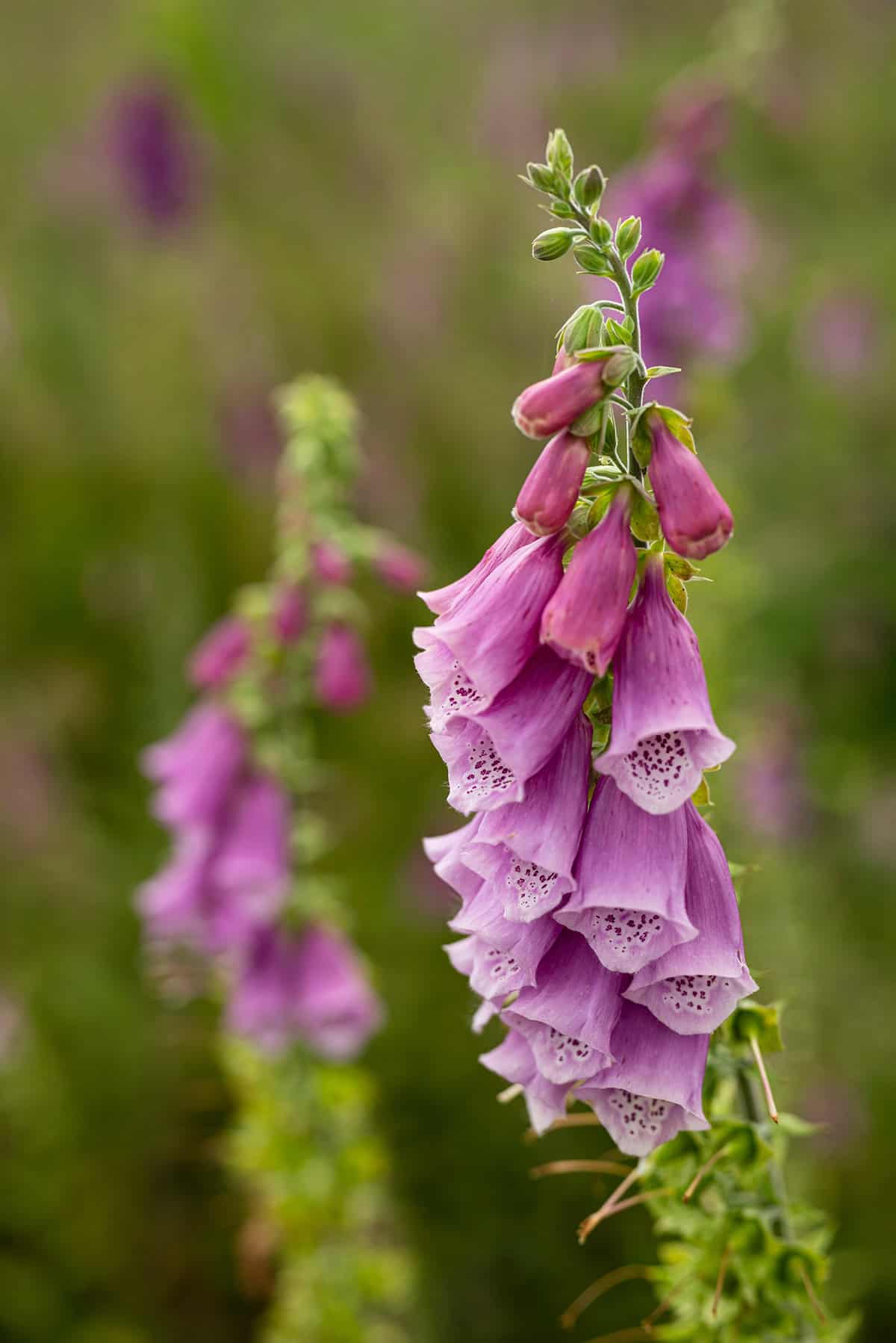
Foxglove’s upright spires fit cottage borders, woodland edges and the backs of beds, where fences and shrubs shelter the tall stems from wind. Most common foxgloves bloom in their second year, so a few spikes left to seed or new plantings each year produce a steady show.
- Light: Full sun to partial shade; afternoon shade in hot regions
- Soil: Moist, rich and well-drained; pH 5.5–6.5
- Watering: Even moisture; avoid soggy roots
- Temperature: Hardy in USDA Zones 4–8; prefers cool summers
- Humidity: Average garden humidity
- Fertilizer: Light, balanced feeding in early spring
- Propagation: Seed; self-sows when spikes go to seed
Plant Overview
Common foxglove completes its life cycle in two years, and some forms return as short-lived perennials. The first year produces a rosette of soft, gray-green leaves, and the second sends up a single tall stem packed with tubular flowers that bumblebees crawl inside.
- Botanical name: Digitalis purpurea
- Common names: Foxglove, common foxglove, purple foxglove
- Plant type: Biennial or short-lived perennial
- Mature size: 2–5 feet tall, 1–2 feet wide
- Growth rate: Moderate
- Toxicity: Highly toxic to people and pets if eaten
- Native region: Western and southwestern Europe
The plant contains cardiac glycosides, the compounds behind the heart drug digitalis, and even small amounts eaten from the garden are dangerous. Wear gloves when handling it.
Light
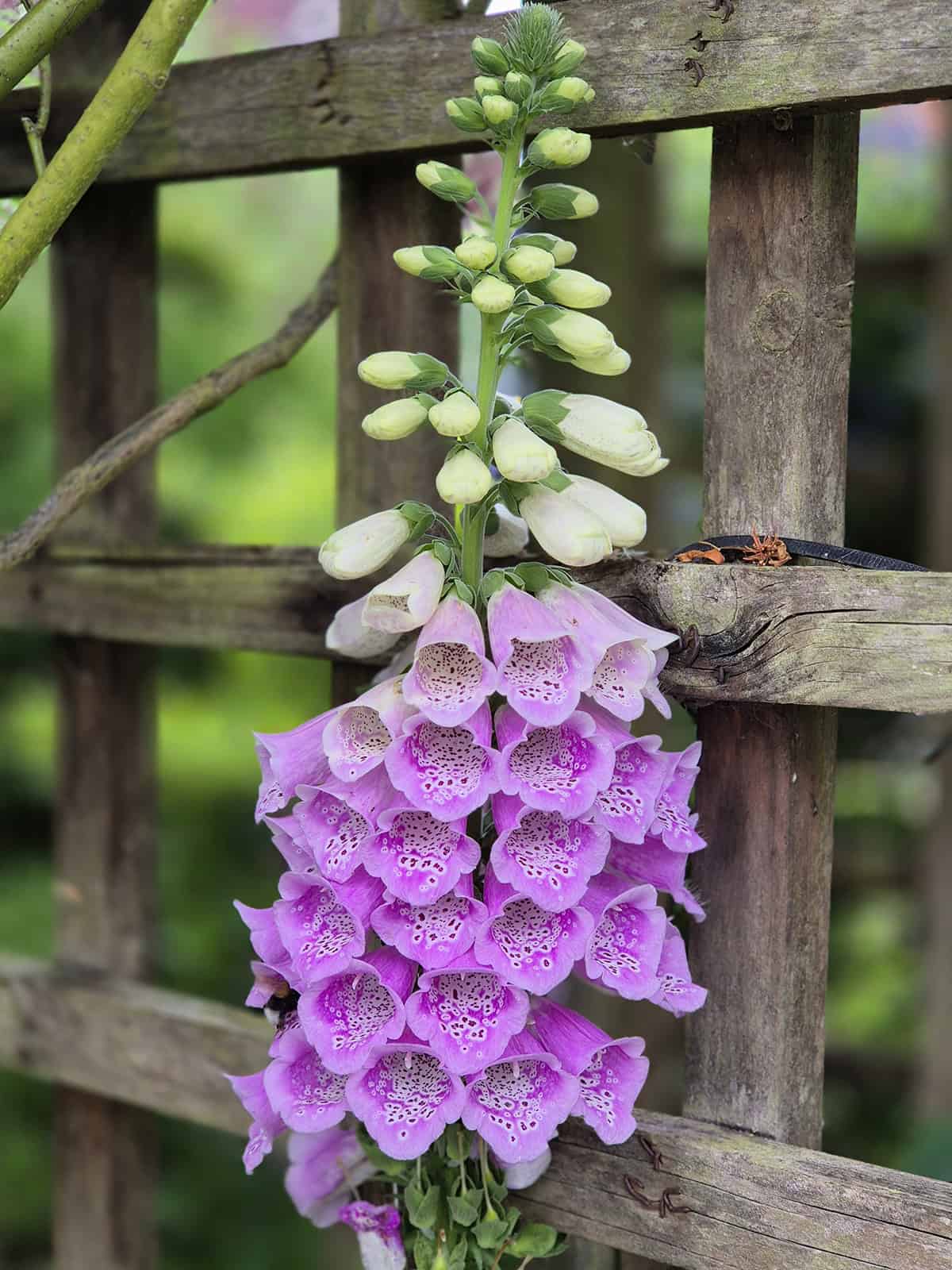
Morning sun followed by dappled afternoon shade produces sturdy foxglove, especially in regions with hot afternoons. Three or four hours of direct sun is enough for strong flower spikes, and cooler gardens handle full sun.
Too much shade leads to plenty of leaves and few flowers, with floppy stems that lean toward the light.
Seeds need light to germinate, so press them onto the soil surface and leave them uncovered. Filtered light helps seedlings build strong first-year rosettes.
Water
Foxglove needs steady moisture, especially during establishment. Water deeply enough to reach the roots, then let the top inch of soil dry before the next watering to encourage deep roots.
In cool, rainy climates, rainfall covers most of its needs, while drought and heat call for extra water. Water at the base to dry the leaves quickly and limit disease.
Soil around the crown should drain quickly, since puddles lead to rot. Potted foxgloves dry out fast and need more frequent checks.
Soil
Rich, moisture-retentive and well-drained soil produces the tallest spikes. Dig compost or leaf mold into the planting area before planting.
A slightly acidic pH between 5.5 and 6.5 is best, and a soil test kit shows where the bed stands.
Clay benefits from plenty of organic matter to lighten it, and sandy soil from compost to hold water. Soggy soil weakens the plants and reduces flowering.
Temperature & Humidity
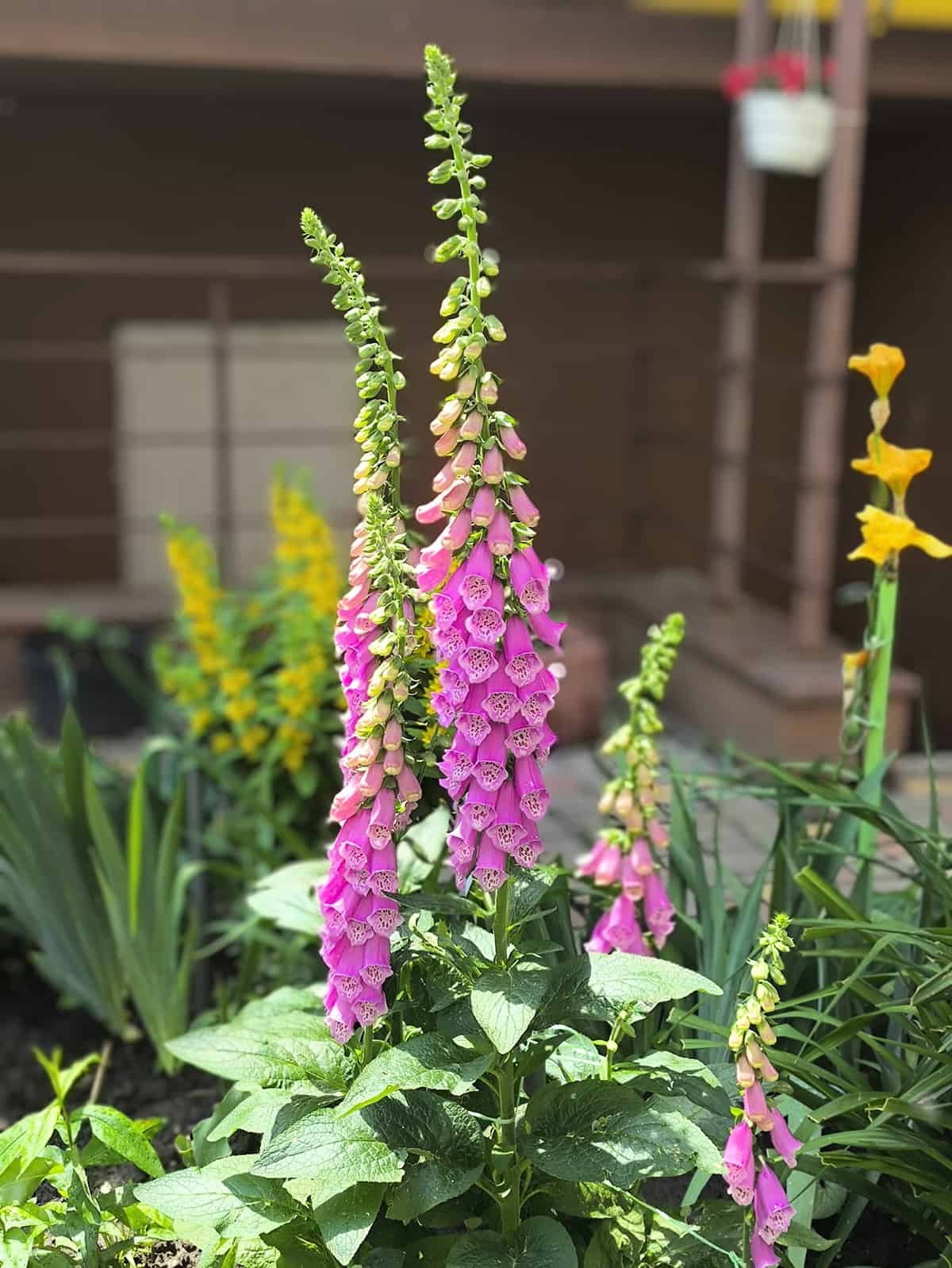
Cool, mild weather produces the strongest growth, with days between about 60°F and 70°F. Light frost causes little harm, especially before flowering, while temperatures above 85°F fade the blooms faster and scorch the leaves.
Hardy in USDA Zones 4 to 8, foxglove handles winter cold as a rosette. Afternoon shade and damp soil help it through hotter summers, and a sheltered spot protects the leaves from drying winds.
Foxglove handles average humidity. Humid air combined with crowded plants invites fungal disease, so space plants 12 to 18 inches apart and avoid evening overhead watering.
Fertilizer
Foxglove needs light feeding. Rich, loose soil covers most of its needs, and compost or well-rotted manure dug in before planting improves both fertility and structure.
In spring, a light dose of balanced fertilizer such as 10-10-10 is plenty. Excess nitrogen produces leafy growth at the expense of flowers.
In poor or sandy soil, a top-dressing of compost in midsummer helps. Water after each feeding to move nutrients to the roots.
Potting & Repotting
Foxglove grows well in containers at least 10 to 12 inches deep with drainage holes. Use a loose, fertile potting mix for flowering perennials.
Set the plant at the depth it grew before, firm the mix around the roots and water well. Sun to partial shade fits pots too, with afternoon shade in hot weather.
When roots circle the pot or poke out of the bottom, repot into fresh mix. Handle the roots gently, since they break easily, and water lightly until new growth appears. Biennial types finish after flowering, so plan on replacing them with seedlings.
Pruning
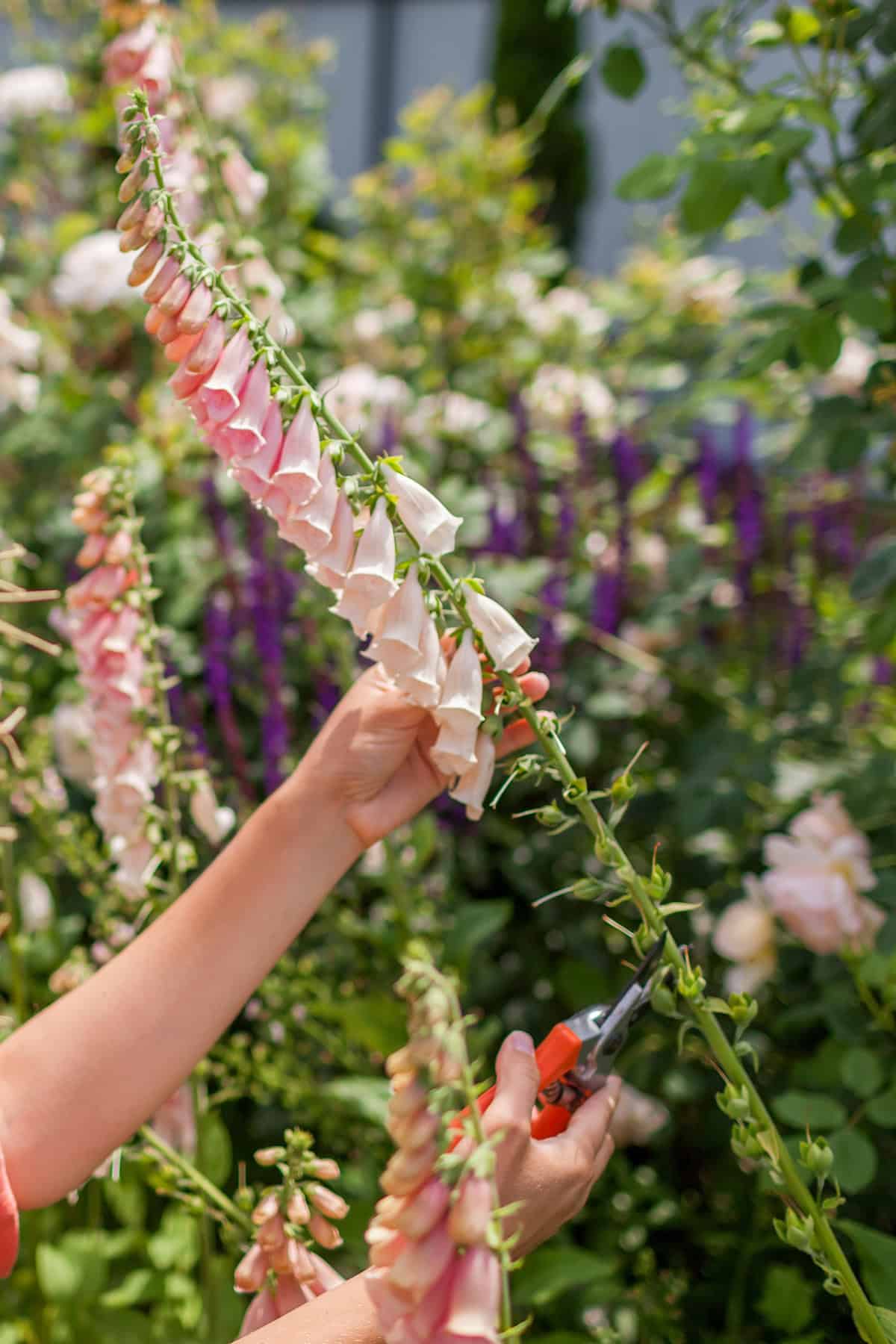
Foxglove needs little pruning. After the main spike finishes, cut it at the base to limit self-seeding and encourage shorter side spikes.
For natural reseeding, leave a few spikes standing until the seed pods ripen and split. In spring, thin crowded seedlings to improve airflow.
Cut dead stems to the ground at the end of the season. Wear gloves when handling clippings, since every part of the plant is toxic, and wash hands and tools afterward.
Propagation
Foxglove grows easily from seed. Indoors, sow in late winter, about 8 to 10 weeks before the last frost, on the surface of moist seed mix and leave the seeds uncovered. At about 70°F, sprouts appear in two to three weeks.
Move seedlings with a couple of true leaves into larger pots, then plant them outside after frost danger passes, 12 to 18 inches apart.
Direct sowing outdoors in late spring or early summer produces rosettes that flower the following year. Most types bloom in their second season, though first-year series such as ‘Camelot’ and ‘Dalmatian’ flower the same summer from an early start.
Common Problems
Soggy, heavy soil leads to crown and root rot, and plants collapse quickly. Plant in well-drained ground, water at the base and let the top layer dry between waterings.
Powdery mildew and leaf spot appear in muggy weather with poor airflow, as a pale, dusty coating or brown spots. Space plants well, remove affected leaves and avoid overhead watering.
Aphids cluster on stems and buds and distort new growth. A hard spray of water or insecticidal soap controls them, and weekly checks under the leaves catch them early.
Foxglove drops seed heavily, and deadheading prevents unwanted seedlings. Hot, dry spells shorten bloom time, and afternoon shade plus extra water help.
Varieties
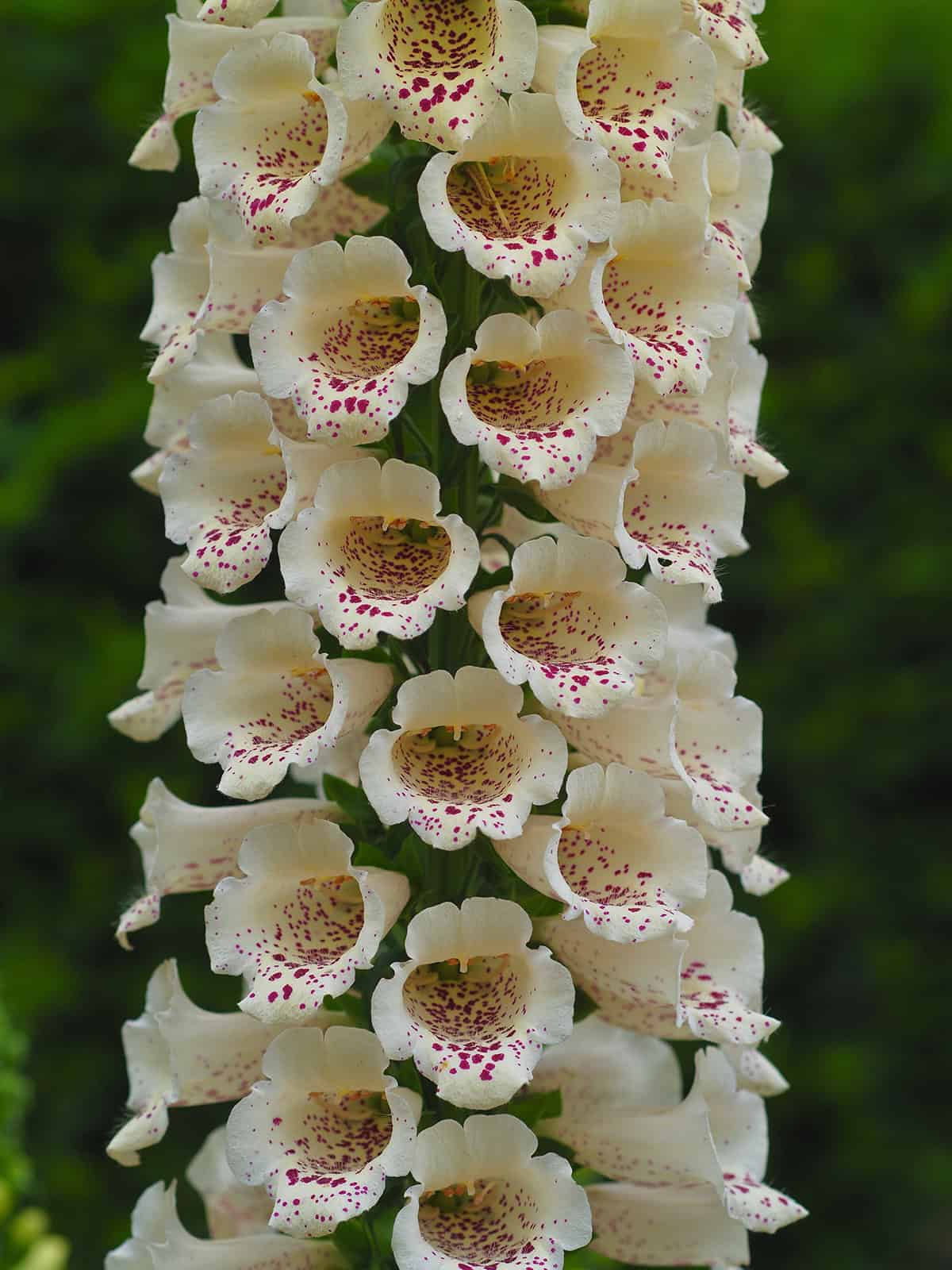
Common foxglove, Digitalis purpurea, carries tall spires in purple, pink, apricot or creamy white, and many bells are speckled inside. Most plants are biennials, with the odd one returning a third year.
The ‘Camelot’ and ‘Dalmatian’ series flower in their first season on compact stems. ‘Alba’ produces pure white spikes, and ‘Pam’s Choice’ has white bells with deep maroon throats.
Yellow foxglove, Digitalis grandiflora, and small yellow foxglove, Digitalis lutea, are true perennials with soft yellow flowers. Strawberry foxglove, Digitalis × mertonensis, returns for several years with coppery pink spikes. Every species is toxic, so plant them away from areas where pets and children play.