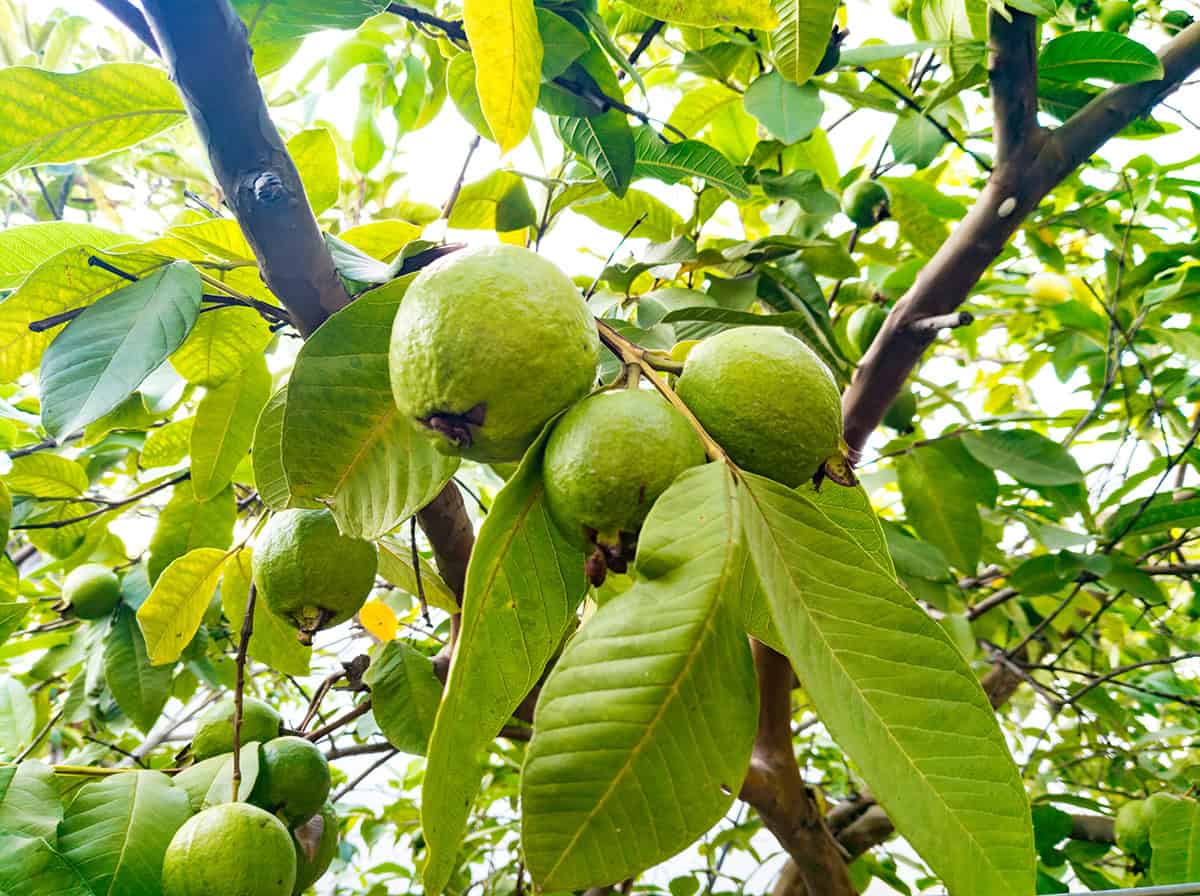
Guava fruit perfumes a whole kitchen once it ripens, and the tree that bears it grows quickly, flowers young and fits into a large pot.
Psidium guajava comes from tropical America and needs warmth above all, along with full sun and soil that drains. In frost-free gardens, a well-pruned tree produces one or two crops a year.
Readers torn between pink and white flesh, or curious about strawberry guava and feijoa, will find each one described in the varieties section.
Table of Contents
Quick Care Summary
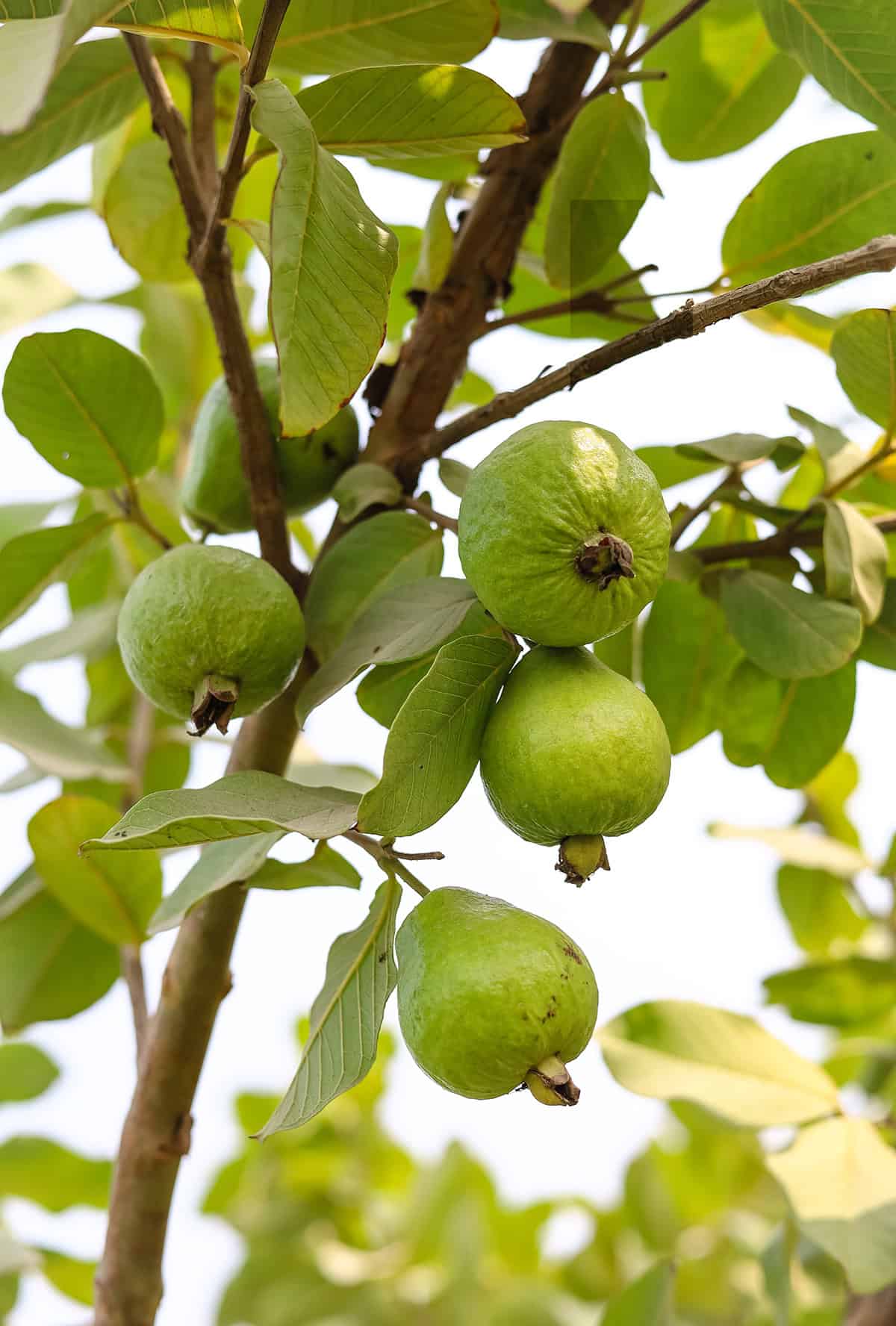
Guava asks for warmth, sun and soil that drains, plus regular water and light feeding.
- Light: Full sun, 6–8 hours or more
- Soil: Sandy or loamy, well-drained; pH 4.5–7.0, tolerates up to about 8.5 with iron supplements
- Watering: Regular moisture, especially during flowering and fruit set
- Temperature: Best at 73–82°F; damaged below about 28°F
- Humidity: Moderate to high
- Fertilizer: Balanced fertilizer with micronutrients, 3–4 times a year for mature trees
- Propagation: Air layering, cuttings or grafting; seedlings vary
- USDA Zones: 9–11
- Fruiting season: Mainly summer to fall, with a second smaller crop in warm climates
Water young plants steadily in their first year, and prune to about 6 to 10 feet tall for easy harvest and less wind damage.
Plant Overview
Guava, Psidium guajava, grows as an evergreen shrub or small tree with smooth, peeling, copper-brown bark and leathery, deeply veined leaves. It trains as a single-trunk tree or a multi-stemmed shrub, and regular pruning holds most home trees under 10 feet. White, fragrant flowers with a puff of stamens develop into round or pear-shaped fruit with cream, pink or red flesh.
Frost-free gardens grow it in the ground, and colder regions grow it in a large container that moves indoors for winter. Mature trees survive a brief light freeze, while young ones suffer.
- Botanical name: Psidium guajava
- Common names: Guava, common guava, apple guava
- Plant type: Evergreen shrub or small tree
- Mature size: 8–20 feet tall unpruned
- Growth rate: Fast in warm climates
- Toxicity: Fruit and seeds are edible
- Native region: Tropical Central and South America
Light
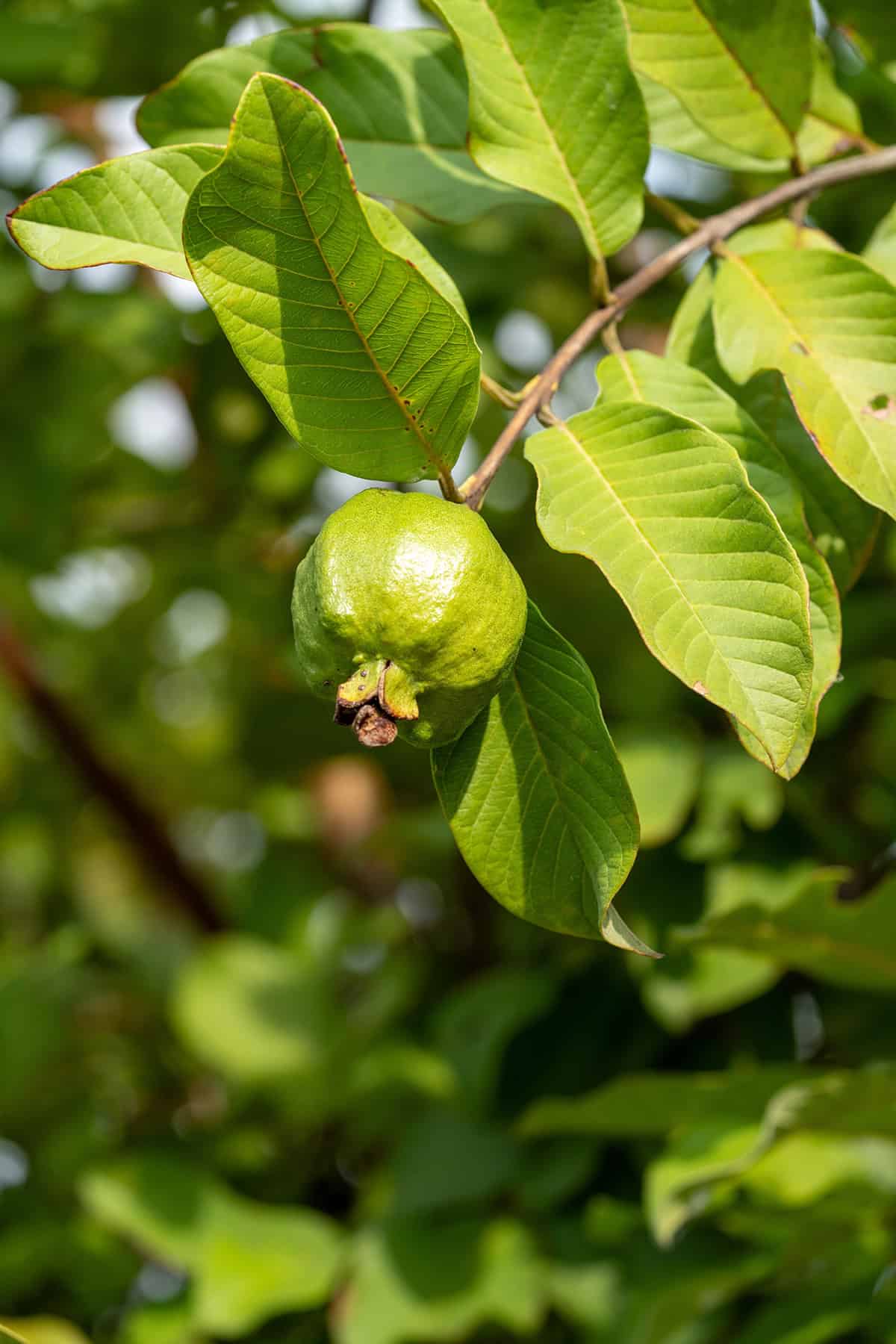
Guava needs at least six to eight hours of direct sun a day, and stronger light produces heavier flowering and fruit set.
Shade leads to fewer flowers, spindly growth and a thin canopy. Indoors, a south- or west-facing window is the minimum, and a dim corner produces a weak plant.
Young saplings tolerate light shade, but older trees need full exposure, away from large trees or tall walls. In very hot climates, light afternoon shade protects the youngest plants until their roots establish.
Hot, dry winds crisp new leaves, so choose a sunny site out of strong gusts. Reliable light supports repeat flowering, and in warm regions the tree flowers more than once a year.
Water
Young guava trees need regular moisture, about two or three waterings a week in warm months. The root zone should be moist and never soggy.
After the first year, mature trees handle short dry spells. A deep soak once a week during dry stretches is enough, with the top few inches of soil drying between waterings.
Water matters most during flowering and fruit set. Increase watering when rain is scarce, but avoid flooding a drought-stressed tree all at once, since a sudden surge splits the fruit.
Guavas survive brief flooding, but roots rot in constantly wet soil. Mound the planting site where puddles linger, and spread 2 to 6 inches of mulch with a gap around the trunk. Container trees dry out much faster and need checks every day or two in summer.
Soil
Sandy loam that drains quickly and holds a little moisture produces the healthiest guava roots. Avoid low spots that hold water after rain.
Guava grows in sand, loam, rocky ground and even muck, as long as water drains away from the roots. Heavy clay needs a raised planting area.
A pH between 4.5 and 7.0 is best. The tree tolerates alkaline soil up to about 8.5, but yellow leaves there point to iron deficiency, which chelated iron corrects.
Most roots grow in the top 12 to 18 inches of soil. Before planting, loosen an area wider than the root ball, and mix any compost evenly through the soil so the roots spread outward into the surrounding ground.
Temperature & Humidity
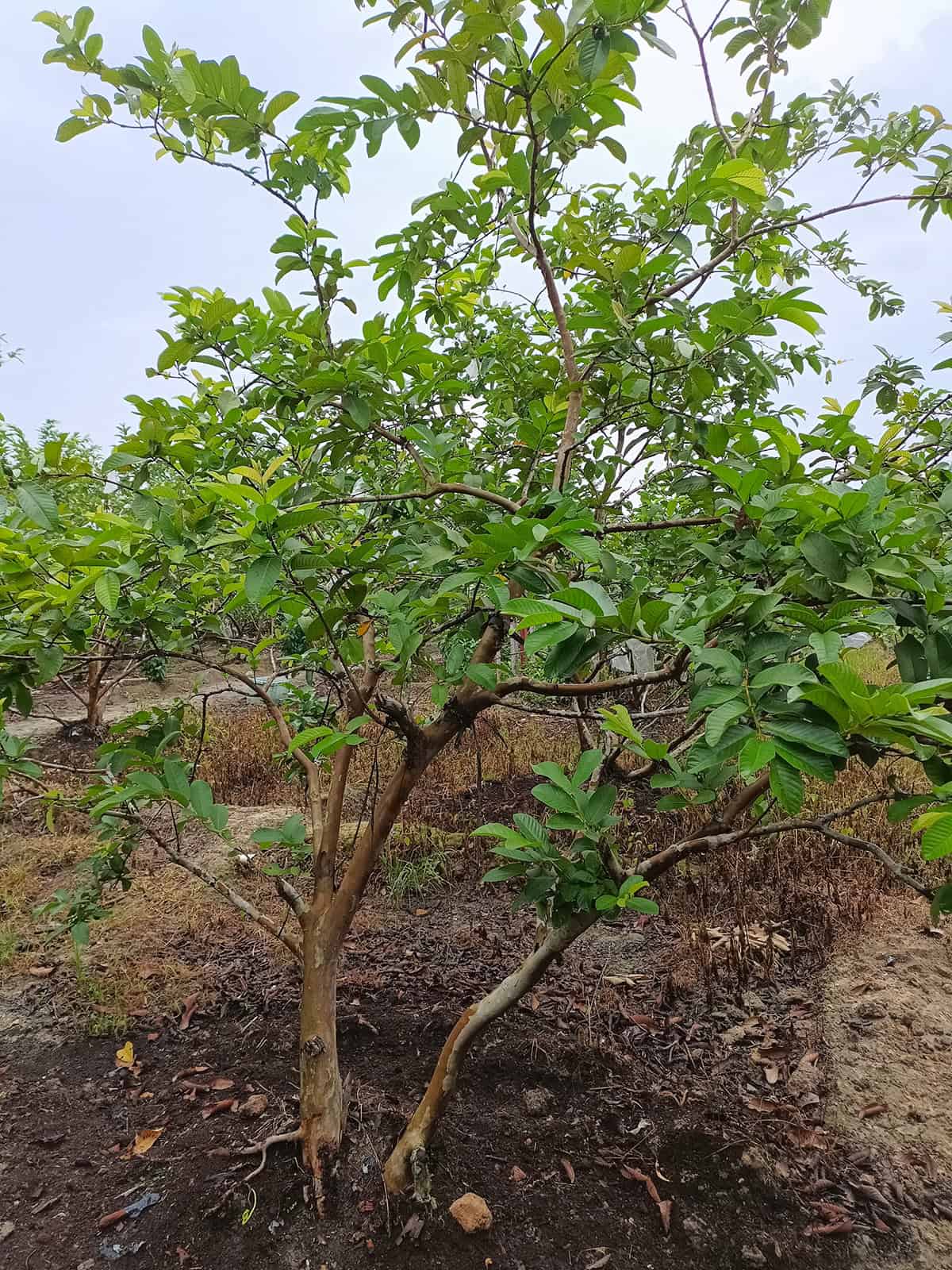
Daytime temperatures between 73°F and 82°F produce the strongest growth, and growth slows below 60°F.
Older trees survive brief dips to about 25°F with some damage, while young guavas suffer below 28°F. Long freezes kill trees to the ground.
Plant in the sunniest, most sheltered spot available, such as against a south-facing wall, and avoid low areas where cold air pools. In cooler climates, grow guava in a container and move it indoors or into a greenhouse before frost, with bright light and temperatures above 60°F.
Guava thrives in tropical and subtropical regions and handles coastal gardens. Very dry indoor air slows growth in winter, and nights below 45°F to 50°F reduce flowering.
Fertilizer
Young guavas respond best to light, regular feeding. Every four to six weeks from early spring through late summer, apply a balanced fertilizer such as 6-6-6 or 8-8-8 with micronutrients like magnesium, iron, zinc and manganese.
Spread it under the canopy, 8 to 12 inches away from the trunk, and water it in to move nutrients down and prevent salt buildup.
Mature trees need feeding only three or four times a year, at larger doses as the canopy fills out. Too much nitrogen produces leaves at the expense of fruit. For yellow leaves or stunted growth, test the soil before changing the schedule, since a pH between 5.5 and 7.0 is best for nutrient uptake.
Growing in Containers
Containers make guava possible in small spaces and frosty climates, and they hold the tree to a manageable size.
Choose a pot of at least 15 to 25 gallons, 20 inches wide or more, with drainage holes. Heavier containers resist tipping in storms.
Use a fast-draining potting mix, with coarse sand or perlite added if needed, since garden soil packs down in pots. Water when the top couple of inches dry.
Place the pot in full sun, and move it indoors or to shelter when frost threatens in zones colder than 9. Fertilize every six to eight weeks during the growing season, ease off in fall and winter, and prune each year to hold the tree under 8 feet. Potted guavas begin fruiting in their third or fourth year.
Potting & Repotting
Start a young tree in a 10- to 15-gallon container with large drainage holes. Use a fast-draining mix with coarse sand or perlite, slightly acidic if possible.
Set the root ball level with or slightly above the soil surface, firm the mix around it and water deeply.
Repot every couple of years, or when roots circle the pot and growth slows, and move up one size at a time. A much larger pot holds wet soil for too long.
Tease apart or trim tightly tangled roots with clean, sharp pruners, and replace some of the old mix with fresh. Afterward, place the tree in bright, indirect light for about a week, water when the top few inches dry and wait for new growth before resuming regular feeding.
Pruning
Annual pruning produces compact guava trees with more fruit, since flowers form on new shoots. Late winter or early spring is the best time in most areas.
Begin in the first year. For a tree form, choose one main trunk and three or four well-spaced side branches, and for a bush form, let several stems grow.
Remove weak, crowded or crossing branches, and thin the center for sunlight and airflow, which reduces disease and improves fruit. Shorten overly long shoots to a height reachable from the ground, and remove no more than a third of the canopy at once.
Older trees benefit from yearly thinning and heading cuts on last year’s growth, which push out fresh fruiting shoots. After heavy crops, remove broken or strained branches. Cut just above a leaf node or side branch with sharp, sanitized tools.
Propagation
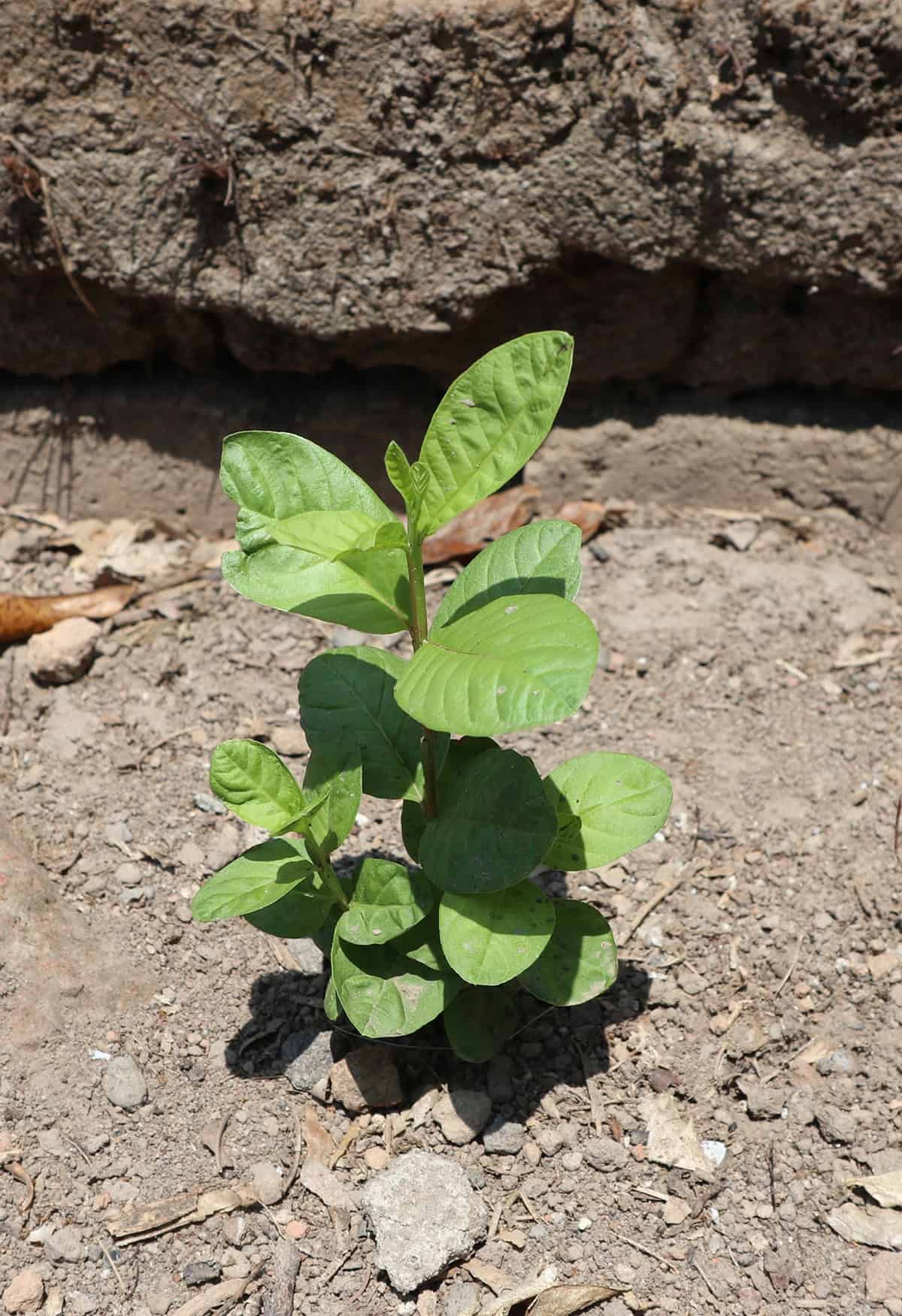
Guava seeds sprout readily but produce variable trees. Clean the seeds from ripe fruit, dry them for a day and sow them in a sterile, well-drained mix at 75°F to 85°F. Sprouts appear in two to eight weeks, and seedlings take three to four years or more to fruit, rarely matching the parent.
Air layering, cuttings, budding and grafting produce trees identical to the parent, with predictable flavor, size and yield.
Semi-hardwood cuttings root best in warm, humid conditions with rooting hormone. Air layering roots a branch while it is still attached and produces a sturdy plant that fruits sooner than a seedling.
For the quickest start, buy a healthy grafted or air-layered tree 2 to 4 feet tall with untangled roots.
Fruiting & Harvest
Guava trees produce their first fruit three to four years after planting, or sooner from grafted or air-layered stock. In warm climates, a modest spring crop and a larger crop in late summer or fall are common.
White, fragrant flowers come first, and fruit follows within about three to five months. Pruning time and fertilizer shift the timing, and even moisture during flowering and fruit set improves size and flavor.
Pick pink and red varieties when the skin lightens to yellow and the fruit yields to gentle pressure. White-fleshed types come off firmer for a crisp bite. Twist the fruit off or snip it with clean pruners, and handle it gently, since guavas bruise easily.
Firm fruit softens at room temperature in a few days. Ripe guavas last about a week in the refrigerator.
Common Problems
Fruit-boring pests cause the most damage. In Australia and New Zealand, guava moth larvae tunnel into developing fruit and rot it from the inside, and in warm regions of the Americas, Caribbean fruit fly and guava weevil do similar harm. Remove infested fruit, clear fallen debris and bag young fruit for protection.
Damp, muggy weather encourages anthracnose and leaf spot, with dark lesions on leaves and fruit. Thin the branches for airflow, and use copper sprays according to the label.
Constantly soggy roots lead to yellow leaves, fruit drop and dead branches, so plant in well-drained soil and avoid overwatering.
In alkaline soil, iron deficiency appears as yellow leaves with green veins, and chelated iron corrects it. Cold snaps below 28°F damage young trees, and frost cloth on cold nights plus a sunny, sheltered site help.
Varieties
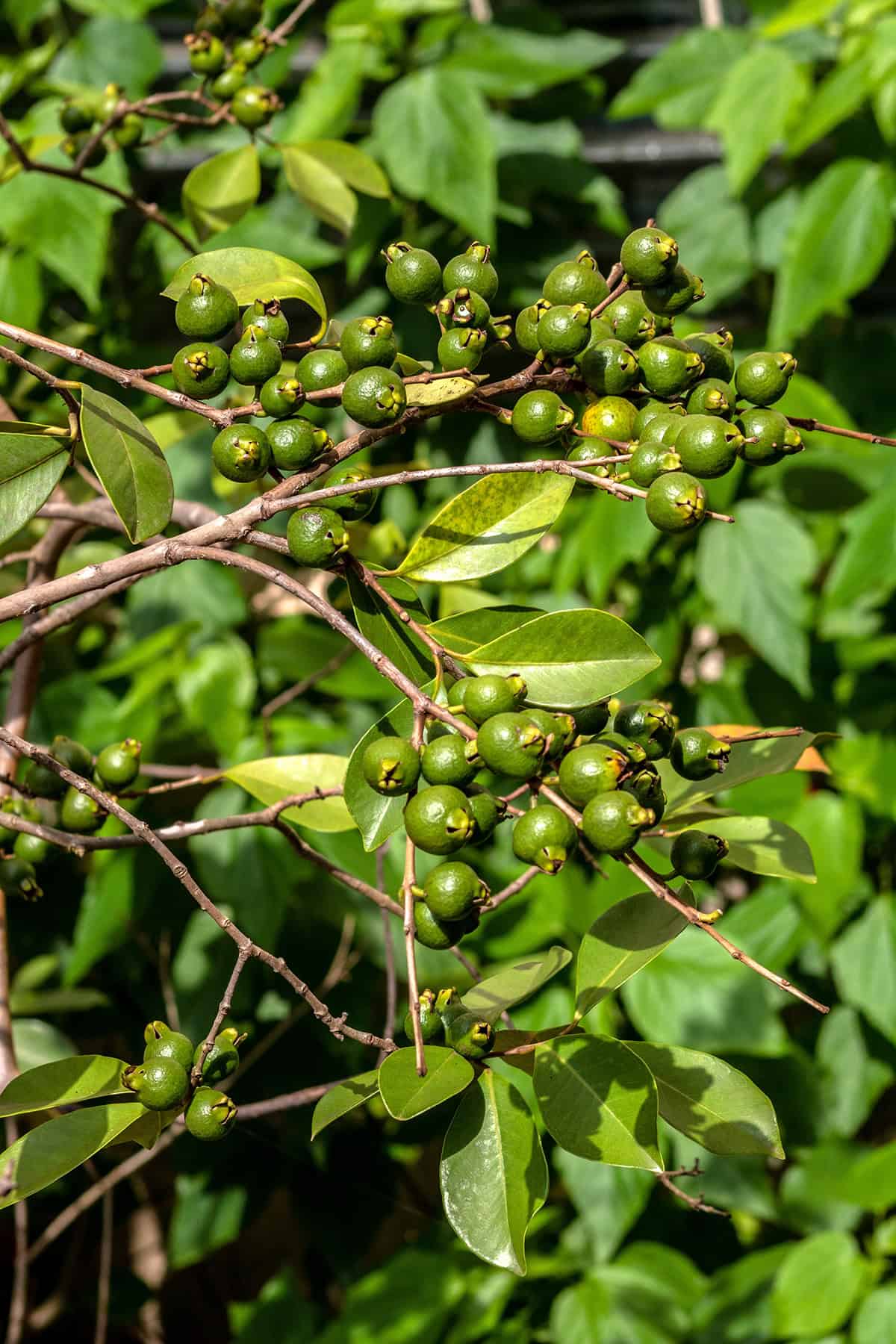
Most home gardens in warm climates grow common or apple guava, Psidium guajava, and its cultivars differ widely in size, flesh color and flavor.
Pink-fleshed guavas such as ‘Ruby Supreme’ have blush to deep red flesh with a sweet, aromatic flavor and make excellent juice and jam. White-fleshed types such as ‘Mexican Cream’ and the large Thai guavas have firmer, sweeter flesh that many people eat while still crisp.
Strawberry guava, Psidium cattleianum, produces small, red, berry-sweet fruit on a shrubby plant that handles colder temperatures than common guava. Lemon guava, its yellow form, adds a tangy, citrus-like flavor. Strawberry guava is invasive in Hawaii and Florida, so check local rules before planting.
Pineapple guava, or feijoa (Acca sellowiana), belongs to a different genus. It forms a dense evergreen shrub with oval green fruit and a sweet, floral perfume, and it tolerates frost down to the mid-teens °F.