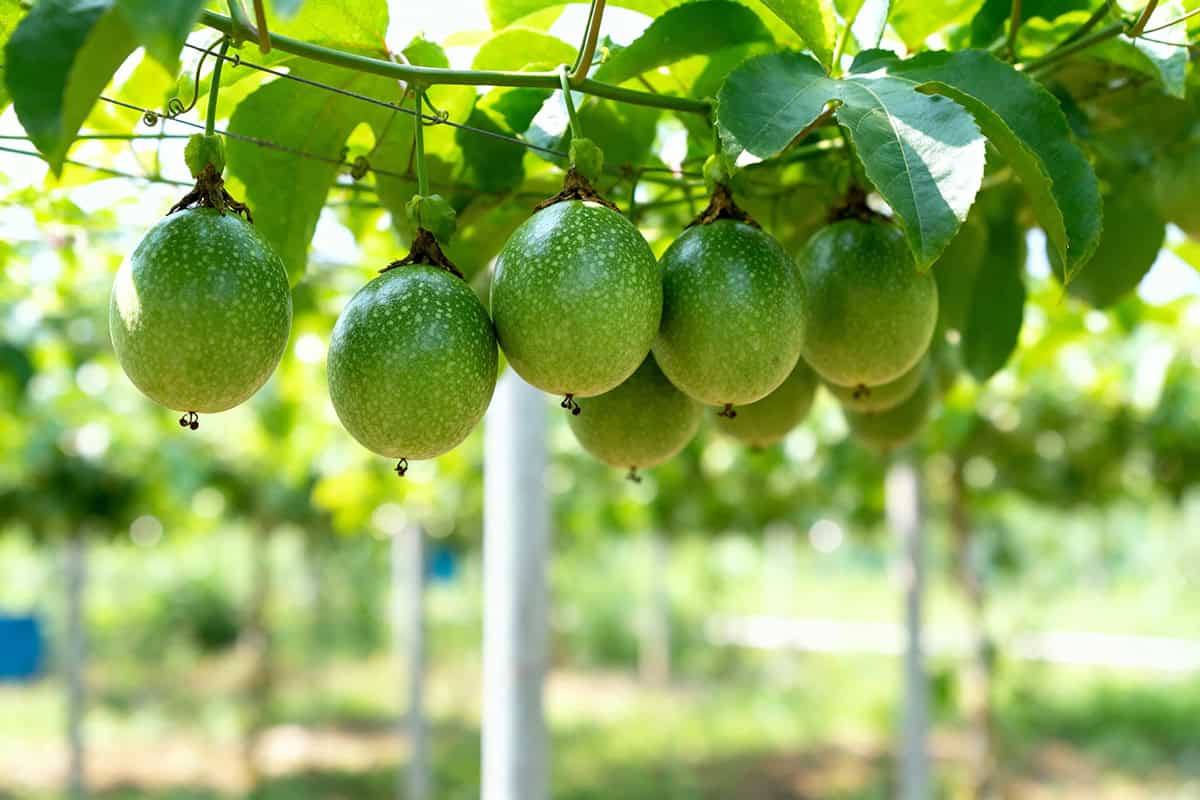
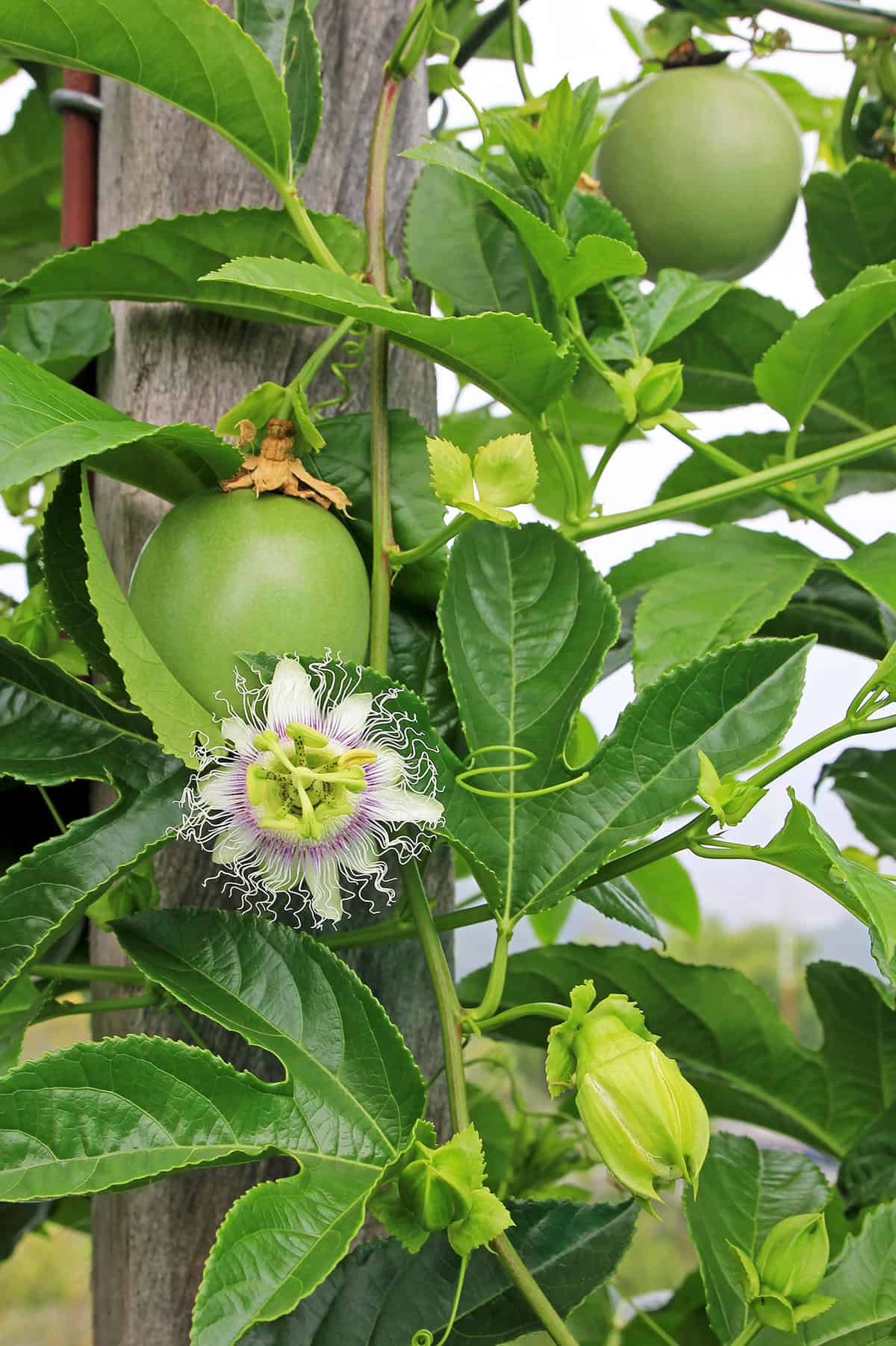
Passion fruit vines climb by curling tendrils, and in a single season they cover a fence or arbor with glossy, three-lobed leaves.
The flowers look almost unreal, with a fringe of purple and white filaments, and they develop into round fruit filled with tart, fragrant pulp. Full sun, steady moisture and a strong trellis produce the heaviest crops.
Purple and yellow passion fruit differ in cold tolerance and pollination, a choice the varieties section helps settle early.
Table of Contents
Quick Care Summary
This vine grows with real vigor, so a strong support needs to be in place from day one, and regular pruning prevents a tangle.
- Light: Full sun for a heavy crop
- Soil: Fast-draining sandy loam; pH 6.5–7.5
- Watering: Even moisture; avoid soggy soil
- Temperature: Best at 68–82°F; damaged by frost
- Humidity: Moderate to high
- Fertilizer: Balanced feeding every 4–6 weeks in spring and summer
- Propagation: Seed, cuttings, layering or grafted plants
- USDA Zones: 9–11 for Passiflora edulis; maypop to about Zone 6
- Fruiting season: Summer into fall in warm areas
Vines stretch 15 to 30 feet in good conditions. Even moisture during flowering and fruit set produces the best harvest.
Plant Overview
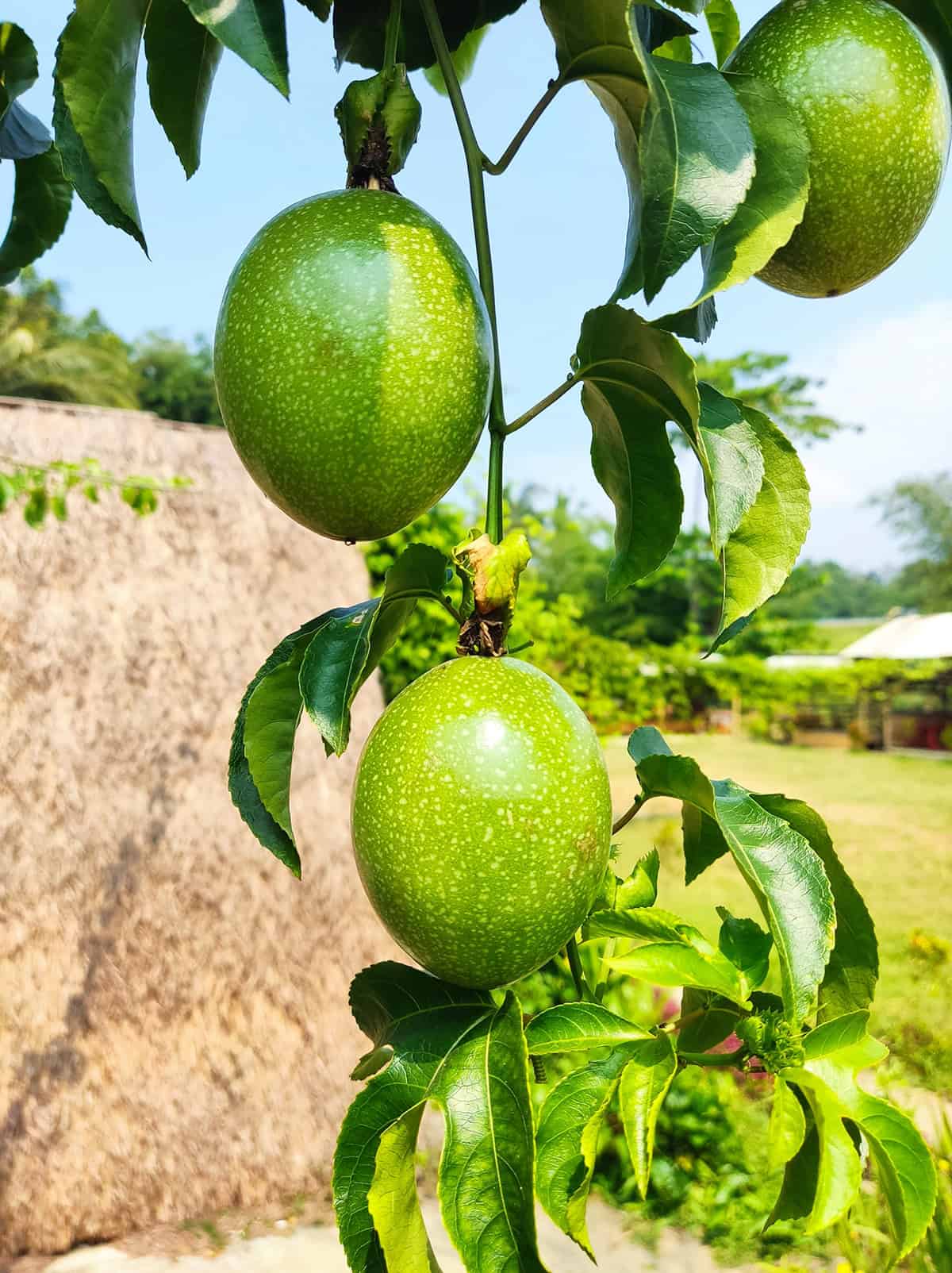
Passiflora edulis grows as an evergreen climbing vine with tendrils, glossy, deeply lobed leaves and intricate flowers about 2 to 3 inches across. Its round to oval fruit has a tough rind and aromatic, seed-filled pulp.
The roots grow near the surface, which makes good drainage essential. Purple-fruited forms have the richest flavor, while yellow-fruited forms grow more vigorously in the hot tropics and resist some soil diseases.
- Botanical name: Passiflora edulis
- Common names: Passion fruit, purple granadilla; yellow passion fruit (f. flavicarpa)
- Plant type: Evergreen perennial vine
- Mature size: 15–30 feet long with support
- Growth rate: Fast in warm weather
- Toxicity: Ripe pulp is edible; leaves and unripe fruit contain cyanogenic compounds
- Native region: Southern Brazil, Paraguay and northern Argentina
Light
At least six hours of full sun separate a fruiting vine from a leafy one, and more sun is better as long as the leaves show no burn.
Inland, where summer heat is intense, light afternoon shade prevents crisped leaves, and coastal gardens handle full sun all day. Long gaps between leaves point to low light.
Indoors, place the pot beside a sunny south- or west-facing window, and add grow lights during short winter days. Move young vines into stronger light over a week or two to avoid leaf drop.
Too little sun produces plenty of foliage and few flowers or fruit.
Water
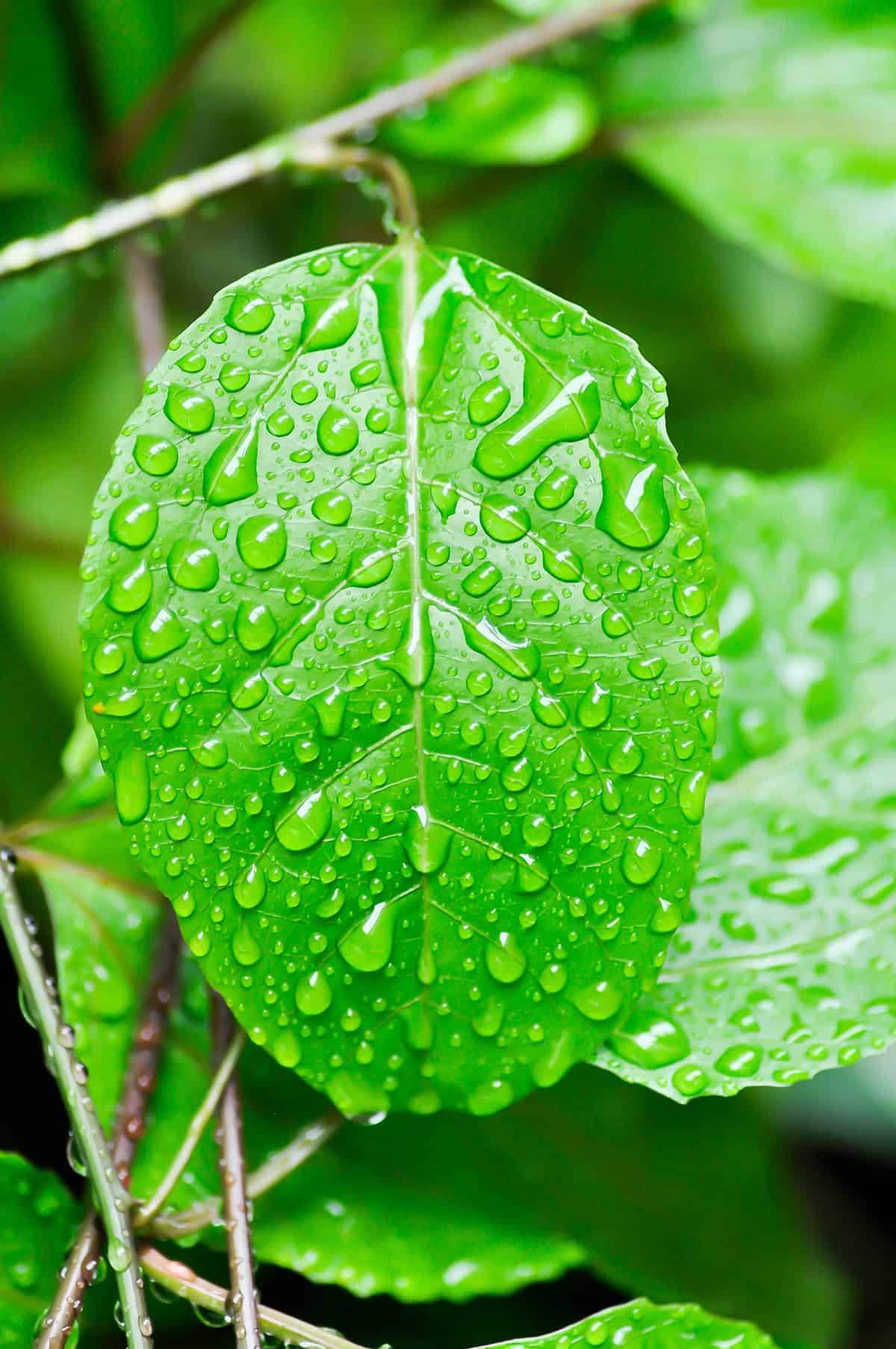
Passion fruit needs evenly moist soil. Water deeply enough to reach the whole root zone, then let the top inch dry before the next watering.
In warm weather, once or twice a week is enough for established vines, and young plants or hot, dry spells call for more. Water less as temperatures cool, and check the soil with a finger first.
Sandy loam with some organic matter holds moisture and drains the excess. Mulch cools and moistens the shallow roots, as long as it sits away from the stem.
Potted vines dry out faster and need frequent checks, and containers should never sit in water. Erratic watering leads to flower drop and small fruit.
Soil
Loose, fast-draining sandy loam produces the healthiest roots, and heavy clay leads to root rot and weak growth.
A pH between 6.5 and 7.0 supports good nutrient uptake. The vine tolerates slightly acidic or alkaline soil, but fruiting declines as the pH drifts further.
Drainage matters more than richness, and purple types fail quickly in wet, heavy ground. Raised beds or mounds lift the roots above wet soil.
Loosen the planting area at least a foot deep before planting. A light mulch layer protects the shallow roots from heat and drying, with a gap around the stem to prevent crown rot.
Temperature & Humidity
Temperatures between 65°F and 85°F produce the strongest growth and fruiting. Growth slows below 55°F, and a hard frost kills the vine to the ground.
Zones 9b and warmer are the natural home for most passion fruit. In cooler areas, a large pot moves indoors before the first freeze, to a bright room above 60°F away from drafty doors.
Humidity supports lush leaves and steady flowering, while dry air leads to leaf drop and slower fruiting. In arid regions, deep watering and mulch cool the roots, and in humid climates, good air movement limits disease.
Fertilizer
Passion fruit vines feed heavily during the growing season. Apply a balanced fertilizer, with similar amounts of nitrogen, phosphorus and potassium, every four to six weeks between early spring and late summer.
Young plants do best with lighter, more frequent doses, and mature vines take larger amounts. Excess nitrogen produces leaves at the expense of fruit.
Cold winter soil locks up nutrients and yellows the leaves between the veins, and a balanced feeding in spring corrects it. If yellowing persists, check that the pH sits near 6.5 to 7.0.
Spread compost once a year for steady nutrition. Spread fertilizer and compost a little away from the main stem, and water well after feeding.
Growing in Containers
On patios and balconies, a pot of at least 15 to 20 gallons with good drainage holes holds a passion fruit vine. Fill it with a rich, free-draining mix with a near-neutral pH.
Place it in full sun, with a little afternoon shade in hot inland areas. Install a trellis or obelisk in the pot at planting, and tie the stems loosely as they grow.
Water deeply when the top couple of inches dry, and feed with a balanced fertilizer monthly in spring and summer.
Move the pot indoors or to a sheltered nook when frost threatens. Purple types tolerate a little more chill than yellow ones, but neither survives freezing for long. Prune in late winter to control size and encourage new fruiting wood.
Potting & Repotting
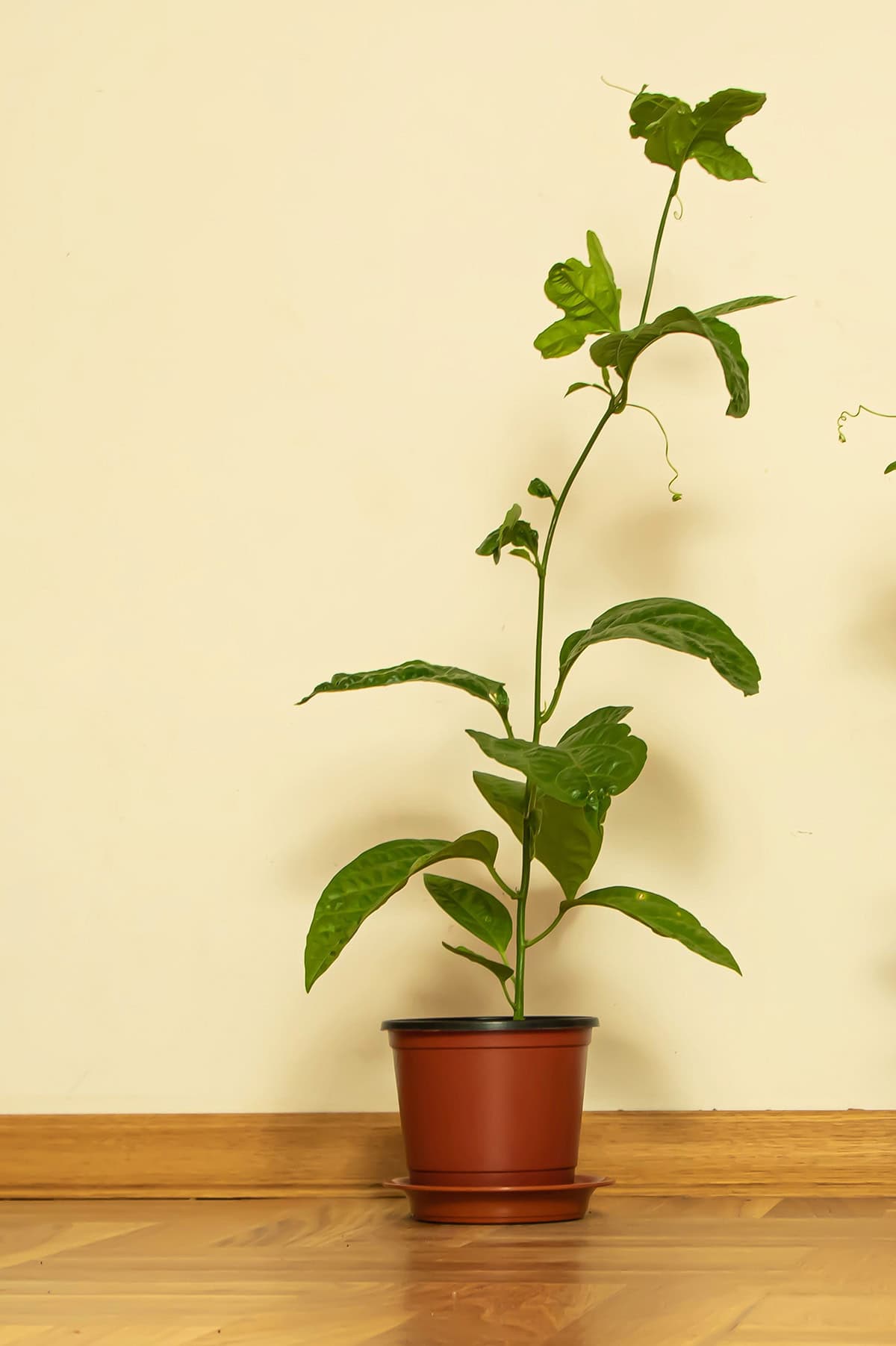
Use a container with drainage holes and a loose, rich potting mix, and skip both garden soil and a gravel layer, which slows drainage. Plant at the original depth, firm the mix, water well and let the excess drain.
Check the roots each year. When they circle the pot or pack tightly, move up to a slightly larger container, loosen tangled roots and add fresh mix.
Most vines need repotting every two to three years, or sooner if growth stalls or fruit shrinks. Choose a container heavy enough for both vine and trellis, and place it in warm sun afterward with evenly moist soil.
Pruning
Unpruned passion fruit vines smother nearby plants, and tangled stems block light and air and invite disease.
Prune in late winter or early spring, before the growth surge, or after harvest in very warm regions. Remove dead, weak or crowded stems first, then shorten long shoots to a tidy framework along the support.
Cut side shoots back to two or three buds from the main stems, just above a healthy bud, with sharp, clean tools. Fruit forms on new growth, so leave several strong stems to carry next season’s crop during heavy reductions. After frost damage, wait for warm weather and cut back to live wood.
Pinch soft tips in summer to direct energy into fruit, but leave enough leaves to feed the crop. Bin or burn diseased prunings.
Propagation
Seed costs little and sprouts easily, while cuttings and grafted plants fruit sooner and more predictably.
Collect seeds from ripe fruit, rinse off the pulp and dry them for a day. A light sanding of the tough seed coat speeds germination. Sow seeds half an inch deep in loose, well-draining mix at 70°F to 85°F, and hold the mix moist. Sprouts appear in two to four weeks.
Transplant seedlings with several true leaves to a sunny, well-drained spot 8 to 10 feet apart, beside a trellis installed beforehand.
Cuttings clone the parent. Take 6-inch pieces of healthy stem, strip the lower leaves and insert them in moist potting mix, and roots form within a few weeks in warmth and humidity. Grafted vines on resistant rootstock are the best choice where soil-borne diseases are a problem.
Fruiting & Harvest
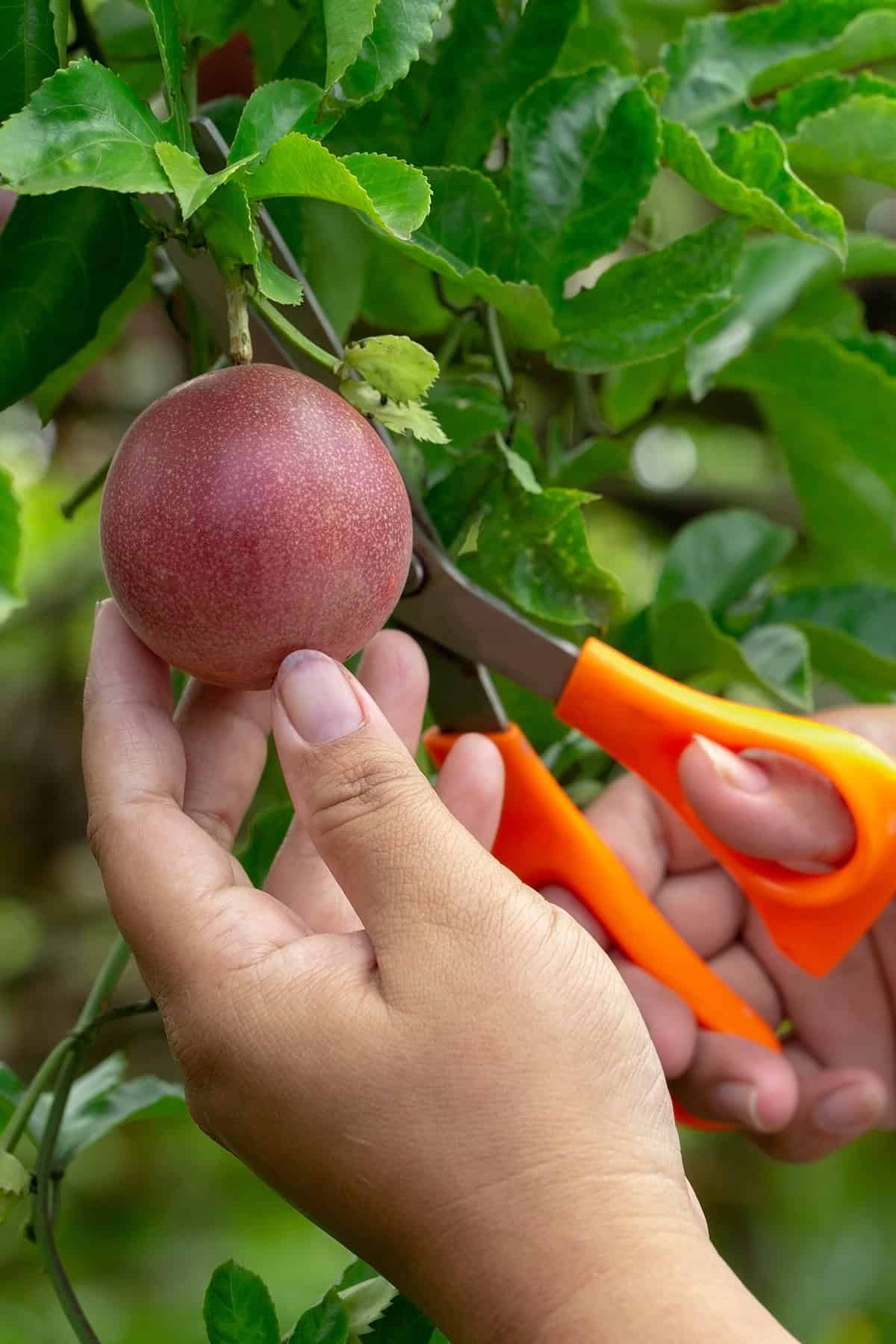
Flowers appear in spring and early summer, and bees handle most pollination. Purple passion fruit sets fruit on its own, while most yellow types need cross-pollination from a second, genetically different vine.
Warm days between 68°F and 82°F favor flowering and fruit development. Fruit ripens about 70 to 80 days after pollination, as the skin shifts from green to deep purple or yellow. Slight wrinkling signals peak flavor.
Ripe fruit drops to the ground on its own, so collect it every day or two. Fully colored, heavy fruit twists off the vine easily, and gentle handling protects the shallow roots.
Fruit lasts a couple of weeks at room temperature and longer in the refrigerator. Seed-grown vines start producing in their second or third year, and cuttings and grafted plants fruit sooner.
Common Problems
Aphids, whiteflies and spider mites cluster on young shoots and drain sap. An evening spray of insecticidal soap or neem oil controls them and spares the leaves from sunburn.
Ragged, chewed leaves point to caterpillars such as Gulf fritillary larvae in the southern U.S. Hand-picking or Bt controls them, and a check under the leaves catches them early.
Woodiness virus produces thick-skinned, distorted fruit and mottled leaves. Infected vines need to be pulled up and destroyed, and control of aphids, which spread the virus, slows it.
Wilting, yellowing and leaf drop on soggy soil point to root rot. Lighter soil and watering only after the surface dries prevent it.
Fruit drops before ripening after inconsistent watering, nutrient imbalance or wild temperature swings. Steady moisture and balanced feeding during growth reduce the losses.
Varieties
Fruit color, cold tolerance and growth habit decide which passion fruit grows best in each garden.
Purple passion fruit, Passiflora edulis, thrives in subtropical gardens and produces round, deep purple fruit with a sweet-tart flavor for fresh eating. It recovers from light frost better than tropical types, and ‘Frederick’ is a popular self-fertile purple selection.
Yellow passion fruit, Passiflora edulis f. flavicarpa, dominates in the tropics. The vines grow fast and cover large areas, and the larger yellow fruit has a sharper tang, which makes it a favorite for juice.
‘Panama Gold’ produces big yellow fruit on a vigorous vine, and ‘Panama Red’ carries reddish-purple fruit in steamy, frost-free climates.
Maypop, Passiflora incarnata, grows in colder regions to about USDA Zone 6. Its fruit is smaller, but the vine dies back in winter and resprouts from the roots each spring.