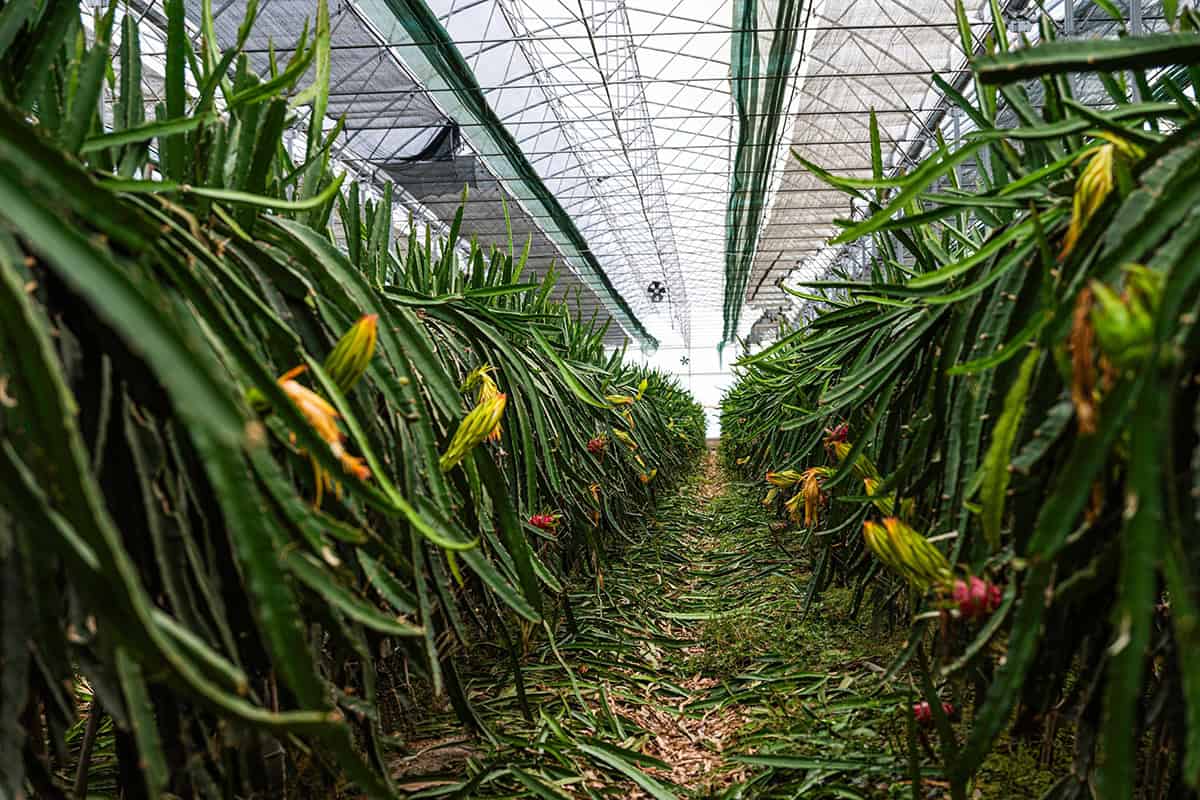
Dragon fruit grows on a climbing cactus whose huge white flowers open for a single night and close by morning.
A pollinated flower swells into a scaly pink or yellow fruit in about a month. Full sun, gritty soil, warmth and a sturdy post to climb produce the biggest harvests.
Self-fertile and pollinator-dependent cultivars behave very differently, and the varieties section sorts out which is which.
Table of Contents
Quick Care Summary
Dragon fruit needs strong sun, gritty soil that drains fast, warmth and a sturdy support.
- Light: Full sun, 6–8 hours a day; light afternoon shade in desert heat
- Soil: Gritty, well-drained cactus mix or sandy loam; pH 5.5–7.0
- Watering: Deep and infrequent; minimal in winter
- Temperature: 65–77°F preferred; frost-free (USDA Zones 10–11)
- Humidity: Moderate, with good airflow
- Fertilizer: Balanced fertilizer with magnesium every 1–2 months during growth
- Support: Strong post or trellis
- Propagation: Stem cuttings; seeds are slow
- Fruiting season: Summer to fall (varies by climate)
Plant Overview
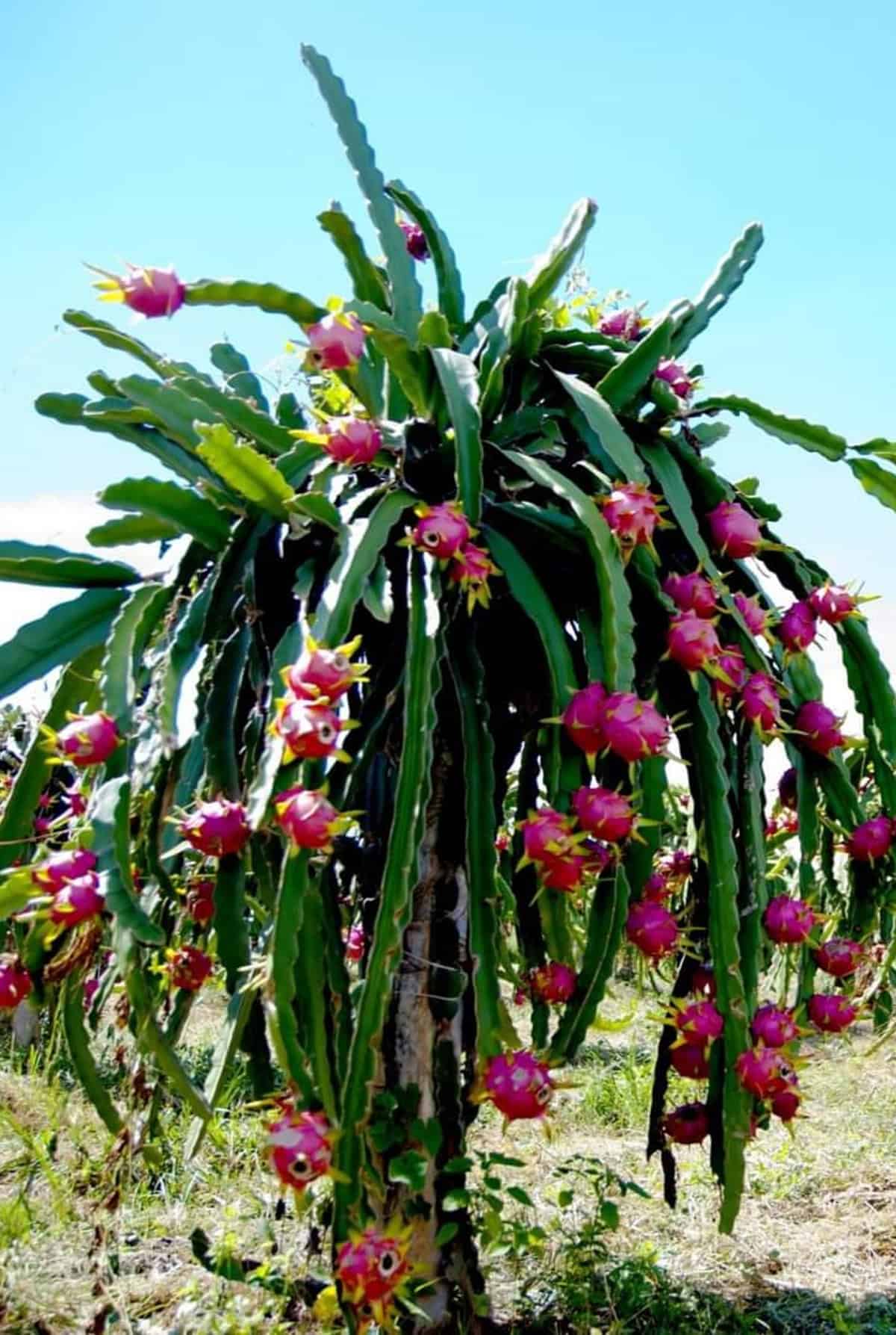
Dragon fruit grows on climbing cacti in the genus Selenicereus, formerly Hylocereus, and white-fleshed fruit comes from Selenicereus undatus. Markets sell it as pitaya, pitahaya or strawberry pear.
The thick, three-sided stems carry small spines and send out aerial roots that grip a post or wall. With support, unpruned plants climb 15 to 20 feet, and most home growers trim them to an easy picking height. The fragrant night-blooming flowers reach about 12 inches across.
- Botanical name: Selenicereus undatus (syn. Hylocereus undatus) and hybrids
- Common names: Dragon fruit, pitaya, pitahaya, strawberry pear
- Plant type: Perennial climbing cactus
- Mature size: 15–20 feet with support
- Growth rate: Fast in warm weather
- Toxicity: Fruit is edible; spines prick
- Native region: Tropical Central and South America
Hot, frost-free regions produce the best plants. A brief chill rarely kills an established vine, while steady cold does.
Light
Six to eight hours of direct sun produce the most growth and fruit. Choose the sunniest spot available.
The plant handles heat up to about 100°F, but relentless sun in arid regions scorches the fleshy stems, and light afternoon shade prevents that.
Young cuttings sunburn in direct sun at first. Place them in filtered light for a month or two, then increase exposure over a few weeks. Too little sun leads to floppy growth and few flowers.
Indoors, a south- or west-facing window is the minimum, and a full-spectrum grow light helps in dim homes. Strong light produces more flowers and larger harvests.
Water
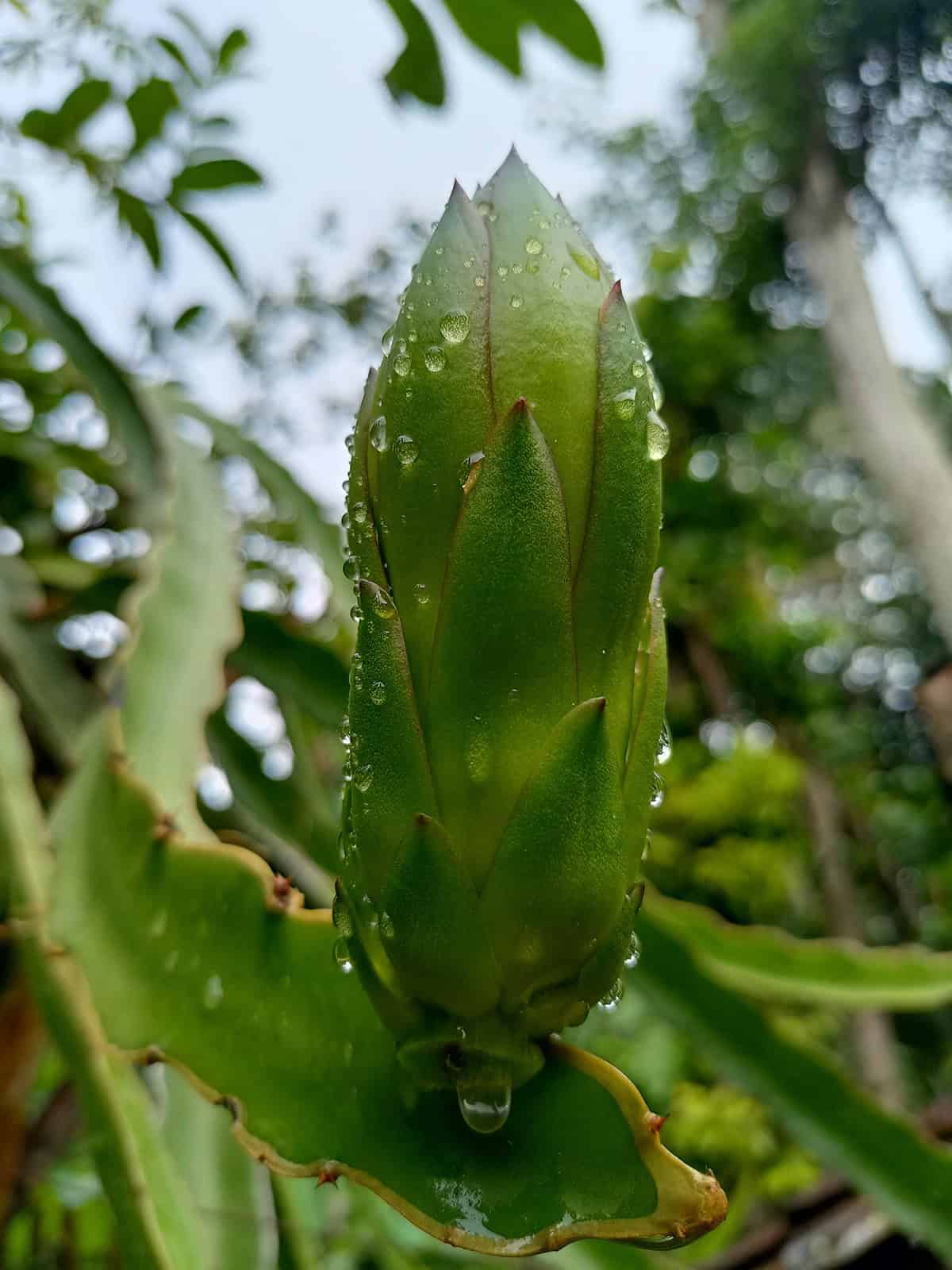
Dragon fruit stores water in its stems, yet it needs regular watering during active growth. Let the top inch or two of soil dry before watering again, and use a finger test instead of a fixed calendar.
In warm weather, plants in the ground need water about once a week, and containers every five days or so. In winter, cut back to every few weeks.
Soak the soil thoroughly and let the excess drain away. Soggy soil leads to root rot and mushy stems.
During bud and fruit development, water a little more and hold the soil lightly moist. After harvest, ease off again.
Soil
Dragon fruit roots need gritty, quick-draining soil, and dense ground causes rot. Mix plenty of coarse sand or gravel into clay.
Sandy loam produces the best growth, but any soil that drains fast fits the plant. Perlite or small gravel mixed into native soil helps, and raised beds or mounds protect roots in rainy areas or where the water table is high.
A pH between 5.5 and 7.0 is right. Alkaline soil leads to nutrient deficiencies that call for supplements.
Compost or well-rotted manure mixed in before planting boosts root growth, as long as it sits a few inches away from the stem. In containers, use a cactus mix with extra perlite and pots with large drainage holes.
Temperature & Humidity
Warm days and mild nights between about 65°F and 77°F produce the healthiest plants. Spikes up to 100°F cause little harm when the soil has moisture.
Freezing weather puts the plant at risk. Light frost scars the stems, and plants with healthy roots recover, while long cold spells kill them. In cooler climates, grow dragon fruit in a container and move it indoors before frost, or plant it in the sunniest, most sheltered spot outdoors.
The plant adapts to humid tropics and drier subtropics. Hot, dry wind scorches stems, and stagnant, humid air with poor circulation invites fungal disease, so prune and space plants for airflow.
Fertilizer
Feed dragon fruit once new growth appears, about a month after planting. A balanced fertilizer such as 6-6-6, or a blend like 8-3-9 with magnesium, fits its needs.
In the first year, apply about a quarter pound per plant every two months, scattered around the base and away from the stem.
Mature plants take larger doses less frequently, two to four times a year. Too much fertilizer builds up salts and damages roots.
Compost or aged manure once or twice a year improves the soil. In high-pH soil, sprays with iron, zinc and manganese correct deficiencies, and yellowing stems signal them. A soil test before choosing a fertilizer helps balance nutrients for strong stems and steady fruit.
Growing in Containers
Containers put dragon fruit on patios and balconies with good sun, and they move indoors when cold weather arrives.
Choose a heavy pot of at least 20 to 25 gallons with plenty of drainage holes. Terracotta or thick plastic resists tipping as the plant grows heavy.
Use a cactus or succulent mix with extra sand or perlite, and skip dense, peaty blends. Install a sturdy post or trellis at planting time, with a frame at the top for the stems to drape over.
Place the pot in full sun, with light afternoon shade in very hot climates, and protect it from frost. Water when the top couple of inches dry, cut back in winter and fertilize every two months during growth. Prune after harvest to remove weak or crowded stems.
Potting & Repotting
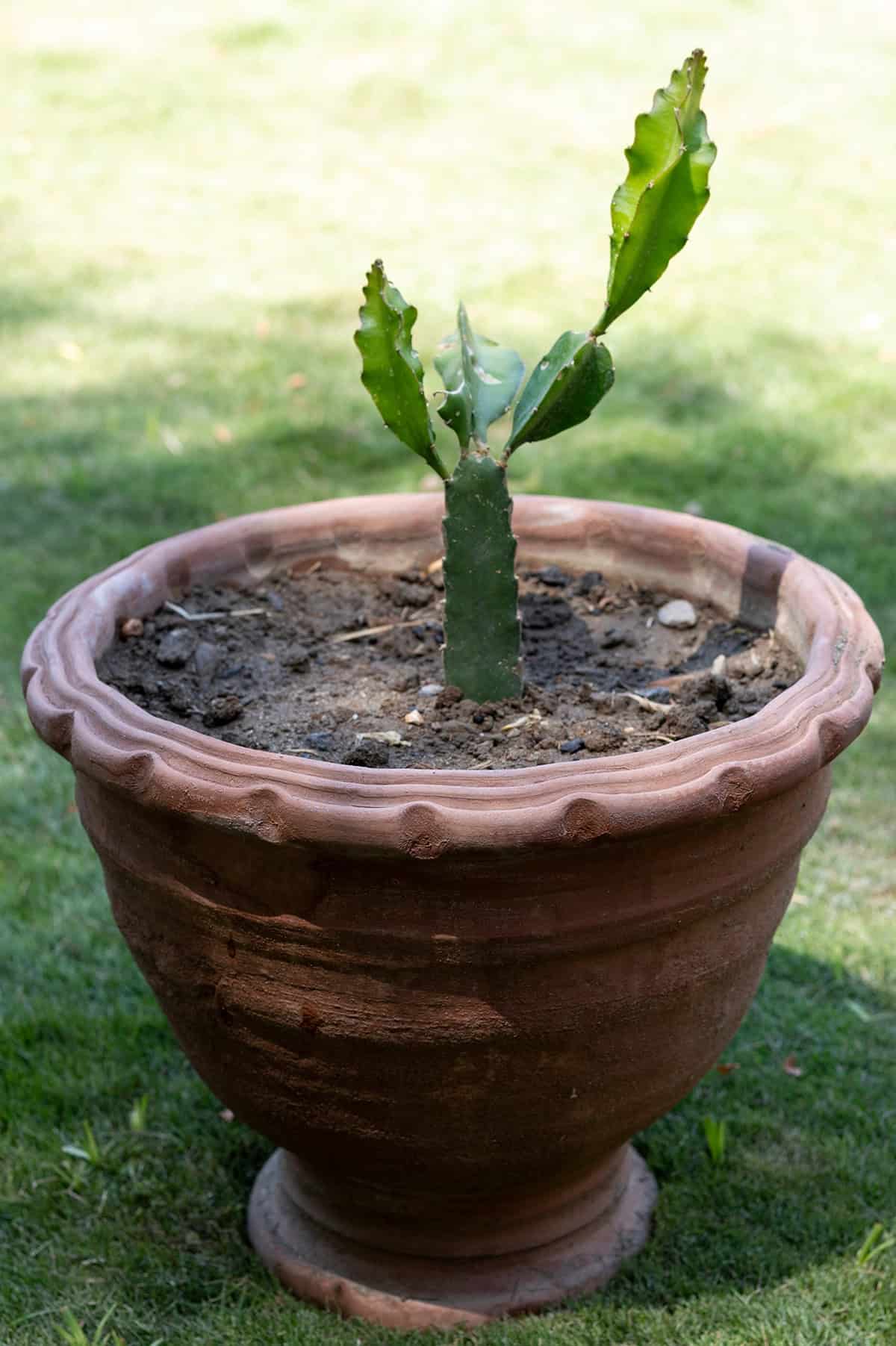
Choose a heavy, stable pot with drainage holes, since mature plants grow top-heavy and tip flimsy containers.
Use a cactus or succulent mix, or blend regular potting soil with sand or perlite for fast drainage.
Repot when roots circle the pot or poke out of the bottom, into a container 2 to 3 inches wider. Set the plant at its previous soil level to prevent stem rot.
Water once to settle the soil, then place the plant in bright, indirect light for a few days. Resume regular feeding once new growth appears.
Pruning
Training starts early. Choose one strong stem, guide it up the support and tie it gently. Remove side shoots until it reaches the top, then pinch the tip to encourage branching.
Mature plants form a thick canopy quickly. Unpruned, the tangle of stems blocks light and airflow and leads to fewer flowers and smaller fruit.
Remove dead, damaged or diseased stems as soon as they appear, along with stems touching the ground or crowding the support. A set of healthy, well-spaced branches hanging over the frame produces the best crop.
Prune once or several times a year, as growth demands, with sharp tools for clean cuts. Dispose of pruned stems away from the plant, or root healthy pieces as new cuttings.
Propagation
Stem cuttings produce fruiting plants fastest and match the parent. Seeds sprout easily but take years to fruit and vary from the parent.
For seed, scoop seeds from ripe fruit, rinse off the pulp, dry them for a day and sow them on moist, well-drained mix in bright, indirect light.
For cuttings, cut a healthy stem segment 6 to 15 inches long and let it dry in the shade for about a week, until the cut end calluses. Insert the callused end a few inches deep in sandy, well-drained soil or cactus mix, and water lightly. Roots form in a few weeks, followed by new growth.
Once established, move the plant to its permanent spot beside a solid trellis. Cuttings fruit in one to three years.
Fruiting & Harvest
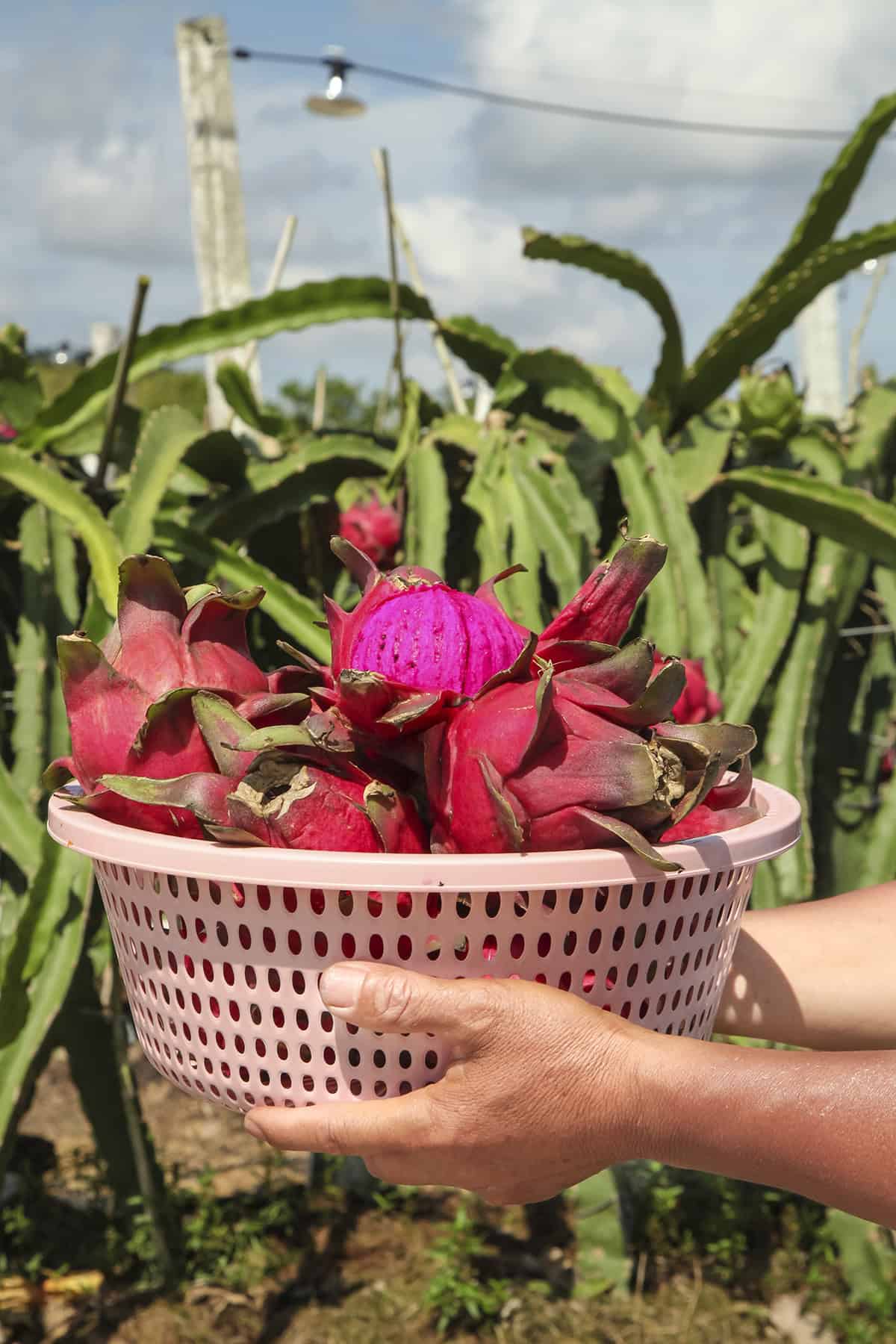
Dragon fruit flowers open at night, huge, white and fragrant, and close by the following morning. Self-fertile cultivars set fruit on their own, while others need pollen from a second compatible variety, carried by moths, bats or a small paintbrush at night.
After pollination, fruit develops in about 30 to 50 days. The skin colors fully red, pink or yellow, and the tips of the scales begin to dry, which signals ripeness. Picked fruit ripens no further, so wait for full color.
Cut the fruit from the stem with sharp pruners, since twisting scars the plant. Handle it gently to prevent bruising. Fruit lasts about two weeks in the refrigerator.
White-fleshed fruit tastes mild and lightly sweet, and red- or magenta-fleshed types are sweeter. The tiny black seeds add a kiwi-like crunch.
Common Problems
Warm, humid weather, stagnant air and too little sun lead to most dragon fruit problems.
Stem canker appears as small, sunken orange or brown spots on stems and fruit that crack and dry. Cut out infected sections right away and thin the plant for airflow.
Soft, pale or mushy stem bases point to root rot from soggy soil, and the plant wilts even when the soil is wet. Fast-draining soil and drier intervals between waterings prevent it.
Poor fruit set comes from incomplete pollination, especially in cultivars that need a partner, and hand pollination at night solves it.
Mealybugs, scale, thrips and ants feed on sap and leave sticky residue or twisted growth. A strong water spray or insecticidal soap controls them. Bleached, dry patches on stems moved too quickly into full sun signal sunburn, which gradual exposure prevents.
Varieties
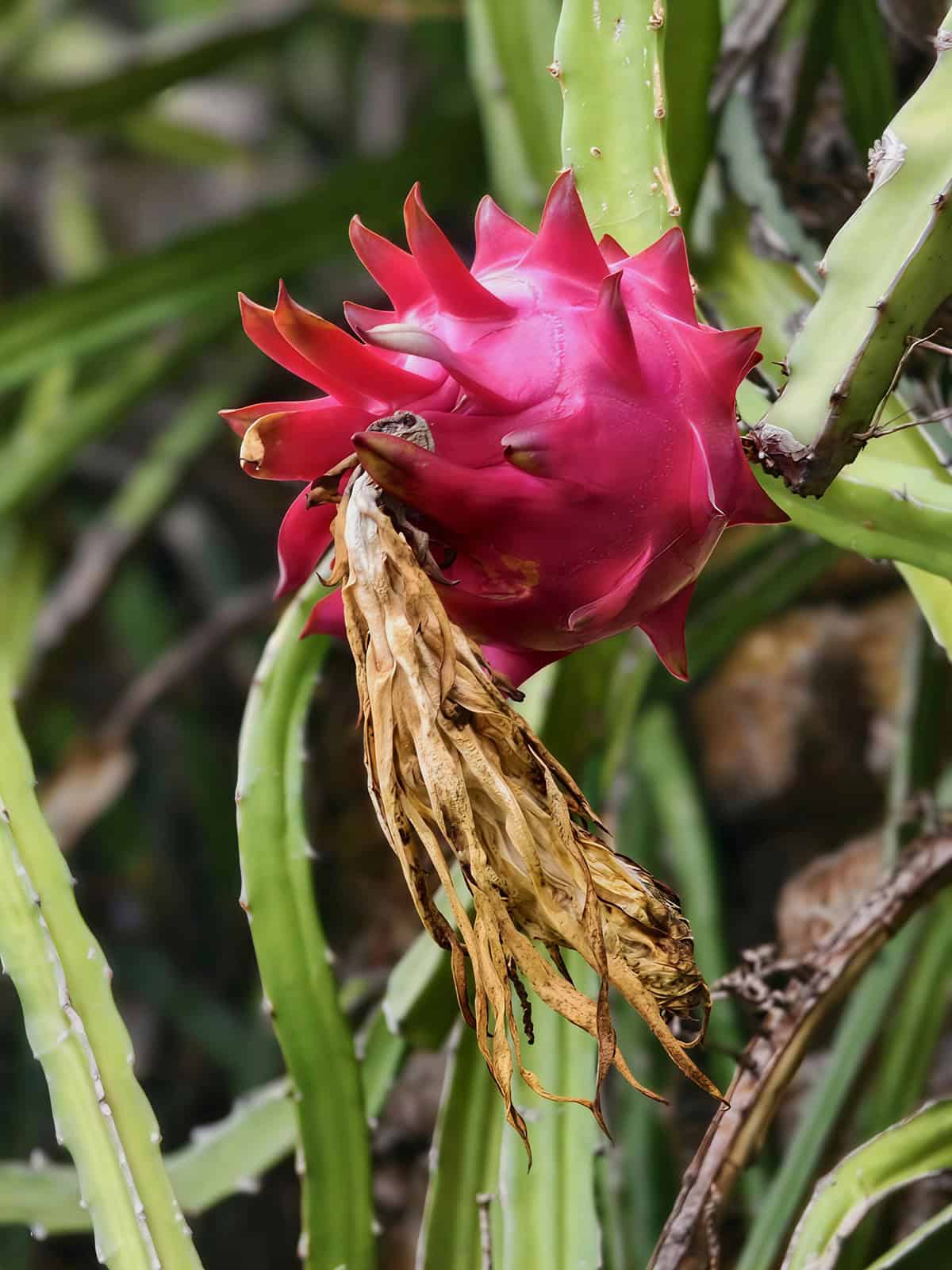
Dragon fruit comes as red-skinned fruit with white flesh, red- or magenta-fleshed types and yellow-skinned fruit, and sweetness, size and pollination needs differ among them.
Red-skinned, white-fleshed fruit comes from Selenicereus undatus. ‘Vietnamese White’, one of the most widely grown cultivars, sets fruit on its own.
Red-fleshed cultivars, developed from Selenicereus costaricensis and related species, reveal bold magenta flesh with higher sugar content. ‘American Beauty’ has deep purple-red flesh, and ‘Physical Graffiti’ has pink flesh.
Yellow dragon fruit, Selenicereus megalanthus, has bright yellow, spiny skin and smaller fruit with white, very sweet flesh.
Pollination needs vary, and some cultivars set little fruit on their own. Two or three compatible varieties planted together raise the harvest.